
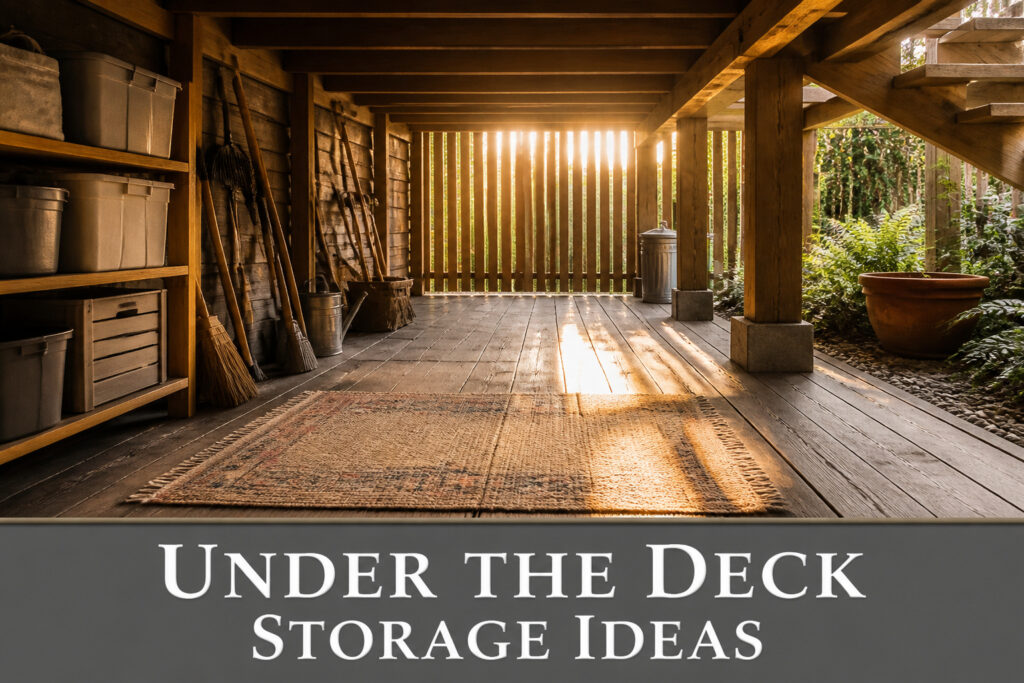
The right under-deck storage idea depends on whether you have thirty inches of clear height to work with. Below that threshold, drawers and walk-in rooms are off the table; you are storing flat things only and crawling for the rest.
Corrugated plastic panels run about $15–$25 per sheet and take a Saturday to fasten, but they only earn their keep if you planned an opening before the last screw went in.
1. Siding or Cladding
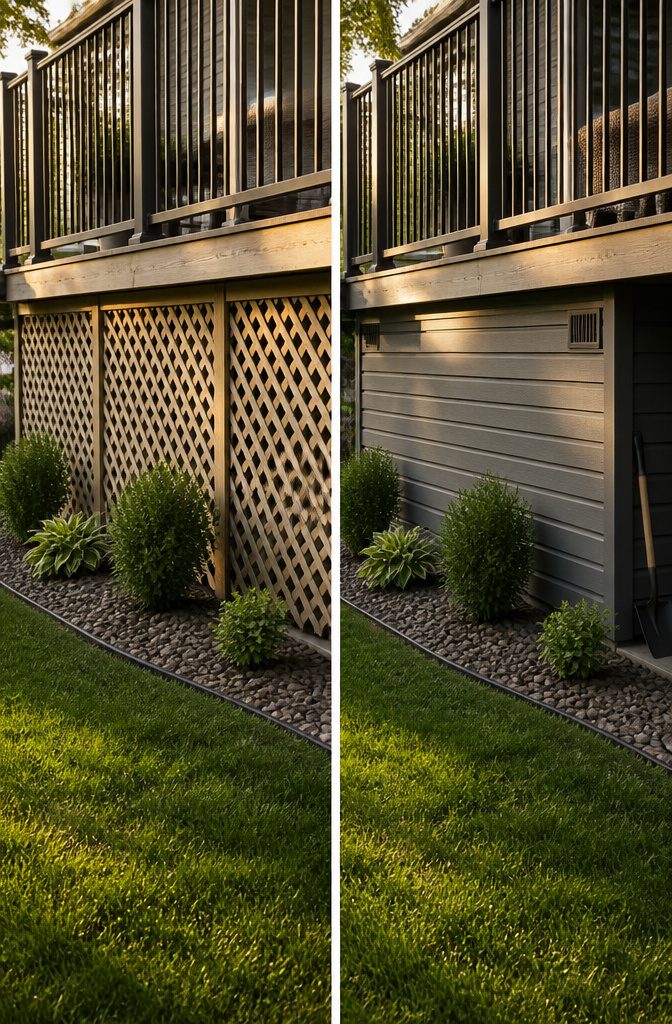
Siding turns the gap under your deck into something that looks intentional from the yard instead of an afterthought.
The right material depends on how finished you need it to look and what your weekend tolerance is. Corrugated plastic or metal panels run about $15–$25 per sheet and go up fast with a drill and self-tapping screws.
If you want it to match the house, vinyl or fiber-cement siding in the same profile as your exterior cladding ties everything together, though that takes more cutting and a level line.
The cladding also does the first pass at weatherproofing.
A plastic tarp hung behind the siding blocks the bulk of blowing rain, though in a hot climate that trapped air can warm the space enough to matter for whatever you store back there.
Heat-sensitive items need to sit closer to the outer edge or wait for a different solution.
Leave yourself a way in. A removable panel at one end works for lighter use; a hinged door with a latch saves your back if you are hauling yard tools in and out every weekend.
Either way, plan the opening before you fasten the last board, because cutting it in afterward is the kind of mistake that costs you a Saturday you already spent.

Decorative screen panels can enhance both indoor and outdoor spaces, creating the perfect accent or focal point

Complete, Quality Skirting Solution: our mobile home skirting panels are tailored to meet your needs, offering 8 panels, each measuring about 35 inches tall, 12 inches wide and 0.047 inch thick; This generous quantity ensures you have substantial coverage for your mobile home, ensuring minimal waste or excess; These panels offer durability, resisting damage from impact due to their thick, non breakable design

METAL ROOFING PANELS:Metal roofing panels can withstand various harsh weather conditions, including rain, snow, wind, and sunlight. Corrugated metal roofing panels effectively drain water to prevent leaks, thereby protecting the interior of the building and extending the roof's lifespan. As a result, many homeowners choose tin roof panels as roofing material for residences due to its durability, lightweight nature, and excellent waterproof performance
2. Non-Waterproof Screening
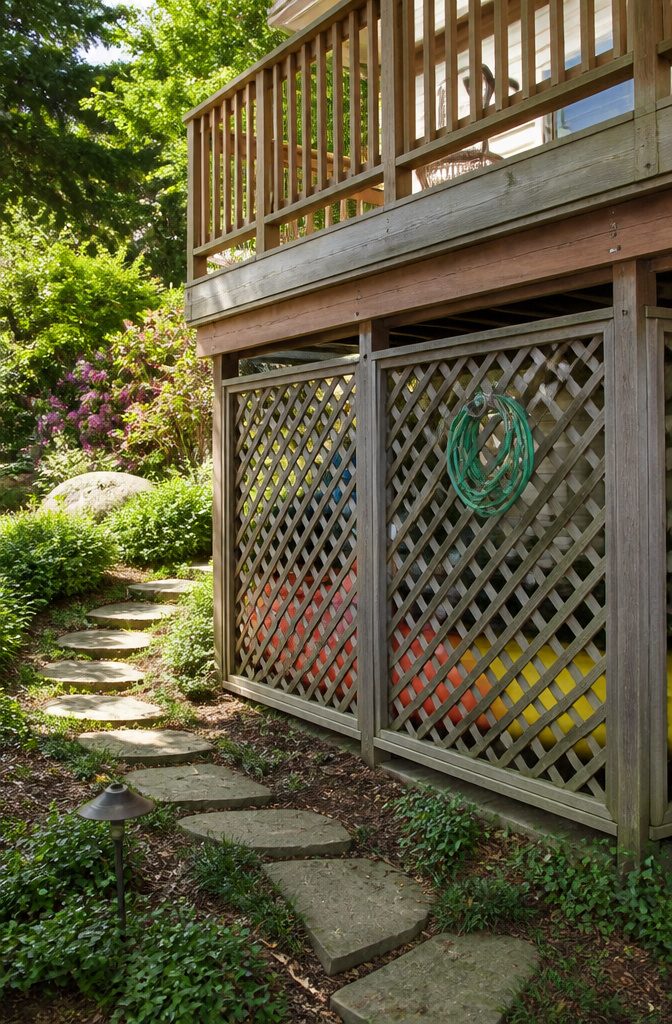
A screen, lattice, or trellis around the deck’s lower edge is the cheapest way to hide stored items from the yard without building walls.
This kind of screening blocks sight lines, not rain, so anything you tuck behind it will still get wet in a storm.
That limits the approach to gear that already tolerates moisture: garden hoses, PVC pipe, kayaks or small watercraft, wheelbarrows, and similar outdoor equipment.
These items survive occasional soaking, and keeping them out of direct view tidies the space without the cost of a full enclosure. The difference from enclosed storage is real.
A framed room with siding and a door keeps contents dry; screening only keeps them invisible. If you are deciding between the two, the question is whether you need weather protection or just concealment.
For renters especially, screening is often the practical ceiling, since a permanent structure may need permits or landlord approval a simple lattice skirt does not.
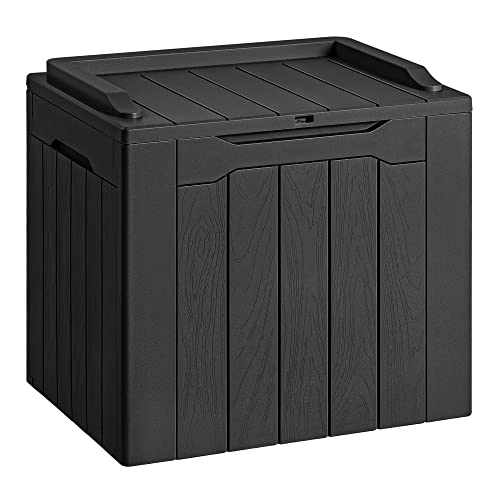
Light & Solid: Made of a high density resin material, it is stable, waterproof and UV resistant. The net weight of this deck box is only 8.8 pounds

Excellent material: The deck box is made of all-weather resin, with waterproof, UV protection, anti-color fading and other functions. And it is not afraid of bad weather, you can rest assured to put it outdoors.

Exterior Dimensions: 4 ft. 2. 3 in. L x 2 ft. 1. 2 in. W x 2 ft. 2 in. H; Interior Capacity: 116 Gallons
3. Enclosed Storage Room
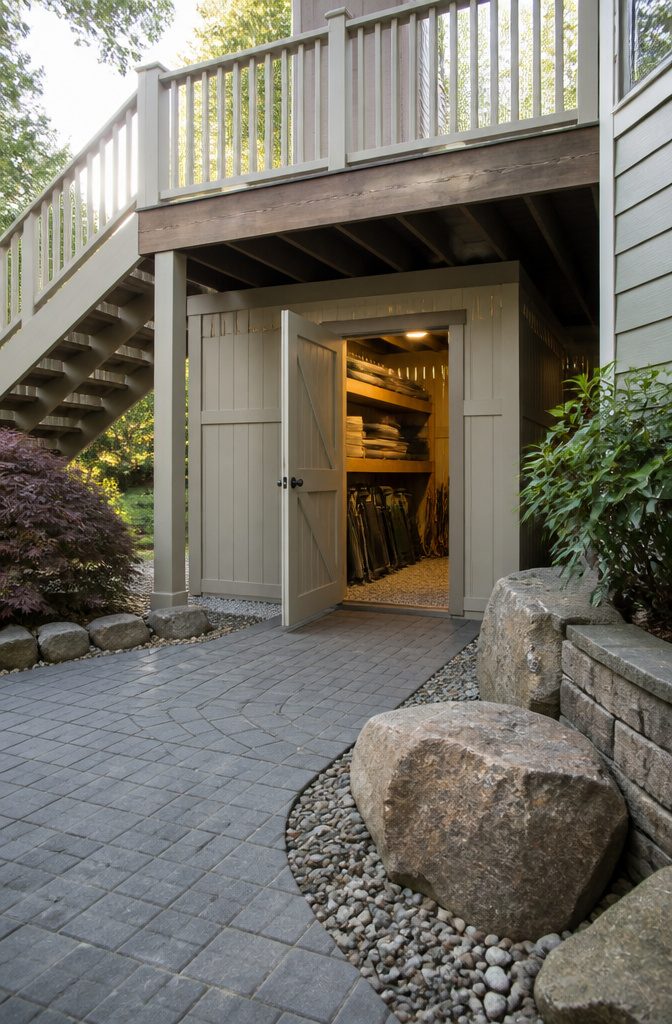
A full enclosed room under the deck is the most serious build on this list, and the first question is whether you have the headroom to make it worth the effort.
Thirty inches of clear height is the practical floor; below that, you are crawling in to set down a tote, not walking in to organize shelves.
Measure from whatever flooring you install, not from dirt, because concrete or gravel both eat inches and both are worth laying down to keep contents off mud and to discourage pests from burrowing up.
Weatherproofing separates this from a framed-in void. Rigid panels on the walls are standard, but the weak point is the access point.
A removable panel in the siding hides the clutter and costs little, though you will end up wrestling it free with an armload of garden tools.
A hinged door solves that, and it is the only route that lets you add a lock. For most homeowners, the door pays for itself in the first season of actually using the space instead of avoiding it.
This kind of room works best for the bulky, seasonal load: patio cushions in winter, the push mower in summer, the folding chairs that never quite fit anywhere else.
The investment in framing, siding, and a proper door runs higher than the other ideas here, but it is also the one solution that leaves the underside of your deck looking finished from the yard.

AMPLE STORAGE SPACE: Safely store small decorative pillows, patio cushions, pool chemicals and more.

DURABLE RESIN BUILD: Rigid dual wall high density polyethylene creates a large outdoor storage box built for outdoor storage. Impact resistant panels help protect contents from daily wear and weather.

【60-Gallon Outdoor Storage Cabinet】Keep garden tools, pool supplies, patio accessories and outdoor toys in one dedicated place instead of scattered around the yard, deck or garage. This 60 gallon outdoor storage cabinet helps create a cleaner, easier-to-manage space for patios, porches, gardens, garages and pool areas. Overall size: 34.3"L x 15"W x 36.2"H
4. Removable Panel or Door
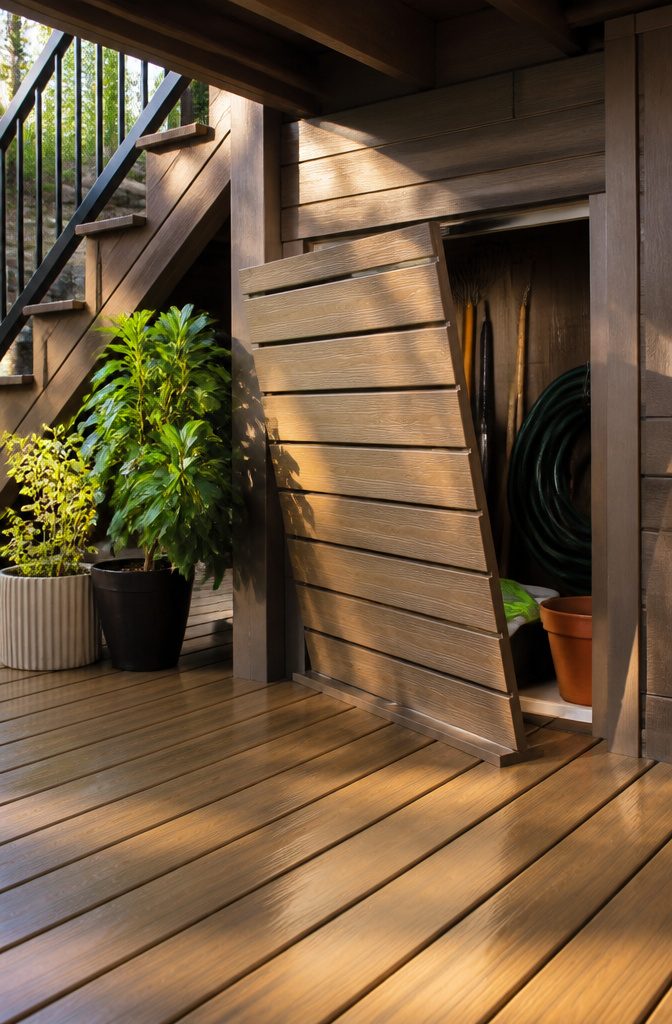
A removable panel or door turns a fully enclosed under-deck space into something you can actually use. Without it, you are crawling through gaps or leaving the whole front open to weather and raccoons.
The siding itself can be the door: a panel lifted off with a few screws, or a framed section on hinges that swings clear.
Hinges cost more time on a Saturday, but they also let you add a hasp and padlock, which matters if you are storing bikes or tools where the fence ends.
For a weekend build, a simple framed panel in matching siding sits on cleats and lifts away when you need the mower.
No tracks to level, no hardware to rust shut. The tradeoff is security; a determined person lifts the whole thing off in thirty seconds.
If that bothers you, a proper door on strap hinges with a barrel bolt takes maybe two extra hours and a trip back to the hardware store.
Both keep rain and pests out about the same; the difference is whether you walk away worried.
Weather-resistant panels or sliding doors, mentioned for larger enclosed rooms, overlap with this idea but serve a different purpose. They are for the room itself, not the access point.
Start with how you reach the stuff inside. A hinged door with a lock wins if you store anything worth stealing; a lift-off panel wins if you want done by Sunday.

HINGED ACCESS PANEL – Provides a convenient service opening for master cylinders and other under-floor components, making routine maintenance faster and easier.

【High Quality】: Heavy Duty. Made of Non-Corrosion UV stabilized ABS plastic, could bear serious marine environment;

【High Quality】: Heavy Duty. Made of Non-Corrosion UV stabilized ABS plastic, could bear serious marine environment;
5. Sliding Storage Drawers
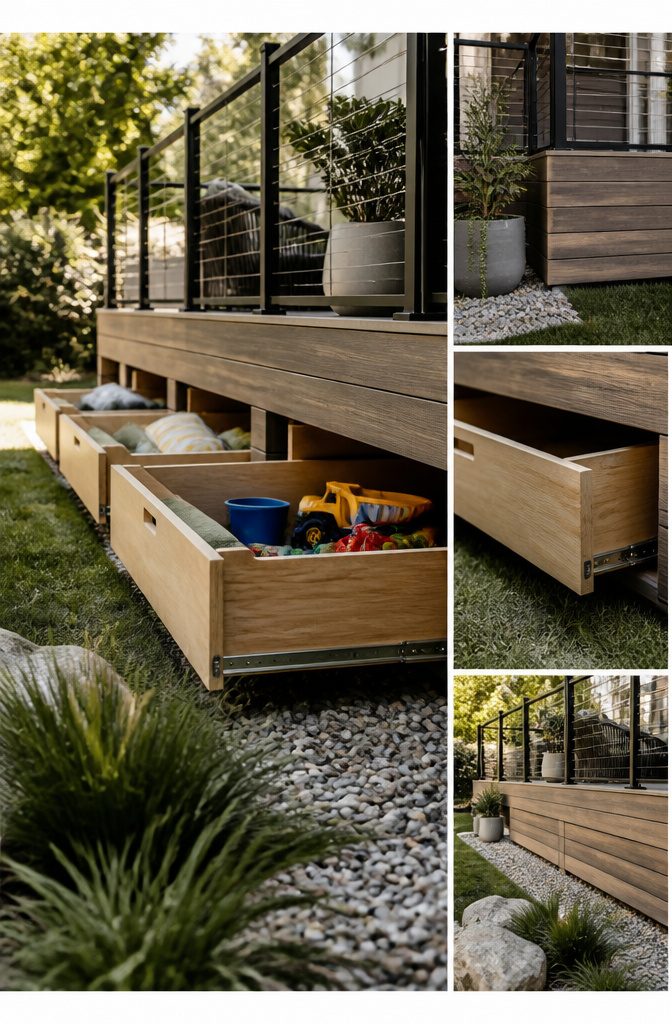
Custom-built sliding drawers let you pull every inch of that awkward under-deck space into actual use. You size them to the exact dimensions of your joist bays, so nothing gets lost in the gaps that standard bins leave behind.
The full-extension hardware matters more than most people think: standard indoor slides seize or corrode within a season of ground moisture, and a drawer that opens six inches and jams is worse than no drawer at all.
Marine-grade stainless or heavy-duty aluminum tracks are the baseline for anything that sits this close to dirt and splash-back.
Pressure-treated plywood or solid composite decking stock holds up without warping, and a front face cut from your actual deck boards makes the whole unit disappear when closed.
Waterproof the box itself, not just the lid, because water finds the path of least resistance and pooled humidity inside will mildew cushions or tools just as fast as direct rain.
Garden equipment, outdoor cushions, and kids’ toys all fit the depth most decks allow, and the pull-out motion beats crouching into a fixed bin every time you need the grill cover stored three feet back.

🌞 Excellent Light Transmission – Clear polycarbonate panels deliver outstanding clarity and natural light, ideal for greenhouses, patios, decks, and covered outdoor areas.

Size & Customization: Each black corrugated plastic board measures 24" x 36" with a 3mm thickness. This corrugated plastic sheet is easy to cut into custom shapes and sizes, making it perfect for a variety of applications, from DIY projects to signage needs. Ideal for poster boards or personalized craft creations.
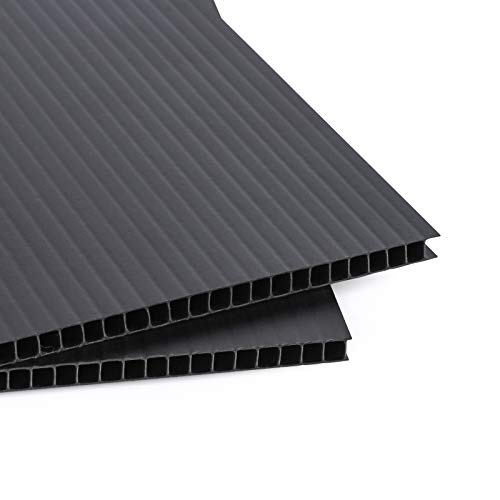
Size: Standard 24" x 36" sign blank holders, 3/16 inches thick corrugated plastic sign is durable, waterproof, and reusable for indoor or outdoor use.
6. Roll-Out Trays
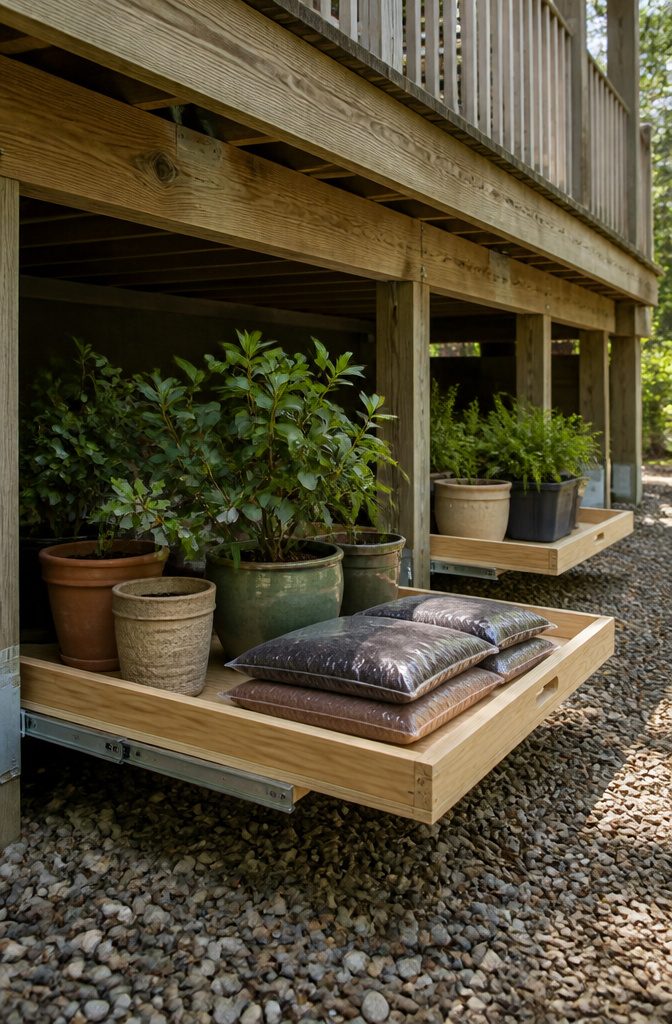
Roll-out trays sit somewhere between open shelving and the enclosed sliding drawers covered earlier.
They move out on the same hardware, but leave the storage open on top and skip the drawer front entirely, which makes them larger and better suited to bulky loads that would fight a confined box.
The tradeoff is exposure: everything sits out in the open, and the tray itself needs to be built from material that can handle direct weather without swelling or rotting.
Pressure-treated lumber or exterior-grade plywood sealed on every surface will hold up; standard construction-grade boards will delaminate within a season or two.
Weight matters more here than with smaller drawers. The same glides that carry a light bin of cushions will groan under a tray loaded with bags of potting soil or stacked pavers, so heavier-duty hardware is worth the upgrade.

Heavy-Duty Metal Panels: Our metal roof panels are crafted from high-quality galvanized steel, offering long-lasting weather resistance, corrosion resistance, rust prevention, and waterproofing. These panels remain robust and durable even under extreme weather conditions.

FAUX STONE SIDING PANELS in Santa Fe (warm sandy tan) – Low-height, random-length stacked stone look with strong linear patterns and minimal grout lines for a clean, contemporary exterior wall cladding.
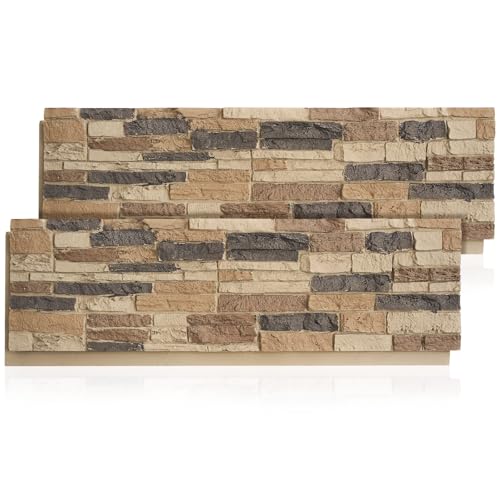
Coverage and Package: this package includes 2 fireproof faux panels, each approximately 11.8" x 45.6" in size; Providing nice coverage, these panels are ideal for large scale projects or covering expansive wall surfaces
7. Deck Boxes
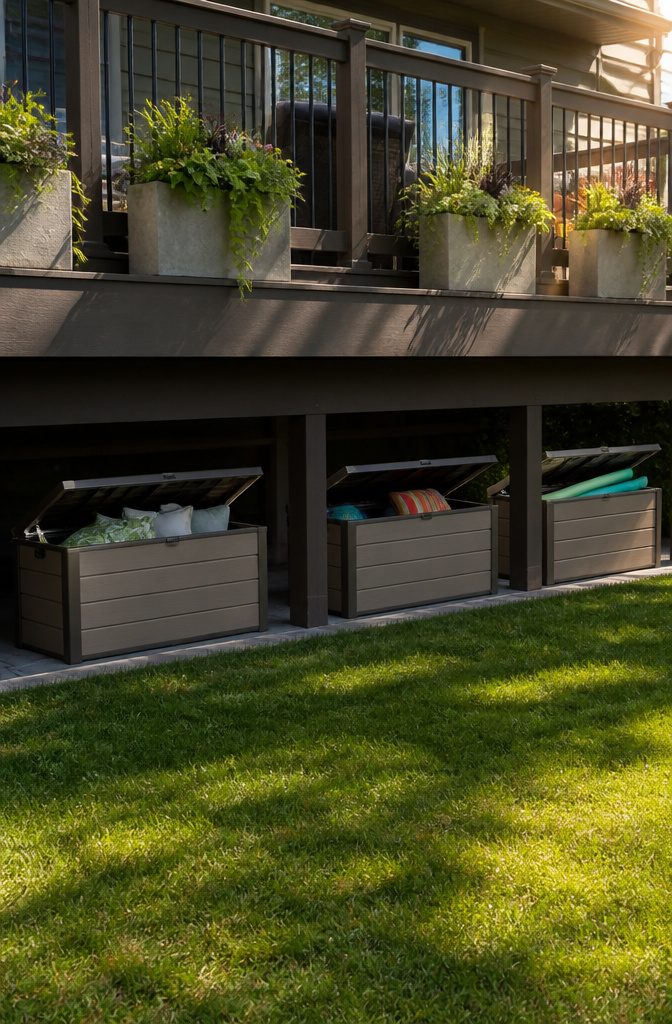
Freestanding deck boxes sit right on the ground beneath a raised deck and give you a way to keep belongings separated and enclosed without touching a single board of the structure itself.
They come in enough sizes to fit most deck clearances, and the better ones offer some waterproofing on their own, which helps if the whole under-deck area isn’t sealed up tight.
I see these as the lower-commitment option: you can shift them around as the season changes or take them with you when you move, unlike anything built in.
They suit cushions, pool gear, and garden tools best, the kinds of things that need dry air but not climate control.
Leave a few inches of clearance on all sides so you can sweep and check for moisture pooling underneath. Composite or PVC finishes hold up longest in that spot, though they cost more than resin.

𝟲𝟬 𝗚𝗮𝗹𝗹𝗼𝗻 𝗦𝘁𝗼𝗿𝗮𝗴𝗲 𝗖𝗮𝗽𝗮𝗰𝗶𝘁𝘆: EAST OAK outdoor storage box measures 42.1"L x 17"W x 21.6"H and is perfect for indoor and outdoor storage. It offers plenty of space to store all your belongings, perfect for cushions, tools, pool supplies, etc.

AMPLE STORAGE CAPACITY: This outdoor patio storage box offers a spacious 99-gallon interior, great for keeping patio cushions, gardening tools, and pool deck box accessories organized and protected

22-GAL. SMALL OUTDOOR DECK BOX: Keeps cushions, gardening tools, winter accessories, pool accessories, firewood, and more neatly stored and protected year-round, offering a compact and stylish outdoor storage solution
8. Weatherproof Containers
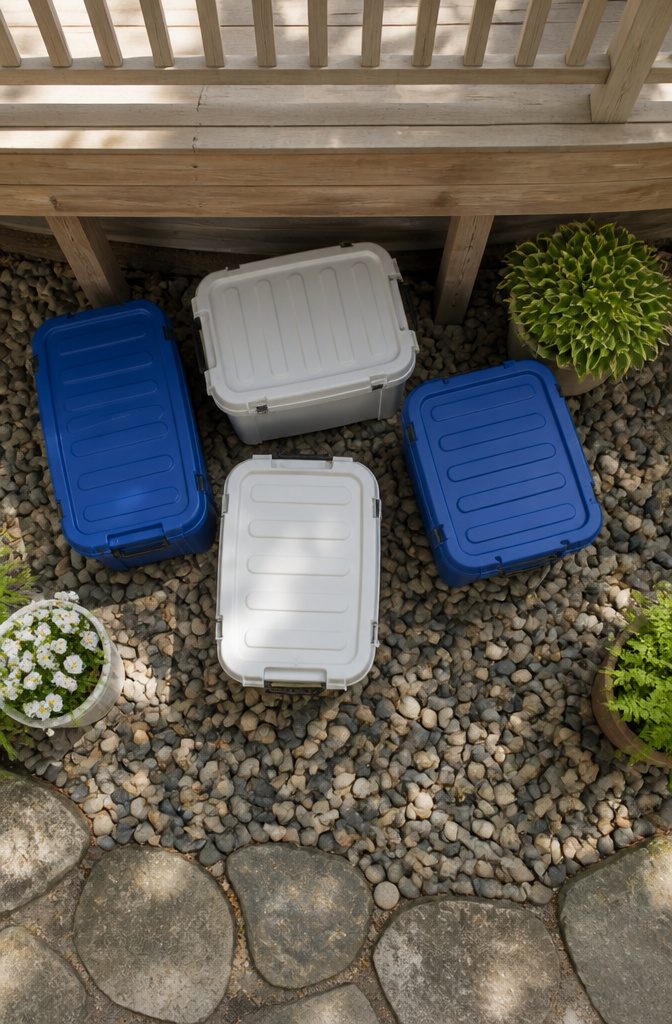
Weatherproof containers come in enough sizes to hold everything from hand trowels to gallon jugs of deck cleaner, and that range matters more than the label on the lid.
What actually keeps water out is a gasketed seal and latches that clamp the lid flat, not the word "weatherproof" printed in bold.
I look for the same build on marine coolers: if the rim has a rubber channel and the closure snaps tight, it will survive under a deck through a wet season. If it just clicks shut, plan on a tarp.
The real advantage is how these shift with the calendar. In April the 50-gallon tote holds potting soil and stakes; by October it flips to hose storage and the smaller 18-gallon bins take over for cushions.
Stackable shapes let you build a wall of them against a low beam without committing to framing, and when the lease ends or the deck plan changes, they roll onto a truck intact.
Labeling the ends saves the half-crouch search that turns under-deck work into a chore.

Heavy-Duty Double-Layer Construction - Built with dual-wall panels for superior strength and impact resistance, supporting heavier loads with ease. Customize with optional shelves (sold separately) to maximize storage efficiency and organization.

【Size of Outdoor Cabinet】The patio storage cabinet external dimension is 34.3in.W x 15in.D x 33.5in.H,internal dimension is 33.8in.W x 13.5in.D x 30.1in.H,ideal solution for storage small garden tools,furniture cushions,children’s toys,towels and other pool supplies.

PROTECTIVE ROUND ROOF DESIGN – The 32-inch diameter metal roof shields firewood from rain, snow, and debris, keeping logs dry and ready to burn while allowing airflow to prevent moisture buildup
9. Ceiling Mounted Racks
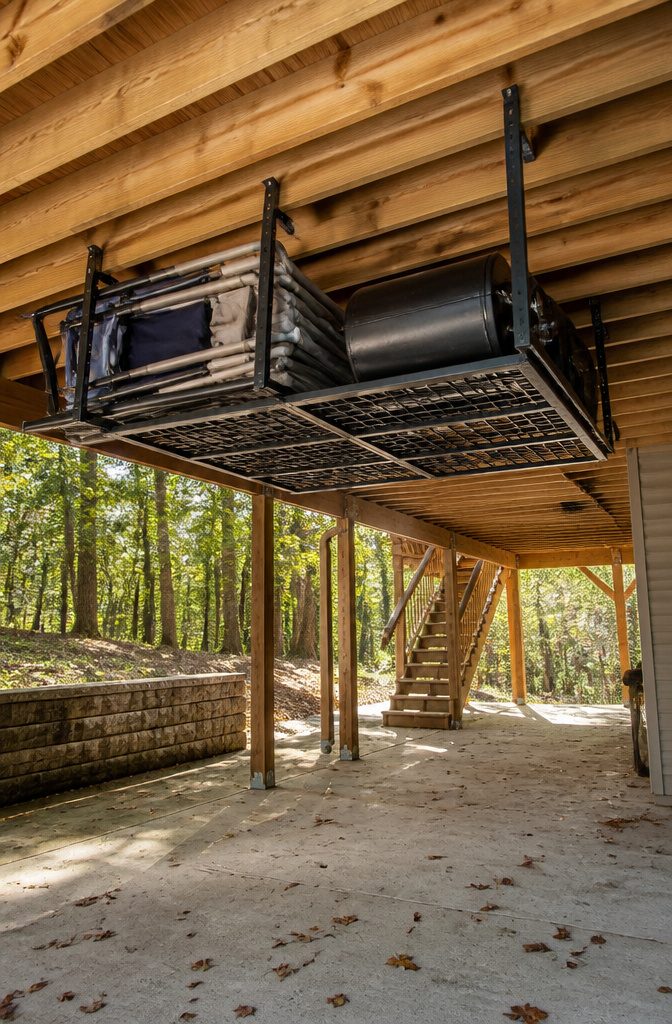
Ceiling mounted racks are the one vertical play in this list, and they make sense only if your under-deck height is generous enough to walk beneath without ducking.
The rack suspends gear overhead, which keeps it off the damp ground and frees the floor for bulkier items that do not lift easily.
Material and weight capacity vary by unit, so matching the rack to what you actually own is the first filter.
A rack rated for light yard tools will not hold a full patio-furniture stack, and the failure mode is not a bent bracket but everything crashing onto whatever sits below.
Humidity is the quiet problem.
Under-deck air holds more moisture than the open yard, and metal hardware without a rust-resistant finish will corrode faster than you expect. Check the coating, or plan to refresh it every couple of seasons.
What belongs up there: seasonal items used in bursts, like folding chairs or the grill you wheel out for July. What does not: anything you grab weekly, since the small ladder or reach will wear on you fast.
Installation means finding joists solid enough to take the load, not just the ceiling paneling. If the joists are spaced wide, you may need a span bracket, and that changes the hardware list entirely.

【High Quality】: Heavy Duty. Made of Non-Corrosion UV stabilized ABS plastic, could bear serious marine environment;

【High Quality】: Heavy Duty. Made of Non-Corrosion UV stabilized ABS plastic, could bear serious marine environment;
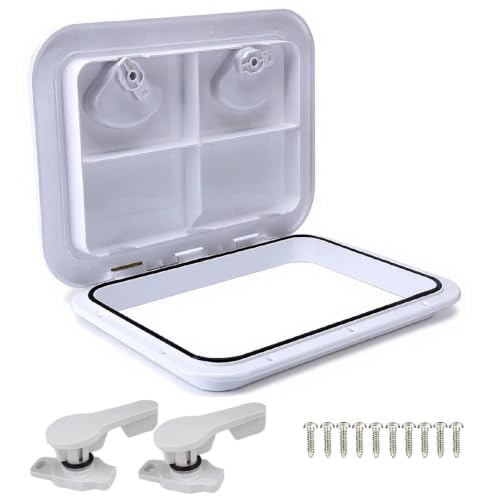
【High Quality】: Heavy Duty. Made of Non-Corrosion UV stabilized ABS plastic, could bear serious marine environment;
10. Hangers, Hooks, and More
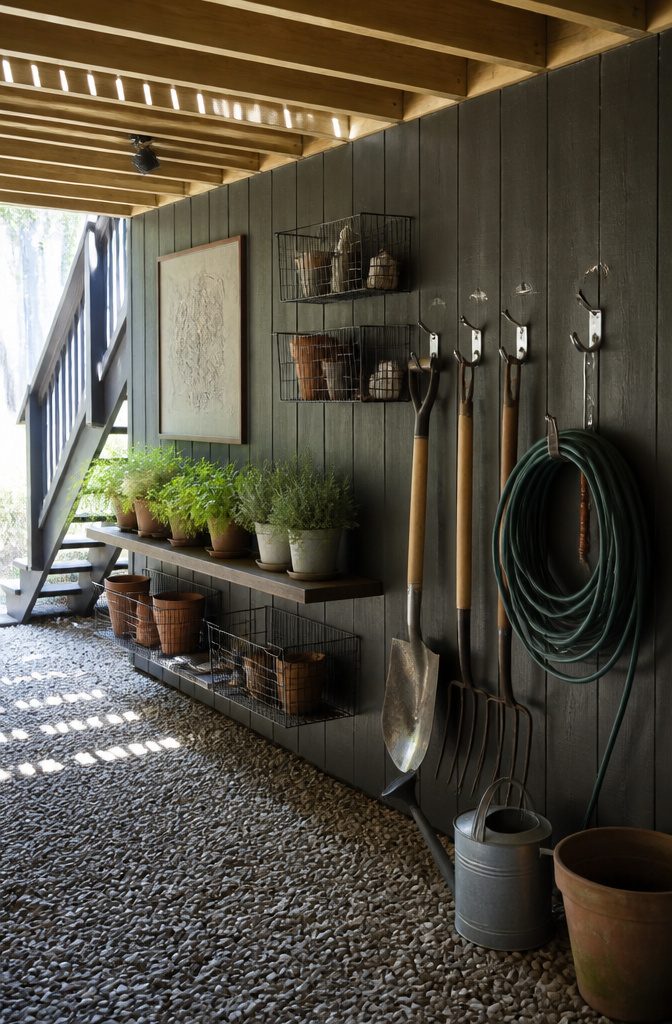
Wall-mounted hooks turn the vertical space under a deck into storage you can add in an afternoon.
I started looking at this after realizing how much floor area a hose and a few hand tools eat up in a narrow crawl space.
Garden tools, grilling tools, hoses, and chains all hang safely when the hardware is rated for exterior use. Stainless or galvanized hooks hold up where standard steel rusts within a season.
Small baskets clipped to the hooks or a wall-mounted rack keep smaller items from becoming trip hazards. The floor stays clear, which matters more than I expected when you are ducking under joists with an armload of pots.
Rail planters with built-in storage boxes work the same idea on the outer rim, though the sources split on whether the storage or the planting is the real point.
I would use them for herbs between the baskets; the greenery breaks up the visual clutter without costing extra square footage.
This system pairs with almost anything else you build underneath. It is also the easiest part to move or expand if your storage needs shift next summer.

Size: Standard 8" x 12" sign blank holders, 20mm thick corrugated plastic sign is durable, waterproof and reusable

Sufficient for You to Use: you will get 8 rolls (each 16 ft) of under deck drainage system, which will take care of your decks and keep them protected from rain and melting snow, enough quantity can meet your use needs; Note: to reduce product volume, 2 items are rolled into one roll; Please unfold the roll to check if the number of rolls matches your purchase quantity

Size: 18 inches tall x 12 inches wide, 4 mm thick.
11. Deck Stair Storage
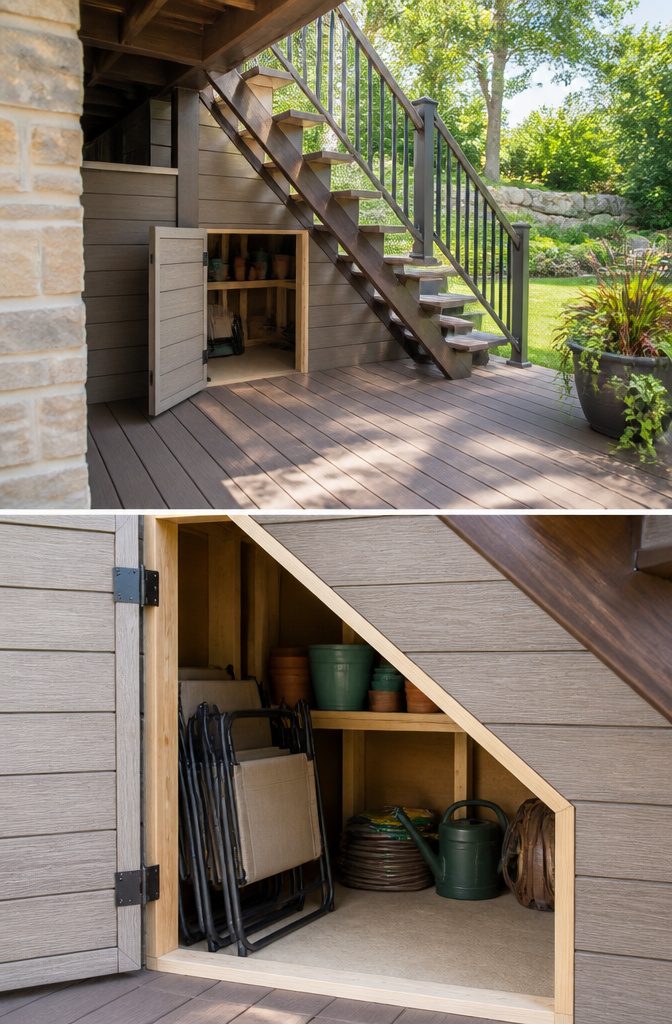
The hollow inside a set of deck stairs is dead space that only works if you planned for it during construction.
Adding a door to the stair riser or stringer side gives you a shallow bay, maybe eight to fourteen inches deep, depending on how the stairs were framed.
That depth fits folded chairs, a hose reel, potting supplies, or the grill tools you reach for every weekend. It will not take a cooler, a bike, or anything bulky.
This only works with open-riser stairs or a boxed frame that leaves a cavity.
Solid timber stringers, the kind cut from dimensional lumber with the sawtooth profile, do not leave a usable void; you need a platform-frame or housed-stringer build that creates a rectangular bay between treads.
If your stairs are already built, you are probably out of luck unless the carpenter left that cavity by design.
I have walked plenty of finished decks and found the space under the stairs sealed entirely, nothing but blocking and concrete footings behind the skirting.
Flooring inside helps if the ground underneath is bare soil or gravel. A scrap of composite decking or pressure-treated plywood keeps stored items off damp earth and makes the space feel intentional rather than an afterthought.
The door itself wants exterior-grade hinges and a latch that can handle seasonal swelling; a magnetic catch meant for interior cabinets will fail by the second summer.
Space Preparation Before You Build
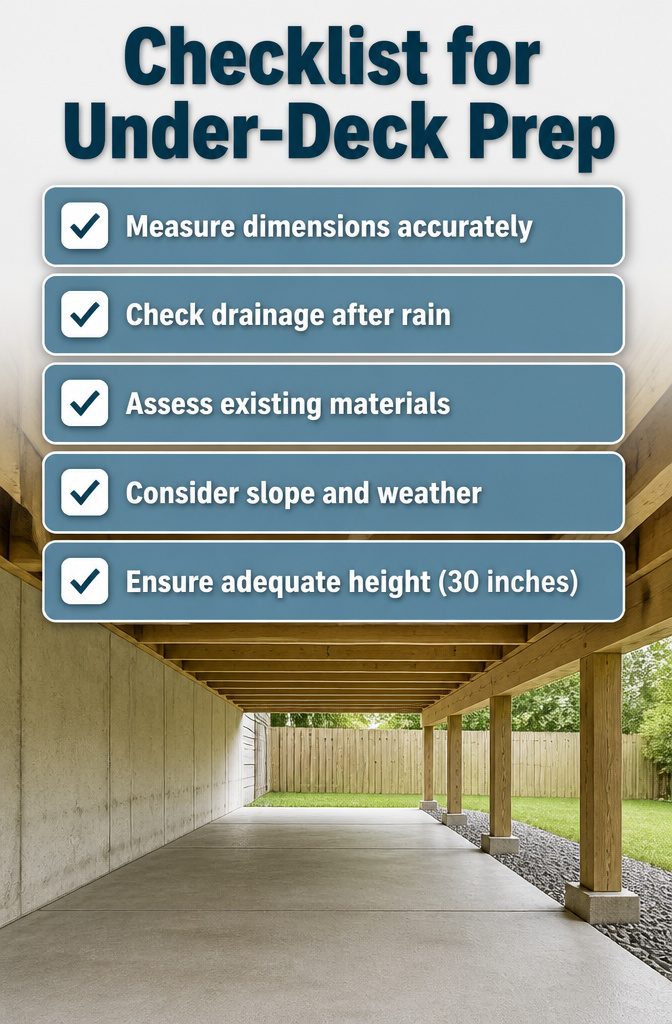
- Measure every dimension of the space beneath your deck and write them down before you buy a single board or bin. A height of 30 inches or taller gives you the most utility; anything less and you are storing flat things only.
- Check how water moves through the area after rain. If the ground stays wet or the space floods in storms, you will need to address drainage before you store anything worth keeping. An under-deck drainage system like Dexerdry, paired with PVC decking, can create a dry zone underneath; without that protection, your belongings sit in the path of rain, spills, and debris.
- Look at what is already under there. Mulch, sand, or soil will hold moisture against anything you set down. Pavers, gravel, or concrete make a more usable floor and keep storage containers or built structures from sinking or rotting where they sit.
- Consider the slope and weather your area actually gets. A deck on a slope sheds water differently than one on flat ground, and that changes whether you need waterproofing, reinforcement against flooding, or just better gutters above.
Weatherproofing What You Store
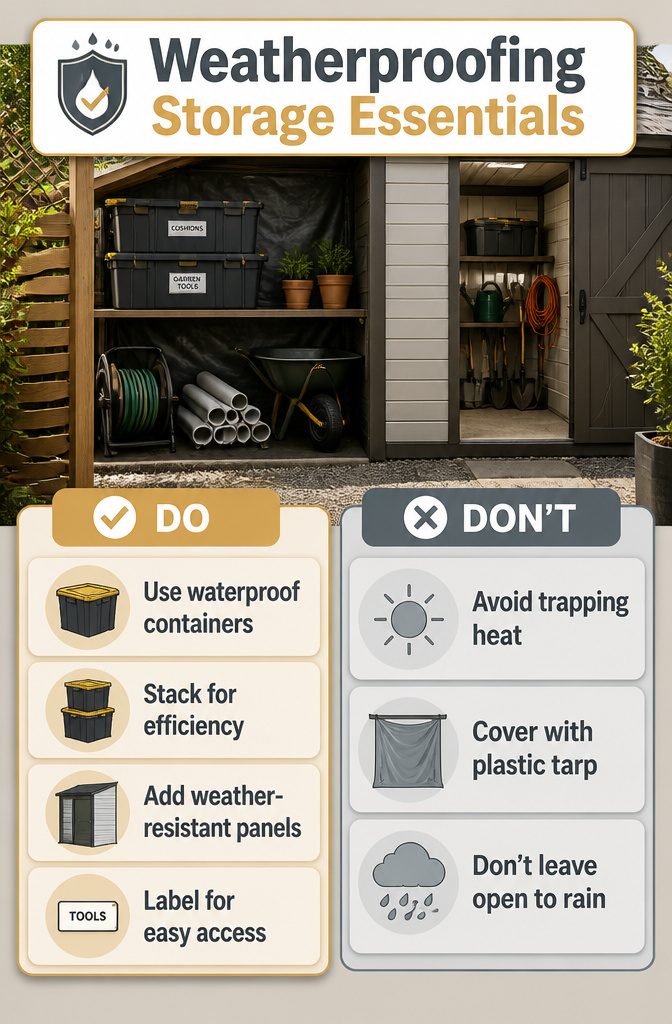
The first thing to figure out is whether your stuff actually needs a roof or just a wall.
A plastic tarp lining the back of a screen or lattice setup blocks ground moisture and keeps the space from looking like a junk pile, but rain still blows straight through.
That works fine for hose reels, PVC pipe, or a wheelbarrow that already lives outside year-round.
For anything with fabric, metal that rusts, or a power cord you plan to plug in next spring, waterproof containers are the simpler fix than rebuilding the enclosure.
Stackable bins with sealed lids keep deck cushions and gardening tools dry through a full winter, and labeling them saves the excavation project every time you need the pruners.
Concrete or gravel flooring under a fully enclosed room is what separates storage from a slow composting experiment. Add weather-resistant panels or a sliding door and you have a space that behaves like a shed without the permit fight.
The catch is heat: plastic tarp backing on siding traps warmth in summer climates, so anything stored there needs to tolerate temperature swings, not just water.
Making It Easy to Reach
The worst part of under-deck storage isn’t the rain or the spiders.
It’s the crawling. Once you’ve wedged yourself between joists to reach a cooler or a bag of potting soil, you start looking for anything that brings the stuff to you instead.
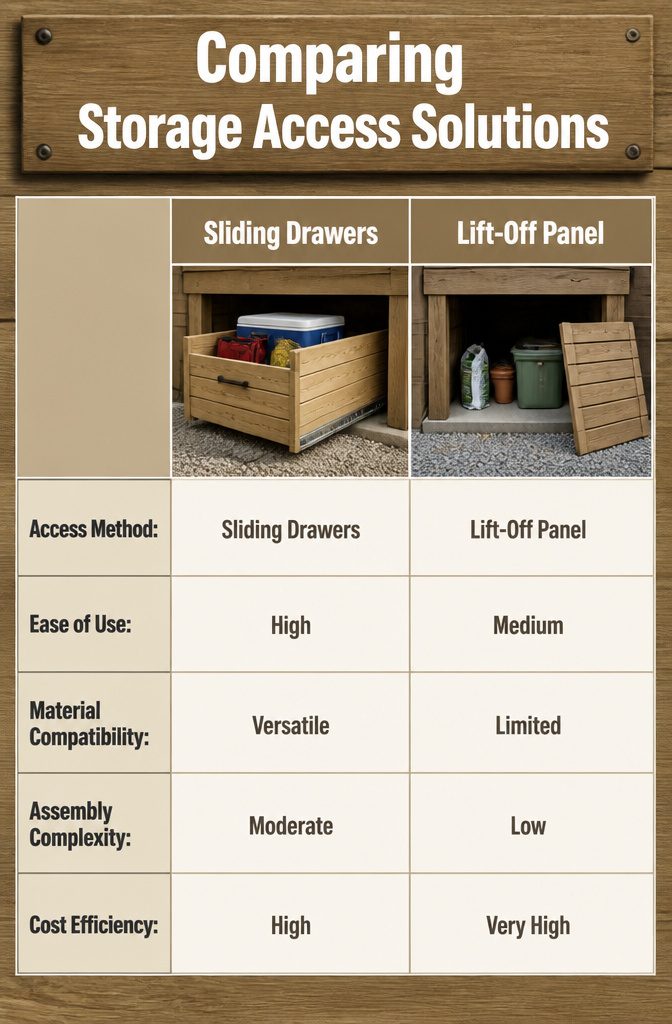
Sliding drawers solve this cleanly if you have the height. Custom-built units can sit flush with your deck’s edge and roll out on tracks, keeping tools, cushions, or kids’ toys within arm’s reach.
The catch is fit: drawers that don’t sit flush with each other jam, bind, and waste the space they were meant to use.
Measure twice, cut once, and if you’re hiring it out, insist the builder works from the actual deck framing, not the plan.
Where height is tighter, a removable panel or a small door changes the game. Weather-resistant panels that lift off or swing open turn the whole under-deck bay into a cabinet you stand in front of, not crawl inside.
Add a gravel or concrete floor beneath and you’ve got a dry, level surface to roll things out onto.
The real choice is mechanical versus simple.
Drawers feel slick until a track seizes after two wet winters. A lift-off panel has nothing to break, but you handle it every time.
For a weekend build on a few hundred dollars, I lean toward the panel: less to go wrong, and the money you save on hardware covers better wood.
How It Looks From the Yard
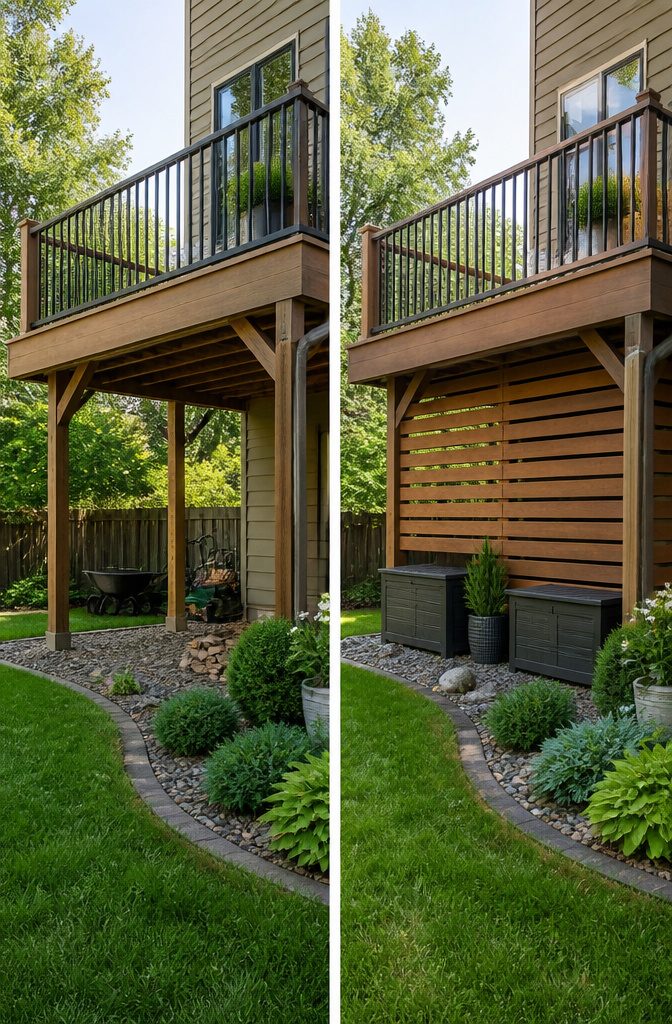
The view from the yard is where most under-deck storage ideas fall apart. Siding or cladding turns the underside into a solid wall that matches your house, and you can line it with plastic tarp to block moisture.
That same liner traps heat, so skip it if you’re storing anything that warps or melts.
Deck boxes help when full cladding is too much work or money.
They sit under a raised deck as enclosed islands, each one waterproofing its own contents even if the whole space underneath stays open. Multiple boxes let you sort by season or use without building walls.
The junkyard look starts when the eye catches five different materials at once.
Match your cladding or boxes to the deck boards above, or to the trim on your house. One consistent texture reads as intentional design; mixed leftovers read as storage you never finished.
Frequently Asked Questions
What are some under the deck storage ideas?
Enclosed storage rooms, sliding drawers, roll-out trays, deck boxes, weatherproof containers, ceiling-mounted racks, wall hooks, and stair storage all work well.
The right choice depends on whether you need full weather protection or just concealment, and how much headroom you have to work with.
How can I waterproof my under deck storage?
Use waterproof containers with gasketed seals and tight latches for the simplest fix, or build a fully enclosed room with siding, a door, and concrete or gravel flooring.
A plastic tarp behind cladding blocks some moisture but traps heat, so skip it for temperature-sensitive items.
What height is best for under deck storage?
Thirty inches of clear height is the practical minimum for usable storage; below that, you are crawling in or storing flat items only.
Measure from whatever flooring you install, not from bare dirt, since gravel or concrete both eat into that number.