
1. Classic Small Bathroom with Subway Tile and Brass
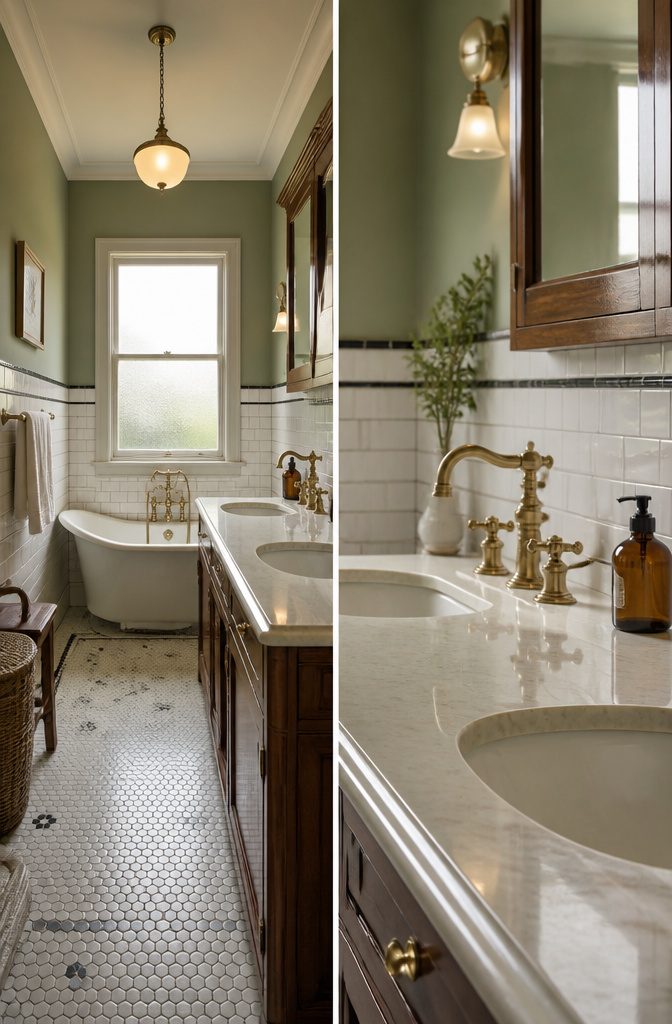
White subway tile and brass fixtures carry the 1920s bathroom better than almost anything else you can still buy new. The pairing reads as period-appropriate without demanding a salvage yard hunt that most weekend renovators do not have time for.
In a 36 square foot bathroom, the materials matter more than the layout, which is usually fixed by existing plumbing.
I set Sherwin-Williams Zircon on the walls to warm the white tile without drifting toward beige, then ran standard 3-by-6 subway tile around a Maui apron front porcelain enamel steel tub.
The tub shape is the detail that signals the era; the enamel steel keeps the weight manageable in an old floor system that may not handle cast iron anymore.
A large sink with double faucets, not a single centered one, changes how the whole room feels. The spread takes up counter space you were not using well anyway, and the two taps read as intentional rather than builder-basic.
The full renovation took six months, which sounds long until you account for ordering windows, a tub delivery that sat in a warehouse for three weeks, and the week I lost to a bad grout batch that dried gray instead of white.
That timeline is typical for a solo project with a day job, not a failure of planning.
2. Black and White Hex Tile with Salvaged Wood
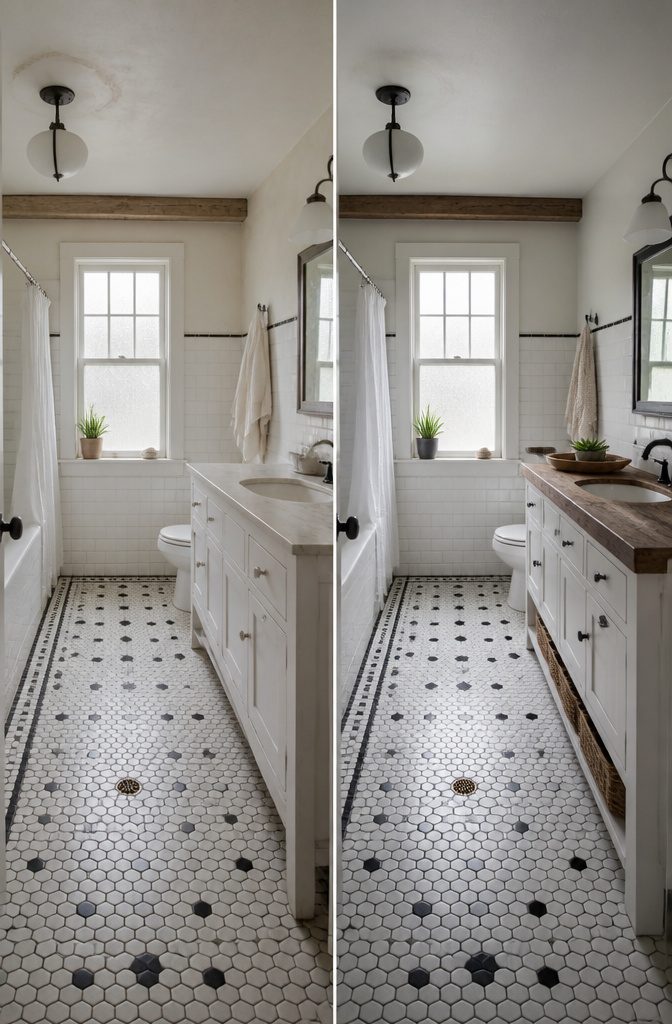
Black and white hex tile reads as 1920s because it actually was: the pattern sat in countless American bathrooms between the wars, small enough to slope toward the drain and forgiving underfoot.
Salvaged wood does not read as period at all, and that is the point.
A fully faithful 1920s bath can feel like a set, cold and echoing, because the originals relied on textiles and daily clutter for softness. Wood brings that warmth structurally.
A salvaged beam across a painted ceiling or a reclaimed vanity top gives the eye somewhere to rest that is not porcelain or chrome. The grain and the wear matter more than the species; skip anything sanded to furniture smoothness.
The tile sets the historical frame, the wood answers it with something found rather than reproduced. The pairing works because the two materials argue slightly, then settle.
For renters, a hex tile floor is a landlord conversation unless the bath needs replacing anyway.
The wood moves more easily: a thrifted stool, a salvaged shelf above the radiator, even a driftwood tray on the tank. Spend the weekend on the wood hunt, not the mortar bed.
3. Porcelain and Marble Fixtures
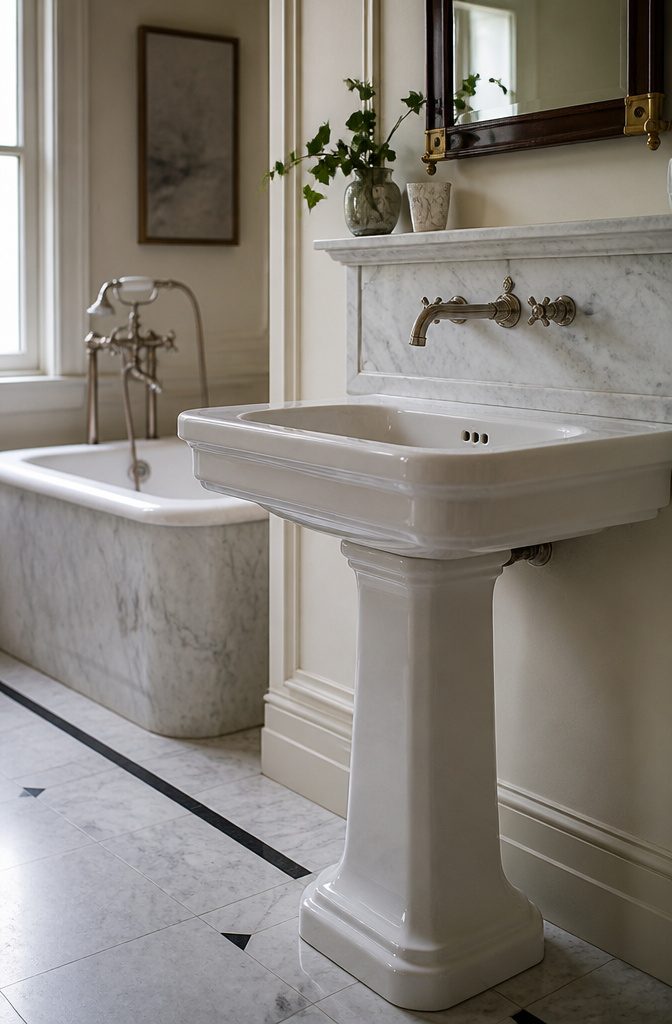
Porcelain and marble fixtures anchor any 1920 bathroom ideas you are actually trying to live with.
Around the turn of the century, manufacturers like J.L. Mott Iron Works shifted their catalogs away from marble basins and toward vitreous porcelain, and the 1908 catalog shows the change in progress.
You will see named suites, the "Imperial" and the "Warwick" among them, where the same shaped pedestal and tank came in either material with a price gap that mattered then and still signals what to expect now.
Marble survives in salvage yards and demolition supply, but the weight and the porosity make it a project. I have passed on two marble sinks because the underside was webbed with hairline cracks that would have wept eventually.
Porcelain reproduction from makers like St. Thomas or Water Monopoly gives you the profile without the gamble, and for a rental or a first bathroom overhaul that is where I would put the money.
Actual salvage porcelain makes sense only if you can inspect it in person, run water into it, and lift it yourself to check for hidden repairs.
The 1908 catalog prices do not translate directly, but the ratio holds: reproduction runs roughly a third less than verified antique porcelain in good shape, and marble in usable condition sits above both unless you get lucky at a local salvage auction.
The named suites also give you a search term that cuts through the generic "vintage style" listings online, which helps when you are trying to match a tank to a bowl that did not start out together.
4. Cottage-Style Bathroom with Timeless Elements
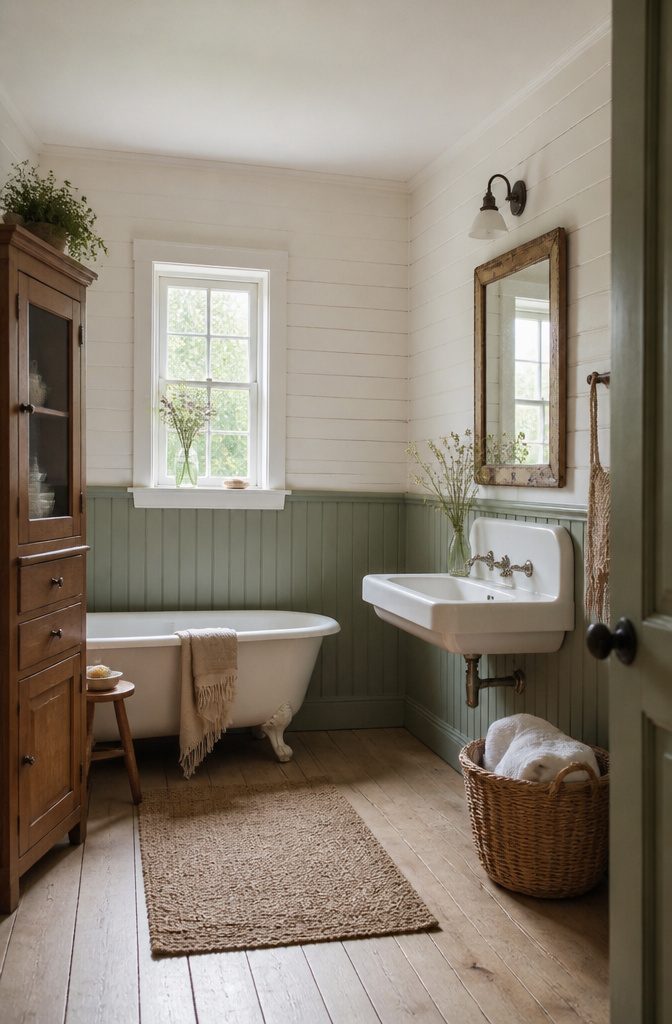
Cottage-style 1920s bathrooms trade the era’s hard geometry for something softer. Painted beadboard or shiplap on the lower half of a wall reads as period-appropriate without requiring perfect tile work, and it covers damaged plaster that landlords never fix.
I like keeping the upper walls in a muted sage or warm white so the room does not feel like a costume piece.
Fixtures that look found rather than matched are what sell the effect. A porcelain cross-handle faucet with some brass showing through the plating, a mirror with a chipped painted frame, a clawfoot tub you refinish yourself rather than send out.
The imperfection is the point. A $200 weekend with a wire brush and oil-rubbed bronze spray paint on mismatched hardware beats $800 for a matched set that screams reproduction.
For renters, this approach means peel-and-stick hex tile on the floor and a curtain on a tension rod instead of a glass shower door.
First-home owners can swap in a console sink with turned legs and call the plumbing done. The timeless elements, the painted wood and the unpolished brass, carry across decades without demanding you source every piece to 1924.
5. Transitional Bathroom Between Old and New
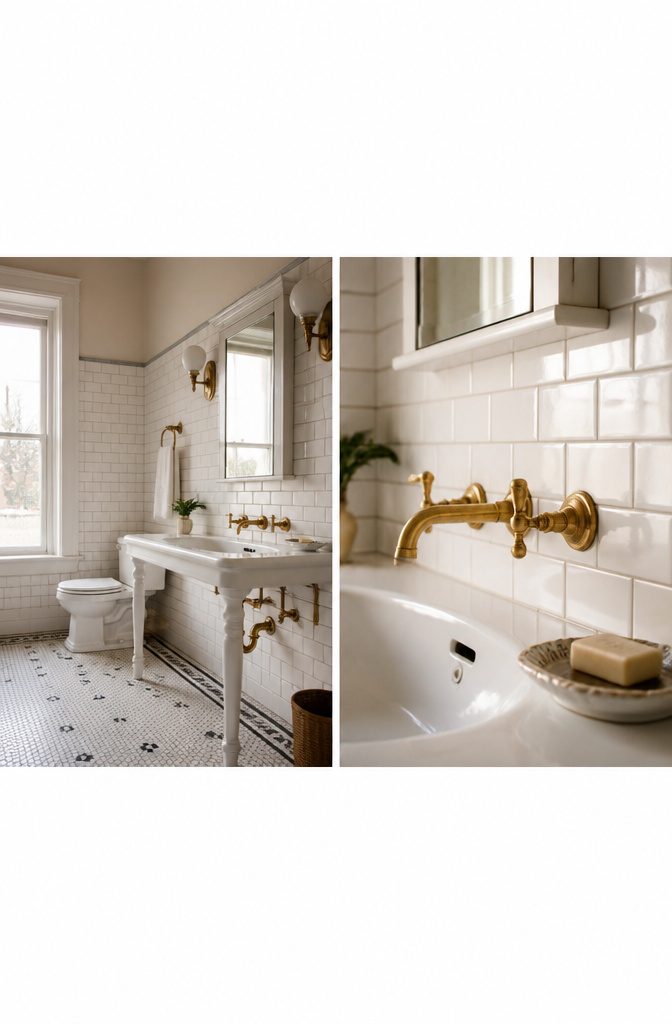
Most 1920 bathroom ideas I see in magazines show full restorations with period-correct everything, but that is not how most of us get to live.
A transitional bathroom keeps the visual weight of the era, the tall baseboards, the substantial crown, the fixtures that feel built from solid material rather than pressed from thin sheet, while accepting that modern plumbing standards and water efficiency requirements are not negotiable.
The compromise lives in the proportions.
A 1920s pedestal sink read as generous because the basin was deep and the column flared; today’s WaterSense-compliant replacements often shrink the basin profile to meet the gallon limit, so the piece looks apologetic where it should anchor the room.
I have found that choosing a console sink with legs rather than a full pedestal recovers some of that visual mass without fighting the modern trapway requirements underneath.
Brass finishes help too, not as a coating but as a material with thickness, because the eye reads heft even when the code-mandated internals are plastic and ceramic cartridge.
The tile surround is where you can almost always go fully period: subway, hex, or penny tile in the right mortar color carries the 1920s impression even when the toilet behind it is a standard 12-inch rough-in from a big-box store.
6. Colorful and Character-Filled Designs
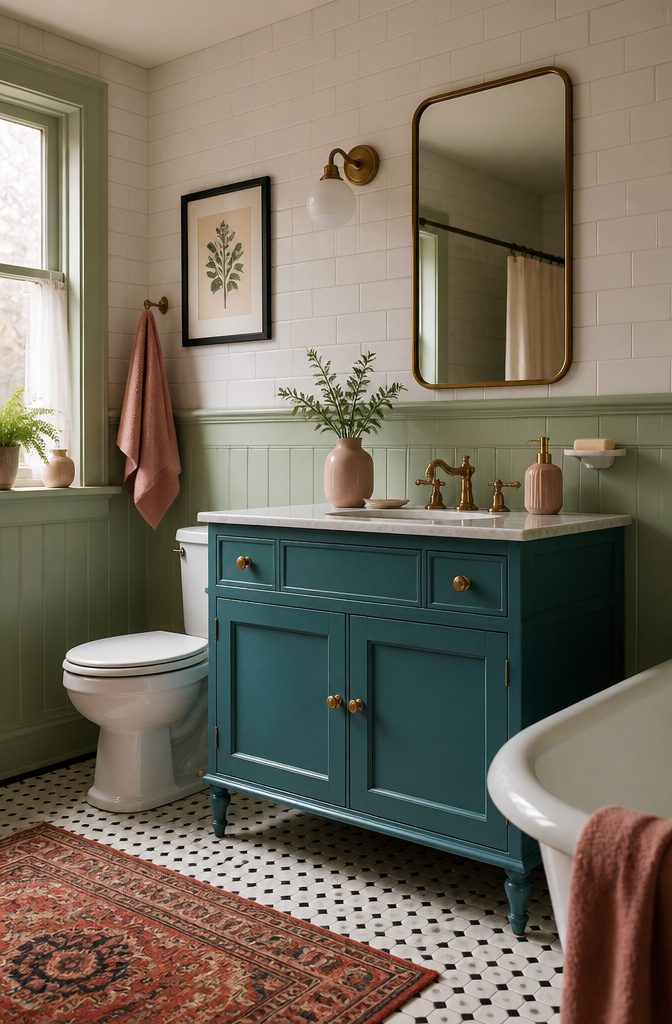
The 1920s bathroom did not live in black and white. Mint green, dusty rose, butter yellow, and soft peach all showed up in period tile catalogs, usually as field colors paired with white trim rather than as loud accents.
A muted green wainscoting with white subway tile above reads as researched period style; a bright teal vanity reads as vintage-themed.
The difference is saturation. Paint manufacturers now label some lines as "historic," but the chip alone does not guarantee the color carries the slightly dusty quality that keeps it from looking like a 1950s diner throwback.
Bold contrast works too, though the period handled it differently than we might now.
A deep navy or forest green on upper walls, with white fixtures and chrome or brass below, gives the high-contrast look without the checkerboard fatigue of black-and-white everything.
The key is keeping the bold color flat and matte, not glossy, so it sits back rather than shouting.
Art and small decorative pieces finish the room without requiring renovation. A framed botanical print, a small wall-mounted soap dish in painted porcelain, or a simple glass vase in the window adds personality that feels collected rather than staged.
I have seen bathrooms where a single 1920s perfume advertisement, framed simply, does more for the period mood than any reproduction fixture could manage.
The pieces do not need to be expensive; they need to feel specific to the decade rather than generically old.
7. Elegant Antique Bathroom with Classic Fixtures
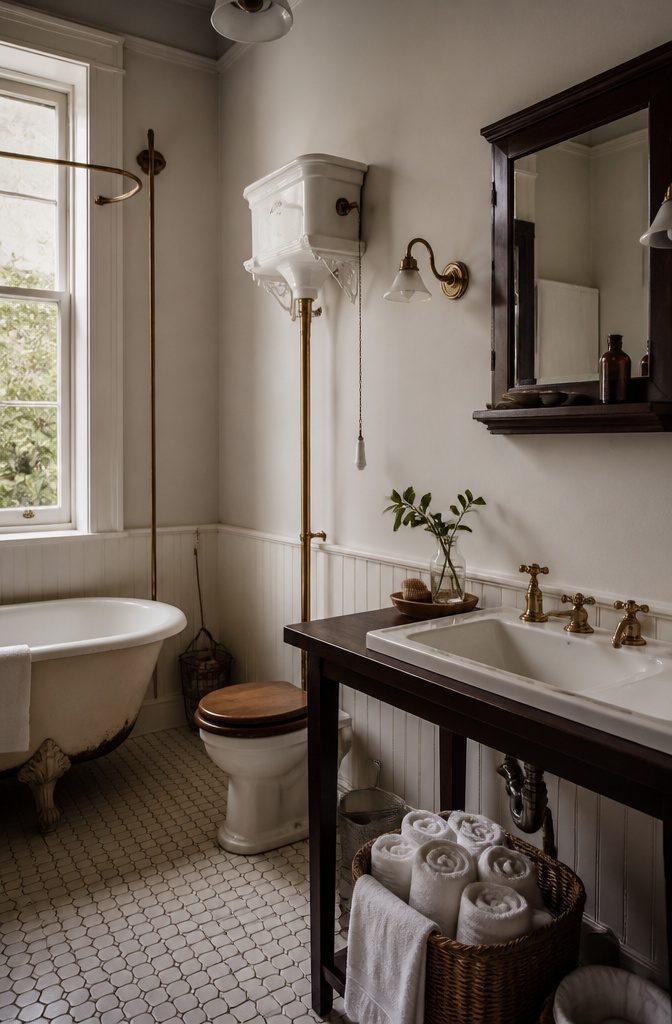
The fully committed antique bathroom starts with what you find, not what you sketch.
Salvaged 1920s fixtures carry the patina and proportions that reproductions smooth away, but they also carry the wear: a century of mineral deposits in a faucet body, cast iron tubs with enamel worn to shadow at the drain end, porcelain sinks that crack if you torque the fittings wrong.
Building around the piece means measuring your room to the fixture, not the fixture to your room.
I watched a friend spend six months hunting a wall-mounted toilet tank with the right depth to clear her plumbing stack; the one that fit had a hairline fracture she epoxied from the inside, and it outlasted the reproduction she almost bought instead.
Coherence is what sells the look, not the price tag. A $200 salvage sink with original brass faucets, a refinished tub from a demolition haul, and a new toilet in a period profile read as intentional.
Mixing one genuine piece into a room of big-box reproductions reads as accidental. The limitation becomes the design: that salvaged sink has no overflow, so you learn to watch the depth.
The original faucets need washers every few years, and you keep a box of them because the threads are non-standard. The elegance is in the room holding together, not in any single item proving what you spent.
Color Palettes That Read as 1920s
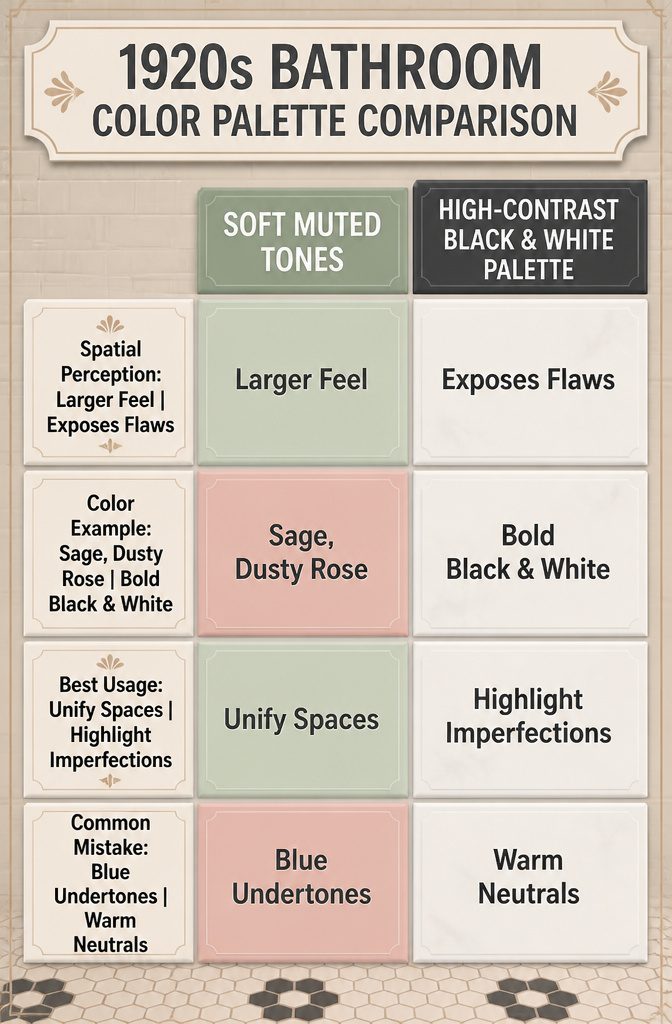
Soft muted tones carry a 1920s bathroom better than most people expect. Sage, dusty rose, and warm cream read as period-appropriate without demanding exact historical accuracy, which matters when you are working around existing tile or a landlord’s white fixtures.
These colors also make a small bathroom feel larger than it is, since saturated hues advance toward the eye and shrink walls inward.
The alternative is the high-contrast black and white palette that defined so many original 1920s baths.
It is bolder and less forgiving; every grout line and water spot announces itself. In a rental or a first home with tired surfaces, that contrast exposes rather than flatters.
Paint color does the heaviest lifting for spatial perception. A warm light gray that stays neutral without drifting cold can unify mismatched elements without fighting whatever original tile remains.
Sherwin-Williams Zircon sits in that useful middle space: light enough to bounce light around a windowless bath, warm enough to keep period fixtures from looking orphaned against a sterile backdrop.
I have seen it read almost beige in south-facing light and quietly gray in northern exposure, which means it adapts rather than dictates.
The mistake is choosing a gray with blue undertones against old white fixtures. The two fight each other, and the bathroom feels like a repair rather than a design.
Tile Choices and Where to Use Them
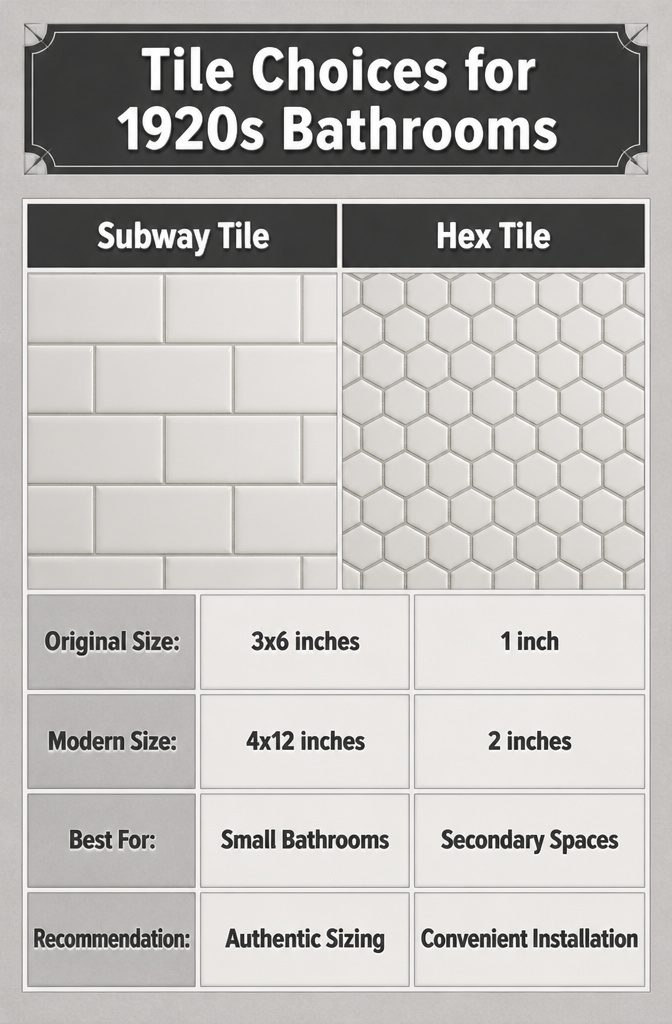
Subway tile and hex tile were the two workhorse patterns of 1920s bathrooms, and both are stocked everywhere now in dimensions that did not exist a century ago.
The original subway tile ran about 3 by 6 inches, a proportion that reads as long and low and stretches a narrow room sideways.
Walk into a hardware store today and the same name gets slapped on 4 by 12s and even 4 by 16s, which stack into something closer to a grid and lose that horizontal flow entirely.
For a small bathroom, the 3 by 6 is still the proportion that does the visual work, and the difference is immediate when you hold the two up against a wall.
Hex tile came in 1-inch mosaics originally, tiny enough that the grout lines formed a secondary texture and the floor read almost like fabric.
Modern sheets often jump to 2-inch hex, which installs faster and costs less but changes the whole effect; the pattern gets chunky and the vintage feel thins out.
I would not use the larger size on a floor if the goal is period accuracy, though on a shower ceiling or a niche back where you see it from inches away, the scale matters less and the modern sheet saves a headache.
The place to be strict about authentic sizing is anywhere the eye lingers: the main wall behind a clawfoot tub, the floor you step onto every morning.
In a secondary space or a rental where you are tiling over bad vinyl in a weekend, the modern equivalents function fine and nobody but you will count the inches.
Fixtures and Fittings to Source or Reproduce
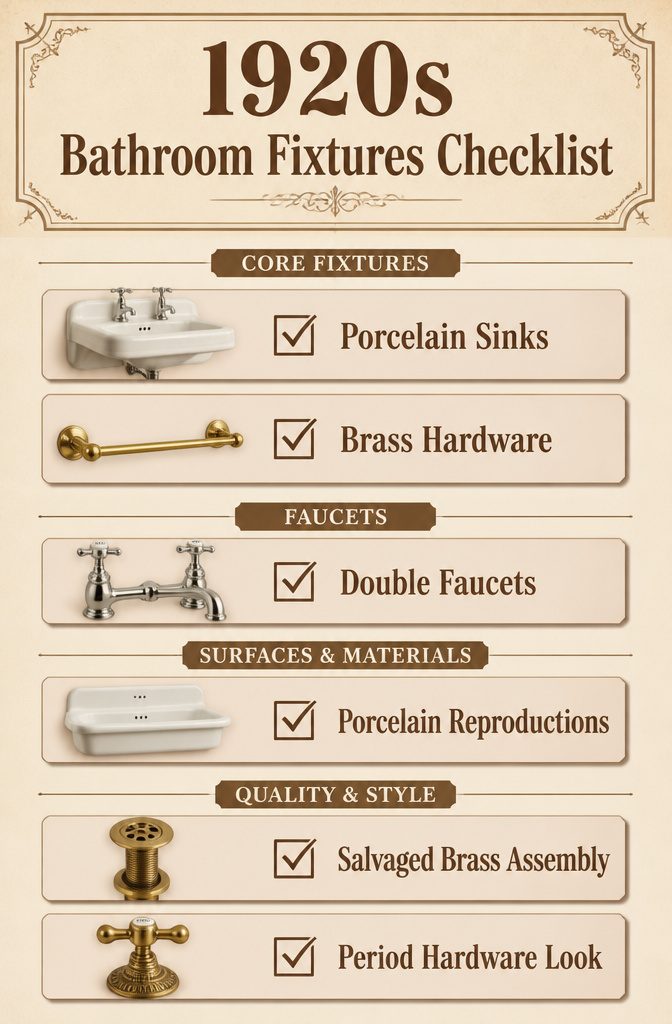
Porcelain sinks with their rolled edges and deep basins are still the easiest 1920s fixture to buy new, and several manufacturers keep them in production with the original front-overflow design.
Brass hardware is another story. The solid cast pieces that once came standard on every medicine cabinet and towel bar have been largely replaced by lighter, plated versions that dent under normal torque.
I have ordered three different "brass" toilet paper holders in the last two years, and only one had the weight and thread quality to survive installation without stripping.
Double faucets, the kind with separate hot and cold taps mounted on a shared bridge, are having a minor manufacturing revival, though the supply lines require planning most single-hole vanity owners forget to account for.
The shift from marble to porcelain that happened in the early 1900s, documented in Sears and Montgomery Ward catalogs, is actually helpful now: porcelain reproductions cost a fraction of what salvage marble demands, and they ship without the hairline cracks that make old slabs a gamble.
What I have found worth the hunt is anything with moving parts. A salvaged brass drain assembly, properly de-lacquered, will outlast three new ones.
What is easier to reproduce is the look of period hardware. Several small foundries now cast bridge faucets from original patterns, and the difference from genuine salvage is invisible once installed.
The reproductions also take modern cartridges, which matters when you are turning the project around in a weekend rather than waiting for a plumber who understands vintage threading.
Storage Without Breaking the Period Look
Open shelving and recessed medicine cabinets were the two storage moves that kept my last bathroom renovation feeling intentional rather than patched-together.
A medicine cabinet set into the wall between studs reads as original architecture, not a late addition, and it was itself a period feature in the 1920s when indoor plumbing finally made the bathroom a dedicated room.
I used a simple framed mirror with a cabinet behind it, painted to match the trim, and the shadow line around the frame made it look like it had always been there.
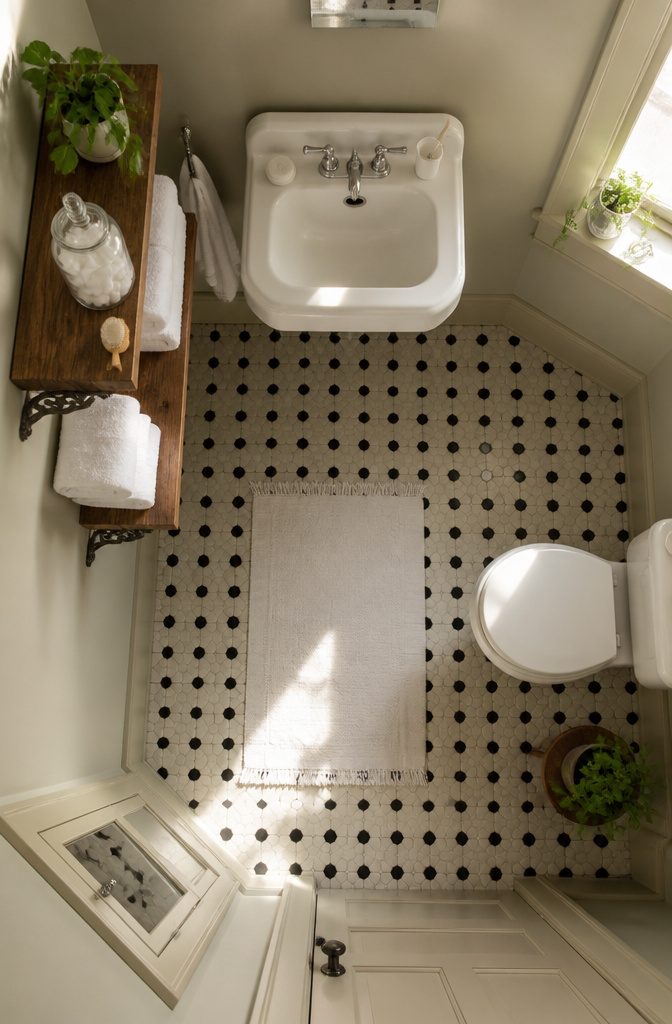
For the wall opposite the sink, I installed two pine shelves on cast-iron brackets I found at a salvage yard.
The brackets carried the weight of towels and a small basket without crowding the narrow floor plan, and the wood picked up the warm tone of the hex tile grout.
Open shelving in a small room does not hide clutter, so I kept the contents minimal: rolled white towels, a glass canister for cotton, one small plant.
The medicine cabinet handled the toothpaste and razors, the shelves handled what was meant to be seen.