1. Invest in a Closet System
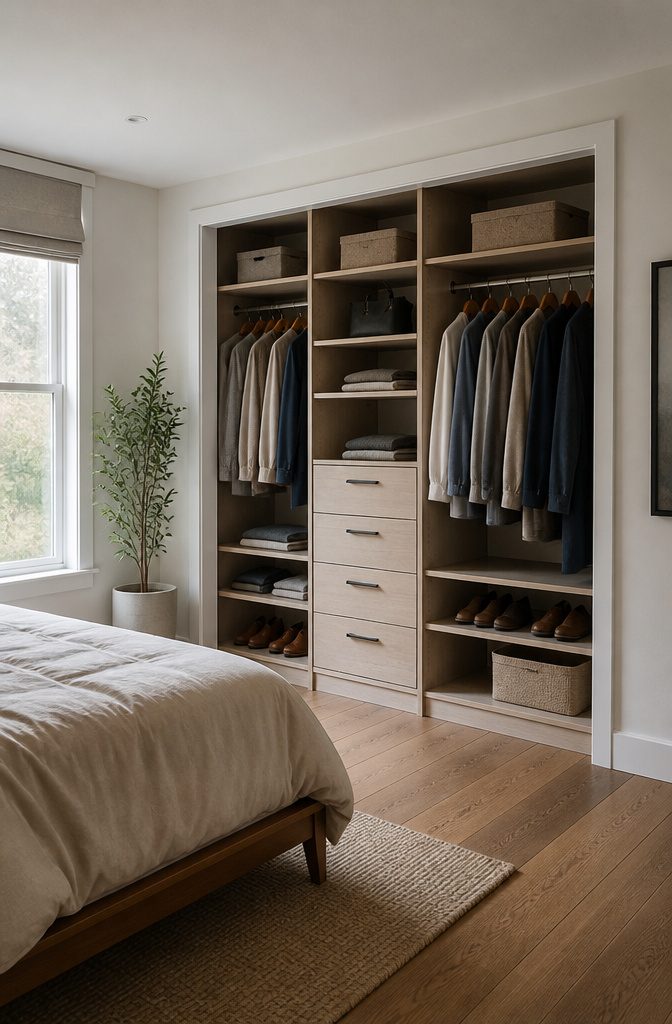
Wall-mounted closet systems replace the standard rail and shelf that wastes half the vertical space in most bedroom closets. A double rod alone doubles hanging capacity, and adding shelves or drawers fills the gaps where shoes and folded clothes usually pile up.
The Elfa system earns its reputation among organizers because every piece adjusts. You can start with a single rod and shelf, then add drawers later when the budget loosens or swap a shelf for a second rod if your wardrobe shifts. That flexibility matters when you’re renting and might need to reinstall in a narrower closet next year, or when you’re a first-home owner still figuring out how much of each category you actually own.
The tradeoff is upfront cost and a Saturday of drilling into studs. Elfa runs higher than the wire kits at big-box stores, and the hardware mounts directly to the wall, which means patching holes before you move out. For renters, that math only works if the closet stays useful long enough to justify the install, or if you negotiate with a landlord who sees the upgrade as a selling point.
"By utilizing a wall-mounted closet system, like those available at IKEA or The Container Store, you can triple the storage capacity of even the smallest closet."
Tripling capacity requires using every surface, including the back of the door. Skip that last piece and you’re leaving a third of the potential on the table.
2. Double Hanging Rods
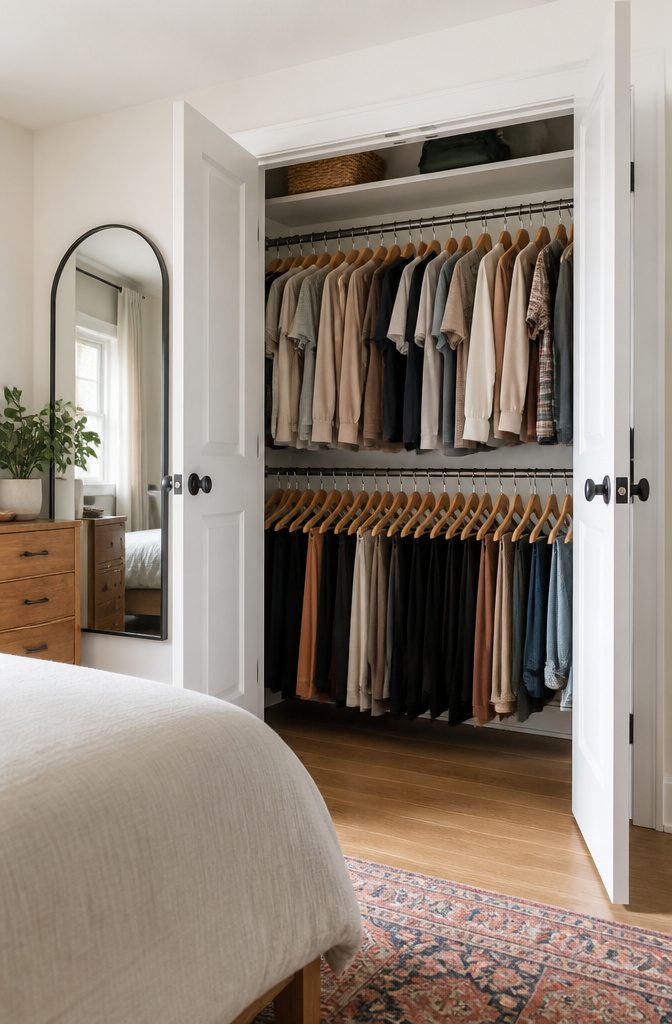
Most bedroom closets waste the full height of the wall on a single rod that sits around 40 inches high. That leaves a lot of dead air above your shirts and a lot of floor space below them collecting whatever gets kicked in last. Adding a second rod at 80 inches splits the hanging area into two usable zones. Shirts, blouses, and pants folded over hangers fit neatly on the upper level without dragging, while the lower rod handles the same items at a comfortable reach. The gap between them stays clear enough that nothing gets crushed.
The real payoff shows up at the bottom. With the lower rod sitting at that standard 40-inch mark, the floor space beneath it opens up for a shoe shelf or a row of bins. In my own closet, that bottom shelf became the only place where shoes actually stay paired instead of drifting into a pile. The whole setup costs about fifteen dollars for an extra rod and brackets if the studs are already there.
3. Use Specialized Boot Hangers
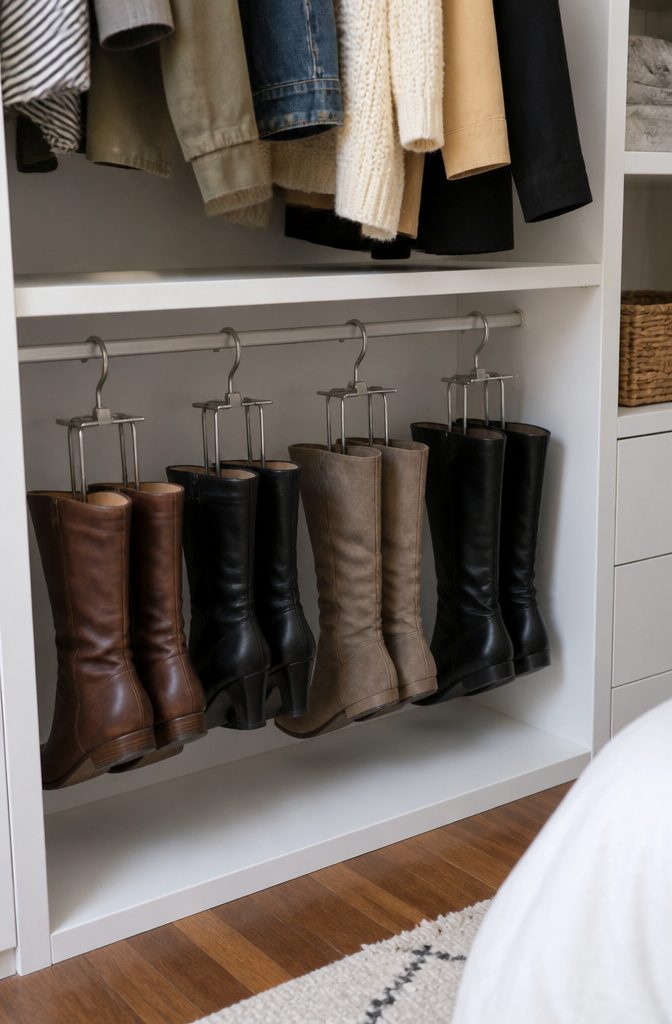
Boots left on shelves fold over and collapse into soft leather pancakes, or they slide down behind whatever pair you set in front of them and stay hidden until spring. On the floor they collect dust, scuff at the toes, and tangle into the heap every other shoe eventually joins.
Specialized boot hangers with clips solve this by turning boots into hanging items. The shaft clips hold them upright on the closet rod, pairs stay together and visible, and the floor space underneath stays clear for a bin or a laundry basket. I like that the clips grip without pinching the leather, and the hook swivels so both boots face the same direction no matter how crowded the rod gets.
The hangers also use vertical space that usually goes empty below shirts and jackets. A standard rod sits high enough that most boots hang clear of anything underneath, so nothing gets crushed and nothing gets lost.
4. Matching Baskets
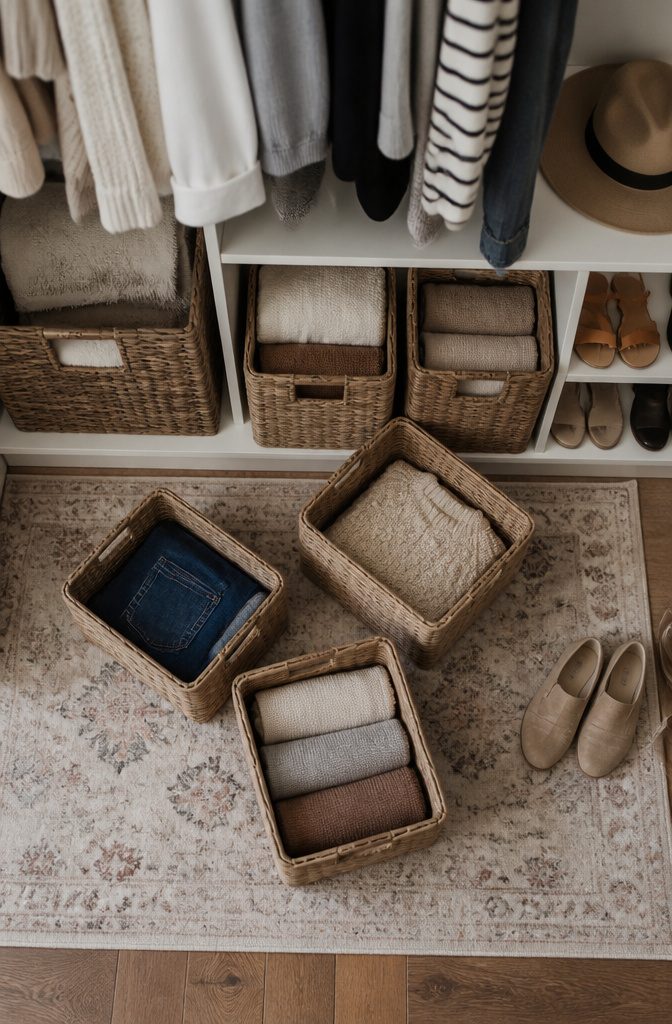
Uniform baskets do more than hide clutter; they let the eye move across a shelf without catching on every mismatched edge. I learned this the hard way after stacking three different laundry baskets on a closet shelf and realizing the chaos read louder than the contents. A matching set, sized to sit flush from front to back, turns a jumble of accessories, socks, or folded undergarments into something that looks intentional even when you are rushing.
The catch is the depth. Standard closet shelving runs 11–15 inches deep, and most decorative baskets sold for living rooms stop well short of that. A basket that leaves three inches of dead space behind it wastes the shelf and slides forward every time you reach past it. Measure your shelf before you buy, and look for a set that fills that depth without overhanging the front edge. Labels help, but the real discipline is the basket itself: one type, one size, one clean line across the whole row.
5. Shelf Dividers
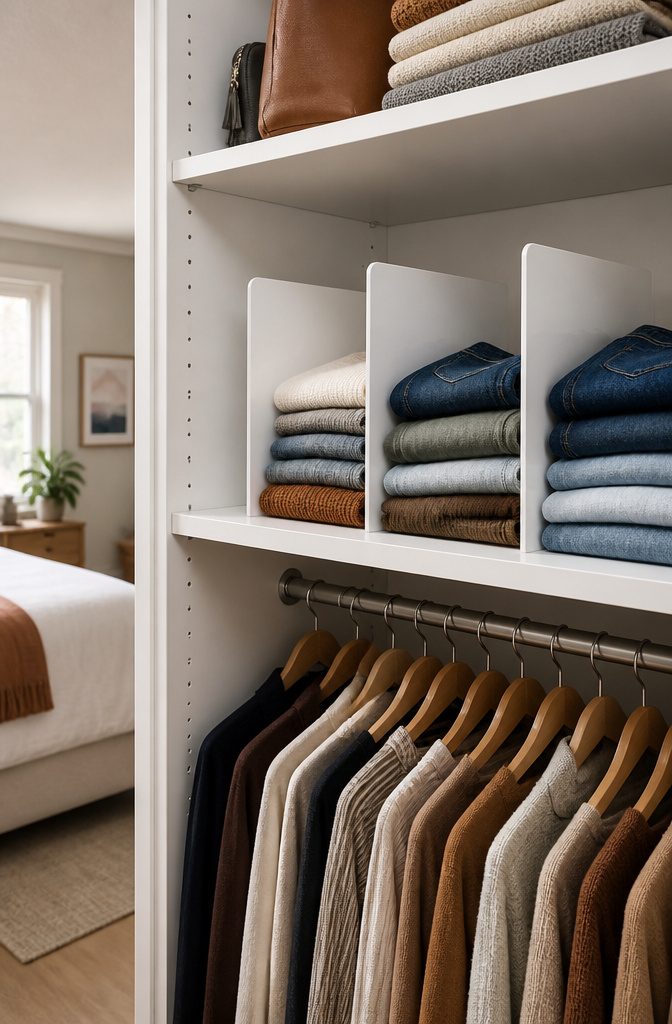
Folded stacks have a way of leaning into each other until the whole shelf looks like a landslide in slow motion. Shelf dividers stop that collapse by giving each stack its own narrow bay, which keeps sweaters upright and visible enough that you can pull one without triggering the rest. The same structure works for jeans and for linens, though the heights differ and you will want to set the divider spacing to match.
Acrylic and wire versions slide onto existing shelves without tools, which matters when you are working around a closet system you cannot drill into or do not own. I have seen professional organizers use them to create tidy sweater stacks that stay put through normal use, and the no-install fit means you can reposition them when seasons change or when you realize your denim pile is thicker than your knit pile.
6. DIY Closet Systems
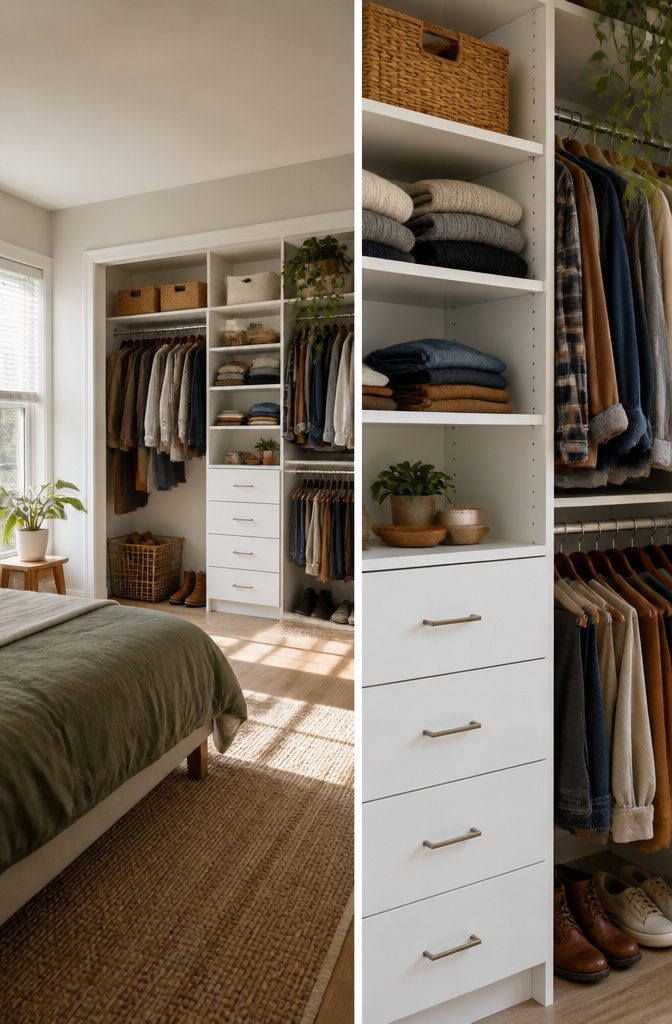
A custom-built closet system lets you design around the exact pile of shoes or stack of sweaters you actually own, not the generic layout a manufacturer guessed at. The tradeoff is Saturday spent measuring twice and cursing once, versus walking out of a store with a finished box.
IKEA’s MALM 3-Drawer Dresser is the piece renters keep sliding into closets as a stand-in for built-ins. It stores socks, underwear, swimwear, and foldable clothes like t-shirts without drilling a single hole in the wall, and it rolls out with you when the lease ends. Measure the exact width of your closet opening before you buy, though. A dresser that sticks past the door frame turns your morning routine into a daily shimmy.
When you build yourself, you can add the narrow vertical pull-out for ties or the hat shelf at the height that matches your collection. The cost is hours, not hundreds extra. For anyone who would rather spend the weekend on something else, the pre-made route exists. For anyone who has stared at a closet and thought "if only this one shelf were six inches lower," the sawdust is worth it.
7. Stackable Shoe Bins
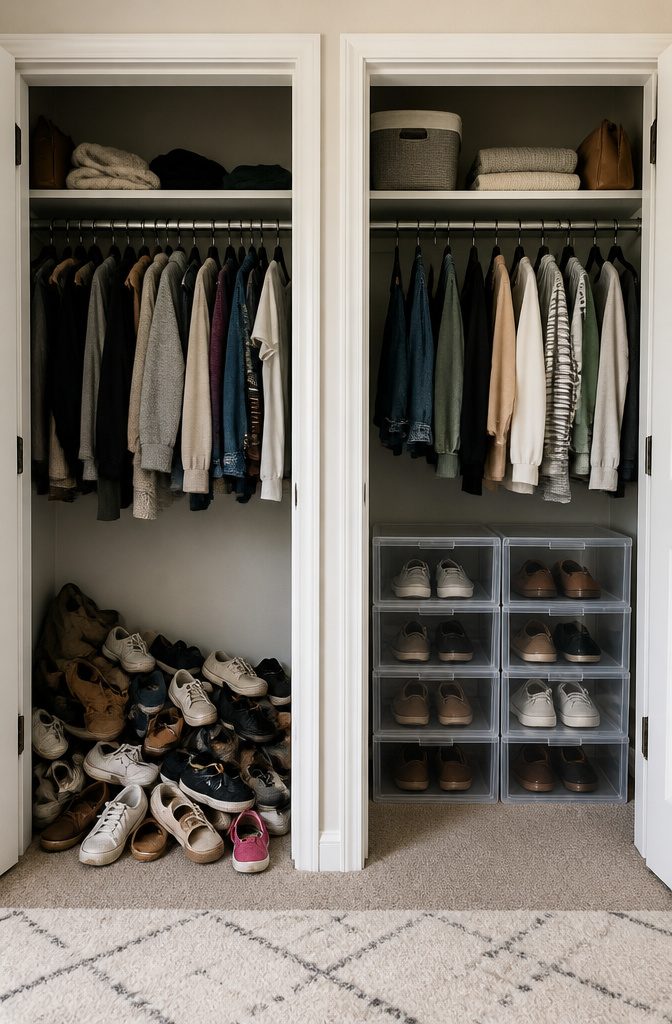
Shoes eat shelf space in a way nothing else does, and the gap between your top shelf and the ceiling is usually dead air. Stackable shoe bins turn that vertical space into storage you can actually use. The clear front panel keeps pairs visible without opening anything, and the enclosed sides block dust better than an open rack.
Clear shoe boxes do almost the same job, but the drop-front bins stack more securely and open without unstacking the whole column. Either beats a pile of shoeboxes, though the rigid bins hold their shape where cardboard eventually sags.
The measurement that matters here is height. Bins around 7 inches tall fit two stacks on most closet shelves, one in front and one behind, without wasting the depth of a standard 12-inch shelf. Taller bins force you into a single row and leave half the shelf empty behind them.
8. Utilize Doors
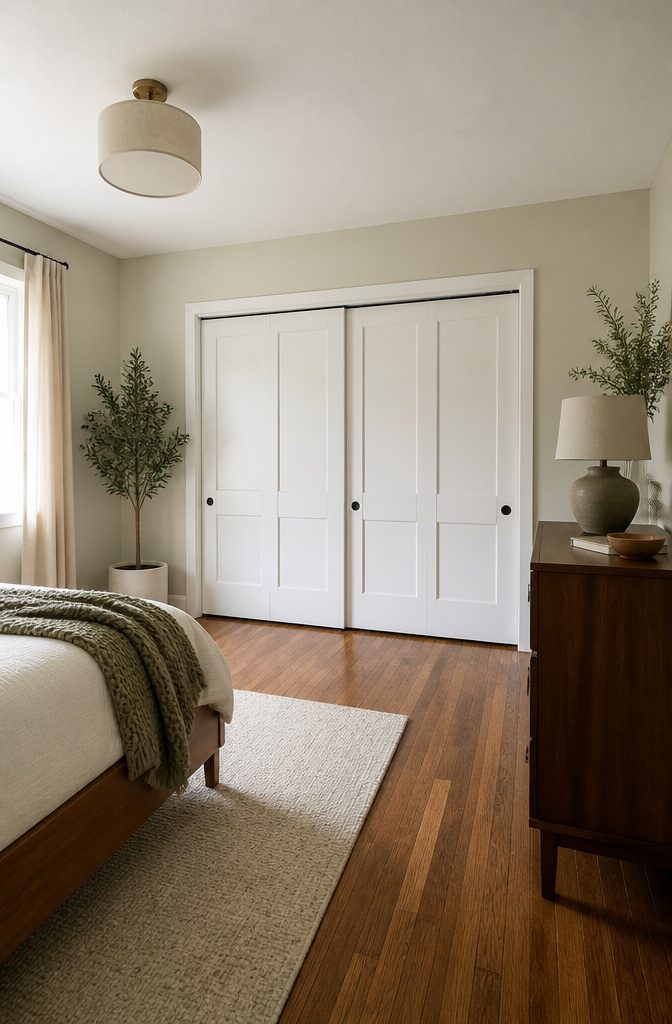
Over-door hooks and racks turn the back of a closet door into storage that would otherwise stay empty. I like the hook-over style because it needs no tools and leaves no mark when you move out, which matters if your lease runs month to month or your landlord charges for nail holes. A fabric organizer with clear pockets works for jewelry, belts, or rolled scarves; the pockets keep small items visible so nothing gets buried in a drawer. For shoes, a metal rack that hangs from the top rail and braces against the bottom of the door holds four to six pairs without swinging when you open or close it.
If you own the place or have permission to install, a valet pull mounted inside the door frame gives you a rod to hang tomorrow’s outfit the night before. It folds flat when you don’t need it. The installed options cost more and take a drill, but they feel steadier than anything that hangs. For renters, the hook-over systems do most of the same work for less money and zero commitment.
9. Under Bed Storage
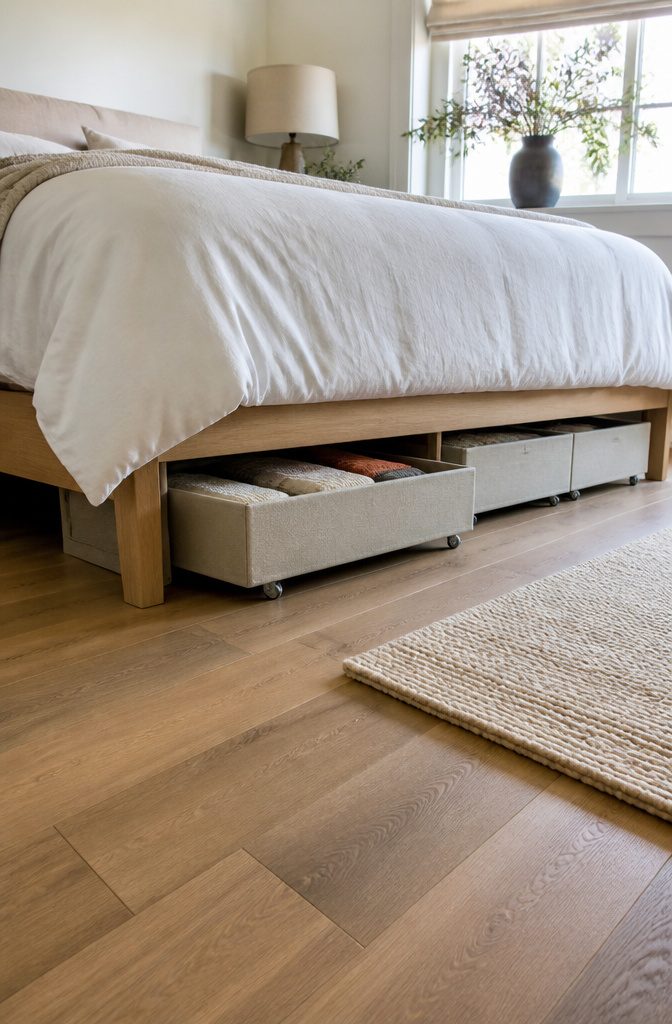
Most bed frames sit 7–14 inches off the floor, and that gap is dead space until you treat it like a second closet. I started using under-bed storage after measuring the clearance on my own frame and realizing I had ten inches to work with, enough for flat bins that slide out like shallow drawers. Shoes stay visible and dust-free in those; vacuum bags flatten bulky coats and spare comforters to maybe three inches thick; rolling drawers with lids keep extra linens accessible without the closet clutter.
The payoff shows up immediately in the closet itself. Moving out-of-season pieces down low frees the rod and shelves for what you actually wear this week. I skip anything rigid or tall, since a bin that scrapes the bed slats gets ignored and ends up a hassle. Soft bags and low-profile boxes are the practical choice here, and the cost stays reasonable, usually under thirty dollars for a set that handles a full season swap.
Renters and First-Home Owners
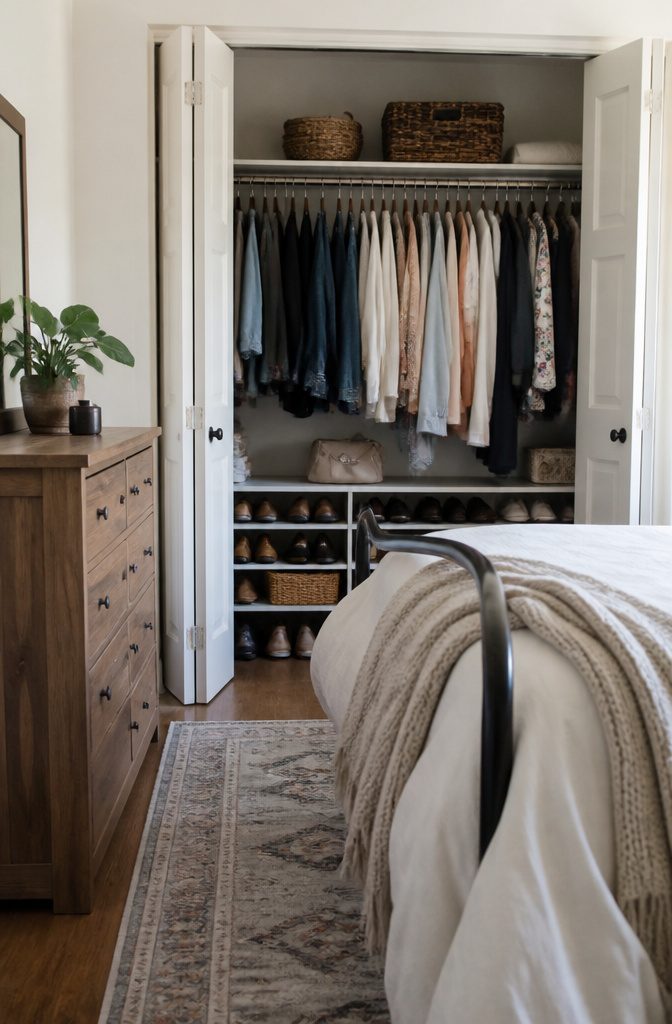
A dresser slid into the closet opening replaces a built-in system without touching the walls, and it rolls out with you when the lease ends. Measure the exact width of the closet opening before buying; a gap of even an inch wastes the flat surface you were counting on for folded stacks. I have watched a friend wedge in a piece that sat two inches shy on each side, and the lost space turned into a tumble of shirts within a week.
Damage-free mounting keeps your security deposit intact. Tension rods for hanging, adhesive hooks for bags, and freestanding shoe racks all come out clean. The cost stays low because you are buying one or two pieces, not paneling a wall. A weekend is enough to haul the dresser in, swap the rod height, and sort what actually belongs in reach.
Light and mirror choices shift the feel without a drill. A flush-mount fixture and a full-length mirror, propped or clamped, bounce light around a narrow box and make the morning routine less cramped. The mirror matters more than extra shelf space if the closet is under six feet across; the reflection does the work of doubling the visual depth.
Seasonal Rotation
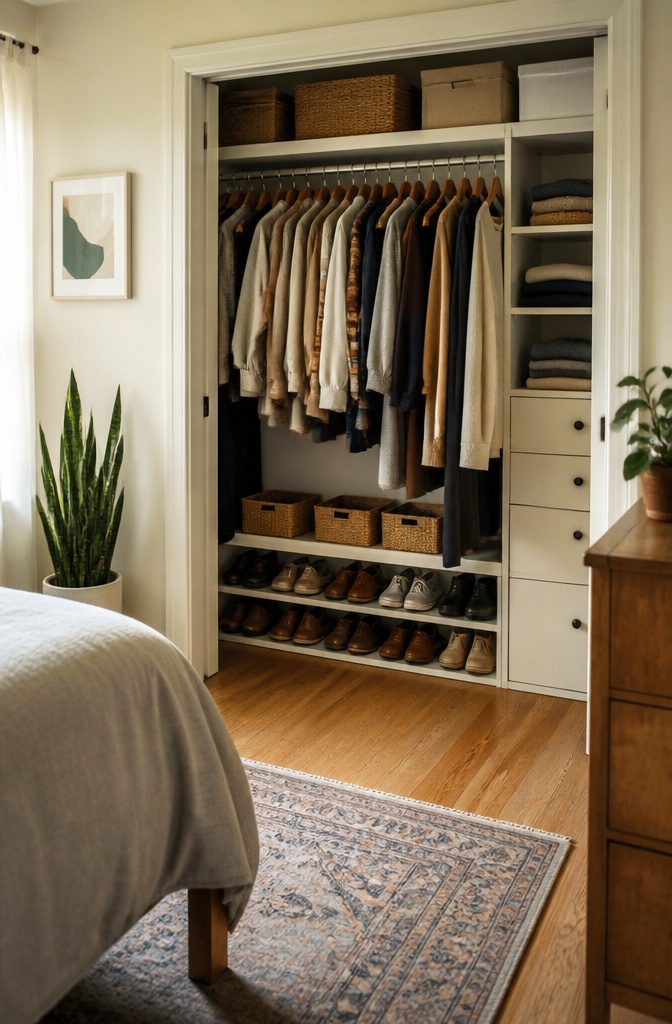
Storing off-season clothing out of the active closet is what keeps the daily one functional year-round. I keep winter coats and boots in a flat bin under the guest bed from April through October; summer shorts and tank tops move there in reverse. The swap happens twice yearly, usually a weekend in May and another in October when the temperature finally commits.
What changed my results was adding one step to the ritual. Before anything goes back into storage, I lay it out and ask whether it was worn at all last season. A sweater that stayed folded for five months gets donated before it takes up space again. The bin I use is nothing special, a standard under-bed container with a lid that snaps, but the twice-yearly assessment is what stops the closet from slowly refilling with clothes I do not actually wear.
Guest closets work the same way if you have one, though I have learned to label the bin with the season clearly. "Fall 2023" written on masking tape saves the February morning of opening three identical boxes to find a single scarf.
What I Skip and Why
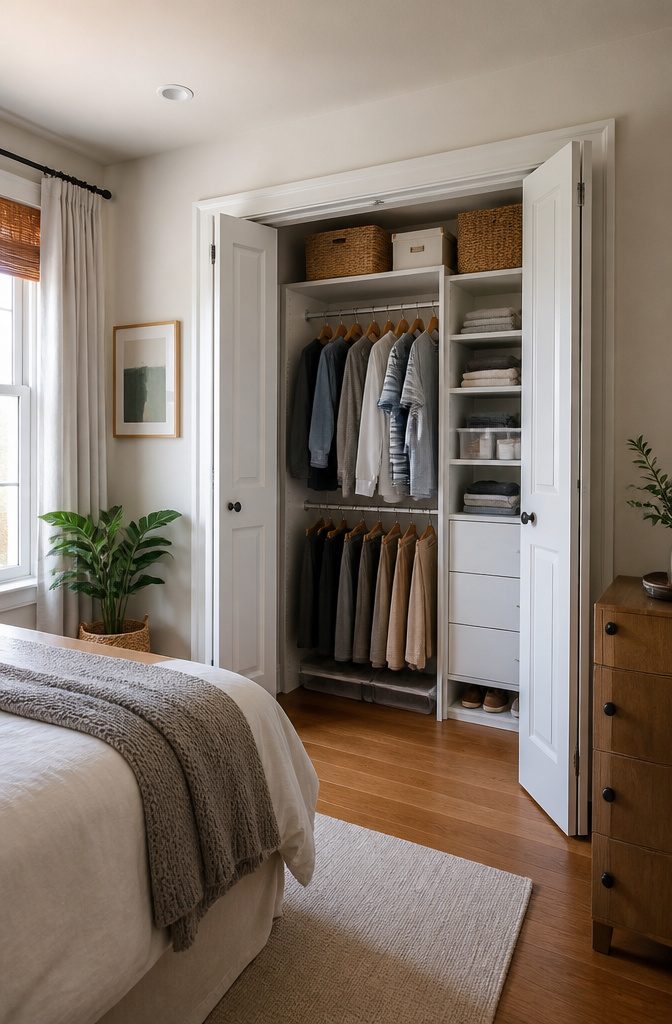
Custom reach-in closet systems start at price points that would eat this article’s entire budget before a single shoe got shelved. The financing options some companies offer only stretch the problem across months, not solve it. I skip those.
I also skip the matching suite look, the acrylic boxes and velvet hangers in identical blush tones that cost more than the sweaters they hold. The math stops working when the container outprices the contents.
Anything needing a contractor is off the table too. Drywall work, electrical for closet lighting, built-ins that must be patched out later: these turn a weekend project into a month of scheduling and a security deposit gamble. If you cannot carry the pieces home in your car and undo them Monday morning, it is not a renter’s solution.
Closet Systems Compared
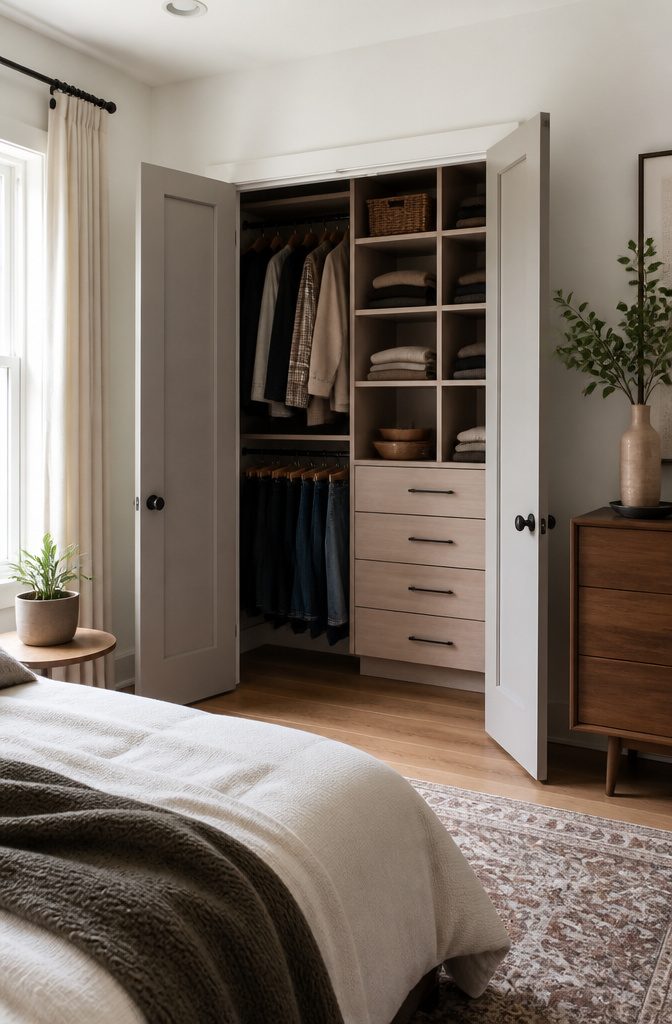
Wall-mounted rails and brackets usually win for renters who need permission to drill anything larger than a pilot hole. The hardware leaves small holes that a dab of spackling fixes at move-out, and the open frames adapt to bins, hooks, or extra shelves as the closet’s contents shift. Elfa sits at the other end: made to order, fully adjustable after installation, and priced for someone planning to stay put long enough to amortize the cost. The system is popular with professional organizers for exactly that flexibility, though the initial layout commitment can feel steep if your storage needs change seasonally.
DIY builds from plywood or MDF split the difference on price but demand time and a saw. A custom system lets you tuck a narrow pull-out for ties or accessories into dead space no kit would cover, which matters if you collect hats or jewelry that tangles in drawers. The tradeoff is precision: everything rides on your own measurements and level, and a reach-in closet leaves little margin to hide a rail mounted half an inch off.
| Wall-mounted | Elfa | DIY | |
|---|---|---|---|
| Best for | Renters, temporary setups | Long-term homes, evolving storage | Hands-on owners with specific odd items |
| Versatility | High: swap accessories freely | Very high: add drawers, shelves later | Highest: design around your exact inventory |
| Installation | Light drilling, 1–2 hours | Moderate; components align to a wall standard | Full build; requires cutting and exact leveling |
| Customization | Limited to available accessories | Made to order, adjustable after install | Unlimited, but mistakes are permanent |
| Cost | Lowest | Highest | Mid-range; materials only |
If you move often, wall-mounted pays for itself in avoided repair fees. If you own and your closet holds mixed storage, Elfa’s adjustability covers the years when boots shrink to sneakers and back again. DIY rewards the patient planner who knows exactly which odd items need a home.