
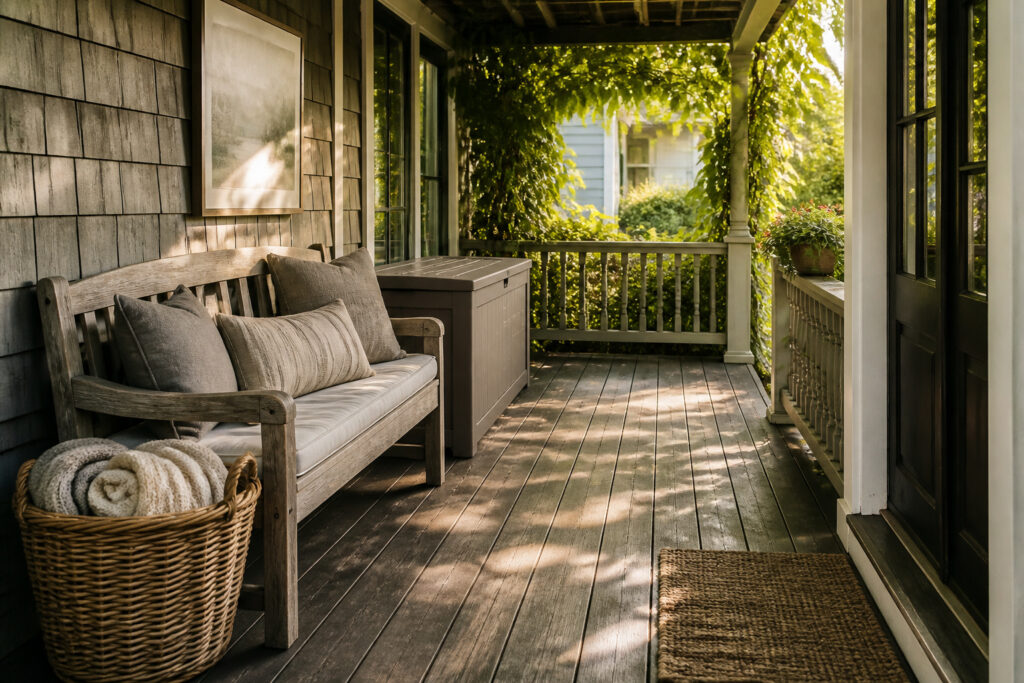
Porch storage ideas run from a $50 resin deck box to a smart lockbox bolted through your floorboards, and the right choice depends on whether your porch is covered, open, or barely deep enough to swing a door.
The detail that separates working solutions from clutter is the 24 to 30 inches of clear aisle you need left after the bench or cabinet goes in; anything deeper turns the entry into an obstacle course.
1. Dual-Function Furniture
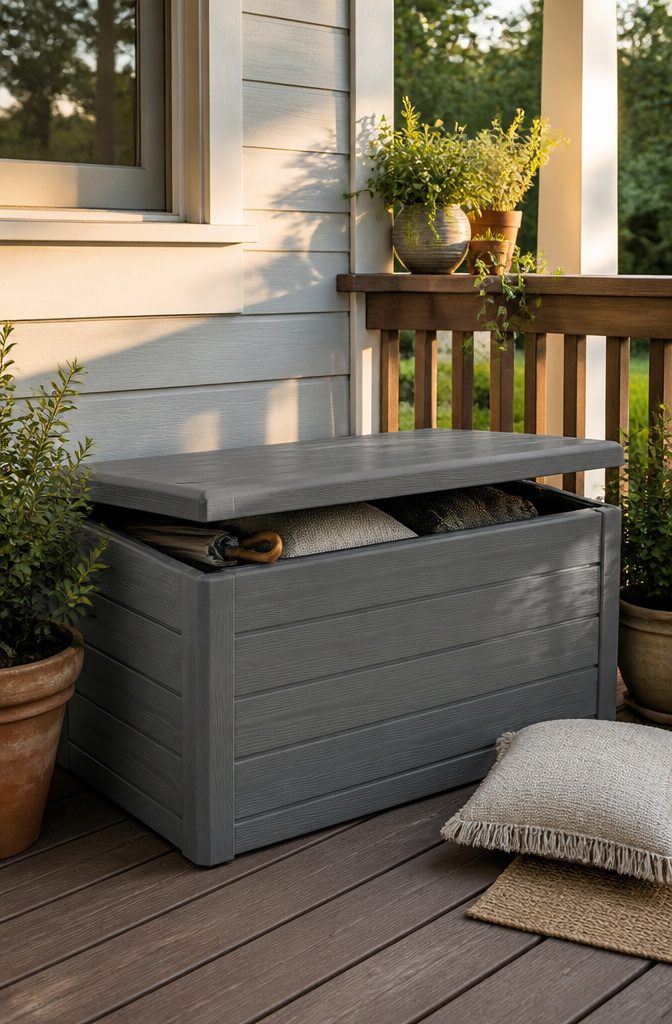
Storage benches and deck boxes that double as seating are the first place I look when a porch needs to work harder than its square footage suggests.
The Keter Solana Storage Bench Deck Box sits at the entry point: you take off shoes or set down groceries on the lid, then lift it to drop in umbrellas, ice scrapers, and the reusable bags that otherwise pile by the door.
I like that the lid takes the weight; the storage underneath stays dry.
Multi-purpose benches with sliding storage drawers underneath the seat are another route, and they keep contents visible without the lift.
The drawer style suits cushions or gardening gloves you reach for often; the deck-box style protects better against a driving rain.
Weather-resistant materials decide whether either piece lasts past the first season. Composite or PVC decking built to match your porch finish resists sun fade and standing water better than painted wood, which swells and checks after wet winters.
Cushions stored inside still need to be dry going in, but a resin or composite shell buys you margin against the morning you forget to check the forecast.

Resistant Resin Material: Deck box is made of waterproof resin, with a complementing rattan pattern design, effectively preventing fading and rusting, while also maintaining a fresh appearance even with all-weather use
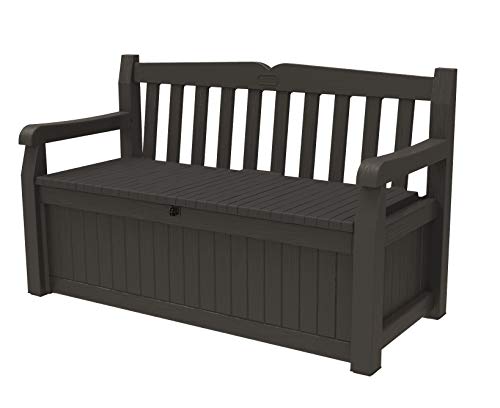
IDEAL SIZE: Exterior: 54. 6 in. L x 23. 4 in. W x 32. 8 in. H / Interior: 50. 4 in. L x 19. 7 in. W x 15 in. H

LARGE OUTDOOR STORAGE BOX: Fashionably store your outdoor furniture cushions, pool floats, and more. This outdoor storage bench offers lots of convenient, lockable storage space and has enough room to seat 2 adults.
2. Lockable Drop Box
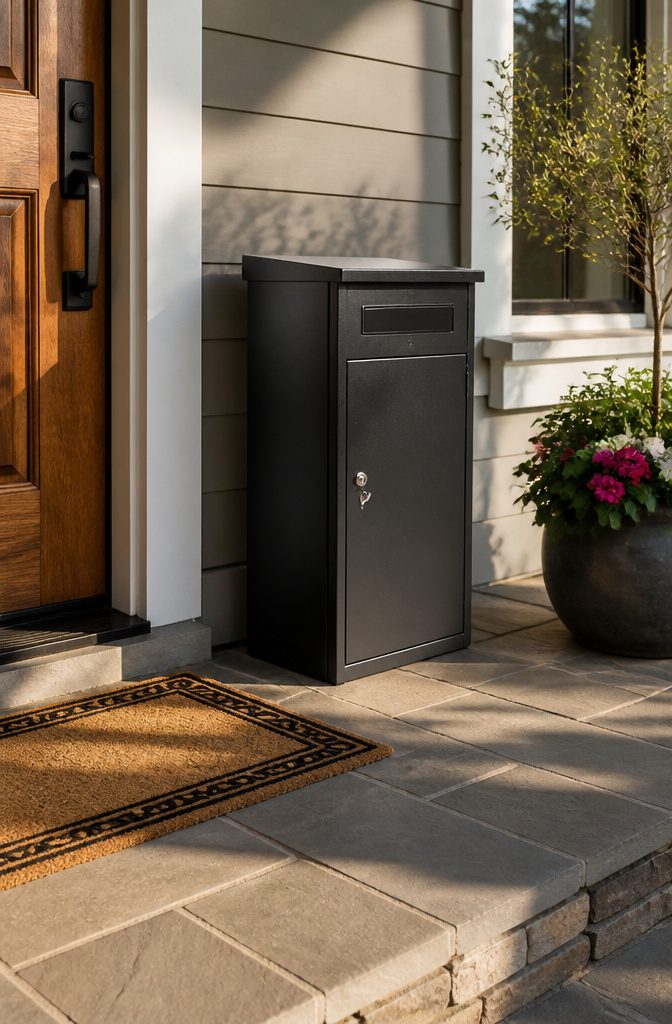
A lockable drop box turns the porch into a secure delivery station instead of a free pickup spot for thieves.
The VEVOR package delivery box keeps a low profile with a slim design that sits beside the door without shouting "valuables inside." Mail slots through, but nothing comes back out without the key.
For bigger loads, the Genie Benchsentry Connect Slate Smart Package Delivery Box measures 35 by 25 inches, enough room for grocery deliveries or stacked parcels.
The electronic lock seals automatically after the drop, so a driver never needs a code and you never wonder if it latched. Bolt it to the porch floor and it becomes furniture that happens to be a safe.
The extra cost over a plain bin pays back the first time a "porch pirate" walks past your house for an easier target.
I would not bother with anything that lacks a floor anchor point; a determined thief just carries off the whole box otherwise.

SIT, STASH, AND RELAX IN ONE PIECE. With a reinforced lid that holds up to 200 lbs, this resin outdoor deck storage box works as patio seating or an ottoman, while the interior handles outdoor cushion storage, yard gear, and pool or garden supplies.

𝟲𝟬 𝗚𝗮𝗹𝗹𝗼𝗻 𝗦𝘁𝗼𝗿𝗮𝗴𝗲 𝗖𝗮𝗽𝗮𝗰𝗶𝘁𝘆: EAST OAK outdoor storage box measures 42.1"L x 17"W x 21.6"H and is perfect for indoor and outdoor storage. It offers plenty of space to store all your belongings, perfect for cushions, tools, pool supplies, etc.

STYLISH RESIN DECK BOX OUTDOOR WITH 73 GAL STORAGE. Perfect cushion storage bin for outdoor cushions, pillows, garden gear, & tools. A heavy-duty wicker outside storage box solution that complements any patio furniture décor.
3. Out of Sight Storage
The best porch storage ideas are the ones you do not notice. A fake rock for spare keys blends into the landscaping and keeps a house key out from under the welcome mat, where every visitor looks first.
The Hualayou Hide a Key Outdoor Flower Pot does the same work with a small plant on top; the secret compartment sits inside, and the greenery reads as ordinary porch dressing to anyone passing by.
Both options keep visual clutter down while protecting items from casual observation.
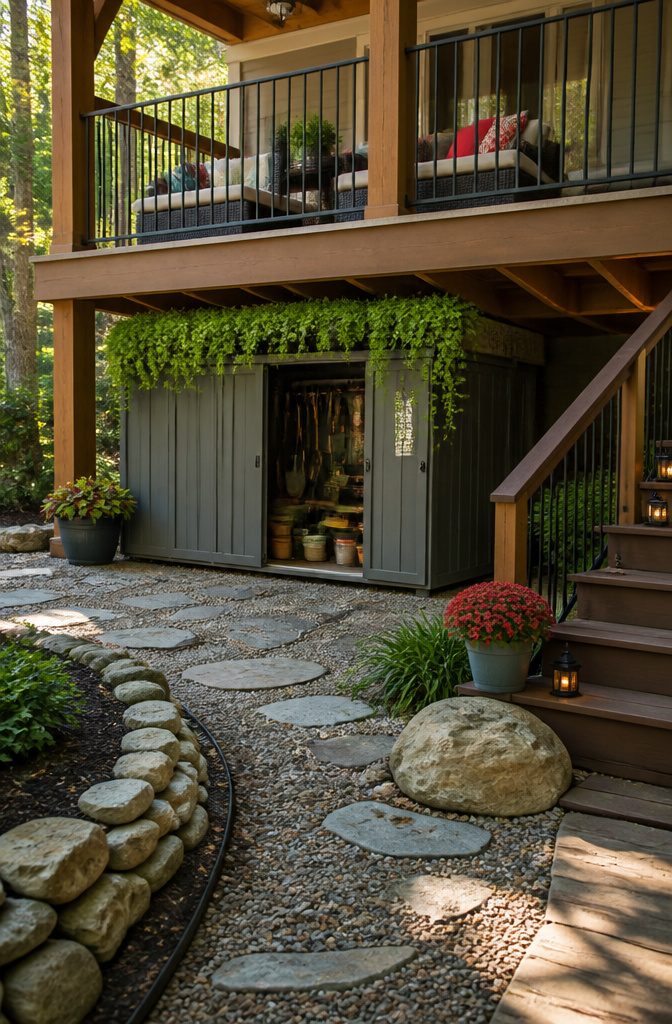
For larger storage, the space beneath a raised deck is often wasted. Under-deck solutions turn that gap into a dry zone for patio cushions, garden tools, or bulk soil bags that otherwise crowd the garage.
A hidden approach here means the porch itself stays open for use, and the stored items stay cleaner than they would in a visible bin that collects pollen and rainwater splash.
The tradeoff is access: you will crawl or crouch to reach what you stashed, so under-deck storage works best for seasonal or backup items, not the grill cover you need twice a week.

Your Personal Package Assistant: Meet hyve, a secure outdoor package delivery box that prevents theft, protects from weather, simplifies returns, and works with all carriers....
4. Indoor Storage Options
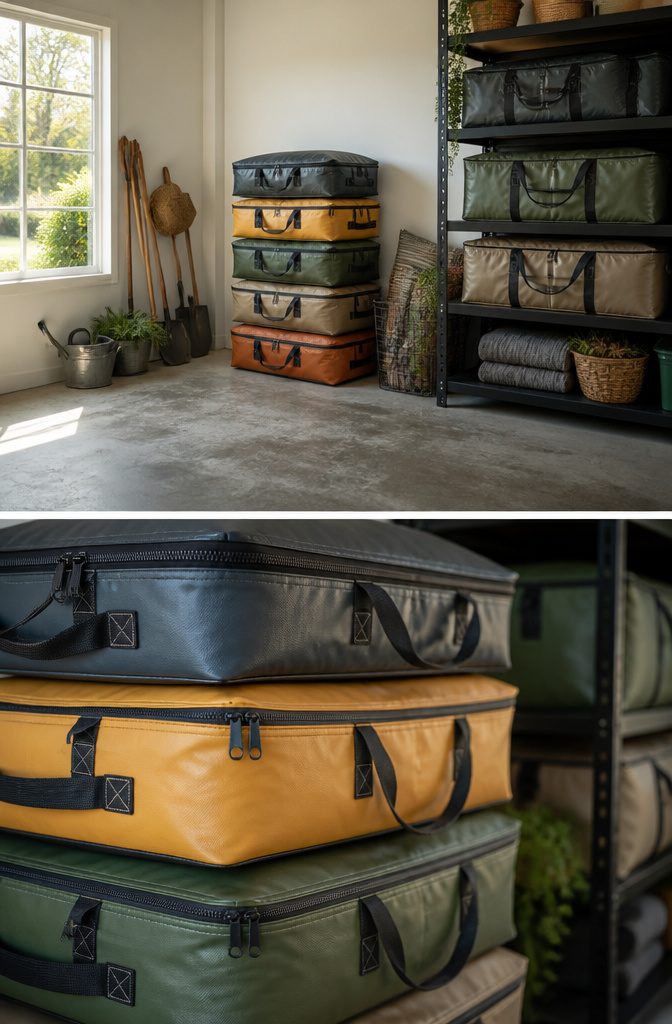
The first time a storm warning sent me scrambling, I learned that waterproof storage bags beat garbage bags by a mile. The durable material keeps moisture out completely, which means no mold on the cushions you drag inside at midnight.
Seal them tight, then slide them into a closet, the garage, or even under the deck if you need the floor space back.
Seasonal rotation works the same way in reverse. When outdoor season starts, the indoor stash moves back out, and the bags get reused for whatever stays behind: gardening tools, kids’ toys, the extra accessories that clutter the porch rail.
I keep one bag permanently assigned to off-season duty so I am never hunting for it.
The real limit is access. Bags stored under a deck or behind a garage shelf need to be the kind you can actually reach when the forecast turns.
If sliding storage drawers are an option for your space, the waterproof front keeps contents dry and the face can match your deck material so it does not read as storage at all.
That camouflage matters on a small porch where every visible bin steals visual space.

SECURE ACCESS: One-way in-system ensures packages can be placed in the front porch drop box without access to the storage compartment; only the owner can retrieve packages when using the lock and key

PACKAGE DELIVERY BOX FOR OUTSIDE – Bright yellow “PLEASE LEAVE PACKAGES IN THE BOX” decal helps delivery drivers quickly identify where to place packages. Keep deliveries off the doorstep and reduce the risk of misplaced or exposed parcels.

Enhanced Anti-Theft Protection - Our parcel delivery box is equipped with a precision-engineered anti-theft device, featuring a one-way delivery system and a sturdy internal baffle to provide extra protection from porch pirates, ensuring that your packages stay safe.
5. Wall Space Utilization
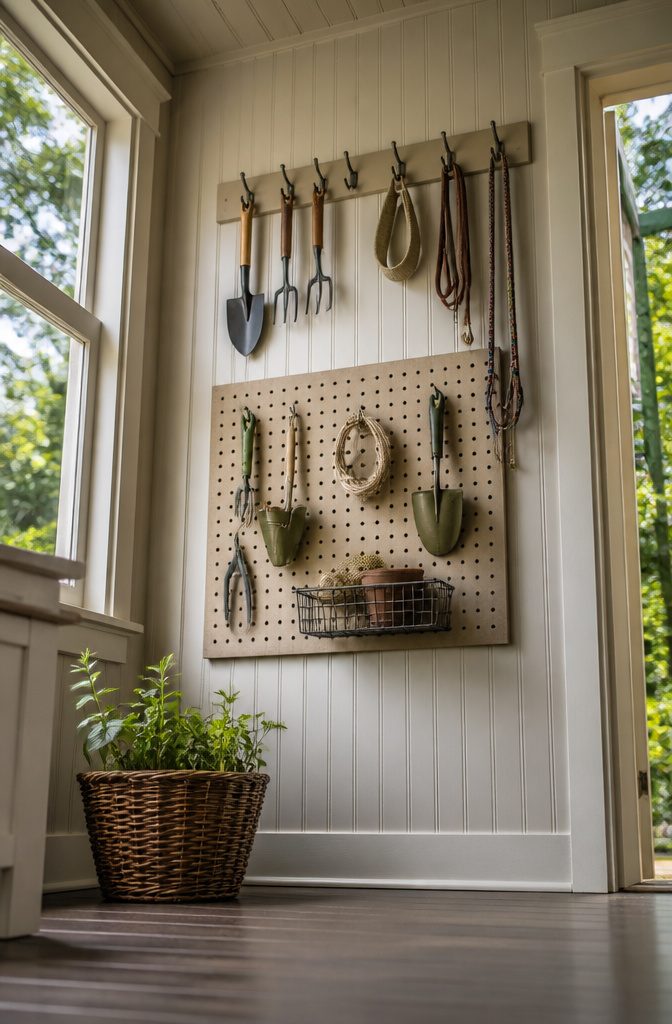
Wall hooks and peg boards turn the narrowest porch into usable storage without eating the floor space you need to sweep.
I line the back wall of mine with both: hooks for coats and the dog’s leash, a small peg board for the trowel and hand shears that otherwise end up in a pile by the door.
The floor stays clear, which matters more than I expected. A porch collects grit fast, and sweeping around bags and boots doubles the time.
For bikes, vertical storage is the only move that makes sense on a small porch. The Pro Bike Tool Bike Wall Mount hangs them horizontally, arms adjustable to different frames, with a push-button lock that holds the bike steady.
The steel hook has a scratch-proof coating, so the wall and the bike paint both survive. Mounting bikes up high keeps the floor path open and removes the trip hazard.
Larger gear on open walls benefits from a steel cable and padlock if theft is a concern in your area.
The lockable part is not the mount itself but the item: run the cable through the bike frame or a shelf bracket and lock it to a fixed hook.
That security step costs extra minutes, not extra dollars, and it keeps the insurance deductible theoretical.

✓Outdoor key hider that looks just like, well a rock. They key rock has a smooth, slide to close, secure cover that blends in with the rock.

BLENDS INTO FLOWER BEDS AND MULCH: Textured matte finish and granite-like speckle make this secret key holder hard to spot among real stones. One owner had trouble finding it in a rock garden.

✓ NEVER LOCKED OUT! Realistic Rock Hides Keys in Plain Sight. Weatherproof & secure polymer resin blends perfectly in gardens/yard. Holds house/car keys (3.13"x1.25"). "Looks 100% Real!"REALISTIC DESIGN: Authentic-looking rock hideaway crafted from durable polymer resin with natural stone texture and weathered gray coloring for perfect outdoor camouflage
6. Foldable Furniture
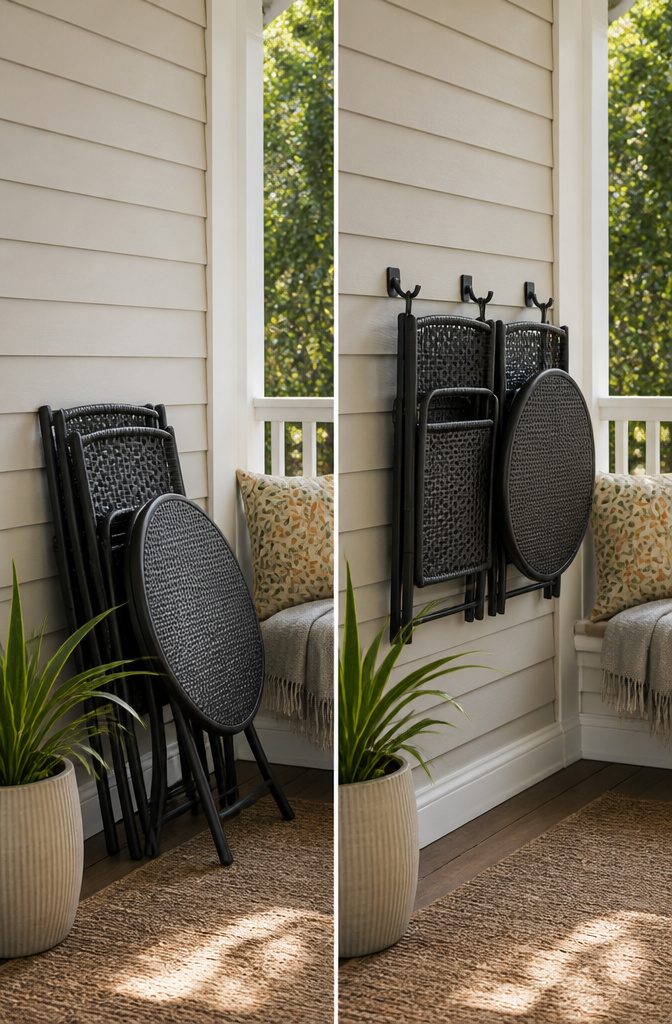
Foldable furniture earns its keep on a porch only if it actually leaves when the season does.
The Grand Patio Premium Prame bistro set folds flat enough to hang on sturdy hooks against the wall, which turns the chairs themselves into a storage trick rather than a storage problem.
I have seen the same logic work with the fabric boxes sold as foldable storage for outdoor toys and winter cushions.
They set up in a minute, hold their shape while you need them, then collapse to slide under a bench or behind a door.
The test is whether you will really fold it; a bistro set that hangs on hooks stays out of the way, but a box that needs a closet shelf may never get put back if the closet is already full.
For tight spaces, weight matters as much as folded thickness. The bistro set is lightweight enough to move without help, and the fabric boxes are easy to shift when you rearrange for a party or a storm.
Neither solves every storage need, but both keep seasonal gear from becoming permanent clutter.
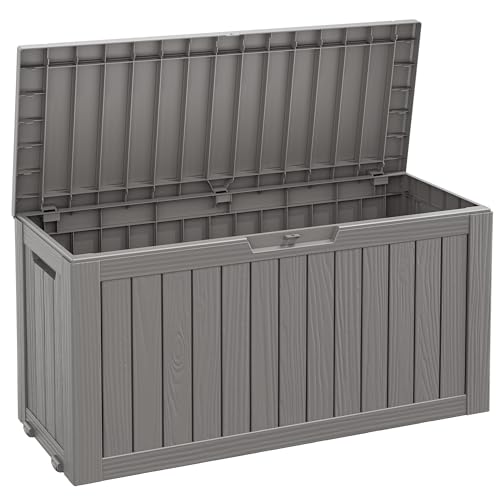
Spacious Storage – This outdoor storage box offers an extra-large 75-gallon capacity, letting you store all your items neatly. It’s perfect for keeping your home and yard organized

DIMENSIONS: Exterior: 50.4 in. W x 21.2 in. D x 23.2 in. H / Interior: 49.6 in. W x 20 in. D x 22.8 in. H

Large Capacity: A 80-gallon hidden storage compartment under the seat allows you to store a variety of items, helps you keep your environment neat and increase space utilisation.
7. Stylish Log Storage
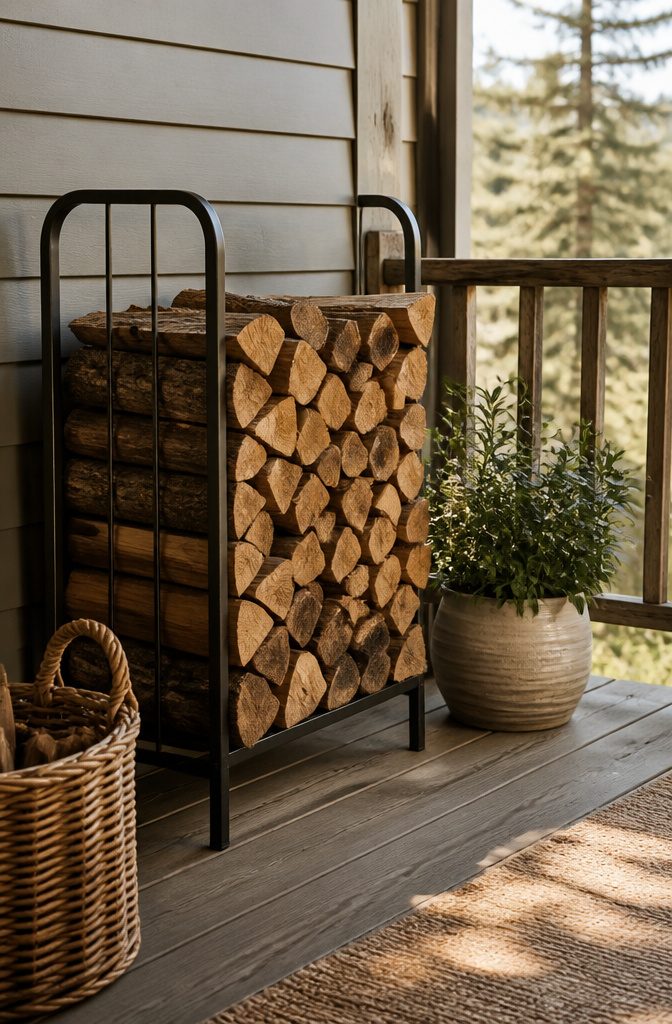
Firewood left in a damp pile on the porch floor turns into a soggy, insect-ridden mess inside a month. A metal rack with a fitted cover keeps logs dry and ready to burn without turning your entry into a lumberyard.
The Sand & Stable metal log rack from Wayfair sits off the ground on raised feet, which stops moisture wicking up from the boards and gives airflow around the stack.
Ventilation matters more than the rack looking pretty, though the black metal frame does read as intentional furniture rather than afterthought.
Outdoor cabinets built to match your porch dimensions hide the whole operation if you prefer not to see fuel at all.
These weather-resistant pieces pass for indoor storage furniture and give you a surface on top for a drink tray or a potted plant.
Taller corner units add vertical storage without eating floor space, and some designs stack if your woodpile grows. Either route beats the tarp-draped heap I see on too many stoops: dry wood, no clutter, done.
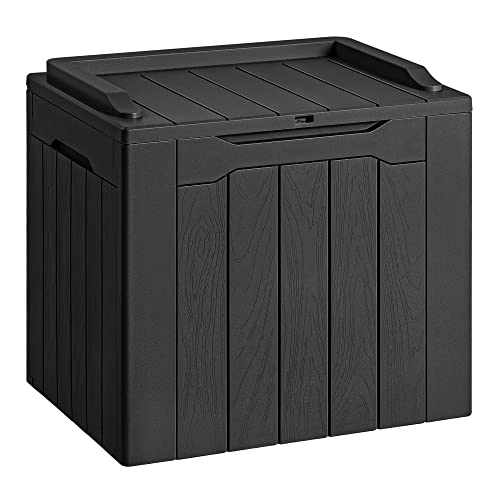
Light & Solid: Made of a high density resin material, it is stable, waterproof and UV resistant. The net weight of this deck box is only 8.8 pounds

Reinforced Crossbar Assembly & Multifunctional Lid Design: This 310 gallon outdoor deck box is fitted with reinforced crossbar assembly and connecting rod structure, paired with hydraulic support rods to deliver stable, pinch-free lid opening and closing. The reinforced structure prevents lid warping and deformation during long-term outdoor use. The sturdy thickened lid can serve as extra temporary seating or a side table to utilize idle outdoor space for daily practical use

Exterior Dimensions: 5 ft. L x 2 ft. W x 2 ft. 2. 5 in. H; Interior Capacity: 130 Gallons
8. Designated Shoe Storage
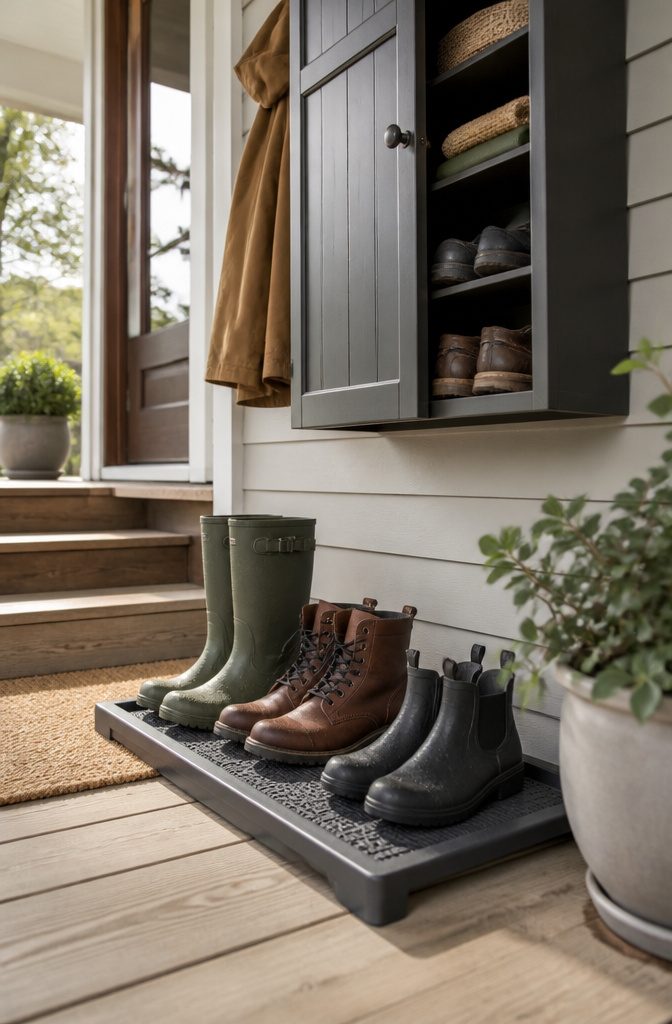
Muddy boots left on a porch have a way of tracking grit into every corner of the house.
A boot tray catches dirt, mud, and water before it reaches your floors, and a tiered rack keeps pairs organized instead of heaped in a pile.
In a covered porch, open baskets or a simple rack work fine. Open to the elements, and you will need weathertight cabinets instead.
The Lakewood Boot Bench, available at Amazon, doubles as a seat while it stores boots underneath.
It is durable, easy to clean, and just as useful in a mudroom as on a porch. A wall-mounted weather-resistant cabinet is another route, with adjustable shelves inside to fit whatever footwear you keep out there.
The point is giving wet boots a defined spot to dry before they come indoors. Without one, the moisture and dirt spread to rugs, floors, and the entryway you just cleaned.
Weather-Resistant Materials That Last
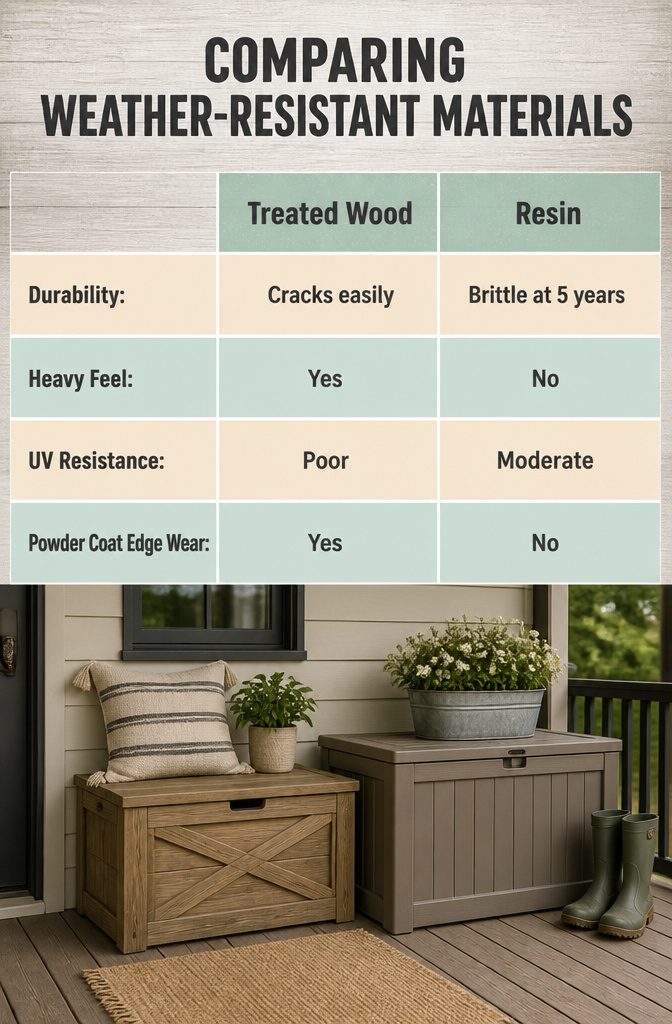
Treated wood, resin, and powder-coated metal each handle porch life differently, and the difference shows up around year three, not on the showroom floor.
Treated wood needs to feel heavy for its size; if it rattles when you knock, the treatment sat on the surface instead of soaking in.
That shell cracks, water gets under, and the board warps from the inside out. I’ve watched a bench seat go from solid to springy in two winters because the treatment never penetrated the end grain.
Resin fools you the opposite way.
It looks the same at five years as at five weeks, which is the problem. UV breaks down the polymer chains slowly, and by the time the surface chalks, the whole piece has turned brittle.
Flex it then and it snaps instead of bending. Good resin has fiberglass or metal ribs inside; knock and listen for that dull, weighted sound.
Powder coat fails at the edge, never the face. Where metal gets drilled or where feet wear through, the bare steel underneath rusts outward and blisters the coating like peeling paint.
Check those spots first on any cabinet or box you’re considering, because that’s where water pools and salt from winter boots concentrates.
A bench with hidden storage is only as good as the seal around that lid; if the powder coat is thin there, the hinge area goes first.

2-in-1 Storage & Package Delivery Box: This patio storage box can be used to store pillows, blankets, gardening tools, and pool supplies, while also serving as a front porch package delivery solution. The clear “PARCELS” label ensures easy recognition for couriers, making it simple to identify and drop off packages directly inside. The delivery boxes for outside helps keep deliveries secure while maintaining a clean and organized outdoor space.

Premium Material: Made from durable fir wood and supported by a heavy-duty iron frame, this delivery box ensures long-lasting protection for your parcels, even in harsh weather conditions

Extra-Large Interior: Roomy parcel storage fits many common package and envelope sizes for everyday deliveries
Security for Outdoor Storage
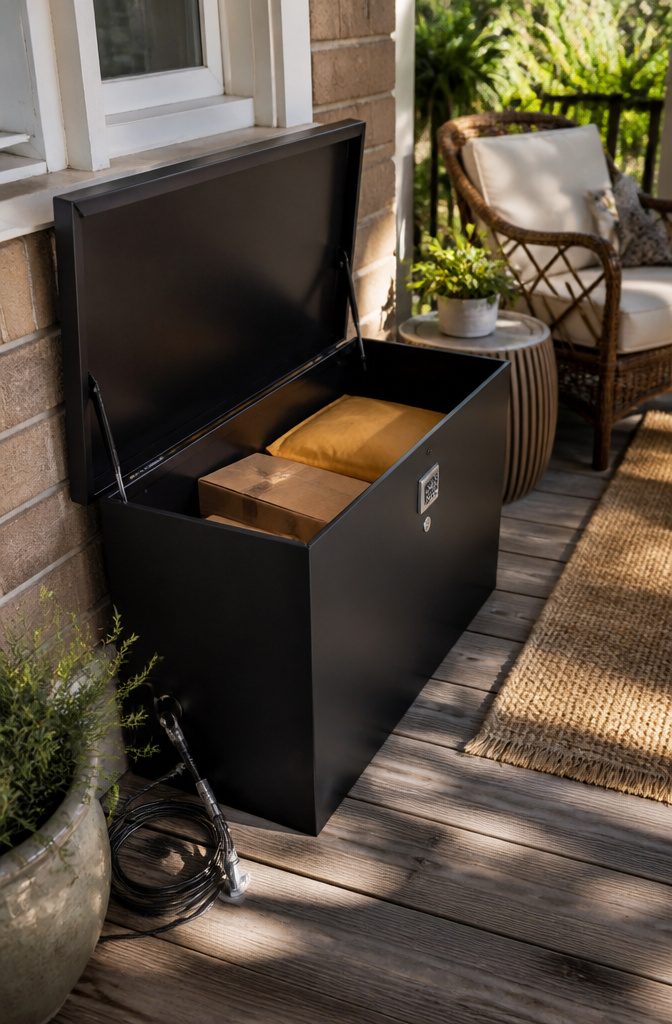
A lockable box only works if the box itself stays put. The Genie BenchSentry Connect bolts to the floor, which matters more than the smart lock inside it.
A 35-by-25-inch steel box full of groceries is a two-person lift, but a single person with a dolly can roll an unbolted one down your steps in about thirty seconds.
The Master Lock steel cable with integrated outdoor padlock bridges the gap for anything you cannot bolt down: coolers, flat-packed furniture, the resin cabinet that came with no anchor holes.
Loop the cable through the frame and around a column or railing.
It will not stop a grinder, but porch theft is mostly opportunistic, and the cable turns your storage from the easiest target on the block into a job that requires tools and time.
What actually disappears from porches tells you how much security to buy. Packages lead the list, then anything small and resaleable: tool sets, propane grills left unsecured, the good cooler.
A coded lock box costs more upfront than a basic padlock, but grocery deliveries run weekly and replacement coolers add up. Spend enough that taking your stuff looks like work.

Hide a Spare Key Outdoor: This key hider rock provides a discreet and secure way to hide your spare key outdoors, ensuring you never get locked out again.

Secure your keys with this durable fake rock key lock box, designed to blend seamlessly into outdoor environments. Perfect as an outdoor key lock box or hide a key lock box, it keeps keys safe with a reliable key safe lock. Ideal for key hiders outside.

Realistic Look: Our fake stone Key Hider is just like the real ones, both in touch and look. Because the real stone-like exterior design allows it to be well hidden key in the outdoors
Seasonal Storage Rotation
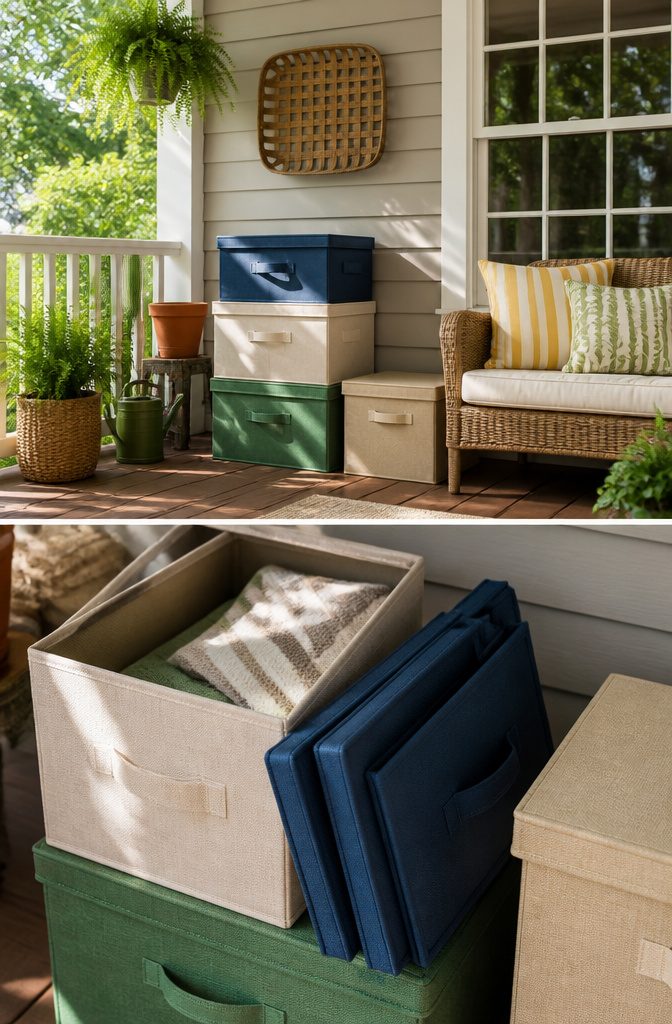
Foldable storage boxes earn their keep once you notice how porch life actually runs.
In late March the cushions and outdoor toys come back out; the boxes flatten and slide under a bench or into a hall closet, taking no floor space at all.
Come October the same boxes set back up in minutes, holding what needs protection from wet and cold.
The lightweight build matters more than I expected, since rearranging happens often when a weekend forecast shifts and the grill has to move.
Indoor storage can pull the same rotation if the material is right. A slim cabinet or shelving unit meant for an entryway works on a covered porch if you choose weather-proof stock or put the finish on yourself.
The mix of open shelf and lockable cabinet space is the useful part: daily items stay reachable, off-season gear gets secured.
What I watch for is the proportion. Too much open shelving and the winter stash looks cluttered; too much closed cabinet and the spring setup feels like unlocking a locker every time you want a seat cushion.
A 60/40 split of open to closed storage handles both seasons without the porch feeling like a storage unit half the year.
Measuring Your Porch for Storage
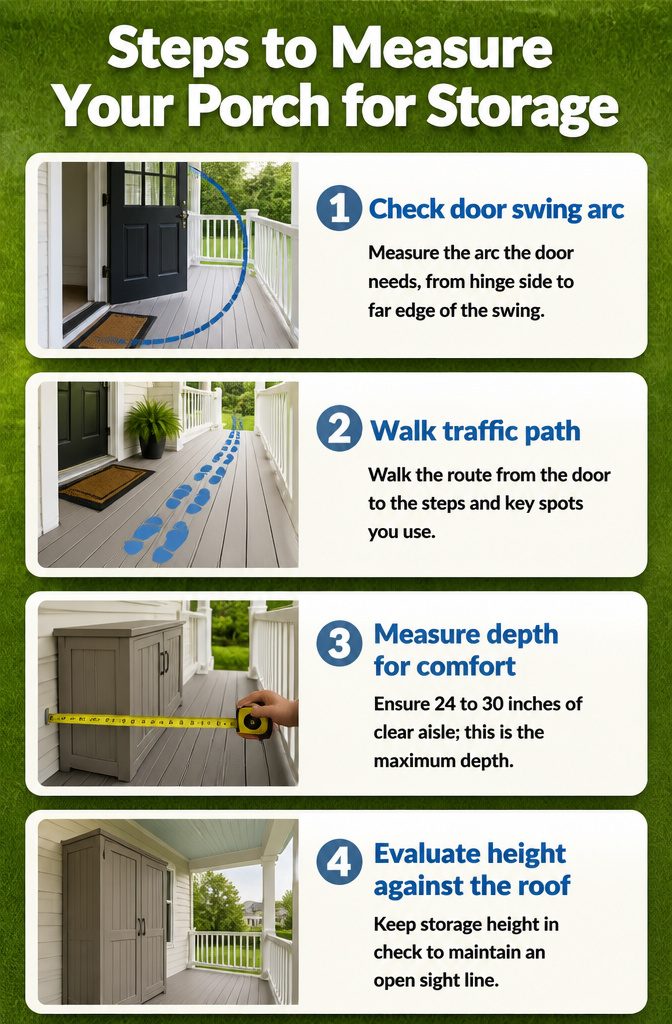
A porch storage piece that blocks the door swing is a piece that goes back to the store.
Before I look at anything with a lid or a shelf, I check the arc the door needs, measured from the hinge side to the far edge of the swing.
That arc is dead space, and anything parked inside it collects dents.
Next I walk the traffic path I actually use: the route from the door to the steps, the spot where I set groceries down, the corner the dog cuts on her way in.
A bench or box that narrows that path below about 36 inches turns the porch into an obstacle course every time you carry something through.
Depth matters more than width on most porches. A cabinet that sits too far out from the wall leaves you threading sideways between it and the railing.
I hold a tape measure at the wall and step back until the remaining floor space feels comfortable for two people to pass.
That number, usually somewhere around 24 to 30 inches of clear aisle, is the maximum depth I will let any storage piece have. Anything deeper belongs in the garage, not the porch.
Height is the last check. Tall storage against a low porch roof closes the space in visually and practically; you want to keep the sight line open toward the door or the yard.
What I Replace and When
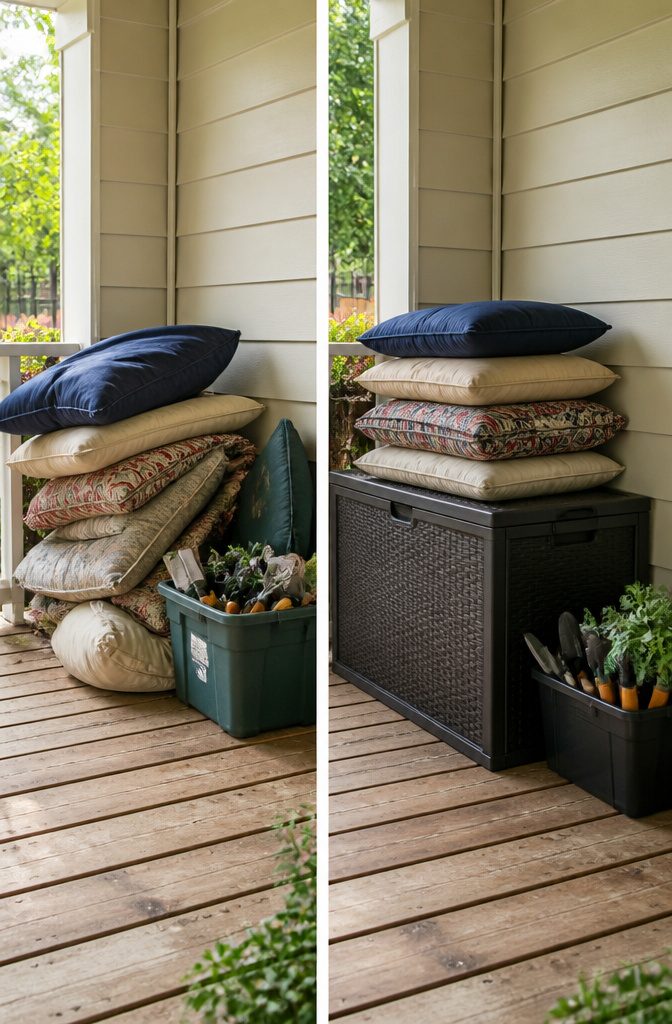
Outdoor cushions usually fail at the seams first, where the thread gives up long before the fabric itself.
I check mine each spring by pulling the corners apart; if the stitching looks chalky or the fill stays compressed for more than a few seconds after I squeeze it, that set is done for the year.
Resin storage boxes hold up better than I expected, though the lid hinges are the weak point.
After three or four summers of full sun, the plastic gets that gray, dusty look that wipes off with a damp cloth, but once the lid starts binding or the seal gaps when closed, water is already finding its way in.
Sun damage shows first as color fading, then surface chalking; structural cracking follows within a season or two if you let it go that far.
I replace boxes when the lid no longer sits flat, not when they finally leak, because by then the contents are already ruined.
Metal pieces need attention earlier: powder coating bubbles at the welds, and rust there spreads faster than surface spots elsewhere.
A wire brush and touch-up paint bought me two extra years on a bench, but once the frame starts wobbling, it is time.
Frequently Asked Questions
What are some good porch storage ideas?
Storage benches and deck boxes that double as seating, lockable drop boxes for deliveries, under-deck storage for seasonal items, wall-mounted hooks and peg boards, foldable furniture that hangs flat, and hidden solutions like fake rocks or flower pots with secret compartments.
Each option trades access for concealment or floor space for wall space, so match the solution to how often you need the item.
How can I keep my porch organized?
Use multi-functional furniture like storage benches, assign every item a fixed spot with wall hooks or designated shoe racks, and rotate seasonal gear in and out so only current-use items stay visible.
A 60/40 split of open to closed storage keeps daily items reachable without the porch looking cluttered half the year.
What materials are best for outdoor storage?
Treated wood should feel heavy for its size; if it sounds hollow when knocked, the treatment never soaked in and it will warp from the inside out.
Resin with internal fiberglass or metal ribs lasts longest; knock and listen for that dull, weighted sound.
Powder-coated metal fails first at drilled edges and worn feet, so check those spots before buying. Any material is only as good as the seal around lids and hinges.