
1. Sage Green Walls
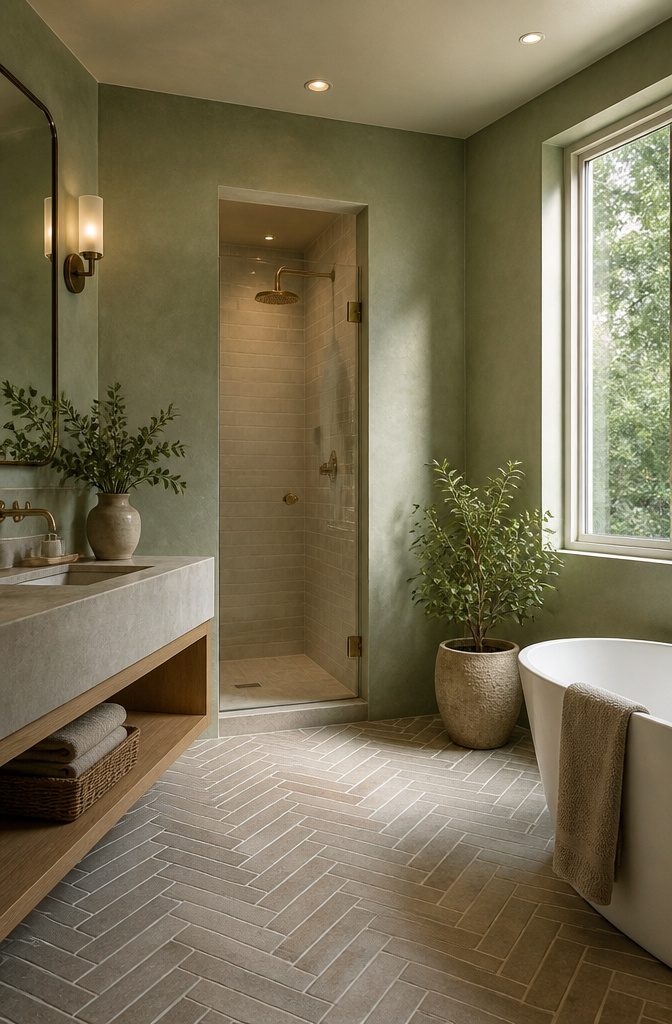
Sage green walls turn a bathroom into something closer to a quiet spa than a paint project.
The shade that keeps coming up in rooms that actually feel calm is Sherwin-Williams Evergreen Fog, a soft sage that reads as earthy without going muddy.
Ashley Martin used it in a Lake Oconee bathroom with herringbone faux-brick floors and a concrete sink, and the color held its own against both textures without fighting for attention.
Bathroom paint needs to survive steam, not just look good on the chip.
Modern emulsion finish is the right call here, specifically the kind formulated with mold resistance built in. Standard wall paint in a steamy room is a redo waiting to happen.
Light changes this color more than you’d guess.
In a sunlit bathroom, Evergreen Fog stays warm and open. In a dim or windowless space, it can drop cooler and read more gray, which shifts the mood from relaxed to slightly flat.
The fix is cheap: brush out swatches on two walls, check them morning and evening, and trust the version that still looks green when your only light source is the vanity fixture.
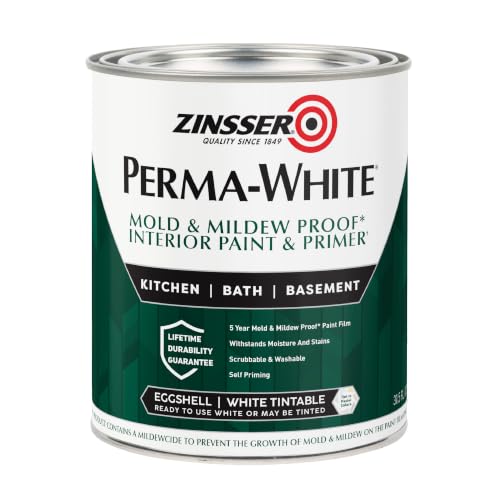
Self-Priming formula - requires no sanding

Ultra premium paint and primer in one

Includes 30 featured and newest released color card. Sprayed on color to see our colors in your homes lighting for more accurate color choices.
2. Emerald Green Accents
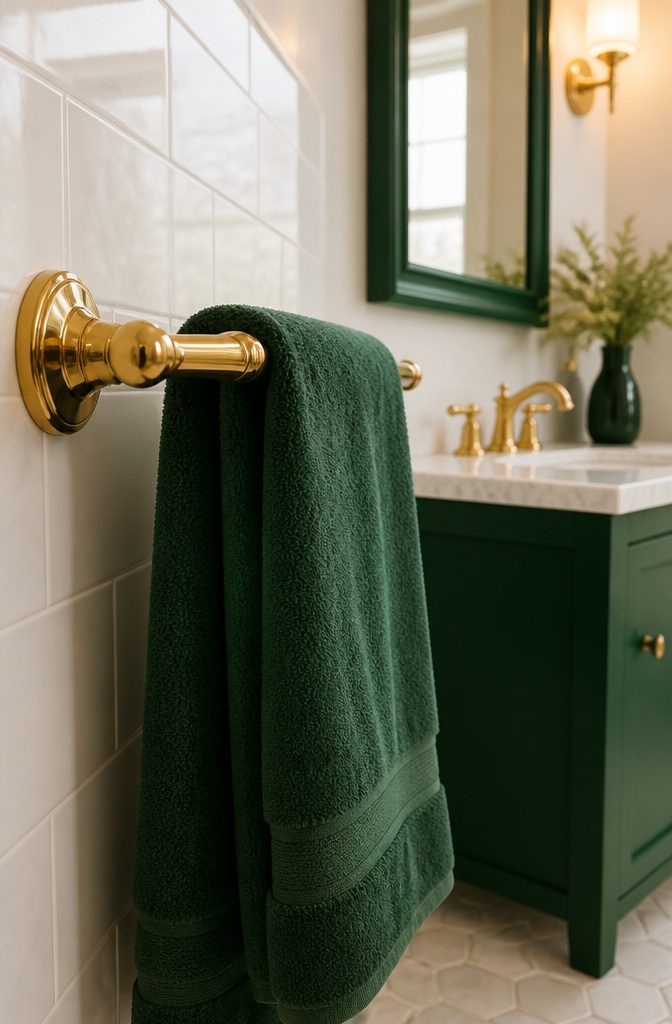
Emerald green reads as jewelry against white tile or pale walls, which is why it works best in small, deliberate doses.
A towel bar in that saturated finish becomes a focal point the eye lands on without the room closing in.
The same logic holds for a mirror frame or the escutcheon plates on a faucet: polished brass paired with emerald holds warmth that chrome would strip away.
I would keep the metal consistent across two, maybe three pieces, then stop. Brass here, aged bronze there, and the bathroom starts to look like a collection rather than a choice.
Warm lighting matters more with emerald than with softer greens.
A cool LED will flatten the color toward black; a 2700K bulb keeps the depth and the richness. In my reading, the designers who get this right treat the light as part of the material choice, not an afterthought.
If the fixtures are fixed, a dimmer buys back some control. Without it, the green goes gloomy by evening, and the brass turns muddy.

Marble Style Design: the green and gold decorative towel set is designed with the theme of green and gold marble, and printed with the elegant color, delicate and lovely, with green and gold as the main colors, look modern and elegant, can better create fresh and harmonious atmosphere

Retractable - Retractable towel bar from 16.5 Inch to 28.7 Inch, you can install it in any length if you wish, widespread use in bathroom, lavatory and washroom.

Vintage Petal Series - Carving petal processing, looks more luxury in the bathroom. Unique style suitable for commercial or household bathroom and toilet of shopping malls, office building, hotels, homes, farmhouses.
3. Dark Green Tiles
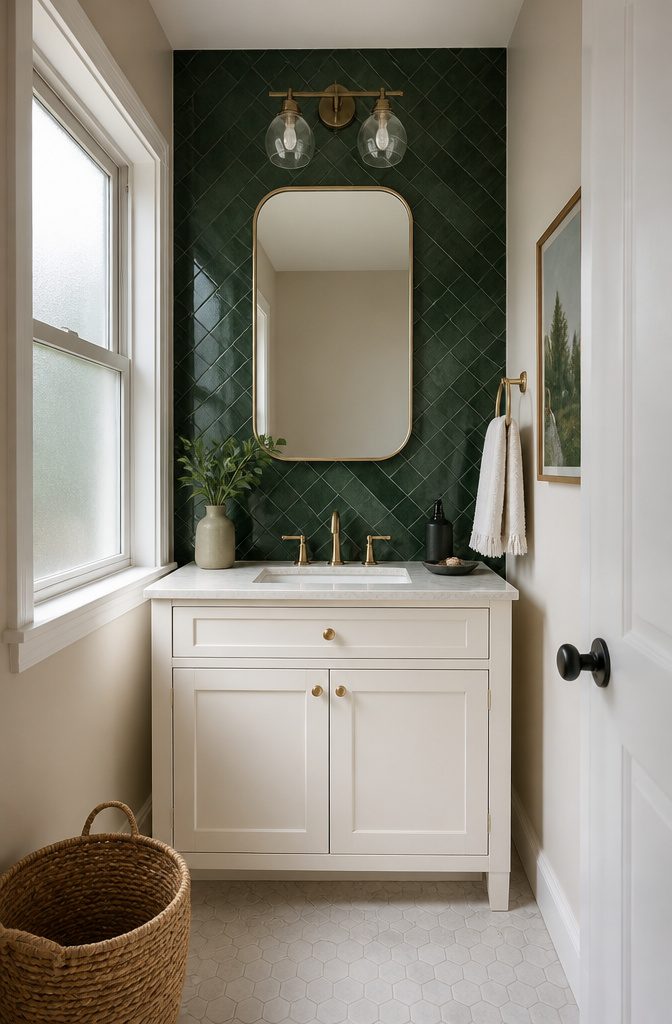
Deep greens like Forest Green or Olive Green carry enough weight that a small bathroom can absolutely handle them, though the trick is where you place the color and what you balance it against.
I would not paint all four walls of a narrow powder room in a dark forest green and call it finished.
The sources that rank for this question keep returning to the same two moves: warm lighting and lighter surfaces nearby.
A dark green tile backsplash behind a white vanity, or forest green flooring against pale walls and a light wood stool, keeps the room from feeling like a cave.
Natural light shifts these greens more than you might expect.
Morning sun can pull an olive tile toward yellow; overcast light deepens it toward near-black. If your bathroom window faces north, plan on that tile reading darker than the sample looked in the store.
The Victorian bathrooms that popularized this palette relied on brass fixtures and white porcelain to bounce light around, and that pairing still works.
A deep green Ann Sacks tile with Waterworks brass is a specific combination I’ve seen credited more than once for exactly this reason: the metal warms what the stone or porcelain cools.
For renters, peel-and-stick dark green tile exists now, but the color saturation varies batch to batch. Order extra.

Artistic Wavy Focal Point: Overall size 16x20". Embrace a bold departure from ordinary mirrors with this captivating wavy-edge design. Its irregular, fluid silhouette creates dynamic light reflections, turning any wall into an abstract art display—perfect for modern, boho-chic, or minimalist spaces craving character and conversation-starting style.

【Exclusive Aesthetics: Unique Colors & Matte Finish】 Break away from ordinary glossy frames. Our mirrors feature unique, curated colors with a sophisticated premium matte finish. This smooth, fingerprint-resistant texture adds a touch of understated luxury, making it a stunning centerpiece that elevates the style of any bathroom, bedroom, or vanity area.

Unique And Design : This irregularly oval shaped mirror is a wall decoration. The modern asymmetrical design is an artistic display in itself, both simple and sophisticated, for the living room, bedroom or hallway
4. Green Vanities
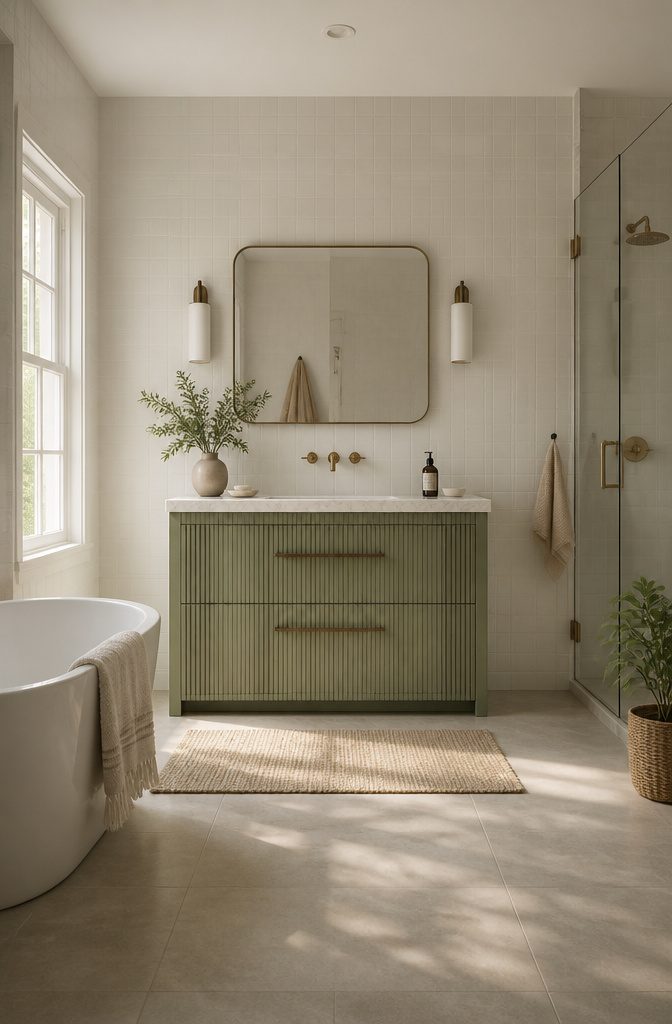
A green vanity works best when it reads as furniture that happened to land in a bathroom, not as a color stunt.
Benjamin Moore’s Raintree Green sits in that useful middle space, muted enough to feel settled but specific enough that guests pause and ask what you painted it.
I keep coming back to this shade because it shifts with the light without turning muddy, and it pairs cleanly with materials that already feel warm.
Wood keeps the vanity from going flat. A floating walnut vanity or slatted oak cabinet gives the eye something to linger on, and the grain stops the green from reading as flat paint on a box.
Natural stone does similar work. Calacatta Vagli marble, fabricated with a simple edge, picks up the gray undertone in Raintree Green without matching it too neatly.
The vanity anchors the room because it carries the only strong color below eye level; everything else can stay quiet and the space still holds together.
White tile is the safe companion, and it stays safe for a reason. If you want more movement, near-matching green tile gives a tonal depth that reads as intentional rather than accidental.
The risk is pink tile, which can work but needs to be the exact right dirty rose; otherwise it looks like a clash you didn’t plan.
For a weekend project on a real budget, walnut or oak plus Raintree Green and a stone-look quartz counter gets you most of the way there without the marble price tag or maintenance.

What You Get:10 sheets thicker self-adhesive wall tiles,12" x 12" each tile, total covers around 10 square feet area.

✔【PREMIUM QUALITY】 Our peel and stick wall tiles are crafted with high-quality PU and colloidal adhesive, ensuring durability and longevity. Each pack contains 10 tiles, each measuring 11.8 x 11.8 inches and providing a coverage of 10 sq.ft - The ideal choice for revitalizing your space.
5. Green Wallpaper
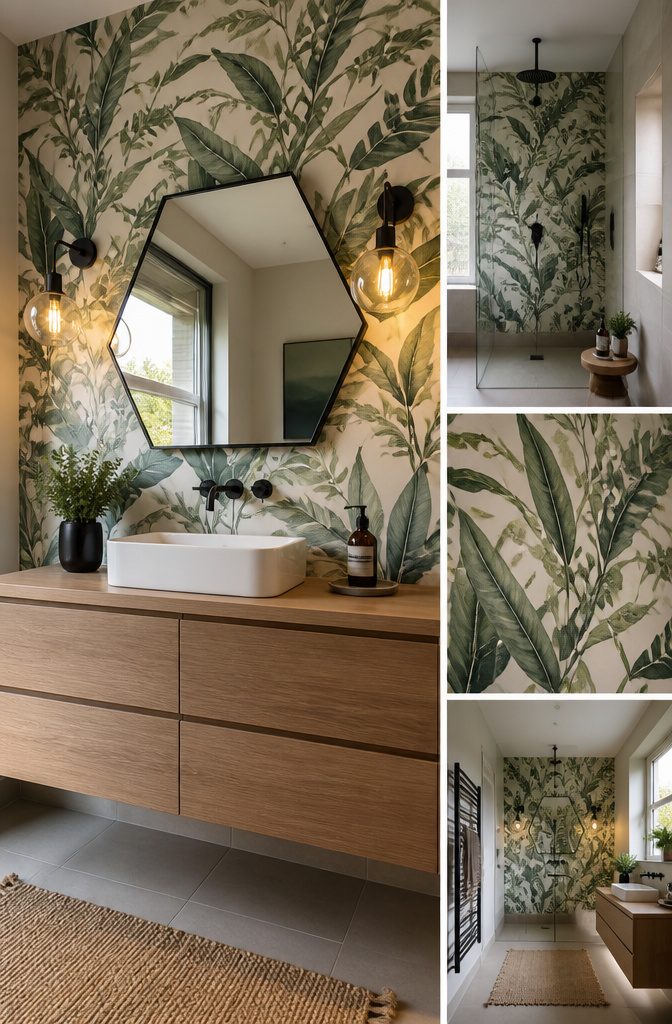
Wallpaper in a bathroom used to sound like asking for trouble, but vinyl and treated papers built for moisture have changed the math.
Botanical prints, especially leaf patterns in soft sage or deep emerald, add the layered texture paint alone cannot touch. Geometric repeats in interlocking greens read cleaner and more contemporary, while still carrying that same grounded mood.
The pattern scale matters more than the hue.
A small powder room can handle the drama of a large banana leaf or oversized fern without feeling busy; in a full bath with more wall to cover, a tighter geometric or abstract green keeps the eye moving without exhausting it.
I would still keep it off the wall inside a shower enclosure, no matter what the label promises.
Steam finds its way behind edges over years, not months, and peeling wallpaper is a weekend repair that turns into a gut job.
Stick to the vanity wall, the ceiling, or an alcove, and treat the seams with the same care you would in a kitchen backsplash zone.

Soft Chenille Comfort — Step onto thousands of soft chenille fibers in our high-pile design the moment you leave the shower, crafted for genuine everyday comfort. OLANLY's OEKO-TEX STANDARD 100 certified chenille delivers a cushioned, cozy feel underfoot — gentle on tired feet, certified safe for little ones, and friendly for furry companions. Minimal shedding means less lint, less maintenance — just shake to refresh the high-pile plush or toss it in the machine as needed. From the first step to the last, every single day — premium comfort at an everyday price.

Soft Chenille Comfort — Step onto thousands of soft chenille fibers in our high-pile design the moment you leave the shower, crafted for genuine everyday comfort. OLANLY's OEKO-TEX STANDARD 100 certified chenille delivers a cushioned, cozy feel underfoot — gentle on tired feet, certified safe for little ones, and friendly for furry companions. Minimal shedding means less lint, less maintenance — just shake to refresh the high-pile plush or toss it in the machine as needed. From the first step to the last, every single day — premium comfort at an everyday price.
Soft Chenille Comfort — Step onto thousands of soft chenille fibers in our high-pile design the moment you leave the shower, crafted for genuine everyday comfort. OLANLY's OEKO-TEX STANDARD 100 certified chenille delivers a cushioned, cozy feel underfoot — gentle on tired feet, certified safe for little ones, and friendly for furry companions. Minimal shedding means less lint, less maintenance — just shake to refresh the high-pile plush or toss it in the machine as needed. From the first step to the last, every single day — premium comfort at an everyday price.
6. Natural Wood and Stone Pairings
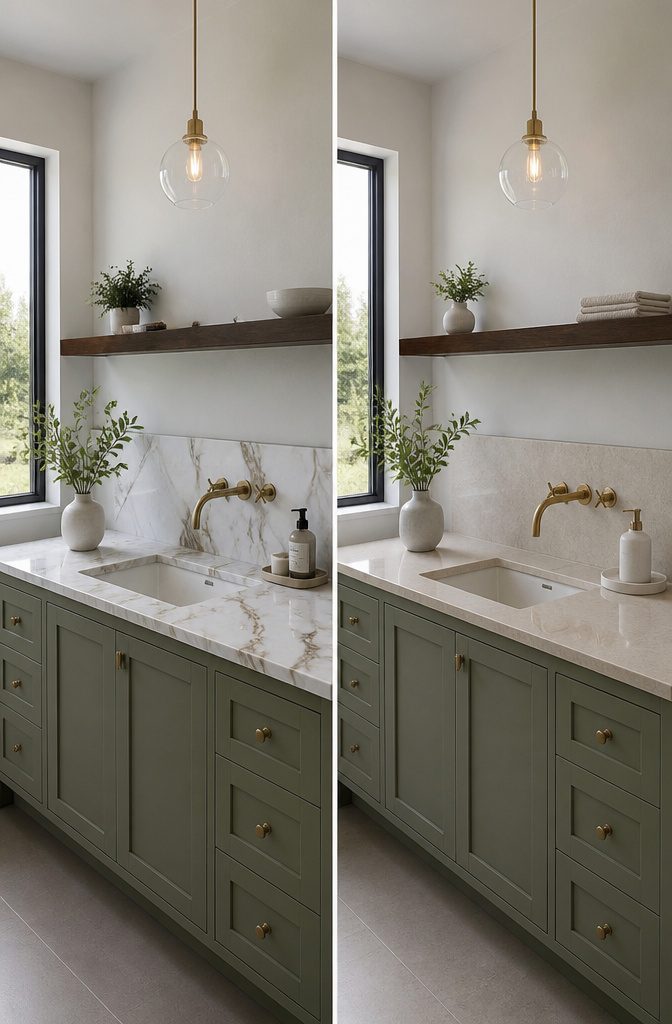
Wood and stone keep green bathrooms from feeling like a paint sample come to life.
The warmth of oak against sage green is the combination I see working most often in real rooms; the grain adds texture without competing, and the tone stays light enough for a small bathroom that does not get much sun.
Walnut handles emerald differently; it absorbs some of that saturation and gives the eye somewhere to rest, which matters when the green is doing the heavy lifting.
I would use walnut for a vanity or open shelving rather than trim, since too much of it can read as dark-on-dark in a space without natural light.
Stone complicates things in a useful way. Calacatta Vagli marble against muted sage cabinetry, as in one of the projects that stuck with me, works because the veining picks up the green without matching it exactly.
The risk is the opposite: matching too closely. Repeating the same green stone across three surfaces can feel enveloping or suffocating depending on the size of the room.
A powder room can take it; a full bath starts to feel like a display case. For dark green walls or tiles, lighter marble with strong veining keeps the contrast alive.
The rule I have settled on is one stone element per green layer: if the vanity is marble, the floor should be something quieter, and vice versa.

Zinsser 02704 Quart Satin Gloss Perma-White Mildew-Proof Bathroom Paint

Washable, scrub able, stain & moisture resistant finish

TRUE ALL-IN-ONE PAINT & PRIMER – Skip the extra steps. Evolve Tru Coat combines paint and primer in one, delivering excellent adhesion and coverage on wood, metal, masonry, and concrete with minimal prep.
7. Warm Neutrals and Complementary Colors
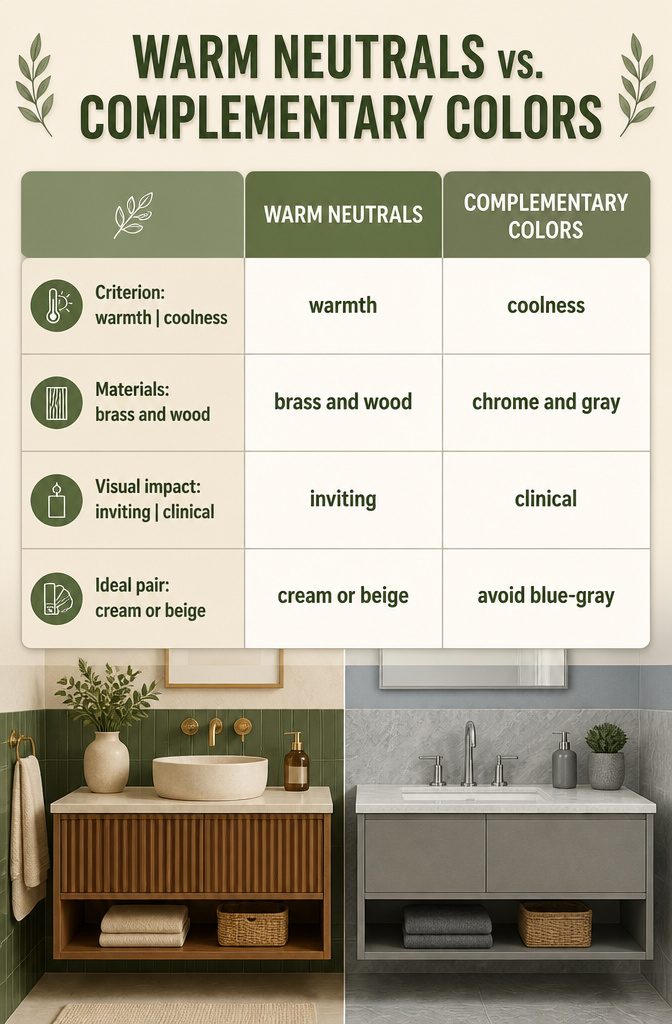
Green can turn cold fast if the colors around it fight instead of settle it.
I learned that the hard way with a bathroom I tried to balance in cool gray and white; the walls looked clinical, not calm. Warm metals, soft neutrals, and natural wood are what actually let green breathe.
Brass fixtures against dark green tile carry the same warmth Brittany Bromley used in that Hamptons guest bath, and the effect holds at any budget.
Cream or beige reads softer than stark white, and walnut or oak cabinetry keeps the palette grounded without competing for attention. A floating walnut vanity or slatted oak cabinet gives you storage that feels layered rather than boxed in.
The combination to avoid is green with blue-gray stone or chrome hardware; it reads pool-house instead of intentional.
If you are working with dark green specifically, treat it like a deep forest shadow and light it from the edges: warm metal on the faucet, cream on the trim, wood on the shelf that holds your morning coffee.

【4-PIECE BATHROOM HARDWARE SET】 This bathroom hardware set includes a extendable vintage gold towel bar, towel ring, toilet paper holder, and double coat hook. One-stop solution saves you time and money compared to buying separate items.

Material: Made of durable Brass, ensuring quality and longevity. Brushed Bronze Finish Never Rust even in bathroom wet environments for long.

BATH HARDWARE: Satin gold 18 in. towel bar with 6 in. extension for the bathroom
8. Plants and Living Accessories
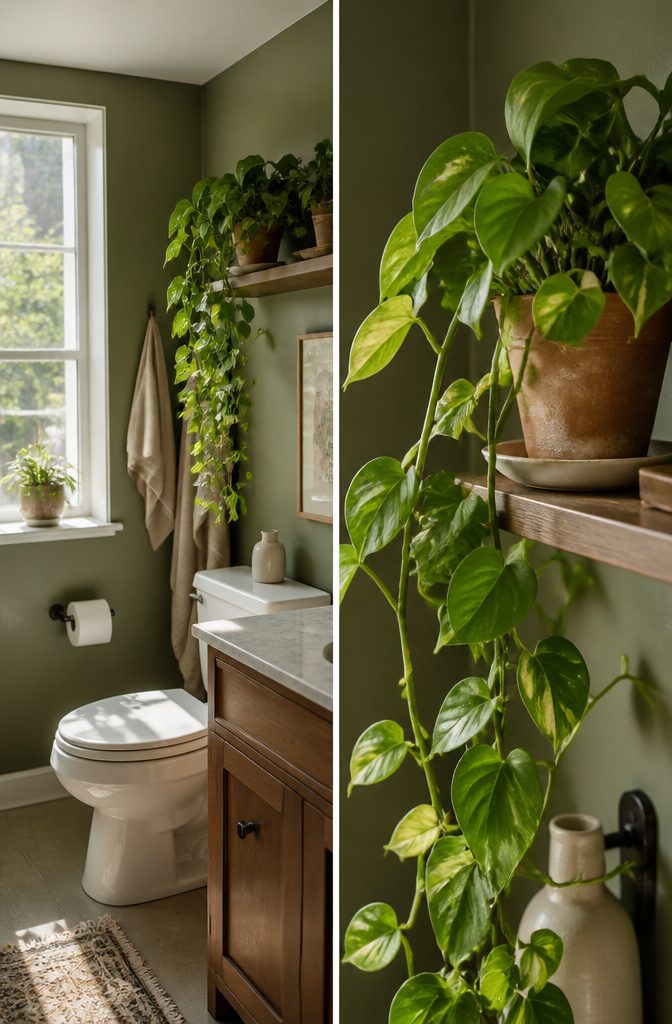
Live plants do what paint and tile cannot. A fern on the tank lid or a pothos trailing from a high shelf adds depth that reads as intentional, not matchy.
The trick is choosing what survives the steam and the shadows. Ferns want the humidity most bathrooms already have, though they need a spot away from direct shower spray.
Pothos tolerates lower light than almost anything and forgives missed waterings. Snake plants handle both neglect and fluorescent fixtures, which matters in a windowless powder room.
Placement needs more thought than the plant shop suggests. A saucer under the pot is non-negotiable; water rings on painted vanities or MDF shelves swell the material in a week.
I hang pothos from a tension rod set back from the shower curtain so the vines layer against the sage wall behind without sitting in wet air.
The living green reads as a separate tone from the painted green, not a repetition, which keeps the room from flattening into one flat field of color.

Chic Design, Soft Touch: Bring modern elegance and tactile luxury to your home. This funky decorative mirror features a soft, velvet-like flocked finish that feels as special as it looks. Its stylish wavy design adds artistic character and instant charm, making it a standout accent for lovers of bold, unique decor

Elegant Cast Iron Frame: Made from solid cast iron with a detailed embossed floral design, offering both durability and vintage charm.

Beautiful Boho Decorative Style: This uniquely design mirror blends wood and mirror into one gorgeous piece. Crafted as an oval decorative mirror, it boasts retro minimalist styling accented by delicate soft bead detailing. Natural rustic touches merge seamlessly to craft soothing nature-inspired ambiance, infusing your space with refined artistic texture and everlasting visual appeal.
Why Green Works in a Bathroom
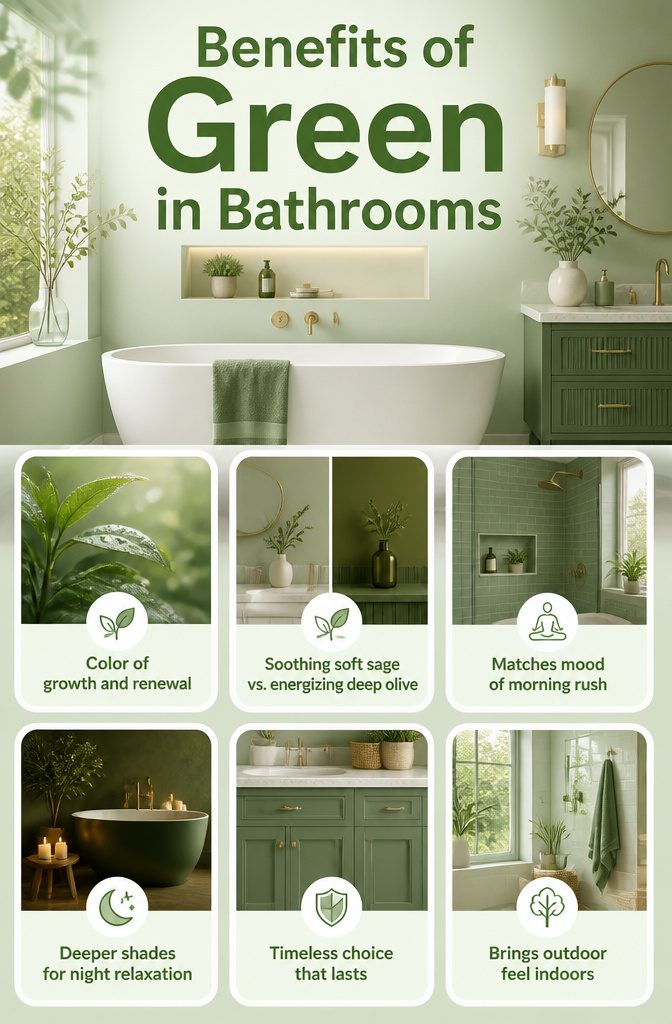
Green carries an automatic link to the outdoors, and that association is what makes it settle so naturally into a bathroom.
The eye reads it as growth and renewal, the same cues you get from plants or open sky, so the color starts lowering tension before you even register it.
In a room built around hot water and a locked door, that quiet signal matters.
The range helps too. Soft sage on the walls reads as soothing, while deeper emerald or olive through cabinetry or wallpaper can push the same space toward something bolder and more invigorating.
The trick is matching the tone to the mood you actually use the bathroom for, not the one a magazine assigns it.
If your morning is rushed and functional, a muted green keeps the calm without demanding attention. If the space is where you slow down at night, a deeper shade can feel like a deliberate choice rather than a background wash.
Either way, the color does the same work: it brings the outside in, and the bathroom becomes a space that feels finished without feeling decorated.

Hexagon Peel and Stick Backsplash:Each box includes 10 long hexagonal peel-and-stick tiles, each self-adhesive tile measures 12 x 12 Inch

Upgraded Design: Each 2.5mm-thick vinyl tile is perfect for your kitchen backsplash tiles peel and stick project, offering moisture, oil, heat, and water resistance
Lighting for Green Bathrooms
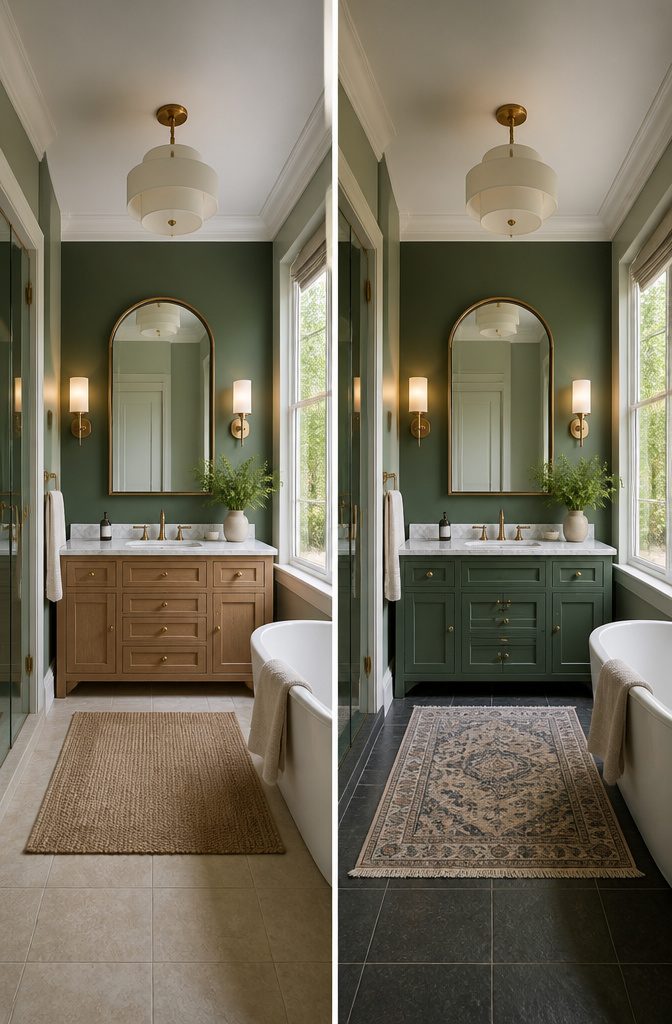
Green shifts more than most colors under different light, and that is the first thing to account for when you are choosing a tone.
Morning sun coming through an east window will pull out the yellow in a sage wall and make it read almost gray by afternoon.
A skylight solves some of this, washing a pine-colored finish evenly across the day, but most bathrooms rely on electric light for early mornings and late evenings.
Warm light, around 2700 K to 3000 K, keeps dark green from falling flat or turning muddy. Cooler bulbs fight the warmth already in the paint and can leave a bold green wall looking institutional.
In a smaller bath, warm recessed lighting or a pair of sconces at face height does the work of enlarging the space while the color does the visual weight.
Layer the light so you are not depending on one overhead source: ceiling fixtures for moving around, targeted light at the mirror for tasks, and a small accent on any textured tile or feature you want to catch after dark.
Soft Chenille Comfort — Step onto thousands of soft chenille fibers in our high-pile design the moment you leave the shower, crafted for genuine everyday comfort. OLANLY's OEKO-TEX STANDARD 100 certified chenille delivers a cushioned, cozy feel underfoot — gentle on tired feet, certified safe for little ones, and friendly for furry companions. Minimal shedding means less lint, less maintenance — just shake to refresh the high-pile plush or toss it in the machine as needed. From the first step to the last, every single day — premium comfort at an everyday price.

Soft Chenille Comfort — Step onto thousands of soft chenille fibers in our high-pile design the moment you leave the shower, crafted for genuine everyday comfort. OLANLY's OEKO-TEX STANDARD 100 certified chenille delivers a cushioned, cozy feel underfoot — gentle on tired feet, certified safe for little ones, and friendly for furry companions. Minimal shedding means less lint, less maintenance — just shake to refresh the high-pile plush or toss it in the machine as needed. From the first step to the last, every single day — premium comfort at an everyday price.

Machine Washable & Easy Care – This washable cotton rug can be vacuumed, shaken, or machine washed on a gentle cycle with cold water. Cotton material may shrink or wrinkle after washing. If needed, use low heat ironing to restore shape
Paint Finishes That Survive Steam
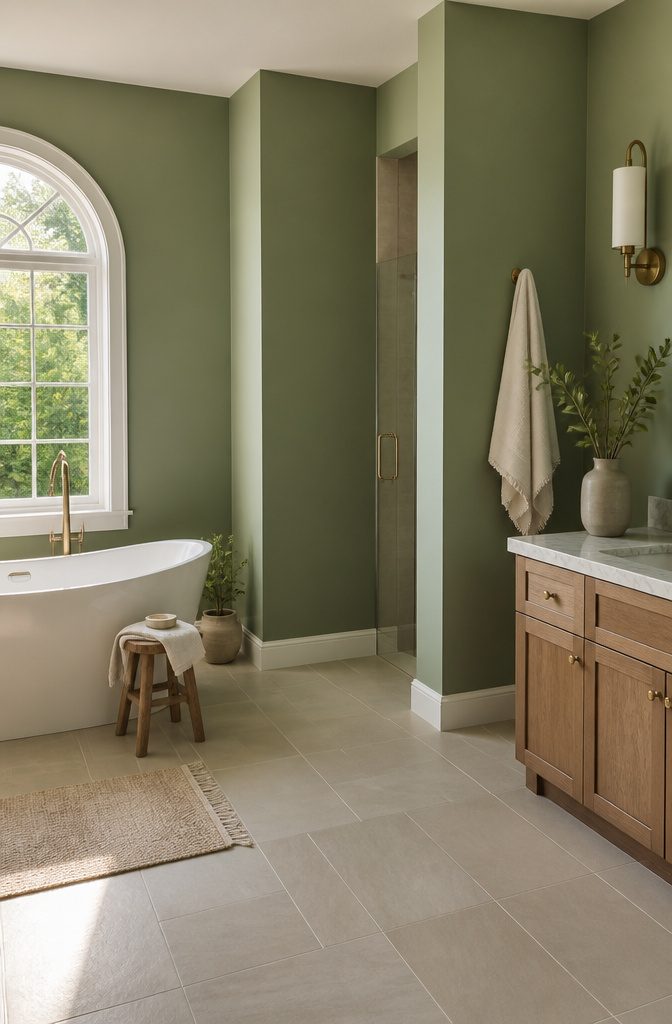
Standard flat paint on a bathroom wall starts looking tired within a year, and by year two you are touching up corners where the paper face has lifted.
The steam does that. A satin or eggshell sheen on the walls, closer to 20–30 gloss units, gives moisture a harder surface to bead on instead of soaking in.
Modern emulsion, the kind formulated with mould inhibitors built into the resin, handles the ceiling and walls both; the same finish on trim reads as too soft and scuffs where a towel bar or door handle catches it.
I would put a semi-gloss on baseboards and window casings, anything that takes a physical bump.
The ceiling stays flat only if you are running an exhaust fan that actually clears the mirror in under ten minutes; otherwise the ceiling sees the same steam load as the upper walls and wants the same protection.
The cost gap between flat and a bathroom-grade emulsion runs maybe eight to twelve dollars per gallon, which pays back the first time you are not repatching above the shower.
Specific Paint Colors That Deliver
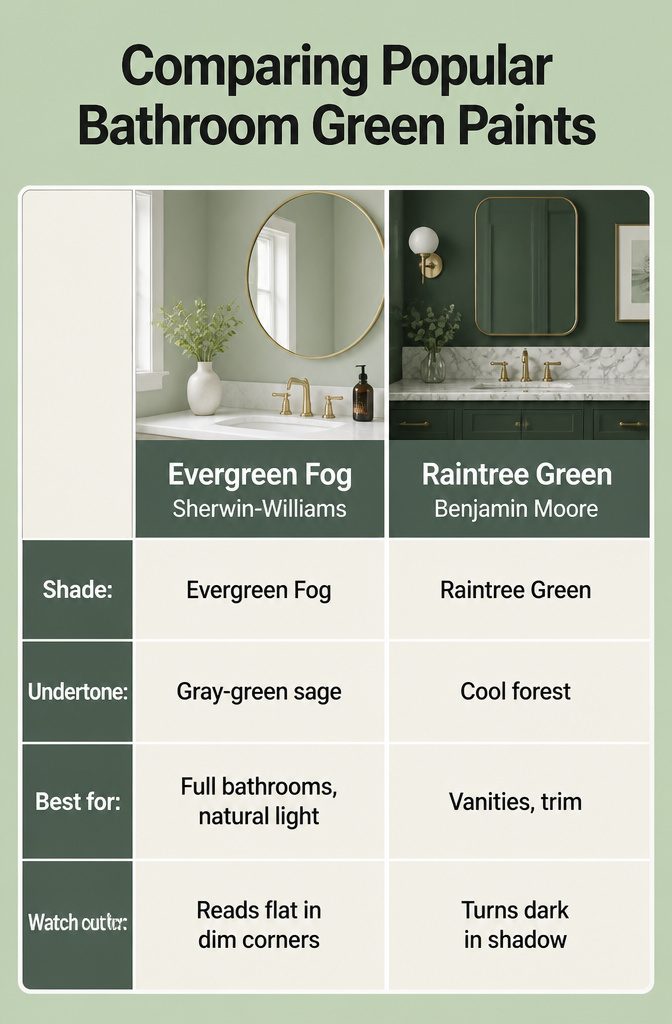
Sherwin-Williams Evergreen Fog lands as a soft sage with enough gray to stay calm under bathroom light.
I have seen it read almost beige in north-facing rooms and distinctly green where the sun hits, so the test patch matters more than usual here.
It works best when you want the walls to recede and let tile or fixtures carry the personality.
Benjamin Moore Raintree Green runs cooler and deeper.
The source that used it on midcentury cabinetry paired it with Calacatta Vagli marble and brass hardware, which tells you its range: it holds up to real stone and warm metal without turning muddy.
I would not put it in a windowless powder room unless the lighting is excellent.
The table below sorts four solid options by what actually changes your decision:
| Shade | Brand | Undertone | Best for | Watch out for |
|---|---|---|---|---|
| Evergreen Fog | Sherwin-Williams | Gray-green sage | Full bathrooms, natural light | Reads flat in dim corners |
| Raintree Green | Benjamin Moore | Cool forest | Vanities, trim, paired with marble | Can turn dark in shadow |
| Kendal Green | Sherwin-Williams | Bold, saturated | Accent wall or ceiling | Overwhelms small spaces |
| Bancha | Farrow & Ball | Olive-brown earth | Warm, rustic palettes | Limited US availability |
Kendal Green from Sherwin-Williams is the one I would skip for a first project. It demands editing: white fixtures, simple mirror, nothing competing.
Bancha by Farrow & Ball carries an olive-brown undertone that solves the "too mint" problem some renters hit, though the price per gallon and the ordering hassle put it in a different budget tier.
Backwoods by Benjamin Moore and Saged by Backdrop also came up in the same round of looking, but without enough detail on behavior to recommend a specific application.