

I’ve blown my kitchen breaker more times than I care to admit, usually mid-espresso pull with a toaster going rogue. You need at least seven dedicated circuits: two 20-amp small-appliance circuits for your countertops (think blenders, air fryers, that gorgeous stand mixer you impulse-bought), plus individual lines for your refrigerator, dishwasher, disposal, microwave, range hood, and a beefy 240-volt circuit for your range. Islands and peninsulas count toward those countertop circuits, and everything near water needs GFCI protection. Skip this, and you’ll be resetting breakers while your ribeye gets cold. The electrical math prevents overloaded circuits and potential fire hazards that occur when too many high-draw appliances run simultaneously.
Why Your Kitchen Needs More Circuits Than Any Other Room
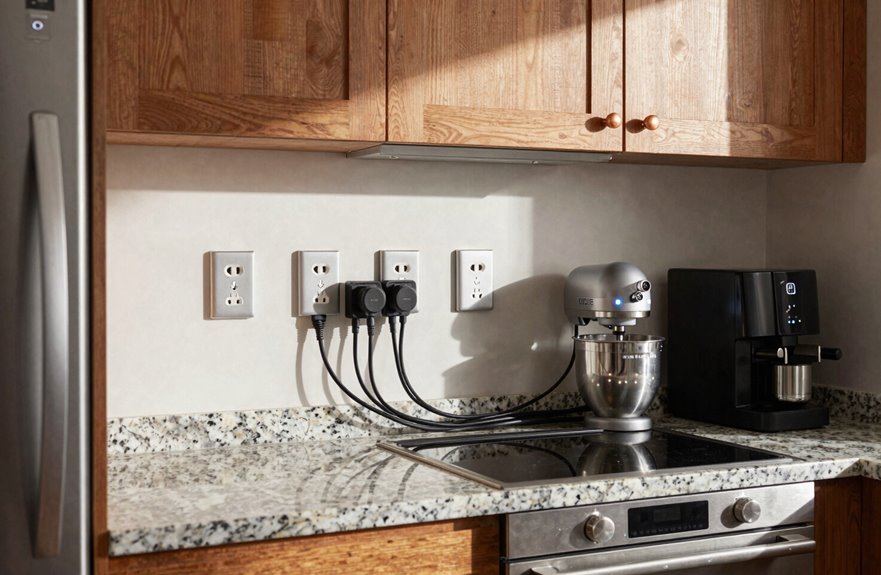
Because I’ve spent way too many Saturday mornings resetting breakers while my coffee gets cold, your kitchen is basically an electrical drama queen. Your blender, toaster, and that air fryer you swore you’d use daily are all power-hungry divas demanding the spotlight at once. That’s exactly why you need that two-circuit countertop setup. Those small-appliance circuits aren’t code nitpicking; they’re your solution to actually enjoying brunch without plunging everything into darkness. Don’t skip that GFCI protection either. It prevents electrical shock during your morning smoothie session. Once you’ve got this system properly installed, you’ll realize how the sad single-circuit life in older homes made kitchen appliance use unnecessarily limiting.

【Replacement Function】15758 on/off switch replacement helps replace a worn, loose, broken, or intermittent blender power switch and restore basic on/off control for...
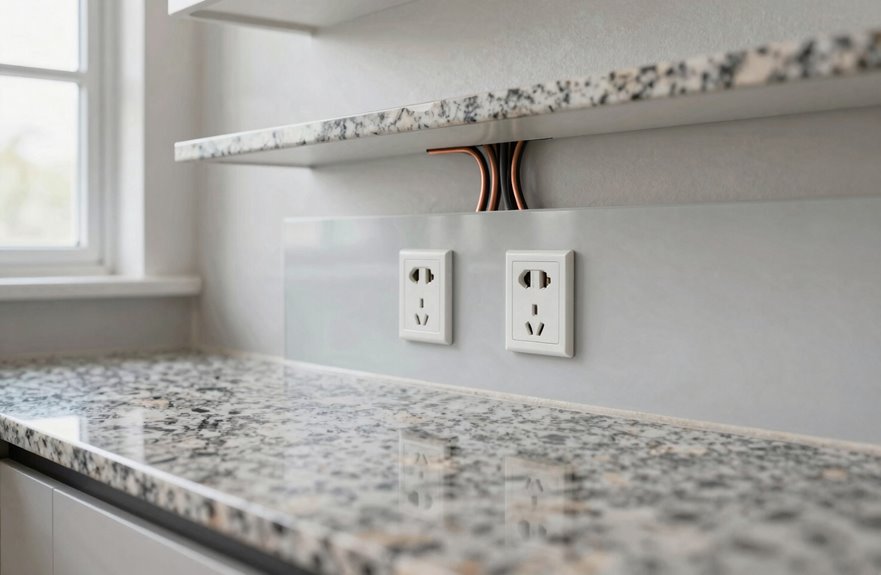
The Two 20-Amp Circuits Required by Code for Countertops
| What I Plug In | Why Two Circuits Save Me |
|---|---|
| Toaster + kettle | No more dark toast |
| Blender + food processor | Smoothie Sunday works |
| Instant Pot + air fryer | Dinner without complications |
The code prevents overloads when using multiple high-draw appliances simultaneously. Both circuits serve the countertops, with one positioned slightly higher per electrical code requirements.

Larger GFCI Housing: Built-in GFCI features a larger diameter and requires a 4.3"–4.4" countertop hole. Please measure before purchase.

A pop up outlet box is hidden in your countertop or floor when closed, all you see is a stylish stainless steel top. When you push the button the top tilts open revealing the GFCI outlet.

✅【Innovative Dual Protection System】Features twin solenoid and double silicon controlled rectifier (SCR), ensuring an always-on GFCI protection to ground fault, which doubles the service life of GFCI as an added layer of protection.
What You Can Actually Plug Into Small Appliance Circuits
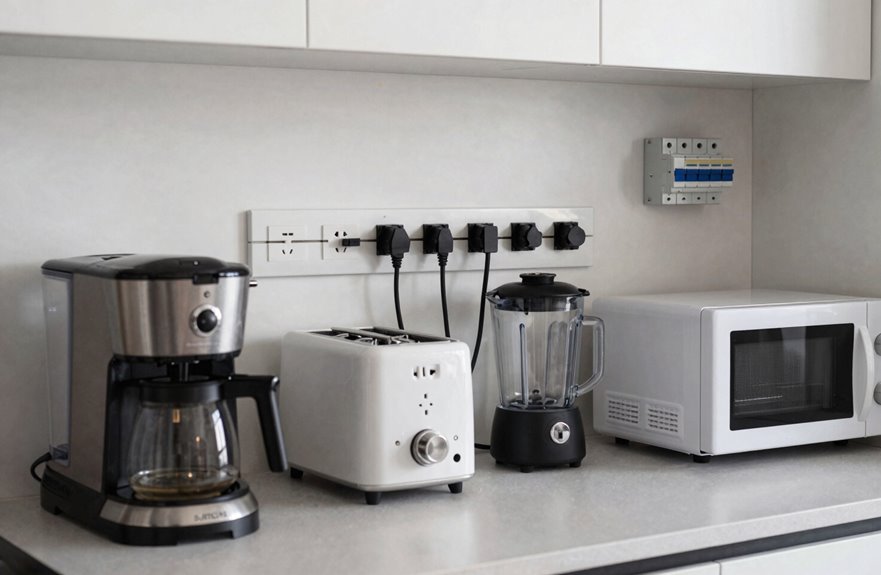
You can run your blender, that gorgeous stand mixer you impulse-bought, your air fryer, basically anything portable that doesn’t have its own dedicated circuit. Think small, think countertop, think appliances you’re not hardwiring.
GFCI protection is non-negotiable for anything near the counter, and you can’t just keep daisy-chaining appliances like you’re building some kind of breakfast-powered robot. Overloading circuits will trip your breaker and interrupt your morning routine.

Single pole, 20 Amp, 120V type QP Circuit Breaker

Compact, single pole, push-to-reset thermal circuit breakers

Product name: Push-button Thermal Circuit Breakers
Permitted Appliance Types
So what can you actually plug into these small appliance circuits without making your electrician cry. Toasters with their chrome gleam, that funky vintage blender you scored at a flea market, the coffee grinder that sounds like a jet engine. Anything that sits on your counter and makes your morning possible belongs on kitchen small-appliance circuits, which feature mandatory GFCI protection for exactly this purpose. Your countertop receptacles are designed for the Instant Pot, the air fryer, that immersion blender you use twice a year but can’t ditch. These 20-amp circuits handle your eclectic collection, your midnight grilled cheese experiments, your ambitious bread-making phases. Overloading these circuits, such as running the kettle and microwave simultaneously, creates safety hazards. Just don’t hardwire your fridge here.
GFCI Protection Rules
Now that you know what belongs on these circuits, let’s talk about the safety net that keeps your morning routine from literally shocking you. GFCI protection is a code requirement, not optional bureaucracy. It functions as your backup when you’re half-awake and dropping toast near the sink. I’ve tripped these myself, and while it’s annoying, electrical safety is non-negotiable.
Small-appliance circuits power your countertop receptacles, and every single one needs GFCI protection. That includes above-counter outlets too; some inspectors interpret them as part of the circuit, so play it safe.
Here’s what actually happens:
| Location | GFCI Needed? | Why It Matters |
|---|---|---|
| Countertop receptacles | Yes, always | Splashes, spills, your clumsy coffee pour |
| Above-counter outlets | Usually yes | Extension cords, phone chargers, bad decisions |
| Any on these circuits | Yes, protect them | One trip saves your entire morning |
Circuit Limitations Apply
Where exactly can you plug in without starting a code violation party? Let me break this down, because I’ve definitely wondered the same thing when staring at my kitchen outlets.
Your small appliance circuits power those countertop receptacles where you blend smoothies and toast bagels. These 20-amp circuits keep your morning routine running.
But they have limitations:
- They can’t handle your fridge or dishwasher, which need dedicated circuits all to themselves.
- They can’t power your pretty pendant lights over the island, not ever.
- They can’t skip GFCI protection, because water and electricity don’t mix safely in kitchens.
Your two small appliance circuits can share outlets with other kitchen receptacles beyond the counters. That peninsula where you charge your laptop qualifies for this shared circuit capacity.
Where GFCI Outlets Are Required in Your Kitchen
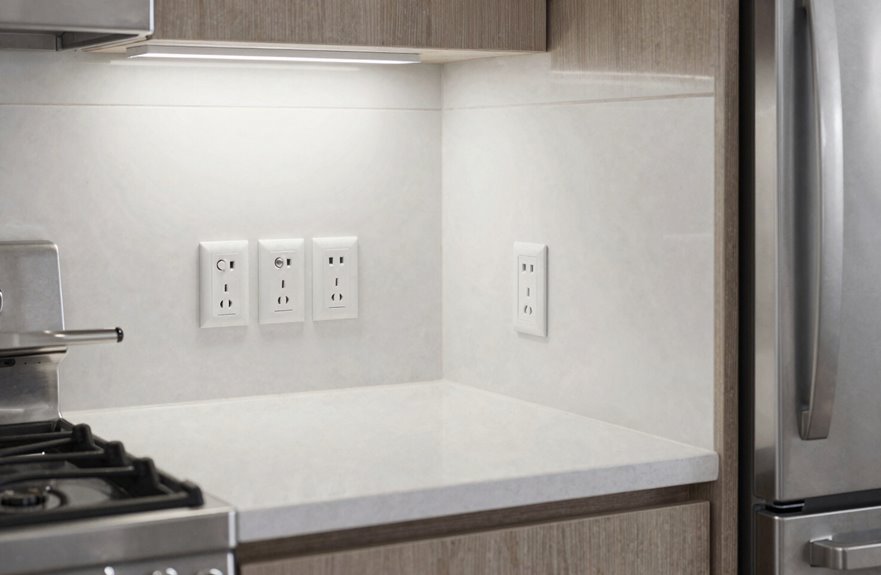
Your countertop receptacles absolutely demand GFCI protection. Every single one requires it. Small appliance circuits powering your coffee maker need GFCI protection, even if they’re only 20 inches above the counter.
Here’s where you need that protection:
| Location | GFCI Required? |
|---|---|
| Countertop receptacles | Yes—always! |
| Small appliance circuits | Yes, even above counters! |
| Island/peninsula outlets | Yes, don’t forget these! |
| Mixed circuit outlets | Yes, if any serve counters! |
No point can sit more than 24 inches from an outlet, and islands require GFCI protection as well. Kitchen outlets that meet code requirements protect your home from electrical hazards.

[Material Upgrade ] DG96-00173A series terminal block replacement can help you connect bare wires, avoid clutter, make wiring connections simpler and more efficient. You have obtained -1 x 600V 65A 3-digit double row screw DG96-00173A terminal block. The terminal block of the electric furnace is approximately 3.42 x 1.63 x 1.18 inches. Hole diameter: 0.23 in. DG96-00173A block replacement 3282643 DG65-00003A AP5306090 PS4241550 111751 WB17T10011 AP3736048 1085735 PS953027.

7 Dedicated Circuits Every Major Kitchen Appliance Needs
I’ve learned the hard way that cramming a fridge, microwave, and toaster onto one circuit causes circuit breaker trips. I’ve reset breakers in my kitchen far more times than expected. That’s why I’m breaking down exactly what your heavy-duty appliances need, from that power-hungry 240-volt range circuit to the modest but necessary 15-amp line your dishwasher requires. Getting these specs right allows you to blend, bake, and brew simultaneously without power interruptions.

POWERFUL FOOD WASTE PROCESSING: Features a 2,600 RPM (revolutions per minute) Vortex motor to provide fast, powerful grinding of everyday food scraps to significantly reduce disposal jamming
Major Appliance Requirements
Why does my blender trip the breaker right when I’m pureeing soup for guests? A kitchen going dark mid-dinner party is more than embarrassing. Dedicated circuits for major appliances aren’t just building code requirements; they’re essential for safe operation.
Dedicated circuits allow major appliances to draw power independently, which eliminates competition for electrical capacity and prevents circuit overload. This ensures genuine electrical safety and prevents unexpected outages during use.
Your kitchen requires dedicated circuits for these appliances:
- Refrigerator (15-20 amps, 120 volts) — continuous operation requires independent power
- Dishwasher (15-20 amps) — prevents voltage drops that affect cleaning performance
- Microwave (20-30 amps) — high power draw demands isolated circuit capacity
Installing dedicated circuits prevents the sudden power losses that interrupt appliance operation and protects your home’s electrical system from overload conditions.
Circuit Capacity Specifications
How much juice does your kitchen actually need? Guessing never works. A toaster once killed the lights mid-brunch, and that kind of disruption is avoidable.
Here’s the real deal on dedicated circuits:
| Appliance | Amps/Volts | My Honest Take |
|---|---|---|
| Microwave | 20-30A, 120V | Don’t cheap out, trust me! |
| Range/Oven | 40-50A, 240V | The big boss needs its own lane |
| Fridge, Dishwasher, Disposal | Individual 15-20A | Non-negotiable, folks |
Plan at least seven dedicated circuits total. This prevents conflicts when running multiple high-draw appliances simultaneously, such as during holiday cooking.
Countertop receptacles require specific protection. GFCI protection is mandatory, with a 20-amp minimum, and you need two or more circuits so your blender and air fryer operate independently. Keep them off lighting circuits. This prevents appliances from disrupting lights during use.
120-Volt Circuit Requirements for Refrigerators, Dishwashers, and Disposals
When it comes to the heart of your kitchen, those hardworking appliances that keep your milk cold, your dishes sparkling, and your sink drain functioning properly each one requires its own dedicated 120-volt circuit, no exceptions.
After experiencing multiple breaker trips during peak usage times, the requirements are clear:
- Refrigerators need a solo 15–20 amp circuit to maintain proper temperature for food storage
- Dishwashers get their own 15–20 amp line, since water and shared wiring create safety hazards
- Disposals require 15–20 amps, dedicated, without sharing circuits with other appliances
Keep them GFCI-protected near water sources, and you will avoid electrical issues that can damage appliances or create safety risks.
240-Volt Circuit Demands for Ranges, Ovens, and Cooktops
Where do we begin with the heavy hitters? Your range, oven, and cooktop aren’t just appliances; they’re essential kitchen equipment that requires proper electrical infrastructure. I’m talking dedicated circuits, 240-volt power, and full compliance with electrical codes.
You can’t cheat on per-appliance requirements. That electric range requires its own 40–50 amp, 240-volt circuit with no sharing allowed. Wall ovens have the same requirement, and cooktops demand substantial amperage as well.
Running an oven on a shared line creates serious problems. Lights dim, appliances underperform, and safety becomes compromised. The NEC mandates separate 240-volt branch circuits for each of these appliances because they draw significant power simultaneously. Your kitchen requires this upgrade to function safely and reliably.
Microwave and Range Hood Circuit Specifications
Why does your microwave deserve its own spotlight? Because nothing kills the vibe faster than popping popcorn and plunging your whole kitchen into darkness.
Microwaves require dedicated outlets, not shared circuits where your toaster competes for power. Here’s what keeps systems properly powered:
- A microwave needs its own 20–30 amp circuit, no shared loads
- Your range hood gets separate 15–20 amp circuits for proper ventilation above the stove
- Built-in microwave? You’ll need dedicated 20-amp lines with GFCI near that sink splash zone
I once tried cheating the system, and nuisance tripping ruined movie night. Check your manufacturer’s specs, call your AHJ, and wire it right. Build kitchens that actually work properly.
Why Kitchen Lighting Can’t Share Circuits With Outlets
How exactly do you want your kitchen to fail: subtly, with a flicker here and there, or spectacularly, with every light dying the moment you fire up the blender?
Lighting absolutely cannot share space with receptacle circuits, especially those countertop workhorses we all depend on. Your small-appliance circuits are dedicated solely to powering that morning coffee ritual and midnight toast emergencies. The code insists on this separation for good reason.
Picture this: you’re frantically whisking eggs for brunch guests when suddenly the lights go dark. Keeping lighting isolated means reliability when you’re entertaining, cooking, or just existing in your kitchen. Two 20-amp small-appliance circuits handle your outlets; separate circuits power your lights. This separation prevents nuisance tripping and ensures your kitchen functions properly when you need it most.
Island and Peninsula Outlet Requirements
I’ve wrestled with enough kitchen islands to know that outlet placement can make or break your morning routine. You don’t want to discover you’re short on plugs when you’ve got a blender, coffee grinder, and phone charger all needing power at 7 AM. Whether you’re slicing vegetables on a sprawling center island or flipping pancakes at a cozy peninsula, this guide shows you exactly where to position those power sources so you’re never stretching cords across hot burners or crawling under cabinets. You’ll need to balance accessibility and aesthetics, because nobody wants their beautiful quartz waterfall edge ruined by an awkwardly placed socket.
Island Outlet Placement
Where exactly do you plug in that immersion blender when you’re standing in the middle of your kitchen island? Placement matters significantly because poor positioning creates functional problems.
Island outlets need smart positioning, not just box-checking:
- Mount them on the side panels, not the ends where you’ll bang knees
- Keep them within 24 inches of the countertop edge for easy reach
- Avoid the “appliance garage” clutter zone where cords tangle
Connect island outlets to the kitchen’s small-appliance circuits, not lighting circuits, so you have adequate power for your stand mixer. Strategic placement eliminates the need to stretch extension cords across your prep space. Check your local AHJ for GFCI rules; interpretations vary and proper installation is essential.
Peninsula Power Access
You’ve got your island outlets sorted, but what about that peninsula where you’re currently trying to plug in your coffee grinder while dangling the cord over the sink like some kind of kitchen acrobat. I’ve been there, friend, and it’s not ideal.
Your peninsula needs at least one outlet, just like those island outlets we covered. It counts toward those two required small-appliance circuits, so you’re not burning extra wire unnecessarily. I always tuck mine where I can actually reach it mid-chop, not hidden behind decorative vases you’ll never use.
GFCI protection is required for countertop spaces, and yes, that includes your peninsula. I learned that through experience.
Plan smart, keep it off dedicated appliance circuits, and you’ll actually use this outlet.
Distributing Wattage Across Your Electrical Panel
How do I stop my breaker from throwing a tantrum every time I make toast and coffee at the same time? I’ve been there, standing in my pajamas, cursing the dark. The solution lies in wattage distribution across your circuits.
To keep your electrical system functioning properly:
- Split those countertop kitchen appliances between two 20-amp small-appliance circuits, so your blender and kettle aren’t competing for power.
- Give your refrigerator, dishwasher, and microwave their own dedicated circuits. Don’t share these with the toaster or other high-draw appliances.
- Feed island outlets from those same small-appliance circuits, spreading the load evenly across your panel.
NEC rules keep outlets within 24 inches apart and require GFCI protection, which determines how you map everything. Distribute your wattage correctly, and you’ll have reliable power for your morning coffee.
Flickering Lights and Tripped Breakers: Symptoms of Circuit Overload
I’ve been standing in my kitchen with the lights flickering while the coffee maker and toaster trip my breaker, again. That’s your electrical system signaling a serious problem, and I ignored it for months because I’m stubborn like that. Let’s talk about spotting these warning signs early, before you’re resetting breakers in your pajamas at 6 AM, and how proper circuit planning keeps the lights steady and your morning routine functional.
Recognizing Overload Signs
Three things I’ve learned to dread in my kitchen: the microwave’s sad little hum, the toaster’s click of surrender, and that telltale flicker, that quick stutter of the overhead lights like the whole room just blinked. These aren’t quirks; they’re cries for help.
Here’s what my circuit overload looked like in real time:
- Lights dimming when the coffee grinder kicked on, like the whole house was wincing
- Breakers tripping mid-recipe, leaving me with half-toasted bread and a cold heart
- Warm outlet faceplates that scared me straight
My wiring capacity was drowning, plain and simple. That nuisance tripping was my electrical system saying “enough.” I ignored it until I couldn’t, and you shouldn’t either.
Preventing Circuit Strain
| What I Fixed | Why It Mattered |
|---|---|
| Split the microwave and toaster | No more breaker tantrums! |
| Added GFCI protection | Shock protection, because I’m clumsy |
| Kept lighting on its own circuit | Goodbye, horror-movie flicker |
| Mapped every outlet | Finally knew which circuit was which |
GFCI protection on those small-appliance circuits is required by electrical code. Distribute your loads across circuits to prevent overloads. Your circuits will function properly as a result.
When to Upgrade Your Kitchen’s Electrical Service
I learned load calculations matter when my vintage toaster and espresso machine revealed the limitations of my electrical system. Key upgrades included:
- Two 20-amp small-appliance circuits for countertops to prevent circuit overload during simultaneous use
- Dedicated appliance circuits for the fridge, dishwasher, and range
- Island outlets that operate independently from wall circuits
My electrician ran the numbers, and upgrading from 100-amp service to higher capacity transformed my kitchen’s functionality. The system now safely supports multiple high-draw appliances operating simultaneously without triggering breakers.
When to Call a Licensed Electrician for Kitchen Wiring
Why wait until you’re staring at a tangle of wires that looks like spaghetti’s evil twin? Call licensed electricians before you even pick out your backsplash, because kitchen circuits aren’t a “figure it out later” situation. Learning this the hard way is costly and dangerous.
Two 20-amp small-appliance circuits for your countertops, GFCI-protected, no sharing with lights or your fridge; that’s just the start. Your dishwasher, microwave, disposal, they all want dedicated circuits, like toddlers demanding separate snacks. Balancing the load across your panel requires professional expertise, not guesswork.
Local inspectors interpret code differently, and code compliance isn’t one-size-fits-all. Licensed electricians know your area’s specific requirements, they’ll map your layout properly, and you’ll avoid tripped breakers during morning coffee use. A licensed electrician ensures your kitchen meets current electrical standards and functions safely for years to come.