
I learned the hard way that carpet cleaning isn’t the “quick afternoon” I imagined. My three-bedroom house took 2 to 3 hours of active steam cleaning, then my living room became a soggy no-fly zone for 12 hours.
Most jobs run 1.5 to 3 hours of actual cleaning, but total downtime stretches anywhere from 4 to 18 hours depending on your method, humidity, and whether you’re smart enough to crank a dehumidifier. I wasn’t, and my socks paid the price.
Dry cleaning gets you back on your feet in 2 hours, while hot water extraction, that classic “oops, wet socks” technique, needs serious patience. You’ll want to book 1 to 4 days ahead, move furniture the night before, and prepare for a full day of disrupted life, not just a quick service call. Timing this right requires significantly more planning than a typical service call.
How Long Does Carpet Cleaning Take?

How long does carpet cleaning take? The answer really depends on your method.
Hot water extraction, also called steam cleaning, needs about 2–3 hours of active cleaning time, then you’re looking at 6–12 hours total before you can use the carpet again. Dry cleaning takes much less time, maybe 1–2 hours cleaning time plus another 1–2 hours of drying time, and you can host game night sooner.
For a standard home of roughly 500 square feet, budget 60–90 minutes of actual work, plus drying time that varies based on conditions. Climate significantly affects drying speed. Winter’s dry indoor air speeds things up, while summer humidity extends it. Carpets can dry in 4 hours or take as long as 18 hours depending on these factors. Ventilation is your most effective tool for reducing drying time.
What Makes Carpet Cleaning Take Longer?
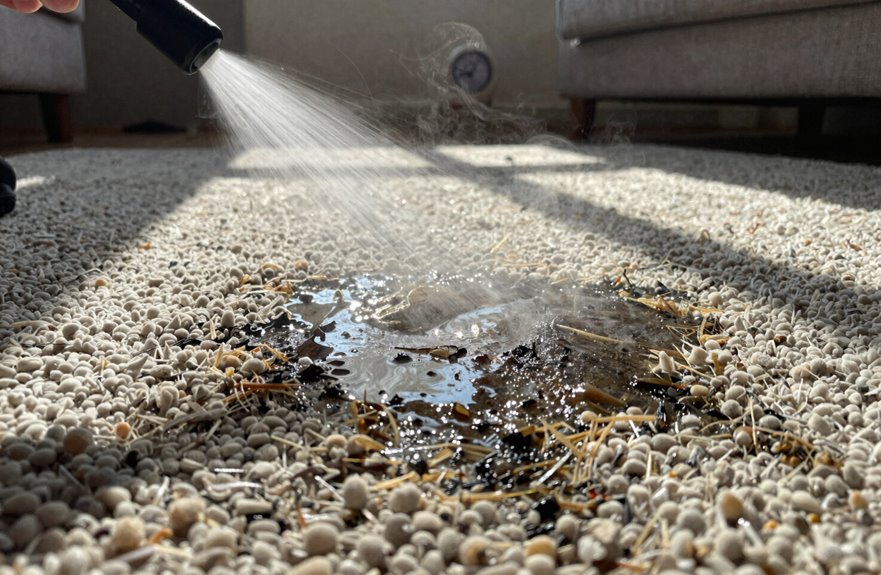
I’ve learned that two things really stretch out my cleaning days: room size and how much life my carpets have absorbed. When I’m dragging hoses through a sprawling open-concept living area, then squeezing into three cramped bedrooms with furniture stacked like Tetris blocks, I’m looking at hours, not minutes. Heavy soil from sources like pet stains requires extra pretreatment, slower passes, and a longer drying time for the carpet to fully dry.
Room Size Impact
One thing I’ve learned after years of dragging hoses through doorways: your square footage determines your schedule, regardless of your evening plans.
Room size shapes everything. Cleaning duration extends proportionally across larger spaces, with each extra hundred square feet requiring significantly more labor. Drying time increases too. More carpet means more moisture remains in the space for longer periods.
What I’ve observed:
- Open floor plans reduce physical strain by eliminating doorways to navigate
- Multi-room jobs consistently take longer than single-room projects
- Bigger carpet requires proportionally more scrubbing every time
- Steam extraction takes considerably longer on larger spaces than dry methods
- High-traffic zones in huge rooms need extra passes and additional work
Larger spaces demand more hours. That’s the direct relationship between square footage and cleaning time.
Soil Level Severity
Why does a quick refresh turn into an all-day marathon? Soil level changes everything. When facing heavy soil load, think years of muddy boots, pet parties, and that mysterious gray lane by the sofa, serious pretreatment time is necessary. Enzyme soaks for pet accidents, extra scrubbing, and multiple extraction passes become standard. Each pass pushes more water deep into fibers, which means drying time stretches from hours into tomorrow. The machine works harder, fighting embedded grit that acts like sandpaper against the brushes. Lightly soiled bedrooms, though? In, out, dry by dinner. Soil level can be assessed by visual inspection, much like gauging paint swatches. Your cozy spaces deserve accurate timelines, not overstated expectations.
When Should You Schedule Carpet Cleaning?
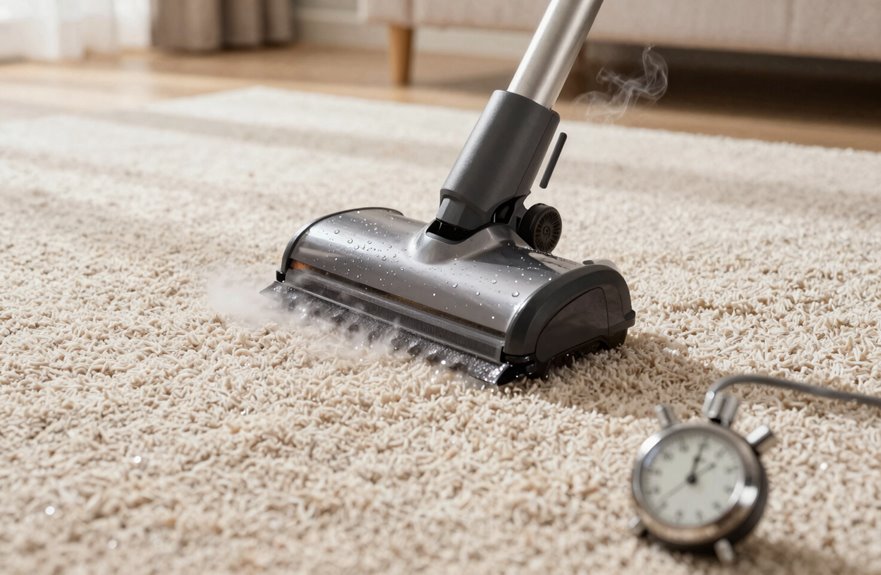
Timing your carpet cleaning right can make or break the whole experience, and I’ve learned this the hard way twice. I once scheduled a steam clean before a dinner party, and my guests arrived to damp floors and that weird wet-dog smell.
What I’ve figured out about nailing the schedule:
- Book 1–4 days ahead when you factor in drying time and your actual life
- Winter’s actually faster indoors. 4–6 hours drying beats summer’s humidity nightmare of 12–18 hours
- Hot water extraction needs 6–12 hours drying, so plan that weekend buffer
- Dry cleaning methods wrap in 2–4 hours total, perfect for last-minute panic
- Move furniture the night before. You’ll thank yourself
Your home’s layout matters too. Open concepts speed things up, while multi-room jobs take longer. Time it right, and you’ll actually enjoy the results.
Steam vs. Dry Cleaning: Which Saves More Time?
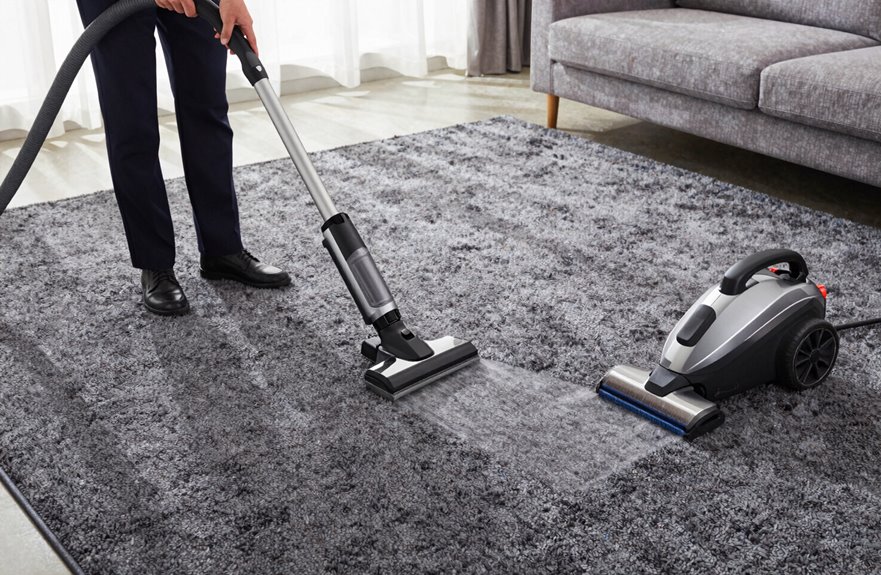
So I wrestled with this question at 9 PM last Tuesday, staring at my coffee-stained living room carpet: which method gets me back to Netflix fastest without ruining everything?
I’ve learned the hard way that steam cleaning, hot water extraction in technical terms, demands serious patience. Sure, the active cleaning wraps in 2–3 hours, but drying time is lengthy. We’re talking 8–15 hours total time before you can flop down with popcorn.
Dry cleaning changed my approach. Low-moisture magic means I’m walking on usable carpet in 1–2 hours, maybe 2.5–4 hours total time start to finish. It’s surface-level, yes, but for chaotic Tuesday nights it works.
Your choice depends on how much disruption you can tolerate.
How Long Does Carpet Cleaning Take by Home Size?

I’ve clocked enough hours pacing soggy carpets to know square footage isn’t just a number. It’s a timeline reshaper. Your home size directly dictates carpet cleaning time.
Square footage isn’t just a number. It’s a timeline reshaper.
- A typical three-bedroom home demands 2–3 hours of active cleaning, but drying time stretches the whole process to 6–12 hours total.
- Condos and apartments require 2.5–3.5 hours of active cleaning due to equipment limitations and tight access.
- Larger open spaces actually clean faster per room with less furniture moving and more efficient coverage.
- Multi-room jobs pile on time because each space needs vacuuming, treating, and possible furniture shuffling.
- Stairs and high-traffic zones push active cleaning to that 3-hour edge every single time.
Plan your day around these timelines, and you’ll know exactly what to expect.
What Adds Hidden Time to Your Cleaning Appointment?
The clock starts ticking way before I flip the switch on my extractor, and that’s where most folks get tripped up. Stairs and those beaten-down hallway paths add significant time to your appointment. I’m talking 2–3 hours of actual work, easily.
Then there’s the sneaky stuff: hauling gear up three flights in a condo with no elevator (my arms are still crying), shifting your sofa, pre-treating that mystery stain from last New Year’s, and the post-clean grooming that makes everything look magazine-worthy.
Open-concept layouts consume more time due to increased square footage, which means more extraction, more drying process, and more work overall. Drive time between jobs also stretches your appointment duration before I even park.
Multiple factors add hidden time to your cleaning appointment beyond the actual cleaning itself.
How Does Weather Affect Carpet Drying Time?
Humidity levels significantly affect carpet drying time. During that sticky August heatwave, my carpets stayed damp for almost a day, while my winter cleaning dried in under five hours with the windows cracked. Temperature effects are equally important, since warm air holds moisture like a sponge, which slows evaporation. However, moderate, dry warmth actually speeds evaporation effectively. Seasonal variability can extend your 6-hour dry time to an 18-hour process, so checking the forecast before carpet cleaning helps ensure optimal drying conditions.
Humidity Levels Matter
Ever wonder why your carpet feels damp forever on some days and practically dry before you finish lunch on others. Humidity is the sneaky culprit here, and it completely changes your drying game.
- High humidity slams the brakes on evaporation; moisture just hangs there, stubborn as a toddler
- Open windows create cross-ventilation magic, swapping muggy air for fresh stuff when outdoor conditions cooperate
- Winter’s dry air gets carpets dry in 4–6 hours. Summer humidity extends drying time to 12–18 hours
- Crank that AC or grab a dehumidifier; climate control is your best friend here
- Carpets dry in 2 hours during perfect conditions, then struggle past noon the next week
Environmental conditions aren’t just background noise. They’re the main character in your carpet drying timeline.
Temperature Effects
Right alongside humidity, temperature is the other half of this drying equation. I once cleaned my carpets on a freezing January morning, which proved to be a significant mistake. The cold air practically froze the moisture in place, and my drying time stretched considerably longer than expected.
Warmer temperatures accelerate evaporation, while cold slows everything down. However, temperature doesn’t work alone. High humidity can sabotage even the warmest indoor air, turning your 4-hour dry into 18 hours of soggy carpet.
Keeping your space moderately warm with climate control produces optimal results. Air conditioning or dehumidifiers balance that temperature-humidity combination effectively. Managing your indoor air conditions transforms carpet cleaning from a guessing game into a process you can actually predict and control.
Seasonal Variability
Bearing in mind my frozen January disaster, I’ve learned that seasons absolutely affect your drying predictions. Seasonality turns carpet drying into a guessing game, but the patterns are predictable.
Here’s what actually happens:
- Winter wins indoors. Low humidity reduces drying to 4–6 hours
- Summer drags longer. 12–18 hours without climate control
- Dehumidifiers and AC improve drying times year-round
- Crack windows in crisp weather; seal them shut when it’s humid outside
- Evaporation rates depend on humidity and temperature
I learned this the hard way, watching my living room rug stay damp for two July days. Now I control my climate instead of hoping conditions cooperate. You should do the same if you want predictable drying times.
How Can You Dry Carpet Faster? 5 Methods That Work
So you’ve just watched the carpet cleaner pack up and leave, and now you’re staring at damp fibers wondering how long you’ll be hopping over furniture like some kind of indoor parkour champion. I’ve spent plenty of time doing that awkward tiptoe dance across soggy beige shag that felt like walking on a wet sponge.
Here’s how to cut your drying time significantly. First, throw open windows on opposite ends of the room for cross-ventilation. That breeze exchanges humid air for dry air, reducing evaporation time considerably. Ceiling fans work well for circulating air over damp fibers and shaving hours off your wait. Dehumidifiers are particularly useful in sticky summer months, removing moisture from the air so your carpet actually dries instead of sitting there. On scorching days, run the AC with windows cracked just enough for lower humidity and more air movement, which speeds up results. Always check edges and carpet height with your hand, because nobody wants musty odors developing underneath. These methods will get your carpet dry.
What Happens When Carpet Doesn’t Dry in Time?
When carpet stays wet too long, you create ideal conditions for mold and mildew growth. Leftover moisture also traps cleaning residue, which causes freshly cleaned carpet to attract dirt quickly. The damp environment produces unpleasant odors and can warp your subfloor, resulting in expensive repairs.
Mold and Mildew Risks
Within hours of a cleaning, a freshly steamed carpet can turn from plush to musty. When drying time stretches too long, you’re inviting serious problems.
Here’s what moisture causes in your home:
- Mold growth exploding in fibers, that fuzzy green issue you can’t ignore
- Musty odors that cling to everything, even your favorite throw pillows
- Swollen fibers turning your plush pile into a lumpy, deteriorated mess
- Backing delamination, where layers separate from each other
- Adhesive breakdown making your carpet ripple like ocean waves
Humidity is the primary threat. Crank those dehumidifiers, blast fans, and don’t let dampness linger past that 6-12 hour window. Your carpet’s longevity depends on controlling moisture during this critical period.
Residue and Re-soiling
That sticky, almost-grabby feeling under my socks indicates residue that didn’t dry properly. When carpet drying time stretches too long, leftover cleaner becomes a dirt magnet, causing re-soiling. I’ve watched my “clean” hallway turn grimy in days, not weeks.
Poor extraction leaves the real culprit behind: soapy film hiding in fibers, waiting to trap every crumb and paw print. High humidity combined with zero airflow creates ideal conditions for gunk accumulation. The edges under my couch and stubborn damp spots are residue hotspots that require special attention.
I now prioritize thorough extraction, use fans to increase air circulation, and work toward a dry-to-the-touch finish. Paying for clean carpets only to watch them get dirtier faster defeats the purpose of professional cleaning.
Odor and Damage
Why does my living room suddenly smell like a gym sock left in a swamp? I’ve been there, friends, and it’s not your nose betraying you. Your carpet is screaming for help.
When I rush drying time, moisture throws a party I never invited it to. What happens next:
- Lingering moisture breeds mold risk faster than my aunt’s sourdough starter
- Foul odors erupt from microbial chaos, like a science experiment gone wrong
- Underlay dampness creates that musty, tacky nightmare underfoot
- Excess wetness traps dirt, leaving dark sticky spots like coffee rings on my favorite notebook
- Hidden moisture lurks under furniture, plotting its revenge
I always check height, edges, underneath everything. Skipping this step invites disaster, leading to costly repairs and health hazards. Your nose and your wallet will benefit from thorough moisture inspection.
How Do You Know Carpet Is Fully Dry?
So, you’ve learned after one too many soggy socks and a very patient partner giving you that look when you swore the carpet was “basically dry”: knowing when your carpet is actually dry isn’t as obvious as it seems. Check the edges, the high-traffic zones, and the sneaky spots under furniture where moisture loves to hide. Press your palm flat, wait, and feel for any clingy coolness. A moisture meter eliminates guesswork and is a practical investment. Drying time shifts with your setup: cranking fans, blasting A/C, and running dehumidifiers all affect the timeline. Hot water extraction dries in 6-12 hours. Dry cleaning dries in 1-2 hours. Watch for a fresh, clean smell replacing damp earthiness. No odors, no dark patches, and no squelch underfoot indicate the carpet is fully dry. Once you reach that point, throw open the windows and walk barefoot again.
What Should You Ask Your Carpet Cleaner About Timing?
When exactly will I get my living room back? Vague promises mean nothing, so here’s what to ask:
- Can you break down the active cleaning time versus drying time in your hour estimate? You need real numbers, not “a few hours.”
- How does your multi-room layout, such as open concept downstairs and that nightmare staircase, affect the crew’s movement and total schedule?
- Will humidity today affect my drying time, and should I crank every fan I own?
- Does your quote include furniture shifting and spot treatments, or will there be surprises mid-job?
- For hot water extraction, are we talking 8 hours or 15 hours? That gap is significant, and you have a life to manage.
Ask boldly. You deserve clarity, not carpet cleaner guesswork.
When to Book Your Next Carpet Cleaning
How often should you really schedule carpet cleaning? Waiting until carpets show visible dirt and matting isn’t ideal.
Consider these timing scenarios:
| What I’m Planning | When I Actually Book |
|---|---|
| Quick refresh, one room | 1–2 days lead time, easy |
| Whole house, steam clean | 3–4 days out, plus drying time |
| Before a party (obviously) | One week, I’m not that brave |
| Post-renovation disaster | ASAP, and I beg for mercy |
On-site steam cleaning requires 1.5 to 3 hours, with wet carpets remaining for 6 to 12 hours afterward. Dry cleaning methods allow foot traffic within 2 hours.
Early scheduling prevents last-minute scrambling and ensures your preferred appointment slot is available. Planning ahead keeps carpets in better condition year-round.