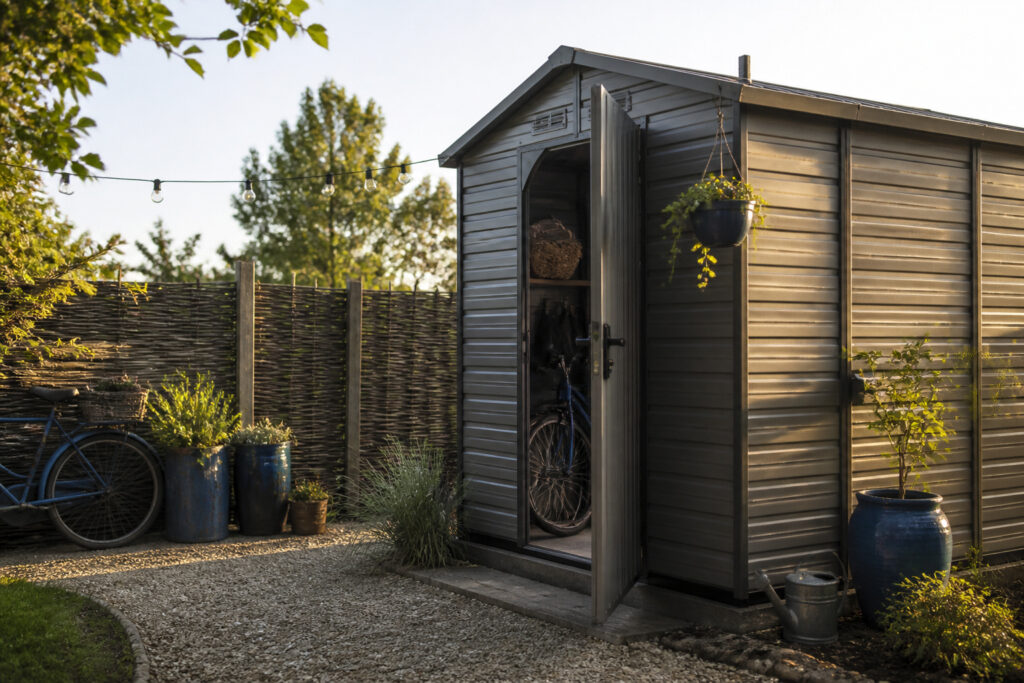
A ventilated, lockable shed is the single best outside bike storage for most people, because it handles both weather and theft without a second purchase.
The catch is that a sealed box traps humidity and rusts chains faster than open air, so airflow matters as much as the padlock.
The Keter Newton Plus at 7.5 by 13 feet fits a family of four bikes with floor space left for pumps and helmets, and its corrugated plastic walls over a metal frame won’t rot.
1. Bike Sheds
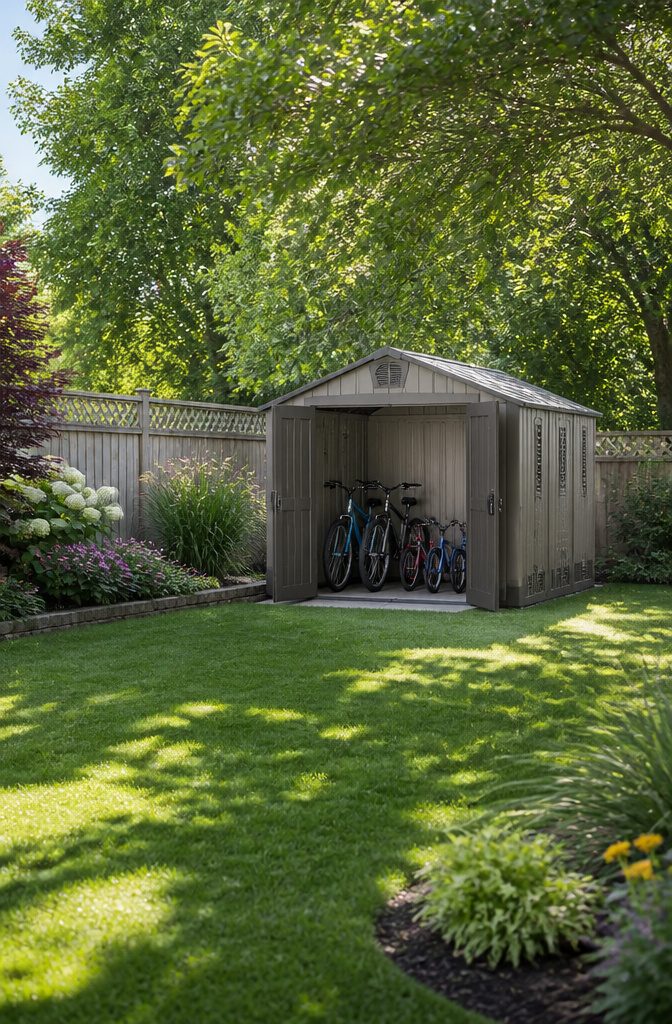
A lockable, ventilated shed is the best outdoor storage if you want both weather and theft protection in one buy.
Rain warps handlebar tape and sun fades saddles, but an unlocked bike also walks away in minutes. The shed solves both.
The Keter Newton Plus at 7.5 by 13 feet fits a whole family’s worth, two adult bikes plus two kids’ bikes, with floor space left for helmets and pumps.
Its corrugated plastic walls over a metal frame won’t rot, and the built-in vents keep condensation from rusting chains through winter.
For tighter patios, the Suncast 5.9 ft. x 3.7 ft. shed squeezes in two to three bikes and opens with hydraulic pistons, so one hand free for groceries still gets you inside.
The Asgard Addition goes heavier: steel construction, insurance-approved, room for three bikes. You pay more and you bolt it down, but bolt-cutters bounce off it.
Plastic sheds like the Keter and Suncast keep weight down for renters who may move. Metal wins if your neighborhood has teeth.
Either way, ventilation matters as much as the lock. A sealed box traps humidity; airflow is what keeps a stored bike rideable come spring.
2. Wall-Mounted Racks
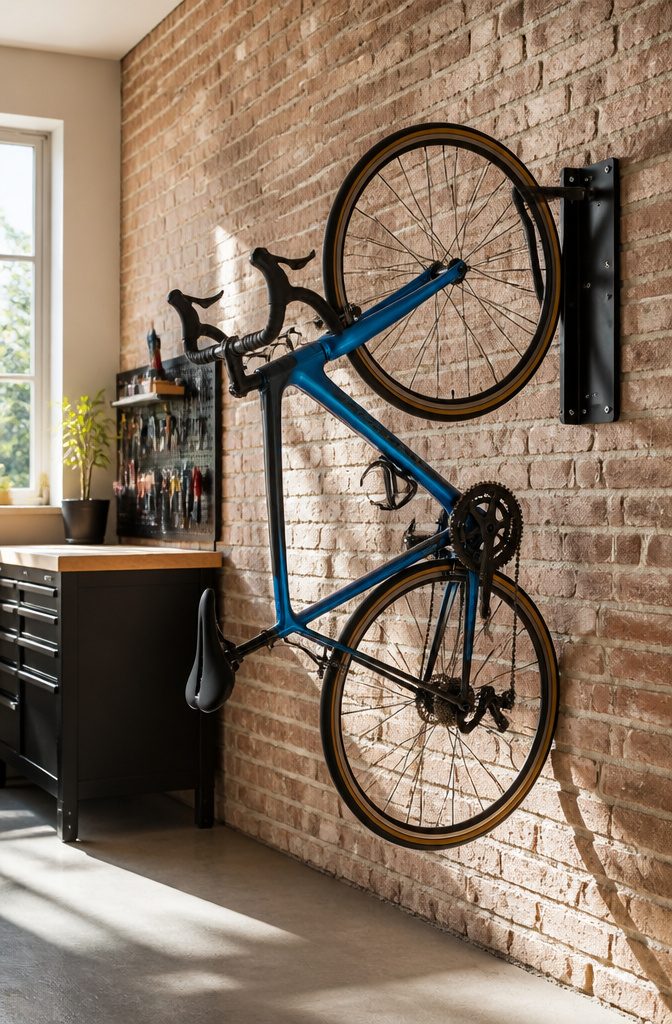
Wall-mounted racks get the bike off the ground entirely, which is the only way to keep a small shed floor clear enough to actually walk through.
The Steadyrack pivots so the bike swings flat against the wall, and that pivot matters when you are storing more than one: you can stagger them closer together and still pull one out without fighting the others.
It mounts with four bolts and carries unlimited weight if you hit brick or masonry, though that same requirement means you are drilling into structure, not siding.
The Park Tool 450 Storage Hook runs cheaper and hangs by the top tube with just two screws.
It tops out at 44 pounds, or 28.6 pounds for the road-specific version, so a heavier e-bike is out. Tire width runs from 23mm to 81mm, which covers most road and mountain setups but not fat bikes.
For exterior walls, both need backing solid enough that the bike does not pull free in wind or with daily use.
Brick or concrete block is straightforward; vinyl siding over sheathing needs you to find the studs or accept that the rack will flex and eventually loosen.
I would not mount either directly to T1-11 or paneling without blocking behind it, and I would not trust a wall hook long-term on anything I could punch through with a fist.
3. Freestanding Stands
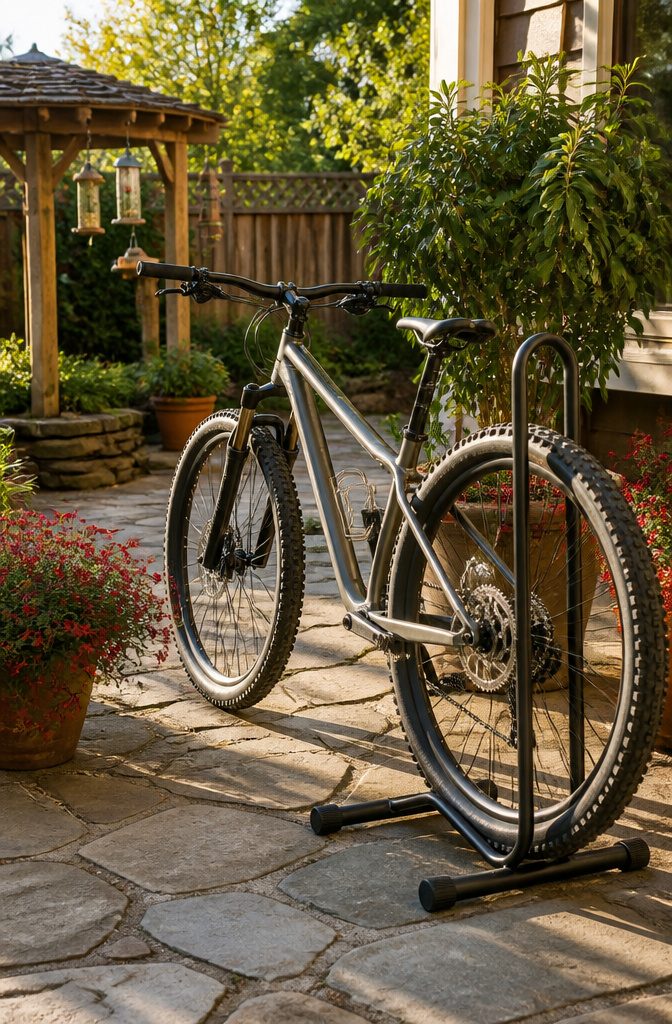
A freestanding stand keeps the bike upright without a single hole in a wall or post, which matters when your lease says no drilling and your security deposit says you listened.
The Feedback Sports Rakk 2.0 opens flat, sits on the ground, and holds the bike by the tire so it does not lean or fall.
I have used it on uneven patio stones and in wind that blew over a trash can; the bike stayed put.
It folds small enough to toss in a car trunk, and there is an e-bike version with a shelf for the charger if you are already running that setup.
For more than one bike, the Topeak Dual Touch Stand stacks vertically floor-to-ceiling with no drilling, using a foot pedal to tension the pole against joists.
The catch is that continuous pole. You have to position the crank arm so it does not rub, and once set, the bike does not rotate for quick adjustments.
I added a plywood spreader at the ceiling to keep from cracking drywall; it works, but it is not invisible. Compared with a permanent wall rack, both options sacrifice some stability for portability.
The Rakk 2.0 is the simpler bet for one bike you move often. The Topeak wins only if you need the vertical stack and truly cannot drill.
4. Bike Covers
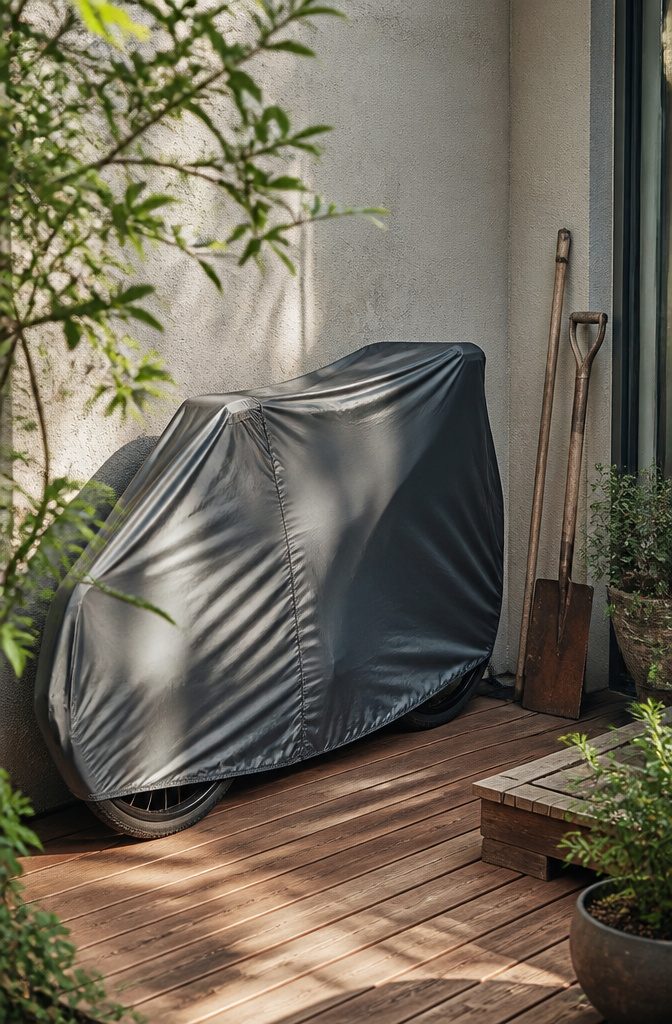
A fitted bike cover is the cheapest way to keep rain and sun off your frame, though it leaves theft protection almost entirely to whatever lock you already own.
The better ones use ripstop waterproof material with sealed seams and cinch straps to keep water from pooling, and paying somewhere between the budget and premium range usually gets you fabric that survives more than a few seasons of daily wrestling.
The Guardian’s tester learned this the hard way when wind turned their cover into a sail and sent two bikes toppling into each other.
"As with all covers, beware of windy days: mine became a sail and my bikes fell over, scratching each other… imagine leaving a tent out 24/7, while regularly wrestling it on and off an awkward metal object, for comparison."
For renters in mild climates who need temporary storage or cannot install anything permanent, a cover makes sense.
Expect to replace a cheap one within months, while heavier fabrics with lock slits and brass eyelets buy you several years if you keep them shaded.
The real limitation is security: a cover hides nothing from a thief with bolt cutters, and it advertises that something worth stealing sits underneath.
Use one when your bike already lives behind a locked gate or when the alternative is nothing at all.
5. Anchors and Locks
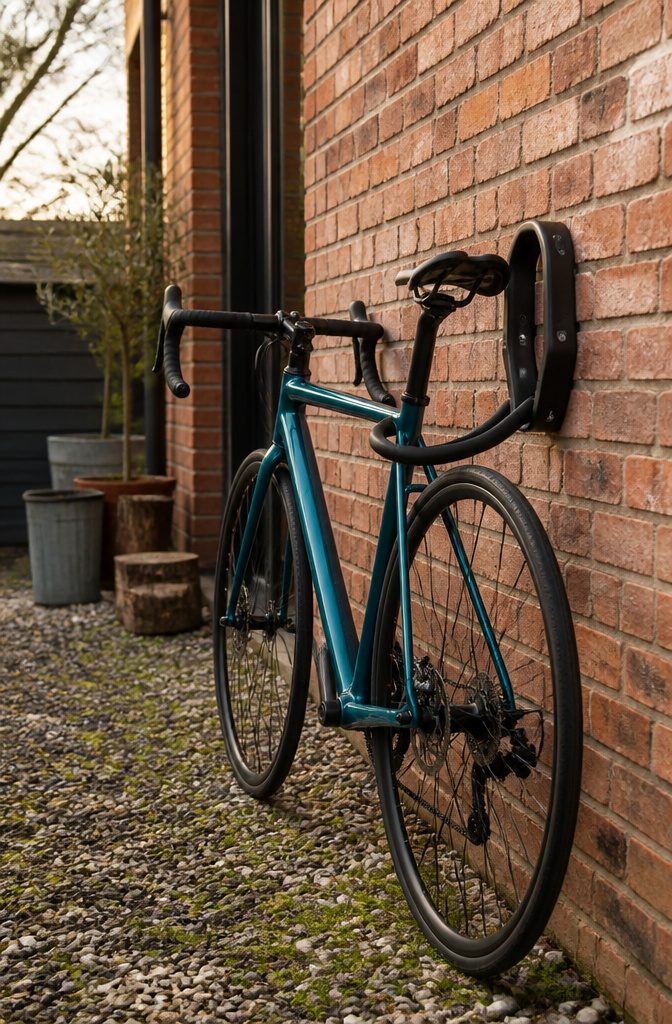
A ground or wall anchor paired with a quality lock is the cheapest way to keep a bike from walking off, though it leaves the weather to a cover you buy separately.
The anchor itself is just a hardened steel loop you cement into concrete or bolt down; the security comes from the lock you thread through it.
For that, Sold Secure Diamond or Gold rated locks are the ones insurers and police actually recognize, and the rating matters more than the brand name.
Hiplok’s Airlok mounts to a wall and doubles as storage, not merely a loop.
It locks the frame with a single bolt, lines the contact point with rubber to save paint, and carries no weight limit provided you bolt it to masonry.
That last point is non-negotiable: mount it to anything less solid and it loses both its Sold Secure Diamond and ART ratings, which defeats the purpose of paying for it.
You will also need to lift the bike into place, so this works better for lighter road bikes than for heavy e-bikes with displays mounted on the top tube, which may not fit the 60mm maximum anyway.
For a standalone anchor without the rack function, Hiplok’s Ankr and Oxford’s Anchor10 cover the same wall-or-floor territory at lower cost.
The Ankr matches the Airlok’s Diamond rating; the Anchor10 stops at Silver but adds bolt covers that spin freely when a lock is in place, buying time against angle grinders.
Either way, run the lock through both the frame and the wheels, not just the frame. A front wheel costs enough to make a thief’s afternoon worthwhile.
6. Canopies
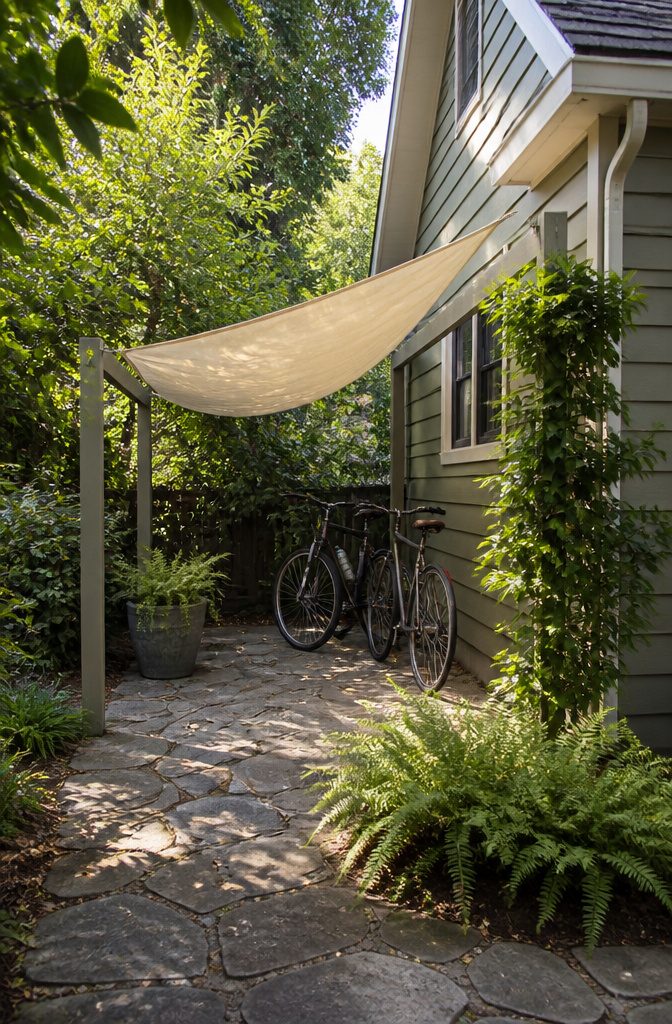
A simple canopy over a patio or carport gives bikes shade and rain cover without blocking the way in or out.
The frame keeps water off the frame and seat, and morning dew stays off the chain if the canopy extends a few feet past where the tires sit.
That lighter protection is the tradeoff: anyone walking by can see the bikes, and a canopy does nothing to slow down theft.
I looked into this for a covered side patio I used in a rental, and the options thin out fast.
Most canopies sold for bikes are really just portable shelters, the kind you see at tailgates, with fabric walls you zip closed.
Leave the walls off and you have an open canopy, but at that point you are buying a partial tent rather than a structure meant for bikes.
Fixed overhead canopies, the permanent kind attached to a house or garage, almost never mention bikes in their specs. You are adapting a patio cover to a use the manufacturer did not design for.
That gap means you judge it yourself.
A carport with a solid roof already does the job. A fabric canopy over open ground needs checking after heavy rain; pooled water above can stretch the fabric or drip through at the seams.
For renters, the appeal is leaving no trace: strap the canopy to existing posts, roll it up when the lease ends, and the landlord never knew it was there.
For anyone with a permanent roof already in place, this is the cheapest outside bike storage there is, because the structure already exists and the bike just slides underneath.
7. DIY Solutions
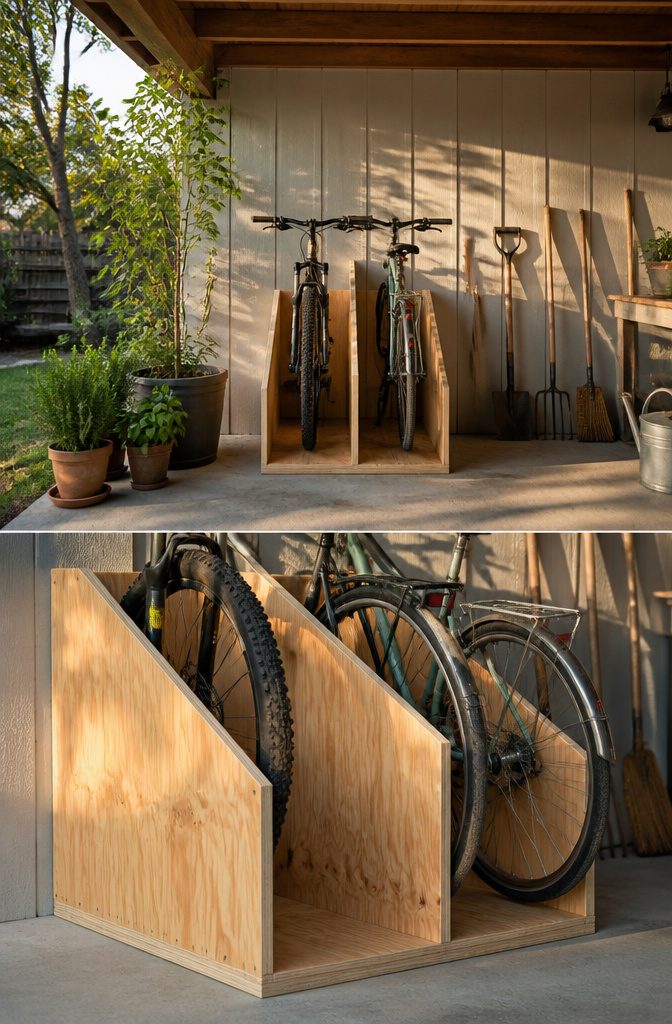
A sheet of plywood and three cuts will get you a rack that holds two bikes upright without tipping.
The top and bottom pieces sandwich two dividers, and the whole thing sits under a porch roof where rain already misses it.
That is the build that takes an afternoon, not a weekend, and the materials run under twenty dollars if you have a saw.
The quicker version skips the dividers entirely. Two scraps of lumber, four screws, and a drill turn into a wheel cradle in about ten minutes.
It is not pretty, but it keeps the bike off the lawn and out from underfoot, and that is often the whole job.
I have seen these lashed to fence posts with zip ties when the ground is too uneven for a freestanding base.
What commercial racks rarely account for is the odd corner of a rental patio or the slope where the landlord poured the concrete.
A DIY frame can be cut to the inch, angled to the grade, or built around a downspout that no catalogue product tolerates.
The trade is time for fit: you save the markup on steel tubing, but you spend an evening measuring twice and cutting once.
For a renter who will move in two years, plyboard and screws dismantle flat and travel; a welded stand does not.
Security Considerations
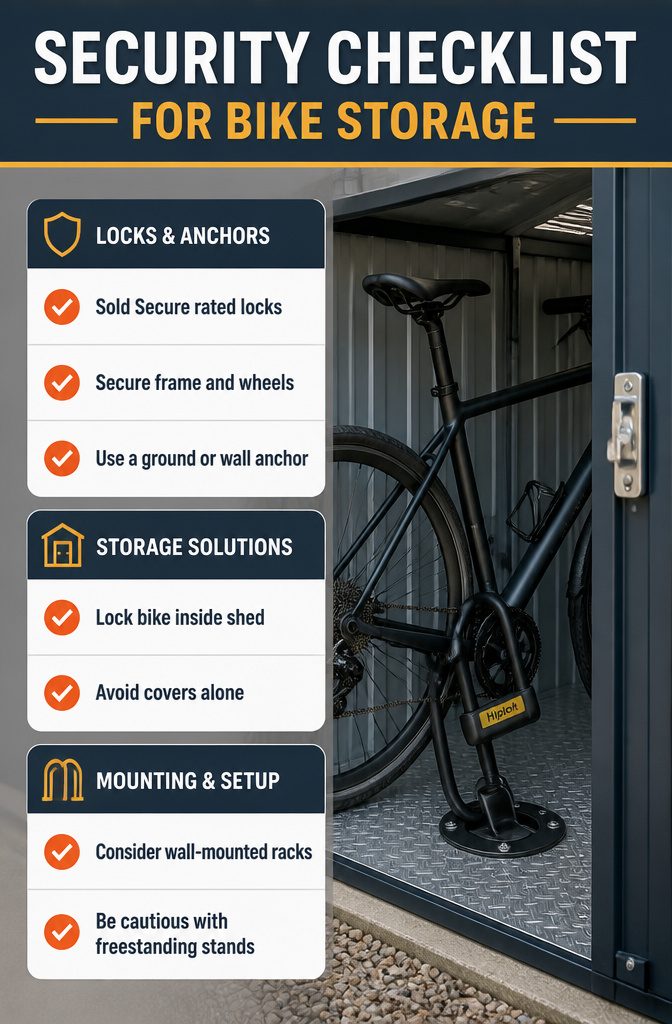
A good lock only works if it has something solid to grab.
Sold Secure rated locks are the benchmark worth paying attention to: Diamond is the top rating, Silver sits a step below, and either one beats an unrated lock that looks heavy.
The frame and both wheels need securing, not just the quick-release front wheel a thief can pop off in ten seconds.
A ground or wall anchor gives you that fixed point. The Hiplok Ankr carries the Diamond rating, is built for bicycles or motorcycles, and includes a rubberized cap to protect the frame.
The Oxford Anchor10 hits Silver, with hardened steel and bolts shielded by ball bearings that only cover when the lock is in place. Both are meant to be cemented or drilled into masonry, which is where renters hit a wall.
A landlord rarely wants holes in concrete, and an anchor bolted to decking or a fence post is only as strong as the wood around it.
A shed changes the math. Lock the bike inside, and the shed itself becomes the anchor point.
The Asgard shed that Cycling Weekly tested works because it is a box of steel already, so the bike lives inside a lockable shell rather than out in the open.
A cover, by contrast, leaves the bike exposed; the lock does all the work, and a cover does nothing to slow a grinder.
Wall-mounted racks like the Hiplok Airlok look cleaner and carry Diamond rating, but the fine print matters. Mount it to anything less than solid masonry and it loses both its Sold Secure and ART ratings.
That makes it a poor fit for most apartment exteriors. A freestanding stand in a shared courtyard is worse: the stand itself can walk off unless it is also chained down, which most are not.
For a renter, the practical path is usually the shed if the landlord allows it, or a ground anchor installed with permission and filled holes on move-out.
Anything less, and you are trusting the lock alone against a battery-powered angle grinder, which is a bet most of us will lose.
Weather Protection
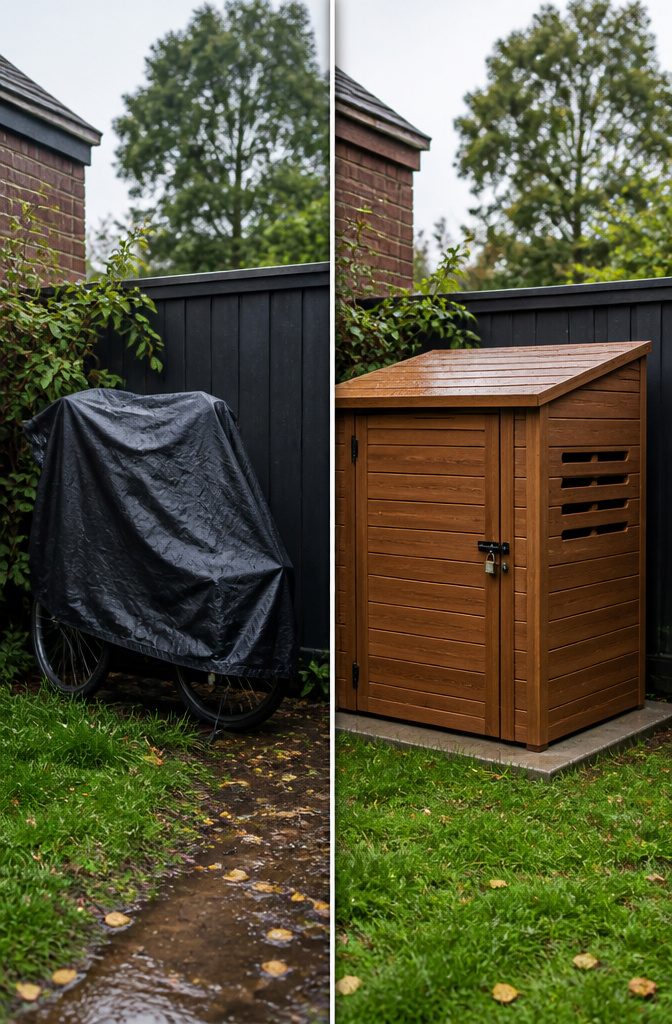
Rain, snow, and UV exposure all do real damage to a bike left outside. Water works into cable housings and bearings, freeze-thaw cycles crack grease seals, and sun bleaches paint and weakens rubber over time.
A good outdoor setup stops this, which is why the question of whether bikes must live indoors comes up so often.
They don’t. A ventilated, lockable shed gives the same protection as a garage corner, and in some ways more, since you can position it where the bike actually gets used.
The key is keeping the air moving so condensation doesn’t build; sealed plastic boxes trap moisture and rust chains faster than open air.
Covers work too, but with limits. A fitted cover with cinch straps, like the BikeParka Stash, keeps horizontal rain out and packs small.
A loose cover with an elasticated bottom flaps, traps puddles, and scratches paint. Spending mid-range, not budget, on a cover buys you years instead of months; the cheap ones fail like a tent left out 24/7.
For wet climates, a shed wins.
For dry sun, a quality cover in shade is enough. Dutch riders leave bikes out year-round, but they replace parts faster than most of us want to.
Space Efficiency
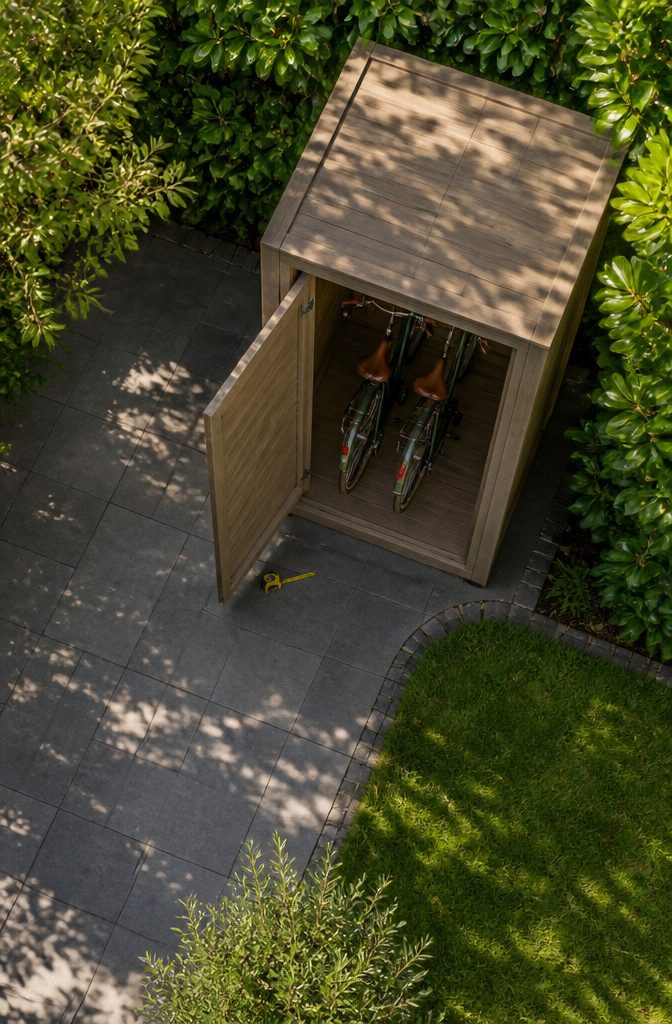
Most yards give you less room than you think once you pace it out.
I learned that the hard way when I eyeballed a shed spot and ended up with a door that swung straight into the fence. Measure twice: width, depth, and swing radius.
A compact shed like the Cortina Mega fits two small bikes into a corner you might have written off, while something deeper, say the Suncast 6′ x 4′ Glidetop with its sliding roof, needs more footprint but lets you wheel bikes straight in without the juggling act.
Wall-mounted racks and freestanding stands earn their keep when even a small shed is too much.
Vertical storage puts the bike’s silhouette flat against the wall, which in a narrow side yard or balcony can be the difference between walking past and squeezing past.
The key is knowing your wall material before you buy hardware; a rack that needs solid masonry anchors won’t forgive a renter’s hollow siding.
Freestanding stands suit spots where drilling isn’t an option, though they eat floor space the rack would spare.
My call: start with the tape measure, then match the solution to what the numbers actually allow, not what you wish they said.
Material Choices
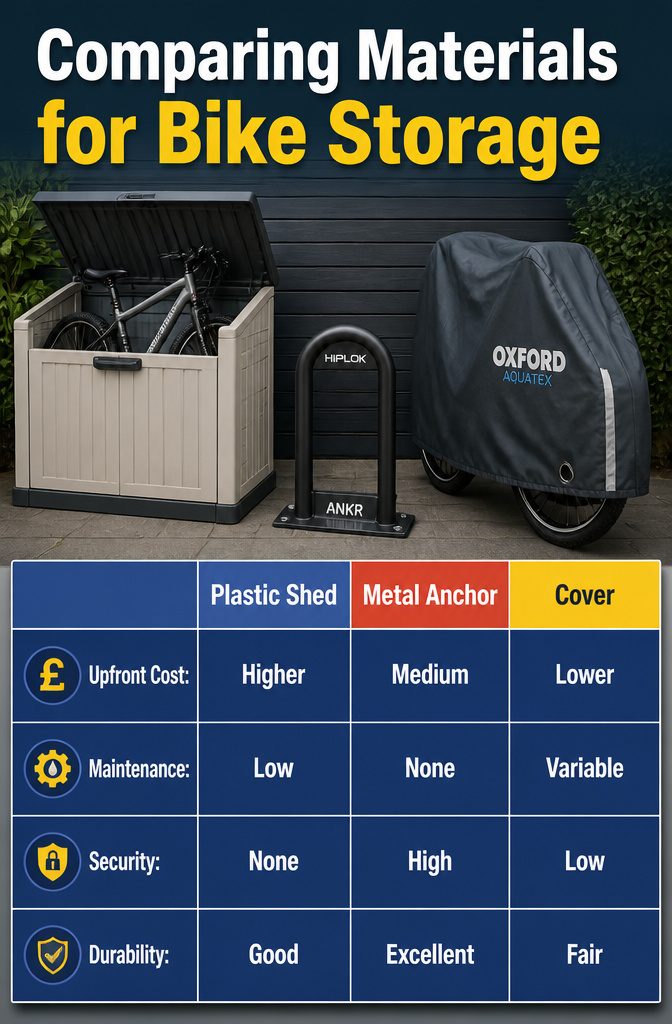
Wood, metal, and plastic each carry a different cost over the years, not just at checkout.
A plastic shed like the Suncast 6′ by 4′ Glidetop slides open to wheel bikes straight inside, and resin builds such as Keter’s Newton line claim fade resistance and ventilation built in.
The upfront price runs higher than a cover, but the maintenance stays low; you hose it off and move on.
Metal anchors trade on security, not shelter. The Hiplok Ankr carries a 10-year warranty and a Sold Secure Diamond rating, while Oxford’s Anchor10 uses hardened steel with bolt shields.
Neither blocks rain, so you are still throwing a cover over the frame, which means two purchases instead of one.
Covers sit at the bottom of the price ladder. The Oxford Aquatex starts cheap in 100-denier polyester, and the BikeParka Stash runs to roughly £70–£85 with sealed seams and a one-year sun guarantee, three-plus in shade.
StormSkin’s cover uses thicker recycled fabric and lock slits, though the bulk makes it a stay-at-home piece.
Cheaper covers flap, tear, and become sails in wind; one gust sent my covered bikes toppling into each other, which is how I learned that cinch straps matter more than fabric weight alone.
What no one publishing these roundups reckons with is the embodied cost of the material itself.
Recycled fabric exists, but the full lifecycle of a resin shed or a steel anchor shipped across two oceans is not something the manufacturers volunteer, and I will not pretend I calculated it.
Accessibility
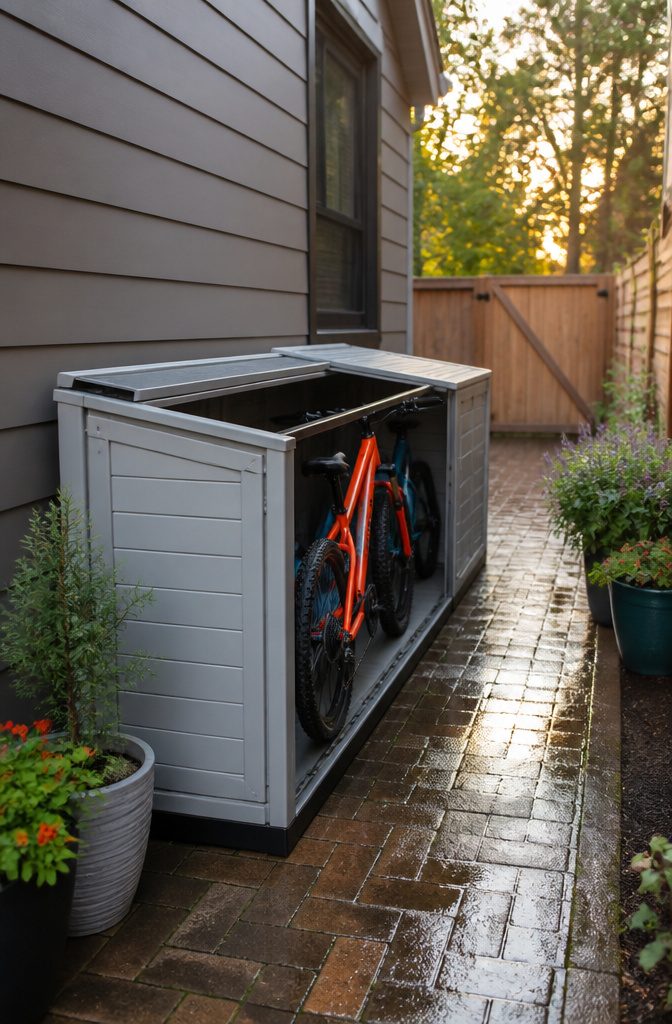
Daily-use bikes and seasonal storage ask for completely different access.
The bike you grab for a morning commute needs to come out in ten seconds without wrestling a tarp or shifting three other frames; the trail bike that sits from November to March can live behind a latch that takes a minute to open.
A sliding roof changes the whole routine. The Suncast 6′ x 4′ Glidetop lets you wheel bikes straight in without the duck-and-lift dance of a hinged door, which matters when you are carrying a bag or running late.
For smaller footprints, the Suncast 5′ x 3′ uses hydraulic pistons on a lift-up lid instead: one hand opens it, it stays up on its own, and it closes soft so you are not slamming anything at 6 a.m.
Internal width runs 66.5 inches, enough for two adult bikes with handlebars turned, or three if they are compact frames.
The Keter Premier Jumbo 2020L is the backup pick when the Suncast sells out, slightly pricier but built to the same logic: get the bike out, get going.
Hydraulic or gliding access matters more than square footage if you ride daily. For kids’ bikes or a secondary ride you only touch on weekends, a standard swing-door shed with a hasp and padlock works fine and costs less.
The difference is not the bike; it is how often your hands are on the handlebars.
Frequently Asked Questions
What are some good ideas for outdoor bike storage?
A lockable, ventilated shed is the best all-around option, combining weather protection with theft resistance.
Wall-mounted racks, freestanding stands, fitted covers, ground anchors with quality locks, patio canopies, and simple DIY plywood racks all work depending on your space, budget, and whether you can drill into walls or concrete.
How do you store bikes vertically in a shed?
Mount a wall rack like the Steadyrack, which pivots so bikes swing flat against the wall.
This keeps the floor clear and lets you stagger multiple bikes closer together, pulling one out without fighting the others. Just be sure you are bolting into solid brick or masonry, not siding or paneling.
Should bikes be stored inside?
It is not required. A ventilated, lockable outdoor shed gives the same protection as a garage corner, and positioning it where you actually ride can be more practical.
Covers and canopies work too, though with less theft protection; the key is keeping air moving so condensation does not rust chains.