Sizes range widely here: a variegated foliage plant fits in one palm, a Dracaena grows tall enough to fill a hallway, and lucky bamboo and peace lily land in the middle.
What decides your pick is the light the room actually has: lamps and ceiling fixtures alone suit a ZZ plant, while a windowless room does best with a calathea on a shelf under a grow light.
Every plant here grows more slowly in a dim room, so expect new leaves to arrive at a crawl.
1. Snake Plant
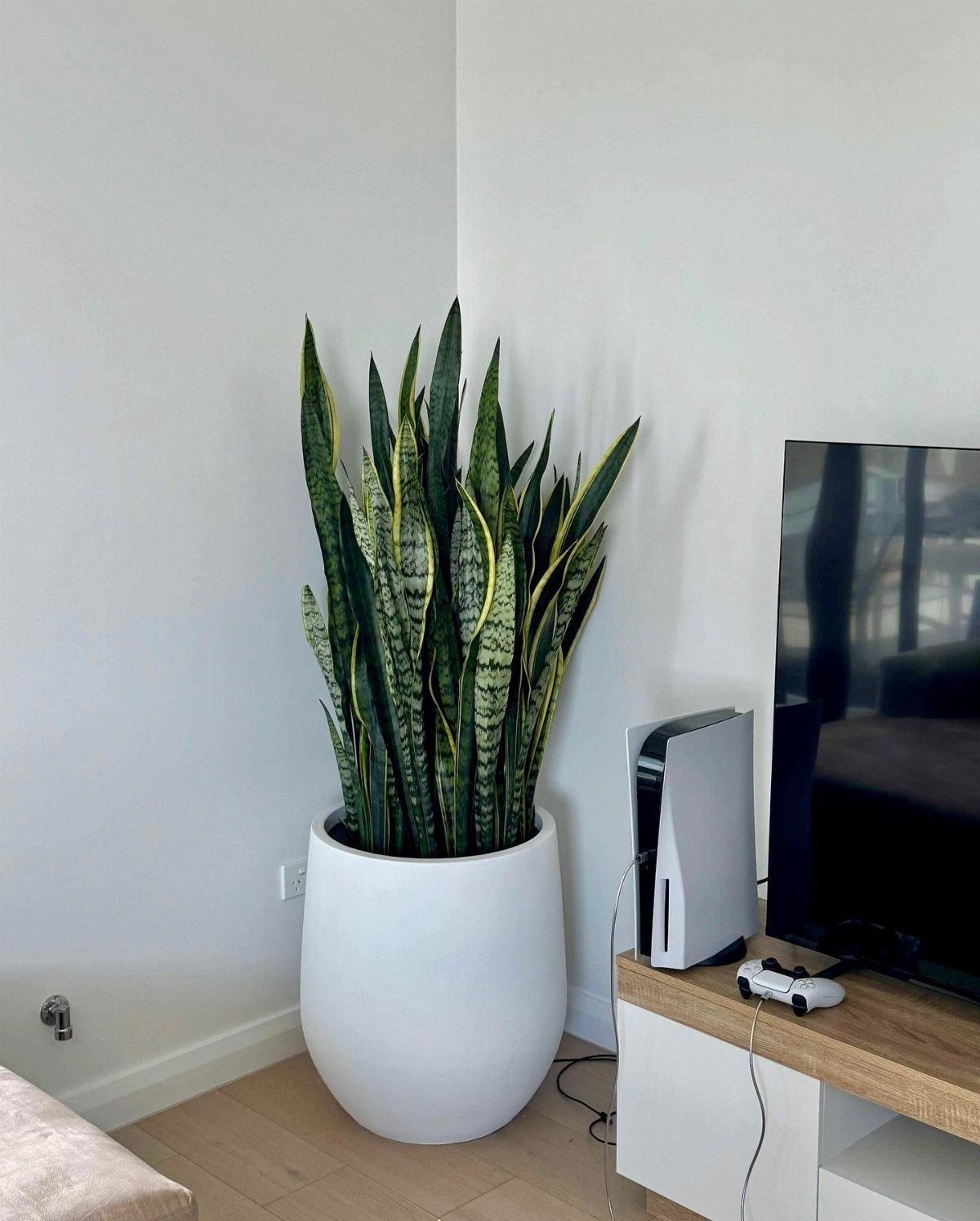
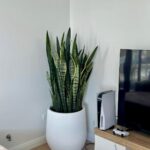
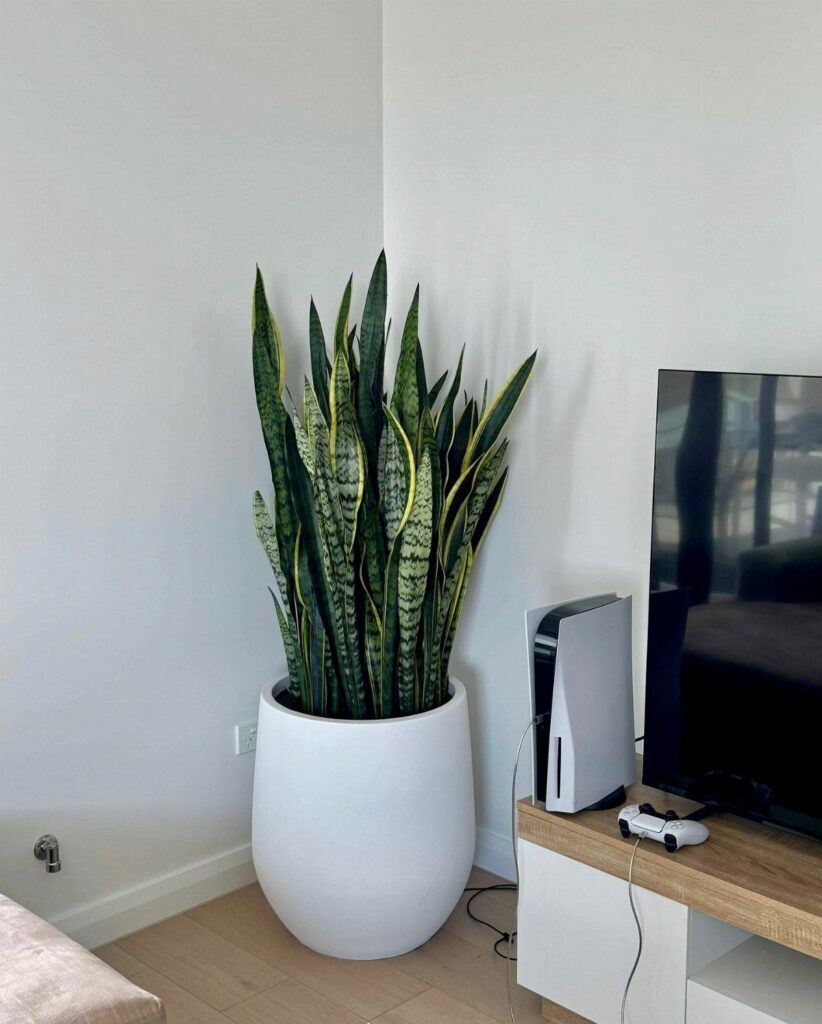
A tall snake plant fills a dead corner better than most furniture does, and variegated leaves add pattern without a second plant.
It tolerates low light and drought, so it suits the room you walk through more than you sit in. A skipped watering won’t hurt it.
2. Pothos
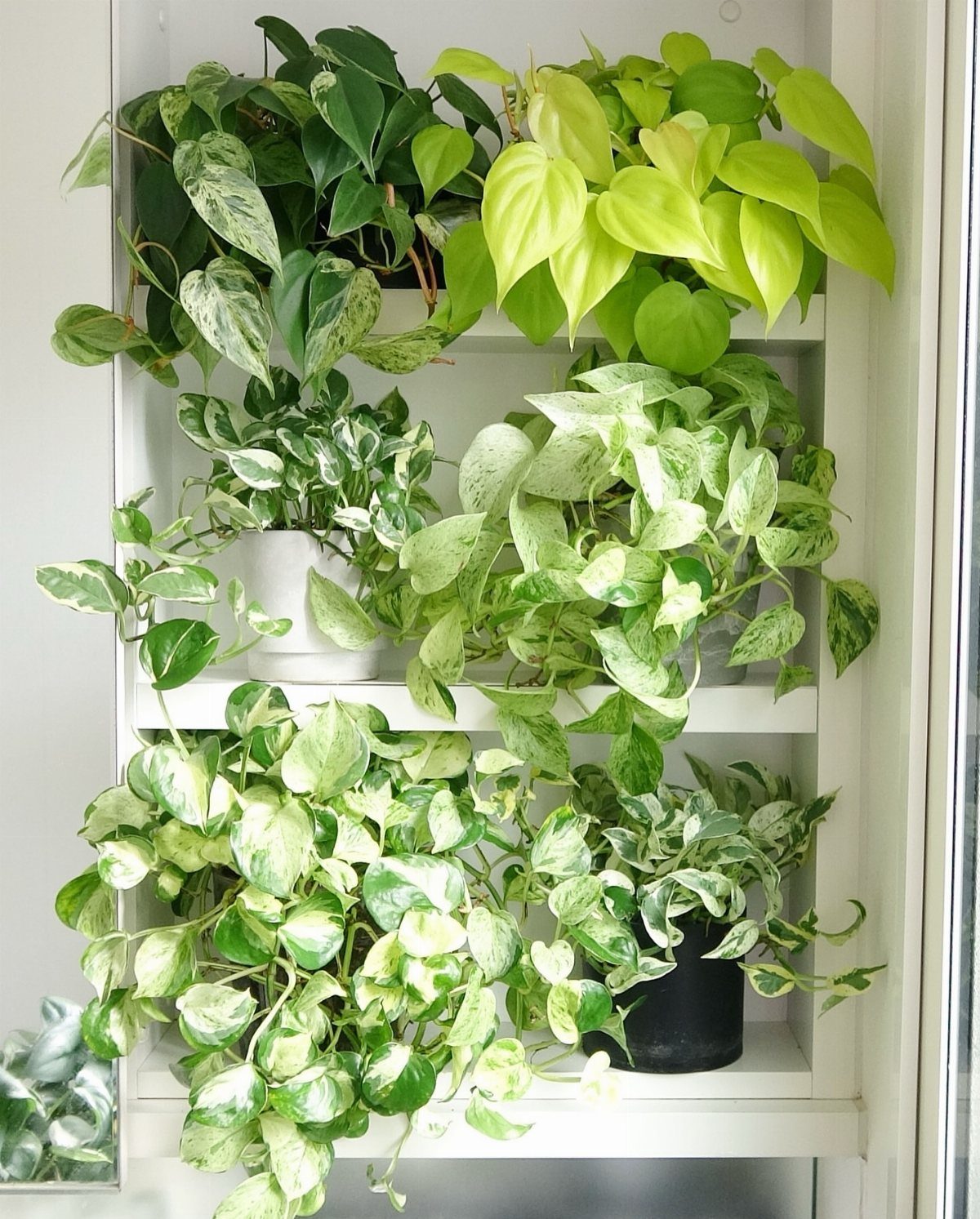
Pothos is a trailing vine, which makes a shelf edge its best spot: the stems spill down instead of sitting in a clump.
Variegation can fade in very low light, so if you want that green-and-white pattern, give it the brightest spot in the room. In the darkest corner, expect plainer leaves.
3. Peace Lily
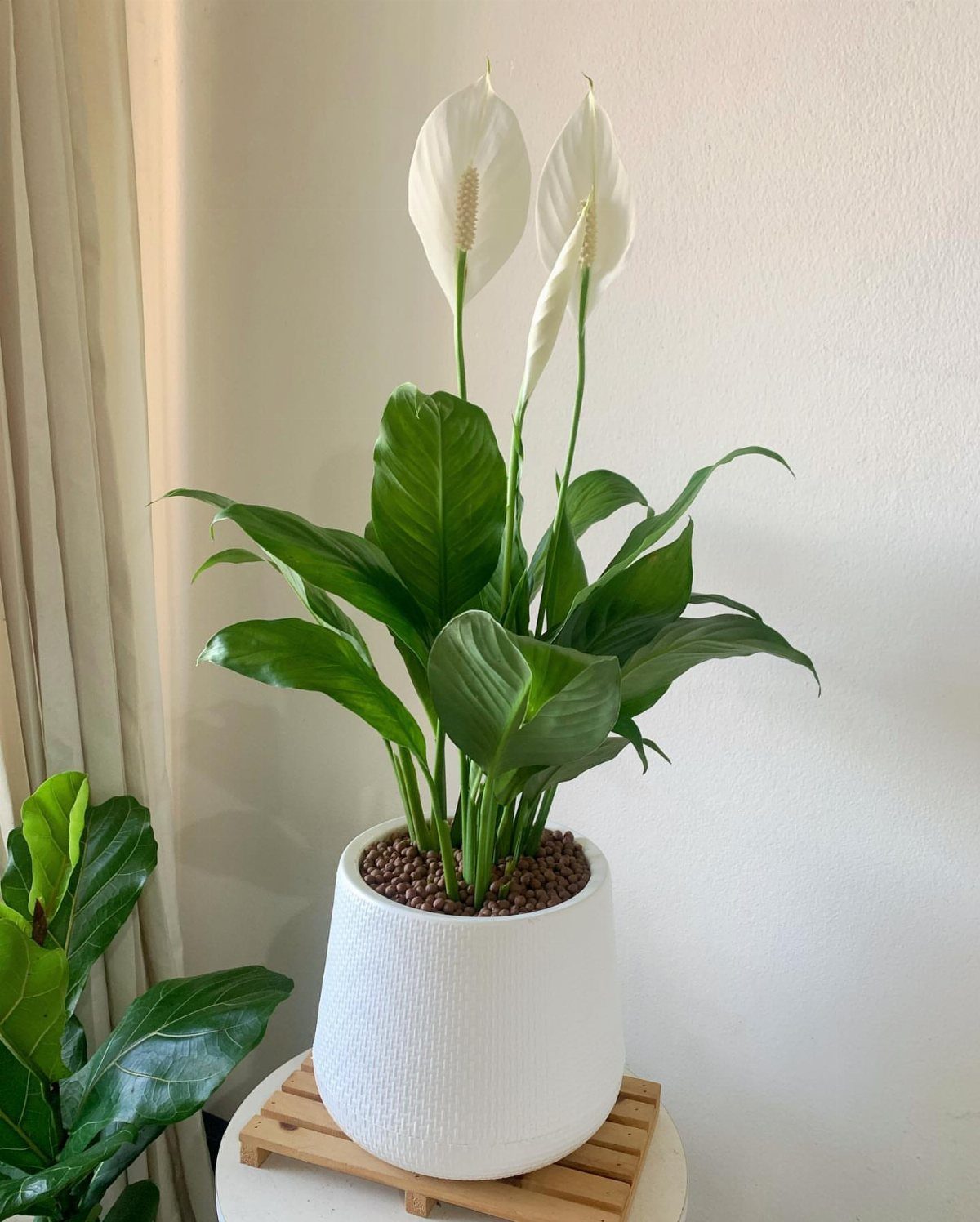
Flowers are the reason to pick a peace lily. Few low-light houseplants bloom indoors, and the white blooms look crisp and bright above the dark green leaves.
I like it raised on a stand, since a plant this full looks better up where you see it straight on than down on the floor. Pick it when you want flowers as well as green leaves.
4. ZZ Plant
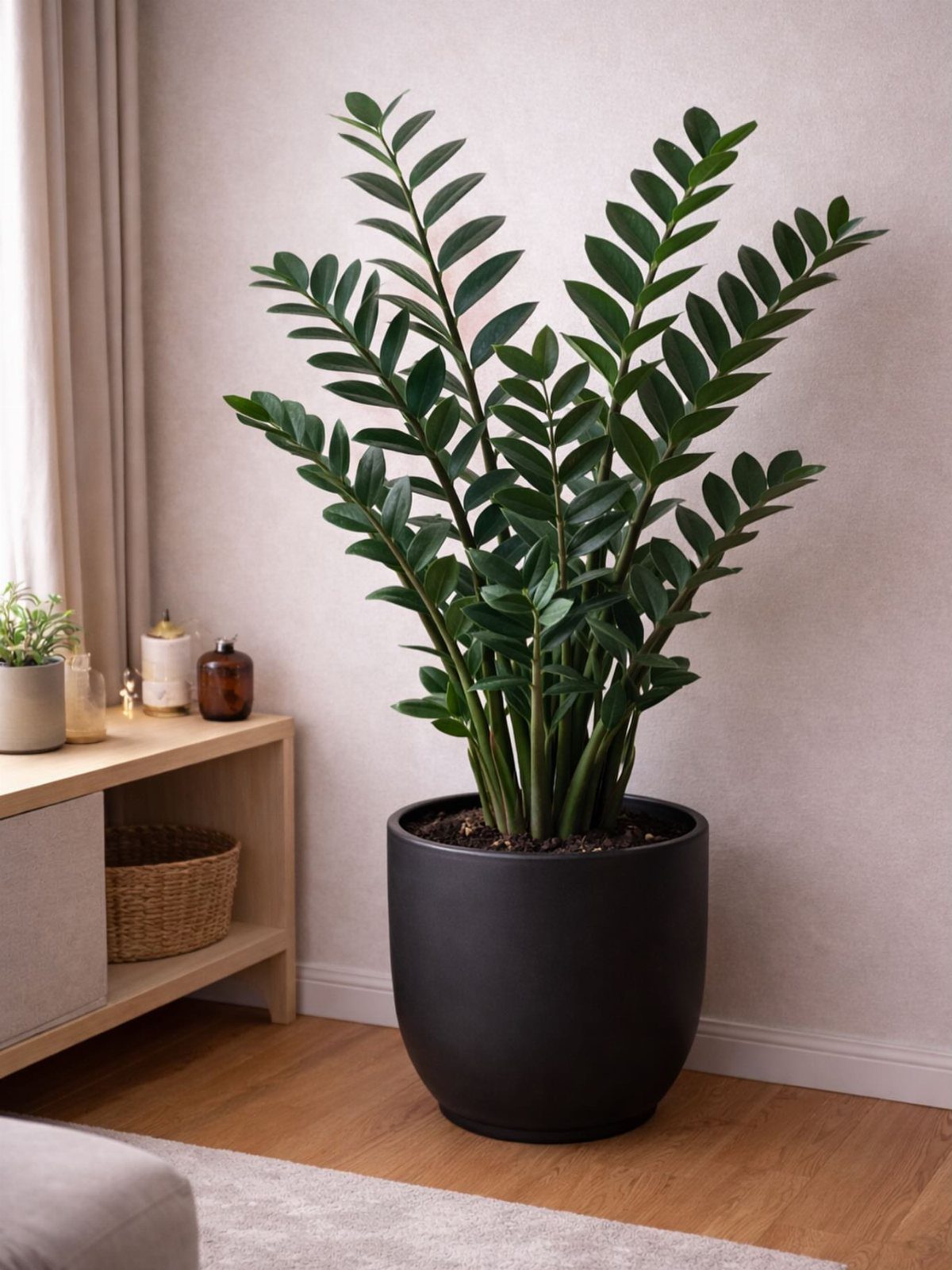
If your room is lit by lamps and ceiling fixtures alone, the ZZ plant is the one I’d buy first.
It tolerates artificial light and asks for very little care, which is rare for a plant with such glossy, deep green leaves.
A large one in a dark pot reads as a deliberate piece of decor beside a side table.
5. Dracaena
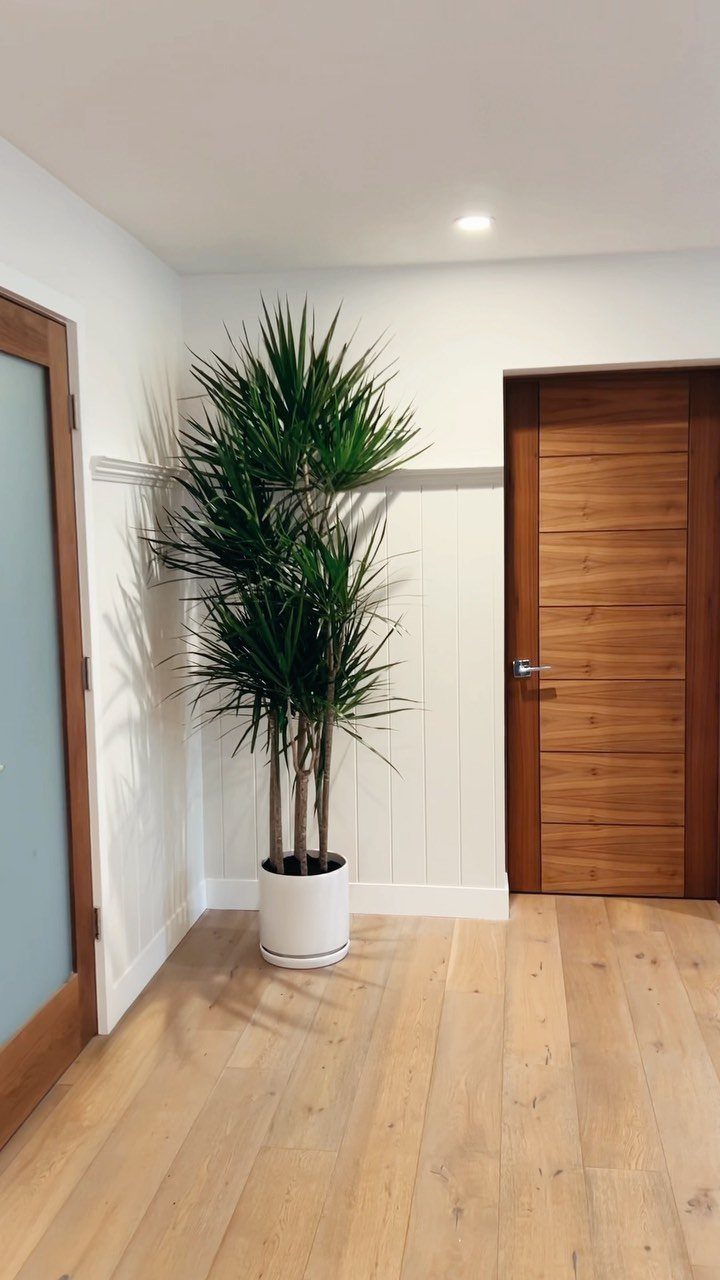
One big Dracaena beats a cluster of small pots in a hallway. It comes in large, tree-like forms, so a single plant gives a narrow, dim space height and a focal point without taking up much floor.
It’s a tolerant foliage plant, which is what a spot you pass through more than you use calls for. Buy the tallest form your ceiling allows.
6. Lucky Bamboo
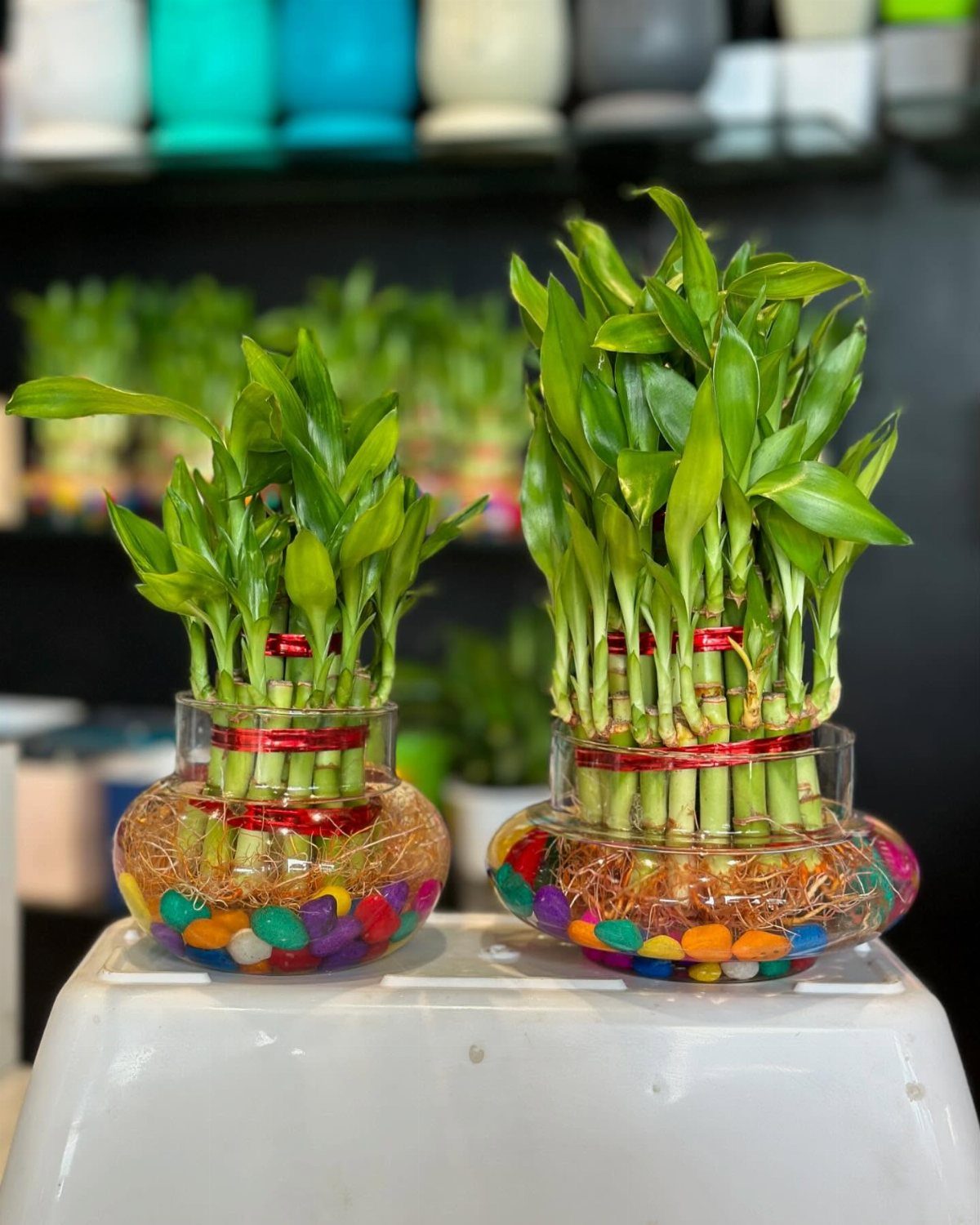
Lucky bamboo is a shade-tolerant Dracaena that grows in water, so there’s no soil to spill and no drainage tray to hunt for.
Set the stalks in a bowl of pebbles with water covering the roots, and the pebbles will keep them upright.
It fits a desk, shelf, or bathroom counter where a regular pot would be in the way. Check the bowl now and then so the roots stay in water.
7. Parlor Palm
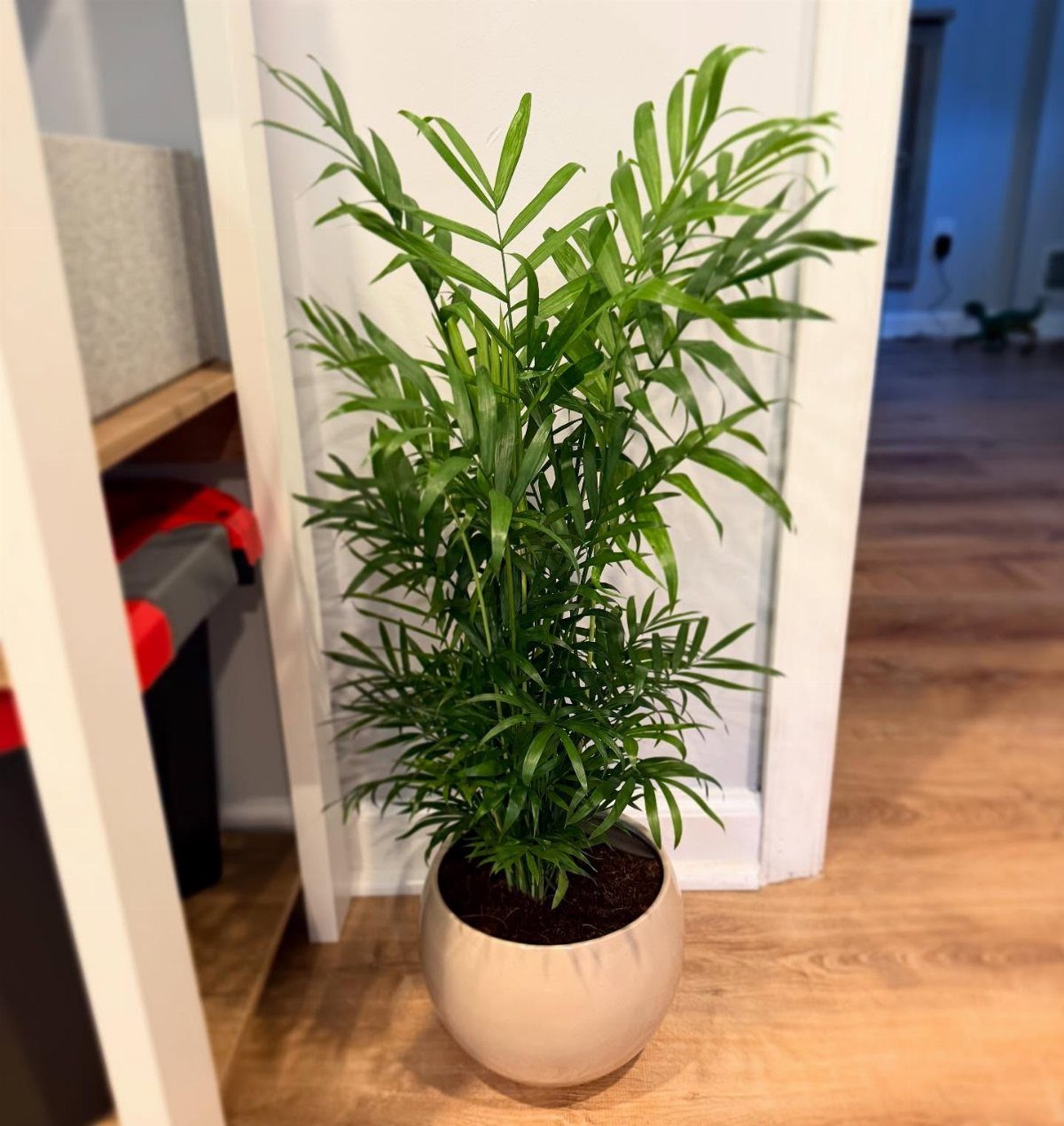
Pet owners get an easy answer in the parlor palm, a pet-safe palm that still gives a dim corner some height.
A floor pot in a plain cream or beige finish keeps attention on the fronds. Set it beside a wall or door frame, where a corner would otherwise sit empty.
8. Philodendron Vine
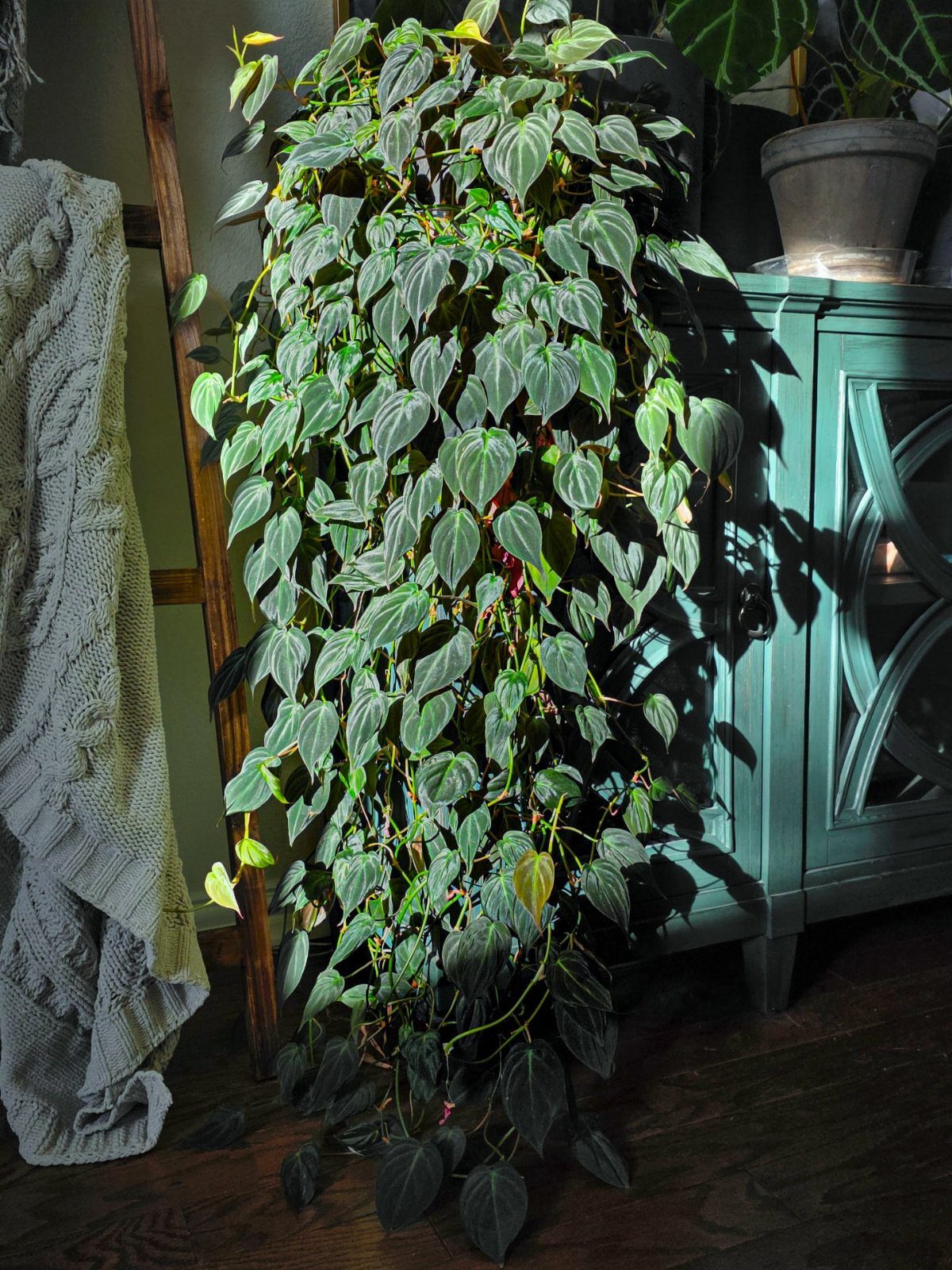
Heart-shaped leaves on a trailing vine read best from above, so I’d put a philodendron on top of a cabinet or a high shelf, with the stems falling down the front.
It tolerates low light, which makes it a good match for a dim room. A dark or colored cabinet makes the green stand out.
9. Calathea
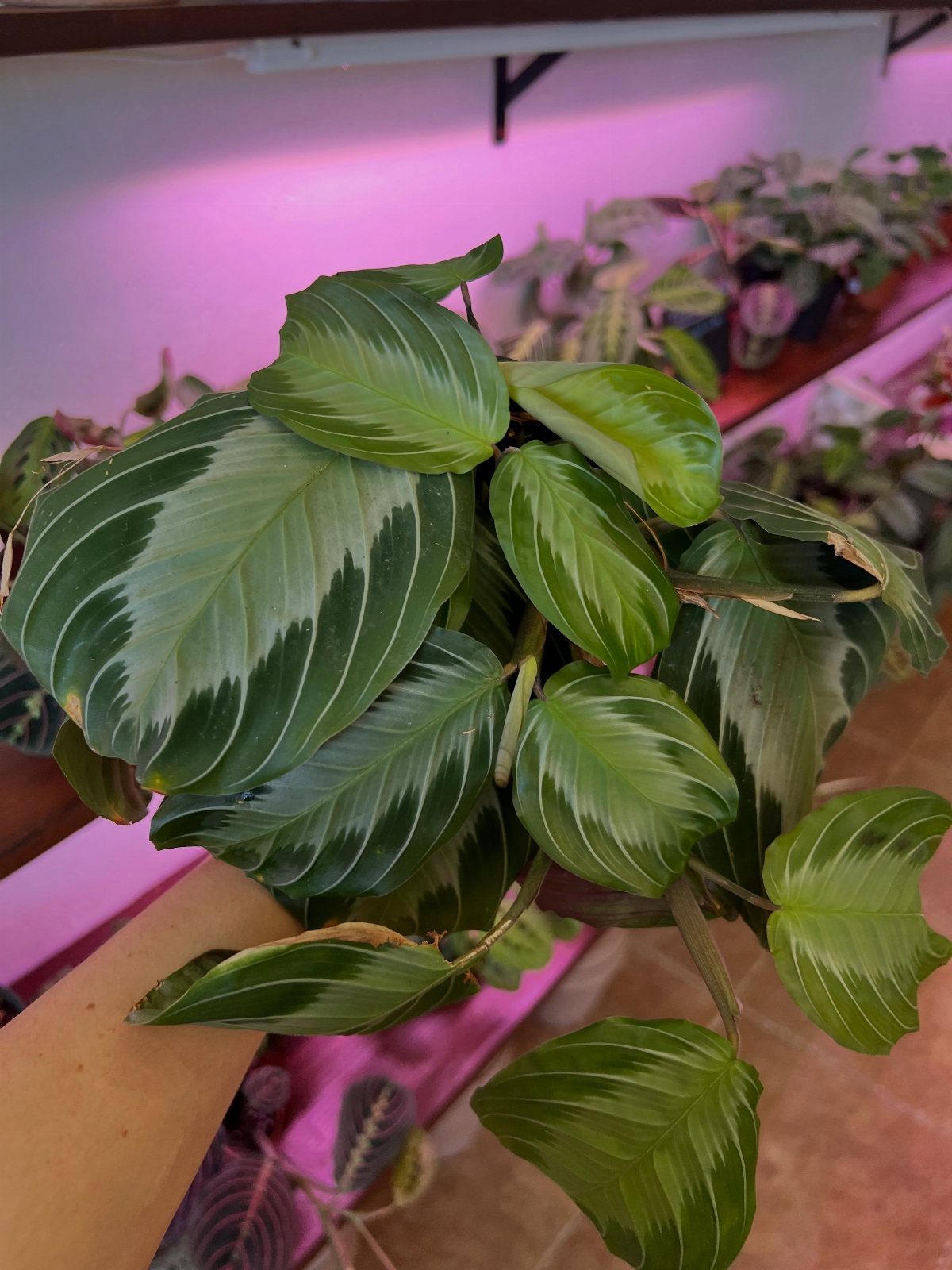
Calathea is the plant to buy for the leaf pattern, with stripes that look painted on.
In a room with no window, I’d give it a shelf with a grow light overhead, so it has a fixed spot and a dependable light source.
10. Boston Fern
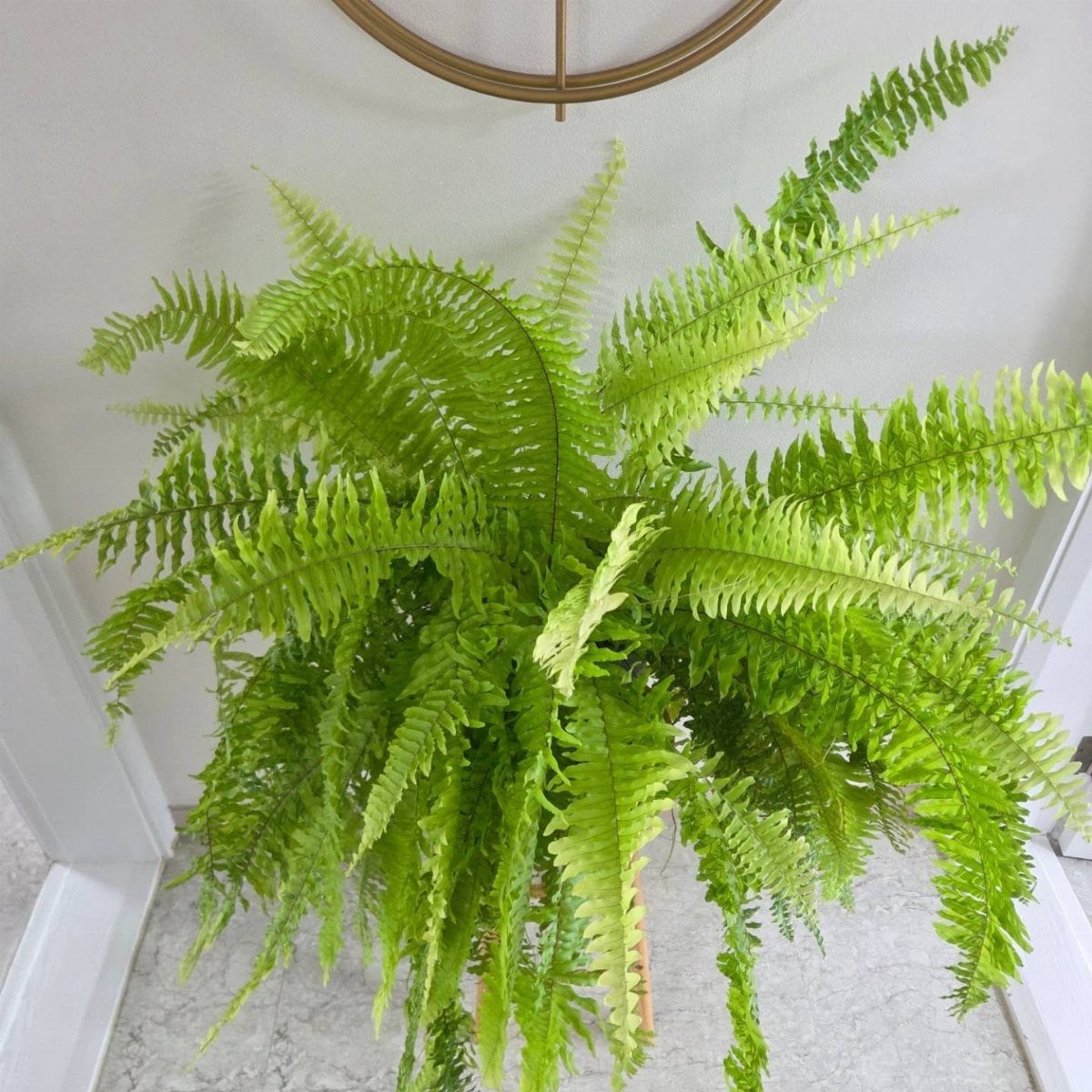
A white wall is the best backdrop for a Boston fern, because every frond shows against it. A round mirror or a gold circular piece hung above the pot adds a second shape without crowding the plant.
Give it a spot of its own. A fern this full looks better as the single plant in its corner than squeezed in among others.
11. Variegated Foliage Plant
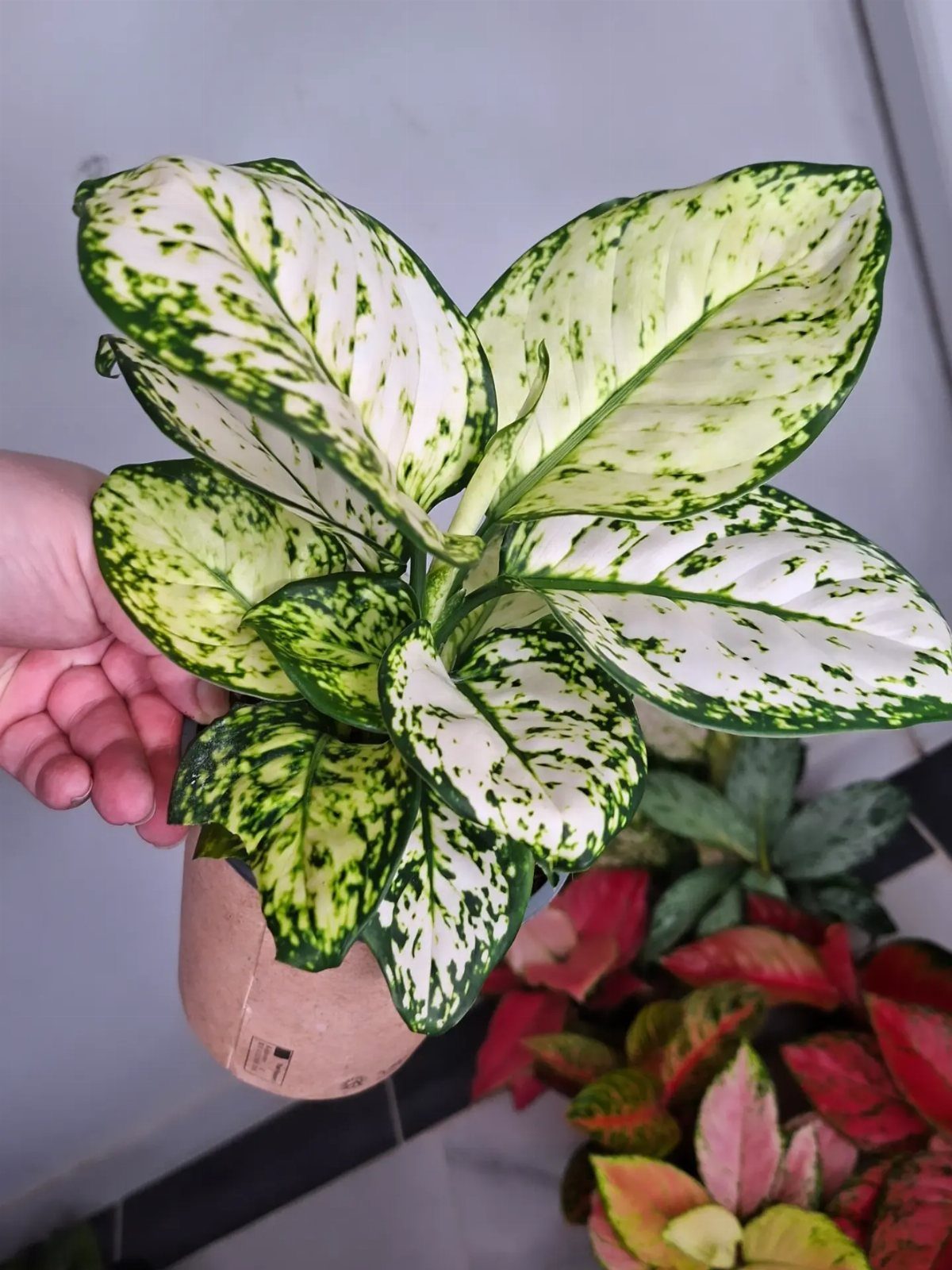
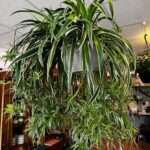
Small enough to hold in one hand, a variegated plant with white-and-green leaves suits a desk or shelf where a big floor plant won’t fit.
The white fades in very low light, as noted with the pothos, so place it in the brightest spot you have. With variegated foliage, a plain brown pot keeps the attention on the leaves, where the pattern is.
Low Light Slows Plant Growth
Plants in dim rooms grow slowly, and slow growth changes how much they drink. Less light means less water used, so a schedule that suits a sunny windowsill will drown a plant in a windowless corner.
Check the soil instead of the calendar.
Before watering, test the soil with a finger down to about 2 inches, and if it still feels damp, leave the can alone for a few more days. If it’s dry at that depth, water.
Feeding follows the same logic. A plant that barely grows has little use for fertilizer, so go light and skip it more often than you’d expect.
Overwatering is the most common way these plants die, and it usually looks like yellowing or drooping leaves, which tempts people to water even more. Check the soil before you add anything.
In fact, these plants don’t even need natural light to grow; they’ll survive just as well in artificial light.
Frequently Asked Questions
What is the best houseplant for a dark room?
My pick is the ZZ plant: it gets by on lamps and ceiling fixtures, asks for next to nothing, and still has those waxy, shiny leaves.
Snake plant and pothos are close behind, and a parlor palm is the pick when a dim corner needs height. Cast-iron plant and heartleaf philodendron also hold up well in low light.
Can plants survive in a room with no windows?
Not for long without a proper light source. You can also buy two of the same plant and rotate them, one in the windowless room and one in a bright spot, switching every 2 weeks or so.
How do I know if my room is too dark for plants?
Look at the new growth: small, pale leaves spaced far apart on long bare stems mean the plant is reaching for light.
A wall across from the window or a balcony overhead can cut the light far more than the size of the window suggests.
Do plants in dark rooms need fertilizer?
Very little.
With growth near a standstill, a plant has little to feed, so use a light hand and skip rounds more often than feels natural. Fertilizer the plant can’t use leaves salts behind in the soil.
Why did my variegated plant turn green in a dark room?
In low light the white and yellow patches can’t pull their weight, so the plant sheds them and the leaves go solid green.
Pothos and other white-and-green plants fade this way in very low light. To keep the pattern, give the plant the brightest spot you have or add a lamp.