Effort depends mostly on shape: the adjustable shelves and the TV wall run in straight lines, while the circular, jagged and triangular builds mean far more angled cuts.
Straight floating shelves mounted directly to the slats keep the job simple enough for a weekend, and shelves wedged between horizontal slats never lock in a layout at all.
Any build with lighting, like the lit curved shelves, needs its cable routed behind the slats before a single one gets fastened.
1. Adjustable Slat Wall Shelves
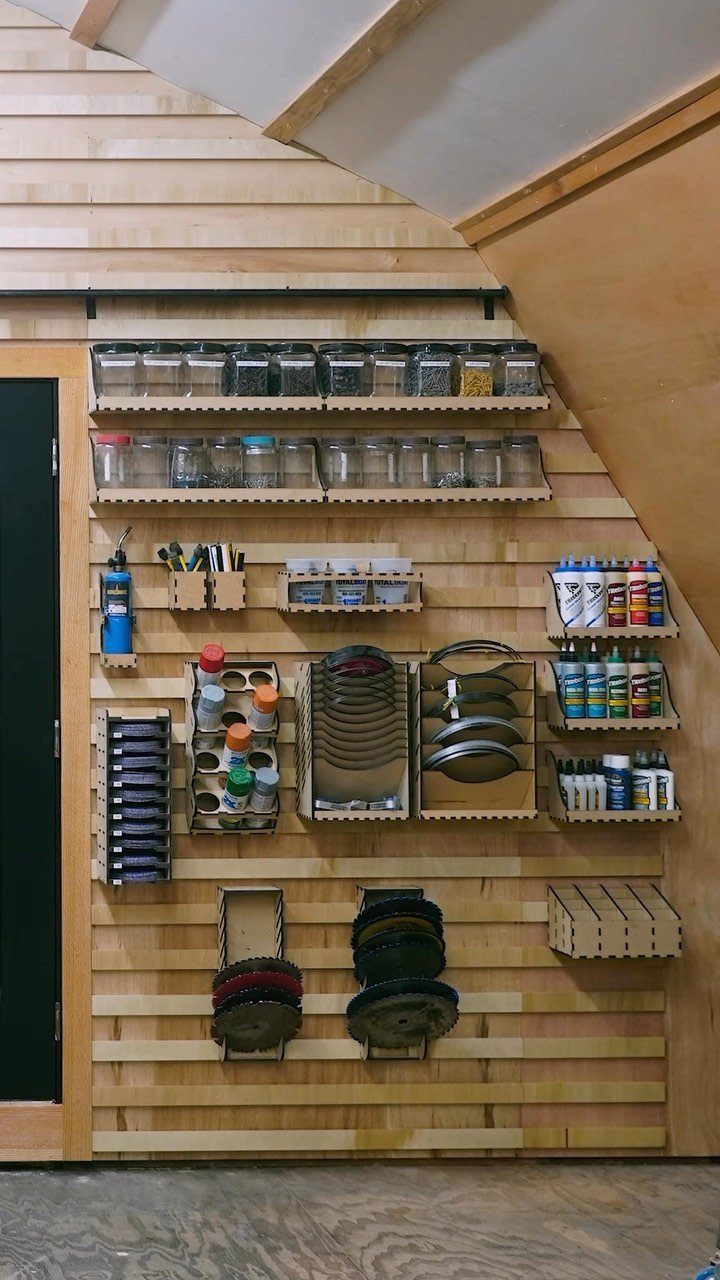
Wedging shelves between horizontal slats means the layout never gets locked in. Slide a shelf up when the jars multiply, drop it lower when a taller tool needs room, and the wall keeps up without new holes.
A workshop is the right place for this, since the contents change with every project. I’d keep the heaviest items, like saw blades, on the lowest shelves and save the upper rows for light jars.
2. Slat Wall Plant Room
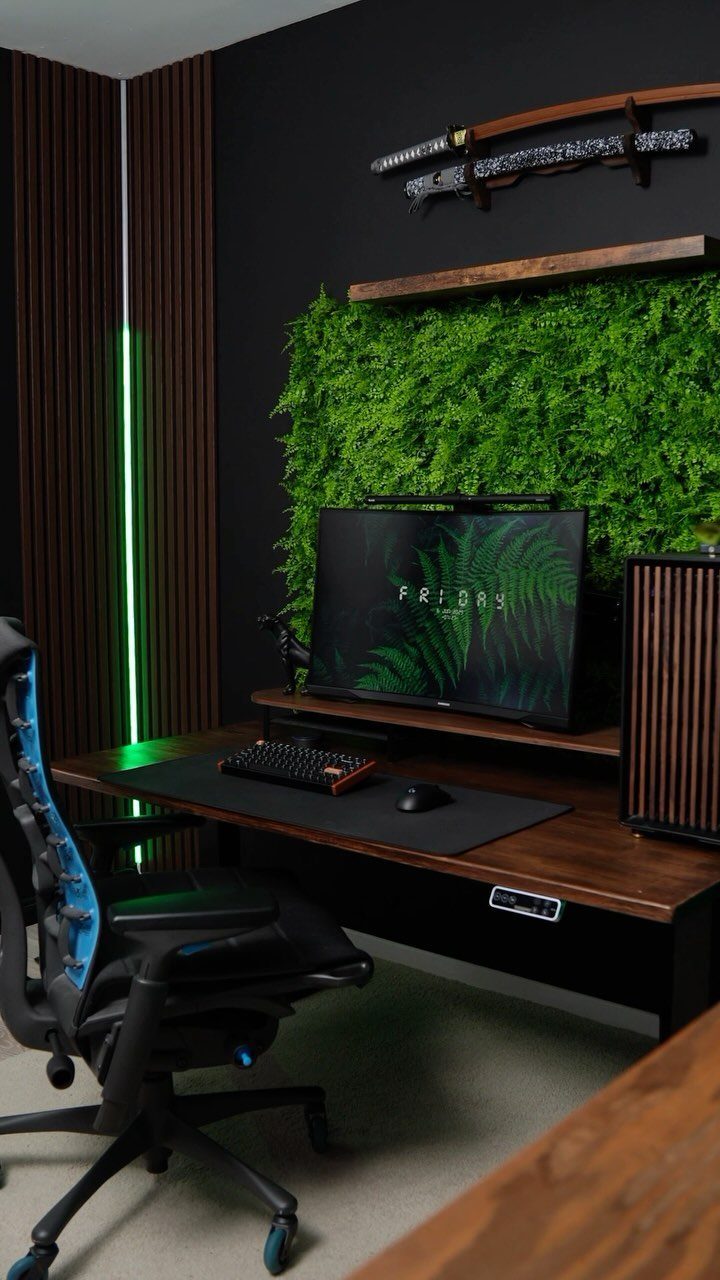
A plant wall beside a wood slat wall gives a working home office a bit of plant-room feeling without giving up desk space.
Moss in green against warm vertical slats is a pairing I like, and the contrast gets stronger next to a black wall.
A single wooden shelf on the slats adds a spot for a small pot or two. Keep the desk area itself clear, because the wall is doing the decorating.
3. Decorative Slat Wall Shelves
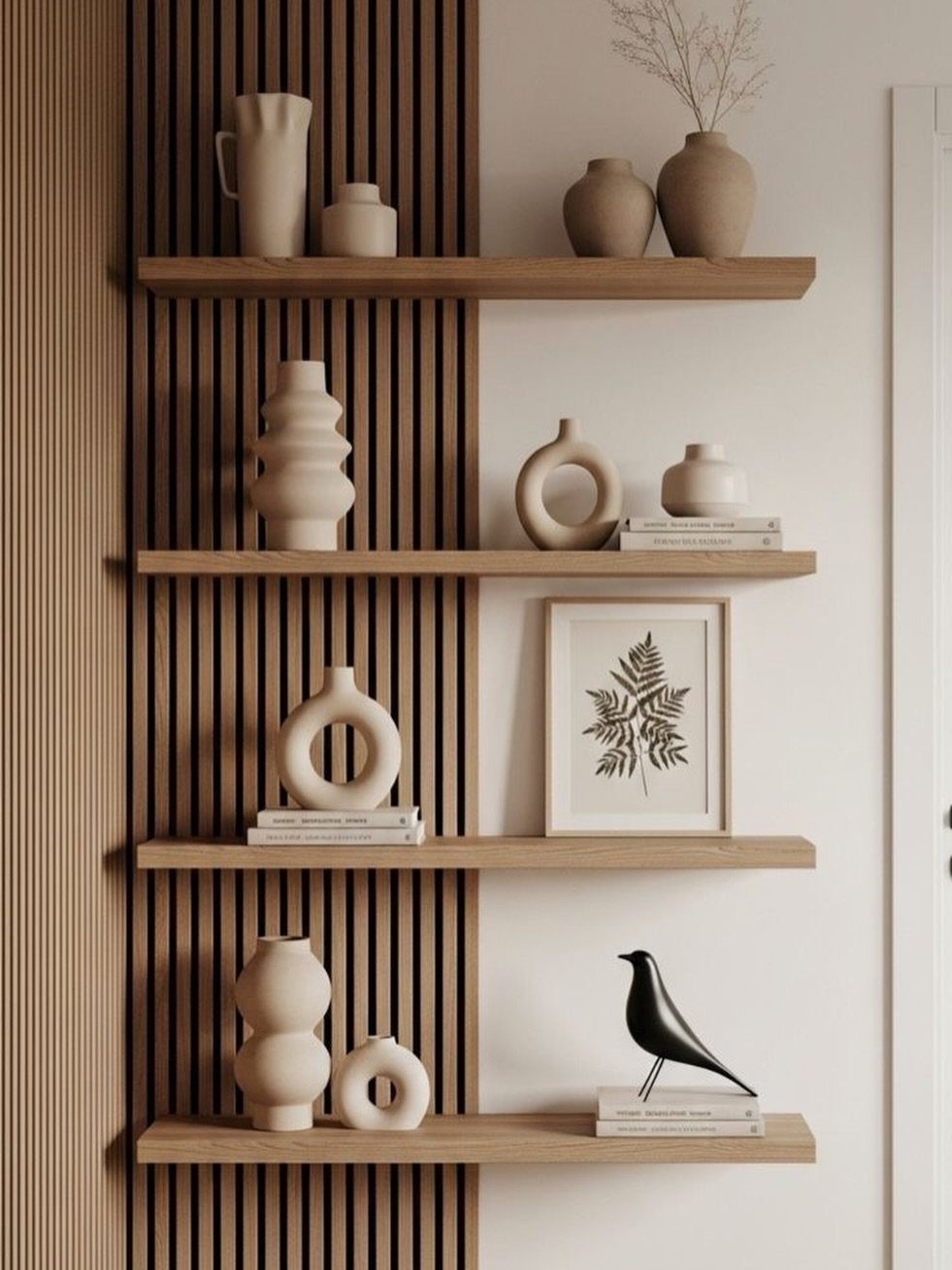
Light wood floating shelves read as part of the slat wall when the tones are close, and that is what makes this version feel built in.
Vases, books and one framed print are plenty, and leaving some of each shelf empty keeps the slats from getting lost behind clutter.
Leave some shelf surface empty.
Slats already add pattern, so a crowded display competes with them. Mounting the shelves directly to the slats also keeps the project simple for a weekend.
4. Curved Shelves with Lighting
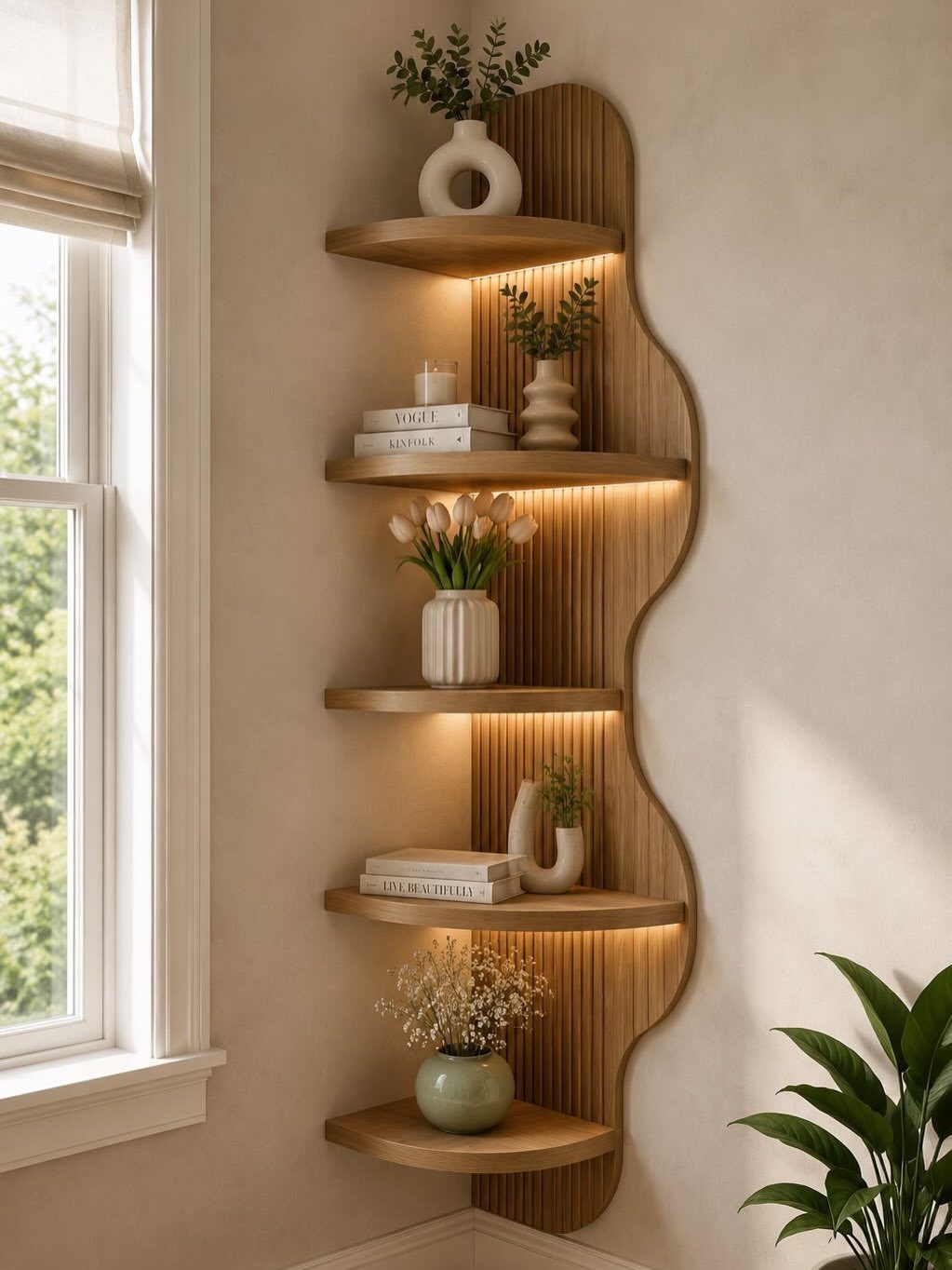
A wavy slat edge softens a room full of straight lines, and curved shelves follow that shape nicely. Warm lighting tucked under each shelf is what gives the wall its glow in the evening.
This one asks more of you than straight shelves: curves mean more cutting, and the lighting needs a plan for where the wiring runs. If that feels like too much, keep the wavy panel and use plain shelves.
5. Slat Wall TV Shelving
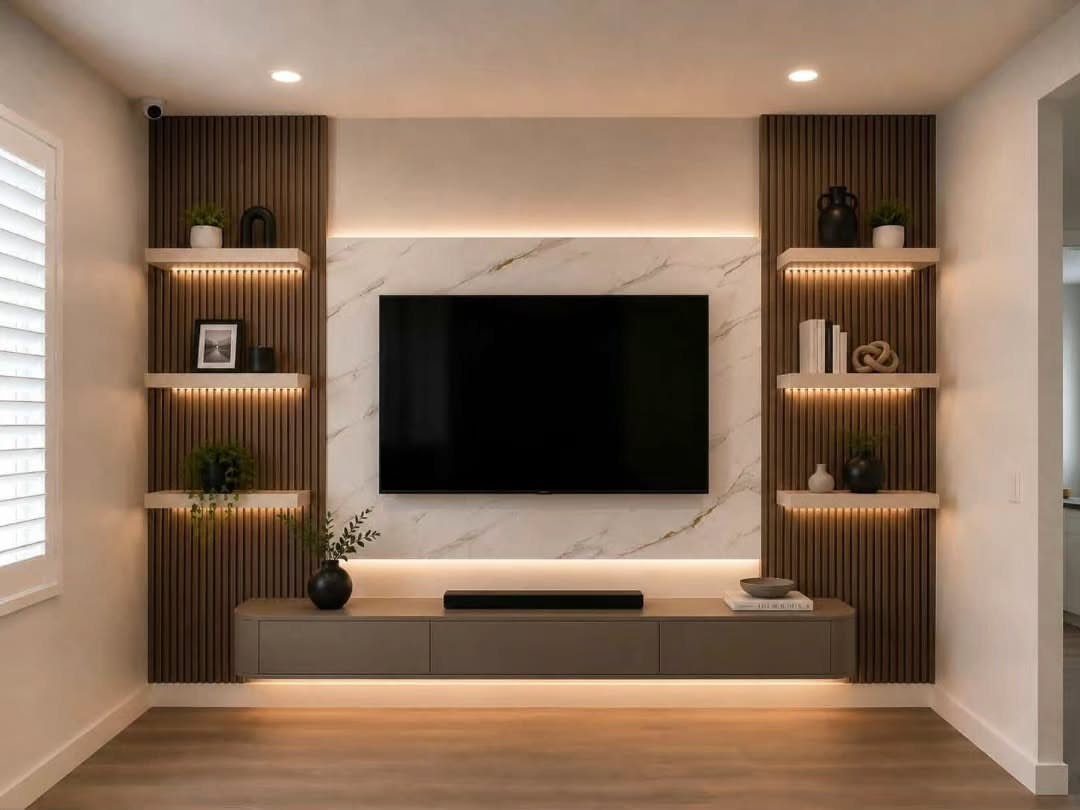
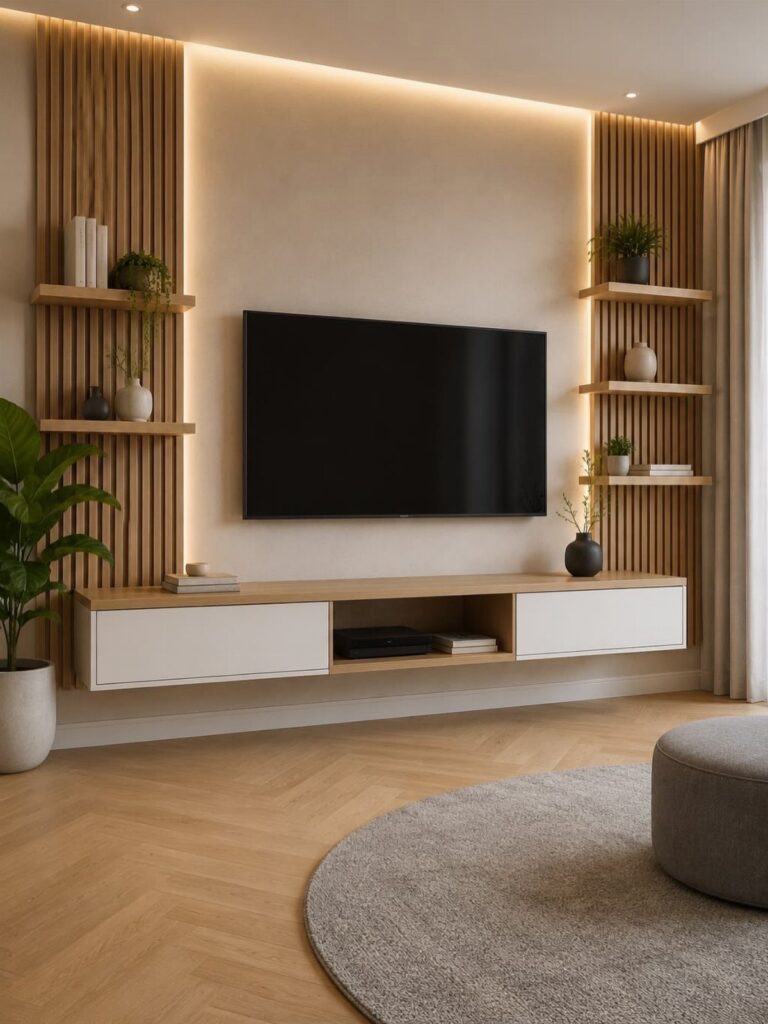
Slat panels on both sides of a TV make the screen look framed instead of stuck on a wall.
Floating shelves on the slats hold the small things, and the long floating cabinet below takes cables and clutter out of sight.
Dark wood slats with white shelves is a combination I’d copy, since the shelves stay easy to read against the wood. Keep the displays sparse so the television stays the focus.
6. Corner Office Shelves
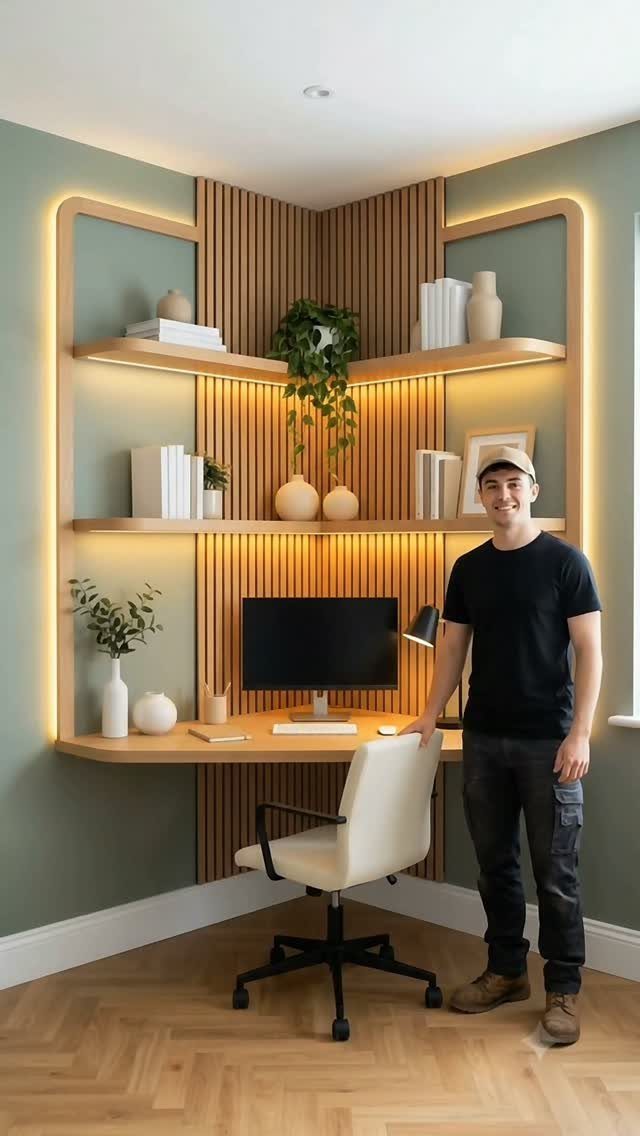
Floating shelves on a light wood slat wall turn the dead space above a corner desk into storage.
Books and a few plants are enough to fill them, and the slats give the corner some warmth that a plain painted wall never does.
For a small home office, this is a smart way to use height instead of floor space.
7. Shelves Beside Slat Panels
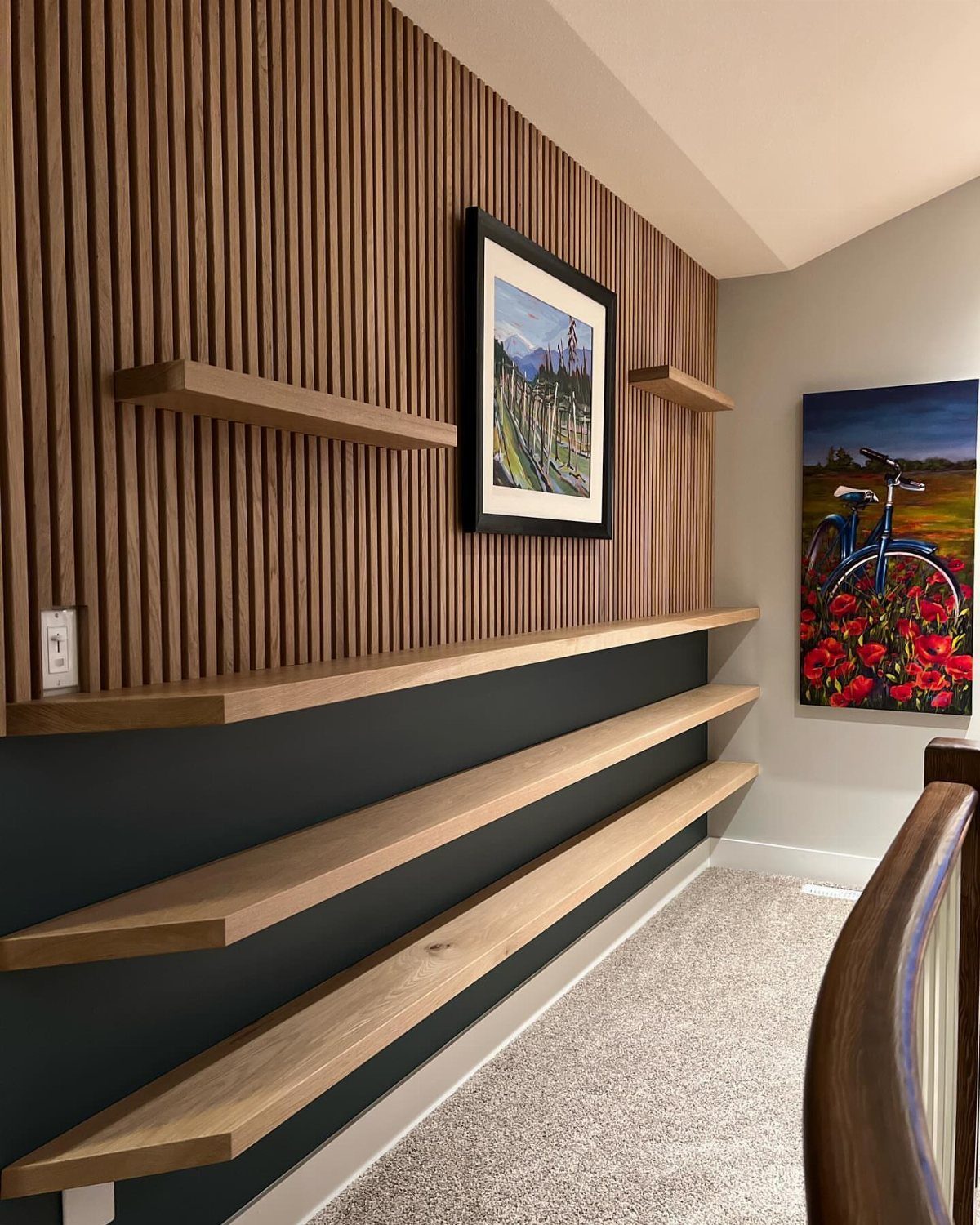
Light wood shelves read clearly against dark grey, and that contrast is why this hallway works. The slats stay a separate feature beside them instead of competing with the shelves.
I’d run the shelves long, as they are here, so they read as one clean line. Then keep the contents to a few framed pieces and let the empty stretches do their share.
8. Circular Plant Shelving
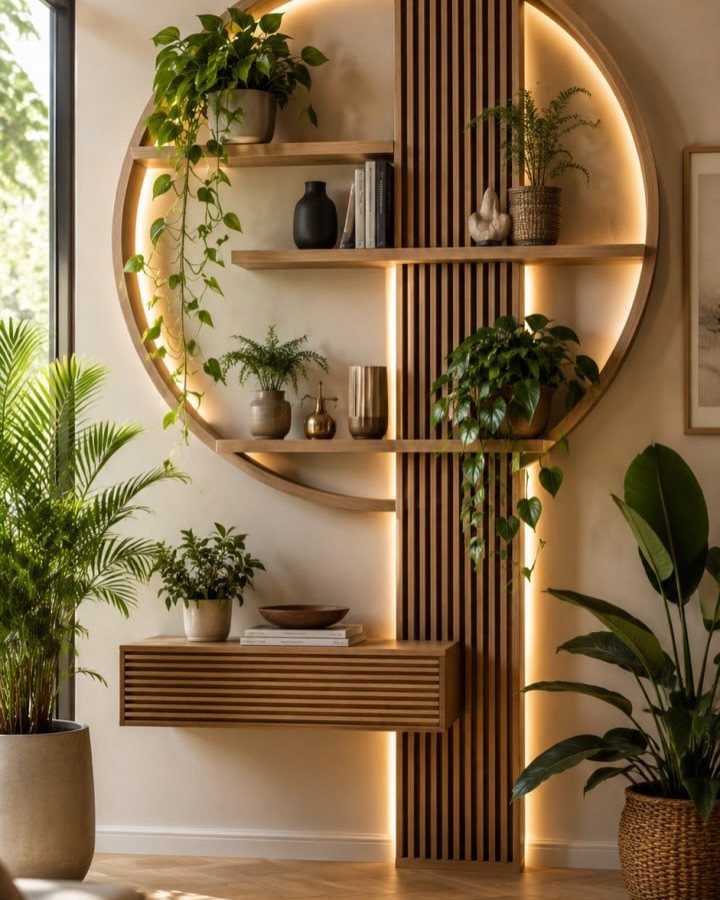
A circular frame set into a straight-lined slat wall breaks up all those verticals, and putting the shelves inside the circle makes the shape do double duty. Warm light built in behind the plants gives it an evening glow.
Plants, a few books and vases are plenty.
I’d leave a gap or two so the circle stays visible. Like any curved build, it takes more cutting than straight shelves.
9. Jagged Plant Shelves
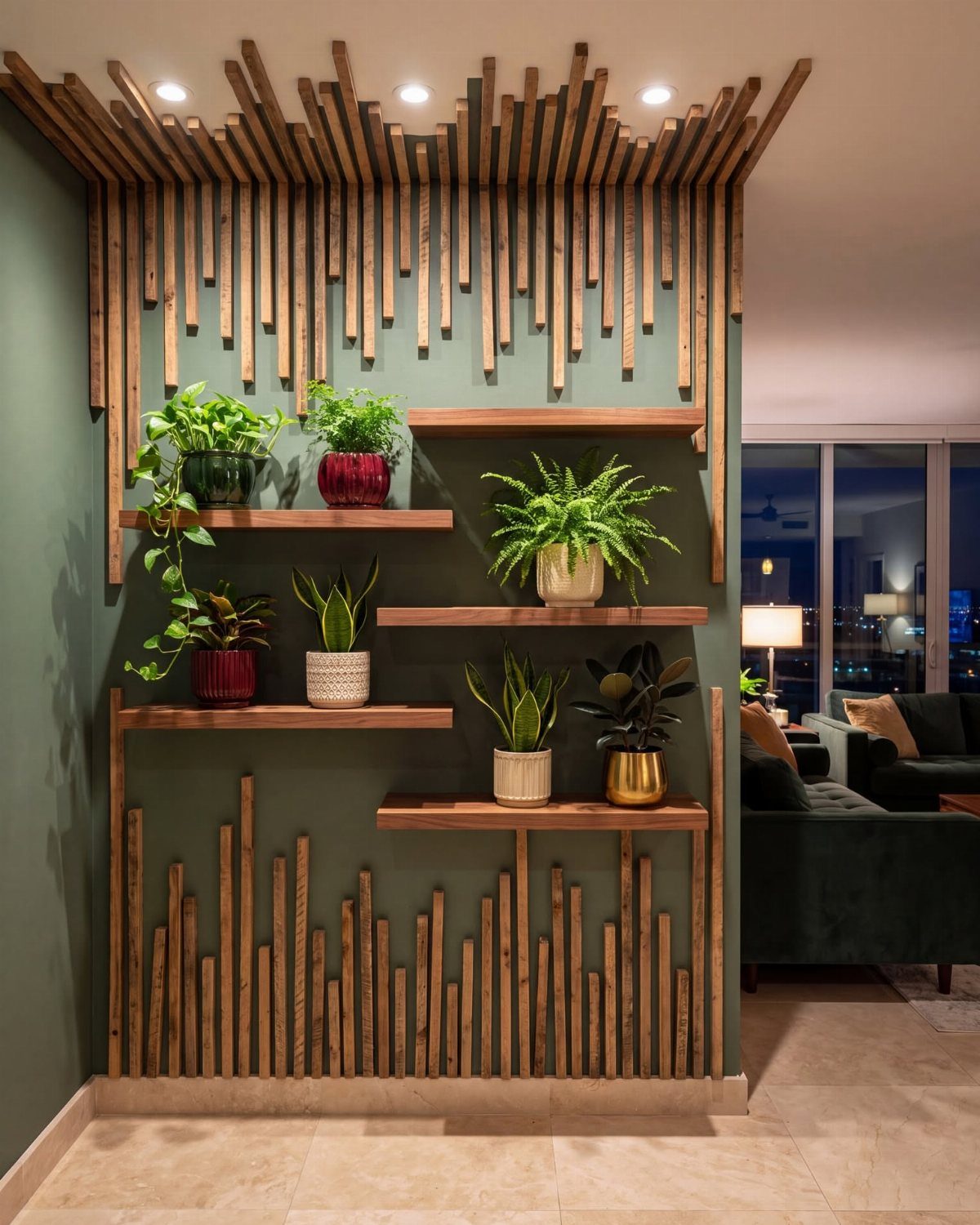
Slats laid in an irregular, jagged pattern give the shelves a less predictable rhythm than a standard grid. Potted plants suit that look, and a mix of pot sizes adds to it.
Green leaves against the wood also pick up a dark green sofa nearby, which is a pairing I’d borrow. Keep the pots in a similar family of colors so the pattern stays the star.
10. Triangular Slat Feature
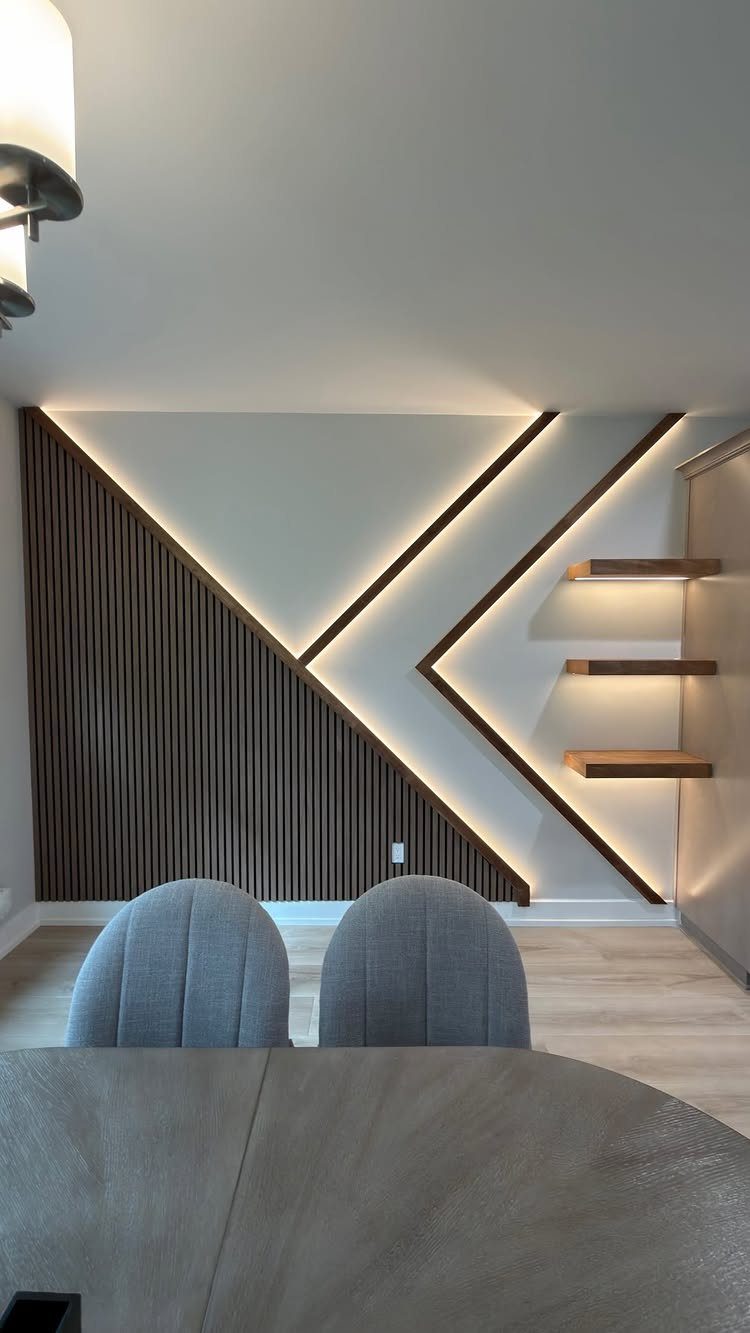
A triangle of dark vertical slats gives a dining wall a focal point without covering the whole surface. Three floating wooden shelves beside it hold a few objects, and the diagonal recessed lighting repeats the angle of the triangle.
Plan the wiring for that lighting before the slats go up. I’d keep the table décor plain so the wall stays the feature.