Spider plants for an office run from a single pot on a desk shelf to a hanging basket or a setup over an aquarium, and the right pick depends on how much free space and spare time your workspace gives you.
In a tight cubicle, a plain straight-leaf spider plant stays tidy, while a mature Bonnie with leaves that curl and twist outward wants clear floor space or a wide shelf.
With an unpredictable schedule, I’d pick a plain Spider Plant in a pot with good drainage over any setup that depends on regular care.
1. Spider Plant
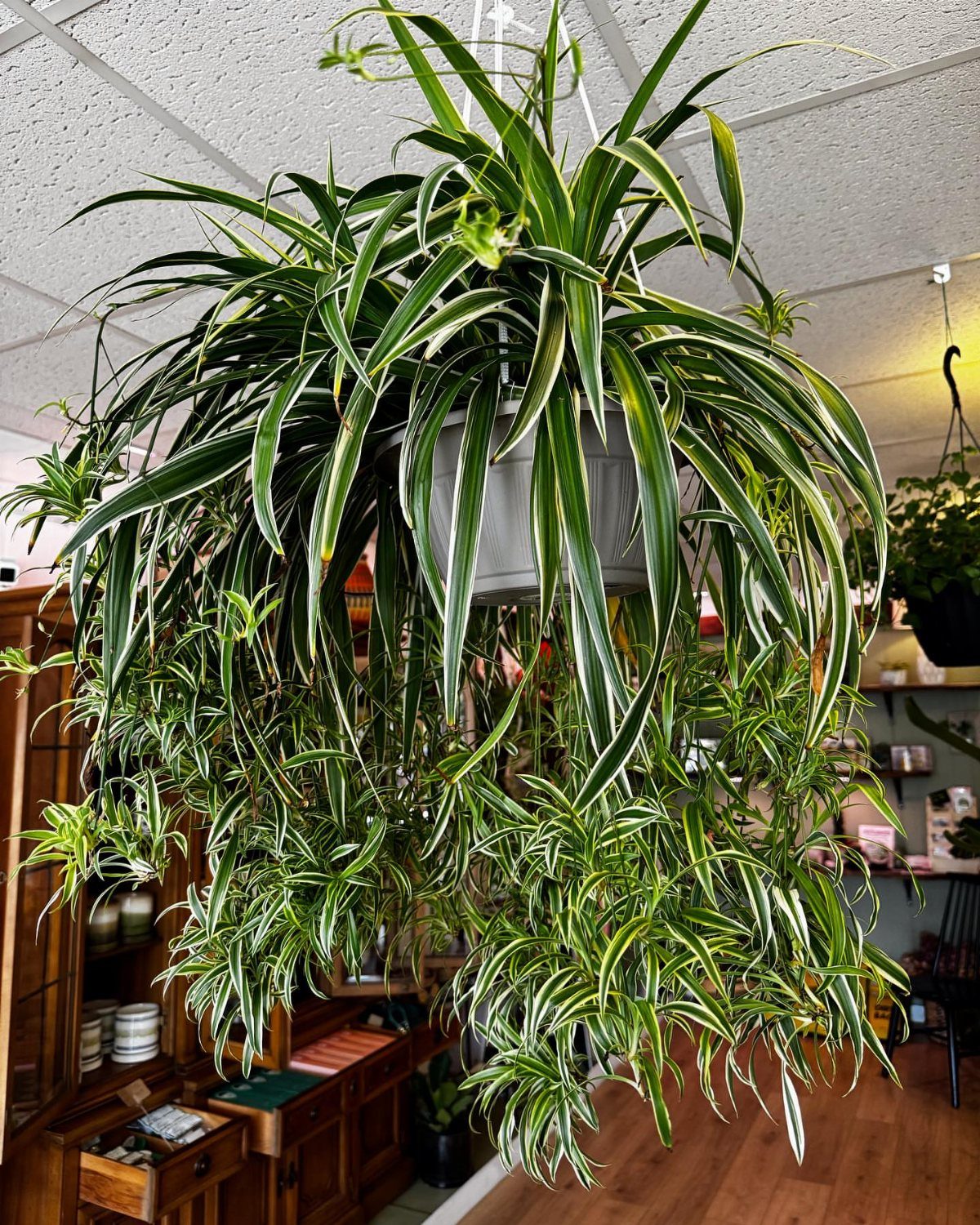
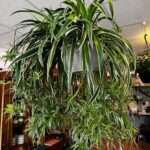
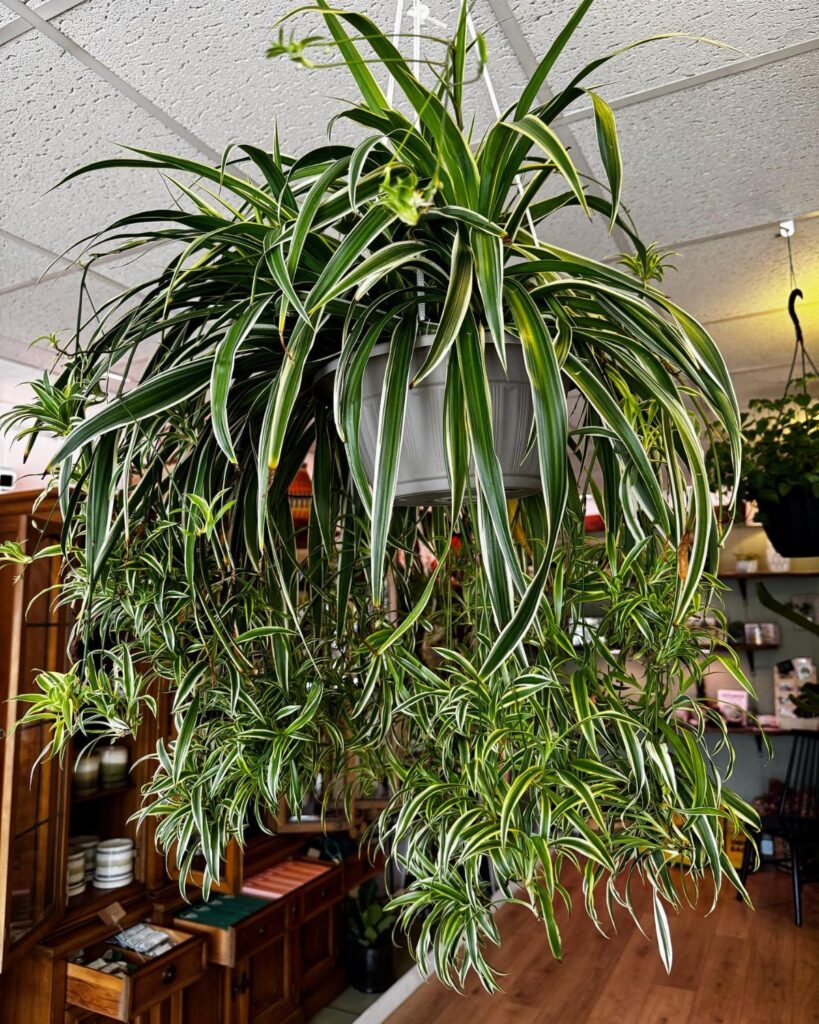
Arching leaves spilling over the rim of a hanging pot give a spider plant most of its charm, and that habit suits an office where desk space is tight.
It tolerates low light and asks for little attention, which fits a workweek with no time for plant care.
Pick a variegated one: the cream stripes brighten a desk and stand out against a darker pot. The striping stands out against a plain container.
2. Spider Plant Babies
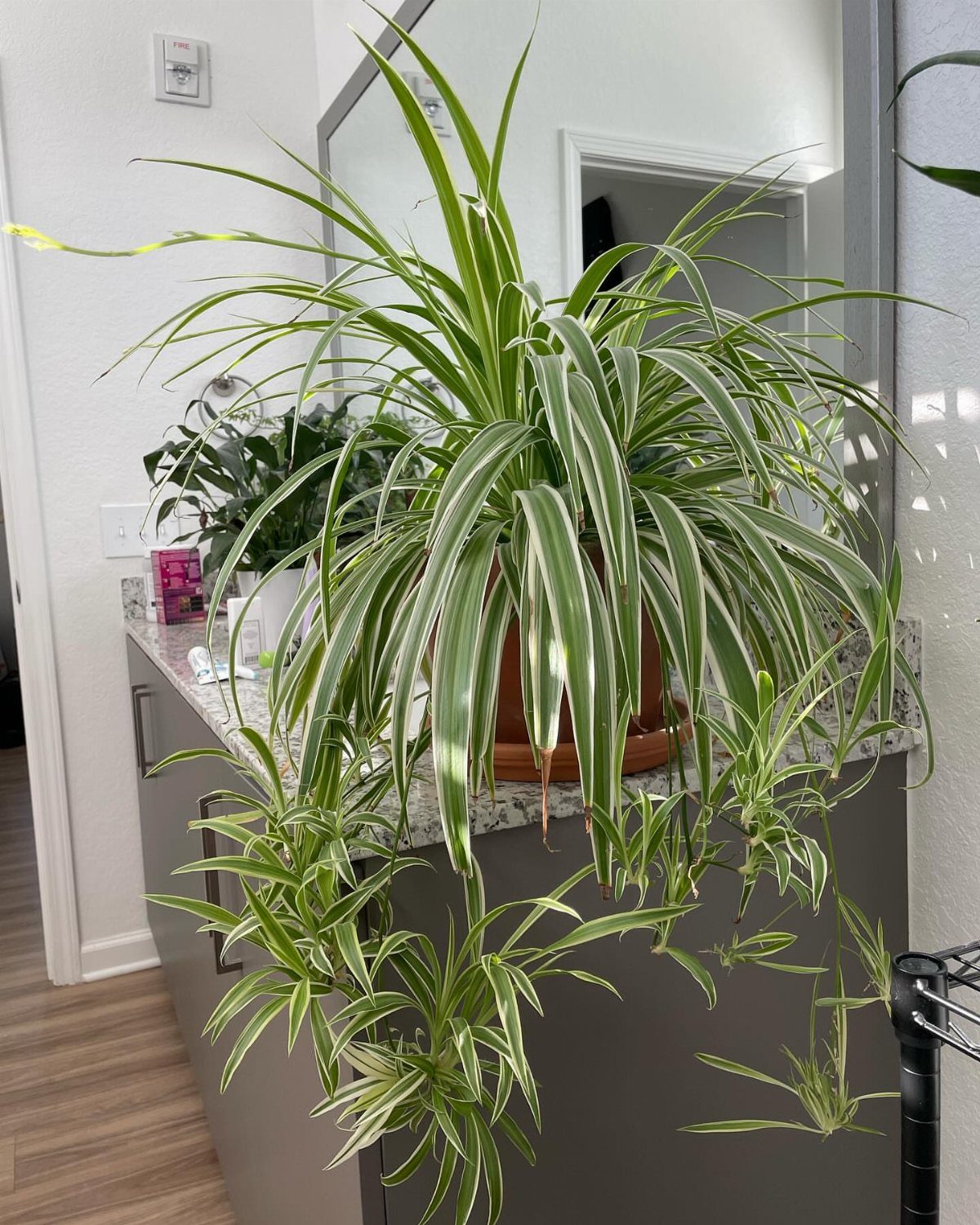
Plantlets are the reason a mature spider plant never looks finished. They dangle from the parent on their own, and you decide what happens next.
Leaving them attached gives a fuller, trailing look. Snipping them off lets you propagate new plants for coworkers or other corners of your desk.
I’d do both: keep 2–3 on the plant and propagate the rest. A young plant won’t make them yet, so a bit of patience comes with this one.
3. Variegated Spider Plant
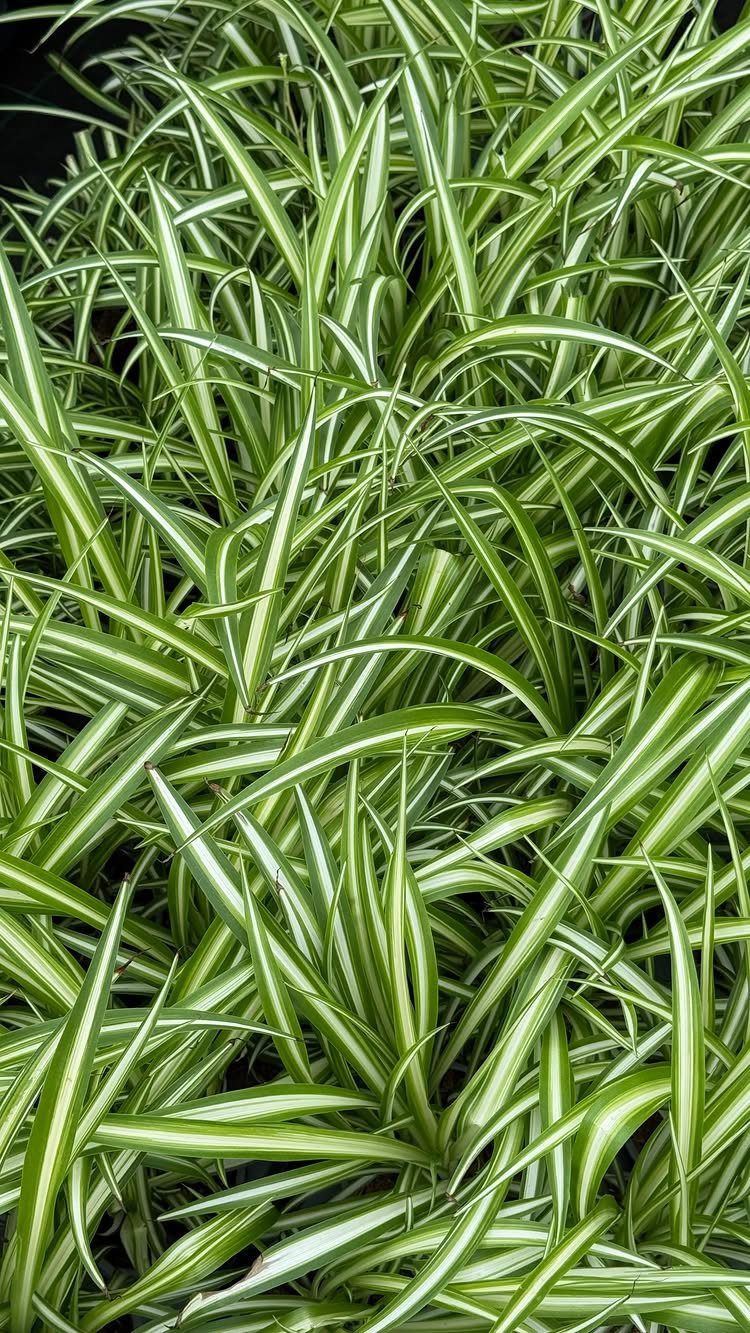
If your desk is mostly beige, gray and black, a striped spider plant adds contrast that a plain green one can’t.
Long green leaves with white stripes read as 2 colors at once, so a single plant carries a lot of foliage color.
I like it best in a plain pot, white or neutral, so the stripes do the work. This is the easiest upgrade on the list because the care stays the same as for any spider plant.
4. Bonnie Spider Plant
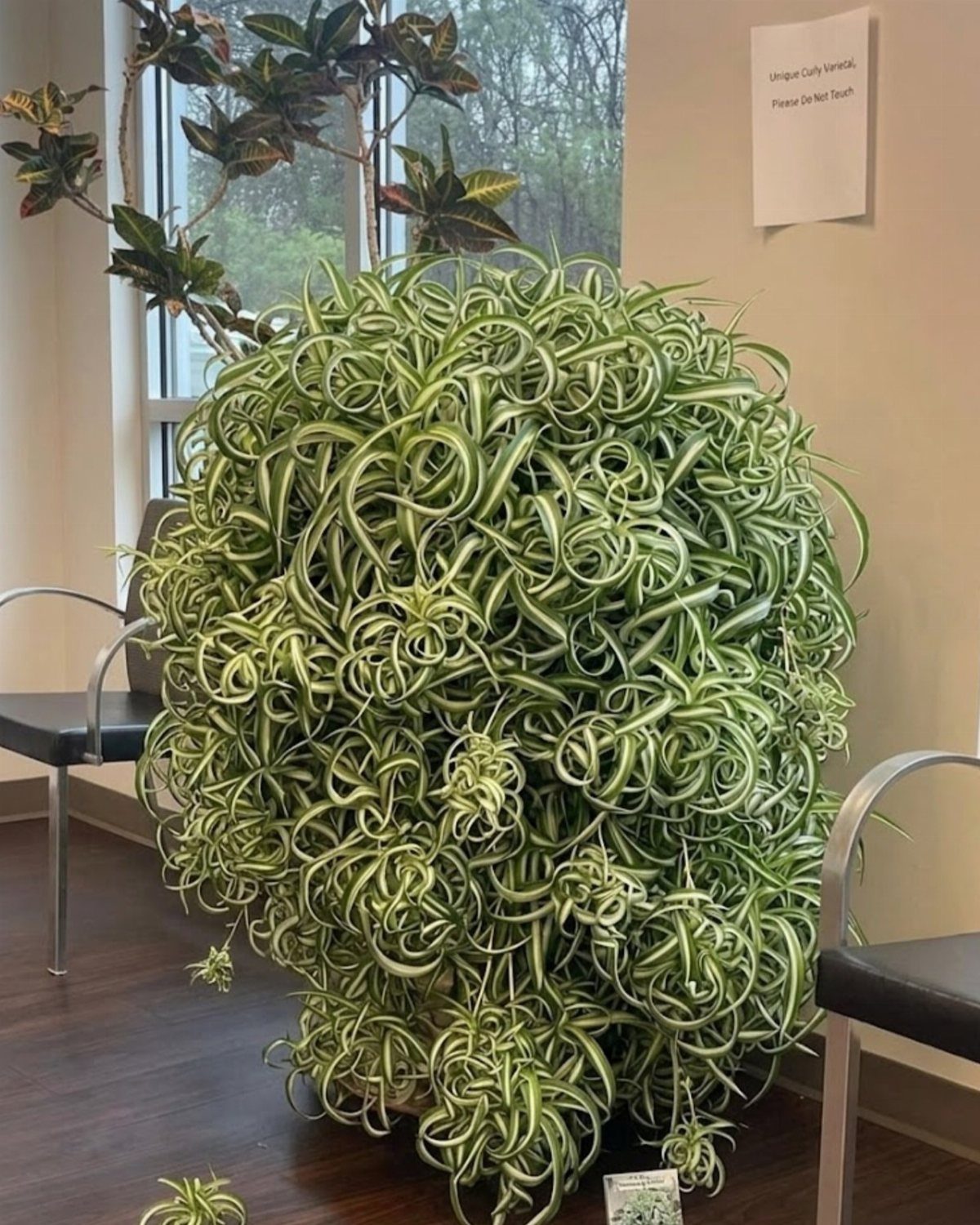
Curled, twisting leaves set Bonnie apart from the straight-leaf spider plants most people picture. The shape gives a rounder, more textured silhouette, and the variegation carries through the curls.
Give it room, because a full-grown Bonnie takes up real space.
A spot near a window with open floor or a wide shelf around it shows the curls best. For a cramped cubicle, I’d choose a straight-leaf plant instead.
Over-watering can kill most of these plants more quickly than under-watering (over-watering causes root rot, and there’s no coming back from that). In general, if the plant is drooping, getting brown tips or dry, yellow leaves towards the bottom, you’re probably under-watering it.
— EcoWatch
5. Spider Plant Aquarium
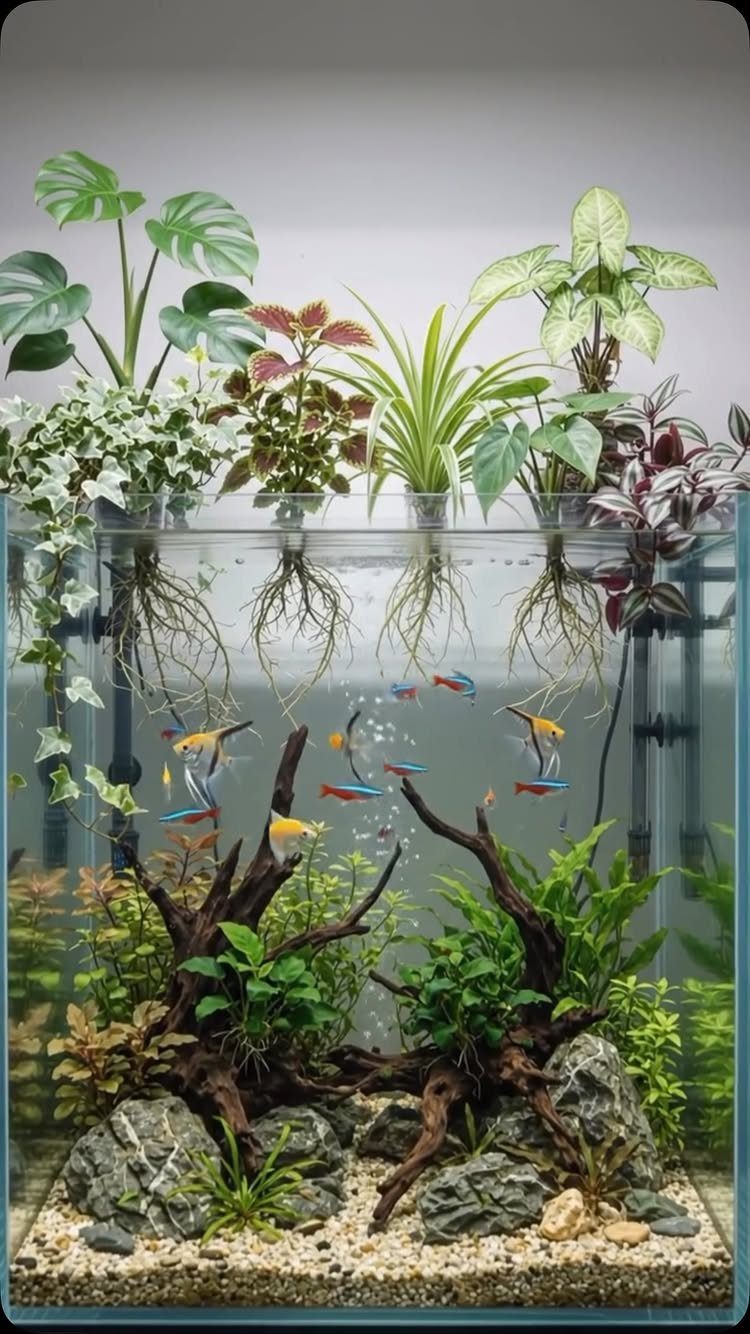
Roots hanging into the water of a fish tank make a spider plant an unusual desk display. The plant sits on top of the aquarium, so it uses space you already have and leaves your desk surface free.
You need a tank, and the fish need regular care, so this one asks for real commitment.
If your office schedule is unpredictable, a pot is the safer route. For anyone who already keeps an aquarium at work, this is a neat addition.
6. Office Window Plants
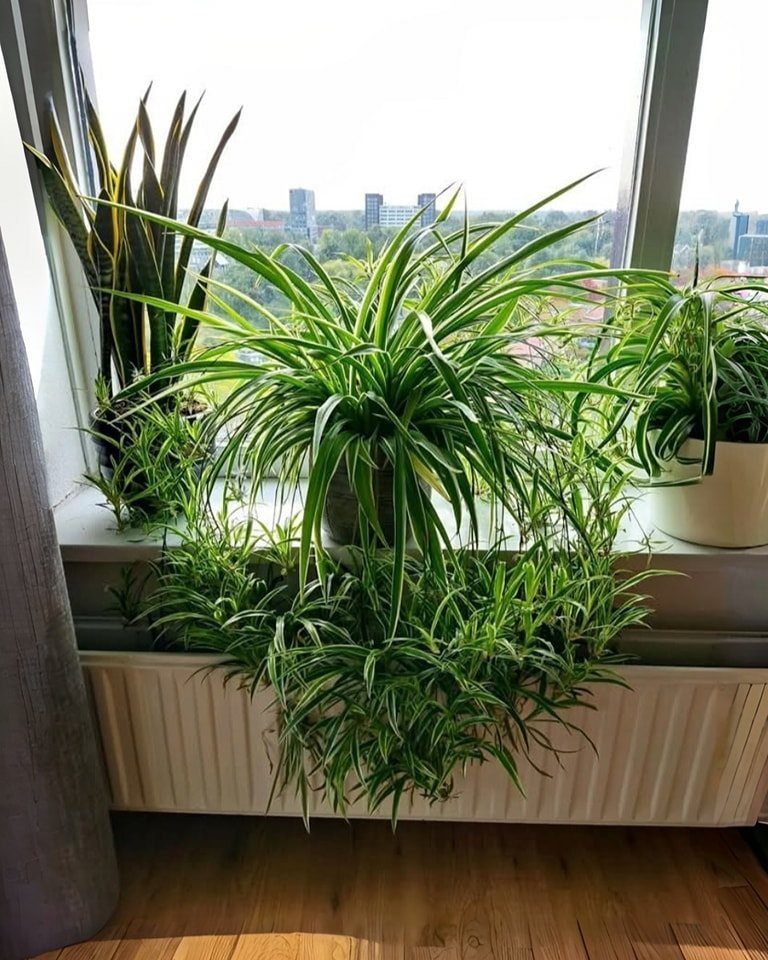
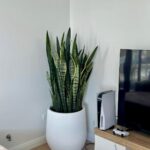
A bright windowsill can hold a whole group of plants, and spider plants pair well with a snake plant. The upright snake plant contrasts with the arching spider leaves, so the row looks designed instead of crowded.
Measure the sill depth before buying pots.
Narrow pots that sit fully on the ledge are safer than wide ones that overhang. Put the spider plants at the front, where their leaves can drape, and the snake plant behind them.
7. Head-Shaped Planter
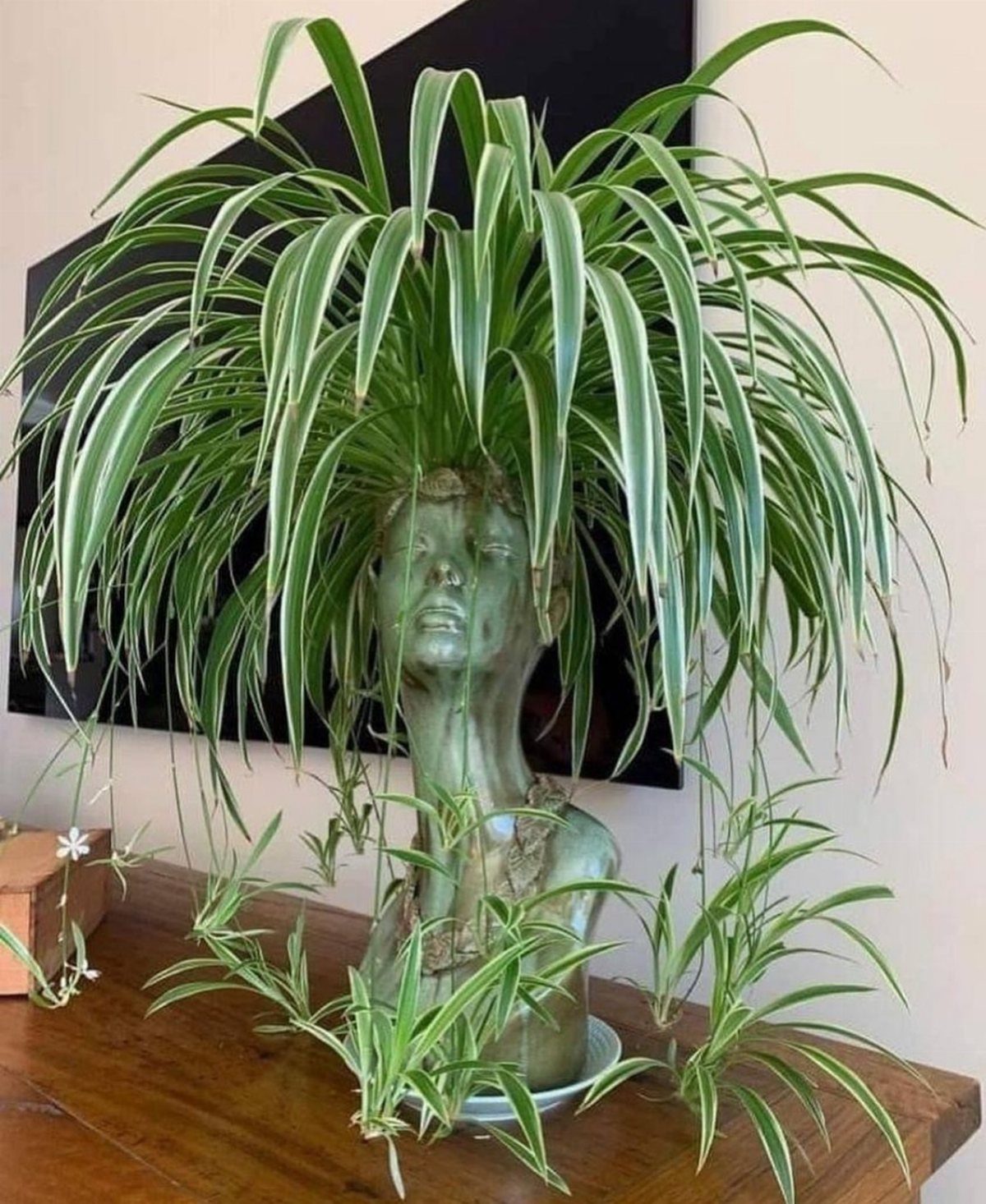
Arching spider plant leaves double as hair when the pot is a sculpted head, and that single visual joke is the whole appeal.
A head-shaped planter, especially a classical bust, makes a spider plant read as a small sculpture, with the leaves standing in for hair.
Give it a spot where the leaves can spill freely, away from monitors and keyboards. I’d keep everything around it plain so the planter gets the attention.
8. Decorated Spider Plant
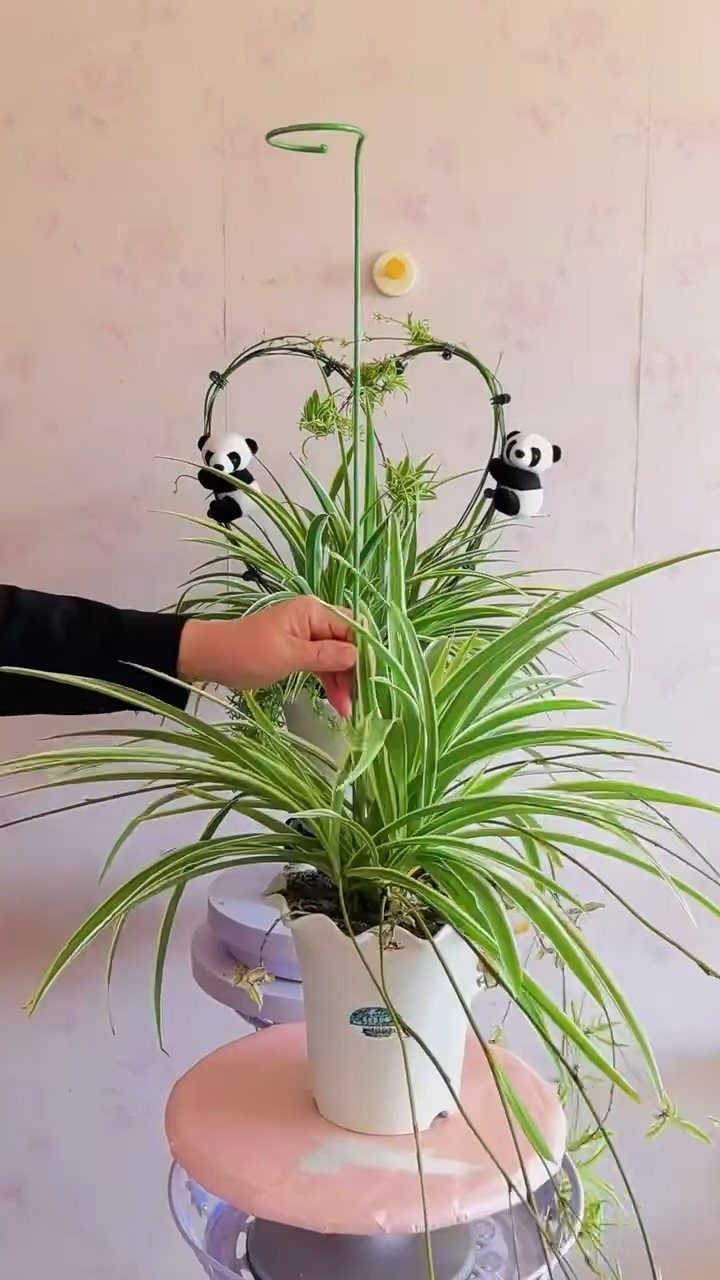
Small props can give a bare white pot the personality of a desk mascot. A heart-shaped wire frame and two small panda figures are enough; the leaves stay the main feature.
Keep the extras light and set them at the edge of the pot, not down in the foliage.
I’d stop at 2 or 3 pieces. Swapping the figures out for different seasons is an easy way to refresh the look without touching the plant.
9. Hanging Basket
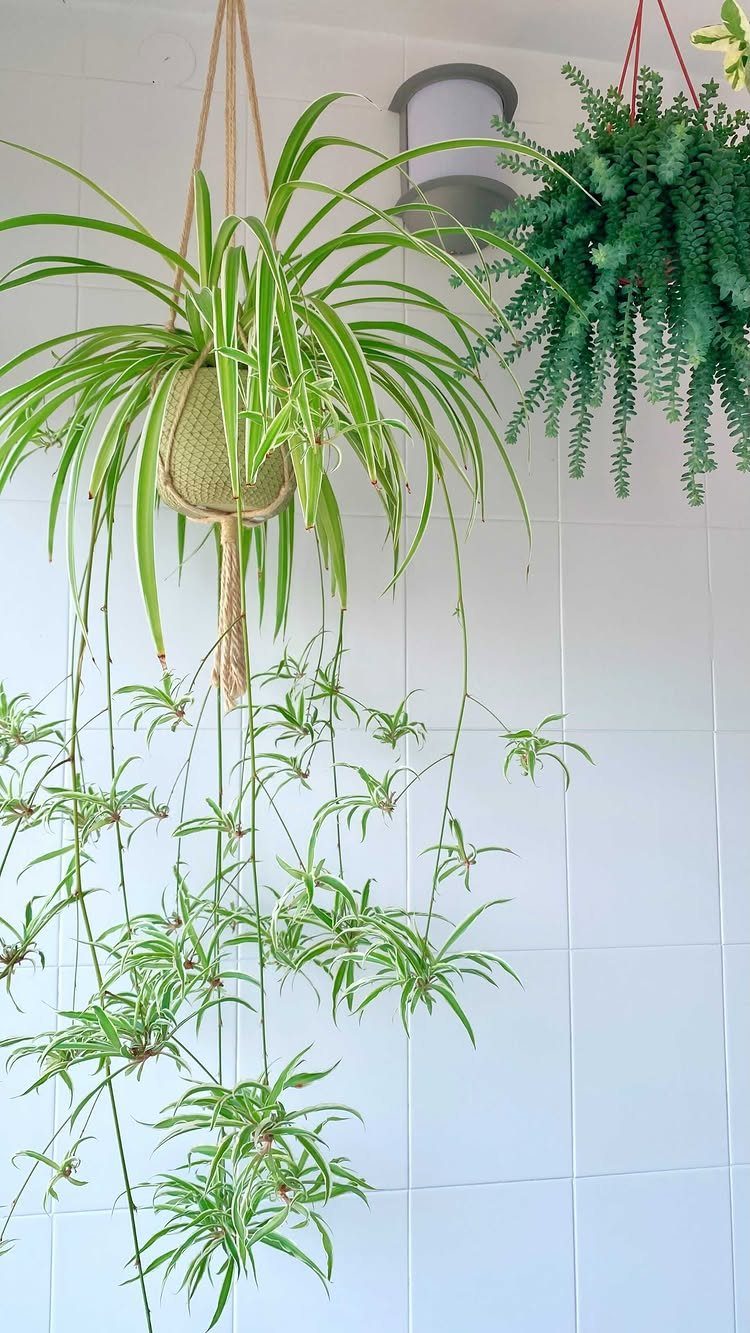
Lifting a spider plant off the desk lets its leaves and stems fall in a full cascade, and a woven basket adds texture against a smooth wall.
Hang it level with your eyes or higher so the trailing growth gets seen.
Use a hook rated for a watered pot, since wet soil weighs more than most people expect. A second plant in a different hanger beside it makes a pair, and I like that more than one basket hanging alone.
10. Desk-Shelf Display
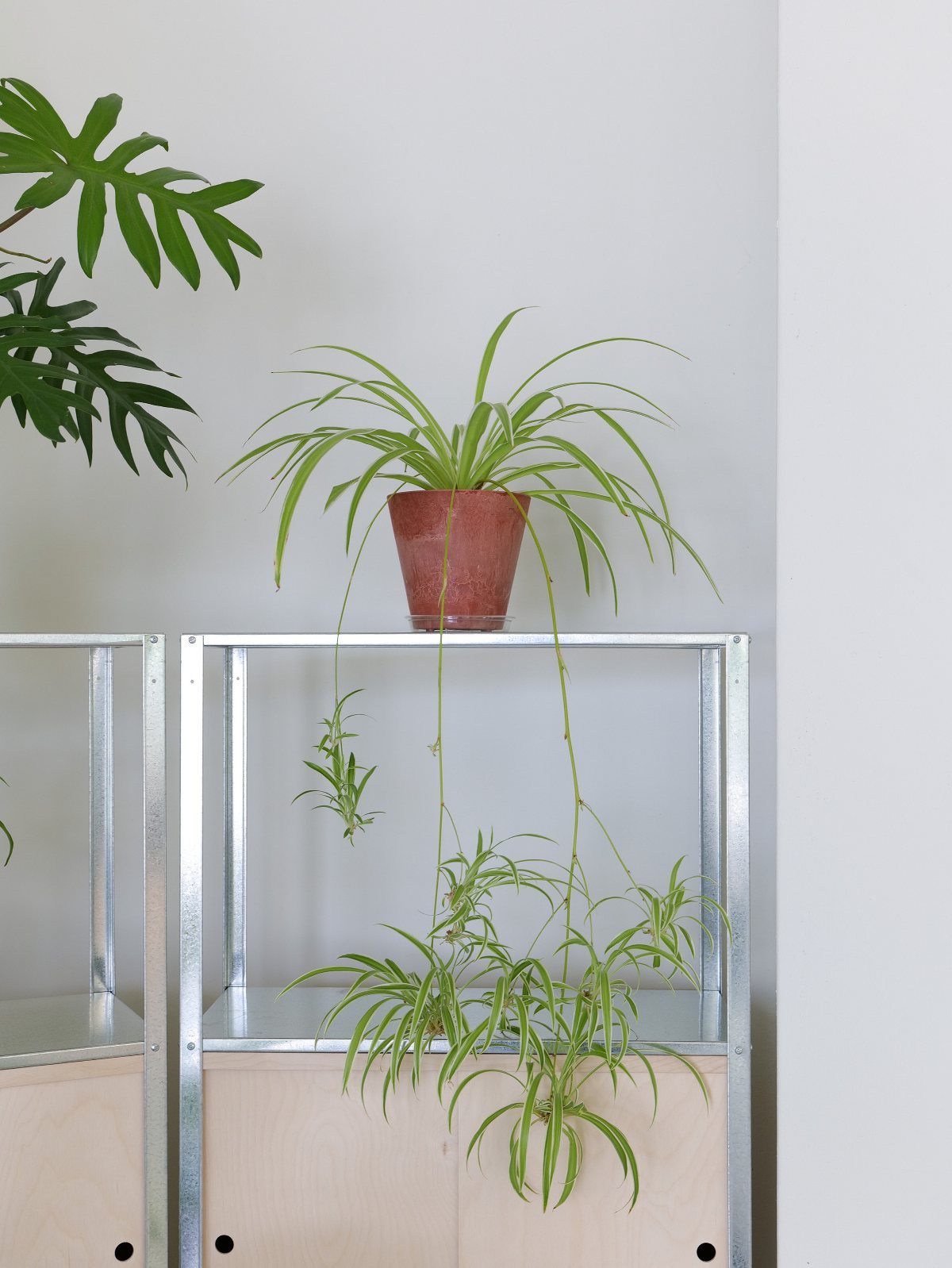
A shelf above the work surface gives a spider plant somewhere to let its plantlets hang, and the desk below stays clear.
Set the terracotta pot near the shelf edge so the long stems drop past it instead of resting on the shelf.
Leave some clearance between the dangling ends and your screen or papers.
Watering and Drainage
A fixed weekday for watering checks keeps the routine from slipping.
I lean toward Friday in an office, since it fits neatly at the end of the workweek. Walk past each plant, push a finger into the soil, and water only if the top inch or 2 is dry.
A drainage hole matters more than any schedule. Soak the pot until water drains from the holes, then dump whatever collects in the saucer; roots sitting in standing water rot, and a plant with rotted roots rarely recovers.
Overwatering kills faster than underwatering, so if you’re unsure, wait a few more days. Ease off on watering through winter, and in any office where the air conditioning runs cold and hard.
Brown, crispy tips can come from low humidity or too much fertilizer, not just thirst.
Check the soil before you reach for the watering can, and skip the plant food if the tips keep browning. If the plant droops and the lower leaves turn dry and yellow, thirst is the more likely cause.
Placement Hazards
Before you settle on a spot, check what’s above and below it.
Direct sun, drafts, blasts from an air-conditioning vent and radiators that dry the air all work against the plant. Moving it a couple of feet is often enough to get out of the way.
Think about who else shares the space.
Dangling leaves and heavy pots belong out of reach of pets and young children, since a heavy pot can be pulled over and a pet that eats a large amount of foliage may get an upset stomach.
A low spot is the worst place for a plant with long, trailing leaves. Put it where curious paws and hands can’t get to it.
Humidity and Leaf Care
If the leaf tips turn brown, raise the humidity around the plant or mist it weekly. Misting does a second job too: it rinses dust off the foliage, which keeps the leaves clean.
Keep an eye out for scale insects and aphids while you mist. Look along the stems and under the leaves, since pests tend to settle where they’re hard to see.
Should either one show up, coat the affected leaves with neem oil, using the amount and schedule printed on the label. Keep an infested plant away from the others until it looks clean.
Frequently Asked Questions
Do spider plants do well in pots?
Spider plants grow well in containers as long as the bottom has a hole for water to escape, and that one detail counts for more than any watering routine.
Water slowly until it drips from the base, then tip out the saucer, because roots that sit in water rot.
Repot every 1–2 years, going up just one pot size, once roots poke out of the drainage holes or water runs straight through. Do the job in spring, while the plant is waking up and putting on growth.
Which plant is lucky for an office desk?
For luck, most people reach for lucky bamboo, which puts up with dim corners and can live in nothing but water.
A spider plant fits better if you want leaves that spill over the edge, and it is just as easygoing about dim light.
Both are sensitive to the chlorine in tap water, so let it sit out overnight before using it.
What are good indoor plants?
For an office, a spider plant is an easy pick: it tolerates low light and needs little attention. On a bright windowsill it pairs well with an upright snake plant, whose straight leaves contrast with the arching spider leaves.
People who work around plants tend to report less stress, and some studies tie greenery to sharper memory and better productivity.
Can a spider plant survive in an office with no windows?
A spider plant tolerates low light, but low light is not the same as no daylight at all.
Some growers say it can’t thrive in a windowless room without a grow light, and I’d side with that for a space with zero natural light. Put a grow light over it and the plant has a much better chance.