
What the room is used for decides which cove is yours: a kitchen needs light on the counter, stairs need treads you can read at night, and a media wall needs a glow that softens a bright screen.
The range runs from a single warm white line tucked behind crown trim to color-changing RGB strips on a wall controller, and any run near a tub or shower needs a strip and driver with a damp or wet rating.
Whichever look you pick, the cheapest place to start is a basic LED cove strip with a control that can dim it, which the Controls and Layered Lighting section covers.
1. Crown Moulding Cove Lighting
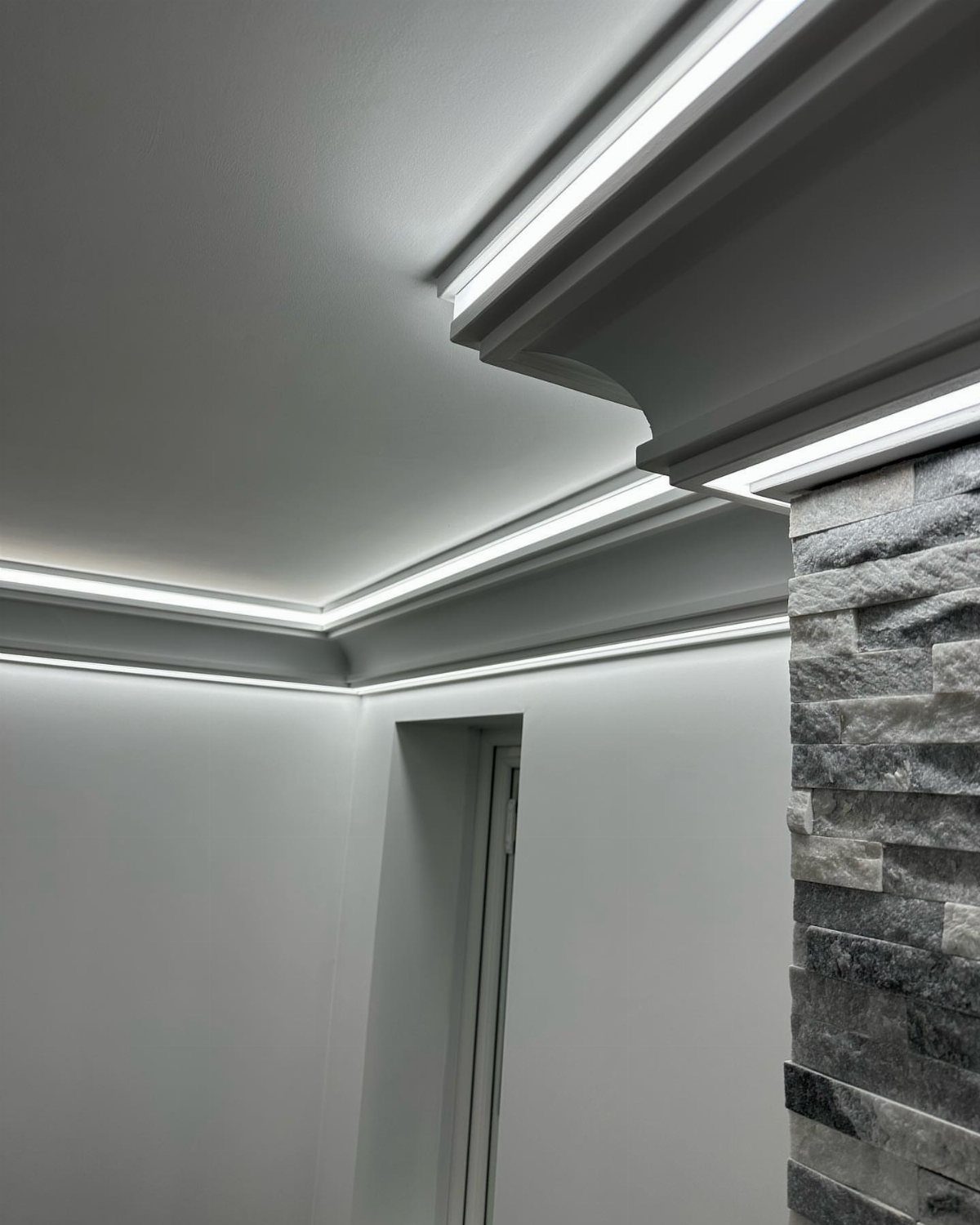
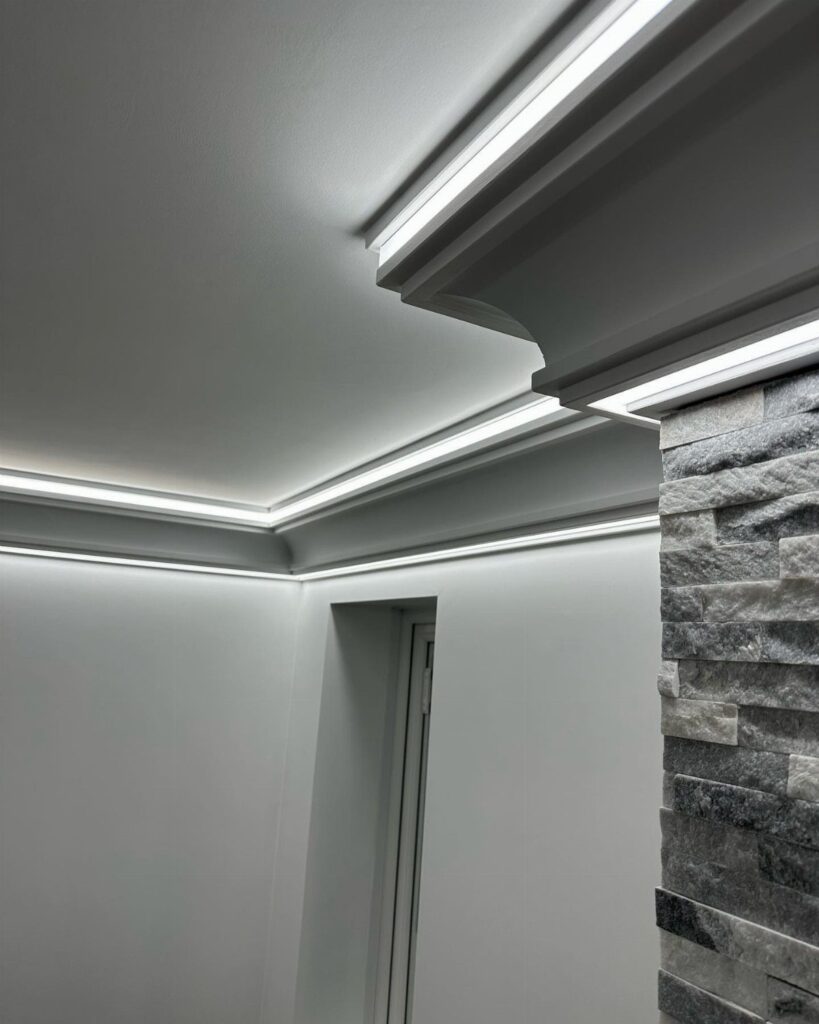
Crown moulding is the easiest place to hide a cove, because the profile already sits where the wall meets the ceiling.
The strip tucks behind the moulding and throws light up onto a white ceiling, which bounces it back softly into the room.
White paint on both the moulding and the ceiling gives the cleanest glow. I’d pick a warm white strip over a cool one; next to a grey stone wall like this one, the warmth keeps the room from feeling clinical.
2. LED Cove Lighting
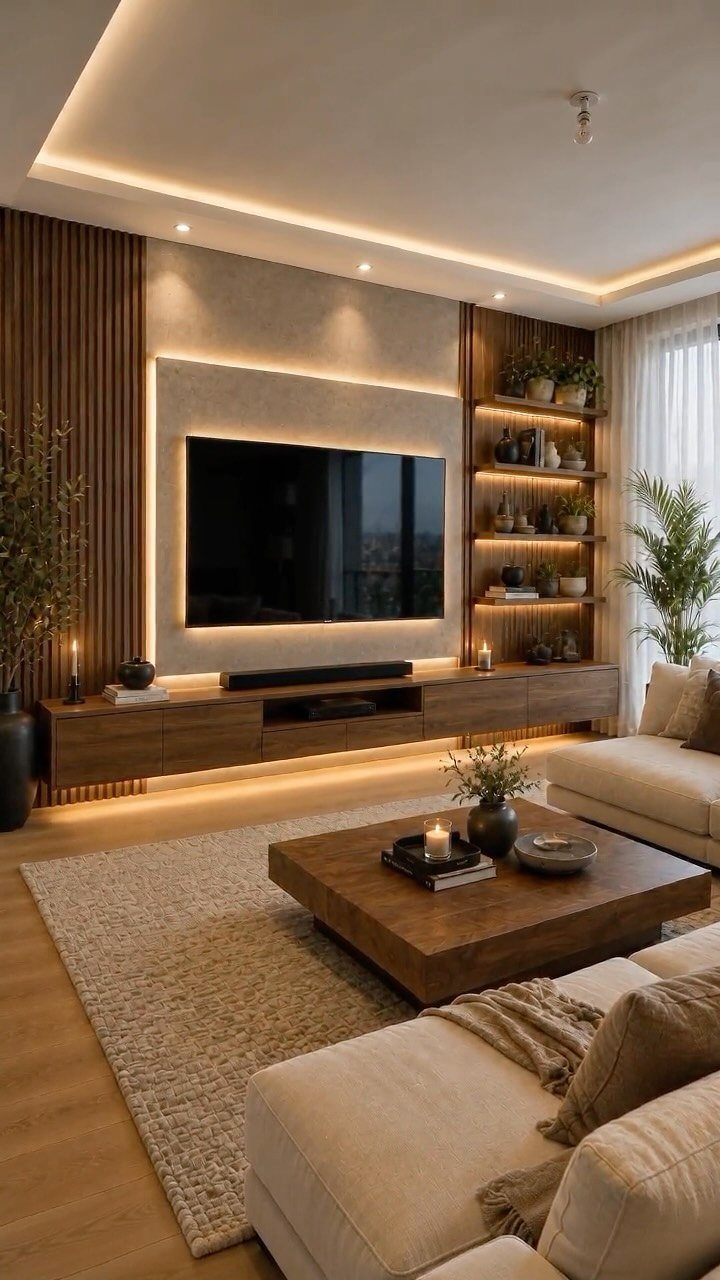
LED strips are my default for a cove, since the strip is thin enough to disappear into a shallow ledge or a gap behind a panel.
Low-profile and energy-efficient is the case for them, and a warm tone suits a living room best.
Run the strip where the eye can’t see the diodes, behind a lip or recessed into the ceiling.
Behind a TV, a second run on the wall panel adds a soft halo that eases the contrast of a bright screen in a dark room.
3. Living Room Cove Lighting
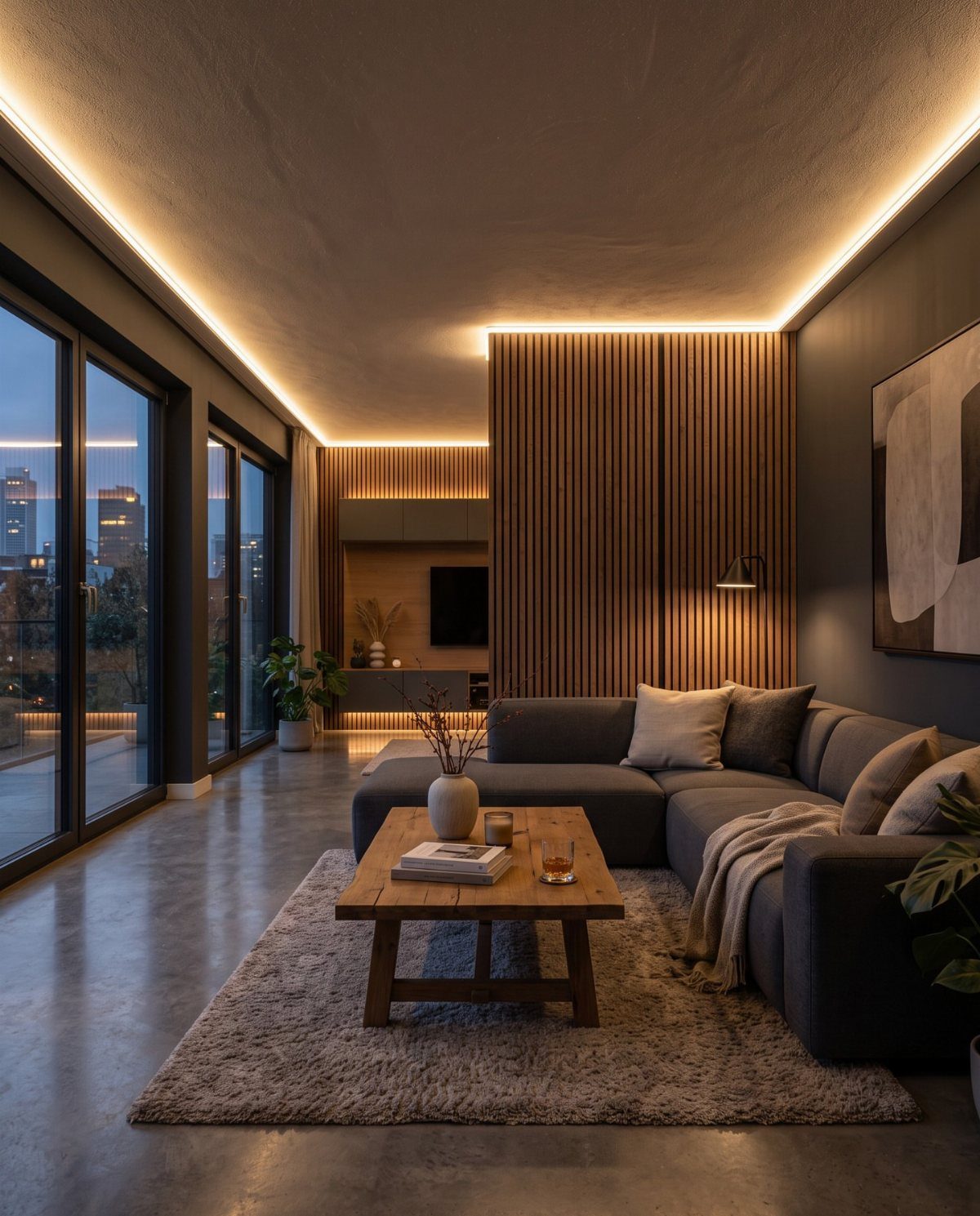
A media wall is where cove lighting earns its place in a living room.
Strips along the ceiling edge, or tucked into a concealed wall unit, wash the surface around the TV and make the whole setup read as one built-in feature.
Slatted wood takes this well, because the grooves catch the light and add depth.
I’d keep the tone warm so the wood stays rich rather than yellowed. Put the lights on their own switch or dimmer, so movie nights and daytime don’t need the same brightness.
4. Under-Cabinet and Ceiling Cove Lights
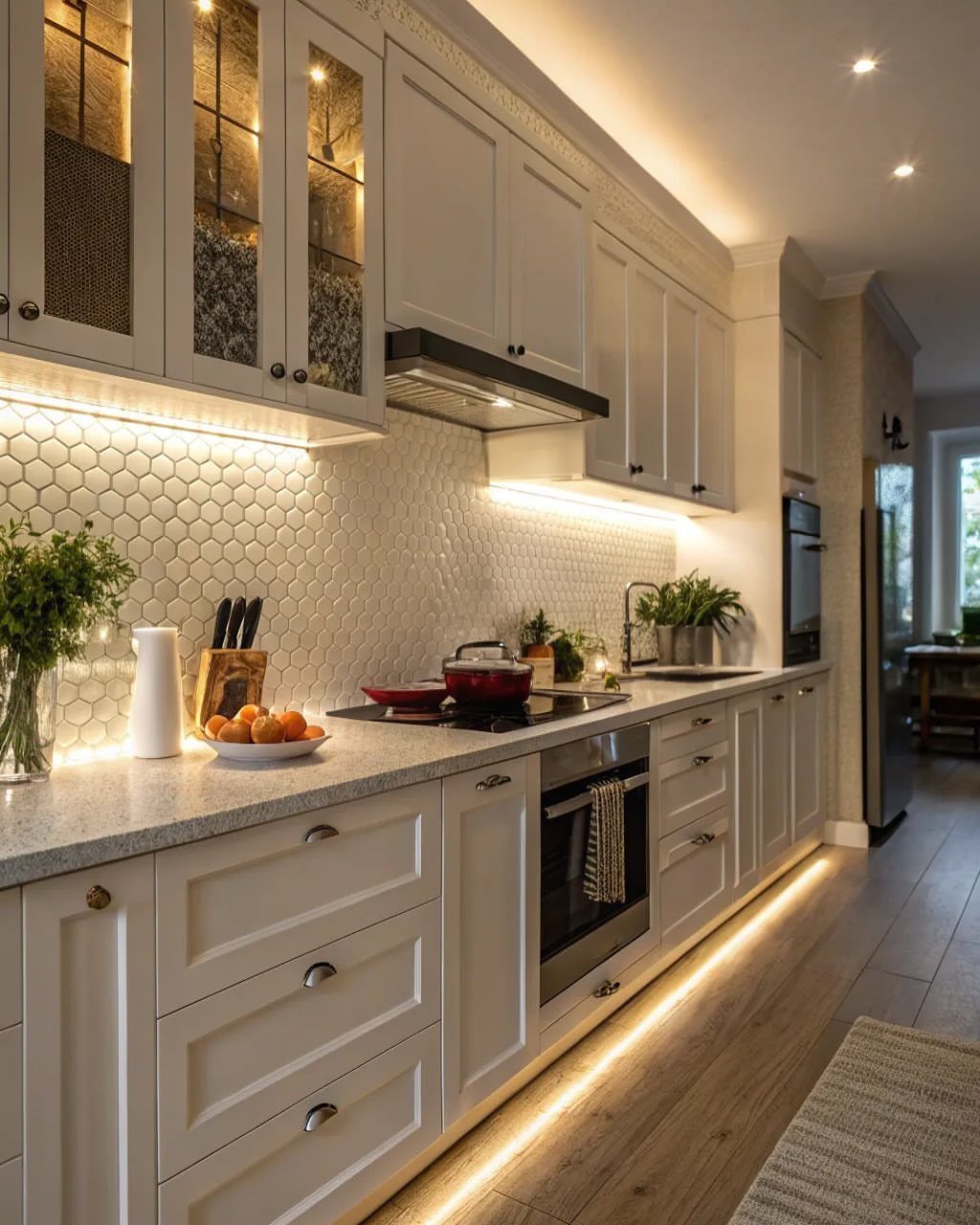
Under the upper cabinets is where a kitchen needs light most: right on the counter where you chop and prep. Without it, your own body casts a shadow over the work.
Ceiling cove lights and toe-kick strips, as in this kitchen, are extras you can add later.
I’d start with the under-cabinet run and see how the room feels before adding more. A white backsplash bounces the light around, so it helps to choose a warm tone you’ll like at night too.
5. Cove Lighting on Artwork
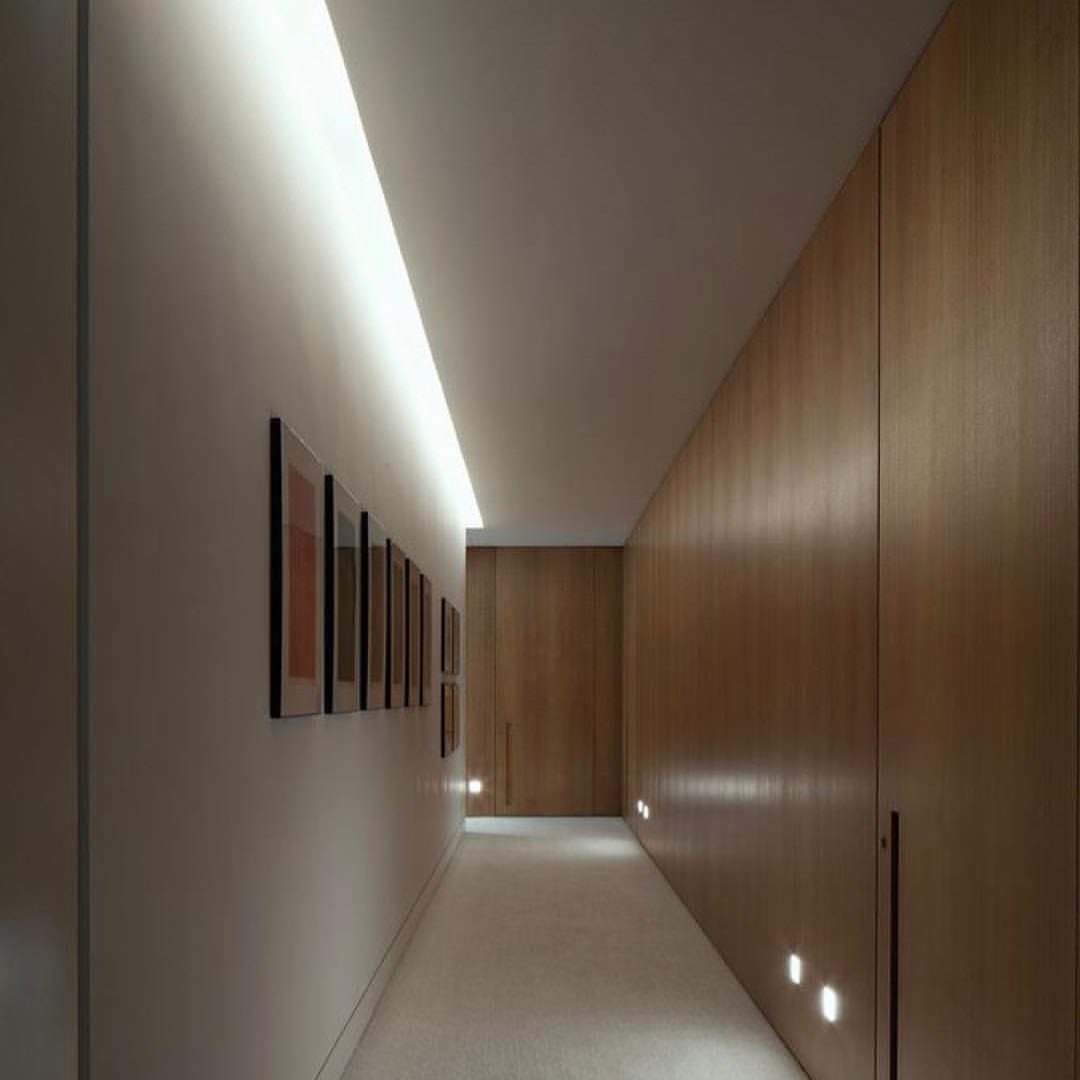
In a narrow hallway, light along the ceiling edge pushes up and across the wall, so framed art gets a gentle wash and the walls seem to step back.
That is why I like cove lighting here more than a row of ceiling fixtures, which can make a tight corridor feel like a runway.
Keep the glow even along the whole run, with no bright hot spots. Small spotlights at the base, as in this hallway, add a second layer, but the cove alone is enough to start.
6. Staircase Cove Lighting
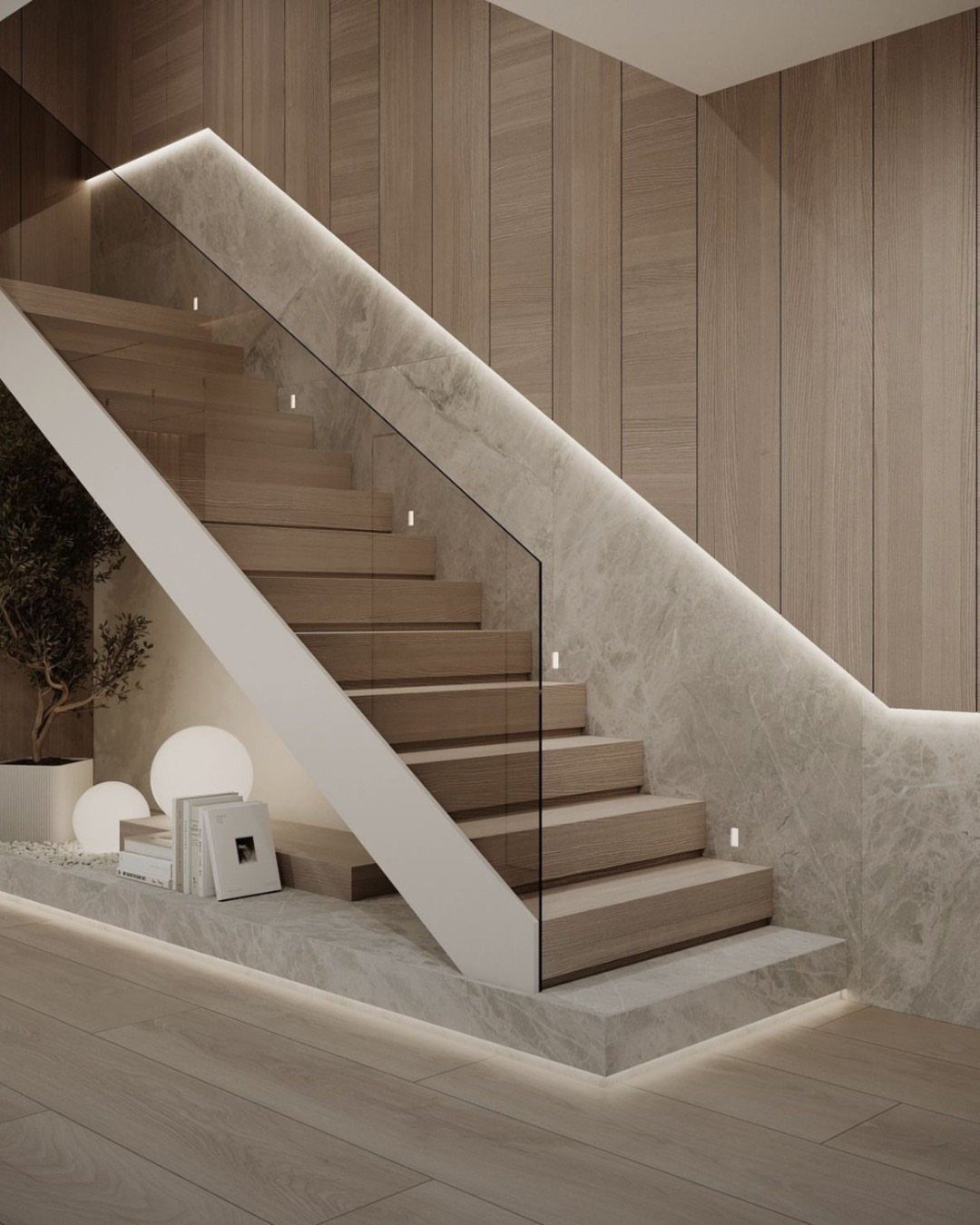
Stairs are one place where soft light does a real job. A low cove along the base or beside the steps keeps each tread visible at night without turning on a harsh overhead light.
Glass railings suit this well, since they don’t block the glow.
I’d run the strip along a hidden edge so only the light shows, never the strip itself. Keep the tone warm and the brightness low; stairs need to be readable, not dazzling.
7. Cove Lighting Behind Base Moulding
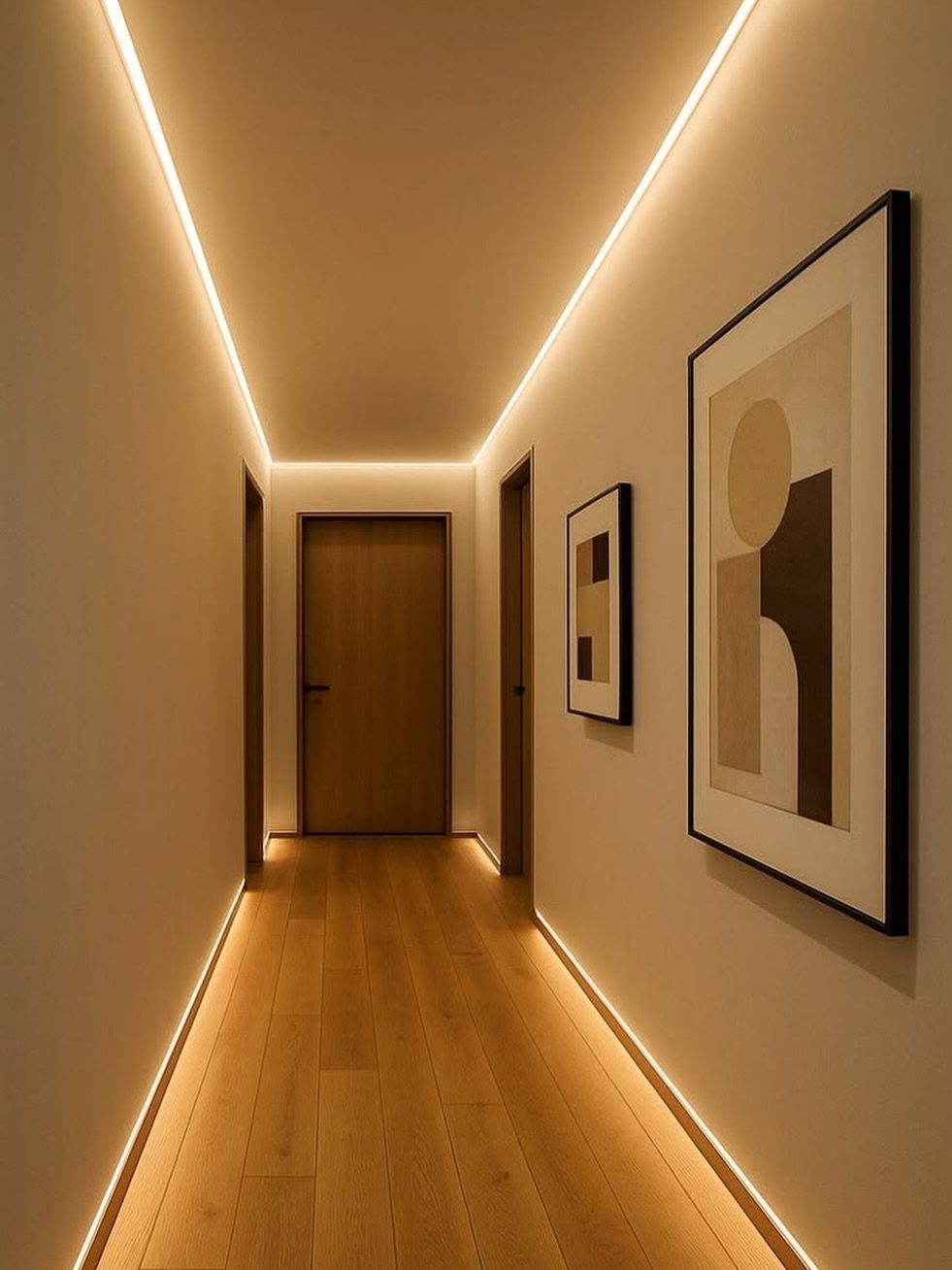
Baseboard lighting turns the floor line into a soft guide, and in a narrow hallway with light wood floors it makes the boards glow without lighting up the whole corridor.
The strip sits recessed behind the moulding, so only a thin wash of warm light spills out along the bottom of the wall.
I’d pair it with a ceiling-edge run, as in this hallway, so the walls are lit from both ends. Choose a warm white and keep the base glow the dimmer of the two.
8. Color-Changing Cove Lights
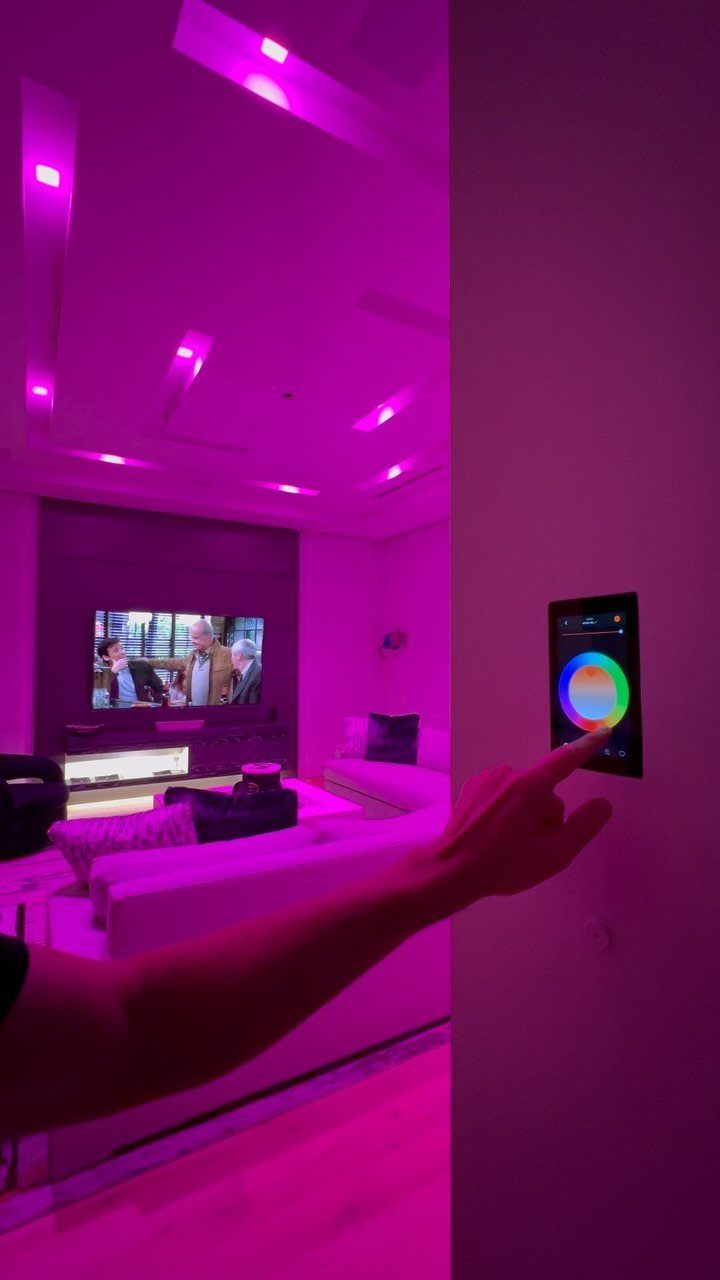
A color wheel on a wall panel lets one set of cove strips handle movie night, a party and a quiet evening, which a single warm white can’t do.
Purple along the ceiling edge, as in this living room, suits a screen-heavy room because it stays low and doesn’t compete with the TV.
I’d choose RGB strips with a wall controller or app, and save white for daily use. Color is the occasional mode; warm white is what you’ll live with most days.
9. Bathroom Ceiling Cove Lighting
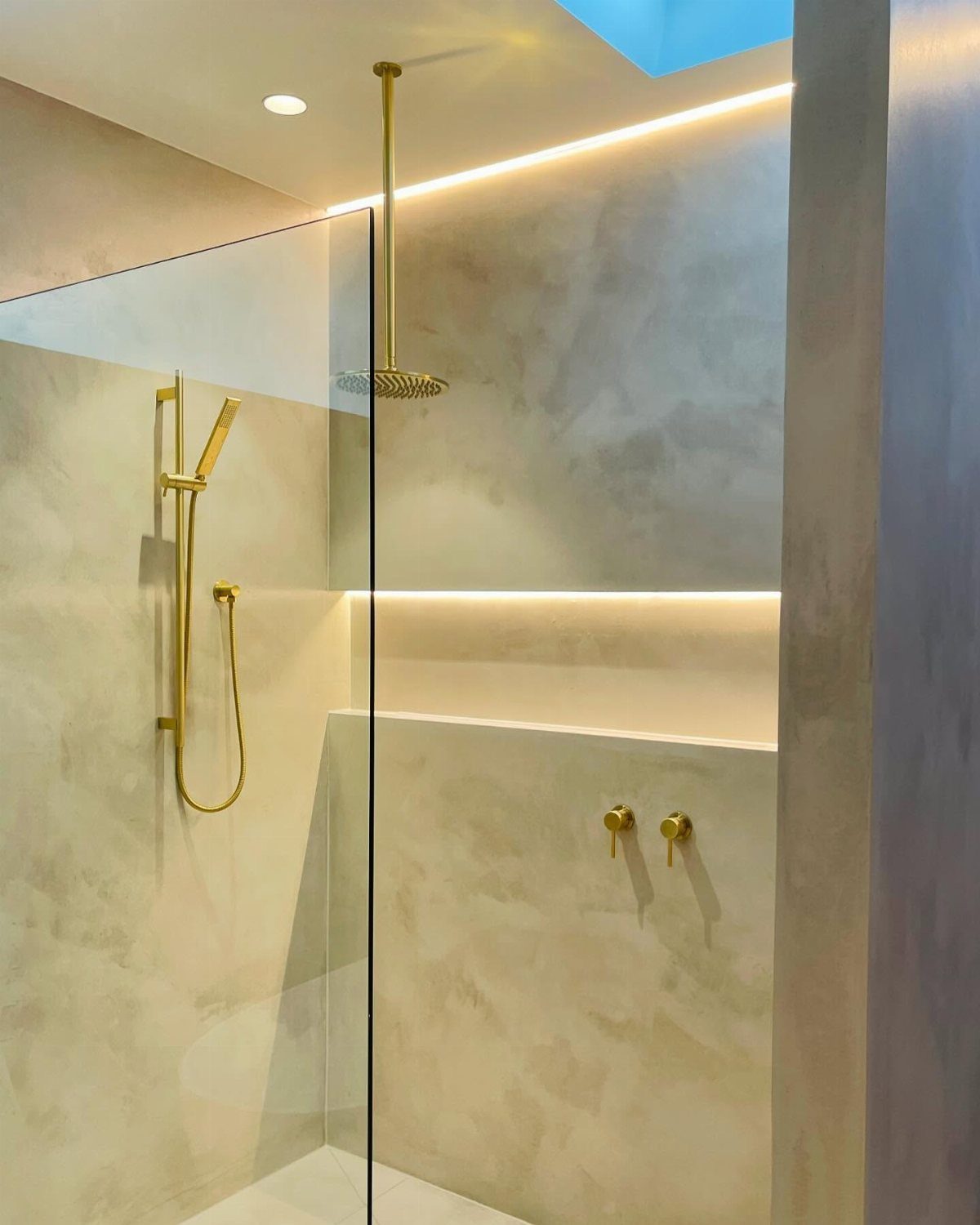
Light tucked around the ceiling perimeter of a shower makes a small, enclosed space feel taller, and a second strip inside a recessed niche turns the shampoo shelf into a glowing accent.
Warm tones flatter textured walls and gold fixtures, which is why I’d avoid cool white here.
Bathrooms are wet, so choose strips and drivers rated for damp or wet locations, and check the rating before buying. Have a licensed electrician handle the wiring.
10. Bathroom Ledge Cove Lighting
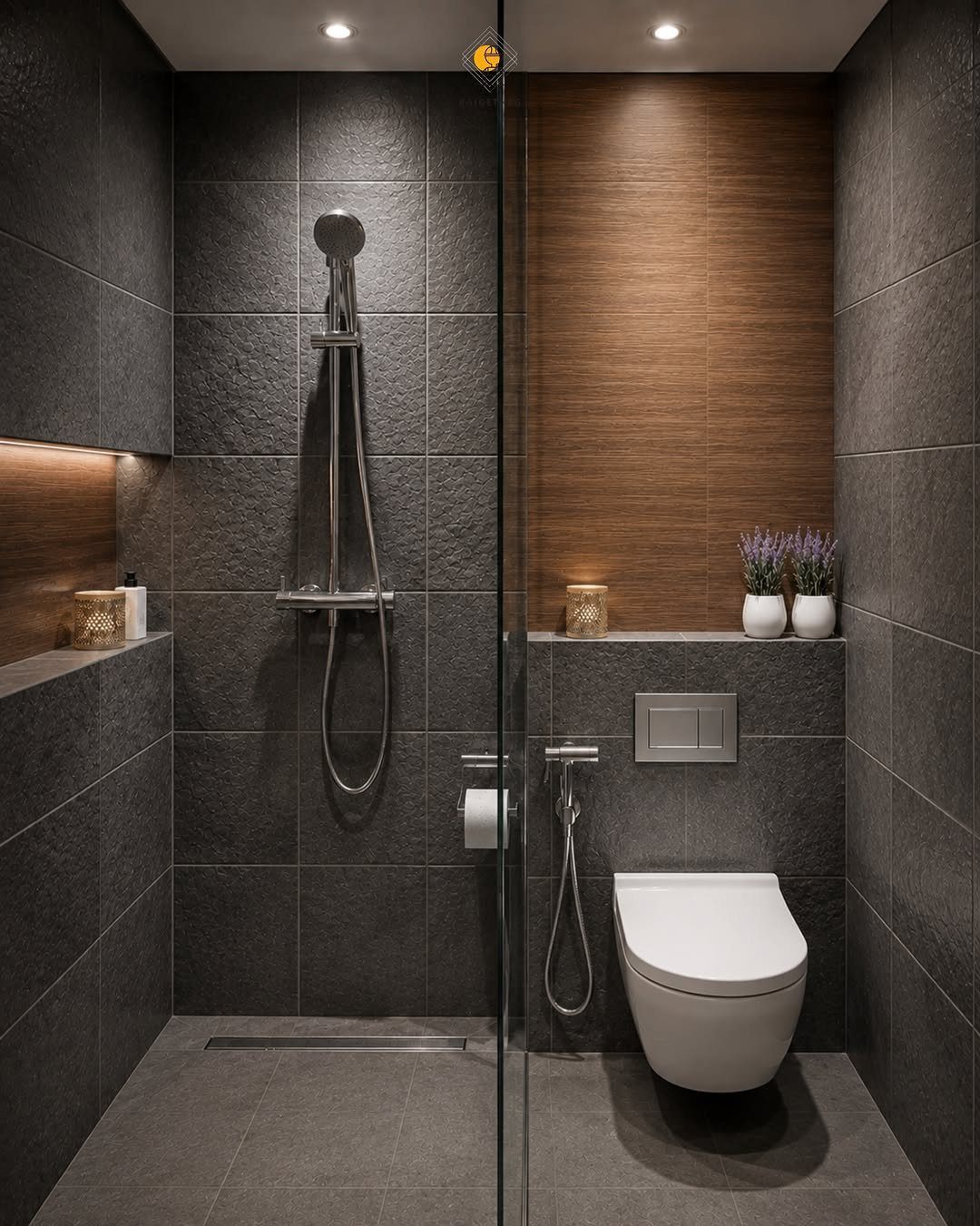
A ledge with light underneath floats the whole thing visually, and against dark grey tile the warm glow reads as depth rather than decoration.
It also doubles as a night light, bright enough to find the toilet without switching on the main fixtures.
I’d keep the strip tight against the underside, set back from the front edge, so you see the glow and never the diodes. Wood paneling beside it picks up the warmth nicely.
Controls and Layered Lighting
Cove light works best as one layer in a plan. Treat it as accent or task lighting, and let a base layer of general illumination, like ceiling fixtures or lamps, handle everyday seeing.
LEDs dim, so each layer can sit at its own brightness. Check that the dimmer, the strip and its driver are made to work together, because a mismatch shows up as flicker or a strip that won’t go low.
Color-temperature control adds another option: cooler white for daytime tasks, warmer as evening comes on.
Many systems also connect to a smart-home app or voice assistant, so you can save scenes like "evening" or "cleaning" and switch a whole room with one command.
If you’re on a tight budget, buy a dimmable strip with a compatible dimmer first. App or voice control can be added once you know how you use the room.
Frequently Asked Questions
What is indirect lighting?
Indirect lighting aims at a surface, usually the ceiling or a wall, and bounces back as soft light rather than shining straight from the fixture.
A strip hidden behind crown molding or on a ledge near the ceiling line is what most people mean by cove lighting; it washes a white ceiling, and the bounce spreads a soft glow around.
With the source out of sight, you get a warm, even wash instead of bright spots.
What are the benefits of cove lighting?
Running indirect light along a room’s edges gives a warm glow, makes a small room look bigger, and adds a clean, modern finish.
It also does practical work: a low run along stairs keeps each step visible at night without a harsh overhead light, and a dimmable strip lets one room handle both movie night and daytime.
Only the light shows; the strip itself stays out of sight behind the lip of the molding.
What types of cove lighting are available?
Fixtures range from spotlights to light strips, and LED strips are the type I’d pick for most coves.
LED strips slip into a shallow ledge or a narrow panel gap, cut energy use by as much as 90% compared with older bulbs, and typically go about 10 years before they need swapping.
No matter which type you buy, keep the strip hidden behind the molding or ledge so only the glow shows and the individual diodes never do.
How do I make indirect cove lighting?
Tuck an LED strip behind crown molding, a ledge, or a lip so it aims up at a white ceiling and the light bounces back down.
A warm white strip, around 2700–3000K, looks better than a cool one, and white paint on both the molding and the ceiling gives the cleanest bounce.
Set the strip back far enough that the diodes can’t be seen from where you stand or sit, and buy a dimmer rated for that strip and its driver, because mismatched parts flicker.