
I’ve revived my weather-beaten wrought iron through three moves and one disastrous thunderstorm.
First, strip cushions and brush out debris hiding in joints.
Then, hose everything down on low pressure, letting water loosen the grime.
Next, scrub with warm, soapy water and a soft brush using gentle circles without excessive pressure.
Dry thoroughly, flip pieces over, and inspect for rust while you’re at it.
Finally, touch up chips and seal with metal-appropriate wax.
Five steps will restore your patio furniture to like-new condition at a fraction of replacement cost.
Remove Cushions and Debris From Metal Furniture
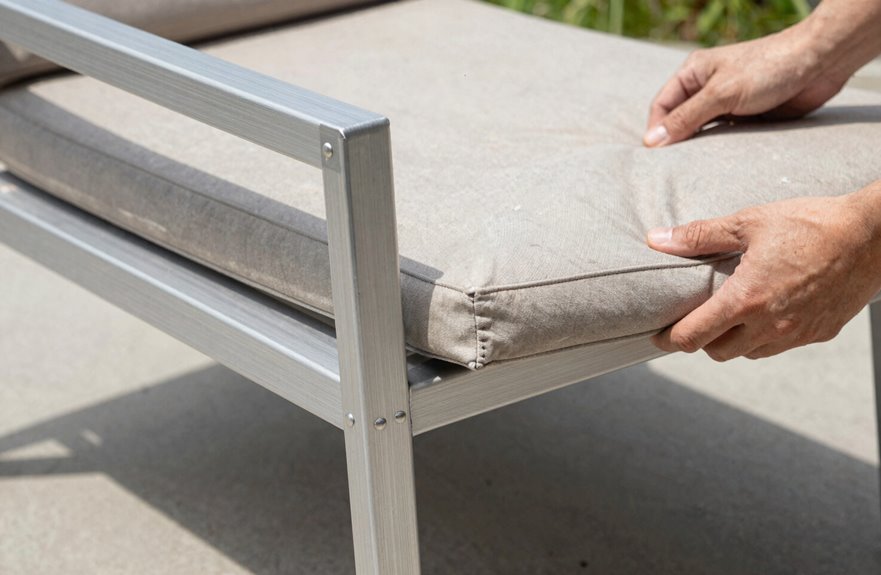
Where do I even start with a patio set that’s been braving the elements since last Memorial Day? I’m staring at pollen-caked cushions and wondering how it got this bad.
I’m beginning by removing cushions, yes, all of them, even that one I “forgot” about last fall. Debris removal comes next, and I’m talking leaves wedged in places I didn’t know existed. For outdoor cleaning that actually works, I’m grabbing my soft brush for stubborn bits clinging to joints and hollow sections where spiders have definitely been plotting.
Here’s my approach: skip the soapy water for now, we’re just prepping. I’ll rinse frame surfaces gently; no pressure washer needed yet. I’ve learned the hard way that high pressure can damage finishes. Finally, I’m patting everything with a microfiber cloth, especially those sneaky metal furniture crevices, before we dive deeper. This preparation removes loose debris and moisture that could interfere with deeper cleaning steps.
Rinse Gently With a Garden Hose on Low Pressure
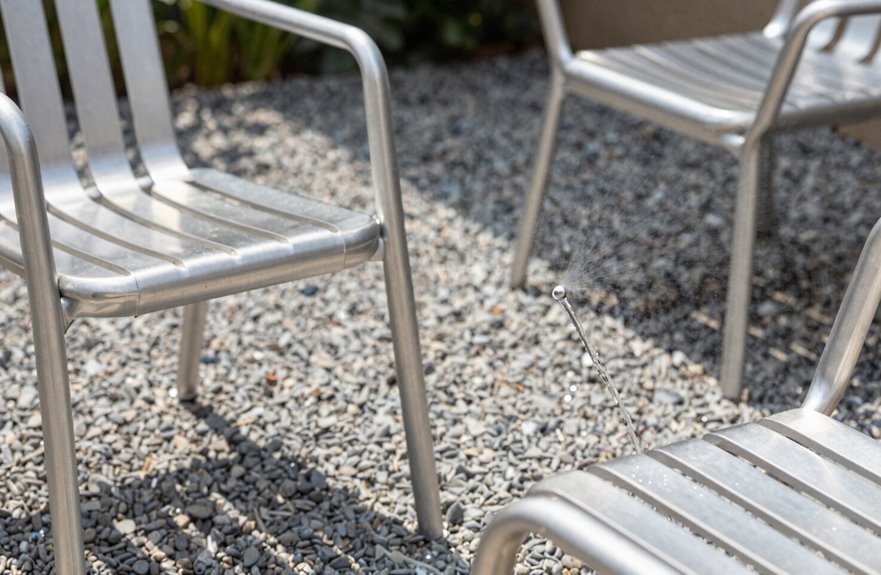
- Sweep the nozzle slowly, letting water loosen dirt and pollen without force
- Angle into crevices where leaves love to hide
- Stop when grime lifts easily; don’t oversaturate joints
This gentle rinse preps everything for the next cleaning steps. No soap yet, no soft-bristled brush, just patient water doing the work. Water pressure on low setting removes surface debris effectively without forcing moisture into sensitive areas.
Scrub Metal Surfaces With Dish Soap and Soft Brush
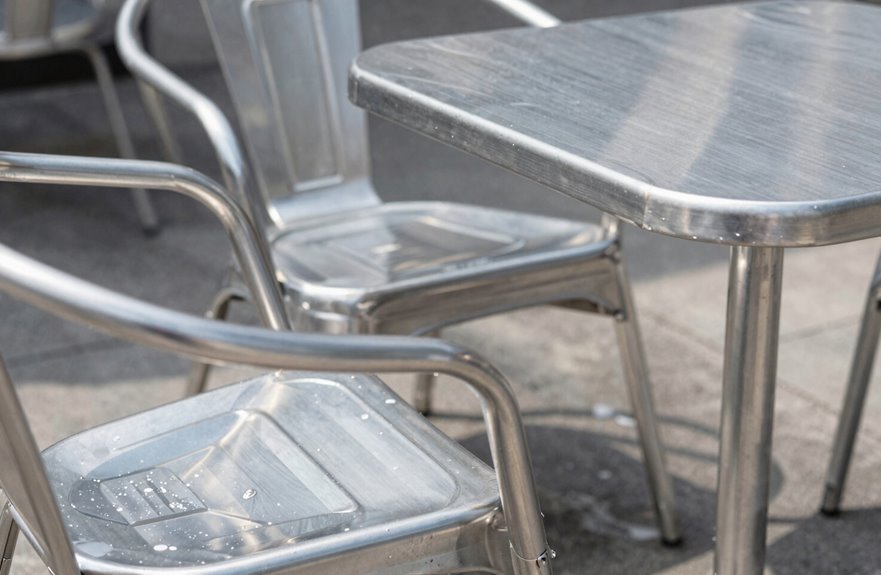
The moment I’ve been waiting for involves actual scrubbing. I grab my soft-bristle brush, swirl it into warm water with a few drops of dish soap, and get to work on the metal furniture. This routine cleaning keeps my powder-coated finish in good condition, with no scratches or damage. I scrub in gentle circles, watching the grime lift away. Elbow grease helps accelerate the process. For stubborn spots, patience beats pressure every time. Then I rinse thoroughly, sending suds streaming down the legs. I reach for my microfiber cloth, patting everything with care. Drying completely matters because water tends to linger in hidden spots, which can cause damage over time. This simple routine makes outdoor spaces look and feel better maintained.
Dry Completely and Inspect for Rust or Chips
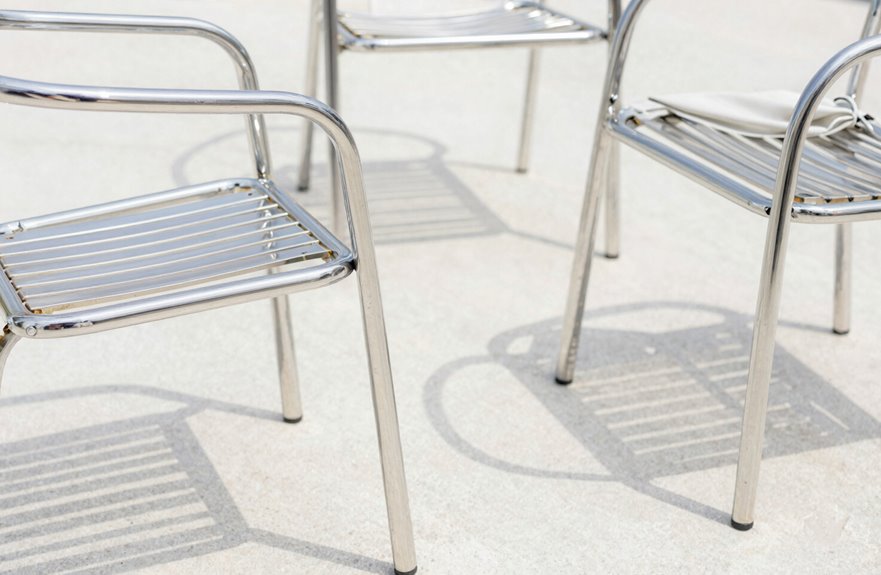
Once I’ve rinsed away every last bubble, drying is where rust prevention succeeds or fails.
Drying isn’t just a final step—it’s the make-or-break moment for keeping rust at bay.
Here’s how I tackle this critical phase:
- Grab a dry microfiber cloth and attack every joint, hollow section, and sneaky crevice where water loves to hide.
- Flip that metal outdoor furniture upside down; the underside needs attention or you’ll find chips you never knew existed.
- For wrought iron pieces, I extend drying time, then inspect for rust or chips before any touch-ups.
This inspection during drying is essential. Proper drying prevents rust and corrosion from developing under the surface.
Fix Damage and Apply Metal-Specific Protective Wax
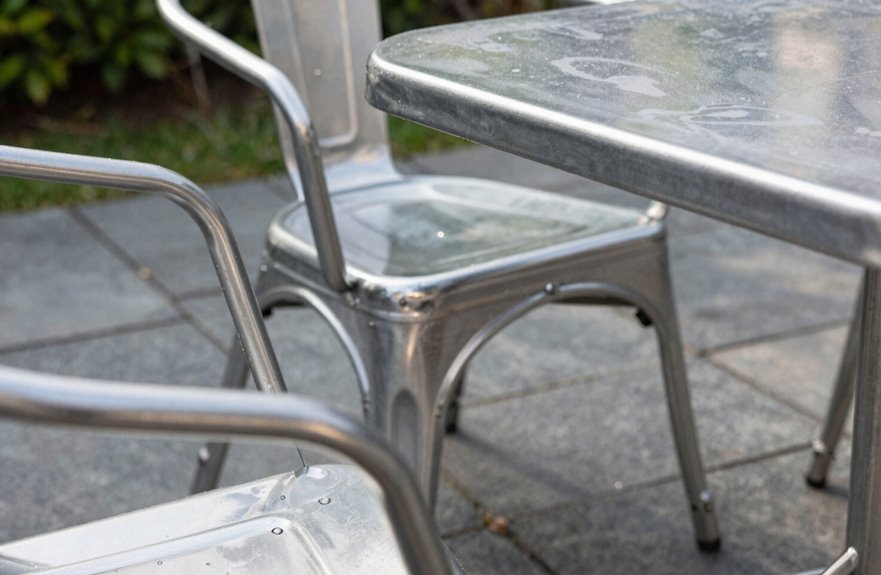
I spot a chip near the leg joint—a classic rust trap—and address it within ten minutes using primer and touch-up paint. This prevents spreading patches and protects the furniture from further corrosion. For aluminum and stainless steel pieces, I skip compound waxes, which can be too harsh. Instead, I apply a thin, even protective coating.
Metal furniture requires consistent seasonal maintenance. Applying protective wax before season’s end prevents oxidation and extends the lifespan of your pieces.