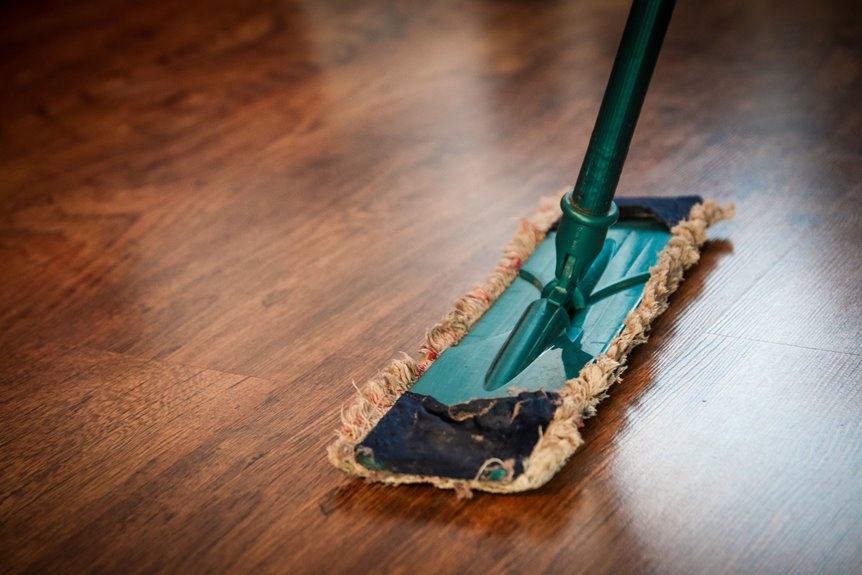
I’ve learned cork floors demand restraint, not elbow grease. I sweep daily with a soft broom since gritty kitchen particles act like sandpaper. Then I damp-mop weekly with a pH-balanced cleaner, wringing until barely moist. Never let water pool; I ruined my first corner that way. Skip vinegar, bleach, and steam cleaners entirely as they’ll dull your honey finish quickly. I spot-clean spills immediately, add felt pads under furniture, and watch for water beading to know when resealing is due.
Sweep or Vacuum Cork Floors Daily to Remove Grit
Where do I even start with cork floors. Right here, with the daily maintenance we all face.
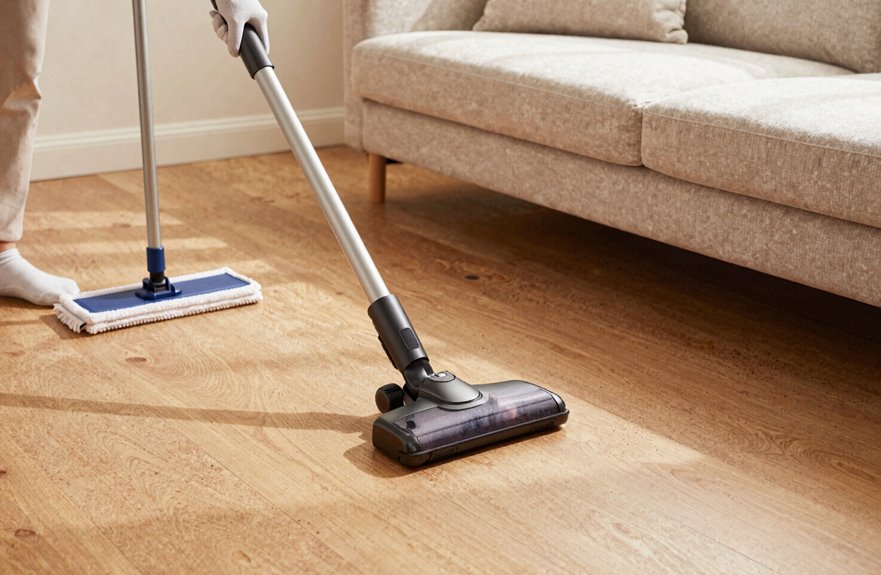
I grab my soft-bristle broom every single morning because grit doesn’t sleep, and neither should your maintenance routine when protecting your investment. That crunchy debris is like sandpaper in sneakers, slowly damaging the finish you’ve worked hard to maintain.
I learned the hard way about vacuum attachments. Beater bars cause pure destruction disguised as cleaning. Now I use only the soft vacuum attachment, gliding gently across high-traffic zones near the kitchen island and entryway doors.
I’ve seen the dull, scratched aftermath of neglect. Five minutes of sweeping prevents years of damage. Daily sweeping removes grit before it can scratch and dull your cork surface.
Damp Mop Weekly With a Cork-Safe Cleaner
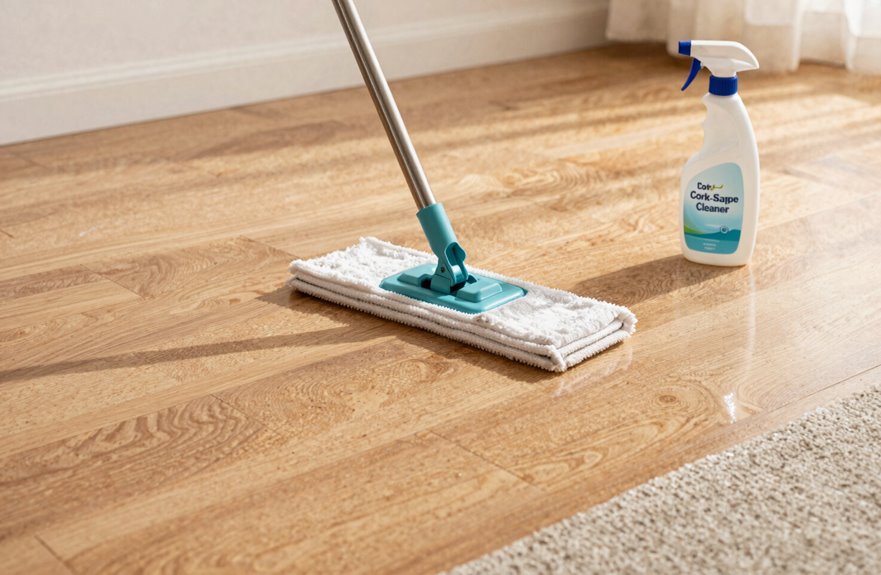
I mop on top of my weekly routine, and it’s the deep breath my floors and I need.
Here’s how to do this:
- Grab that microfiber damp mop, wring it till it’s barely moist, and lightly charge it with cork-safe cleaner. Think dew on grass, not puddle in driveway.
- Test your cleaner on a hidden corner first. Finishes can react negatively when improper cleaners are applied.
- Skip the scrubbing. Use no abrasive pads, just gentle glides, then dry immediately or let air flow work its magic.
This weekly rhythm keeps cork floors in good condition without excessive water exposure. Your floors will benefit, and your future self will appreciate the maintenance.
Control Moisture: Never Let Water Pool on Cork Surfaces
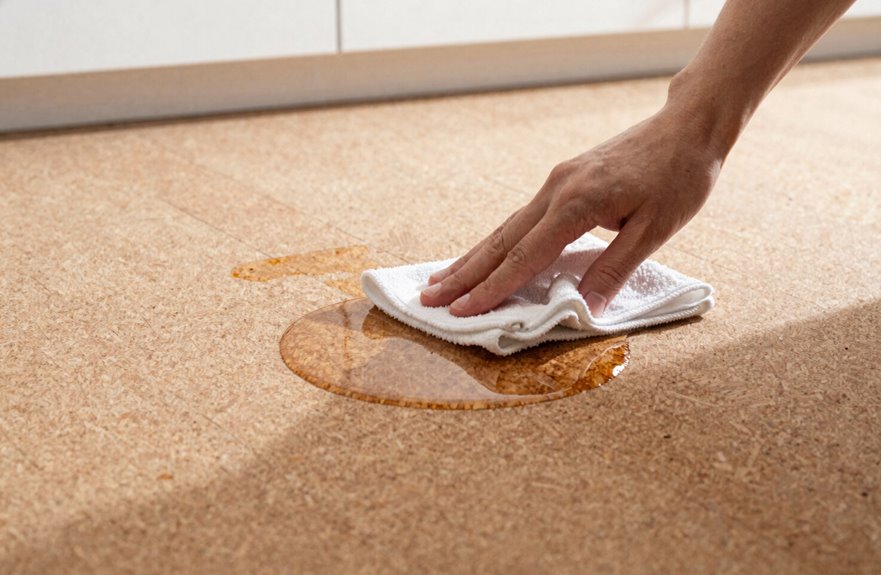
That damp mop routine keeps things tidy. I once left a puddle near the baseboards and learned that cork swells and warps when exposed to pooled water. Water seeps into seams and damages the material. Now I wring my mop until it’s just damp, with no pooling allowed. For spills, I wipe them immediately with a cloth since moisture can penetrate cork’s finish. After mopping, I dry the surface with a towel or open a window to allow air circulation. Weekly cleaning requires a damp mop, not a drenched one, using only pH-balanced cleaner. Wet cork bubbles and warps, which requires costly replacement. Dry cork maintains its integrity and keeps spaces looking their best.
Skip Vinegar, Bleach, and Steam Cleaners on Cork

Because I learned the hard way, vinegar, bleach, and steam cleaners damage cork floors. I once grabbed vinegar thinking it was safe, and my honey-toned planks turned cloudy.
I learned the hard way: vinegar, bleach, and steam cleaners damage cork floors.
Here’s what these products do to your cork floors:
- Vinegar – That acidic punch dulls your protective coating, slowly degrading sealants until moisture sneaks in like an unwelcome guest.
- Steam cleaners – Pumping excessive heat and moisture straight into porous cork causes swelling, warping, and permanent damage.
- Bleach – Strong chemicals break down finishes, leaving patchy discoloration and uneven wear.
For cleaning that actually protects your floors, use a pH-balanced cleaner with a well-wrung mop only.
Spot-Clean Spills Immediately to Prevent Stains
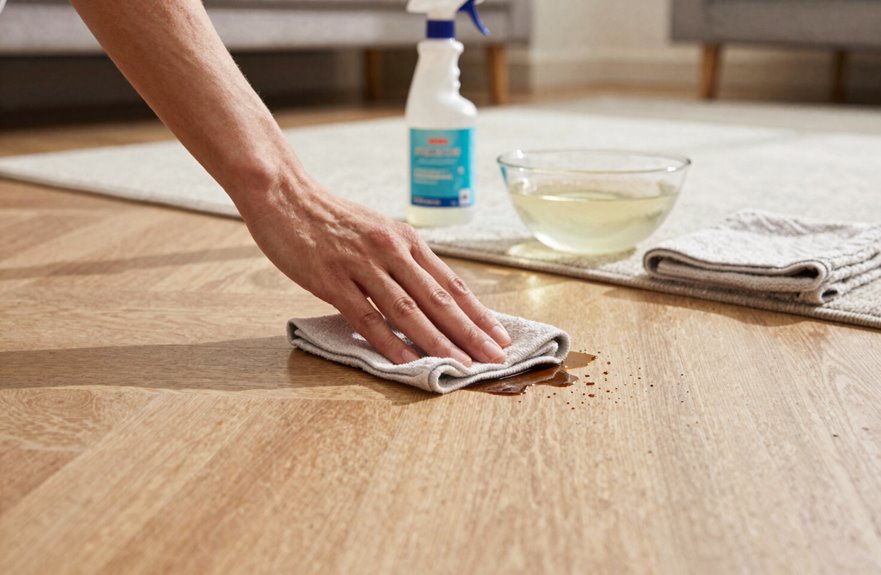
How fast can a spilled glass of red wine ruin your gorgeous cork floor? Very quickly. I keep soft cloths handy, because when a spill happens, you’ve got seconds before that cork floor starts soaking up trouble.
| Spill Type | My Go-To Move | Why It Works |
|---|---|---|
| Fresh coffee | Blot, don’t rub! | Lifts liquid without scratching |
| Dried juice | Dampen first, then gentle scrub | Softens stubborn spots safely |
| Oily salad dressing | pH-neutral cleaner + microfiber | Cuts grease without damage |
| Muddy paw prints | Quick wipe with approved solution | Prevents ground-in dirt |
| Sticky mystery | Soft nylon pad + patience | Saves your finish and sanity |
I never soak my cork floor. Just damp, like a wrung-out sponge, works perfectly. Quick action prevents permanent staining and maintains your floor’s appearance.
Test Any New Cleaner on a Hidden Corner First
- Pick a hidden spot, like behind a door or under furniture, and dab on a tiny amount of pH-balanced, cork-safe cleaner.
- Wait and watch while checking for discoloration, residue, or dulling as it dries.
- If it passes, clean the rest of the surface. Write down that brand and concentration for future reference so you know what works.
Add Felt Pads to Furniture and Mats at Entries
Once I know my cleaner won’t wreck the floor, I move to accessorizing. I grab soft felt pads for every chair leg, table base, and ottoman foot in my house. Heavy pieces, the ones I drag around when I’m rearranging for game night, get premium wool pads, thick and plush, because rubber bottoms stain cork. At my front door, I lay down walk-off mats, big and chunky, to catch mud, grit, and whatever my boots tracked through puddles. I slide breathable rug pads underneath so moisture doesn’t stew and rot the finish. Check your pads twice yearly. Mine wear thin faster than my jeans, and I’m always replacing them. Protecting what you love requires these small maintenance steps.
Why Humidity Matters for Cleaning Day Results
I learned the hard way that my cork floor requires consistent humidity control. Maintaining humidity between 30% and 60% year-round keeps your floor from expanding, contracting, or warping during cleaning day. I grab my hygrometer, check the numbers, and adjust with humidifiers or dehumidifiers when needed. No fancy gadgets required, just consistency.
Here’s what I’ve nailed down:
- Monitor constantly — that hygrometer is essential
- Mop smart — damp, never soaking, because excess moisture swells cork into a wavy surface
- Think whole-house — bigger systems mean steadier control and fewer surprises
Skip those harsh environments and rapid shifts. Your finish stays protected, and your floors remain stable.
Know When Your Seal Needs Refreshing, Not Just Cleaning
I’ve learned that cleaning only gets you so far when your seal’s worn thin. Mine started absorbing water spots like a thirsty sponge, and suddenly I was scrubbing twice as hard for half the shine. You’ll know it’s time when the finish looks tired, feels rough under bare feet, or stops beading water entirely. That’s when your floor needs re-sealing. Re-sealing isn’t a chore; it’s a reset button. Catching it early means you’ll spend less time fighting your floors and more time actually enjoying them.
Signs of Wear
When should you stop scrubbing and start sealing? If you’re staring at your cork floor wondering whether something’s actually wrong, watch for these key indicators of seal wear.
- Dull spots that won’t buff out – When high-traffic areas look matte and lifeless no matter how much you clean, the seal has worn away.
- Stains that sink in immediately – Red wine, pet accidents, anything that leaves a shadow instead of wiping clean indicates your seal has become porous.
- Water that beads, then doesn’t – If water drops once danced on your floor but now soak right in, your seal requires reapplication.
These signs indicate your floor needs resealing before permanent damage occurs.
Re-Sealing Timing
How often do I actually need to reseal this thing? I used to guess, but now I watch my floors carefully. When my cork starts dulling or I spot those tiny micro-scratches catching afternoon light, I know sealing time has arrived. It’s not just cleaning anymore; it’s protection.
I’ve learned that sealing frequency makes or breaks my maintenance routine. Re-seal more often, and suddenly I’m not scrubbing intensively every weekend. I write down my last sealing date now because older seals require gentler cleaners, or I’ll expose that porous cork underneath.
I schedule resealing as preventive maintenance, catching wear before grime digs in. Proper sealing fights moisture and dirt buildup, meaning less aggressive cleaning later. Regular sealing protects your floor and extends the time between deep cleanings.
What Cleaning Mistakes Ruin Cork Floors?
I’ve made some cork floor mistakes that still haunt me. In my early “more is better” cleaning era, I attacked my kitchen floor with a steam mop and watched in horror as the seams gapped. Now I’m obsessed with what not to do, because a panicked Google search at 11 PM taught me that common damaging products and excessive moisture errors can wreck your beautiful cork faster than you’d think. Let’s talk about the sneaky saboteurs lurking in your cleaning closet.
Common Damaging Products
A few years back, I learned the hard way that my “miracle” all-purpose cleaner was basically kryptonite for my cork kitchen floor. One enthusiastic mopping session later, and that warm honey finish looked like I’d scrubbed it with steel wool and regret.
Cork floors require protection from these damaging products:
- Harsh cleaners like ammonia, bleach, and mineral spirits strip the protective seal quickly.
- Vinegar solutions are tempting but wrong; that acidity dulls the finish and leaves your floor looking permanently damaged.
- Wax and oil-based products trap dirt, building gunky residue that becomes difficult to remove.
Avoid abrasive scrubbers as well. They damage cork surfaces and should not be used on these floors.
Excessive Moisture Errors
Because I once left a dripping mop bucket in the corner of my cork-floored office, I now know exactly what warped edges and a bubbled finish look like up close. It’s not the “rustic chic” vibe anyone’s going for. Excessive moisture is cork’s primary vulnerability. You can’t wet-mop and walk away like you’re cleaning tile. Standing water sneaks into seams, compromises the seal, and suddenly moisture intrusion turns your gorgeous floor into a warped, bubbled surface. I wring my microfiber mop until it’s barely damp now; think “dewy,” not “drenched.” Too much cleaner leaves gunky residue anyway, dulling that warm, natural glow. Cork floors require careful moisture management to maintain their appearance and integrity.