I’ve pulled soaked carpet back at 2 AM while my washing machine hose gushed like a busted fire hydrant, so speed matters. First, I cut power and stop that water source fast, because electricity and water don’t mix well together. Then I grab my wet-dry vac, rent one if I’m empty-handed, and attack those giant puddles until the tank runs silent. I peel back corners and press the padding with my palm. If it’s soggy, that padding needs to be removed. I fling open windows, crank every fan I’ve got, and haul out soggy furniture before my couch becomes a mold factory. Steam cleaning comes next for that musty smell, and sometimes I call the pros when my living room turns into Atlantis. Their gear is more effective than handling it alone. I’ll walk you through exactly how I survived the swamp without losing my security deposit.
Cut Power and Stop the Water Source

Where do you even start when your carpet’s basically become a swimming pool? I’ve been there, panicking, and the first thing you do is stop the water source; find that leak, twist that valve, cap that hose. If you can’t stop it instantly, cut power to the room, because water and electricity is a dangerous combination nobody wants to experience.
I learned this the hard way when my washing machine hose burst at 2 AM. I’m stumbling around, grabbing lamps, yanking plugs. Total chaos. Once you’ve got the source controlled, you’re setting yourself up for successful extraction later. Get that wet-dry vacuum ready, because quick action means less saturation, less damage, and fewer repairs needed. Start immediately.
Extract Water From the Carpet With a Wet-Dry Vac

The wet-dry vacuum is an essential tool for water removal. Use it the second you spot standing water. Extract water quickly and empty the tank constantly to prevent motor damage. If you don’t have a wet-dry vac, consider renting one from a hardware store.
For small floods, press towels down firmly first. Squeeze and repeat, then vacuum. This moisture removal phase is critical for proper carpet drying. Make slow, deliberate passes and watch the murky water rise in the hose. Continue until the tank remains silent with no gurgling sounds.
Thorough extraction prevents mold growth and reduces drying time significantly.
Pull Back Carpet and Check the Padding
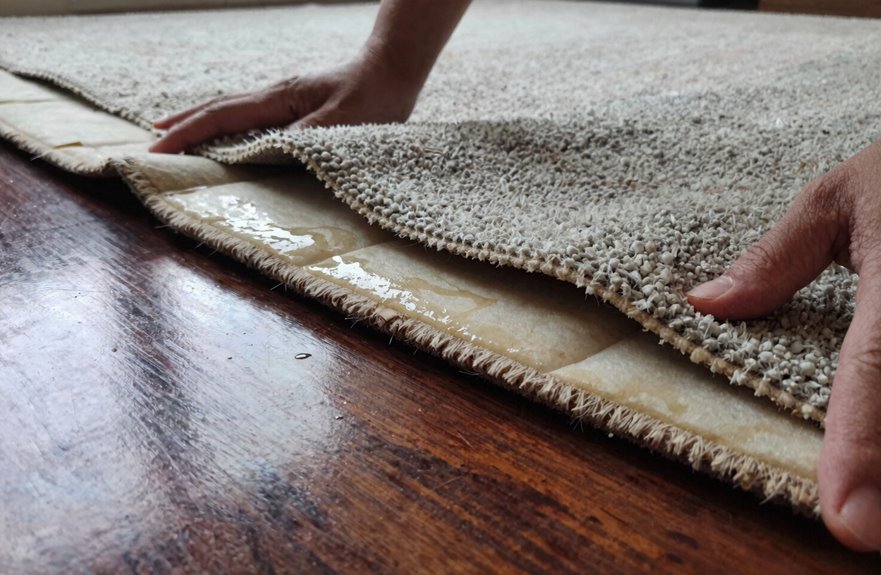
Once you’ve sucked up every drop you can see, it’s time to get invasive. After a “minor” kitchen flood turned my living room into a swampy science experiment, I learned this the hard way. I grab my work gloves, find the carpet edge near the wall, and pull it back from those sharp tack strips, careful since they’re sneaky little finger-biters. Now I’m staring at the padding, and the carpet padding moisture situation is real. I press my palm down. Yep, squishy. Bad sign. I inspect padding with care, sniffing for musty funk, hunting mold growth, watching for swelling or deterioration. That damp carpet is lying to you, friend. Water damage restoration pros know what I’m about to do: roll this carpet back gently, no tearing, no spreading the swamp, and accept the truth that saturated padding needs replacement. It hoards bacteria, stinks forever, and won’t respond to DIY solutions.
Move Furniture and Clear the Room

I’ll clear this room by moving everything out—couches, that garage sale side table, even the laundry basket in the corner. Once I’ve relocated it all safely, I’ll expose every inch of carpet so fans can blast moisture like they’re drying a fresh manicure. Full access means no obstructions and no excuses, just the ability to save this floor.
Clear Room Completely
Where do you even start when everything’s sopping wet? I’ve been there, staring at my wet carpet like it’s personally betrayed me. First, I clear room by room, dragging out every water-damaged chair, soggy box, and that decorative basket I definitely didn’t need. Leaving wet stuff behind invites mold, and nobody wants that guest.
I toss rugs and towels to dry spots, because re-wetting is the ultimate rookie move I’m not repeating. Then I pull back what’s left, exposing every damp inch so I can remove water properly. The secret to faster drying is airflow. I position fans and dehumidifiers like I’m designing some chaotic wind tunnel. The drying process works faster when nothing blocks that circulation.
Your future self will appreciate the effort you put in now.
Relocate Furniture Safely
When I can’t haul pieces far, I slide foil-wrapped blocks under legs. This is cheap, effective, and creates air circulation underneath. I once stacked my vintage chair on paint cans, felt ridiculous, but saved the hardwood.
For cross-contamination prevention, move salvageable items to dry zones as soon as possible. Wet furniture breeds mold quickly. Protect your eclectic finds by keeping them dry.
Expose Carpet Fully
The first thing I do after that foil-wrapped furniture rescue is shove every last thing out of that room, and I mean everything. I’m talking lamps, dog beds, that weird ceramic frog collection you inherited, all of it. For proper water extraction, I need exposed carpet with no exceptions. I haul out small rugs, mats, anything blocking my path. Carpet removal of these layers isn’t optional; it’s survival. I snap photos of soaked stuff, which documents the damage for insurance claims, then carve a clear runway for hoses and drying equipment. Moisture control means no obstacles, period. I’ve tripped over a stray shoe and learned my lesson. Now I flag damaged items, clear the perimeter, and let those fans breathe. Your eclectic treasures deserve better than mold. Proper preparation prevents costly secondary damage from mold growth and structural deterioration.
Dry the Carpet Fast With Fans and Dehumidifiers
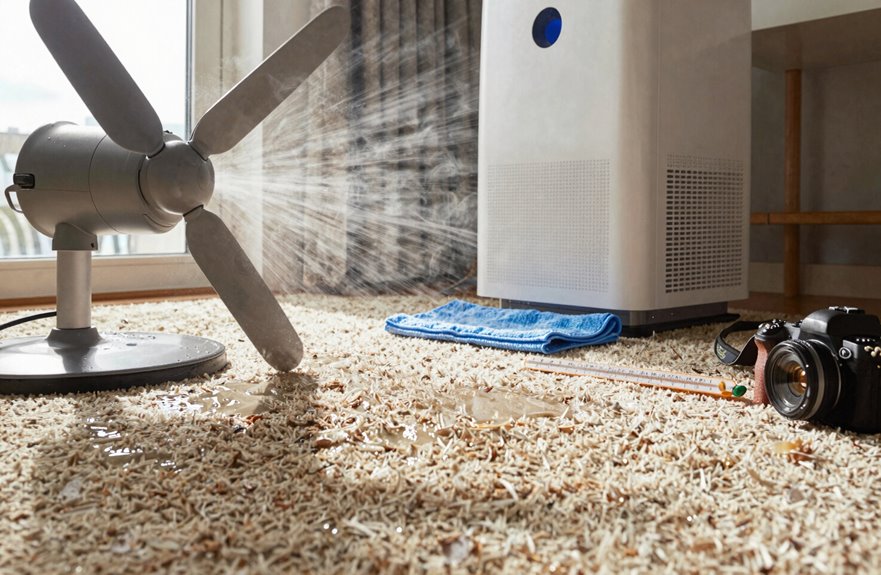
My first time dealing with a soaked carpet, I panicked and just stared at it, like maybe if I glared hard enough the water would evaporate out of sheer intimidation. It didn’t. I’ve learned since that fans are your best friends here. I grab every fan I own, point them across that wet carpet like I’m directing a wind symphony, and let them rip. High-powered ones, centrifugal or axial, work fastest; they’re the muscle cars of moisture removal. Then I park a dehumidifier right in the center, running it nonstop, because pulling water from the air speeds everything up. I crack windows only when it’s drier outside than in, since there’s no point fighting myself. Check the padding too. If it’s soaked through, swap it. This prevents mold growth.
Steam Clean to Remove Mold and Musty Smells
Once that carpet’s dry enough to walk on without squelching, attack whatever funk survived the flood. Steam cleaning works as an effective solution here. Those scorching temperatures obliterate mold spores and toxins hiding deep in fibers. Rent a machine or call a pro, as long as you’re deodorizing every last inch. The steam lifts residual gunk that the wet-dry vacuum couldn’t reach earlier. Afterward, attack drying with urgency. Extract every drop with the wet-dry vacuum again, because damp carpet allows mold to return. Pair with odor-neutralizers if mustiness lingers.
When to Call a Pro for Water-Damaged Carpet
I’ve learned the hard way that spotting fuzzy green patches creeping along baseboards or that telltale wet-dog smell that just won’t quit means I’m already behind the curve on mold. That’s when I call the professionals. When my basement turned into a wading pool last spring, I thought I could shop-vac my way to victory, but standing water warps subflooring like a funhouse mirror. You don’t want to discover your padding’s become a sponge colony the size of a small mattress. I encourage you to tackle small water damage issues, but when black spots bloom or the flooding exceeds a puddle, it’s time to call in professionals with their moisture meters and industrial equipment.
Mold Growth Signs
How quickly can a soggy carpet turn into a full-blown mold factory? Faster than expected. Within 24 to 48 hours in warm, dark corners where wet-dry vacuums can’t reach deep into the material, trouble starts.
Saturated carpet isn’t just surface-deep. The squishy pad underneath is a mold growth incubator. When a musty, basement-after-a-storm smell lingers after supposedly drying everything, padding replacement becomes necessary rather than optional.
If moisture lurks behind walls or under that pad where it cannot be seen, professional remediation prevents the living room from becoming a biohazard zone. Some situations require professional intervention rather than DIY approaches.
Extensive Flooding Damage
Mold behind the baseboards is one nightmare, but walking into your living room and finding it looks like an indoor swimming pool signals when I’ve hit my DIY limit.
I grab a wet-dry vacuum, renting one if I’m empty-handed, and attack those giant puddles first. Water extraction is my mission, but flooding often overwhelms my little machine. I fling open windows, crank fans, and haul out soggy furniture fast because that couch becomes a mold factory.
For carpet drying, I peel back corners and check for padding damage. That squishy layer underneath is typically ruined, especially if greywater is involved.
When my living room becomes essentially Atlantis, I call professional restoration. They have gear I don’t possess, and my sanity is worth the investment.