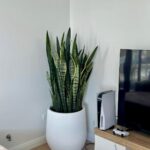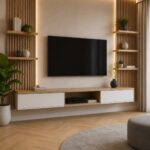

Game rooms run from about $1,000 to well over $20,000, but floor space decides which idea fits before money does.
A pool table needs at least 13′ × 16′ so you can extend the cue fully. In a smaller room, foosball (9′ × 8′) or air hockey (11′ × 8′) is the better pick.
1. Choose a Theme and Palette
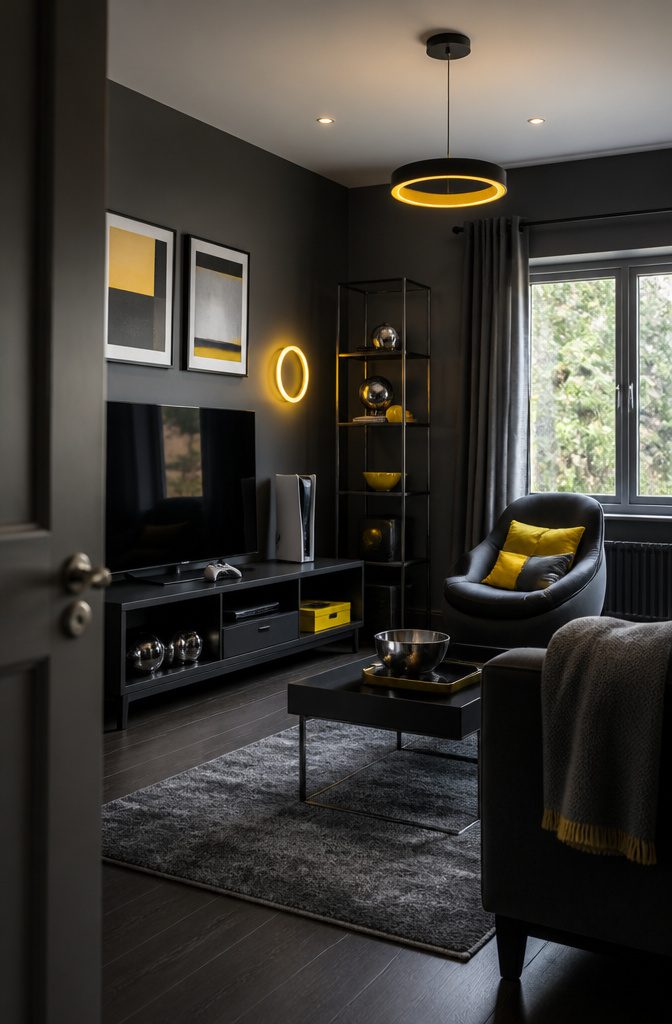
Retro, modern, rustic, sci-fi, sports, movie or fandom: any of them works, but the palette is what makes the room look planned.
Use a 60/30/10 split: one dominant color on about 60% of the room, a secondary tone on 30%, and an accent color for lighting or accessories.
Charcoal and chrome suits a modern setup, red and white gives a circus feel, and neon yellow is a nod to Pac-Man. For something softer, pink and lavender is the classic pastel pairing.
Repeat two or three colors across walls, furniture and lighting. Ten competing colors read chaotic.
Dark navy or charcoal walls support immersion and make lighting pop, while light neutrals keep a small room airy. I’d settle the wall color first, since everything else has to match it.
2. A Compact Small-Space Setup
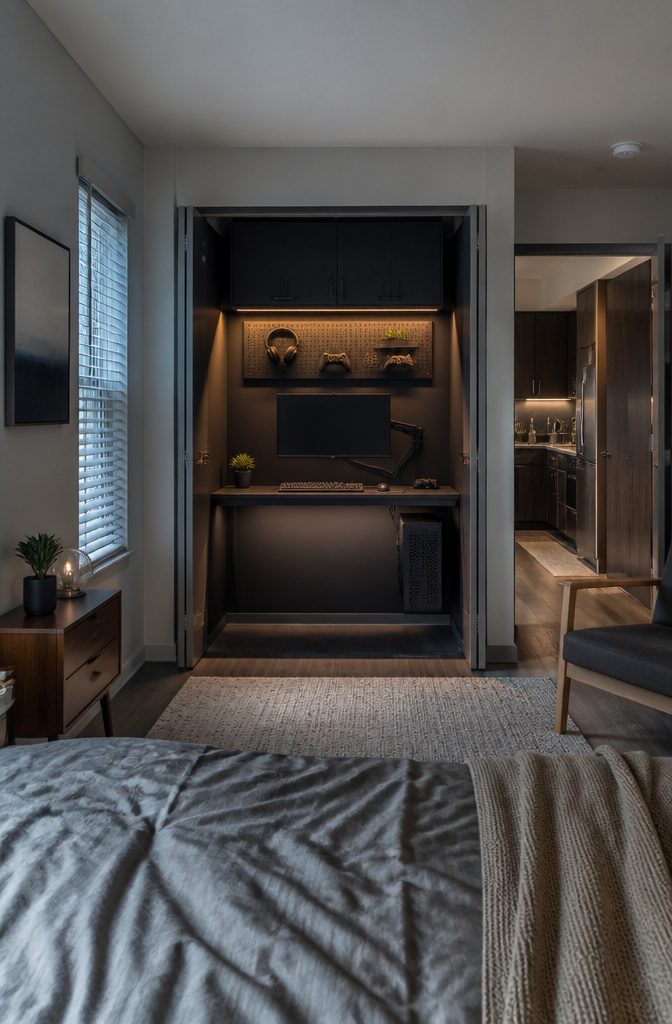
Pulling the doors off a closet, painting the inside dark and adding a floating desk surface is the highest-impact small-space move I know of.
Under-stair areas work the same way with custom shelving, LED lighting and a compact desk. A bedroom corner counts too, so a small apartment or basement can still hold a real setup.
Get everything off the floor.
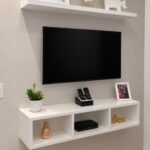
Mount the TV on the wall with a small floating shelf below for the console and controllers, put the tower in an under-desk mount, and hang the monitor from an arm. Headsets and controllers belong on a pegboard.
Storage should go up instead of out, with closed cabinets for clutter and open shelves only for things worth looking at. Bundle cables behind the desk, and mark the zone with a rug or a lighting change.
3. Retro Arcade Room
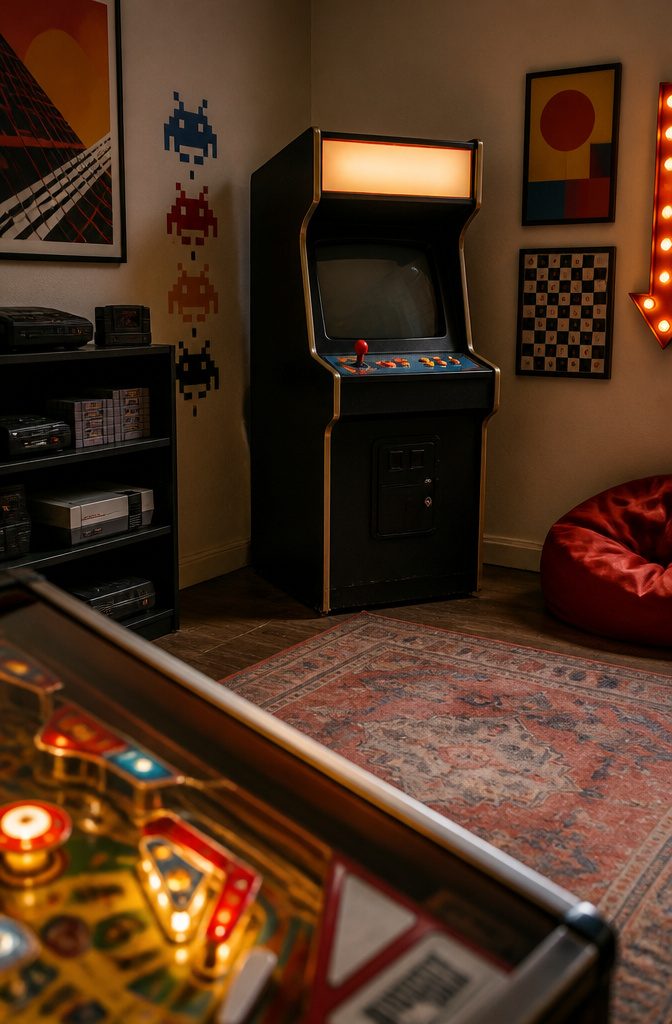
One anchor piece sets the tone: an arcade cabinet or a CRT setup for authentic retro play.
Spend there, then fill in around it cheaply. Pinball machines and skee ball lanes look great but eat floor space, so I’d rather own one pinball machine than crowd in three half-sized extras.
Push the machines against the walls and keep the center open, which gives people room to move and mimics how real arcades were laid out.
Vintage posters, 8-bit wall art and a neon sign do most of the theming.
Bold primaries or warm 80s and 90s tones hold it together. Add warm ambient light plus one marquee or jukebox-style accent.
Consoles belong on open shelving, and thrifted or hand-me-down hardware suits the look better than anything new. A wall scoreboard gives friends a reason to chase the high score.
4. Immersive RGB Lighting
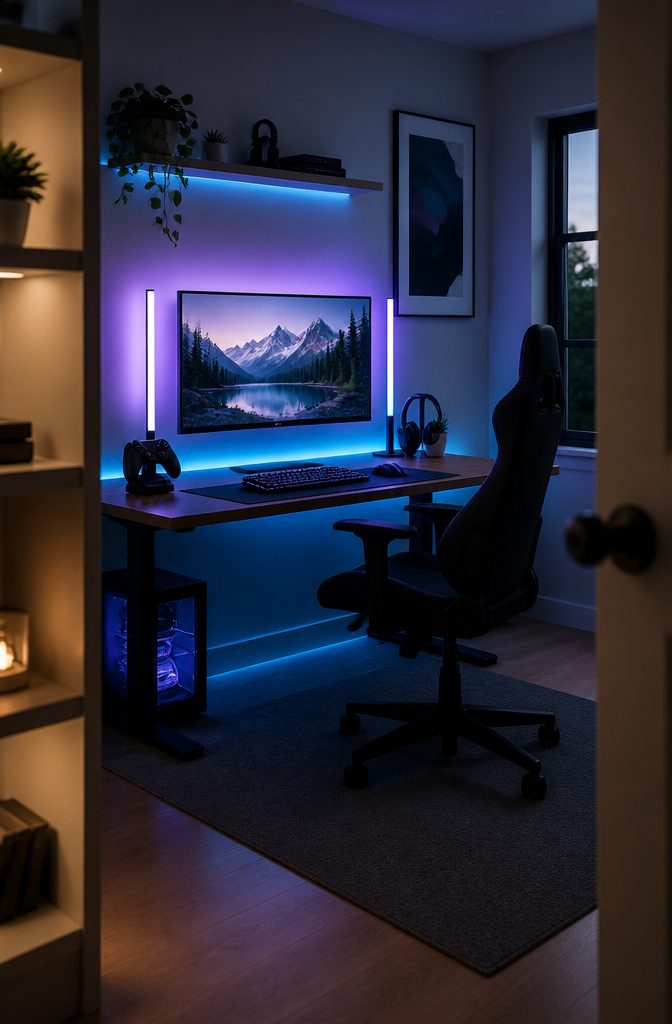
Keep at least three lighting layers on separate controls: steady ambient light, soft bias light behind the monitor or TV, and an RGB, neon or accent layer. Bias light softens the contrast between a bright screen and a dark wall.
Govee’s RGBIC Gaming Light Bars (16 million colors) add vertical color beside the screen. Their pitch is simple:
Adjust the light and ambiance according to your gaming style and decor needs.
— Govee
Cool blues suit focus; bold reds suit energy. For movies and big-screen games, the Govee AI Sync Box Kit 2 matches the room glow to the picture.
Limit the palette to two or three colors repeated across strips, bars and one neon sign, and put indirect strips behind the desk or shelves first.
5. Display Games and Collectibles
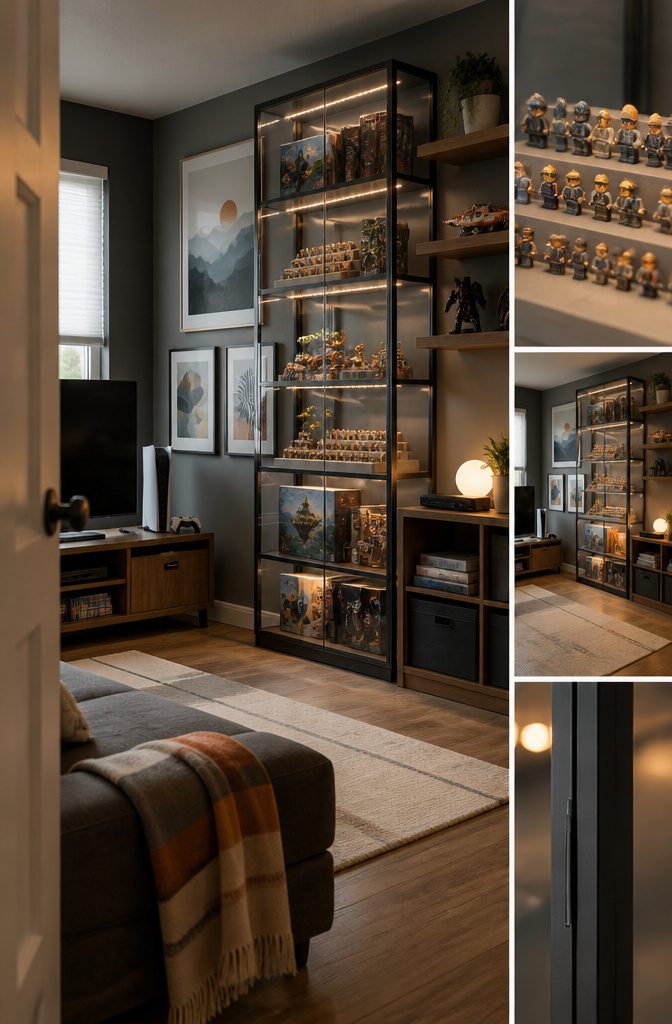
A glass-front case keeps dust and sunlight off your collectibles, and sunlight is what fades printed boxes and painted details over time. Spend your display budget there first, on the premium pieces.
Everything else can go on floating shelves at varied heights, with LED strips inside the case or under each shelf to spotlight figures. Minifigures read best on stepped risers, grouped by series, so the back row stays visible.
Posters bring in the theme without using any floor space. I’d frame them all the same way and pull the wall color from your favorite series’ key art, or hang one large print if the room is tiny.
Rotate pieces seasonally instead of putting everything out at once. A shelf with breathing room looks like a gallery, and a packed one looks like storage.
6. Minimalist Design
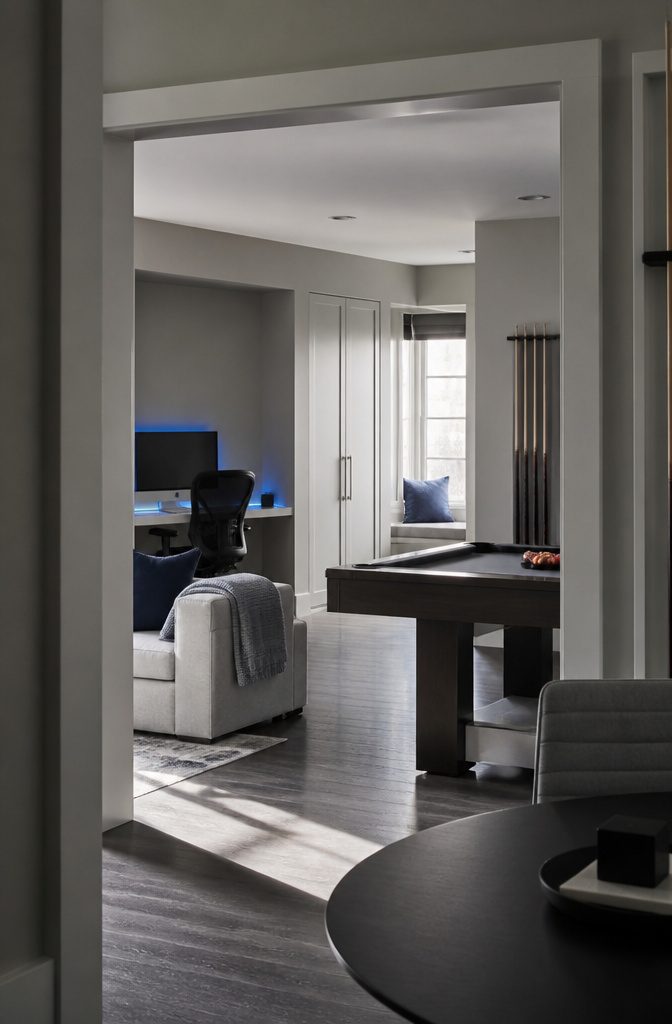
A calm game room starts with the palette: one neutral base (white, gray or black) plus a single accent, and no more.
Light it with one LED strip behind the monitor or desk, in soft white or a muted tone. Spend first on cable trays, sleeves and closed storage, because the look collapses the moment cords show.
With space to spare, pick one or two standout pieces, like a pool table or shuffleboard, and keep the furniture clean-lined. In a small room, commit to one game and leave the walls bare.
Big collections are where this gets hard. Closed cabinets hide a lot, but nothing sits out to admire, so I’d keep only the weekly favorites within reach and rotate the rest.
7. Cozy Lounge Style
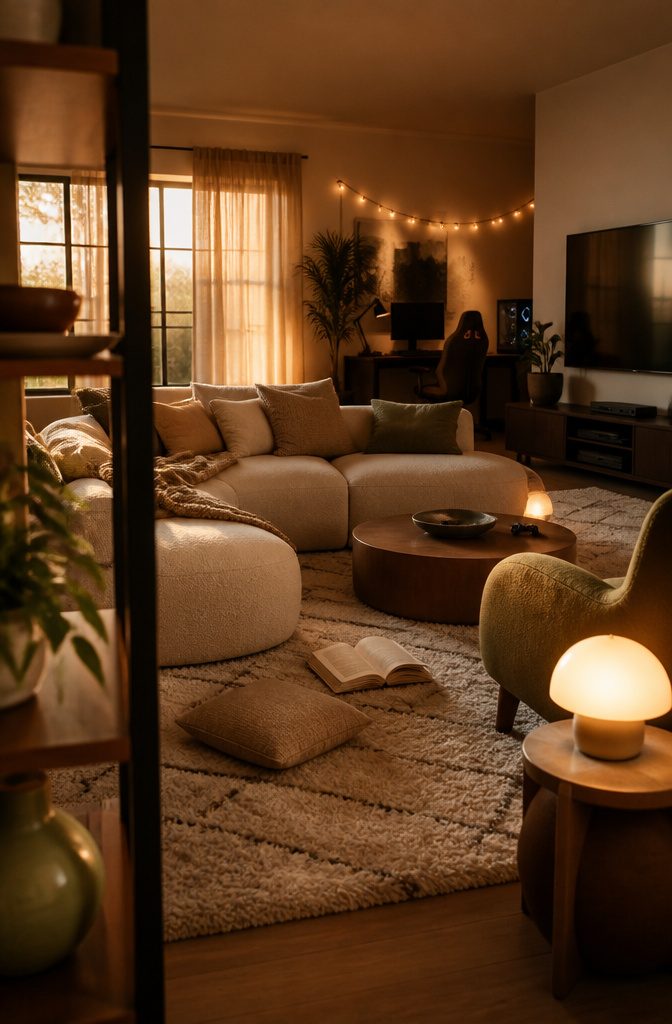
Textiles do most of the work in a lounge corner, and a good set costs less than most lighting kits.
A plush rug, a throw blanket and a few fluffy cushions soften a hard-edged game room fast, while a plush sectional gives players somewhere to sink in between rounds.
Rounded shapes, from the coffee table to small accessories, keep the look gentle.
Lounge light and gaming light pull in opposite directions. Warm-white string lights or a small lamp at low output relax a room, but harsh or cool-toned light keeps everyone alert.
Keep the lounge warm-white and low, and leave the sharper light to the gaming side. A reading chair, a bookshelf and that lamp make a quiet corner, and an area rug underneath marks where play ends and rest begins.
8. Share the Room With Another Use
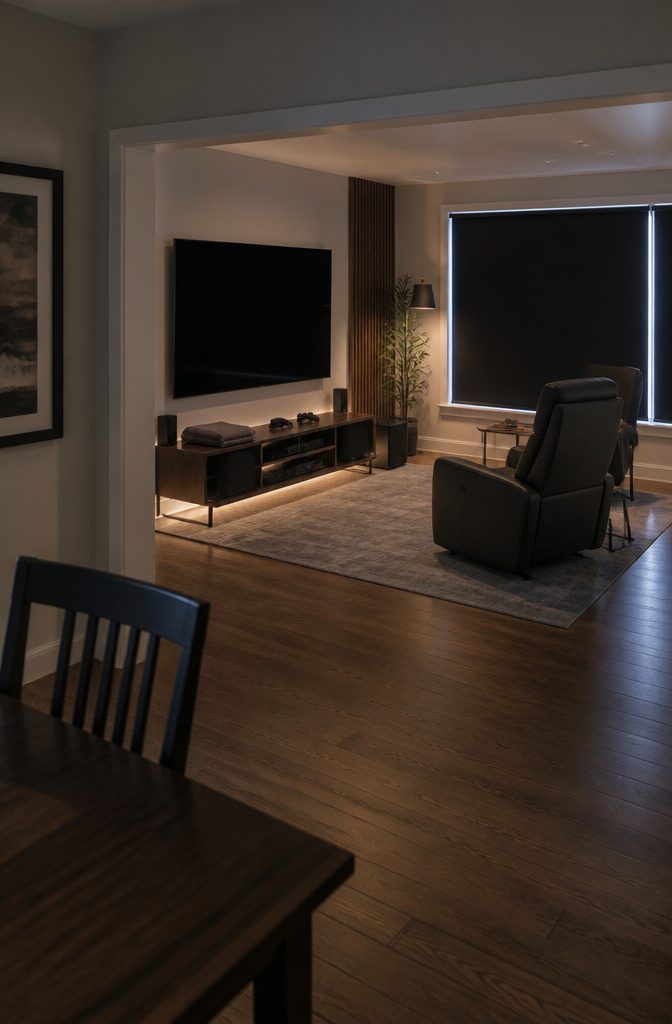
An area rug is the cheapest zone divider in a shared room. It marks off a board game corner or a lounge from the rest of the floor without a wall.
In a living room that doubles as a gaming space, I’d put the TV on a low media console or entertainment center, so the game console, speakers and controllers have one home when the room goes back to movie night.
A projector saves floor space in a smaller room, and it pairs well with a high-back recliner.
Spend on light control first: blackout shades can do more for the picture than extra decorative lighting. Dimmable wall or floor-level lights can stay on during play without washing out the screen.
9. Plan the Gaming Desk
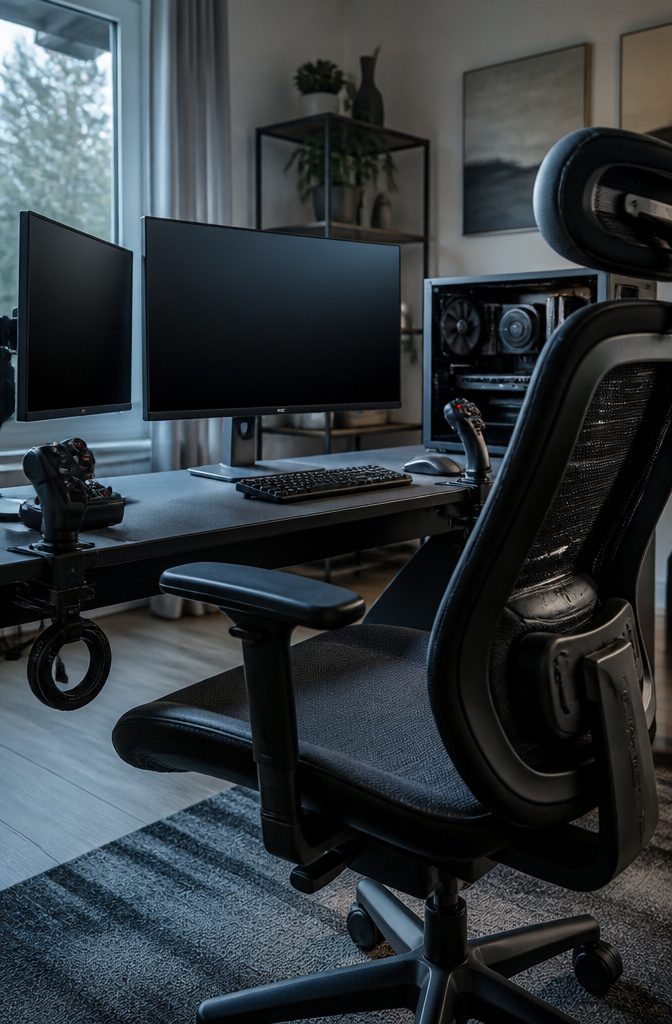
Center the main screen on your chair, keyboard and mouse, and use a second monitor off to the side for Discord, guides or system info.
Split evenly, two screens put the seam right in front of you. Size the desk to your monitor width, keyboard and PC footprint, plus room to grow.
For long sessions, spend on the chair first: adjustable lumbar support, a headrest and height settings.
For flight sims, three monitors or one ultrawide curved display beats cockpit decor, because the wider field of view does the work. Add side mounts for the joystick and throttle.
Never box a console or PC into a closed cabinet; hot hardware needs open air around it. Clips, tubes or a hidden tray keep cables tidy.
10. Convertible Furniture
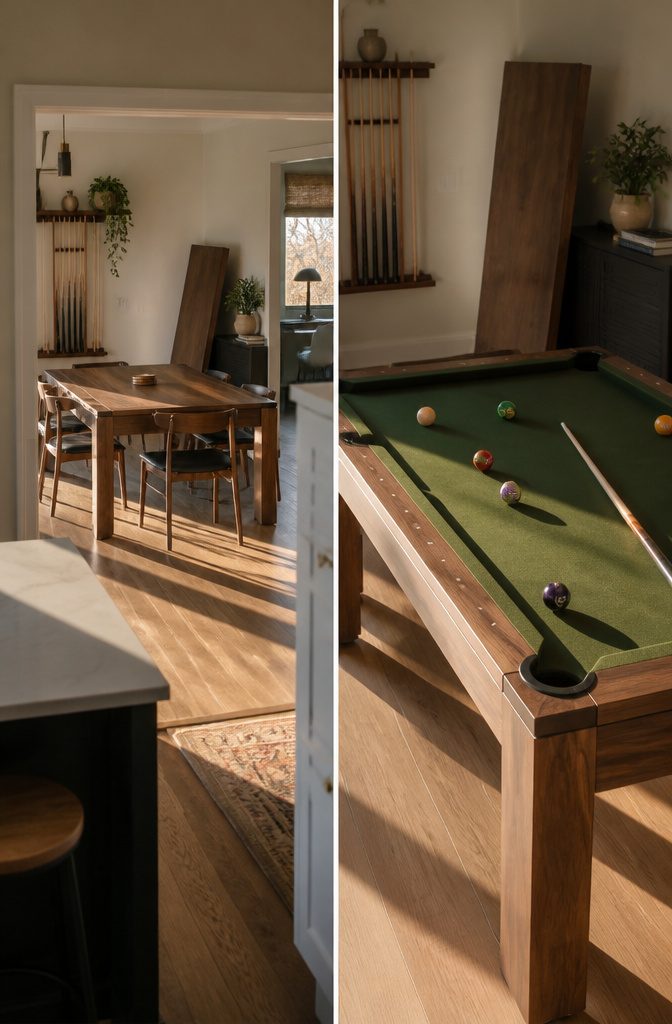
A convertible table that works as both a dining table and a pool table is the best-value piece for a shared room.
Models with removable tops switch between meals and games in seconds, so the room never has to pick one job.
A foldable compact pool table is the runner-up, but it only earns its footprint if you will actually fold it away, so skip it if you have no closet or wall to store it against.
In a room that doubles as an office, a fold-out desk beats a fixed one. Add lighting that suits both work and play, and the space shifts between work mode and game mode without a second set of furniture.
Wall-mounted shelves and multi-purpose seating keep the floor open for the same reason. In a small room, any piece that sits in one spot and does one job is the first I would cut.
11. Storage and Gear Organization
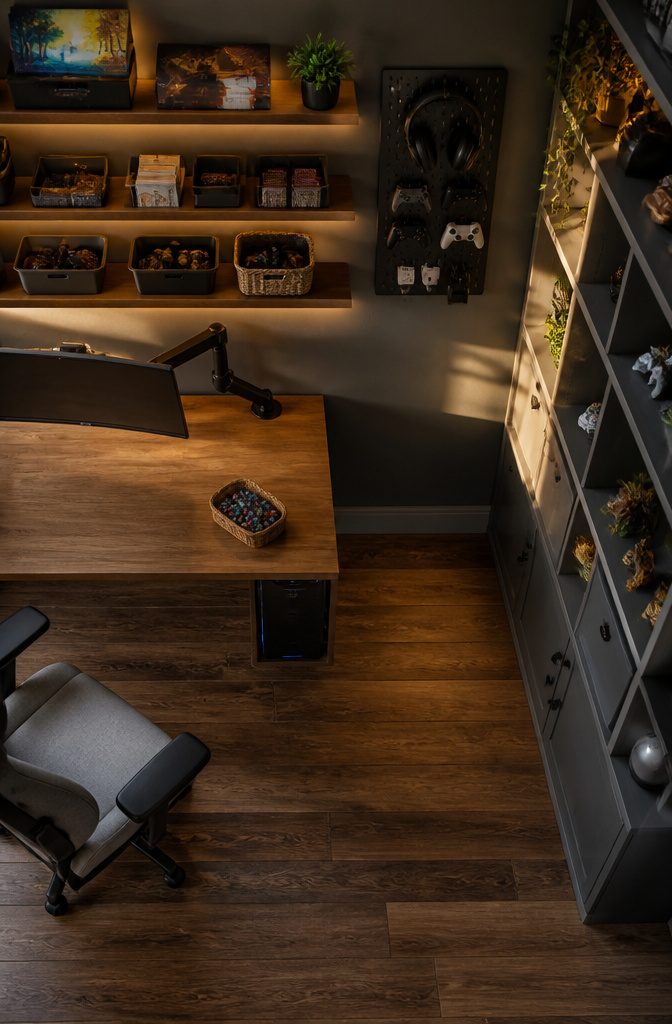
Wall space holds more than floor space, so build up before you buy more furniture:
- Open wall-mounted shelves hold board games and card decks, and small baskets corral dice and controllers.
- A pegboard keeps headsets and controllers on the wall, within arm’s reach of your seat.
- An under-desk mount gets the PC tower off the floor, and a monitor arm frees desk surface.
- In a KALLAX unit, use the lower cubes for controllers, cables and closed storage, and save the eye-level cubes for collectibles you want seen.
- Hide clutter behind doors and put only display-worthy pieces on open shelves.
- LED strips inside the shelves light the display, and routing cords through shelf compartments keeps them out of sight.
12. A Multiplayer Setup
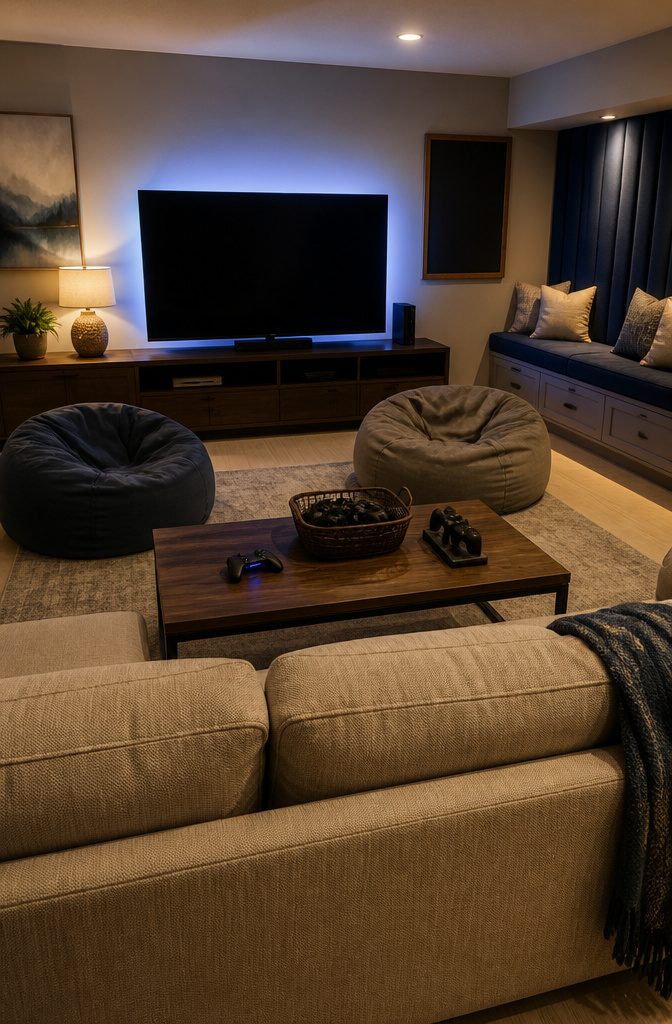
Choose one centerpiece and aim everything else at it.
In a screen-first room that’s a large 4K TV with low input lag. In a table-first room it’s the pool table, with seating close enough that anyone waiting for a turn can still watch the shot.
For co-op play, I’d line players up on a couch or bean bags facing the same screen, so nobody leans around a monitor to see.
Keep extra controllers and charging docks in a basket or drawer within reach. A dead controller stalls a whole session faster than a bad game does.
Built-in wall seating with high-back cushions saves floor space and keeps spectators in the action.
Bar-style seats near a game table suit people who stand up between turns. Good overhead light above the table and a chalkboard scoreboard turn watching into part of the game.
13. Sound Control and Soundproofing
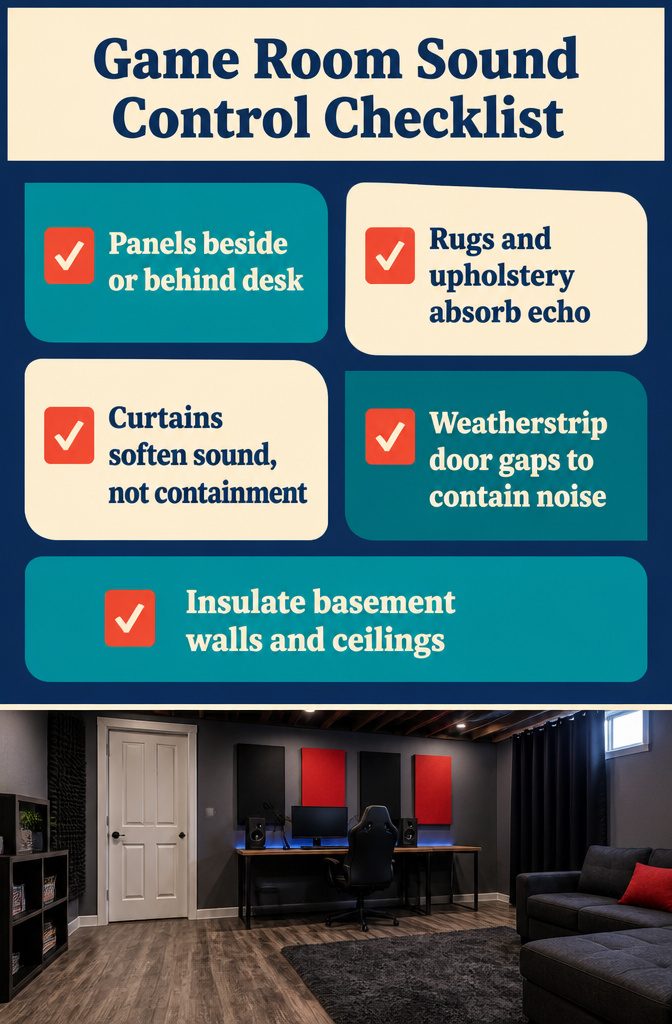
Echo and noise leaving the room are separate problems, so match the fix to the one you have.
- Acoustic panels: hang them behind or beside the desk first. They absorb bounce inside the room, so echo drops and voices come through clearer. They also come in bold colors or neutral tones.
- Thick rugs and upholstered furniture: the easiest echo fix for renters, especially over hard floors.
- Heavy curtains: these dampen sound and soften echo, but I’d treat them as echo control, not a way to keep noise in.
- Door weatherstripping: sealing the gaps around the door is the cheapest way to cut noise leaving the room.
- Basement walls and ceilings: insulate both if late-night sessions bother people upstairs. It’s the permanent fix, so try the soft treatments first.
14. Game Tables and Room Sizes
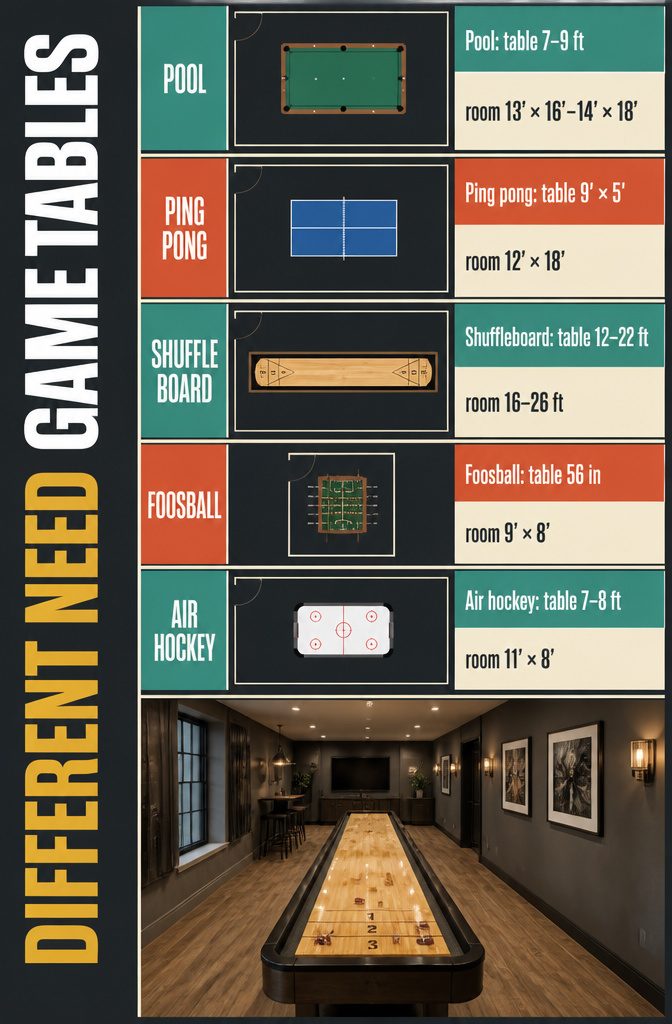
Room size decides the game, and the figures below already include the space players need to move around the table. A pool table may be only 8 feet long, but without room to extend the cue fully, some shots become impossible.
| Game | Typical table size | Recommended room size |
|---|---|---|
| Pool | 7–9 ft | 13′ × 16′ – 14′ × 18′ |
| Ping pong | 9′ × 5′ | 12′ × 18′ |
| Shuffleboard | 12–22 ft | 16–26 ft |
| Foosball | 56 in | 9′ × 8′ |
| Air hockey | 7–8 ft | 11′ × 8′ |
Foosball and air hockey fit a spare bedroom, and I’d pick either over a cramped pool table.
Pool wants at least 13′ × 16′. Shuffleboard is all about length, so it suits a long, narrow room better than a square one.
15. Projector or Big-Screen Setup
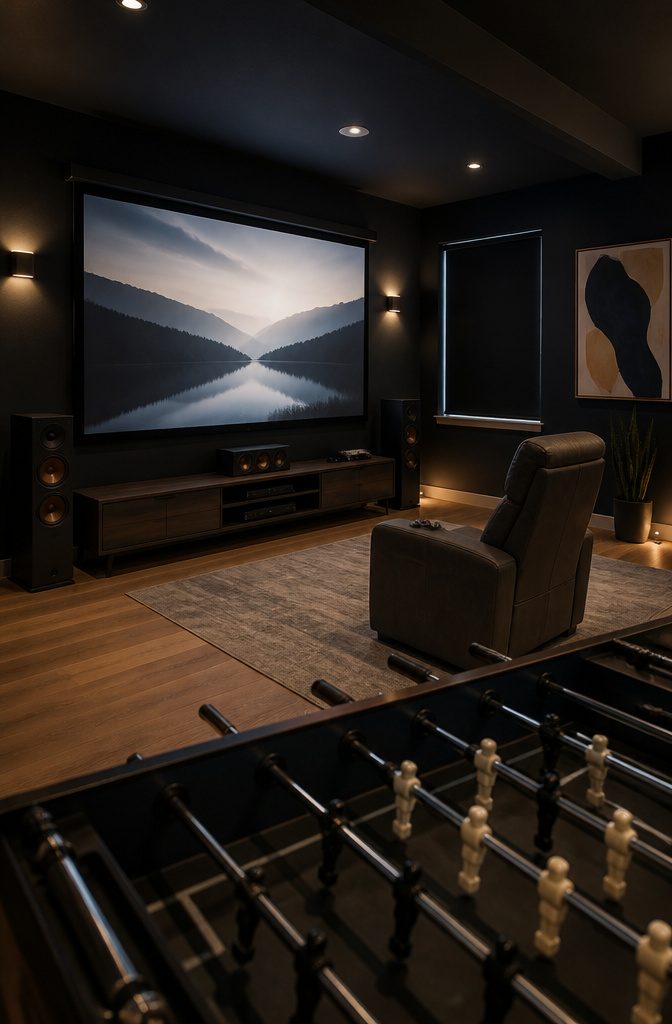
Blackout shades do more for a projector room than any amount of decorative lighting, so buy those before you buy a single lamp.
Then layer the light low: dimmable wall sconces or floor-level fixtures can stay on during play, and light kept low and dimmable won’t wash out the picture, so you can still find the controller.
Charcoal, dark navy and warm wood on the walls and furniture keep the eye on the image instead of the room.
A projector wins over a big TV in a smaller room because it saves space and adjusts to whatever wall you have.
That leaves floor for a foosball or pool table, which is how a game room and a home theater share one space.
Face the screen with a high-back recliner, and put a low media console below it for the console, speakers and controllers. Most of the budget belongs in the projector, screen, sound and light control.
16. A Bar or Snack Station
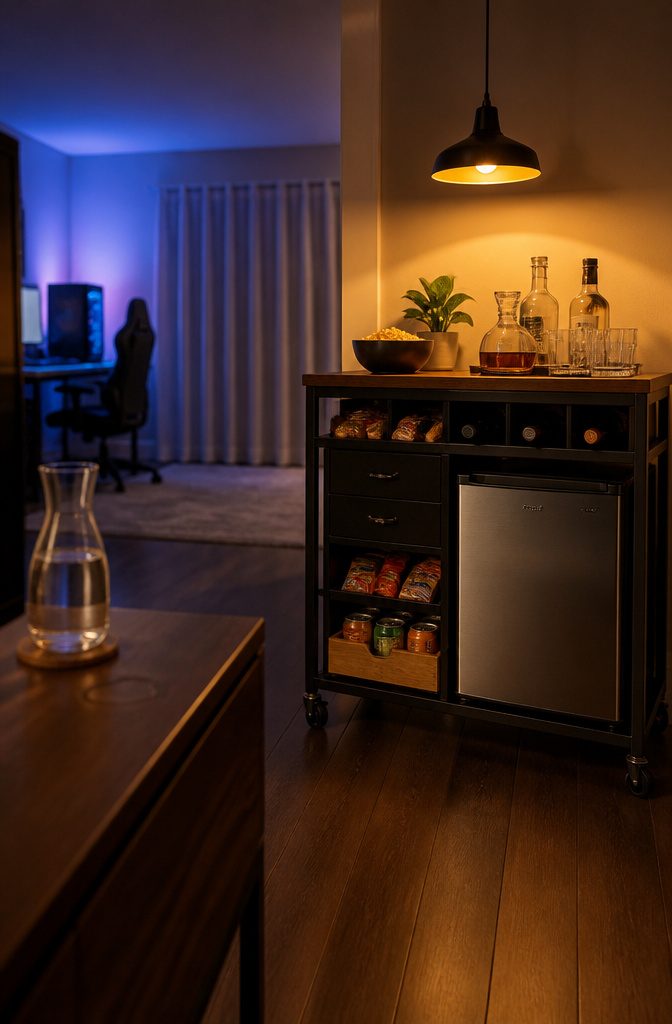
A rolling cart wins for most renters: drinks travel to the couch, then the cart parks in a corner when the game ends. Pick one with shelves, bottle holders and room for glasses so nothing sits loose on top.
If a corner sits empty, a corner bar cabinet holds wine racks, glass shelves and tools in one spot, and a mirror on the door makes the room feel bigger.
Spills kill consoles and keyboards, so keep the bar or snack station on the opposite side of the room from the TV, PC and cables.
For snacks, a mini fridge, a popcorn machine and drawers for candy and drinks make a proper nook. I’d skip custom cabinetry and retro-style appliances unless the budget has room; they add looks, not function.
17. Attic or Garage Conversion
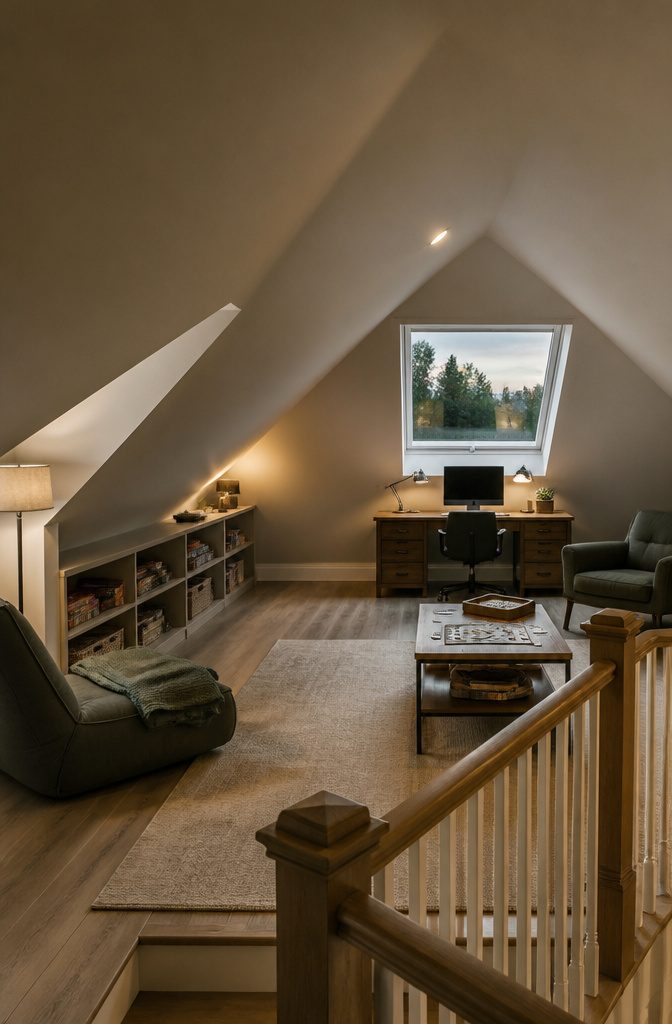
A garage is the easier conversion because it starts as a blank shell. Finish the walls, then insulate for year-round comfort and add climate control, since a bare garage is a hard place to sit through a long session.
A converted attic or garage gives you a private room where the noise stays put, so late-night gaming won’t bother anyone else in the house.
An attic is harder but has more character. Sloped ceilings and awkward corners look like problems, yet they make good spots for built-in storage, and a low corner can hold a console shelf or a stack of board games.
Soundproofing is worth doing here because the room sits above the rest of the house. A skylight adds daylight, and warm lighting makes the space feel like a hideaway.
Unused basements and spare rooms follow the same logic: finish them and give them one purpose.
18. A Family-Friendly Room
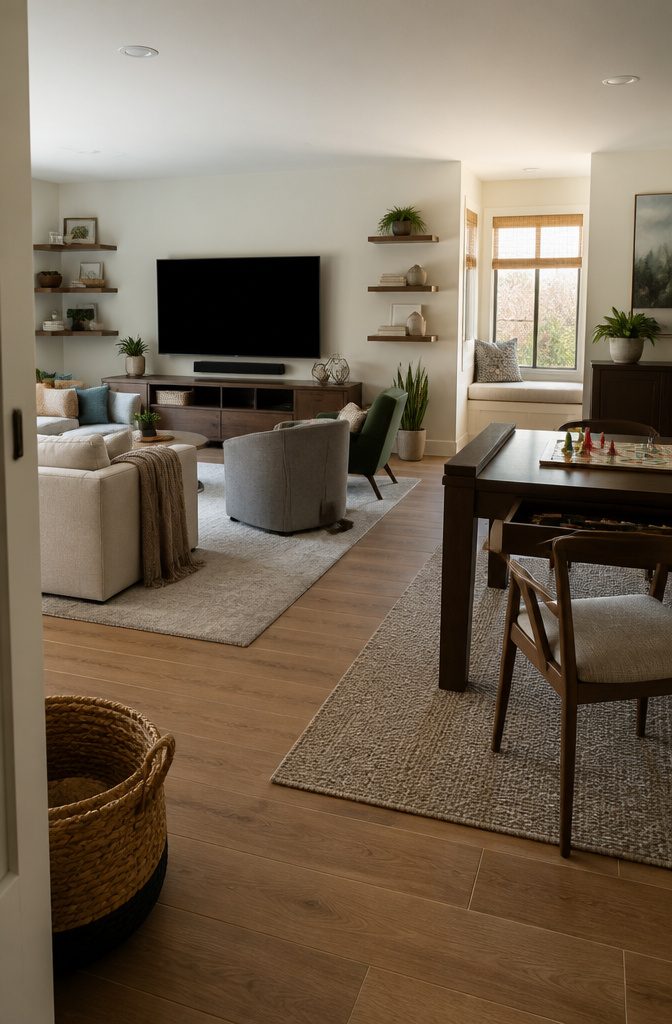
Soft seating beats hard chairs in a room where kids and adults share the floor.
A plush sofa or sectional seats a whole family for a movie or a console session, and accent chairs can be shifted as the group grows or the game changes. I’d choose those over a rigid dining set every time.
Zones keep different ages out of each other’s way: board games at a table in one corner, the TV and console in another.
An area rug marks each zone without adding a wall. Leave clear walking paths between zones, because easy movement matters more than squeezing in one more piece of furniture.
Storage decides whether the room stays usable. A game table with built-in storage swallows cards and pieces, a credenza or cabinet hides the rest, and floating wall shelves free up floor space for actual play.
19. Build Around a Focal Point
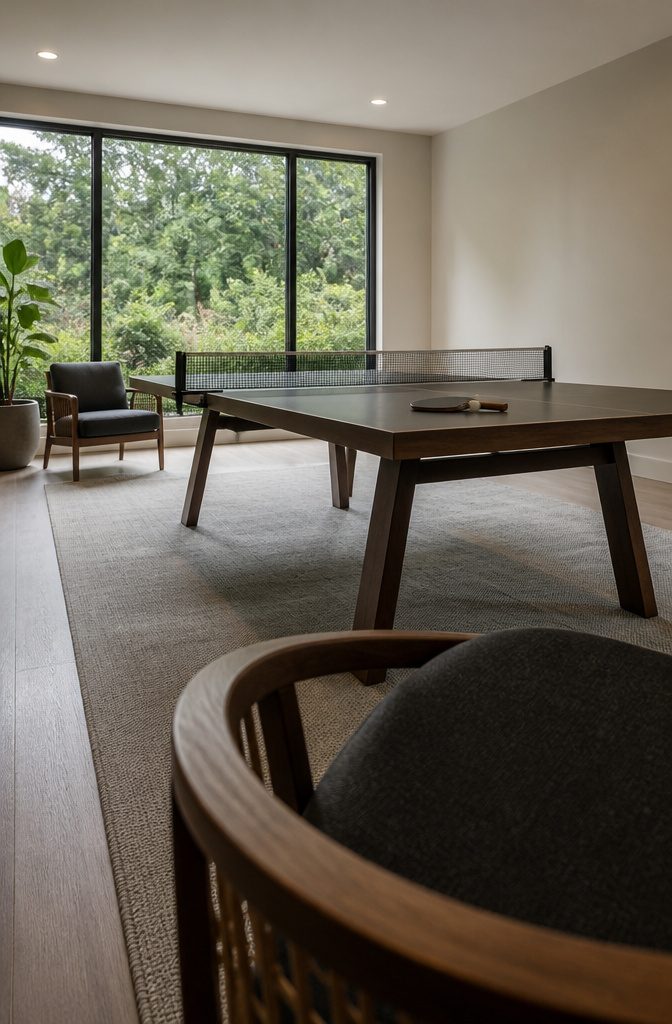
Pick one thing the room is about and let everything else answer to it. A fireplace, a window with a good view, a bold piece of art or a statement table all qualify.
A sleek ping pong table in wood, glass or a matte finish, like the Monaco Table by Sawyer Twain, adds movement and polish that a shelf of boxed games never will.
Point the seating toward the feature and keep the other pieces smaller in scale so they don’t compete with it.
Matching items on opposite sides of the room give balance, and I’d leave a wall bare before crowding it with a second showpiece.
Allow 30 inches for walkways and 18 inches between furniture pieces, so people can reach the feature without squeezing past a sofa.
Layout Clearances to Measure
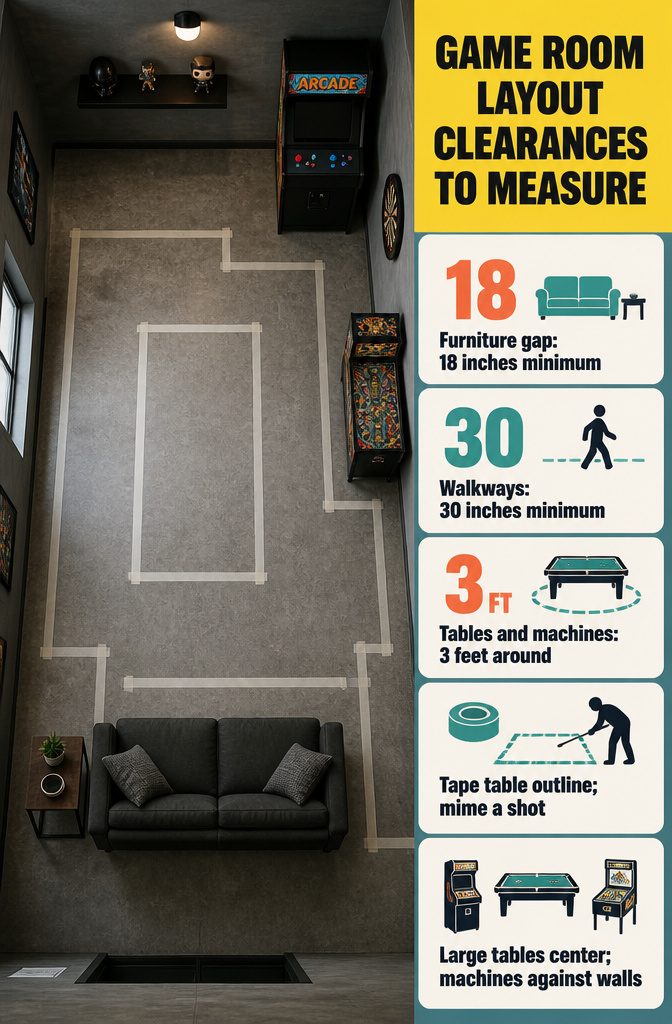
Measure the room before you buy anything, then check your plan against these clearances:
- Leave 18 inches minimum between furniture pieces, so a sofa and a side table never pinch each other.
- Keep walkways at 30 inches minimum wherever people cross the room.
- Allow at least 3 feet of walking space around tables and machines, enough to step back and swing an arm.
- Outline each table on the floor with masking tape, then walk around it and mime a shot. I trust this more than numbers on paper.
- Set large tables in the middle of the room, and push arcade machines, dartboards and pinball machines against the walls.
- Mount floating shelves for collectibles to keep the floor clear. Mark your tallest piece first so later additions fit.
Free Floor Plan Tools
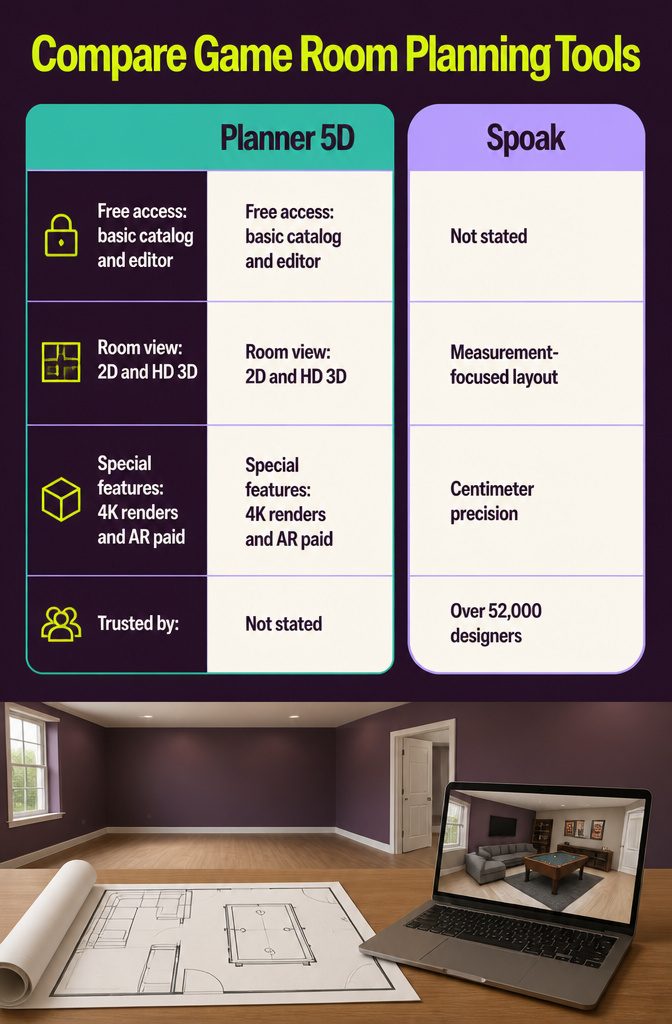
Planner 5D is where I’d start, because the basic catalog and editor are free.
You get a 2D planner for the floor plan, an HD 3D mode to see the room as if you were standing in it, and thousands of real-world items to drop in, from sectionals to game tables.
4K renders and AR walkthroughs sit in the paid tier, and for a weekend project I’d skip them.
Spoak is the better pick for a tight room, since it measures down to the centimeter and is trusted by over 52,000 designers.
Enter your room’s measurements, then arrange and rearrange until the layout stops fighting the doorway. Either tool lets you share the design with friends or a contractor, which settles the argument about where the couch goes before anyone lifts it.
Budget Tiers From $1,000
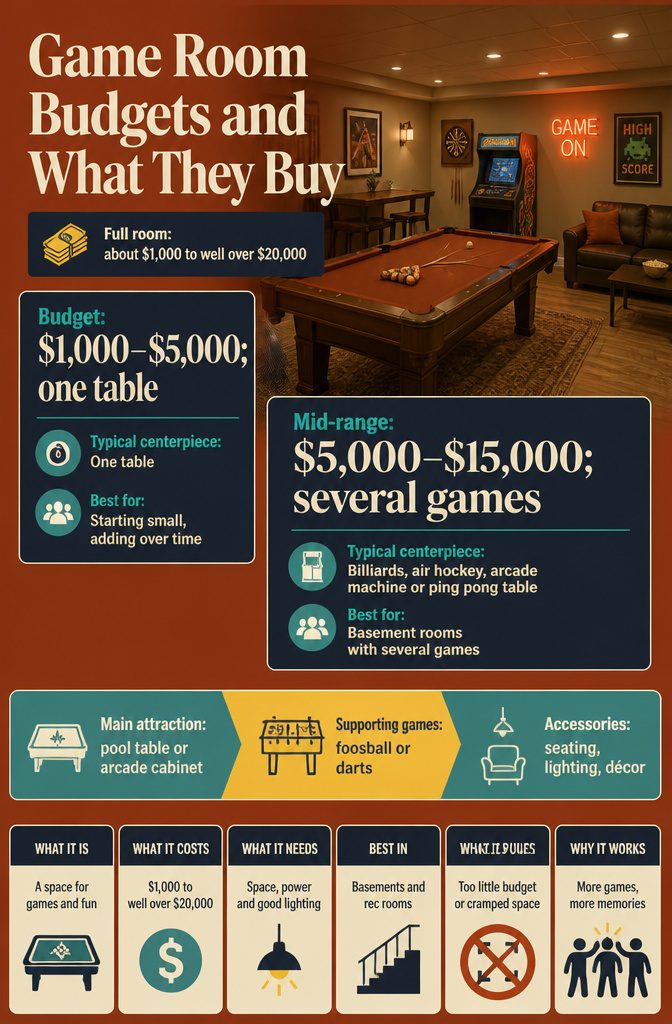
A full game room runs from about $1,000 to well over $20,000, depending on which games you pick, how well they’re built and how elaborate the space gets.
Divide the money three ways: a main attraction (a pool table or arcade cabinet), supporting games like foosball or darts, and accessories such as seating, lighting and décor.
That split keeps the room from ending up with one great table and bare walls.
Most readers land in one of two tiers.
| Tier | Budget | Typical centerpiece | Best for |
|---|---|---|---|
| Budget | $1,000–$5,000 | One table; entry-level foosball starts around a few hundred dollars | Starting small, adding over time |
| Mid-range | $5,000–$15,000 | Billiards, air hockey, arcade machine or ping pong table | Basement rooms with several games |
At mid-range, I’d go with a pool table in the center, an arcade cabinet along one wall, and air hockey or foosball for quick matches.
Frequently Asked Questions
What is the best design for a gaming room?
Start with a theme and a 60/30/10 color split: one dominant color on about 60% of the room, a second on 30% and an accent on the last 10%.
Then pick one focal point, such as a pool table, an arcade cabinet or a big screen, and build the lighting, seating and storage around it. Measure first so walkways stay at least 30 inches wide.
How much does it cost to build a game room?
A full game room runs from about $1,000 to well over $20,000, depending on which games you choose, how well they’re built and how elaborate the space gets. $1,000–$5,000 typically buys one table, and $5,000–$15,000 covers a mix such as billiards, air hockey, an arcade machine or a ping pong table.
Split the money between a main attraction, supporting games and accessories like seating and lighting.
What is a good size for a game room?
It depends on the game. Pool needs about 13′ × 16′ to 14′ × 18′, ping pong about 12′ × 18′, air hockey about 11′ × 8′ and foosball about 9′ × 8′.
Those sizes already include space for players to move around the table, so a spare bedroom suits foosball or air hockey better than pool.
What is the best layout for a small game room?
Get everything off the floor and build up. Mount the TV on the wall, put the PC tower in an under-desk mount, hang the monitor from an arm and keep headsets on a pegboard.
Use closed cabinets for clutter, bundle cables and add LED lighting. A closet, an under-stair area or a bedroom corner can hold a full setup.
What colors work best for a game room?
Dark navy or charcoal walls support immersion and make lighting stand out, while light neutrals keep a small room airy.
Repeat two or three colors across walls, furniture and lighting, because ten competing colors look chaotic. RGB lighting then adds color on top of that base.
How can I soundproof a game room?
Match the fix to the problem. For echo inside the room, hang acoustic panels behind or beside the desk and add thick rugs and upholstered furniture.
For noise leaving the room, sealing the gaps around the door with weatherstripping is the cheapest step, and in a basement you can insulate the walls and ceiling. Heavy curtains soften echo but won’t keep much noise in.
Is there a free tool for planning a game room layout?
Yes. Planner 5D’s basic catalog and its 2D and 3D editor are free, while 4K renders, AR walkthroughs and premium items need a paid upgrade.
You can share a design with friends or a contractor by exporting images, creating a walkthrough or sending a project link.