Yes, you absolutely need a rug pad. I learned this the expensive way when my favorite vintage runner sanded scratches into my oak floors like sandpaper. A good pad keeps your rug from slip-sliding across hardwood, stops corners from curling into trip hazards, and creates cushioning that makes even cheap rugs feel luxurious underfoot. Think of it as insurance for both your floors and your ankles. Spending thirty bucks now beats crying over refinishing bills later. I have plenty of hard-won wisdom about materials, thickness, and sizing that will help you avoid my mistakes.
What Is a Rug Pad and Why Do You Need One?
I used to think rug pads were just another upsell. Then I tried one, and the results were significant. A rug pad sits right between your vintage rug and your floors, invisible but necessary. That non-slip grip keeps everything locked down, so no more sliding into the coffee table during movie nights. The cushioning transforms hardwood into something notably softer under your bare feet, especially during that cold morning shuffle to the kitchen. And floor protection is essential. I’d rather replace a thirty-dollar pad than refinish scratched oak. Plus, there’s the added warmth and reduced noise; your living room becomes noticeably quieter. Once you’ve felt that plush cushioning with every step, the value becomes clear.
What Happens If You Don’t Use a Rug Pad?
I learned this the hard way when my vintage kilim started inching toward the kitchen every time my dog ran past. Without a pad, you’re basically inviting a slip-and-slide situation, not to mention the heartbreak of scratched hardwood that’ll cost way more than a $30 gripper. Between the trip hazards (my shin still remembers) and the brutal friction grinding down your fibers like sandpaper, it’s a recipe for both safety risks and destroyed investment pieces. A rug pad prevents floor damage and protects against accidents that a rug without proper underlayment cannot avoid.
Safety and Stability
When I first ditched the rug pad under my vintage kilim, thinking I’d save forty bucks and prove my financial savvy, I learned that “frugal” and “floored by my own hubris” occupy the same space. That beautiful rug became a shuffleboard, sliding across my hardwood every time my dog bolted for the door. Corners curled like rebellious ribbon, creating trip zones that guests navigated like drunkards.
We all want spaces that feel curated and effortless, as though we belong in glossy magazines. But safety and stability aren’t optional aesthetics. A rug pad anchors your piece, keeping it flat and faithful underfoot. On tile, laminate, or polished wood, that grip eliminates sliding and prevents curling corners. It offers floor protection while you move through your rooms as the intentional adult you actually are.
Floor and Rug Damage
Why would you spend hundreds (or let’s be real, thousands) on that perfect vintage oushak only to let it sandpaper itself into oblivion. I’ve watched my own beloved flatweave turn into a curling, buckling mess. Rug movement everywhere means you’re tripping like a clown at a dinner party, which isn’t ideal.
Without a rug pad, that gritty backing grinds against your gorgeous hardwood like a cat sharpening claws. Floor damage happens slowly, then suddenly. Scratches appear, the finish wears, and the damage becomes undeniable. Dirt becomes sandpaper between layers, destroying fibers you carefully curated.
A rug pad cushions, stabilizes, and distributes traffic evenly. Protecting floors now prevents costly repairs later. Your floors, your rug, and your future self will benefit from this simple precaution.
How Rug Pads Stop Slips and Falls
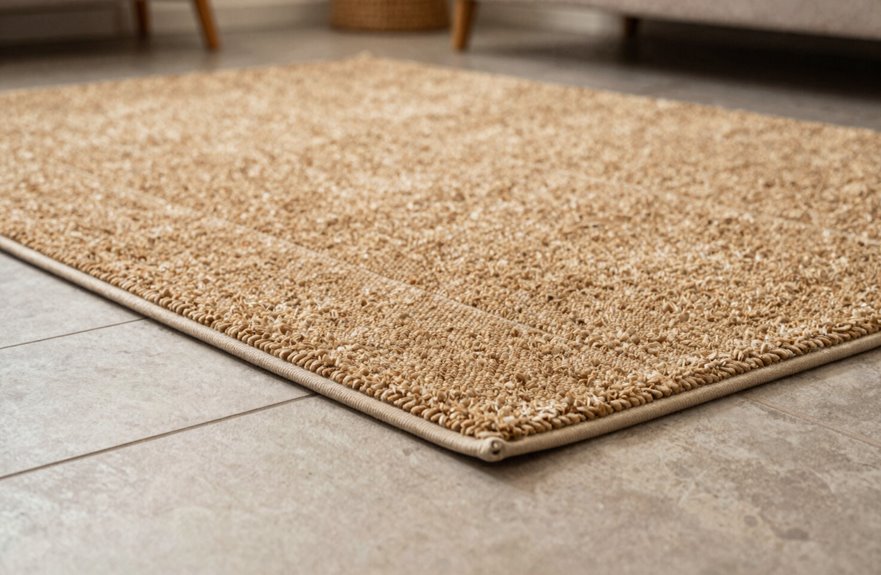
I’ve learned the hard way that a rogue rug corners you fast. One minute you’re walking to the kitchen, the next you’re doing an accidental split. A quality rug pad grips the floor, anchoring your rug so it doesn’t slide around like a dance partner with two left feet. That secure hold keeps edges flat and taut, which means no more tripping over curled corners or bunching that catches your toe. Your ankles will benefit from the increased stability and fall prevention.
Grip Prevents Sliding
Ever wondered why your gorgeous vintage runner keeps staging an escape across your hallway like it’s training for a marathon? I’ve been there, chasing rugs like I’m herding cats.
A quality rug pad solves this with effective non-slip performance. The rubber or felt-rubber combo grips both your floor and rug, creating friction that keeps everything locked down. On hardwood, tile, or laminate, that grip prevents bunching, wrinkling, and edge curling, the sneaky culprits behind trips.
I learned this the hard way after nearly face-planting over a curled corner. Pads with rubber bottoms provide traction while offering floor protection, too. You’re not just buying stability; you’re crafting a safer, cohesive home where every piece belongs exactly where you’ve placed it. Your vintage finds will stay in place.
Anchors Rug Securely
Beyond keeping things tidy, that grip becomes your safety net. I’ve learned this the hard way, chasing my runner across the kitchen. A quality rug pad anchors everything, transforming that decorative “ice rink” into stable, walkable ground.
My non-slip pad uses rubber backing. It grips tile, hardwood, and even that weird laminate in my hallway, delivering real stability where I need it most. No more corner-curl betrayal when I’m carrying coffee.
In high-traffic spots, like where my dog does her zoomies, that rug pad keeps everything locked down. Vacuuming’s easier too, since nothing shifts underneath me. I’ve even added tape under my jute piece for extra insurance, but the pad alone handles most of the chaos.
Reduces Trip Hazards
Why trip over something totally preventable when a simple pad keeps your floors safe? Curling rug edges create real hazards until a rug pad stabilizes your flooring.
What a rug pad actually does:
- Edges stay flat, no more rogue corners waiting to catch your toe at midnight.
- Non-slip grip means your hardwood stops acting like a slippery surface when you’re moving quickly with coffee.
- Zero bunching, because wrinkles create tripping hazards.
- Stable footing lets you move through rooms without watching every step.
A rug pad protects floors and reduces fall risks for everyone in your home.
How Rug Pads Protect Floors From Damage
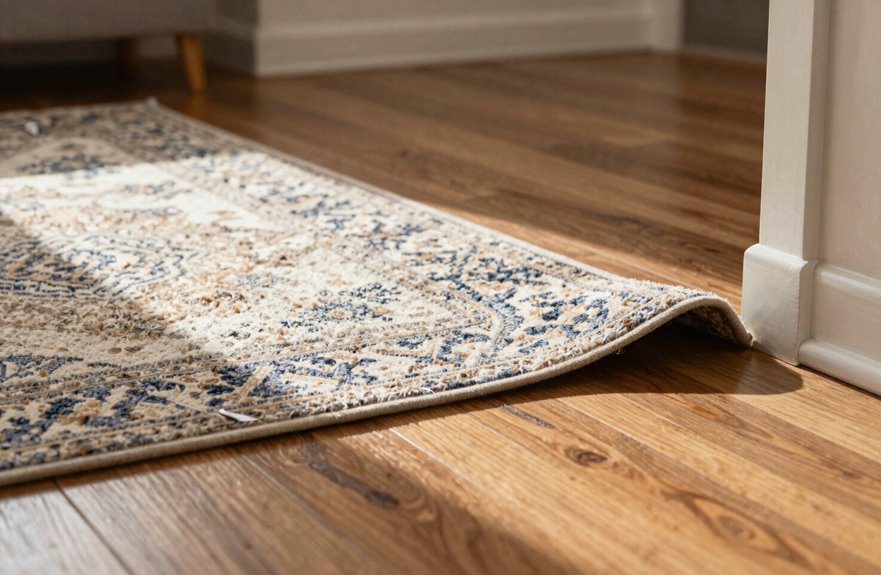
How exactly do our floors survive the daily chaos we throw at them?
Spoiler: they don’t unless you have a rug pad down. Rug pads protect floors by creating friction reduction between rug and floor, stopping that awful grinding that happens every time someone rushes through with coffee. That non-slip grip keeps everything stable so your vintage kilim isn’t slowly wearing away at what lies beneath.
The pad acts like a cushioned barrier, absorbing impacts from footsteps and vacuuming. It blocks dirt and debris from getting trapped underneath, because fine grit acts like sandpaper on your floor. Plus, the airflow gap prevents moisture from damaging your floor finish. Your floors will maintain their appearance and durability longer with proper protection underneath.
Do You Need a Rug Pad on Hardwood Floors?
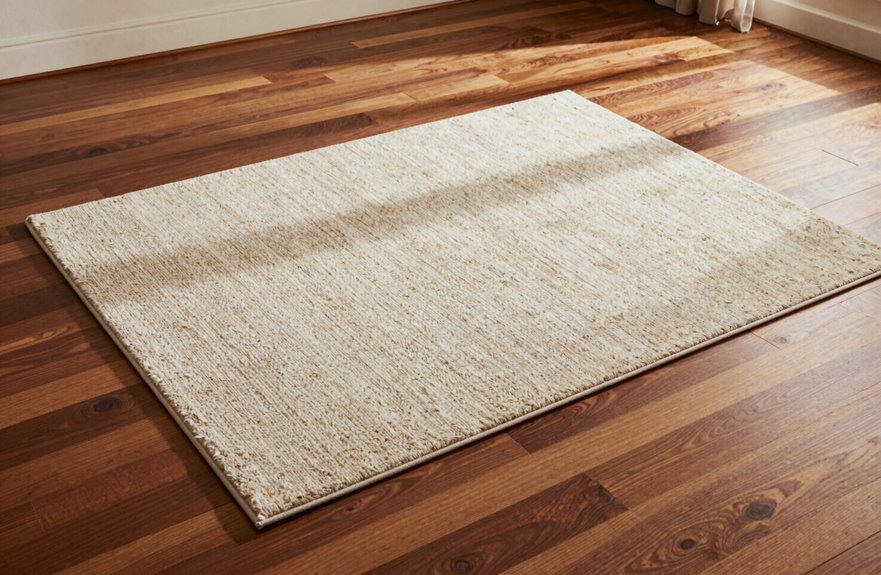
When did I finally admit my gorgeous oak floors were doomed? The second I dragged my vintage kilim across them, wincing at every scratch. Here’s what I’ve learned since joining the hardwood protection club:
The second I dragged my vintage kilim across them, wincing at every scratch.
- A quality rug pad stops that heart-stopping rug-slide when I’m carrying coffee
- That cushy underfoot comfort transforms my morning routine into actual bliss
- No more curled corners to trip over, because I’ve got enough chaos
- Airflow means less grit grinding into my finish like sandpaper
I use a felt-rubber combo, about quarter-inch thick, to prevent movement without trapping moisture. Rubber alone works too, depending on your finish. Your hardwood floors deserve this protection.
Do You Need a Rug Pad on Laminate Floors?
I thought I’d cracked the code with my hardwood pad strategy, then I rolled out that flatweave in my sister’s laminate-floored den and watched it skate halfway across the room during movie night. Popcorn scattered everywhere, and I realized I’d overlooked a critical detail.
Laminate floors present a particular challenge. That slick, multi-layer synthetic surface looks indestructible, but friction from a shifting rug grinds away at the finish like sandpaper on butter. Slip resistance isn’t optional; it’s necessary for functional floor protection.
A proper rug pad, rubber or non-rubber depending on your rug’s manufacturer specifications, locks everything down. This prevents real floor damage, including scratches, chemical staining, and finish deterioration.
Shop laminate-specific pads that balance grip, cushioning, and protective properties. Your floors will remain undamaged, your toes will stay safe, and movie night will proceed without incident.
Do You Need a Rug Pad on Tile or Stone?
Where exactly did I think that heavy wool rug would go on my polished travertine entryway? Nowhere, apparently. The first time my dog rounded the corner chasing a squirrel shadow, that beautiful thing shot across the tile like it was auditioning for a curling team.
Tile and stone floors are gorgeous, unforgiving ice rinks for your rugs. A rug pad isn’t optional; it’s survival. Here’s what proper grip brings to your life:
- Confidence in every step, finally.
- Protection for those pricey floors you adore.
- Straight edges that don’t bunch rebelliously.
- Cushioning that welcomes bare feet home.
Natural rubber or felt-and-rubber pads anchor your rug pad to stone and tile best, preventing medium damage risk from abrasion. Your entryway deserves this stability, as do your feet.
Do You Need a Rug Pad on Carpet or Vinyl?
Carpet isn’t as stable as it looks, and tripping over sliding rugs is a common problem. Carpet Lock pads grip the fibers underneath, stopping the bunching that occurs on unstable surfaces. Vinyl requires a felt-and-rubber combo to protect its smooth surface from scratches. Cutting pads an inch smaller than the rug prevents curled edges, which detract from a polished appearance.
Rug Pad Benefits
Freedom from constantly adjusting a crooked rug might be the greatest gift I’ve ever given my living room.
Adding a rug pad transforms everyday moments into something special:
- No more chasing runaway corners across the floor (we’ve all done the awkward hop-and-grab dance)
- That plush, cloud-like step when you first wake up, pure comfort
- Knowing my investment isn’t slowly shredding itself underneath
- The satisfaction when guests notice how put-together everything feels
My felt-and-rubber combo pad adds incredible underfoot cushioning without that silly marshmallow wobble. At about ¼-inch thick, it’s just right. I prevent slipping, gain real carpet protection, and maintain my flooring investment. The cost is justified by the durability and comfort it provides.
Carpet Protection Needs
There’s something almost rebellious about layering a rug over carpet, like wearing a belt with suspenders. This actually works. I’ve tripped over more bunched-up rugs than I’ll admit, and that’s where a rug pad saves the day and protects against falls.
| Without a Rug Pad | With a Rug Pad |
|---|---|
| Slipping, shifting chaos | Secure grip, zero drama |
| Wrinkles that catch your toe | Smooth, stable surface |
| Vacuum struggles, dirt everywhere | Easy cleaning, trapped particles |
| Medium damage risk | Full wear protection |
A carpet-specific rug pad, particularly felt-plus-rubber combinations, reduces movement while protecting the carpet underneath. Your underlying carpet stays protected from wear, your feet experience a plush surface, and your floors remain stable and secure for guests.
Vinyl Floor Considerations
Vinyl floors can trick you into thinking they’re invincible, but looks deceive. I once watched my favorite jute rug slide across my kitchen like it was auditioning for an ice capades show, creating both humiliation and potential danger.
What I’ve discovered about protecting beautiful, practical spaces:
- Slip resistance saves you from those heart-stopping rug-slips that nearly send you flying.
- Floor protection keeps your vinyl flawless; no scratches from scratchy backings will ruin that gorgeous finish.
- Skip cheap rubber pads, as they’ll stain your floors with yellow marks.
- Size matters. Trim that pad one inch smaller, or you’ll trip on curling edges constantly.
Choose felt, felt-and-rubber, or natural rubber options. Your vinyl floors and your safety deserve appropriate protection.
Which Rug Pad Material Should You Choose?
So, how do I even begin picking a rug pad when I’m staring at this wall of options in the hardware aisle, right? I used to grab whatever felt cheapest, and I learned that lesson the hard way when my vintage kilim slid across my bathroom tiles.
Every rug pad material serves a different purpose, and matching it to your life matters. Felt gives that lush, cushy step, like walking on soft clouds. Rubber delivers serious grip, perfect for chaotic hallways where kids or clumsy people sprint through. Felt-plus-rubber combos work well because you don’t sacrifice coziness for stability. Got carpet? Carpet Lock pads grip underneath, stopping bunching disasters before they start. For eco-conscious folks, non-rubber soybean options exist. These are thinner, but sometimes that’s exactly what you need.
How Thick Should Your Rug Pad Be?
Why does thickness matter so much? Rug pad thickness isn’t just about comfort underfoot; it directly affects whether doors glide smoothly or encounter resistance.
Consider these thickness options based on your needs:
- Thin pads (<¼ inch) keep busy hallways functional when door clearance is limited.
- Medium thickness (~¼ to ⅓ inch) works well for living rooms, offering versatility and reliable performance.
- Thick luxury (>½ inch) creates substantial cushioning for bedrooms, though it may interfere with door operation.
- Heat compatibility matters significantly for radiant floors, since excessive cushioning blocks heat transfer.
Always measure your rug’s border clearance first to prevent the edges from curling.
What Size Rug Pad Do You Need?
Once you’ve nailed the thickness, sizing the pad correctly is where many people struggle, myself included after watching my mother’s beautiful wool runner bunch into a tripping hazard for three years because she cut the pad flush to the edges.
Your rug pad size should sit about one inch (sometimes two) smaller than your actual rug on all sides. This creates the crucial breathing room needed for edge curling prevention, keeping those corners flat against the floor. Since most pads are trimmable rug pad options, you can customize as needed.
Choosing between rug pad thickness levels, thin for high-traffic zones and thick for cozy mornings, means nothing if you’ve sized wrong. The slightly-hidden border prevents bunching, tripping, and frustration.