A bedroom with dresser ideas only works if the piece earns its floor space.
The ten setups below range from a single oversized painting to a daily essentials organizer, and the right one depends on whether your dresser doubles as a vanity or stays strictly decorative.
Most take twenty minutes and under fifty dollars to pull off, including the 30-by-40 canvas that finally replaced my cluttered grid of small frames.
1. Statement Mirror
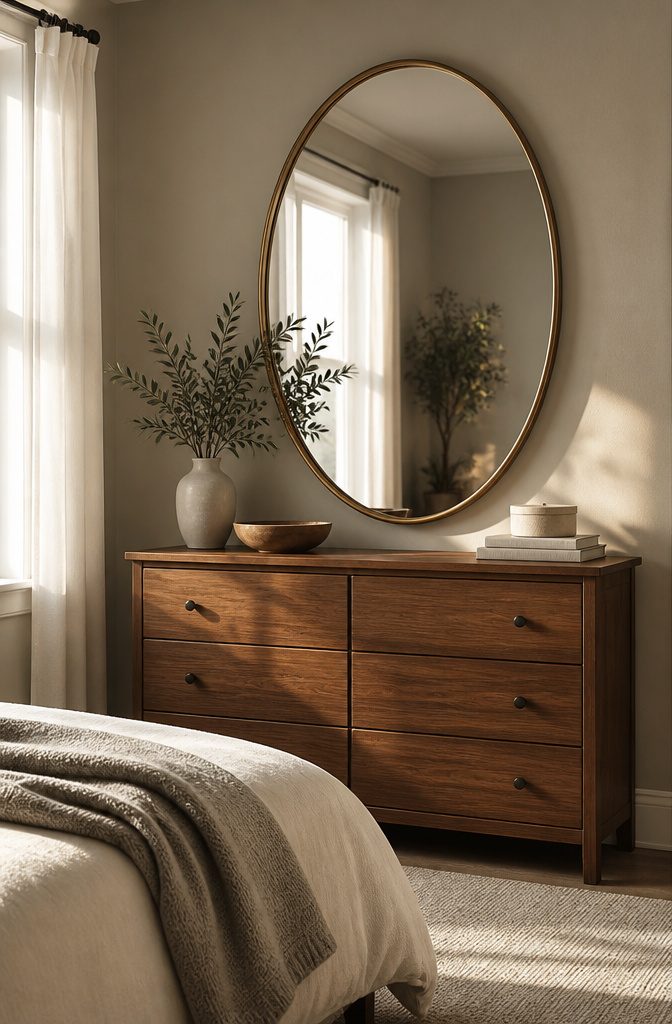
A mirror above the dresser does more than reflect. It catches whatever light the room gets and pushes it back outward, which matters in a bedroom that only sees morning sun.
The Oval Frame Mirror works here because its curves cut against the straight edges of most dressers and wardrobes. That contrast softens the whole wall without adding clutter.
Placement and proportion matter more than exact measurements. The mirror should feel centered over the dresser, not the wall, and the width needs to sit somewhere between half and two-thirds of the dresser top.
Too narrow and it looks like an afterthought; too wide and the dresser disappears underneath it.
I have hung one too high before, and the gap between furniture and frame just becomes dead space that collects dust and breaks the line.
Keep the bottom edge of the frame within a few inches of the dresser surface so the two pieces read as one unit.
In a small bedroom, the mirror doubles the visual depth at the far wall. The effect is immediate and costs nothing extra.


Black 16x9.2 inch Oval Mirror: Black PVC Plastic frame of wall mirror, simple and modern design, high-definition imaging without distortion, suitable for any room, bathroom, bedroom, living room, hallway, entrance, etc.
2. Fresh Flowers
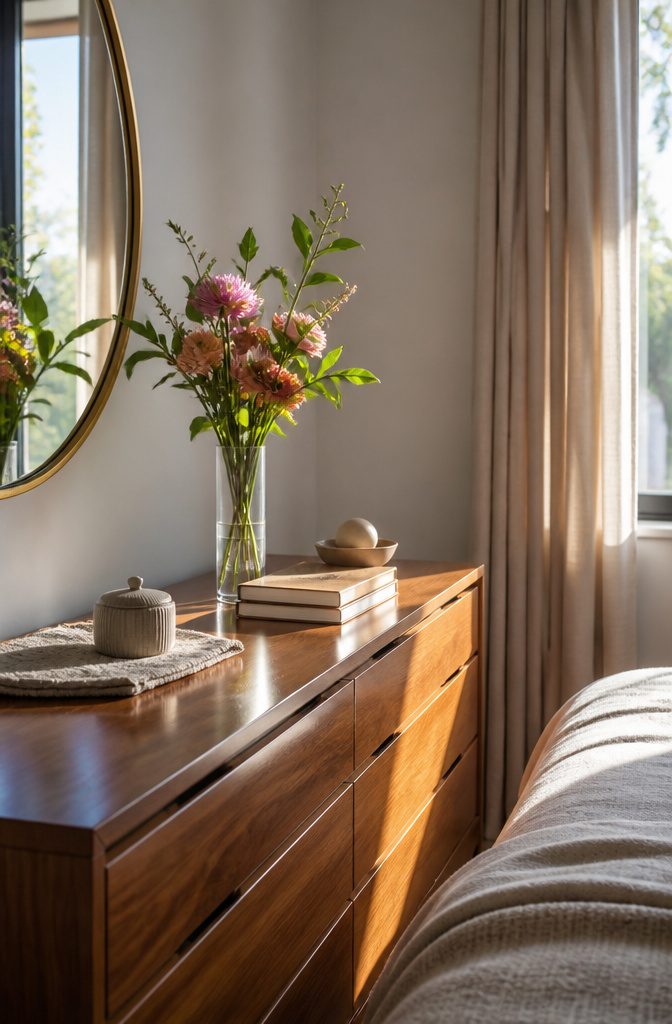
A small vase of fresh stems on the dresser does more than most permanent decor for the effort involved.
The source material mentions a Glass Vase Set, but any small jar or bud vase you already own works the same way.
I swap mine out when the seasons turn, not because I planned a rotation, but because the grocery store starts carrying daffodils instead of chrysanthemums and I grab what looks alive.
The change costs under ten dollars and takes two minutes to arrange, yet the room reads differently for a full week.
The trick is keeping the arrangement small. A dresser top is working space, not a banquet table, and a heavy centerpiece blocks the mirror you actually need to use.
One or two stems in a narrow container give the same lift without the clutter. Water daily, or the whole effect curdles into something worse than no flowers at all.

Package includes 12 packs of glass bud vases, each measures 2" bottom D x 6.4" H, and its opening mouth diameter is 0.7 inch. Packed in foam and carton to avoid breakage during shipping
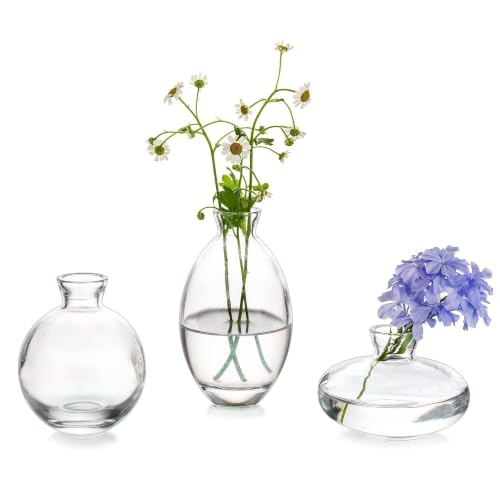
Unique Assorted Art Deco Vases: Minimalism Japandi style simple aesthetic vase renovates your home with a antique and elegant touch. They are chic enough to appreciate on their own, and simultaneously highlight the unique beauty of your plants when paired with flowers. Compliment to any setting varies from boho, rustic to contemporary.

Color:Transparent; Size:4.2x5.5x25 cm/1.7x2.2x9.8 inch(Top Diameter x Bottom Diameter x Total Length); Weight:340 Gram(Bud Vase+Packed); Material:Glass
3. Favorite Trinkets
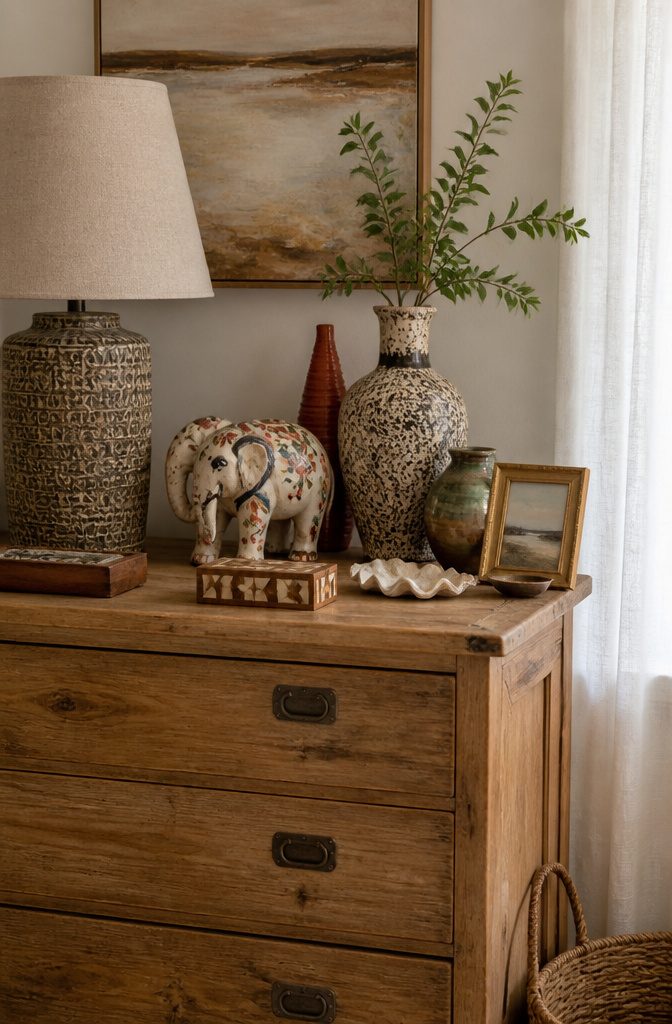
The objects already on your dresser carry more weight than anything you could buy for display.
A ceramic elephant from a flea market, a pottery shard found on vacation, the jewelry box your grandmother painted: these carry texture and memory that a catalog trinket never matches.
Layer by height, placing taller pieces toward the back.
A tall glass lamp base or a framed mirror leaned against the wall gives the eye a place to land first. Smaller, flatter items sit forward: a trinket tray for rings, a postcard slipped into an empty frame.
The back row should stand six to twelve inches above the surface; anything shorter than three inches reads as clutter unless it is grouped.
Texture matters as much as height.
Smooth glass against rough pottery, a leopard-patterned hat on a plaster bust, a green fern softening the edge of a heavy ceramic container. The contrast is what makes the grouping feel collected rather than staged.
I used to line objects up like soldiers across the surface. They looked tidy and dead.
Shifting the tall lamp to the left corner, clustering three small blue pieces on the right, and leaving actual empty space between them changed the whole wall. The dresser became a vignette instead of a shelf.
Symmetry is not the goal.
An asymmetrical setup reads more organic, and it is easier to adjust when you add something new. Which you will; the best dresser tops grow over years, not a single Saturday.

Unique Cloud Design: The cute lazy cloud design makes the jewelry dish an aesthetically pleasing decor. The grooves on the side prevent your jewelry from falling off.

1. Coastal Conch Shell Design This ceramic jewelry dish features a pink conch shell shape, bringing a soft coastal decor aesthetic to your space while serving as a stylish trinket tray for daily essentials.

CERAMIC: Crafted from durable ceramic with a whimsical dresser-inspired design.
4. Shelf Above the Dresser
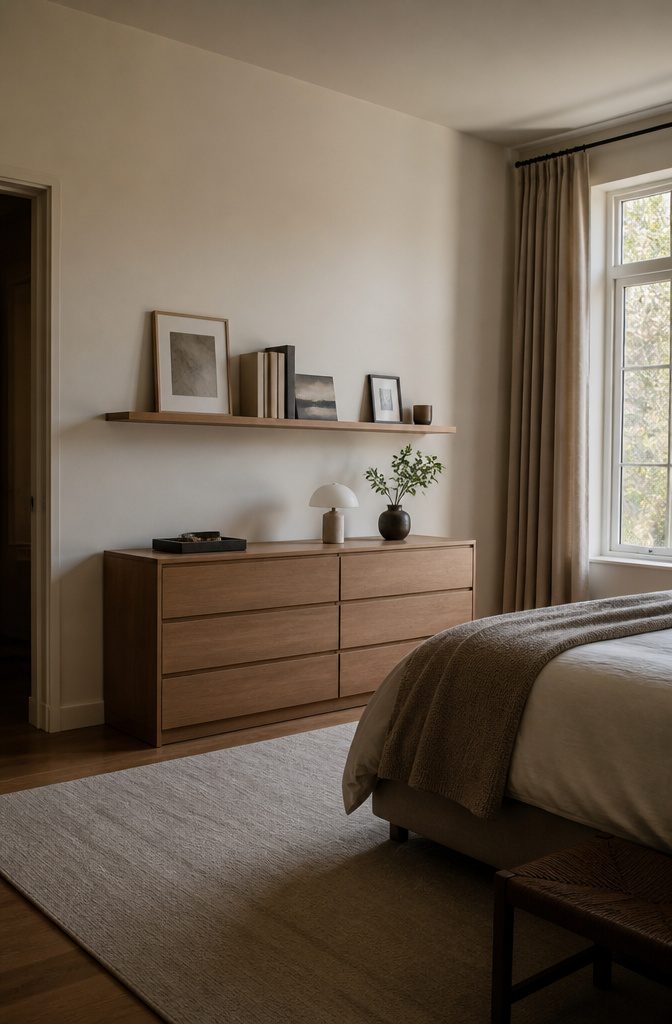
A floating shelf mounted above the dresser buys back the vertical space most bedrooms ignore. The top of my dresser collects enough already: a jewelry tray, the book I am half-reading, a lamp that has to sit somewhere.
The wall above is where the extra display space actually lives, and a slim ledge keeps it from reading as clutter.
A wall-mounted shelf, something like the Wall-Mounted Shelf, sits shallow enough that it does not dominate the wall.
Books lean against each other fine up there. Small artwork, a framed photo, a shallow basket for the odds and ends that do not earn drawer space: these read as intentional because they are off the work surface.
The dresser below stays orderly, which matters more than it sounds.
A clear top means the room still functions on the mornings when you are running late and the only visible surface is what you actually need. The shelf carries the decorative load so the dresser does not have to.

𝐂𝐨𝐦𝐩𝐥𝐞𝐭𝐞 𝟖-𝐏𝐚𝐜𝐤 𝐉𝐞𝐰𝐞𝐥𝐫𝐲 𝐎𝐫𝐠𝐚𝐧𝐢𝐳𝐚𝐭𝐢𝐨𝐧 𝐒𝐨𝐥𝐮𝐭𝐢𝐨𝐧: This set provides a versatile 8-pack solution with 4 distinct tray designs, each included in a pair, allowing for flexible combinations to meet diverse storage needs. All trays share a uniform footprint of 8.3"L x 5"W x 1"H, ensuring they fit neatly side to side or stack perfectly in your drawers.

Set of 2 : Perfect for display earrings, necklaces, bracelets rings and other jewelry, keep your jewelry organized and easily accessible
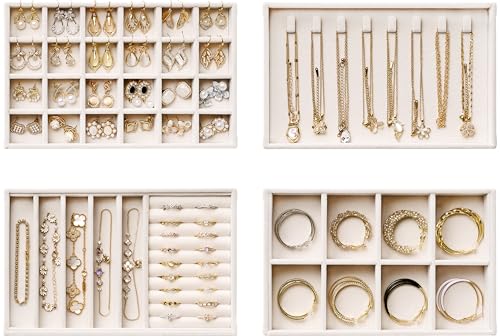
4-Piece Velvet Jewelry Trays Set - This stackable jewelry organizer includes 4 jewelry tray inserts that neatly store and display rings, earrings, necklaces, bracelets, watches, sunglasses and so on. Easily view your collection and find what you need in seconds—no more tangled chains or missing pieces.
5. Crystal Spheres
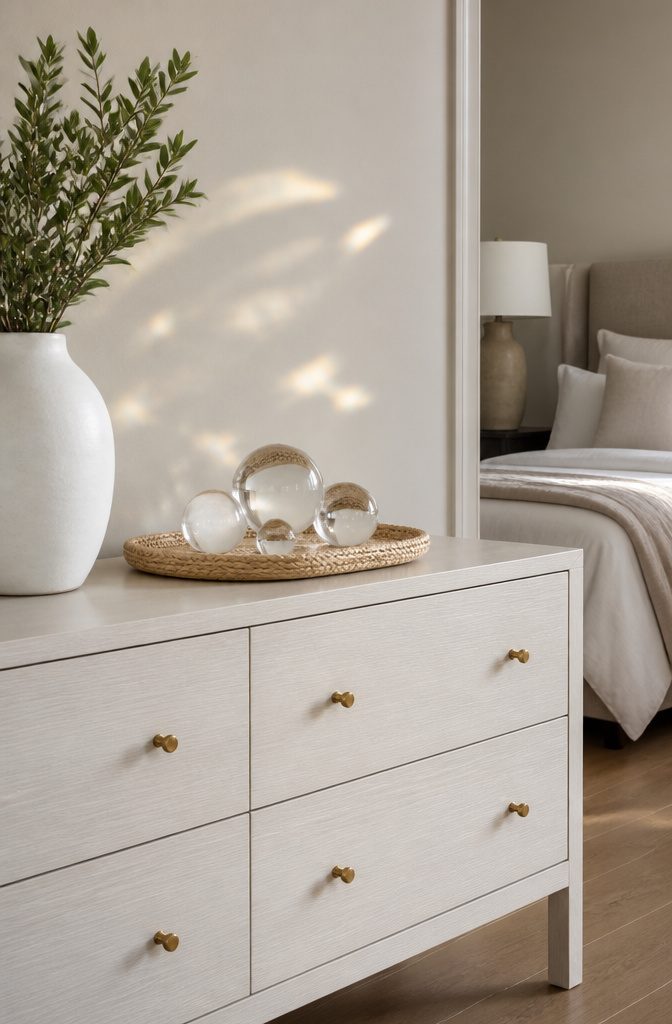
A trio of crystal spheres on a dresser catches morning light in a way that flat objects never manage.
The round shape breaks up the long rectangle of most bedroom furniture, and the transparent coating lets light pass through to create small, moving highlights on the wall behind.
In the evening, they pick up lamplight and shimmer without needing any power source of their own.
Stack them on a short stack of books or group them in a tray with textured objects if the surface feels too bare otherwise.
The spheres work best when they are not the only smooth thing in view; a ribbed ceramic or a woven tray underneath keeps the arrangement from looking like a display case.
A white minimalist modern wood dresser gives them the quiet background they need, though any pale, uncluttered top will do. The look stays understated rather than ornate, which matters on a piece of furniture that already holds your daily clutter.

SOLID PINE WOOD SHELVES - Made with solid pine shelves and a matte steel frame, this 3-tier bathroom counter organizer adds warm wood texture to vanities, sink counters, dressers, kitchens, and coffee bars.

Item Includes 19 Pcs - 3 pack clear acrylic qtip holder dispensers with black lids(10oz) + 8 black labels with white pre-printed words (Cotton Balls, Cotton Swabs, Cotton Pads, Floss Picks, Bath Salt, Hair Accessory, Clips, Makeup Brush) + 8 black blank labels
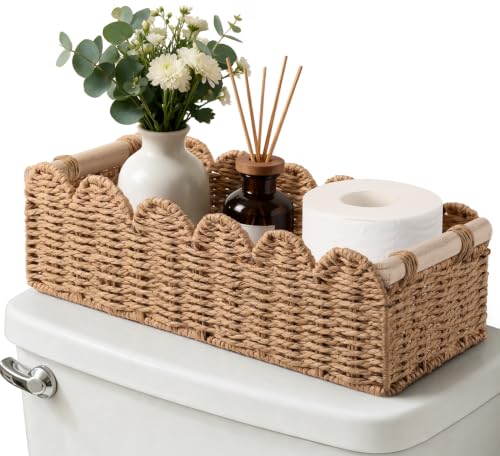
Toilet Paper Storage:No more last-minute runs to the closet;toilet paper basket serves as an above toilet storage solution and toilet tank basket that keeps rolls handy;a toilet paper holder to organize your bathroom essentials and home decor house decor
6. Daily Essentials on Display
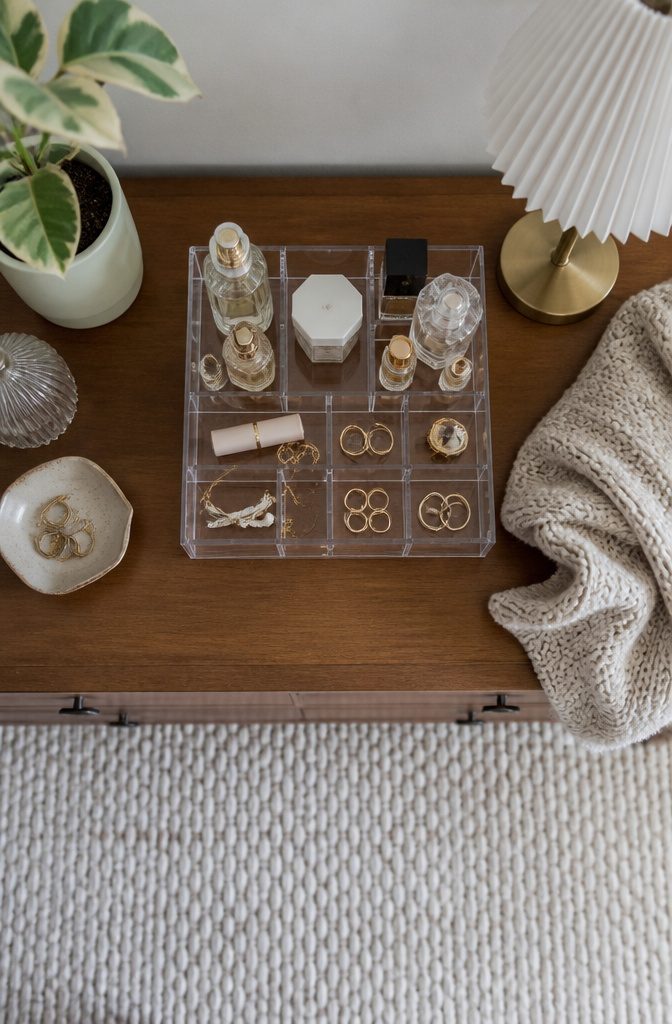
The bottles and boxes you actually reach for each morning, perfumes and watches and the small jewelry you wear on repeat, deserve their own territory on the dresser top rather than getting shuffled through a drawer.
A Daily Essentials Organizer keeps these pieces upright and grouped so the surface stays neat without hiding what you use. That practicality matters more than polish alone: a Houzz survey found 68% of homeowners put functionality first when redecorating bedrooms.
Displaying daily items openly satisfies that priority while still giving the dresser a finished look, since the organizer itself becomes part of the styling. The tradeoff is restraint.
Cram in too many categories and the arrangement reads as clutter again. Three to four item types, maybe skincare alongside the perfume or one watch stand, keeps the balance between useful and intentional.

Antique Gold Scroll Frame for Vintage Character: The intricately detailed scroll design frames the oval mirror in antique gold, turning a functional piece into a decorative focal point. The vintage styling works equally well in a bedroom dressing area, bathroom vanity wall, or entryway where a statement accent is needed without overpowering the space.

Mirror Dimension:14.3" L x 9.6"W.Inside mirror size:10.2" L x 7"W.Made from plastic .

MULTIPLE FUNCTIONS: It's a decorative hanging wall mirror and also an Perfect for use as jewelry, accessories, makeup organizer or serving tray (avoid direct contact with food).
7. Oversized Painting
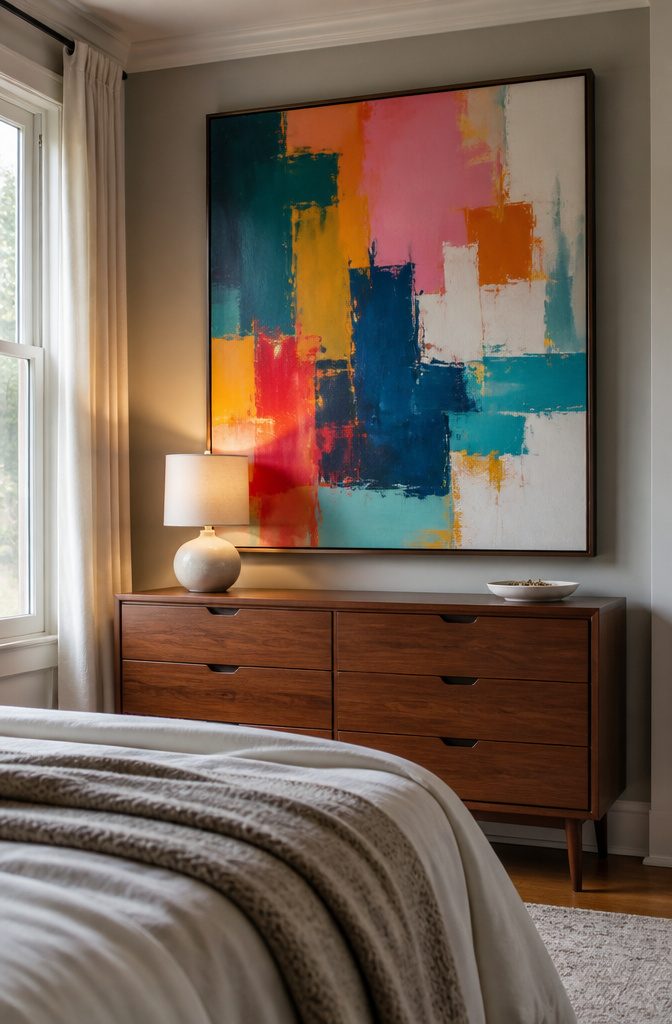
A single oversized painting above the dresser replaces the usual mirror with something that actually holds the eye.
The wall stops being a blank surface and becomes a single moment of expression, one framed canvas pulling attention upward so the dresser below can stay simple or even slightly cluttered without the whole corner feeling busy.
I used to default to a grid of small frames, thinking more pieces meant more interest. The result was always visual noise, each frame competing with the lamp, the jewelry dish, the stack of books.
One large piece solves that by giving the wall a clear hierarchy. The painting leads, everything else follows.
The scale matters.
Too small and it floats awkwardly; too large and it overwhelms the furniture. For a standard six-drawer dresser, a canvas in the 30-by-40 to 36-by-48 range usually fills the wall without crowding the piece below.
Hang it so the bottom edge sits 4 to 6 inches above the dresser top, close enough to relate to the furniture, not so high it disconnects.
A white mid-century dresser against gray walls handles this especially well; the neutral furniture lets the art carry whatever color or mood you want that year.
No matching required, no rearranging three frames to get the spacing right. One hook, one wire, done.

Narrow Neck for Secure Stem Holding:This glass vase features a narrow neck that keeps flower stems upright and neatly arranged. It works well for displaying single stems, small bouquets and delicate floral pieces.

Glass Material & Color: Made of clear glass. The round bottom shape provides stability on flat surfaces

Classic Vintage Bottle Shape: Features a narrow neck and rounded body that holds flower stems upright. The simple, timeless design complements various interior styles from modern to rustic
8. Tall Houseplants
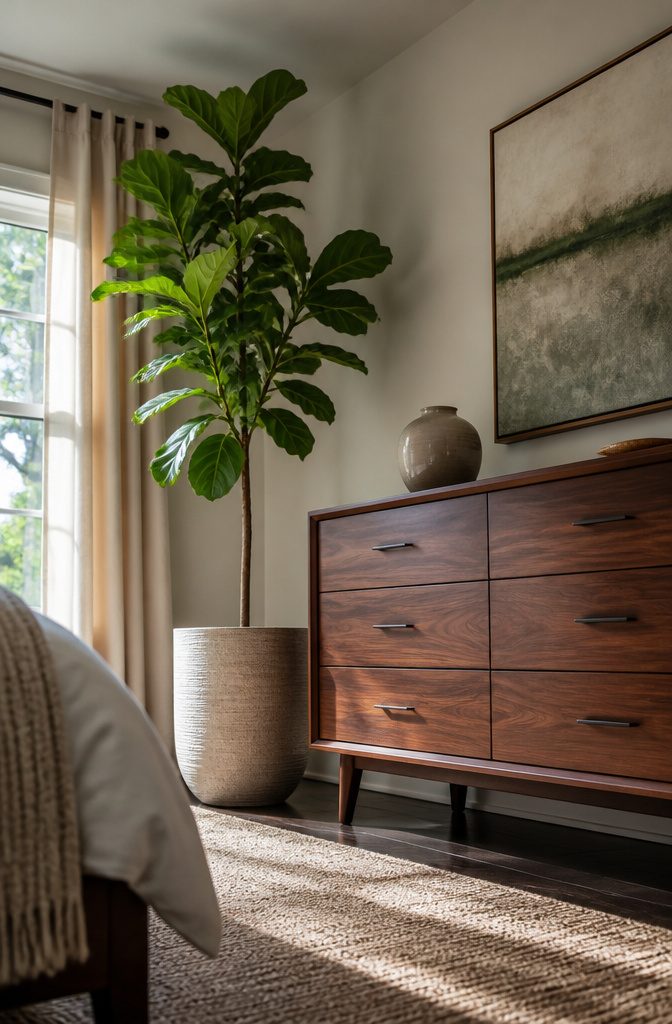
A dresser runs low and wide across the wall, and that horizontal weight can make a bedroom feel squat if nothing breaks it.
A tall houseplant in a ceramic planter draws the eye upward and adds living texture without demanding a second piece of furniture.
I like this trick for corners especially, where a blank triangle of floor tends to collect a laundry basket or nothing at all. A vertical plant fills that dead space and softens the room’s edges.
The vertical contrast works whether the dresser itself is a white tall five-drawer fabric chest or something older and lower; the height gap between the two pieces is what creates the layer.
Air quality benefits get mentioned often, but the real payoff is visual: green, growing height against painted wood or laminate reads as calm without trying hard.
Choose a planter that sits on the floor rather than the dresser top, or you lose the effect and gain a water-stain risk.

Elevate Your Everyday Rituals: KIBAGA’s vanity tray with a beautiful faux travertine look turns your bathroom counter, nightstand, or coffee table tray into a curated display - a simple upgrade that makes your whole space feel intentionally styled and beautifully put together

【LAVENDER LEAF JEWELRY DISH】 Expertly crafted from premium glazed ceramic, this elegant purple leaf-shaped trinket tray features delicate vein textures. It adds a lovely touch of pastel aesthetic decor to any bedroom vanity or nightstand.

[Elegant Ruffled Edge Ceramic Jewelry Dish]This beautifully designed ceramic trinket dish features a delicate ruffled edge and soft pastel finish, ideal for organizing and displaying rings, earrings, necklaces, bracelets, and other small jewelry items. It adds a stylish and elegant touch to vanities, dressers, nightstands, and bathroom countertops.
9. Floor Lamp Beside the Dresser
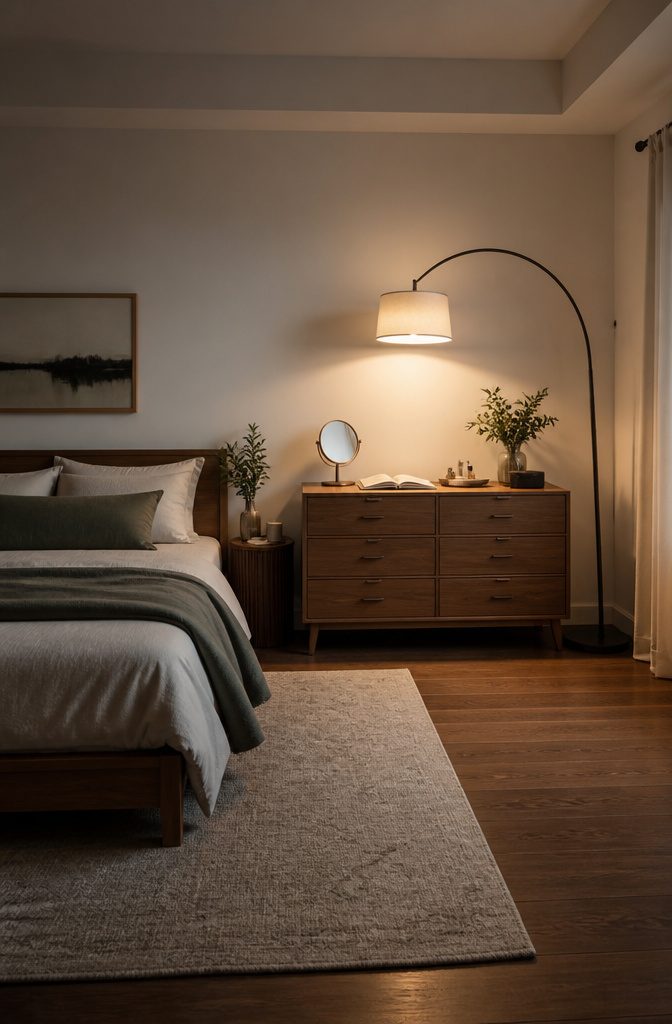
A floor lamp parked beside the dresser turns the top surface into a real work zone, not just a place to drop your phone.
The glow lands where you need it: sorting jewelry, folding a stack of shirts, or leaning in close to the mirror.
This setup matters most in two situations — when the dresser doubles as your vanity, or when the bedroom overhead light is weak or missing entirely. In those rooms, the lamp becomes your dressing light by default.
The Modern Arc Lamp works well here because the arm reaches over from the side without eating the surface.
The tall silhouette also frames the dresser, giving the corner a sense of purpose rather than making it look like furniture shoved against a wall.
A soft, warm bulb keeps the light from feeling clinical at night, when you’re winding down rather than getting ready.
I tried this in a rental where the ceiling fixture was a single bare bulb behind a cracked dome.
The floor lamp made the dresser usable after dark, and the arc design meant I wasn’t knocking the shade every time I opened the top drawer.

Velvet Jewelry Trays: Eight soft velvet lined trays keep rings, earrings, necklaces and bracelets organized in your dresser drawer without scratches or tangles

Double-Pack 12-Grid Large Capacity - End Jewelry Clutter for Good Say goodbye to tangled necklaces, lost earrings, and scattered rings with this 2-pack jewelry organizer! Each box features 12 spacious grids, offering ample storage for your entire jewelry collection—from dainty studs to statement bracelets.

Set of 4 can hold a dozen of jewelry, allows you to view everything, so much easier and faster to pick up the right items to wear with your outfit, save your time and make your life so much easier; No more tangled necklaces or hunting for a matching earring
10. Gallery Wall
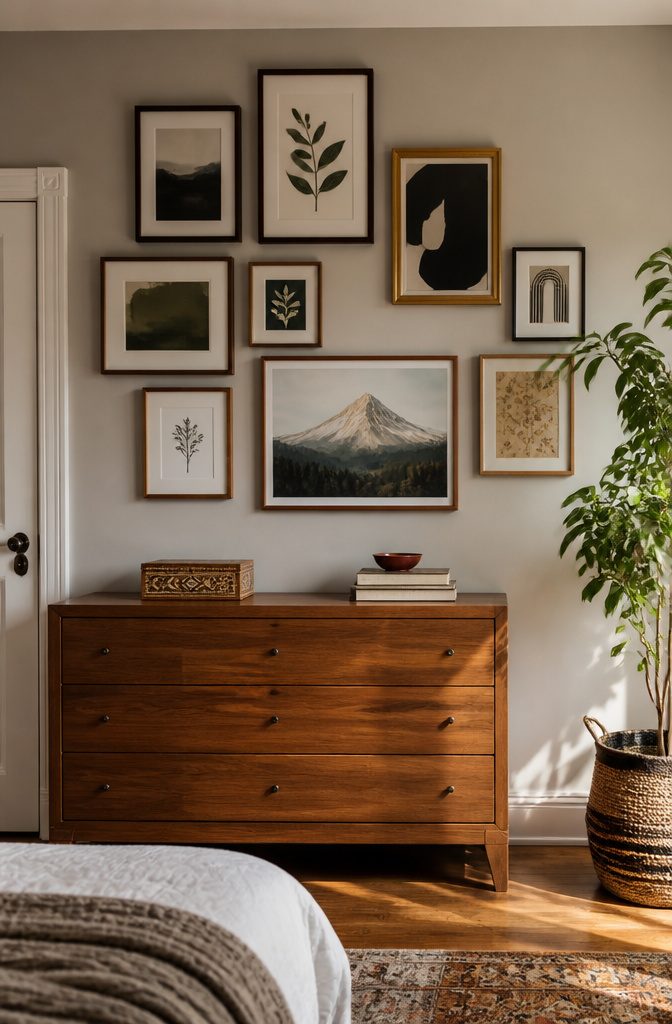
A gallery wall above the dresser spreads the eye across several pieces instead of fixing it on one.
Frames in a loose cluster or a tight grid both work; the grid reads more orderly, the cluster reads more collected-over-time. Either way, the dresser surface stays open for actual use.
The single oversized painting the sources describe does something different: it declares one mood and pulls attention up and away from whatever sits below. That works better when the dresser itself is simple or the clutter is real.
The gallery wall wins when you want the wall to feel like your own arrangement rather than a single purchase, and when the dresser top is already fairly clean so the two zones talk to each other instead of competing.
I have leaned toward the gallery wall in smaller bedrooms where one large piece would dominate the only visible wall.
The mix of sizes also forgives a frame or two that does not quite match, which matters when you are pulling from what you already own.

✅ STORAGE MADE STYLISH- This sleek vanity qtip holder provides a decorative accent to your powder room, bathroom vanity, makeup table and more; This canister is great for storing and organizing cotton swabs, ovals and rounds, makeup applicators, cosmetic sponges, wedges, guest soaps, bath bombs, balls, salts and more.It is easy to access the items inside, * LIDS CANNOT SCREW ON THE JAR*.Just stand on the jar for easy access.

- **Glossy Ceramic Basin:** Smooth, high-glaze ceramic surface, stain-resistant and easy to clean, suitable for daily washing.

【Effortless Snap-Together Assembly】- No tools or frustrating screws required! Simply slide the durable plastic trays into the sturdy metal frames for instant stability – takes under 60 seconds. This countertop makeup organizer is perfect for non-DIYers tired of complex setups, misaligned holes, or missing parts. Enjoy hassle-free organization that stays perfectly level on your bathroom countertop, vanity, sink corner, dresser or coffee station.
Why Dresser Decor Matters
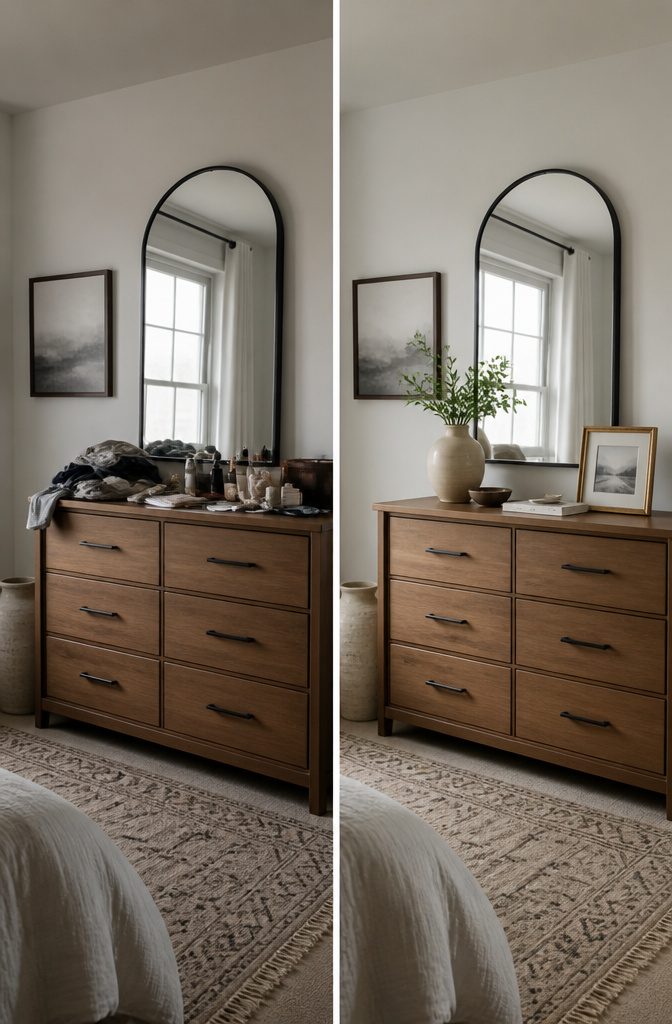
A dresser takes up more visual space than almost anything else in a bedroom except the bed itself, which means its surface sets the tone for the whole room whether you plan for it or not.
Leave it bare and it reads as forgotten; pile it with yesterday’s clothes and it becomes a daily reminder of what you still have to deal with.
The ten ideas ahead only work because they start from that fact: the dresser is a stage, not a storage bin, and what sits on top of it shapes how the room feels when you walk in at night and when you wake up to it in the morning.
The peace part is real, too.
A clear top with two or three intentional objects beats a crowded one every time, not because minimalism is a moral victory but because a surface you can actually wipe down without moving twenty things is a surface that stays clean.
Most of these ideas need about twenty minutes and under fifty dollars to pull off, which is the whole point. The goal is not a showroom; it is a dresser that quits nagging you.
Layering Technique
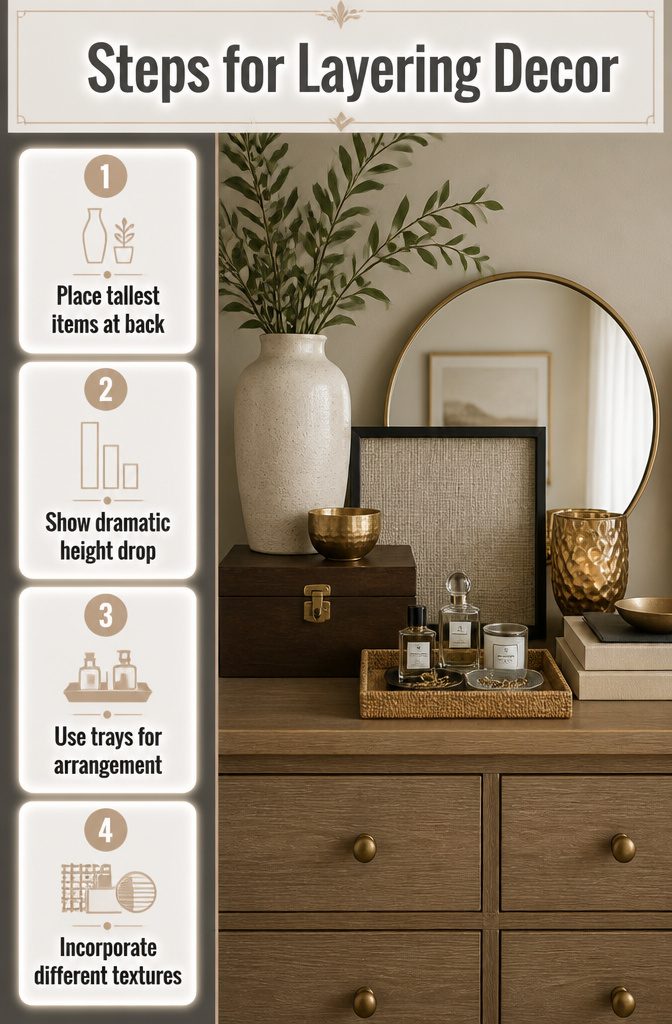
Taller pieces belong at the back of the dresser, with smaller items stepping forward in front of them.
The height drop from rear to front should be dramatic enough that nothing hides completely, or the layering collapses into a single visual plane.
A tall ceramic vase behind a low wooden box works; two frames of nearly the same size stacked slightly offset does not. Shapes matter as much as scale.
A round mirror propped behind a rectangular tray breaks the grid of drawers underneath and keeps the eye moving across the surface. Texture does the rest of the work: matte against glossy, woven against smooth metal.
Trays help here by corralling the small pieces that would otherwise scatter. I group perfume bottles or loose jewelry inside one, which lets the tray read as a single low object rather than six competing ones.
Asymmetry tends to look more settled than a matched pair, though the trick is to balance visual weight without mirroring it exactly. One heavy piece on the left, a cluster of lighter ones on the right, and nothing dead center.
Function Meets Style
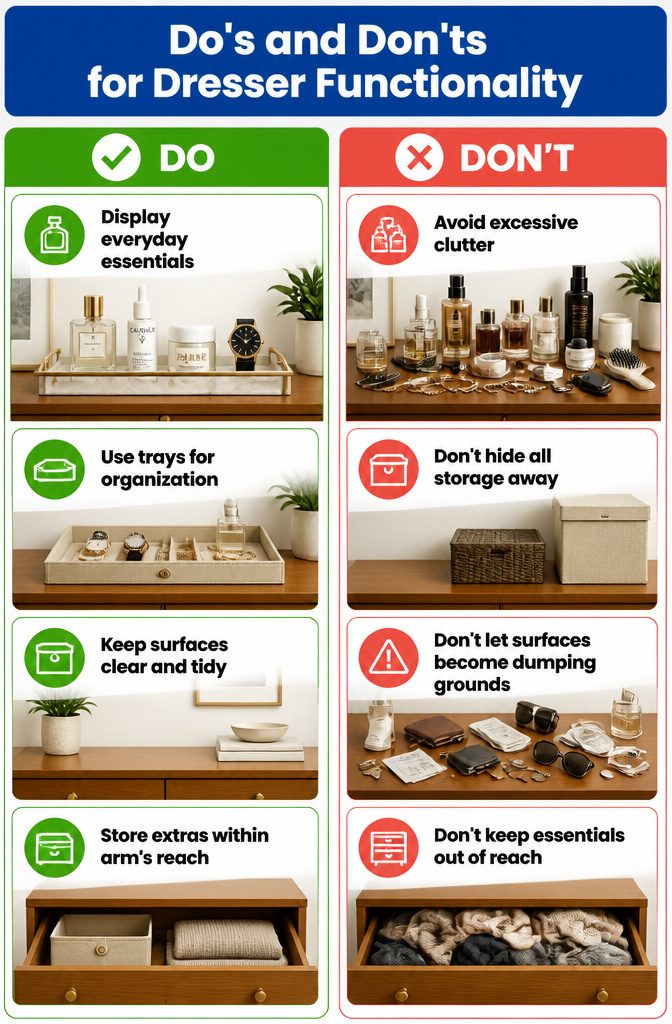
A dresser that looks good but fights you every morning is a piece of furniture you will start to resent.
The perfumes, watches, or skincare you reach for daily belong on top, corralled in a tray or a slim organizer that keeps them upright and visible.
Seeing them reminds you to put them back, which is half the battle of staying tidy.
One survey found that 68% of homeowners prioritize functionality when redecorating their bedrooms, and that figure tracks with what I notice in my own reading: the rooms people actually live in are the ones where the pretty thing and the useful thing are the same object.
Hidden storage still matters. A shallow box for receipts, a lidded bin for off-season accessories, keeps the surface from becoming a dumping ground.
The balance tilts wrong when everything is out or everything is stashed; aim for the items you touch before coffee on display, and the rest within arm’s reach but out of sight.
Frequently Asked Questions
How to decorate a dresser to keep your bedroom stylish and tidy?
Start by corralling daily essentials in a tray or slim organizer so perfumes, watches, and jewelry stay upright and visible.
Layer taller pieces at the back and smaller items toward the front, leaving actual empty space between groupings so the surface reads as intentional rather than cluttered.
A styled dresser brings the room together and gives you a spot for the items you reach for every morning.
Why should I decorate the bedroom dresser?
The dresser takes up more visual space than almost anything else in the room except the bed, so its surface sets the tone whether you plan for it or not.
Leave it bare and it reads as forgotten; pile it with clutter and it becomes a daily reminder of what you still have to deal with.
A clear top with two or three intentional objects beats a crowded one every time, because a surface you can actually wipe down without moving twenty things is a surface that stays clean.
What are some stylish dresser decor ideas for the bedroom?
Hang a statement mirror or oversized painting above the dresser, prop fresh flowers in a small vase, display favorite trinkets layered by height, install a floating shelf for extra display space, group crystal spheres to catch light, or arrange a gallery wall of mixed frames.
A tall houseplant in a ceramic planter beside the dresser draws the eye upward, while a floor lamp turns the surface into a real work zone. Each idea needs about twenty minutes and under fifty dollars to pull off.