
The ideas here run from simple path lights that sit on top of the soil to hardscape lights built into walls and steps, and what already stands in your yard decides which end you’re working at.
A finished patio rules out cutting into stone, so ground lights and glowing LED light spheres fit there, while a yard still in progress can build hardscape lights into the structure.
1. Path and Walkway Lights
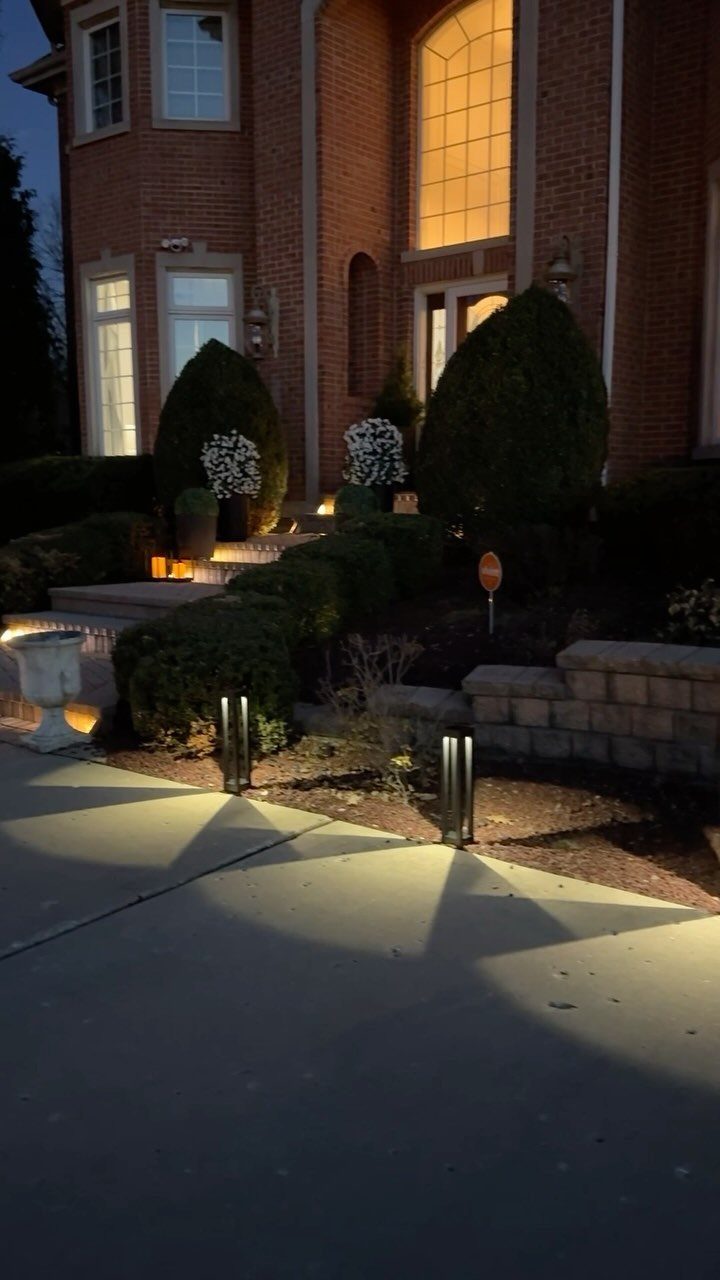
Low fixtures along a walkway do 2 jobs at once: they show people where to step and they draw the edge of the route so the path reads as a shape after dark.
I prefer black cylindrical heads like these because they disappear in daylight and stay out of the way of the plantings.
Solar sets are the cheapest way in, and they come in packs of 2 or 4, which suits a short path with no wiring. Space them evenly along one side rather than zigzagging, and place them before you commit to digging.
For safety, call 811 to have your utility companies mark the location of underground wires and pipes before digging or installing ground-mounted fixtures.
— Hinkley
2. Uplighting
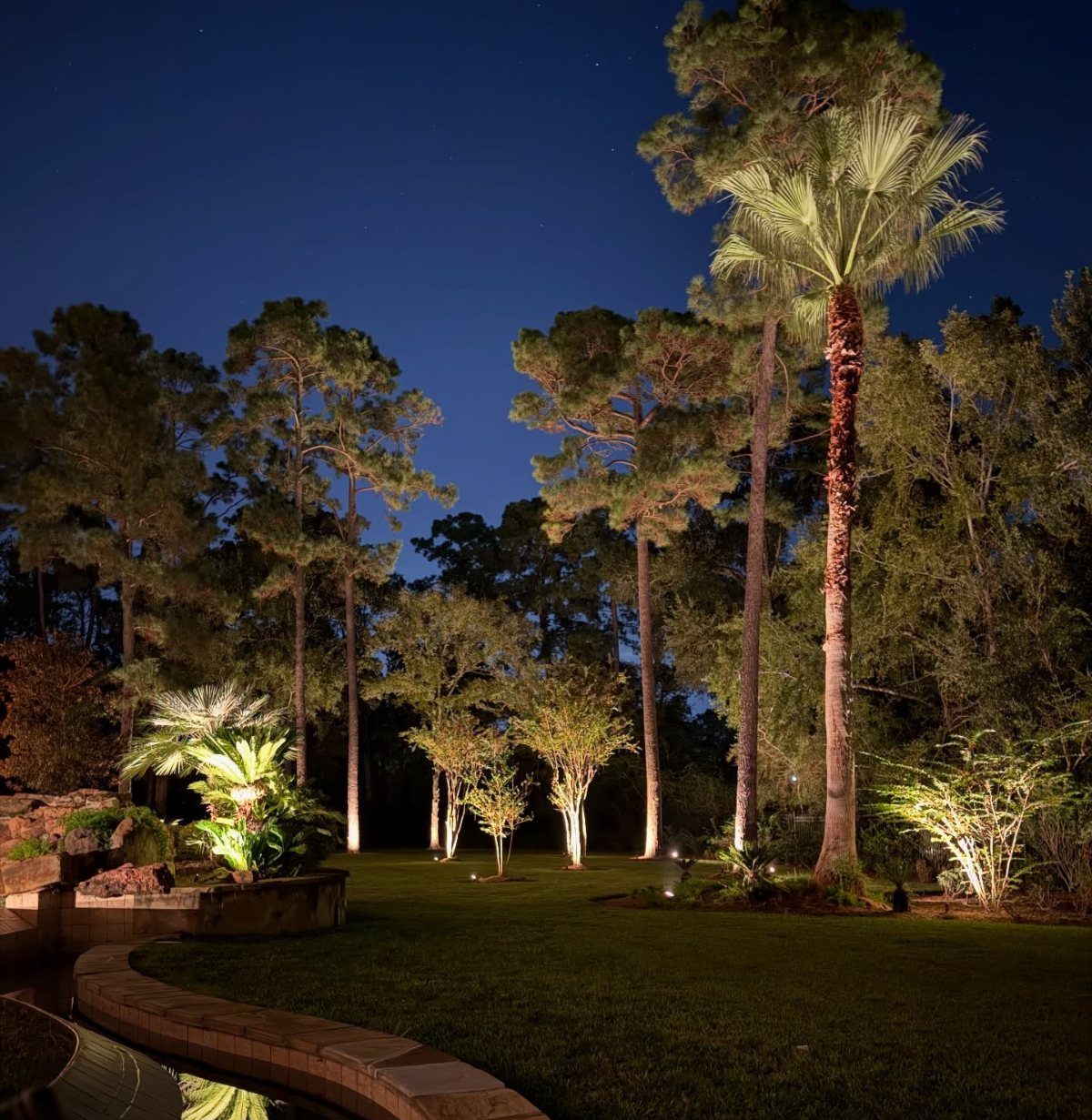
Aim a fixture up from the ground and a palm trunk or pine becomes the tallest thing in the yard. Warm light looks best on bark and fronds, and I’d choose it over cool white, which flattens green into gray.
Set the fixture a short distance from the trunk so the light rakes up the bark instead of washing out one spot. Start with the biggest tree, then add more only if the yard still feels dark.
3. Step Lights
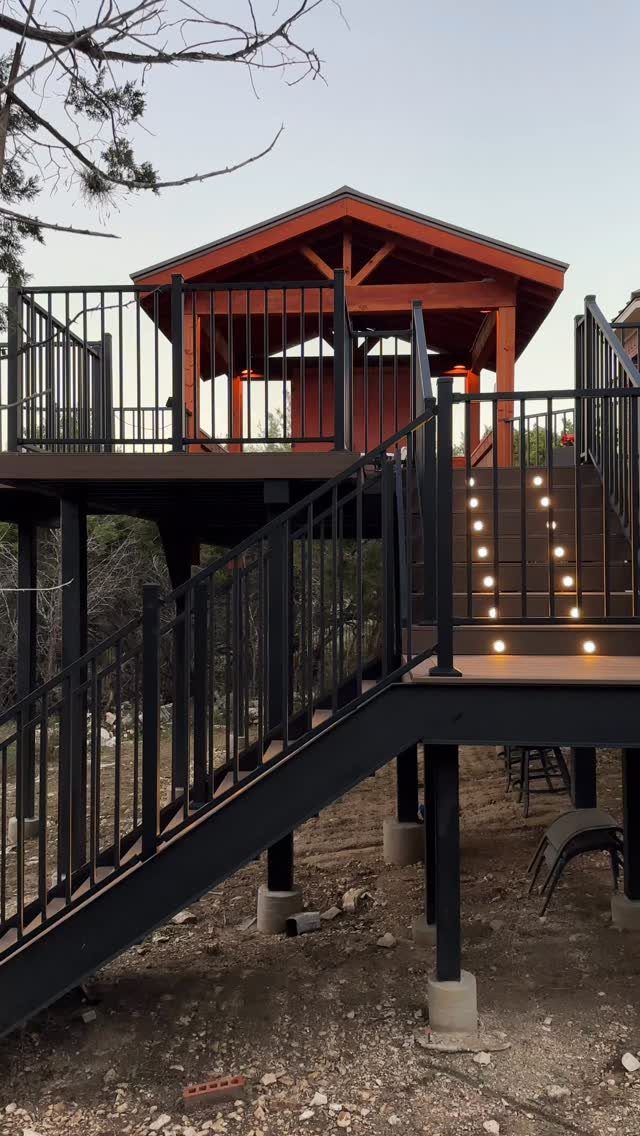
Small lights set into each stair riser put a pool of light right on the tread below, which is exactly where a foot lands. On a deck stair leading to a gazebo, that matters more than any decorative lighting nearby.
Low-voltage lighting finishes a deck like this, and step lights set into the risers or under the tread nosing give a warm glow after sunset while lighting each stair edge.
I’d keep the bulbs warm white and put one on every riser, not every other step, so no tread falls into shadow.
4. Garden Bed Lighting
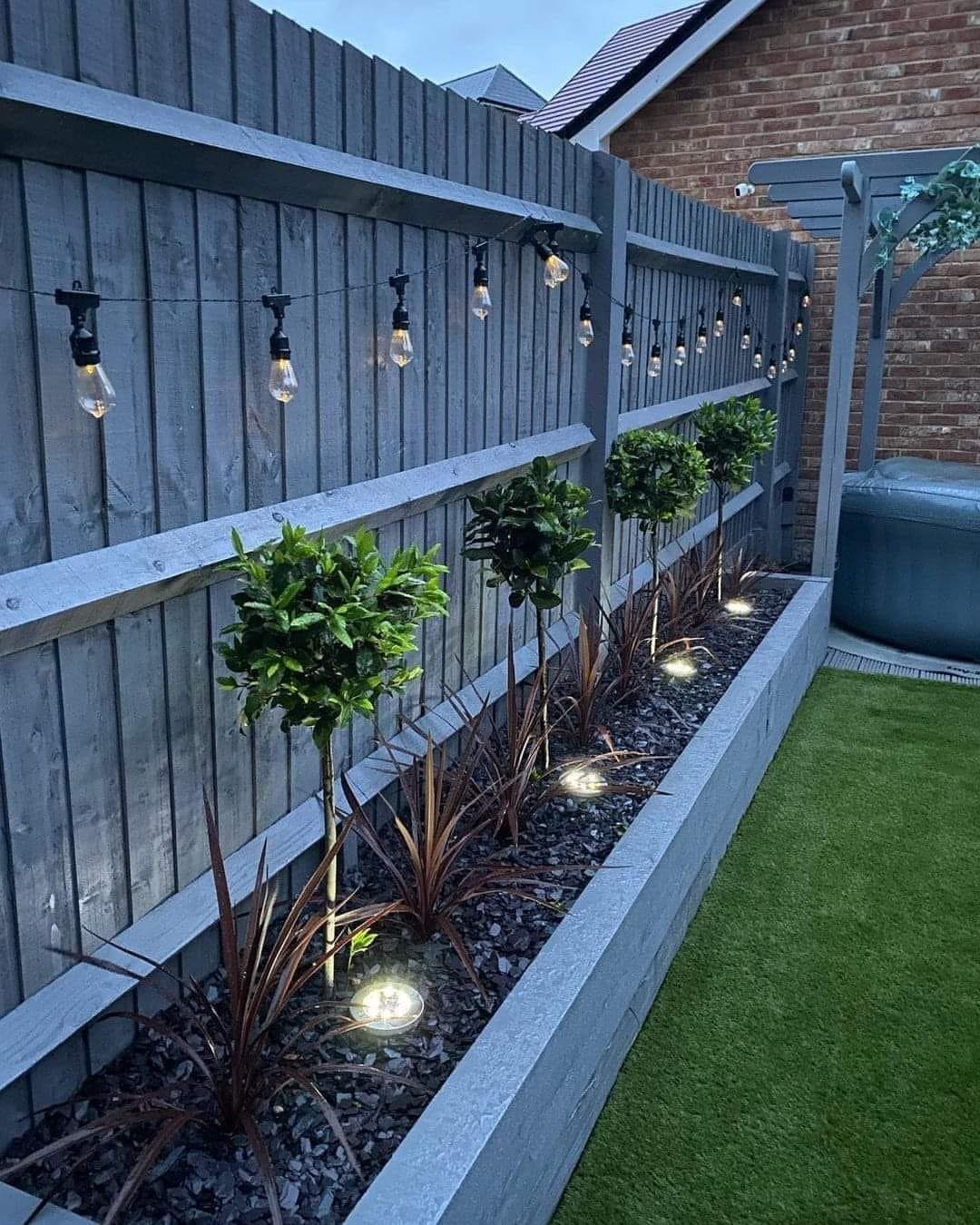
A narrow bed against a fence is easy to overlook at night, yet a few uplights turn it into the part of the yard you see first from the patio.
Dark gravel helps: it soaks up stray glare, so the light lands on the trunks and leaves.
I’d space the fixtures unevenly, close to the small trees and farther apart in between, so the bed doesn’t look like a runway. Keep the beam pointed at the plants, not at the fence.
5. Ground Lights
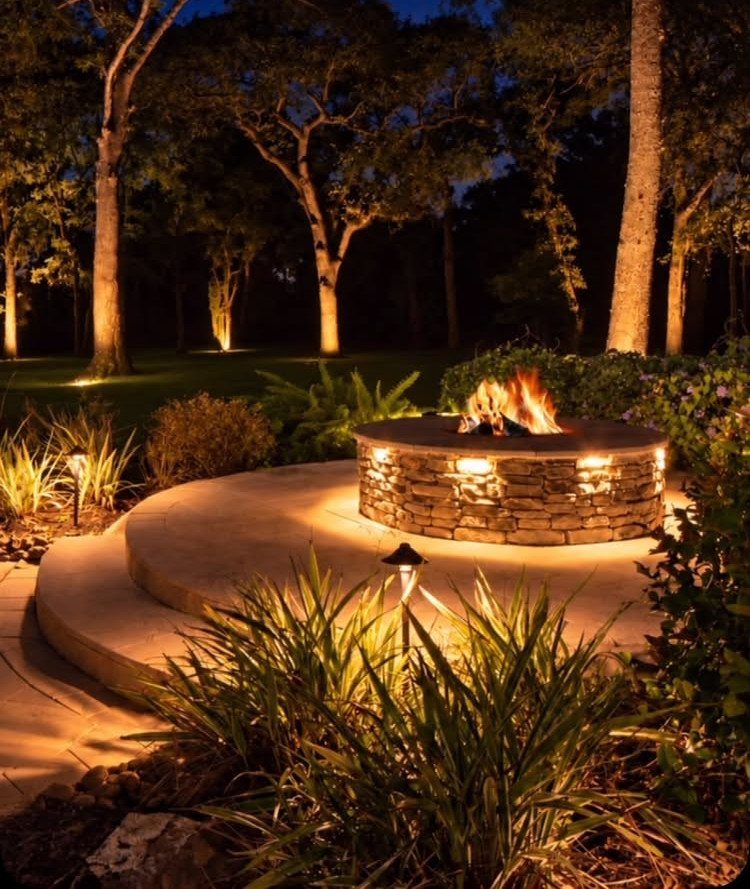
In-ground fixtures sit flush with the soil, so you see the glow and almost never the lamp.
That makes them my pick for a yard where plants, a fire pit and a few trees all need a little light without clutter.
Choose spots that are easy to find again, since a buried fixture is harder to move than a stake light.
Plan the layout on paper first, marking each tree and bed, then place fixtures where the light has something to land on.
6. Hardscape Lights
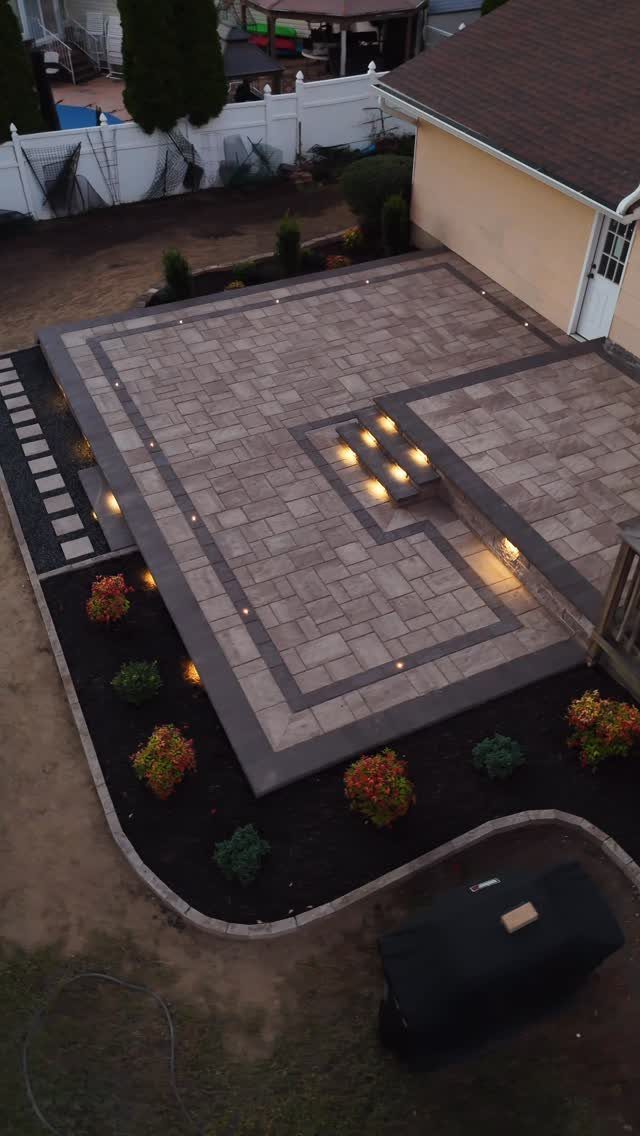
Lights tucked under step caps and set into patio borders belong to the stone itself, which is why a hardscape installation looks so clean. The fixture hides and the edge of the step stays sharp.
This is the idea to plan before the paving goes down, because the wiring has to run through the structure. If the patio is already built, I’d stay with surface-mounted options instead of cutting into finished stone.
7. Wall Wash Lighting
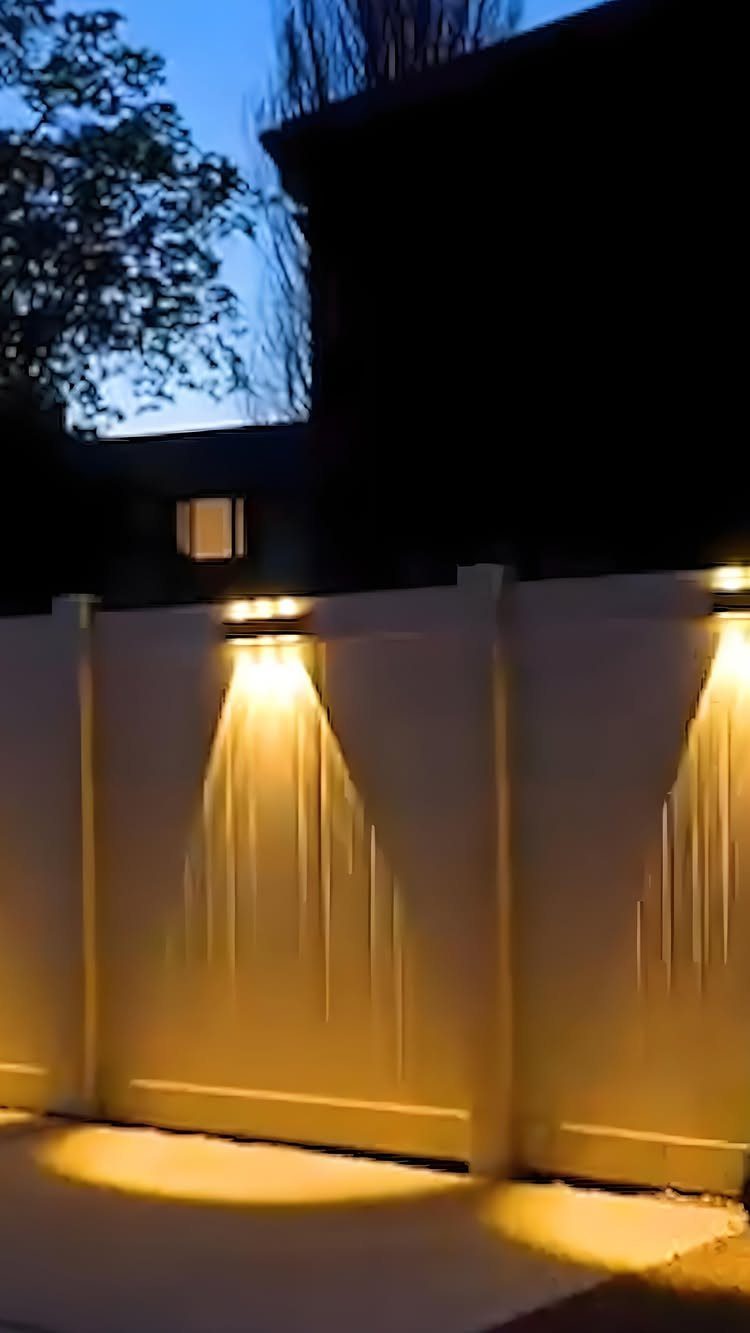
Fence panels make a good canvas for light, and a white vinyl one is about the best surface you can give it.
The pale face catches the beam and spreads it, so a modest warm bulb does the job without glare.
I’d mount the fixtures at one height and space them evenly, so the pools of light overlap into a single soft band.
Pick shielded heads that throw light downward, and keep the bulbs warm white. Cool white makes a fence look like a parking garage wall.
8. Ambient Glow
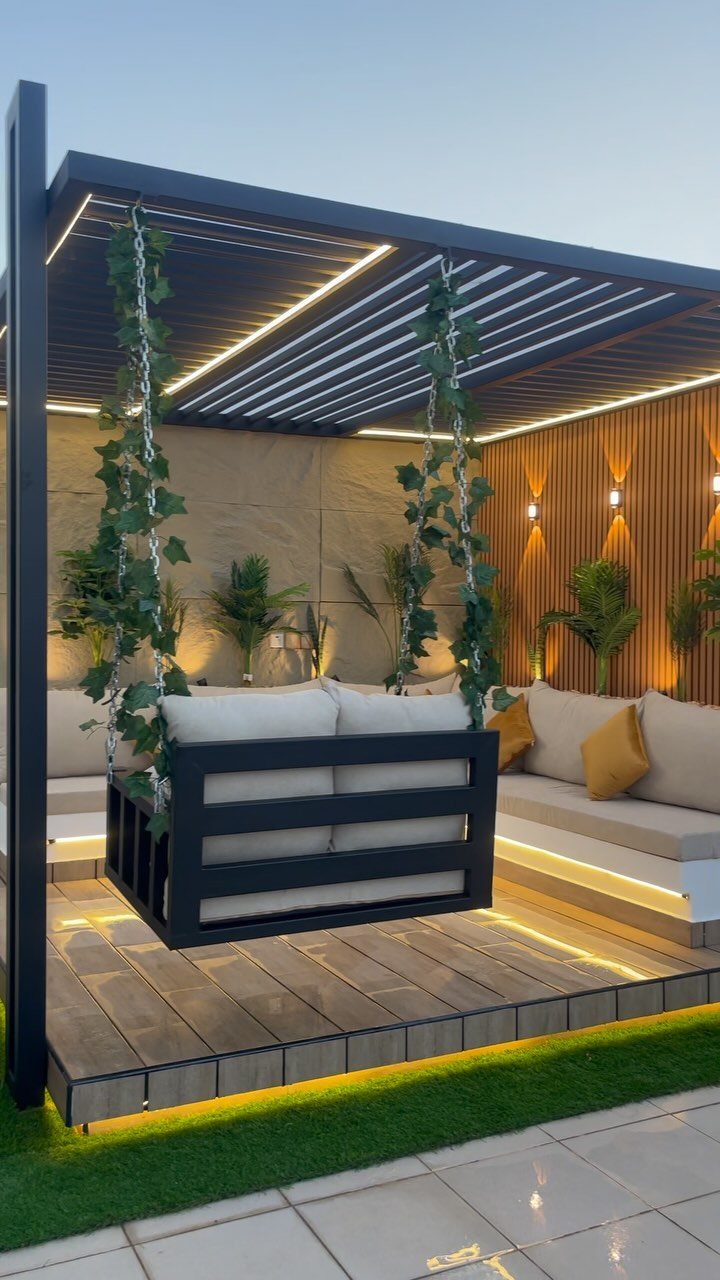
Glare is what ruins an evening outside, and hidden strip lighting avoids it.
Run LED strips under a bench, along a pergola beam or at the base of a wall, and you see a soft wash on the surfaces instead of the bulbs themselves.
Keep the color warm and set the strip back in a channel or behind a lip so the individual dots stay out of sight.
Buy strips rated for outdoor use. For a lounge area, I’d stop at low and gentle; guests should be able to see each other’s faces and still see the sky.
9. Pool Lighting
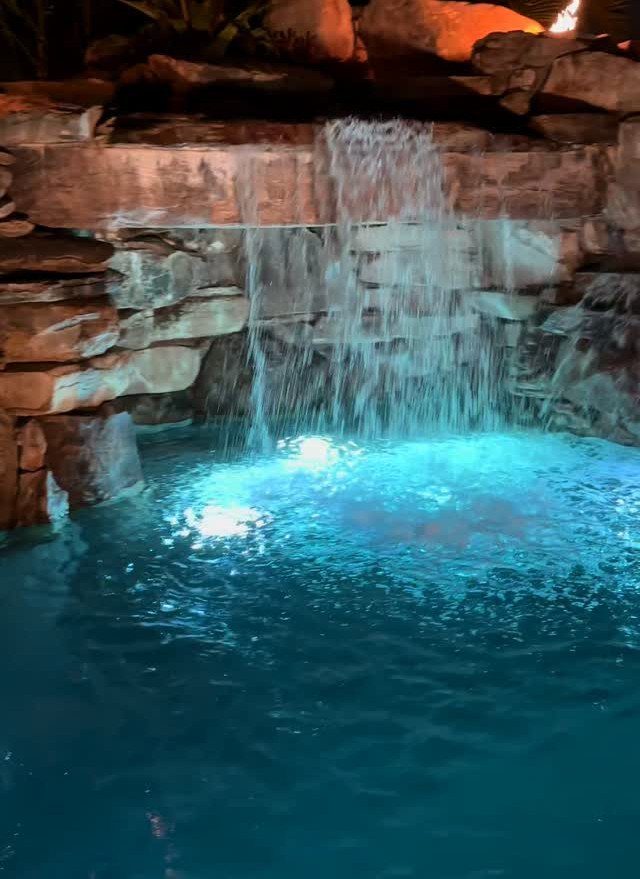
Choose one thing in the pool area to light and leave the rest in shadow.
A rock waterfall lit from below with blue light is a good pick, because the water carries the glow up through the spill and the stone gets an edge.
Blue reads cool next to warm lights on the patio, so I’d use it on the water alone and keep everything else warm white.
Fixtures must be made for underwater use. Have a licensed electrician do any wiring in or near a pool.
10. Water Lights
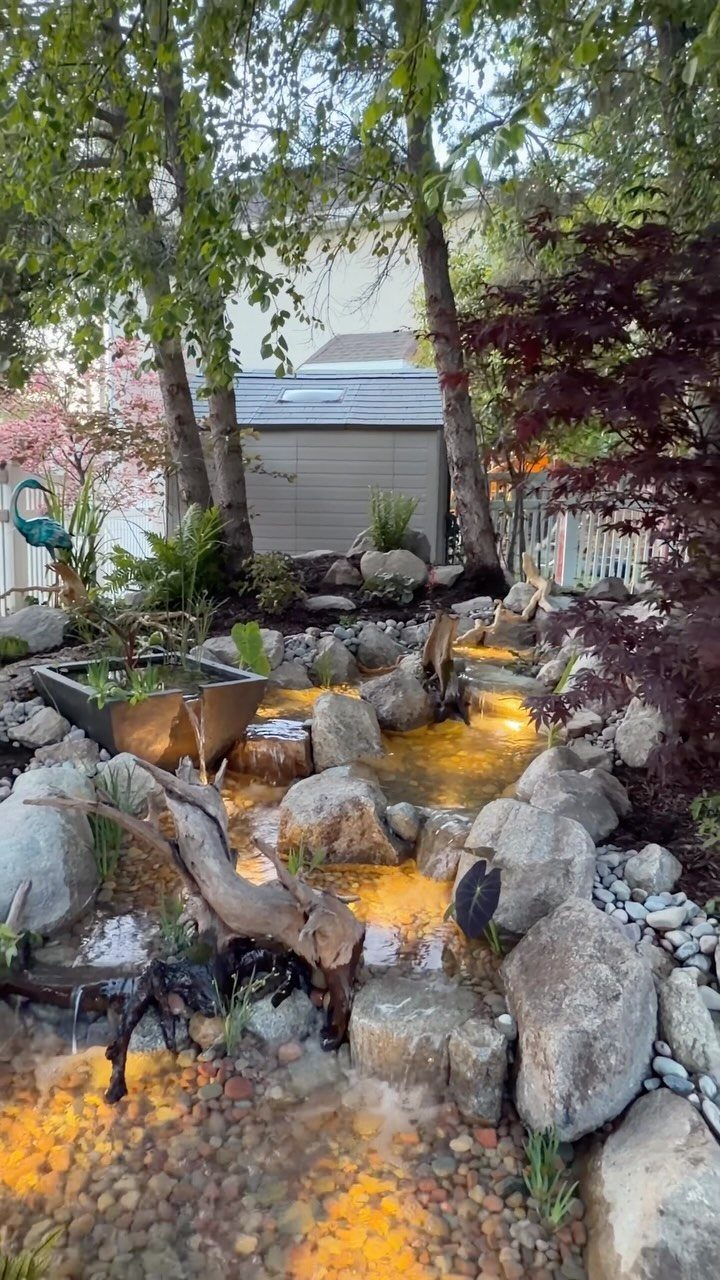
Sealed, submersible fixtures can sit right in the water of a stream, pond or fountain, and warm light looks more natural there than blue.
Set one low at the foot of a rock or beside driftwood so the beam climbs through the moving water.
Tuck the cable under stones and keep the lamp itself out of direct sight. A single fixture per drop or ledge is usually plenty, since stacked lights flatten the ripples you’re trying to show off.
11. Layered Lighting
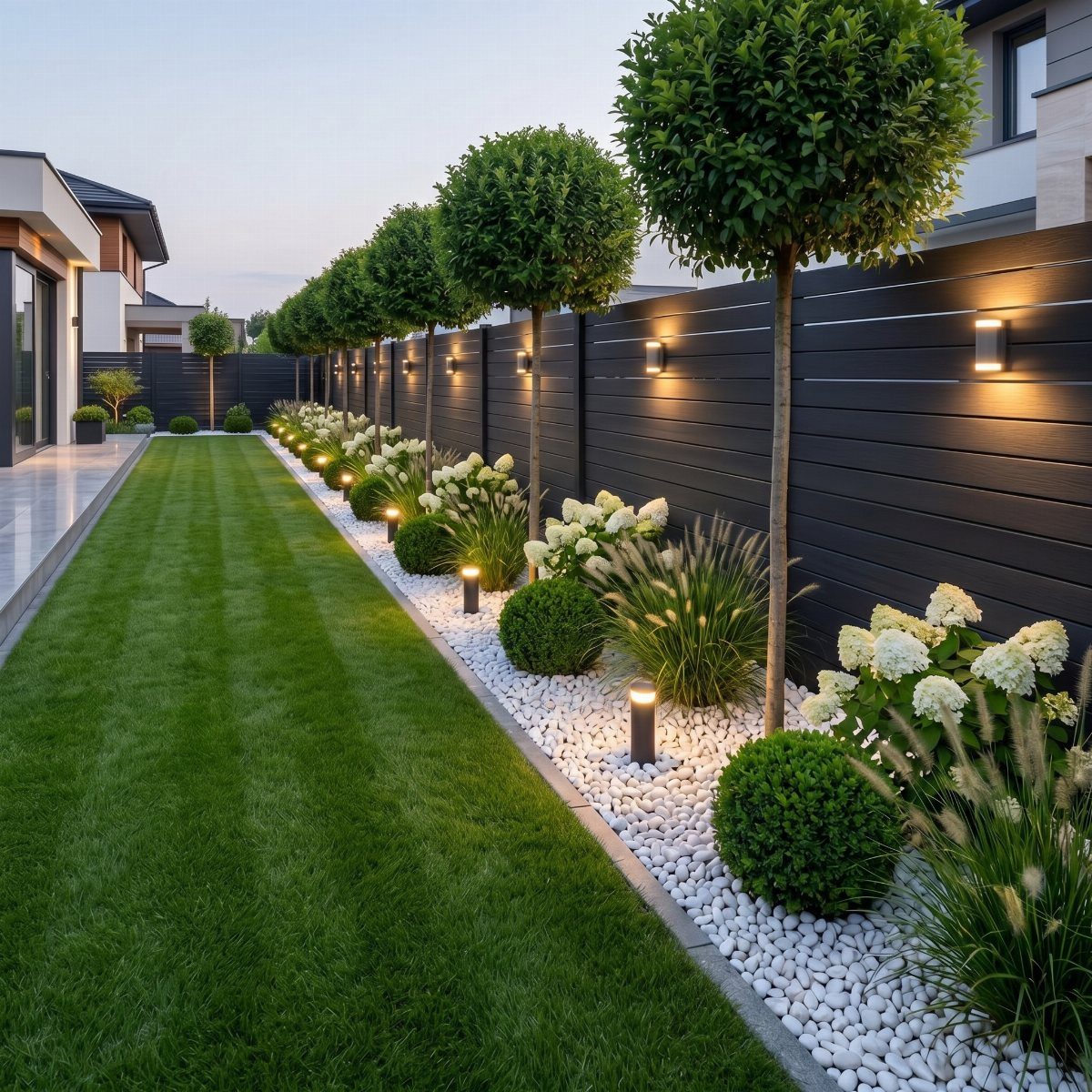
No single fixture type covers a whole yard.
Wall sconces on a fence give light at eye level, while small path lights below mark the lawn edge and the border. Each does a different job, so together they fill gaps neither covers alone.
I’d add one layer at a time and live with it for a few evenings before the next. Keep every fixture the same warm color, or the layers fight each other and the yard looks patchy.
12. One Tree Focal Point
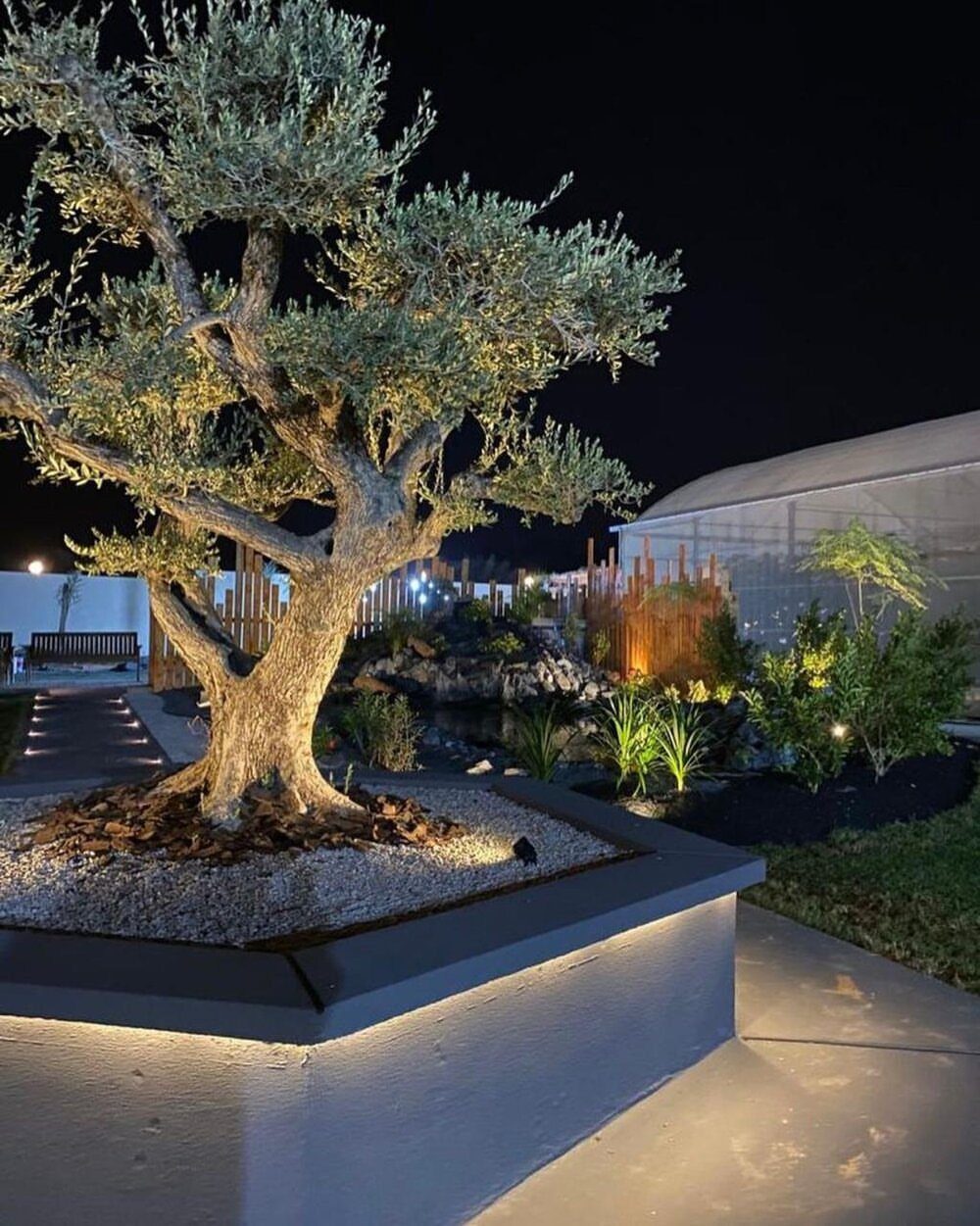
Choose the biggest tree in the yard for your focal point, since a large canopy gives a single fixture the most to light.
An olive in a raised gravel bed is a good pick for tree uplighting, since the branches stay open enough for light to pass through and pick out the whole canopy.
Set one or two warm-white fixtures at the trunk base, angled up so the beam rakes through the branches. Leave the rest of the yard dimmer so this one tree is clearly what you see first.
13. Wall Grazing
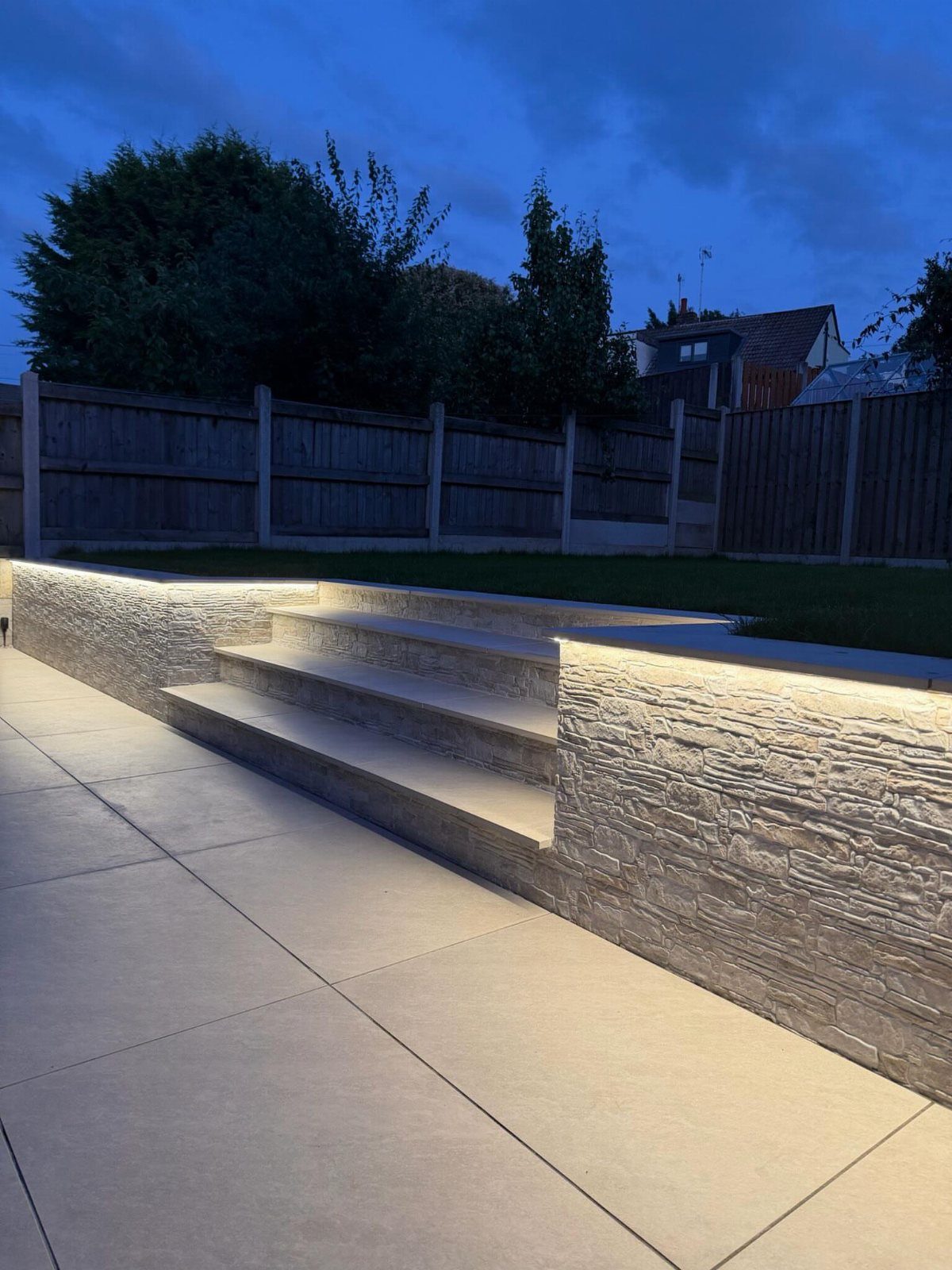
Grazing works by putting the fixture close to the surface and aiming the beam along it, so every ridge and joint throws a small shadow.
Rough-cut stone is the best material for it; smooth stucco gives the light nothing to catch.
A linear strip tucked under a ledge or step edge keeps the fixture out of sight and runs the light down the face.
Keep the color warm white, and set the strip tight to the stone so the angle stays steep.
14. Water Reflection Lighting
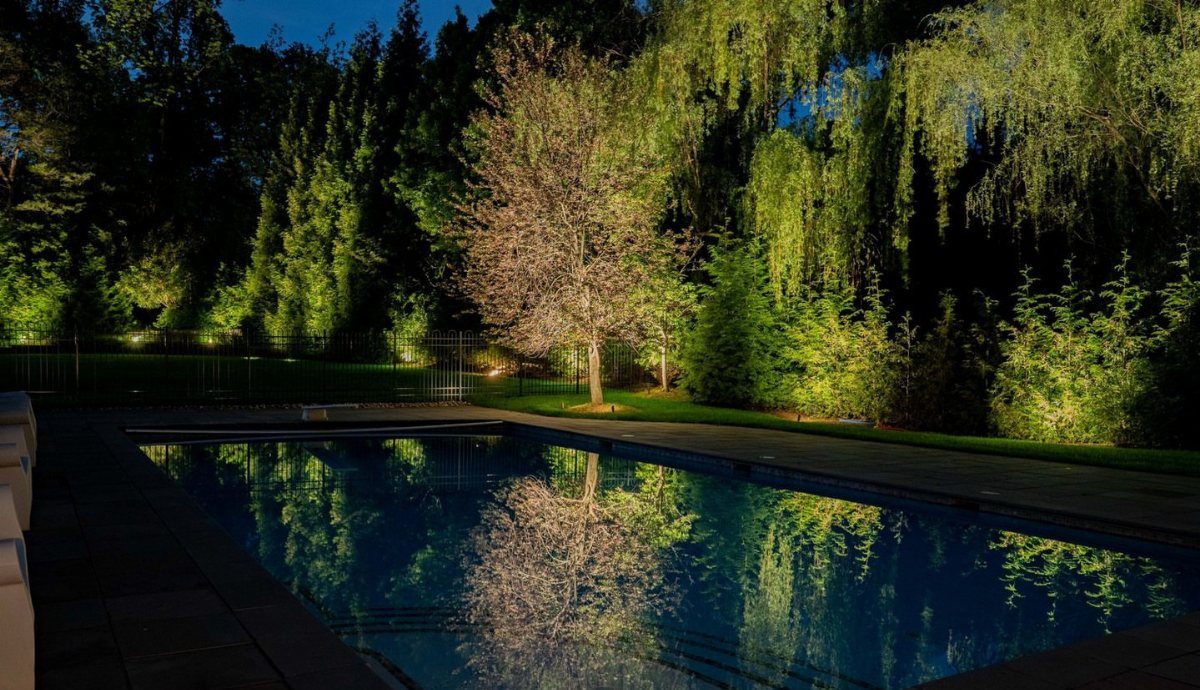
Water reflects whatever stands near it, so lighting the trees and shrubs along a pool does the work of lighting the pool.
The surface picks up the glow as a dim, doubled image, and the water stays dark enough to read as water.
I’d aim fixtures at the plantings and keep every light off the pool itself.
If the reflection looks washed out, lower the brightness before adding anything. A few lit shapes are enough.
15. Glowing LED Light Spheres
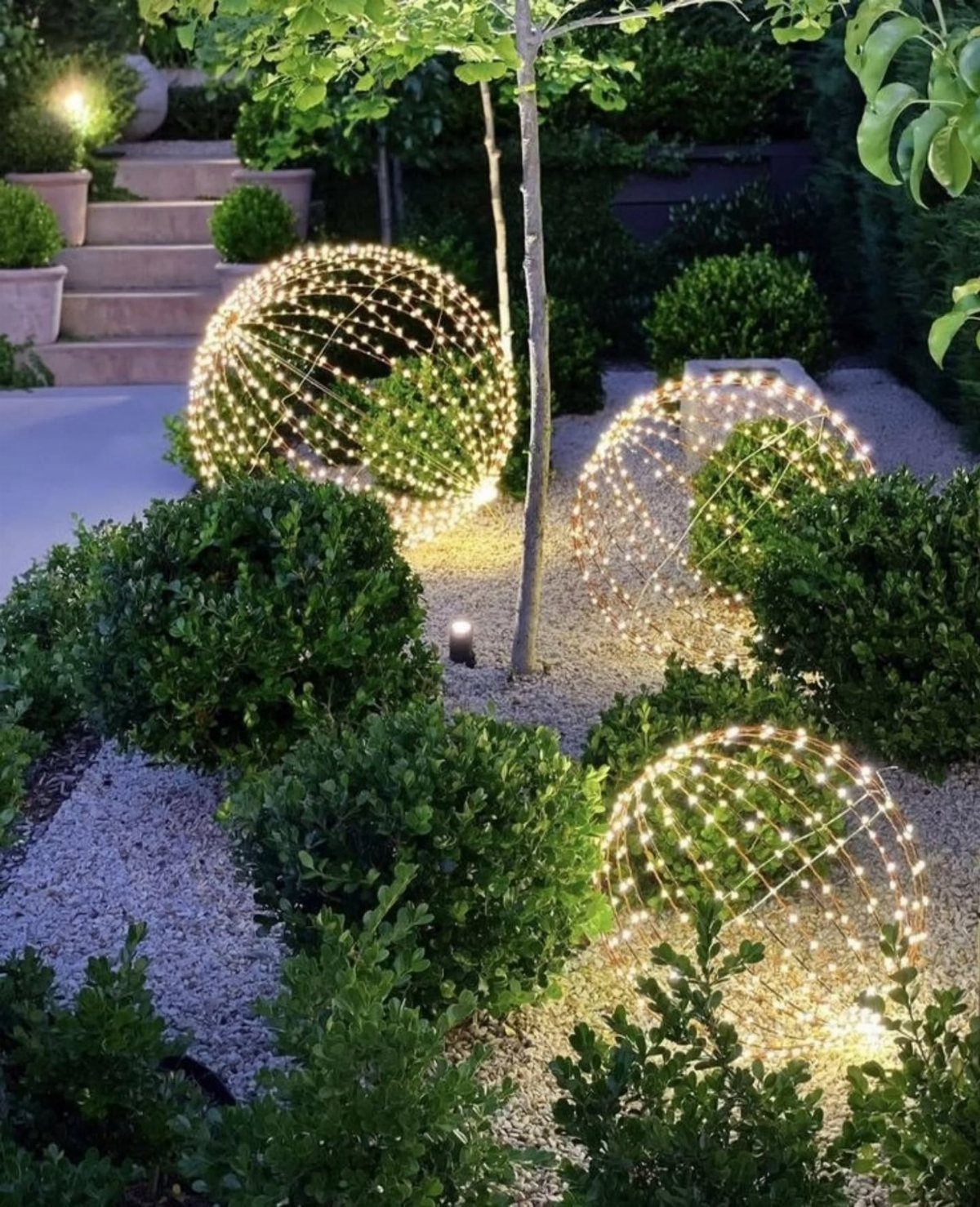
Wire-frame LED spheres give a yard points of light at ground level, with no post or wall behind them. Large warm-white ones sit well in gravel beds between shrubs, where the green leaves frame each glow.
I’d go with an odd number, three being a good start, and vary the sizes slightly so they look placed rather than lined up. Keep them clear of the shrub foliage so the light spreads evenly across the gravel.
Planning a Lighting System
Rank the dark spots by what they cost you. Pathways, seating spots, entry points and standout features come first, because that’s where people walk, sit, arrive and look.
Once those are covered, add softer light to fill the gaps between them. Working in that order keeps you from paying for decoration while a step is still in shadow.
Before you buy a transformer, add up the wattage of every fixture on your list. Then add 20% to that total, so the transformer has room for the fixtures you’ll want next season.
Weather Resistance and Durability
Buy for the weather the fixture will actually sit in. Heat, rain and dust all wear on outdoor lights, so look for fixtures labeled both durable and waterproof.
In a harsh climate or near the coast, I’d pay for cast brass, stainless steel or composite bodies. Those materials are made for tough conditions, and a cheaper fixture in an exposed spot is the one you’ll be replacing first.
A sheltered corner under a roof overhang can get by with less. Spend the extra money where the rain and wind reach.
Frequently Asked Questions
What are the different types of landscape lighting?
The main types are path lights, uplights and spotlights, floodlights, deck and step lights, hardscape lights, wall lights, string lights, pendants, downlights and water lights.
Each does a different job: path and step lights show where to walk, uplights and spotlights pick out trees and features, and wall and hardscape lights wash or edge a surface.
Most yards look best with a few types layered, all in the same warm color.
How do I choose landscape lighting fixtures?
Start with the power source.
Solar stakes cost the least and skip the wiring, but low-voltage fixtures stay brighter and hold steady all evening. Smart controls are worth weighing if you want to run the lights from a phone.
How can I improve safety and security with landscape lighting?
Light the places where people walk and step, and remove the dark patches around the house.
Low path lights show the route, and a warm light on every stair riser puts a pool of light on each tread, which is where a foot lands.
Dark corners give a trespasser cover, and a lit yard takes that away.
How can I improve my home value with landscape lighting?
Good lighting makes outdoor gathering areas usable after dark, which extends your living space into the evening and adds to the home’s appeal.
Industry research suggests well-designed outdoor lighting recovers a strong share of its cost in added property value. Listing agents often say a lit yard makes a better first impression at evening showings, and that can help a house sell faster.
What are the benefits of low-voltage LED landscape lighting?
A 12V LED system is energy efficient, which brings long-term cost savings, and it needs very little maintenance. Compared with solar, low-voltage LEDs throw a brighter, steadier beam that doesn’t fade as the night goes on.
How do I select the right transformer for my lighting system?
Total the wattage of all your fixtures, then multiply by 1.2 to pick a transformer size. That 20% cushion leaves room for fixtures you add down the road, so you won’t have to buy a bigger transformer later.
How far apart should I place my path lights?
Space them 6 to 8 feet apart, evenly along one side of the path rather than zigzagging.
Fewer fixtures with real gaps between them trace a path better than a close-set row. Lay them on top of the ground and check the spacing after dark before you dig any holes.
How do I create an uplighting landscape lighting effect?
Pick one foreground object like a tree, point a ground fixture up at it, and keep the house itself fairly dark. On bark and leaves, warm light looks rich; cool white turns greens gray and flat.
How do I create a wall-washing landscape lighting effect?
Hang shielded, downward-facing fixtures at a consistent height along the wall or fence, spaced so each pool of light overlaps its neighbor into one soft band.
You can also set spotlights 5 to 8 feet out from the wall and spread them along its length. Use warm white bulbs; a pale surface like white vinyl catches and spreads the beam, so a modest bulb is enough.
How do I create a shadowing landscape lighting effect?
Place a spotlight directly in front of a tall bush or other prominent plant, aimed at the wall behind it. The plant’s shape then falls as a shadow across the home’s façade.
How do I create a silhouetting landscape lighting effect?
Position the spotlight behind the feature, with the beam aimed back at the house, so the feature reads as a dark outline. The feature then reads as a dark shape against the lit surface behind it.
How should I install my step lighting?
Put one light on every riser, set into the riser or under the tread nosing, so no stair falls into shadow.
Skipping every other step leaves dark treads. Warm white bulbs give a soft pool of light on the tread below and light each stair edge.