What the shelf has to hold decides which of these is yours: books, records and ceramics need a wall stud behind them, while slim ledges, macrame cords and rope-hung boards suit lightweight decor only.
The ideas run from a single stainless-steel shelf to a real tree trunk carrying live-edge planks, with supports that vanish or brackets that show.
Before picking a shelf style, locate the studs behind your wall, since they usually sit 16 or 24 inches apart and decide how much weight a shelf can hold.
1. Floating Shelves
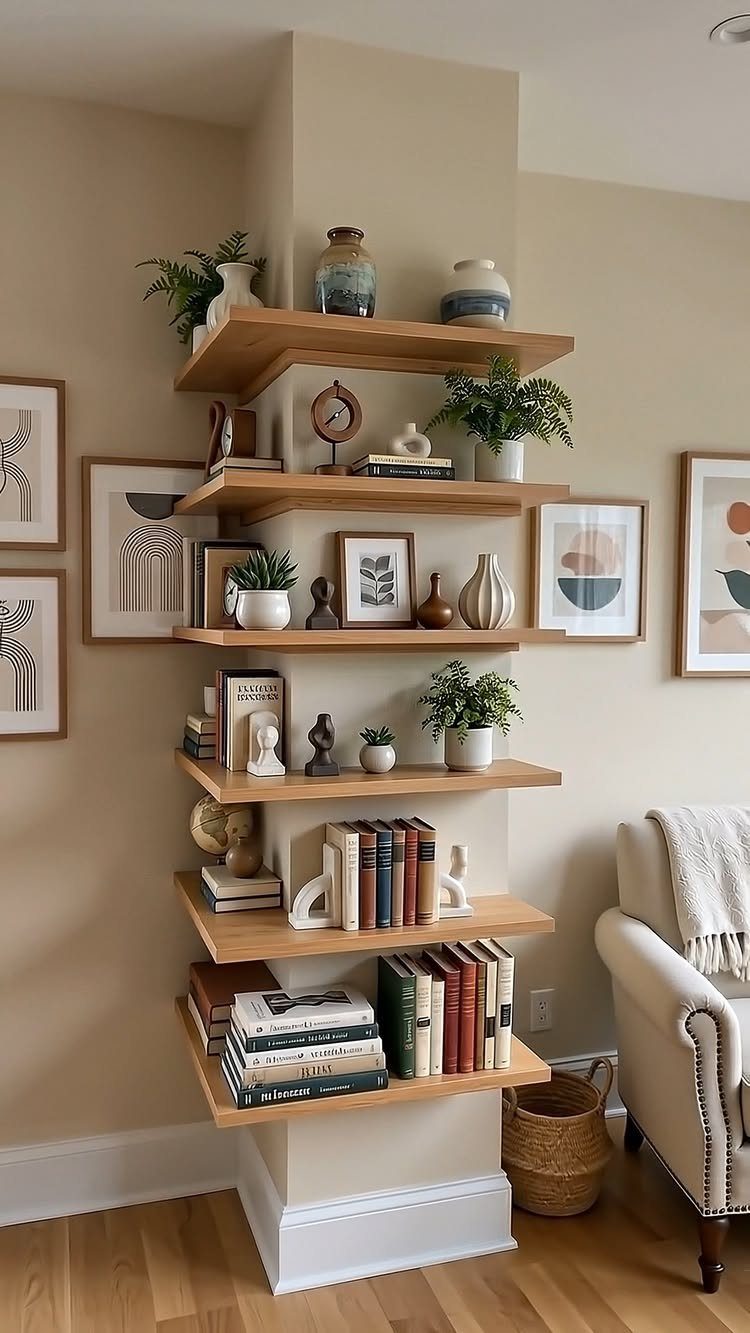
Hidden supports make a floating shelf read as one clean line of wood, with nothing to interrupt it.
I like the version that wraps a corner, since the run of light wood carries the eye around the room instead of stopping at a single spot.
Put books at one end and plants and vases at the other so the weight feels even. Leave some bare shelf between groups so the display has room.
2. Tiered Shelves
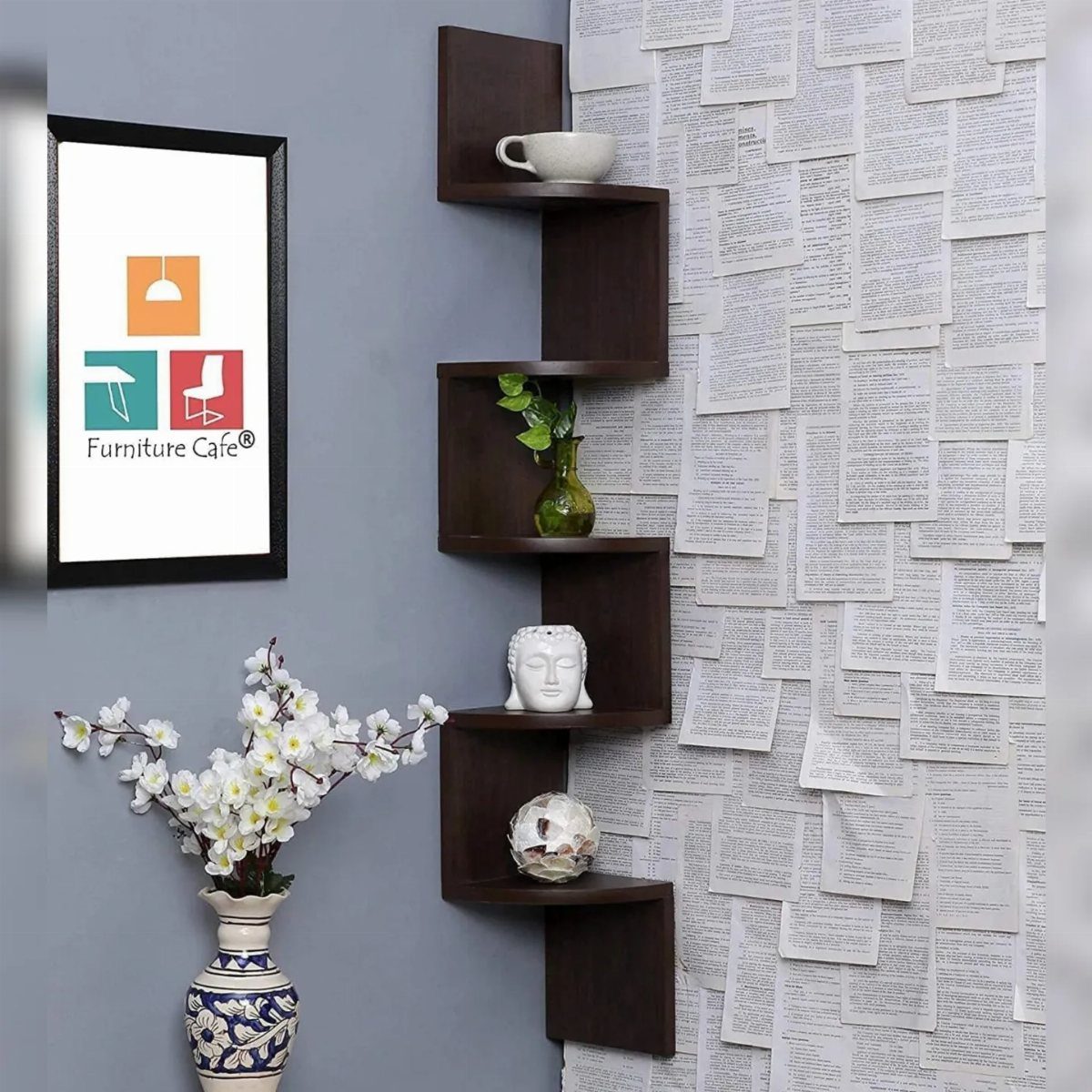
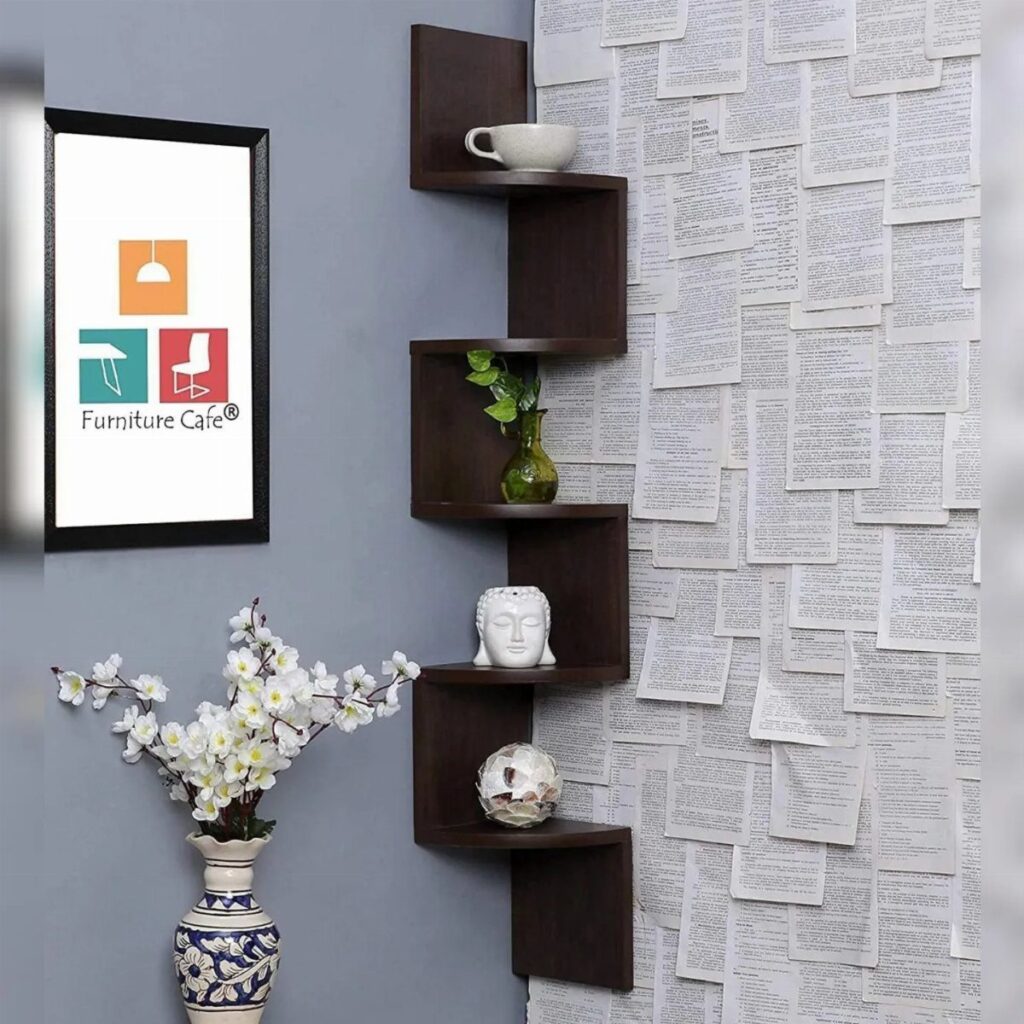
A zigzag stacks several levels into one piece, so tall and short objects each get their own step. Dark brown against a grey wall gives the shelf enough contrast to stand as a feature without any help.
Keep the styling light: a vase of flowers on one tier and a small framed piece on another is plenty. Filling every level would flatten the zigzag you bought it for.
3. Geometric Shelves
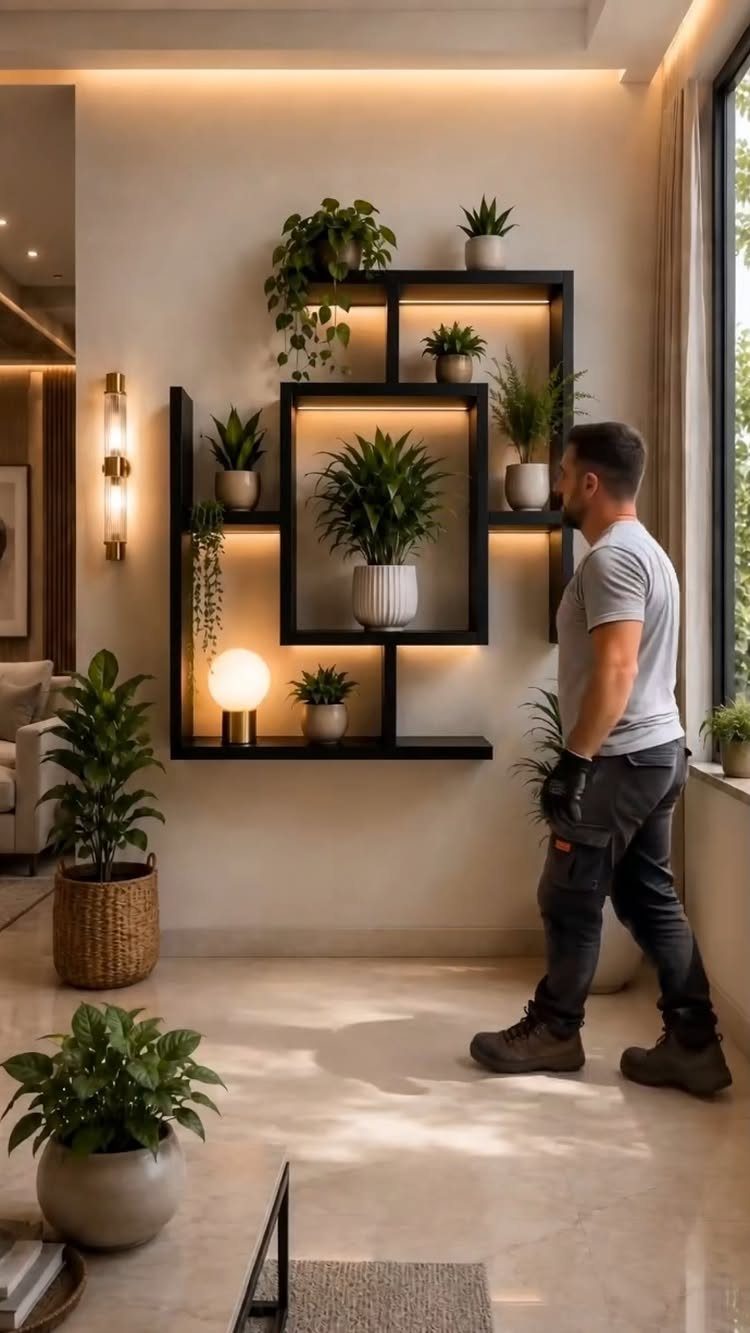
Black geometric frames turn a shelf into the artwork, and the plants become the soft counterpoint. I’d choose a unit with built-in lighting, since a lamp and glowing shelves make the whole wall feel designed.
Stick to one statement piece per wall. Green plants of mixed heights suit the sharp lines well, and a lamp tucked among them adds an evening glow.
4. Wall Shelves with Hooks
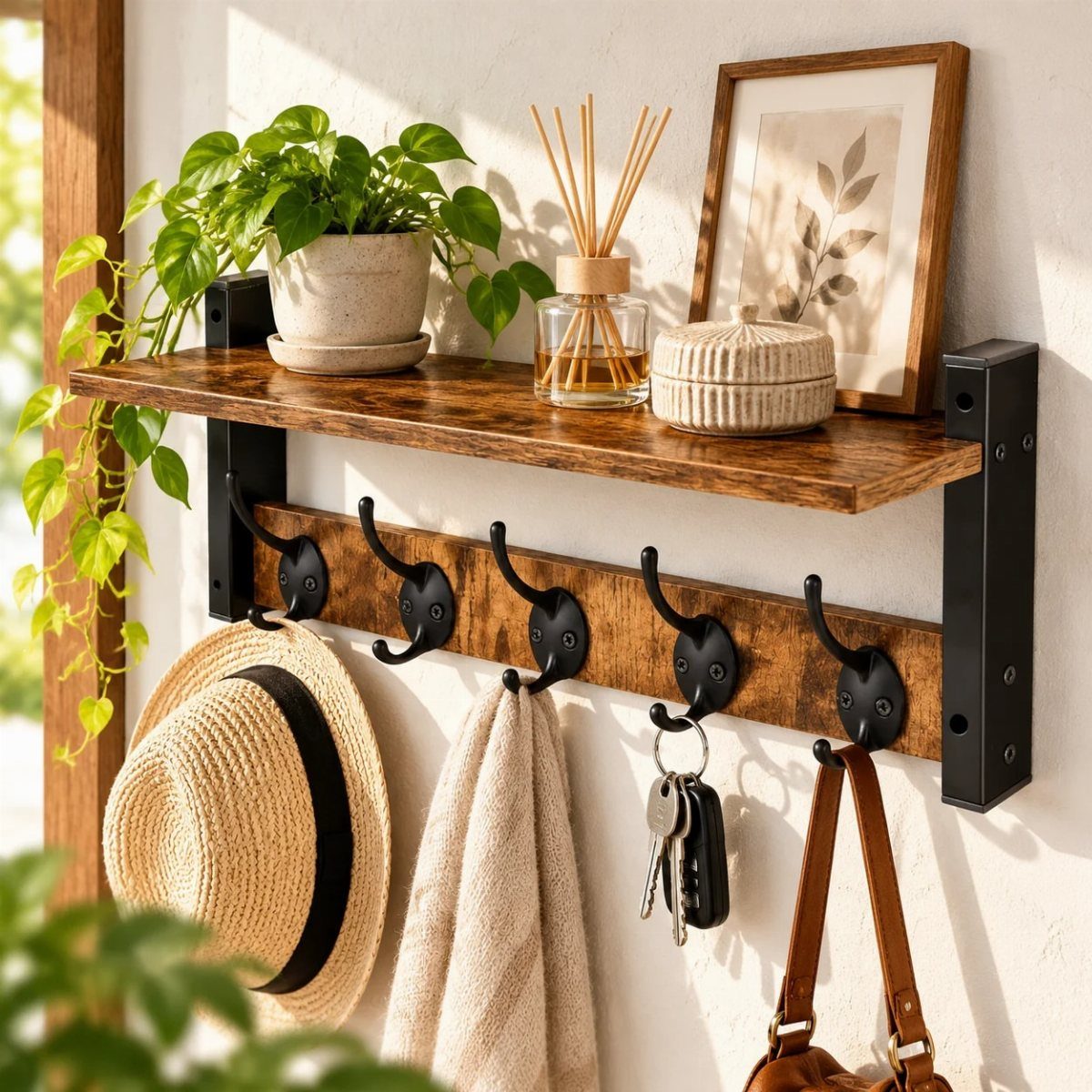
Hooks under a shelf solve the entryway pile-up: hat, scarf, keys and bag hang below, and the top stays free for a plant, a diffuser or a framed picture. Wood with black metal brackets looks tidy and deliberate.
Keep daily grab-and-go items on the hooks and decor on top, so nothing competes for the same spot. A single row of hooks keeps it simple.
5. Corner Shelves
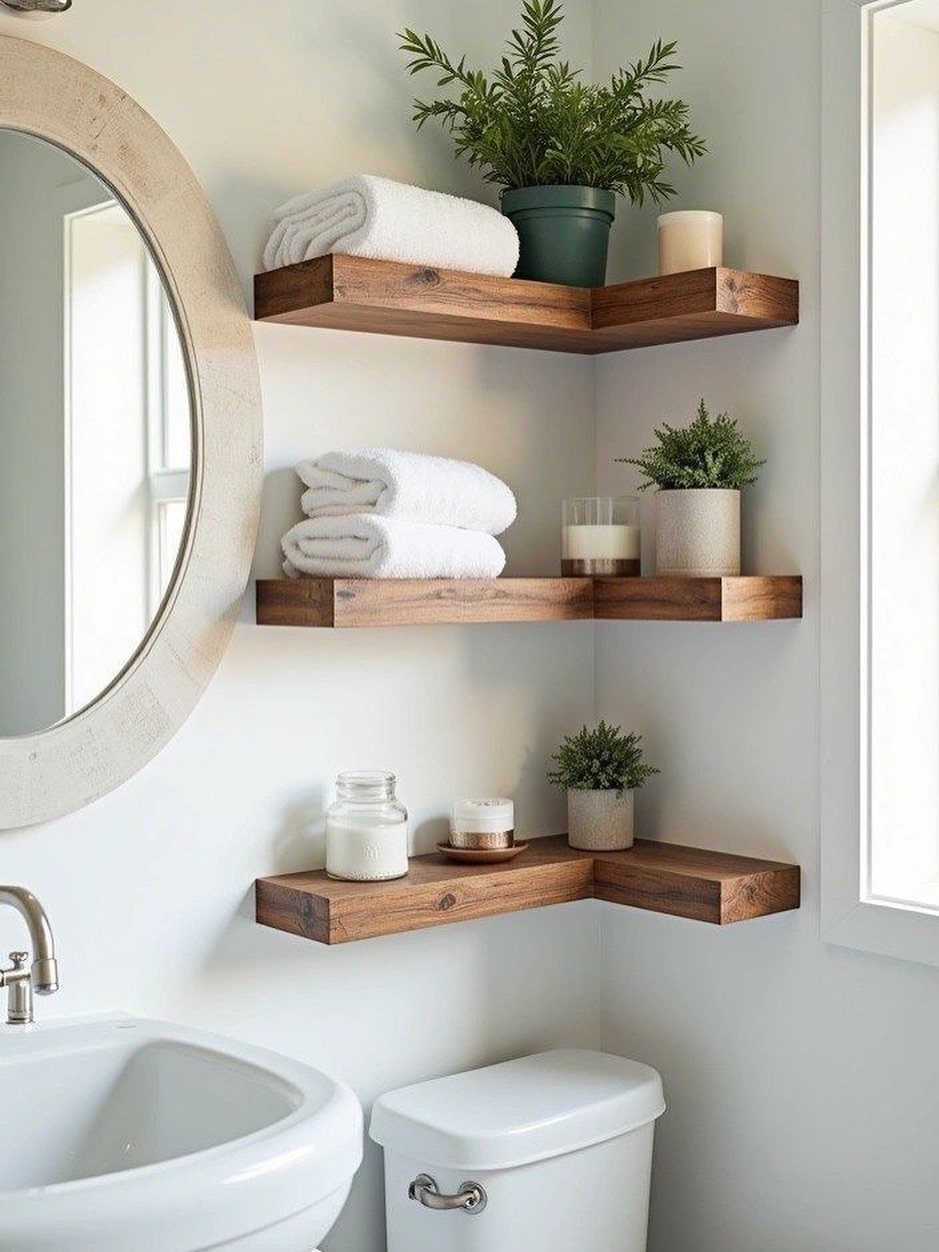
An empty bathroom corner can hold three stacked wooden shelves, and thick boards make them look substantial rather than fussy. Against white walls, the wood adds warmth.
I prefer chunky wood here over thin boards, because it reads as furniture instead of an afterthought.
6. Wooden Floating Shelves
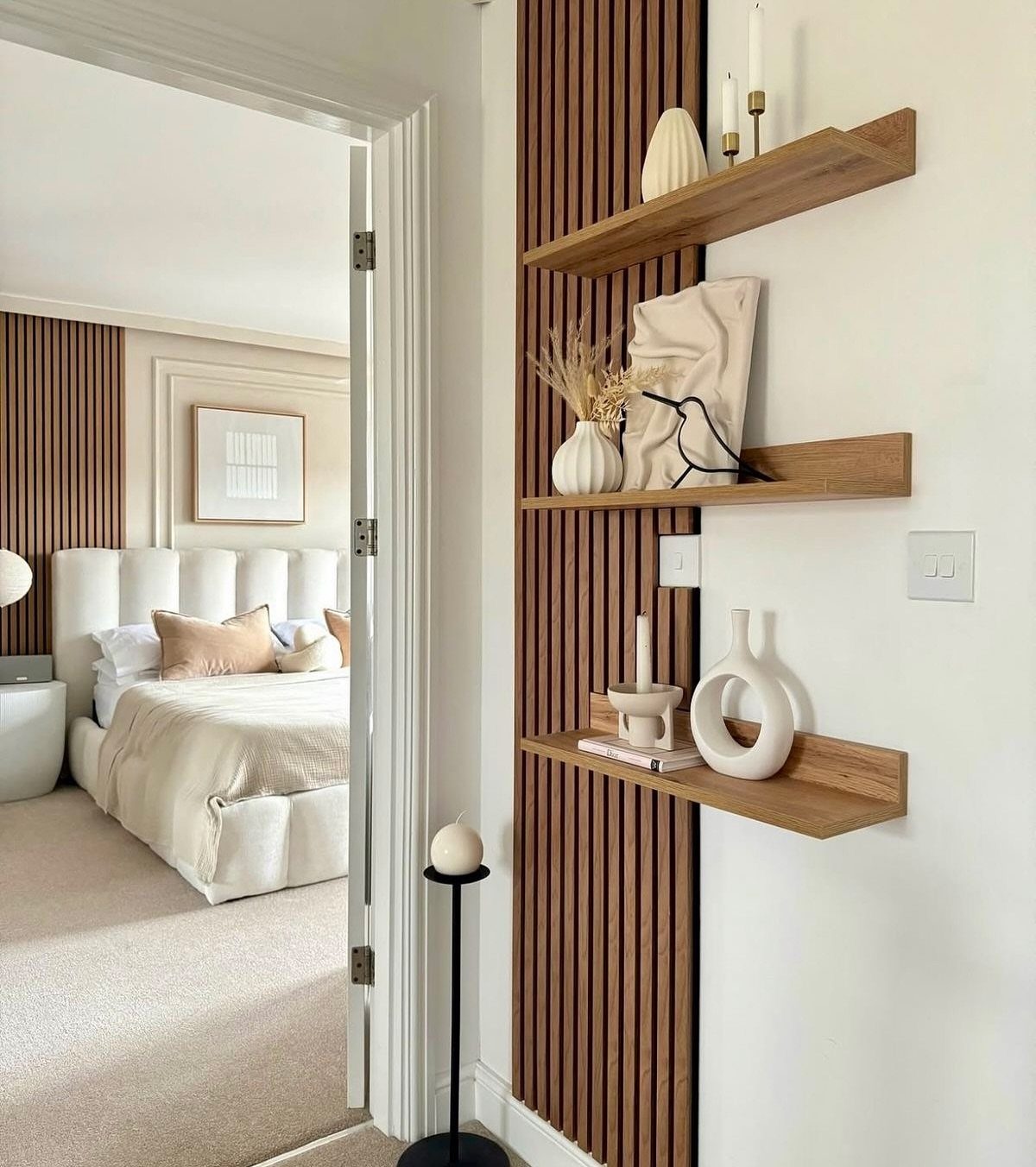
Wood shelves beside a wall of vertical wood slats repeat one material, which keeps a bedroom wall calm. 3 shelves on white give the grain room to show.
Plain white vases and candles keep the decor quiet, so the wood supplies all the color. A few pieces per shelf at different heights keeps the arrangement relaxed and leaves the grain as the focus.
7. Modern Floating Wood Shelves
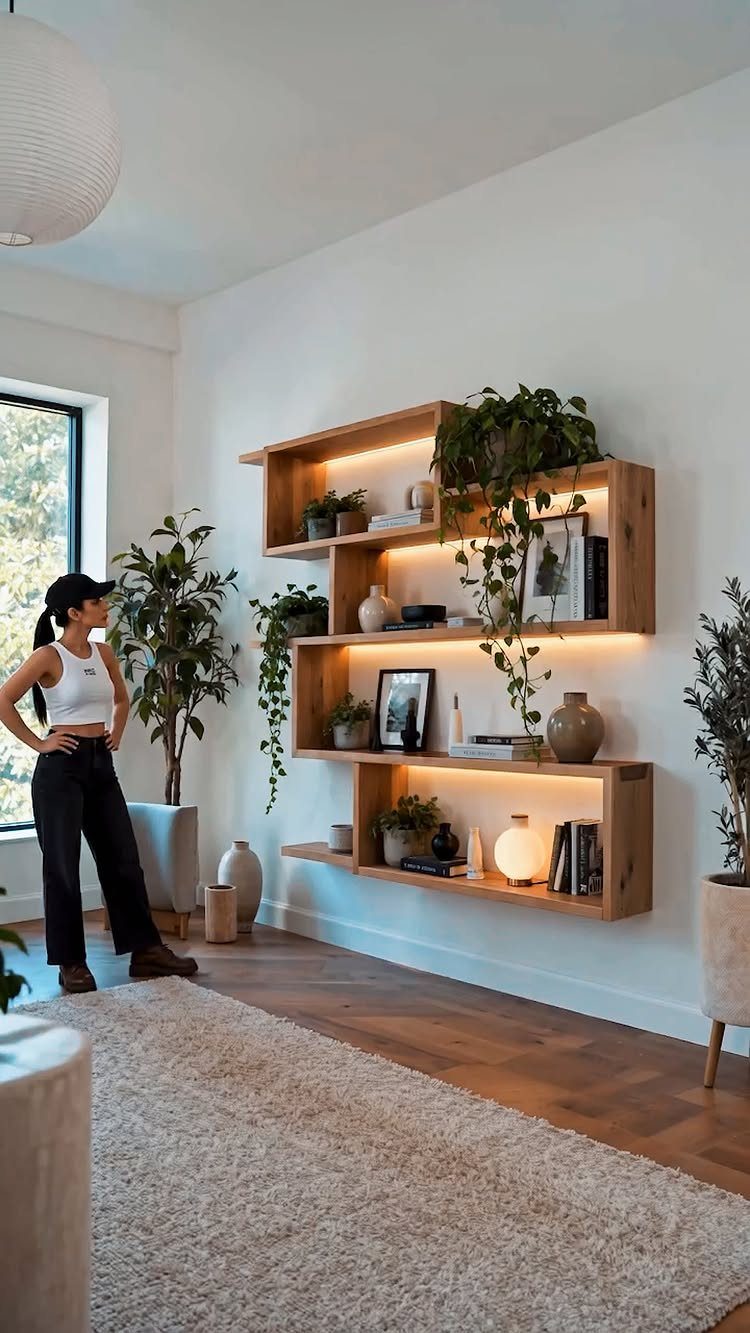
Overlapping 2 L-shaped units leaves an open pocket in the middle, and that pocket is what makes the layout worth building.
The unit can hang vertically or horizontally, so it adapts to a tall narrow wall as easily as a wide one.
Built-in lighting turns the nook into a small gallery spot. I’d put one plant or one object there and let the wood frame it.
8. Invisible Book Shelf
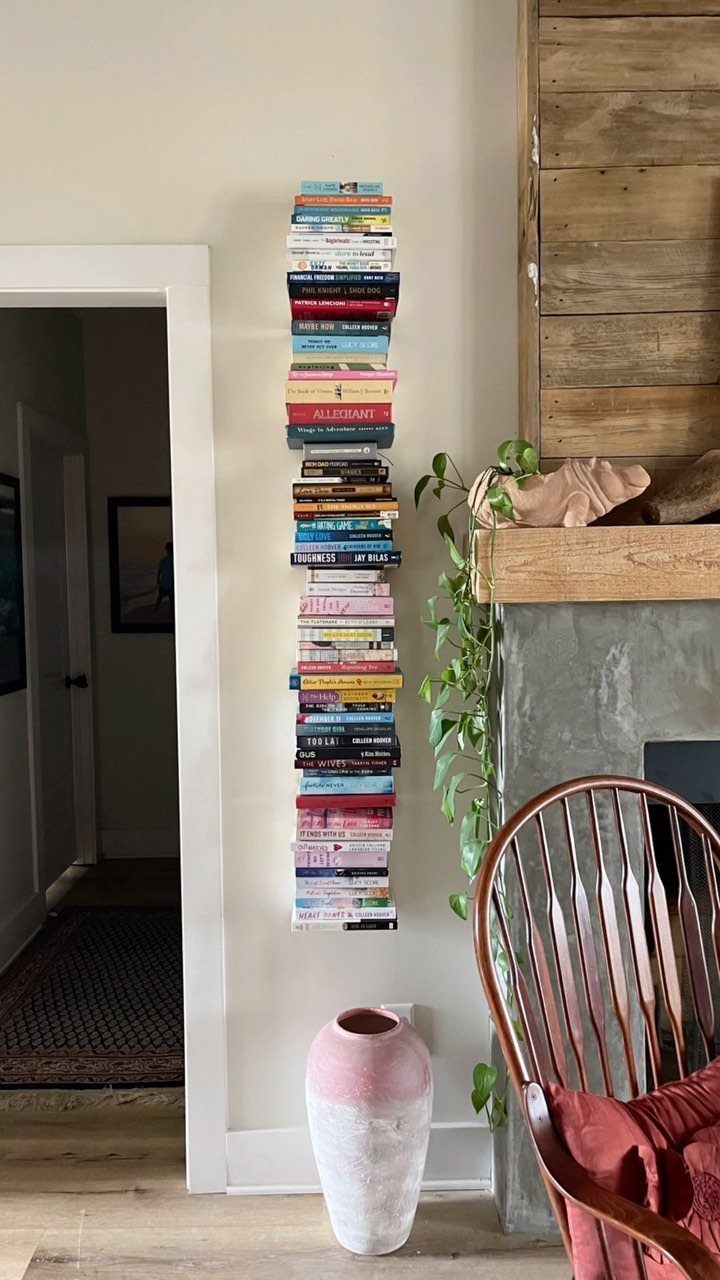
A hidden support lets a stack of books look like it’s hovering against the wall, with no visible shelf at all. The effect works best with a vertical stack of mixed spine colors, since the color does the decorating.
Because the support disappears, the books become the whole feature. Pick ones you like looking at, then leave the surrounding wall plain so the stack stands alone.
9. Fire Escape Shelf
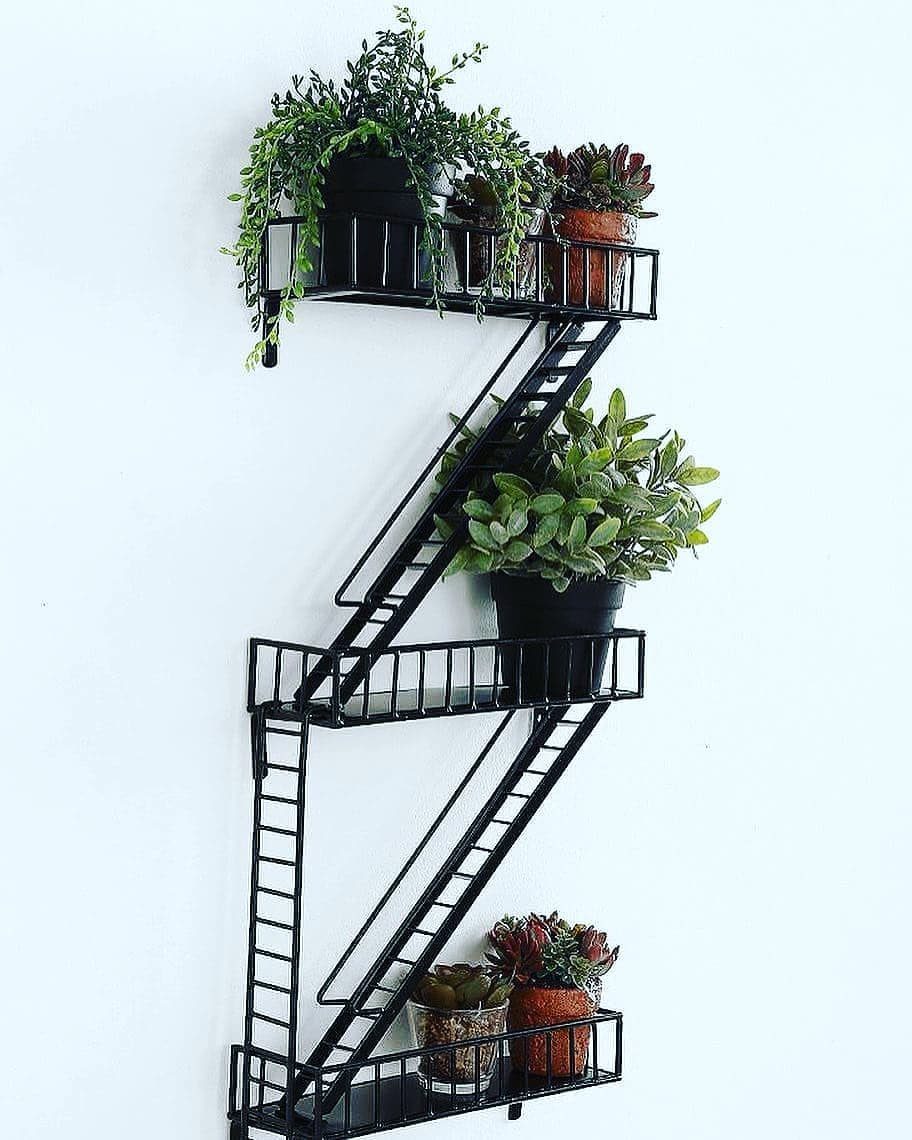
Black metal shaped like a fire escape gives a plain white wall a city-apartment detail, and the open landings suit potted plants well. Stick to succulents and trailing greens, since the narrow platforms only have room for small, shallow pots.
I’d mount it where the wall is otherwise bare, because the dark lines are the decoration. Keep other wall art away from it so the silhouette stays clean.
10. Bracketed Wooden Shelves
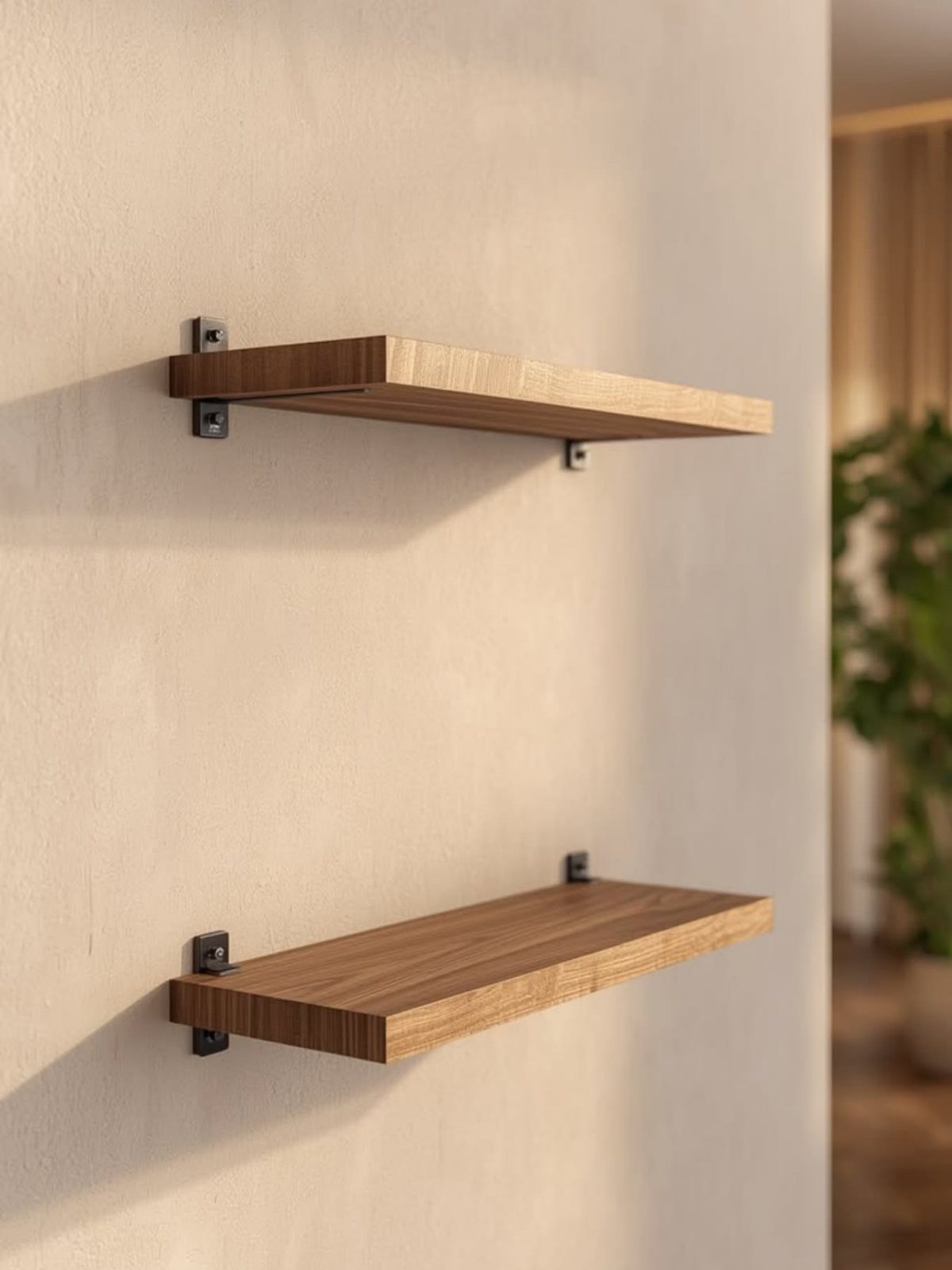
Small black metal brackets under a pair of wooden shelves give the wood a crisp, geometric edge, and the contrast stands out clearly on a neutral wall.
Brackets show, so they work as part of the design instead of something to hide.
2 shelves are enough. Space them with a clear gap between, and set a plant or two on top so the black and wood still read as the main event.
11. Live Edge Shelves
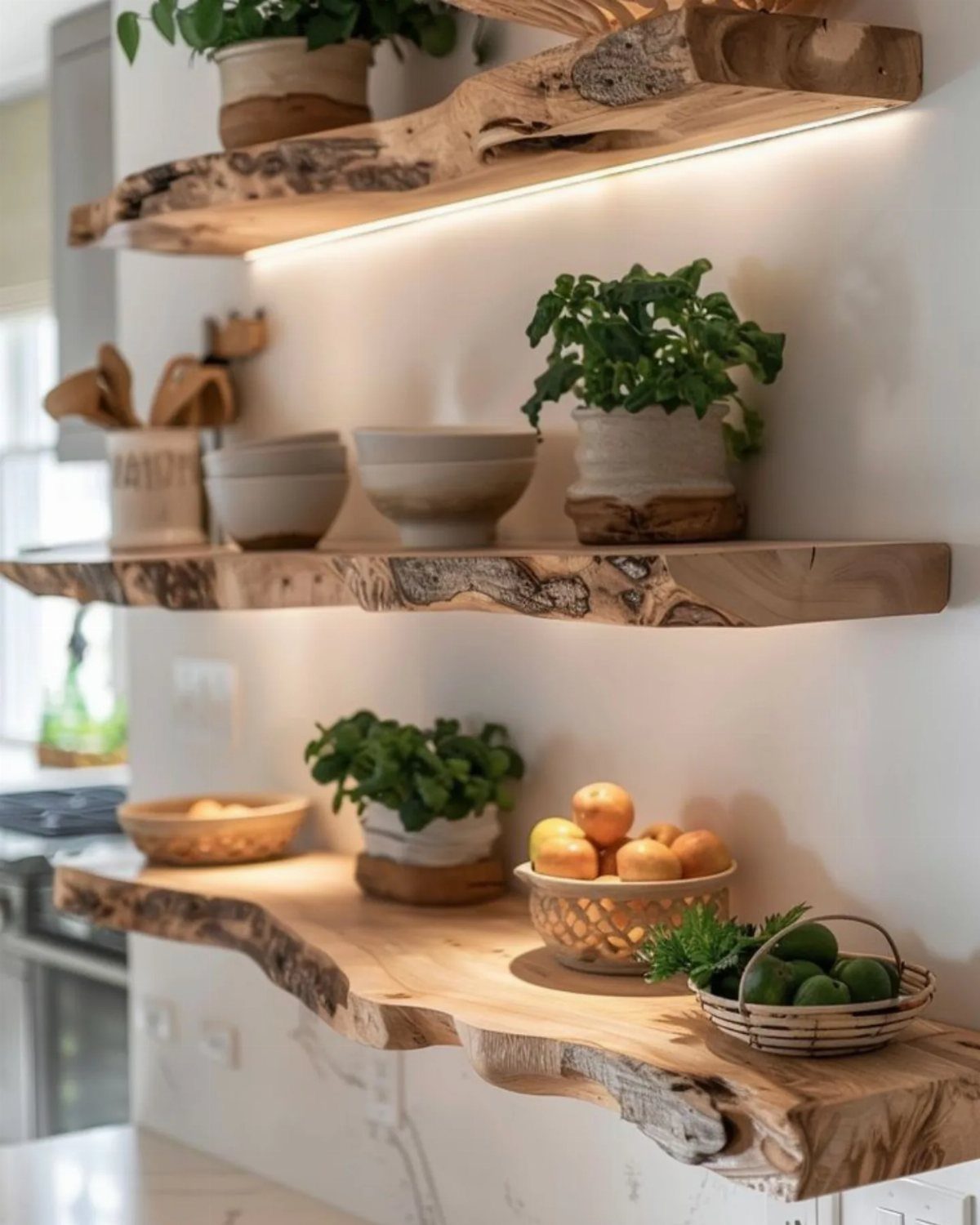
Each live edge board keeps its own rugged, uneven outline, so no 2 shelves in a stack look alike. On a white kitchen wall, a few live edge shelves hold plants, bowls and fruit while the wood adds warmth.
I like a strip of under-shelf lighting on the top board, since it lights the counter below and shows off the grain. Stagger the shelf lengths a little to keep the irregular look.
12. Animal Motif Shelves
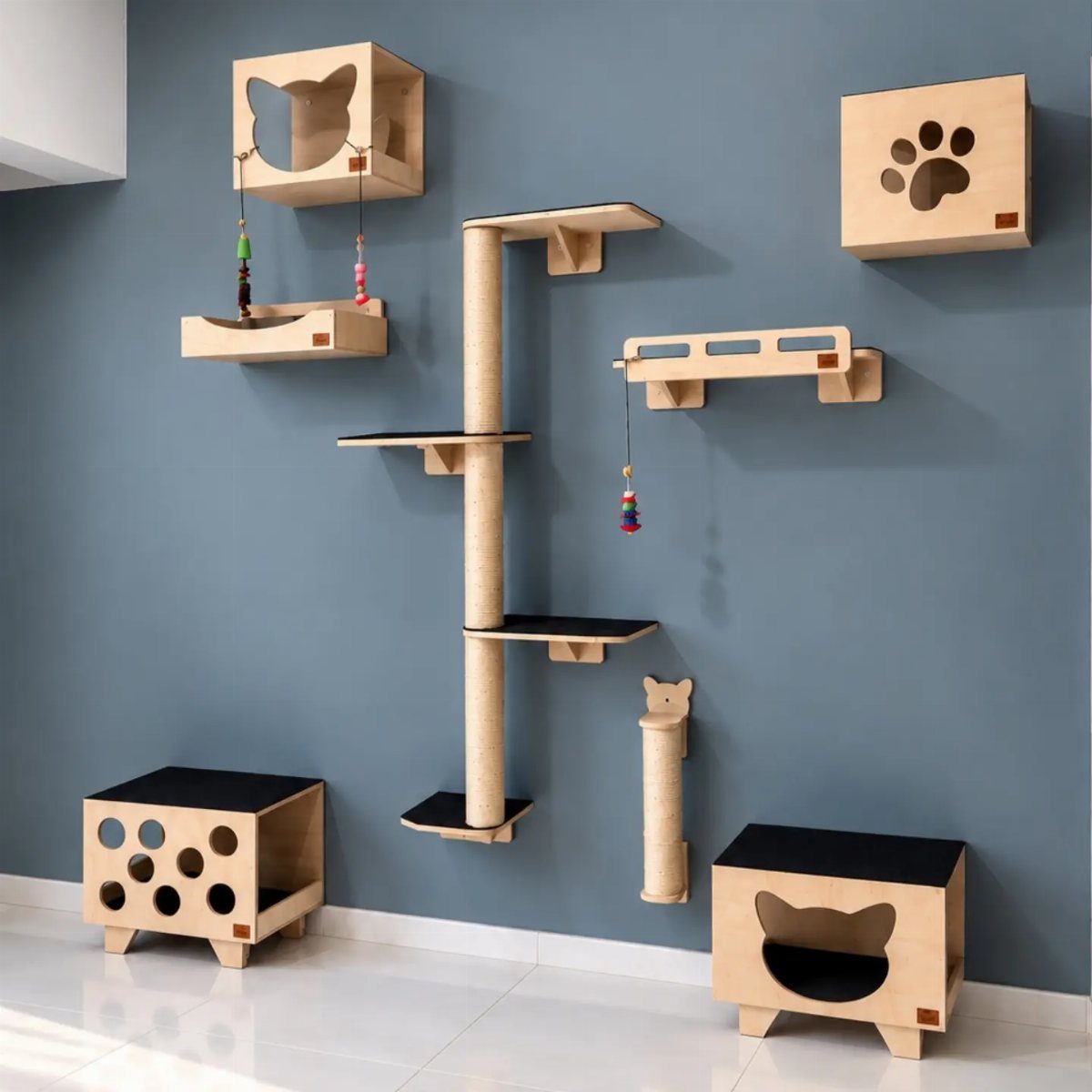
Pairing animal-motif shelves with bold, busy styling is a deliberately maximalist move, so let the motifs be the decoration.
Use the cutouts as the pattern and keep everything else on the wall quiet. If you want the shelves for display instead of cats, the same cutouts also frame small plants and trinkets nicely.
13. Arched Wood Shelves
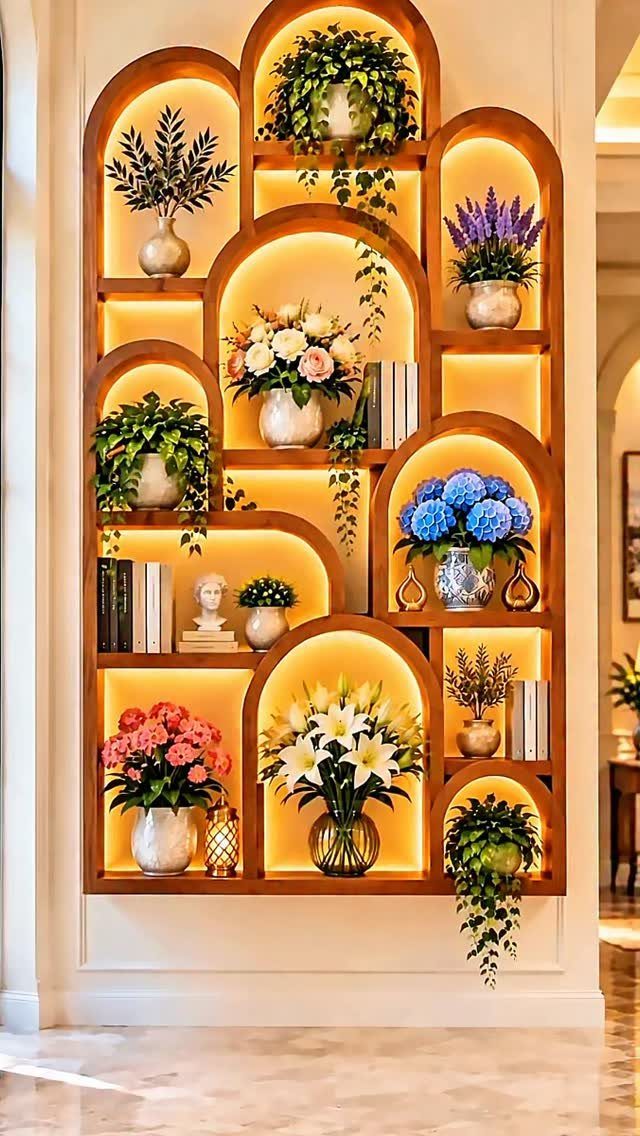
Arched openings soften a wall of wood shelving, and the carved detail gives each compartment a frame of its own.
Warm built-in lighting, like a 2700K LED strip hidden along the front edge of each shelf, makes plants and flowers glow, so I’d plan the light as part of the arched shelves instead of adding it later.
Give each arch one subject: a plant in one, a stack of books in another, the small bust alone in a third. Repeating the same arrangement in every opening would flatten the shapes.
14. Macrame Hanging Shelves
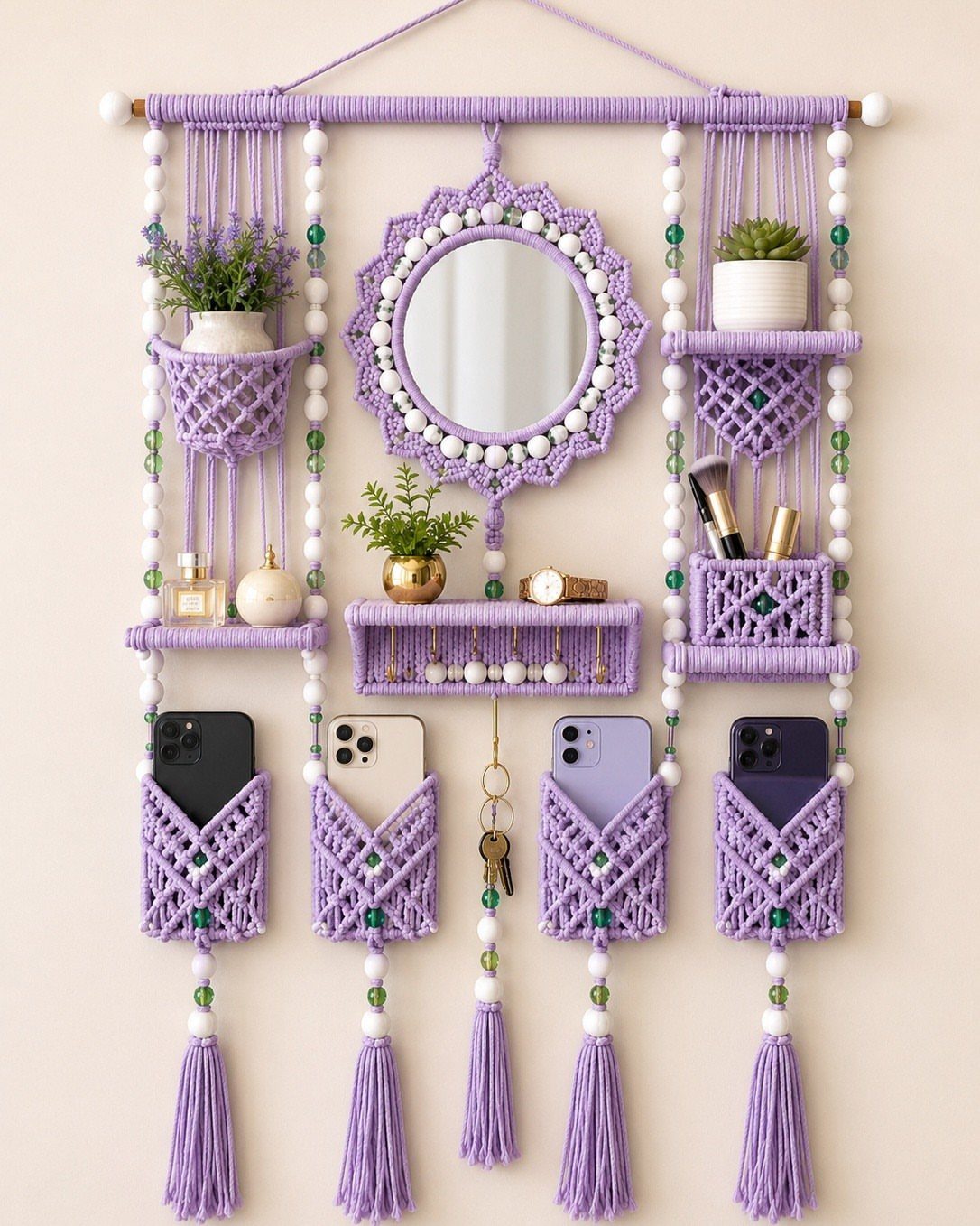
Cords do the work of brackets here, so the whole piece hangs from one point and adds texture to a plain light wall.
The small shelves and pockets suit the things that usually scatter: a phone, a few pieces of jewelry, a little plant.
A mirror in the center makes the hanging useful as well as pretty. I’d stick to small items only and let the purple cords be the color on the wall.
15. Minimalist Square Shelves
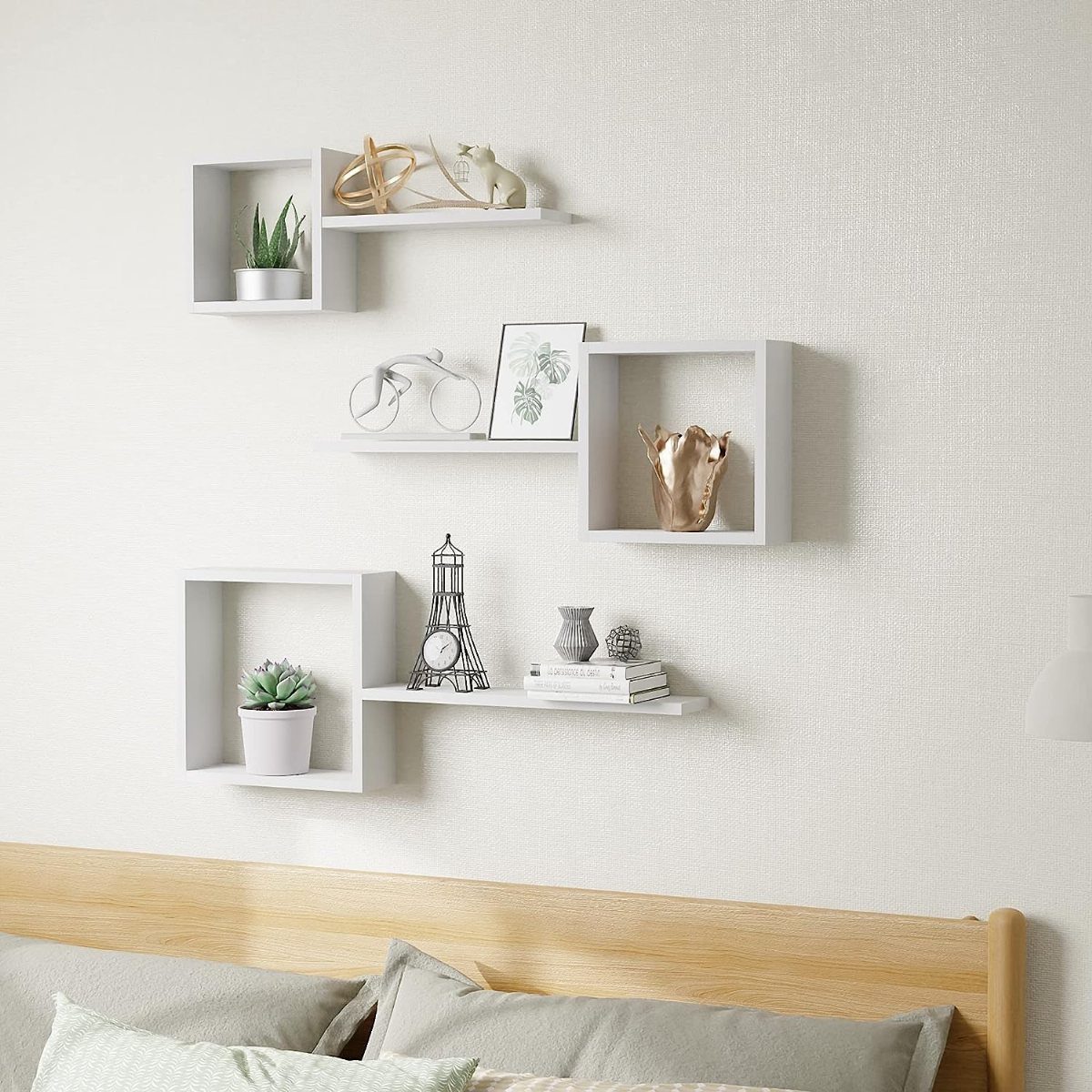
Thick square frames give you 2 places to set things: inside the box and on the flat ledge extending from it. Over a wooden headboard, white on white keeps the wall quiet while the wood supplies the warmth.
Put one or two small ornaments inside each square and a plant on top, so the frames still read as shapes. Three above a bed looks balanced to me, and more would crowd the headboard.
16. Curvy Modular Shelves
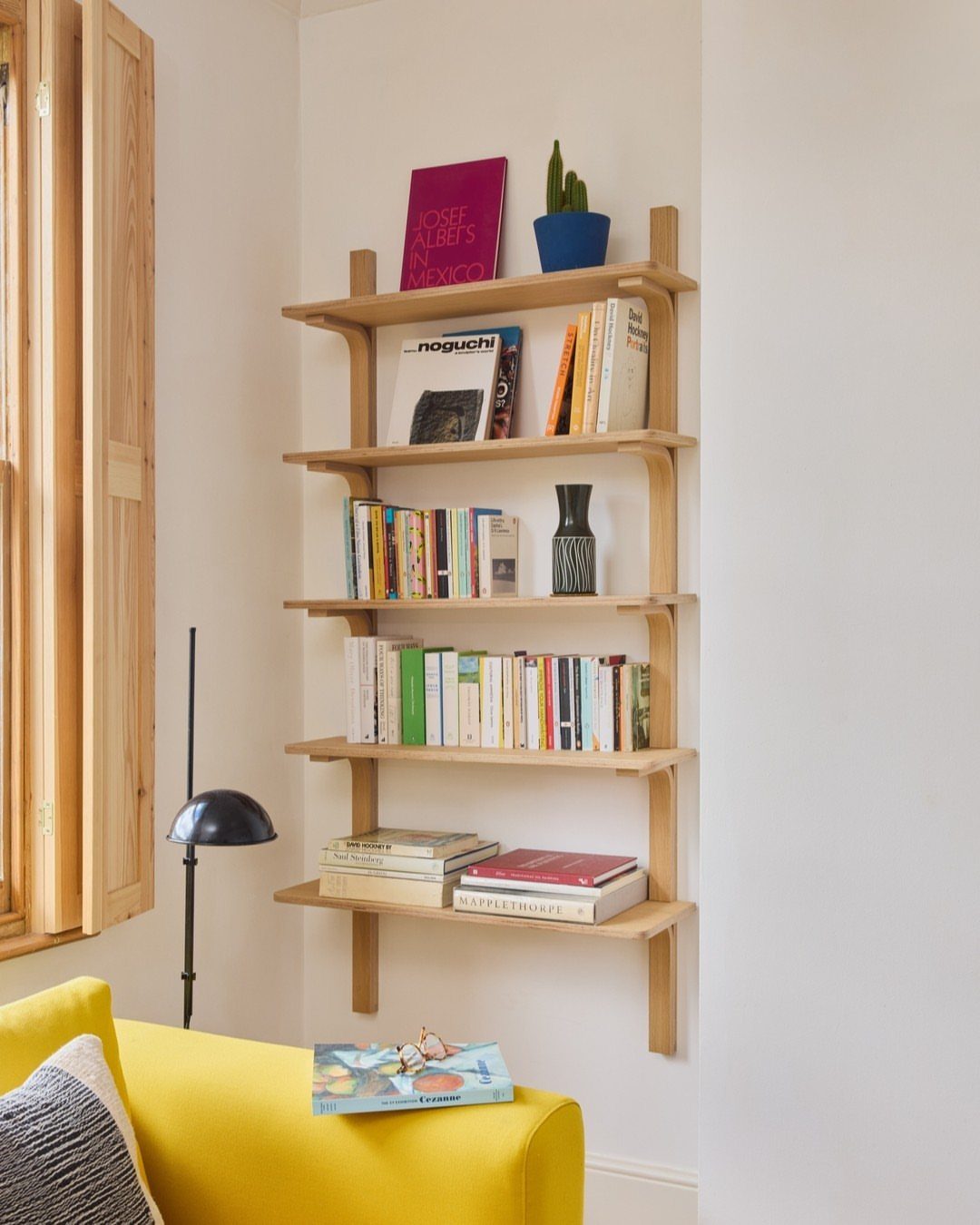
Separate curved and diagonal pieces can be rearranged until the line suits your wall, which is the real draw of a modular set.
Light wood against white walls stays calm, so a yellow sofa and a black lamp nearby can carry the color.
Lay the parts on the floor and try a few compositions before you mark anything on the wall. Books on one rise and a single plant on another is plenty.
Available in black or white, they±re also the perfect size to store your coveted CD collection (up to 40 fit on a single shelf!).
17. Diamond Three-tier Shelf
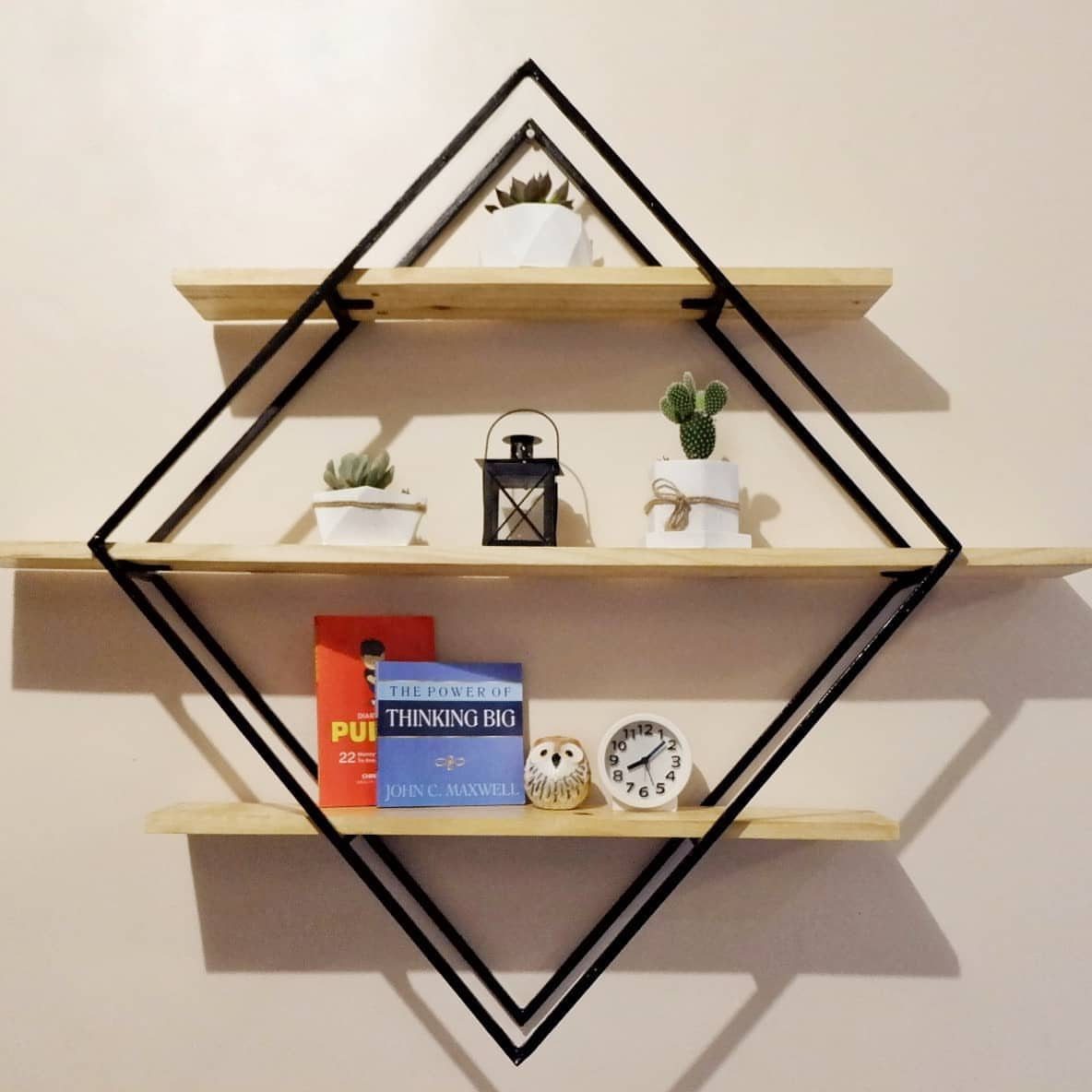
A diamond-shaped black metal frame turns three plain wooden planks into a geometric piece, and the black and wood pairing goes with most wall colors.
Vary the heights: a lantern and a clock on one tier, books and small plants on the others.
I’d hang it where bare wall surrounds the diamond, since the outline is half the appeal. Skip nearby frames that compete with those angles.
18. Hexagonal Wood Shelves
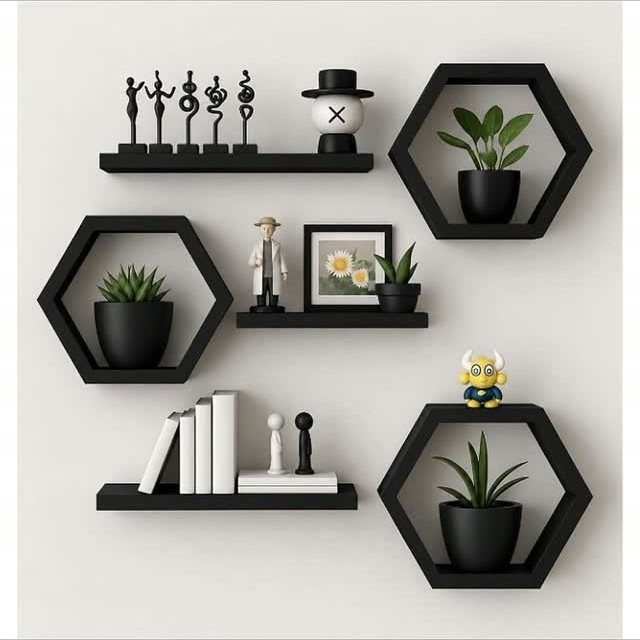
Hexagons can sit edge to edge or drift apart, so you decide the pattern. Pairing three of them with two straight black shelves, as here, gives the cluster a horizontal line to rest on.
Cut paper templates and tape them to the wall to test the layout first. Then fill the shapes lightly: a figurine or a small plant in most, a framed photo in one, and a couple left nearly empty.
19. Slim Metal Shelves
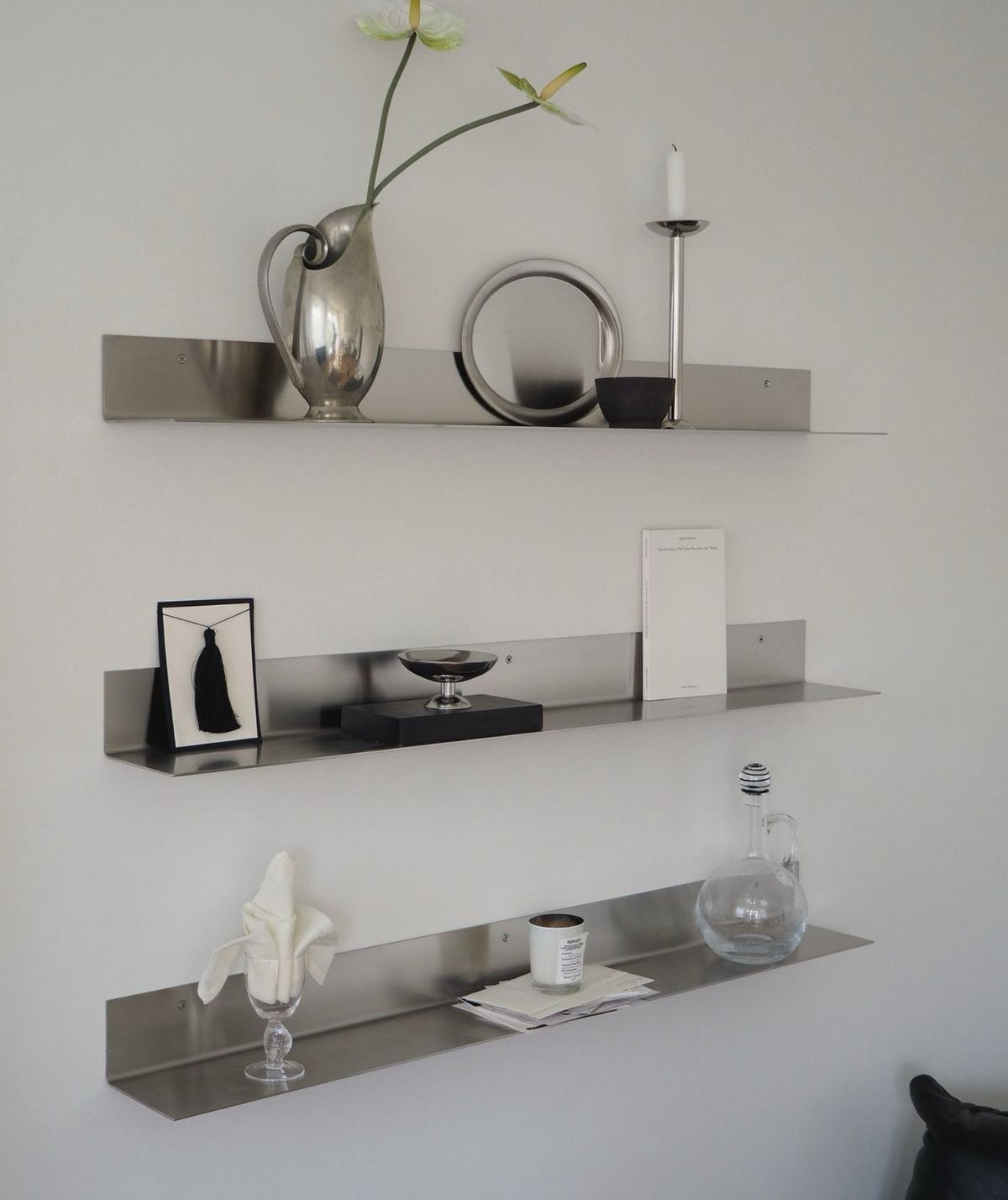
Three slim silver shelves in a set let you stack small storage up a wall without the bulk of wood boards. The thin profile keeps the wall looking open, and metal against white reads crisp.
Spread them with gaps so each shelf holds a small group: a vase, a candle, a framed print.
A mirror leaning on one shelf bounces light back into the room. Slim ledges suit lightweight decor, so keep heavy objects off them.
20. Minimal Stainless Shelf
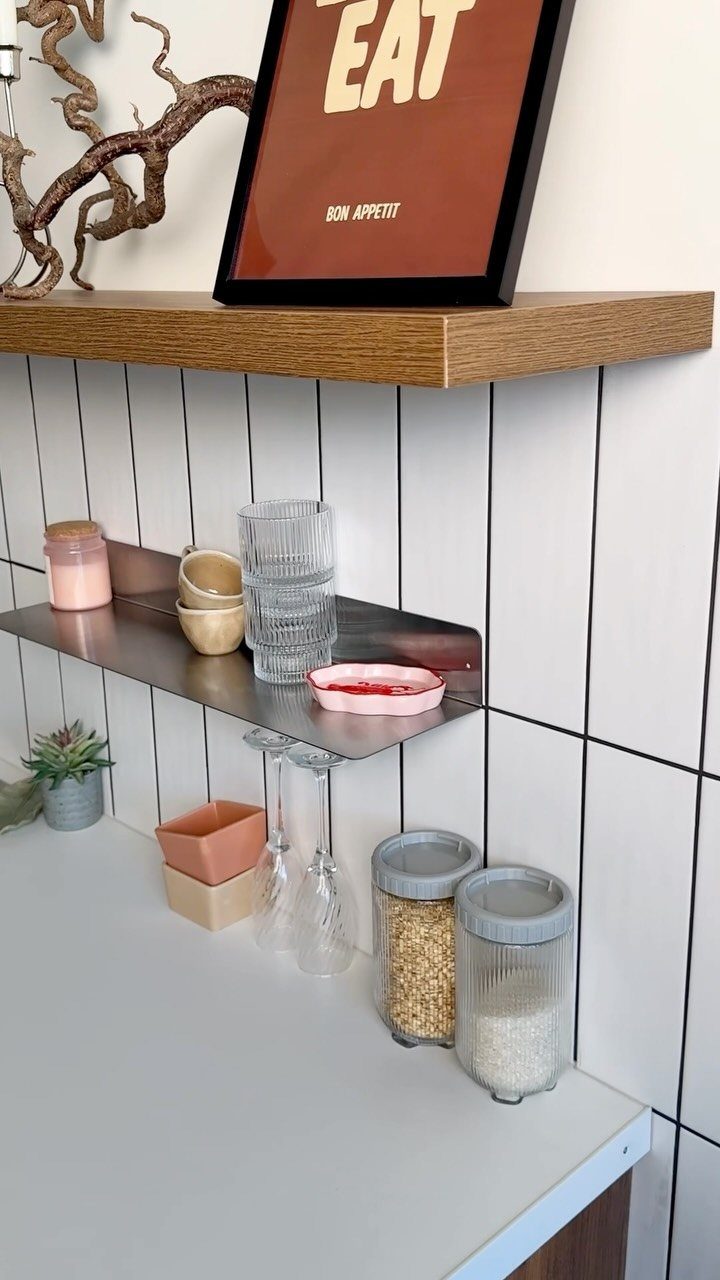
A single stainless-steel shelf almost disappears on a white paneled kitchen wall, which is the appeal. It gives glasses and jars a place to sit without adding another heavy block above the counter.
I’d pair it with a wood shelf higher up, as here, so the cool metal and warm grain balance each other. Keep to a few glasses and jars, because a slim surface looks crowded fast.
21. Long Kitchen Shelf
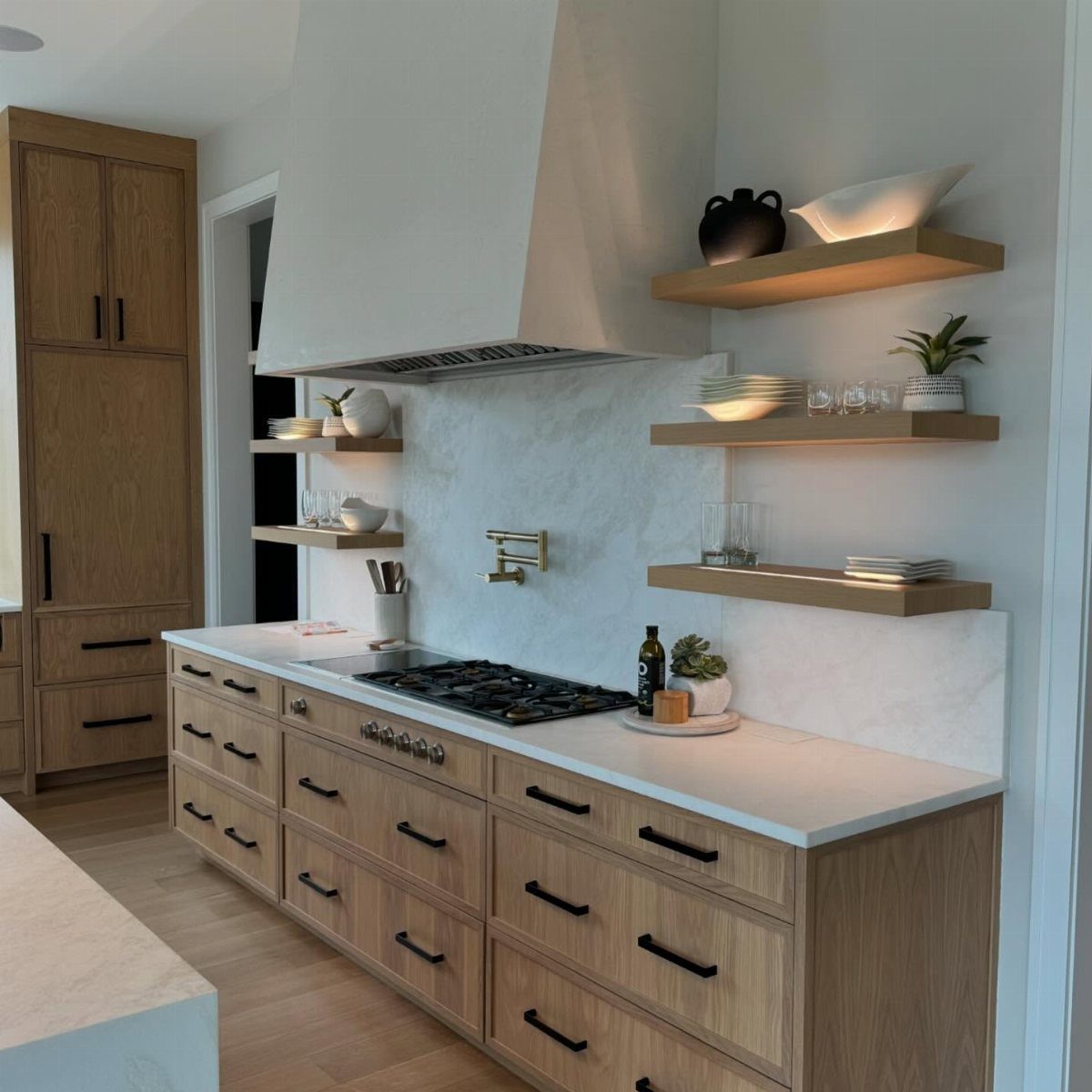
Long wood shelves across a marble backsplash turn a bare kitchen wall into storage and display at once. Light wood against white stone feels calm, and 3 runs give you room for more than a couple of bowls.
Stack them with even spacing so the lines read as a set.
Put everyday dishes on the lowest shelf within easy reach, and save the top one for things you only use now and then. The same layout works for a home bar.
22. Shelf and Coat Rack
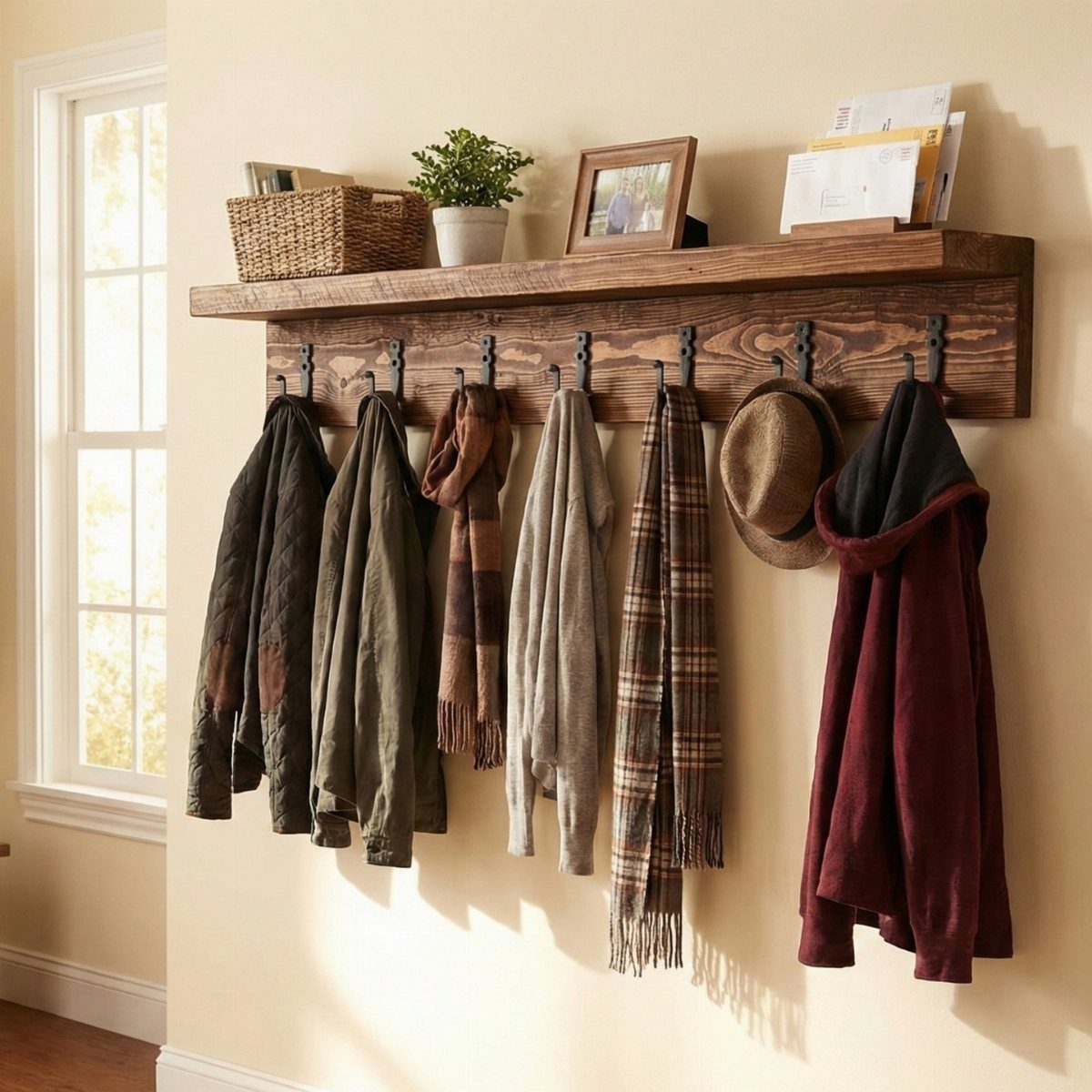
One wooden board with hooks built in gives a doorway a landing spot: coats, scarves and a hat hang below, while a basket, a plant and a photo frame sit on top.
A window beside it keeps the corner bright instead of cramped.
Use the top for mail and small things you grab on the way out.
Put a basket up there to catch loose items, so the hooks stay free for what you wear daily. It handles a tight entry far better than a floor-standing rack.
23. Scalloped Shelf Ledges
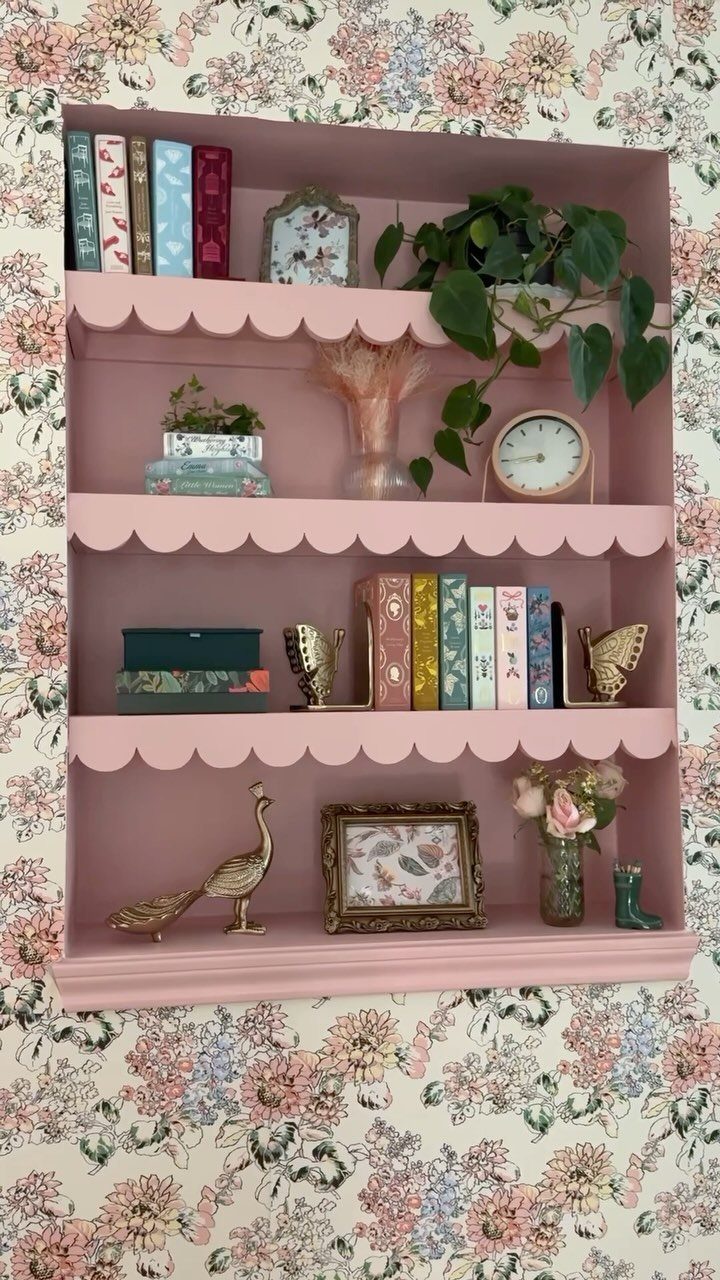
Pink scallops along the front edge give narrow ledges a soft, rounded trim, and against floral wallpaper the shelves become part of the pattern rather than fighting it.
That is a bold look, so I’d pick it only if you like a busy, cheerful room.
Ledges this slim suit books, a clock, a small plant and keepsakes. Keep the objects modest in size so the scalloped line stays visible along the front.
24. Oval Mango Accent Shelf
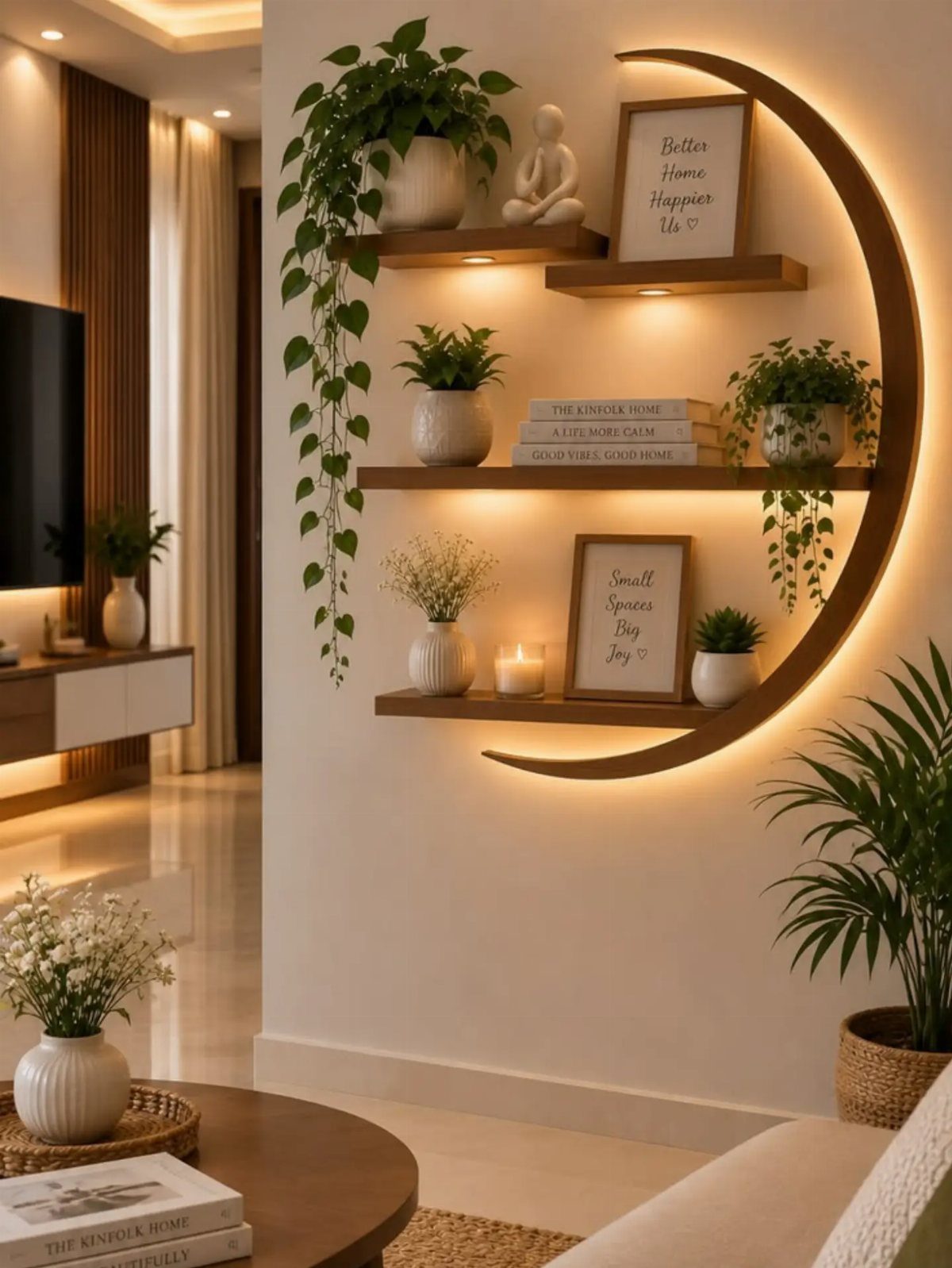
A tall oval frame wraps a three-tier mango wood shelf and gives it a mid-century shape that stands out on a plain white wall.
The warm backlighting behind it is what makes the oval glow, so choose a piece with the light included.
Hang it above a sofa or coffee table, where the glow adds a soft evening light, and leave wall space around it so the oval stays the focus.
25. Backlit Slat Display
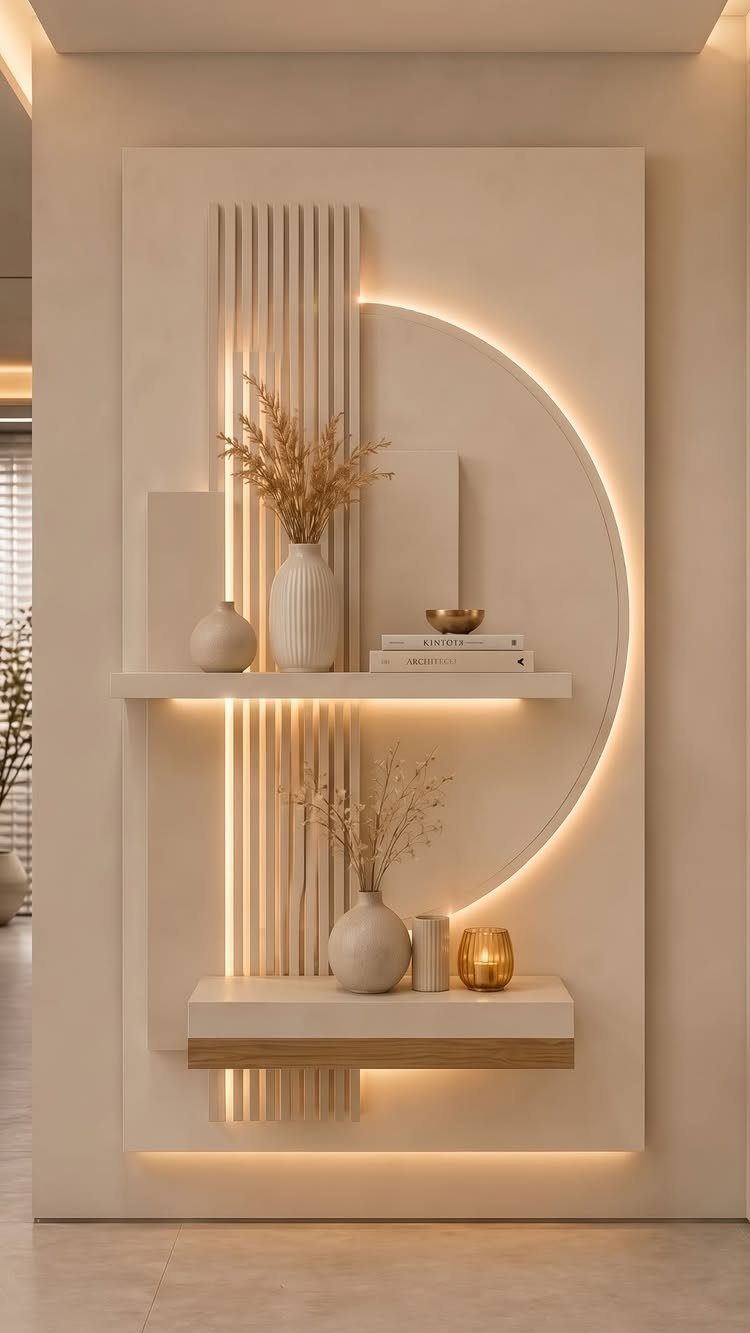
Vertical slats behind a glowing half-circle panel give floating shelves a backdrop with real depth, and the light does the job a lamp would otherwise do.
The ceramics, dried flowers and stacked books read as a quiet still life against it.
Stick to a narrow palette of cream, white and natural tones so the glow stays the focus. Sparse shelves work best here: one vase per shelf and a short stack of books leave the curve of light unblocked.
26. Branch-and-plank Shelves
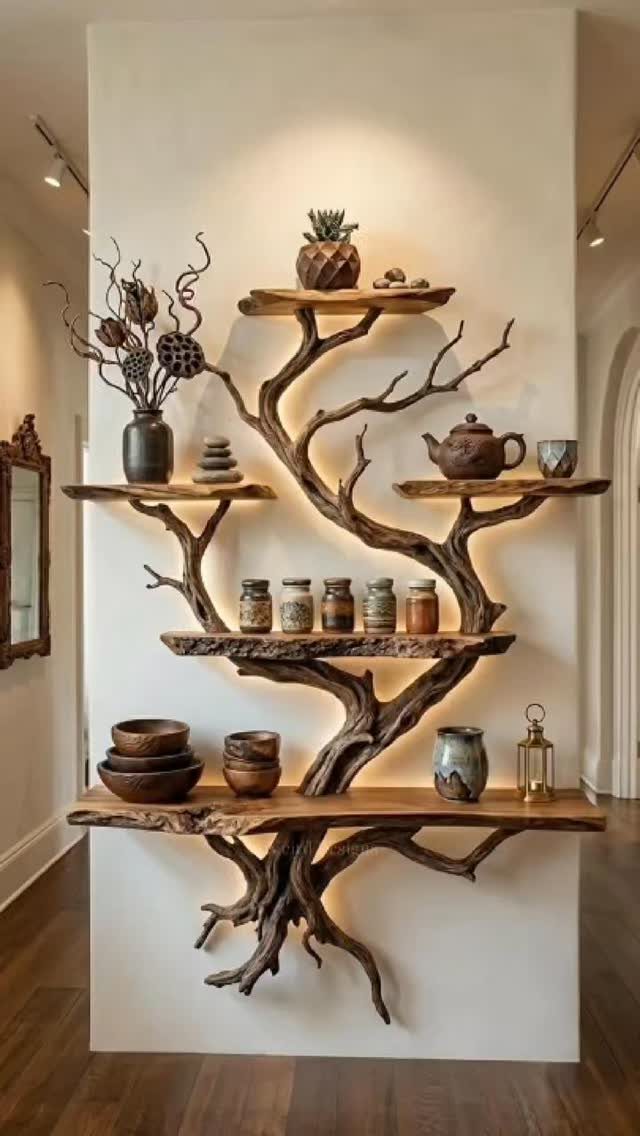
A real tree trunk with branching arms holds live-edge planks, which makes the shelf a sculpture before anything is set on it. Pottery and plants suit it best, since their earthy shapes echo the bark and the uneven plank edges.
Leave gaps between pieces so the branch lines stay visible. If a full trunk is too much wood for your room, I’d go with one plank on a single branch, which keeps the same look at a smaller scale.
27. Modular Metal-and-wood System
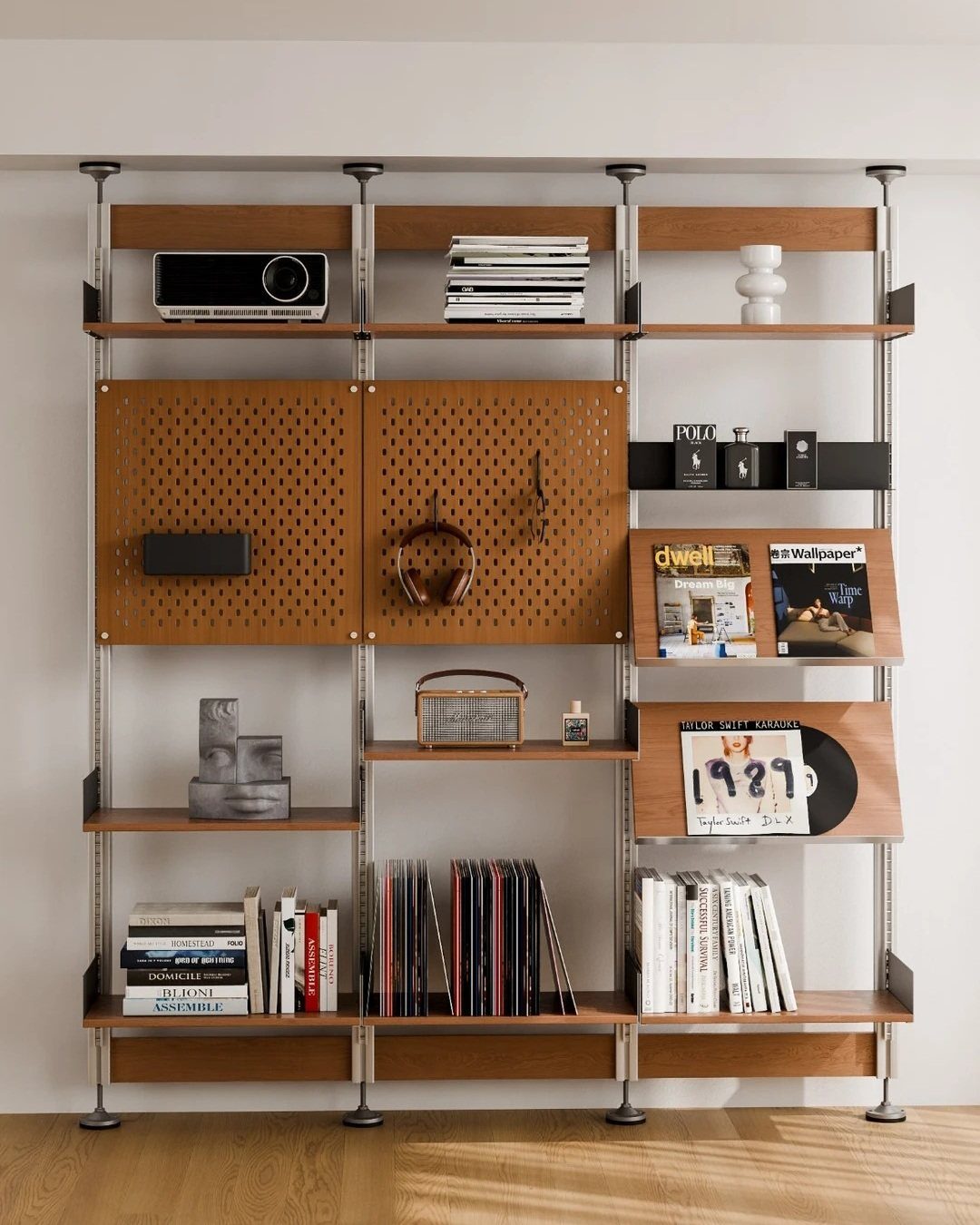
Because the metal frame is configurable, wood shelves and perforated panels can be swapped in as your collection changes.
That makes it a good fit for people with mixed stuff: books, records and small accessories all get a home in one unit.
Place the panels where you want a break from the shelves, and put records at the sturdiest, most accessible level. I’d leave a few openings empty from the start, because a modular system looks best when it isn’t packed full.
28. Industrial Wall Shelves
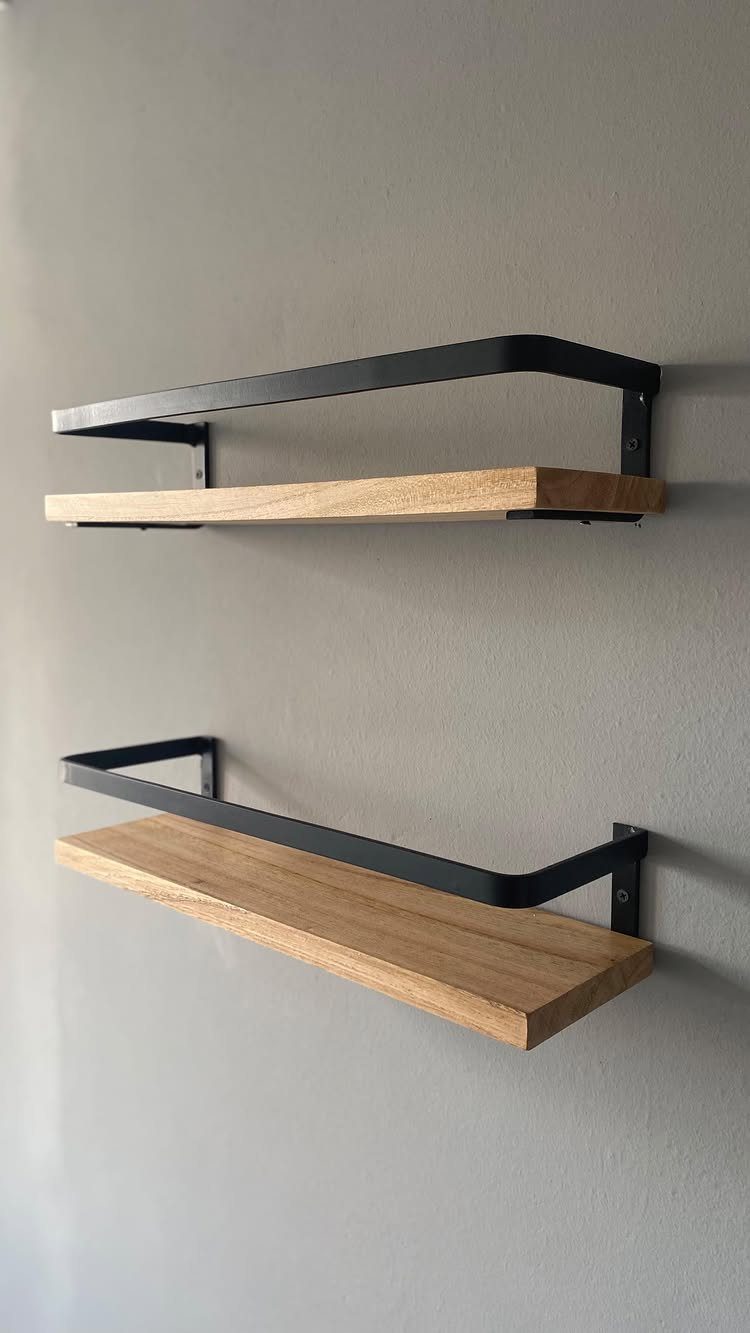
Light wood planks on black metal supports make the plainest version of industrial: two shelves, one grey wall, no extras. The contrast is strong enough that the shelves look finished even when they are empty.
Stack two with a clear gap between them, and keep what sits on top simple. A few books and one plant are enough, since the frame lines already supply the character.
29. Curved Kitchen Shelf
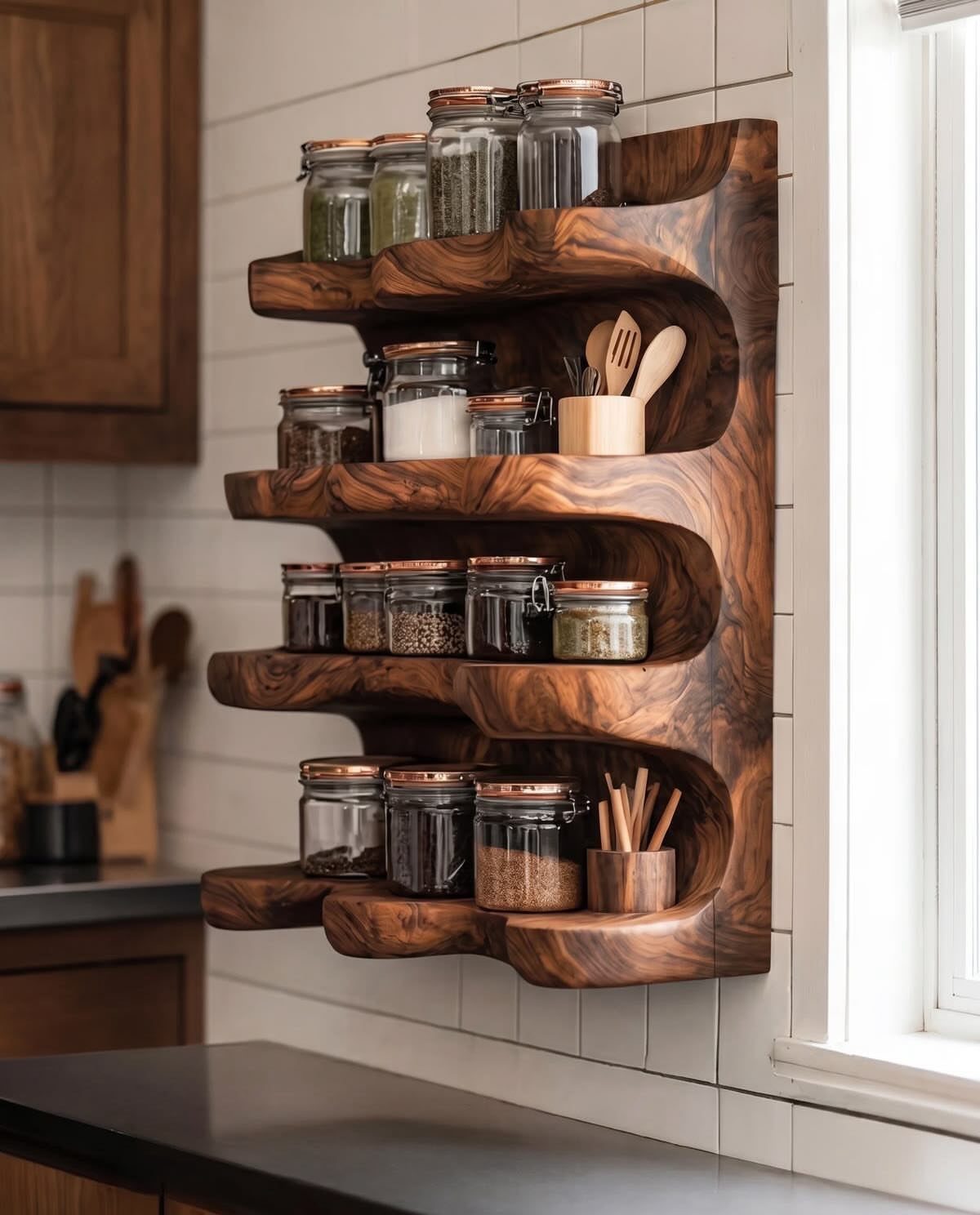
A shelf with a soft, organic curve breaks up the grid of white backsplash tile, and it keeps spice jars and wooden utensils within arm’s reach of the stove.
The wavy outline is the feature, so I’d choose a smooth-finished wood in a warm tone.
Line up matching glass jars along the shelf so the curve reads clearly, and hang the utensils nearby. Next to a window, the shelf also catches daylight, which helps you read the labels.
30. Asymmetrical Display Shelf
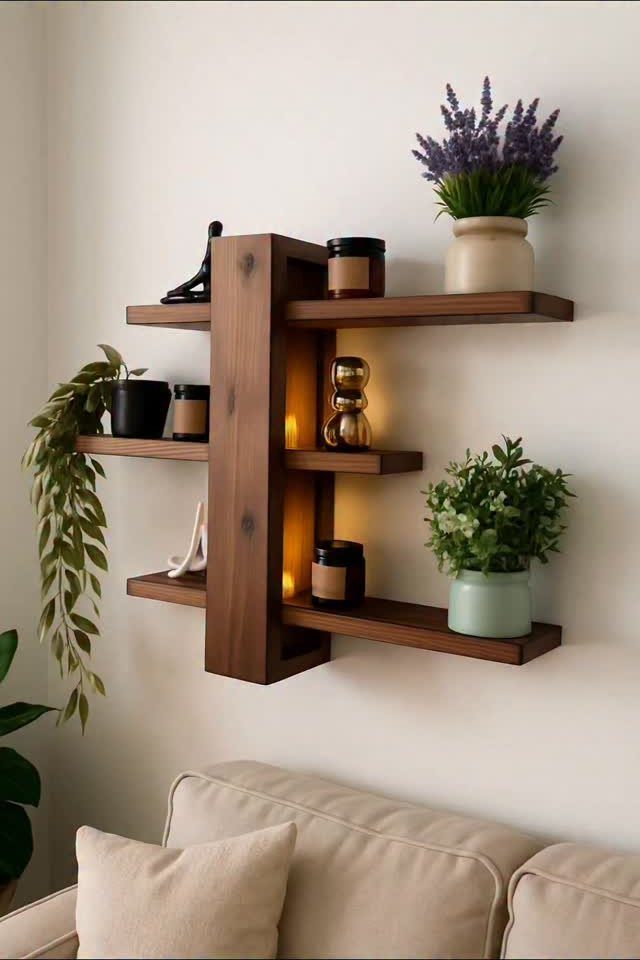
An offset, geometric layout in dark wood gives a white wall above a sofa more personality than a straight board could.
The uneven compartments invite you to vary what goes in them: a plant in one, candles in another, a decorative object in a third.
Dark wood stands out strongly on white, so a few pieces are plenty, and some compartments can stay empty. Mount it with a little wall space on every side so the odd outline reads as the point.
31. Rope-suspended Wood Shelves
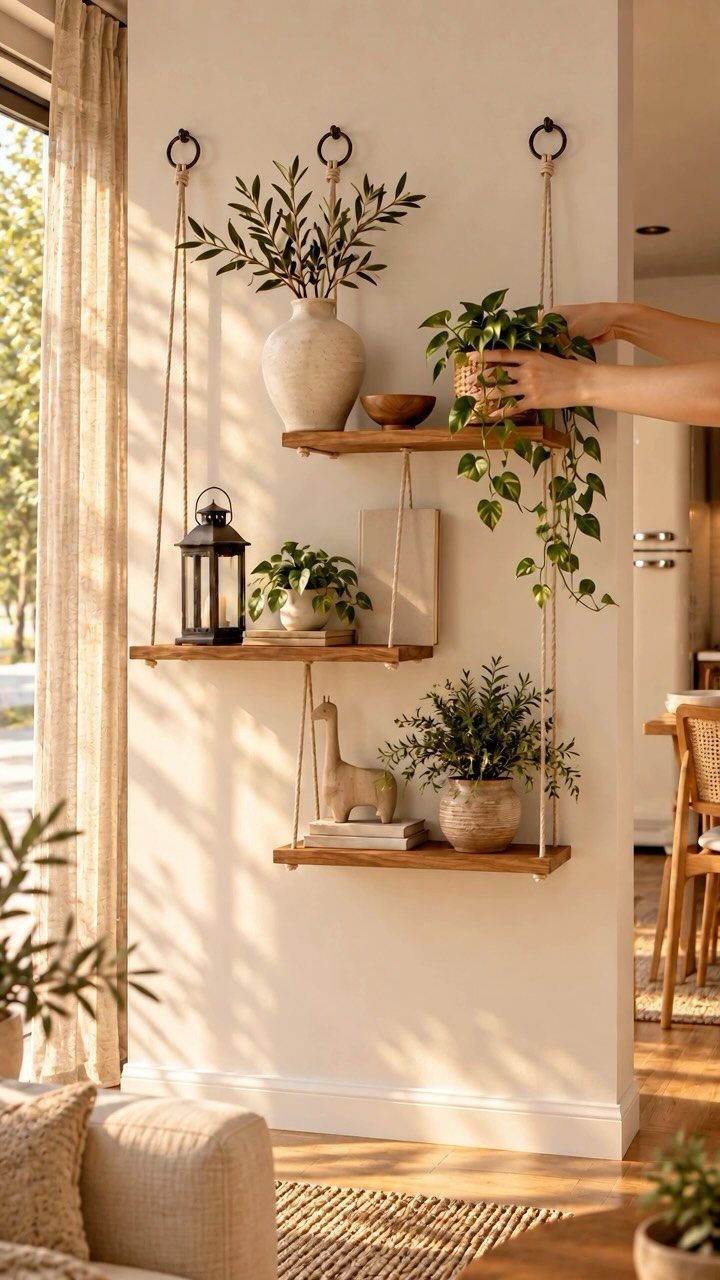
Rope turns a plain wood board into a hanging shelf, and black wall hooks give the whole piece a clean anchor point. Plants suit it best, with a lantern or a small decor piece to break up the greenery.
Keep the load light and balanced, because a rope shelf swings and tilts if one end carries more than the other. I’d fill it with small pots and leave a gap between tiers so the ropes stay visible.
32. Modern Box Shelves
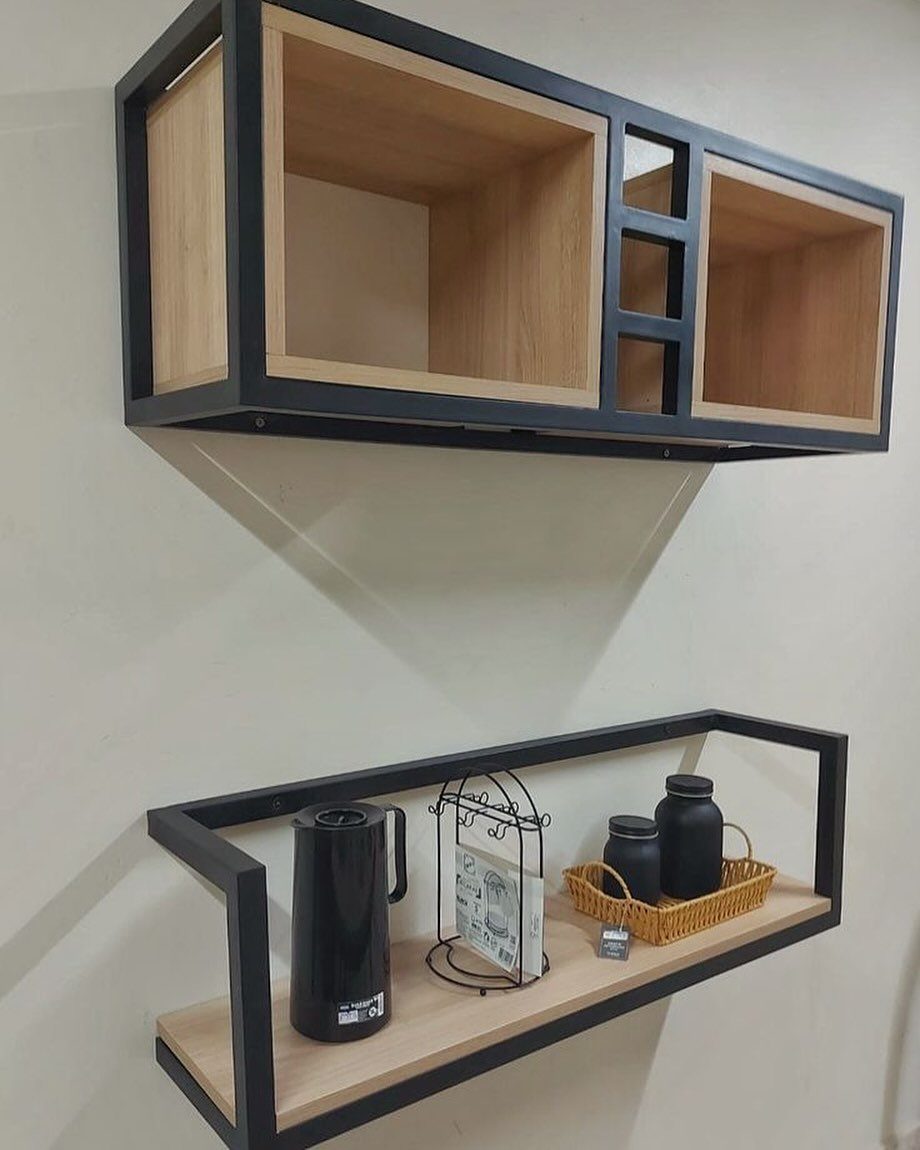
Black metal frames turn each shelf into a box, with light wood inside to soften the outline.
Box shelves suit a kitchen wall, where one open box can hold a kettle and a basket of jars while a closed one hides the clutter.
Whatever you reach for daily belongs in the open box, with the rest behind the closed front. 2 boxes on a white wall is enough; I wouldn’t add a third.
33. Silver Metal Ledges
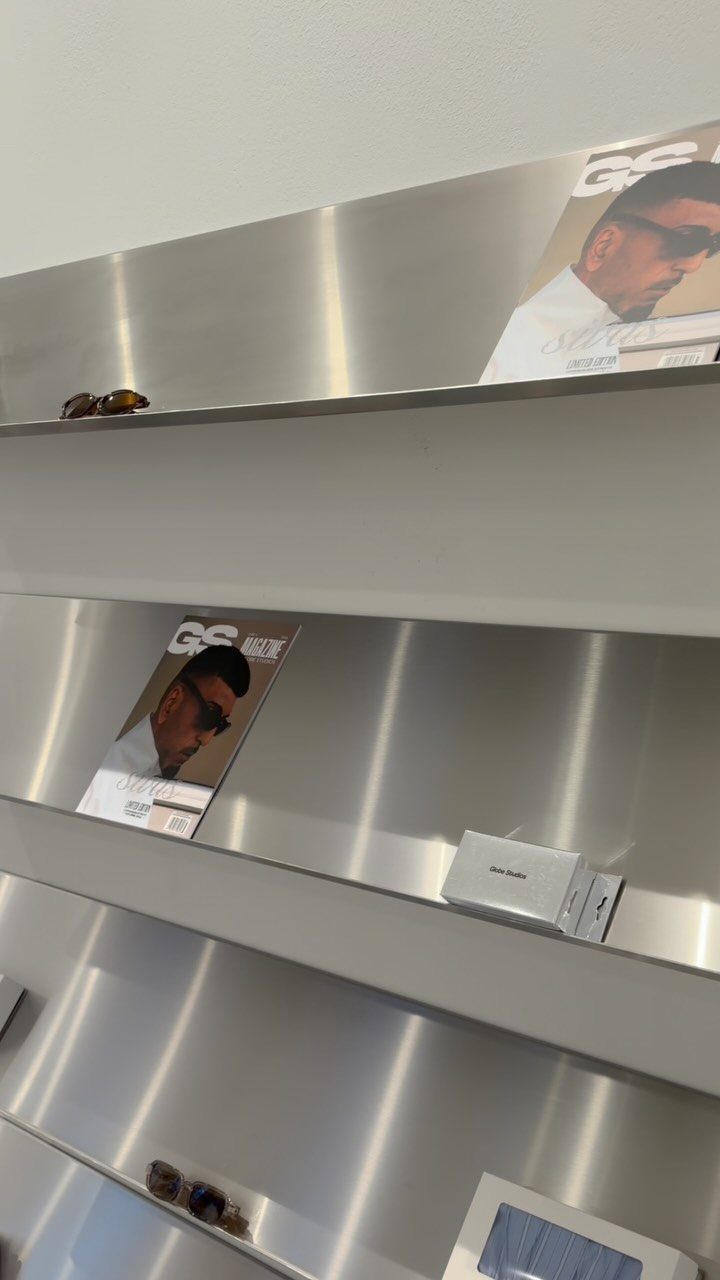
Brushed silver gives slim ledges a quiet shine without the glare of polished chrome.
On a white wall, three of them in a row make a tidy rack for magazines with the covers facing out, and a small box fits at one end.
Keep the stack short, since a narrow ledge only holds a few issues before it looks packed. Rotate the covers now and then, and the shelves work as a changing display.
34. Cat Climbing Shelves
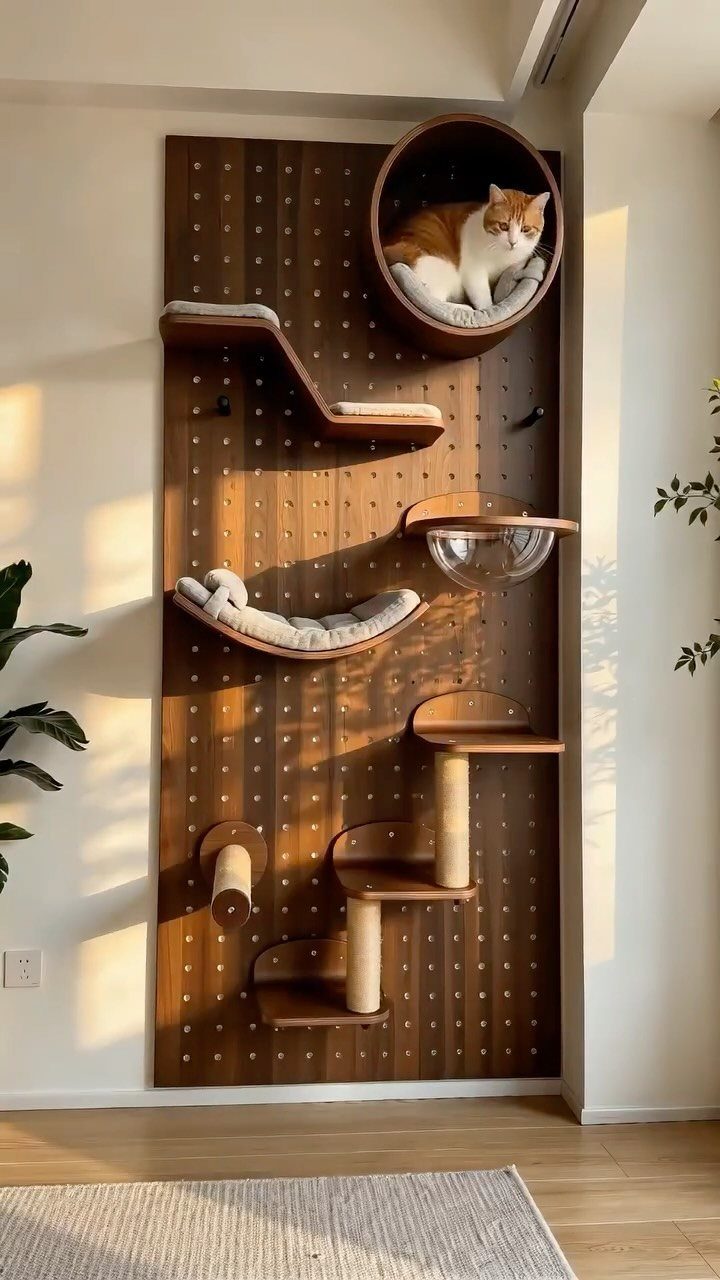
Platforms, a shelf and a round bed bolted to the wall give a cat its own route up and out of the way, and the bowl sits on a level of its own.
Wood keeps the setup calm in a bright room, and a plant nearby makes it look like furniture rather than a pet fixture.
Space the platforms so a cat can step from one to the next without a big jump. I’d put the round bed highest, since cats like to look down on the room.
Mounting and Installation
Read the instructions before you drill. If a shelf is meant to go into a wall stud, treat that as a requirement, especially for anything that will hold books, records or ceramics.
Studs are commonly spaced 16 or 24 inches apart, so find one with a stud finder and measure from it instead of guessing. Shelves hang by screws, visible brackets, mounting strips, French cleats or keyhole hangers.
Strips suit only light, small pieces. A French cleat spreads weight along the board, and keyhole hangers are the easiest of all: set 2 screws, then drop the shelf over the heads.
Mark the holes with a level held against the wall, not by eye.
The anchors packed in the box are often basic, and I’d replace them with better ones wherever a stud isn’t available. That costs little, and a shelf that pulls out of drywall costs far more.
Using Shelves in Small Spaces
Wall shelves pay off in tight rooms because they move storage off the floor. A narrow hallway, a small entry or a dead corner with no cabinet can each take a shelf, and the floor stays open for walking.
Size the shelf to the pile it has to absorb, not to the empty stretch of wall. In a walkway, choose a shallow depth and hang it above shoulder height so nobody catches a hip or elbow on it.
Sets sold as two units can split up: hang them together for one large display, or put one in each of two awkward spots.
Stone corner shelves are also made for shower and kitchen corners, which tend to be the most storage-starved spots in a small home. Stone is heavy, so mount it into solid backing.
Frequently Asked Questions
Are floating shelves out of style in 2026?
No. Practical storage like shelving doesn’t really go out of fashion, and floating shelves fit nearly any design style.
If you lean minimalist, pick a slim shelf with hidden supports so you see only a clean line of wood. Warmer rooms can handle thicker boards.
How can I style a wall shelf in a way that looks good?
Cluster 2–3 objects together, then leave a few inches of bare shelf before the next cluster; that empty stretch is what keeps the display from reading as clutter.
Weight matters on a wall shelf: books anchor one end, lighter plants and vases sit at the other, and a mix of tall and short pieces keeps your eye moving across.
Fewer items look better than a full shelf, because a packed shelf hides the shape you chose it for.
How to modernize built-in shelves?
Start with light. A 2700K LED strip tucked along the front edge of each shelf gives plants and flowers a warm glow that no ceiling fixture can match.
After that, assign each opening a single subject: one plant here, a neat stack of books there, a lone object in the third.