
Where the light has to go settles the choice before style does: a free tabletop calls for a table lamp, a clear patch of floor for a floor lamp, and an open ceiling or bare wall for a pendant, ceiling or wall lamp.
Effort and price swing widely across the list, from a plywood lamp bent into loops around an LED strip to a wood-and-resin piece with amber poured into dark grain.
1. Wooden Table Lamps
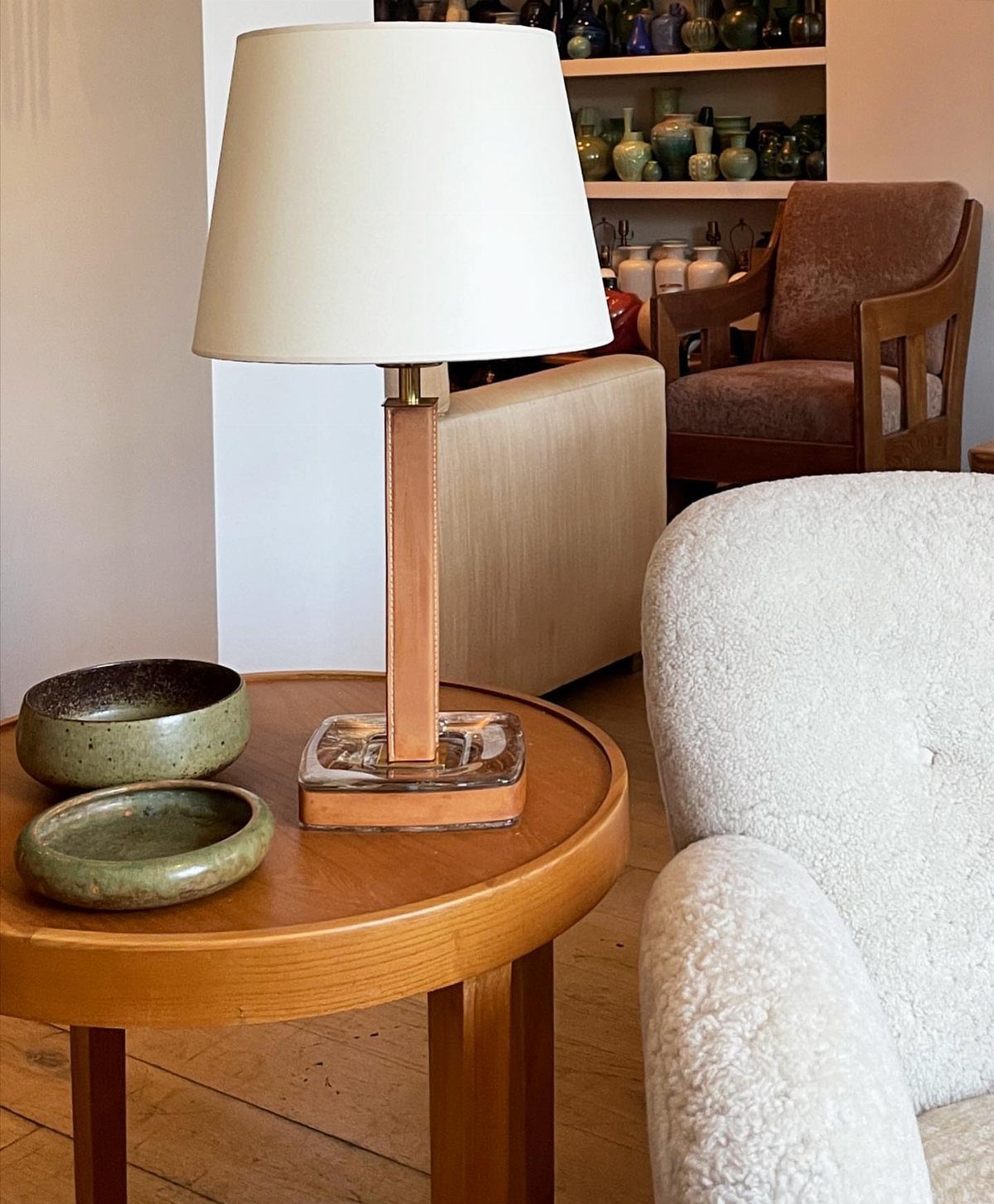
Cream fabric over a wood base is a quiet pairing, and that is why I like it. Neither part fights the other, so the lamp can sit on a round wooden side table without making the corner feel busy.
Pick a base whose grain you enjoy looking at, since the shade covers little of it. Keep the shade light if the wood is dark.
2. Wooden Floor Lamps
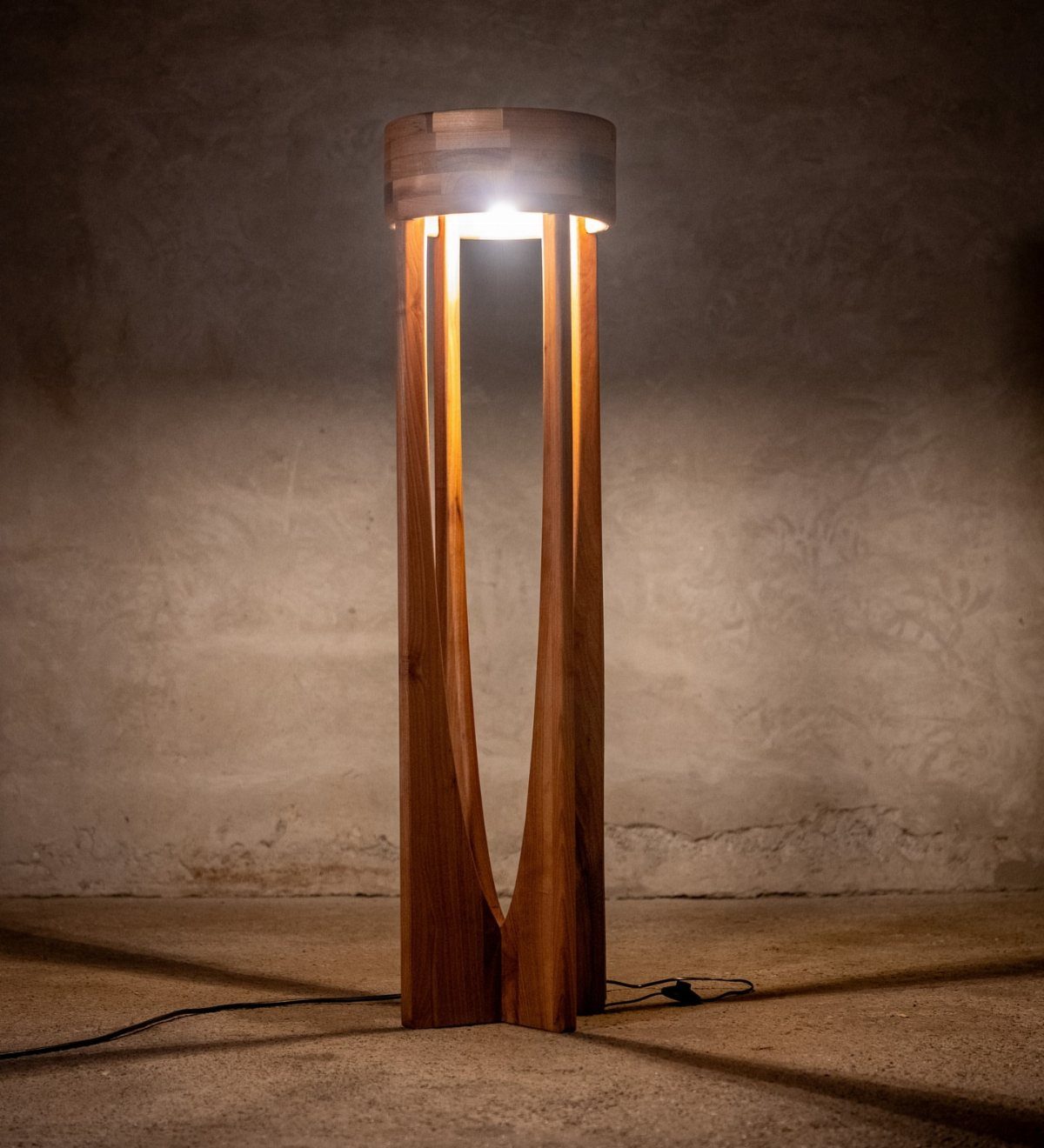
Curved slats around a cylindrical shade give a floor lamp more presence than a plain pole ever could. Against a bare concrete wall, the wood carries all the warmth in the corner.
I would choose curved supports over straight ones in a room with lots of hard edges, because the curve breaks them up. Leave open floor around it so the shape reads from a distance.
3. Wooden Pendant Lamps
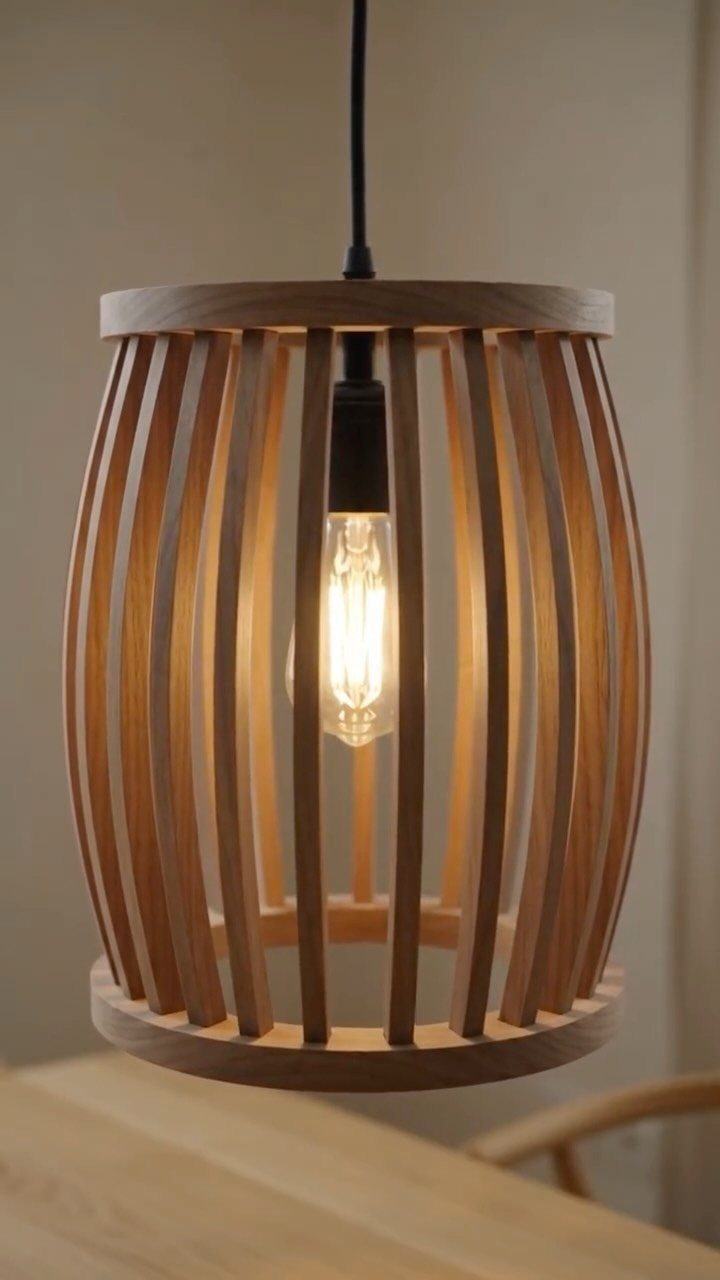
Over a wooden table, a slatted pendant makes the bulb part of the design, so buy one you like looking at.
Vertical slats with an Edison bulb in the middle give a plain wall something to look at without adding clutter.
A cage shade lets the light show through the gaps. Center it over the table so it looks planned.
4. Wooden Wall Lamps
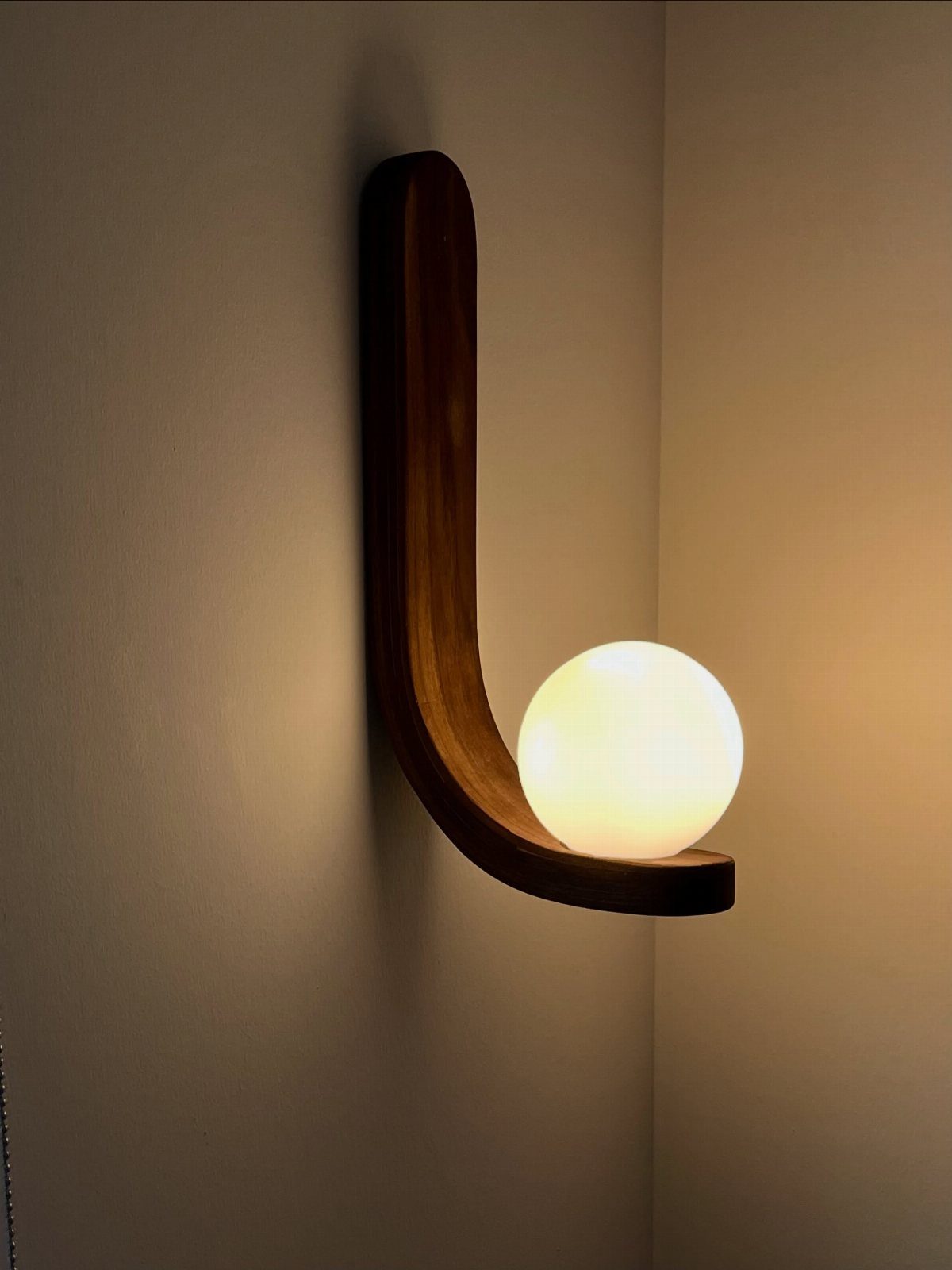
Dark brown wood curving out from a neutral wall, with a round glowing bulb at the end, is a small gesture that still looks deliberate. A wall lamp like this leaves the nightstand or side table free for other things.
I would keep the wall around it empty. A bracket this simple needs room to read as a shape.
5. Branch Lamps
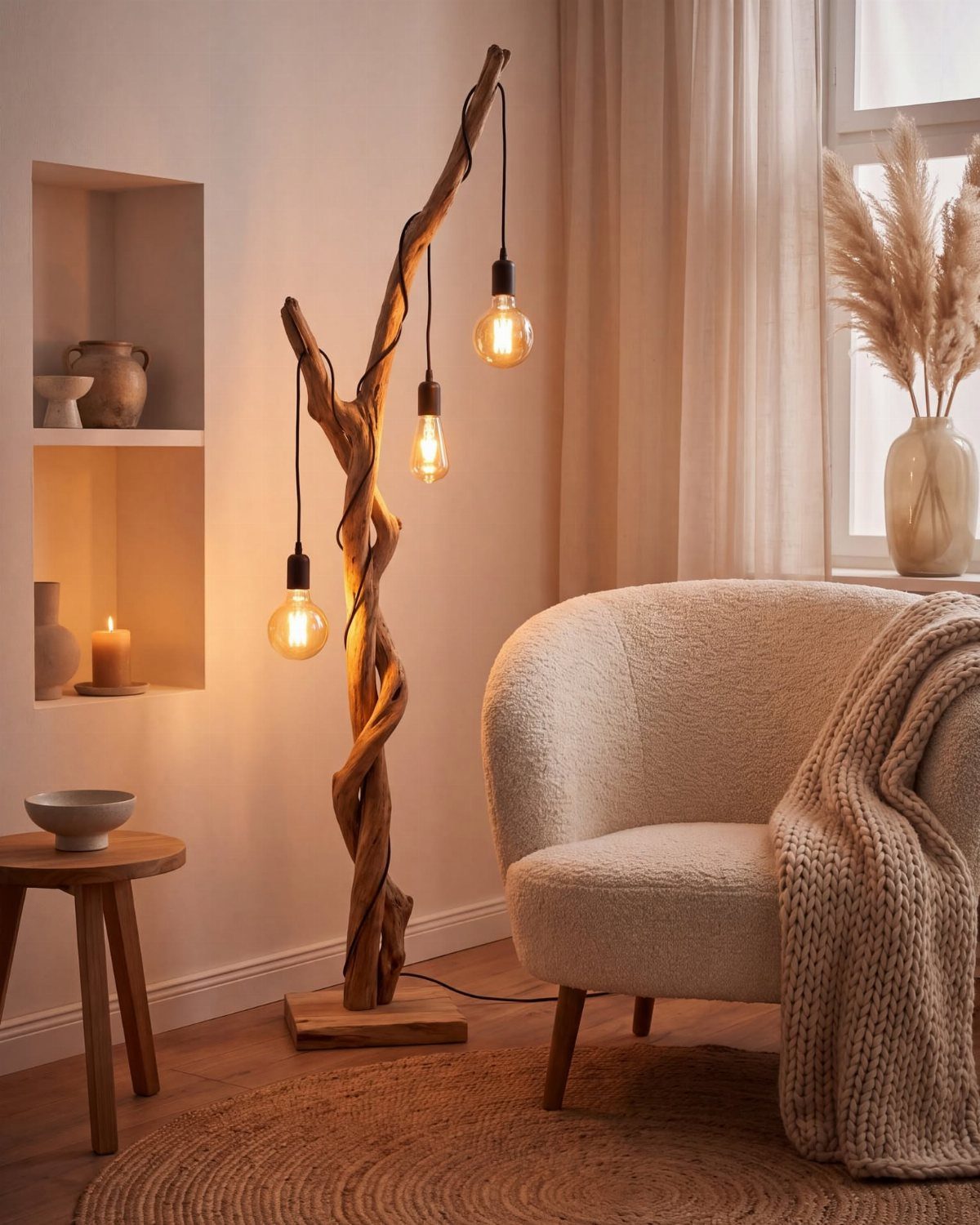
A twisted natural branch with 3 bulbs hanging from it turns a lamp into a piece of living room furniture. Beside a bouclé chair and a small wooden table, the rough bark and soft fabric balance each other well.
Choose a branch with a shape you would hang on a wall as art. The bulbs are secondary to that line.
6. Slatted Wood Lamps
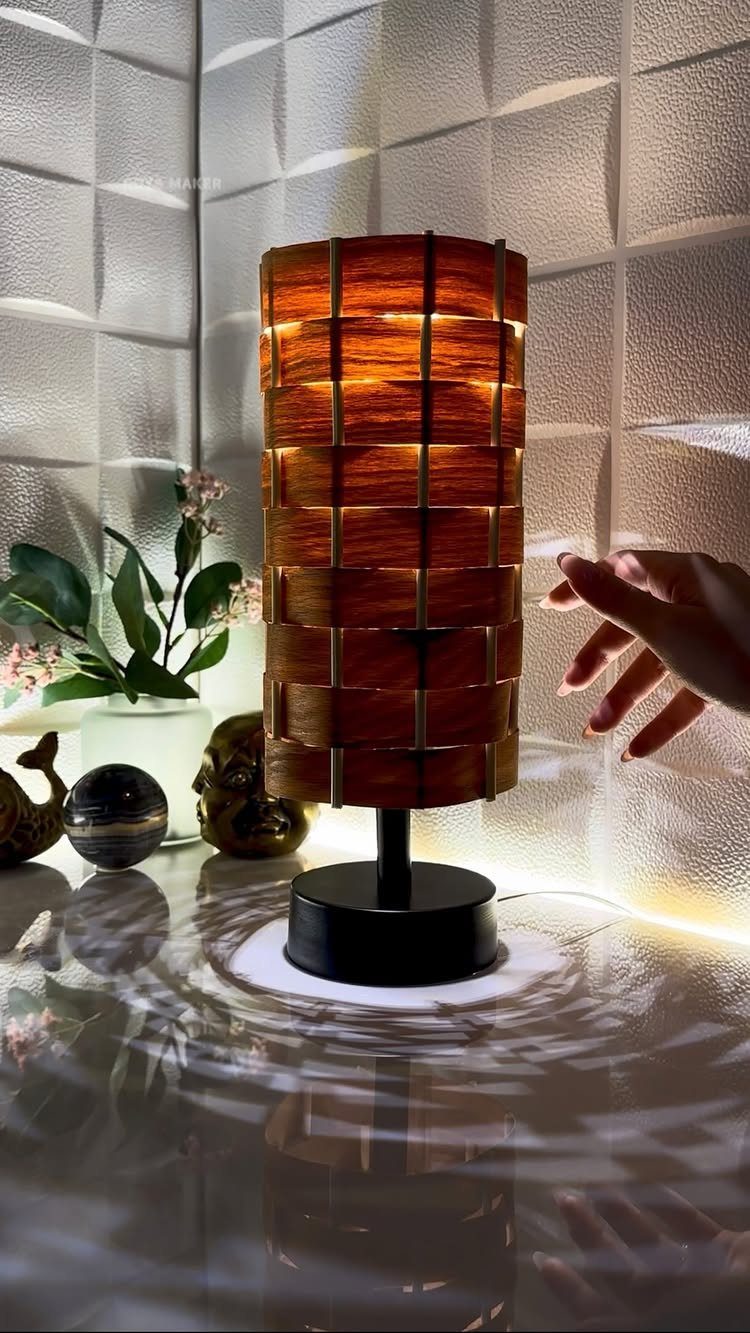
Vertical and horizontal slats forming a grid around the bulb give a cylindrical lamp a pattern that changes as you move around it. On a black base, the wood looks sharper.
I like this one on a reflective surface, where the glow doubles. Put it next to a plant and the slat shadows add to the effect.
7. Wooden Desk Lamps
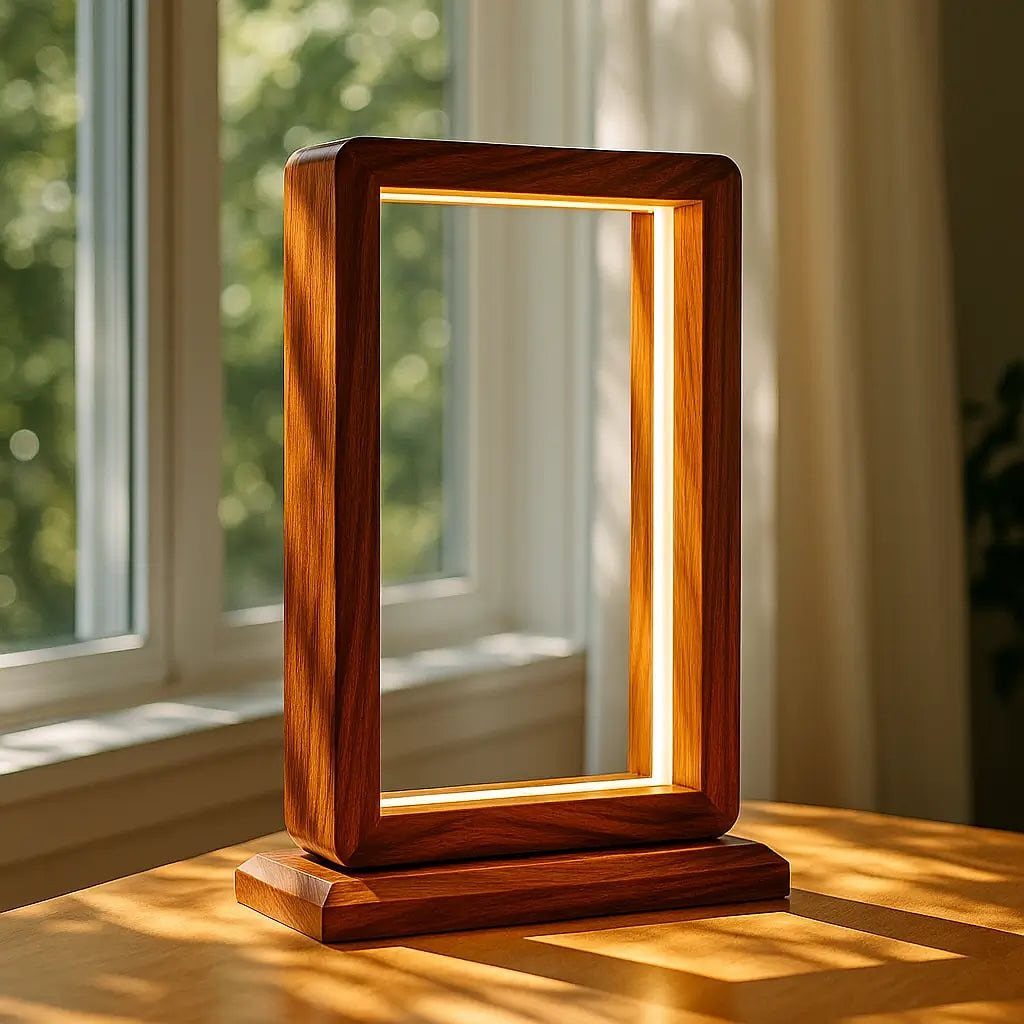
A rectangular wooden desk lamp with a built-in light strip takes up very little of a tabletop, and the wood keeps a work surface from feeling like an office. Beside a window, it picks up daylight on the grain.
I would pick this over an adjustable-arm lamp when the desk is small, since there is nothing to swing into the way of a laptop.
Set it at the back edge so the strip lights the surface without glaring at the screen.
8. Wood Block Lamps
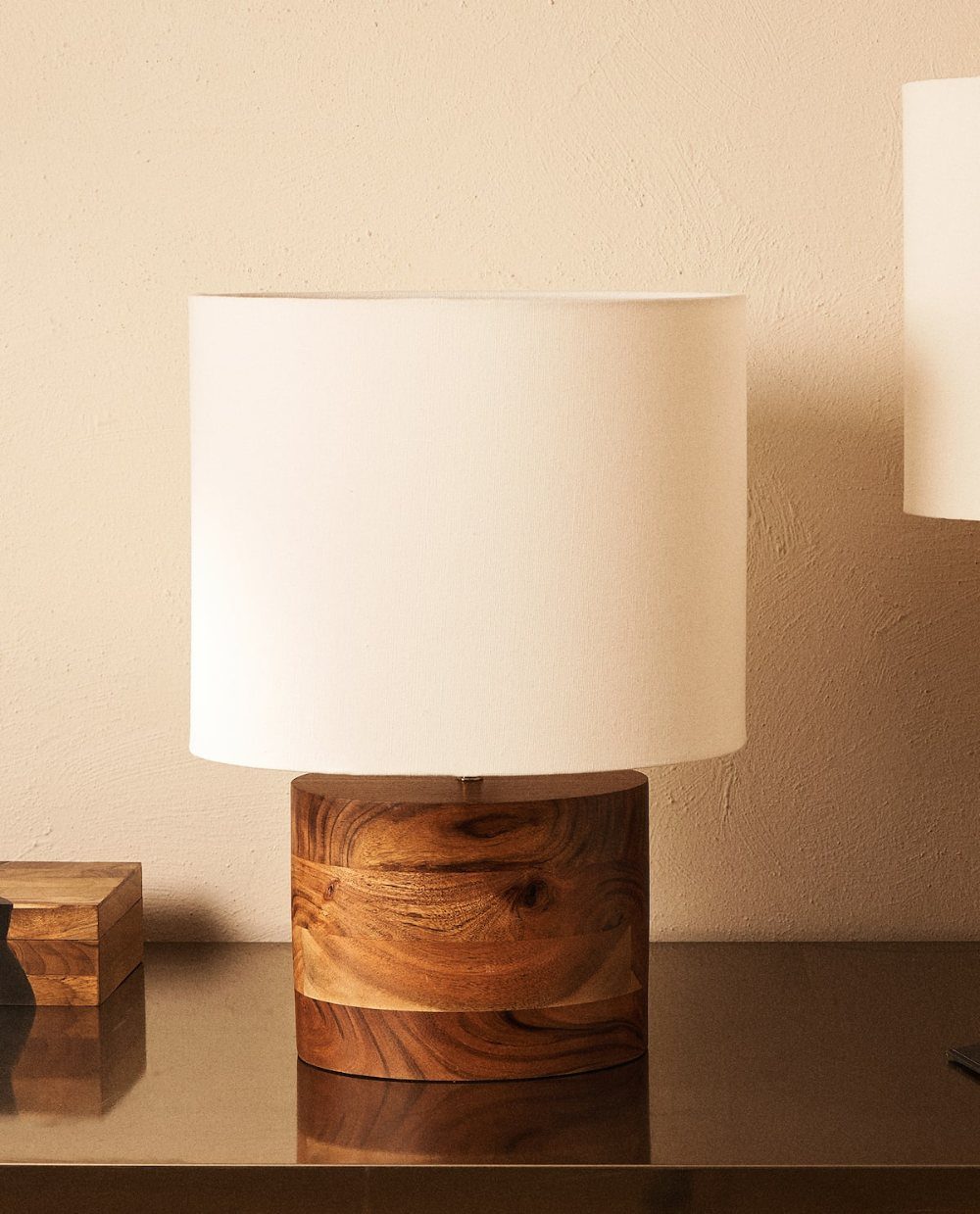
A thick cylinder of solid wood topped with a white fabric shade puts the base front and center. The shade stays plain, so the heft and grain of the wood are what you notice.
A glossy brown surface like the one here repeats the base in a soft reflection.
I would choose a block with visible grain over a painted one; the pale shade then keeps the pairing light. Place it against a neutral wall so nothing competes with the shape.
9. Driftwood Lamps
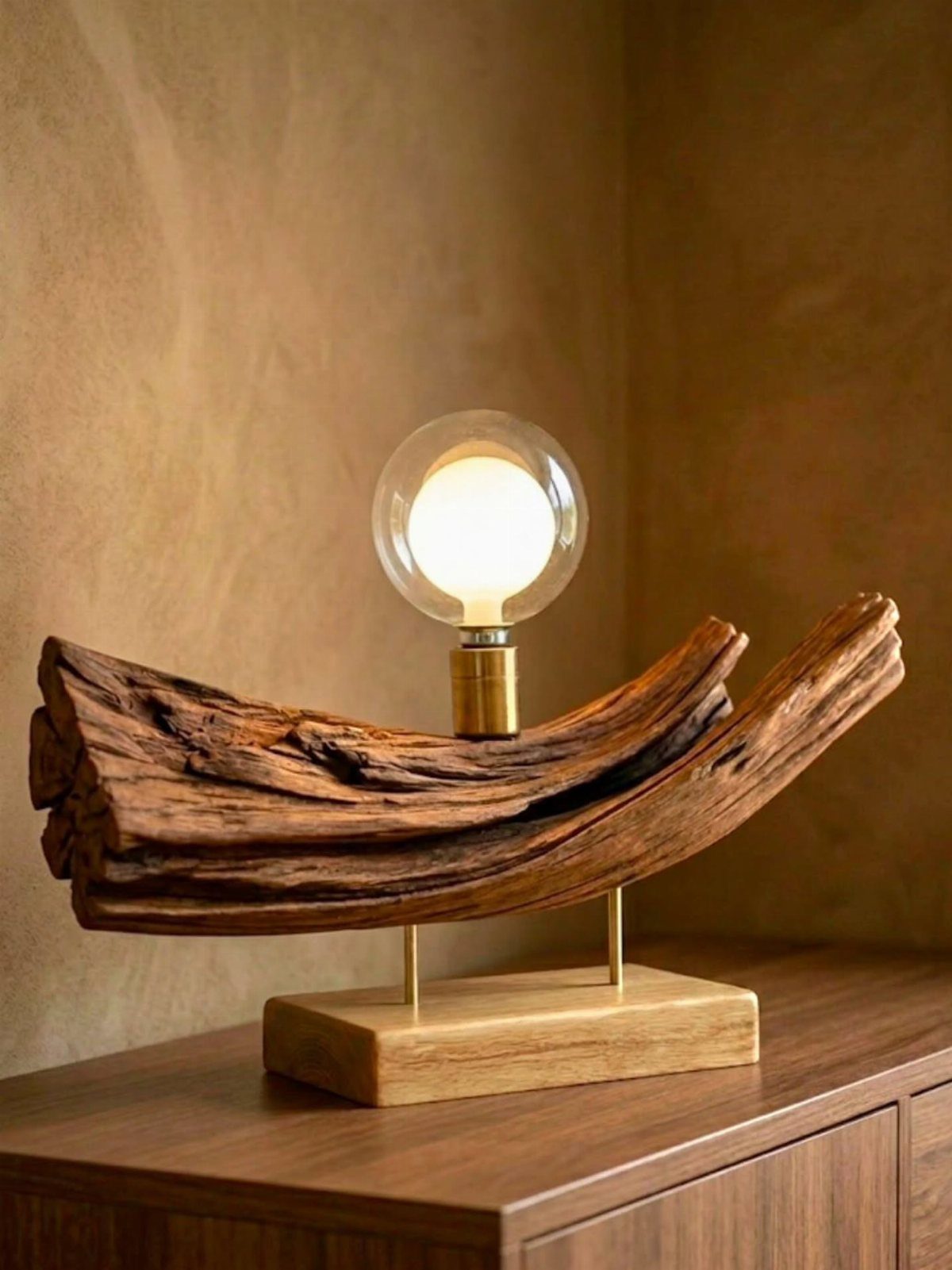
A weathered piece of driftwood with a round bulb glowing beside it is the kind of lamp no one else will have, because every piece of wood is shaped differently.
A light wood base keeps the whole thing grounded on a dresser.
Pick the driftwood for its outline, not its size. I would leave the surface bare so the weathering shows, with a plain wall behind it so the silhouette stands out.
10. Fabric-shade Wood Lamps
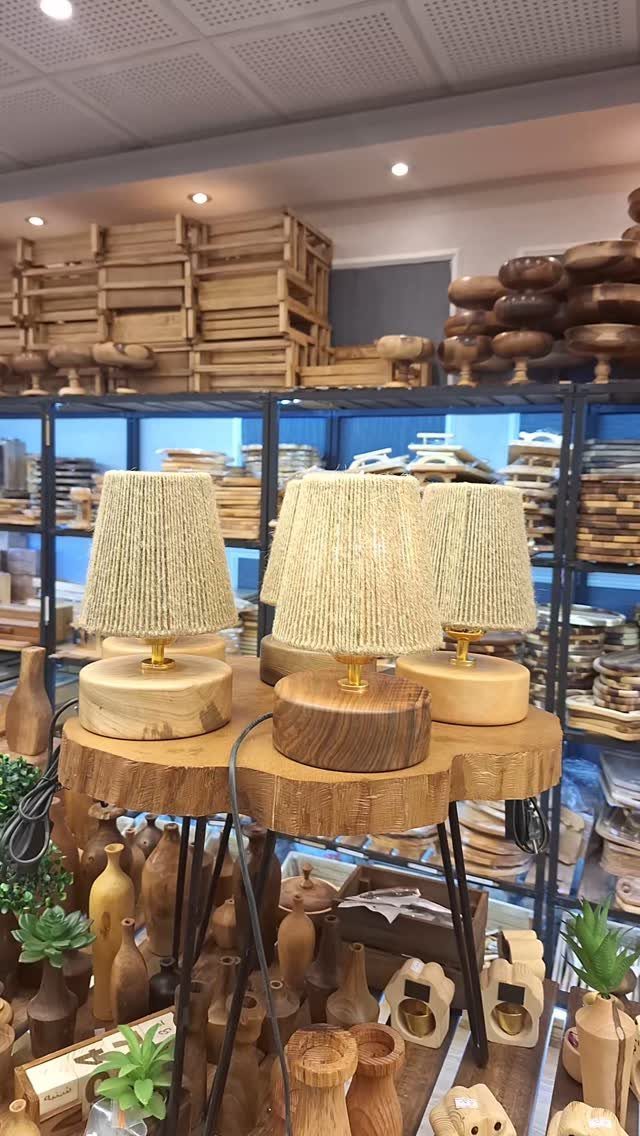
Short wooden cylinders topped with pleated fabric shades look best in a group, and three in a row on a thick wood slab read as a set rather than clutter.
The pleats soften the light and the wood keeps it from feeling fussy.
If you buy several, use the same shade color on all of them; small differences in tone from base to base will look natural.
I would keep them small enough to fit a shelf or console without crowding anything else there.
11. Natural Wood Bases
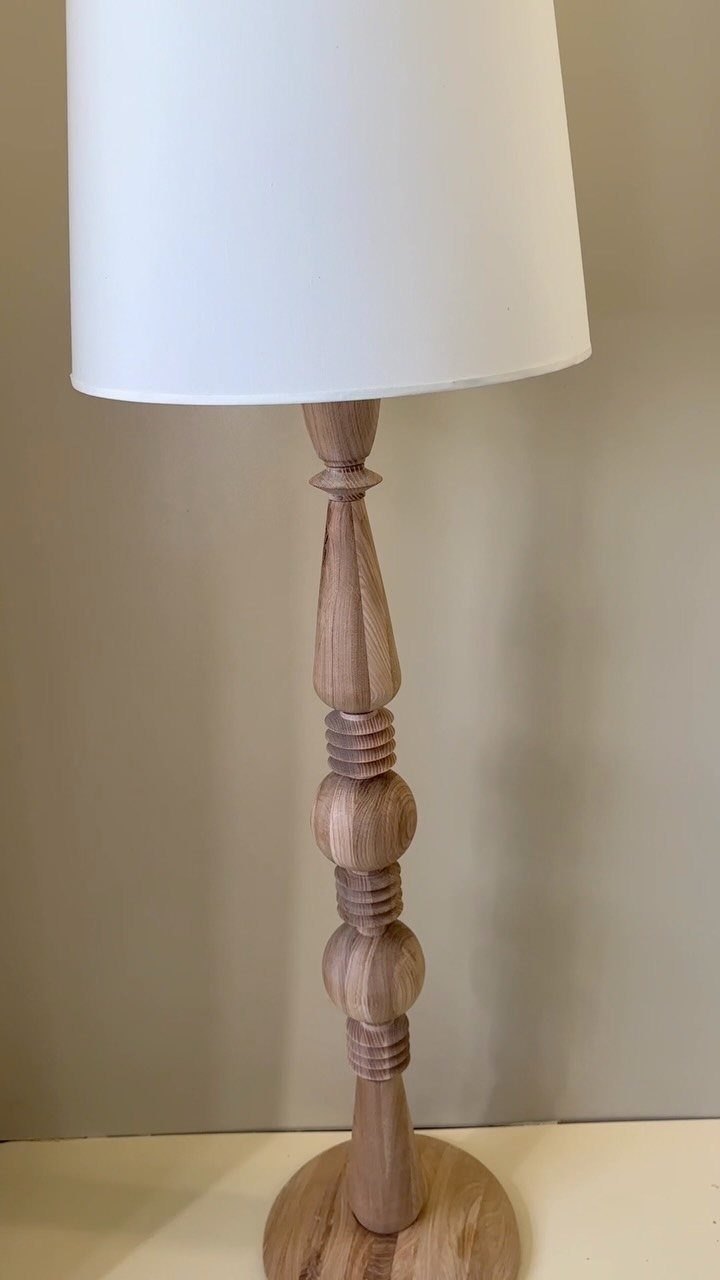
A turned wood base, with its rings and curves, gives a lamp the look of a small piece of furniture. With a simple, solid-white cylinder shade on top, the carved profile is the only thing that pulls the eye.
I like this where the surface and wall are both light, since the wood tone then stands out.
Pick a base whose profile would catch your eye even with no shade on it, then go with a simple shade so the two aren’t competing.
12. Tripod Wood Lamps
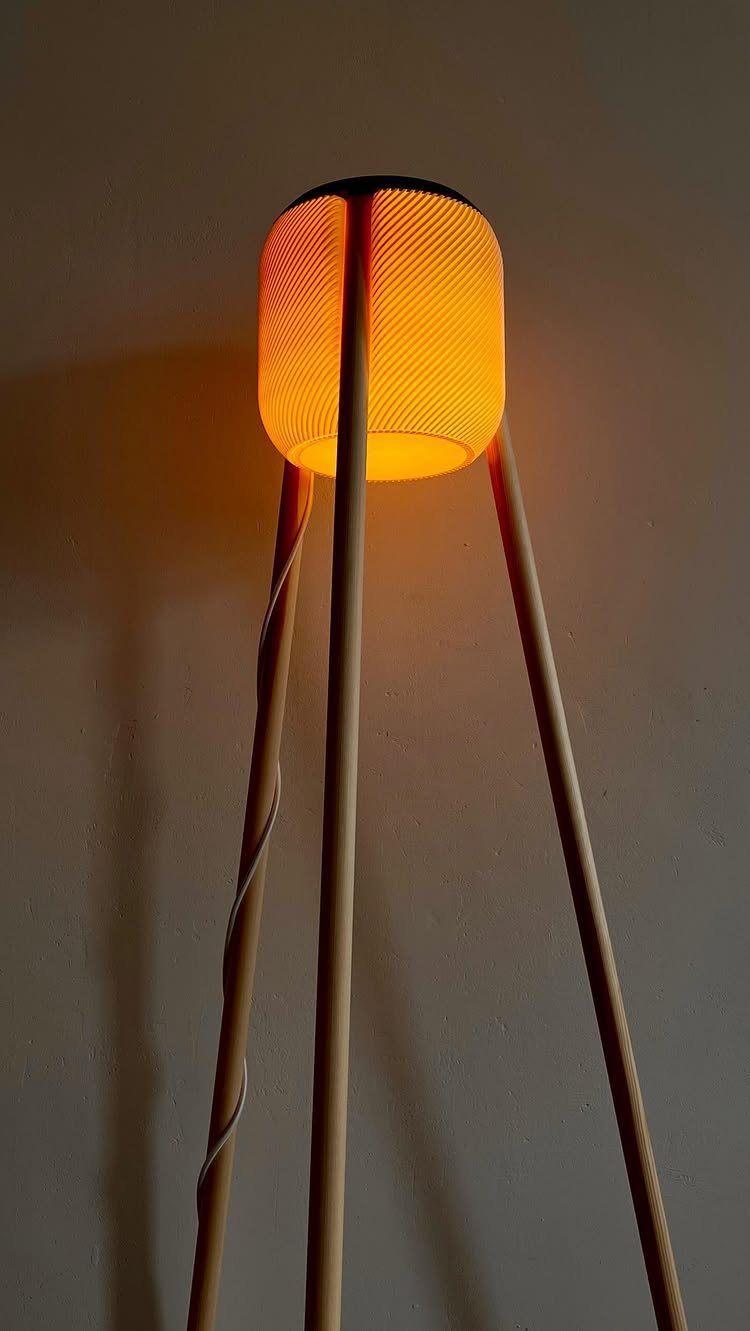
Three light wooden legs holding up a ribbed orange shade make a floor lamp that feels open from every angle. When it is lit, the shade glows like a lantern and the pale wood stays quiet beneath it.
Against a plain beige wall, the orange is the only strong note, so I would keep the rest of the corner calm.
Give the legs a little floor space to splay out, because a tripod looks cramped when it is wedged beside furniture.
13. Wooden Cylinder Lamps
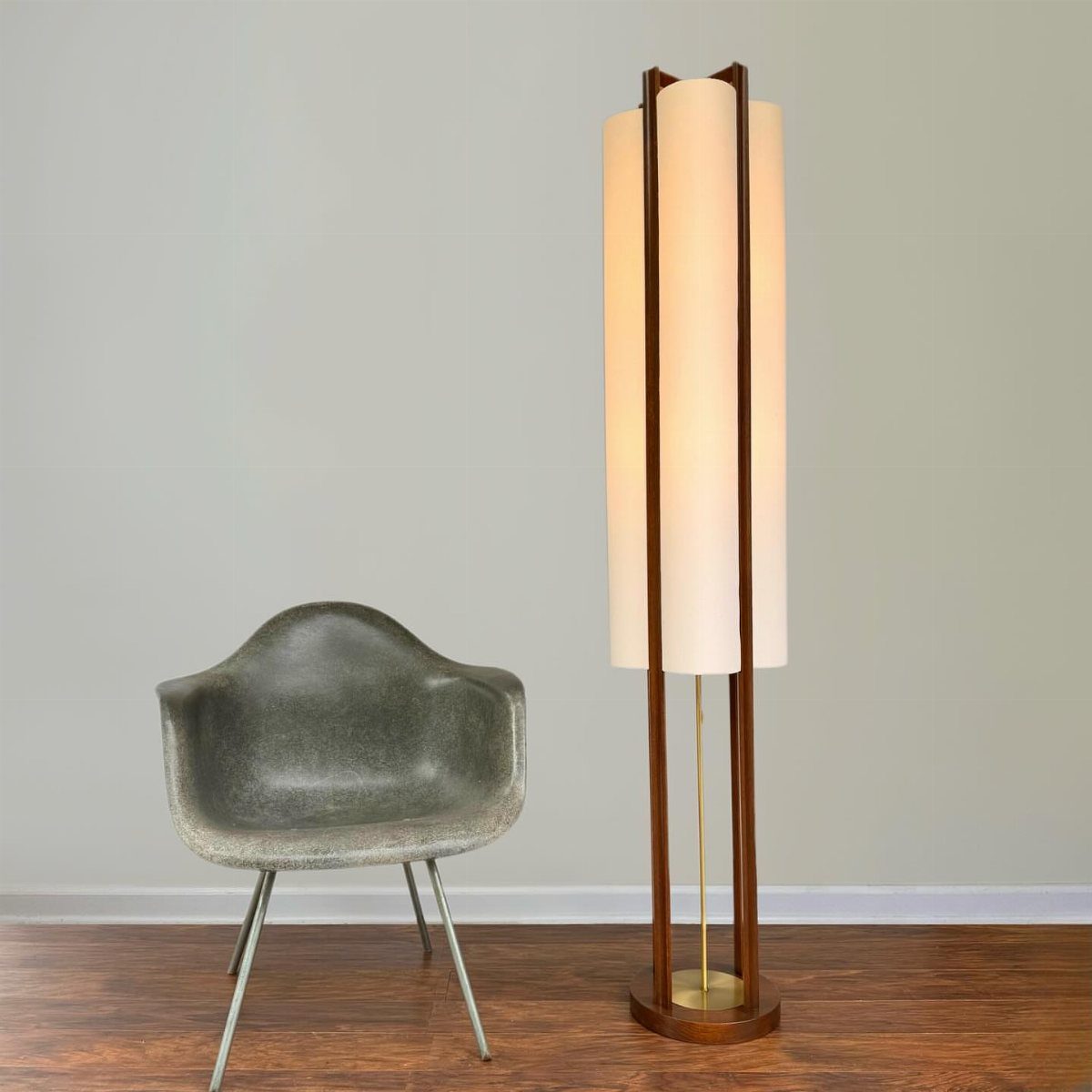
Thin vertical wooden supports around a white cylinder shade give a floor lamp a clean upright line, and the plain wall behind it lets that line read.
Next to a grey molded chair on a wooden floor, the wood ties the corner together without any extra decor.
I would choose a pale shade over a patterned one so the supports stay the main feature. Keep the chair or table beside it low, so the lamp’s height stands out.
14. Wooden Box Lamps
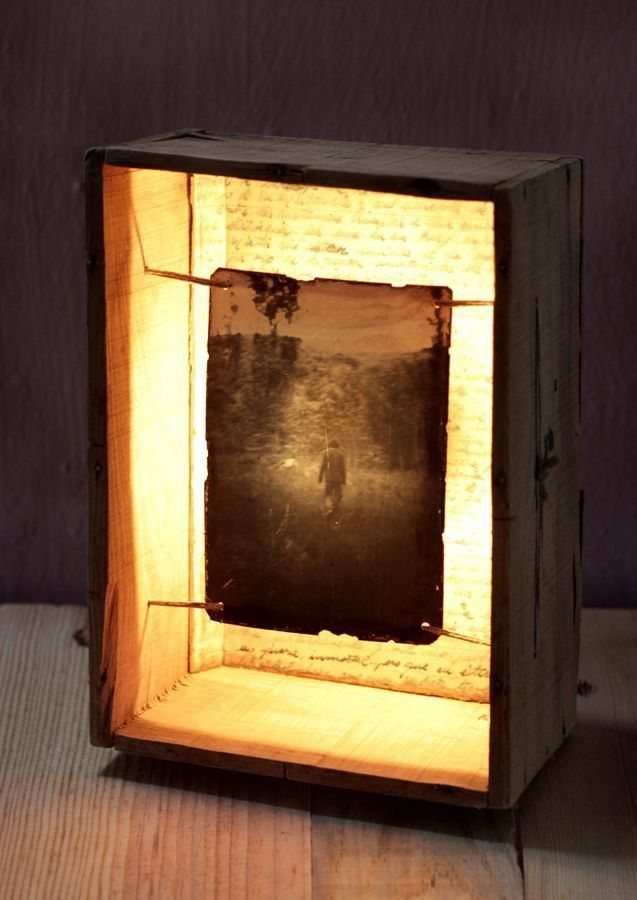
A rectangular wooden box that frames a backlit photograph turns a lamp into a small keepsake display.
The light comes through the picture, so pick a print with open sky or field in it and the glow stays warm and even.
Handwriting on the inner walls is a nice touch, and a pen is all it takes.
A wooden box lamp looks best on a shelf or desk where the shade sits near the height of a seated person’s face, so the light reads as a glow instead of a glare.
15. Sculptural Wood Lamps
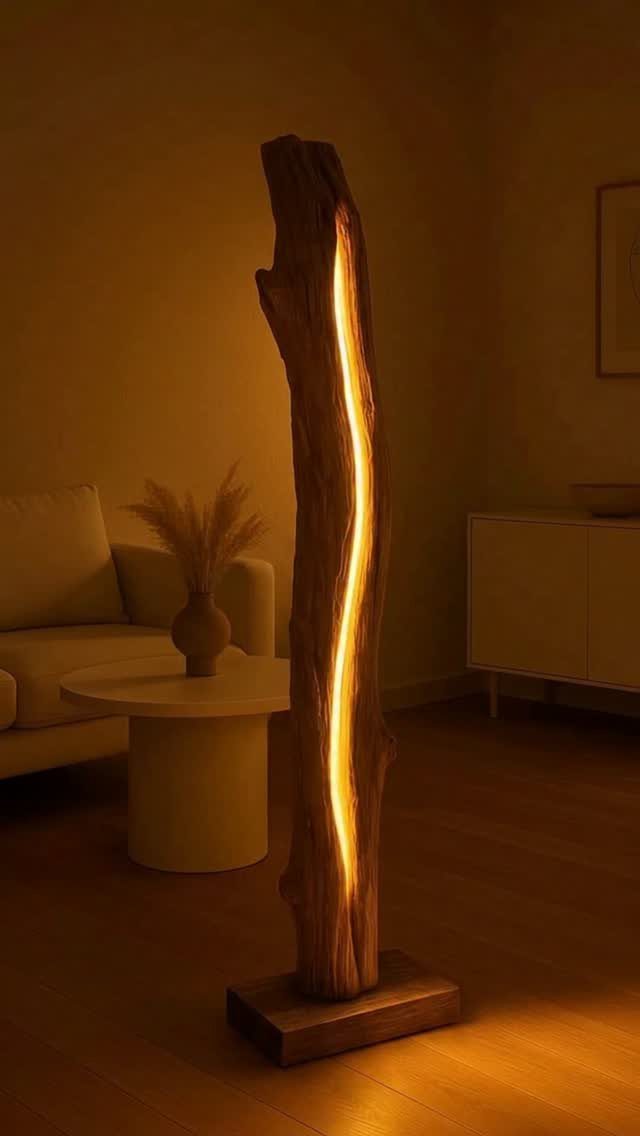
A single glowing slit running down a tall wooden form makes the lamp read as a sculpture first and a light second.
In a living room with a sofa, table and cabinet, it can stand alone as the one dramatic shape.
I would give it a clear patch of floor and keep nearby furniture lower than the lamp. Choose a silhouette you would still enjoy with the light switched off.
16. Edison Bulb Lamps
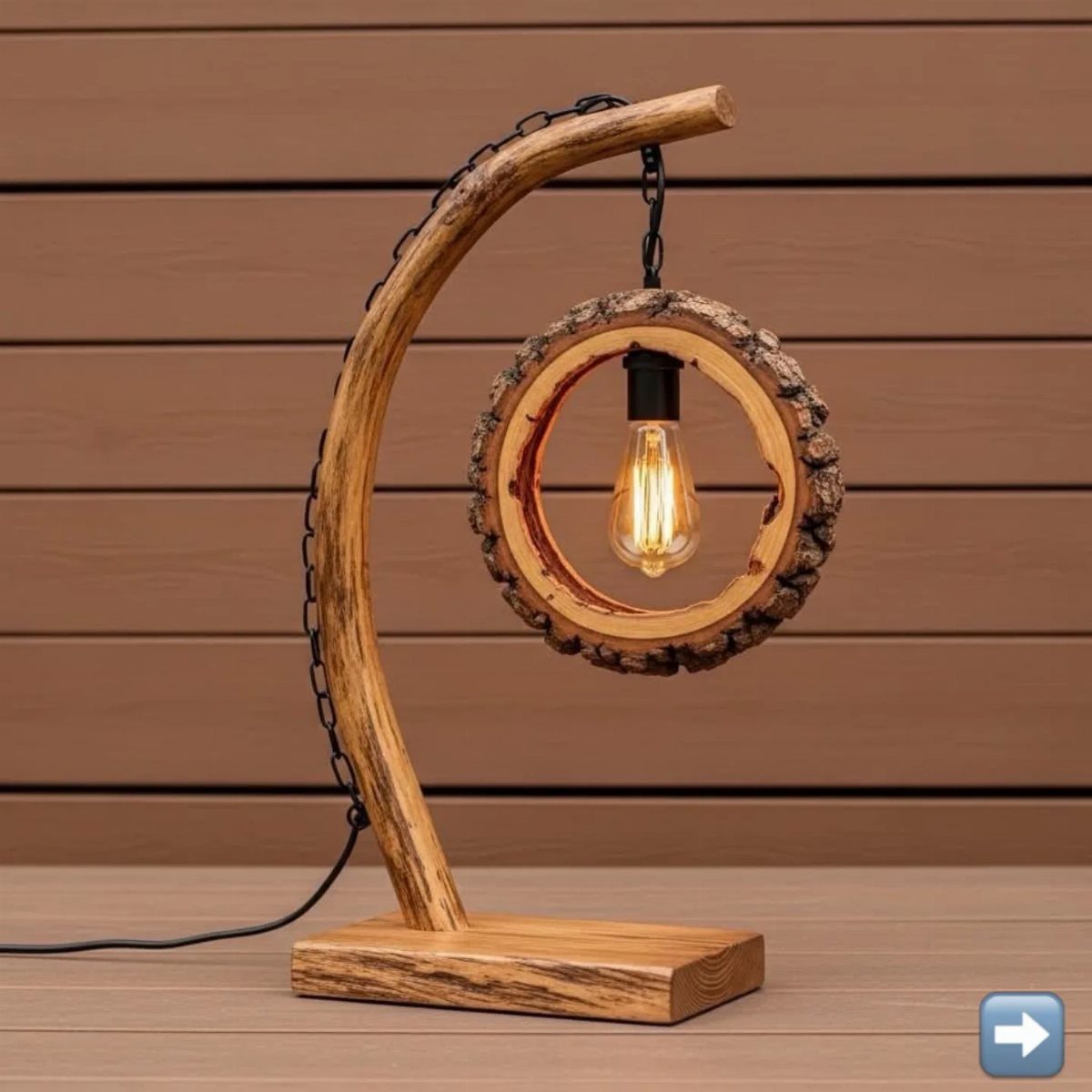
Setting an Edison bulb inside a wood slice ring, held up by a curved branch, makes the filament the focal point of a table lamp. Against a brown slatted wall, the bare bulb and the raw wood match in tone.
I would pick a branch with a smooth, deliberate curve so the bulb looks cradled rather than stuck on. A wall in a different color, even a pale one, would show the wood’s outline more clearly.
17. Wooden Ceiling Lamps
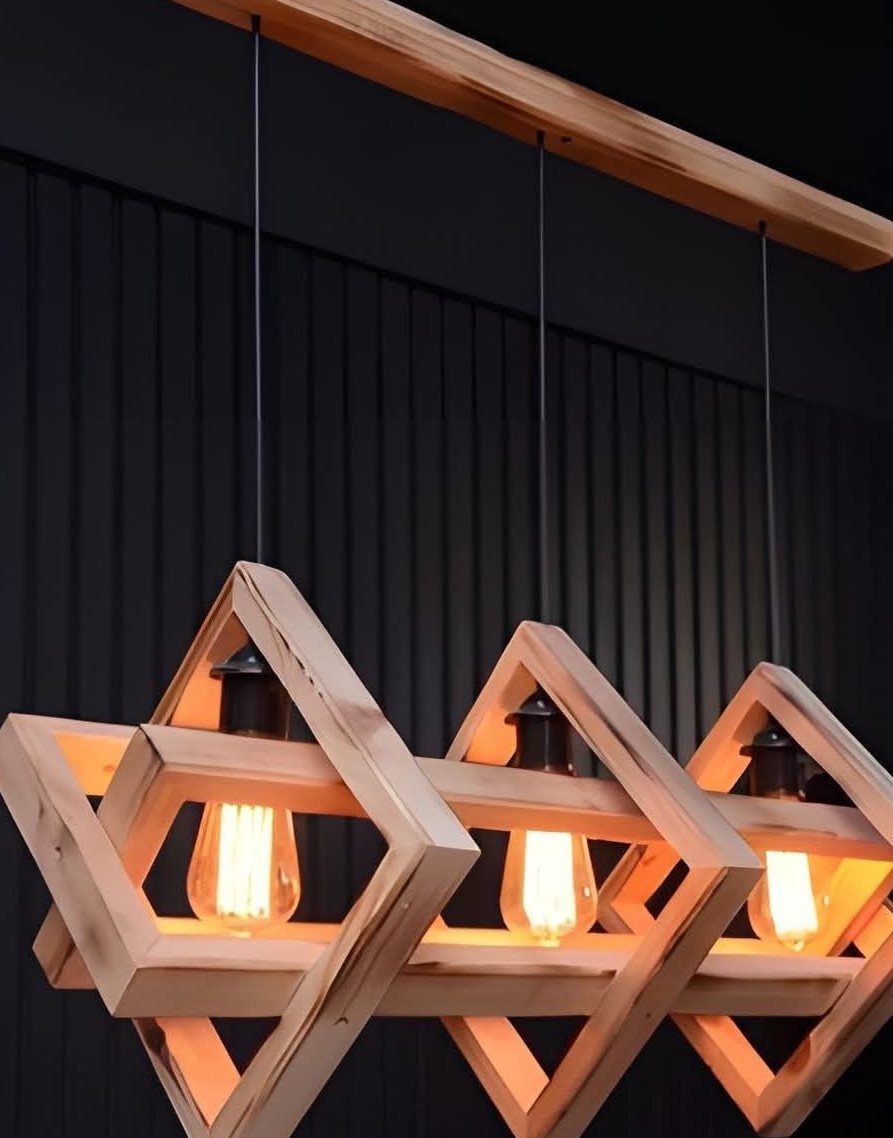
Three diamond-shaped wooden pendants hanging from a ceiling beam, each with an Edison bulb inside, work best as a matched row. Against a dark ribbed wall, the pale wood and warm glow stand out.
I prefer an odd number of fixtures, spaced evenly along the beam, so the line looks planned. Hang them at one height; staggered drops tend to look accidental.
18. Bamboo Lamps
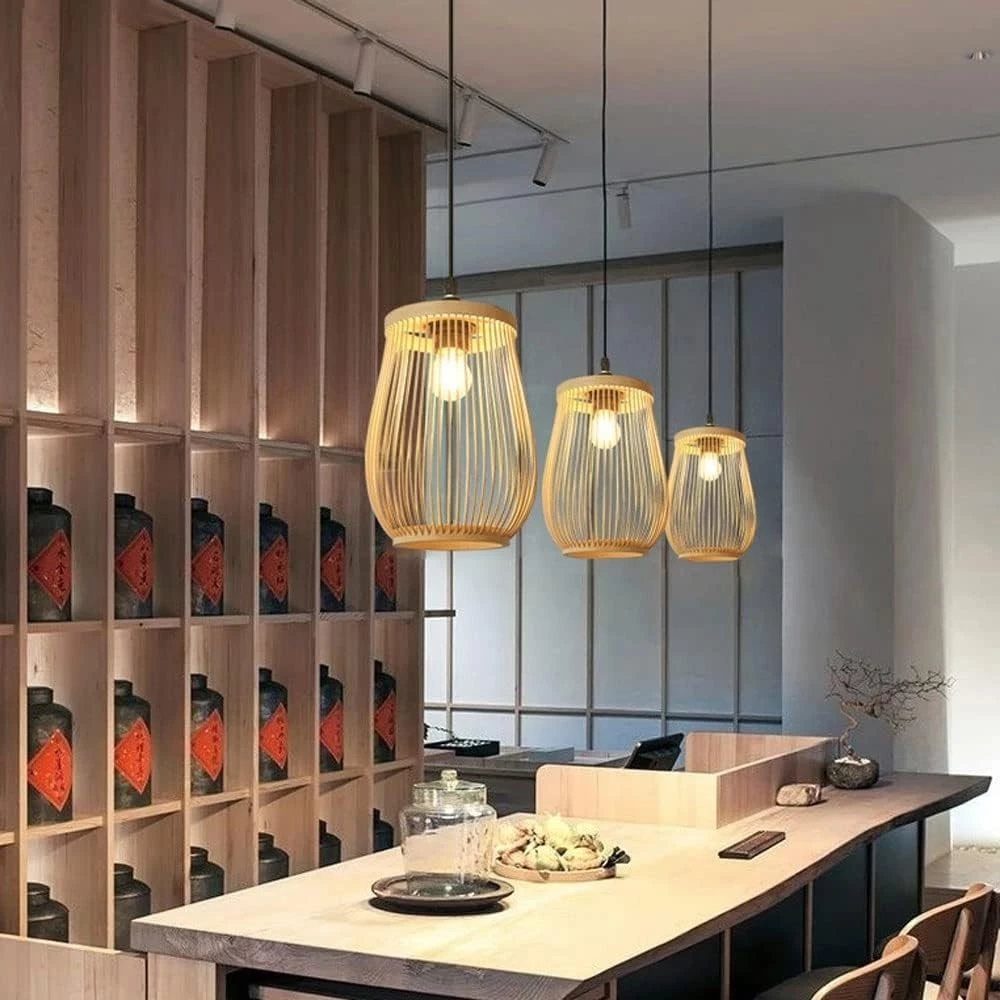
Bamboo slats bent into a pendant shade give light a woven, airy look, and three hung in a row over a light wood counter make a simple focal point.
In a room with wooden shelving, the bamboo adds texture without adding color.
If you’re making one yourself, bamboo sticks can form either a chandelier frame or a lampshade, which suits a weekend project. I would hang them low enough to be seen from the counter’s far side.
19. Mid-century Wood Lamps
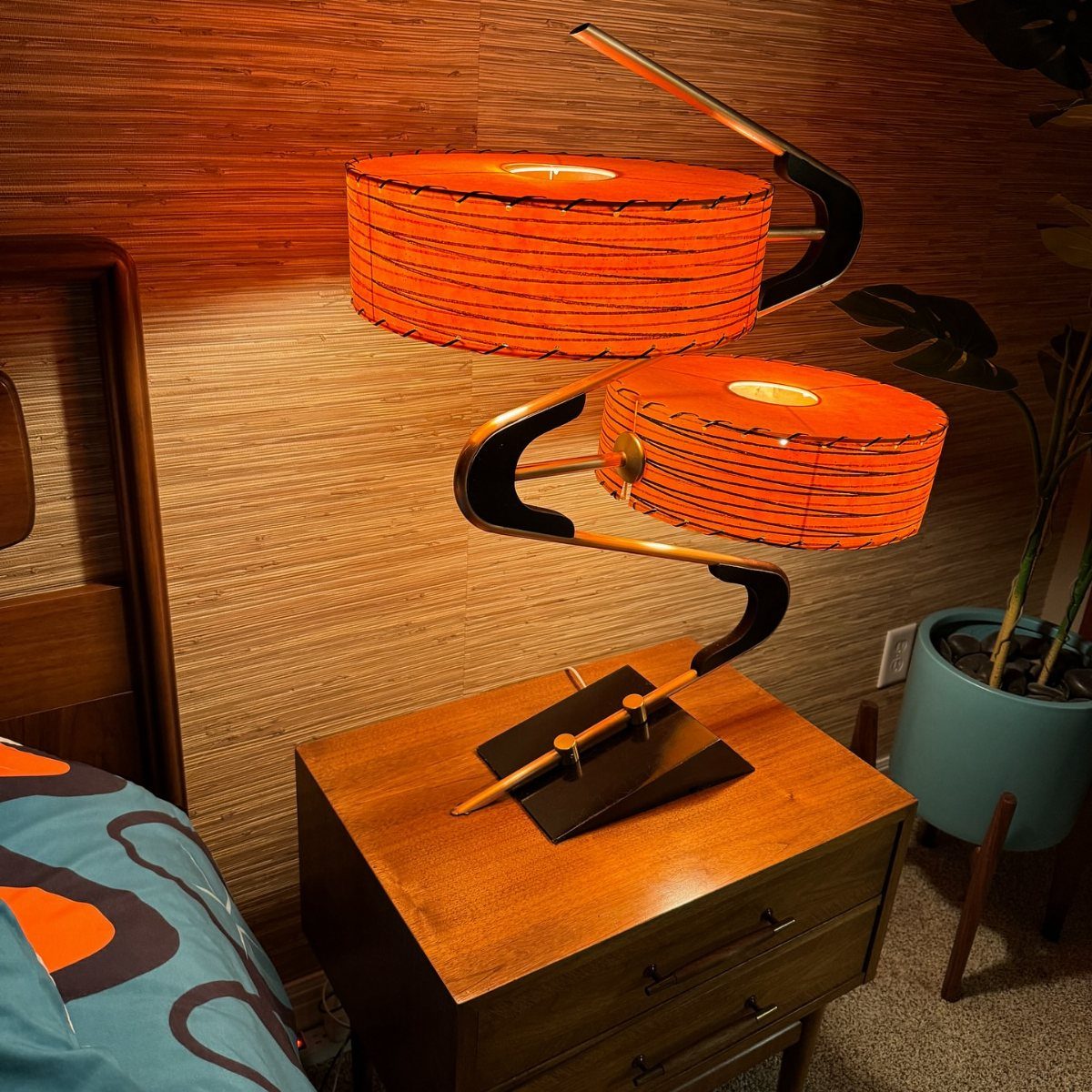
Orange cylindrical shades on a wooden nightstand give a bedside corner a retro warmth that a basic shade in off-white would miss. The sculptural wood body keeps it from looking like a basic reading light.
I would let this lamp be the one loud note beside the bed. The textured wall and the potted plant already add enough, so keep the bedding and nightstand decor quiet.
20. Minimalist Wood Lamps
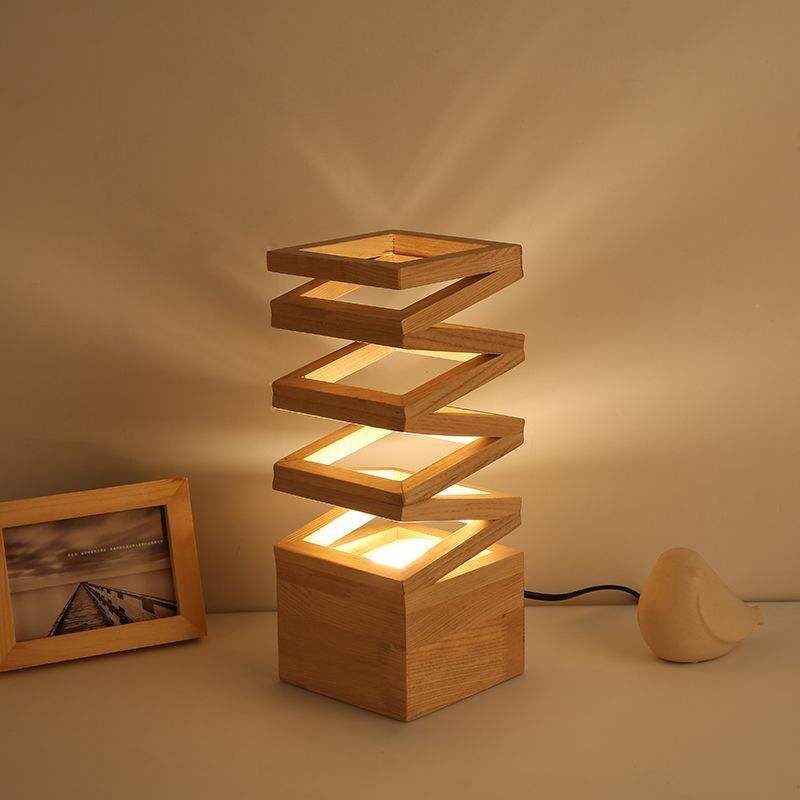
A square frame that spirals upward, glowing from within, lets one wooden shape do the work of a lamp and a small sculpture. Placed beside a picture frame and a wooden bird, it fits a shelf-sized spot.
Restraint is the appeal, so I would set it against a plain wall and leave the surface around it nearly bare. Two or three small objects are plenty.
21. Woven Shade Lamps
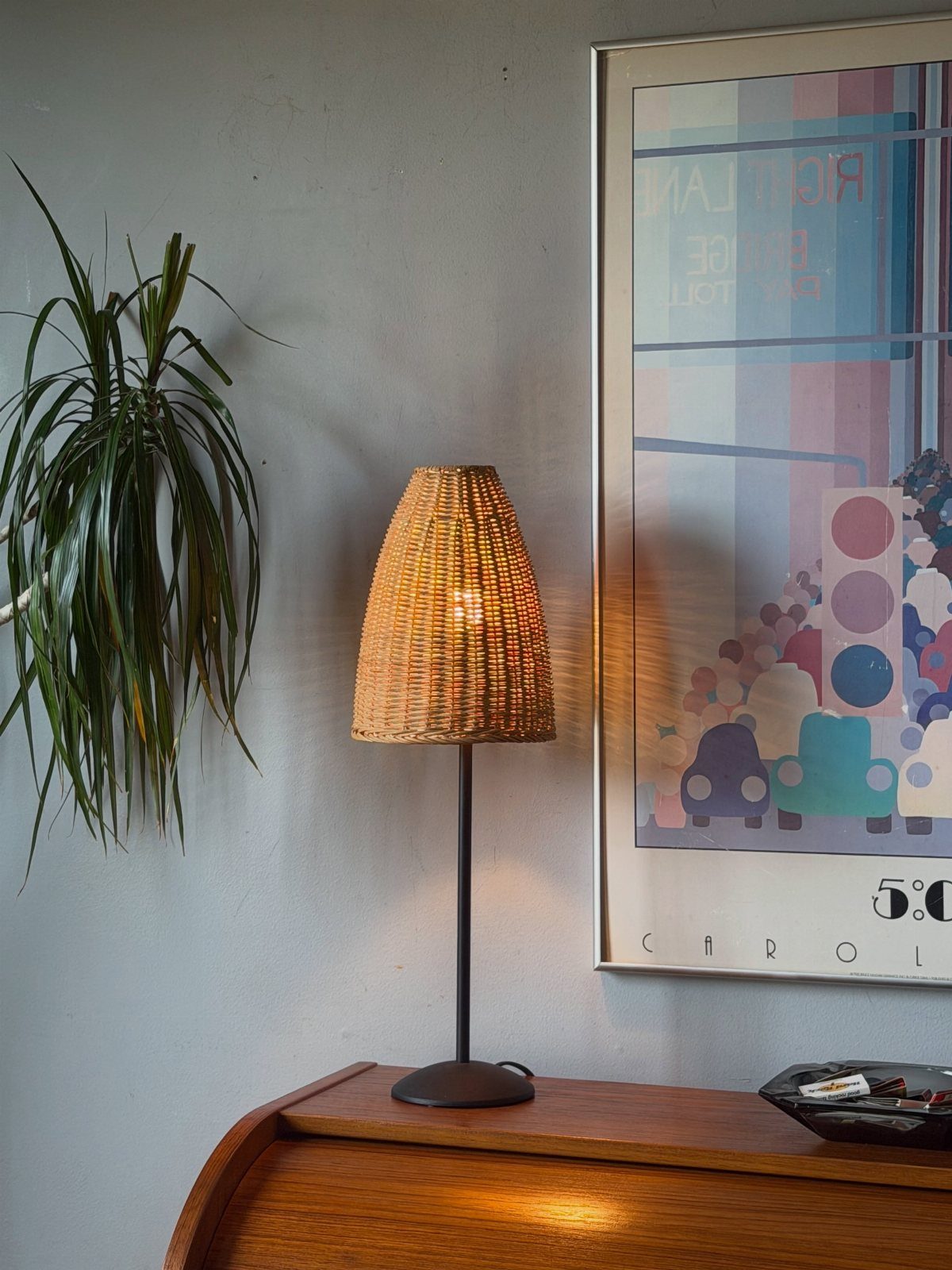
A woven rattan shade turns the bulb into a soft, speckled glow, and a black stand gives the wicker a crisp outline against a grey wall. On a wooden dresser, the 3 textures sit comfortably together.
I would choose the shade for its weave: a tighter one diffuses more, an open one throws pattern. A plant beside it suits the natural look.
22. Wood and Brass Lamps
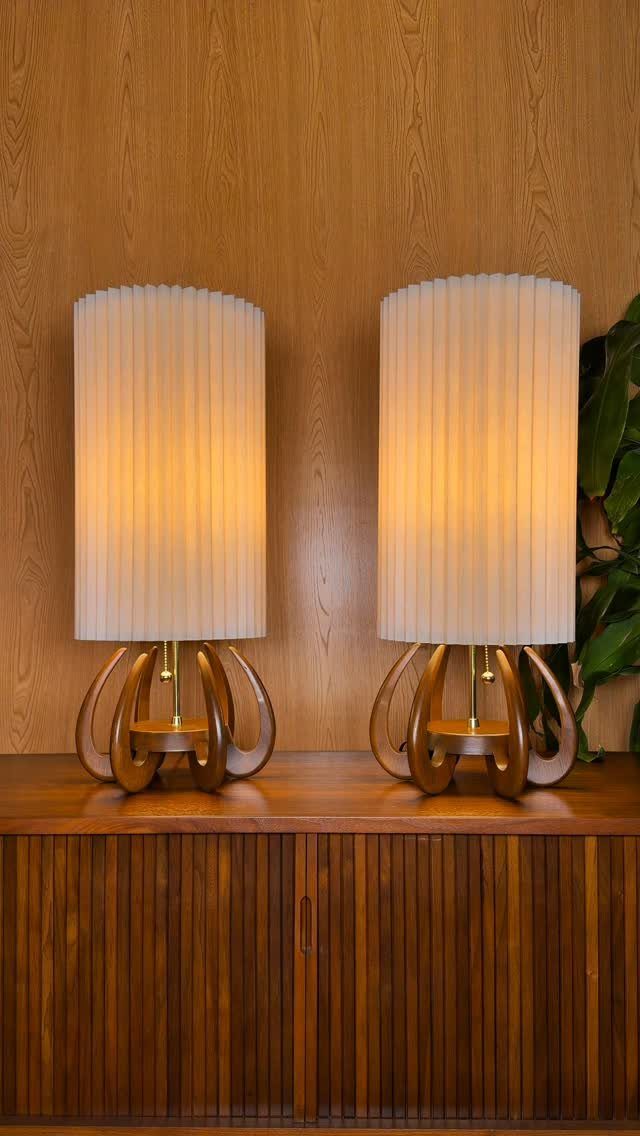
2 matching lamps with curved wooden bases and brass accents, each under a pleated white shade, make a pair that looks tailored on a sideboard. Against a wood-paneled wall, the brass adds a small metallic glint to all that brown.
I prefer buying them as a set, since mismatched brass tones show up next to each other. Space them evenly along the sideboard so the pair reads as deliberate.
23. Plywood Lamp
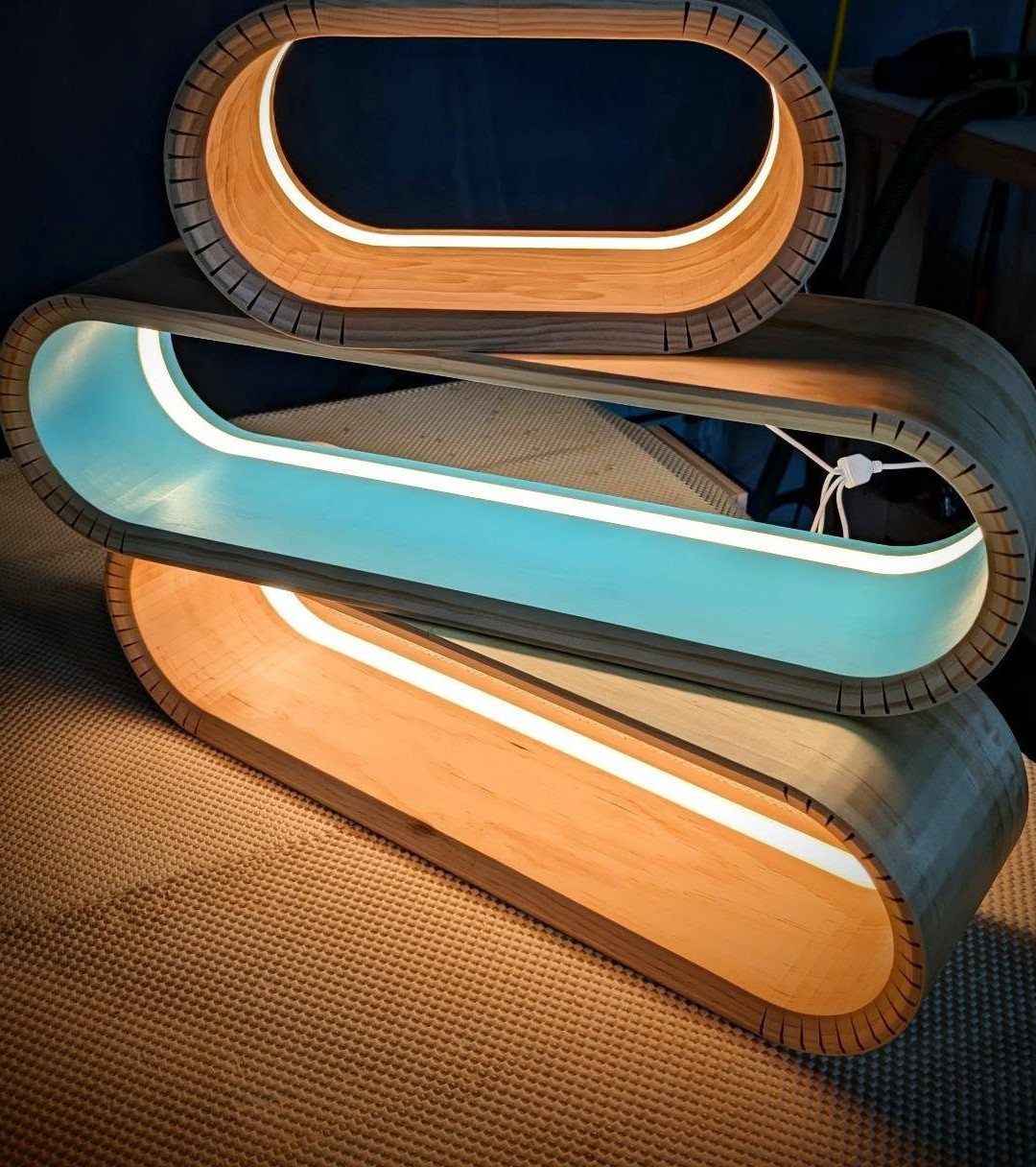
Bent plywood loops with LED strips inside make a lamp from one of the cheapest sheet materials, and the layered edges become part of the look. Stacking three oval forms gives a small tabletop piece more presence than one alone.
White light reads clean, while blue is more of a mood choice. I would pick the color based on the room, since it changes the feel completely.
24. Wooden Lamps with Shelves
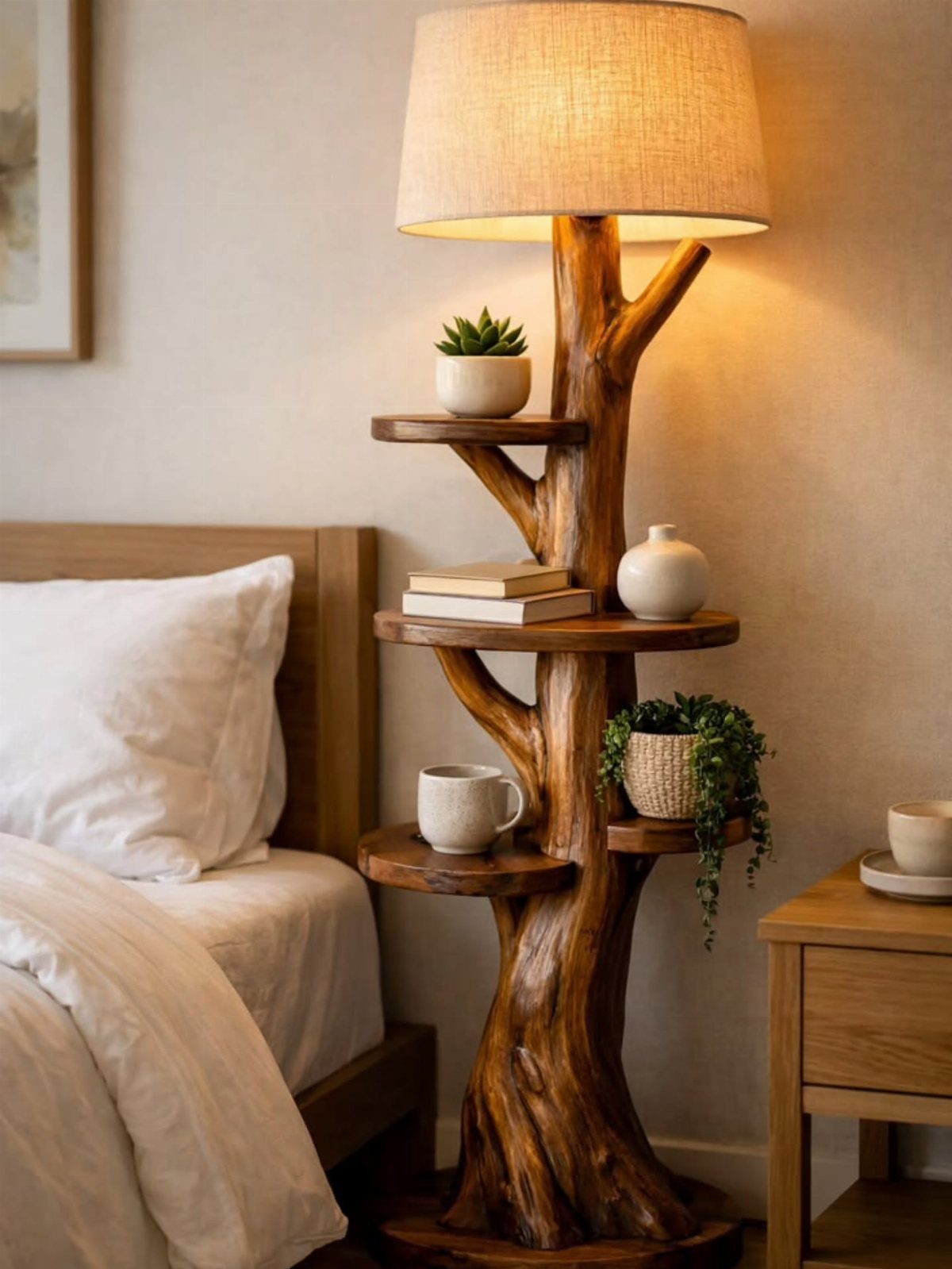
A floor lamp with shelves on a rough branch base holds plants and books at arm’s reach of the bed, so it does the job of a nightstand and a light at once.
In a bedroom short on surfaces, that matters.
I would keep the shelf load light and mostly small: a couple of plants, a few books. Leave the branch’s natural shape visible rather than crowding every level.
25. Wooden Lamp with Pen Holder
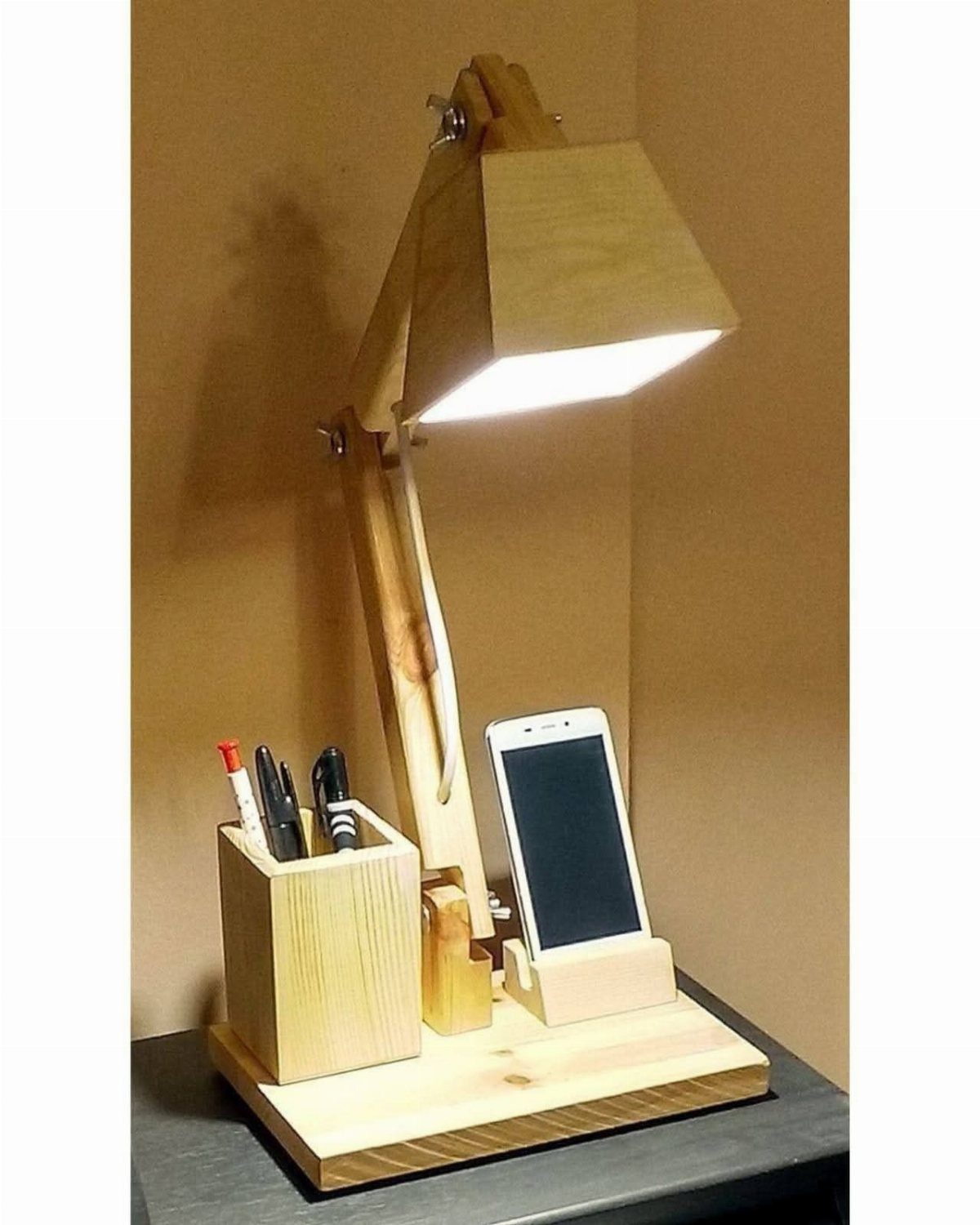
A lamp that also holds pens and props up a phone does three jobs from one small footprint on a desk.
The wood base keeps all that function from looking like office gear, and it reads well against a plain wall.
I would use this on a desk that tends to collect clutter, since everything has a fixed spot. Set it where your writing hand won’t knock the pens, and keep the phone slot facing you.
26. Wood Figure Lamp
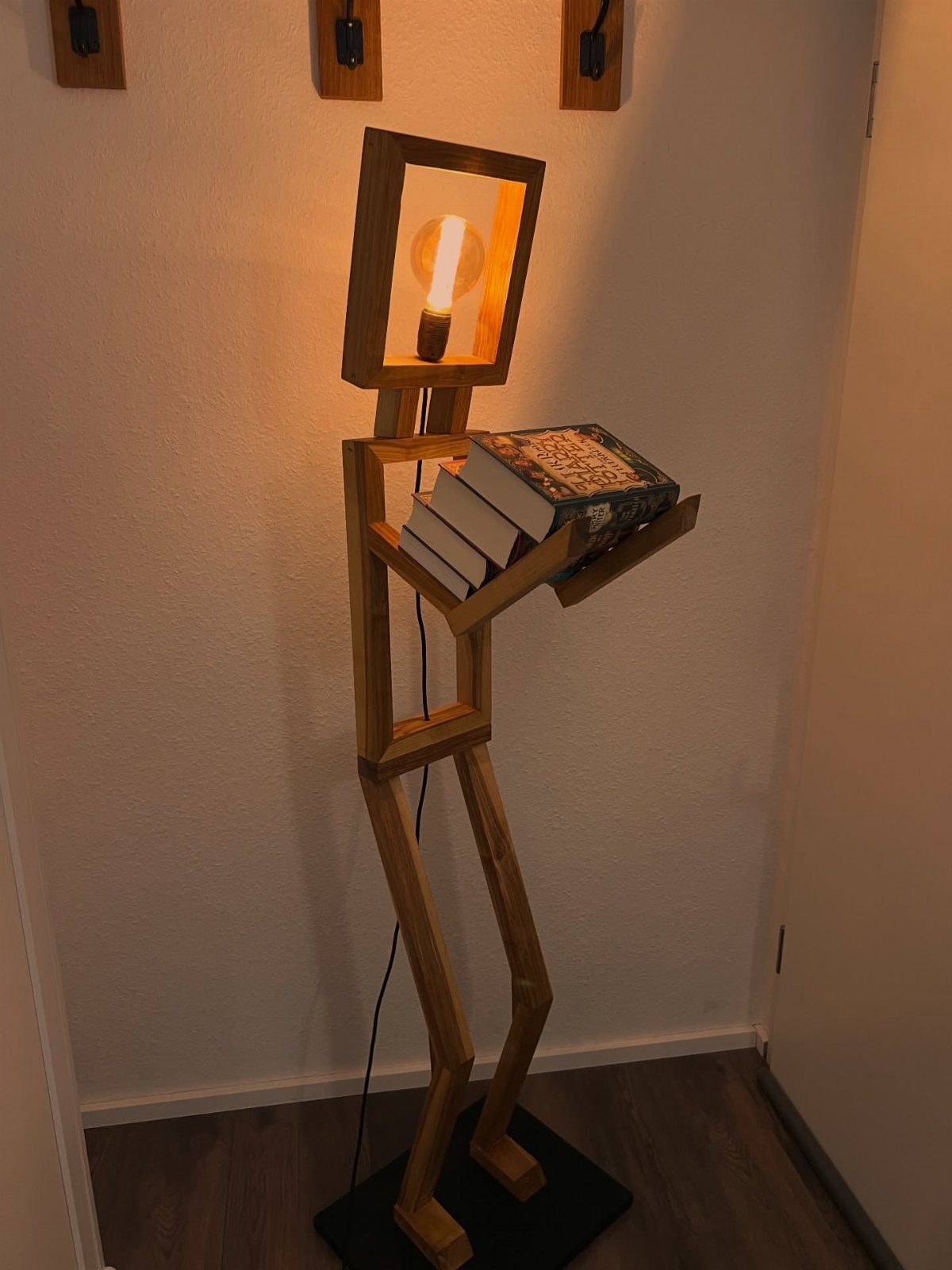
A wooden figure with a square, glowing bulb for a head and a shelf of books in its arms is part lamp, part character. Against a white wall, the wood outline is easy to read.
Books are the right companion for a figure like this, so I would place it in a reading corner or on a low bookcase.
Keep the shelf load to a few slim volumes so the figure stays the focus. A wall with nothing else hanging on it suits it best.
27. Wooden Mirror Light
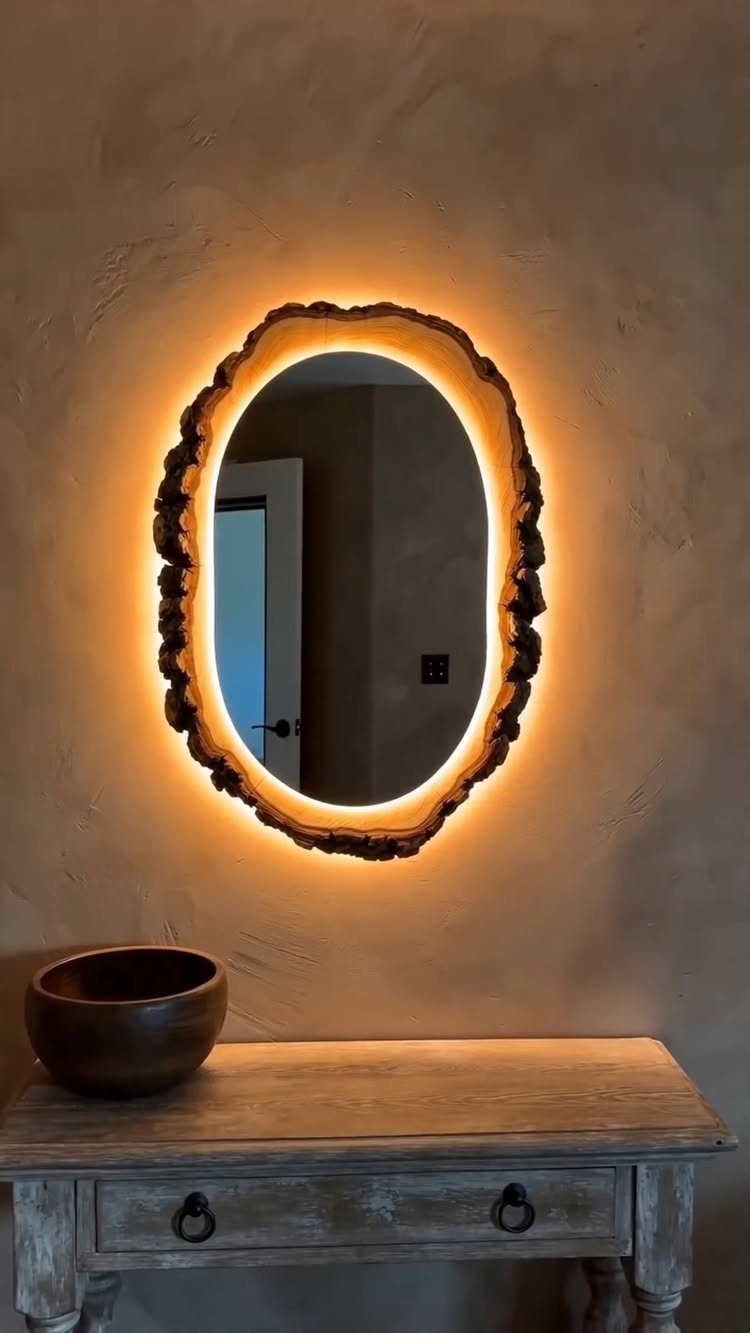
Warm backlight around an oval mirror with a rustic wooden frame turns a wall into a soft glow. Above a weathered console, the mirror does double duty as a light source and a finishing piece for an entry or hallway.
I would match the frame to the console: both worn and wooden, so the pairing looks collected.
28. Wood-and-resin Lamps
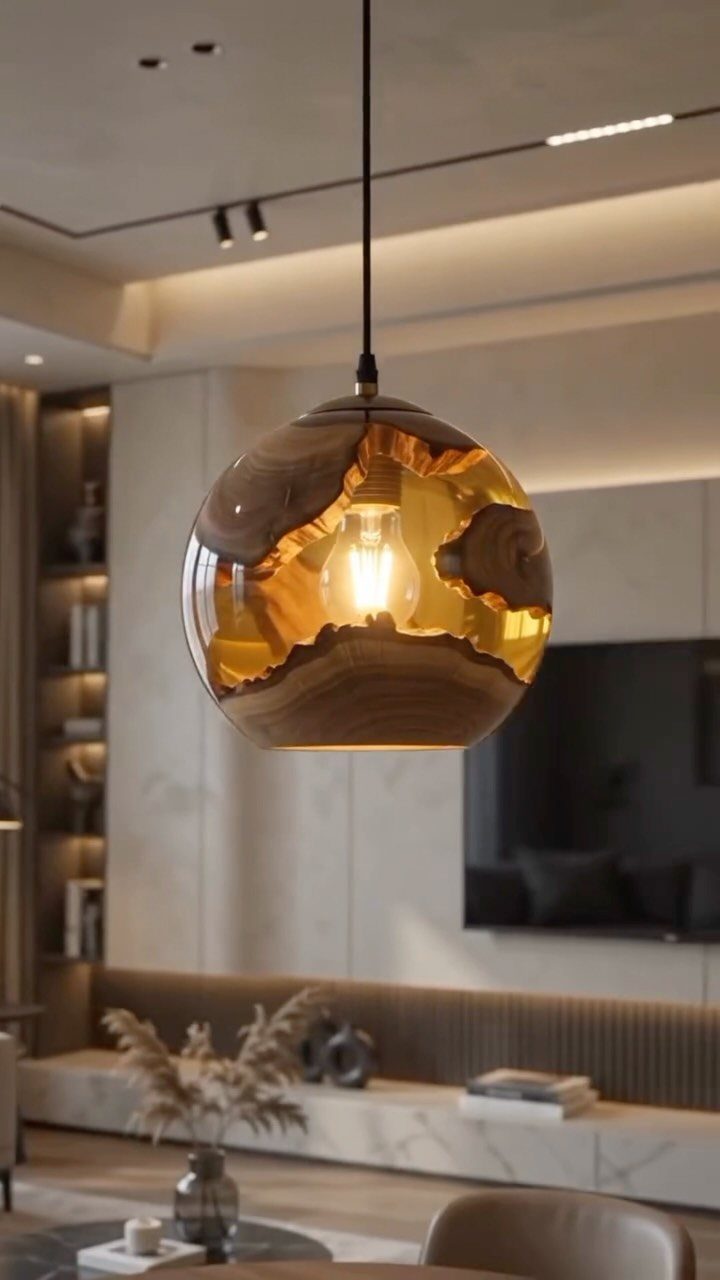
Amber resin set into dark wood gives a round pendant a glow that looks like honey. The wood frames the resin and the lit bulb inside warms the whole sphere.
I would hang one as a single statement, not a row, since the color is already strong.
A neutral wall and plain shelving, as in this living room, let the amber carry the room. Choose a piece where the wood grain is still visible next to the resin.
29. DIY Wooden Lamp
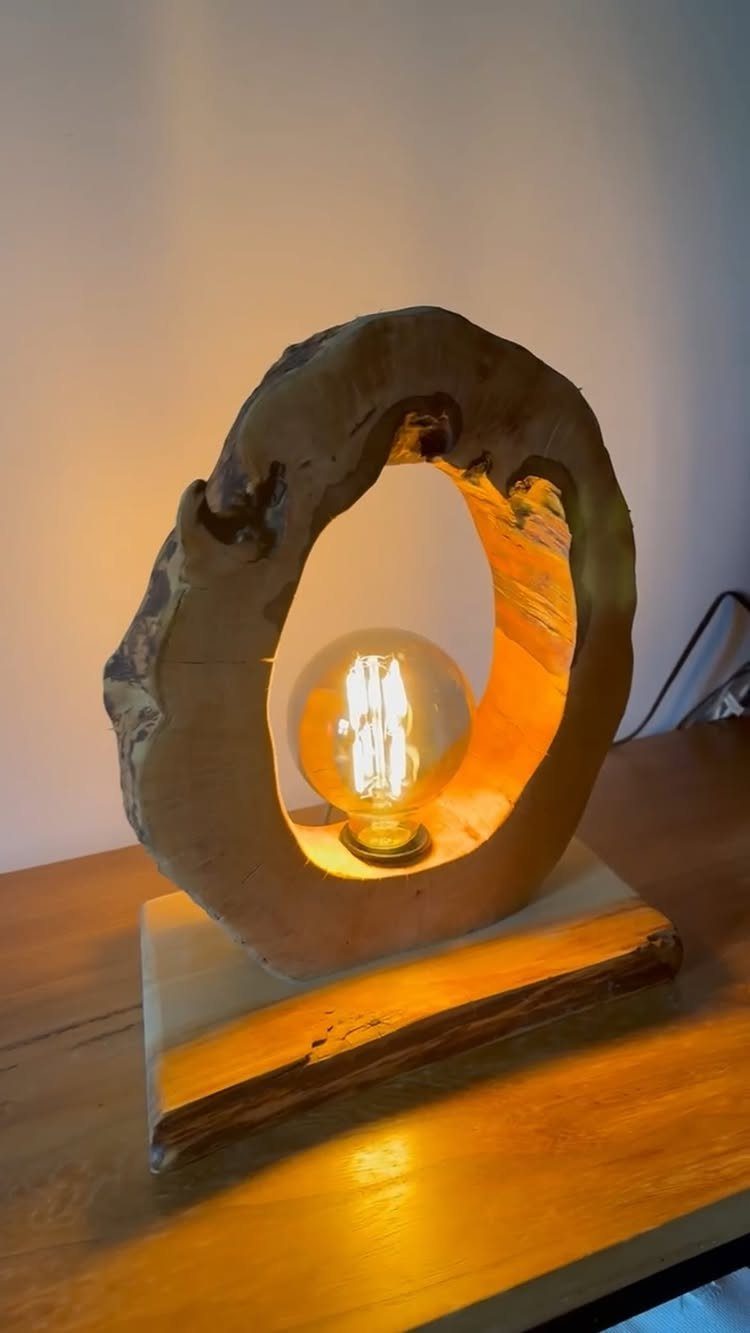
A hollowed piece of natural wood with an Edison bulb glowing inside, sitting on a rectangular wooden base, is a lamp you can make yourself, and its irregular shape means no two come out alike.
The raw bark and the filament suit each other.
For a first attempt I would pick a piece of wood whose natural opening is already close to the size you need, which means less carving. Keep the base flat and plain so the hollowed wood is what people see.
30. Laser-cut Wood Lamp
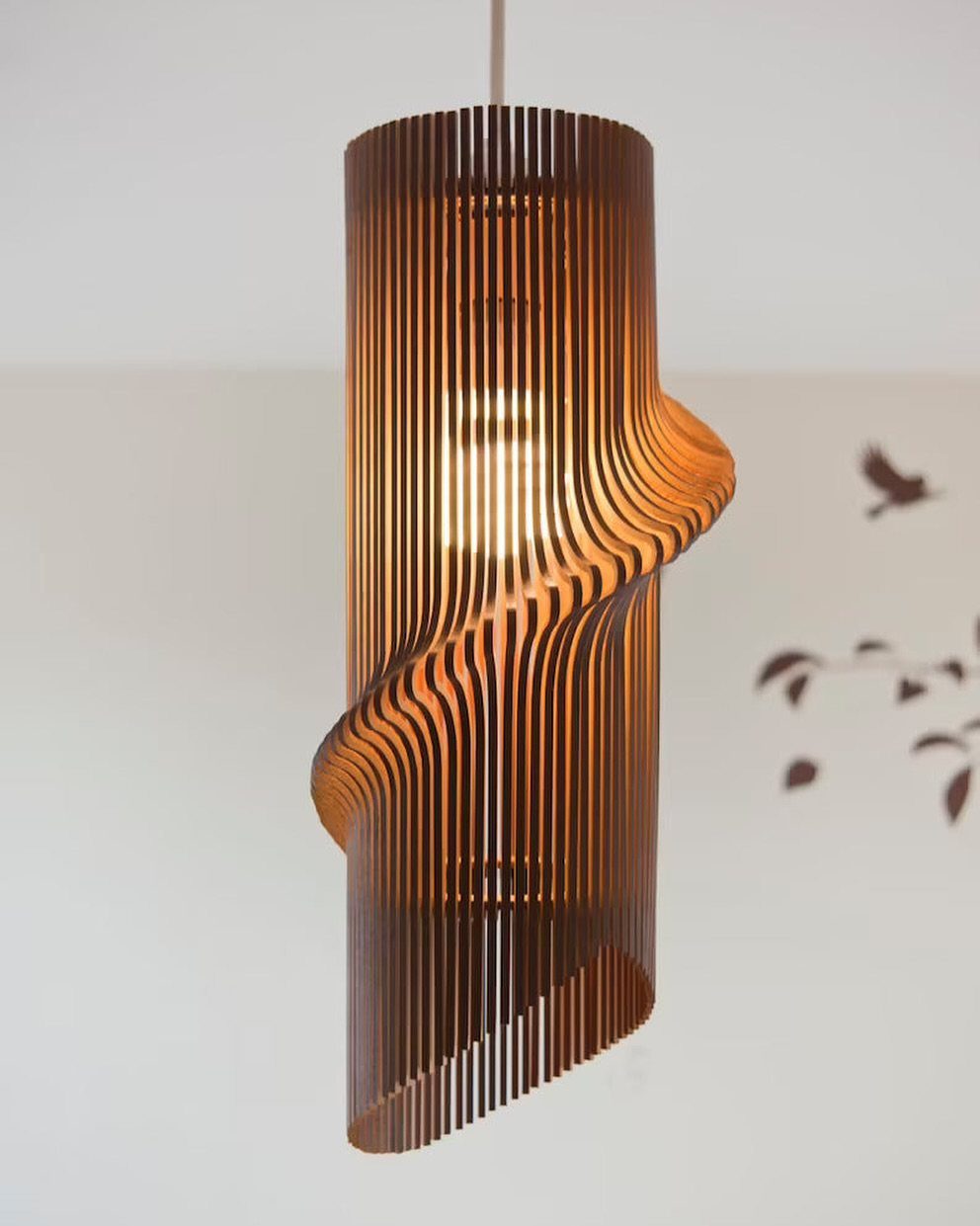
Vertical laser-cut slats that twist at the middle make a cylindrical pendant look like it is turning in place.
With the bulb lit inside, the slats throw thin lines of light, and the effect is strongest against a plain white wall.
I would hang it where you see it from the side as you walk past, since the twist is the whole show. Leave the space around it empty, and choose a warm wood tone so the glow stays soft.
31. Wooden Lamp with Cutouts
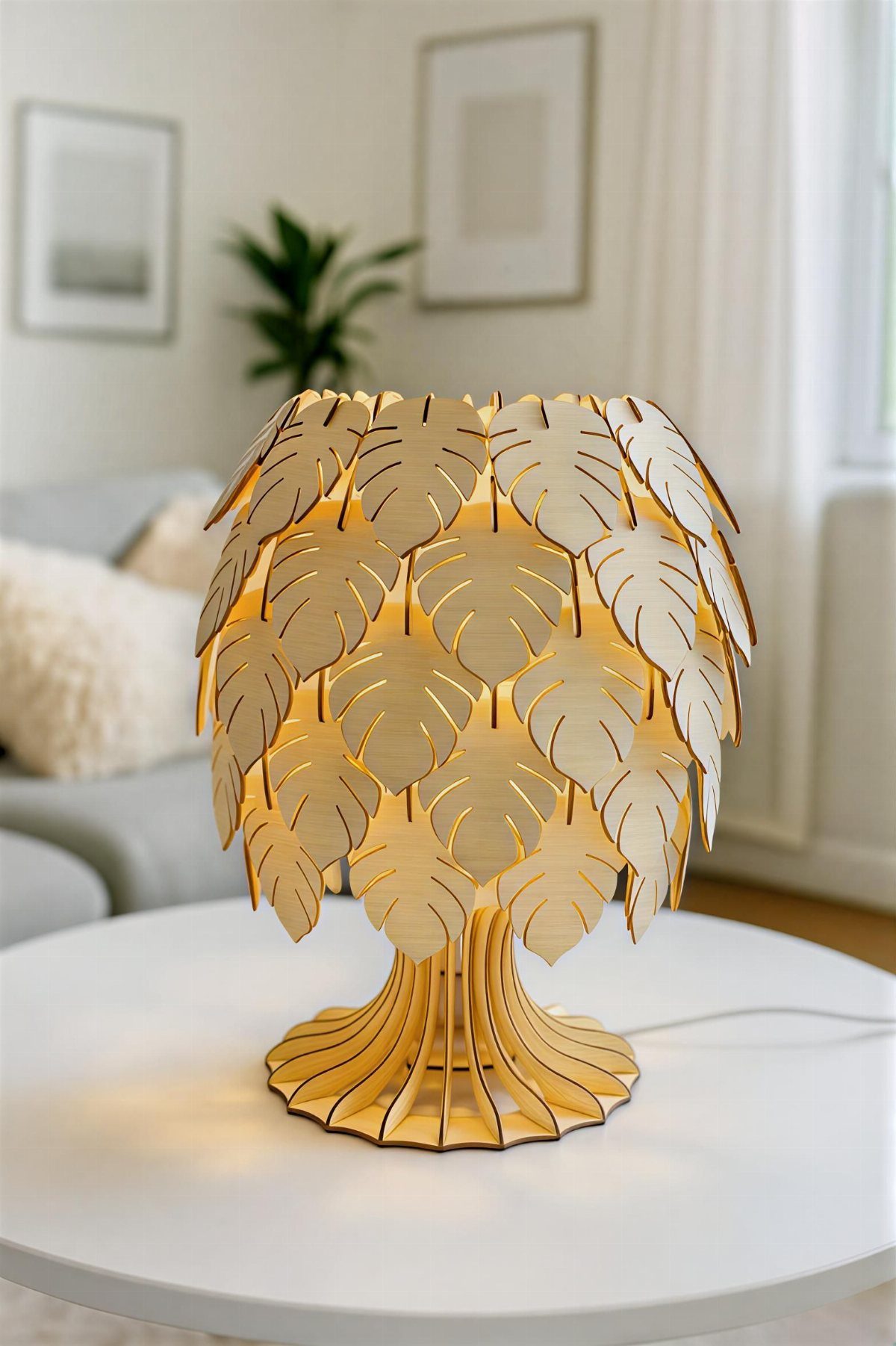
A tree-shaped wooden lamp with leaf cutouts lets the light escape through the foliage, so a plain white table ends up holding a small, glowing piece of scenery.
Beside a sofa and a few houseplants, it echoes the greenery without adding more leaves to water.
I would keep it on a pale surface and give it a little empty space, so the cutouts read clearly. A warm bulb suits the wood better than a cool one.
32. Hollow Oval Wood Lamps
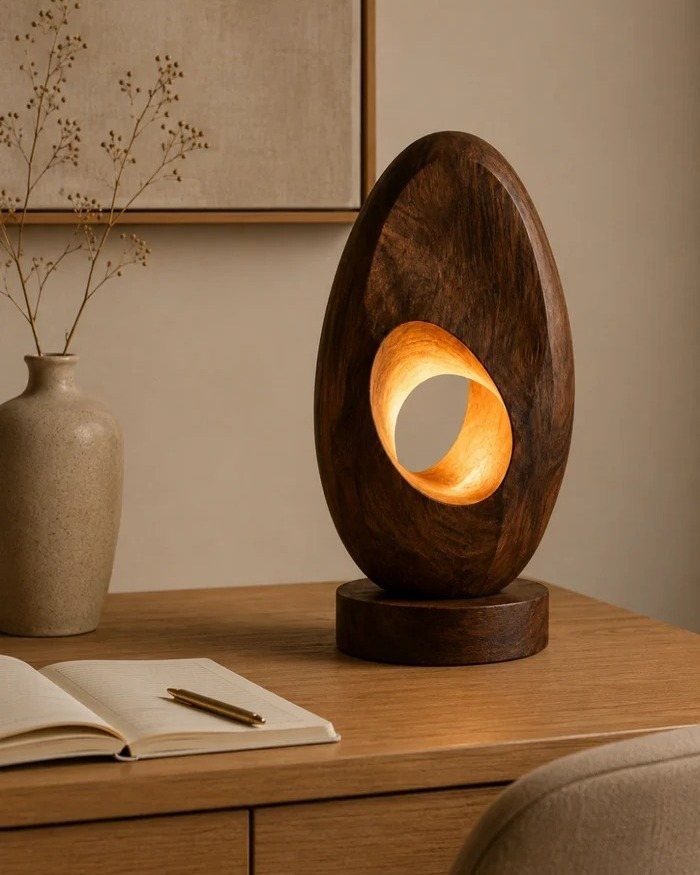
Dark wood bent into a hollow oval leaves the center open, and the glow sits in that gap like a lit window.
On a light wood desk beside a notebook, a pen and a vase of dried flowers, the contrast between dark frame and pale surface makes the shape easy to read.
I would keep the desk around it sparse, since the oval already supplies the interest. Dried stems in a small vase suit it well.
33. Twisted Wood Floor Lamps
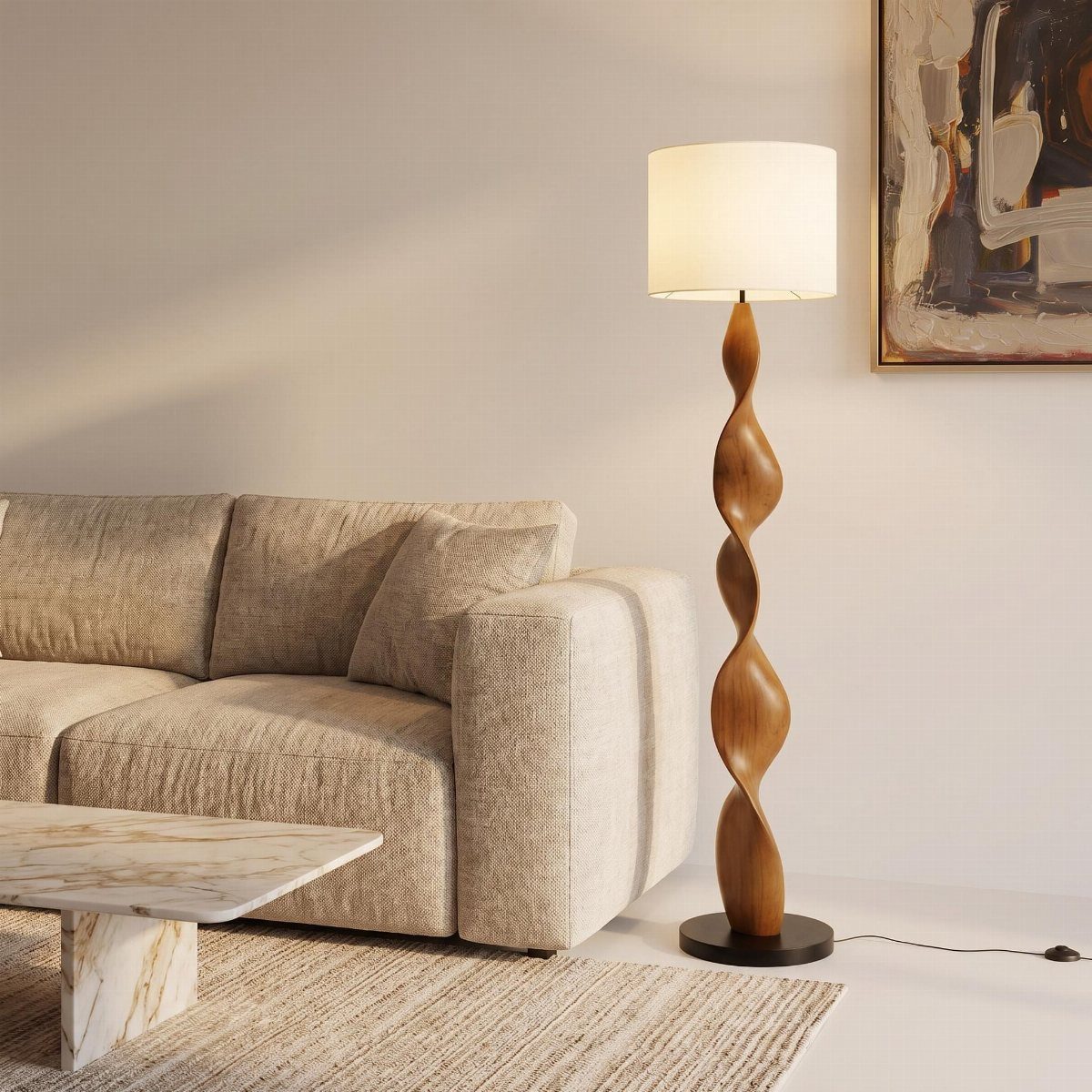
Spiral carving on the base of a tall floor lamp adds movement, and a plain white fabric shade lets the twist take the attention.
A twisted wood floor lamp warms a corner that cool materials like marble or pale upholstery would otherwise leave flat.
For a modern room, I would pick a base with a tight, even spiral over a loose one. Place it at the sofa’s end, where the carving shows from the seats.
34. Layered Wood Shade Lamps
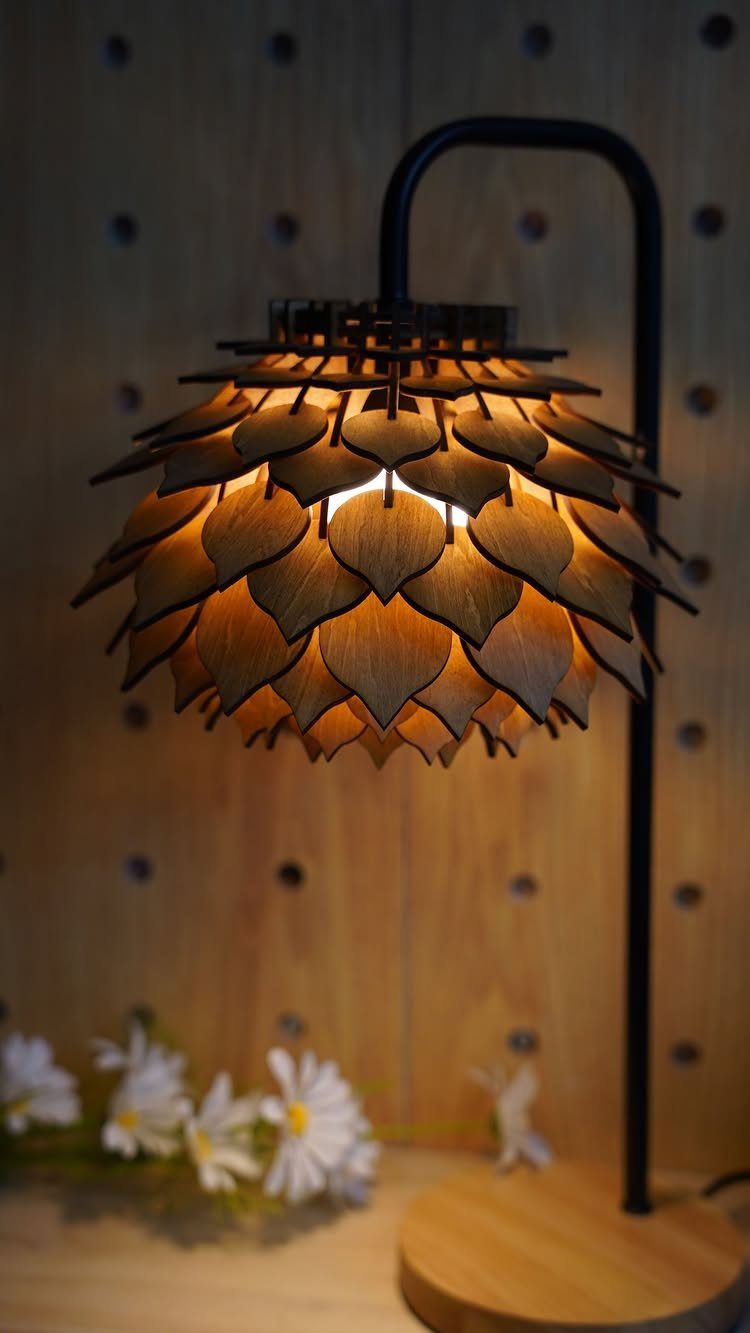
Layered wooden petals fan out into a shade, so a desk lamp ends up looking like a flower, and the black metal arm keeps it from turning sweet. The light spreads between the layers in a soft, petal-shaped pattern.
A layered shade lamp holds up against a busy wall such as pegboard, because a dark arm gives the eye a clear line. Set it where the arm has room to swing, so the shade is not crowded by shelves.
35. Geometric Wood Pendants
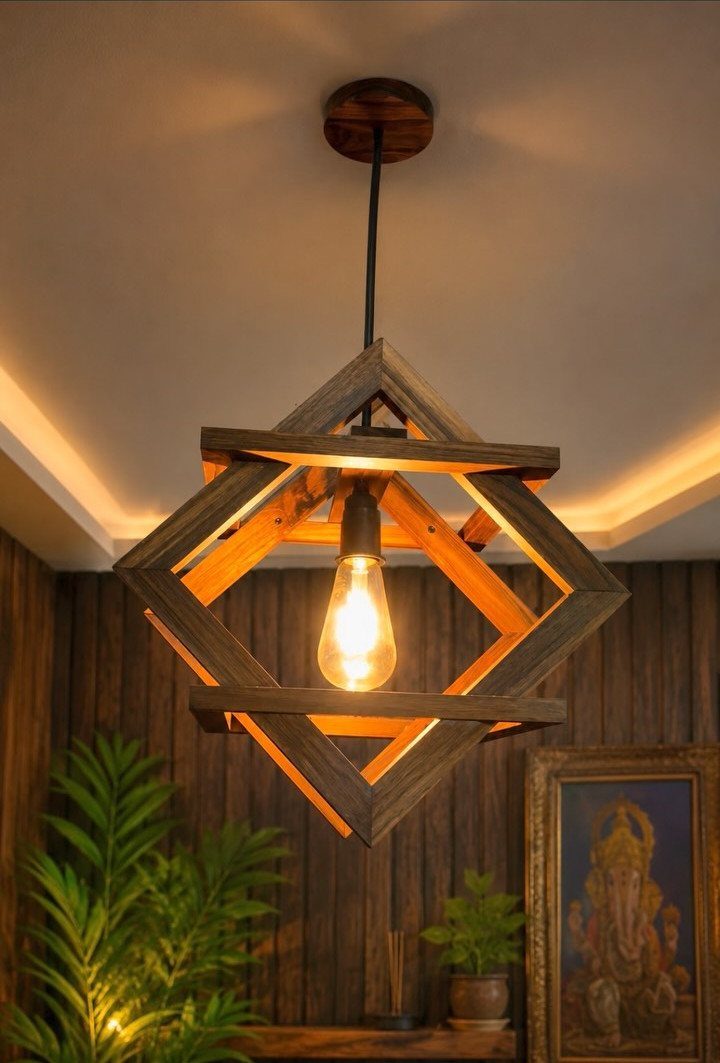
Angular wooden beams around a glowing bulb make a pendant that looks like a lit cage, and in a room with wood-paneled walls it feels at home.
The geometry gives a rustic room one crisp, modern shape to balance all that grain.
A geometric pendant needs room, so I hang it clear of the walls and away from picture frames, which lets the outline show from several angles.
One pendant is enough in a small room; a bare bulb inside keeps the shape in view.
36. Twine-wrapped Wood Lamp
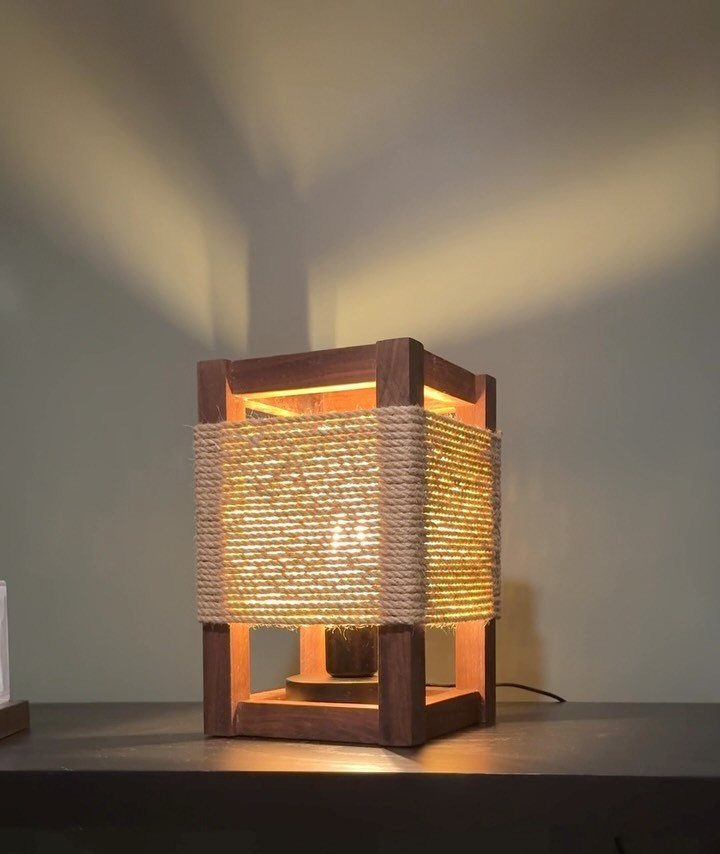
A square wooden frame with a band of twine wrapped through the center glows like a small lantern, and the fibers soften the light into something close to candlelight.
A twine-wrapped wood lamp stands out most on a dark surface against a plain wall, where its warm tone has nothing to compete with.
I would put it on a shelf or console where it can sit alone. If you wrap one yourself, pull the twine snug and keep the turns even, because loose, uneven winding shows once the lamp is lit.
37. Glowing Wood Sculptures
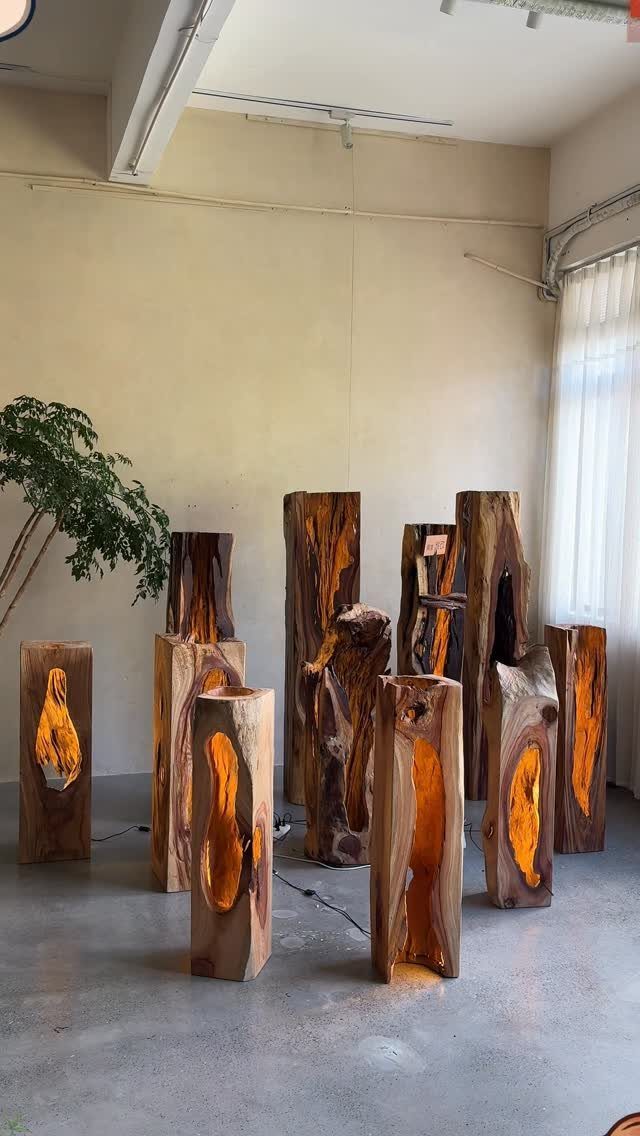
Tall hollowed wooden forms with light glowing through their centers work as lamps and as sculpture in one, and a grouping of them fills a bare corner better than a single piece would.
I would vary the heights and cluster them close, with a plant beside them to soften all that hard-edged space. A concrete floor and plain walls suit the look, since nothing competes with the orange glow.
38. Wooden Robot Lamp
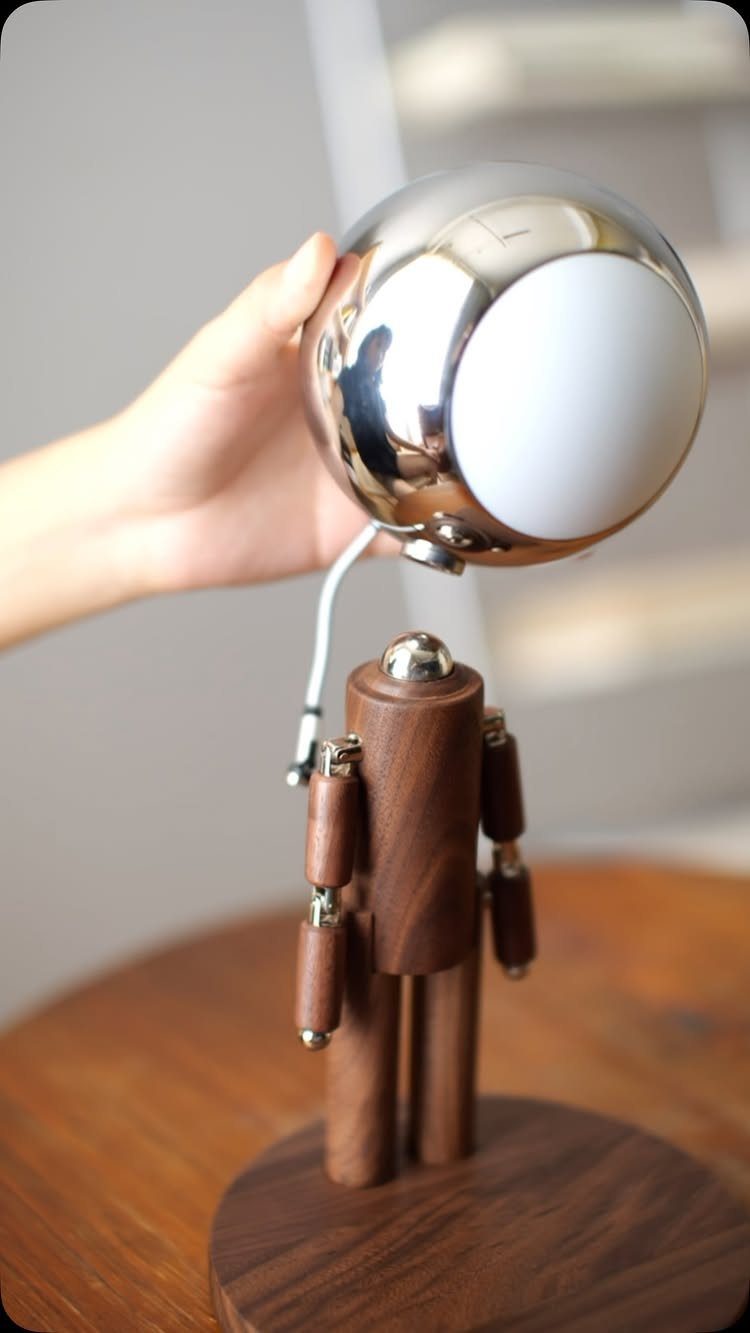
A jointed wooden figure holding up a round chrome head gives a desk or side table some personality, and the shiny sphere against warm wood is a contrast I like, so keep the surface around it fairly bare.
I would put it on a wooden table where the joints show and it can be posed. Keep the surroundings plain so the figure stays the point of interest, and leave room around it to adjust its stance.
39. Swinging Figure Lamp
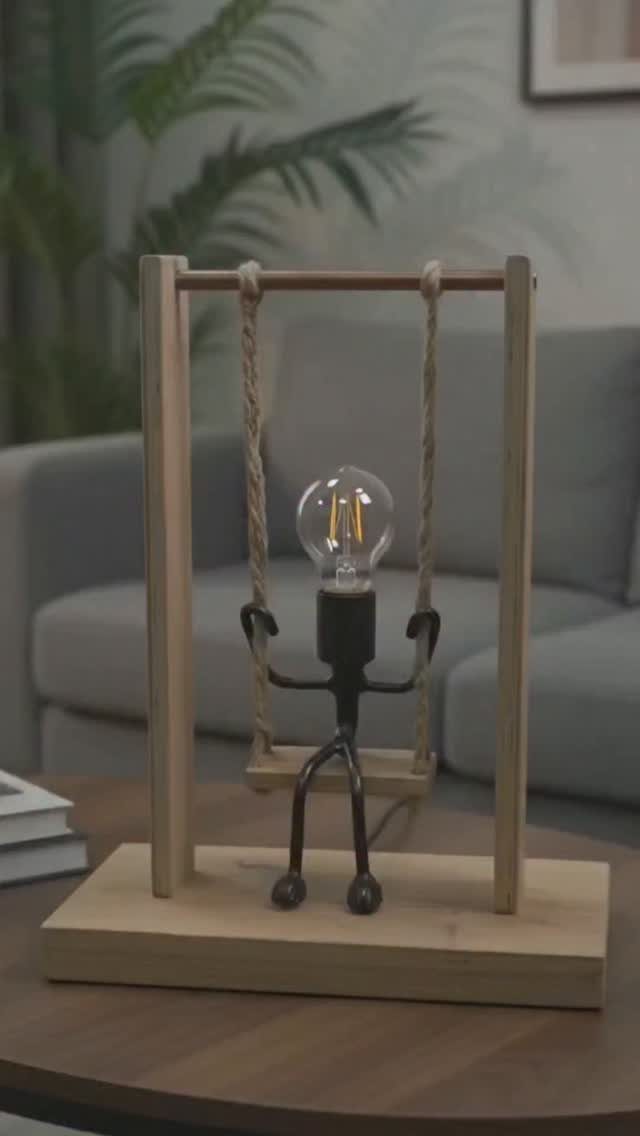
A small figure with a bulb for a head, seated on a rope swing, is a lamp with a sense of humor.
Its size suits a side table or console beside a sofa, where it reads as a little scene instead of just a light.
I would give it a spot at eye level, so the swing and the seated pose are easy to see. A plant nearby fits the mood, but keep the surface clear enough that the rope can hang freely.
40. Wood Slat Lantern
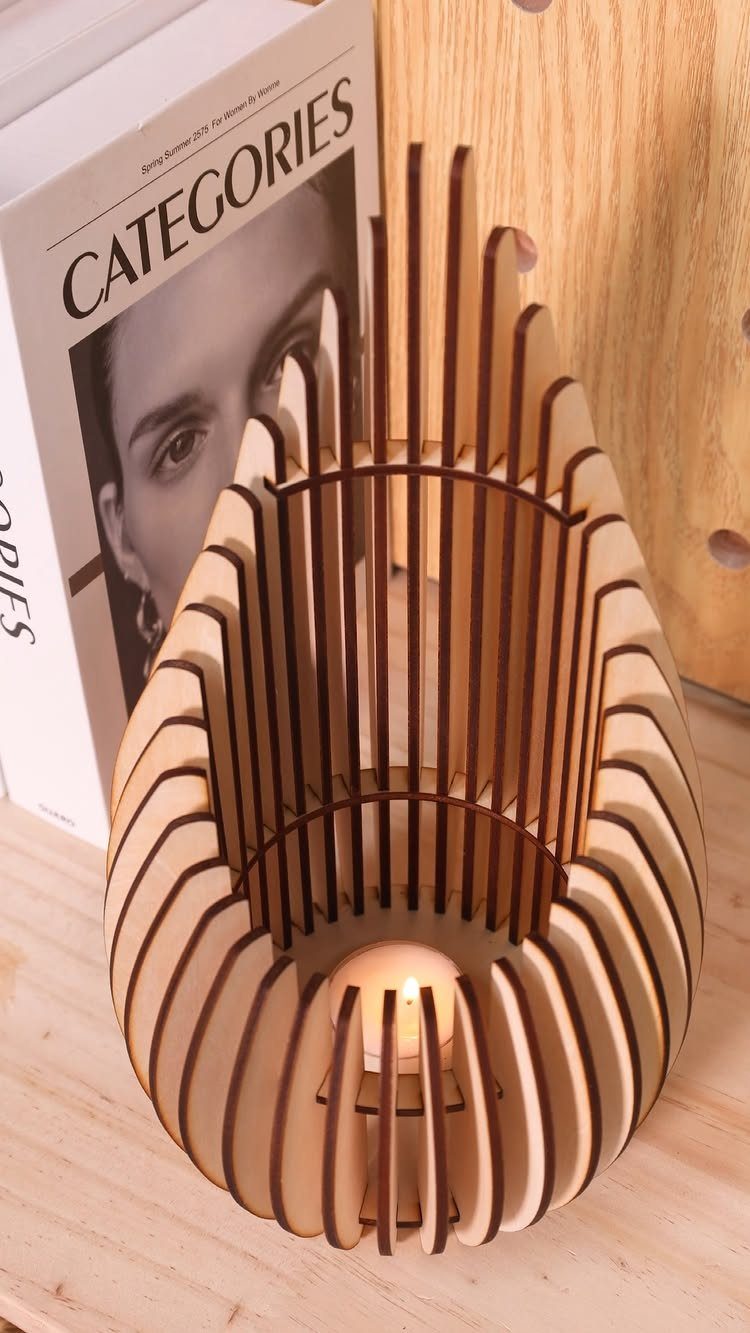
Thin wooden slats curved into an egg shape turn a single tea light into a soft, striped glow, and the open gaps let the flame show through.
It is an easy way to add wooden lighting to a table with no cord at all.
I would set it on a wooden surface so the warm tones match, with a few books or a magazine beside it. Use a small tea light, and keep it centered so the flame sits inside the slats.