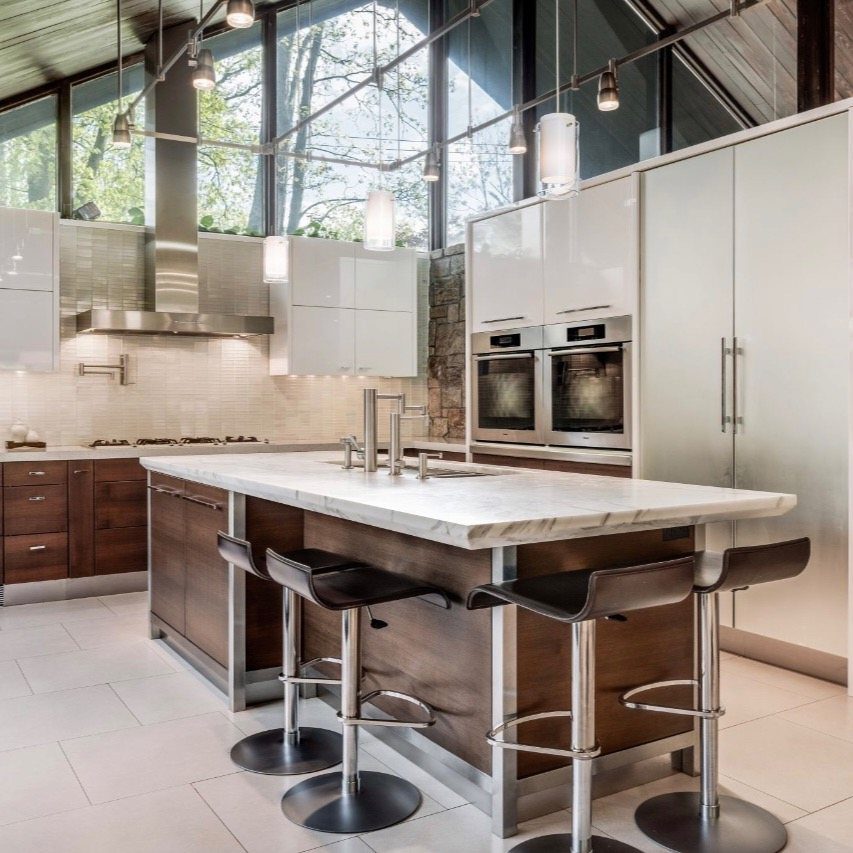
A hood can drop from the wall in steel, curve in copper, angle under a sloped ceiling, sit flush with tile that runs to the soffit, or mount as a clean box tucked below cabinets.
The hood’s material and mounting style shape the kitchen’s sightline more than most other single choices do. Most manufacturers recommend keeping the hood within a specific height range so airflow reaches the cooking surface effectively.
1. Under-cabinet Hood
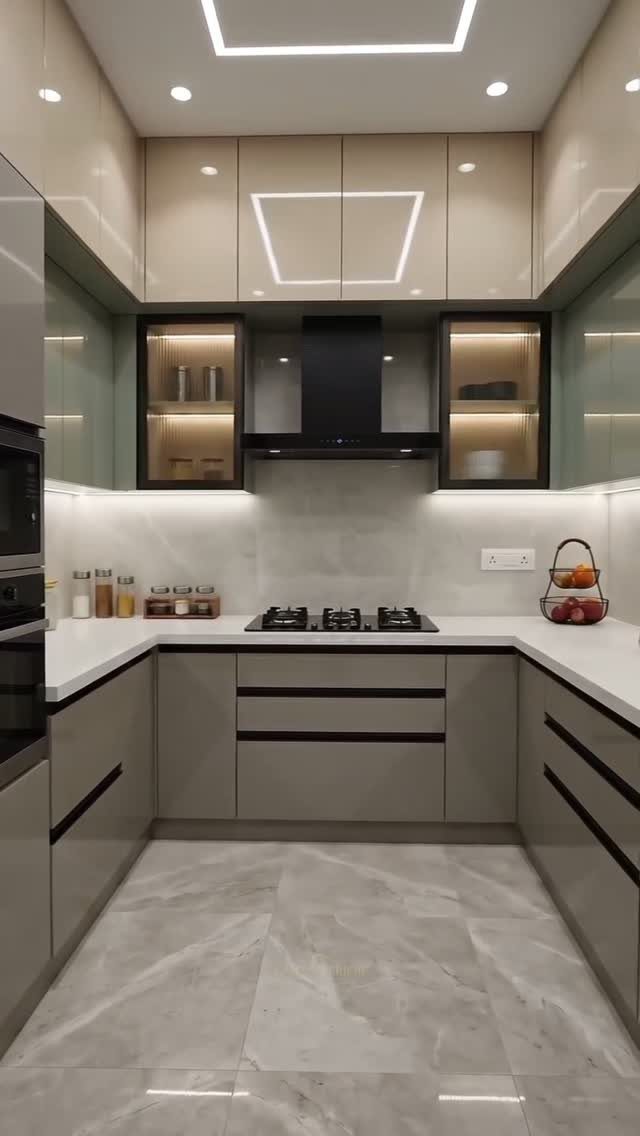
An under-cabinet hood sits beneath a wall-mounted cabinet and pulls smoke through a duct or recirculates it depending on what the exterior wall allows.
I see this choice most often in kitchens where upper cabinets run full height and the budget won’t stretch to a custom chimney.
The hood itself becomes nearly invisible, which keeps the sightline clean. If the cabinet is shallow, though, the hood will stick out past the door fronts and look tacked on.

Polished bright stainless steel border features sturdy bend-edged construction, anti-deform & long service lifespan, fine craft seam avoids frame loose or warp after repeated...
2. Metal Range Hood
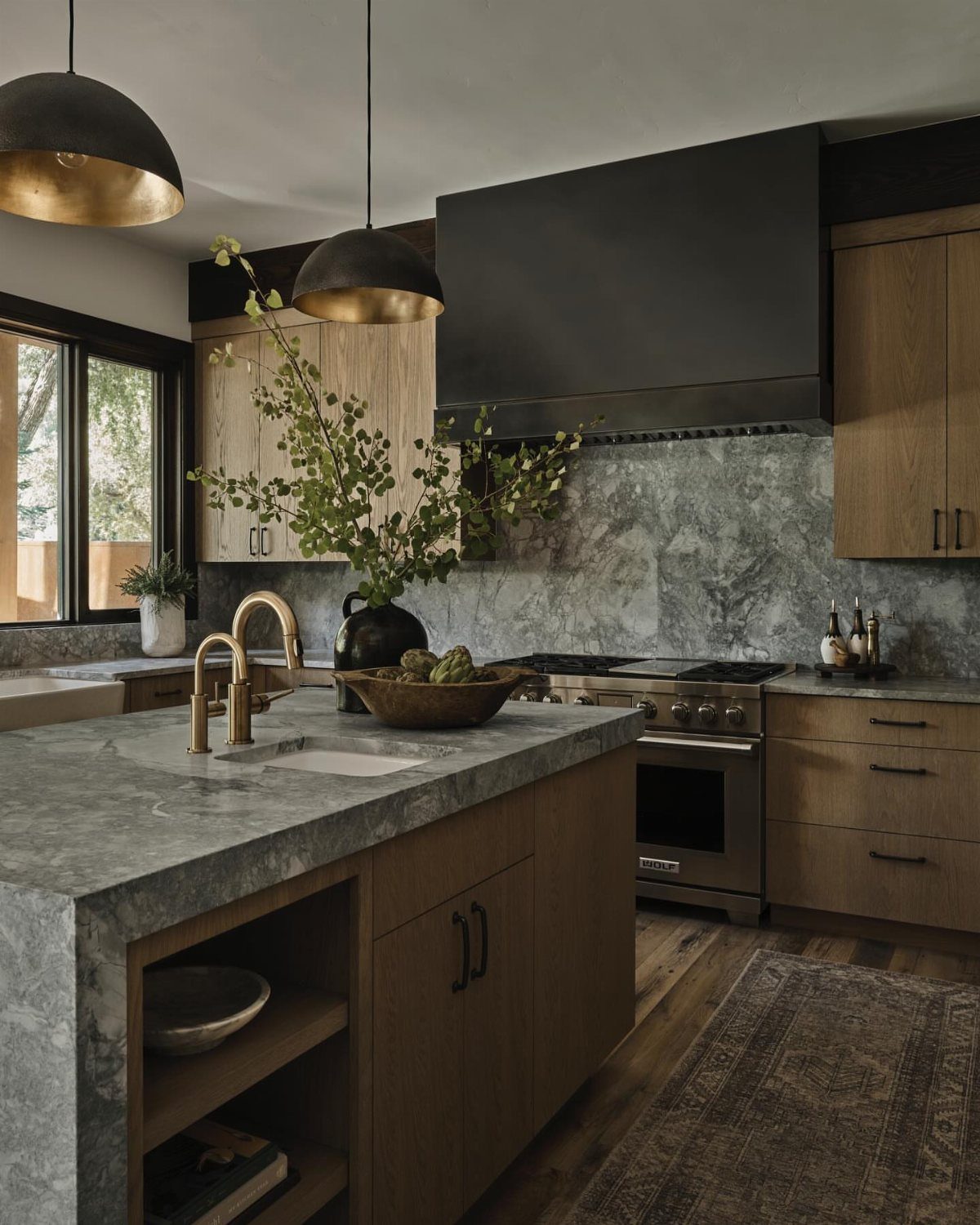
A metal range hood built from steel, stainless or powder-coated sheet metal gives weight to the wall without ornament. The material reads industrial in a way that suits open kitchens with concrete, exposed brick or minimal cabinetry.
Most metal hoods I specify are fabricated locally, which means the sizing can match the cooktop width exactly instead of forcing a standard dimension into the wrong spot.
Black and stainless work in almost any palette. Copper and brass need more restraint, or the kitchen starts to feel themed.
Matte black shows less smudging than polished stainless, though grease and dust still collect on the flat surface.

EFFICIENT YET QUIET: 380 CFM, 3-speed fan, single centrifugal motor. Cosmo’s vent hood comes standard ducted and quickly ventilates your kitchen. Carbon Filter Kit for ducted to ductless operation sold separately (Part # CFK1-TM). Extension telescopes with your outer cover and can be shortened or lengthened depending on your needs. Noise level as low as 45 dB on lowest fan speed with rigid ducting (sold separately) under optimal conditions; range hood comes with flexible ducting for convenient installation
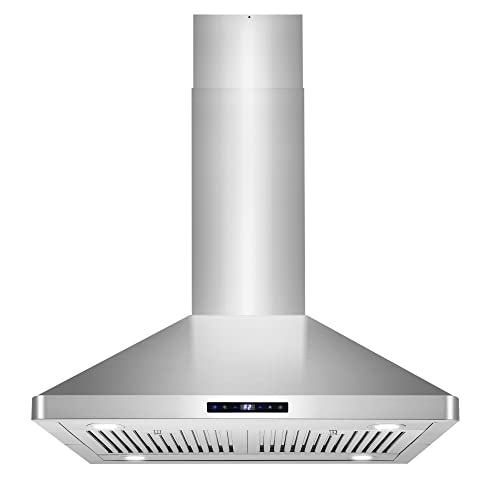
EFFICIENT AIRFLOW: 380 CFM removes smells and odors with ease for a clean kitchen. Ducted range hood vents outside and away from your home. Optional Carbon Filter Kit available for ducted to ductless Purchase Part # CFK1-TM (sold separately). Noise level as low as 45 dB on lowest fan speed with rigid ducting (sold separately) under optimal conditions; range hood comes with flexible ducting for convenient installation

Upgraded Gesture & Touch Control: In addition to the original touch control, the upgraded gesture control on JOEAONZ island mount hood enables you to control the hood without touching it, making your cooking more convenient. The upgraded ceiling kitchen hood is equipped with 4 sensing points, which are more sensitive and easier to operate than the usual gesture control.
3. Custom Under-cabinet Hood
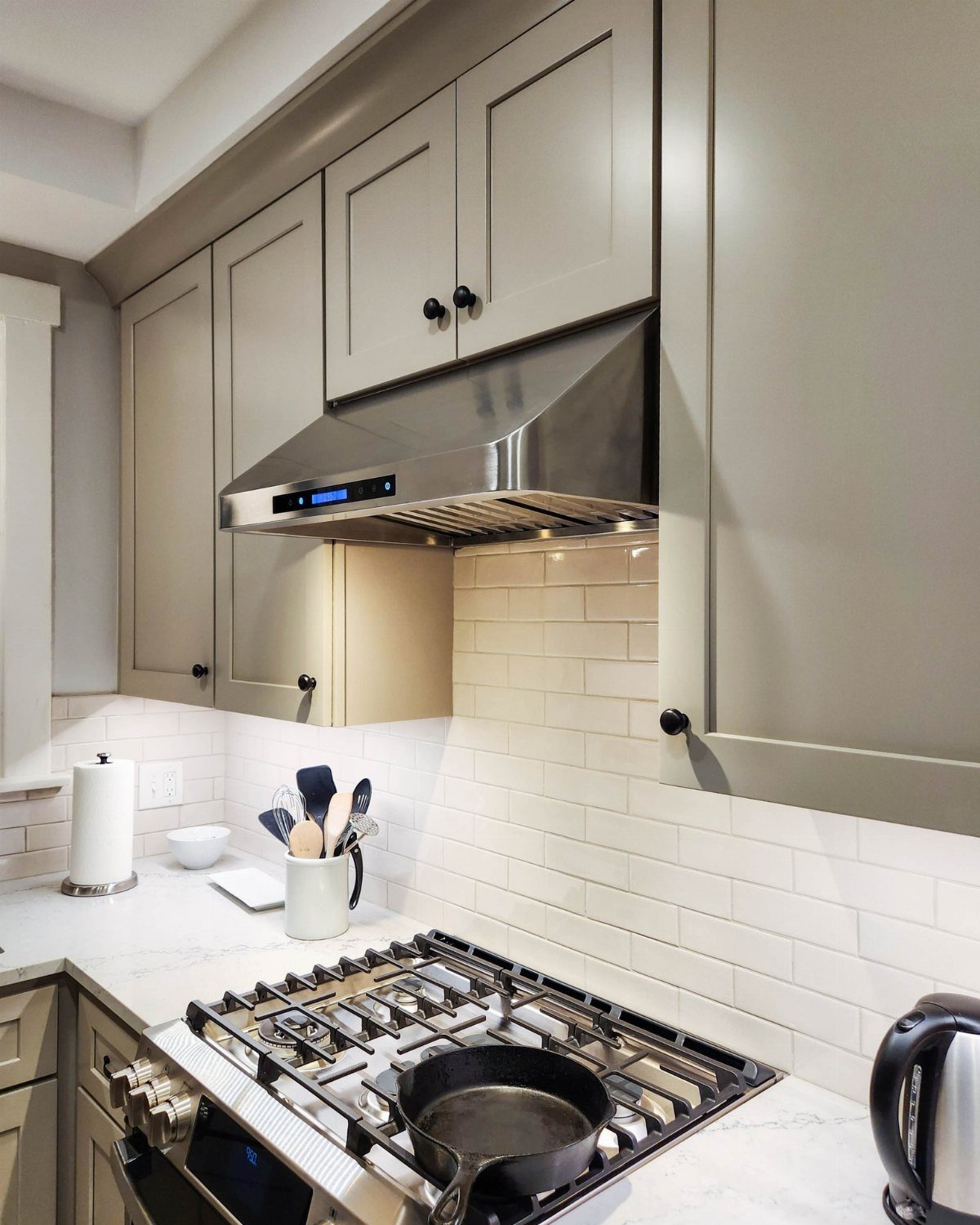
A custom under-cabinet hood is built to the exact depth and width of the cabinet box above it, so the two pieces read as one unit instead of separate layers.
This version uses stainless steel shaped to fit beneath grey-painted cabinets, and the seam between hood and cabinet stays tight.
I use this setup when the kitchen has strong cabinet detailing and the hood needs to disappear into that framework rather than compete with it.
The cost runs higher than a stock insert because the hood is fabricated to order, but the result looks deliberate instead of retrofitted.
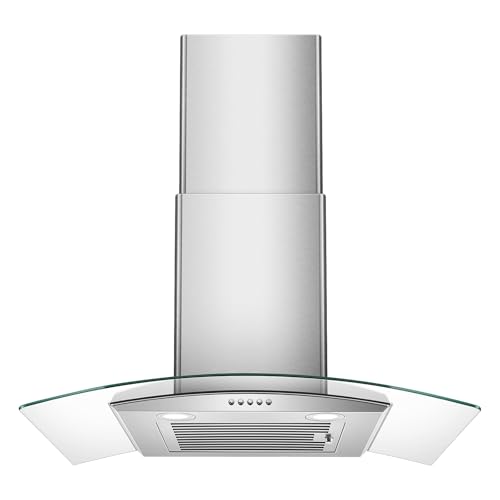
【Powerful Air-frow + Ultra Quiet Motor】: Tieasy Range Hood with housing premium safe motor that can reach 450 CFM. The range hood 30 inch airflow system can reach Max Energy Efficiency class of A++ and the lowest noise level can control at 40db, makeing your life become more quiet and simple

【Powerful Air-frow + Utral Quiet Motor】: Tieasy Range Hood with anti-fire housing premium safe motor that can reach 700 CFM. The range hood 30 inch airflow system can reach Max Energy Efficiency class of A++ and the lowest noise level can control at 40db, makeing your life become more quiet and simple.

【Upgraded Gesture & Touch Control】: In addition to the original touch control, the upgraded gesture control on JOEAONZ island mount hood enables you to control the hood without touching it, making your cooking more convenient. The upgraded ceiling kitchen hood is equipped with 4 sensing points, which are more sensitive and easier to operate than the usual gesture control.
4. Custom Metal Hood
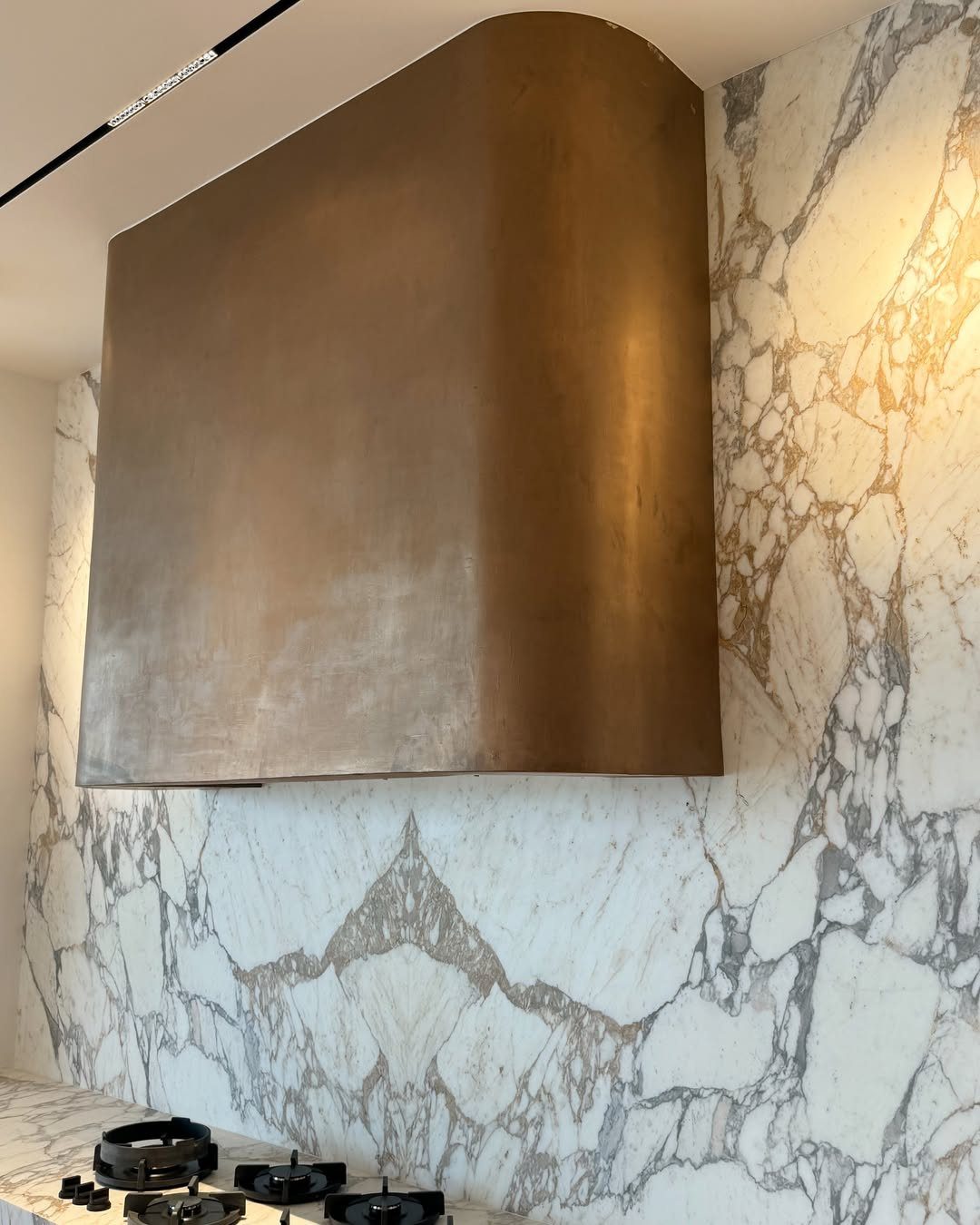
A custom metal hood is shaped and finished to the kitchen’s proportions rather than adapted from a catalog.
Bronze-toned metal with a curved profile can follow the arch of the backsplash when the seam between metal and stone is tight enough that the 2 materials feel like part of the same decision.
I specify custom metal when the kitchen has architectural details that a rectangular box would fight. The cost is higher, but the fit is exact.
Copper, brass, steel and bronze all work. The metal will patina unless sealed, which some clients want and others don’t.

❗❗❗Ductless Design & Flexible Installation Dimensions: Features a ductless downdraft system with no exhaust pipe, avoiding the hassle of duct arrangement. The cut-out dimension(28.74"/29.13"L x 19.3"W) is not fixed – successful installation is achievable as long as the cut-out size is smaller than the top glass dimension and larger than the bottom dimension.

2-in-1 Integration Saves Space: 4 burner Electric cooktop Combines a powerful downdraft range hood with an electric ceramic cooktop in one unit. No need to install an additional range hood, greatly reducing the occupied kitchen space. The integrated design also ensures a sleek and consistent kitchen aesthetic, perfectly matching modern embedded decoration styles.

【Replace Part Number】 Range hood grease filter replace W10575379 W11190170. The size of this range hood grease filter is approximately 5.4 x 11.61 x 0.1 inches. Note: Please verify the size of your original filter before purchasing
5. Custom Range Hood
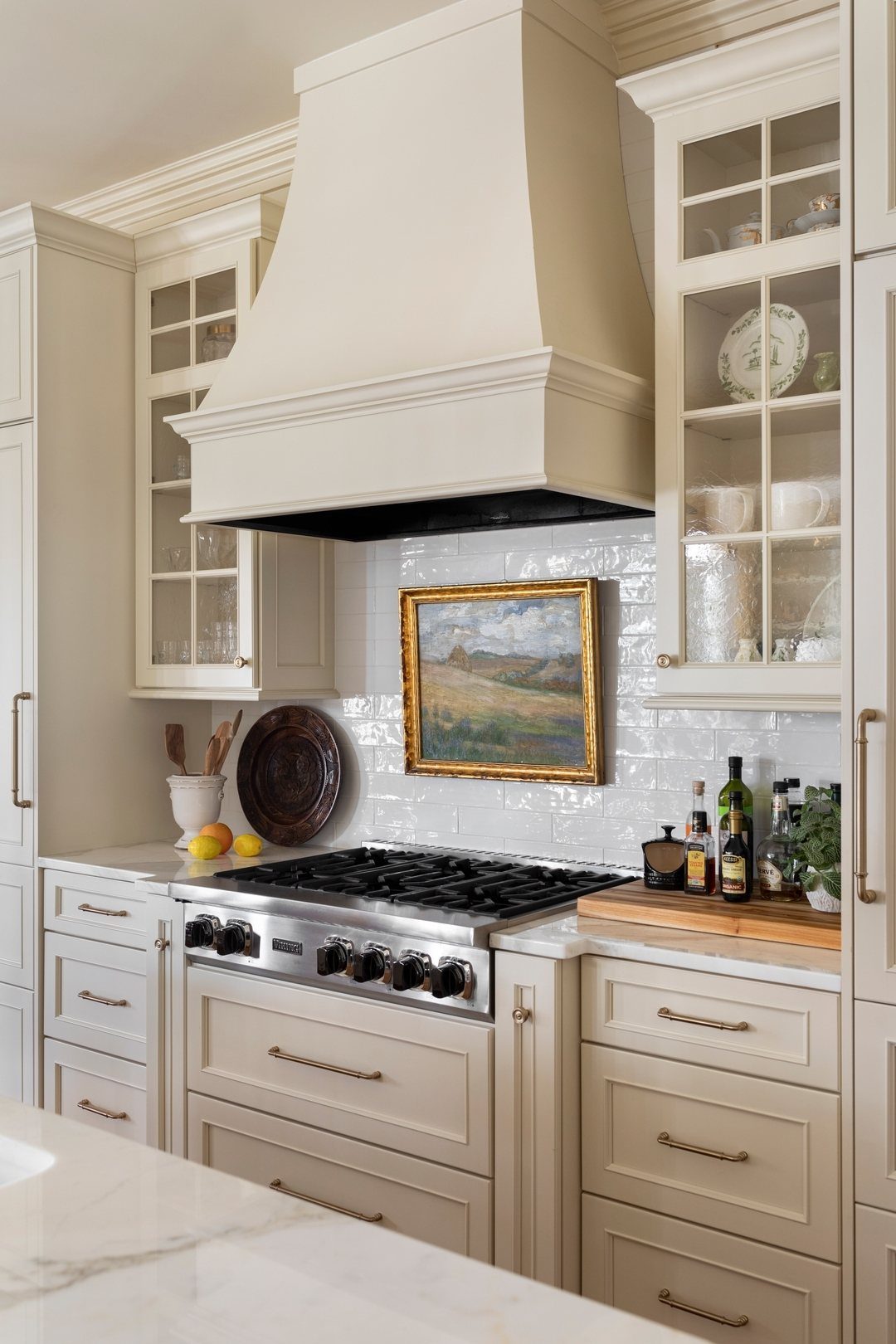
A custom range hood is built around the kitchen’s dimensions, ceiling height and cabinet layout rather than forced into a standard size.
A hood painted to match the surrounding cabinetry feels like part of the wall instead of an appliance bolted on later.
This approach works best when the cooktop sits off-center or the ceiling is unusually high or low, because a stock hood won’t line up cleanly.
The approach works in kitchens where the hood needs to disappear and in ones where it should anchor the room. The form can be simple or detailed depending on what the rest of the space asks for.
Summer Jensen of Hawk & Co. wanted a minimal hood for a kitchen she designed in Newport Beach, California. Aware that she would need a hood six inches longer (on each side) than the 86-inch range, she opted to go the custom route.

PORTABLE RANGE HOOD FOR SMALL SPACES: Breetee countertop range hood helps reduce smoke, odors, and grease in kitchens, RVs, and indoor BBQ setups. Best results at ~4″. Not designed to replace a full-size hood.

【Under Cabinet Range Hood with Slim Design】With the slim and stainless steel body, this range hood 30 inch under cabinet is space-saving and easy to install. The rocker button can control 2-speed wind speed and LED lighting, which is easy to operate. Product Size: 29.9 inch x 17.5 inch x 4.7 inch( L x W x H). (Hardwire installation, plug sold seperately Part#ZMS-3976-PC)

Fresh Air & 3 Speeds: Elegant Under Cabinet Range Hood with 3 –speed exhaust fan provides you fresh air, while keeping the noise low.
6. Modern Minimalist Hood
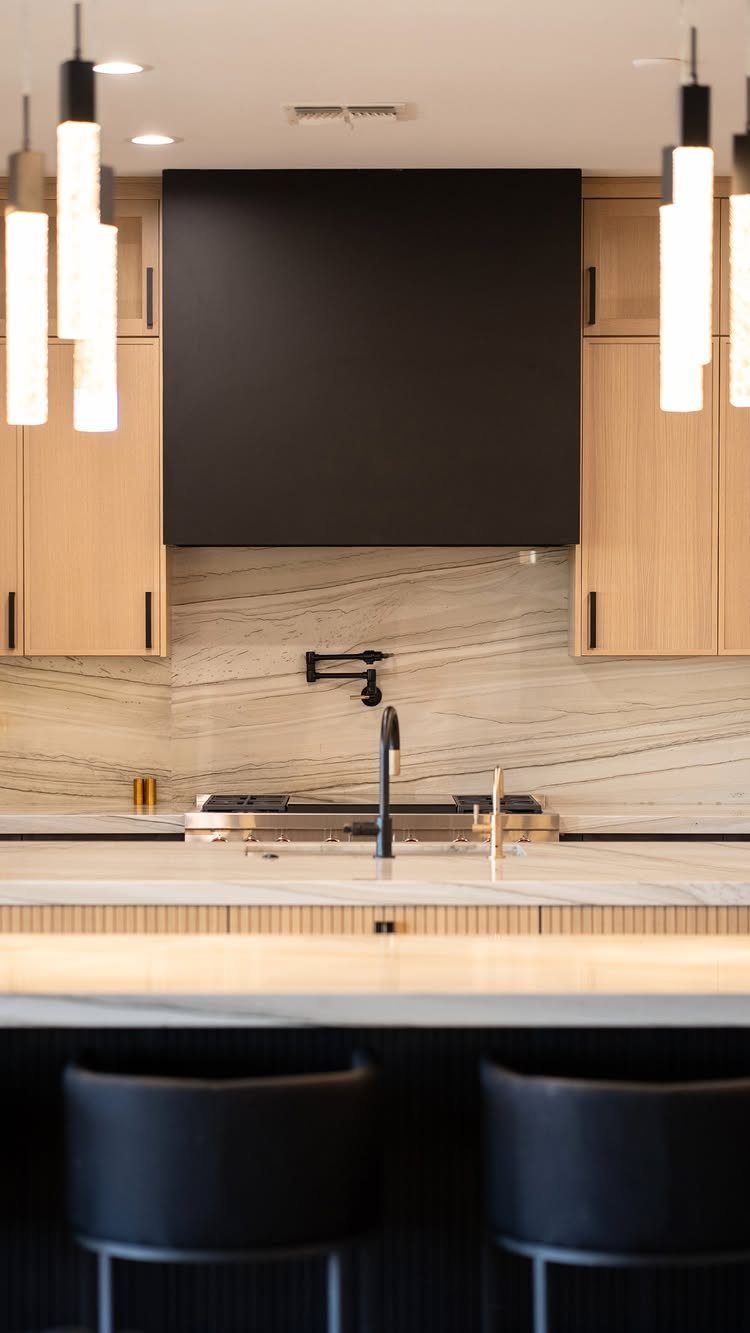
A modern minimalist hood uses a flat profile and no visible trim, vents or decorative elements.
I choose this style when the kitchen already has enough texture or pattern and the hood needs to recede.
It pairs well with marble, concrete and wood because the shape doesn’t compete. The downside is that grease and dust show up quickly on a flat, dark surface, so plan on wiping it down often.
If that sounds like too much maintenance, a textured or brushed finish hides smudges better without changing the form.

400 CFM EFFICIENT AIRFLOW: Wall mount range hood with 400 CFM removes smells and odors with ease for a clean kitchen. Only 57dB max noise level. 3 speed fan and brand new motor, brings you a good cooking experience.

EFFICIENT AIRFLOW: 380 CFM removes smells and odors with ease for a clean kitchen. Ducted range hood vents outside and away from your home. Optional Carbon Filter Kit available for ductless Purchase Part # CFK1-TM (sold separately). Noise level as low as 45 dB on lowest fan speed with rigid ducting (sold separately) under optimal conditions; range hood comes with flexible ducting for convenient installation
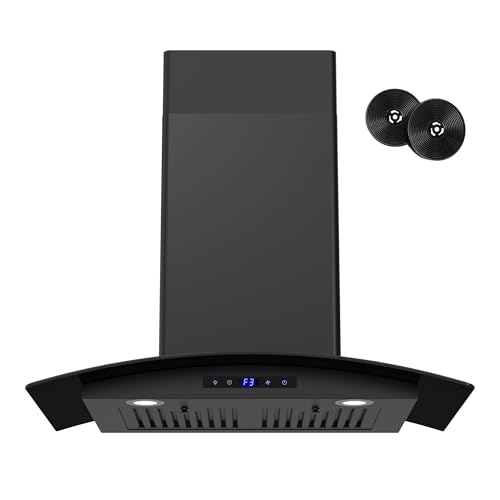
SLEEK DESIGN & FUNCTIONALITY: Upgrade your kitchen with the FIREGAS 30 inch range hood, featuring a modern curved tempered glass design and adding an elegant touch. The ducted / ductless convertible vent hood option ensures versatility, allowing easy installation to suit your needs
7. Copper Range Hood
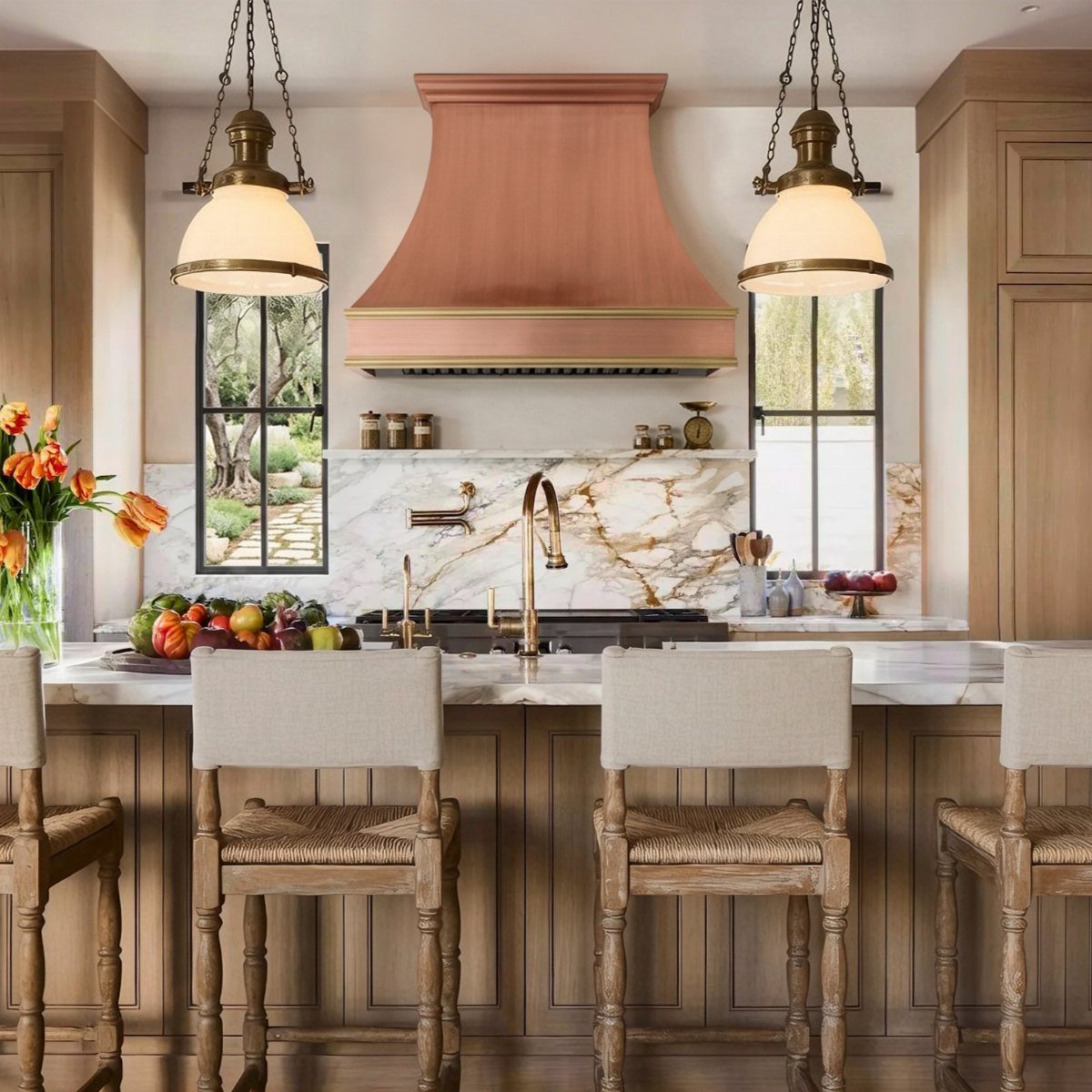
Copper as a hood material adds warmth to a kitchen with cool stone or painted cabinets, and the metal ages visibly over time unless sealed.
The patina can deepen the tone or turn greenish depending on what touches the surface, which some homeowners like and others find unpredictable.
I specify copper when the kitchen needs a focal point and the budget allows for custom fabrication. It pairs well with marble and wood, but avoid mixing it with too many other metals or the room starts to feel busy.

𝐏𝐎𝐖𝐄𝐑𝐅𝐔𝐋 𝟕𝟎𝟎 𝐂𝐅𝐌 𝐀𝐈𝐑𝐅𝐋𝐎𝐖: This 30-inch island range hood delivers up to 700 CFM of airflow to help remove cooking smoke, grease and unwanted odors. Designed for kitchen island installation, this stainless steel range hood provides effective kitchen ventilation for everyday cooking, from simmering sauces to searing and frying.

High-Efficiency Ventilation: The 36-inch island mount range hood offers a powerful 1200 CFM airflow, effectively removing smoke and cooking odors from your kitchen.

𝐏𝐎𝐖𝐄𝐑𝐅𝐔𝐋 𝟕𝟎𝟎 𝐂𝐅𝐌 𝐀𝐈𝐑𝐅𝐋𝐎𝐖: This 36-inch island range hood delivers up to 700 CFM of airflow to help remove cooking smoke, grease and unwanted odors. Designed for kitchen island installation, this stainless steel range hood provides effective kitchen ventilation for everyday cooking, from simmering sauces to searing and frying.
8. Modern Hood with Brass Accent Straps
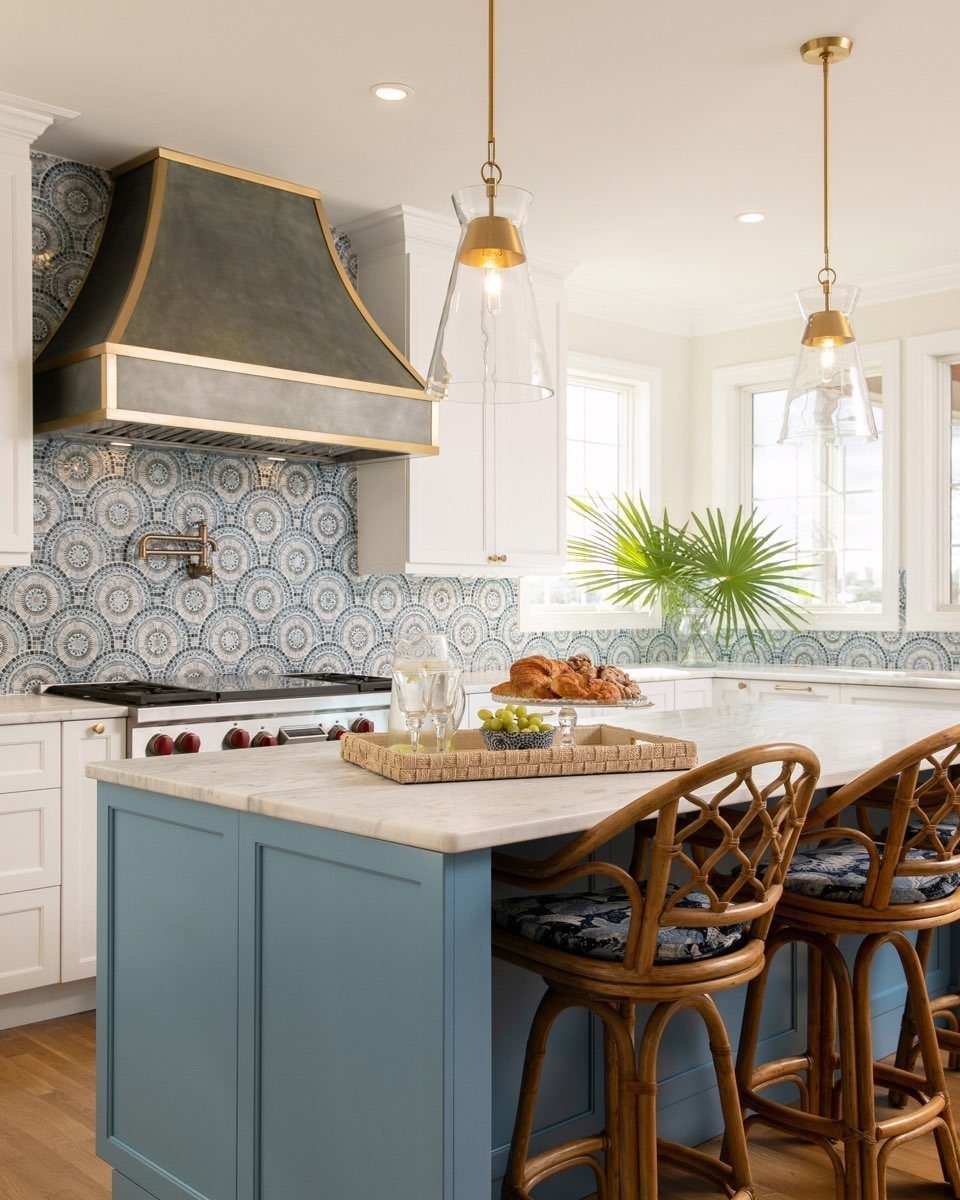
Brass straps add structure to a curved or smooth hood without the weight of full metal cladding. I see this detail work best when the straps are functional or look like they could be, rather than purely decorative.
This approach suits kitchens with one other brass element, like cabinet pulls or faucet finish, so the hood feels tied to the rest of the room. If brass appears only on the hood, it can read as an afterthought.

【IQV CAPTURE SYSTEM & NO COSTLY MAKE-UP AIR NEEDED】Ultimate Kitchen Vent Hood 36 Inch: Powered by an advanced BLDC motor, this 36 inch wall mount range hood utilizes IQV technology by 3 distinct speed airflow streams with 14 m/s ultra-fast air velocity. Designed as a heavy duty range hood 36" for 6-burner gas stoves and open-concept kitchens, it delivers high-velocity source capture to comply with our Requirements, without requiring costly make-up air system installations or sacrificing suction power. Rapidly captures cooking fumes, heavy grease, odors, PM2.5 at the source before they spread to your living room or trigger smoke alarms.

【Size Guide】:For better performance, wall mount range hoods should be the same width as or 3"- 6" wider than your cooktop. The height range between your cooktop and the range hood should be 30" to 36" (33" is recommended). The last size guide pic is for your ref. We can also make any hood size you need, please contact us via Amazon.com for a quote.

【Size Guide】:For better performance, wall mount range hoods should be the same width as or 3"- 6" wider than your cooktop. The height range between your cooktop and the range hood should be 30" to 36" (33" is recommended). The last size guide pic is for your ref. We can also make any hood size you need, please contact us via Amazon.com for a quote.
9. Angled Ceiling Modern Hood
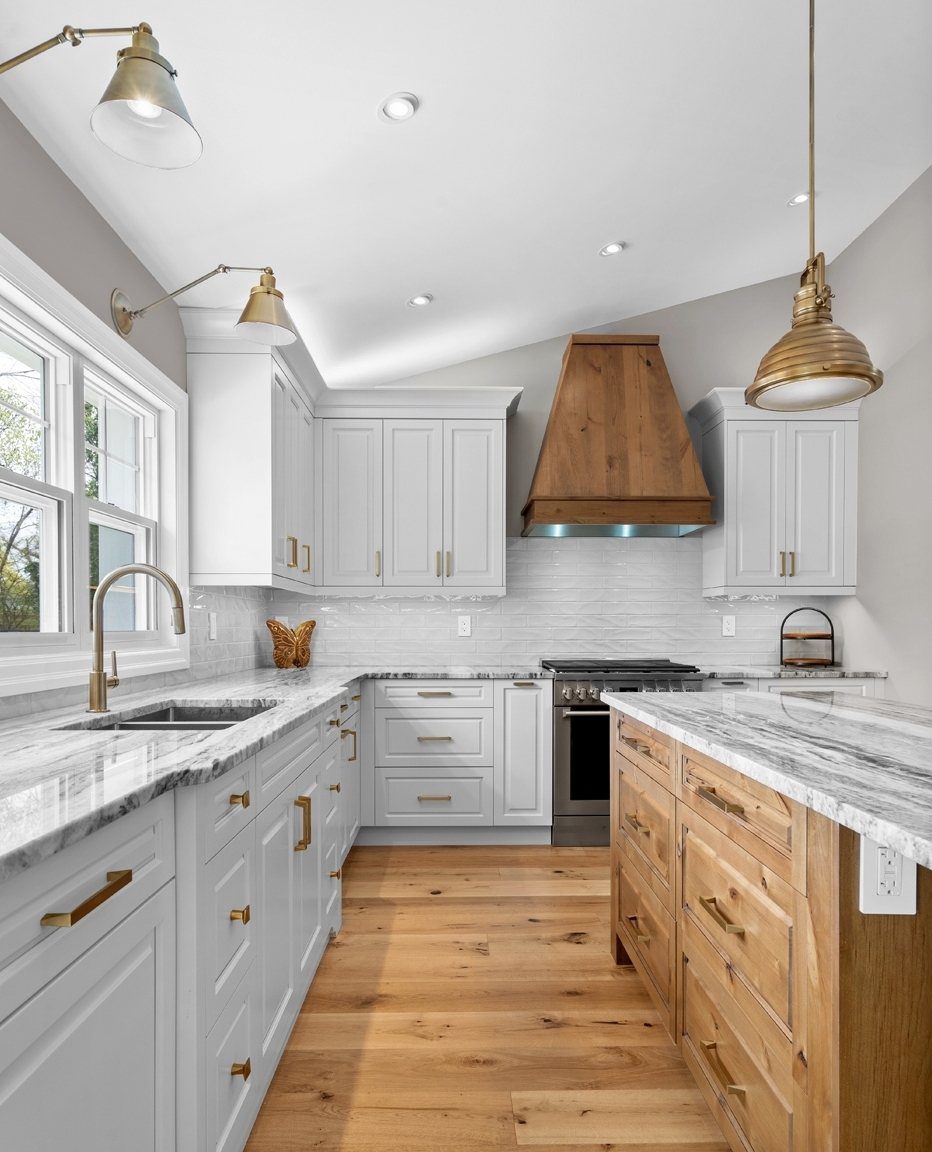
An angled hood cuts to match a sloped ceiling instead of forcing a flat plane into the space.
The shape follows the roofline, which keeps the hood from feeling oversized or awkward in a room with limited vertical clearance on one side.
This version works in attic kitchens, lofts and any space where the ceiling pitch would leave a standard hood hanging crooked or blocking sightlines.
The cost is higher because the hood is custom-built, but stock options rarely fit cleanly against an angle.

Improving Kitchen Air Quality High-quality Comfee range hood with 2-speed exhaust fan provides strong air suction to remove most of the smoke and cooking odors from the air faster while keeping the noise low.

【2-in-1 Downdraft Electric Cooktop】Upgrade to our electric cooktop with downdraft, a 30 inch electric downdraft cooktop that eliminates the need for a bulky overhead hood. The built-in downdraft system pulls smoke, steam, and odors straight down from the pan, making it perfect for island kitchens and open layouts. This downdraft electric cooktop saves valuable overhead space, blends cooking and ventilation into one sleek, modern unit, and requires no extra installation for a truly clean, minimalist countertop look.

HIGH-QUALITY DUCTLESS RANGE HOOD INSERT: Stainless steel hood insert improves ventilation and lighting over your stove with the non-ducted filtration system that effectively removes smoke and odors
10. Ceiling-height Tile Modern Hood
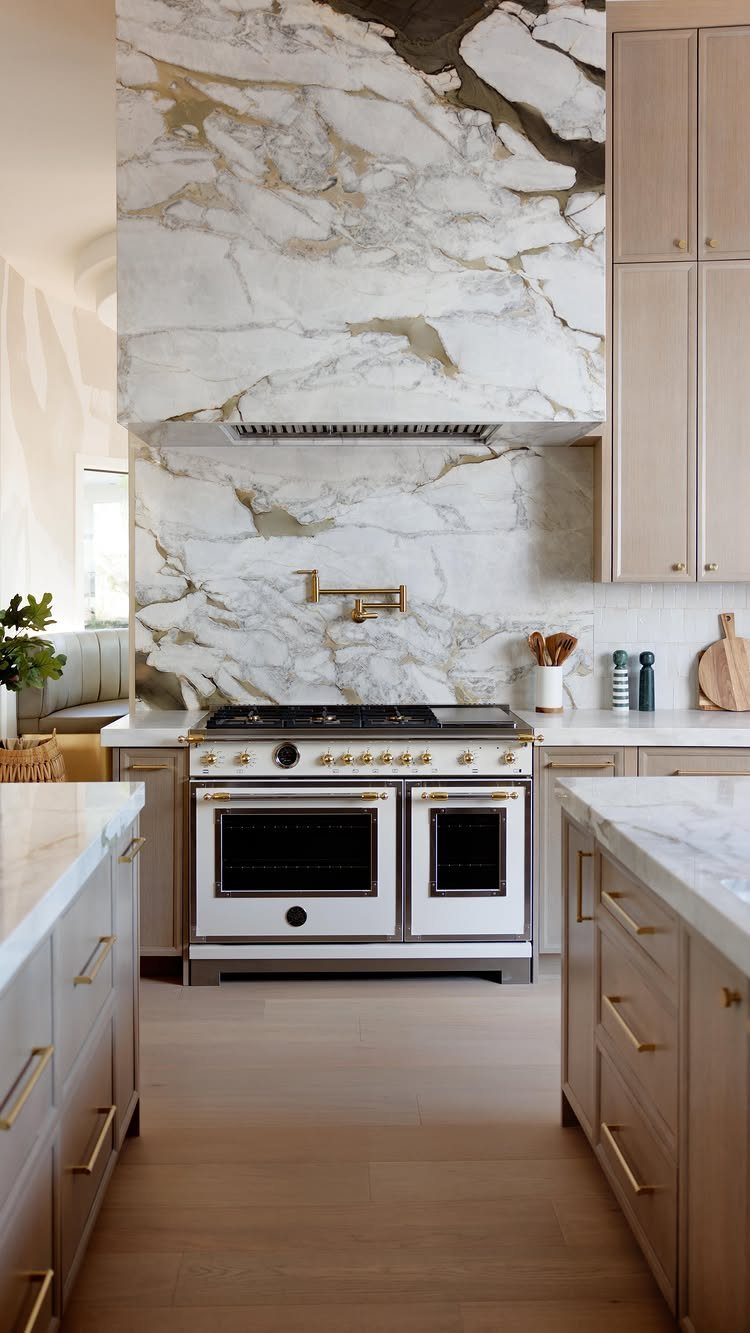
A ceiling-height hood clad in marble or tile treats the hood as an architectural feature rather than an appliance. The stone runs from countertop to ceiling, so the cooktop wall becomes one continuous surface.
This setup works in kitchens with high ceilings where a standard hood would look too small.
The stone needs to be cut and installed by someone familiar with vertical cladding, because the seams and weight matter. If the ceiling is low, the same approach can make the space feel cramped instead of grand.

【DESIGNED FOR TABLETOP & SMALL-SPACE COOKING】 Ideal for indoor BBQ, hot pot, tabletop grilling, RV cooking, and other compact cooking setups. This portable range hood is designed to help improve airflow and reduce cooking fumes in smaller spaces. It is not intended to replace a full-size built-in kitchen range hood.

SLEEK BLACK DESIGN FOR MODERN KITCHENS: The Breetee black portable range hood combines powerful suction with a stylish matte finish, blending seamlessly into contemporary kitchens, RV setups, and indoor BBQ spaces.

【Powerful 400 CFM Suction】This 30-inch under cabinet range hood delivers a robust 400 CFM airflow, effectively capturing smoke, grease, and cooking odors to keep your kitchen fresh. Hard-wired installation (plug not included) for a clean.
11. Flush Ceiling Hood
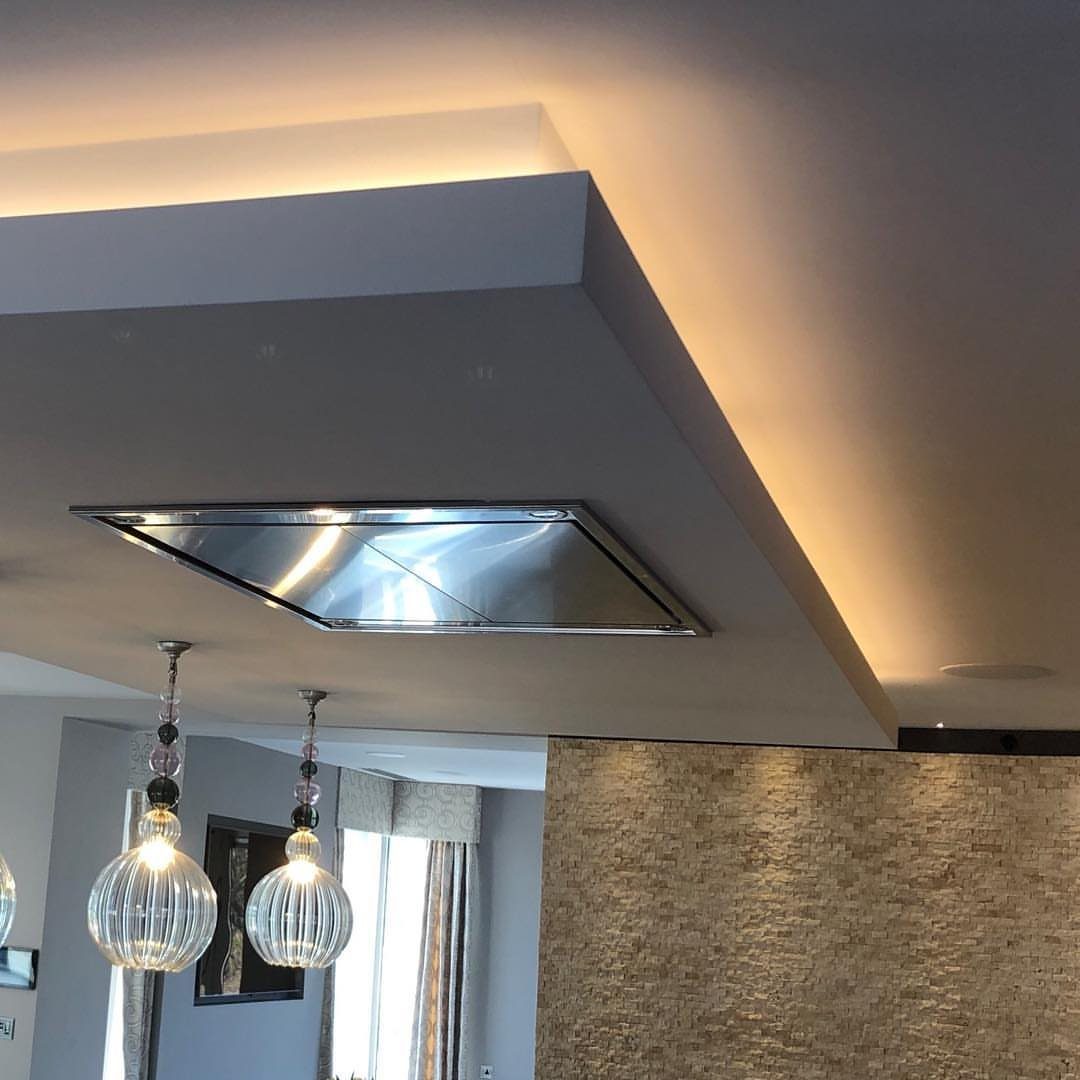
A flush ceiling hood recesses into a dropped soffit or ceiling plane so only the vent opening shows. The motor and ductwork sit above the finished surface, which keeps the cooktop wall completely flat.
It lets cabinetry or tile become the focal point without a bulky form pulling focus.
The downside is losing ceiling height, because the hood needs several inches of depth to hide the fan. If the room is already low, this can make the space feel tighter than a wall-mount hood would.
12. Wall-mount Hood
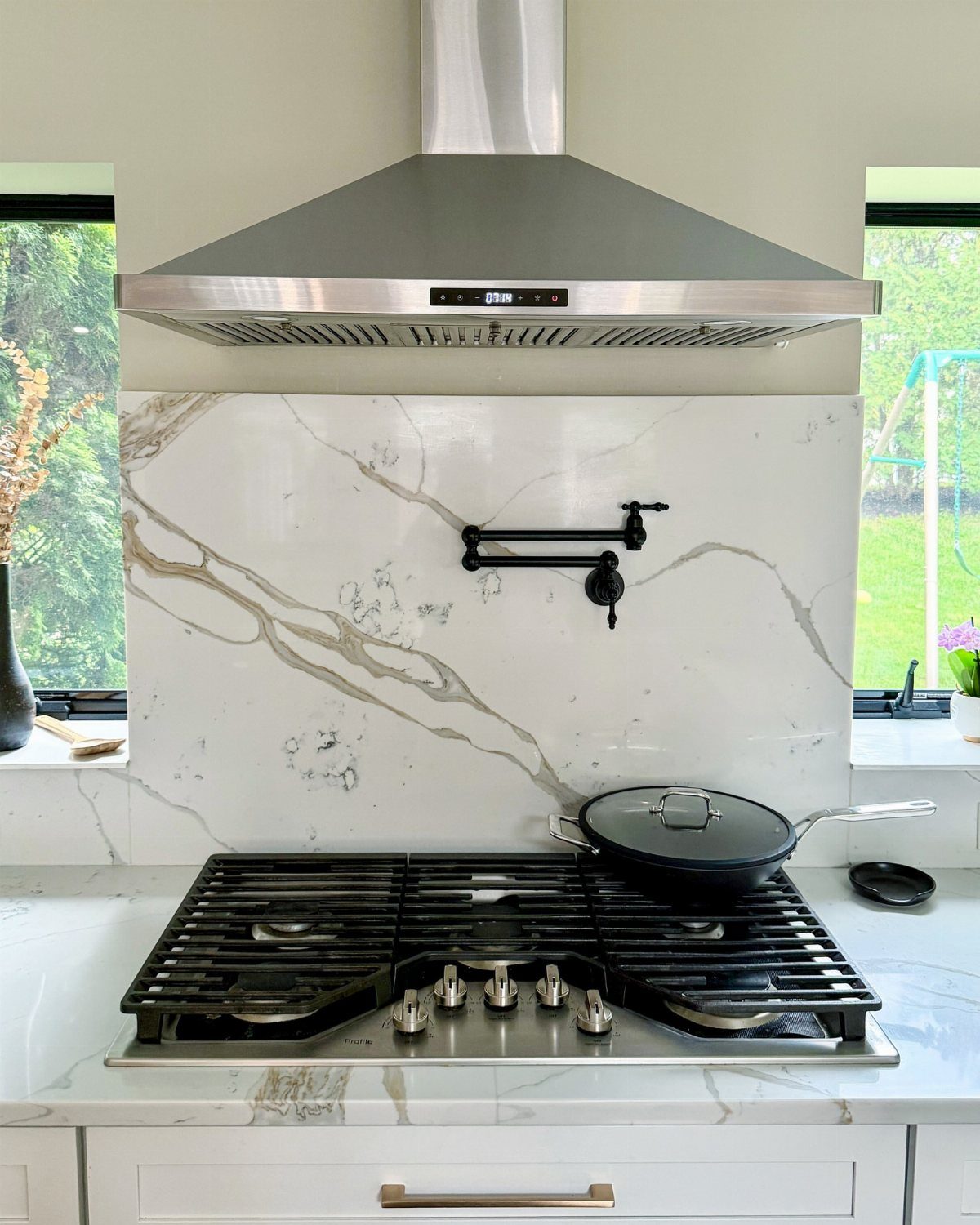
A wall-mount hood attaches directly to the wall above the cooktop without upper cabinets. It’s the default choice in open kitchens where the cooktop sits on a wall rather than an island.
Most models come in stainless, black or white in widths that match standard cooktop sizes.
If the cooktop is 30 inches, the hood should be at least 30 inches, preferably wider for better capture. This style works with any cabinet finish and costs less than custom fabrication.
Airflow, Sound, and Testing
CFM measures how much air the blower moves per minute, and that number matters most when the cooktop generates heavy steam or grease.
Mounting height plays into it too.
If the hood sits too high, airflow weakens before it reaches the cooking surface. Most manufacturers publish a recommended range, and staying inside it improves performance.
Sound is measured in sones.
On lower speeds, 1 to 3 sones keeps the kitchen quiet enough for conversation. Remote blowers move the motor outside the kitchen, which cuts noise but adds to installation cost.
Consumer Reports tests airflow, light brightness and uniformity, and noise levels, so those reports can narrow the field when performance data from manufacturers varies.
Installation, Cleaning, and Cost
Vented installation means cutting an exterior wall and running ductwork to the outside, which adds labor and cost but removes moisture and grease completely. Ductless models recirculate air through charcoal filters, which need replacing regularly.
Most hoods require a dedicated circuit, and I recommend hiring an electrician for that part of the job.
If the existing hood dies, replacing it is simpler because the ductwork and wiring are already in place, but the new model has to match the duct diameter or the whole run needs rebuilding.
Dirty filters block airflow fast. Cleaning or replacing them can restore performance without touching the blower.
A simple under-cabinet hood costs a few hundred dollars, while a big island statement piece can run several thousand.
Frequently Asked Questions
What is trending in range hoods?
Black metal hoods are showing up more often because they add contrast in light kitchens and pair well with wood and neutral palettes.
Custom hoods built to match cabinet proportions or architectural details also keep gaining ground, especially when the cooktop sits off-center or the ceiling height is unusual. The shape matters less than clean lines and performance that stays quiet during operation.
Which type of kitchen hood is best?
The best hood matches your cooktop width, your cooking habits, and your kitchen layout. If you cook often with high heat or steam, aim for 600 CFM or higher and a wall-mount or custom style that won’t stick out awkwardly.
If you barely cook, a simpler under-cabinet model with 300 CFM will do the job. After the technical requirements are covered, the hood’s material and form should fit the rest of the room.
Does a range hood need to be vented outside?
A hood can vent outside through ductwork or recirculate air through charcoal filters in a ductless setup.
Vented hoods remove moisture and grease completely, which makes them more effective. Ductless models require regular filter changes and perform worse in testing, but they work when you can’t cut through an exterior wall.
Are ductless range hoods worth it?
Ductless hoods recirculate air through charcoal filters instead of venting outside, and they perform worse than vented models in tests.
They cost less upfront because installation is simpler, but the filters need replacing regularly. If your kitchen can’t support ductwork, a ductless hood still captures grease and improves air quality, though you should open windows when cooking.
Is venting a hood worth the money?
Venting a hood to the outside costs more upfront because it requires cutting the wall and running ductwork, but it removes moisture and grease completely instead of filtering and recirculating them.
Ductless hoods cost less to install but need frequent filter changes. If your cooktop produces heavy steam or grease, venting is the better long-term choice.
How much should I spend on a range hood?
Under-cabinet models start around $200, while built-in or custom metal hoods can push past $3,000. The price depends on whether the hood is stock or fabricated to order, the material you choose, and the size of the cooktop it needs to cover.
Custom copper or brass hoods start around $3,200 and go up from there depending on dimensions and finish.
Can I install a range hood myself?
Installation usually means wall penetration, duct routing, and electrical work that calls for a licensed contractor.
If you’re replacing an existing hood and the duct diameter matches, a skilled DIYer can attempt it, but the power needs to be shut off before any work starts. Improper ducting or wiring creates safety risks that outweigh the savings.