Which mirror suits a small room depends on what you still have free: floor space, wall space, or the back of a door.
The leaned floor mirror needs no hardware, the round wall mirror fits on a bare stretch of wall, and the over-the-door mirror borrows the back of a door that is already there.
2 ideas near the end of the list, the jewelry armoire mirror and the backlit mirror with slatted shelves, suit rooms where the mirror also has to store things or give light.
1. Full-Length Floor Mirror
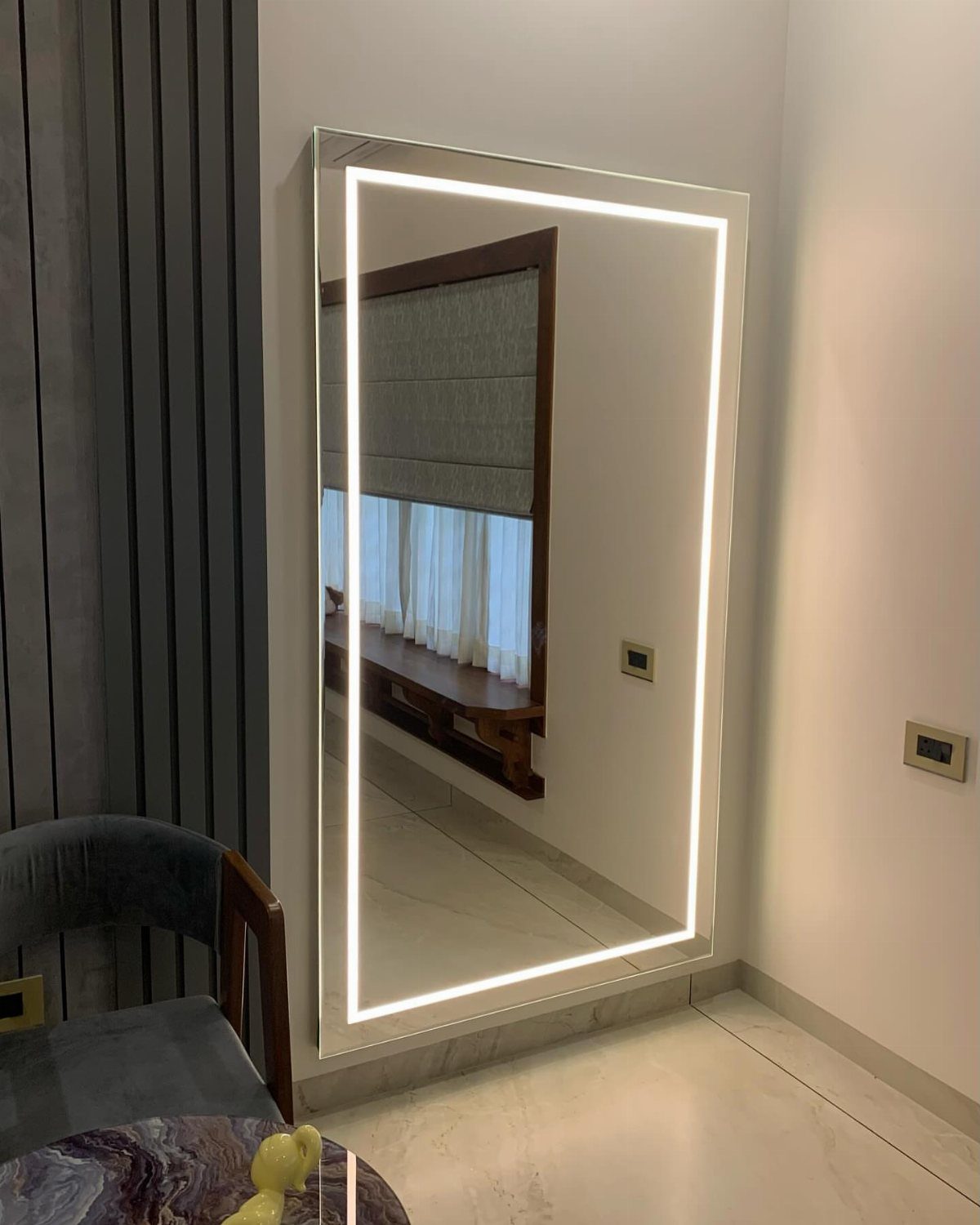
A tall mirror with a built-in LED border does 2 jobs in a small room: it shows a long slice of the space, which adds depth, and it throws its own light.
Set it opposite or beside a window so the reflection pulls in daylight, and leave a few inches of wall around it so it doesn’t crowd the corner.
I like this version for a dim bedroom, since the glowing edge works even when the window doesn’t.
One trick to help open up a small space is a combination of optical illusion sorcery and space-saving craftsmanship: the mirror.
2. Arched Full-Length Mirror
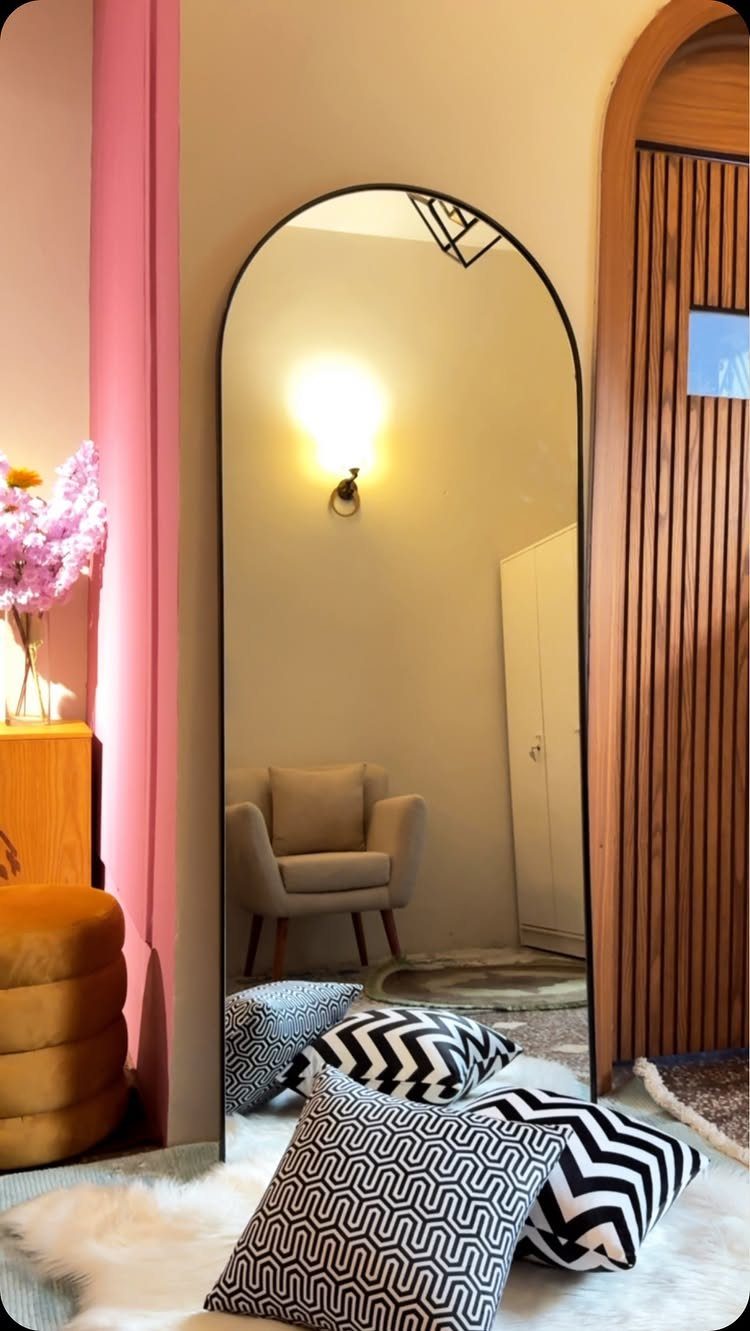
Rooms full of straight lines, like boxy dressers, square windows and rectangular rugs, benefit from one arch.
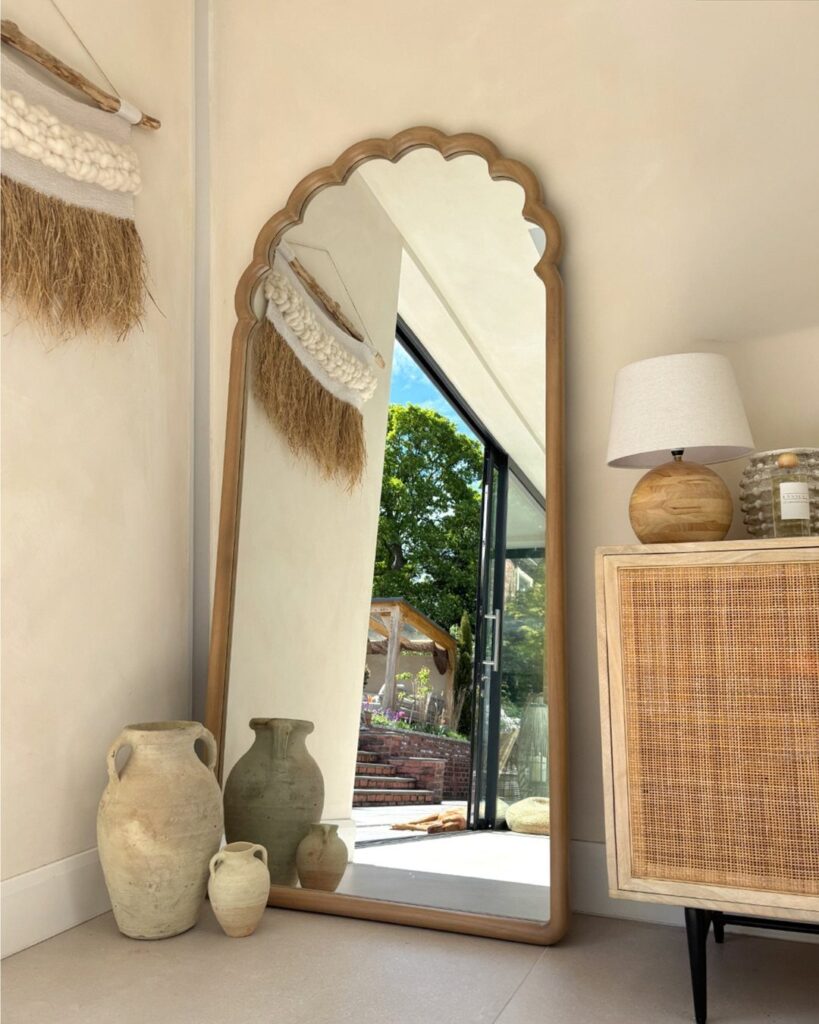
A full-length mirror with an arched top brings one soft curve into a boxy room, and its footprint is the same as any plain rectangle leaning in that corner.
Lean it near a chair or a stack of pillows, where the curve can echo something round or textured. Pick a slim frame on a small-room mirror; a thick one eats visual space you don’t have.
3. Round Wall Mirror
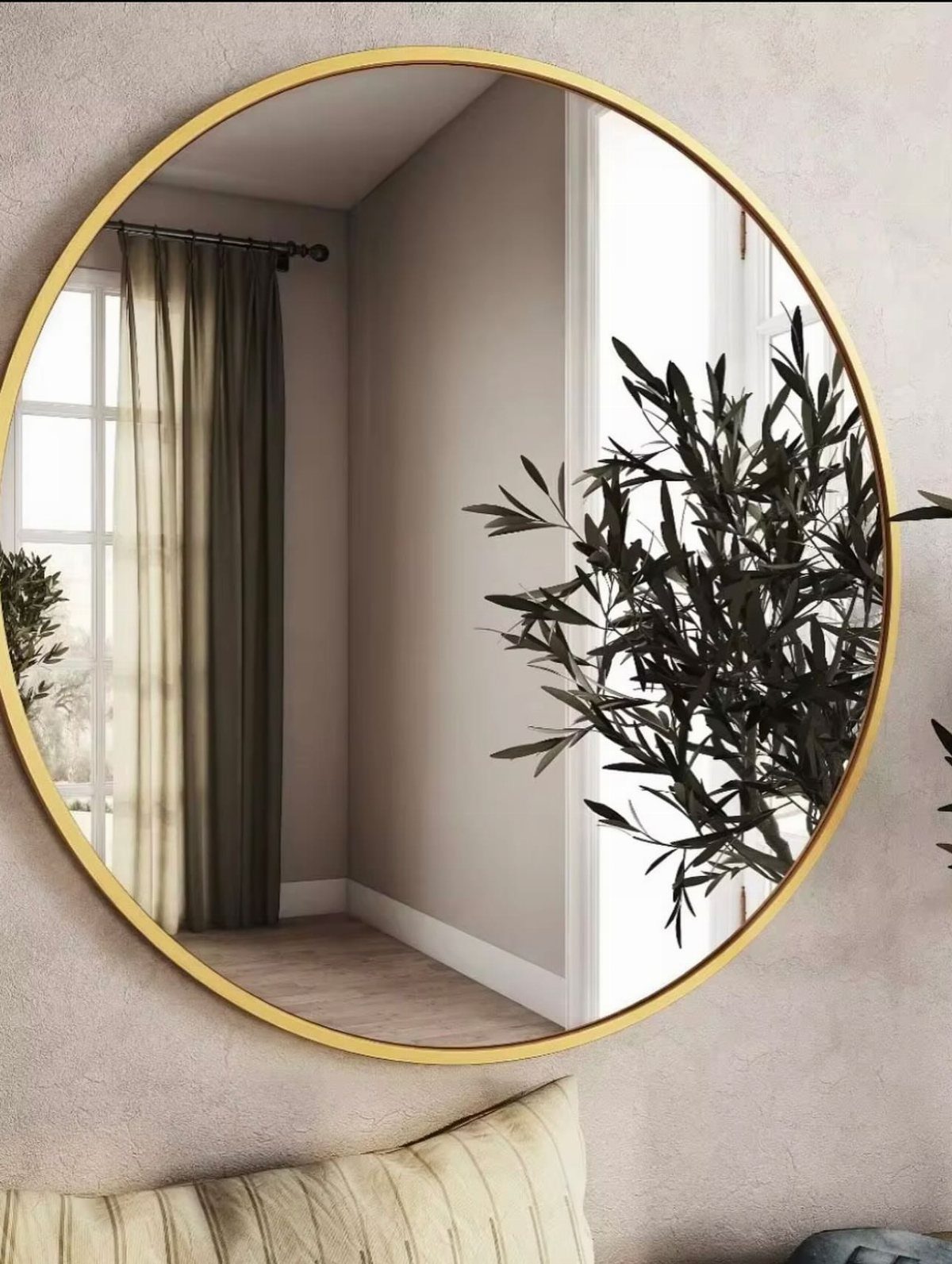
Hang a round mirror with a thin gold frame across from a window and it works like a second, smaller window. Boxy rooms tend to read hard-edged, and one circle on a plain white wall relaxes that fast.
Hang it with its center near eye level so it reflects faces and light rather than the ceiling. Green plants or curtains in the reflection make the room feel deeper, so aim it at your best corner.
4. Leaned Floor Mirror
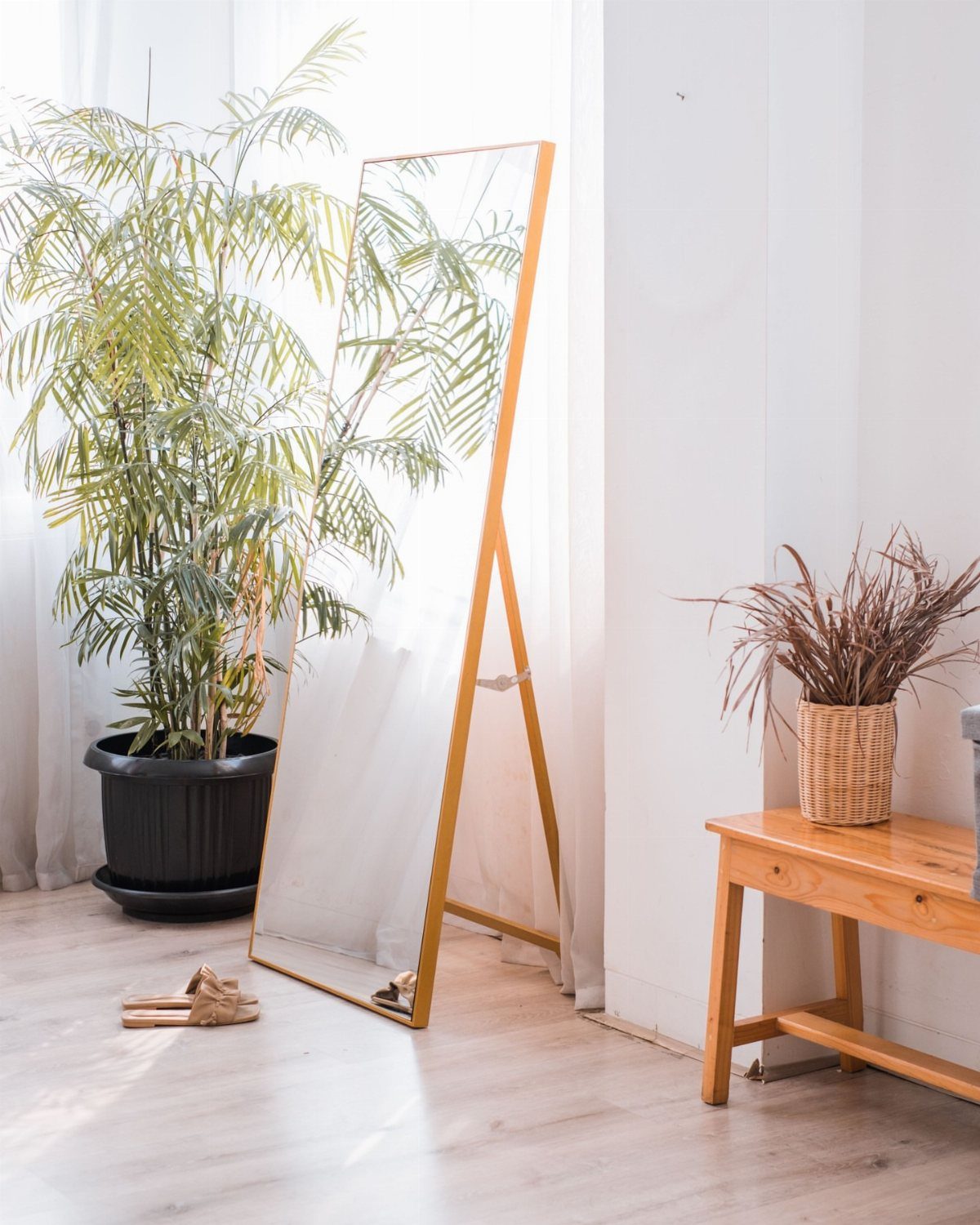
Renters get the most out of a mirror that needs no drill.
A full-length gold-framed mirror leaned against the wall costs you no holes, no anchors and no deposit worries, and when you rearrange the room it simply slides to a new spot.
Try it in two or three places before you settle. Beside a bench and a plant is a good start, since the mirror doubles both and keeps the corner from feeling bare.
5. Decorative Accent Mirror
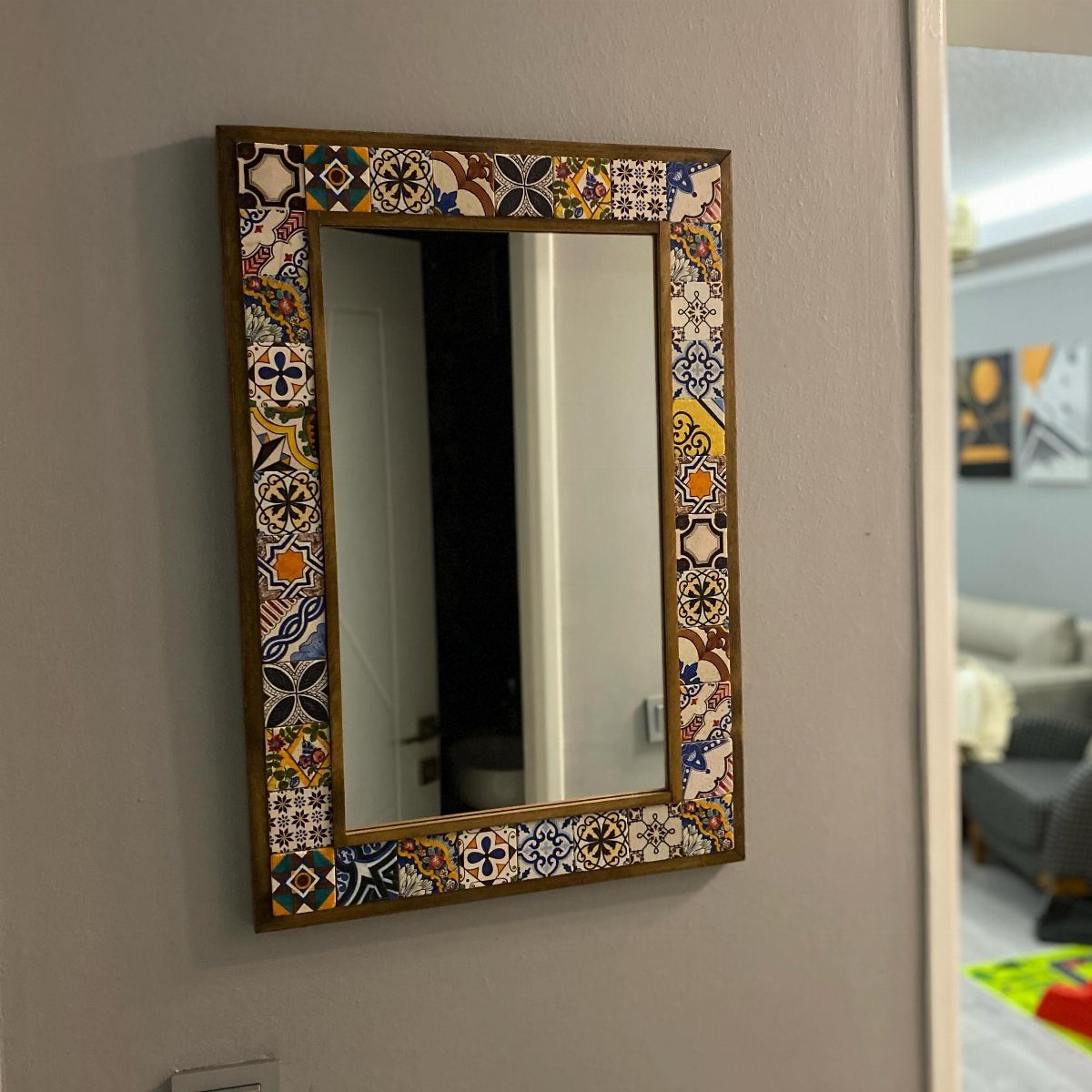
Not every mirror has to disappear into the wall.
One with a colorful mosaic tile frame earns its spot as art, and in a small room that matters: a single piece of wall gives you a reflective surface and something for the eye to land on.
Against a grey wall, a patterned frame pops without needing anything else around it. Keep the rest of the wall bare so the frame carries the color, and hang it where it catches light rather than a shadow.
6. Over-the-Door Mirror
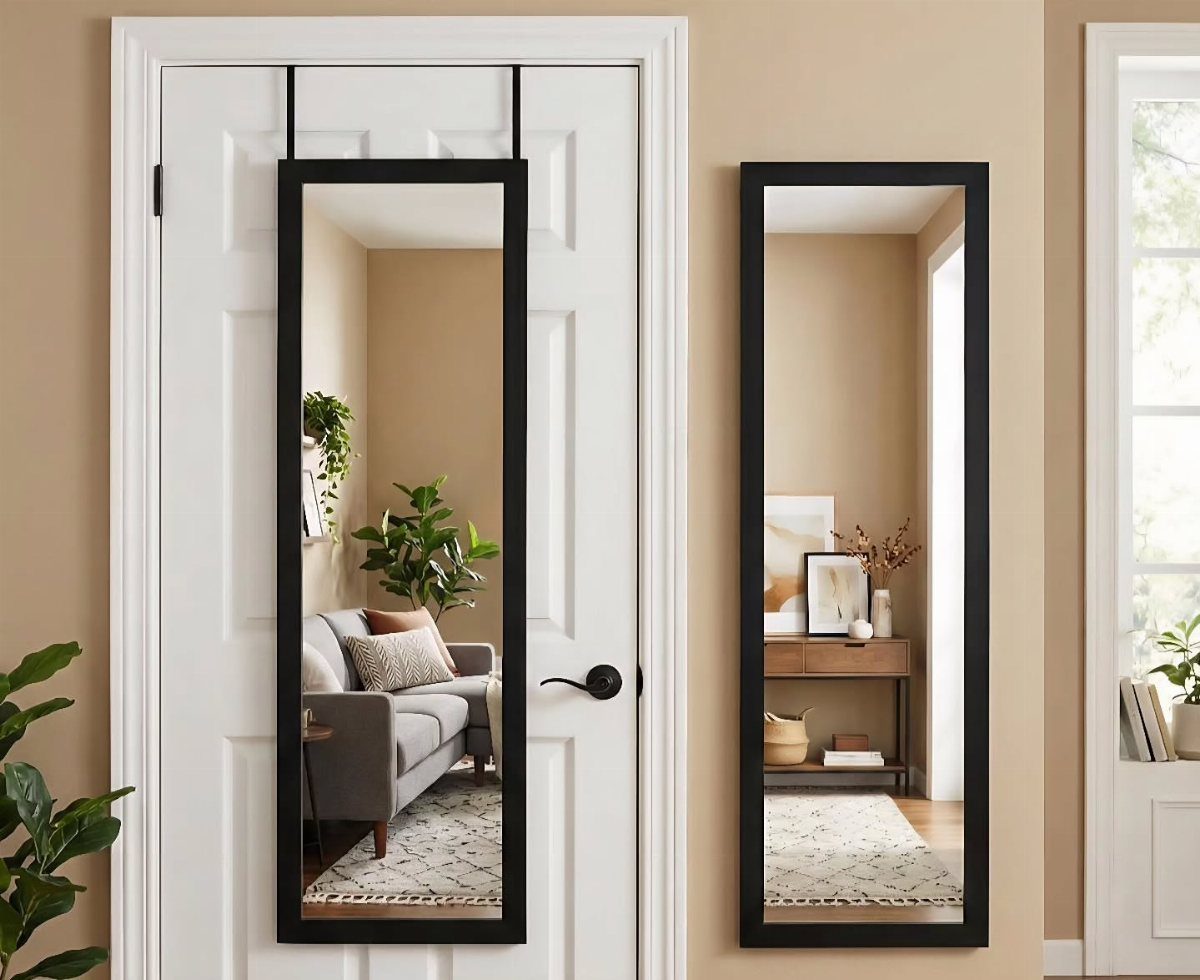
A closed door is unused real estate.
Black-framed mirrors made to hang over a door give you a full reflecting surface with zero wall space and zero floor space, which is hard to beat in an apartment where both are gone.
Check that the door’s thickness fits the hooks before you buy, and add felt pads so the frame doesn’t bang the paint. A second black-framed mirror on the neighboring wall makes the pair feel planned, not squeezed in.
7. Jewelry Armoire Mirror
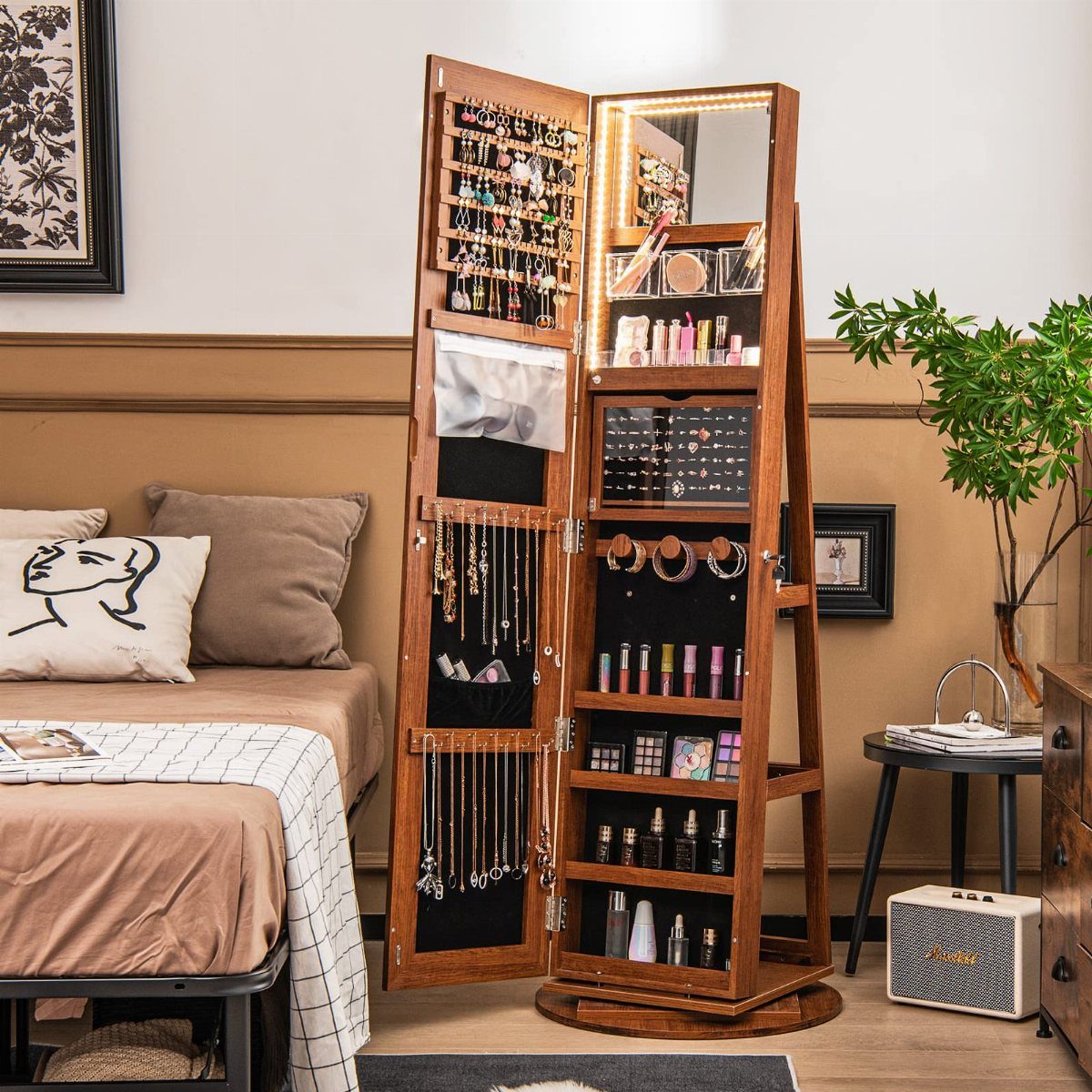
A mirror that is also a cabinet earns its floor space twice. The door gives you a reflecting surface, and behind it a shallow case holds necklaces, rings and earrings, so nothing sits out on the dresser.
Wood suits a bedroom because it warms a room without adding clutter. Built-in LED lights are worth choosing, since they let you see what you’re putting on even when the window is dim.
Keep the armoire beside the bed or a side table, where getting dressed already happens.
8. Entryway Mirror
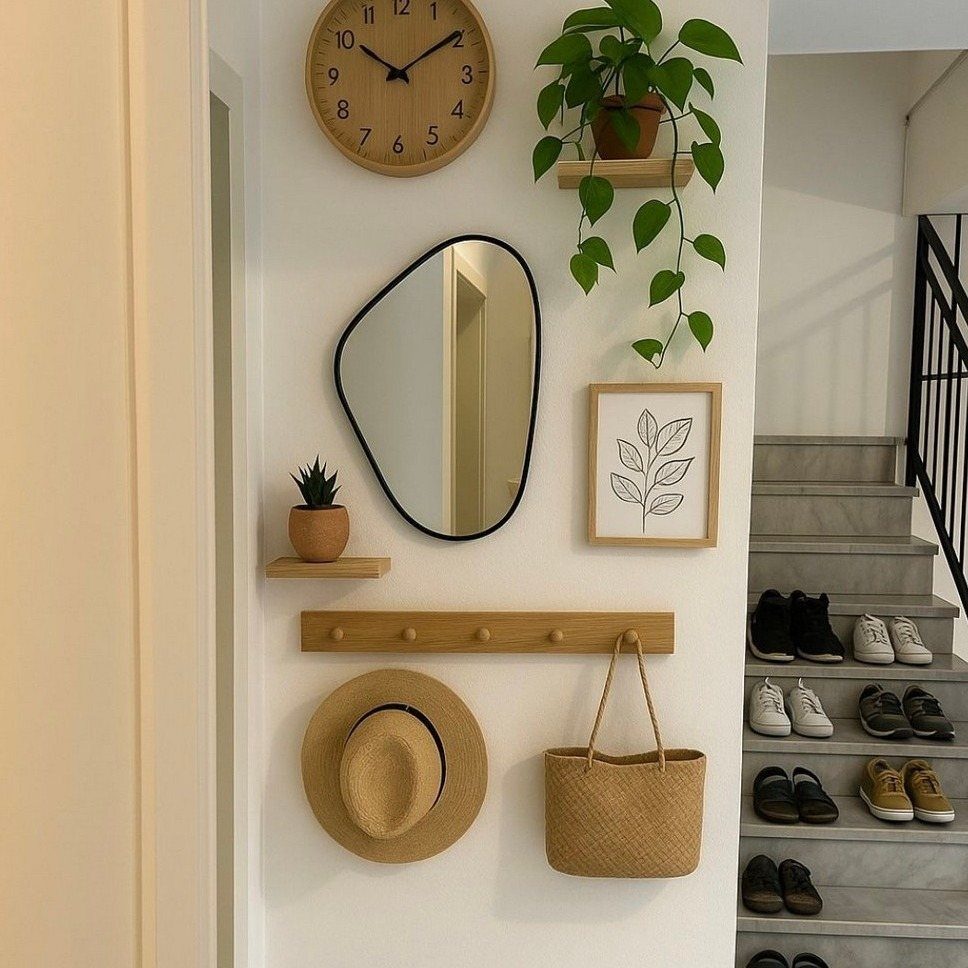
Hang a mirror where you walk in, and the entry stops being a pile of shoes and starts reading as a place.
Hanging a mirror by the door lets you check your hair, collar and keys in one glance before you leave. Place it beside the coat rack, not behind it, so hanging a bag never covers the glass.
I’d pick one bold frame and let everything else stay small.
9. Round Mirror Above a Small Shelf
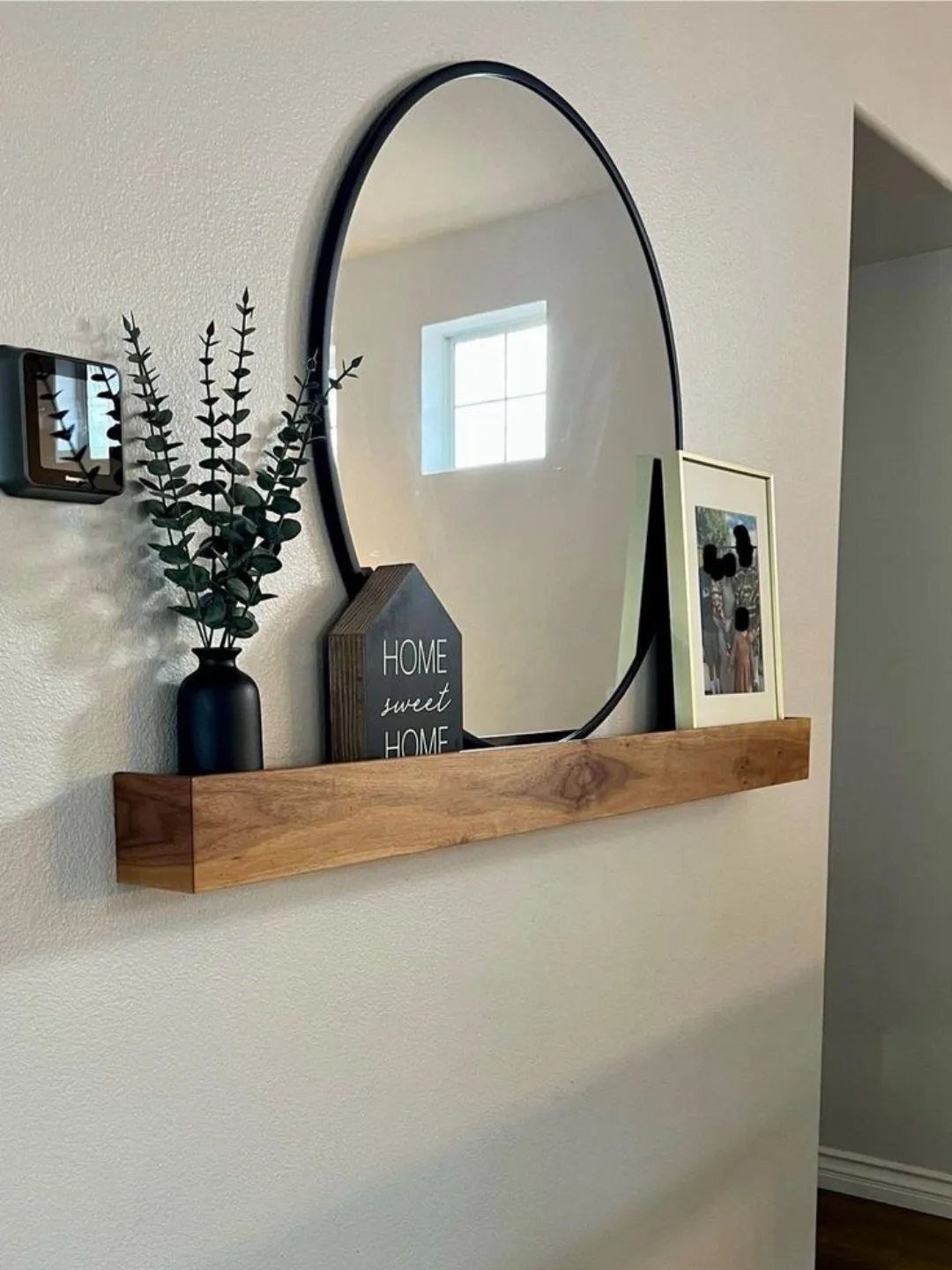
Pair a round mirror with a floating shelf and a small wall becomes a tidy vignette. Black framing against a white wall gives the circle a crisp outline, and the wooden shelf underneath adds warmth.
Hang the mirror a hand’s width above the shelf so the two read as one unit. Keep the shelf to three items, like a plant, a framed photo and one small sign, so the reflection doesn’t double a crowd.
It adds a strong pull to the wall without using any floor space.
10. Backlit Mirror with Slatted Shelves
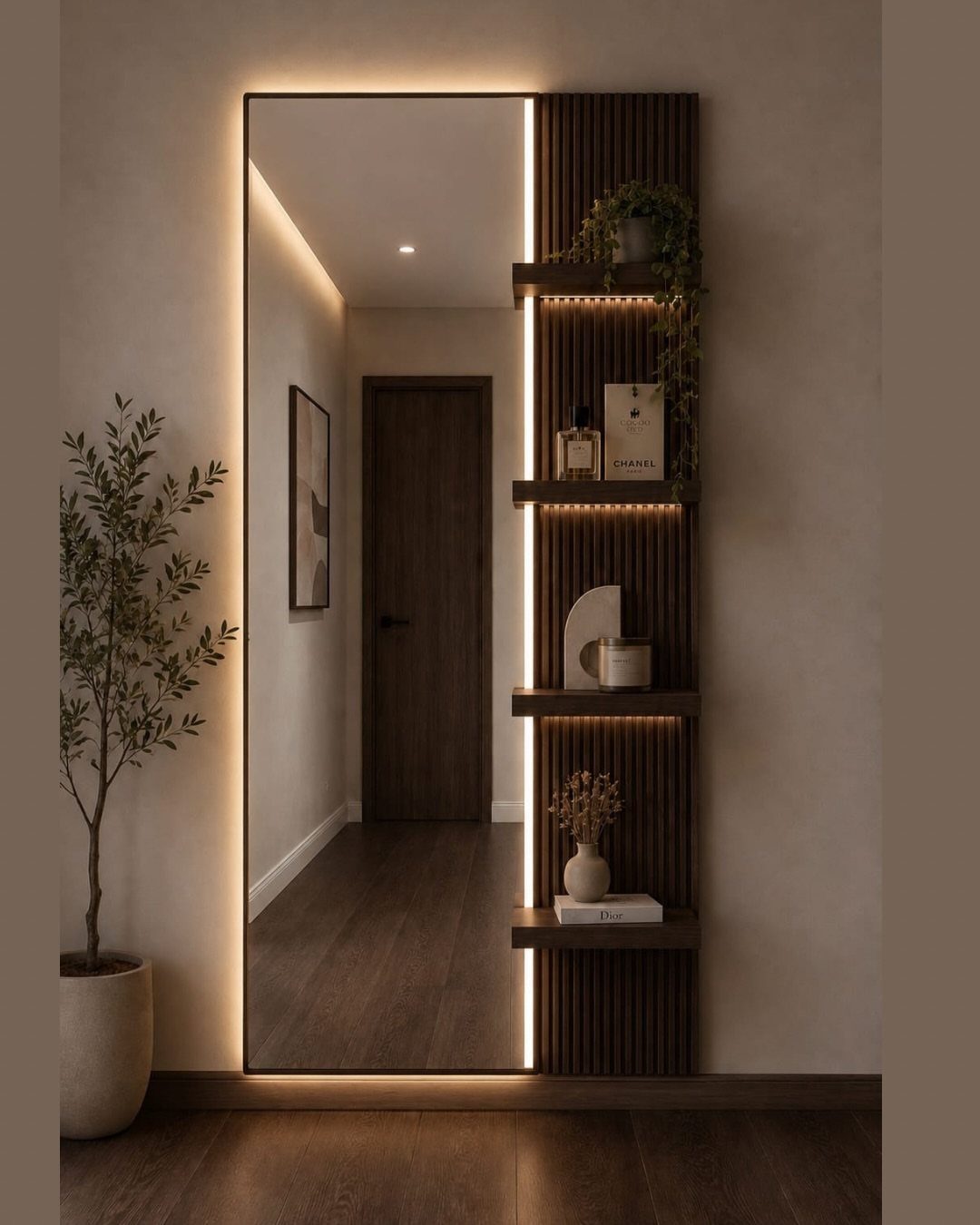
A tall backlit mirror gives a hallway its own glow, and I like it best beside something dark.
Next to a slatted wood panel, the light edge stands out and the mirror reads as part of a built piece rather than a leftover.
The small shelves in the panel hold a plant, a vase, and other favorite objects right at eye level. Leave some shelf space empty so the wall breathes.
In a narrow hall, the vertical lines make the ceiling feel higher.
Frequently Asked Questions
What are the different types of mirrors for bedrooms?
The main types are full-length floor mirrors (leaned or with an LED border), arched full-length mirrors, round wall mirrors and jewelry armoire mirrors, which hide a shallow storage case behind the glass.
For a full-length mirror in a small bedroom, aim for 59–65 inches tall and 18–22 inches wide. That size lets you see head to toe from about 3 feet away without crouching or tilting your head.
Does a mirror actually make a room look bigger, or is that just a myth?
It’s real. The effect is real: glass throws daylight deeper into the room, and it’s strongest when the mirror faces a window or hangs right beside one.
A round mirror placed opposite a window gives the room what looks like a second, smaller window, with the same soft light.
A mirror that’s too small does almost nothing, so its size and where it hangs count for more than the frame or style.
Where to place a mirror in a small bedroom?
Hang it on the wall that meets the window wall, close to the glass, and it catches daylight sideways and sends it across to the dim side of the room.
Getting dressed already happens by the closet or the door, so a mirror there gets used every day. Avoid a full-length mirror that faces your pillow, since unexpected movement in the glass can startle you and interrupt sleep.
Can I hang a mirror without drilling into the wall?
Yes. You can lean a full-length mirror against the wall, hang one over the door on hooks, or pick a style with adhesive mounting.
Leaning suits renters best because it leaves no holes and the mirror slides to a new spot when you rearrange.
Floor mirrors slide on smooth surfaces like hardwood and laminate; small silicone grip pads under the 2 bottom corners stop the foot from drifting outward.
What’s the safest way to mount a heavy floor mirror?
If kids or pets share the home, buy a floor mirror that includes an anti-tip strap, even when you plan to just lean it. That way a bumped laundry basket or a curious pet can’t tip it forward.
How to spot wavy glass before your return window closes?
Stand 3 feet from the mirror, then take two steps left and two steps right while watching a straight line reflected behind you, like a door frame or window edge.
If the line bends or wobbles, the glass is uneven and will distort your reflection every day, so exchange it. Do this before you toss the packaging.