Which light suits your room depends on one fact: whether you can change the ceiling wiring.
Floor lamps and corner lamps just plug into an outlet, which makes them the easy pick for renters; a chandelier usually means replacing the ceiling box, and that is electrician territory unless you have done it before.
The options stretch from a Galaxy Projector Ceiling that scatters stars across a bedroom to a full chandelier, so what your wiring allows cuts the list down before taste gets a vote.
1. Floor Lamps
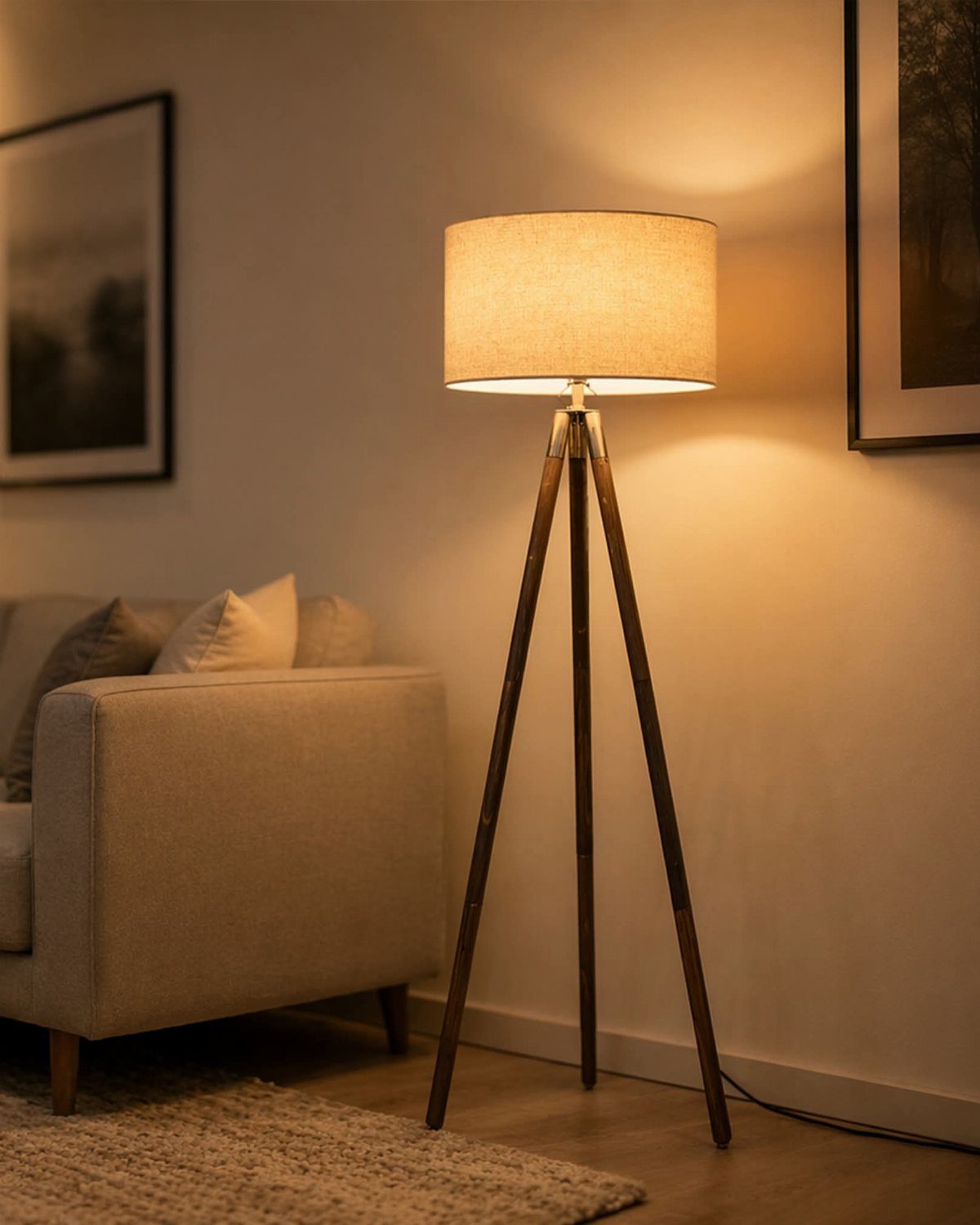
A tripod floor lamp earns its spot in a corner beside the sofa, where the ceiling light leaves a dull pocket.
With a beige shade, the light comes out soft and warm instead of sharp, which suits a seating area you sit in for hours.
I like putting one next to the arm of the sofa so the glow reaches a book or a lap, with the framed art nearby catching a little of it.
A floor lamp needs no wiring and no ladder, so it works for renters.
2. Chandeliers
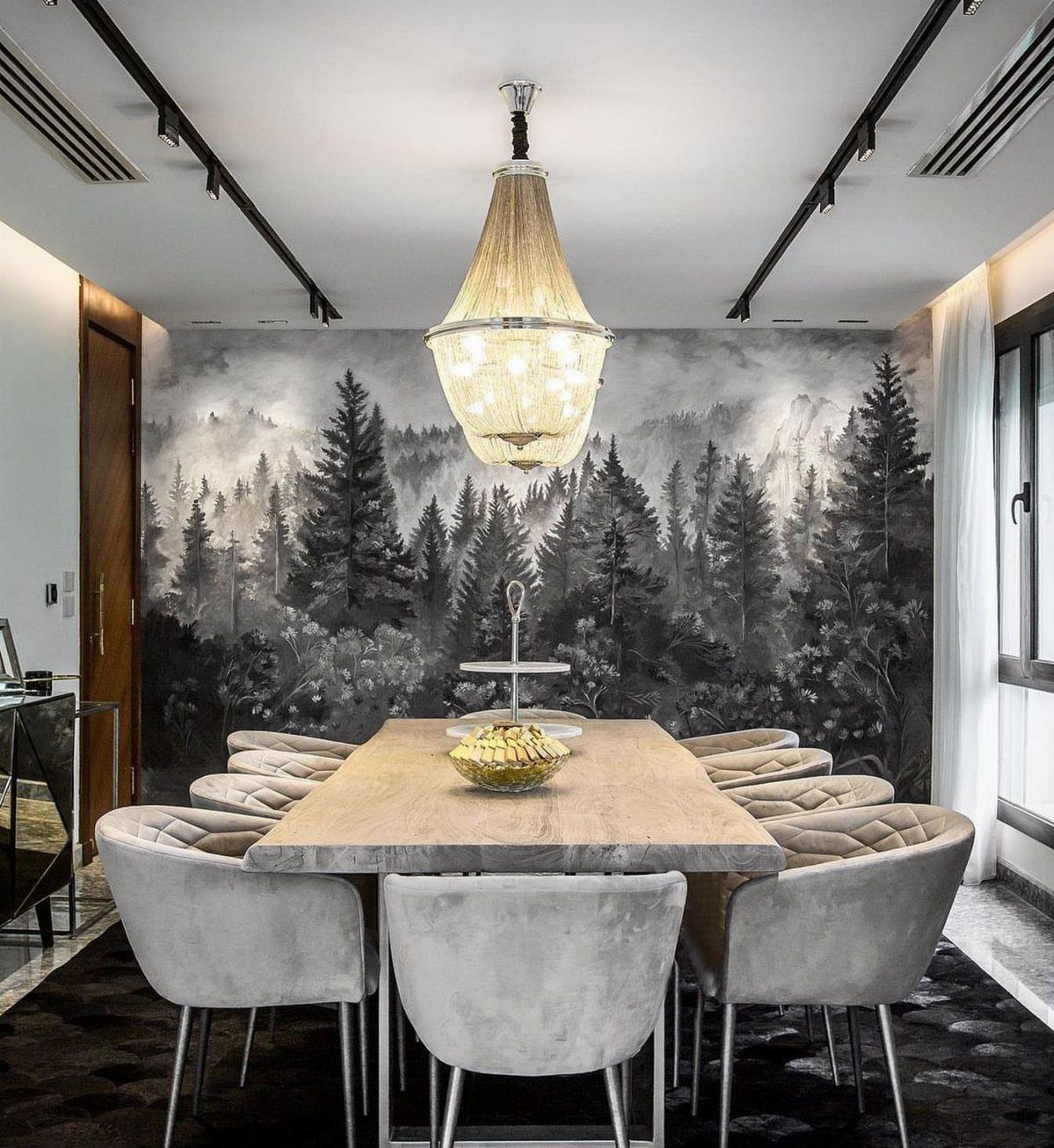
Hang a chandelier over a dining table and it becomes the first thing anyone sees, so choose one with real character.
A crystal fixture sets a formal tone, and it holds its own against a busy mural wall when the rest of the room stays quiet, with a wooden table and gray chairs.
My advice is to commit to the style instead of half-matching it.
Keep the furniture around an ornate piece simple, and the fixture gets to be the star. Installation usually means swapping the ceiling box, so expect to hire an electrician if you have never done it.
3. Pendants
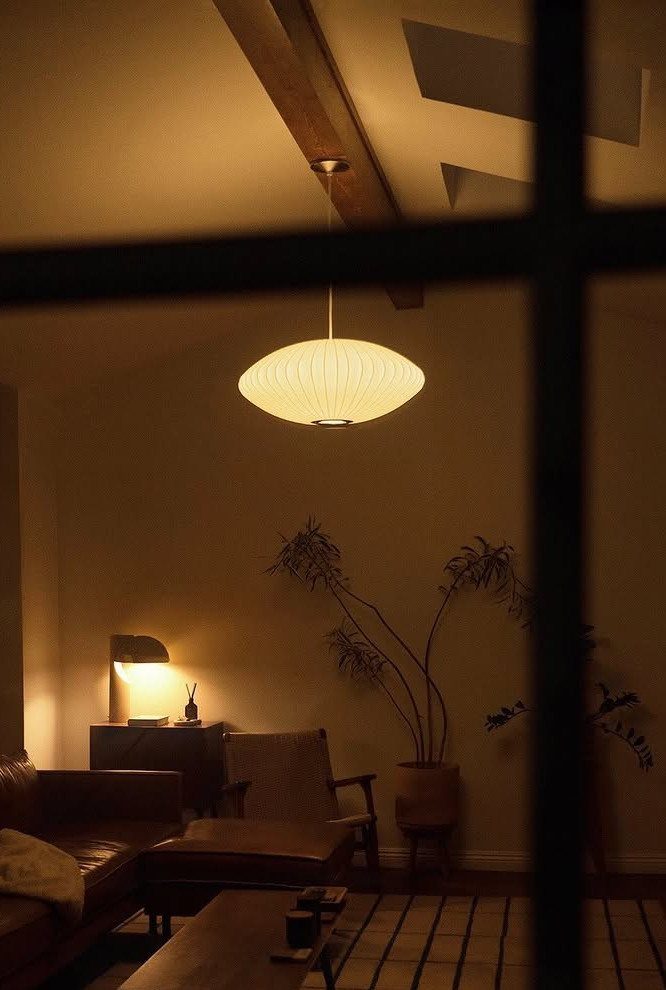
A single pendant gives you a pool of light exactly where you want it, which is why I reach for one in a living room that needs mood more than brightness.
The ribbed white shade glows softly and sits well against a wooden beam.
Pair a pendant with a table lamp, as in this room, and you get 2 light levels without any extra effort.
Layering a pendant with other light sources makes a dark, leather-heavy room feel cozy instead of heavy. Hang it low enough to be seen, but keep it clear of anyone’s head.
4. Linear Suspensions
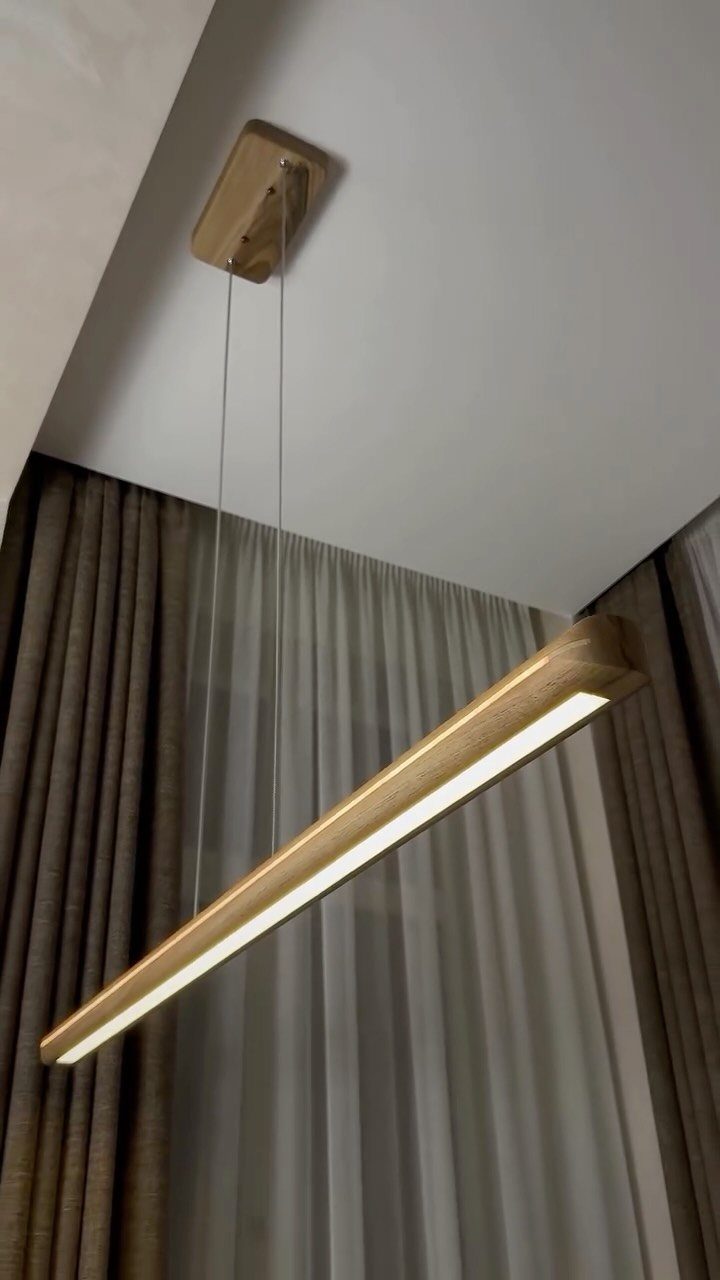
Long and narrow, a linear suspension spreads light along its length instead of dropping it in one spot. Hung on thin cables, a wooden one like this reads as warm and light, and it keeps the ceiling looking clean.
I would choose this over a single pendant for a long table, a kitchen island, or any stretch of wall where one bulb leaves gaps.
Center it on the furniture below, not on the room, because the eye checks that alignment first.
5. Ceiling Fan Lights

Ceiling fans with built-in lights are the practical pick when one fixture has to handle both air and illumination. The round integrated light on this white model stays low-profile, which keeps a fan from looking bulky.
Because the light comes built into the fan, you have one fixture to wire and one place to put it.
That makes it a sensible swap for an old, plain fan in a bedroom or living room. Matching the finish to the ceiling, white on white, helps it fade into the background.
6. Track Lighting
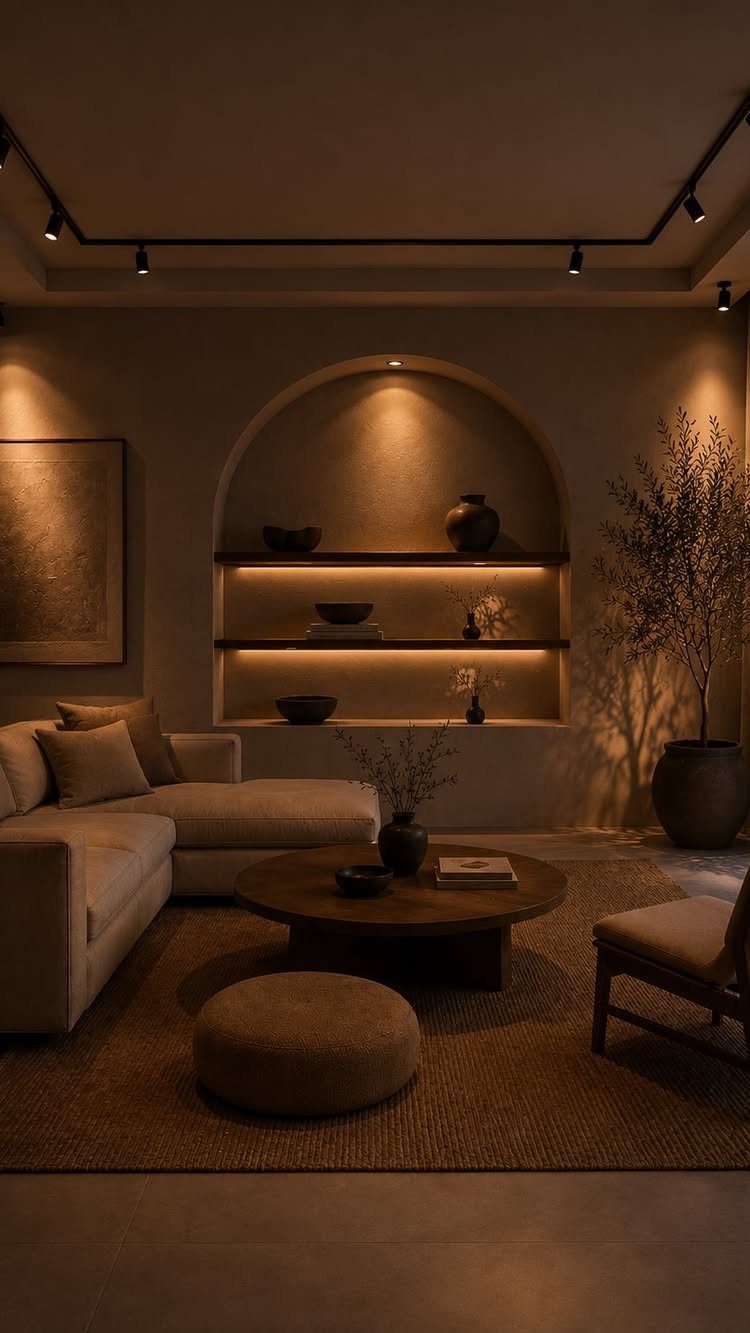
Track lighting lets you aim light instead of just hanging it. Black heads on a ceiling track can point at a wall, a plant, or a seating area, and you can move them whenever the furniture changes.
I find this the most forgiving option for a living room with no single obvious center.
Pointing the heads at walls or objects instead of straight down gives that warm, dim look, and a dimmer is worth adding if the setup allows it.
7. Swingarm Lights
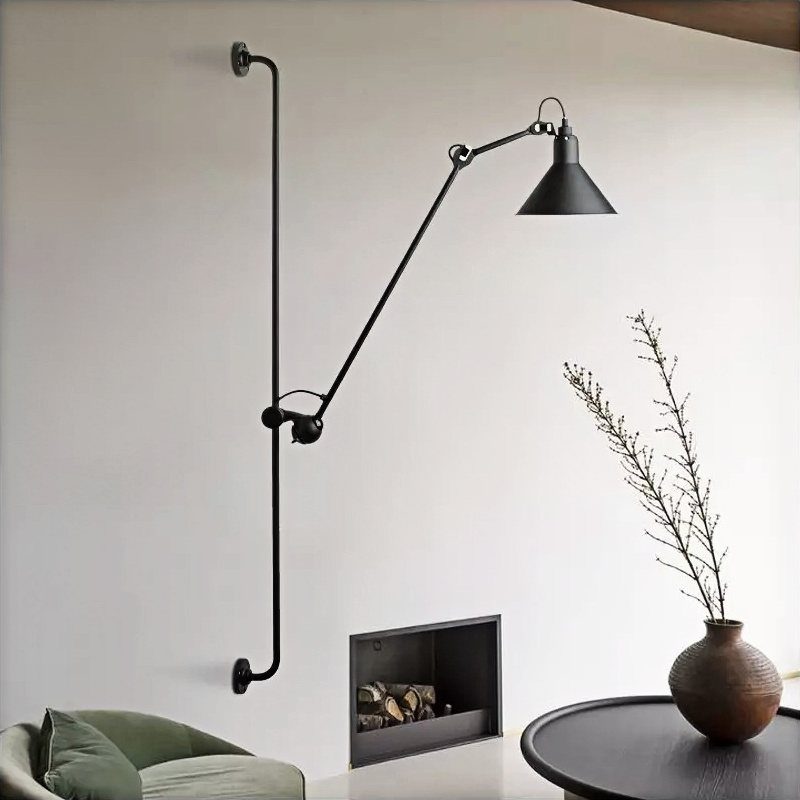
Mounted above a side table, a black swingarm lamp puts light on the spot you need it and leaves the rest of the wall quiet.
The arm pivots, so a book, a fireplace mantel, or a vase of branches can each get the beam in turn.
For a room with no spare surface for a table lamp, I would pick this over almost anything.
Black against white walls reads crisp, and the arm’s thin line keeps the wall from looking busy. Aim it a little down and to the side so the bulb stays out of your eyes.
8. String Lights
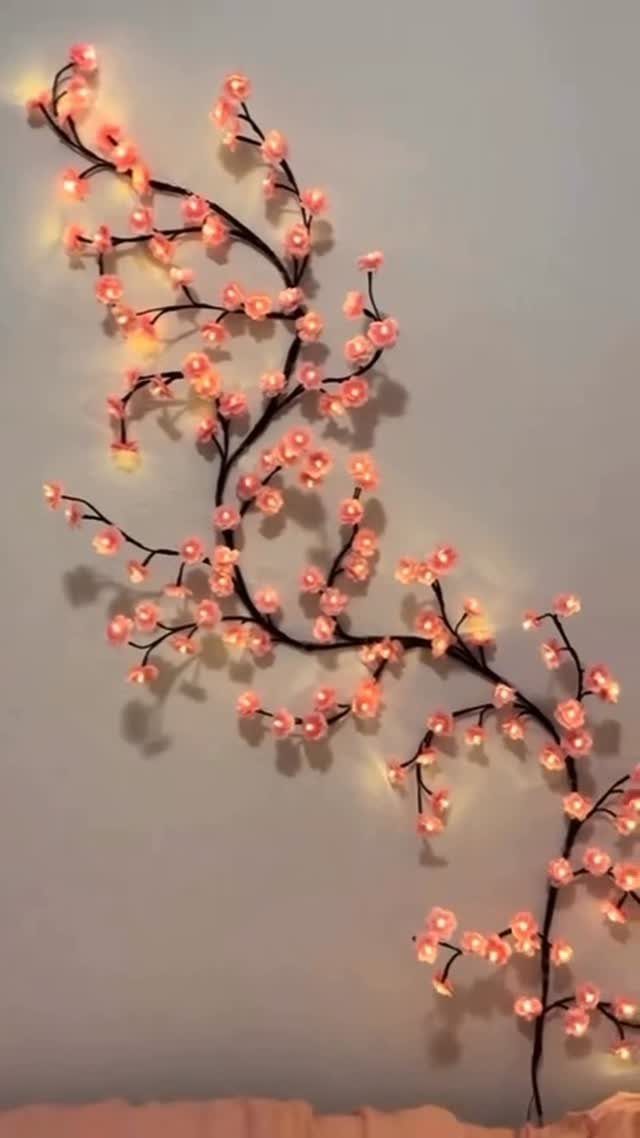
Cherry blossom string lights turn a plain wall into something soft and a little playful. Pink blooms glowing against grey look gentle, and the wall needs no paint, art, or shelf to back them up.
A string like this suits a bedroom, a reading corner, or a patio, since decorative strings work indoors and outdoors.
I would keep everything else near it simple and let the flowers be the only pattern in view. A loose, swooping curve looks more natural than a straight run, so let the strand sag a few inches between hooks.
9. LED Lights
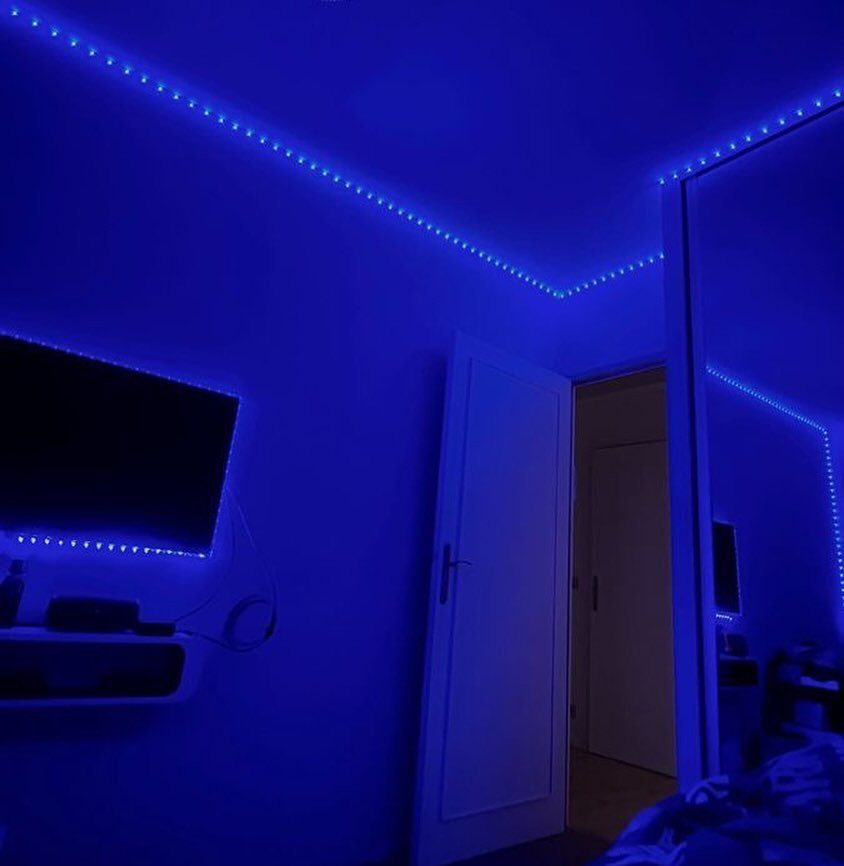
Blue LED strip lights run along the ceiling edge and behind a TV, and the glow makes a bedroom feel like a small cinema.
Behind the screen, the light softens the contrast between a bright picture and a dark wall, which is easier on the eyes at night.
LEDs last a long time and use little energy, so leaving them on for an evening costs next to nothing.
A mirror, like the one in this room, bounces the color around and makes the effect feel bigger. Pick one color and stick with it; a single hue looks deliberate.
10. Galaxy Projector Ceiling
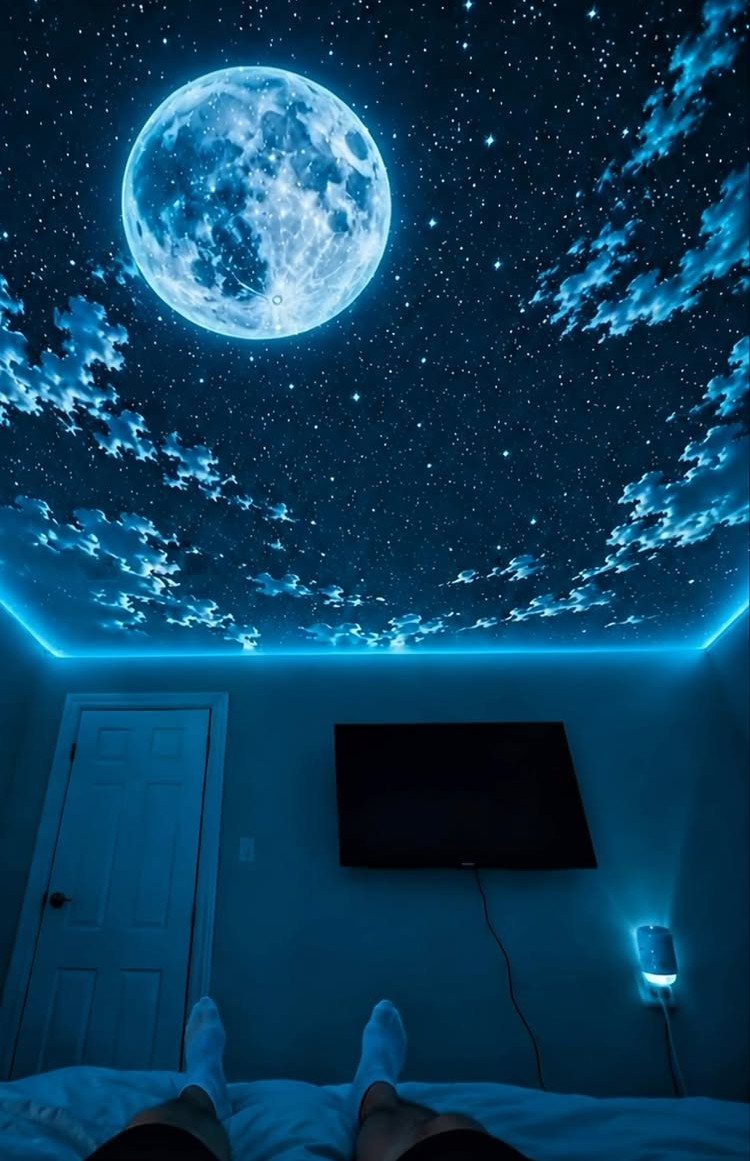
A galaxy projector fills a bedroom ceiling with a moon, stars, and clouds, so the room feels like a night sky once the main lights go off. The blue wash here is calm and works well for winding down.
Set the projector on a nightstand or dresser where it can throw light across the ceiling without anything blocking it.
A bed that faces a wall-mounted TV, as in this room, leaves the ceiling empty, which is exactly what the effect needs.
I would keep it to evenings and turn the other lamps off first, because the sky only shows in a dark room.
11. Colorful Corner Lamp
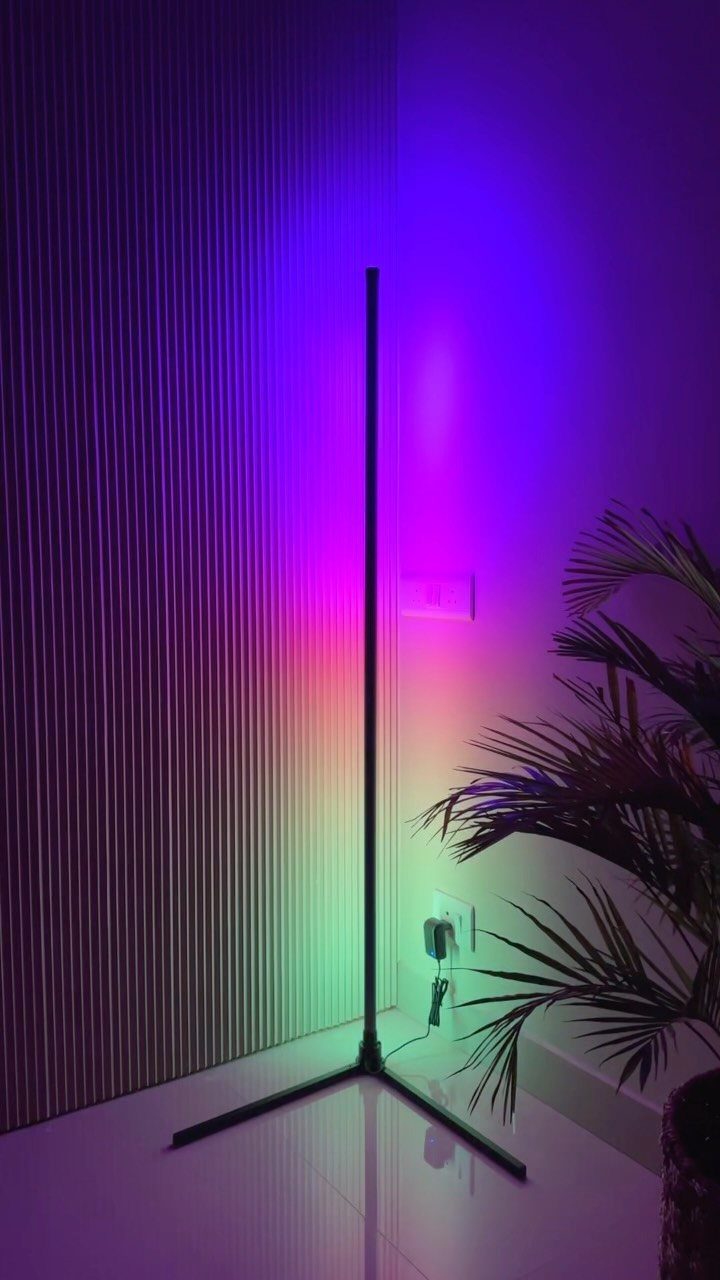
Washing a ribbed wall with purple, pink, and green light is the whole job of a slim corner lamp, and the texture does most of the work.
The ridges catch the color and throw soft shadows, which a flat wall would not.
Because the lamp stands in a corner, it takes almost no floor space and needs no wiring, which suits renters.
A potted plant nearby adds a natural shape against all that color. I would use it as a mood light, not a reading light, and keep the rest of the room’s decor calm so the colors stand out.
12. Butterfly Accent Lights
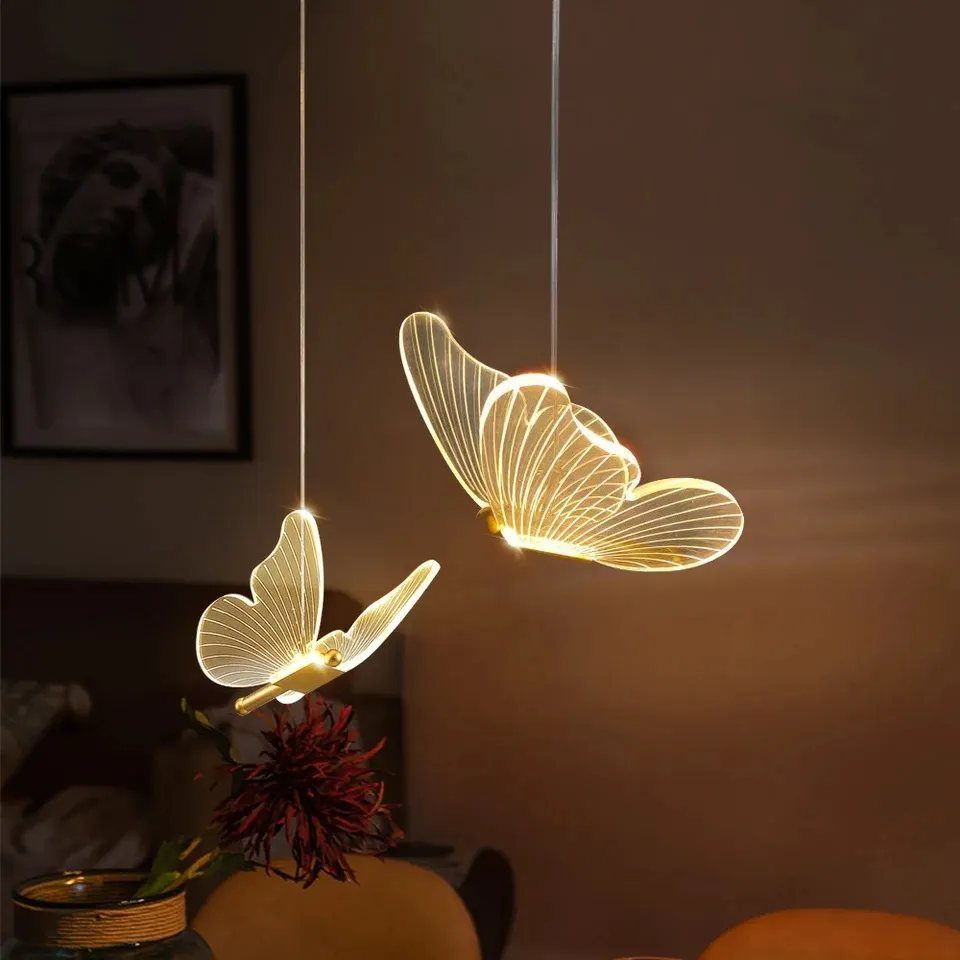
2 glowing butterflies hanging from thin wires give a dim room a delicate, almost floating kind of light.
They work as accent pieces, not as lighting you read by, so I would pair them with a lamp for any real task.
Hang them at slightly different heights and let them sit near a framed picture or a flower, where the eye already goes.
Thin wire keeps the focus on the glow instead of the hardware. Butterflies like these look best in a low-lit room, because bright overhead light washes out the effect.
Frequently Asked Questions
Which light is better for a room?
Kitchens, home offices, and bathroom vanities want bright, direct light aimed at the work, while a living room or bedroom feels better with a soft, even glow.
For a living room with no obvious center, I pick track lighting, because the heads can be aimed at walls, plants, or a seating area and moved when the furniture changes.
A floor lamp with a beige shade is my choice for a dull corner beside the sofa, since it gives a warm glow and needs no wiring.
What are the types of lighting?
Common fixture types are flush mounts, chandeliers, pendants, wall-mounted fixtures, and lamps.
Ambient, task, and accent lighting each have a job, and which ones you lean on varies with the room’s layout, the ceiling height, and how bright you want the space.
For decorating, I would also look at floor lamps, track lighting, linear suspensions over long tables, LED strips, and string lights, which work indoors and outdoors.