

I’ve seen carpet mold turn a faint musty whiff into an ER-worthy emergency in under 48 hours, especially if you have asthma or a weakened immune system. Mold spores are particularly dangerous. The real danger hides in soaked padding where mold grows out of sight, pumping allergens and mycotoxins into your air. I stop it by attacking water within two hours: extract aggressively, run dehumidifiers nonstop, and if that pad’s wet, I rip it out. No bleach shortcuts, no wishful thinking. Small spot. HEPA vacuum and dry fast. Bigger than a bath mat or that earthy stink won’t quit. Call professionals, because you shouldn’t risk your lungs. Your carpet is basically a sponge with delusions of grandeur, so treat it accordingly. The full battle plan follows.
Emergency Carpet Mold Response: Your First 48 Hours
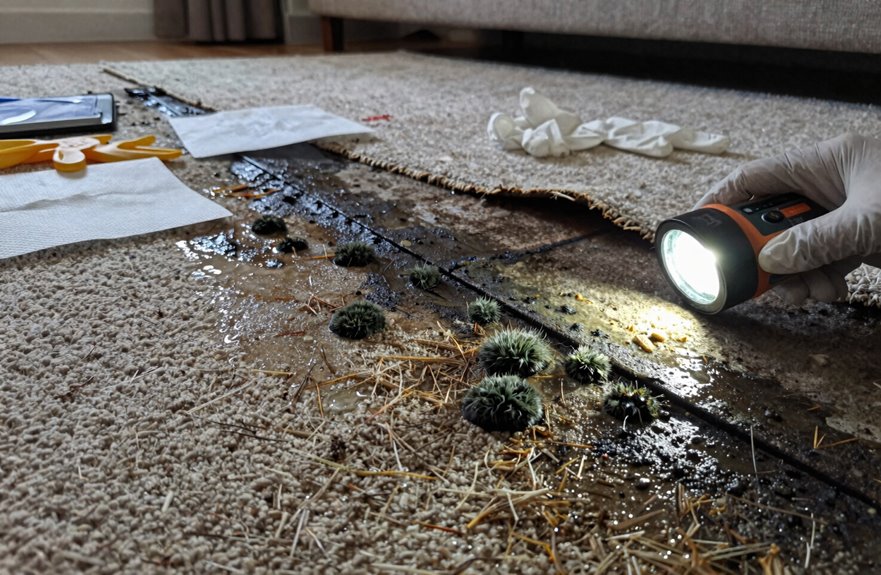
The first 48 hours after water hits your carpet is critical. Mold growth starts immediately, potentially turning your space into a contaminated environment.
When water damage strikes, take these steps. First, deploy dehumidifiers to extract moisture from the air. Then use a HEPA vacuum to capture spores before they spread. Hidden mold often develops under padding where it’s not visible; a musty smell indicates its presence.
Attempting to save heavily soaked carpet frequently fails. Removal and replacement is often the only reliable option for maintaining air quality and preventing health risks.
Is It Carpet Mold? 5 Ways to Confirm Before You Act
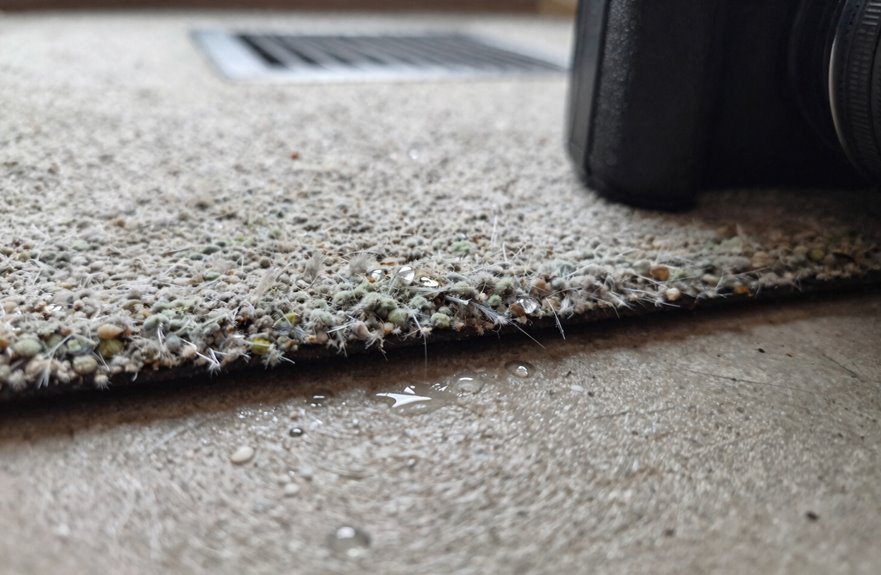
Why examine a suspicious spot with uncertainty? I can walk you through exactly what to check first. Carpet mold hides where we least expect it, and I’ve identified my share of problem areas.
| What I Look For | What It Tells Me |
|---|---|
| Musty, earthy smell | Mold spores are present in the padding, even if not visible yet |
| Recent water damage or failed drying wet carpet | Moisture has been trapped, and mold growth follows fast |
| Humidity readings above 60% | A cheap hygrometer indicates mold detection is needed |
| Discolored, stiff carpet fibers | Carpet replacement might be the only viable option |
| Health effects like sneezing near the spot | Your body is literally warning you about hidden carpet mold |
Always stop the moisture source first, isolate the area, then use a HEPA vacuum. Do not use bleach. If the carpet is soaked through, remove it without hesitation.
Carpet Mold Removal: DIY or Professional Help?

So the key question is whether to tackle that fuzzy patch yourself or call the professionals.
Carpet mold removal requires more than scrubbing visible growth. Hidden mold develops beneath the surface. For small spots, a HEPA vacuum, dehumidifier for moisture control, and quick drying are effective first steps. When carpet padding becomes saturated, replacement is necessary.
If the affected area exceeds a bath mat in size or you detect a musty odor, professional help is warranted. Mold remediation experts identify damage that remains invisible to the untrained eye. They have the equipment and expertise to remove mold completely and prevent regrowth. Professional remediation reduces health risks associated with mold spore exposure.
How to Dry Wet Carpet and Prevent Hidden Mold

Because I’ve watched a soggy living room carpet turn into a science experiment gone wrong, speed is critical when water hits your floor. Mold growth starts fast when moisture meets oxygen in your wet carpet’s padding, and that hidden mold is difficult to detect and can spread rapidly.
Here’s how to address water damage:
- Extract like your life depends on it – Use water-extraction vacuums to remove water damage, continuing until the carpet is as dry as possible.
- Dehumidify the room – Run a dehumidifier 24/7, because drying carpet without removing airborne moisture is ineffective.
- Lift and separate – Pull back the padding, check underneath, and if mold is spreading, remove the carpet immediately.
For mold prevention, isolate small spots right away. Large affected areas require full replacement. Taking action promptly protects your home from costly mold damage.
How to Prevent Carpet Mold: 5 Permanent Fixes

Where do I even start with mold prevention after the chaos of drying out a flooded carpet? Mold growth thrives on moisture and oxygen, especially hiding in carpet backing where we can’t see it. Here’s my five-step battle plan for permanent mold prevention.
First, master moisture control. Fix every leak immediately. Second, respect drying time: 24–48 hours maximum or you’re inviting trouble. Third, grab a dehumidifier and run it continuously. Fourth, HEPA vacuum weekly. Those models trap spores that regular vacuums spew back out. Fifth, if you spot water damage or smell that musty funk, commit to carpet removal and padding replacement. Bleach won’t save soaked carpet.
Together, we’ll keep dampness out and breathe easy.