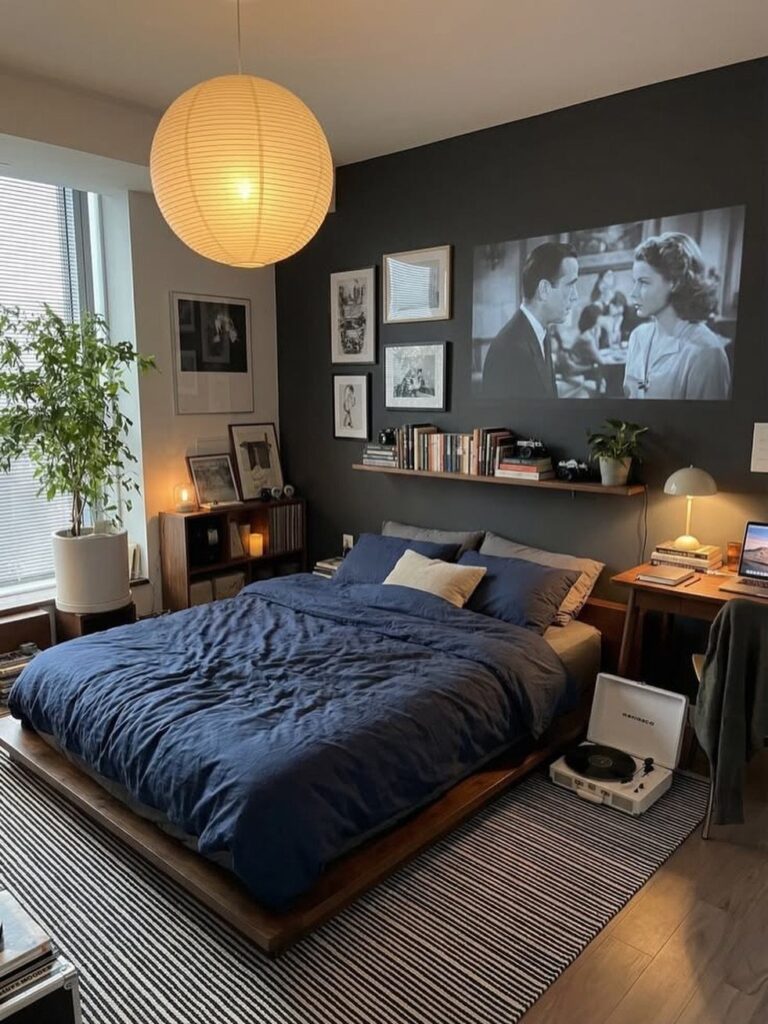
The ideas here run from a warm bulb at 2700K or lower to accent wallpaper, and what separates them is whether you’re allowed to change the room.
Renters can still get the look with adhesive light clips and flameless candles, no wallpaper required. Anyone free to drill into the walls can add floating nightstands and floating shelves, plus accent wallpaper behind the bed.
1. Layered Textiles
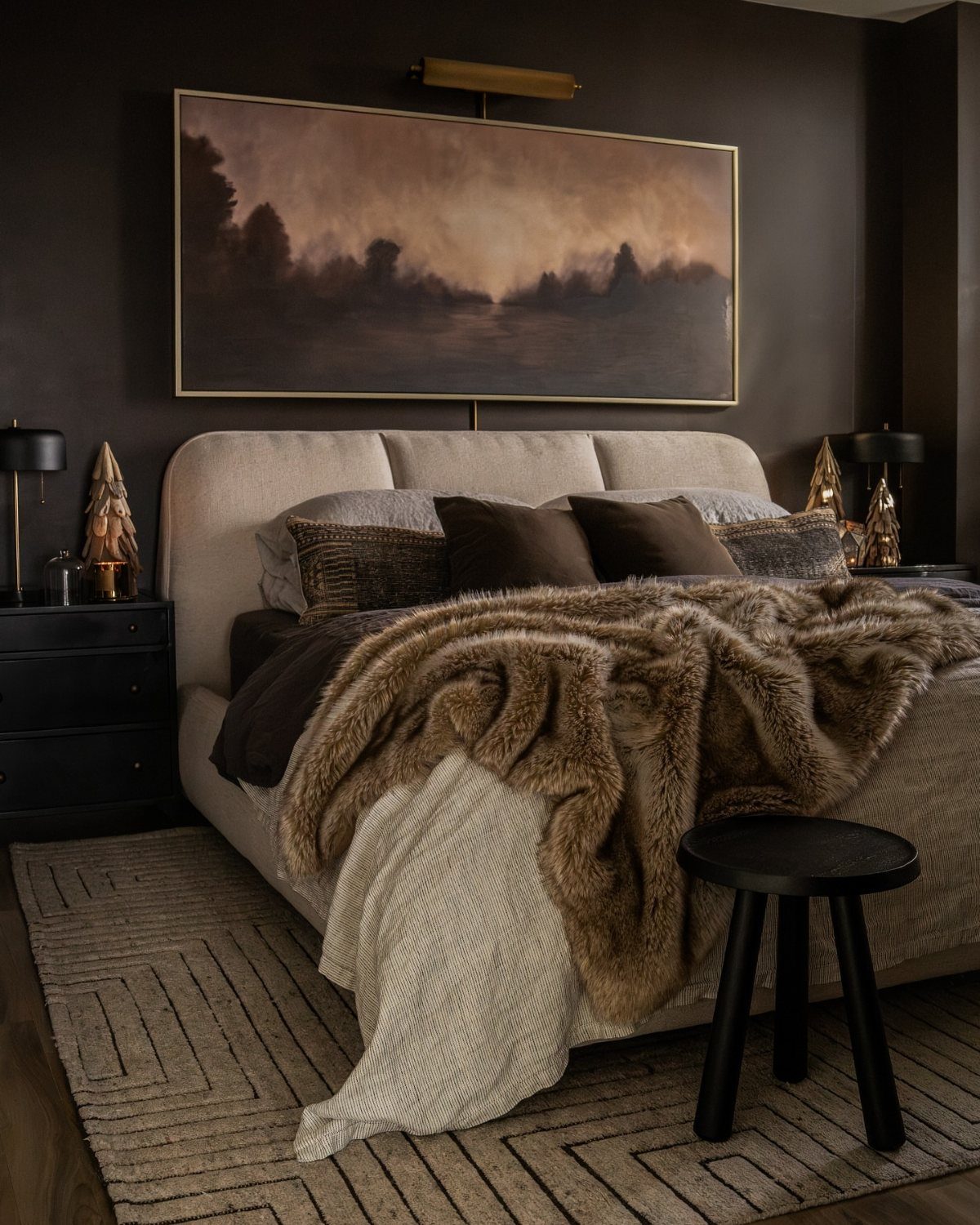
Brown, cream and beige do the heavy lifting in a dark room, because the fabrics differ in texture while the colors stay close.
A faux-fur throw over a chunky knit blanket gives you 2 surfaces that catch light differently, and that is where the depth comes from.
Fold one layer across the foot of the bed and let the other drape off a side, so the bed never looks flat. A rug under the nearest stool or chair pulls the texture down to the floor.
Start with one throw you love and build outward.
2. Plants and Greenery
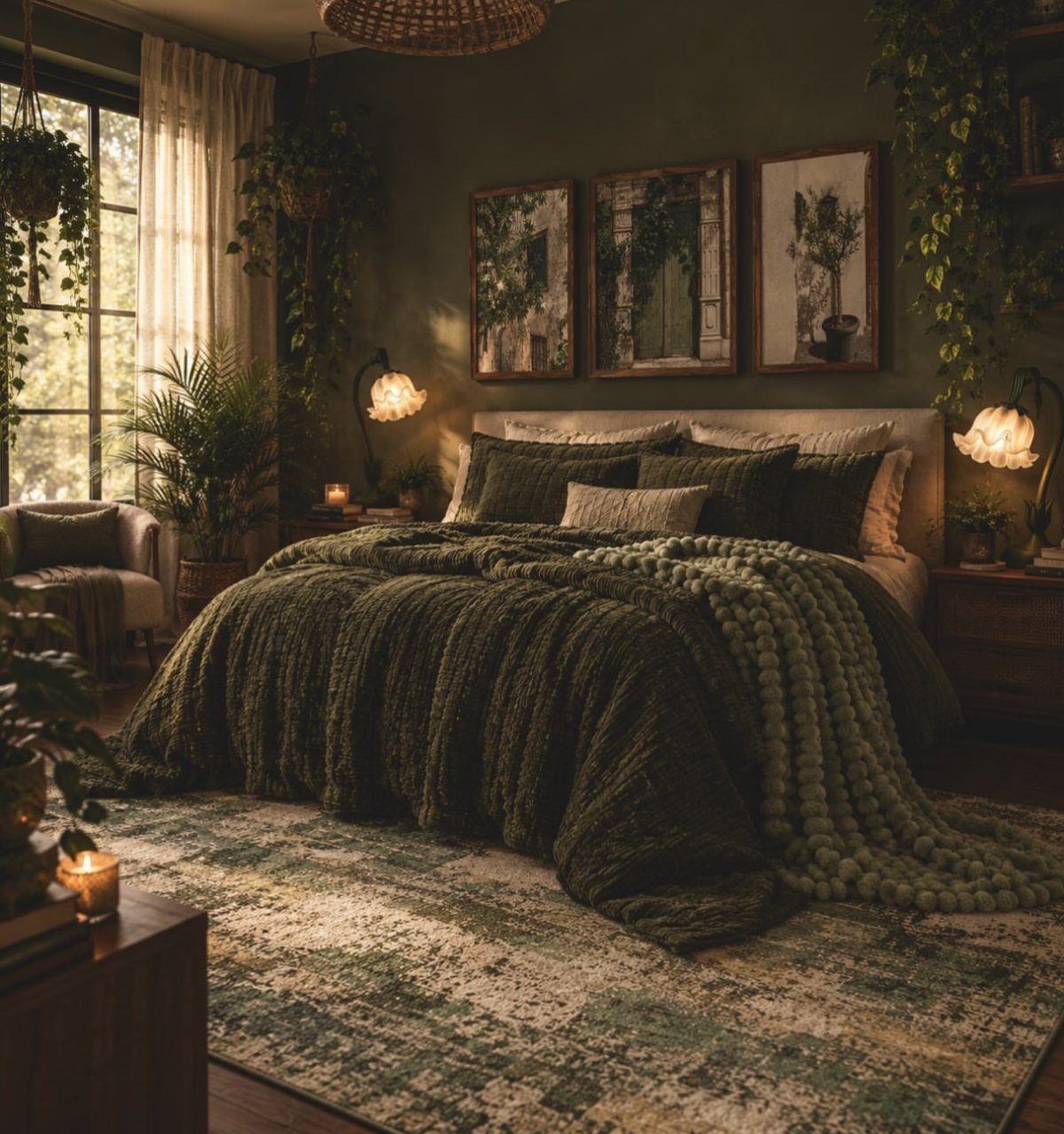
Dark green walls and plants are a natural pair, since the leaves read as part of the room instead of something set on top of it.
Olive bedding keeps the color story going without matching the walls exactly, which I prefer to a flat, one-note green.
Mix plant heights: one on the floor, a couple on a dresser or shelf, a trailing one up high.
If your light is poor or you travel a lot, dried stems in a vase give you the same organic texture with no watering.
3. Floating Shelves
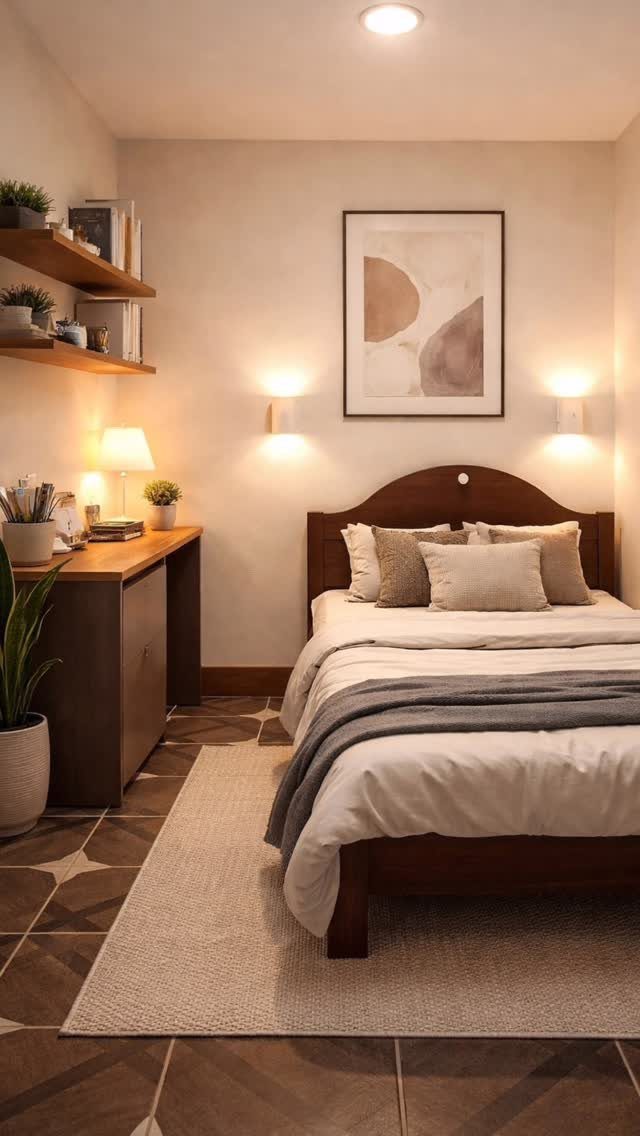
2 wooden shelves above a desk give you display space and storage without a single piece of floor furniture. Wall-mounted shelves suit small rooms best, and renters and students can keep the footprint tiny.
Stagger books and plants, and leave a few gaps so the wall breathes. I like wood tones against a beige wall because the warmth stays quiet.
Mount into studs or use proper wall anchors rated for the weight of your books; a loaded shelf is heavier than it looks.
4. Fairy Lights
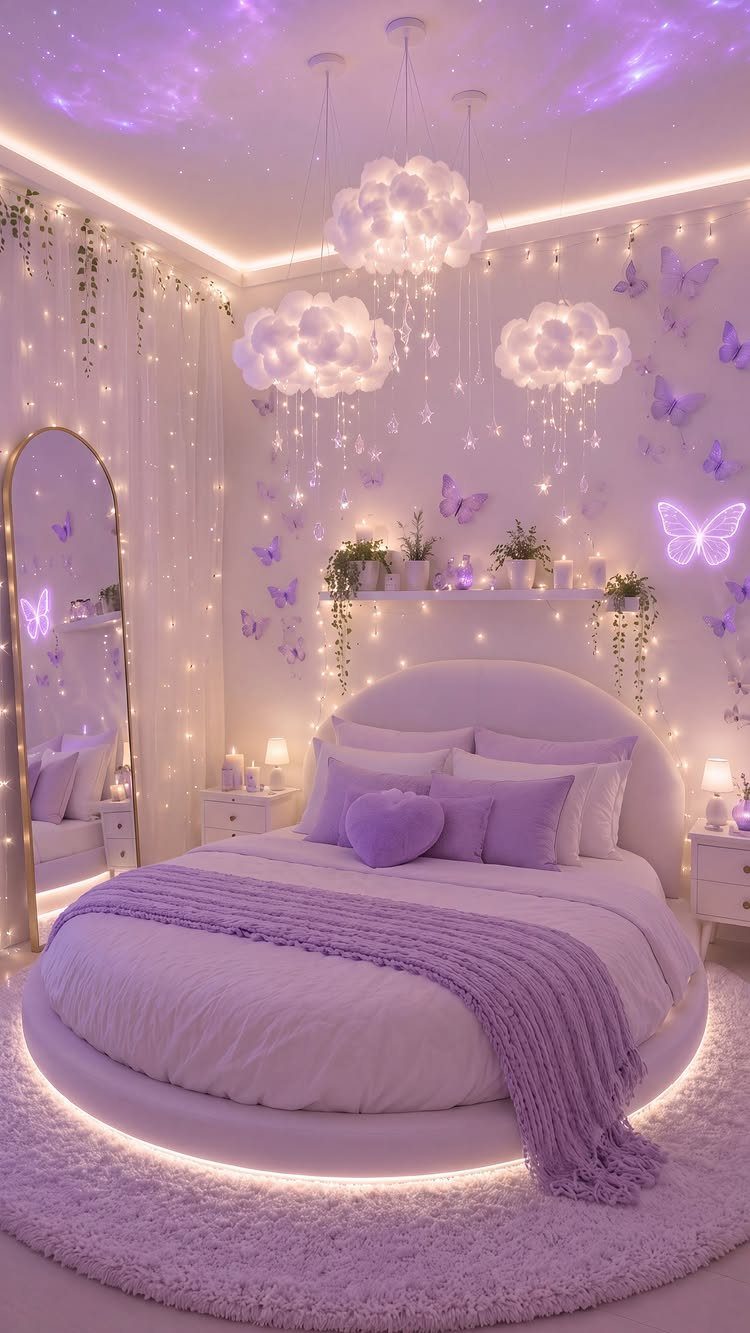
String lights are the cheapest way I know to make a bedroom glow softly at night. Drape them along a wall line or across the ceiling and the light reads as decoration, not a fixture.
Pick a warm white if you want calm, or match the bulbs to your room’s color scheme for a more playful look. Small adhesive clips hold the strand without nails, which matters if you rent.
Plug them into a timer so they switch on at dusk without you thinking about it.
5. LED Strip Lights
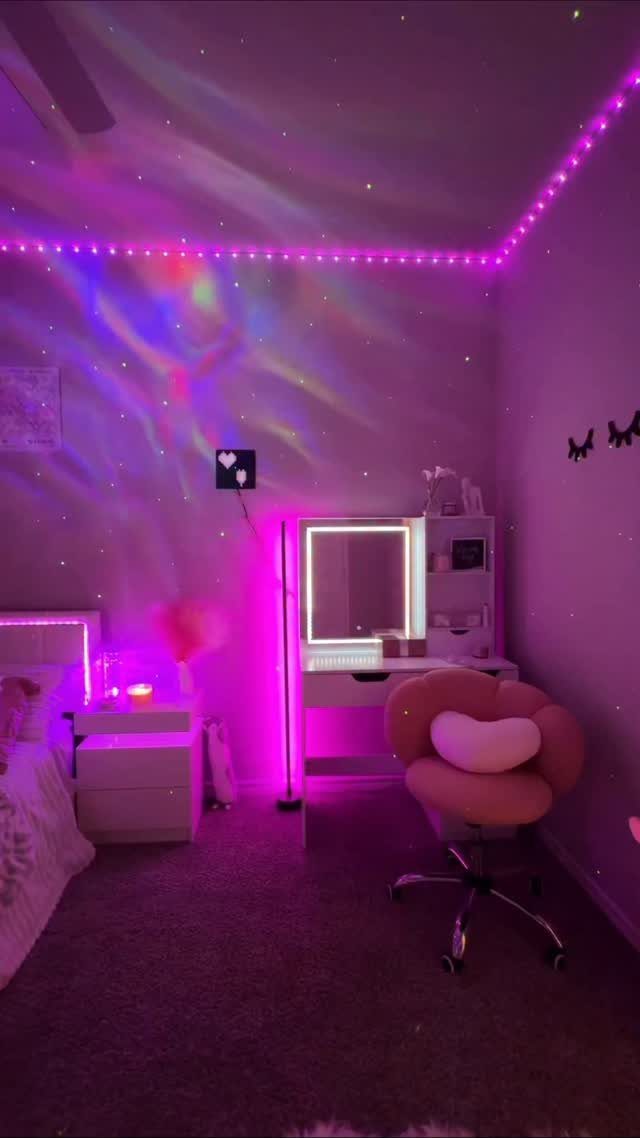
LED strips let you put color exactly where you want it: along the ceiling edge, behind a vanity, under a shelf.
Because the light bounces off a surface, it fills the room with a wash of color instead of a glare.
Choose a strip with a remote or app, so you can dim it down for sleep and brighten it for getting ready. Clean the surface first, since the adhesive backing grips poorly on dust.
I would pick one color and stick with it; changing hues constantly looks busy fast.
6. Vintage Decor
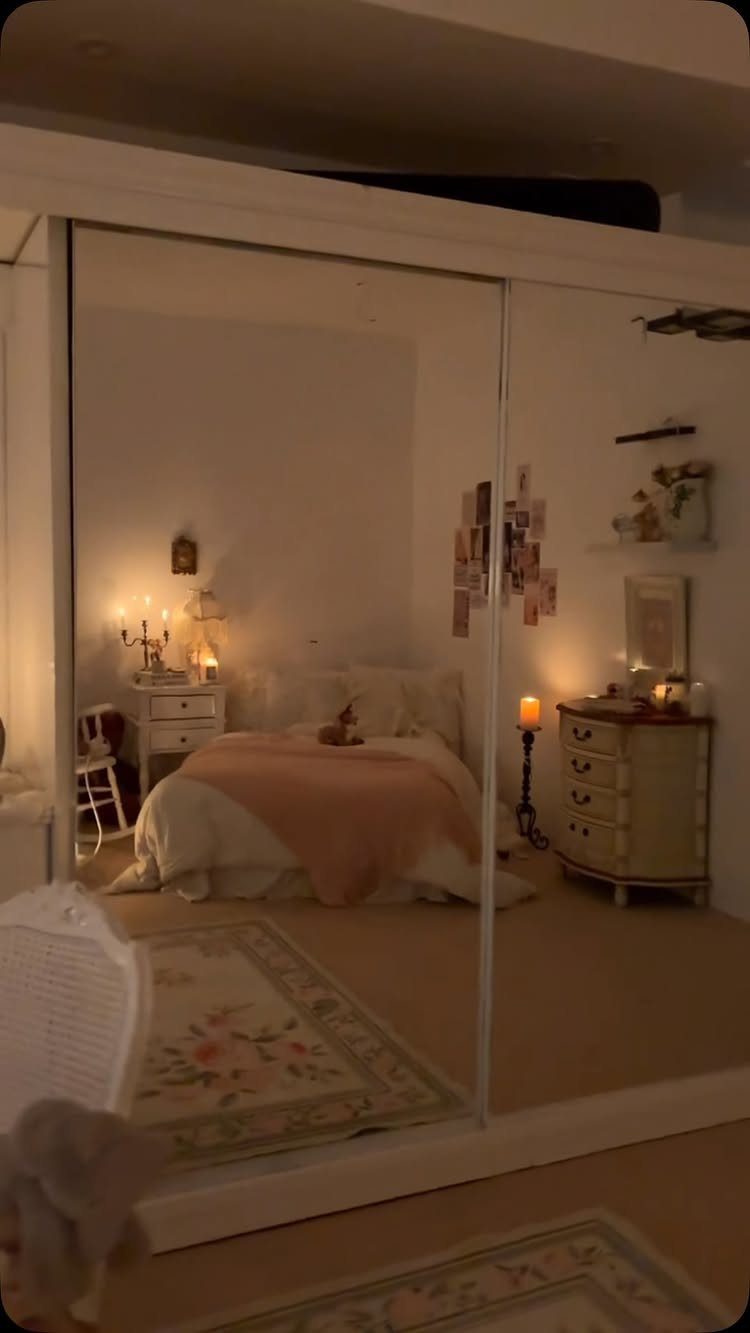
A vintage dresser does more for a bedroom’s character than any wall decor can, because the worn paint and carved details come from decades of real use.
White paint keeps it light, and a floral rug underneath adds the soft, nostalgic layer.
Secondhand shops, estate sales and online marketplaces are where I’d look.
Slide each drawer in and out a few times and press on the frame to make sure it doesn’t rack or wobble, since a piece that feels loose in the showroom or at the thrift store will only get worse once it’s in your bedroom.
Add candles and warm bulbs, and the older pieces glow instead of looking dated.
7. Reading Nook
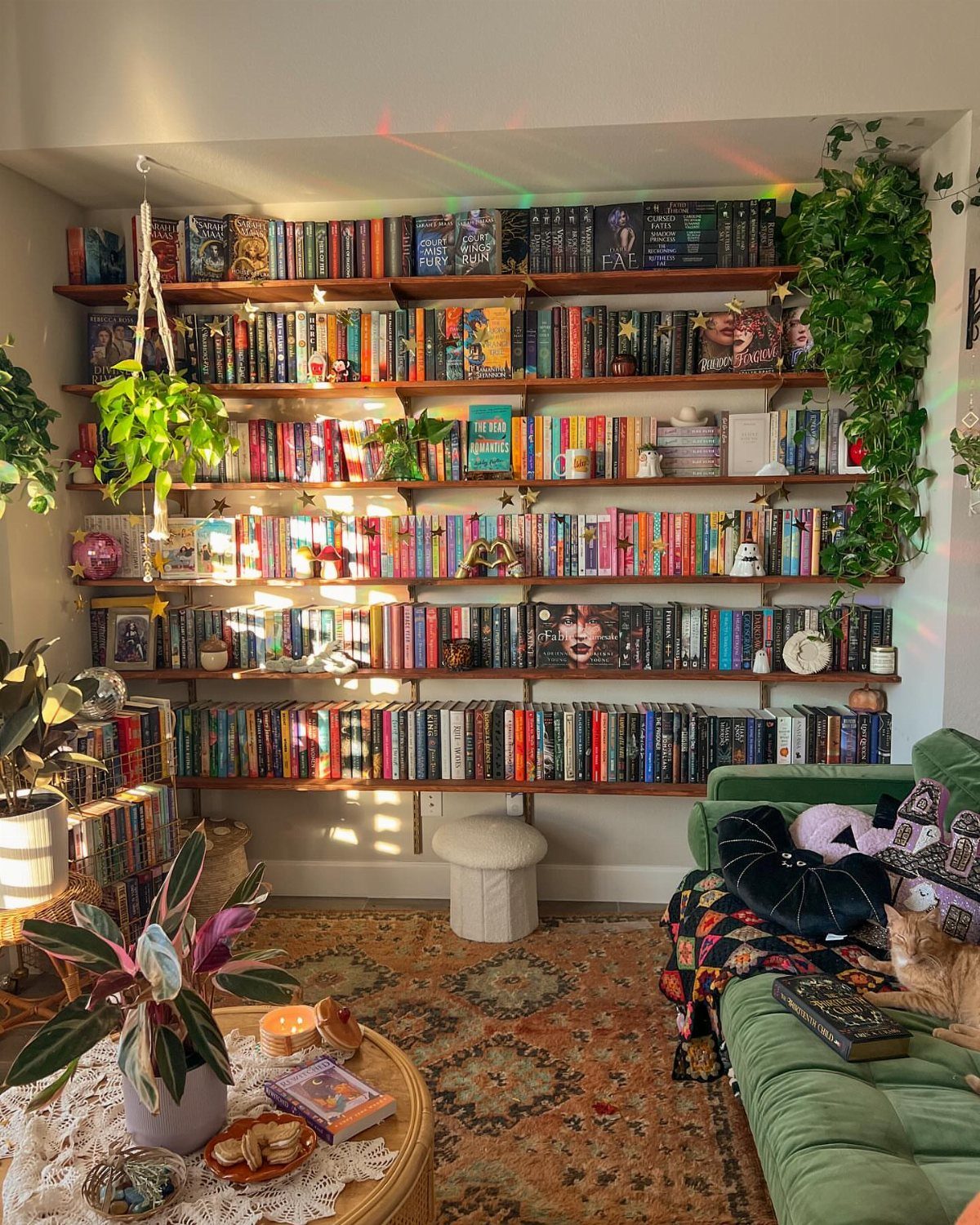
Books within arm’s reach are what turn a corner into a nook.
Shelves running wall to wall with a deep velvet seat in front give you somewhere to settle in, and a plant or 2 keeps all those spines from feeling heavy.
An ottoman for your feet and a low table for a mug finish the setup. I like a woven table here because it adds texture without competing with the sofa.
Put the seat where the light is best, not where it is easiest to fit.
8. Canopy Bed
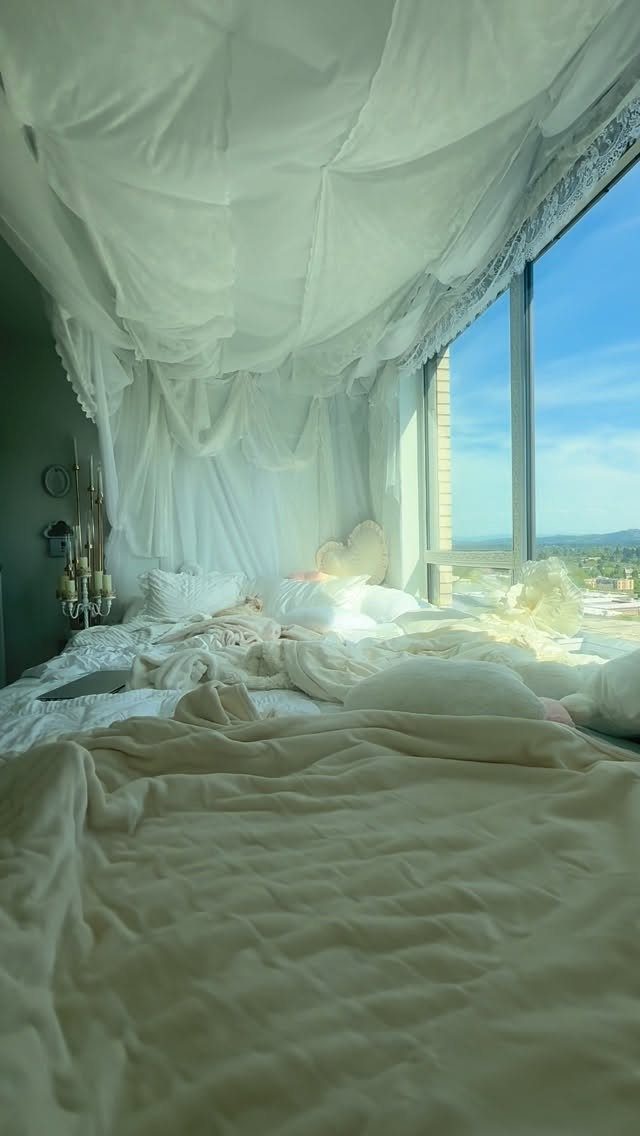
Soft white fabric hanging over the bed makes it the first thing anyone sees, and it does so without a single bold color. Keep the linens white too, so the canopy and the bed read as one shape.
A bed beside a big window suits this well, since daylight comes through the folds and the fabric moves a little when the air does. I would leave the rest of the room quiet: one canopy is the statement.
9. Wall Collage
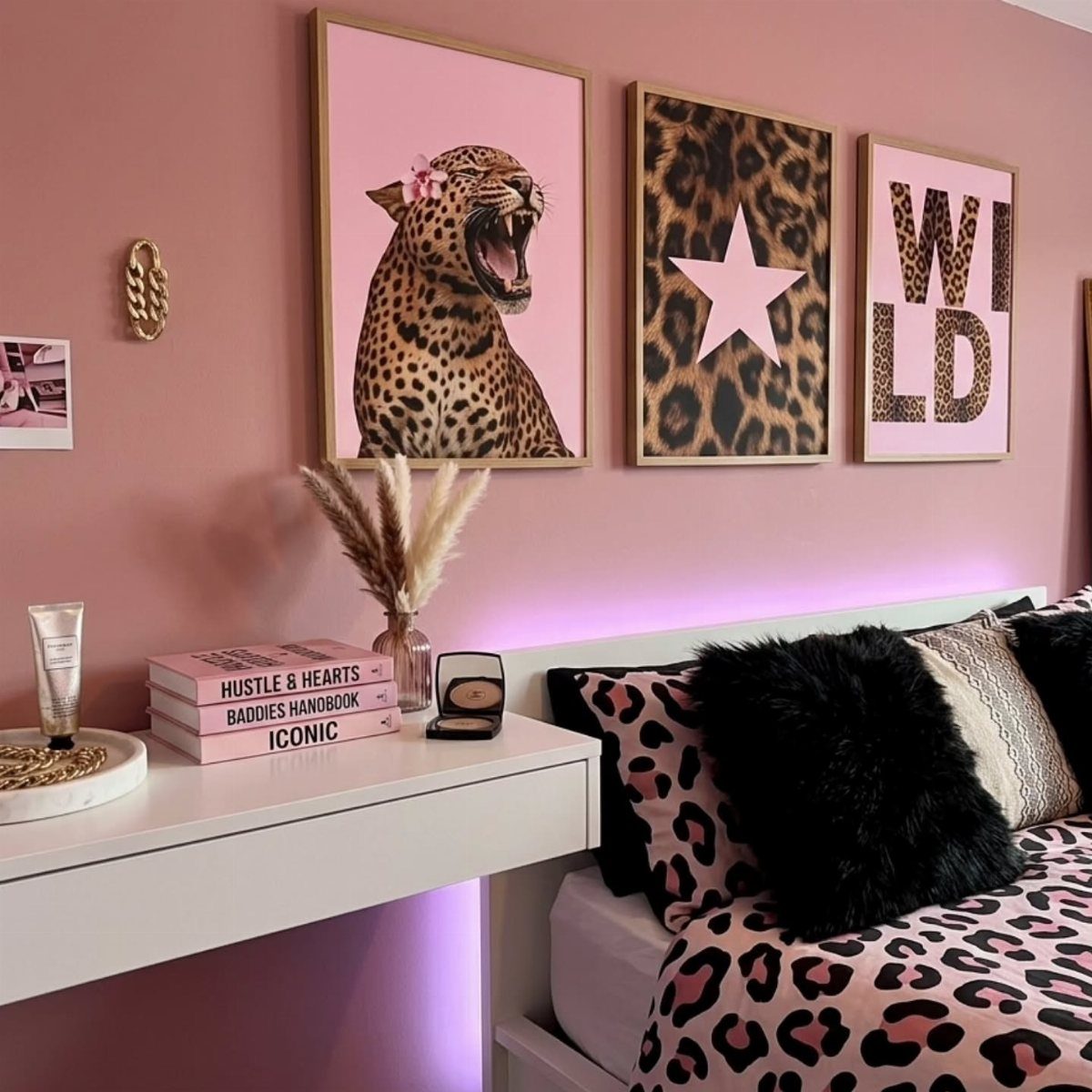
Pick one subject and repeat it. Three prints sharing a theme look planned, while three unrelated frames look like leftovers.
Hanging them directly above a desk ties the wall to the furniture below, so the whole corner reads as one display.
A bold wall color like pink holds up to strong imagery, and repeating the pattern in the bedding finishes the idea.
I would stop at three or a few more. Past that, the wall stops feeling personal and starts feeling crowded.
10. Cottagecore Bedroom
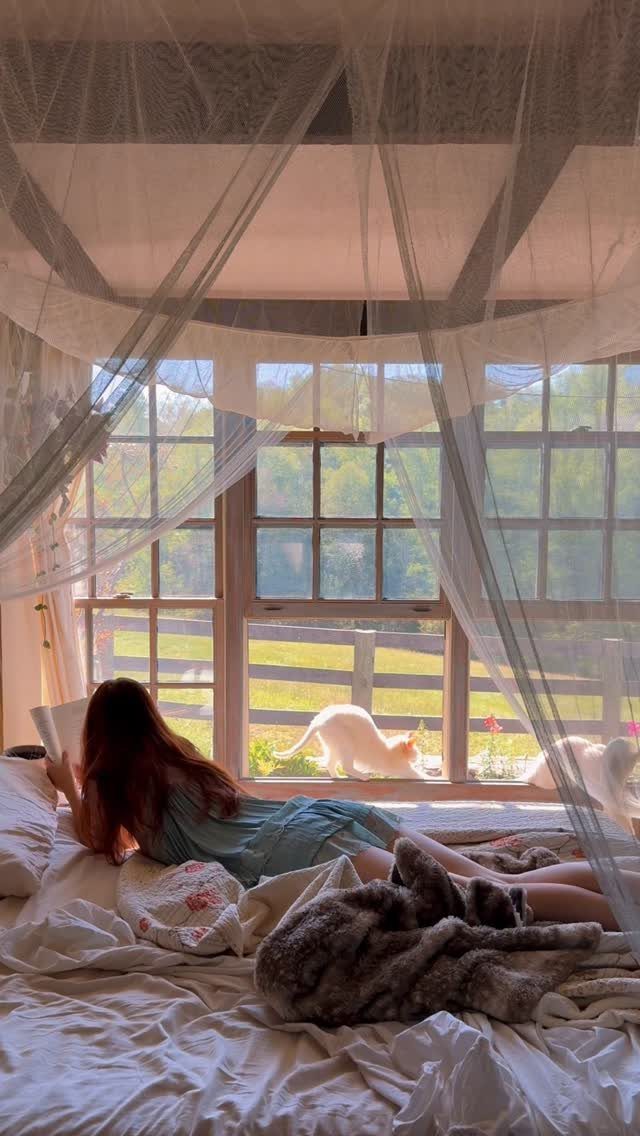
Soft light and a view of the outdoors do most of the cottagecore work.
White bedding, sheer fabric draped overhead and rustic wood keep the room airy, and a bed placed to face the window lets the fields become the artwork.
Add a reading spot in the bed itself, plus a pet or two by the glass, and the room feels lived in rather than styled.
I would keep colors pale and let the countryside supply the rest.
11. Boho Bedroom
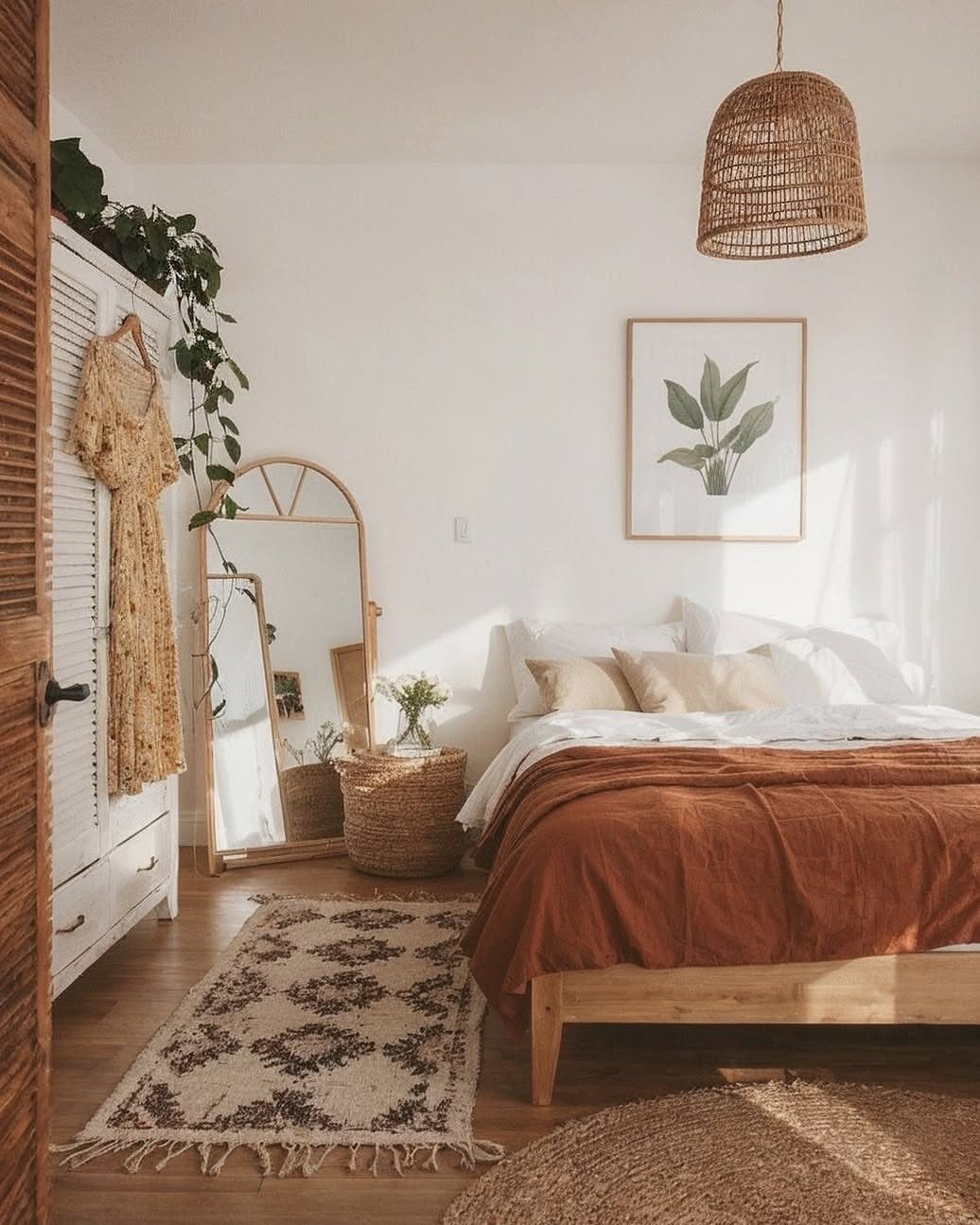
Boho gets its warmth from materials more than from clutter. Terracotta bedding, a woven pendant and a wooden bed frame share an earthy palette, so the room can hold several textures without looking chaotic.
A large arched mirror adds a soft shape and bounces light around. Against white walls, one botanical print is enough art.
I would choose a patterned rug as the loudest piece and let the rest of the room stay in warm, muted tones.
12. Minimalist Bedroom
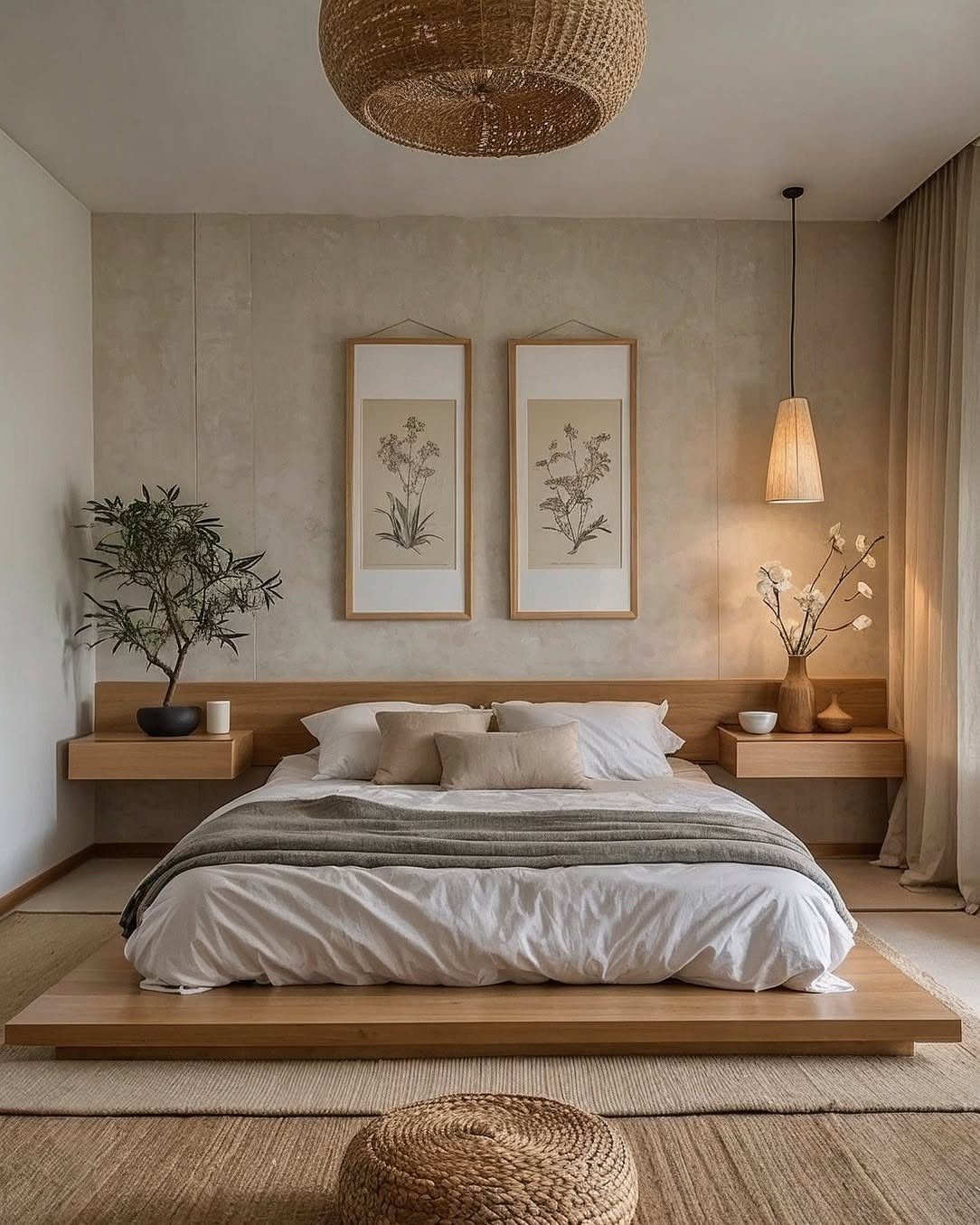
A low platform bed does the first job in a minimalist room: it keeps sight lines open and leaves the wall to breathe.
Texture is what stops this look from feeling cold. A textured beige wall and a small potted tree bring in warmth without adding clutter.
Before buying anything, remove one object from the room and see if you miss it.
13. Dark Academia Bedroom
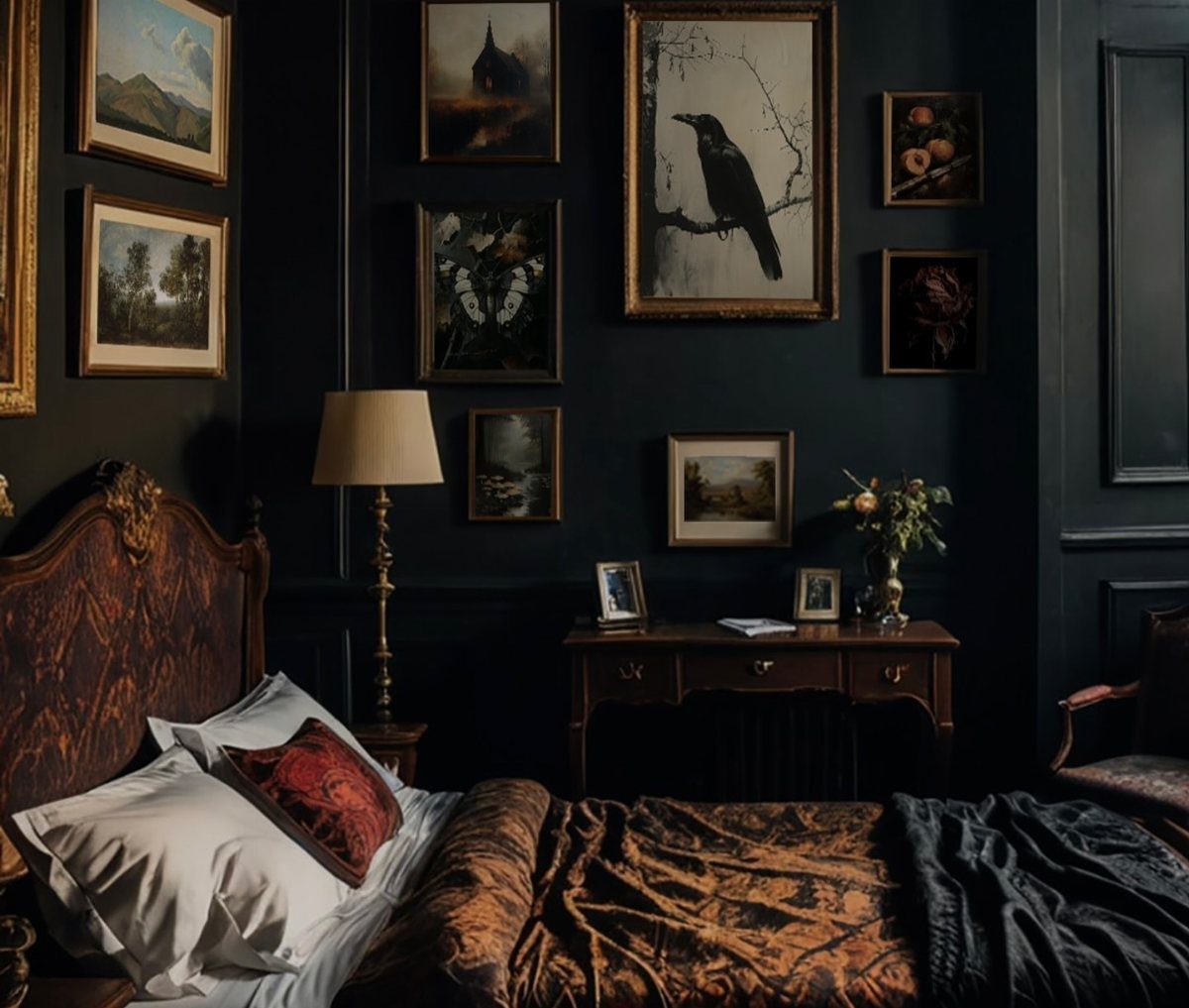
Deep walls do the moody work, and a carved wooden headboard supplies the old-library feel that paint alone can’t. Classical framed paintings hung close together read as a collection, and a crow among them adds a literary, slightly eerie note.
Keep the bedspread patterned and the walls dark, then let a small desk with photos and fresh flowers act as the personal corner.
I would hunt secondhand frames for the gallery wall; mismatched antique ones look better than a matching set.
14. Three-Color Palette
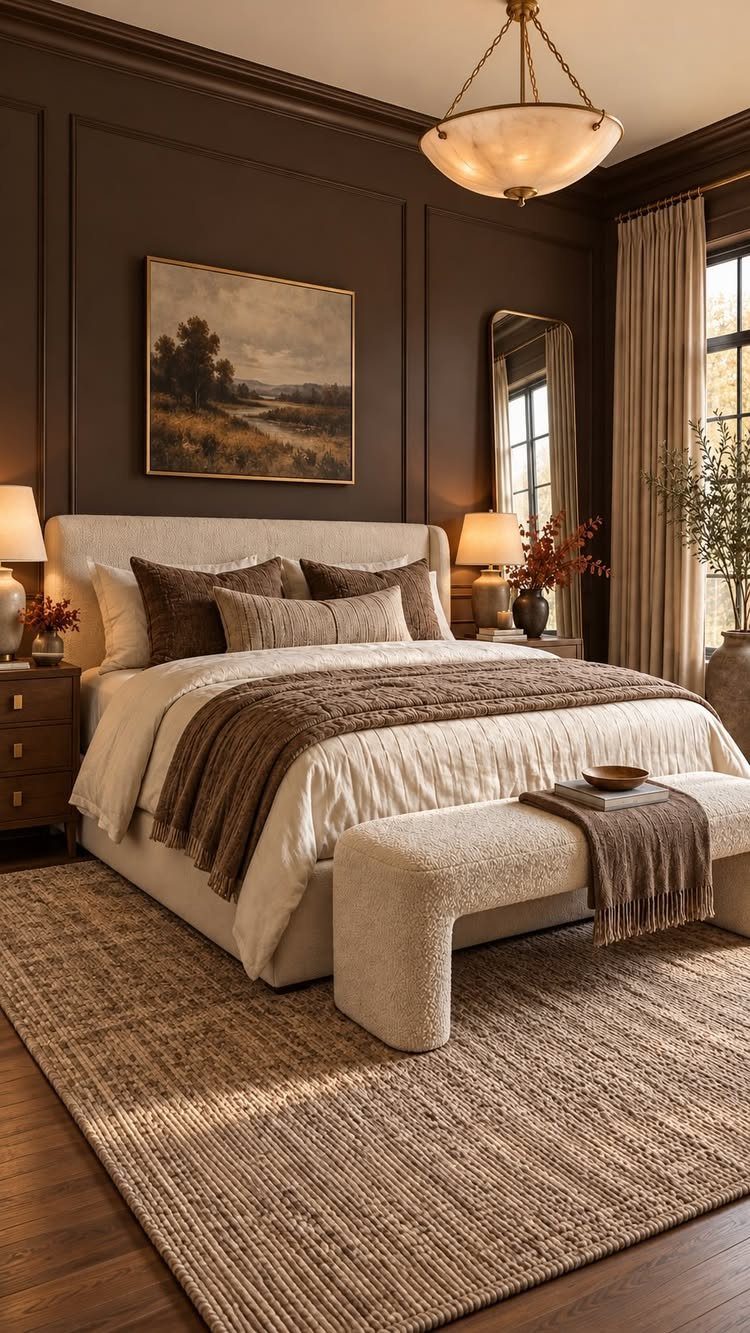
Brown takes the walls, cream goes on the upholstered pieces, and tan sits in between on the accents, so no color fights for attention.
Test your trio before you commit.
The creator of this room said they presented it in 6 palettes so their client could see how each combination felt first, and a few paint swatches taped up beside your bedding do the same job for very little money.
Give one color the largest share and let the other two support it.
15. Warm-Toned Bedroom Lighting
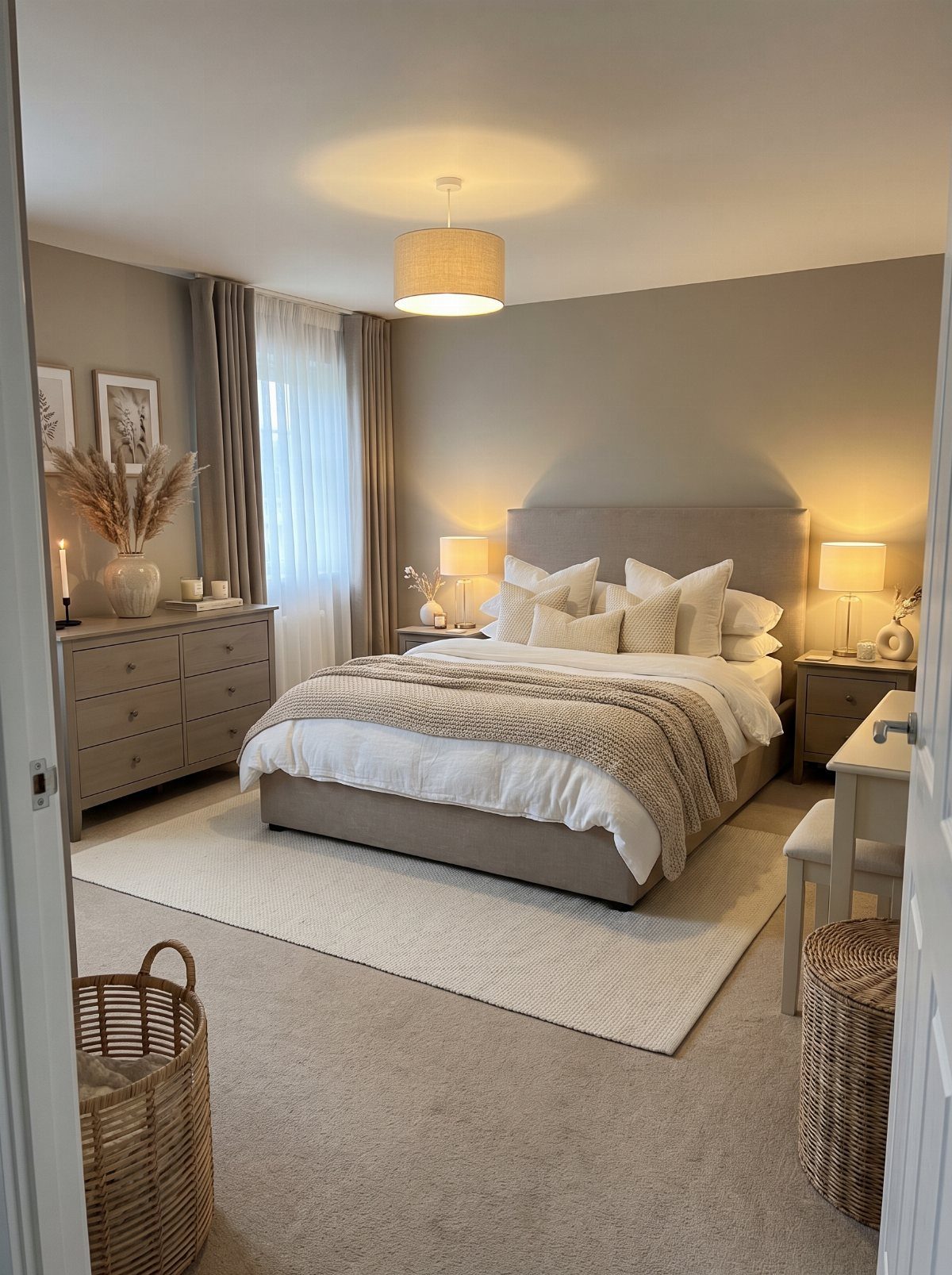
Swap cool white bulbs for warm ones, and a plain beige bedroom turns soft almost immediately. Two bedside lamps plus a drum pendant overhead give you light at three points, so no single fixture has to do everything.
Use the lamps in the evening and keep the ceiling light for cleaning or getting dressed. Low lamps flatter a neutral carpet and wicker baskets far more than one bright overhead.
Check the bulb box for a warm white label, usually 2700K or lower.
16. Statement Artwork
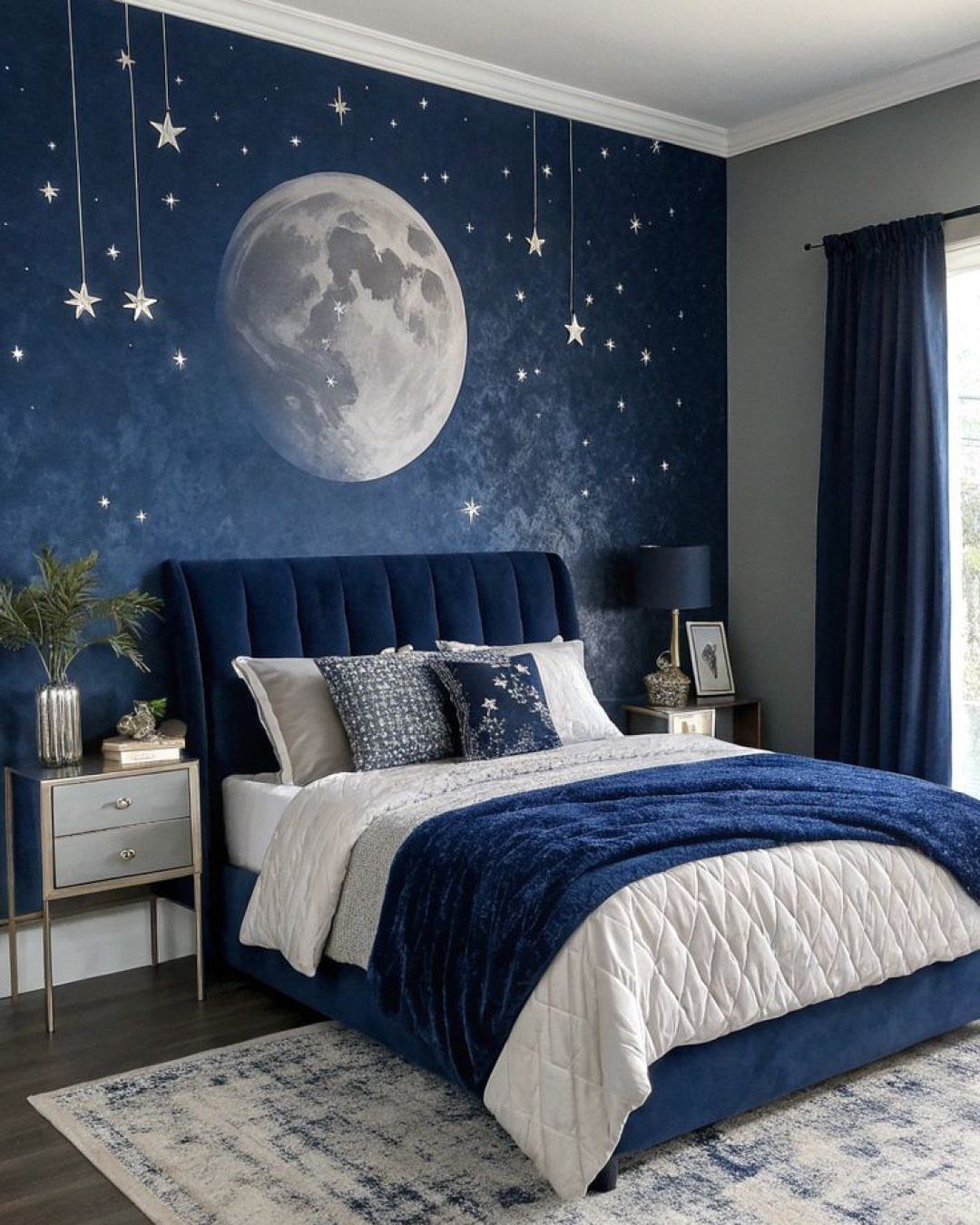
Paint it behind the bed, where it frames you as you sleep and stays out of the way of furniture.
Matching the bed to the wall, as this blue velvet one does, keeps the mural from feeling like a sticker on a plain room. A patterned rug underneath adds a second layer without fighting the sky.
For renters, a large canvas or peel-and-stick panel gets a similar effect and comes off cleanly.
17. Rattan Furniture
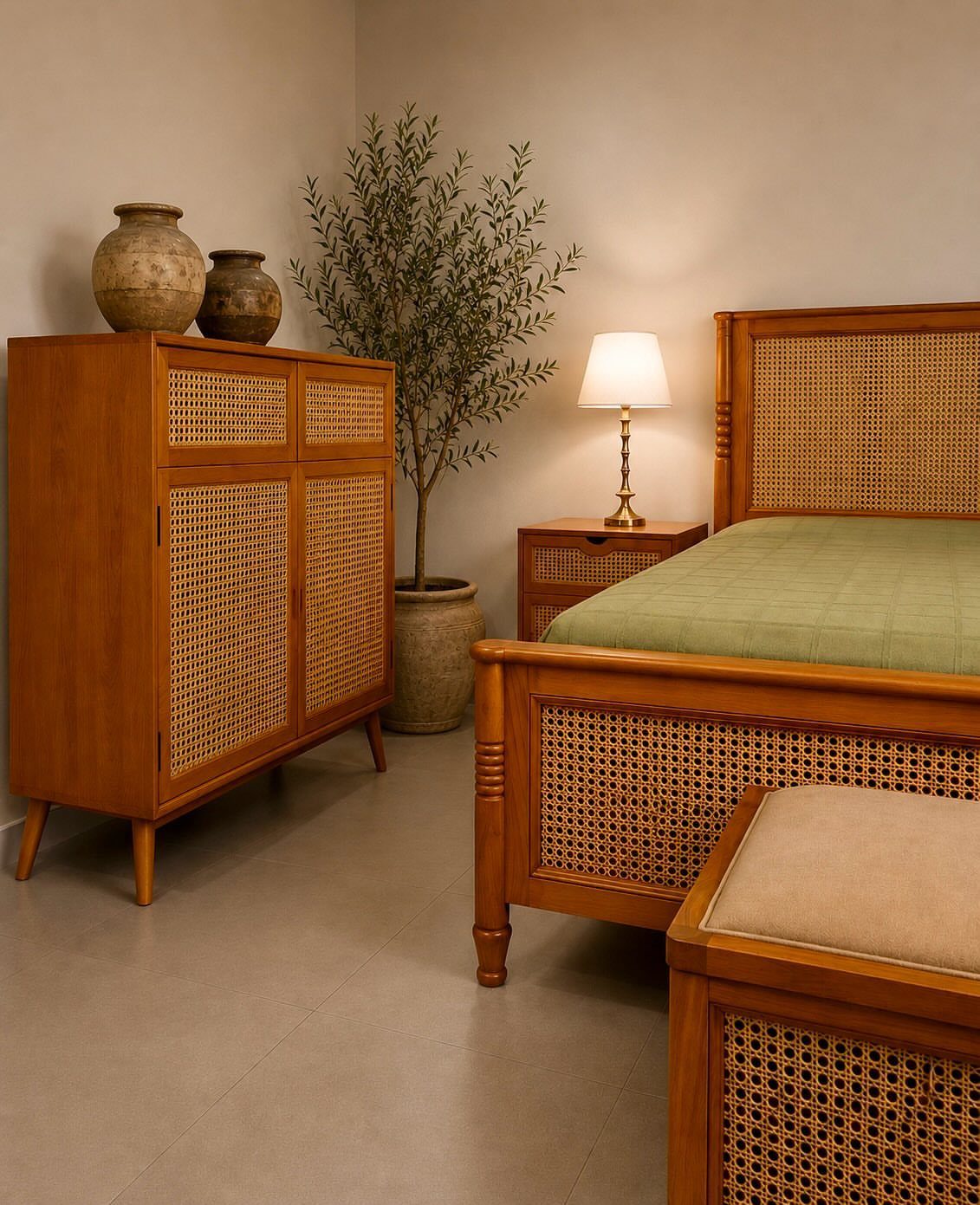
Woven rattan panels on a wooden frame give a bedroom organic texture without the shaggy look of heavy fabric. A bed, nightstand and tall cabinet in the same weave make the room feel collected rather than random.
Rattan pieces pair well with plain ceramic vases and a potted olive tree, since the natural materials carry the look without extra decor.
I’d buy the bed first, since it’s the largest piece, and match the weave on the nightstand afterward. A secondhand cabinet is an easy way to add the rest.
18. Neon Lights

A purple neon sign against exposed brick is a small purchase that gives the wall a personality of its own. The glow looks richest on a rough, dark surface, and houseplants and a textured blanket soften all that electric color.
Pick a short phrase you would actually like to read every night. "Good Vibes" works because it’s easy to live with; a longer message tires fast.
Hang it where you see it from the bed, and use a dimmable one if you plan to sleep with it on.
19. Vintage Rugs
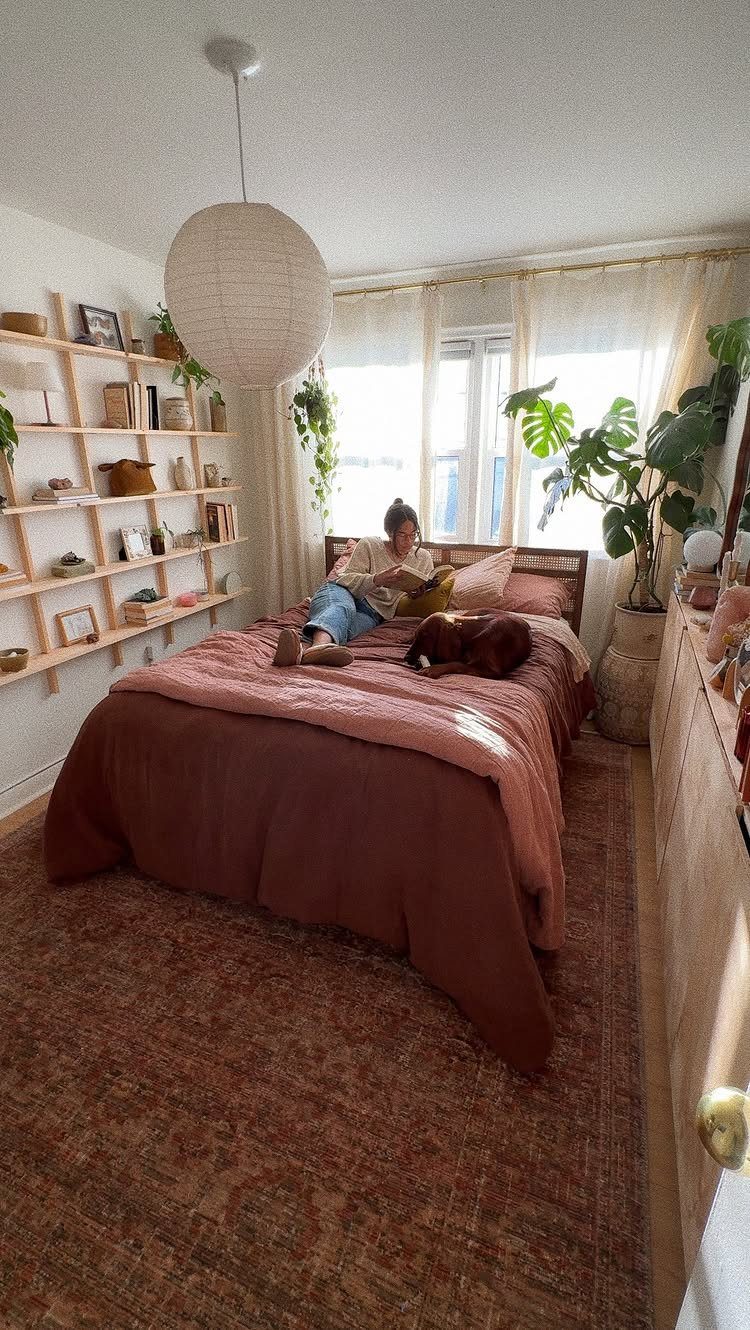
A patterned vintage rug is the quickest way to give a bedroom floor some character. Worn, layered designs hide dog hair and daily scuffs better than a plain rug, which suits a room where a pet sleeps on the bed.
Let the rug be the busiest thing in the room and keep the bedding and shelves calmer. A rug pad underneath stops sliding and adds a little cushion.
Plants and open shelving sit well beside it, since they add green and wood without competing with the pattern.
20. Floating Nightstands
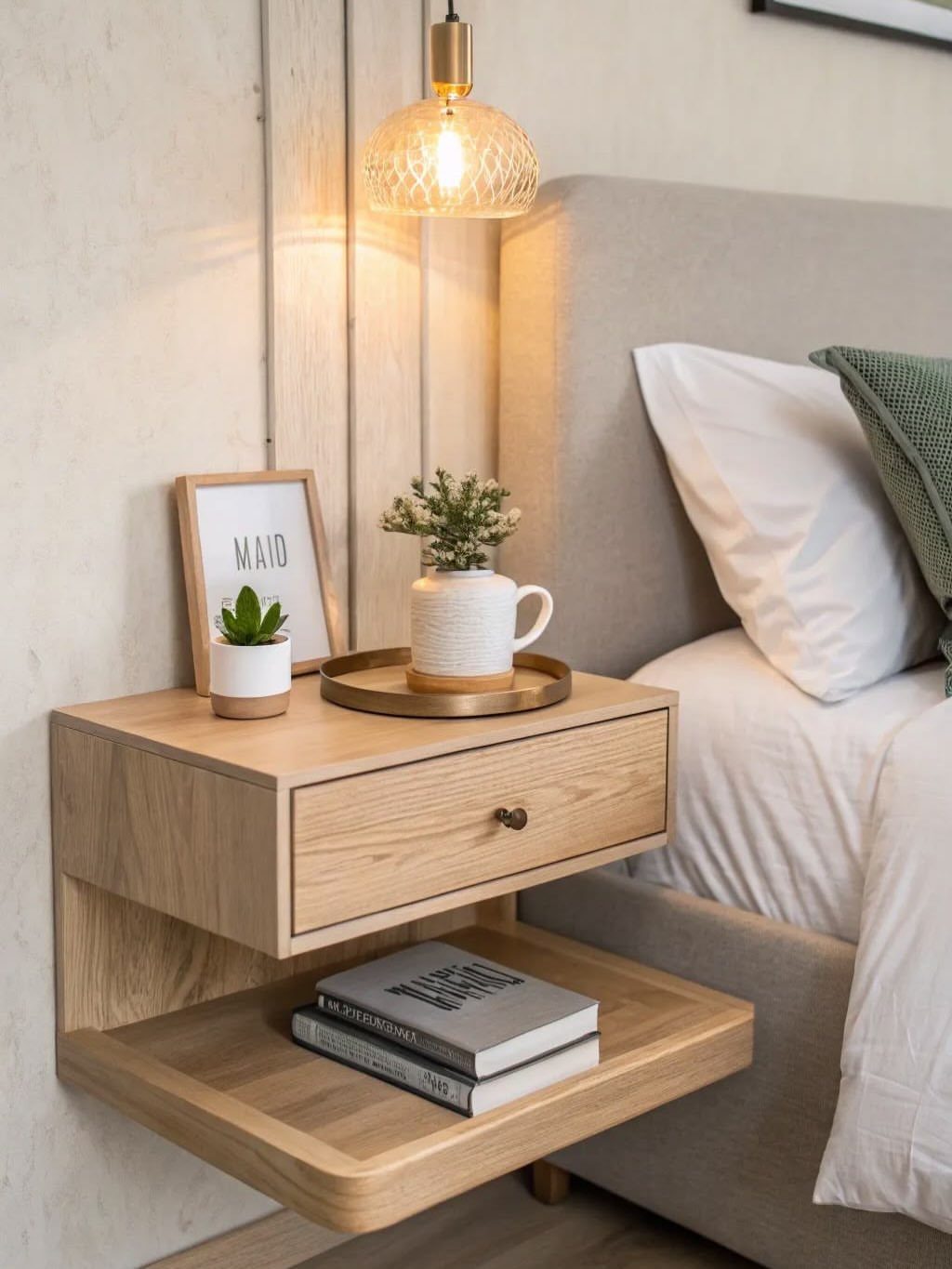
With no legs to interrupt it, the floor runs straight under a floating nightstand, so a compact bedroom looks bigger and the vacuum reaches every inch.
A wall-mounted unit with one drawer and one open shelf covers the basics: a hidden spot for chargers, a visible one for a mug or a plant.
Mount the top about level with your mattress so it is easy to reach from bed. Use studs or rated wall anchors, because a drawer full of stuff weighs more than you expect.
A pendant light hanging above frees up the surface for decor.
21. Accent Wallpaper
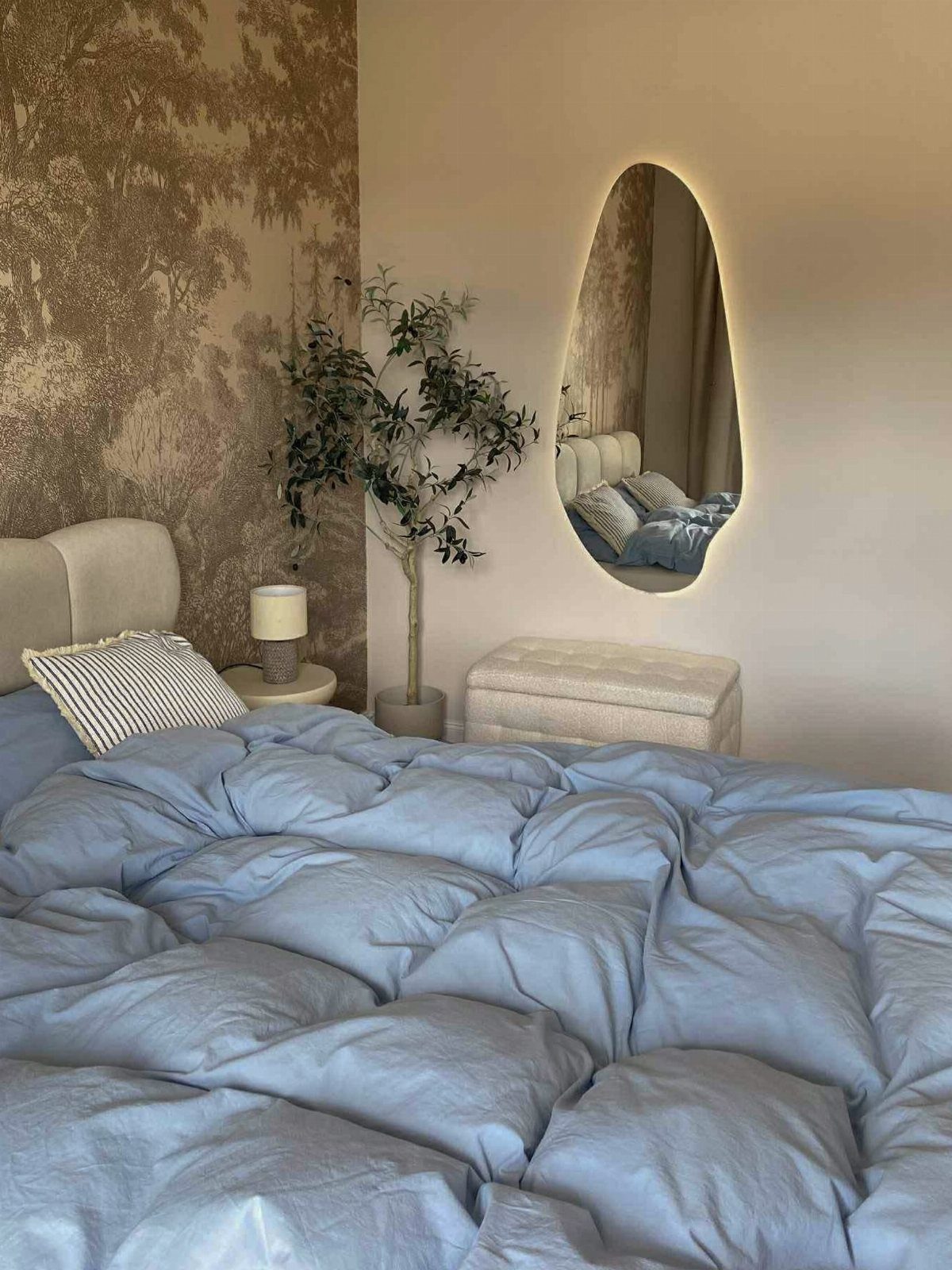
One wall, one pattern. A large tree print behind or beside the bed makes the room feel designed, while the other 3 walls stay plain.
Keep the bedding solid, as light blue does here, so the wallpaper gets the attention. A bold print with big shapes suits a small bedroom better than a tiny, busy one, which can look cluttered up close.
Renters should look at peel-and-stick wallpaper, which comes off without paint damage. Smooth the wall and wipe off dust before you hang it.
22. Bed with Built-In Drawers
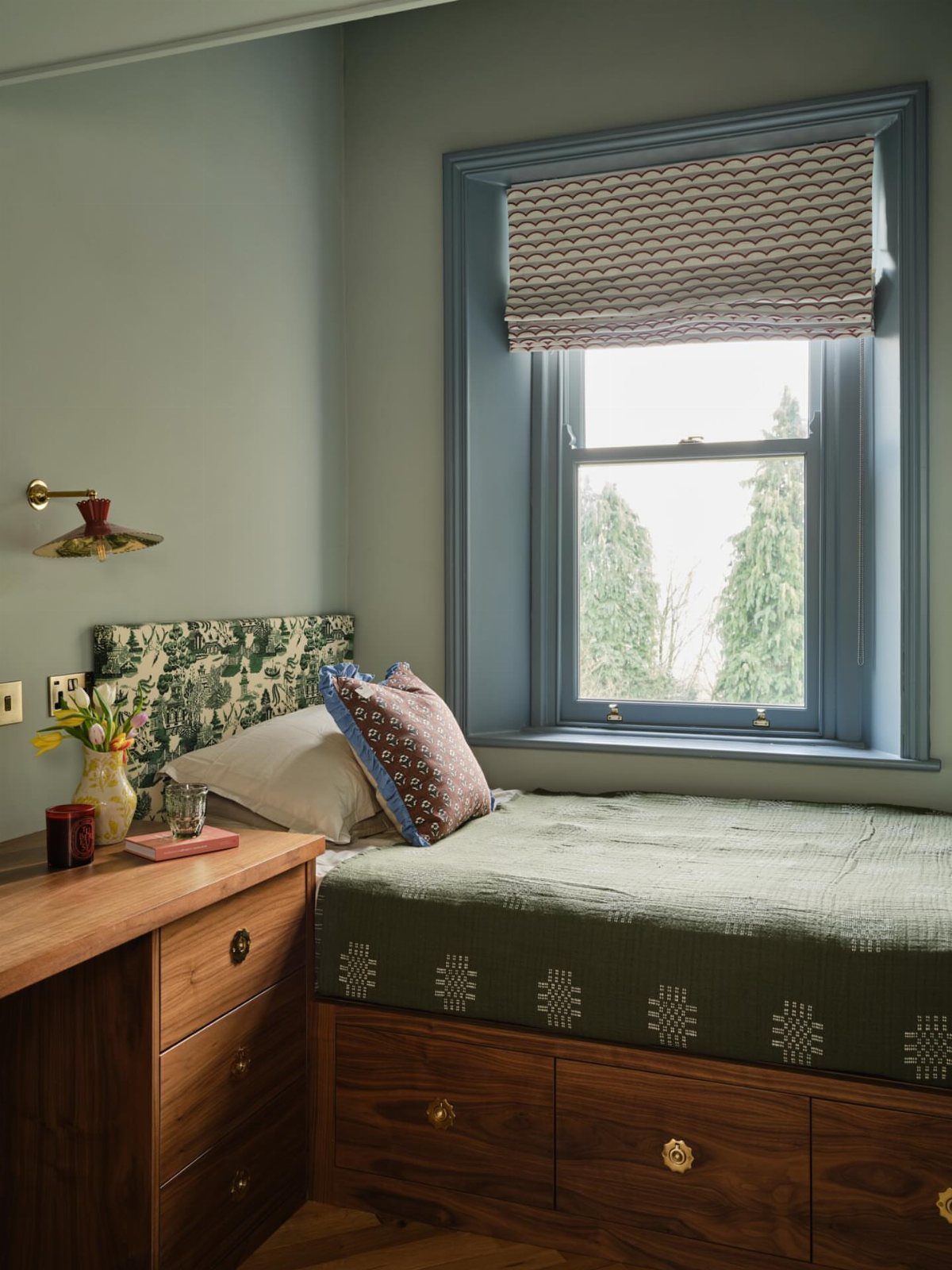
In a small bedroom, the space under the mattress is the biggest storage area you have. Built-in drawers turn it into a dresser you never have to buy, which clears a whole piece of furniture out of the floor plan.
They hold off-season bedding, spare sheets and shoes well. Before you commit, measure how far each drawer pulls out and keep that distance clear in front of the bed, or the drawers will hit a wall or a nightstand.
23. Mirrors
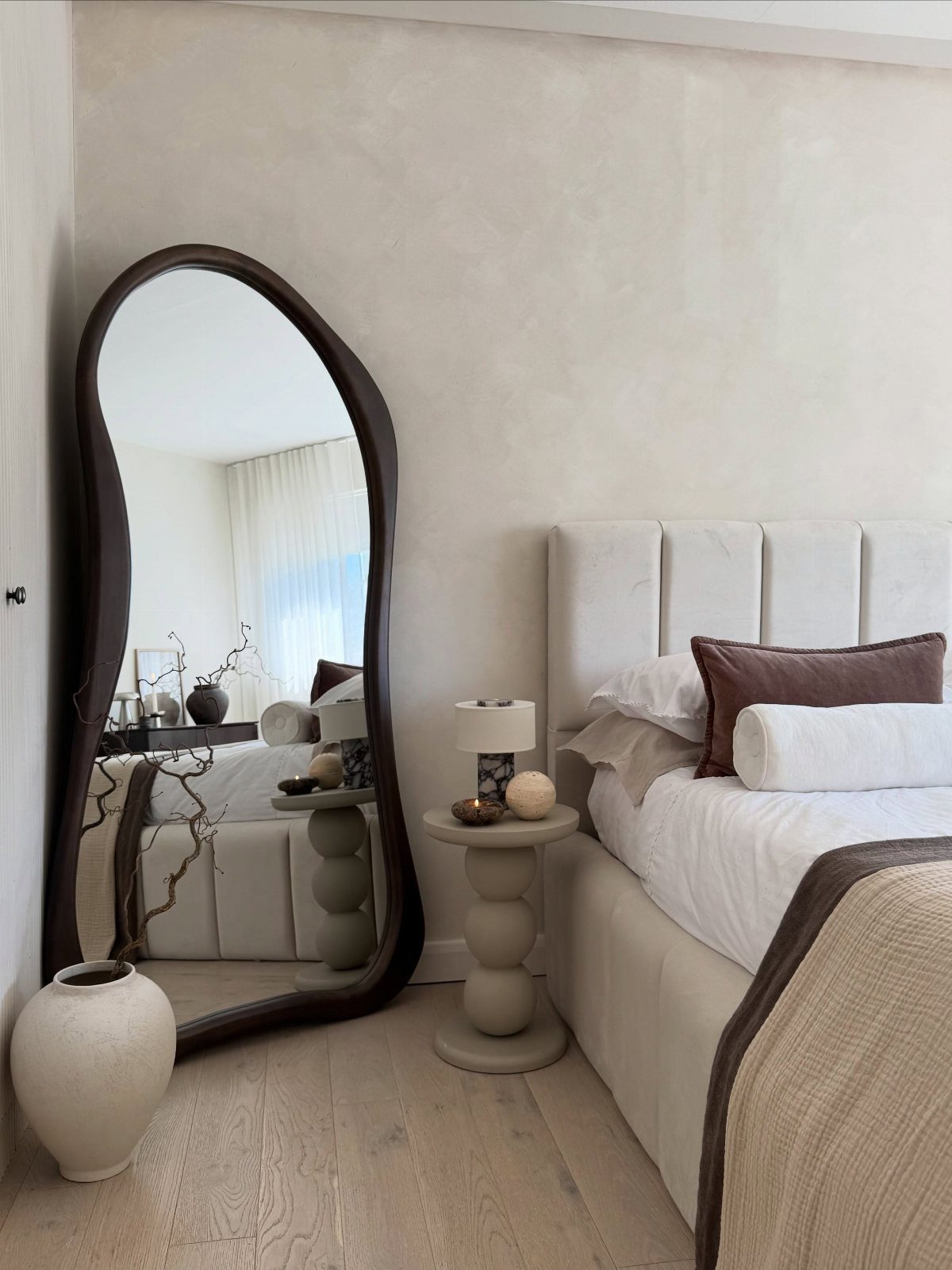
An irregular, organic mirror breaks up all the straight lines of a bed, nightstand and wall. A dark frame gives it presence even against neutral linens, and the shape reads as sculpture when no one is looking in it.
Lean a tall one on the wall opposite or beside a window, where it bounces daylight deeper into the room. Add an anti-tip strap or wall anchor, because a heavy floor mirror can slide.
I would choose the shape first and the size second.
24. Personalized Bedroom Decor
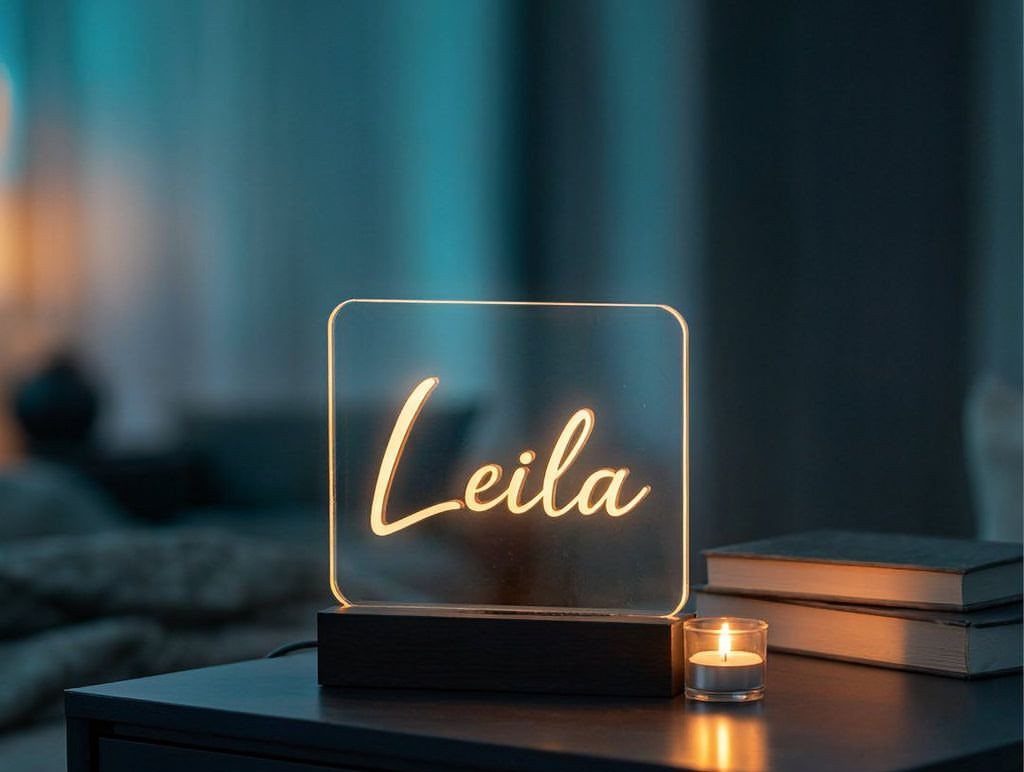
A name lamp on the nightstand is the simplest way I know to make a bedroom unmistakably yours.
A glowing acrylic plate with a name in script gives off soft light and doubles as a night lamp, so it earns its spot.
You can also pick a word you like or your initials, instead of a full name. Choose a script that stays readable from the pillow.
Keep the rest of the table plain, with a candle and a couple of books, so the name is the focus.
25. Scandinavian Bedroom
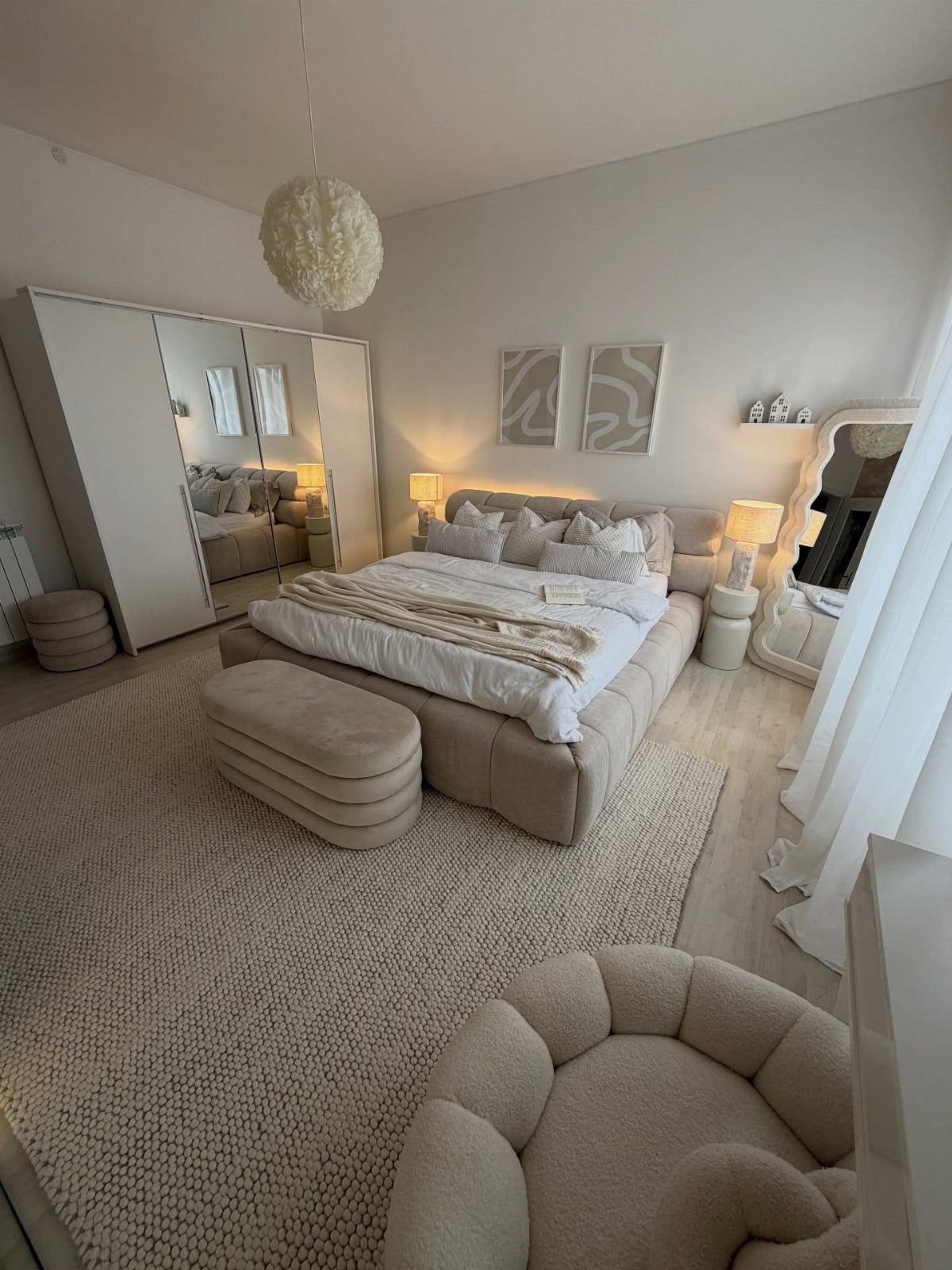
Crisp, bright and orderly is the whole Scandinavian formula. Keep the upholstery and the case pieces in the same cream and white family, and even a room full of furniture reads clean.
A textured rug and a fluffy pendant light stop all that pale color from going flat. I’d keep the wall art neutral and let those 2 soft pieces supply the interest.
Mirrored wardrobe doors also bounce daylight around, which helps a smaller room.
26. Rustic Timber Bedroom
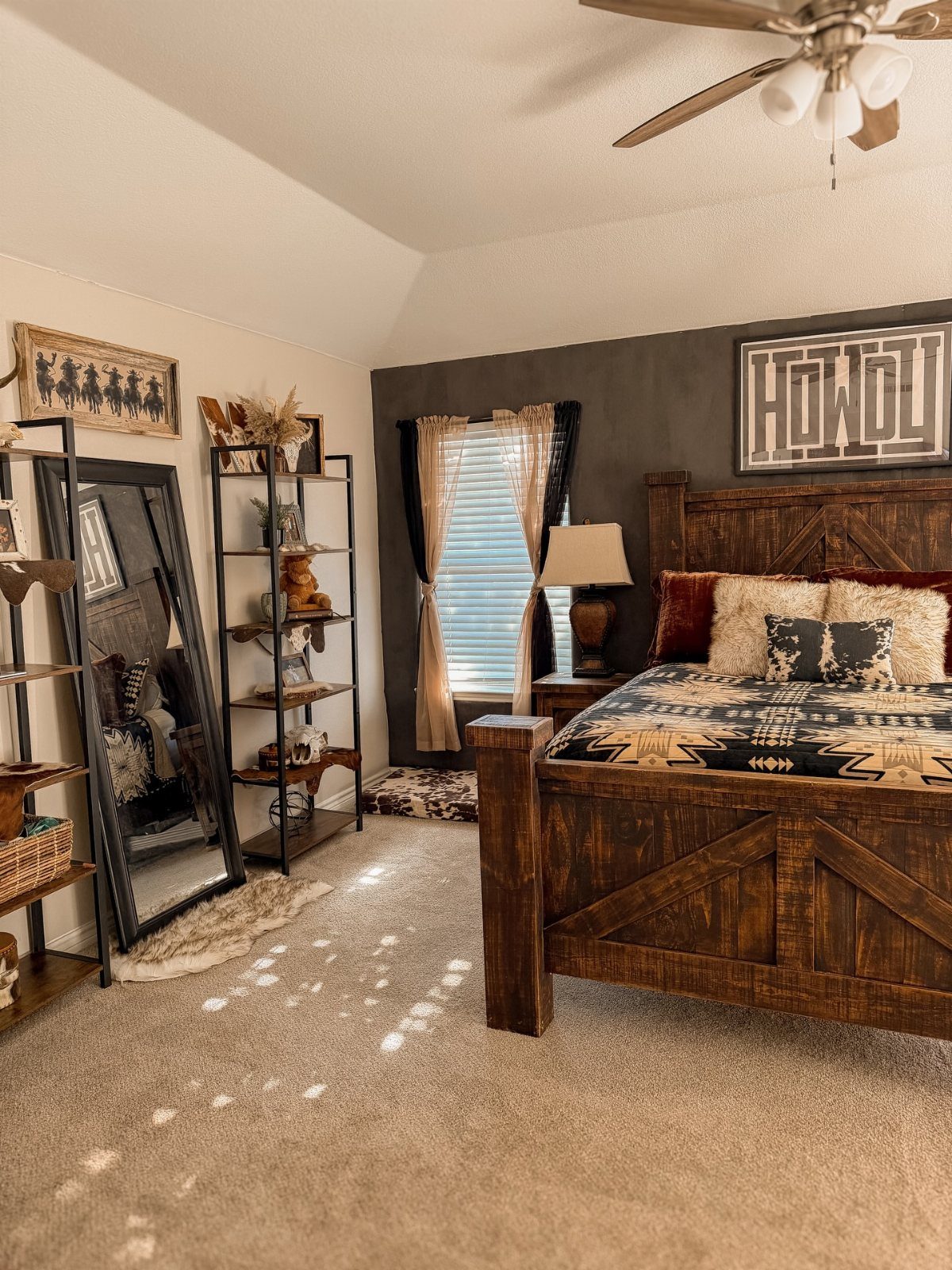
An X-brace frame gives a plain wooden bed its rustic character, because the crossed timbers read as structure rather than decoration. Pair it with a dark accent wall and the pale wood stands out sharply.
A full-length mirror and open shelving keep the room practical, and a sign like the "HOWDY" one adds a bit of humor. I would stick to neutral bedding so the frame stays the main piece.
One playful sign is plenty.
27. Soft Girl Bedroom
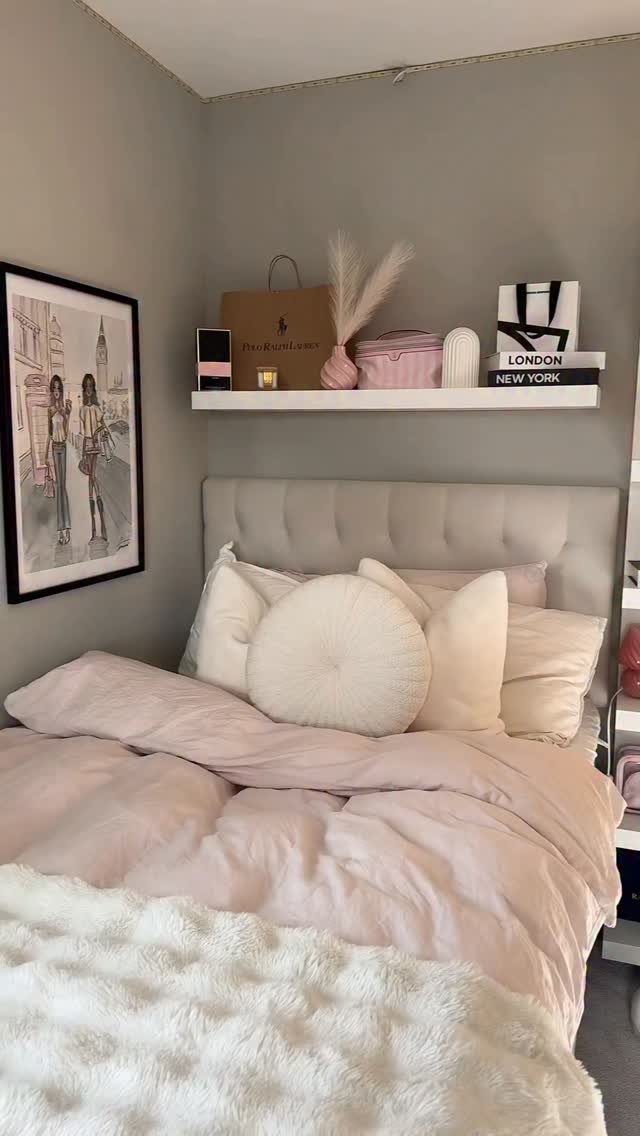
Pink bedding against a grey tufted headboard is the soft girl look in its simplest form: the grey keeps the pink from turning sugary. A white fluffy throw adds another layer of softness at the foot of the bed.
A floating shelf is a good place for the personal touches, such as a favorite bag or a stack of books. Keep it to a few items so it feels cute and not crowded.
Settle on a single pink and carry it through the bedding and pillows instead of mixing several.
28. Bedside Lighting
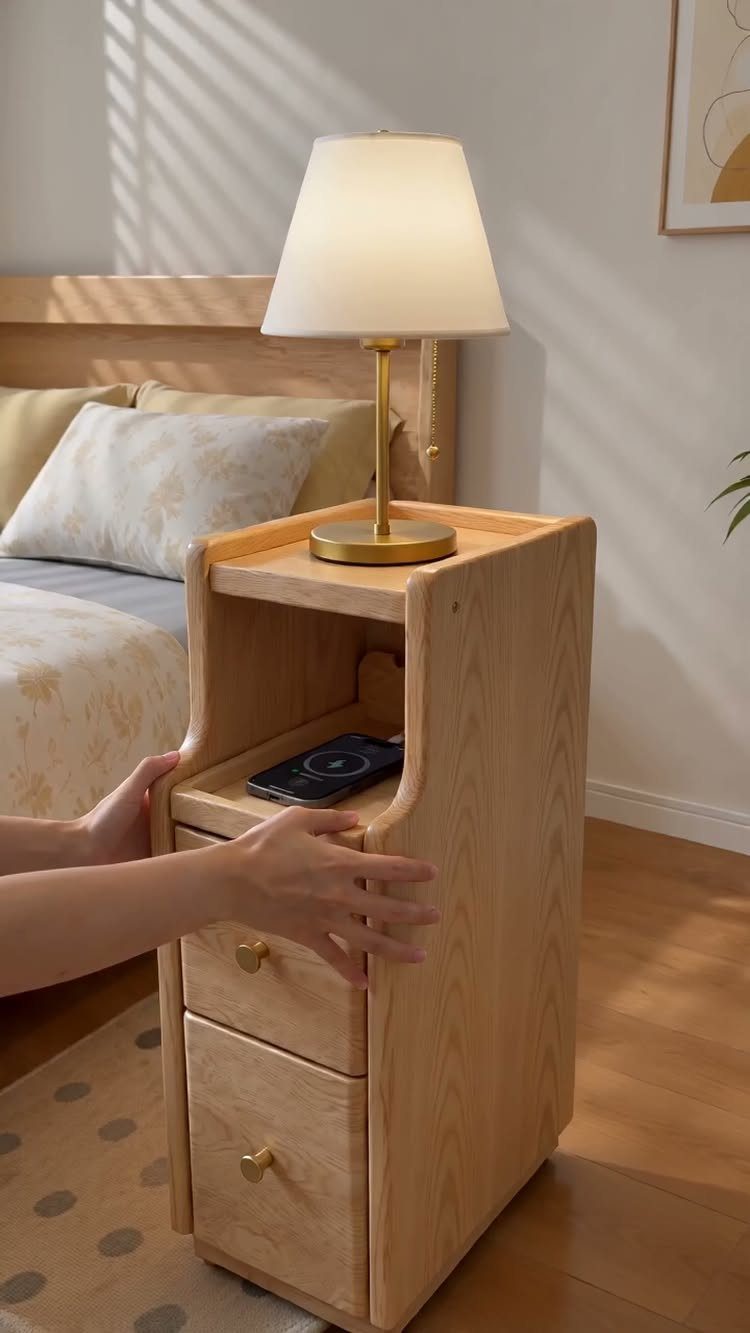
A lamp on the nightstand lets you read or wind down without switching on the ceiling light. A light-wood table with an open shelf and a gold-based lamp keeps everything within reach of the pillow.
Add a wireless charger beside the lamp, and your phone stays off the sheets and out of the drawer.
I would choose a lamp with a warm shade, since you’ll be looking at it right before sleep.
29. Candlelight
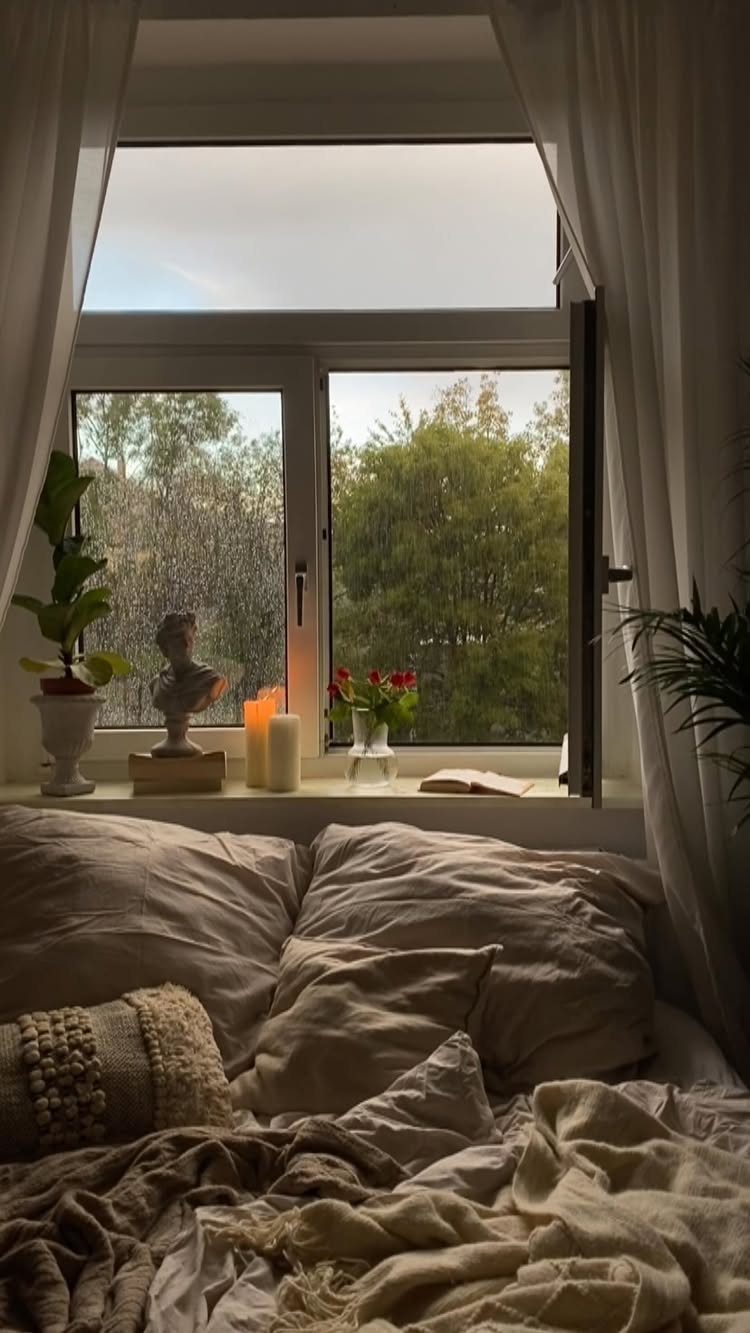
A windowsill is a good place for candles, since the flames show up against the glass and the view beyond it.
Mix tall tapers with short pillars and jar candles, and set them close together so the flames look like one group. If you share a room or rent, flameless candles give the same glow with less worry.
I’d blow them out before bed, every time.
30. Japandi Bedroom
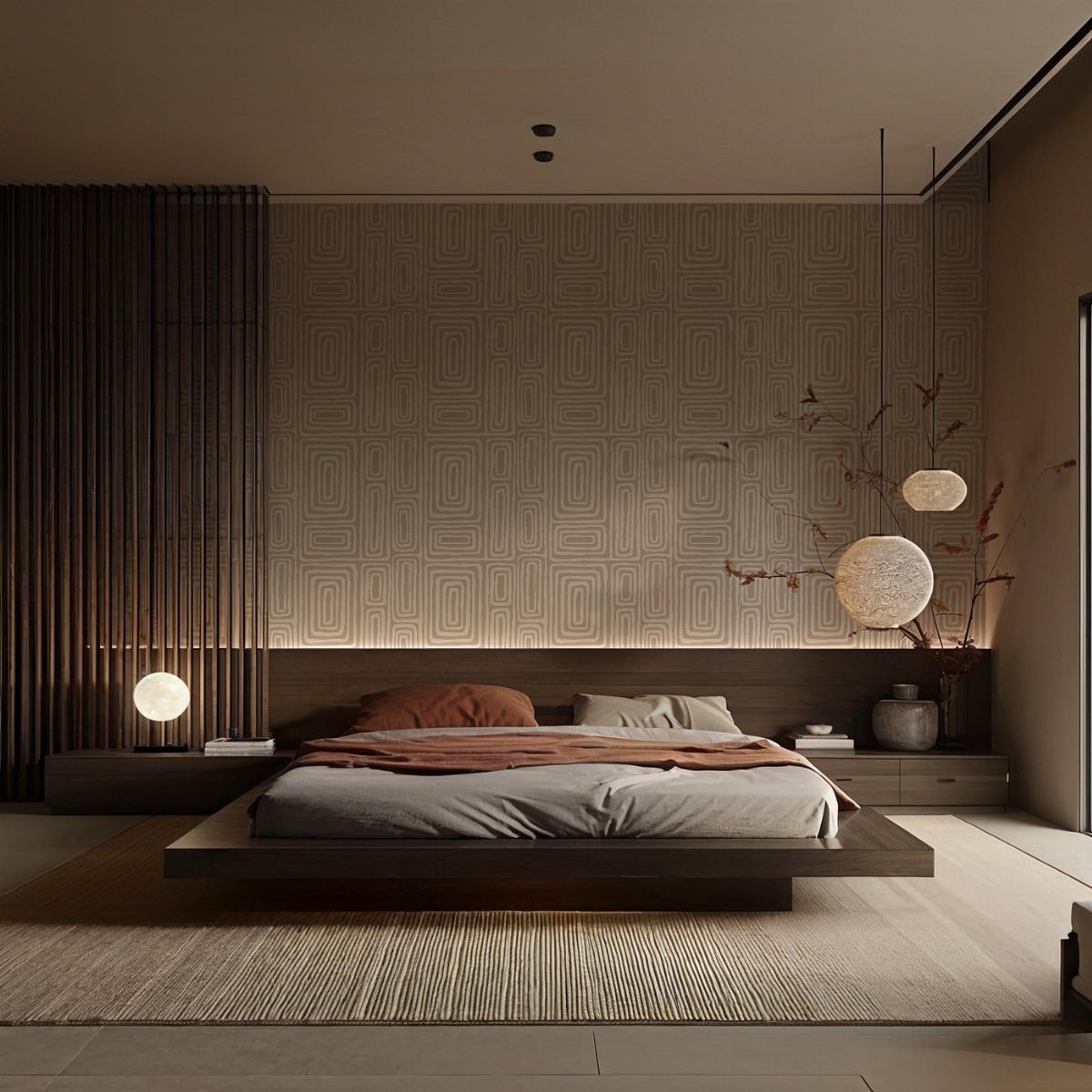
Japandi pairs the low, quiet lines of Japanese design with the warmth of Scandinavian materials.
A patterned accent wall gives the calm palette one place to rest the eye.
Slat dividers also let you zone a larger room without closing it off.
31. Industrial Bedroom
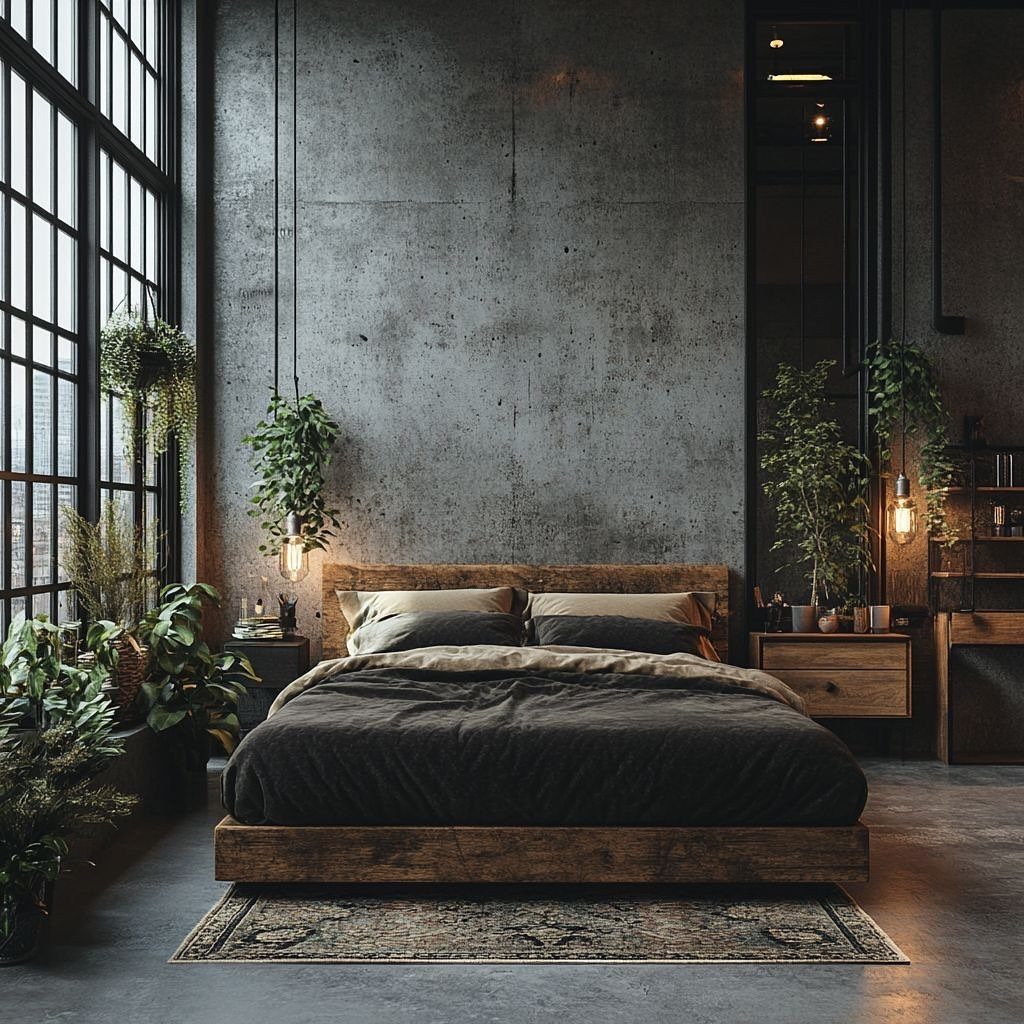
Concrete walls, a plain wooden bed and a few hanging Edison bulbs make a bedroom that looks finished without being polished. Wood and green plants warm up all that gray, so the room reads as relaxed rather than cold.
Leave surfaces honest: exposed concrete, bare timber, metal-framed windows. Renters who can’t touch the walls can borrow the mood with a wood bed, bare bulbs on a cord and a few big plants.
I’d keep the bedding simple and let the materials do the talking.
32. Grunge Room
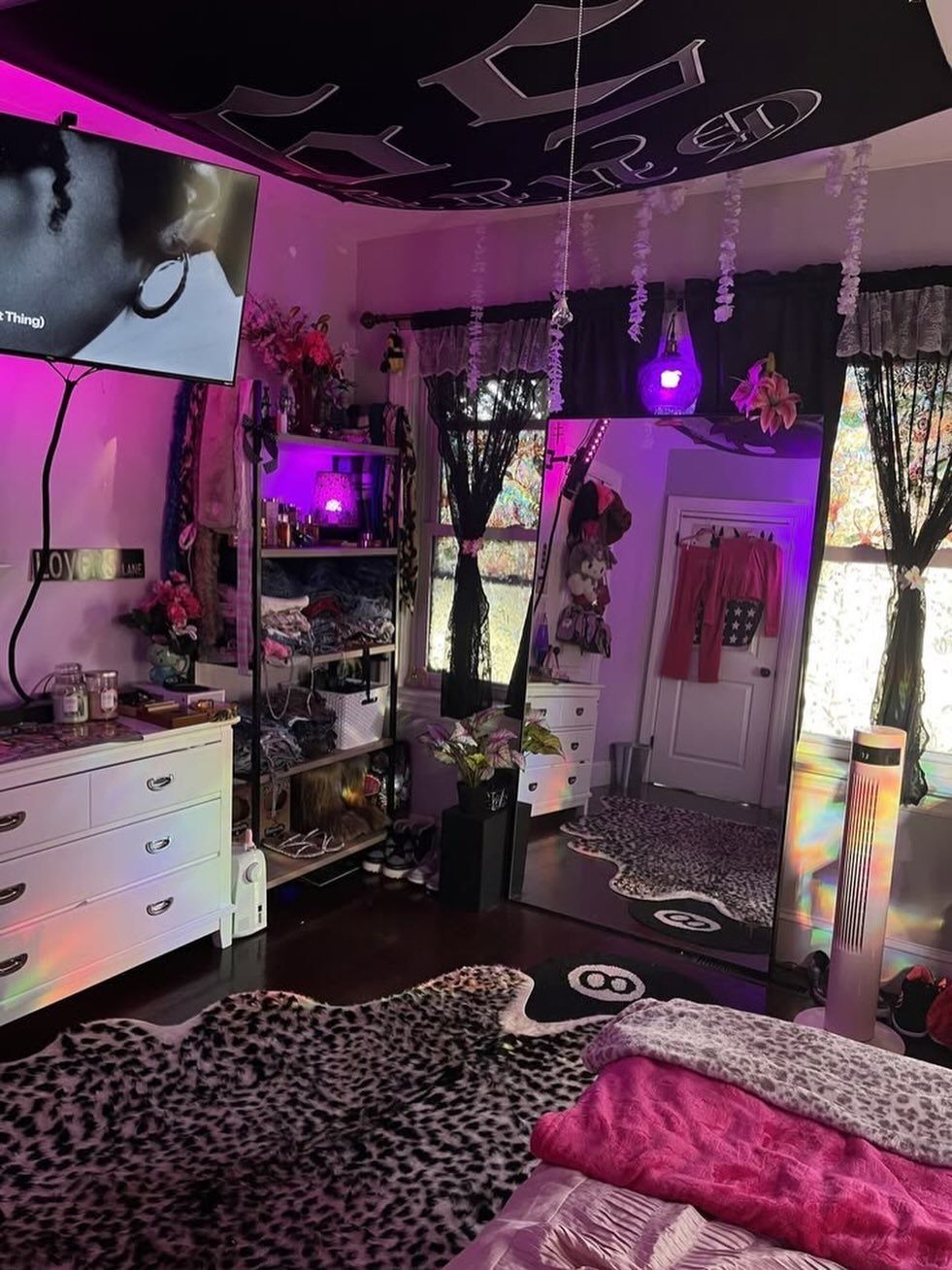
Black on the ceiling and purple light in the corners turn a regular bedroom into a hideout.
Animal print and black lace give a grunge bedroom its rock-and-roll edge, but one white piece, like a dresser, keeps all that dark from swallowing the space.
Pick one loud pattern, as the leopard print does here, and let everything else stay dark and plain. Purple bulbs or an LED strip are an easy, removable way to get the glow.
Painting a ceiling black is the one step that’s hard to undo, so renters should check the lease first.
33. Witchcore Room
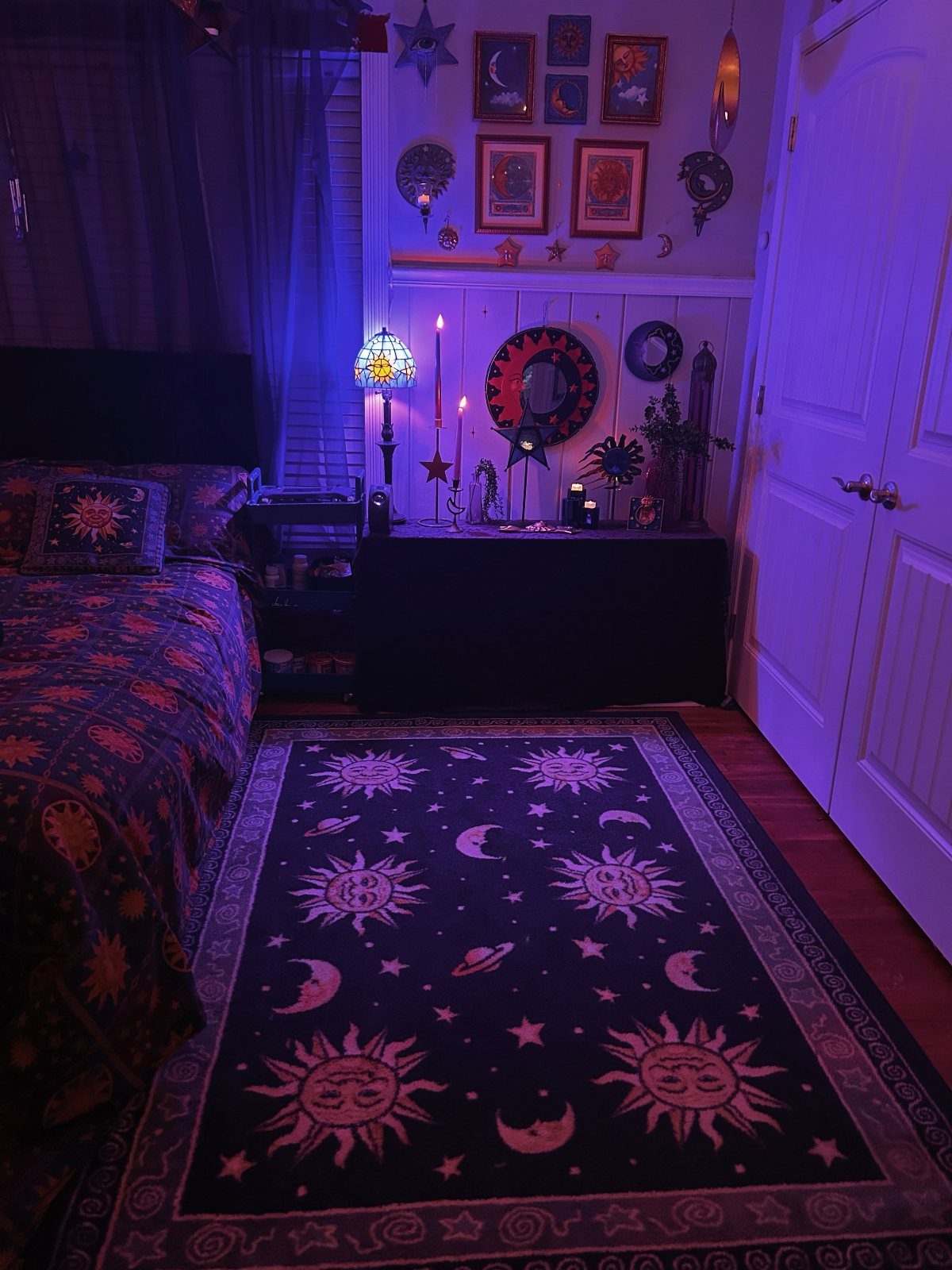
Celestial prints are the easiest way into witchcore, because a sun-and-moon rug and matching bedding say the theme without a single prop.
Occult wall art and a black table holding candles and a lamp turn one corner into a small altar.
Keep the purple lighting low and stick to one symbol family, suns and moons, so the room reads as intentional and not like a costume shop.
I’d start with the rug, since it anchors the floor and sets the palette for every other piece.
34. E-Girl Room
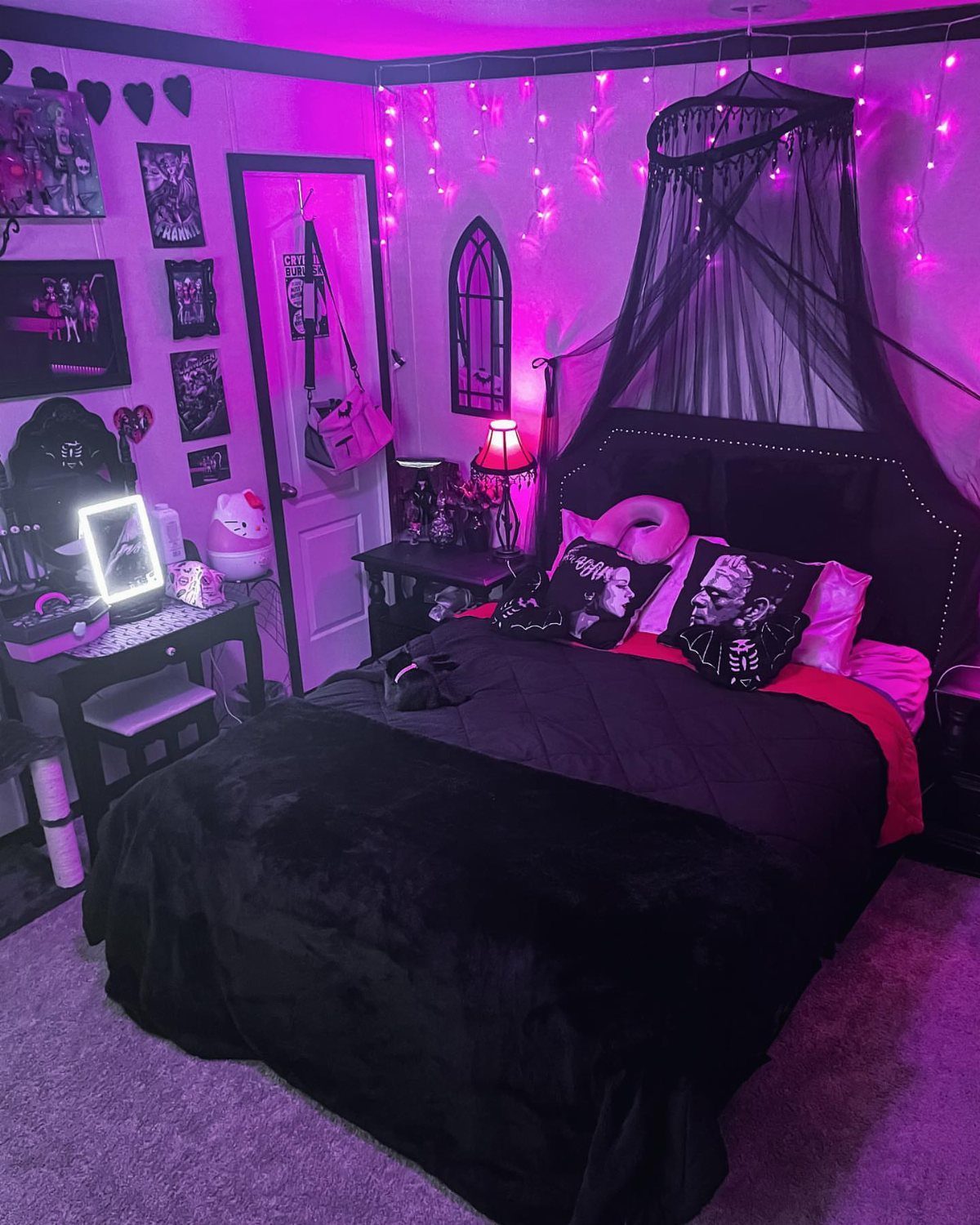
A black bed under canopy netting and a wash of pink LED light is the core of an e-girl room: dark and moody, with a glow that feels like a screen at night.
Posters, gothic-style decor and a small side table fill in the personality.
Pink against black keeps the look sharp, so I’d stay with that pairing and skip a third color. Put the LEDs behind or under the bed frame so the light bounces off the wall instead of shining in your eyes.
Tape-up posters are cheap and easy to swap out.
35. Galaxy Room
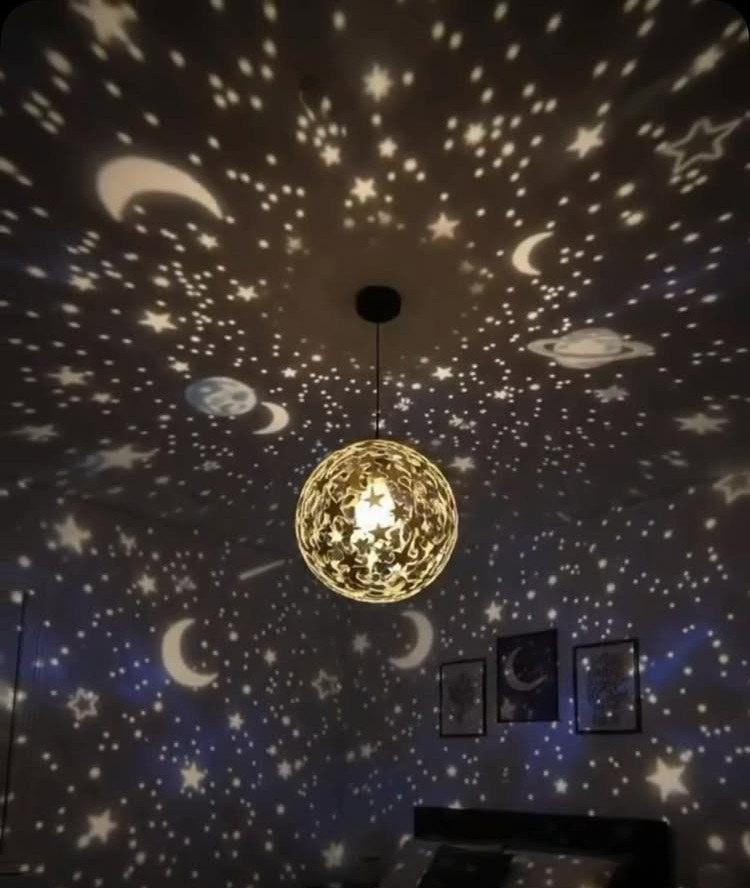
A perforated gold lamp that throws stars, moons and planets across the ceiling is the simplest way to build a galaxy room, and you can switch it off when you want a normal bedroom back.
Keep the walls dark so the shapes stand out.
For a handmade version, the creator of this idea used a balloon and paper cutouts to turn a plain bedroom into a 360-degree starry night sky. That route costs very little but takes more patience.
Hang the lamp near the room’s center so the pattern reaches every wall.
36. Airy Coastal Bedroom
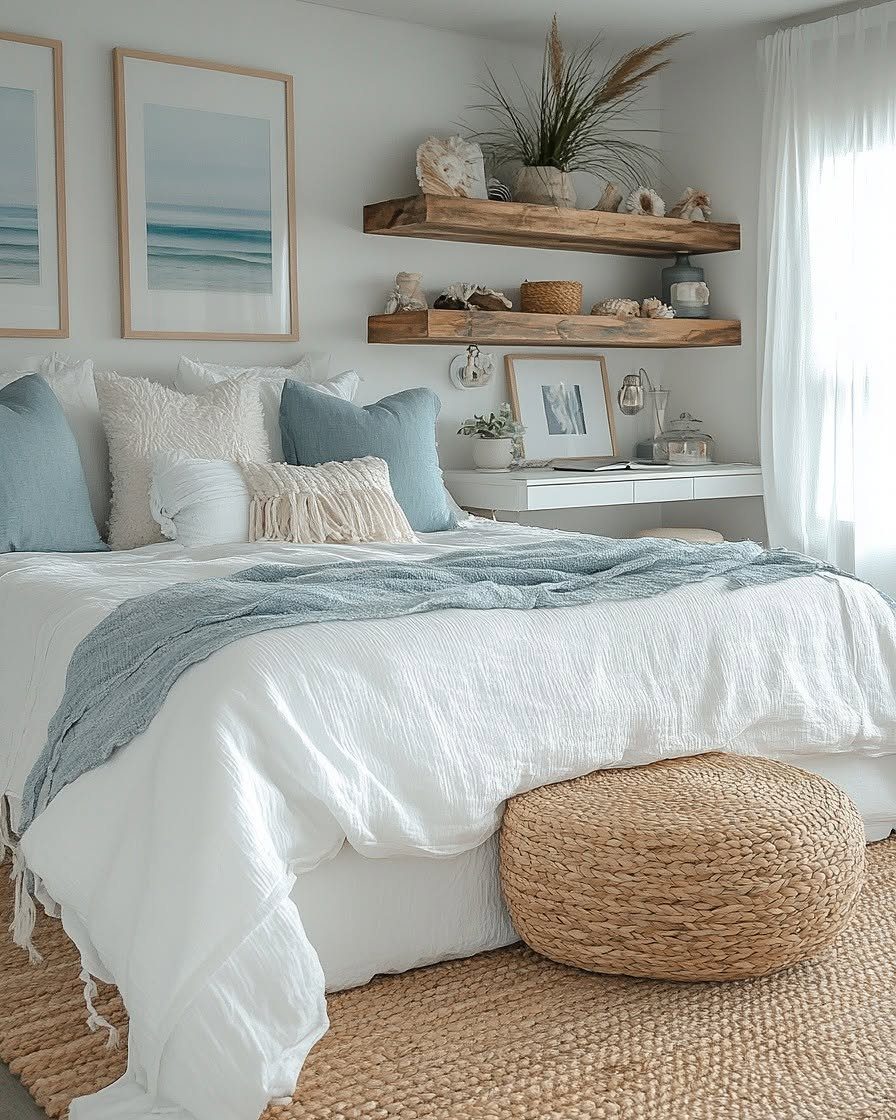
White linens with blue pillows and a blue throw give a bedroom its seaside feel without a single seashell.
Natural woven textures, like the pouf at the foot of the bed, add the sand-and-rope warmth that keeps pale colors from feeling flat.
Wooden floating shelves hold the coastal decor off the floor, which keeps a compact bedroom open and breezy. I’d limit the blues to one shade and let white and wood do the rest.
Swapping pillowcases and a throw is a cheap way to try it first.
37. Mid-Century Modern Bedroom
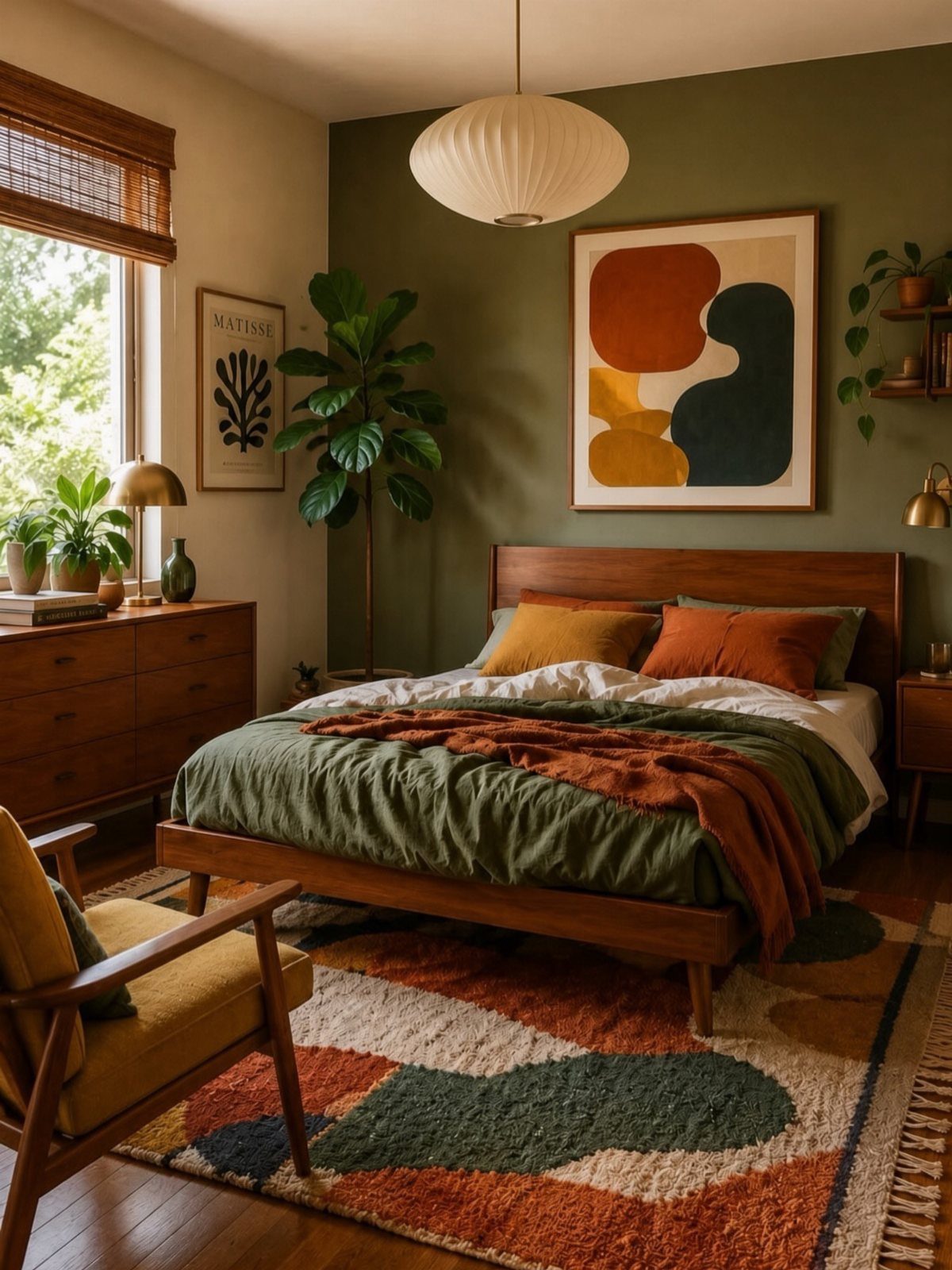
Olive walls, wood furniture and one big pendant light are what make this room read as mid-century. The wood does the work, so I’d choose pieces with visible grain and keep the bedding plain.
A patterned rug and abstract art bring in color without crowding the room. Pick one artwork to lead, like the Matisse poster here, and let the rug and plants stay in supporting roles.
A large pendant over the bed also frees up nightstand space.
38. Textured Throws
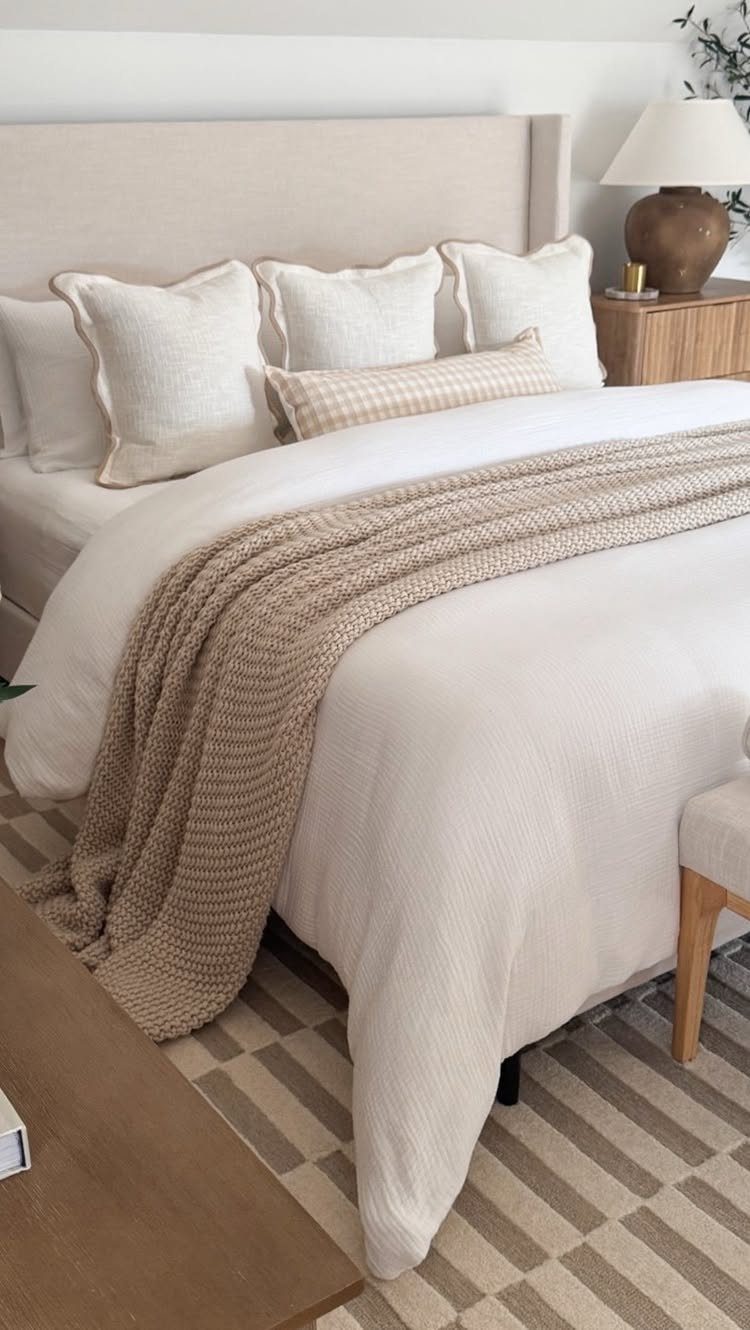
Chunky knit throws add the most texture for the least money. A tan one over white linens and cream pillows gives the bed depth while the colors stay quiet.
Drape it loosely across the foot or one side instead of tucking it flat, so the folds catch the light. Keep the pillows in the same cream family and let the knit be the only coarse surface on the bed.
I’d pick the throw before the pillows, since its weave sets the mood for everything else.
39. Custom Bed Frame
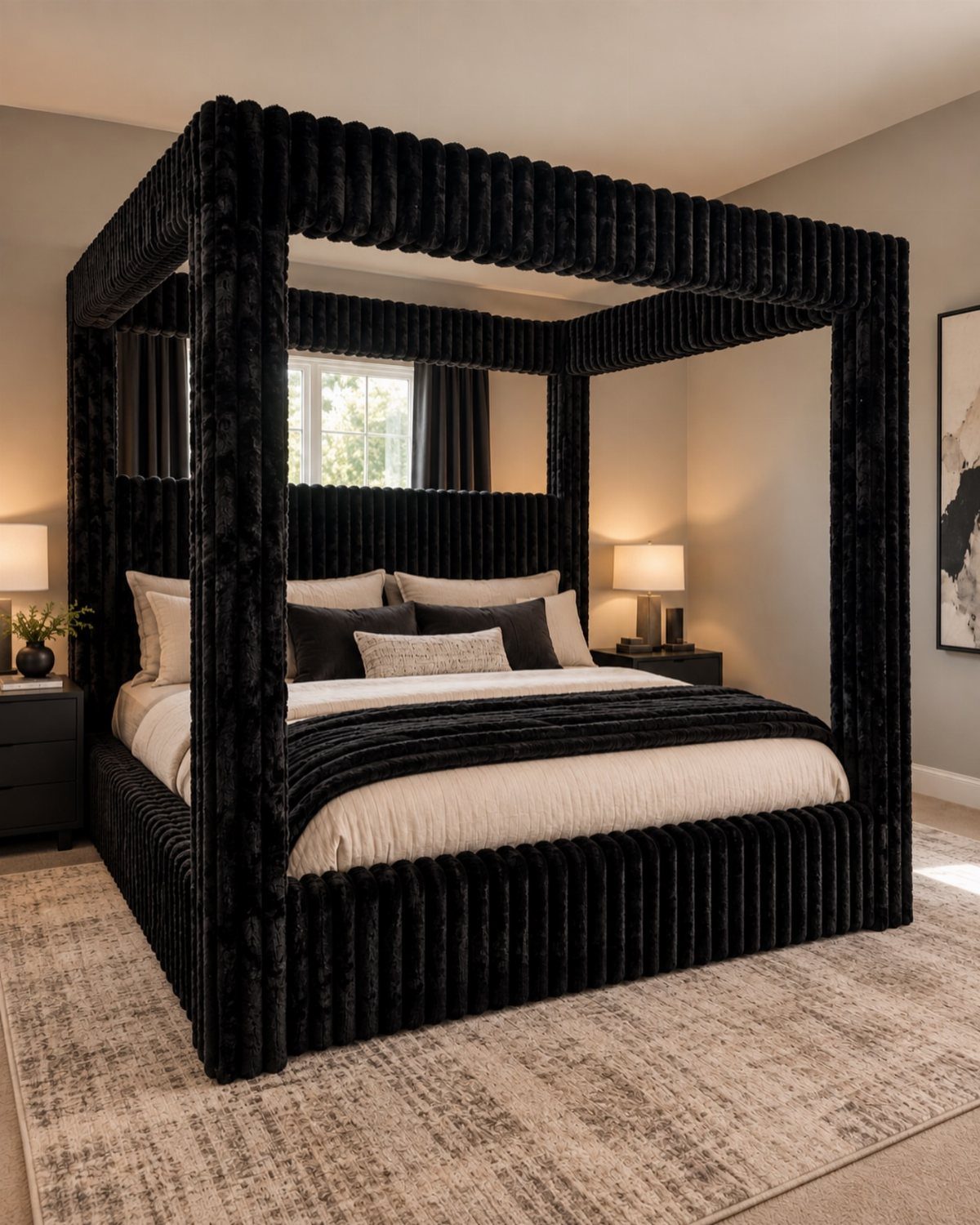
A channeled black velvet four-poster draws the eye the moment someone walks in, so treat it as the centerpiece and let it carry the room.
The vertical grooves in the upholstery catch light and shadow, so the frame keeps its detail even in a dark finish.
A frame this strong needs no help from the walls.
Check the ceiling height and the doorway width before you order, since 4 posts take up more vertical and floor space than a basic frame.
Choose Style Around Personal Needs
Decide what the room has to do before you pick a look. Write down how you sleep, what you need to store, and whether the space also serves as a spot to relax or work during the day.
Those answers can overrule the style you saved. A late sleeper may be happier with blackout curtains than with an open, airy window, even if the airy version photographs better.
With the needs settled, pick a single style, cottagecore or japandi for example, and spend your money on the big furniture pieces first; decor can wait until those are in.
Where the practical answer and the pretty one disagree, your own preference breaks the tie.
Budget and Foundational Furniture
Spend the bigger share of your budget on the bed frame, dresser and nightstands. You touch them every day, and the rest of the room is built around them.
Save on accessories.
Thrifted and DIY decor can fill in the rest. Starting budgets of $60–$300 are realistic across six different styles, and a finished look under $300 is possible.
For an earthy feel, bamboo side tables and woven storage baskets are sustainable and blend into many styles.
Frequently Asked Questions
How do I make my bedroom look aesthetic?
Choose one look and give it a single standout piece, such as soft white fabric hung over the bed or a mural painted behind the headboard.
Then add warm lighting and a few layered textures so the room feels finished. A strand of string lights on adhesive clips gives renters that soft evening glow for very little money, and nothing gets drilled into the wall.
What are the golden rules for bedroom design?
Stick to 3 colors and give one of them the biggest share, so nothing fights for attention. Tape paint swatches beside your bedding first, since that costs almost nothing and shows a bad color match early.
What defines a bedroom aesthetic?
A bedroom aesthetic is the overall mood of the room plus the design elements tied to that mood, blended with your own taste.
It can draw on a trend, an era, a place or an art movement. Cottagecore, for example, means white bedding, sheer fabric overhead and rustic wood, while dark academia uses deep walls, a carved wooden headboard and framed classical paintings.
How do I determine my bedroom style?
Look at several aesthetics and pick the one that feels relaxing and personal to you rather than whatever is popular right now.
Settle your needs first, then pick a single style and stay with it, since one clear direction keeps the room from looking scattered. Before buying, tape paint swatches next to your bedding to see whether the colors feel right together.
How do I make a small bedroom aesthetic?
Start with one color palette, and use white as the base if you are unsure.
Then keep the floor visible: wall-mounted nightstands let the floor run underneath, floating shelves add display space, and a bed with built-in drawers replaces a dresser.
Check how far each drawer slides open, because one that jams against a wall or nightstand is only half a drawer.
How do I make a big bedroom aesthetic?
Break the space into zones for different uses, such as a reading nook with shelves, a deep velvet seat and a plant, or slat dividers that section off an area without closing it in.
Choose pieces in proportion to the room, like a canopy bed or a patterned rug as the busiest item. A bold color or print on one wall also works well in a larger room.