
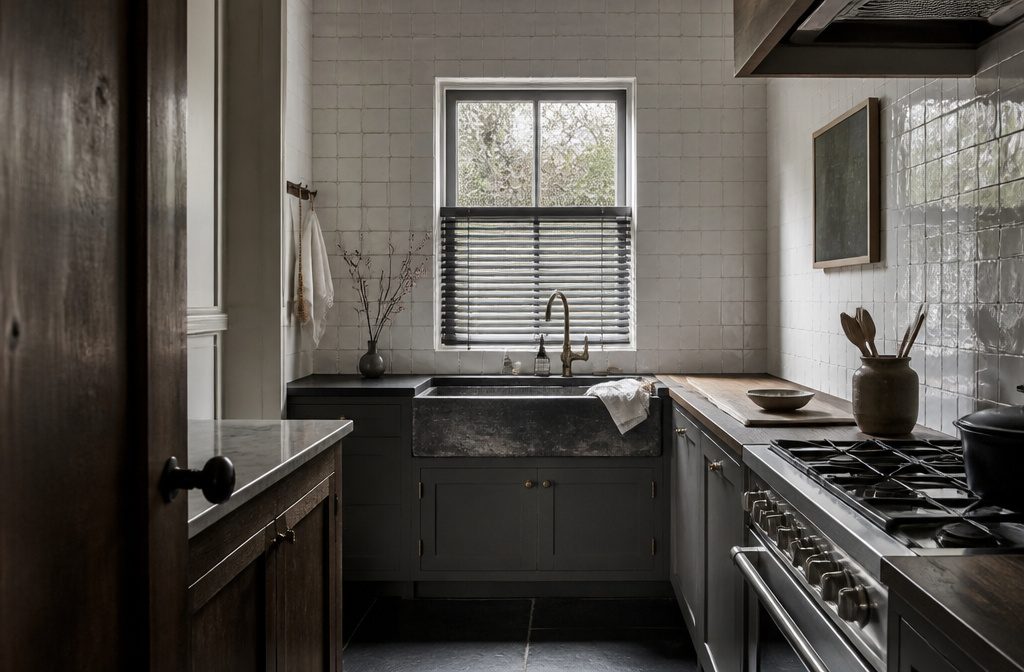
Fixes for a small window run from an $8.99 valance to a tile surround, and the one that suits you depends on whether the window has a view worth keeping.
If it does, leave the sill bare and add light beside the frame. If it faces a neighbor, frosted glass or adjustable-slat blinds keep daylight and give privacy.
1. Let the Light In
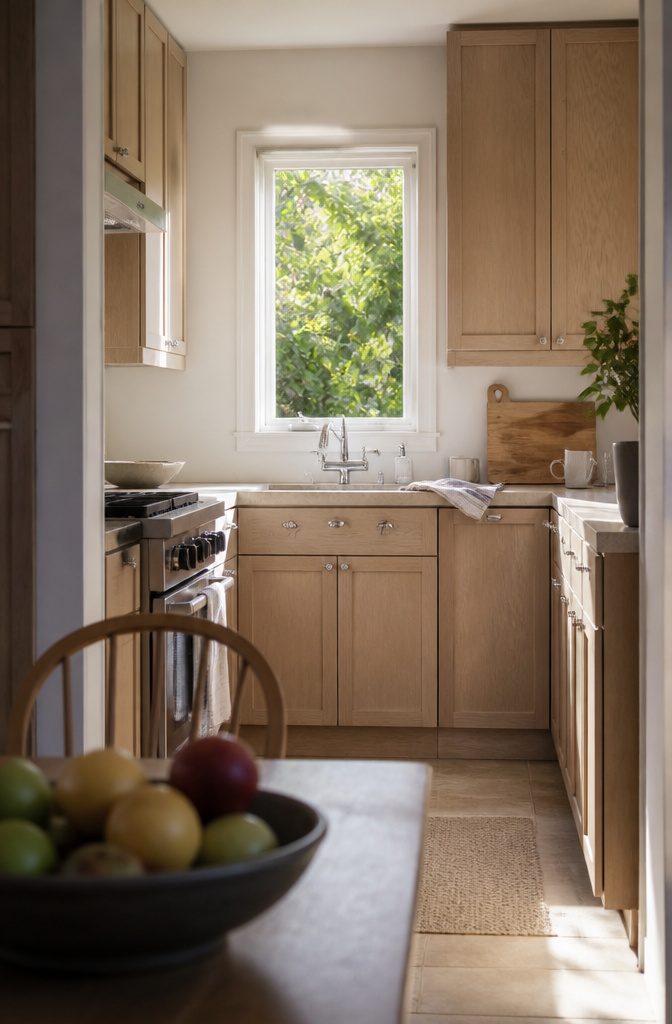
A small window already limits how much daylight gets in, so the first move is to stop covering it.
Leave the glass bare if privacy isn’t a problem; a kitchen with light cerused oak cabinets and no curtains reads as larger because the sun streams straight in.
If you want some cover, hang sheer or semi-transparent panels, which let sunlight filter through. Dark, bulky curtains and heavy pelmets are the first things I’d take down, since they swallow the little light the window gives.
Pale surroundings do the rest. Painting the walls and the window frame white or a pastel shade reflects and amplifies the daylight, and light wood cabinets and light counters keep it bouncing around the room.
2. Plants and Herbs
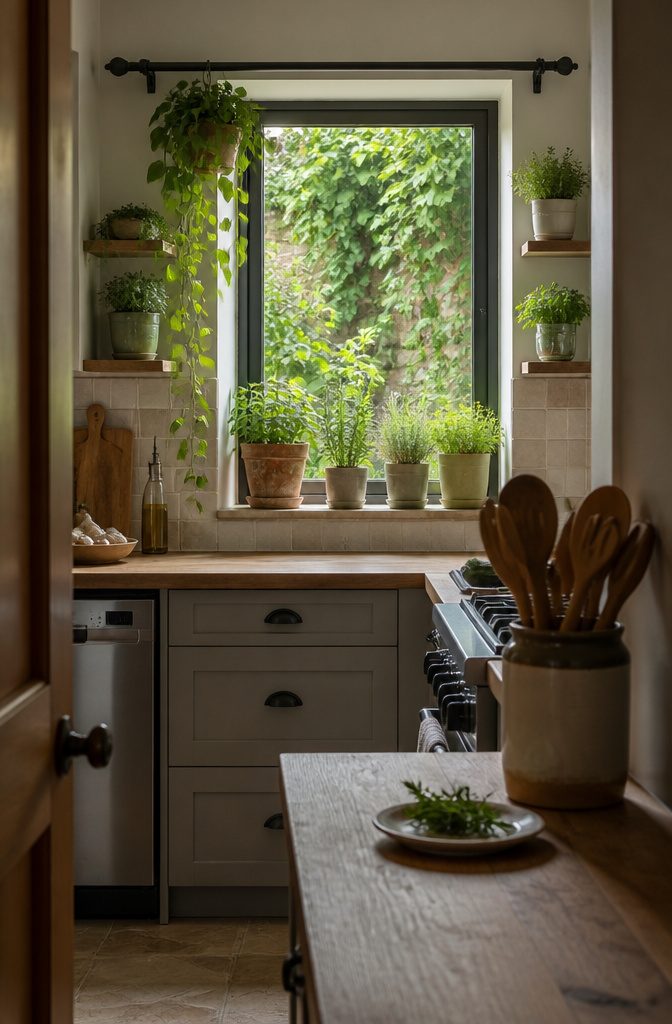
A small window can carry more greenery than its size suggests if you use the sill, the space above it and the sides.
- Sill pots: Basil, mint, rosemary, thyme and parsley all suit a narrow sill, and they sit right where you cook.
- Rod above the window: Small pots of basil, thyme or mint hang from a rod and free up the sill for other things.
- Hanging planter: The Triflora Hanging Planter, $50, is a minimalist, modern option for plants, vines or flowers. I’d pick it over macramé if your kitchen leans sleek.
- Trailing sides: Pothos or ivy can spill down either side of the frame.
- Ledges: A shallow ledge holds herbs or small plants, and succulents are the low-maintenance choice.
Sunlight decides which plants will actually live, so watch how much direct sun the window gets before you buy anything.
3. Window-Side Storage
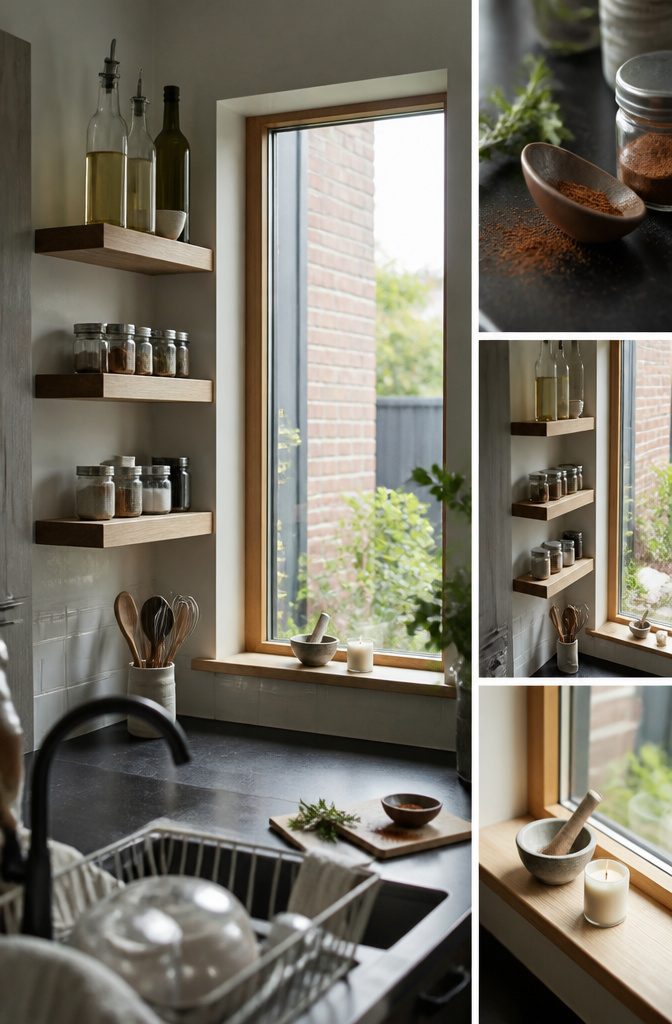
Floating shelves beside a small window hold spices and jars without crowding the glass, and that’s the placement I’d choose first.
Shelves above the window work too, but every shelf takes some glass or light, so keep the shelving beside the window, not across it. Clear bottles pass more light than a row of opaque jars.
If the window has no sill, add one. The NewMouldings Window Sill runs $51.92 and comes in a variety of wood styles, so it can look like it was always part of the trim.
It gives you a ledge for decorative bottles, candles or small kitchen tools. Keep the load light, and keep wood away from the splash zone at the sink.
4. Privacy That Keeps Light
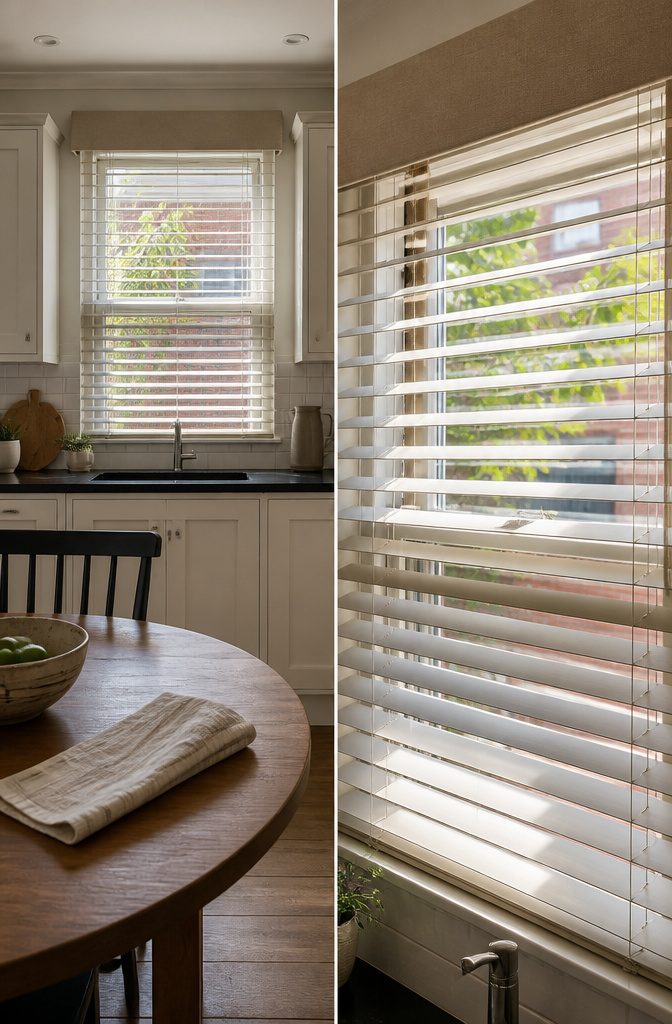
A window facing a neighbor needs a cover that closes on demand, and adjustable-slat blinds do that best.
Tilt the slats to filter daylight, then shut them at night. Adding a valance on top gives you versatile control of the light and a softer look than bare slats.
Sheer or semi-transparent curtains are the gentler choice.
They pass sunlight and still give a little privacy, and setting the rod at the midway point of the window keeps the upper half open. Avoid opaque panels here, since some nearly black out the sun.
If no one can see in, a valance alone adds style without hiding the view. A bare window is better still, and I’d leave it that way.
5. Pattern and Color
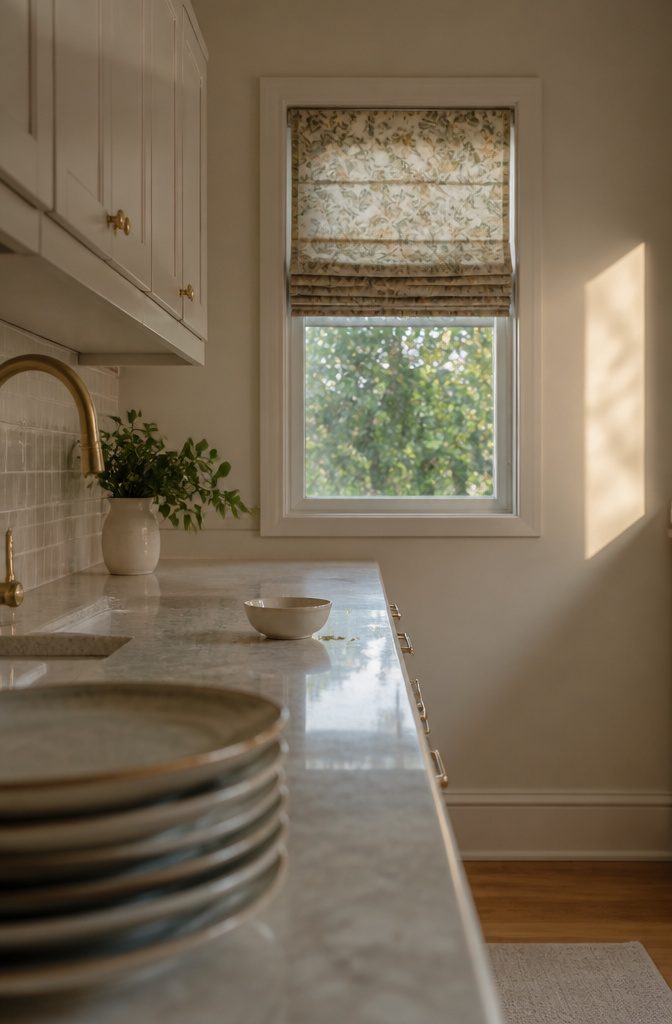
A small window carries a pattern better than you’d expect, because a little fabric is enough to make the spot look chosen instead of leftover.
Florals lean vintage, and stripes read modern. For a budget test, the Seymour Energy Efficient Rod Pocket Curtain Valance costs $8.99, so you can try a pattern before spending on anything custom.
Roman shades are the step up: they fold neatly when raised, which keeps the glass clear, and they take color or print well.
Bamboo woven shades bring warmth and texture, and I’d choose one over a plain fabric shade in a kitchen full of smooth, hard surfaces.
Pick just one treatment, though. A very small window looks cluttered when overdecorated, so skip stacking a valance, a curtain and a garland on the same frame.
6. Decorative Window Film
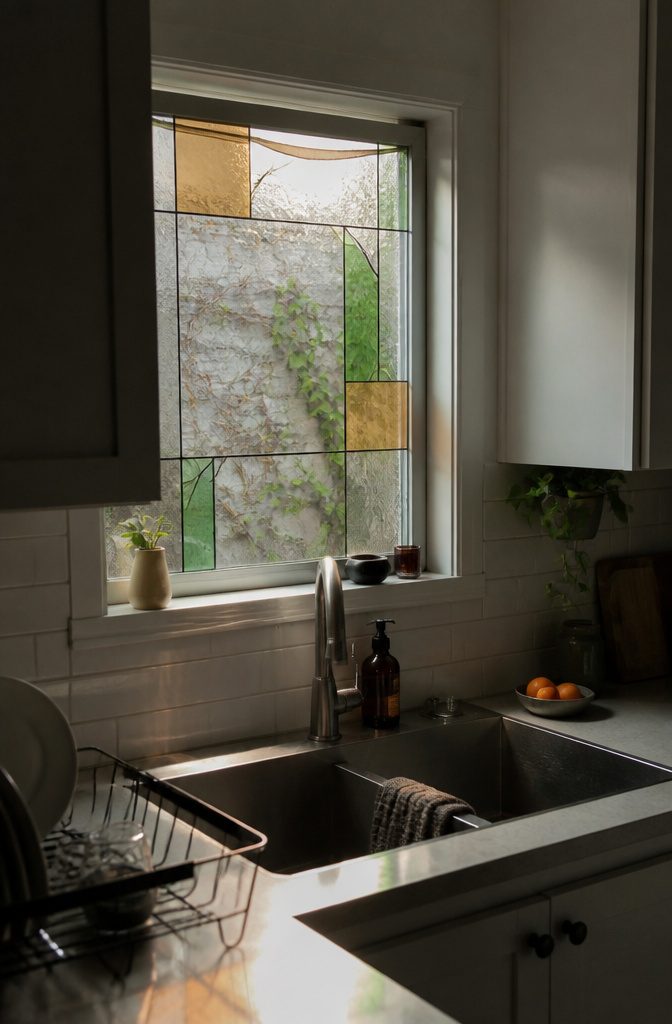
Stained-glass-style vinyl film puts color and pattern on a plain kitchen window without any real leaded glass.
It blocks some sun but doesn’t make the window fully dark, and the tinted, patterned surface adds a layer of privacy. For a renter whose window faces a neighbor, I think it’s the best-looking fix going.
Film does lose to a curtain in one way: it’s fixed. A curtain slides aside for a full view of the yard, but film stays on the glass, so the window never gets a clear, uncolored look.
If that view is the best part of your kitchen, a curtain is the better choice. On a small window, I’d also keep the pattern simple so the glass doesn’t feel cluttered.
7. Lighting Near the Window
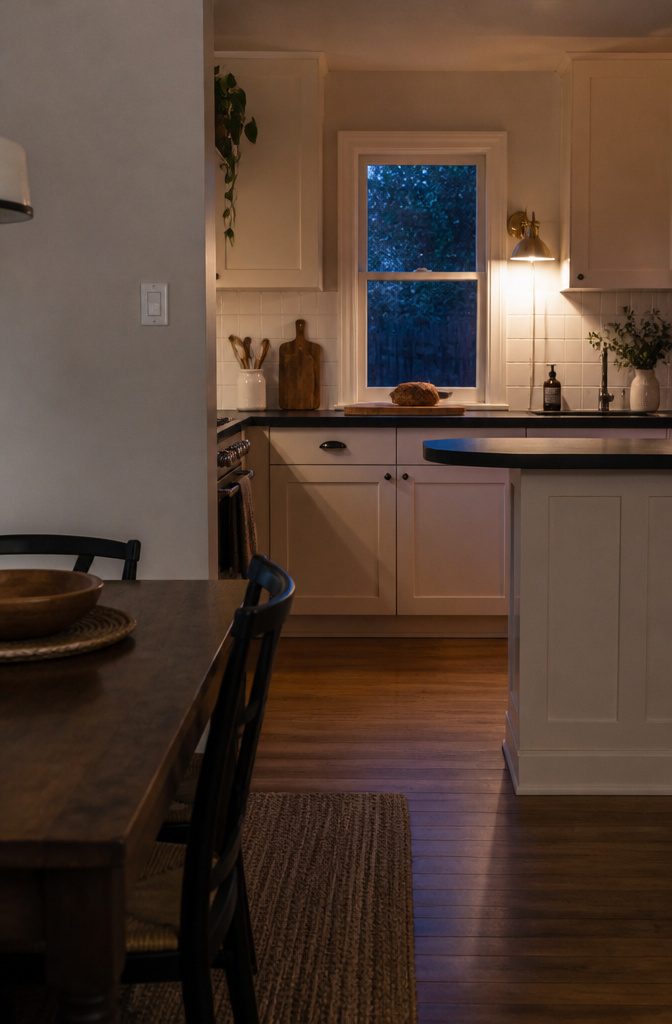
A small window gives out early, and by evening a kitchen with one can feel like a cave. Accent lighting beside the frame fills that gap and adds a softer, almost romantic mood on dark days or late nights.
Sconces come in plenty of styles, so a brass one is an easy way to put some of your own taste right at the window.
Renters can skip hardwiring. A plug-in sconce or a small lamp on the counter gives the same glow with no electrician and nothing to patch at move-out.
I’d set the light right beside the frame, at sill or counter height, so it washes the wall and the glass instead of sitting across the room.
Choose a plug-in you can take with you, and run the cord along the trim so it stays out of the prep area.
8. Keep the View Clear
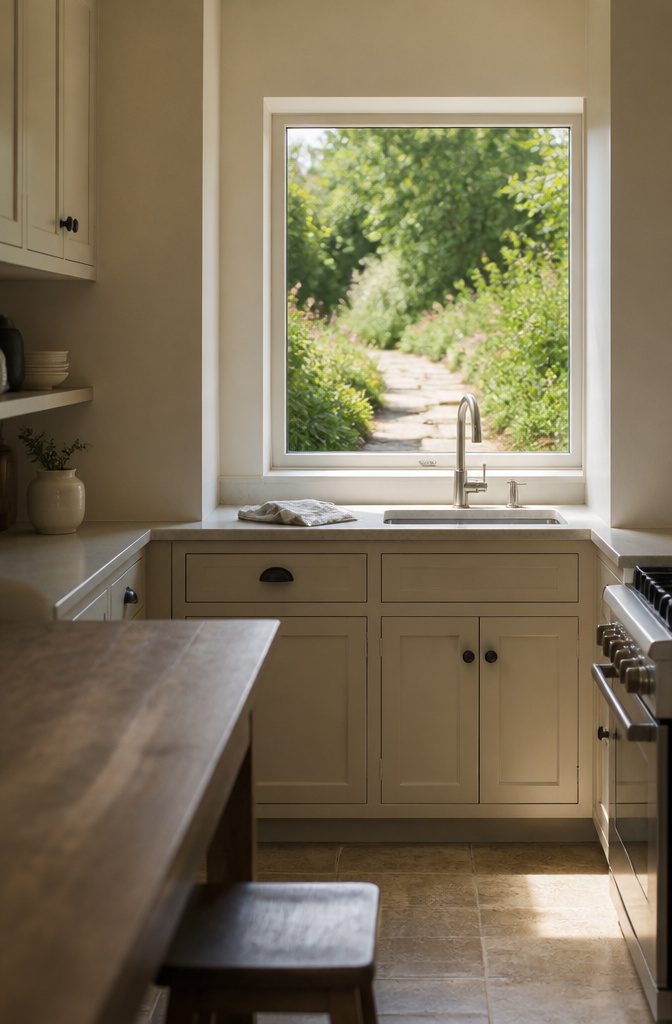
A good view does more for a small kitchen than a row of pots on the sill. Move the table, stools and rolling cart out of the sightline, and the window becomes décor that costs nothing.
Sill storage and plants have real value, because they add surface a tight room lacks.
Still, when the view is worth looking at, the view wins and the sill stays bare, or holds one low item at most. If the glass faces a blank wall, the storage wins instead.
Sun direction affects how open you can leave it.
North-facing windows get less light, while south-facing ones may need a window treatment. A splash of vinegar on a cloth keeps the glass streak-free.
9. The Right Window Style
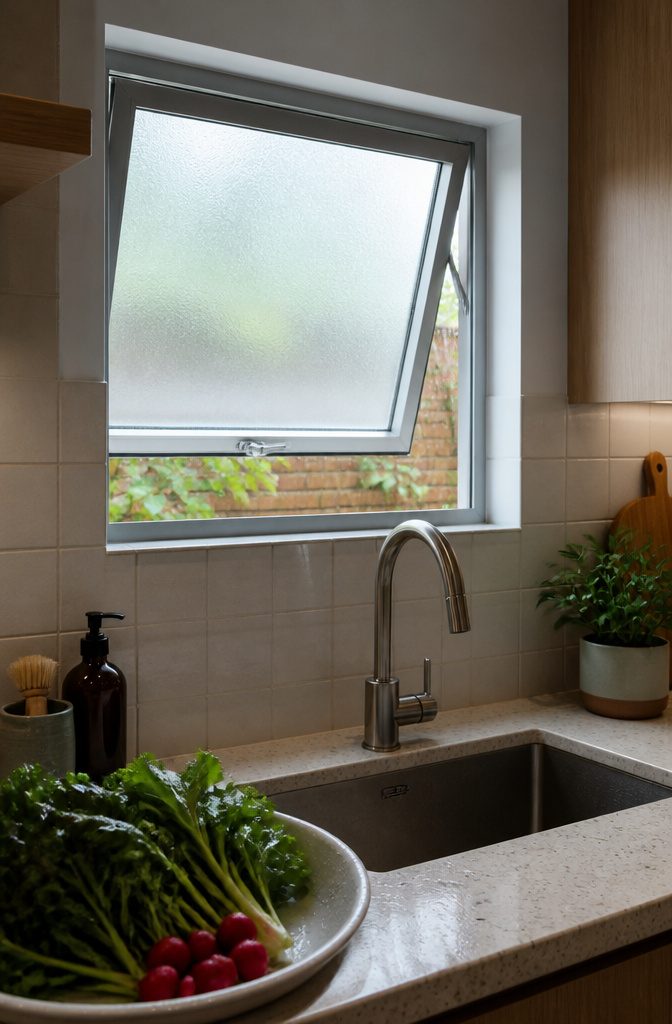
Sliders and awning windows win in a small kitchen because neither swings into the room.
An inward-opening sash competes with cabinet doors and anyone standing at the stove, while a slider moves sideways and an awning tilts out from the top.
Over a cooktop or prep sink, an awning can stay cracked open in light rain, so steam and cooking smells still leave.
I’d choose slim frames, since thick sashes eat into an opening that is already small. If a neighbor’s window faces yours, frosted glass keeps the daylight and blocks the view.
Two openings on different walls give true cross-ventilation. A transom above the cabinets adds light and air without costing any storage.
10. Sills for Odd Windows
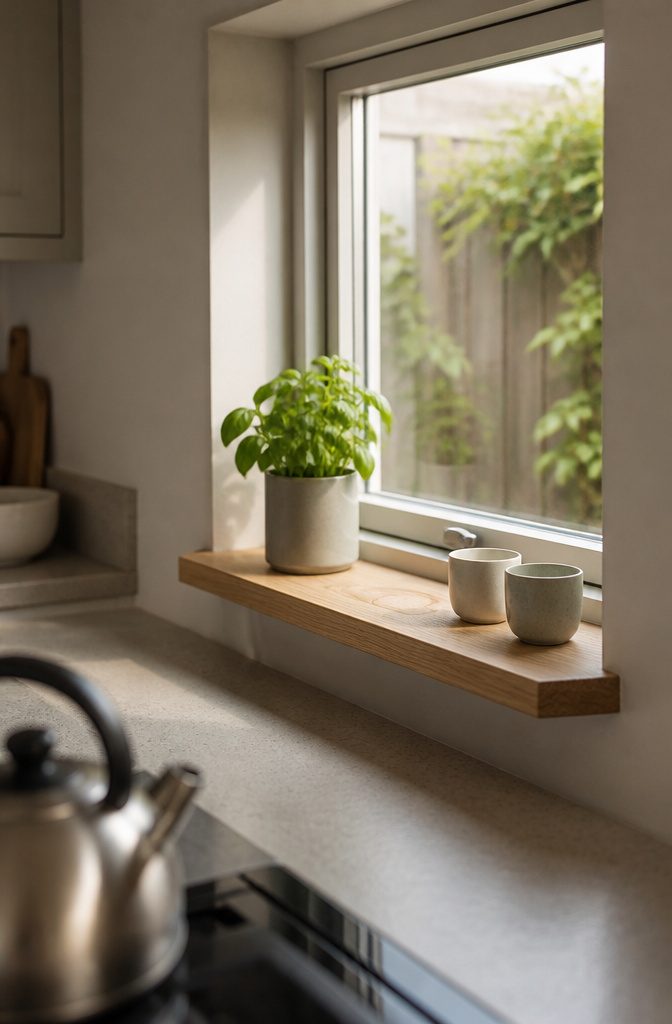
A flush window with no sill leaves nowhere for a teacup collection or a few herbs, and an attachable sill fixes that with little installation.
Most come in a range of colors and wood styles, so you can match your cabinets or add classic detailing that makes a plain opening look finished.
For renters with a flush or oddly shaped window, an attachable sill adds a ledge without rebuilding anything, which is the main reason I’d pick it over other fixes.
When a wood ledge would crowd a small opening, an acrylic window shelf is the subtler choice. It reads lighter, so the glass stays the focus while you still gain a spot for a plant or a few cups.
Wood wins where you want warmth. Acrylic wins where the window is already tight.
Tile Surrounds That Take Steam
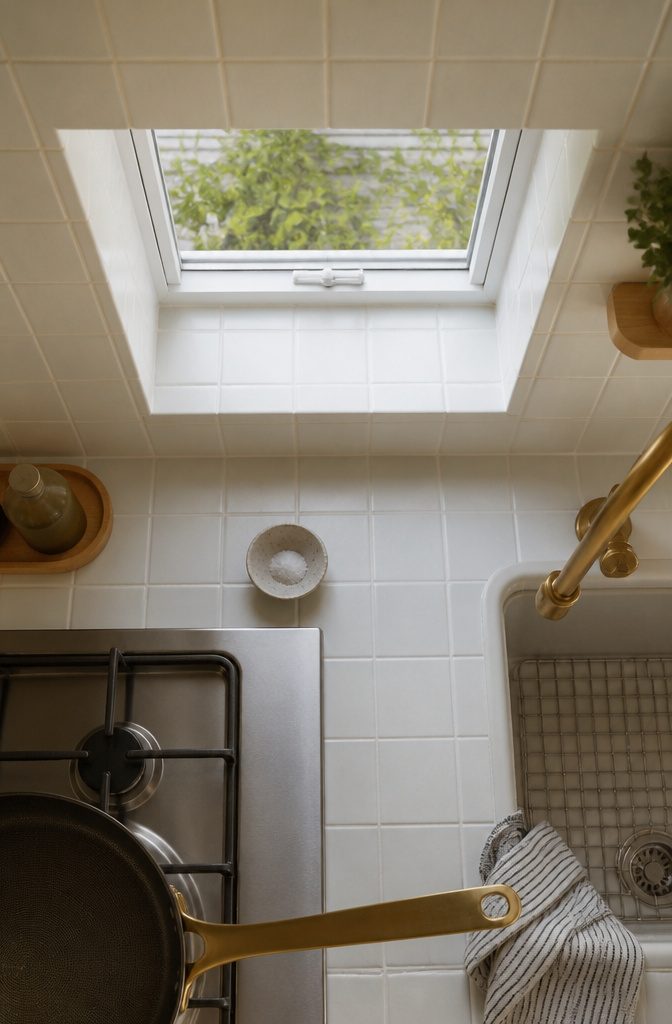
Ceramic and porcelain are the two tiles I’d put around a kitchen window, since both handle heat, splashes, steam and sun without warping or fading.
Go light: pale tile bounces daylight back into the room, which counts for a lot when the glass is small.
Finish comes down to glare. Glossy tile spreads more light but can flash in direct sun, so choose matte if the window faces a harsh angle.
Grout takes more water than the tile does. Use one rated for wet areas, and seal it if it’s cement-based.
Tape samples right beside the frame and watch them in direct window light at the hours you actually cook.
Forza décor, Silversummer Earth, Mosaic Grey, Alchemia Peach Raw Texture and Alchemia Shell Raw Texture are all worth ordering as samples. Color and sheen shift a lot between the showroom and your wall.
Measure Before You Buy
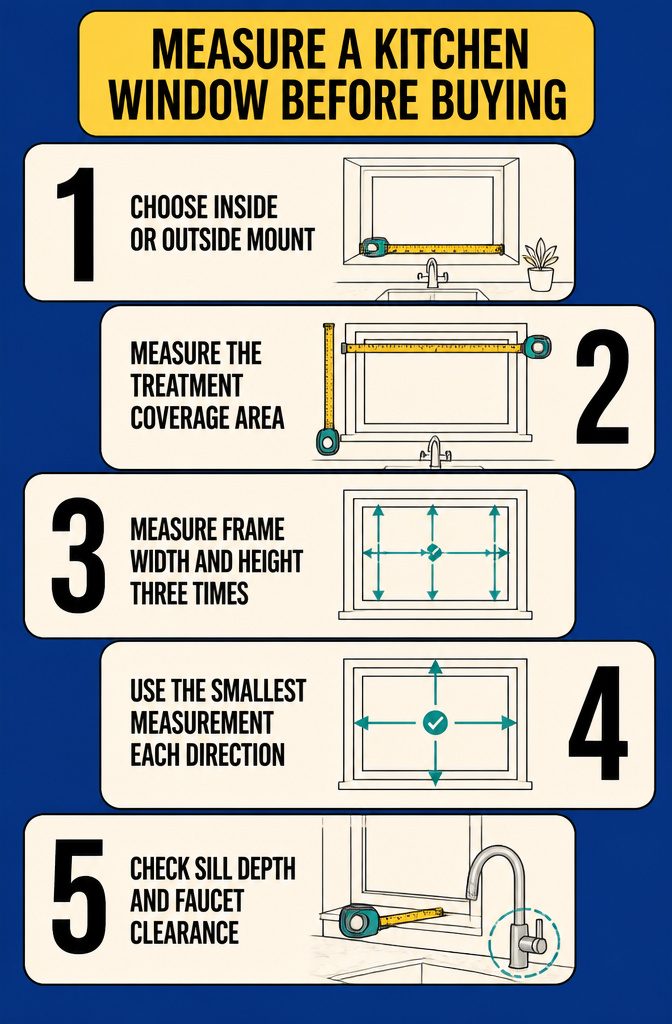
- Pick inside or outside mount first. Every other number depends on it, and I’d choose inside mount for a kitchen window that sits in a clean recess.
- Measure the height and width of the area the treatment will cover. For an inside mount that’s the opening; for an outside mount it’s the wall space you want covered, trim included.
- Replacing the window instead? Measure inside the frame at three points for width and three for height, then use the smallest number in each direction.
- Check sill depth and clearance last. A shallow sill or a faucet handle in the way can rule out an inside mount, and it’s better to learn that before you order.
Cleaning Frames and Blinds
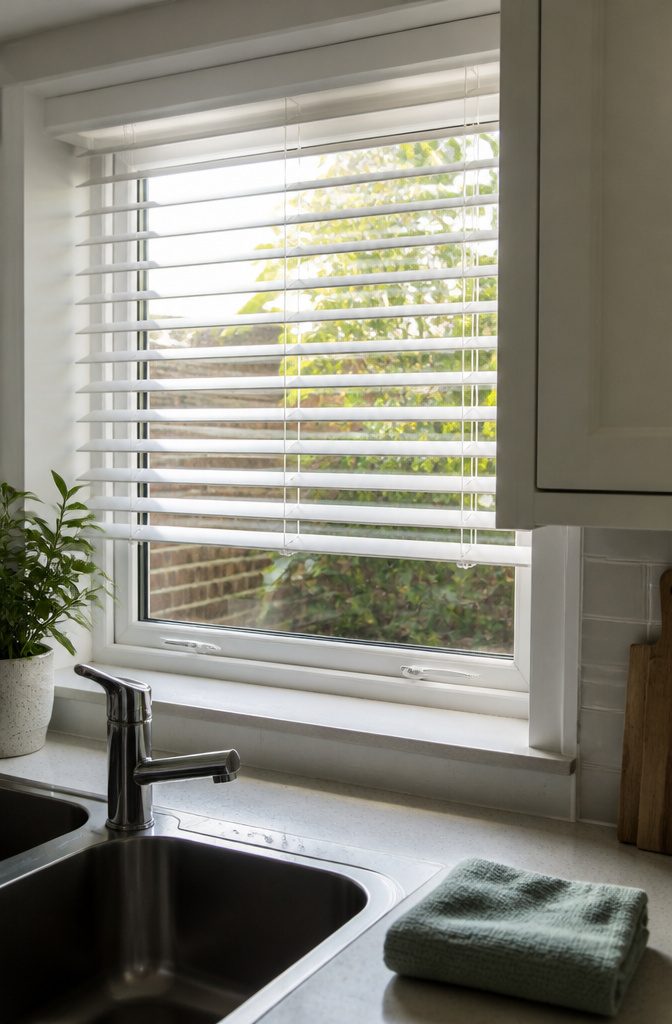
Cooking steam and splatter settle on the glass, the frame and any treatment hanging near a stove or sink, and grease grabs dust once it dries.
Wipe the frames weekly with mild soap and a soft cloth, so the film never gets thick enough to need scrubbing.
Blinds need a damp cloth once a month, slat by slat. For the pane, a glass cleaner leaves a streak-free finish.
If your window has weep holes along the bottom of the frame, check that they drain.
Water that can’t leave will sit right where kitchen steam collects. I’d tack the monthly blind wipe onto one of the weekly frame days so both jobs stay on the calendar.
Frequently Asked Questions
What is the best window style for a small kitchen?
Sliders and awning windows are the best picks because neither swings into the room. A slider moves sideways and an awning tilts out from the top, so both stay clear of cabinet doors and whoever is standing at the stove.
Slim frames help too, since thick sashes cut into an opening that is already small.
How can I improve ventilation in a kitchen with a small window?
Place an openable window near the cooktop or prep sink; an awning style there can stay cracked open in light rain while steam and cooking smells escape.
Two openings on different walls give true cross-ventilation. A transom above the cabinets adds air and light without using any storage.
Which tile is best around a kitchen window, and is it durable?
Ceramic or porcelain, including decorative versions, because both handle heat, splashes, steam and sun without warping or fading. Pale tile bounces daylight back into the room.
Glossy tile spreads more light but can flash in direct sun, so go matte if the window faces a harsh angle. Use grout rated for wet areas, and seal it if it’s cement-based.
How do I measure a kitchen window for curtains or blinds?
Decide on an inside or outside mount first, since every other number depends on it. For an inside mount, measure the height and width of the opening; for an outside mount, measure the wall space you want covered, trim included.
Then check sill depth and clearance, because a shallow sill or a faucet handle can rule out an inside mount.
How do I measure a kitchen window for replacement?
Measure inside the frame at 3 points for width and 3 points for height, then use the smallest number in each direction. Check sill depth and clearance as well before you order.
What are the best plants to keep near a kitchen window?
Basil, mint, rosemary, thyme and parsley are the popular choices for a narrow sill, and they sit right where you cook.
Sunlight decides which plants survive, so watch how much direct sun the window gets before you buy. Pothos or ivy can trail down the sides, and succulents are the low-maintenance option for ledges.
What can I do with a low window in a kitchen?
Turn the area into a breakfast nook with a small bench and a pop-up table. The low glass gives the nook daylight, and a couple of floating shelves beside the window can hold spices and jars within reach.