
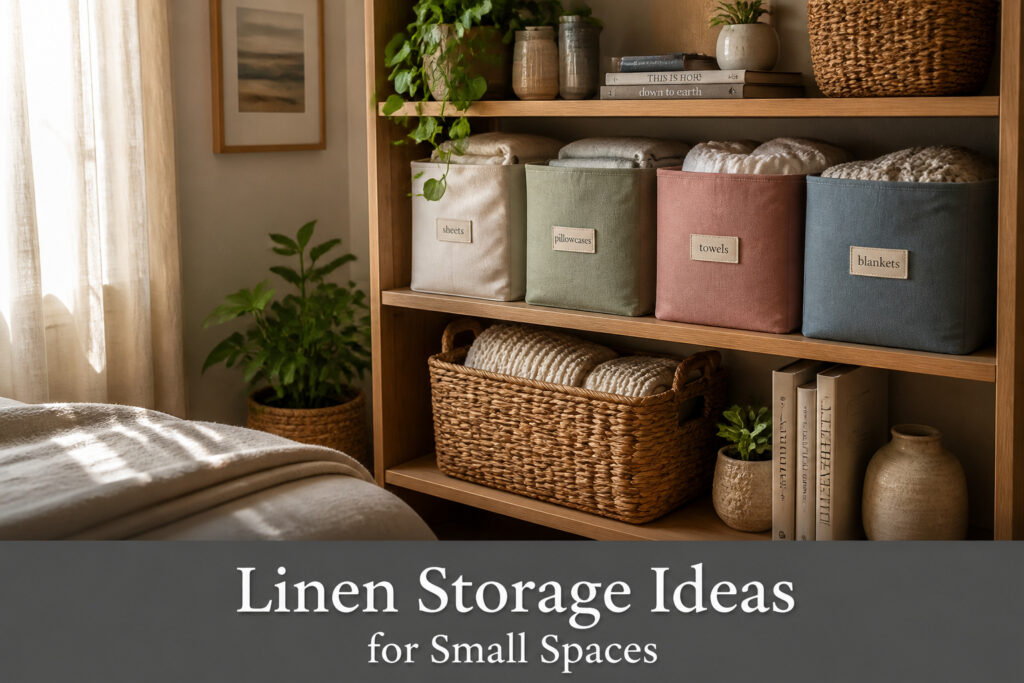
The right linen storage idea for a small space depends on one measurement: the actual clearance you have.
A platform bed with fourteen inches underneath fits rigid bins on casters, but a standard frame with a box spring leaves only seven inches, which means soft bags or nothing.
I learned that after buying six-inch containers that caught on the rails every single time I pulled them out.
1. Vacuum-Sealed Bags
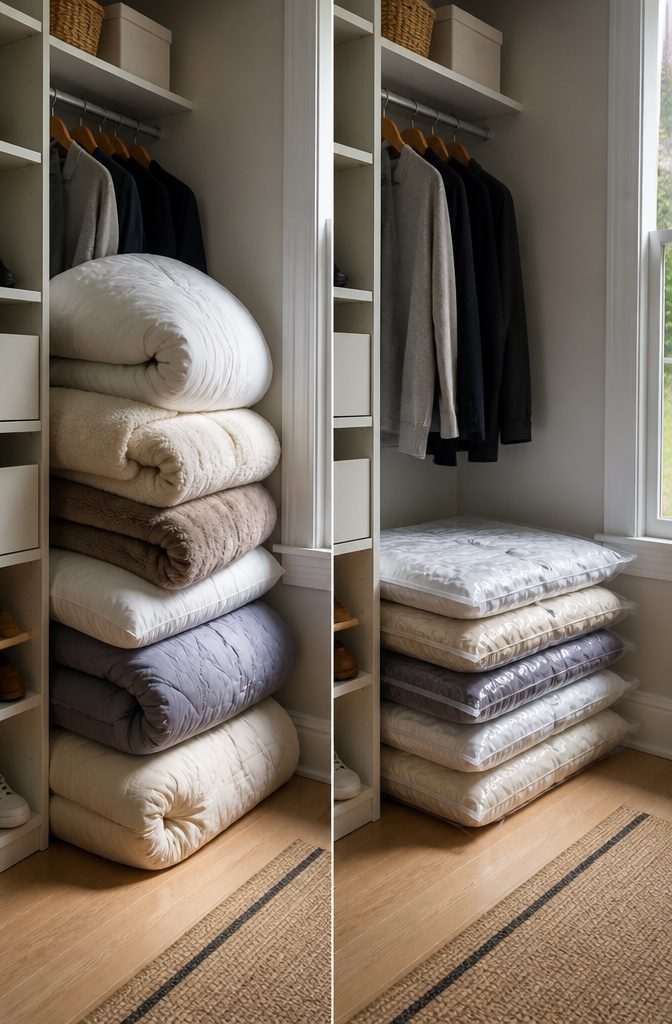
Vacuum-sealed bags turn bulky blankets and duvets into flat pancakes you can stack in a closet corner or slide under a bed frame.
The compression is dramatic; a king-size down duvet that once hogged half a shelf becomes a package thin enough to lose behind a row of shoes.
The catch is the seal. I have had bags hold vacuum for months and I have had them reinflate overnight because a zipper caught a thread or the valve cap cracked in a drawer.
The ones that work best are the thick, textured plastic with a double zipper you can hear click closed. The thin, glossy film versions save a dollar or two per bag and leak within a week in my experience.
A standard vacuum hose attachment pulls the air out in under a minute.
The bag does the rest, pressing the fill into a rigid block that keeps its shape until you open the valve. For renters with one closet and no attic, that shape is what makes off-season storage possible at all.

MULTIPLE SIZES: 24 reusable vacuum low temperature cooking bags with 2 bag sealing clips and 5 air valves, 3 sizes available (8.5*8.5 inches, 11*10 inches, 13*10 inches), different sizes for packing meat, vegetables, sandwiches, fruits, snacks and travel items, meet all your needs.

【80% Space Save】: Pack-Seal-Vacuum, with these 3 easy steps, Fygrip vacuum storage bags help you save 80% storage space. They are the game changer for storing your bedding, blankets, clothing and more.

CORDLESS PUMP FOR TRAVEL VACUUM BAGS — The 2000 mAh rechargeable pump compresses each vacuum storage bag in 10 to 15 seconds via USB-C charging from a power bank or wall adapter, One charge lasts through multiple trips for carry-on luggage, cruises, and road trips
2. Over-the-Door Racks
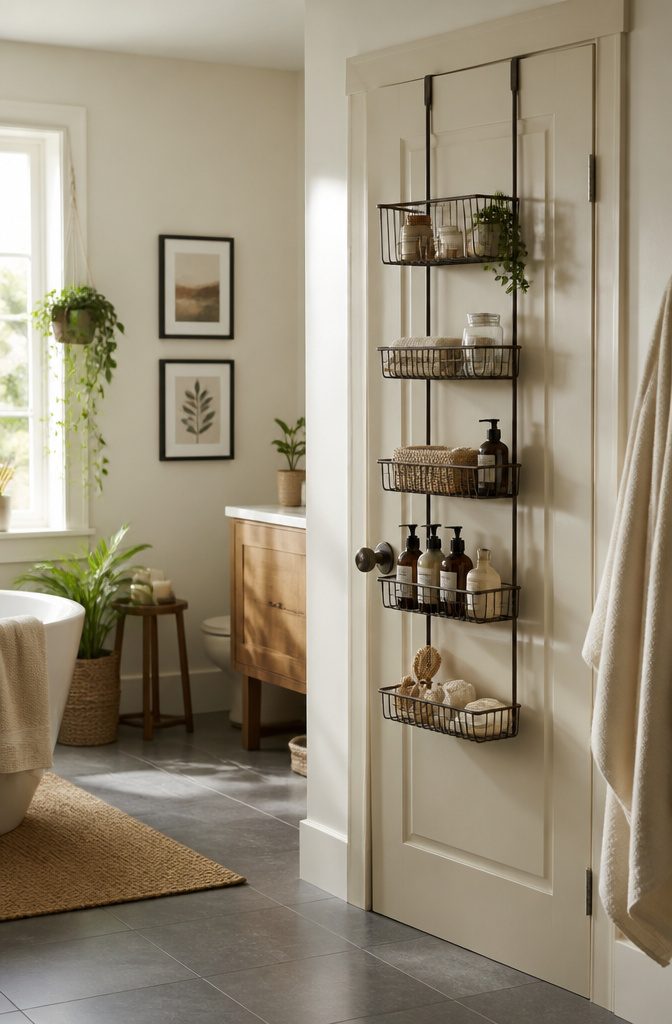
The back of a door is dead space until it isn’t. An over-the-door rack turns that vertical real estate into storage for spare toiletries, accessories, and the small items that otherwise colonize the counter or get lost in a drawer.
I like this option for linen-adjacent storage in tight spaces because it doesn’t demand a closet you don’t have.
Installation is where I have tripped up. Most racks hang from a pair of hooks that loop over the top of the door, which means the door still has to close flat.
A rack that sits too thick, or a door with a tight frame, leaves you wedging the frame or leaving a gap. Check the gap before you buy, and measure the hook depth against your door thickness.
The cheap wire versions I have used start to sag if you load them past a few pounds of shampoo bottles and rolled hand towels. Heavier items belong lower, where the frame takes the stress, not the hooks.

Less than 1-Minute Assembly: Unfold the sturdy frame, place the shelf on top – no tools needed! Be ready to organize in less than a minute

Hold Up to 66lbs: Yecaye under bed storage with wheels is made of high quality 300D PU fabric and sturdy metal frame, can hold up to 66 lbs, stronger than other fragile metal mesh, spacious capacity perfect for storing clothes, toys, books, shoes and other heavy items also won't compromise stability and durability

Versatile Dividers: Yecaye under bed storage containers comes with 2 adjustable dividers that let you organize items of varying sizes effortlessly. Whether it’s winter boots or seasonal clothes, configure the compartments to fit your exact needs. Our underbed storage ensures every inch of space is utilized efficiently, transforming chaos into an artful organization
3. Storage Bins for Seasonal Linens
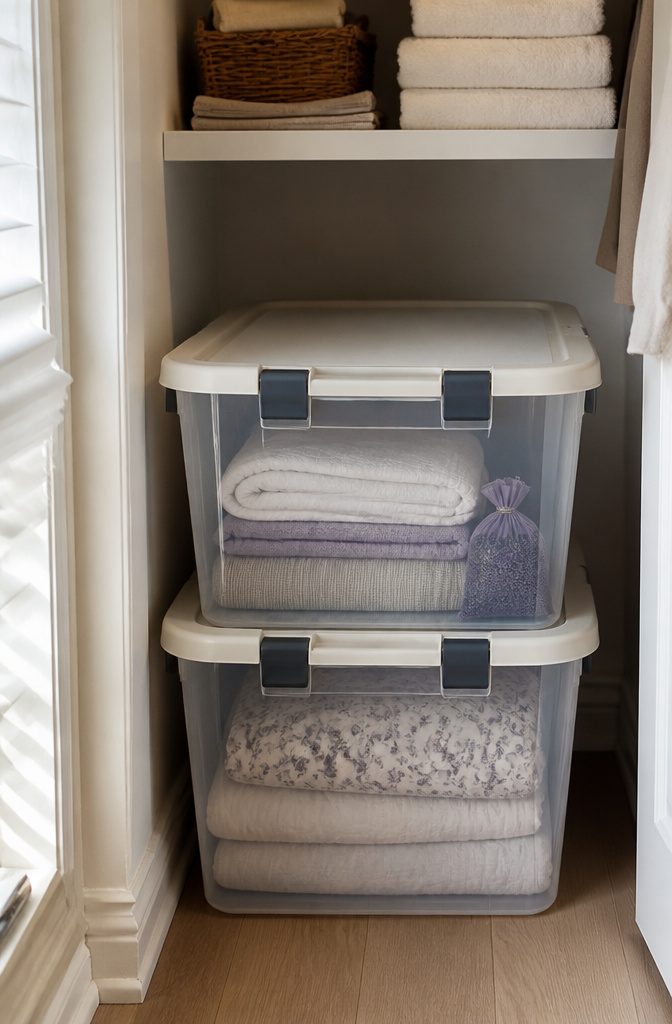
Large plastic storage bins with lids are the practical choice for seasonal linens you only touch twice a year. The lid matters more than the clip color: a proper seal keeps dust out and contains whatever scent you add inside.
I keep a lavender sachet in each bin, and the closed lid means that faint smell stays faint instead of drifting through the whole closet.
Sizing these for small spaces is where I made my first mistake. A 50-quart bin holds a full queen comforter set, but the footprint is awkward under a standard closet shelf.
A 30-quart bin stacks two deep on a 24-inch shelf and still leaves room to lift the lid without pulling the whole stack down. Two of those split a seasonal set neatly: bed linens in one, bath in the other.
The plastic itself needs to be the slightly stiffer kind, not the flexing bargain type that bows when you stack three high.
I learned that after a summer bin in the garage ceiling developed a crack I did not notice until the next swap.
Now I check corners before each season goes up, and I only stack two where I used to risk three.

Swing-proof & 44 LB Load: Unlike other door organizers, our product features reinforced stitching between each side pocket, and built-in strengthened side cardboards to prevent tilting. Additionally, strongly reinforced bottom cardboard, which can stay put without deforming even when you load up to 44 lbs. Also, do not move/sway when you open or close the door.

[Large Capacity Purse Organizer]: This all-in-one purse storage includes 4 baskets in various sizes and 6 hooks holds everything from totes to small crossbodies, letting you arrange all your bags, wallets, and accessories efficiently. Perfect as a purse organizer for closet, purse rack, or purse storage organizer, it maximizes every inch of your door or wall space for a cleaner, more organized home
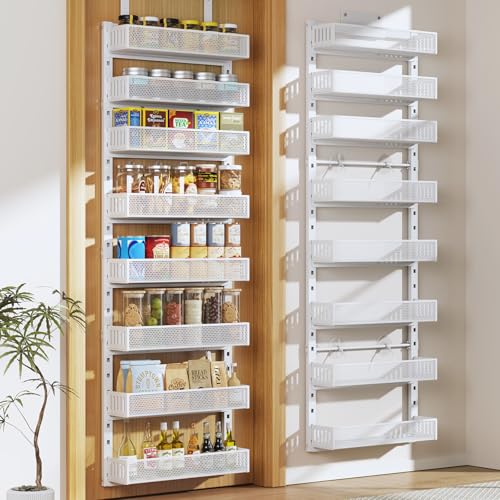
Dual Installation: Hang it over the door or mount it to the wall. Perfect for kitchens, pantries, bathrooms, bedrooms, nurseries, and laundry rooms.
4. Baskets for Daily-Use Linens
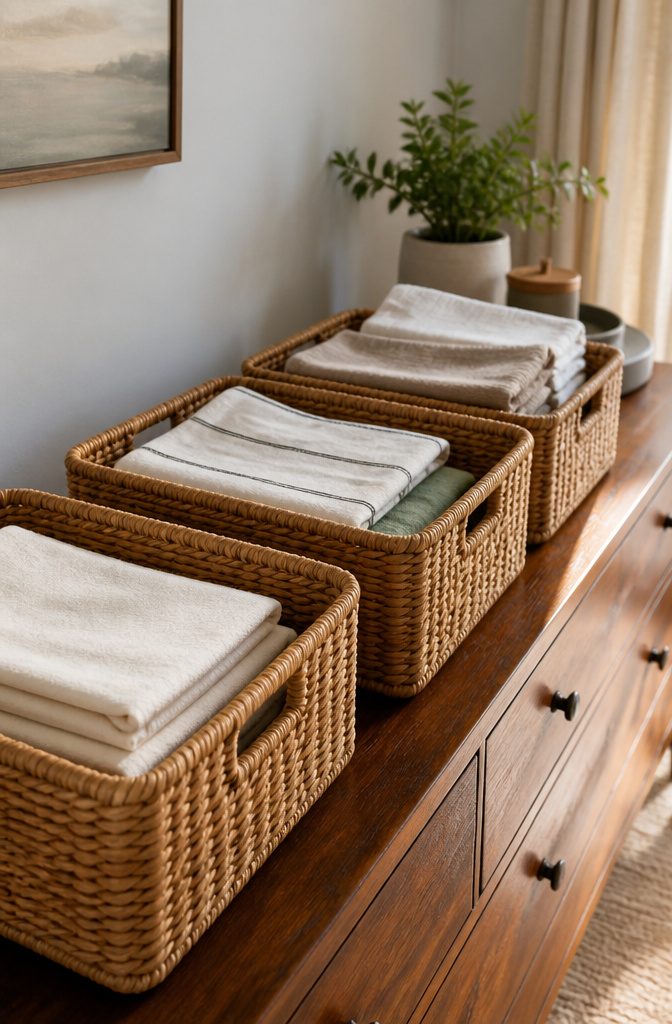
Woven seagrass and wire baskets with fabric liners both work for daily linens, but only one of them survives a humid bathroom long-term.
The wire frame on my last lined basket rusted through where the towel pile touched the liner, and the whole thing started shedding orange dust onto the shelf below.
Seagrass darkens and eventually splits if it sits near a shower, though it holds its shape on a bedroom dresser or open closet shelf for years.
Baskets need to sit where you actually reach for them, not where they look best in a photo.
A shallow basket on the back of a closet door, hung from a basic over-door hook, keeps two sets of sheets within arm’s reach without the digging that a deep bin requires.
Towels do better in a floor basket tucked beside the vanity, where the weight of a full stack does not fight gravity.
The laundry hamper double-duty some storage baskets claim works only if the weave is tight enough that a damp washcloth does not sag through and mildew on the floor.

Divided Storage, Easy Sorting: Designed with divided compartments, this storage bin with lid offers a 63L capacity while keeping items neatly separated. Ideal for storing folded clothes, towels, blankets, or toys by category, making everyday organization simple and easy to maintain.

【Premium Quality】 -These fabric storage bins with lids are made of durable and breathable linen fabric with the high quality cardboard on the sides and bottom. The fabric is eco-friendly and durable, with no odor. The inner 2.2mm thick cardboard maintains fabric storage box shape and structural integrity. Both handles are sewn through cardboard to make this decorative storage boxes rigid enough to hold a heavy load.

ORGANIZATION: Keep your home clean and clutter free with these Sterilite 18 gallon multi-purpose stackable plastic storage containers
5. Under-Bed Storage
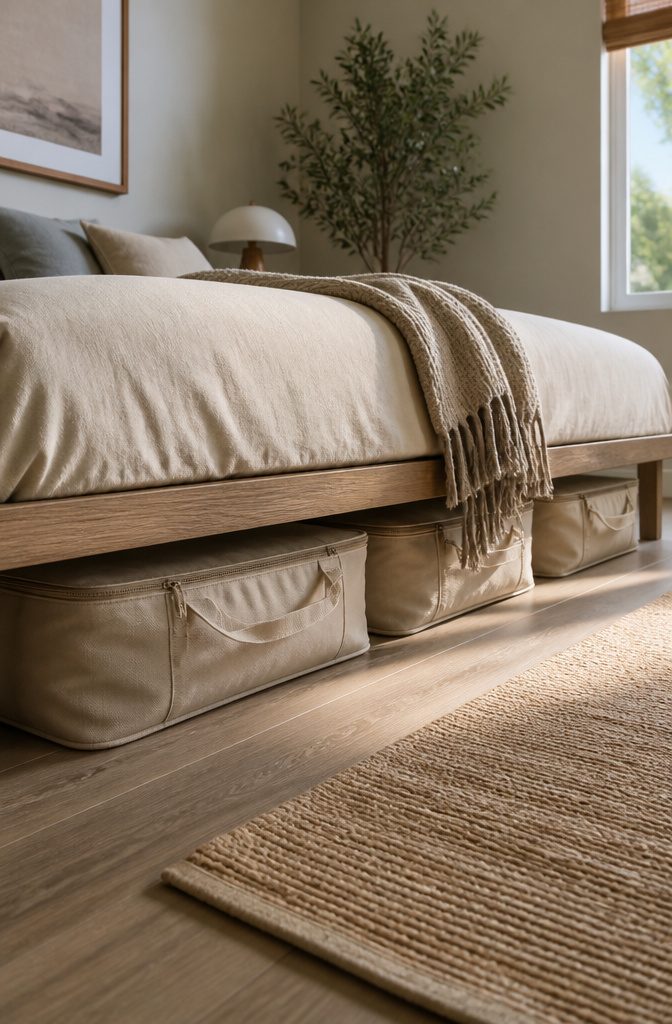
The space beneath a bed is dead storage unless you match the container to the actual clearance. A standard metal frame with a box spring leaves you about seven inches of usable height, which rules out most rigid bins.
I learned this after buying a set of six-inch tall containers that caught on the frame rails every time I pulled them out.
For that gap, soft-sided bags that collapse to slide through work better, and they hold more than you’d expect because the fabric gives where the bed slats dip.
Platform beds are a different calculation. Mine sits fourteen inches off the floor, which fits an eleven-inch bin with room to spare.
I use one for spare sheets and another for off-season blankets. The wheels matter more than the material; a loaded bin on carpet drags, but the same bin on casters rolls flat with one hand.
If your platform is lower, around ten inches, the cutoff is roughly eight inches for the bin itself, or you will scrape the underside every time you shift it.
Breathability is the other variable I would not skip. Sealed plastic against a mattress underside traps humidity in summer, and the linens pick up a faint staleness that washing does not fully remove.
Canvas or the mesh-topped bags solve this, though they cost a few dollars more and the tops sag if you overfill them.
For a renter’s bed that moves every couple of years, soft bags also compress flat for the truck, which rigid bins do not.

Set of 3 clear storage organizers for clothing, linens, and more

Reinforced Handle: The storage bag handle is sewn with two layers of thick fabric, the load-bearing capacity is doubled. Reinforced seams are also implemented for added strength, which are hard to be broken, can be used for a longer period of time

SIX MATCHING BAGS FOR SORTED STORAGE: Includes 6 clear storage bags with zipper closures, each 15.7 x 13.8 x 3.9 inches (40 x 35 x 10 cm). Group folded clothing and lightweight linens by type, season or family member.
6. Shelf Dividers
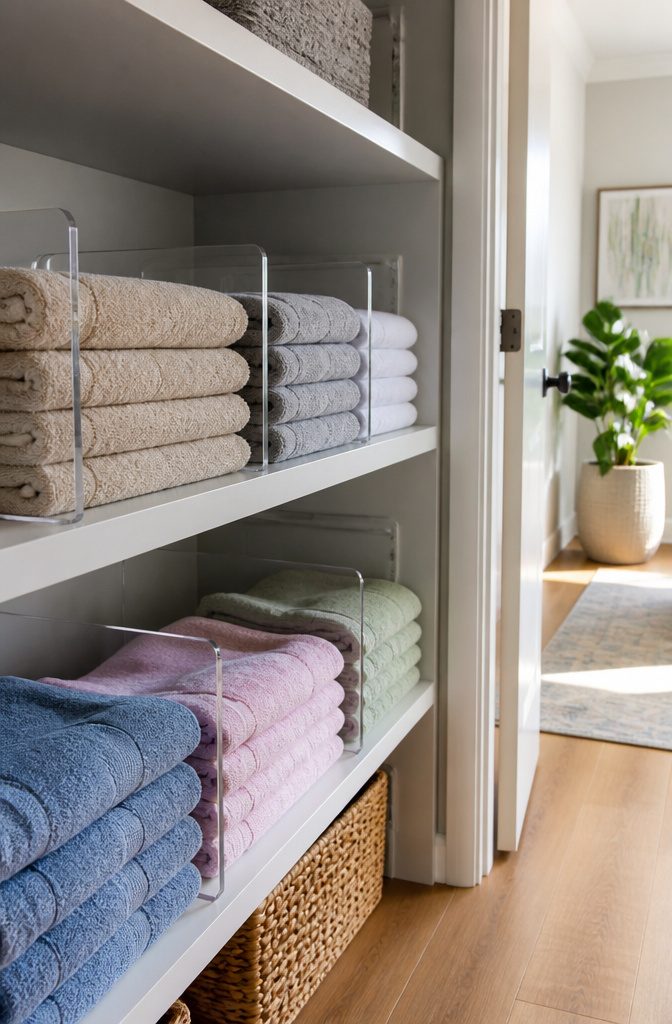
Neat piles of towels and sheets collapse into each other the moment you pull one from the middle. Shelf dividers turn that chaos into fixed compartments, one for each category, so nothing leans or slides where it shouldn’t.
The wire ones clip onto existing shelves without tools; wood or acrylic versions sit freestanding if your shelves are deep enough.
What sold me, reading through setups people actually live with, was the flexibility: narrow slots for washcloths, wide bays for folded duvet covers, adjusted as the stash changes.
Eye-level shelves work best at 12–16 inches apart for the linens you reach for weekly.
That spacing leaves room for a folded stack without wasted vertical space, and it keeps the top item within easy view. Go tighter above or below for occasional pieces, but the zone you use most deserves that breathing room.
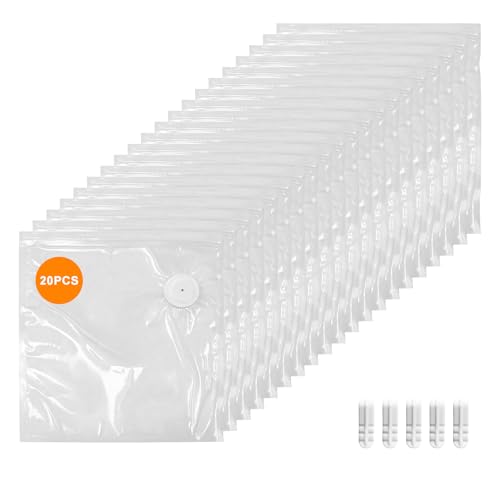
20-Bag Set: Includes twenty 8.5 x 8.5 in reusable vacuum zipper bags and five sealing clips for food storage

【80% Space Save】: Pack-Seal-Vacuum, with these 3 easy steps, Fygrip vacuum storage bags help you save 80% storage space. They are the game changer for storing your bedding, blankets, clothing and more.

7. Drawer Storage in Bedroom Closets
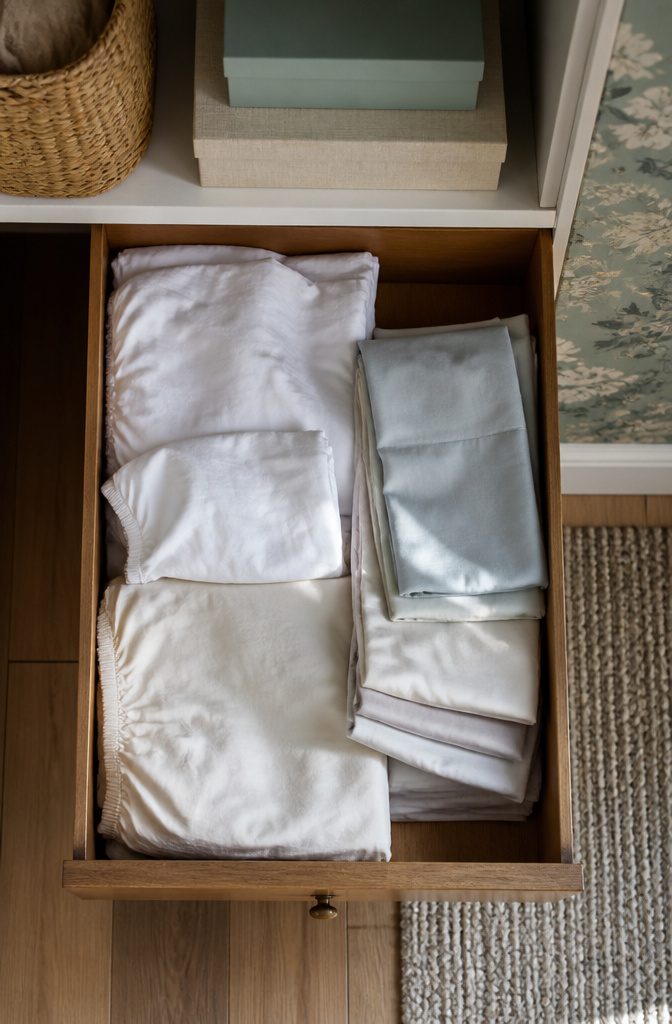
A bedroom closet drawer set aside for linens beats shelf storage the moment you try to stack fitted sheets.
The elastic corners fight back against neat piles, and within a week the stack collapses into a fabric avalanche. Drawers contain that chaos.
The bottom drawer, 8–10 inches deep, handles fitted sheets best. The height lets the folded bundle sit flat without crushing the elastic, and the depth matches how most fitted sheets fold down.
Flat sheets and pillowcases slide into a middle drawer around 6 inches deep; anything taller wastes vertical space and the piles tip anyway.
I learned the height difference the hard way after installing matching 12-inch drawers throughout. The fitted sheet drawer stayed half-empty by necessity, while the flat sheet drawer turned into a jumbled mess because the extra height encouraged sloppy stacking.
Shelves would have been worse: open sides mean everything leans, and the front-to-back depth of most closet shelves leaves six inches of wasted shadow behind the stack.
Drawer fronts also hide the visual noise.
A closet shelf of linens reads as clutter even when folded; a closed drawer reads as nothing at all, which matters in a small bedroom where the closet door stands open half the time.
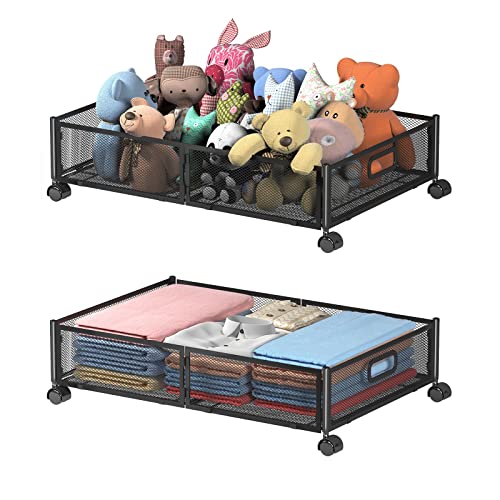
WELL BUILT AND NON-DEFORMING: The underbed storage containers are made from high-quality metal material, compared with traditional fragile plastics and non-woven materials that are easily deformed and torn, our under bed storage drawer on wheels is more durable and has better load-bearing capacity, which will meet your long term storage needs.

[Quality Metal Container] Never settle for flimsy plastic&linen under bed storage bins which rip all too easily. This under the bed storage container is completely made of metal, compared with other under bed storage bins, smaller mesh size of the shelf is used for a larger load-bearing capacity. Plus, the whole frame was welded into a whole that never falls apart.

[Quality Metal Container] Never settle for flimsy plastic&linen under bed storage bins which rip all too easily. This under the bed storage container is completely made of metal, compared with other under bed storage bins, smaller mesh size of the shelf is used for a larger load-bearing capacity. Plus, the whole frame was welded into a whole that never falls apart.
8. Transparent Cases Above Appliances
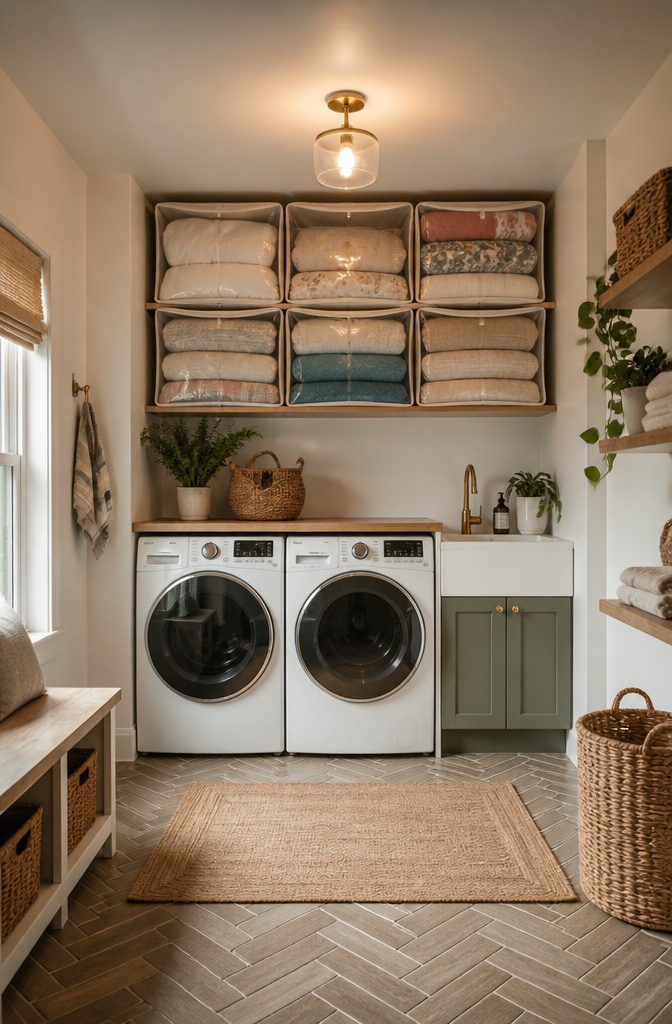
Clear cases stacked above a washer and dryer turn that dead zone into usable linen storage you can actually see into.
I measured the gap between my stacked units and the cabinet soffit once and came away with exactly 11 inches of height, which ruled out every rigid bin I had bookmarked.
A soft-sided vinyl case with a zippered panel flattened to fit through the opening, then held its shape once filled.
The visibility matters more than I expected.
A quilt for guests lives in the top case, spare pillowcases in the one below it. I can tell which is which without pulling anything down, which means I actually rotate the linens instead of forgetting they exist.
The cases collect a thin film of lint from the dryer vent no matter how well I clean it, so they wipe down faster than fabric would.
The width is the tighter constraint. My pair leaves a 27-inch pocket, and cases wider than 24 inches bind on the hoses behind the machines.
Anything you store here needs to survive some warmth and vibration, so this is strictly for dry, clean bedding, not the damp towel you meant to move.

Maximize Door Space Utilization: This 5 section over the door organizer features dimensions of 14.9"×6.5"×51.6"(38cm×16.5cm×131cm) with five large window pockets and four side pockets to efficiently use the storage space behind your door (1.4"-1.8" thick)

【Heavy-Duty Metal Construction】Our VyGrow Over The Door Organizer is crafted from high-quality heavy-duty metal, ensuring maximum strength and durability compared to ordinary fabric products. This sturdy door organizer hanging is designed to withstand high weights without deforming, making it perfect for your closet, pantry, or bathroom.

▶【LifetimeWarranty & 44 lb Storage Capacity】 Upgrade your home organization with this over the door organizer measuring 41.4" H × 14.2" W × 5" D. Backed by a Lifetime Warranty, the upgraded flexible reinforced hooks securely grip the door panel for improved stability, helping minimize swaying during use. With 4 spacious shelves supporting up to 44 lb, it provides reliable storage for bathrooms, bedrooms, closets and more
9. Closet Floor Space
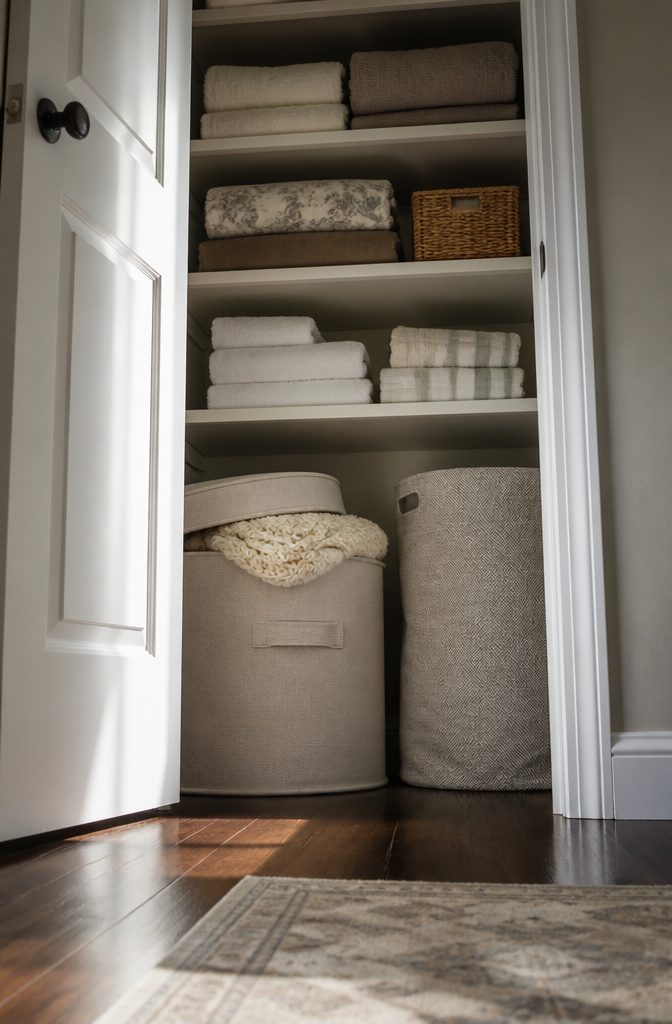
The floor of a linen closet is usually dead space, and that is a mistake.
In my own closet, the shelf stack stops about eighteen inches from the ceiling, which leaves a full vertical column below it for bins or a hamper.
I keep extra blankets in a large lidded bin down there, and the laundry hamper sits beside it.
The rule I follow is simple: the floor holds what you reach for weekly, the top shelf holds what you touch once a season.
That eighteen inches of headroom above the top shelf is meant for the spare quilt or the guest pillows you do not need in rotation.
Shelves are for towels and folded sheets you grab daily; the floor is for volume and bulk.
A bin keeps the blanket pile from becoming a dust trap, and a hamper on the floor means you are not carrying damp towels across the house.

DIMENSIONS & MADE IN USA: 25.6" L x 16.6" W x 13.3" H (Inside: 20.5" L x 12.5" W x 12.4" H). Proudly crafted in the USA using quality, durable materials to keep your belongings safe and secure.

Large 18-Gallon Capacity: Spacious storage solution for organizing clothing, linens, seasonal items, and household essentials throughout your home

DIMENSIONS: 22" L x 16.5" W x 13" H. Spacious home organizer ideal for storing clothing, board games, tools, craft supplies, or seasonal decorations in closets or garages.
10. Off-Site Storage for Rarely Used Items
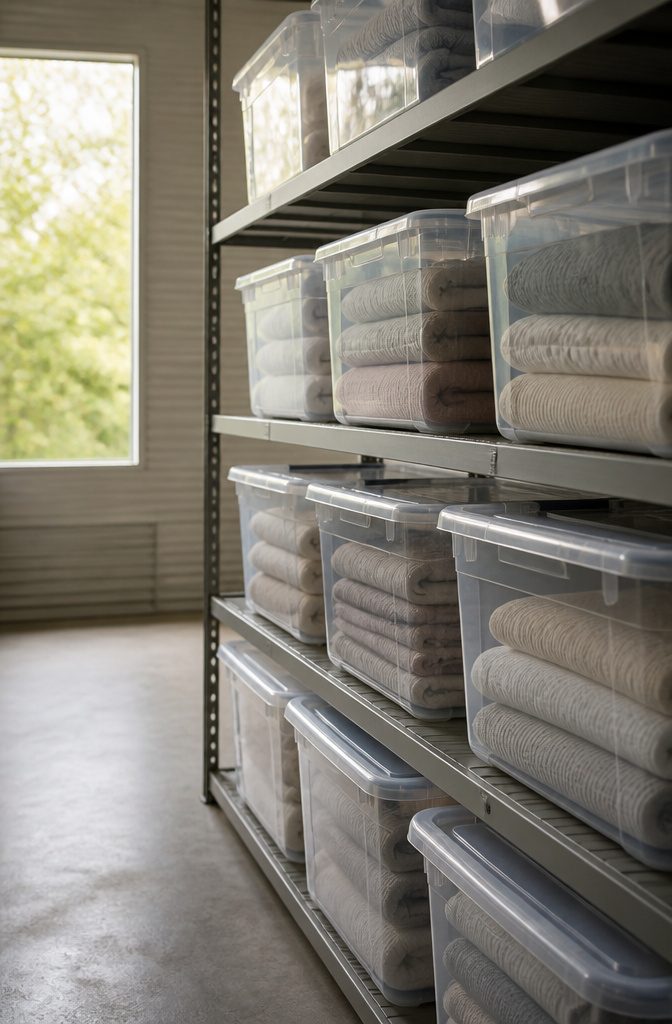
A climate-controlled unit two miles from my apartment holds the comforter my grandmother quilted and the flannel sheets I pull out roughly three weekends a year.
The break-even math works at about $45 a month if the alternative is sacrificing daily-use closet space to items you touch less than once a season.
I packed one bin with that quilt, the flannel set, a spare air mattress, and one complete guest bedding set for the two times a year someone sleeps over.
Anything more frequent than quarterly use stays home; anything less frequent than yearly probably should have been donated already.
The trip takes twelve minutes each way, which feels trivial until you need linens at 10 p.m. and the facility closed at nine.
I keep a reminder on my phone to rotate the bin in October and again in April, because off-season storage only works if you remember to make the swap.

Reinforced Handles: The reinforced handles are sewn with 3 layers of fabric to ensure easier carrying. You can lift the storage box without worrying about it breaking when filled with heavy clothes

Premium Material: Made of high-quality non-woven fabric + clear PVC window, soft and strong for long-term storage of clothes, sweaters, bedding, and comforters – no side or bottom reinforcement for flexible use, easily foldable when empty

WHAT MAKES THE HAYDEN HILL GARMENT STORAGE BAG DIFFERENT? | A finely finished garment cover for hanging clothes with superb attention to detail; handmade in India; with sustainability front of mind - your precious garments will be protected in our breathable garment bags.
Declutter Before You Store
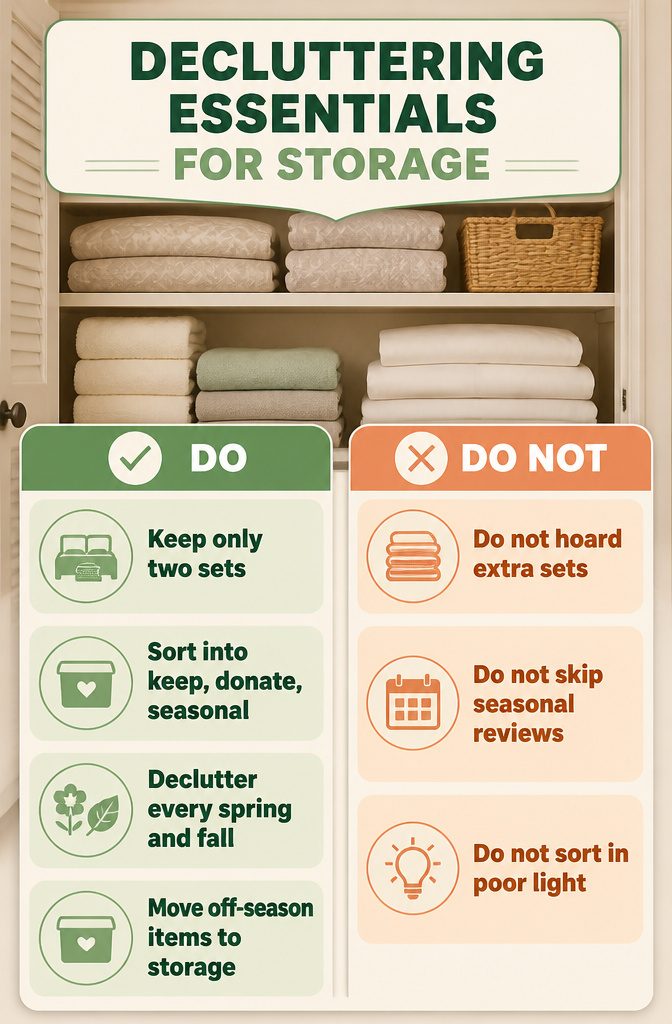
The avalanche starts when you open the door and three mismatched fitted sheets slide out at once. That was my linen closet last March, and the real problem wasn’t the folding or the bins I had bought to fix it.
The problem was I had skipped the step of pulling everything out and asking what I actually used.
The rule of two is what works for bedding and towels: two sets per bed, two towel rotations per person.
Everything else is backup that turns into clutter. Sort what remains into keep, donate, and seasonal, then move the off-season stack to storage elsewhere.
Spring and fall are the natural times for this, when you’re already swapping the heavy comforter for a lighter blanket or the reverse.
I ignored that rhythm once and tried to declutter in January, mid-flu season, when I had neither the energy nor the daylight to finish. The half-sorted pile sat on my bedroom floor for a week.
A small space cannot absorb what you refuse to remove.
Folding That Actually Saves Space
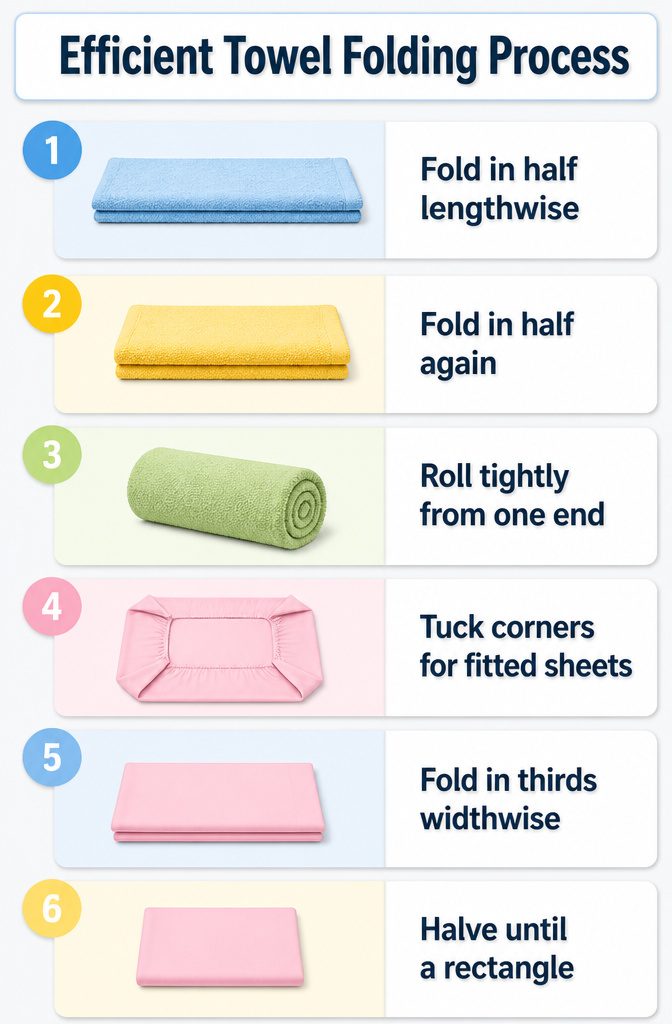
Rolling towels turned out to be the technique that actually held up in my linen closet.
The method is straightforward: fold the towel in half lengthwise, fold it in half again, then roll tightly from one short end. What sold me, reading through the instructions, was how the roll creates its own structural tension.
It stays put. A tri-fold gives you a small rectangle by folding in thirds lengthwise, then in half widthwise, then in half again, but in practice that stack starts to sag by midweek.
The corners loosen, the pile leans, and you are left restacking.
Fitted sheets were the harder win.
The corner-tuck method works if you commit to the steps: lay the sheet elastic-up, fold in half widthwise, tuck each corner into the corner beneath it to form a pocket, then fold in thirds widthwise and halve twice until you have a rectangle.
I tried the "ball it up and shove it in" approach for years.
The neat rectangle takes maybe ninety seconds once your hands learn the motion, and it slides onto a shelf without fighting back. The payoff is shelf space you can actually use, not just fill.
Labeling What You Cannot See
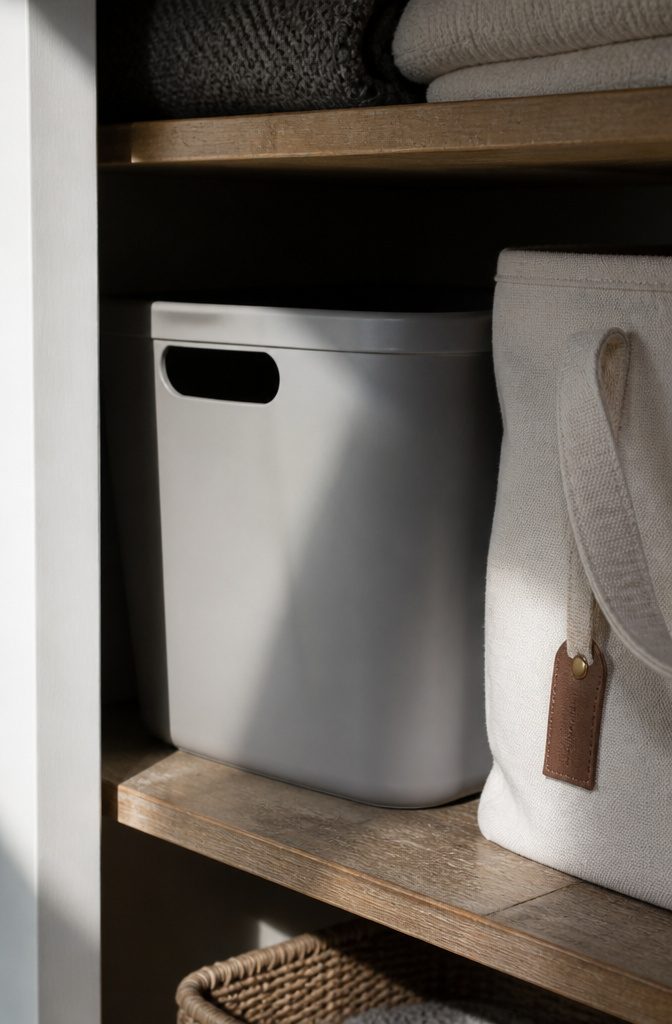
A label that falls off inside a bin is worse than no label at all, since you still cannot identify the contents and now you have adhesive residue to scrape away.
In the closet off my bathroom, humidity peeled paper labels within a single summer and turned the glue on cheap sticker rolls into a gummy line that collected dust.
What survived was a P-touch label laminated in clear tape, the kind meant for outdoor wiring, stuck to the bin itself rather than the lid.
Lids swap between containers; the bin body stays put. For fabric bags that lack a rigid surface, a luggage tag threaded through the handle works better than anything adhesive.
I write the season on one side and the size on the other with a fine-tip paint pen, which has outlasted three years of opening and closing without bleeding or chipping.
Skip the cute chalkboard clips. They look organized in a photograph, but chalk smears against fabric and the clips rust where the powder coating gets nicked.
Preventing Musty Odors
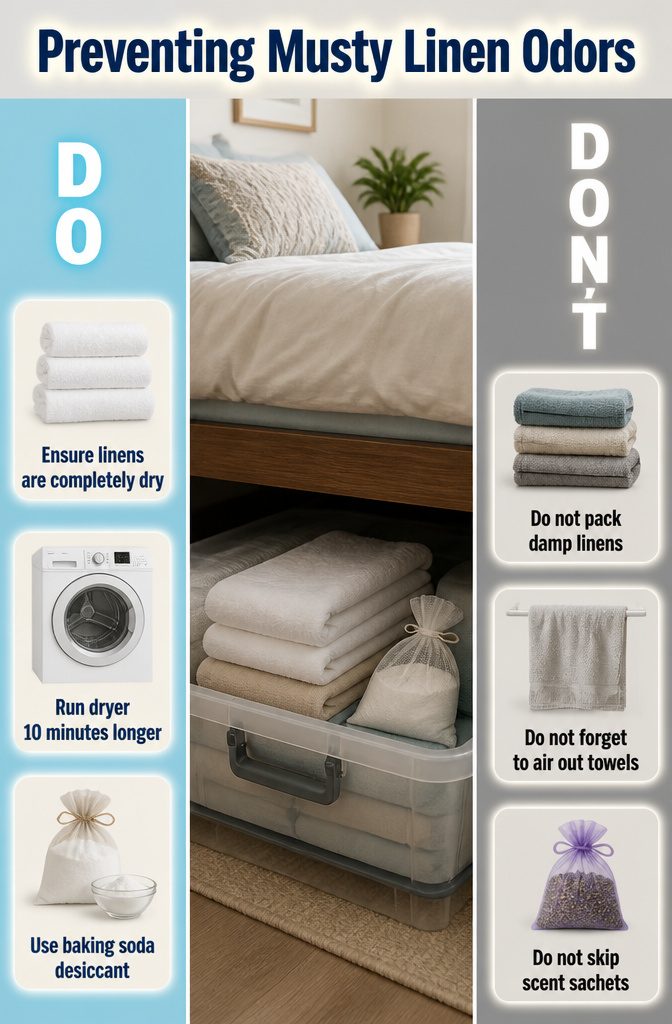
A set of towels I folded straight from the dryer and tucked into an under-bed bin taught me why dry means completely dry, not mostly dry.
Two weeks later the top towel smelled like a basement corner. The damp had pooled where the cotton folds touched, and mildew had started in the center layers I never checked.
Now I run the dryer cycle ten minutes longer than I think I need to, then spread everything across the bed for another hour before it goes into storage.
For the bin itself, I keep a small mesh bag of plain baking soda tucked in one corner. It costs next to nothing and gets swapped out every season.
Lavender sachets work too if you prefer the scent, though I find the baking soda does a cleaner job of pulling moisture out of the air inside a tight space.
Either way, the desiccant only helps if the linen is dry going in. That part is non-negotiable.