The best small apartment room ideas range from a ten-minute tension-rod install to a full weekend of mounting shelves and sequencing paint before hardware.
What picks one over another is not your taste but your lease terms and whether you can still move through the room once the piece is in.
A 360-square-foot studio in Portland stays livable only because the owner stopped at a loveseat instead of squeezing in a full couch.
1. Multi-Functional Furniture
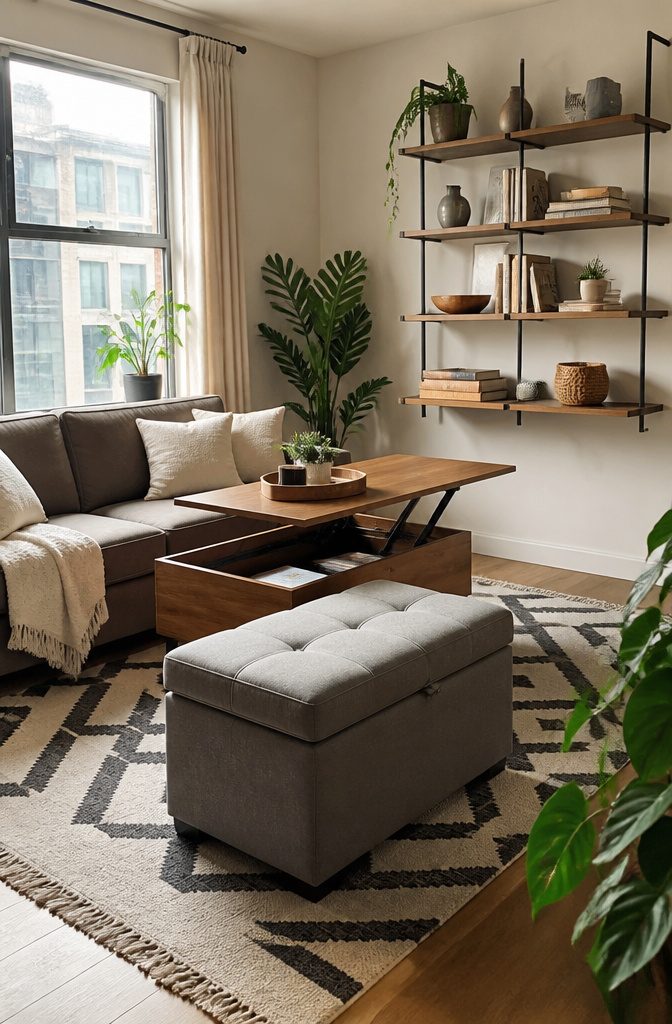
Storage ottomans, platform beds with drawers, and lift-top coffee tables each fold two jobs into one footprint, which is why this approach shows up first on nearly every list of small apartment room ideas worth following.
The storage ottoman replaces both a spare seat and a bin for blankets or remotes. A platform bed with integrated drawers keeps clothing out of sight without demanding floor space for a dresser you do not have.
The lift-top coffee table, common in studio setups, works as a work surface and hides the clutter that usually collects on top.
Each piece you choose this way removes the need for a second one, and that matters more in a small apartment than how any single item looks on its own.
I have seen the difference between a room that swallowed three pieces of furniture and one that handles the same load with two; the spare square footage is the payoff, not the furniture itself.
Buy for what the room actually does, not for the showroom version of how you wish it looked.

Robust Sturdy Construction: Crafted from robust thick‑gauge MDF boards, this storage ottoman delivers outstanding weight‑bearing performance up to 660 lbs. Padded with high‑density foam and wrapped in soft breathable linen fabric, it offers plush comfortable sitting for everyday resting moments

Foldable & Quick Setup: This foldable storage ottoman allows effortless tool-free quick assembly within just minutes. The storage bench can fold completely flat when unused and neatly tucked under bed or closet to save extra indoor storage space
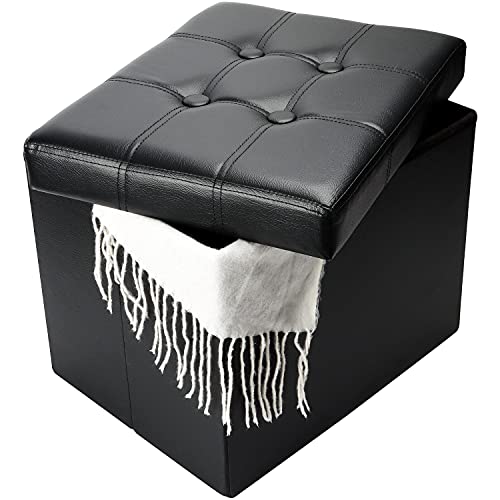
PERFECT FOOT REST STOOL: L17 x W13 x H13in, Specially designed size and high-quality thicker soft foam, bring more comfort for your foot rest. Spacious hidden storage room for sundries including clothes, blankets, children's toys or many other stuffs inside; organize your living room, bedroom and hallway.an
2. Vertical Space Utilization
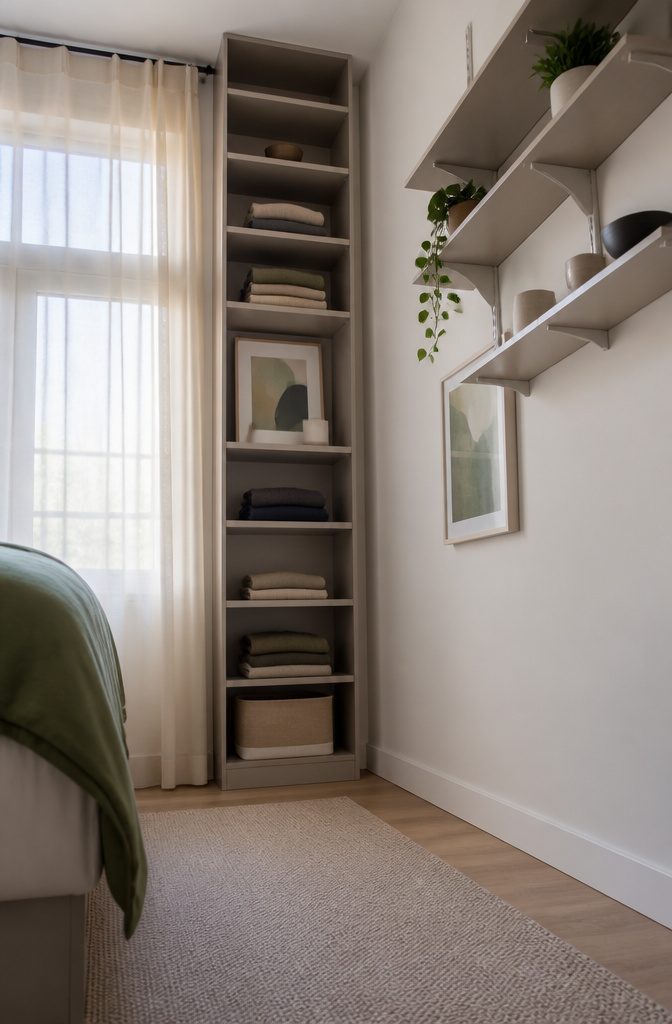
Walls are the only real estate in a small apartment that never shrinks. Once the floor fills up, the move is up, not out.
Wall-mounted shelving and tall narrow cabinets pull the eye upward, which makes the ceiling feel higher and the whole room feel less compressed, not just add places to stash things.
I used to think a tall bookcase would crowd a small bedroom until I tried a slim one against the wall beside the window.
It framed the room without boxing it in, held folded sweaters I had no dresser space for, and drew attention to the height instead of the width.
The same logic works above a desk for work supplies, or in an entryway where coats and bags need a proper landing spot without blocking the door swing.
Open shelving keeps items visible and easy to grab, which matters in kitchens where you are reaching for the same three things twice a day.
A vertical unit belongs against a wall, never floating in the middle of the room; that keeps the floor open for movement and lets the eye travel upward instead of sideways.
The change is perception as much as storage, and that is why it works on a renter’s budget.

Simple and Modern: Modern low-profile design with a linen-look fabric fits various types of home decor. The comb of the fabric side panel and metal bed frame enriches your room with a simple and chic look

12 Fabric Drawers for Ample Storage-LIKIMIO bed frame queen-size features 12 built-in fabric drawers (6 on each side), providing massive hidden storage for bedding, clothes, shoes, and other items, perfect for small bedrooms or anyone needing extra space

4 UNDERBED STORAGE DRAWERS – Four spacious drawers span the base of the bed and keep clothes, bedding, and everyday essentials organized and out of sight. Meaningful storage built into the frame without taking up extra floor space
3. Light Colors and Reflective Surfaces
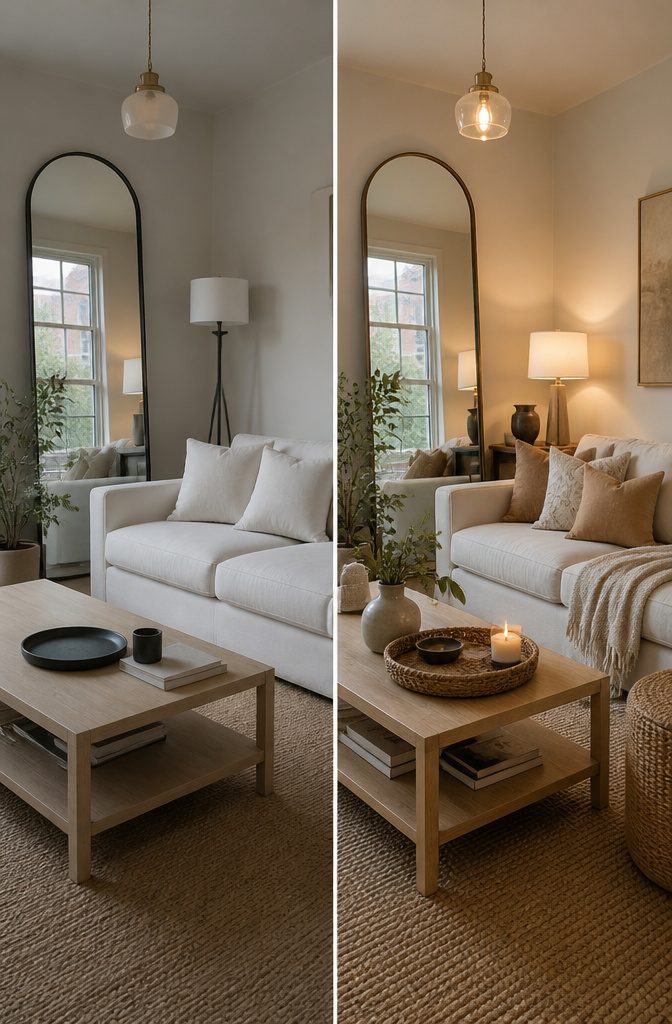
A wall painted in fresh white or a soft pastel does more than brighten the room; it softens the edges that make a small apartment feel boxed in.
Pale upholstery and light wood keep the palette airy without turning sterile, while muted textiles add just enough depth so the space reads calm rather than clinical.
Reflective materials finish the job. A mirror placed across from a window pushes daylight deeper into the room, and glossy surfaces bounce that light around corners that would otherwise stay dim.
The effect is the illusion of more space, built from what is already there. Warm white bulbs layered with ambient and task lighting keep the room usable once the sun sets, so the openness does not disappear at dusk.
Keep the walls light and let the mirrors do the heavy lifting.
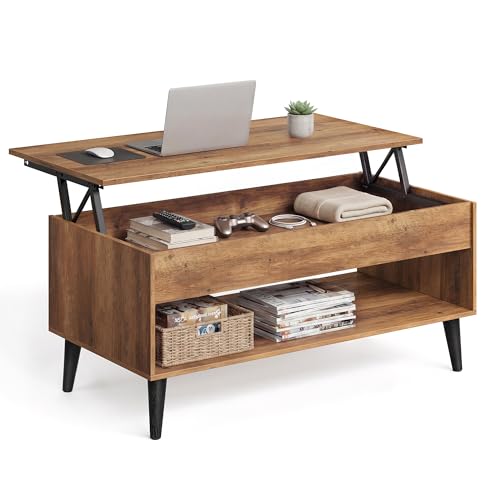
Versatile Mid-Century Charm: The refined finish and crisp lines give this center table a mid‑century modern vibe that fits beautifully in apartments, dorms, and other small spaces

3-in-1 Lift Top Design: This lift top coffee table works as a daily coffee table, raised workstation, shared work surface, or fully expanded table. The convertible tabletop gives you flexible surface space for reading, using a laptop, enjoying snacks, or relaxing from the sofa without needing an extra table
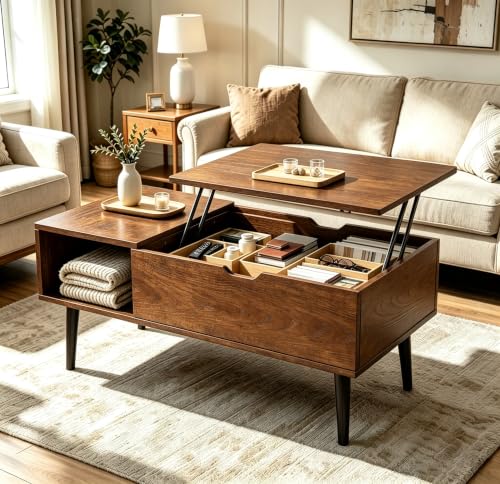
Lift Top Design: The tabletop smoothly lifts to 6.3 inches, transforming this coffee table into a versatile piece for everyday use. Whether you need a temporary dining surface, a convenient computer desk, or a raised workspace, the elevated floating design adapts to your needs while adding modern functionality to your living space
4. Modular and Flexible Furniture Arrangements
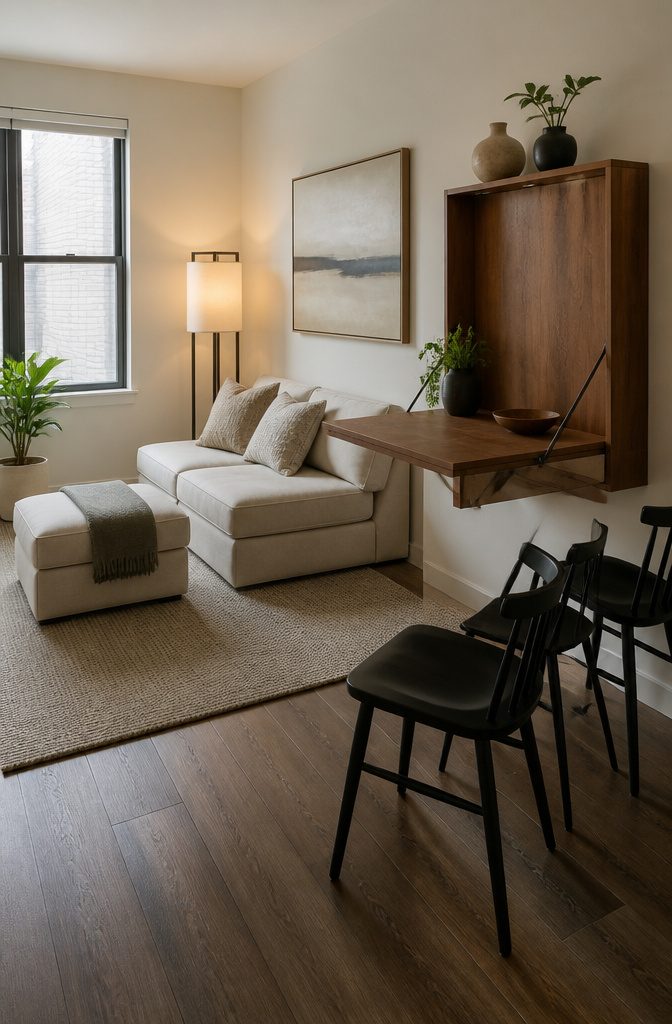
A modular sofa can split into two seating spots across a 225-square-foot studio, half kept as a loveseat and the other half flipped backward to act as an oversized pouf.
That is the same purchase doing two jobs, and it is the kind of reconfiguration that matters when you cannot buy a second piece.
Wall-mounted fold-down tables work the same way: desk through the day, dining surface at night, then folded flat to reclaim the floor.
I would pair one with lightweight chairs you can carry to wherever the table is that hour, because the flexibility lives in both pieces, not just one.
Drop-leaf tables run a similar shift if you need something that stands on legs but still shrinks when guests leave.
The trap is buying something that technically converts but fights you every time. A lift-top coffee table with storage sounds clever until you are clearing the top nightly.
The pieces that actually get reconfigured are the ones light enough to move or simple enough to flip in ten seconds. If it takes a manual and a clear schedule, it becomes furniture that theoretically adapts and practically stays put.
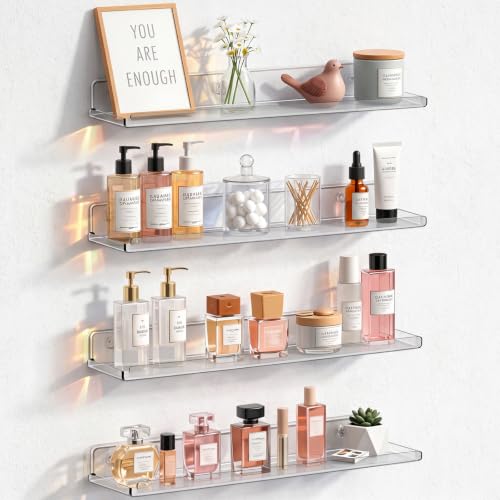
Sturdy & Stable: These floating wall shelves mount securely with expansion screws for a stable hold. Solid plastic material delivers lasting sturdiness, supporting up to 13 lb (6 kg) per shelf. All edges are well-finished for safety and front/side lips keep your essentials secure

𝐂𝐨𝐦𝐩𝐥𝐞𝐭𝐞 𝐒𝐞𝐭 𝐟𝐨𝐫 𝐕𝐞𝐫𝐬𝐚𝐭𝐢𝐥𝐞 𝐎𝐫𝐠𝐚𝐧𝐢𝐳𝐚𝐭𝐢𝐨𝐧:This pack includes three different-sized organizers (Small, Medium, Large), designed to work together. They offer a flexible storage solution that can be easily customized for various spaces like your bathroom, bedroom, guest bathroom, kitchen, living room, or office desk, helping you eliminate clutter efficiently.

【100% Solid Wood Wall Shelf - Sturdy & Durable】 The wall shelf made of high-quality solid wood, it is eco-friendly and odorless. With a robust structure and strong load-bearing capacity, this floating shelves won’t deform easily even after long-term use, providing reliable support for your ornaments, green plants, daily necessities, and more. Enjoy long-lasting durability and peace of mind.
5. Zoning with Rugs and Furniture
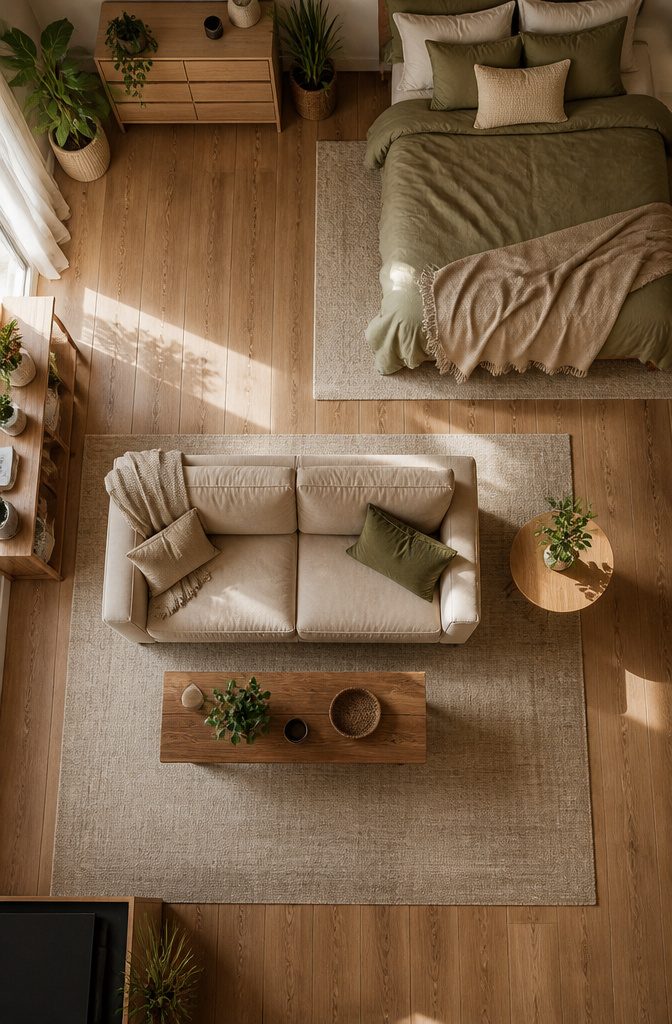
A rug under the front legs of a sofa group anchors a living area without costing what a wall would.
In my first studio, I learned that the bed needed its own rug too, something smaller beside it to make the sleeping zone feel deliberate rather than accidental.
The trick works because your eye reads the edges of the rug as the edges of a room.
Two ways to play this. One: keep the rugs similar in tone so the space still flows.
Two: contrast them and accept that the apartment will read as busier. I land on similar tones for rentals, since the rug you buy for zoning is probably coming with you and needs to fit the next place too.
The real mistake is sizing down to save money. A rug too small for the furniture grouping floats in the middle of the floor and undoes the whole effect.
Front legs on, back legs off is the rule for sofas; everything inside the rectangle for dining. If the budget only stretches to one rug, put it where you spend waking hours and let the bed sit on bare floor.

Space Saving: This 6-tier ladder bookshelf uses a wall-mounted design. The open rack is a good ideal for storage in tight space. It can be placed in the bedroom, kitchen, living room, office, or anywhere
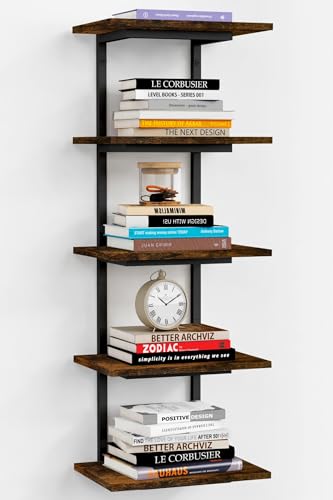
[5 Tier Wall Shelf Unit] Lack wall shelf unit (Each Shelf Size: W 11.8" x D 8" ) is perfect for creating additional storage without taking up floor space. They can be installed at various heights, allowing you to customize your wall shelving unit setup according to your needs. This vertical floating shelf is ideal for storing books, plants or personal items like pictures, photo albums, collectibles etc.

Durability Is Our Top Priority -- Crafted of premium particleboard boards, this white bookshelf is well made and offers great durability. The wood look and stylish white shelf can match most décor styles and add elegance to your room.
6. Use of Mirrors
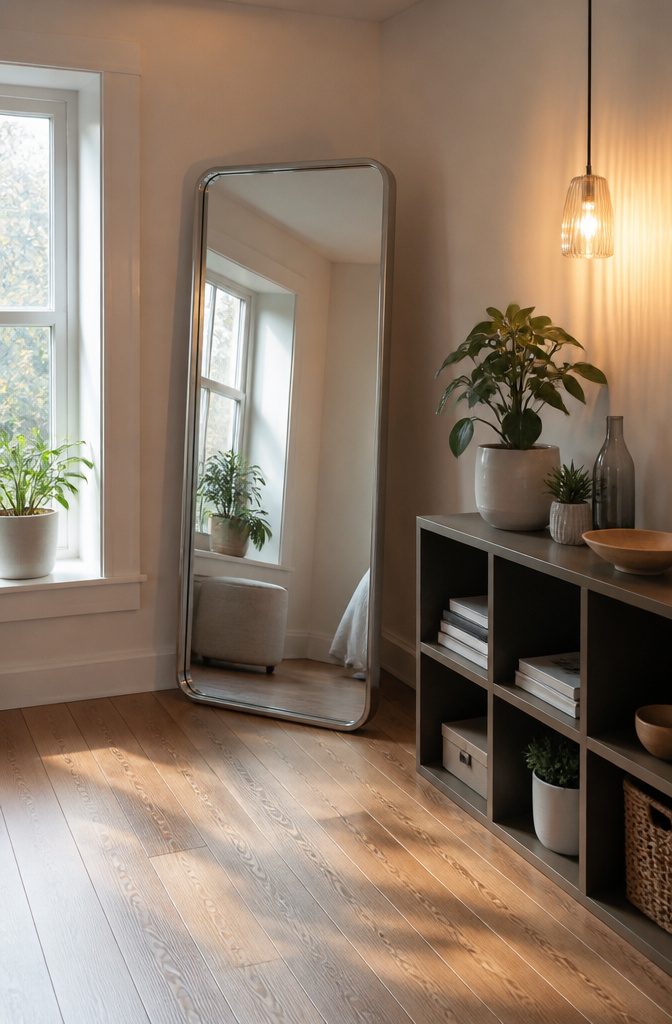
A mirror placed opposite a window catches daylight and throws it back into the room, which does more for a small apartment than any paint color can manage alone.
The effect is literal: the space reads as twice as deep because the eye registers the reflected wall as continuation rather than boundary.
Placement matters more than size.
A floor-length mirror leaning against the wall works because it picks up both overhead light and whatever bounces off the floor, but a decorative mirror hung above the sofa can do nearly the same job if it faces the right direction.
Mirrored closet doors are the set-and-forget option, and they matter most in studios under 400 square feet where every surface has to earn its keep.
The sources disagree on quantity.
One approach clusters a few mirrors through the living room, entryway, and bedroom so no single wall carries the burden alone. The other treats one large mirror as enough, the way a single window can light a whole room.
For renters, the single large piece wins: fewer holes to patch later, and one statement mirror moves with you to the next apartment.
The cluster looks better in photos, but the practical difference in actual square footage is the same either way.

【81 L HIDDEN STORAGE】The 30 x 15 x 15 in ottoman with storage provides 81 L of hidden space for blankets, pillows, clothes, books, toys and essentials. Its roomy interior helps reduce clutter in bedrooms, living rooms and entryways while keeping items close at hand

【Stylish & Sturdy ottoman with storage 】 Upgraded Leather makes the bench more durable and extends its life. This folding storage footstool can hold up to 2*9.5 Gal. The solid fixed plate and thicker hi

Heavy-Duty Support: Built with thick MDF panels for strong structural support, this storage ottoman bench holds up to 660 lbs. The cushioned top features high-density foam and breathable linen fabric, providing a comfortable seating experience
7. Smart Decorating with Plants and Accessories
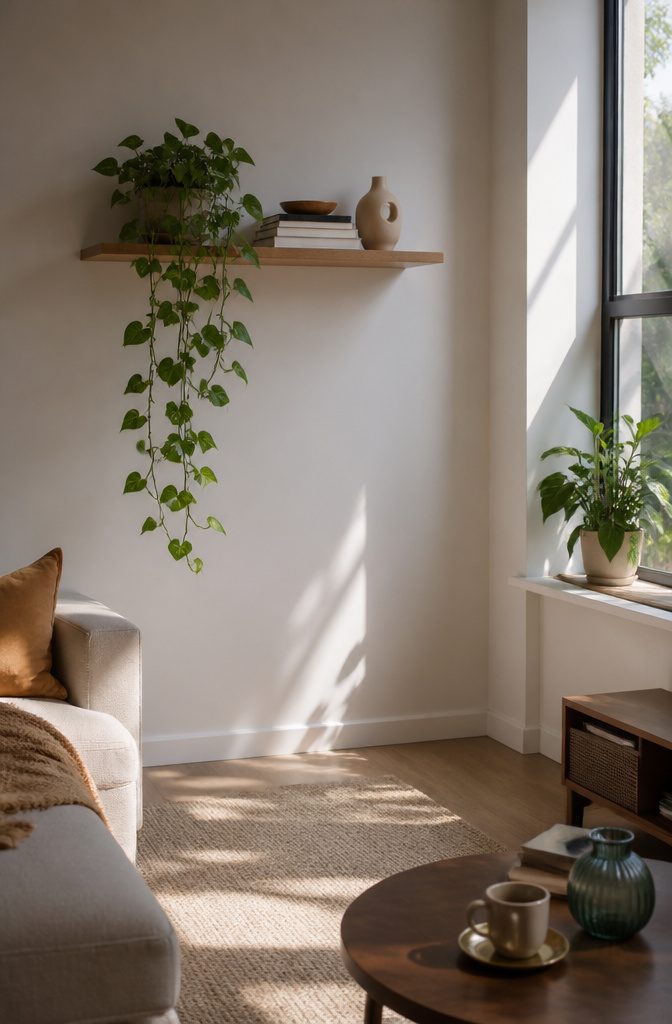
Trailing plants on shelves draw the eye upward in a way a bare wall never manages, and a few well-chosen accessories turn furnished space into something lived-in without the heaviness of more furniture.
The risk is real: too many small objects read as clutter faster in a small apartment than in a house with square footage to spare.
Edit this layer hard. One trailing pothos or philodendron on a high shelf beats a cluster of pots on the floor that you have to step around.
A windowsill can hold that single plant, a small stack of books, and nothing else, framing the window with green instead of eating floor area.
Renters get particular value here. Framed prints and potted plants express style without touching a wall color you cannot change or a layout you cannot alter.
Fake greenery has its place if the light is wrong for live plants, though a real pothos survives low light and irregular watering better than most people expect.
The cost stays low, the commitment stays low, and the room still feels finished.

MODERN UPHOLSTERED DESIGN WITH ENHANCED COMFORT — Featuring a wide cushioned headboard and soft beige upholstery, this queen bed frame creates a warm, inviting bedroom atmosphere while providing comfortable back support for reading, relaxing, or watching TV. The clean modern silhouette blends effortlessly with contemporary, minimalist, and transitional décor styles

【Modern Minimalist Style】This wooden platform bed frame has a modern minimalist appearance with clean lines and no unnecessary embellishments, giving it a sleek and tidy appearance that easily blends with various modern bedroom styles. The texture of the wood create a natural and comfortable atmosphere, modern and warm.

【Versatile & Modern Design】This sleek platform bed with storage that fits effortlessly into any room! Its contemporary design with a subtle footboard adds a touch of refined strength to your space—perfect as a primary bed, in guest rooms, or for rental properties
8. Creative Lighting Solutions
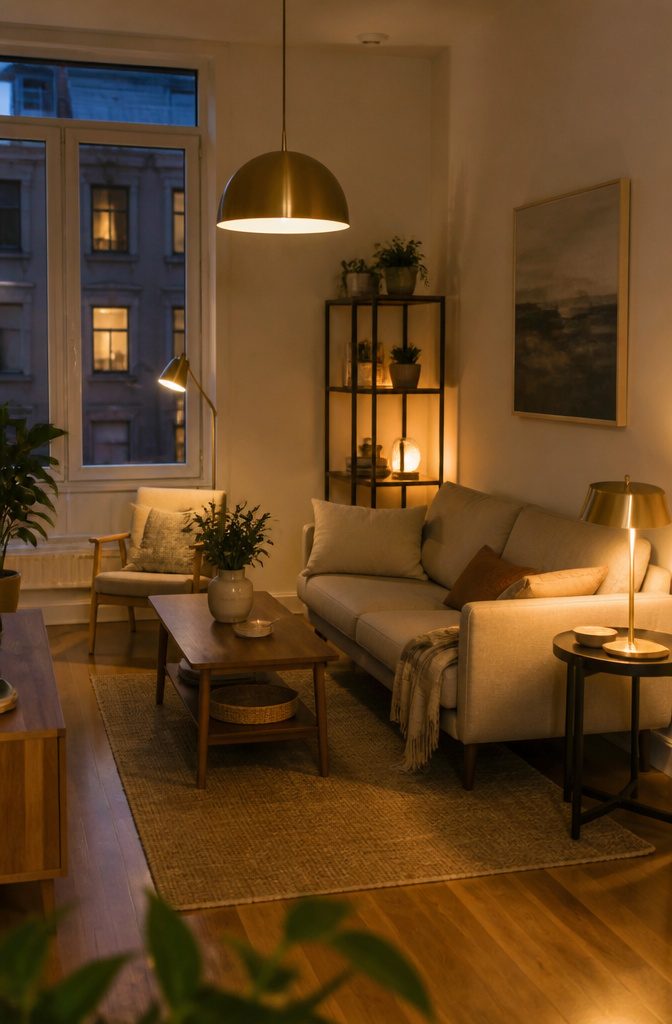
Small apartments rarely come with lighting that does more than keep you from tripping over the sofa.
The overhead fixture is usually one harsh source in the center of the room, and that is where the problem starts. Layered lighting, built from three heights, fixes it without rewiring anything.
Ambient light from that single overhead fixture handles basic visibility, but it leaves corners in shadow and makes the whole space feel smaller after dark.
A mid-level source, something like a floor lamp beside the seating area, softens those edges and makes the room feel intentional rather than leftover.
Task lighting finishes the job: a reading lamp angled over the sofa arm or a desk light where you actually work.
Warm white bulbs at all three levels keep the color consistent, so the room does not shift from yellow to blue as you move through it.
Wall-mounted and plug-in pendant fixtures matter most where floor space is already gone.
A suspended pendant over a sofa cluster draws the eye to the center of the room and away from whatever you are trying not to notice, a sleeping alcove or a stack of storage bins.
Sconces with brass or matte finishes do the same work beside a bed or a mirror without eating the square footage a table lamp would demand.
The fixtures themselves are part of the design.
A ribbed ceramic base, a slim brass arm, a pendant in an unexpected shape: these read as choices rather than afterthoughts, and in a studio where every object is visible, that distinction counts.

【MID CENTURY STYLE】 Elevate your living room with this mid century modern coffee table featuring an exquisite fluted texture and warm finish; distinctive slatted tambour doors of this walnut coffee table slide smoothly along curved edges to seamlessly conceal clutter and provide effortless access with retro sophistication

4-IN-1 DUAL LIFT-TOP COFFEE TABLE: A 35.4"L x 19.7"W coffee table becomes a 35.4"L x 39.4"W dining top. Lift one side for laptop time, both sides for shared projects, or fully open it for meals and game night

Flexible Lift-Top Design: This lift-top coffee table features 2 tabletops that can be raised in different directions, easily creating 2 separate work areas. The large tabletop is foldable to meet various daily needs
9. Wall-Mounted Storage Solutions
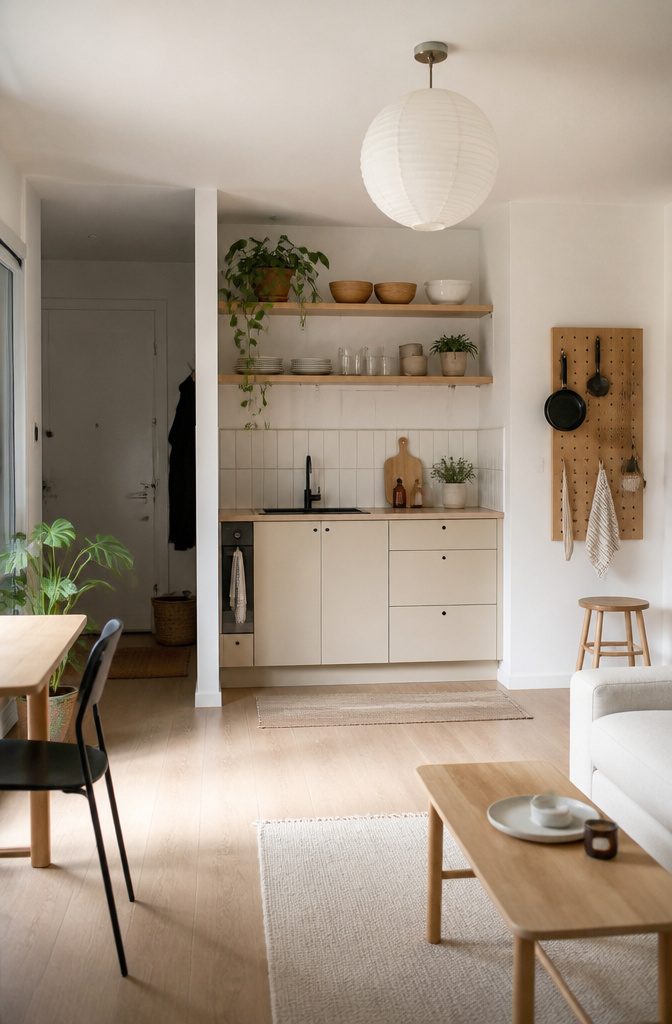
Walls become the only real estate left once the floor is claimed by a sofa, a coffee table, and the path to the kitchen.
Floating shelves keep that floor completely clear while still holding books, plants, and the everyday objects that otherwise migrate to every flat surface.
I have seen the difference between a shelf that sits on brackets and one that truly floats: the bracketed kind catches light and casts a shadow that reads as bulk, while a properly mounted floating shelf disappears into the wall and lets the room breathe.
Pegboards and hooks do the same work in kitchens and entryways, turning the wall itself into storage without narrowing the walkway.
A row of hooks by the door replaces the dropped-coat pile; a pegboard above a desk holds supplies without eating the workspace below.
The hanging systems matter too: the ones that let you adjust height as needs change, rather than locking you into a single configuration.
Two ways to play this: mount shelves in a tight grid for maximum capacity, or run a single long shelf high on the wall to draw the eye upward and make the ceiling feel farther away.
The grid wins if you are storing things you grab daily; the single shelf wins if the room already feels low and crowded.

Functional and Decorative Shelves: These 3 pack floating shelves offer adequate space to help clear the clutters, organize and display collectibles, decor items, books, small plants, bottles, bathing products and more. The items on the shelf for wall will have better sense of layering, a nice wall decor to fit your home space.

Renter Friendly & No Damage Installation: Designed specifically for renters, these wall shelves require no drilling, no screws, and no nails—simply peel and stick to your wall with the included strong adhesive hooks. No more holes, marks, or damage to your walls, making them perfect for apartments, dorms, and rental homes where you want to avoid losing your security deposit.

Functional and Decorative Shelves: These 3 pack floating shelves offer adequate space to help clear the clutters, organize and display collectibles, decor items, books, small plants, bottles, bathing products and more. The items on the shelf for wall will have better sense of layering, a nice wall decor to fit your home space.
10. Use of Curtains for Division
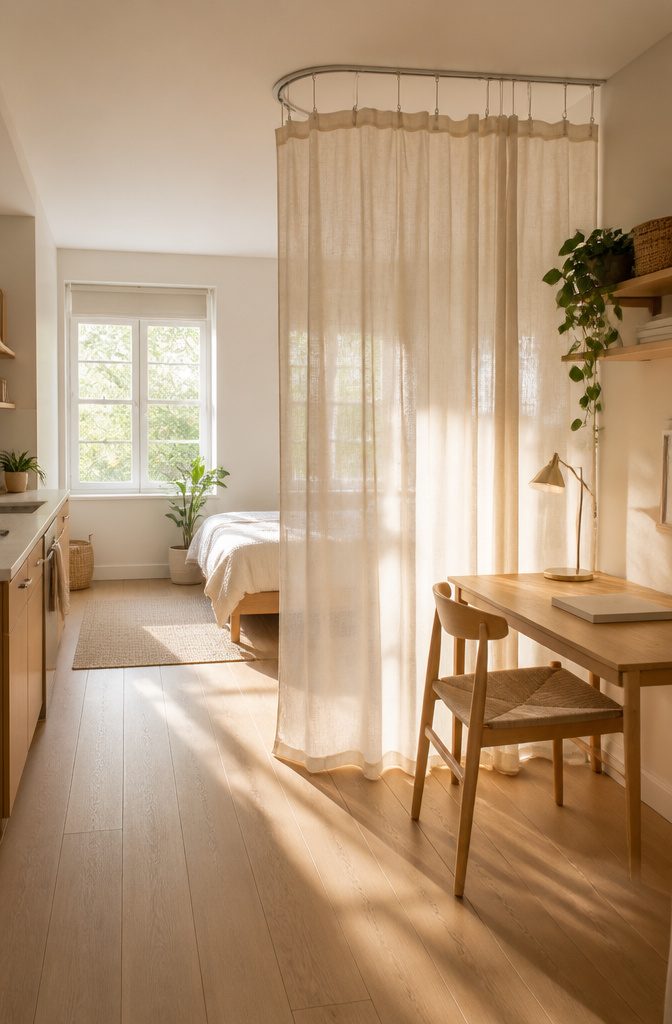
Ceiling-mounted curtains turn a single room into two without the weight of a wall.
A simple track installed at the ceiling line lets fabric drop floor to ceiling, drawing the eye upward and making the ceiling feel higher than it is.
The panels frame a sleeping area or a desk corner and soften the boundary between zones without stealing square footage the way a bookcase divider would.
Tension rods work for renters who cannot drill, though they sag under anything heavier than a light panel.
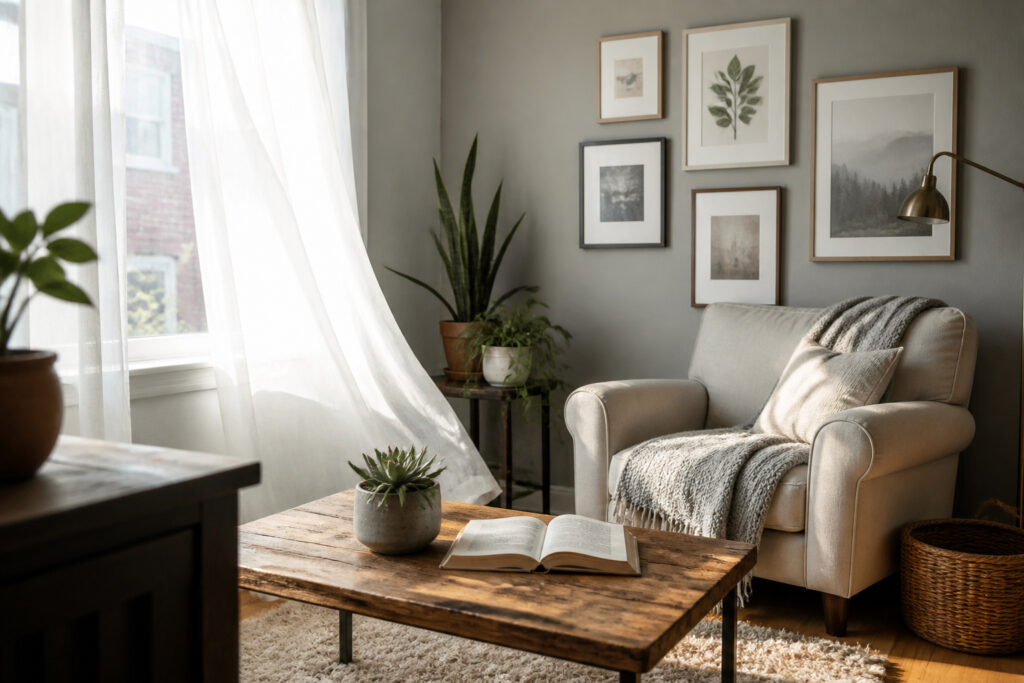
The better compromise is a sheer or loosely woven fabric that filters light rather than blocks it; the glow through the cloth keeps the whole apartment from feeling like a closed box.
Layer a roller shade behind it when you need real darkness for sleeping. The fabric itself is the cheap part, and swapping it out costs less than repainting a wall when your taste shifts.

Versatile Ladder bookshelf: The wooden narrow bookshelf functionality and aesthetics, perfect as a bookcase in the study or office, a display shelf in the living room or bedroom, a plant stand in the balcony or a storage rack in the kitchen. It does job well

Versatile Ladder Bookshelf: The wooden narrow bookshelf functionality and aesthetics, perfect as a bookcase in the study or office, a display shelf in the living room or bedroom, a plant stand in the balcony or a storage rack in the kitchen. It does job well

Small Bookshelf for Small Spaces: Featuring a compact design, the floor standing tree bookshelf optimizes floor space, making it an excellent choice for bedrooms, home offices, corners, hallways, or smaller living rooms. This narrow small bookcase organizer provides ample storage for books, CDs, game cassettes, decorations, and more. Keep your belongings stylishly organized, ensuring a neat and clutter-free space. ( Book shelf dimensions: 47.4"H*14.6"L*"7.9"W )
11. Incorporating Natural Elements
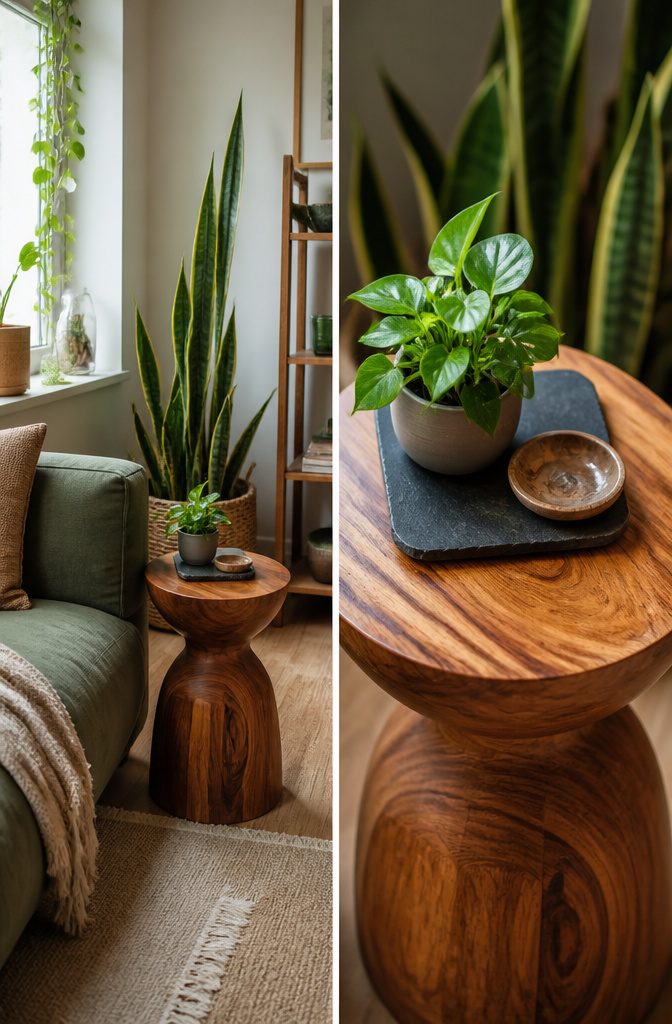
Wood tones and stone textures do the heavy lifting that white paint alone cannot. A small apartment reads cold fast, and the fix is not another coat of primer but material that carries warmth without bulk.
I keep a teak stool beside my sofa; it is maybe fourteen inches square, and the grain catches afternoon light the same way a white cube would not.
Stone surfaces, even in thin veneer, add the same weight: a slate tray on a coffee table, a quartz-look side table with actual heft. These pieces cost less than solid wood furniture and move with you.
Living plants finish the job that materials start. Trailing pothos on a shelf draws the eye upward and softens the vertical lines that make low ceilings feel lower.
A single snake plant in a corner does more than sculpture would; it shifts the air in a way you notice after a week, not a day.
The catch is editing. Two or three plants read as intention, six read as clutter in a space under five hundred square feet.
Skip the small pots scattered everywhere and go for one plant with scale, or one trailing specimen on a high shelf that carries the whole wall.
Fake plants work if the light is wrong for real ones, but the cheap ones yellow inside a year and the good ones cost enough that a live plant is often the thriftier bet.
What to Measure Before You Buy
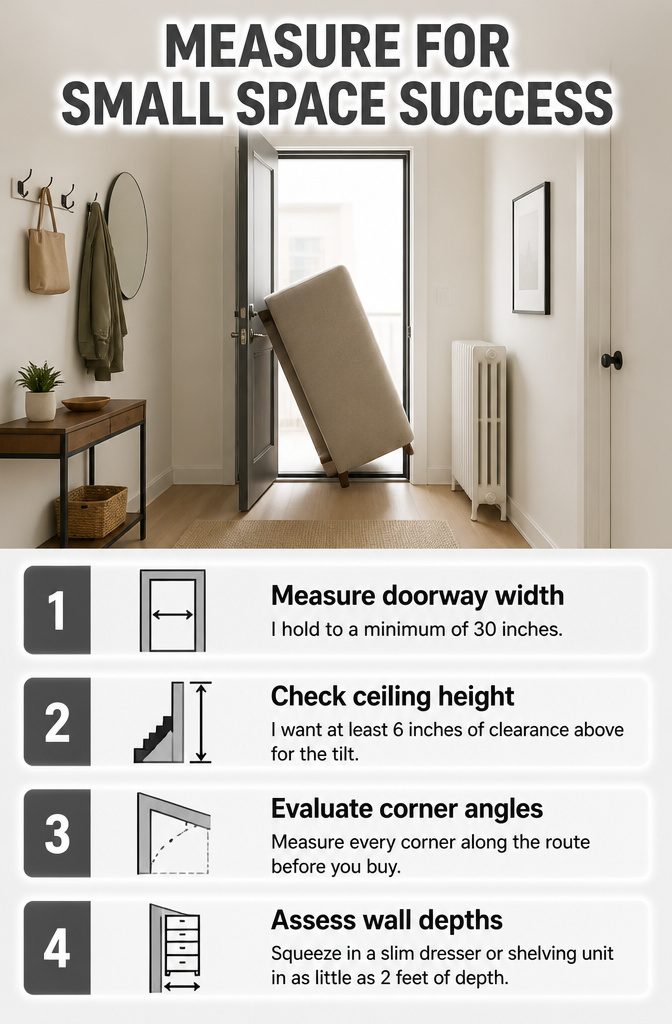
Most small apartment room ideas skip the part where you actually figure out if the piece will make it through the door.
A storage ottoman or slim console that looks right in a showroom can still fail at the stairwell turn or the tight angle around a radiator.
Measure the doorway width, the ceiling height on the stair landing, and every corner along the route before you buy.
I hold to a minimum of 30 inches for any doorway a sofa or storage piece must pass through, and I want at least 6 inches of clearance above for the tilt.
For the gap behind a sofa, sources describe squeezing in a slim dresser or shelving unit in as little as 2 feet of depth, but that only works if you measured the clearance at both ends of the wall.
Ceiling height matters too: a platform bed with drawers needs enough vertical room to lift without hitting a low soffit or light fixture.
Drawers should glide smoothly and hinges should feel sturdy, because cheap hardware fails fast when you use it daily in a small space where that piece is working double duty.
Where to Stop Adding
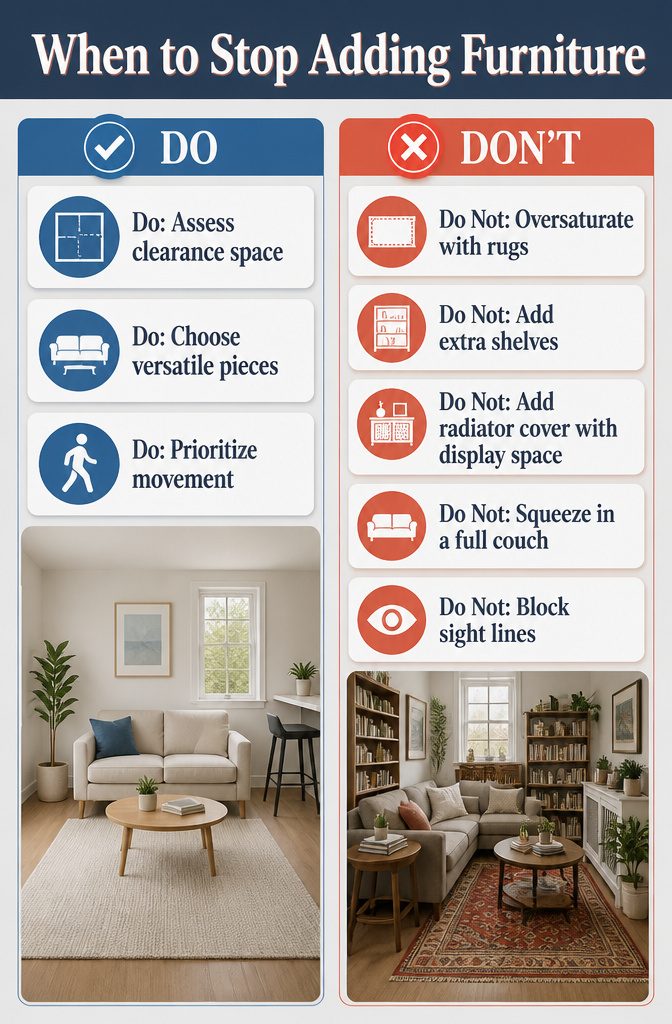
A 360-square-foot studio in Portland stays livable because the owner stopped at a loveseat and low-profile coffee table instead of squeezing in a full couch.
That restraint is harder than it looks. The line between styled and stuffed is usually one piece past where you think it is.
The test is whether you can still move. In my own reading, the apartments that stay calm keep clearance for movement as the non-negotiable, not the furniture list.
A mirrored wall or a counter extension into the living room only works if the eye has somewhere to travel; pack the floor and the trick collapses into clutter.
For a weekend project with a few hundred dollars, the budget itself is the guardrail. One rug to anchor the living area, one compact table with a finish that fits the room, and then stop.
The second rug, the extra shelf, the radiator cover with display space on top; each sounds small but together they turn a studio back into that undifferentiated box you started with.
I have learned to set the money aside for removal, not addition. If the new piece does not earn its square footage by Monday morning, it goes back to the store before the week is out.
One Weekend Projects That Actually Fit
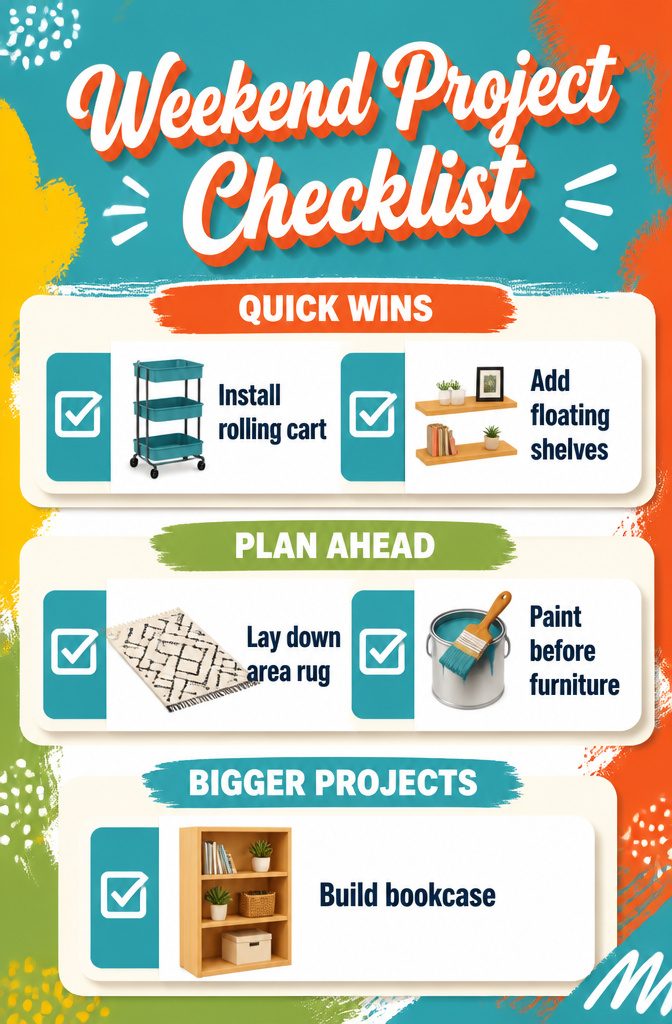
Most small apartment room ideas that actually get finished are the ones that fit inside a Saturday and Sunday.
The ones that stretch across three weekends tend to stall after the first, leaving you with a half-painted wall and a couch blocking the hallway.
Start with anything that moves on wheels or hangs on a wall.
A rolling cart between the kitchen and living area, or a set of floating shelves above the desk, can be measured, bought, and installed before Sunday dinner. These are single-weekend wins.
They also let you see the change immediately, which matters more than people admit. When the room already feels different, you are far more likely to pick up the next project.
If you are doing several, sequence matters.
Put the rug down before the furniture moves, not after. Paint before you hang shelves, because spackle dust lands on everything.
The second weekend is for the pieces that need drying time or a second pair of hands: a bookcase that needs building, or a curtain rod that has to sit level across a plaster wall that bows.
Skip anything that requires a permit, a plumber, or a decision about the security deposit until you have lived with the smaller changes for a month.
By then you will know whether the problem was really the closet or just the way the light fell at 4 p.m.
Why Small Apartments Read as Cluttered
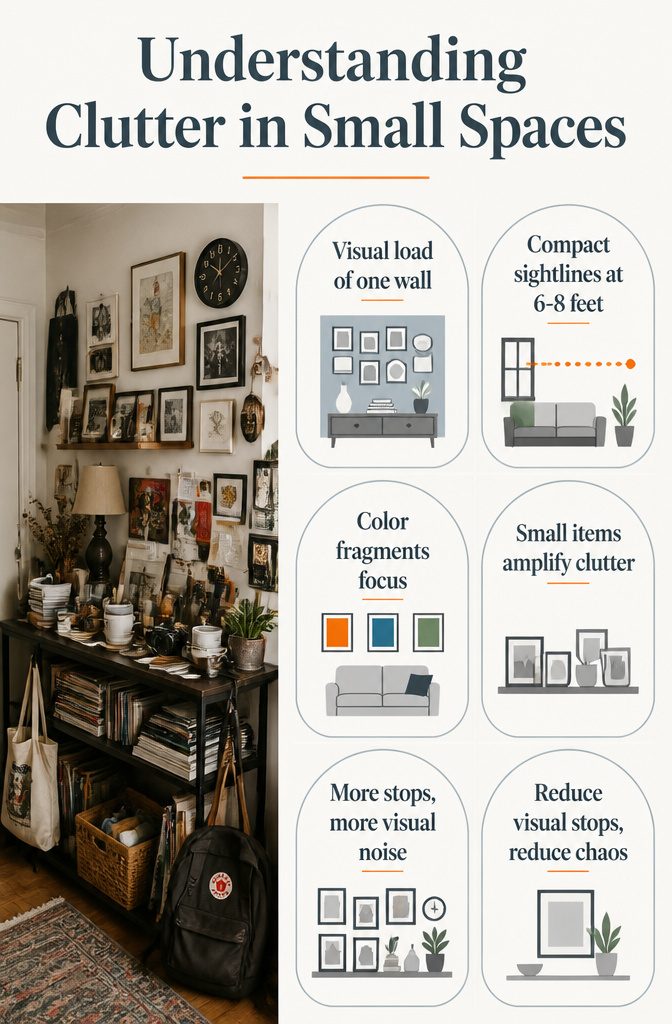
A single wall in a 400-square-foot studio carries the same visual load as four walls in a 1,600-square-foot house, yet most people fill it at the same density.
Sight lines in small apartments hit a stopping point every six to eight feet instead of every twelve to fifteen, so the eye registers each object as a separate event rather than part of a continuous field.
Color makes it worse. Three accent shades in a large room dissolve into the volume; in a studio, they fragment into competing focal points because there is nowhere for the eye to rest between them.
Small objects multiply the problem.
A collection of four-inch frames on a narrow shelf reads as twelve individual decisions, not one arrangement. The cumulative effect is what makes the space feel busy, not any single item.
I learned this the hard way in my first apartment, where I kept adding "just one more" thing to a console table until the wall behind it looked like a bulletin board.
The principles that actually work for small spaces start from this mechanic: reducing the number of visual stops, not just the physical footprint of the furniture.
Rental-Friendly Fixes That Leave No Trace
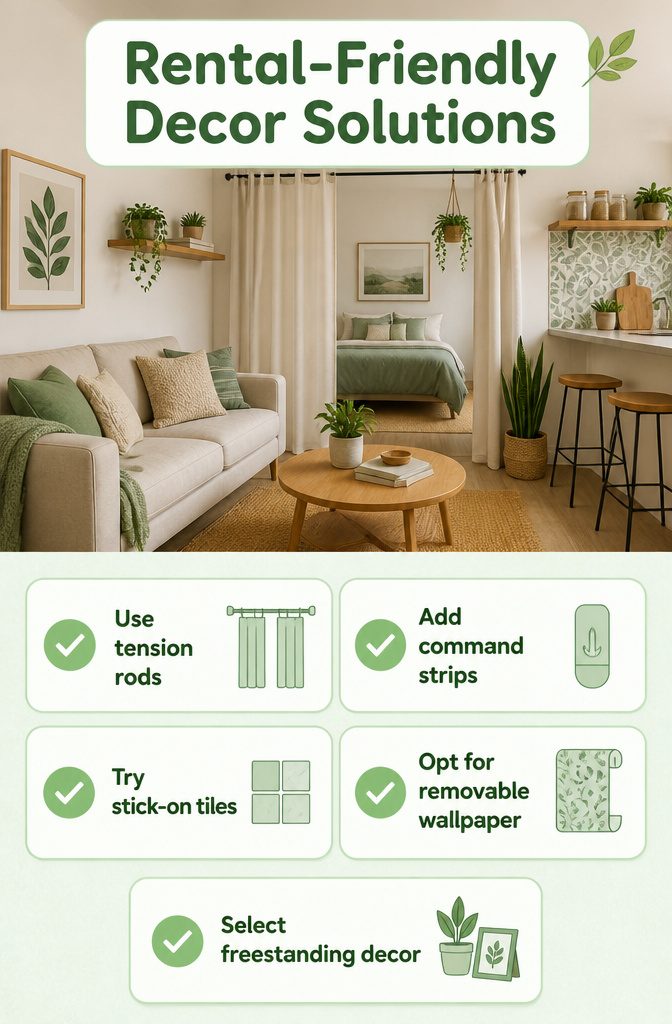
Tension rods turn a blank ceiling into a curtain track in about ten minutes, no drill required.
I ran one across a studio bedroom once to hang light panels that framed the bed and cut the kitchen view, and the softness of fabric beat any bulky divider for the price of a simple rod and a few yards of material.
The same hardware works inside cabinets or across narrow wall gaps for a quick tool-free shelf.
Command strips and freestanding pieces handle the rest.
Stick-on backsplash tiles and contact paper refresh the wall behind a stove or a countertop without a landlord ever knowing they were there; peel them off when the lease ends and the surface underneath is unchanged.
I would skip anything that needs a drilled anchor, wet paint, or real grout if the deposit matters; even small holes add up faster than most renters expect when move-out day arrives.
Removable wallpaper sits in the same category; it adds texture and color, goes up without paste, and peels away intact.
Two ways to play this: cover one accent wall for impact, or line the back of a bookcase for something the next tenant never has to live with.
The full wall wins if you want to change how the whole room feels; the bookcase keeps the commitment low and the deposit safe either way.
Frequently Asked Questions
How can I make my small apartment feel bigger?
Paint walls in fresh white or soft pastels, place a mirror opposite a window to push daylight deeper into the room, and choose multi-functional furniture so one piece does the work of two.
Each choice removes visual weight and stops the eye from hitting a boundary every six to eight feet.
Keep the palette cohesive; three accent shades in a studio fragment into competing focal points because there is nowhere for the eye to rest between them.
What are some good storage solutions for small apartments?
Mount floating shelves and tall narrow cabinets against walls to pull the eye upward and keep floor space open for movement.
Choose furniture with built-in storage, like platform beds with drawers or lift-top coffee tables, so clothing and clutter stay out of sight without demanding extra square footage.
Pegboards and adjustable hooks in kitchens and entryways turn the wall itself into storage without narrowing the walkway.
How do I decorate a small living room?
Anchor the seating area with a rug sized so the front legs of the sofa sit on it, stick to a similar tone throughout so the space still flows, and layer lighting from three heights: overhead ambient, a mid-level floor lamp, and task lighting where you actually read or work.
Edit plants and accessories hard; one trailing pothos on a high shelf beats a cluster of pots on the floor that you have to step around. Warm white bulbs at all levels keep the color consistent after dark.