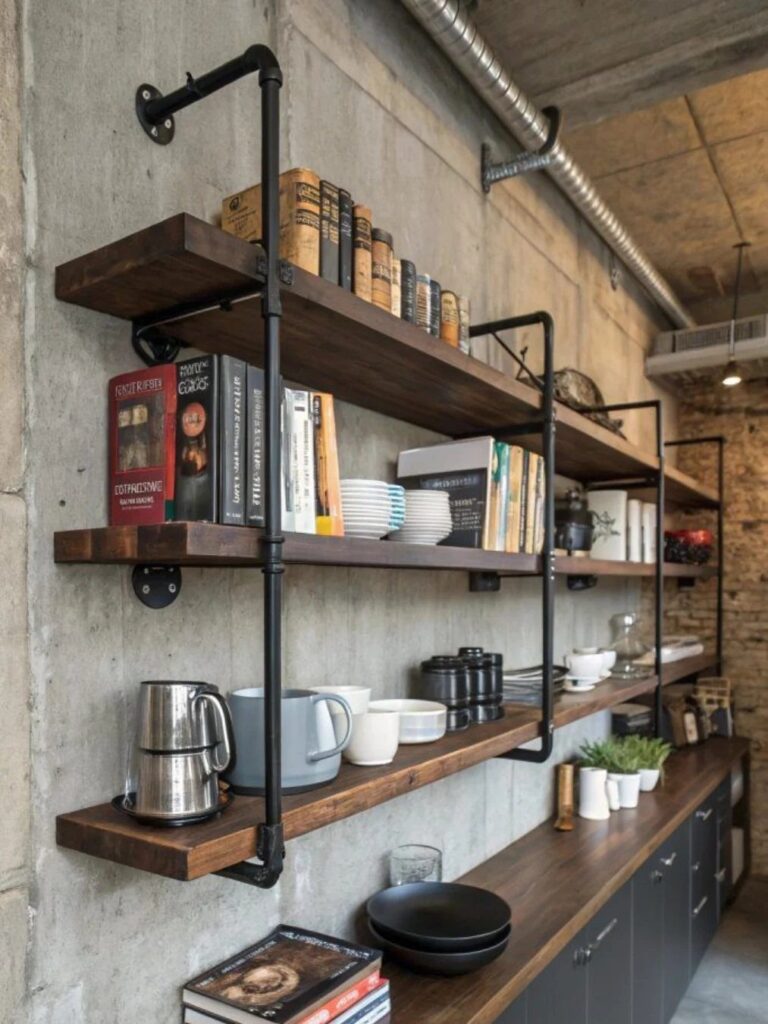
Open shelving in a kitchen runs from a quart of paint on removed cabinet doors, or a secondhand hutch that needs no drilling, up to heavy marble slabs where the mounting matters more than the style.
What decides your pick is whether you can drill into the wall: renters belong with a freestanding hutch or under-shelf lighting that plugs in, while owners with studs to hit can hang floating shelves, brackets or heavy marble.
Even the lightest option needs a plan for the dishes, since shelves only stay calm when they hold what you reach for daily.
1. Open Shelves with Cabinets
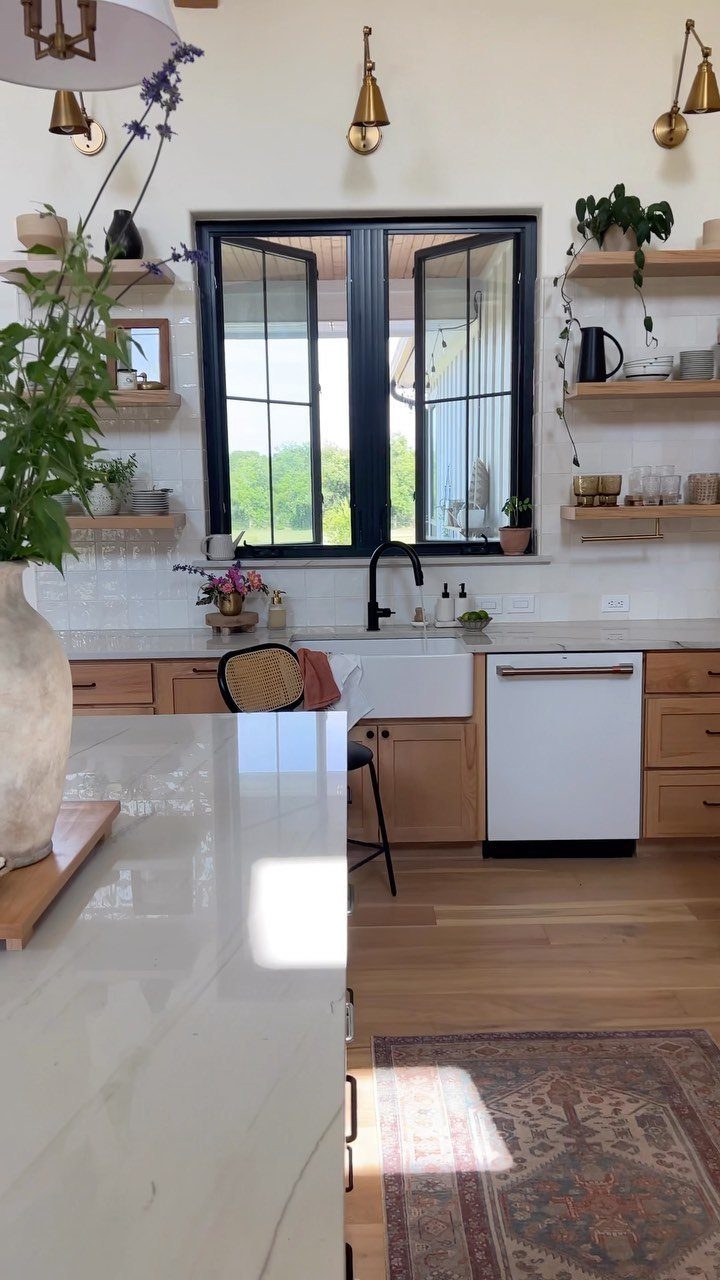
Keeping the lower cabinets closed and putting open shelves above is the version I’d pick for most budget kitchens. Daily dishes stay in reach on the wall, while the clutter (small appliances, odd lids, cleaning supplies) disappears behind doors.
Wood shelves over light wood cabinets read as one piece, so the mix feels planned instead of half-finished. Limit the shelves to one wall, ideally beside a window, so the room still has plenty of closed storage.

Heavy-Duty Bakers Rack Coffee Bar: Boasting a reinforced metal frame this kitchen storage rack, High load-bearing capacity.each main shelf holds up to 70 lbs, while wire baskets support up to 50 lbs for safe daily storage of kitchen essentials

Upgrade Your Storage: The three shelves of the storage cabinet give you plenty of room for dishes, pots and pans, dry goods or plastic containers. The open middle space can be used to hold kitchen appliances such as a microwave or coffee maker. Keep organized behind the double doors, so your items stay safe and dust-free.

Spacious Storage: This kitchen cabinet features 4 doors and 1 fixed open shelf with two layers, providing ample storage space for books, kitchen utensils, tableware, decorative items, and more
2. Wooden Shelves
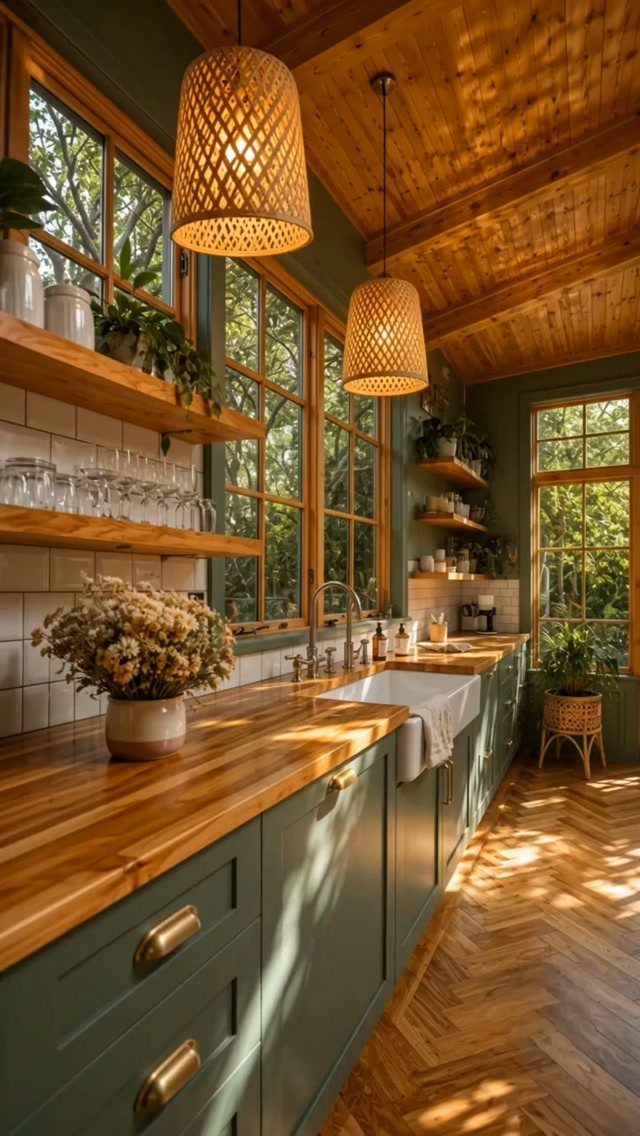
Wood is the easiest material to warm up a kitchen, and it matters most when the cabinets are a strong color like green. Wooden shelves break up all that paint and tie in with wood countertops or ceiling details.
Match the wood tone across shelves and counters if you can; mixing 3 different stains gets busy fast. Stay with plain, simple lines, since the grain does the decorating.
Rustic doesn’t need to mean heavy: a thinner board keeps it airy.

𝐌𝐨𝐝𝐞𝐫𝐧 & 𝐌𝐢𝐧𝐢𝐦𝐚𝐥𝐢𝐬𝐭 𝐒𝐭𝐲𝐥𝐞 - Featuring clean lines and a rustic brown finish, these wall-mounted shelves bring warm farmhouse charm and modern style to any space. Perfect as shelves for room decoration, book shelves display, and rustic farmhouse wall decor — they elevate your bathroom wall art vibe, bedroom aesthetic, living room style, kitchen organization, office setup, and laundry room storage all in one versatile design

𝐄𝐱𝐩𝐚𝐧𝐝 𝐒𝐩𝐚𝐜𝐞 𝐚𝐧𝐝 𝐌𝐨𝐝𝐞𝐫𝐧 𝐃𝐞𝐬𝐢𝐠𝐧: With clean lines and a warm finish, these small bathroom shelves expand wall space in dry bathroom zones and double as stylish bathroom organizers and storage. Effortlessly organize towels, toiletries, and decor with the invisible bracket that creates a sleek, modern display appearing to float seamlessly on your wall — perfect for over the toilet bathroom organizer setups and completing your bathroom wall decor

𝐌𝐨𝐝𝐞𝐫𝐧 𝐚𝐧𝐝 𝐕𝐞𝐫𝐬𝐚𝐭𝐢𝐥𝐞 𝐒𝐭𝐲𝐥𝐞: The hidden bracket design gives a clean, floating look that works beautifully as home decor wall shelves in modern, farmhouse, rustic, or industrial decor styles. Adds warmth and style without overwhelming your space for bedroom decorations, farmhouse living room decor, office wall decor, nursery, entryway, kitchen, and more
3. Industrial-Style Shelving
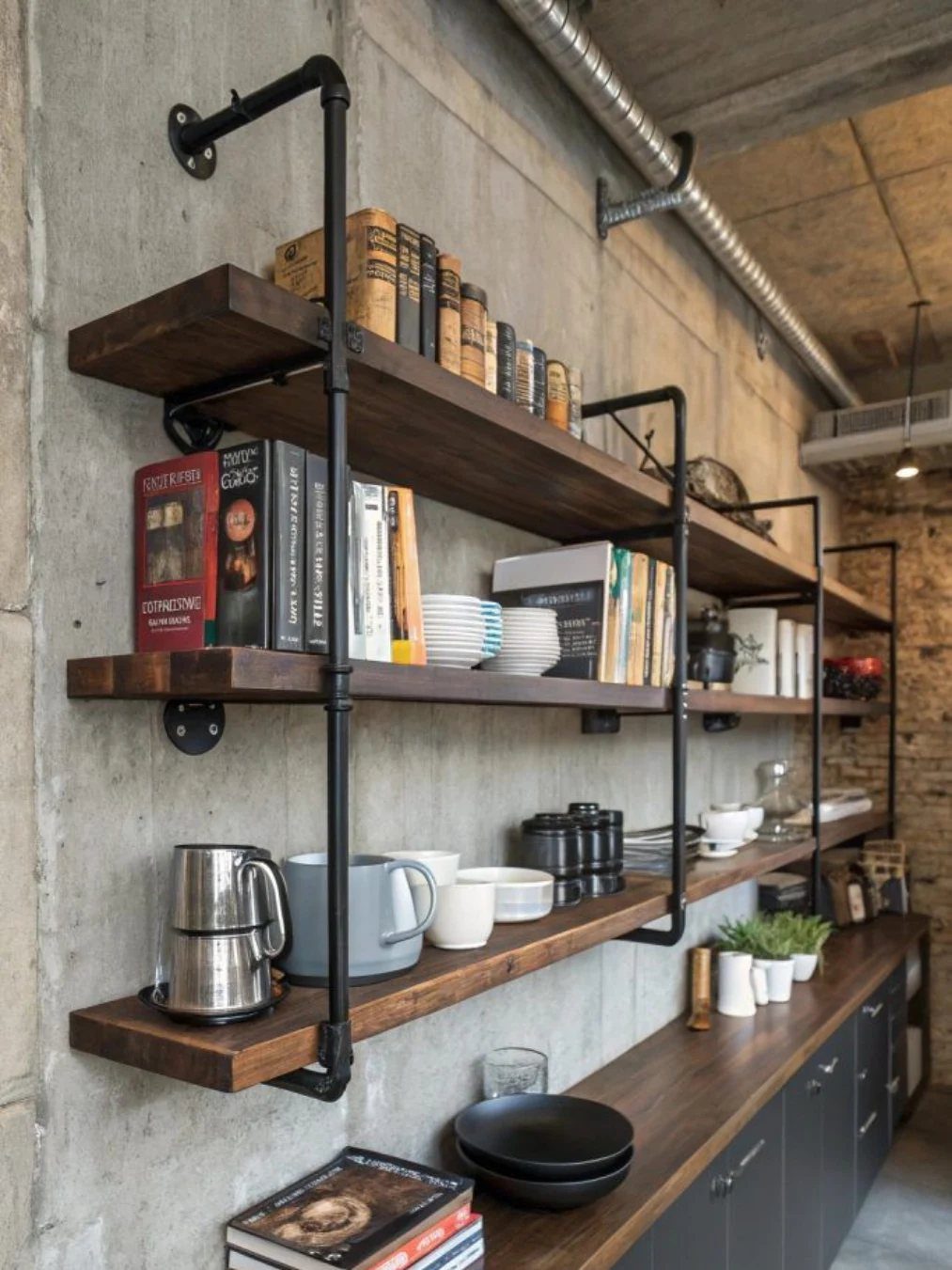
Black metal pipe brackets under thick wooden boards give a kitchen an industrial edge without a big spend.
Against a grey concrete wall, the dark pipe and warm wood contrast well, and the look suits plates, books and cookware stacked without fuss.
I’d keep the boards sturdy, since heavy dishes and pipe supports pair best with real thickness. Pipe fittings come in hardware-store kits, so a weekend is plenty.
If concrete isn’t your wall, the same shelves still work on painted drywall, but anchor into studs.

【Matrial】Industrial pipe shelving features a sturdy metal pipe brackets ,Painted black matt, Hardware Only,No plank Included.
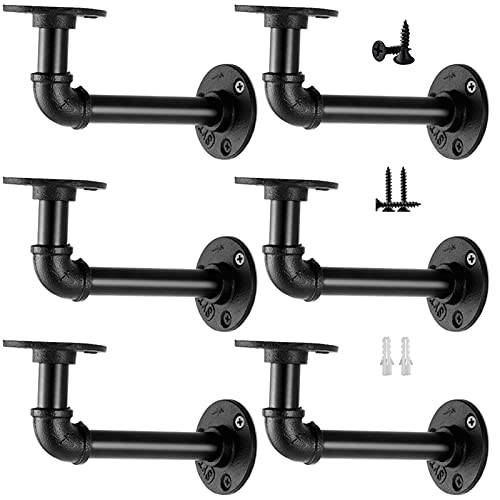
Fits 7"-14" Board Depth : This pipe shelf brackets L stype are designed to hold the wood lumber board depth from 7 inch to 14 inch.

【Superior Strength】Our pipe shelf brackets are crafted from high-quality iron and feature a robust 3/4 inch pipe, offering greater stability and the ability to support up to 120 pounds, outperforming competitors with 1/2 inch pipes,aslo the included high strength screws made this pipe shelving can be mounted to the wall or wood sturdy.
4. Plants and Art on Shelves
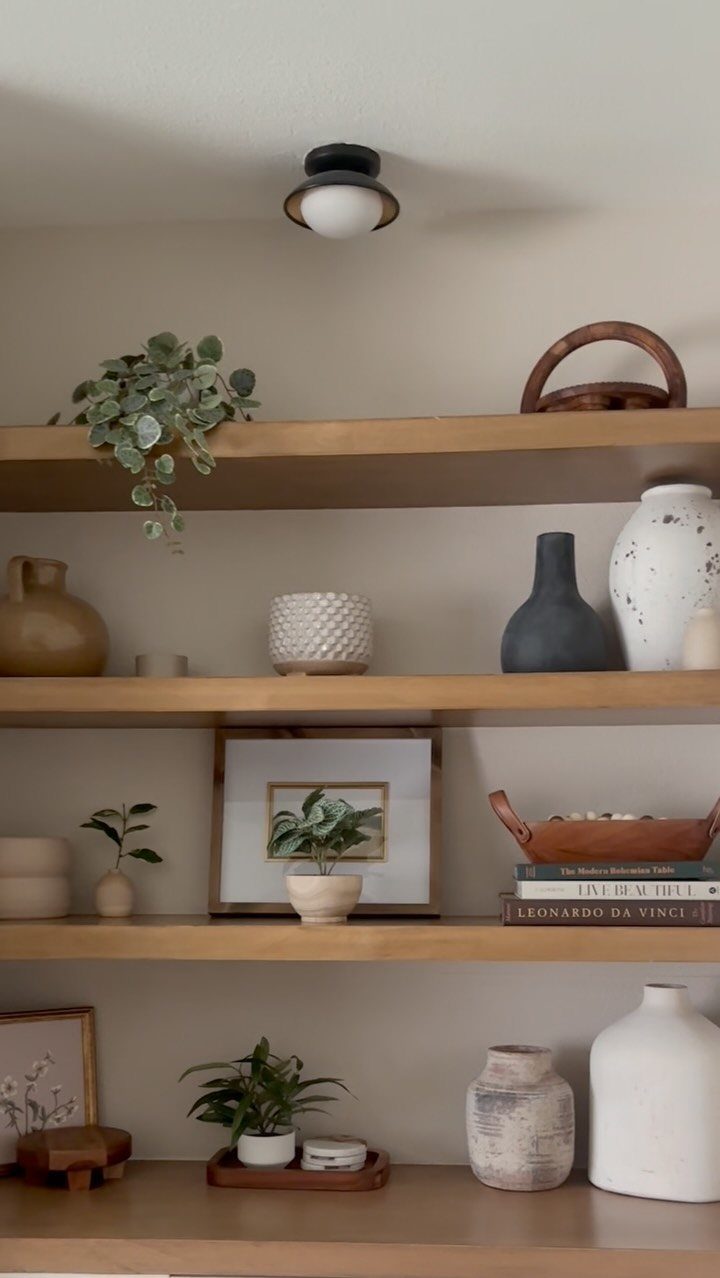
Plants, framed art and a few books turn plain shelves into the part of the kitchen people actually look at. Vary the heights: a small pot beside a tall vase, a frame leaning behind a stack of books.
The maker of this setup groups items in odd numbers, 3 and 5, and I agree, because even pairs look stiff. Leave some bare board between groups.
Skip anything delicate near the stove, since grease settles on shelf items and plants fade fast in a dim corner.
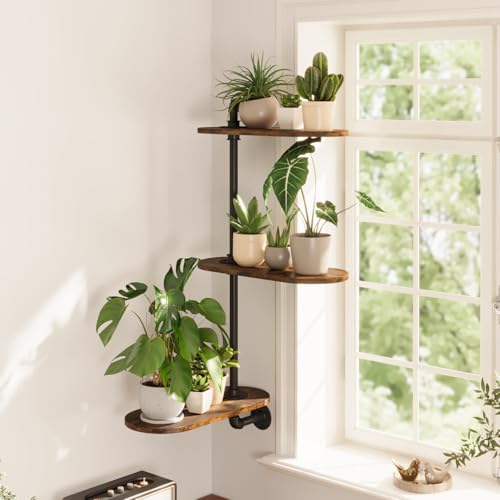
3-TIER ROTATING SHELVES — NO MORE HAULING POTS: Give the unit a light push and all three shelves swing 180° together on the wall bracket. Rotate 90° once a week so every plant grows straight instead of leaning toward the glass. Swing the shelves aside to open the sash, wash the window, or reach the sill — without taking down a single pot.

【𝐒𝐢𝐦𝐩𝐥𝐞 𝐀𝐬𝐬𝐞𝐦𝐛𝐥𝐲 𝐢𝐧 𝐌𝐢𝐧𝐮𝐭𝐞𝐬】Everything you need is included in the box, such as expansion screws and clear, easy-to-follow instructions. Mounting this wall plant hanger takes just 2 screws, allowing for a fast setup and a secure, reliable display

2 Pack Unique Yoga Mat Hanger: This yoga mat rack comes with floating shelves and 4 hooks, larger capacity. It can save floor space, stylish and simple design is the first choice for home gym decor.
5. Baskets and Jars
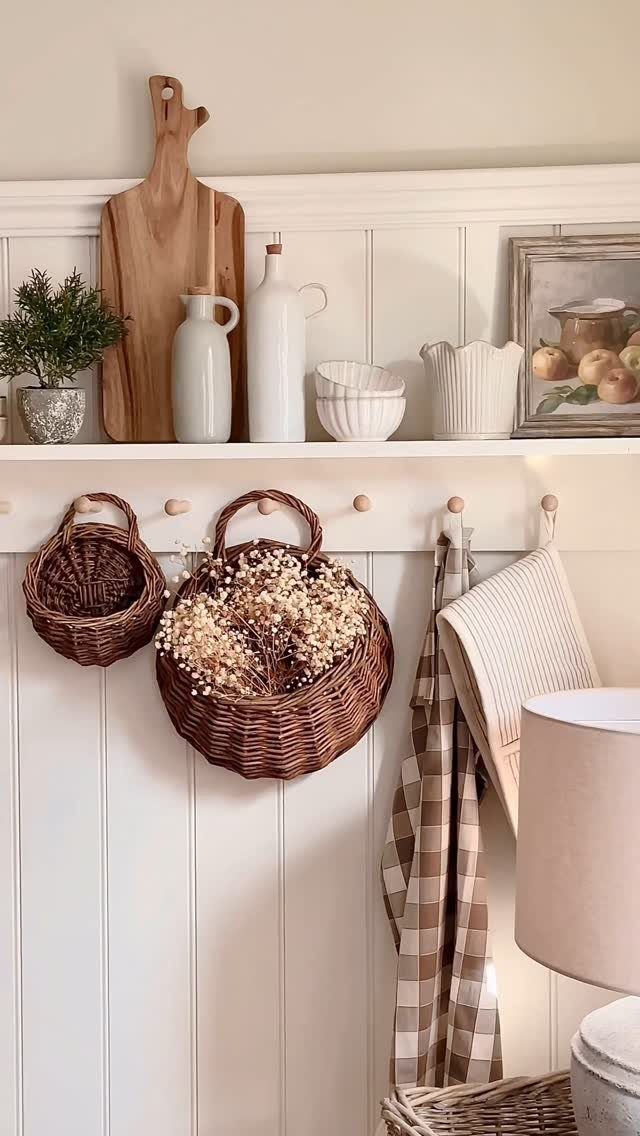
Hanging wicker baskets from pegs under a shelf gives you storage on a wall with almost no cost.
Put white jars on the upper shelf for dry goods or utensils, and use baskets below for linens, produce, or anything you’d rather not display.
A peg rail is cheap and renter-friendly, though you’ll need to patch the screw holes later. Keep jars in one color so the shelf stays calm.
Baskets with lids hide the most mess, so choose those for the lower row.
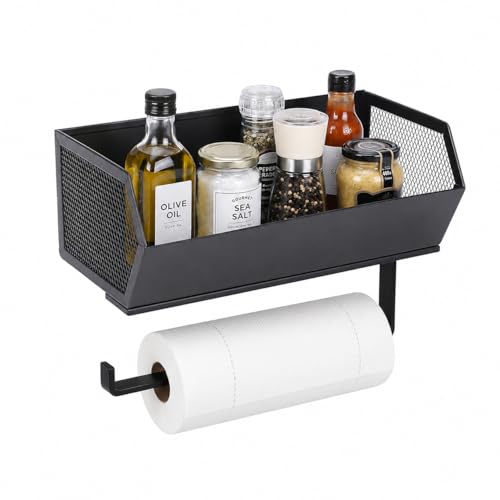
[2-Tier Space Saver] This magnetic paper towel holder combines an upper storage shelf and lower roll bar, creating a compact fridge organizer for paper towels, spice jars, condiments, wrap, and daily kitchen essentials.

More space for meal prep: This set of 2 wall mounted shelves moves spices, oil bottles and everyday containers onto the wall, freeing kitchen counter space. Carbonized Black paulownia wood and black iron brackets add contrast to bright, modern spaces.

Maximize Your Space: Please measure the width of your door before purchasing to see if it can fit a 16.5"W shelf. Our 9-Tier over the door pantry organizer is designed to make the most of your storage space, allowing you to store more items in a smaller area such as spice and some jars. Perfect for small kitchens or those with limited storage space.
6. Floating Shelves
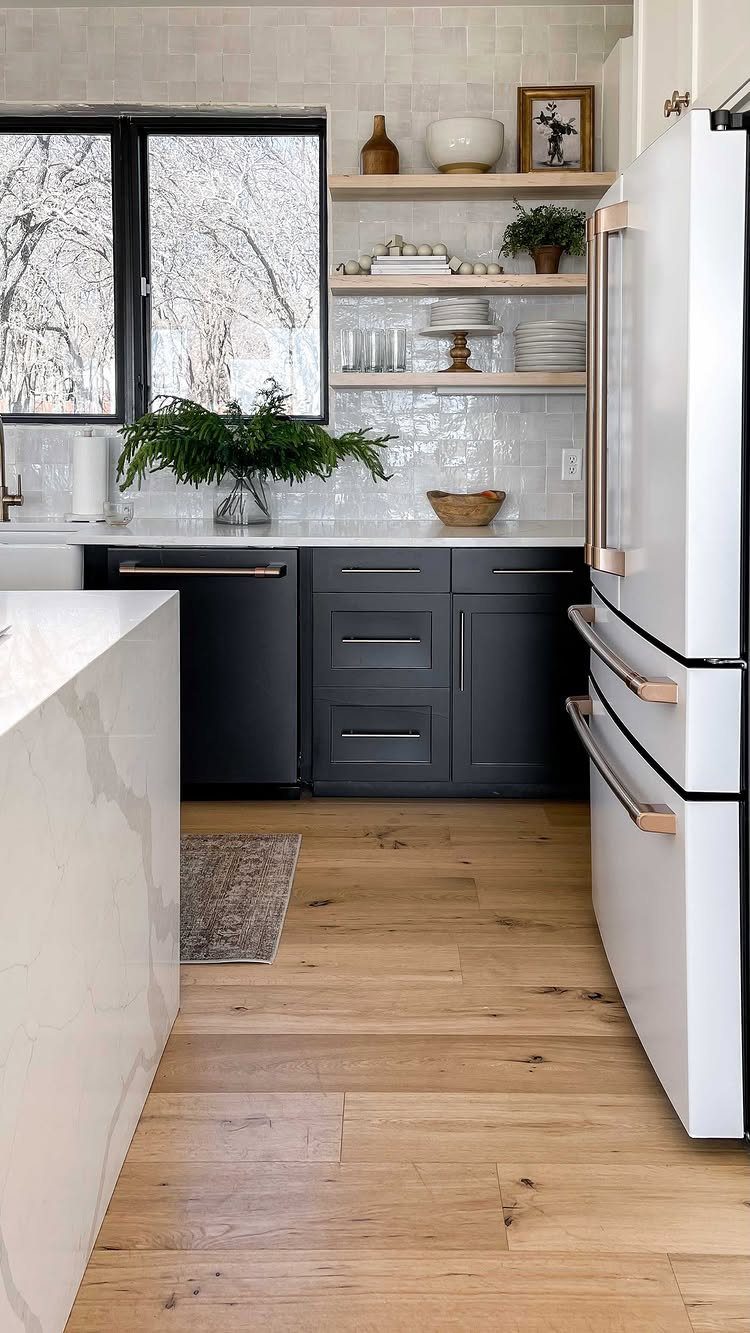
Floating shelves hide their brackets, so the wood looks like it grows out of the wall. Floating shelves with a clean line suit a kitchen with dark gray cabinets, where bulky brackets would only add visual noise.
The maker of this pair built theirs from maple, sealed with a matte polycrylic, at 9.5" deep, 39" wide and 1.75" thick. That depth fits dinner plates, and the thick board looks solid.
Mount into studs, because hidden supports leave no margin for weak anchoring, and load the shelf with dishes rather than heavy cookware.
When it comes to shelf depth, professional organizers favor shelves no deeper than 14 inches to keep everything front and center, according to This Old House Magazine.

Not Enough Cabinets? No Problem: Don't get overwhelmed by lack of space, this kitchen pantry will provide you with all the extra storage space you need for that new pot and pan set you've been eyeing and the "company" dishes along with providing a beautiful new piece to go with your décor.

【Perfect Storage Solution】15.7"D x 57.8"W x 63"H kitchen pantry cabinet with 3 doors, 3 drawers, open shelves, and a spacious countertop for a microwave or coffee maker. Built-in wine glass holder and rack provide extra storage.

Spacious Storage: This kitchen cabinet features 4 doors and 1 fixed open shelf with two layers, providing ample storage space for books, kitchen utensils, tableware, decorative items, and more
7. Open Pantry
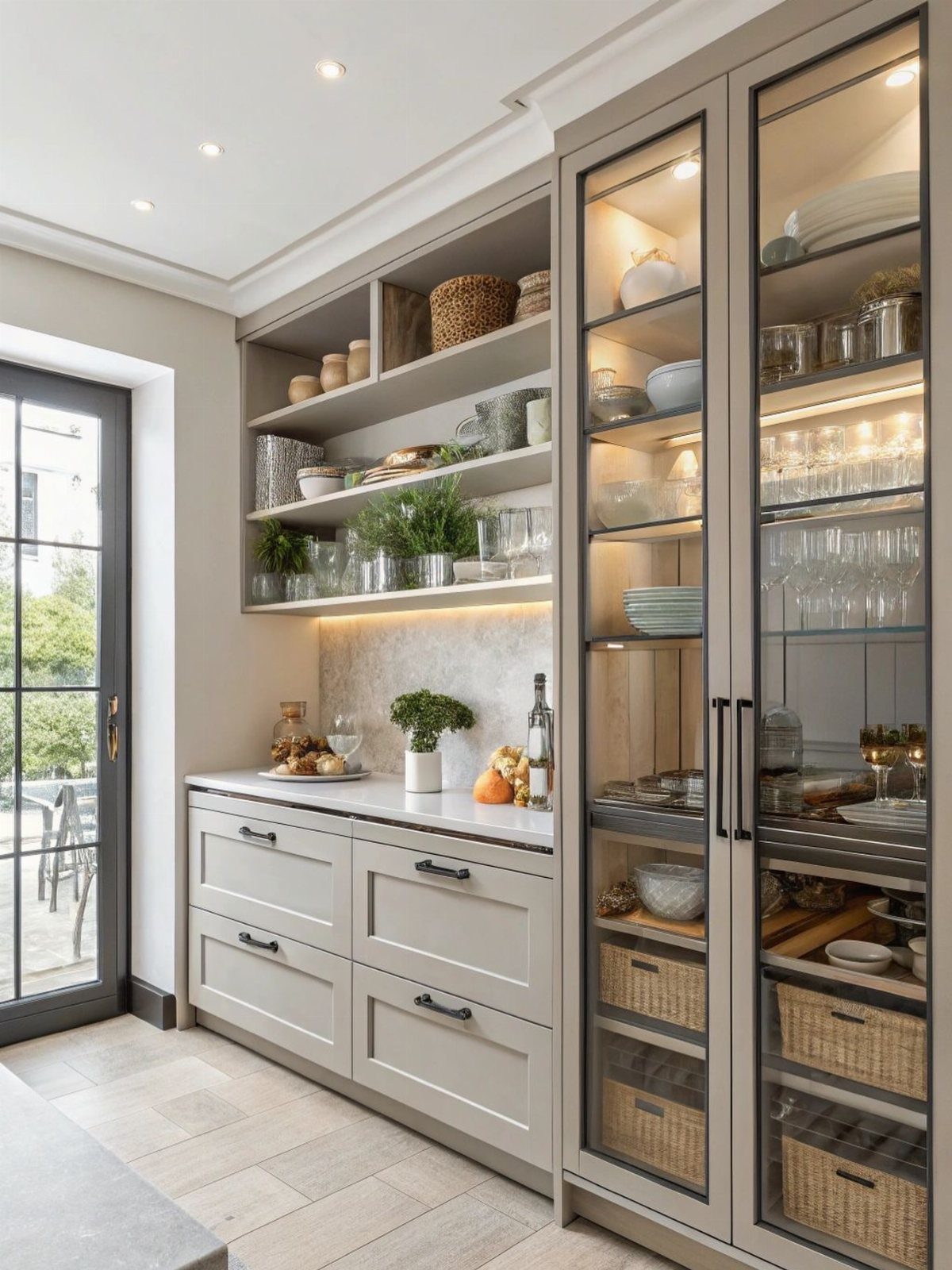
Glass-front cabinets beside open wood shelves give a pantry the best of both: the pretty things sit out, and the cereal boxes and snack bags stay behind glass.
Light grey cabinets around wood shelves keep the wood from reading heavy, so the shelves look like part of the room instead of a dark slab on the wall.
Baskets work well on the lower shelves for anything oddly shaped, and a small plant adds some life.
Stock the open shelves with the dishes you reach for every day; with that much turnover, dust never gets a chance to settle.

【Standard 90° bending】In order to ensure that each shelf bracket can be at 90° to the maximum extent possible, we add a rigorous picking process before the shelf brackets are packaged. The standardized 90-degree design is so important that it’ s the objective factor in ensuring that items remain level and do not tip over after being placed on the board(board is not included).

Floating Shelves for Wall Storage Set of 6 - The size of the WOPITUES floating shelves for wall is 16.5*6*0.6 inches. WOPITUES Floating Wall Shelves for Bathroom/Bedroom Set of 6 could give you extra storage space in the bathroom, bedroom, guest bathroom, kitchen, and living room. You can install our floating shelves for wall anywhere you like. Let’s make life simpler.
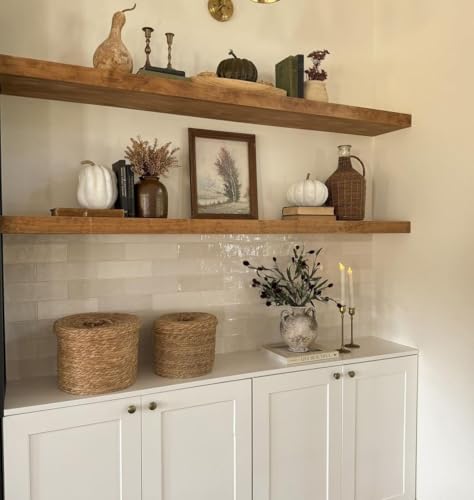
【Real wood 】These floating shelves for wall is made of 100% natural solid wood with a non-toxic and harmless varnish coating. This 36 inch floating shelves has its own wooden node and grain.The texture is very clear,The smooth surface is easy to clean.
8. Above the Sink Shelving
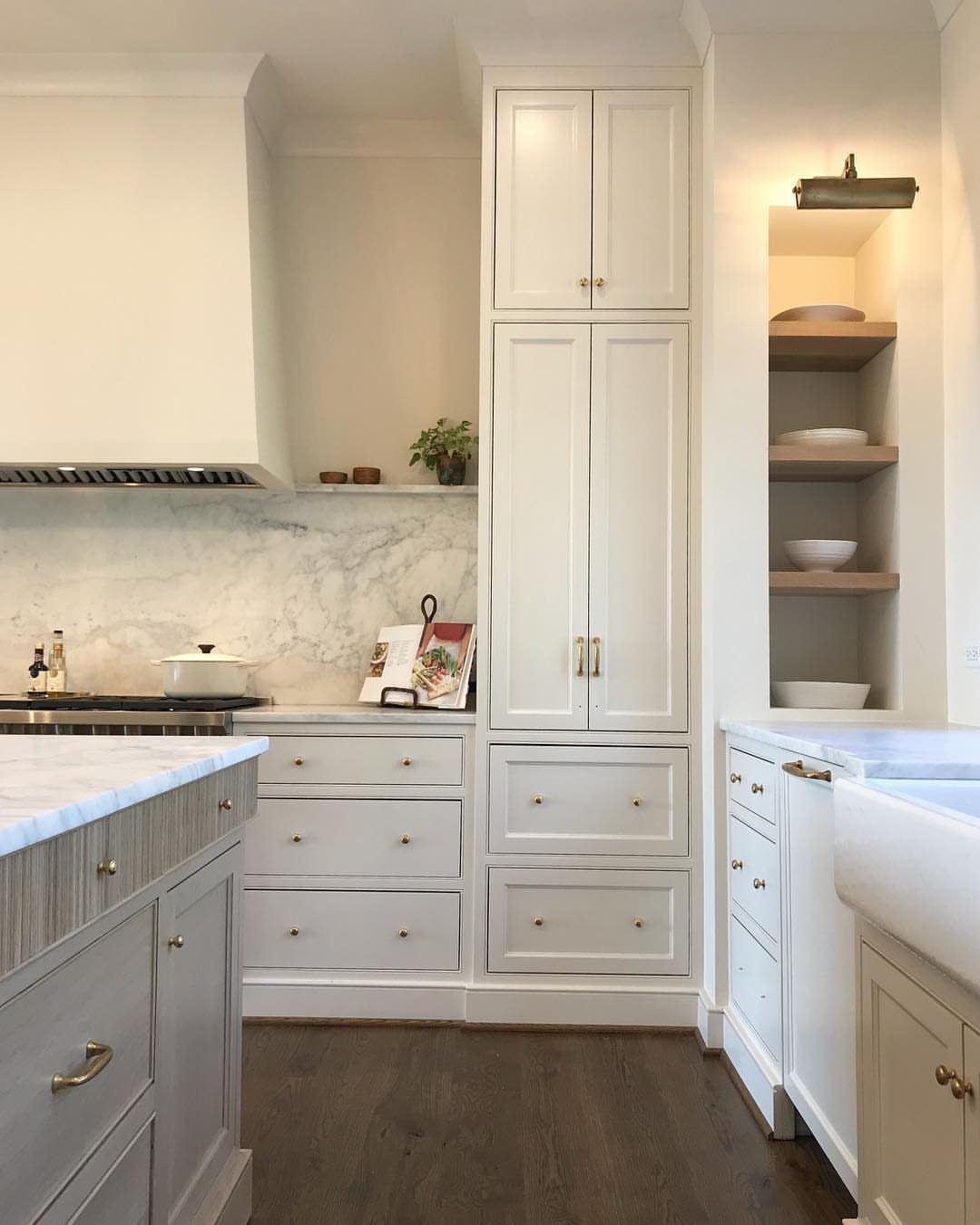
A recessed nook above the sink puts bowls where you reach for them with wet hands, and it takes no floor or counter space. Three narrow wooden shelves fit the depth of a wall cavity neatly.
A picture light over the top adds a warm glow at night. Plug-in versions suit renters, though a recessed nook is a job for owners.
I’d stack only white bowls or plain dishes here, since splashes land close by.

【Material】:Industrial rustic farmhouse DIY iron metal pipe shelving brackets, iron pipe shelving only, not include planks.

Pipe Shelf Brackets: Made of black iron with a wear-resistant coating, build to resist daily scratches, corrosion and tarnishing. Brackets build a vintage and industrial style.
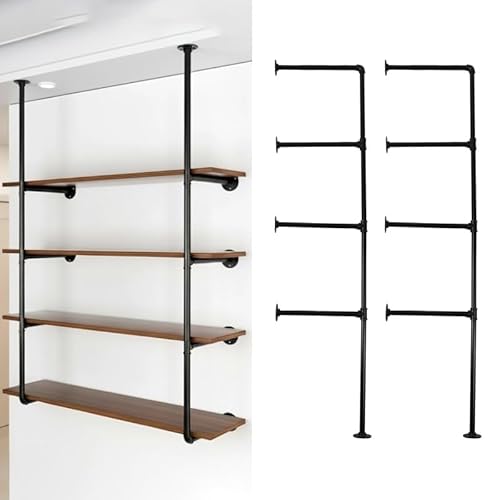
INDUSTRIAL DESIGN: Floor-to-ceiling pipe mounting system featuring 4 wooden shelves with black metal supports for a rustic farmhouse aesthetic
9. Under-Shelf Lighting
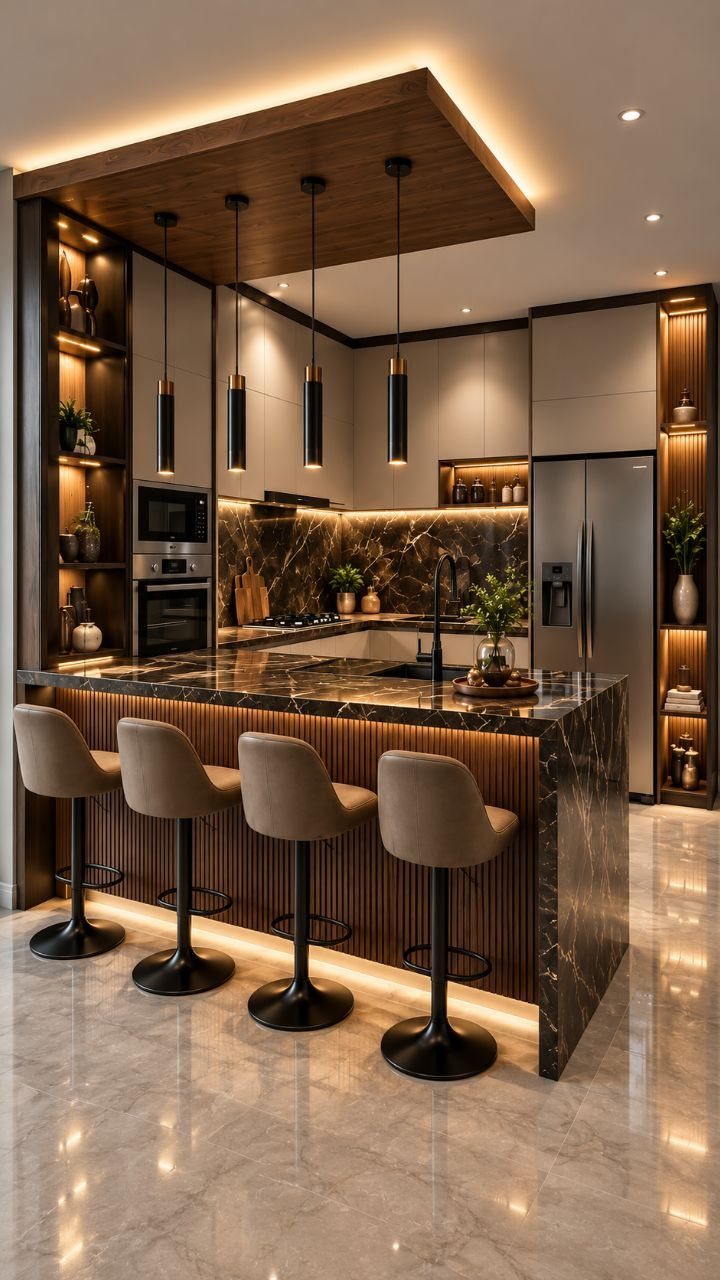
Warm light tucked under a shelf makes the dishes glow and doubles as task lighting for the counter below. Open wooden shelves look richer with it, especially in a kitchen with dark marble.
Choose a warm tone over cool white, because cool light flattens wood. Stick-on LED strips are the budget route and a good weekend project; hide the strip near the front edge so you see the glow, not the bulbs.

【𝐏𝐥𝐚𝐧𝐭 𝐒𝐭𝐚𝐧𝐝 𝐰𝐢𝐭𝐡 𝐆𝐫𝐨𝐰 𝐋𝐢𝐠𝐡𝐭𝐬】No more moving your plants around to chase the sunlight! comes with 2 energy-efficient LED grow lights that keep your plants happy year-round. Choose from 3 timer settings (3/9/12H) and 10 brightness levels to match each plant’s needs. With 3 light modes — Full Spectrum (natural sunlight), Red & Blue, and Mixed — you can support every stage of growth, from seedlings to blooming

【Maximize Corner Space】This set of 2 quarter-circle floating corner shelves turns wasted wall corners into usable storage space. Ideal for living room, bathroom, bedroom to organize small items and display decor.

MAXIMIZE YOUR ROOM SPACE: Set of 3 corner wall shelves make full use of the blank corners in your room to increase more storage space, keep your room organized and neat, reducing clutter, also highlighting your rustic decor. A great addition to your living room, bathroom, kitchen and office
10. Marble Open Shelving
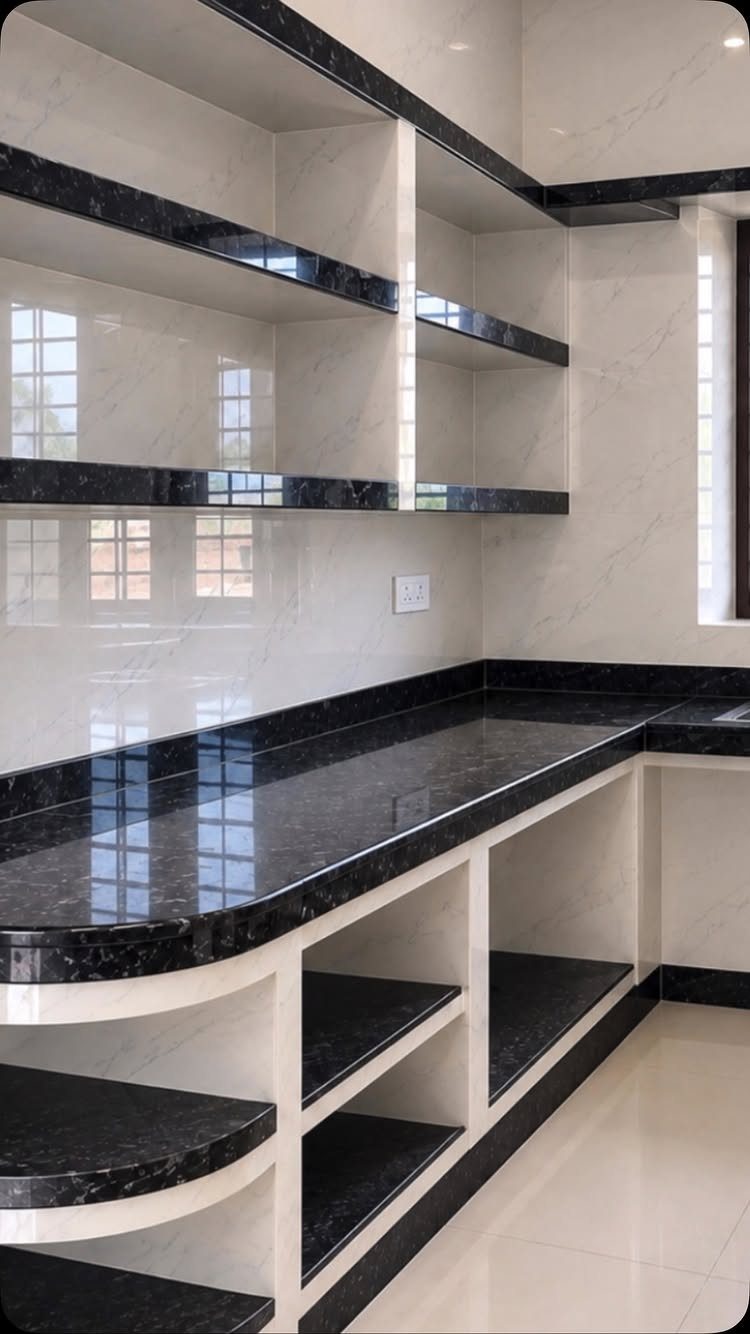
Stone is heavy, so the mounting matters more than the style.
If real marble stretches your budget, a marble-look laminate or a stone-patterned peel-and-stick panel gets close for much less.
Keep the styling minimal, since the stone is already the decoration.

【Easy to Assemble 】Our stackable wire baskets is easy to install, just fold the basket into the correct shape and snap together easily, and tighten it with a screwdriver to complete within 3 minutes.

Wall-Hanging Spice Rack Organizer: This Industrial Gray spice rack wall mount features three spacious tiers, ideal for kitchen spice organizer needs, with durable steel construction built to last

Durable Metal Construction: Made from stainless steel for long-lasting use and easy cleaning.
11. Freestanding Open Shelving Hutch
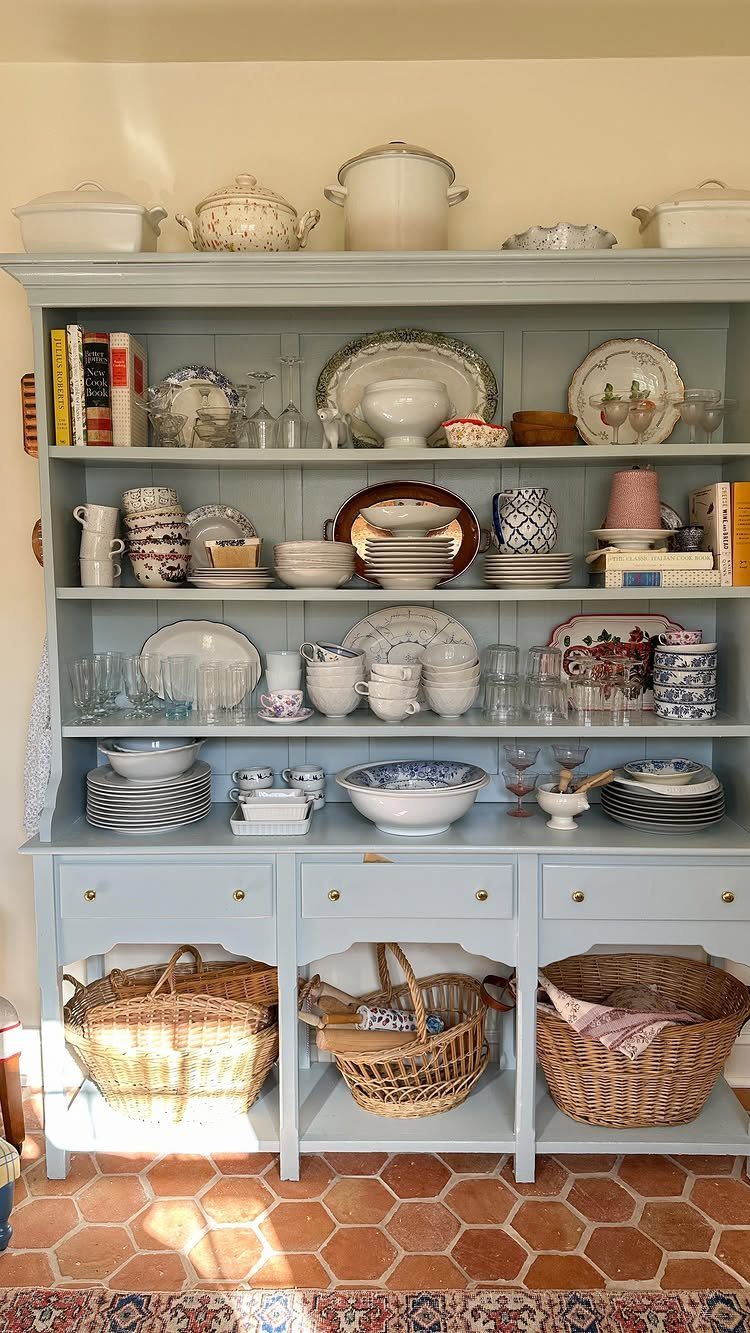
A freestanding hutch is the open shelf for people who can’t or won’t drill: it moves with you, and a coat of paint makes it yours. Light blue against a warm wall reads cheerful without any fuss.
Use the open shelves for dishes and glassware you like to see, and put baskets underneath for what you don’t. A secondhand piece plus a weekend of sanding and paint costs far less than new cabinetry.
12. Shelves with Decorative Metal Brackets
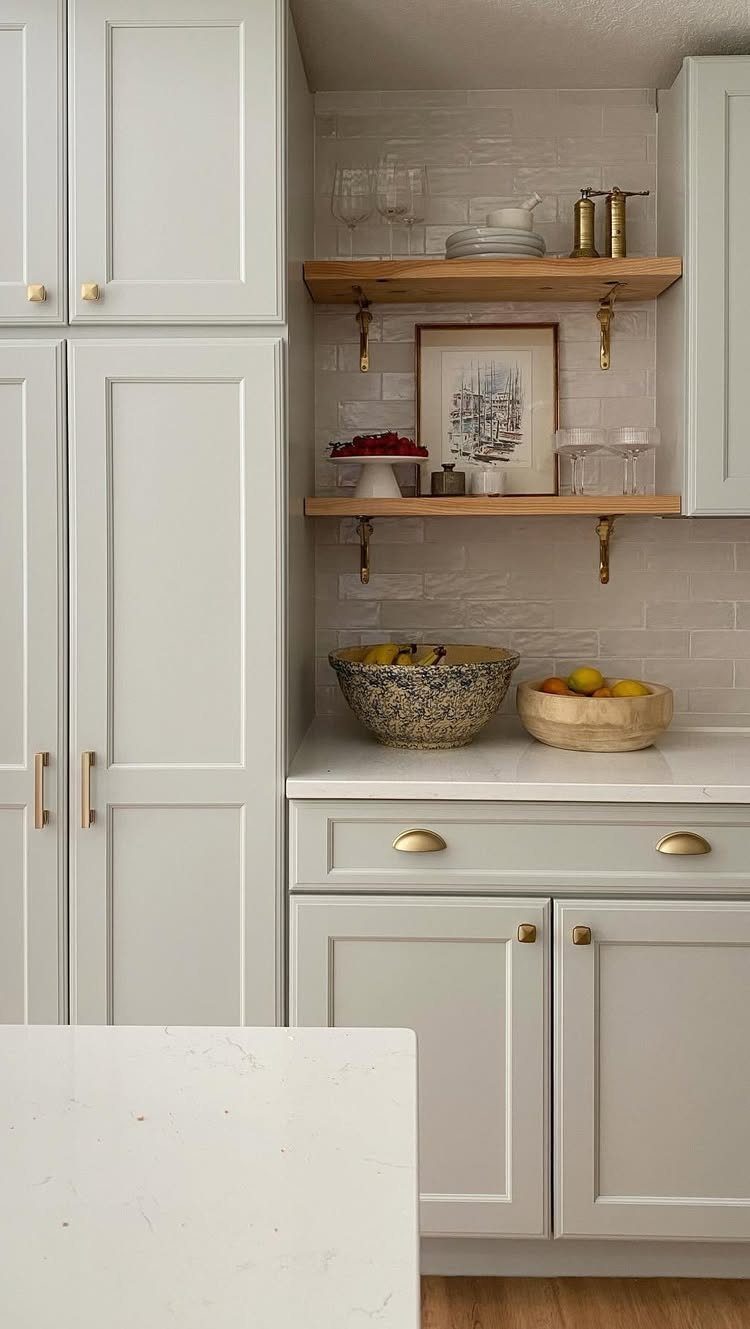
Gold brackets turn the supports into the decoration, which is a nice move against plain white tile and light grey cabinets. The wood stays simple while the metal supplies the shine.
2 shelves are enough; more brackets get busy fast.
Pick brackets sized to the board depth so they actually carry the dishes, and screw them into studs where you can. Brass-look spray paint can rescue a cheaper black set.
Maintaining Open Shelves
Open shelves do take more upkeep than closed cabinets, but the routine is short. Wipe the shelves weekly, and lift each stack instead of cleaning around it.
Overcrowding makes that job harder and the shelf look worse. Leave deliberate gaps between stacks so the eye can rest and each stack is easy to lift.
Many people treat open shelves as secret storage for things they rarely use.
Keep to what you reach for daily: plates, bowls, mugs and serving dishes. Because those get used, they rarely sit long enough to collect dust or grease.
Choosing Materials
Pick the material for the kitchen’s style and for how much upkeep you will tolerate.
Wood-look finishes suit warm, natural rooms, while engineered surfaces resist stains and heat. Marble, stone and concrete finishes suit modern kitchens.
Match the shelves to what is already in the room.
Industrial-style shelves fit a minimalist kitchen, and rustic wood pairs well with shiny appliances. Gold-mirrored shelves look good against matte black appliances.
Painting the shelves and the cabinets the same shade as the island ties the whole kitchen together, and it’s the easiest way to keep open shelving from looking tacked on.
If installing shelves sounds like too much work, remove the cabinet doors instead. A different color on the back wall or inside the shelf boxes adds punch with no new hardware, and a quart of paint usually covers it.
Balancing Function and Aesthetics
Not every item on a shelf has to earn its place by being useful. Mix everyday dishes with one piece that has a great shape, such as a soup tureen or a vintage canister.
Good candidates for the decorative share:
- Cookbooks with attractive spines or covers
- Decorative bowls or platters in a style that matches the kitchen work well as anchors on a shelf.
- Small potted herbs
- Vintage or antique kitchen items with character
Selectivity keeps this from turning into clutter.
Keep the palette tight, with white dishes as the base, so a full shelf reads as calm instead of cluttered. Add a rounded form or a natural texture to soften the hard lines of the shelf.
Frequently Asked Questions
Is it cheaper to build your own shelves?
Usually yes, especially if you start from a plank, a pair of brackets, or a secondhand piece instead of new cabinetry. Pipe-bracket shelves come in hardware-store kits that go up in a weekend, and stick-on LED strips handle lighting cheaply.
How to cover open shelves in a living room?
To cover open shelves in a living room, hang a curtain panel on a tension rod or ceiling track, or add fabric-front or louvered cabinet doors that match the room’s style.
A corner run of shelves uses wall space that otherwise sits empty, and it gives you extra storage without crowding the room. Skip a stark white background behind them, since a deeper color adds depth to what you display.
What should not be placed on open shelves?
Skip anything delicate near the stove, since grease settles on shelf items.
Plastic containers, branded packaging, mismatched pieces and small appliances you rarely use also look messy out in the open. Rarely used things belong behind doors, and lidded baskets hide the most mess.