
Pick by the job the jar has to do: one small plant behind a cork makes a keepsake you can hold in your palm, but rooting cuttings, starting seedlings or cloning plants works better in clear jars lined up on shelves under a light.
The range runs from a single jar on a table to a spare room of metal racks with strip lights over every shelf.
Effort rises with purpose, so a Tissue Culture Lab asks far more of you than a Mini Jar Terrarium ever will.
1. Tissue Culture Lab
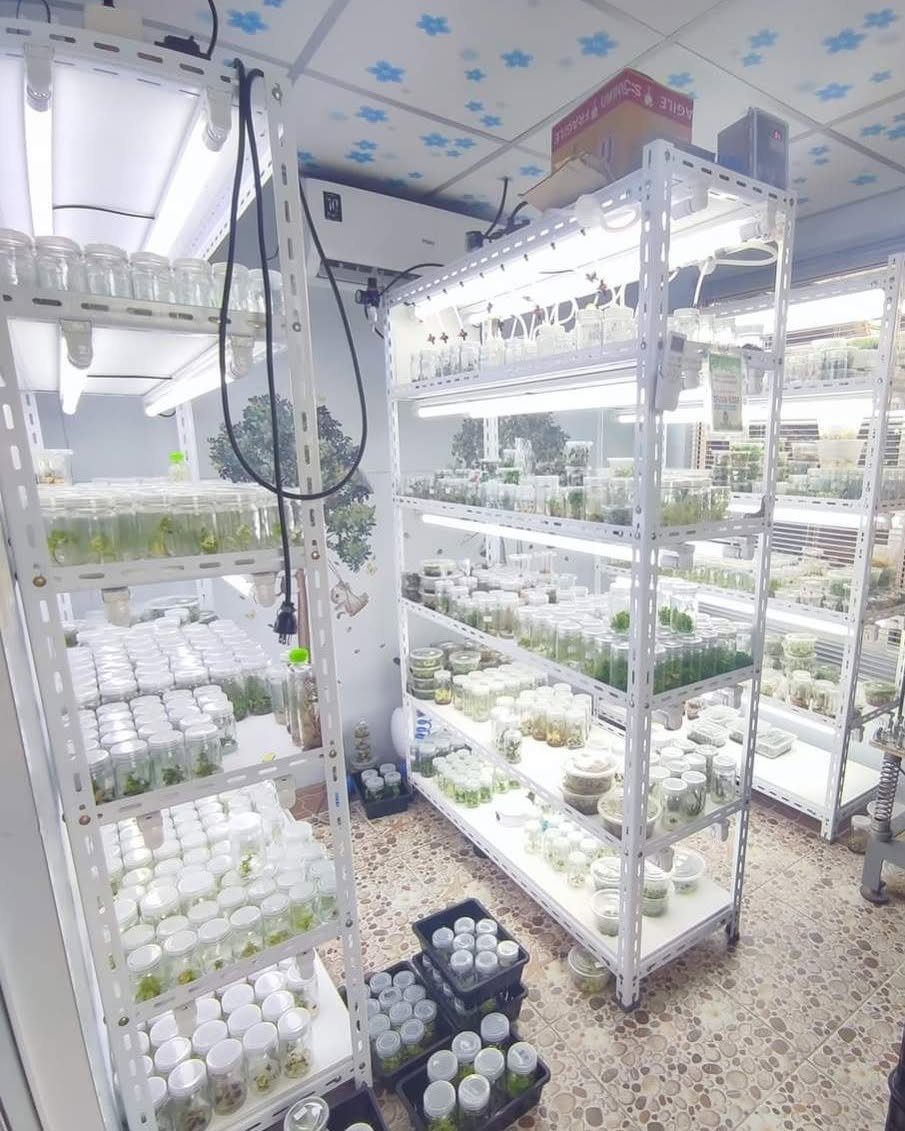
A shelving rack with strip lights overhead turns a spare room into a small production space, and that’s the setup I’d copy if cloning plants is the goal.
Metal shelving holds more jars per square foot than a table, and a light mounted above each shelf keeps every level evenly lit.
Beginners can start with a single unit before committing to a whole room. Clear jars let you check each culture without opening the lid, which matters because every opening is a chance for contamination.
Even if you do tissue culture very badly, you can still end up with a lot of plants.
2. Layered Jar Terrarium
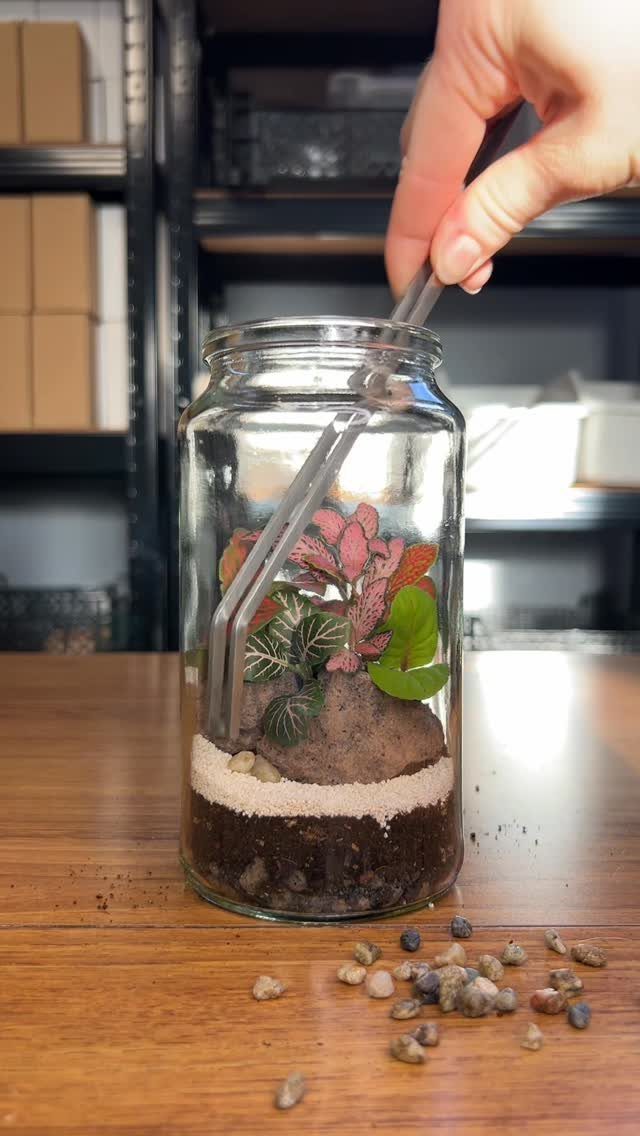
Layering soil, sand, and rock in a jar does 2 jobs: it gives roots something to grip and it makes the build look good from the side.
I’d keep each band distinct and pour slowly so the colors don’t smear together.
Tweezers are the tool that makes this work.
Long ones let you set each plant without crushing its neighbors or dragging soil up the glass. Start with the biggest plant, then fill in around it.
3. Mini Jar Terrariums
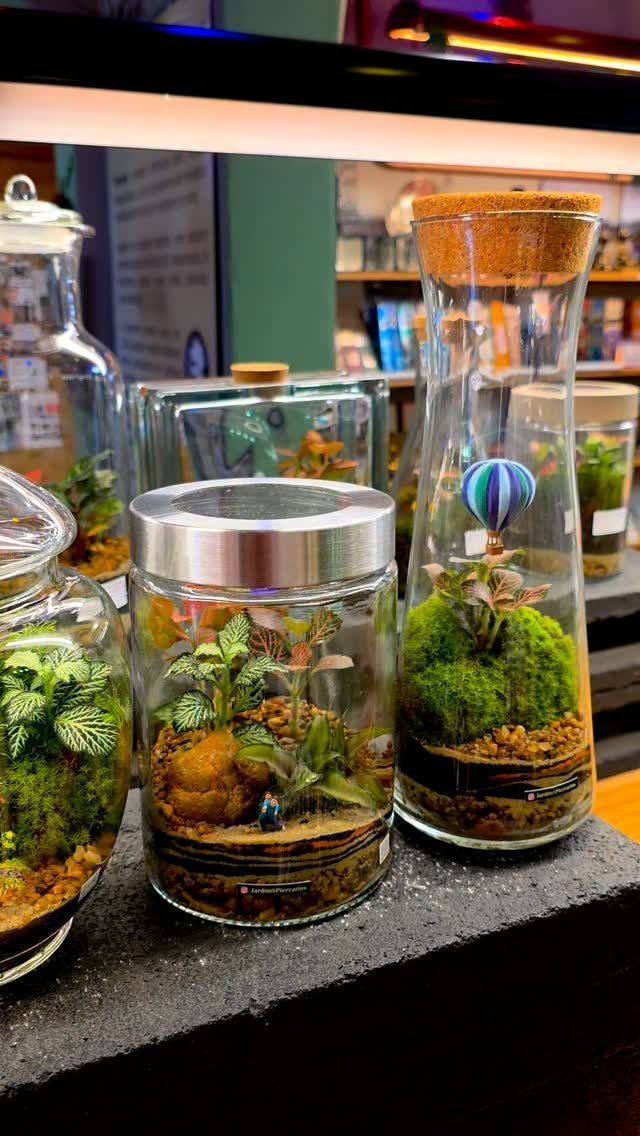
Small jars and flasks in a mixed group look better than a row of identical ones, and they cost far less than one big terrarium.
Each container gets its own bit of moss, a plant or two, and a layer of soil.
A tiny figure like a hot air balloon gives the eye something to land on in a miniature scene. I’d add one per shelf at most, since more than that starts to look cluttered.
4. Plant in a Corked Jar
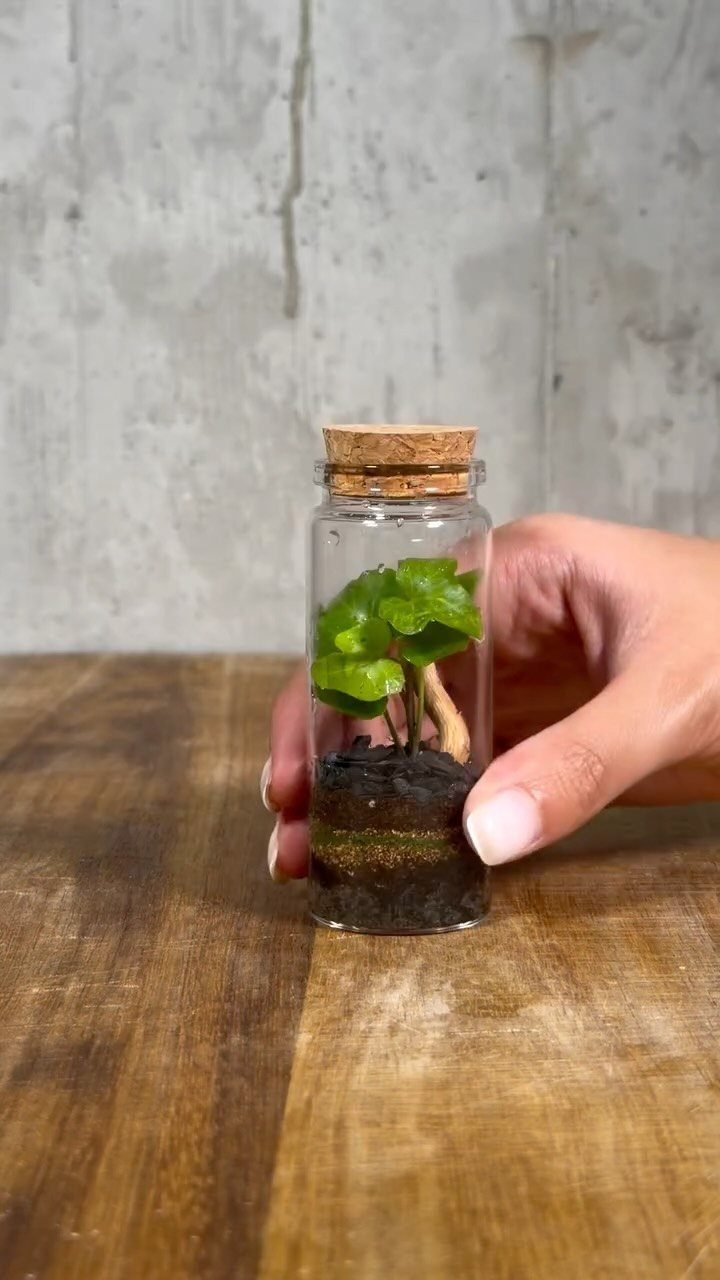
A cork-stopped jar with one small plant is about the cheapest terrarium you can make, and it fits in a hand. Dark soil against clear glass makes the green stand out, so I’d skip decorative extras.
Pick a plant that stays small, since a single jar leaves it little room to grow. Keep it on a table or shelf where you’ll see it every day.
5. Open Jar Terrarium
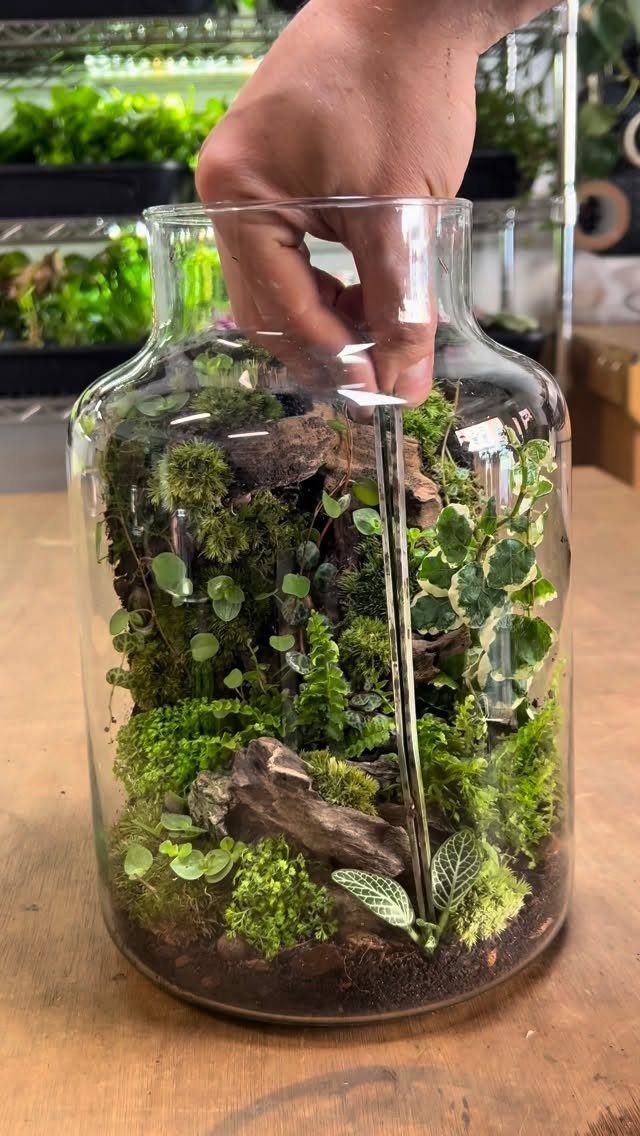
Wide-mouth jars with no lid give you room to work, and that’s why I prefer them for a first build.
You can reach in with long tweezers to place moss, small plants, and a piece of driftwood exactly where you want them.
Set the driftwood first, then tuck plants against it and press moss around the base. An open top also means you can adjust the layout later without taking the whole thing apart.
6. Snake Plant and Pothos Jar
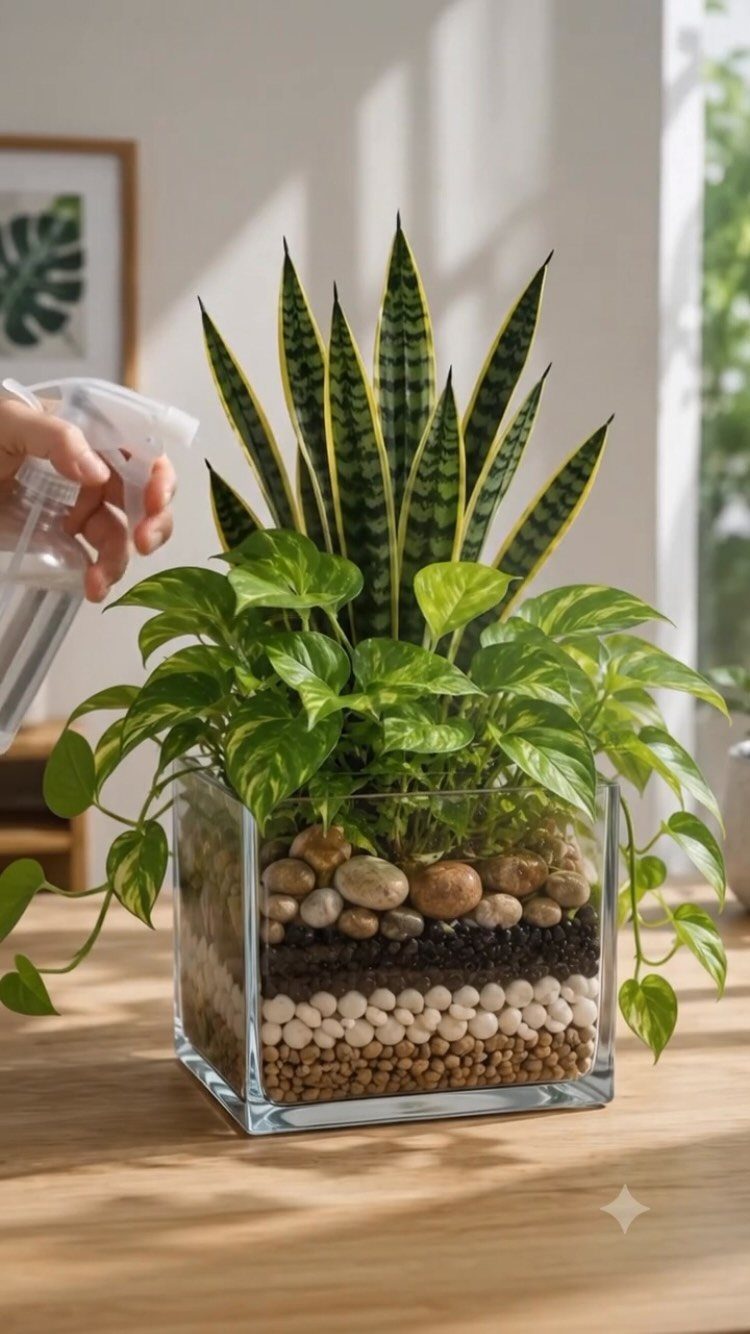
Snake plant and pothos make a good pairing because one stands upright and the other trails, so the jar looks full from more than one angle. A square jar suits that contrast well.
Build it from the bottom up: pebbles for drainage, then soil, then a top layer of gravel. A light misting with a spray bottle keeps the surface from drying out without soaking the layers underneath.
7. Purple-leaf Jar Terrarium
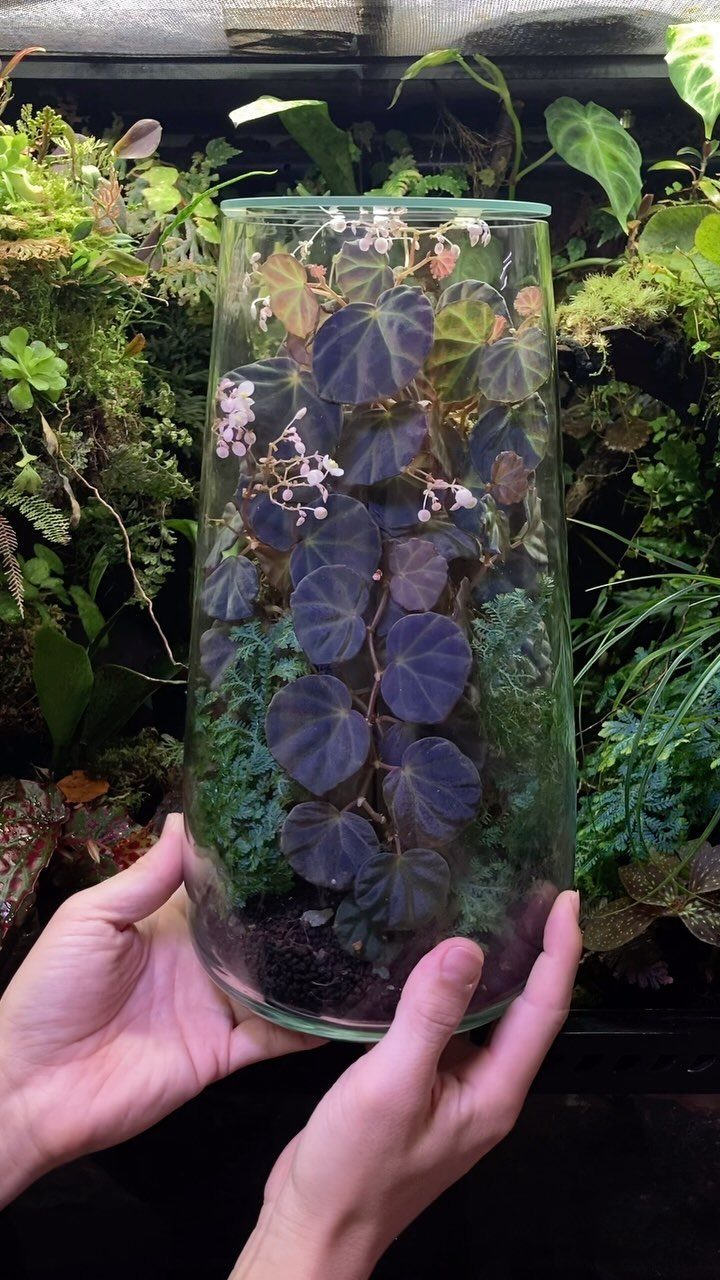
A big jar gives purple foliage room to show against green moss, and I’d choose one with a wide enough mouth that you can still reach the plants.
Purple leaves and small white flowers read best when the moss stays low and even around them.
Hold the jar up to a window and watch how the light hits the leaves before settling on a spot. Clear glass on all sides shows off the color from every angle.
8. Plant Propagation Display
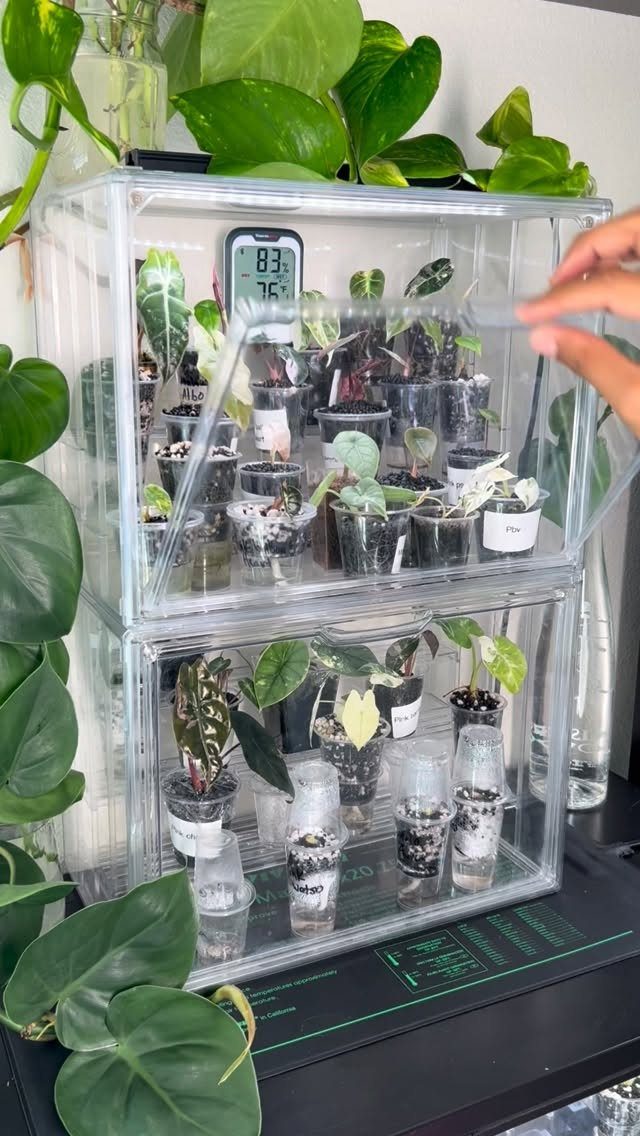
A two-tier acrylic box turns a handful of jars and pots into one propagation station, with a lid you can lift to check on things.
The digital thermometer inside is the part I’d copy, since it lets you read the temperature at a glance without guessing.
Put thirstier cuttings on one tier and slower ones on the other, so each level stays easy to manage. Clear acrylic keeps every plant visible.
9. Jar Terrarium Collection
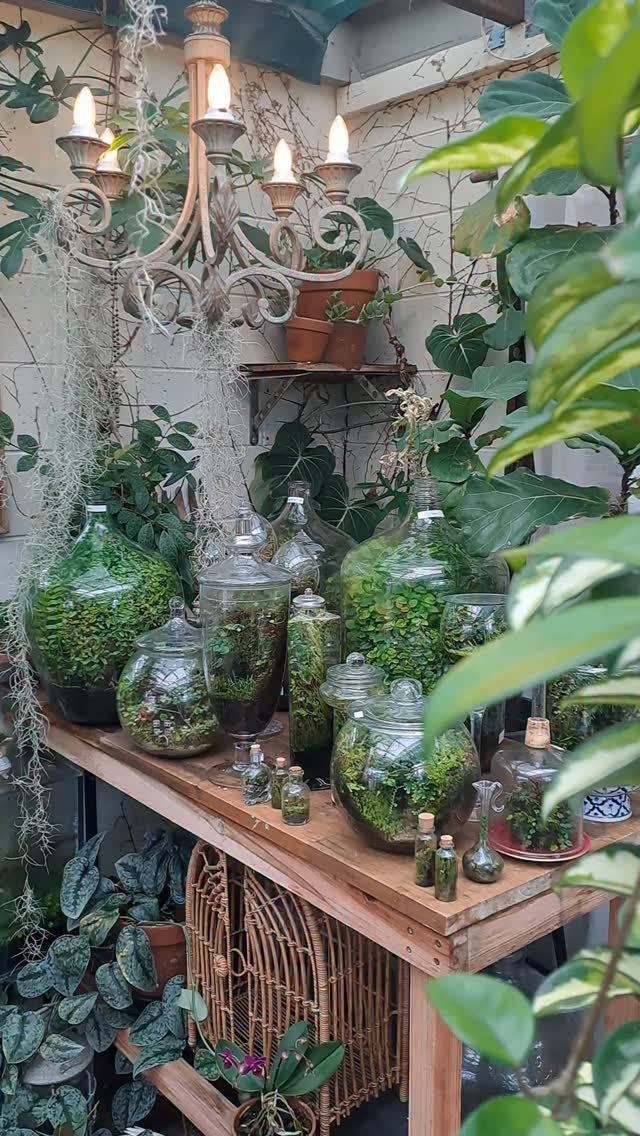
Glass jars and cloches in different heights make a collection look planned instead of crowded. A wooden table suits them, and I’d mix the tall and short pieces so the eye moves across the group.
Moss does most of the work inside each container. Set the collection among larger plants so it reads as a piece of the room, not a shelf of experiments.
10. Seedling Jars on Shelves
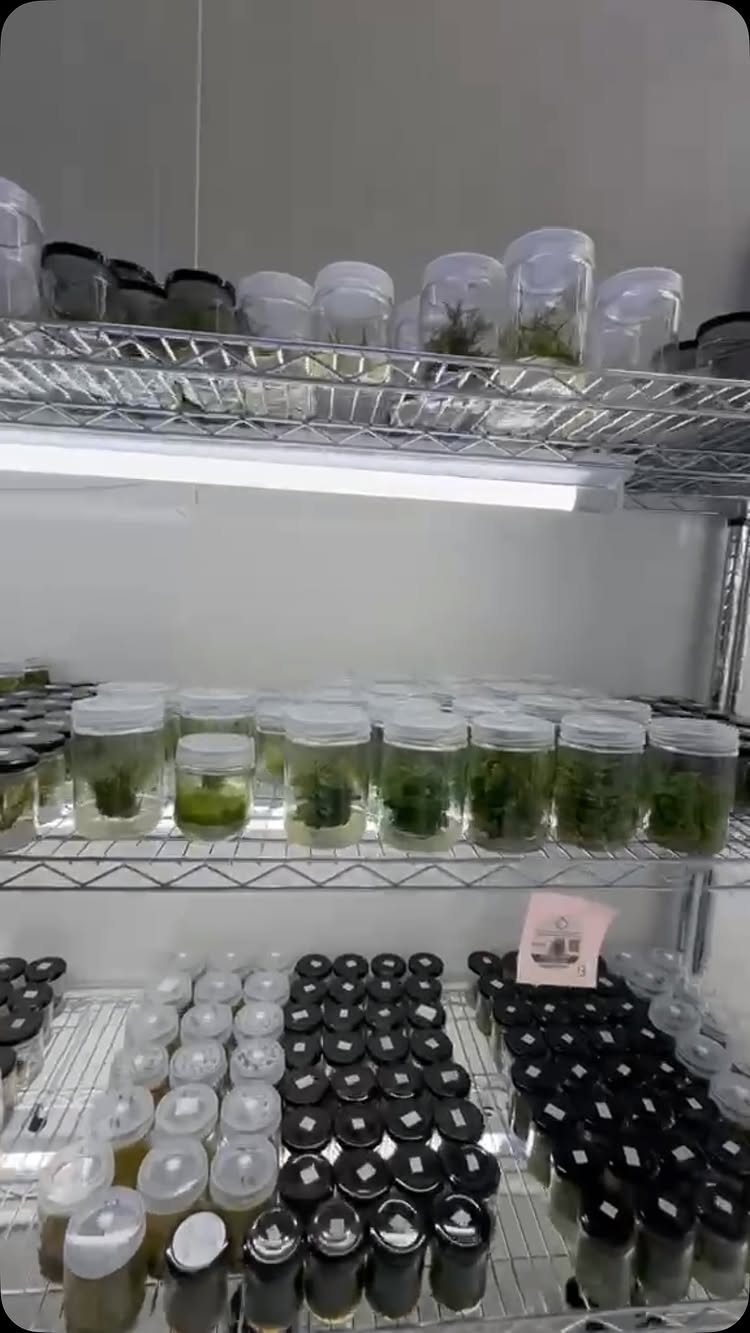
Wire shelving with a bright light overhead is the budget version of a grow room, and jars make it easy to sort seedlings by batch.
Clear jars let you watch growth; dark ones hide the roots, so I’d use clear for anything you want to monitor closely.
Keep the shelves close to the light and group similar plants together. Small seedlings fit dozens of jars to a rack.
11. Pothos Cuttings in Water
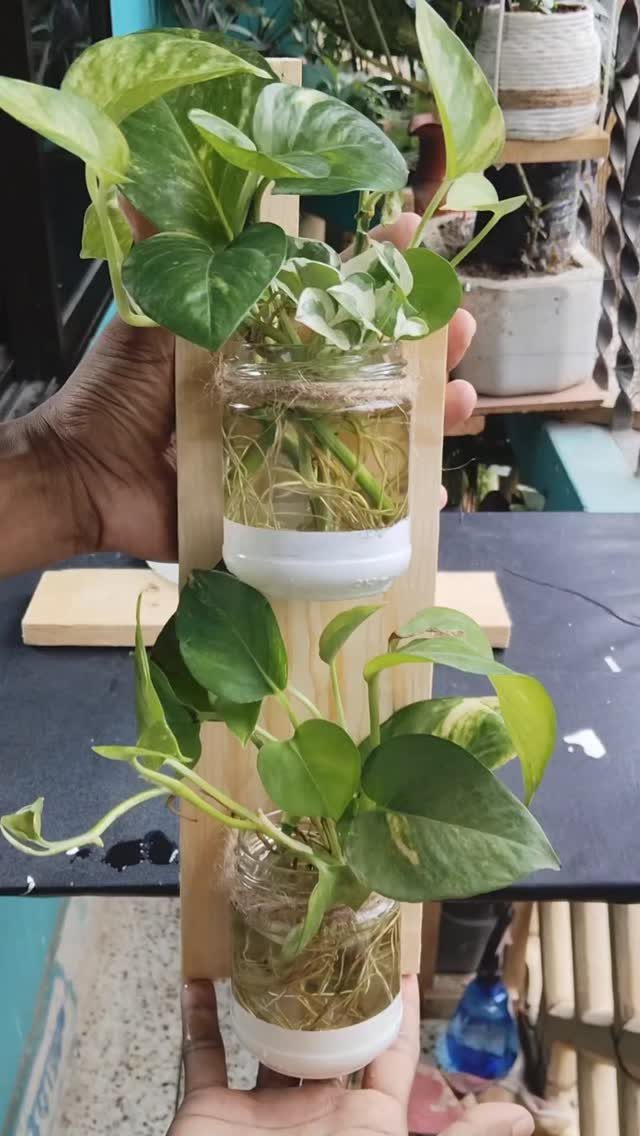
Pothos is about the easiest plant to root in plain water, and a glass jar lets you watch the roots form. A wooden stand holding 2 jars keeps cuttings upright and looks tidier than jars scattered on a sill.
Cut below a node, set the stem in water, and keep the leaves above the rim. Move a cutting to soil once the roots look well established.
12. Mixed Plants in Jars
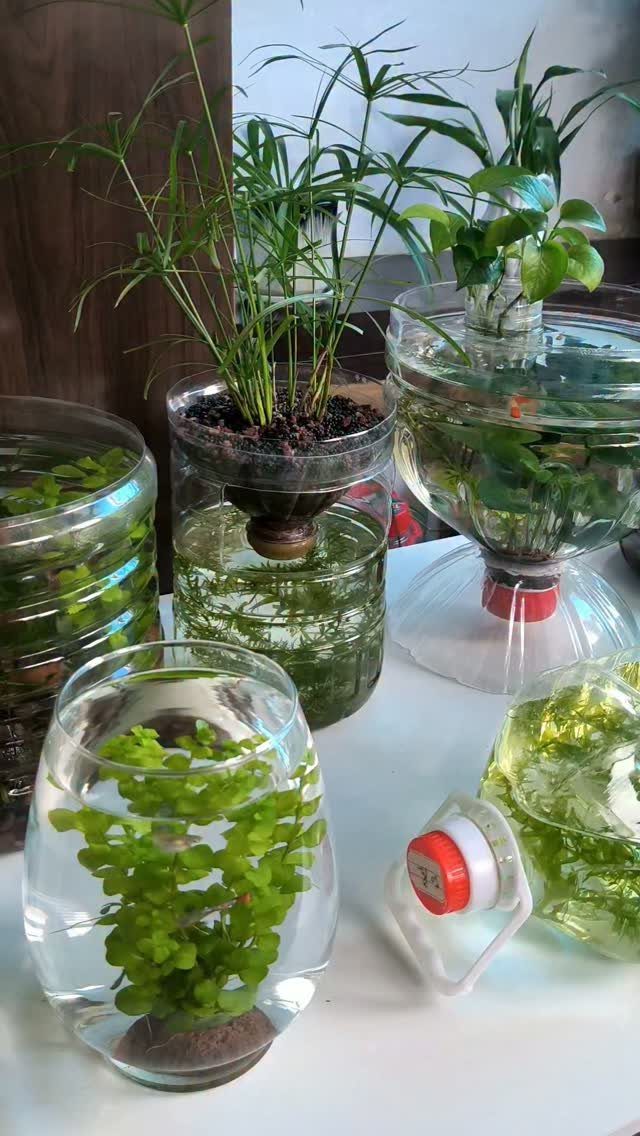
Water in one jar and soil in the next lets you compare how the same kind of plant behaves in each.
I like this approach for beginners, because plastic and glass jars both work and you can start with whatever you have at home.
Water-grown plants are easy to watch but need fresh water over time.
Soil jars need a lighter touch with watering. Pick one method per plant and stick with it.
13. Jar Terrarium with Hot Air Balloons
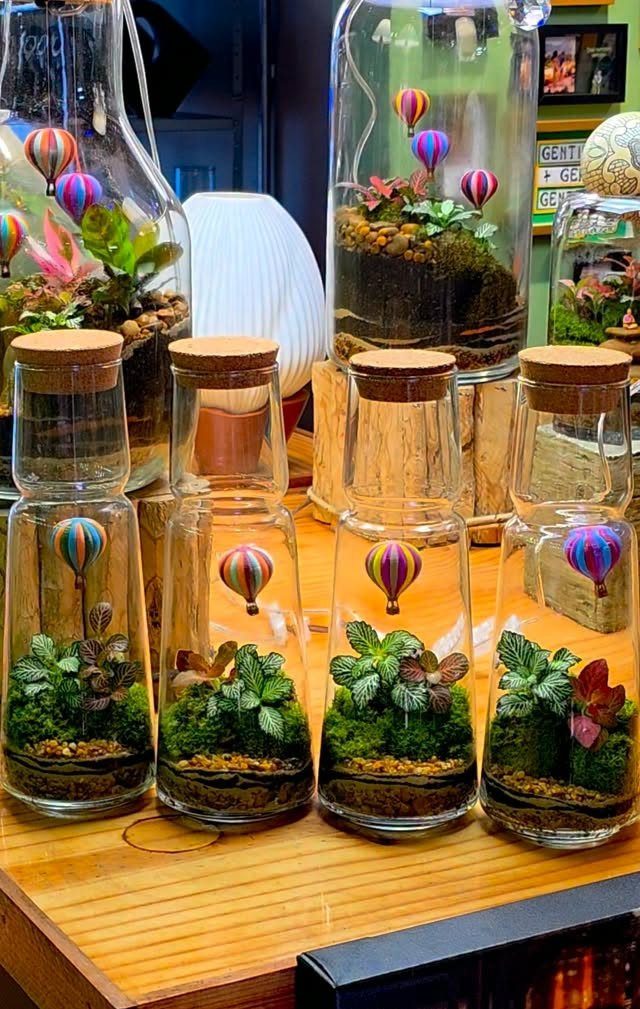
Cork lids make the hot air balloon jars read as little keepsakes, and that suits a gift better than a display piece.
Colorful miniature balloons sit well against green moss, so I’d keep the plants small and the moss low to leave the balloons room to stand out.
Group several jars on a wooden surface and vary the balloon colors from jar to jar. One balloon per jar is enough.
14. Moss and Succulent Jar Terrarium
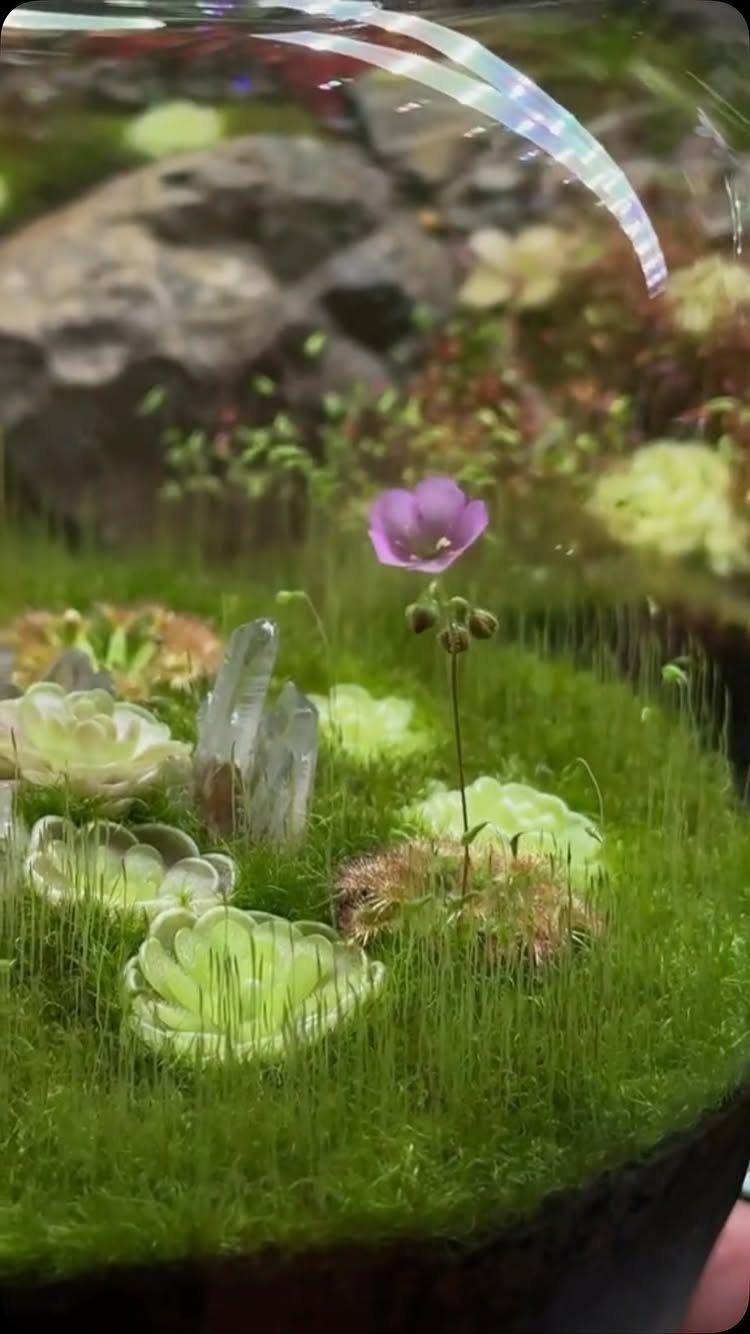
Tiny succulents, a single purple flower, and a few clear crystals can all fit in one jar if moss does the filling.
I’d let the moss carry the green and keep the flower as the lone bright spot, since a second one would crowd it.
Set the crystals last, against the rocky backdrop, so they catch the eye without burying the plants. A wide mouth makes this easier, because you can place each piece with tweezers.
Getting Started at Home
Tissue culture doesn’t require lab experience. Short, step-by-step YouTube tutorials are the best place to start, because you can watch each step done and pause on the ones that confuse you.
Expect your first rounds to get contaminated. That’s the usual beginner result, and it traces back to sterile technique far more often than to the plants or the jars.
Books and online videos both teach that technique well, and I’d use them together: a book for the reasoning behind each step, a video for the hand motions.
Read and watch before you buy supplies, so you know what you actually need.
Keep your first batch small so a failed round costs little. Change one habit at a time, such as wiping the work surface or washing your hands longer, so you can tell what made the difference.
Frequently Asked Questions
What are plants in a glass jar called?
A plant in a glass jar is usually called a terrarium, especially when it includes soil, moss, and other layers.
Some people call the sealed versions jar terrariums or bottle gardens, while open-top jars go by the same name even though they work more like a small planter.
The term covers everything from a cork-stoppered jar with one small plant to a big glass cloche holding several.
What plants are easy to grow in glass jars?
For a first jar plant, pothos is the safest pick: cuttings root in plain water, and the clear glass lets you see each new root as it forms.
Snake plant and moss also do well, since both tolerate the humid conditions inside a jar and stay small enough to fit in tight spaces. Small succulents work in open jars, but sealed jars trap too much moisture for them.
Can I grow plants in jars?
Yes: about 1 inch of pebbles at the bottom handles drainage, soil goes on top, and moss pressed around the base finishes the planting. Open jars let you adjust the layout later; sealed ones need less watering but trap mistakes.
Do I need to have laboratory experience to do tissue culture?
No, and beginners can start at home with step-by-step YouTube tutorials that show each motion. Contamination is the usual result in early tissue culture rounds, since sterile technique takes practice to get right.