The ideas here run from a deep green wall to built-in shelving, and cost and effort rise with how much of the wall you change. How far you can alter your own wall sorts them.
If a green wall, a wall-mounted TV, or a Frame TV is as far as you can go, start there. If you can build into the wall, backlit panels, a stone wall and a recessed niche open up.
1. Built-In TV Shelving
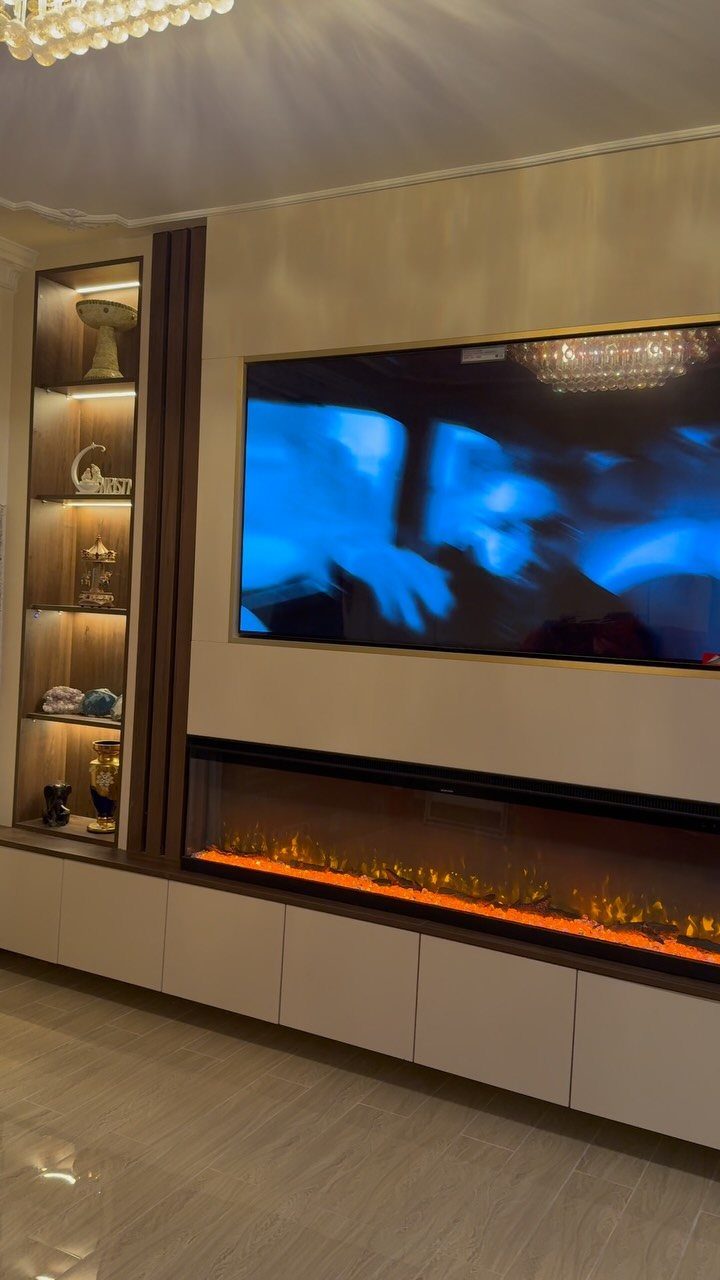
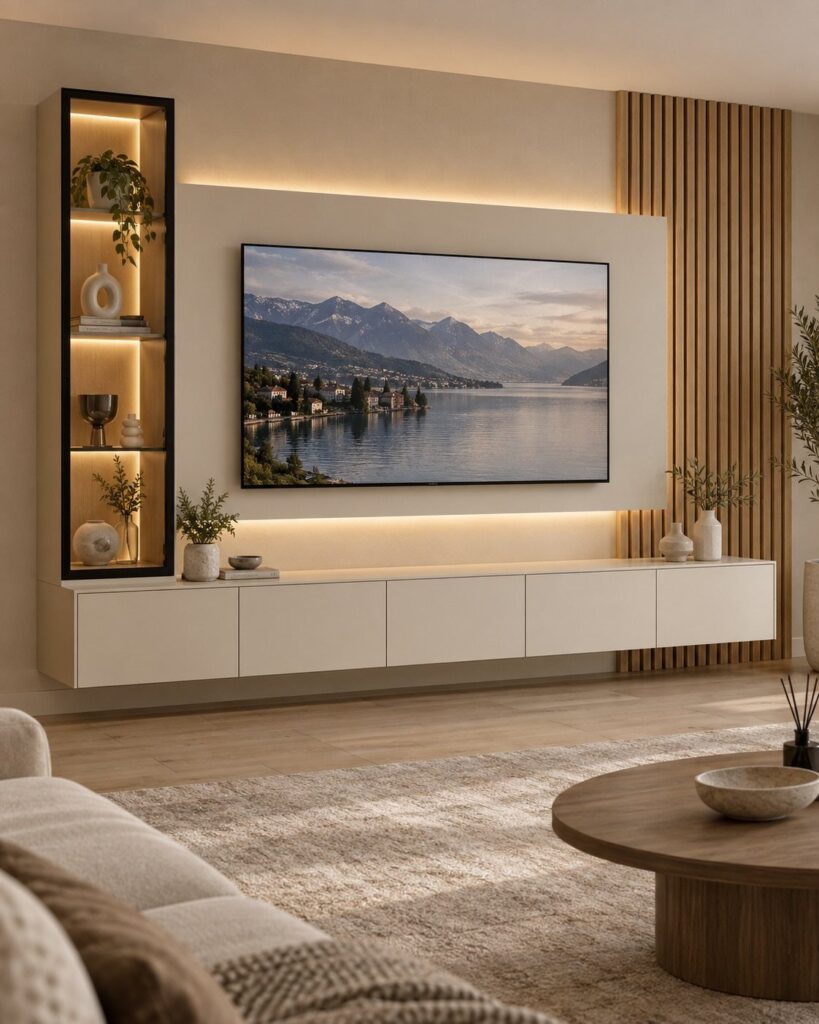
Shelves that wrap the screen turn a TV wall into storage and display at once. Here the built-ins sit to one side with lighting inside them, and the long fireplace in a white base cabinet anchors the lower half.
Keep the shelf contents loose: a few books, a vase, one or two objects per shelf, so the lit shelves don’t compete with the screen.
Built-ins cost more than freestanding furniture, but they look intentional in a way a stand rarely does.
2. Gallery Wall Integration
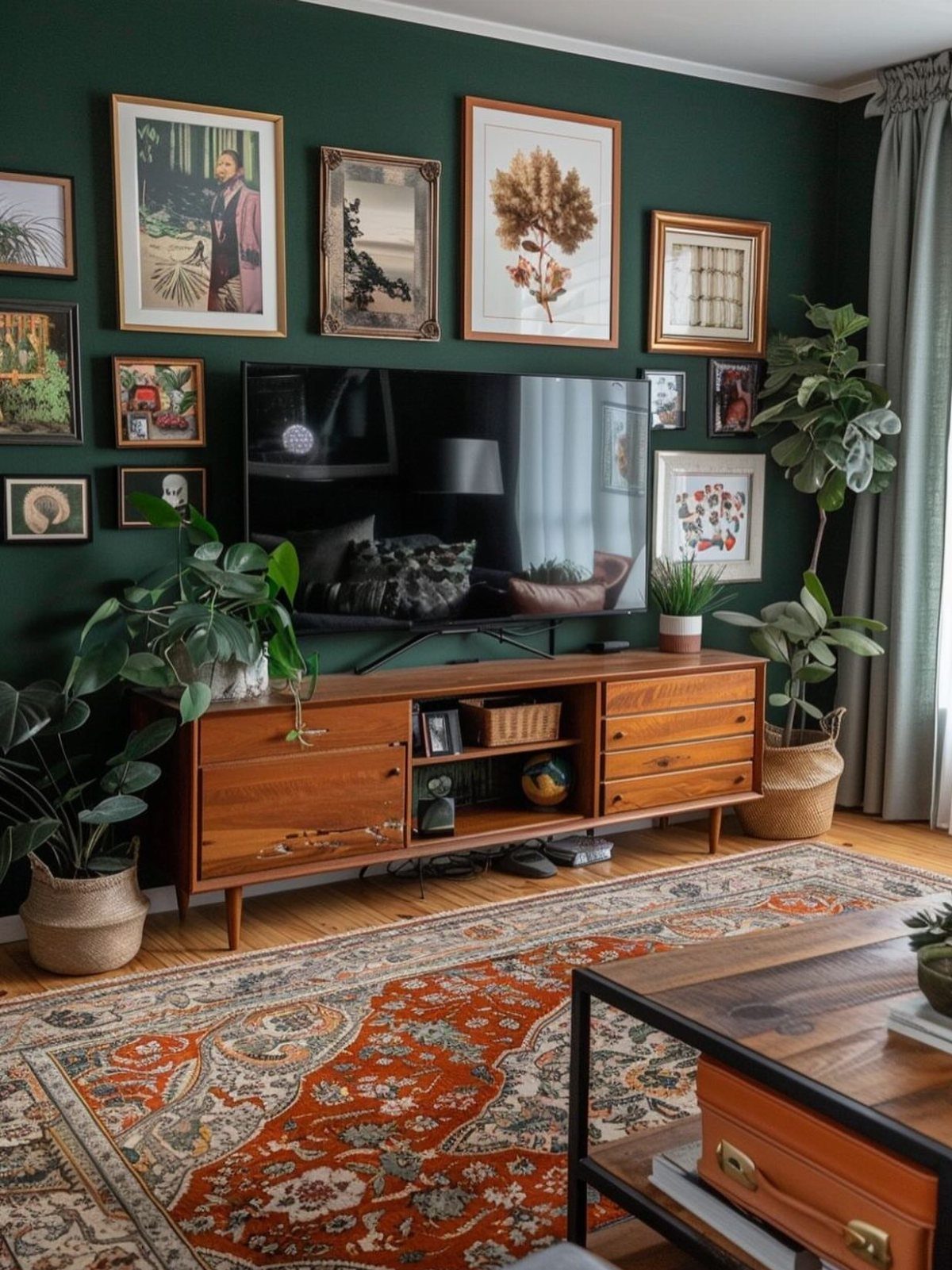
Hang the TV as one piece of a gallery wall and the black rectangle stops being the focus. Against a dark green wall, framed prints in mixed sizes pull the eye outward, and the screen reads as another frame.
Lay the TV’s outline on the floor with paper first, then arrange frames around it before any nails go in. I’d keep the frame finishes to two or three, so the mix feels collected rather than random.
3. Moody Green TV Wall
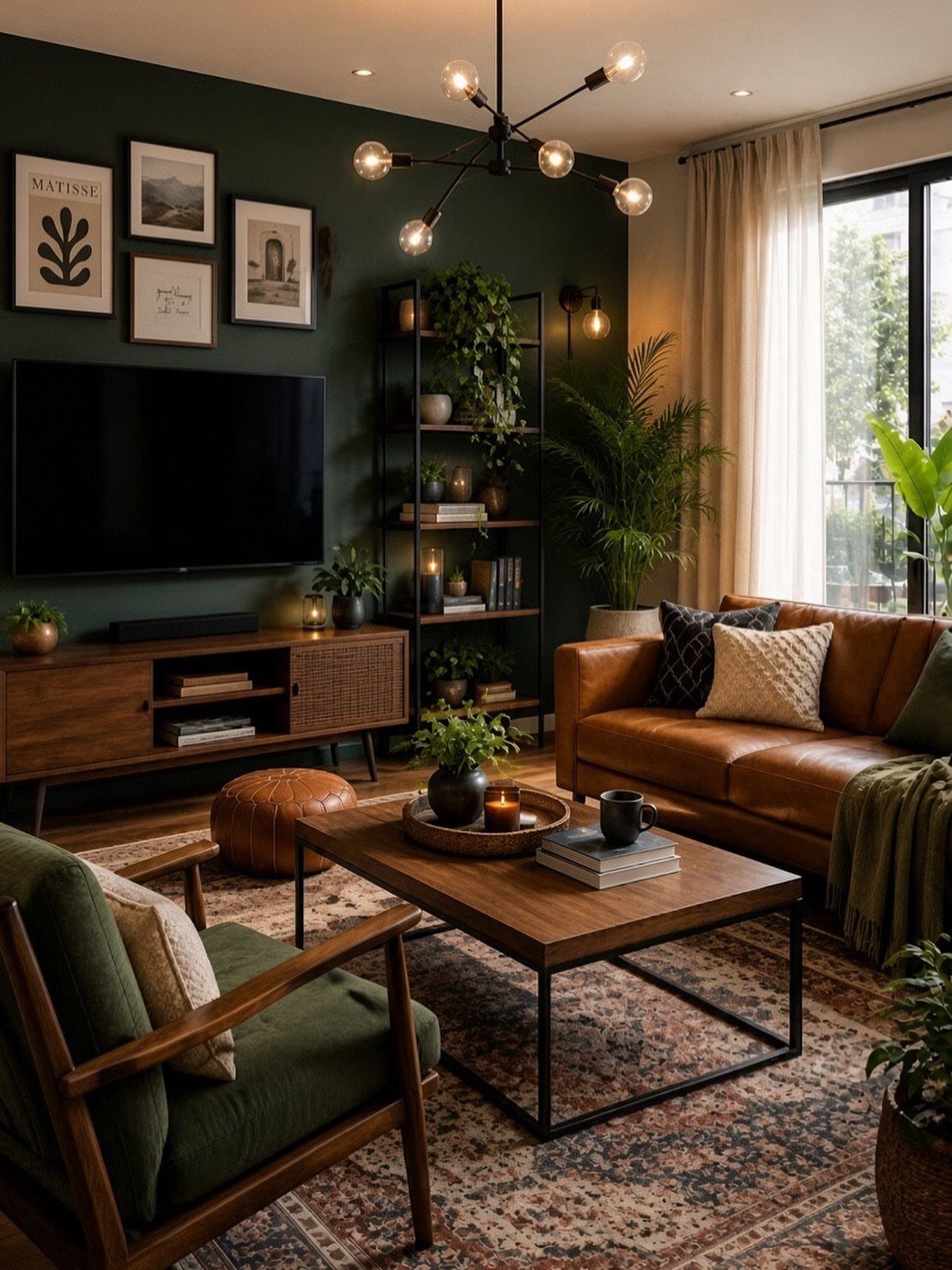
A dark wall does most of the hiding for you. Paint the TV wall a deep green and the screen, which is black when off, sinks into the color instead of sitting against it like a hole.
Go matte, because a sheen catches the glare from the screen.
Wood tones and leather, like the sofa and coffee table here, warm up a color this deep, and plants echo it without extra effort. A can of paint is among the cheapest TV upgrades there is.
4. Wall-Mounted TV
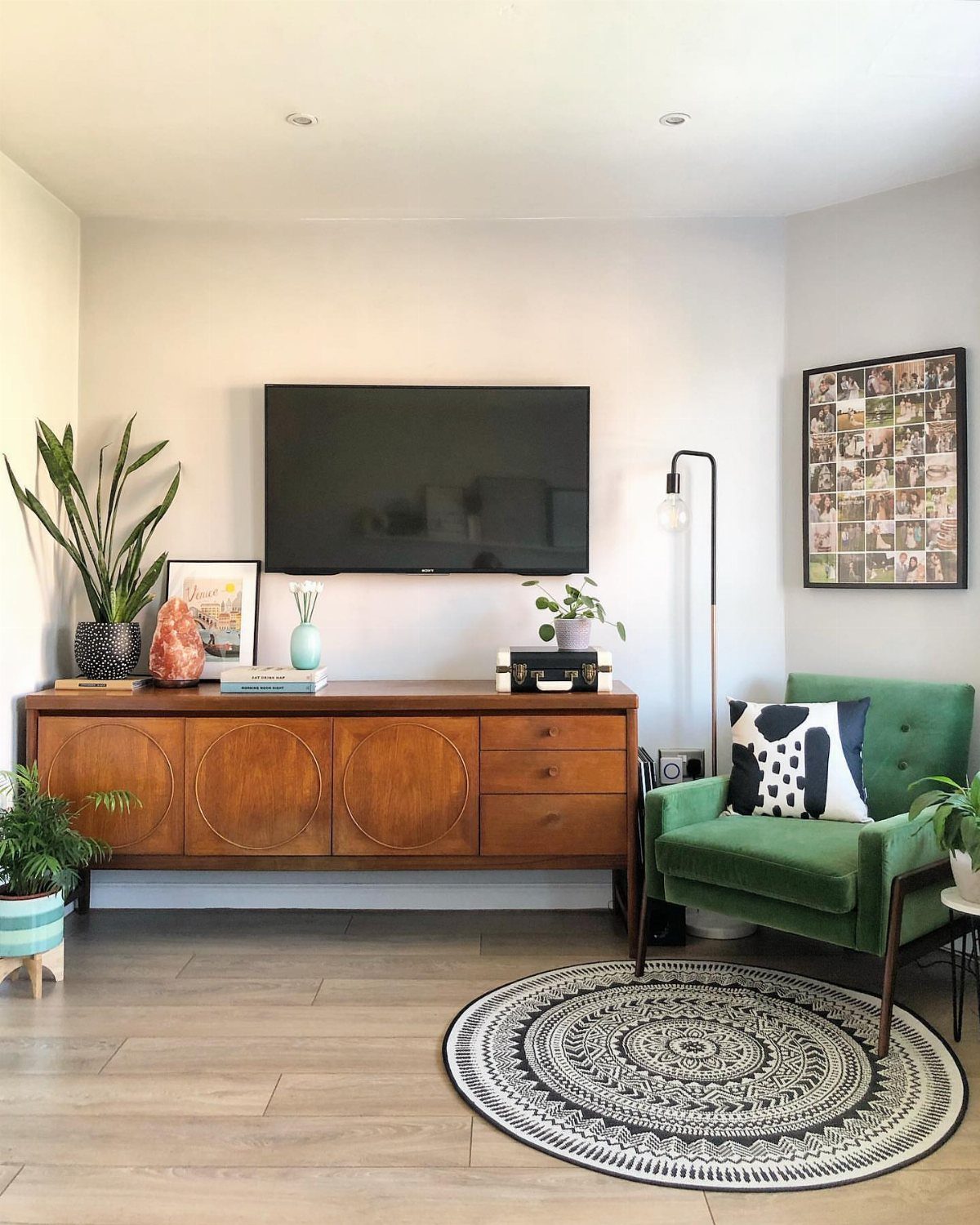
Getting the TV off the furniture frees the sideboard below for what it does best: storage and a surface for lamps, plants and objects.
In a bright room, a mounted screen above a low wooden sideboard keeps the wall looking tidy and the floor clear.
Mount it so the center of the screen lands near seated eye level, which usually means lower than most people first guess. Hide the cords behind the sideboard, and the whole setup looks finished.
5. TV with Floating Unit
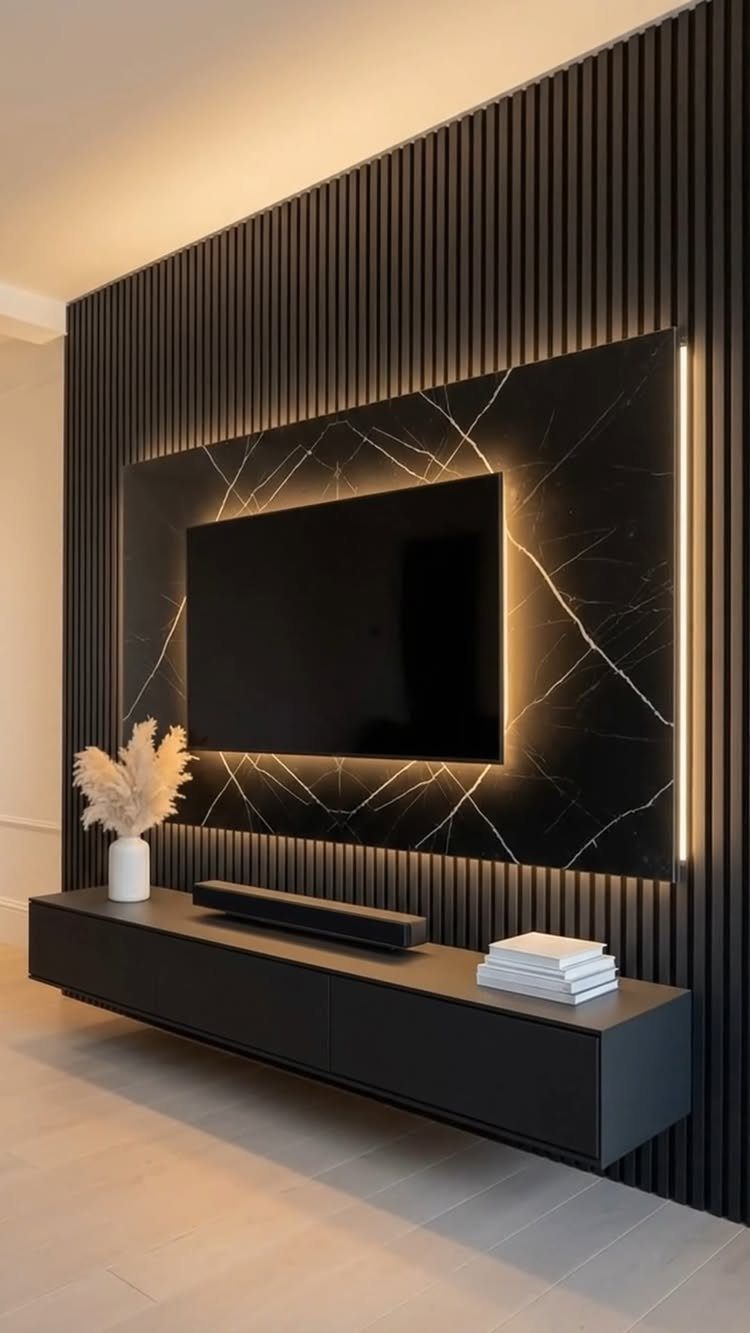
Black on black is a bold way to handle a TV wall, and it works because the pieces stay simple: a wall-mounted screen on a backlit marble panel, a slatted wall behind it, and a floating console below.
The floating unit leaves floor visible underneath, which keeps a dark scheme from feeling heavy.
I like the backlight most. It softens the contrast between a bright screen and a dark wall, so your eyes get less strain on movie nights.
6. TV Accent Wall
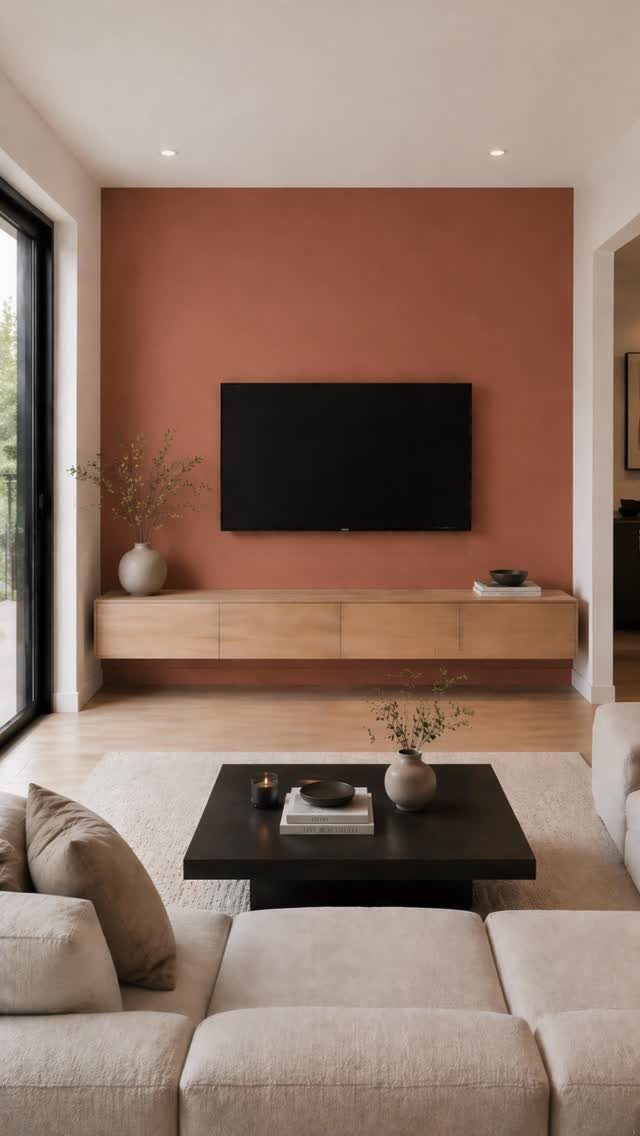
Terracotta is a strong choice for a TV wall because the warm clay tone makes the screen feel like part of the room’s design. Paired with a light wood floating console, it reads earthy and calm rather than loud.
Test a sample patch first and look at it morning and night, since warm reds shift a lot with the light. Painting one wall is a weekend job.
7. Frame TV
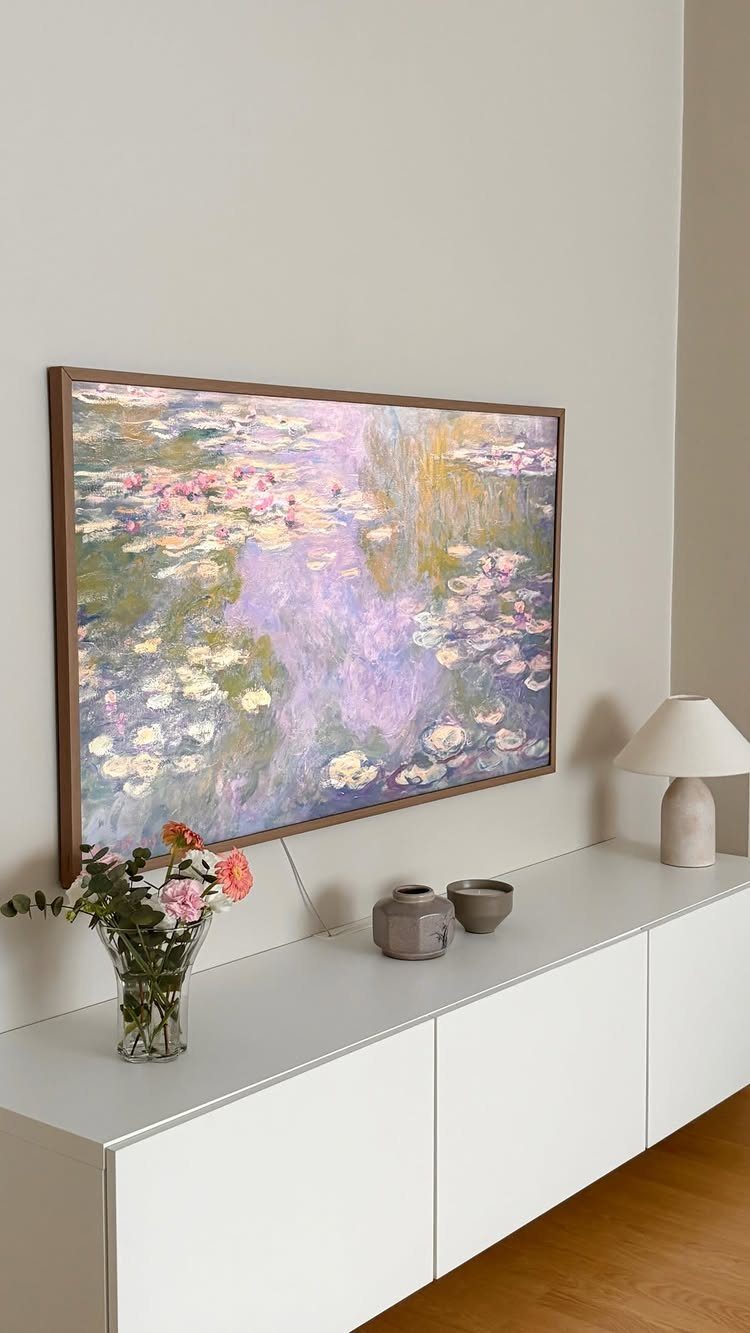
A Frame TV earns its place by looking like art when it’s off.
Here a water lily painting fills the screen above a white floating console, with a lamp and flowers underneath, so the whole wall reads as a gallery corner instead of a TV spot.
I’d pick a soft, painterly image over a bold one, since it blends with flowers and small vases rather than fighting them. Choose a mat or frame finish that matches your console, and the screen settles into the room.
8. TV with Fireplace
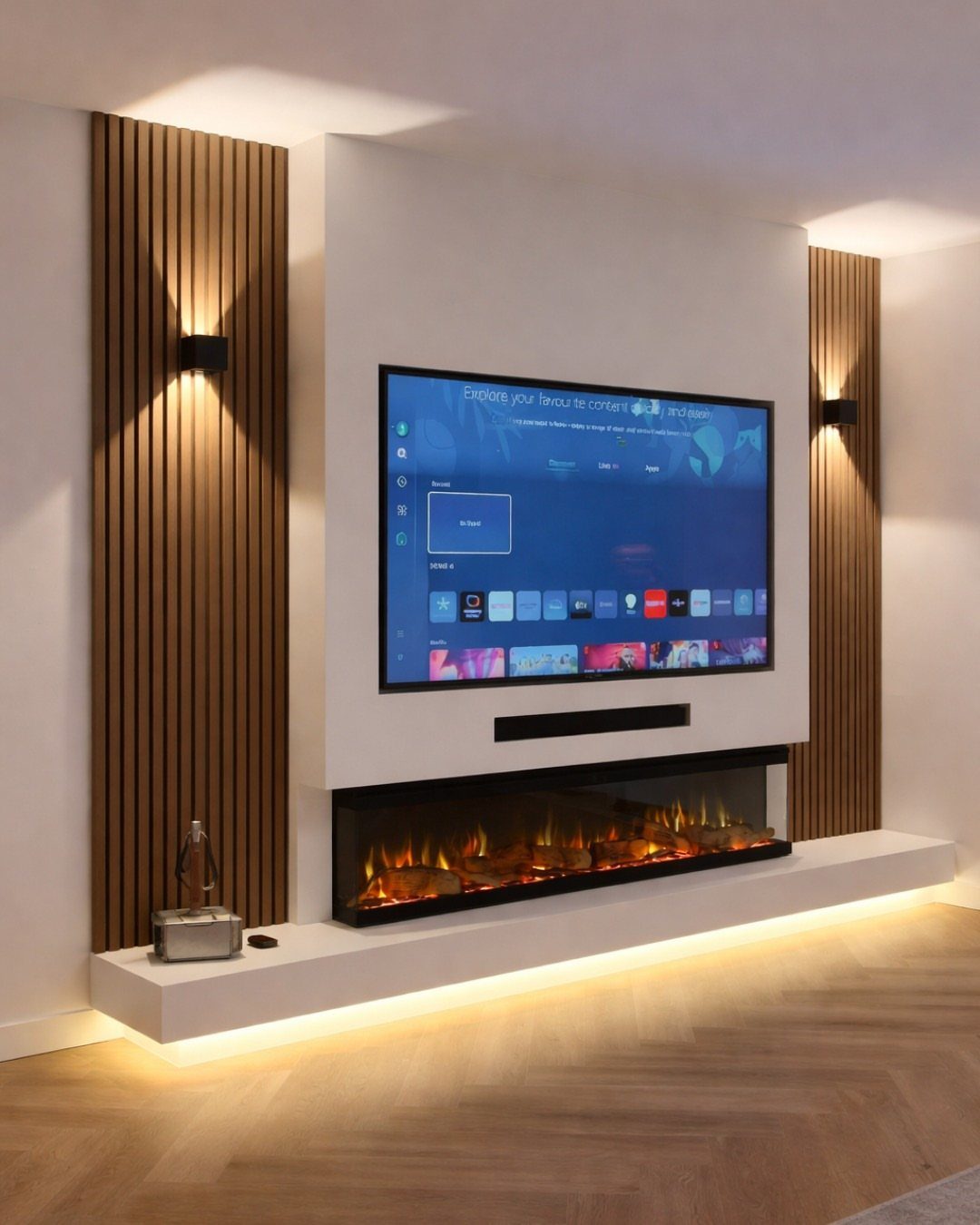
Stacking a linear electric fireplace under the screen gives the room one clear focal point instead of two competing ones.
Wood slat panels on both sides frame the pair, and a floating white shelf adds a light break against the herringbone floor.
An electric unit needs no chimney, which makes this workable in a rental or a first home.
Keep the screen centered over the fireplace so the lines stay clean. A fireplace this low and wide suits a living room with a long wall.
9. TV Above Fireplace
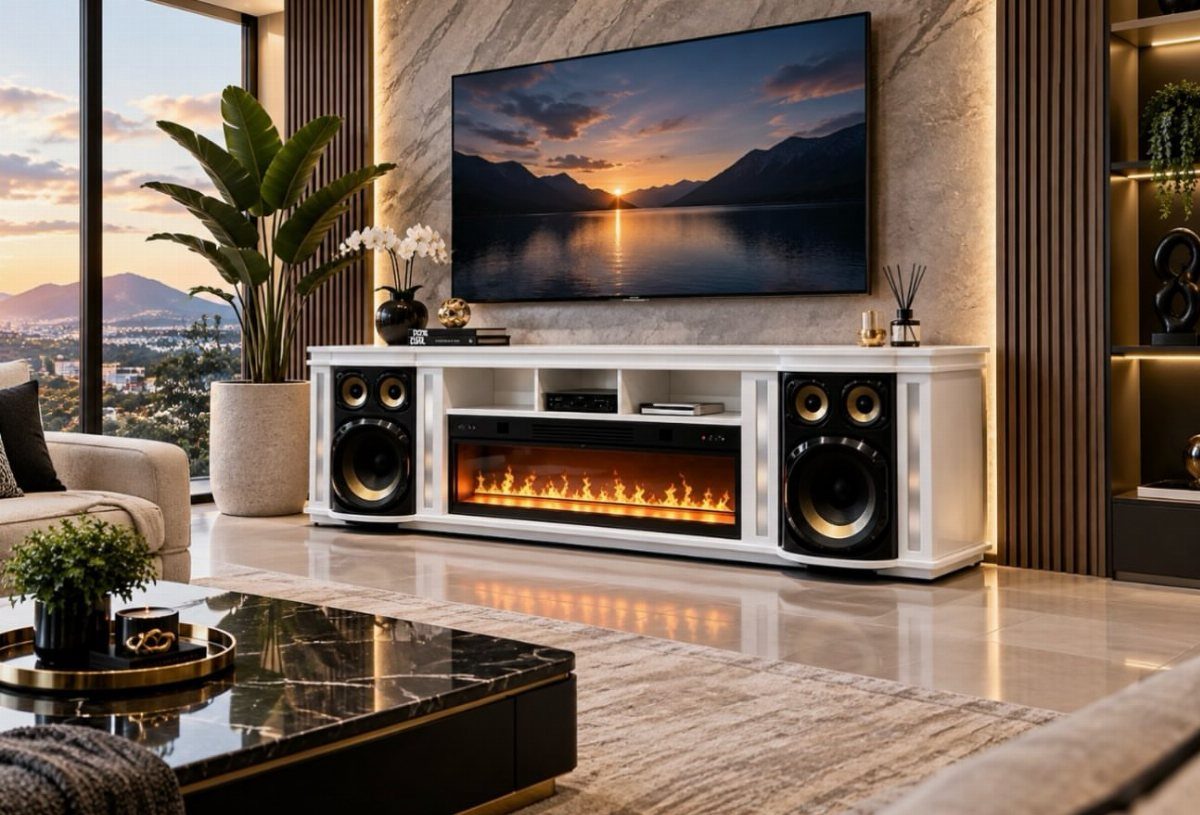
An entertainment center with a built-in electric fireplace and speakers gives you three jobs in one white piece, and the TV above it completes the stack.
Against a textured wall beside a large window, the white base keeps the arrangement light.
Choose a unit wide enough that the screen doesn’t overhang it. Mount the TV a little lower than your first instinct, because a screen above a fireplace tends to end up too high for comfortable viewing from the sofa.
10. Stone TV Wall
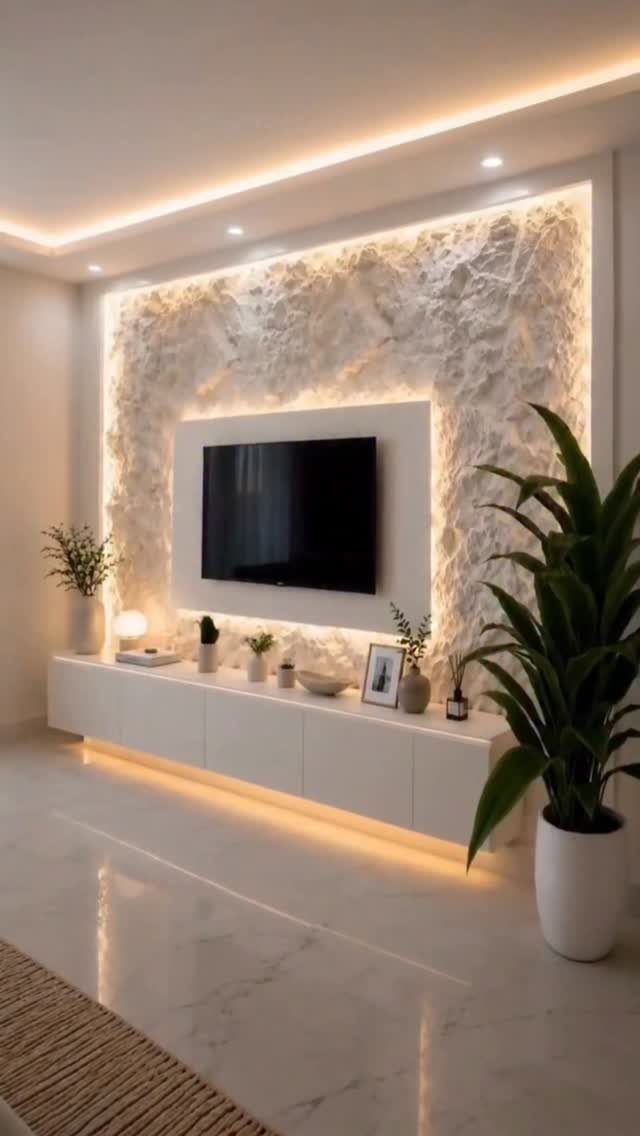
Textured white stone behind the screen adds depth without adding color. Here the stone wall carries built-in LED lighting, and a white floating console sits below, so the wall feels layered but still calm.
A stone-finish panel is the budget route: it gives you the texture without masonry work.
Stay with a light shade like this one if the room is small, since dark stone can close it in. A single potted plant beside the wall softens all that hard surface.
11. All-White TV Wall
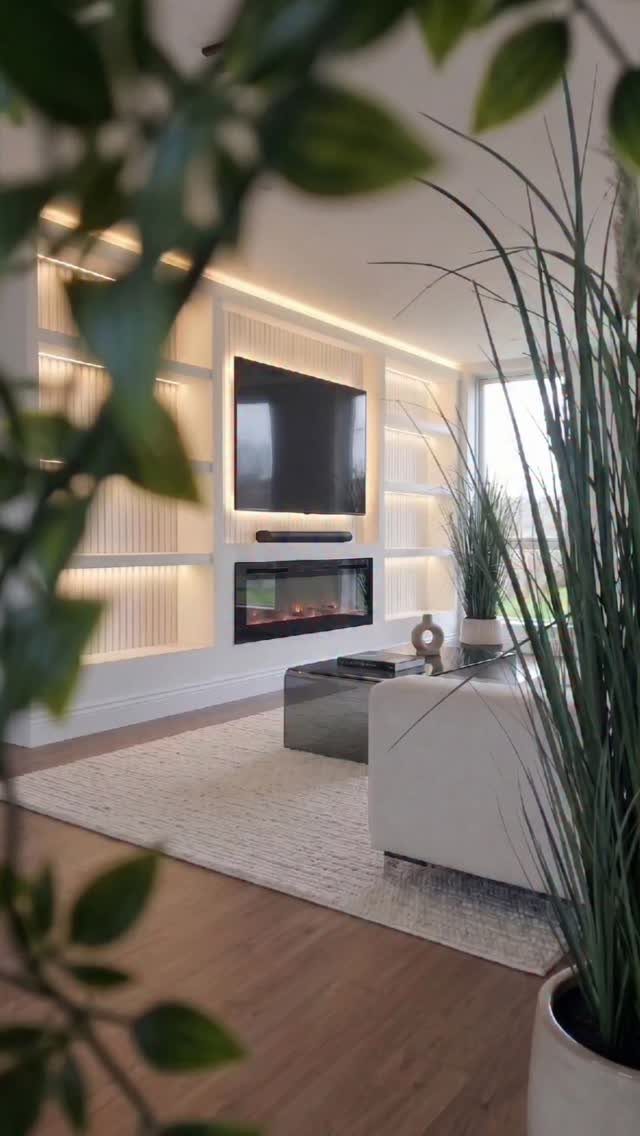
An all-white media wall works because nothing on it competes. The built-in shelving, lighting, and linear fireplace share one color, so the wall reads as a single clean surface and the sofa and plants carry the life.
The maker of this one chose a matte white finish with matching acoustic slat panels, which also cut the echo.
Matte matters here: gloss would throw back glare from the screen. White shows scuffs, so keep a small can of touch-up paint handy.
12. TV with Surrounding Storage Units
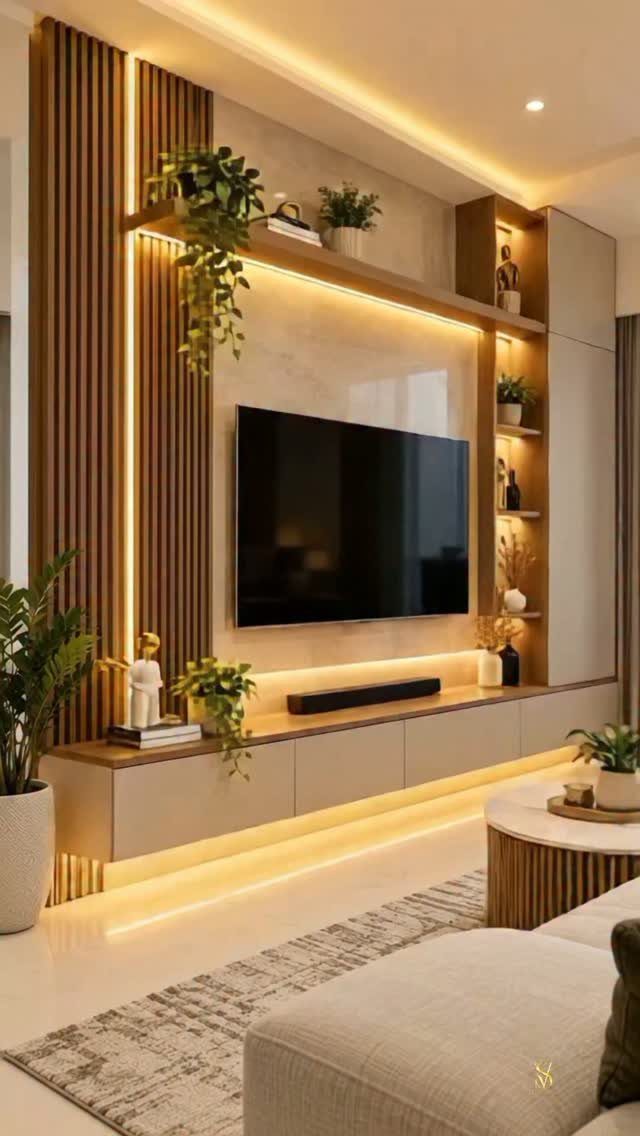
Wrapping a wall-mounted TV in storage lets the screen sit inside a composed wall instead of floating alone.
A floating lower cabinet keeps cords, remotes and game consoles out of sight, open shelves above hold the display pieces, and vertical wood slats behind the TV tie the two together, with warm LED strips (2700–3000K) tucked behind the slats for a soft glow.
Keep the closed cabinet for remotes, consoles, and cables, and the open shelves for a few objects only. I prefer warm light over cool white here, since it flatters the wood and keeps evening viewing easy on the eyes.
13. Floating Illusion TV
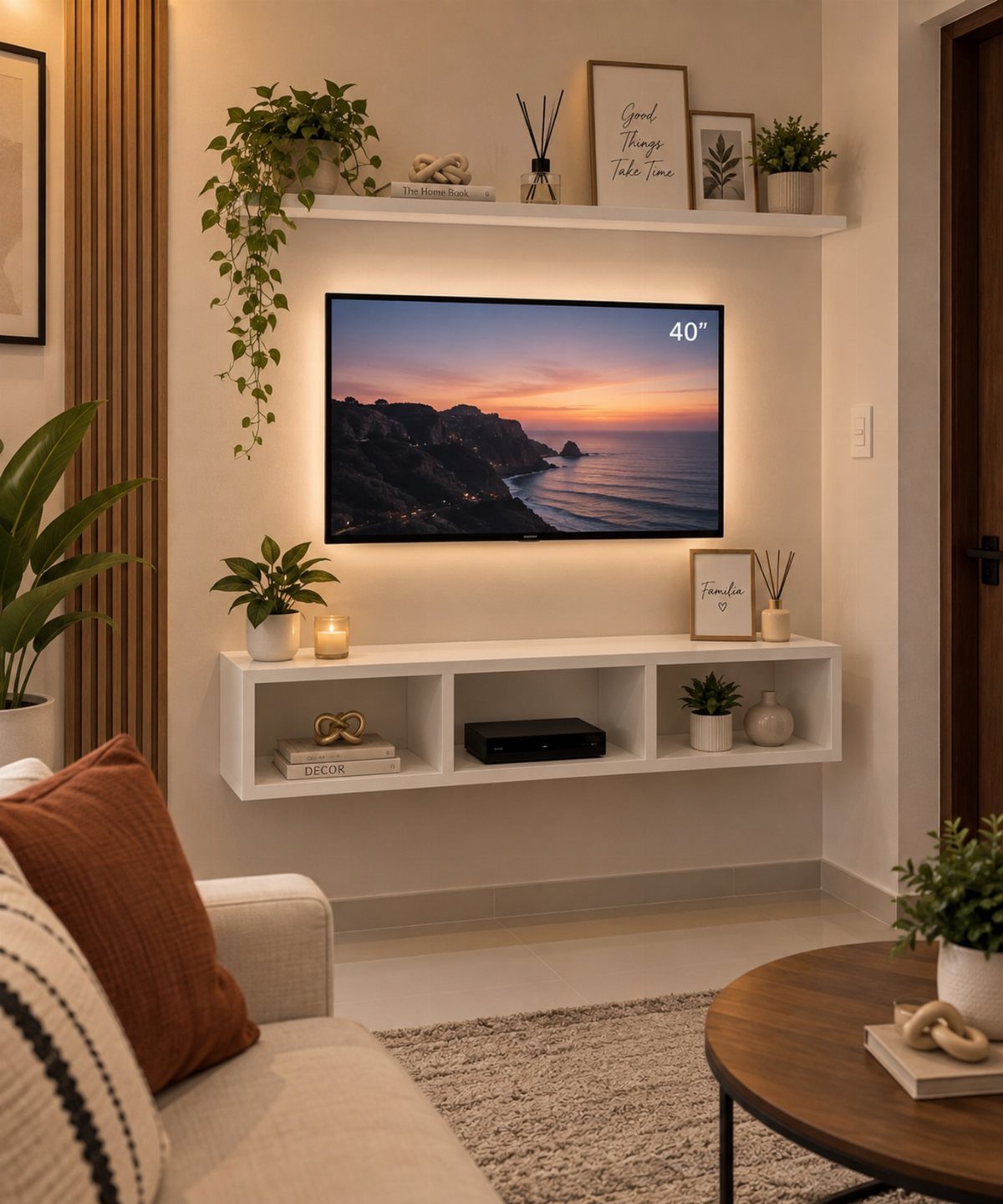
A screen that seems to hang in air is mostly a lighting trick.
Warm backlighting behind the TV, a shelf above and a console below leave gaps of shadow around the set, so it reads as a lit panel instead of a box.
Keep the shelf and console light in color and sparse in content. A few books, one plant and a framed print are plenty.
14. Floating Drawer Stand
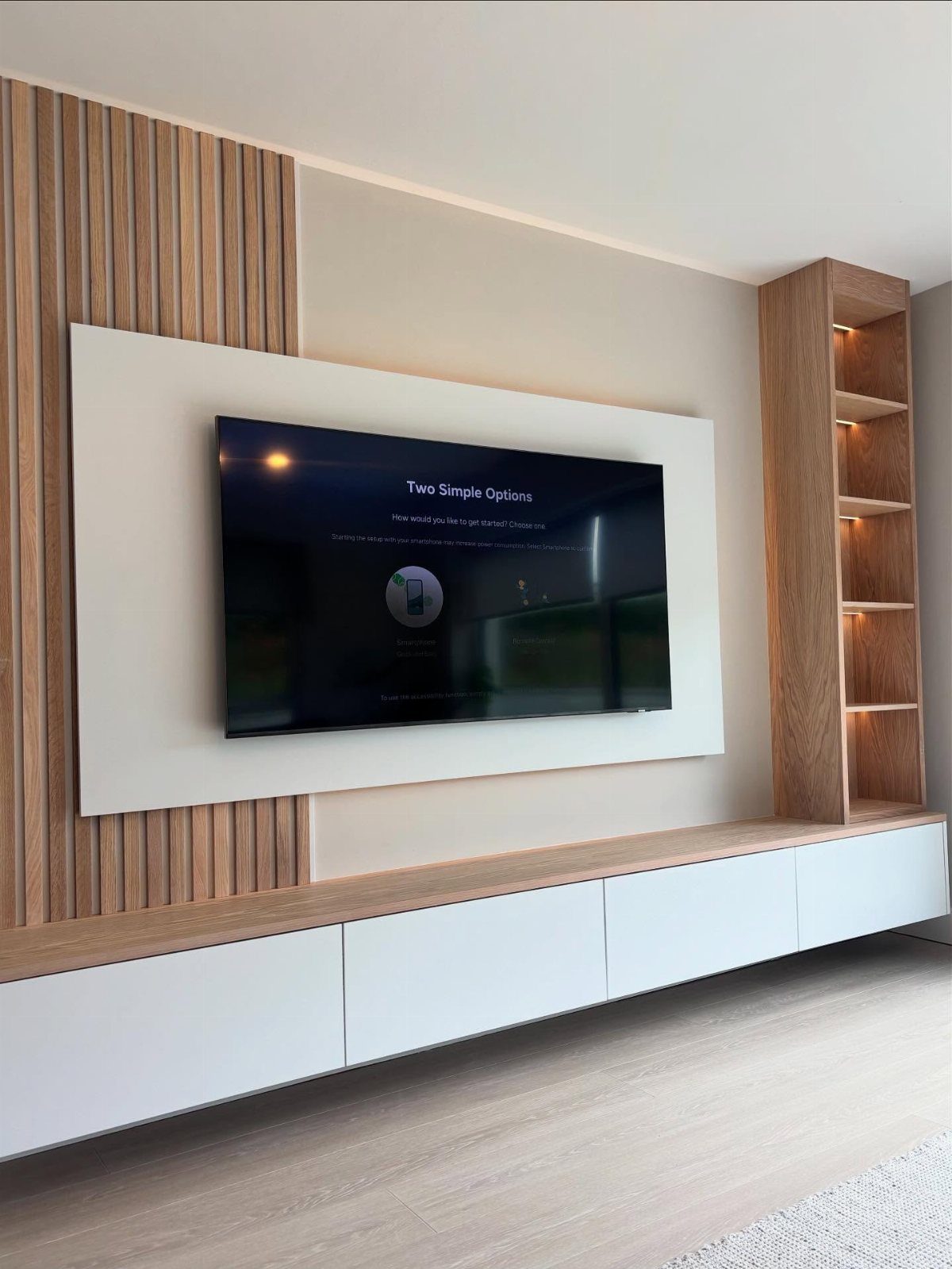
Drawers hung on the wall give a TV stand its storage without the bulk of a cabinet that sits on the floor.
A white unit with a wooden top under the screen holds remotes and cables, and a tall bookshelf beside it takes the overflow.
Matching the wood of the top to the bookshelf makes the two read as one plan. Floating units also let you vacuum straight underneath.
15. Backlit TV Panels
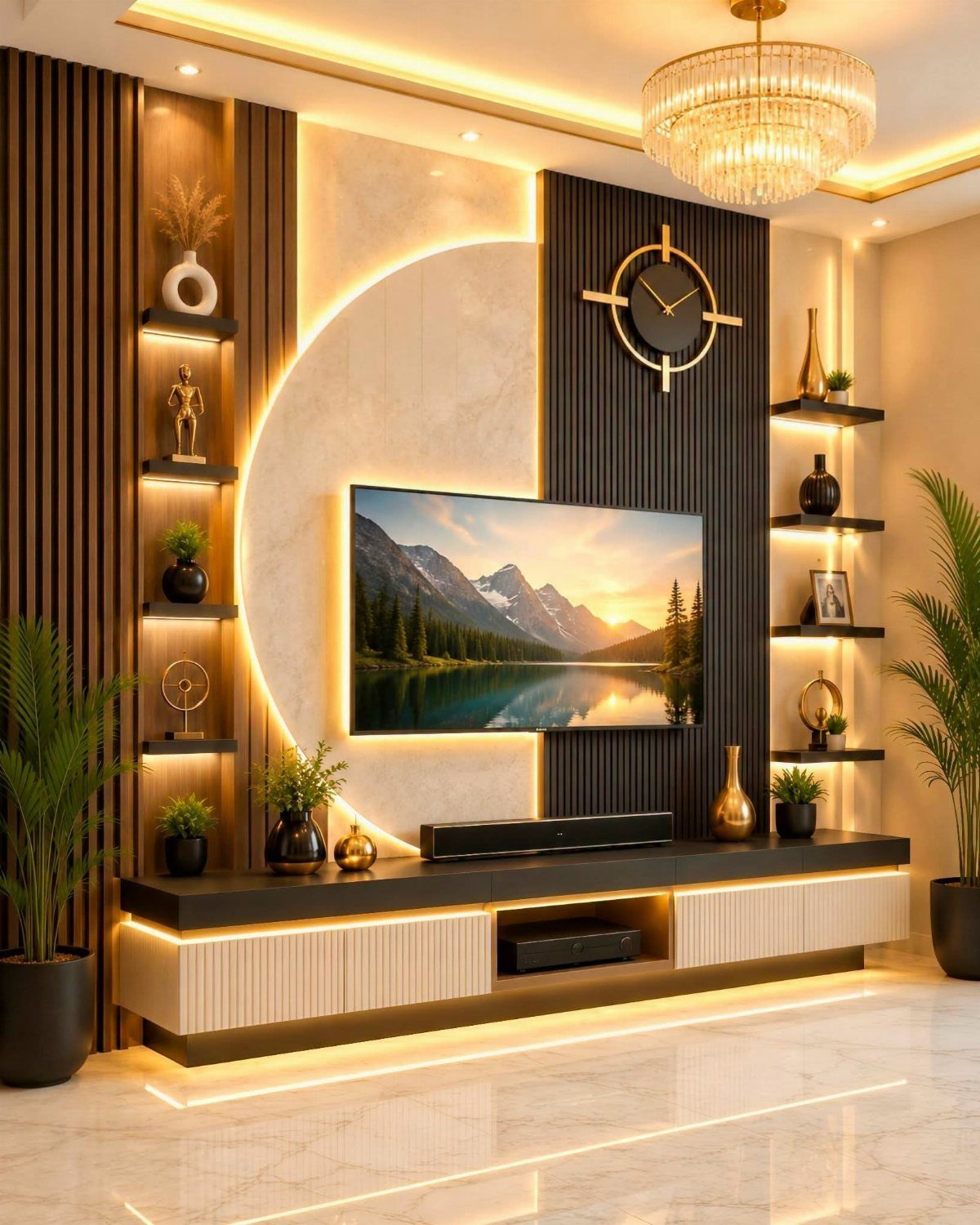
Light behind a round panel gives the screen a halo, and that soft edge is what makes a dark TV wall feel finished instead of blank.
A round backlit panel looks stuck on unless something frames it, so flank it with dark wood slats and run a long console underneath.
Pick a warm white glow over a cool one, since it sits better with wood. Add a dimmer if you can, so the panel stays gentle on movie nights.
16. Wooden TV Unit
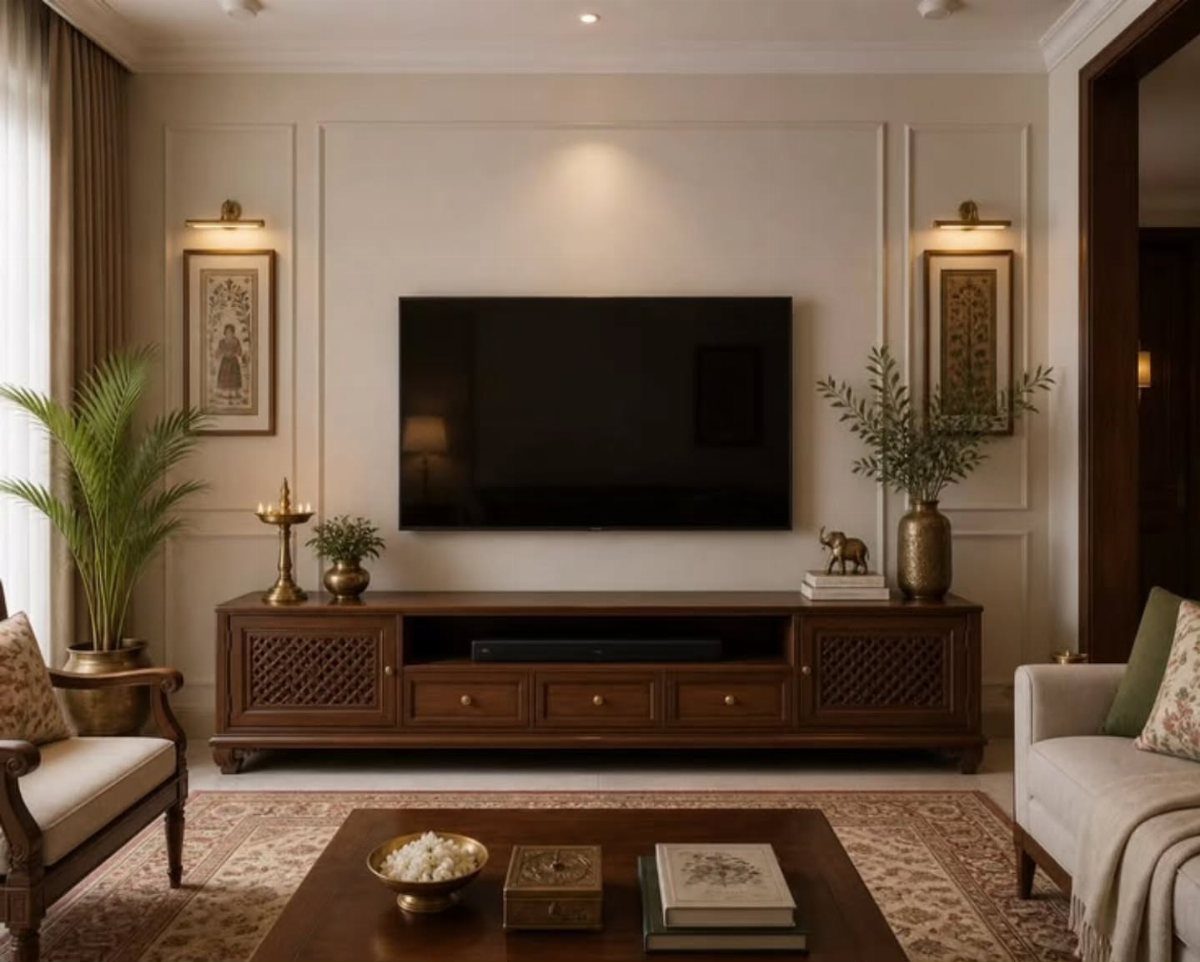
Dark wood is the safest way to warm a TV wall, because it suits almost any sofa, rug or wall color.
The carved doors on this brown unit add detail that a flat-front cabinet lacks, and they close over whatever you don’t want seen.
Wall sconces and a couple of plants on either side keep a heavy piece from looking stiff. I’d choose the finish by holding a sample against your floor first.
17. Rustic Wooden Unit
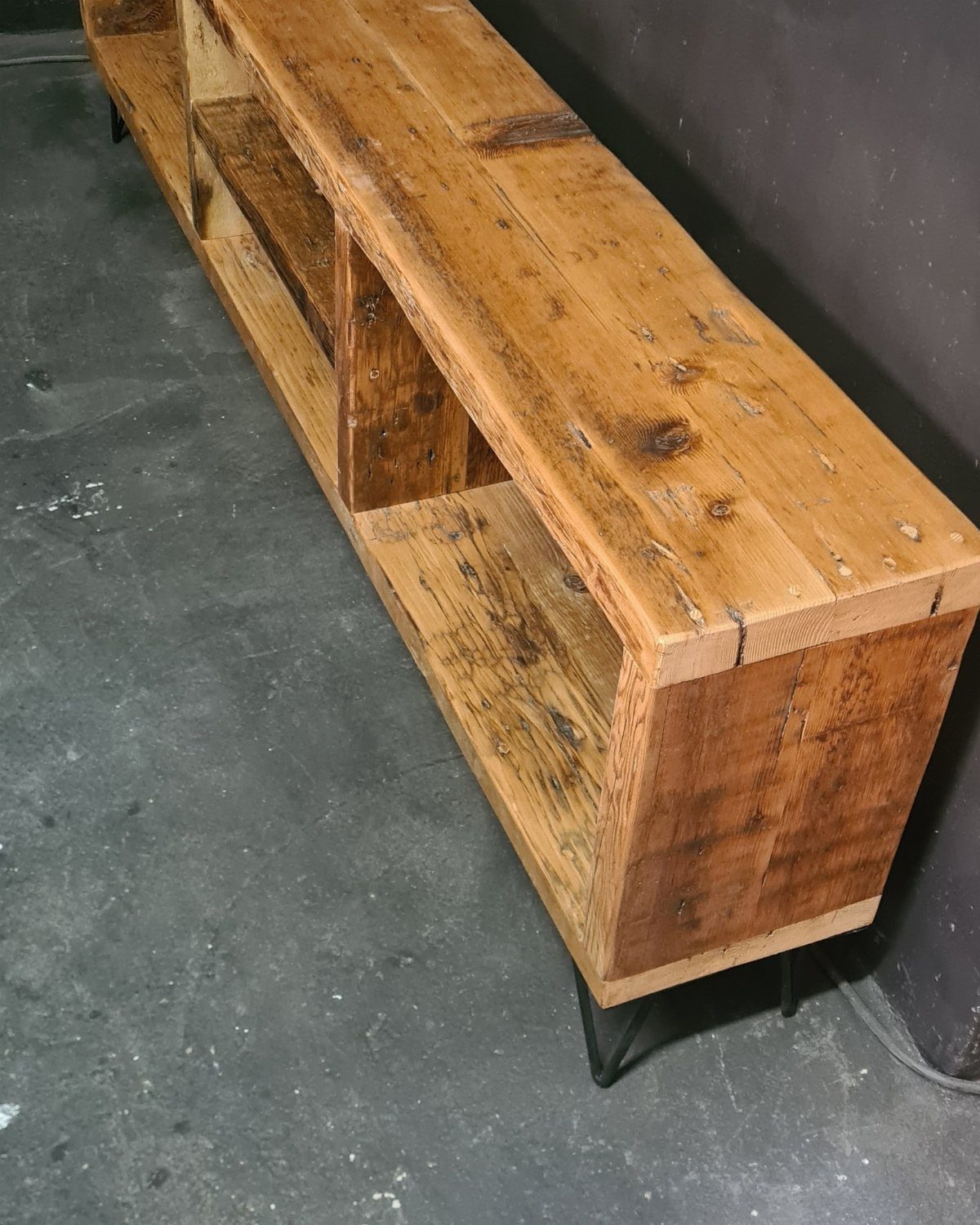
Rough-grained wood on black hairpin legs gives a TV console some character without any fuss. Open shelving keeps a heavy wood unit from feeling bulky, and that matters most in a dark room.
Open shelves suit media boxes and baskets better than loose clutter, so decide what lives there first. Raw wood is the budget-friendly look here, and a sealed top handles a drink ring or two.
18. Open-Shelf TV Unit
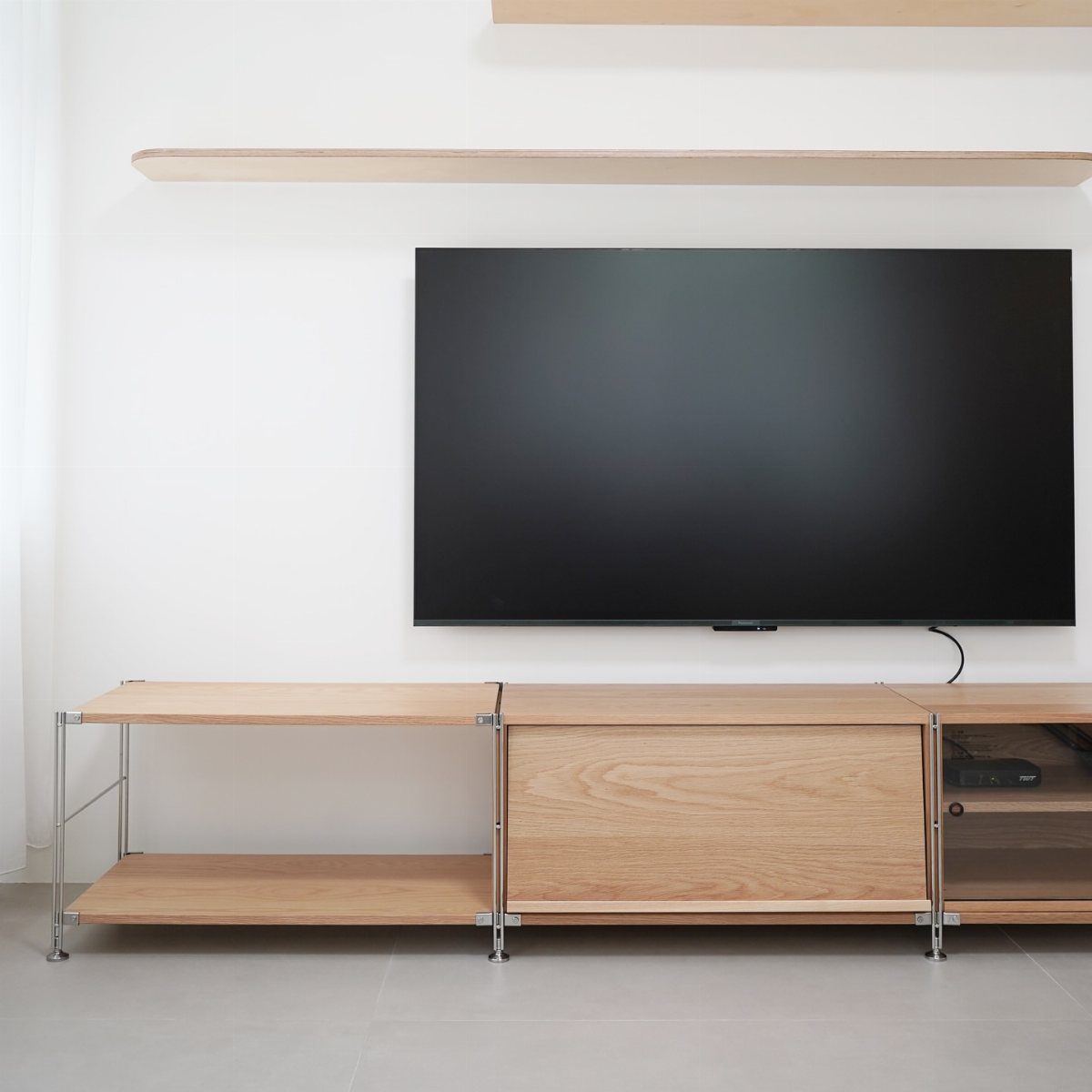
Open shelves under a mounted TV give you a place for the things you actually want to see: a game console, a speaker, a stack of books.
This light wood and chrome stand adds one drawer and a small cabinet for the rest, which is a smart split.
Fill the shelves two-thirds full and leave breathing room. Place this unit against a white wall so the wood does the work, and mount the screen to keep the whole setup airy.
19. Bookshelf TV Stand
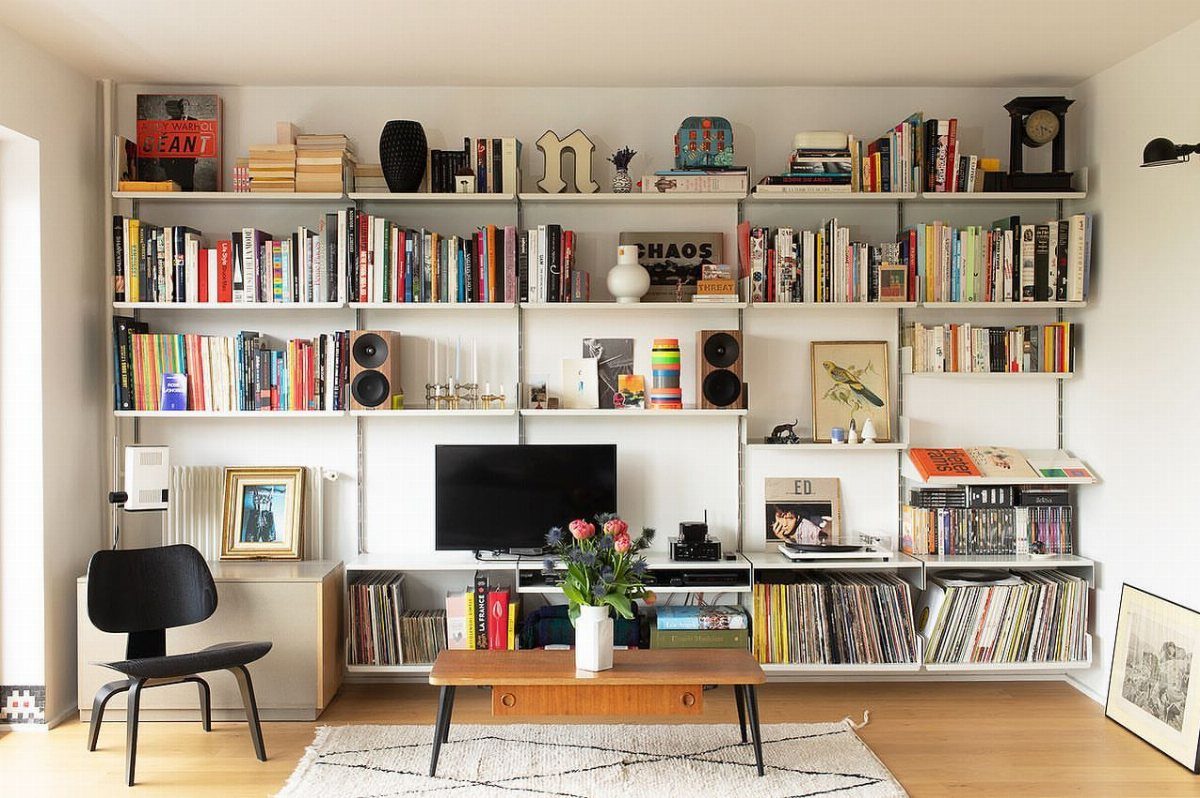
Books can hide a TV better than any cabinet door. A white wall-mounted bookshelf with the screen set into its center makes the black rectangle one more block among the spines, records and decor.
I’d fill the shelves right up to the screen’s edges, with no big empty gaps around it.
Mix the book colors with a few records and objects so the eye has other places to land. Wall-mounted shelving also keeps the floor clear.
20. TV Unit with Open and Closed Storage
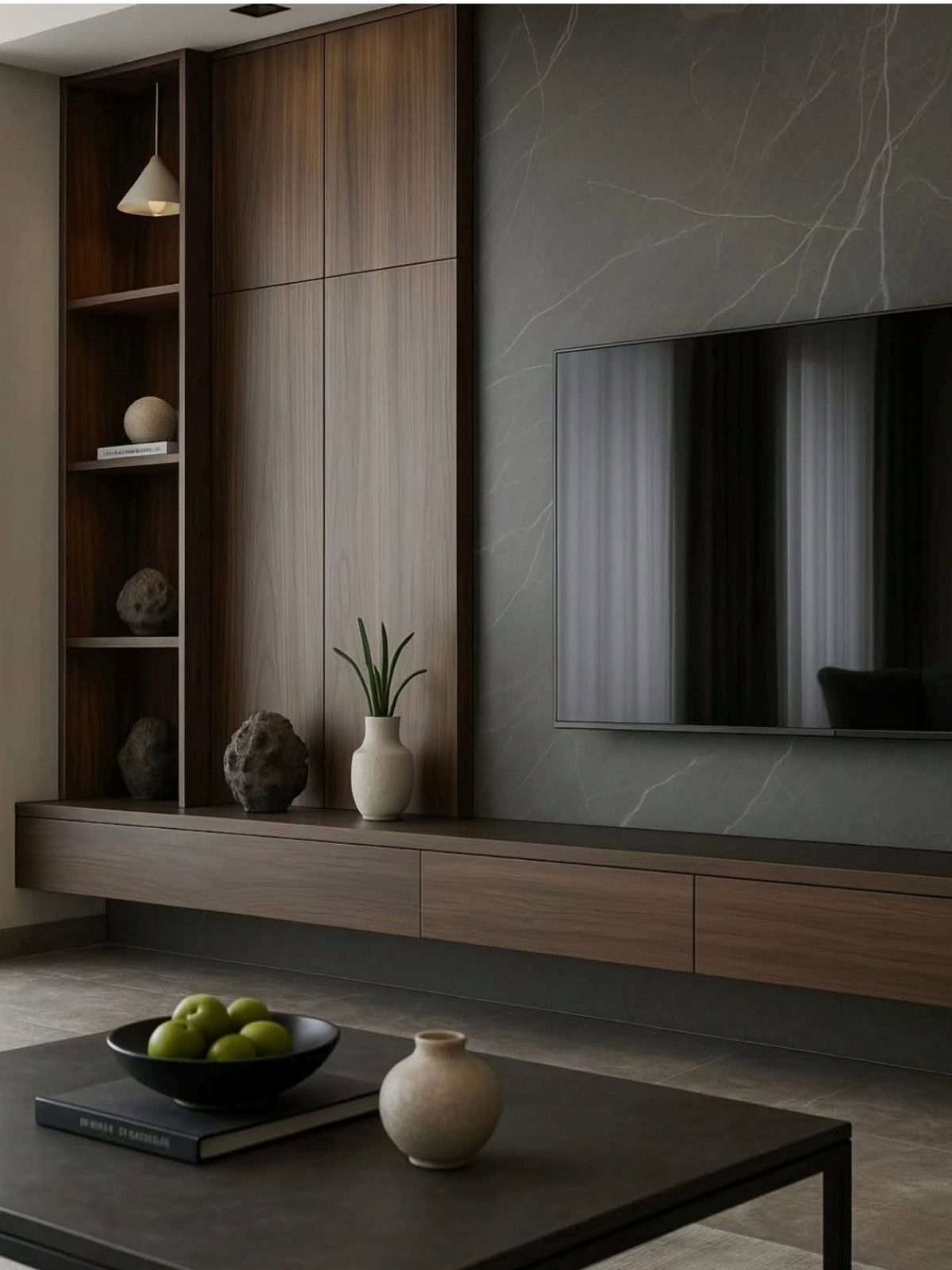
Splitting a TV unit into open shelves and closed drawers is the easiest fix for clutter. Against a grey stone wall, a wooden unit shows a few pieces on the open side and swallows the rest behind drawer fronts.
Settle what goes behind the drawers first: cables, controllers, chargers, anything with a messy look.
Keep the open shelves for a short list of objects you like. If everything ends up on display, the closed storage has done nothing.
21. Low, Wide TV Console
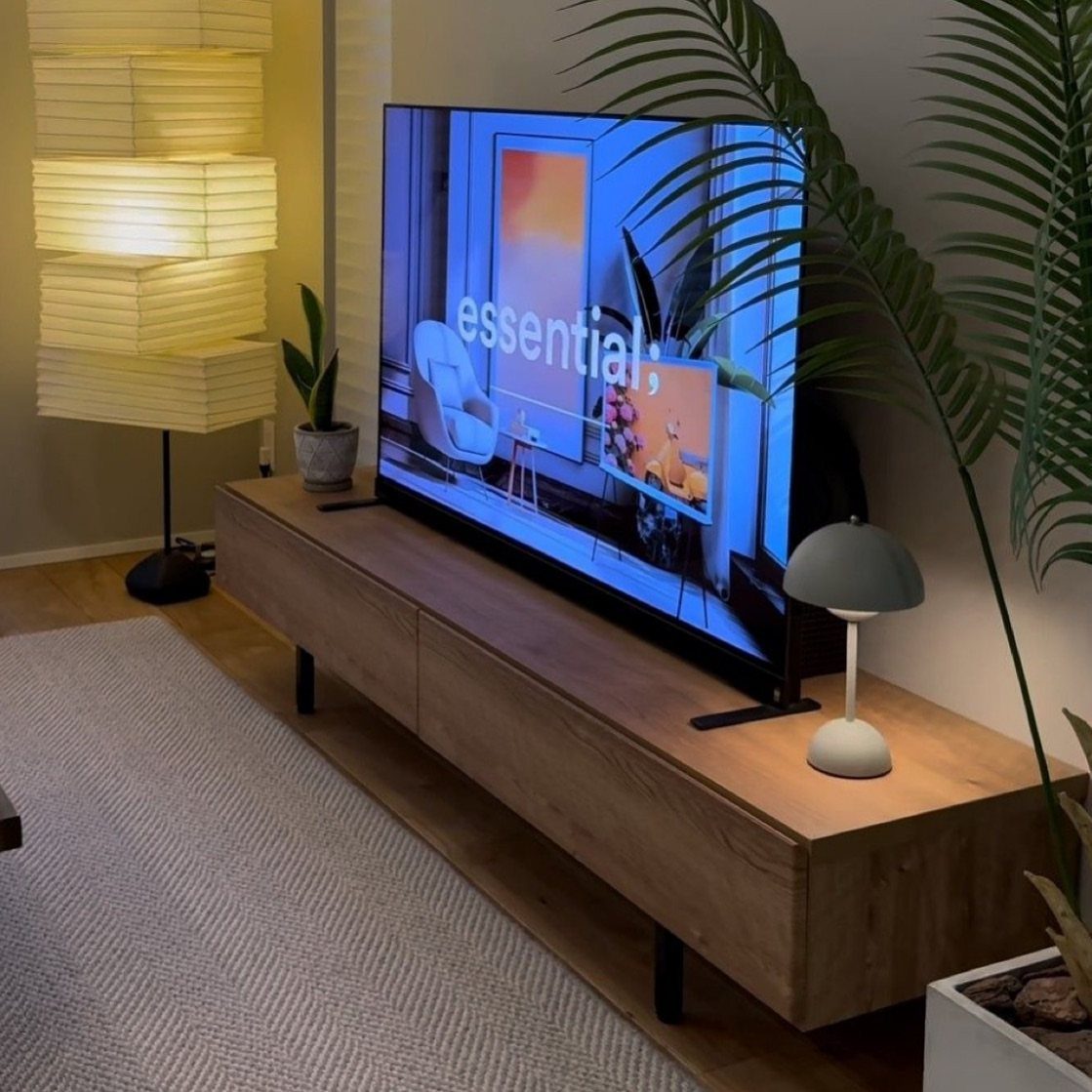
Low and wide beats tall every time for a console under a TV.
Measure your media gear before you shop: the box, the soundbar, the game console.
A console with open space for them keeps the signal clear and the cables short. Pick a length at least as wide as the screen, so the TV never overhangs its base.
22. Slim-Frame TV Unit
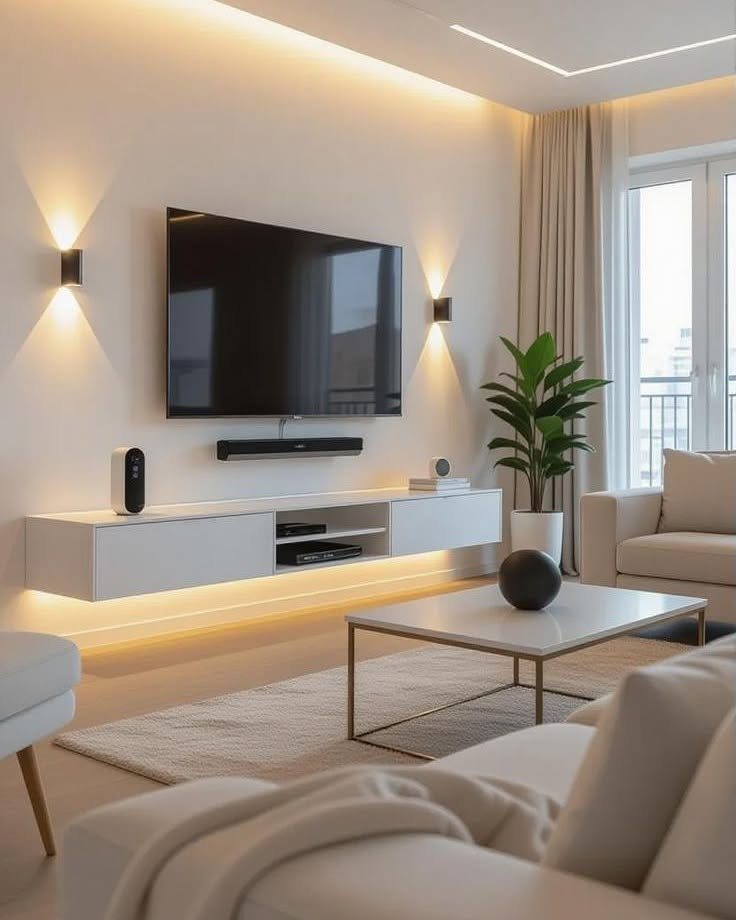
Thin lines make a heavy TV feel lighter.
Choose a console with one or two shallow drawers and stop there.
Slim frames only look slim when the storage stays modest, so keep bulkier items like extra consoles elsewhere. This suits small living rooms best, where every inch of visible floor helps the space feel bigger.
23. TV Partition Unit
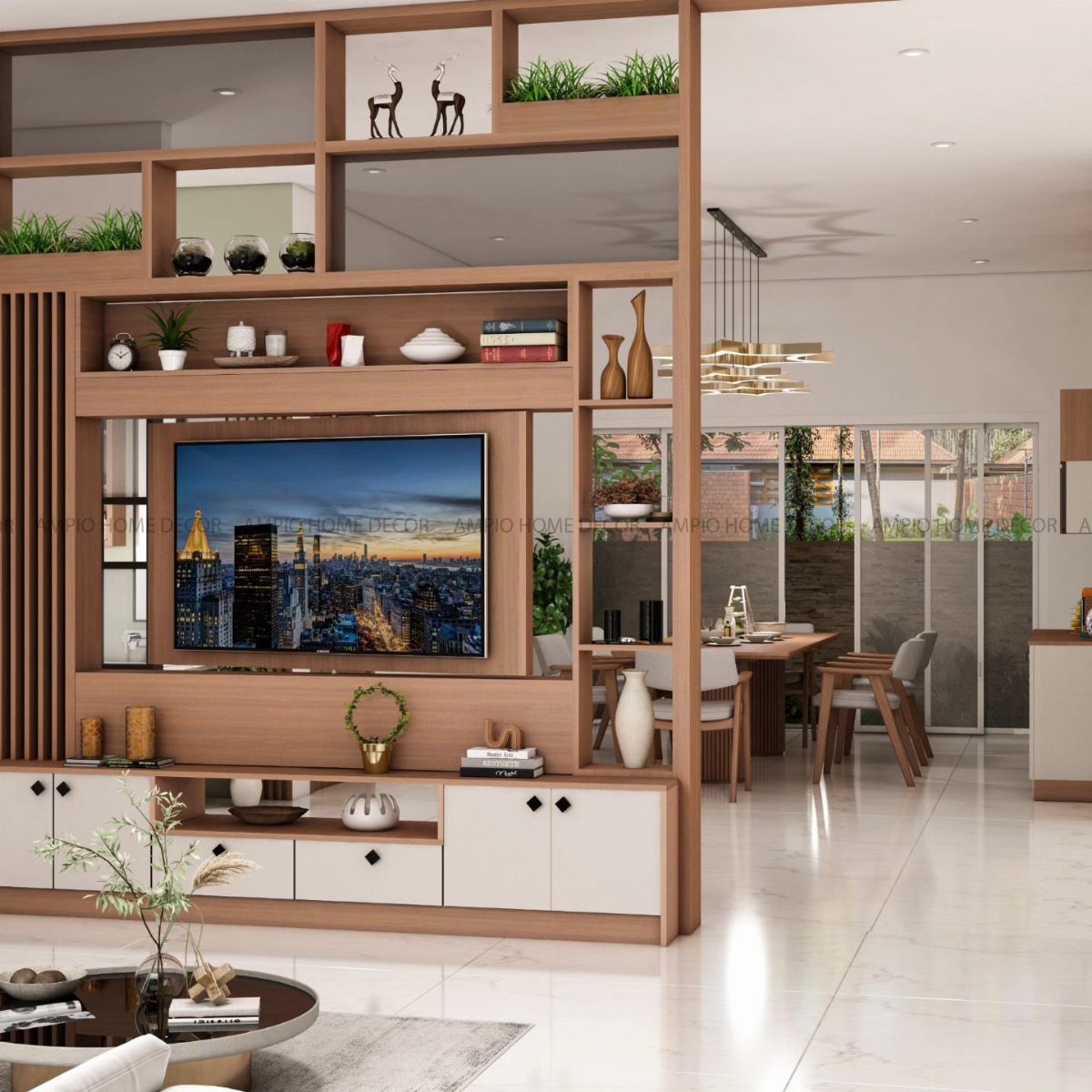
An open living-dining room often has no natural place for a TV, and a wooden partition unit solves that and the missing divider in one piece.
With shelves, cabinets and the screen built into it, the unit splits the 2 zones without closing off the light.
Face the TV toward the living side and let the dining side see the shelves.
Style the shelves lightly on both sides, since people see them from either room. Pick a wood tone that matches your dining table so the two areas still read as one home.
24. Rotating TV Panel
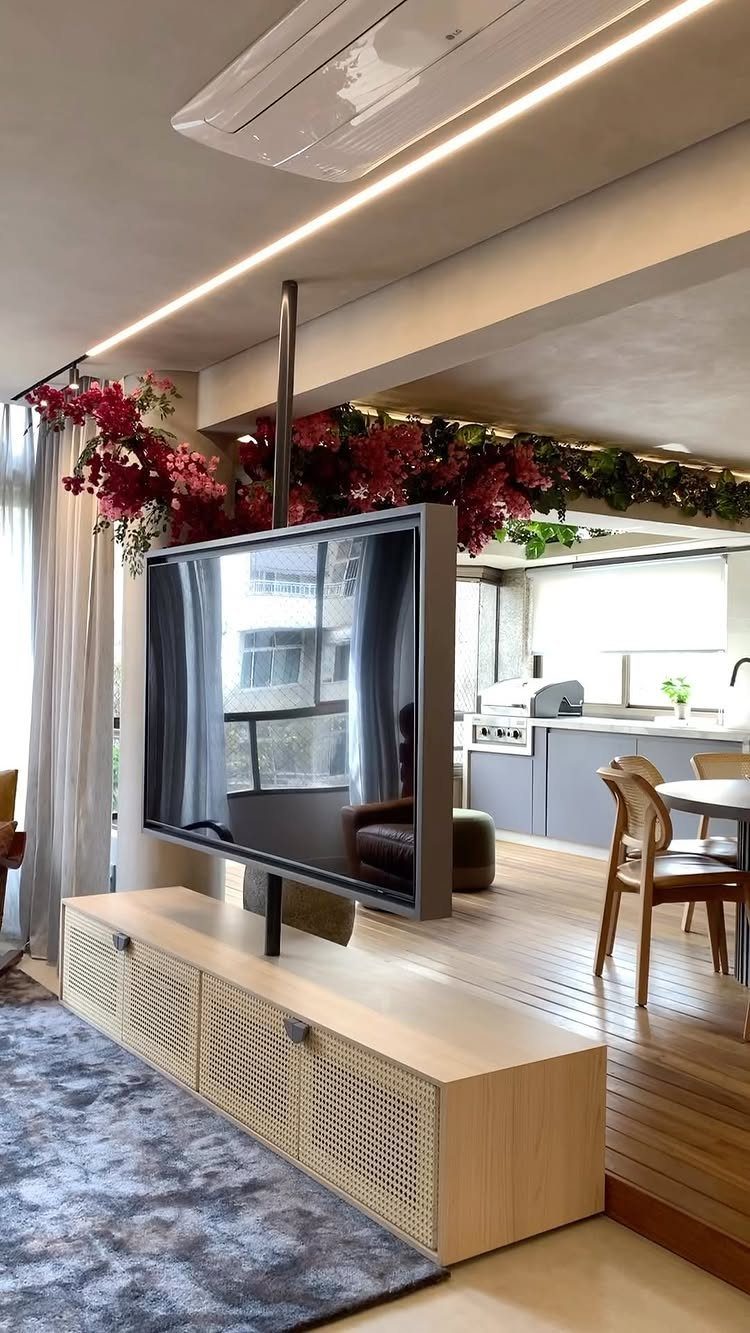
A screen on a rotating pole solves a problem most TV walls ignore: not everyone sits in the same spot.
A pole mount holds the TV above a low console, so it can swing toward the sofa or the other seats.
Plan the swing before you commit.
Leave clear space around the pole, and choose a low, simple console below so nothing blocks the turn. I’d choose this for an open room where seating is spread out, rather than a small one with a single sofa.
25. TV Unit with Acoustic Panels
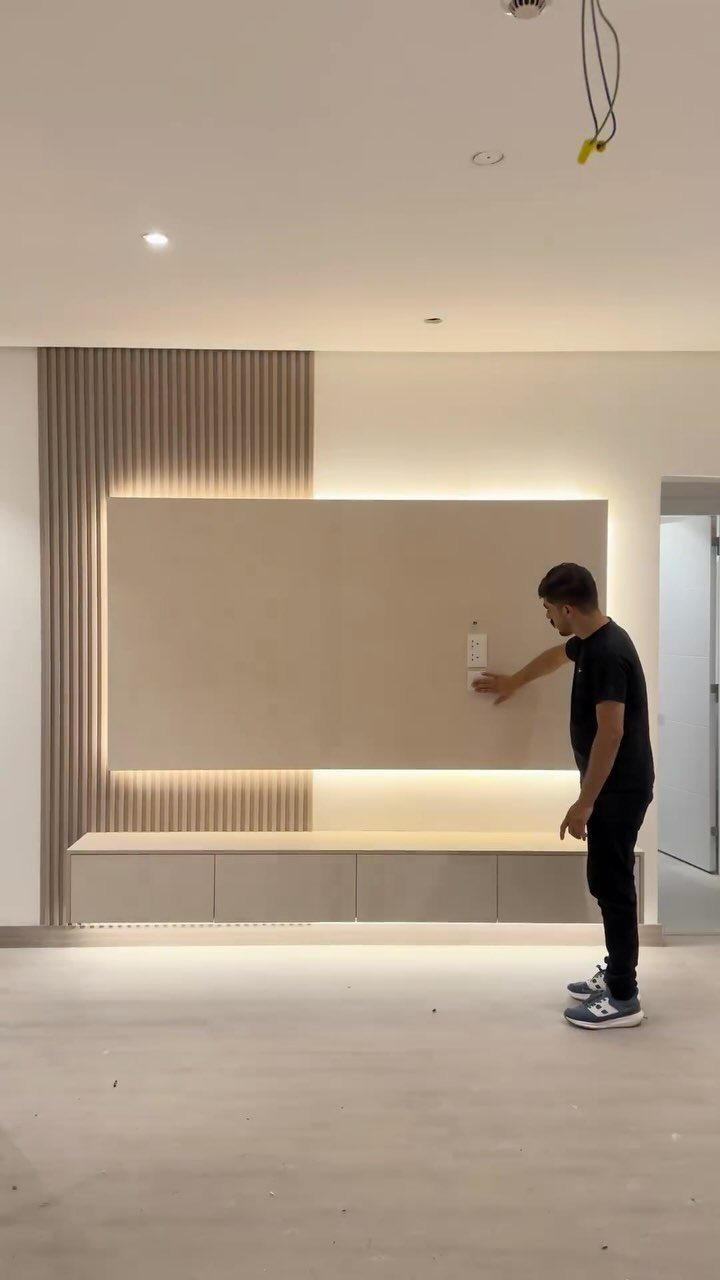
Vertical wooden slats can do 2 jobs at once: they break up a flat white wall and soften the echo a bare room throws back at a TV.
A backlit panel behind the screen, with the slats running beside it, gives the unit depth without adding another color.
Pick a slat tone close to your floor so the wall looks planned.
Warm backlighting suits wood better than a cool white glow. Keep the rest of the wall plain, since the slats and the light already carry the design.
26. Scandinavian TV Unit
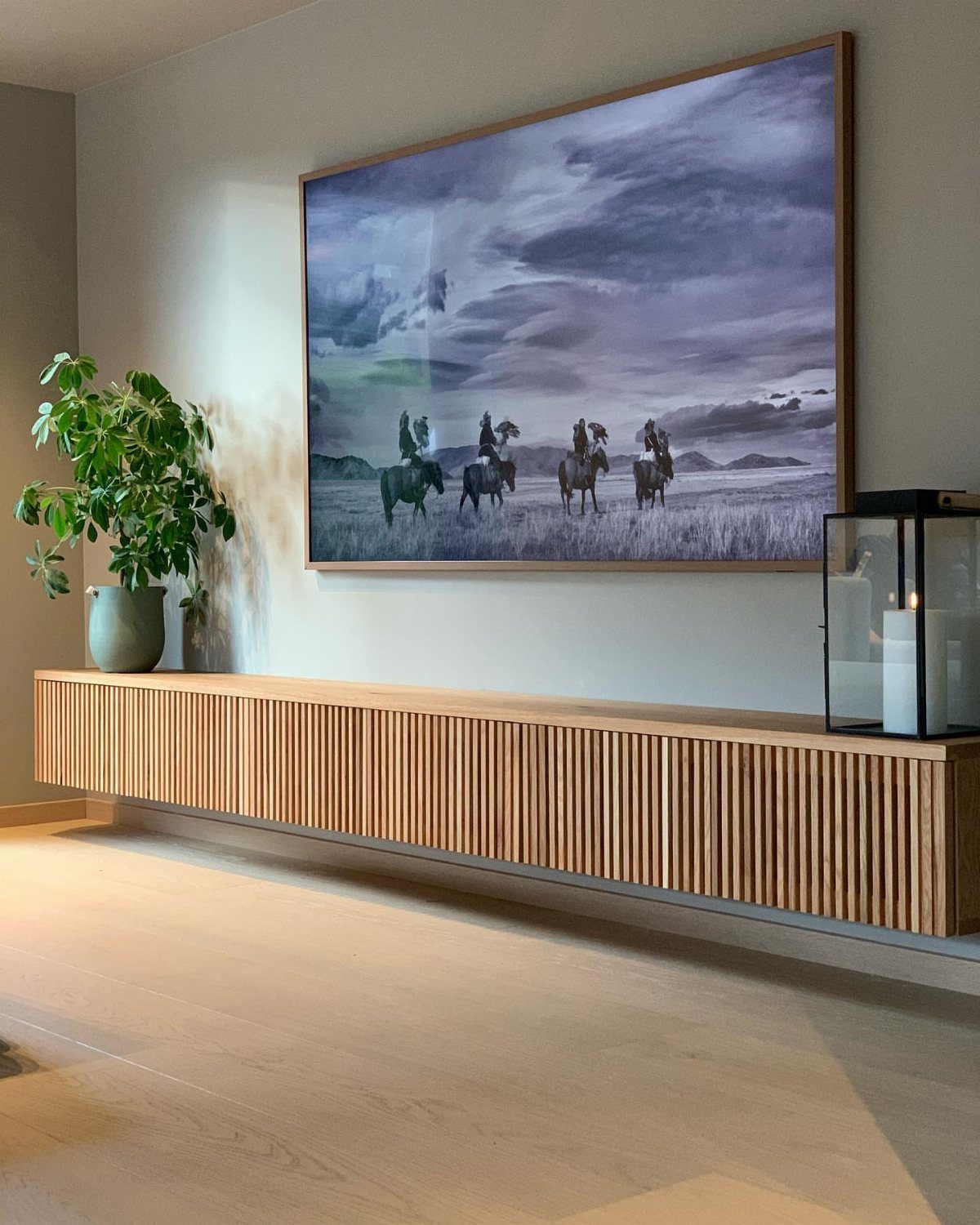
Light wood, clean lines and almost nothing on top: that is the Scandinavian approach, and a slatted floating unit shows it well.
The slats add texture, and the floating base leaves a strip of floor visible, which helps a room feel larger.
A large framed painting above the unit gives the wall a focal point beyond the screen.
Limit the top to one plant and one object. I’d choose a pale oak or ash finish over anything orange-toned, since it keeps the room bright.
27. Industrial-Chic TV Unit
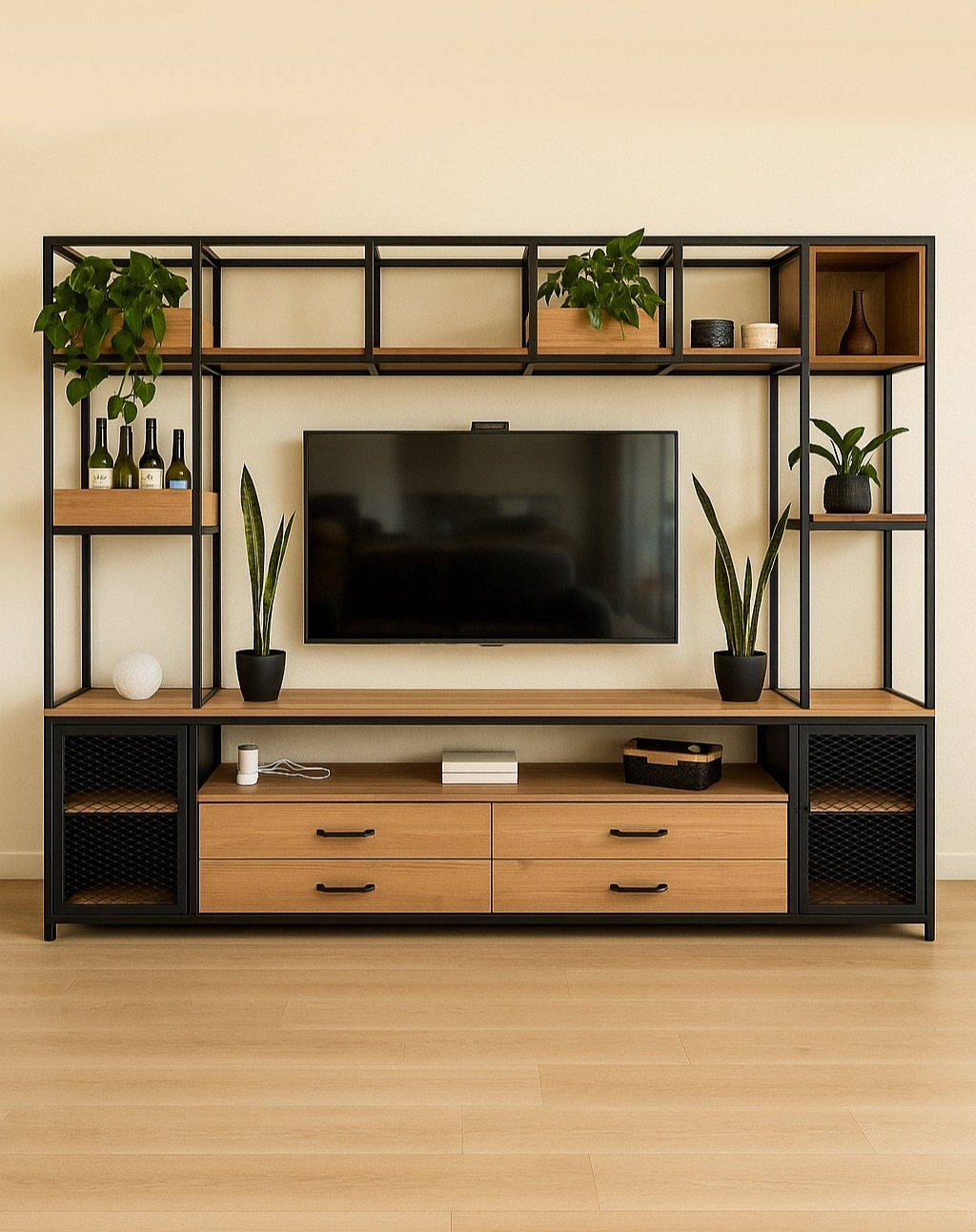
Black metal framing paired with light wood is the industrial look at its most livable. The dark steel gives the unit structure, and the pale wood shelves stop it from feeling cold or heavy.
Against a beige wall, the black lines read sharply, so keep the shelves loosely styled with a couple of plants and a few objects.
Plants matter more than usual here, because they soften all that hard edge. I’d go for a matte black finish over glossy, which shows fingerprints and picks up screen glare.
28. TV Area with Antiques
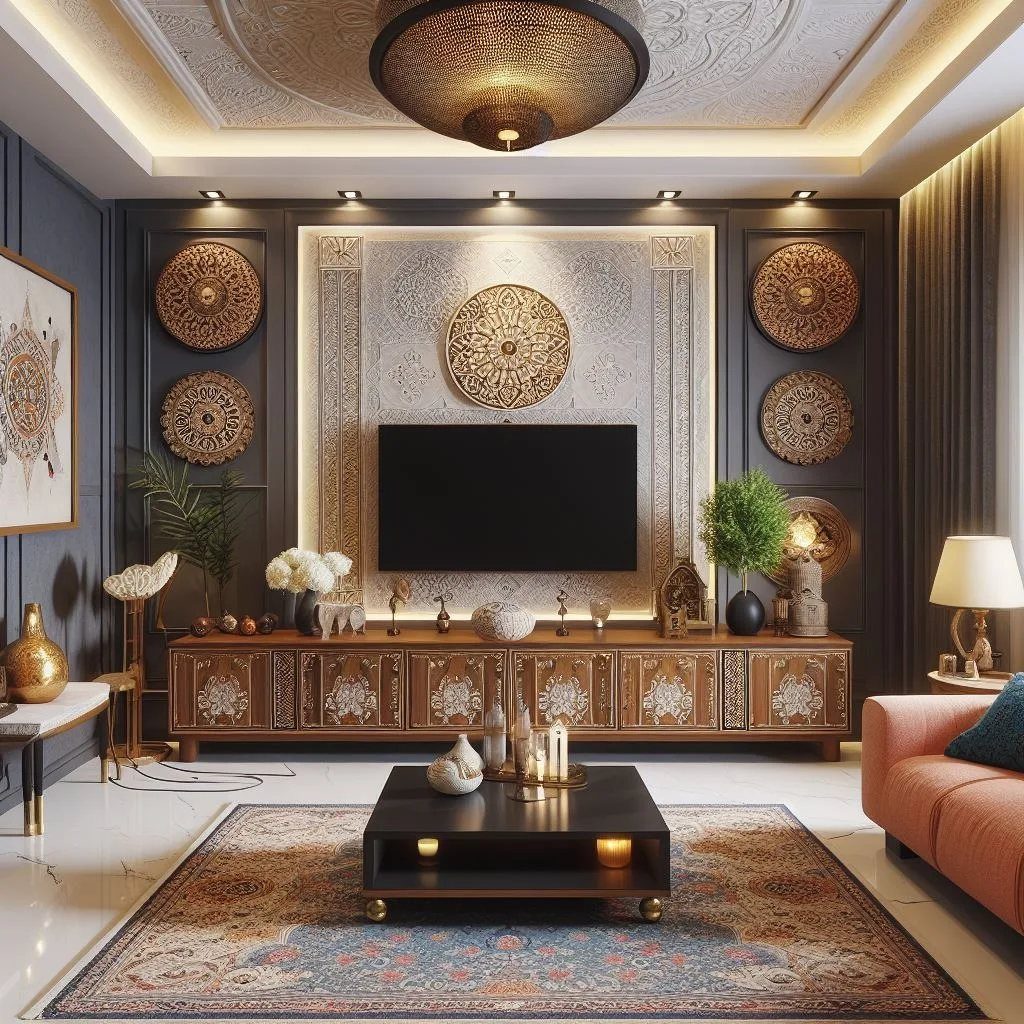
Antiques work around a TV when one carved piece leads and the rest stay quiet.
Look for a console with a flat, sturdy top that fits the screen’s width.
Hang a few decorative metal plates nearby rather than crowding the console surface. Secondhand shops and online resale listings are the budget route, and a worn finish adds to the look.
29. TV Behind Cabinet Doors
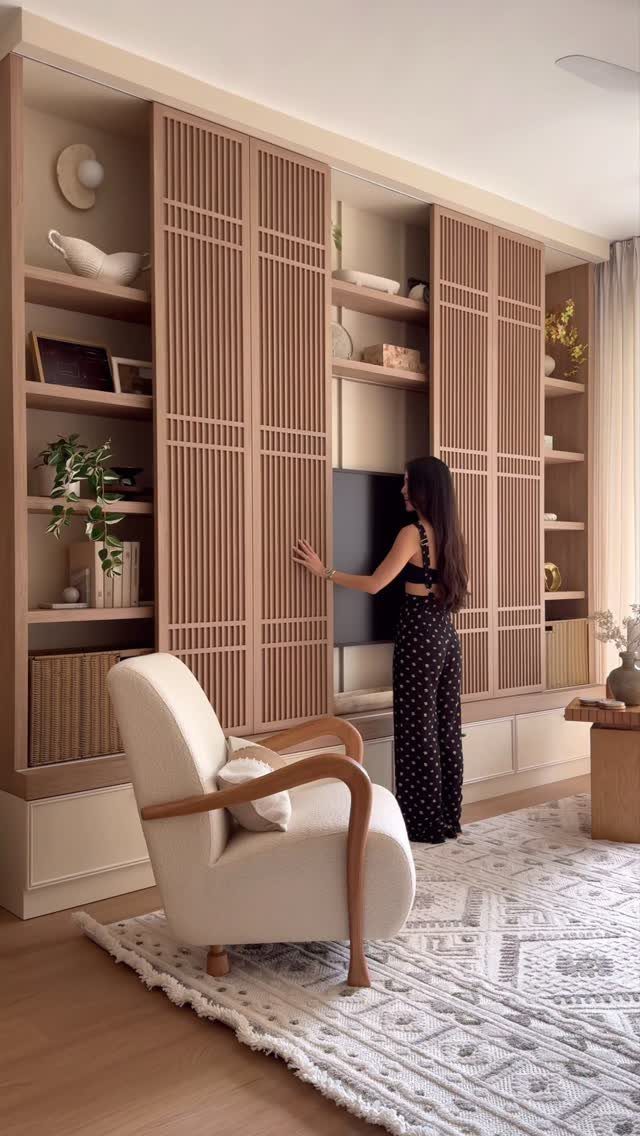
A slatted sliding door turns a TV wall into plain wood paneling the moment the screen goes off.
Check that the doors slide fully clear of the screen, so nothing blocks the picture.
Leave a little room behind them for ventilation and cables. I’d pick this over a hinged door in a smaller room, since sliders need no swing space.
30. TV Behind Sliding Slats
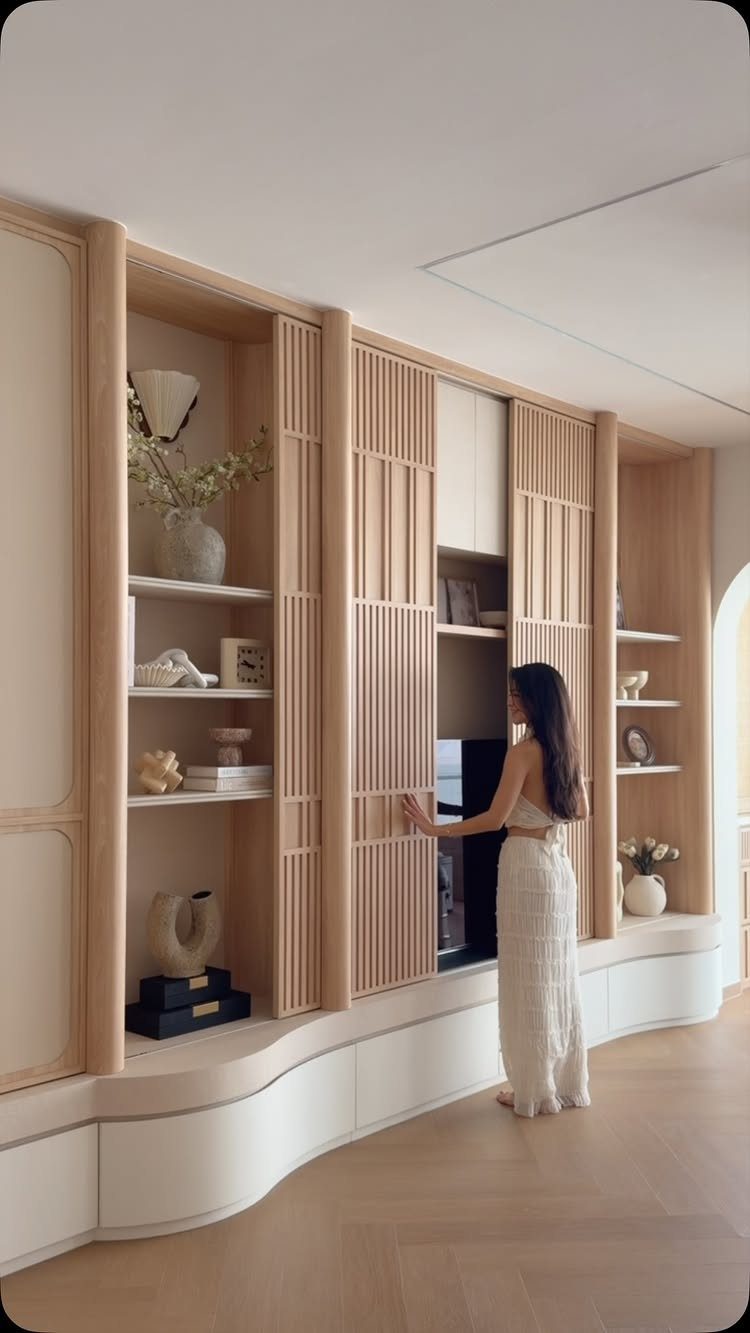
Sliding panels that only partly cover the TV give you a flexible wall: close them for a quiet wood surface, or slide them aside for movie night.
The open shelving beside the screen stays on display either way, so the unit never looks like a closed box.
Keep the shelf styling light, since it sits next to a moving panel.
Use a few objects and some greenery, with no tall pieces that could catch the slats. Light wood throughout makes the screen the only dark element, and the panels hide it well.
31. TV with Linear Fireplace
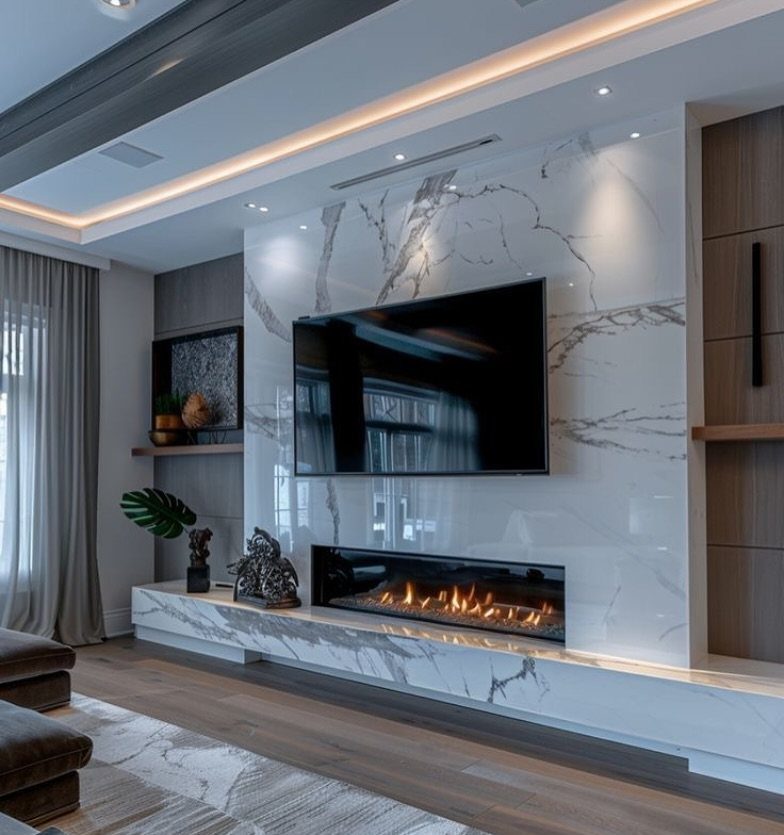
Stacking a long, low electric fireplace beneath a wall-mounted TV creates a single horizontal band, so the wall reads as one feature rather than two fighting for attention.
Match the hearth surround to the wall finish, marble to marble for example, and the whole stack reads as one solid piece.
I’d choose a fireplace close to the screen’s width so the proportions line up. Keep the mantel area empty, and leave the flame as the only decoration.
32. Textured Feature Wall
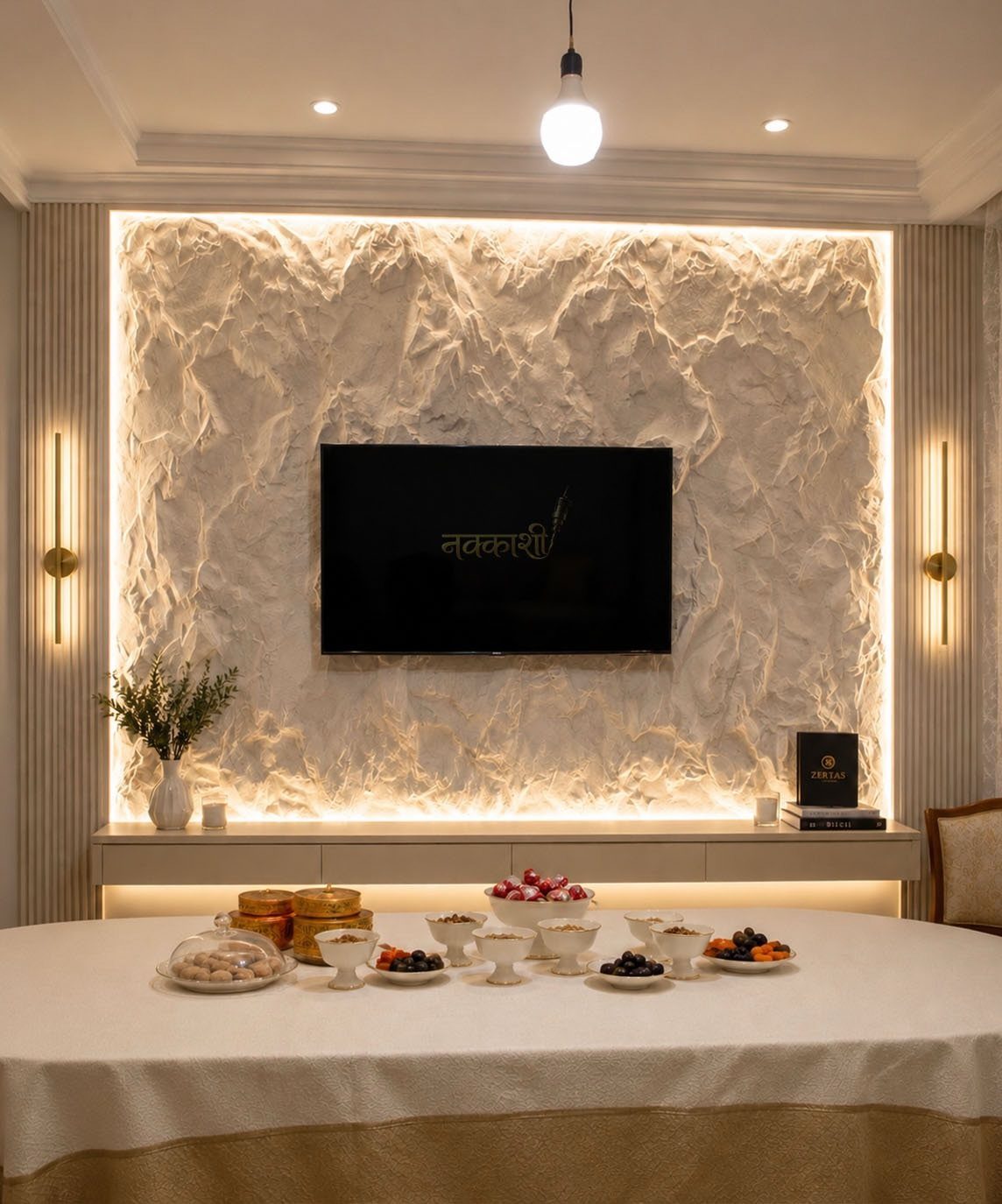
Texture does the decorating on this wall, so the TV doesn’t need much around it. A ribbed or stone-look surface catches light at an angle, and warm lighting along the wall turns that into depth without a single added object.
A plain white console below keeps the busy surface from getting heavier. Pick one textured finish for the entire wall instead of mixing two, and leave snacks and decor on the table, away from the surface.
33. TV in a Recessed Niche
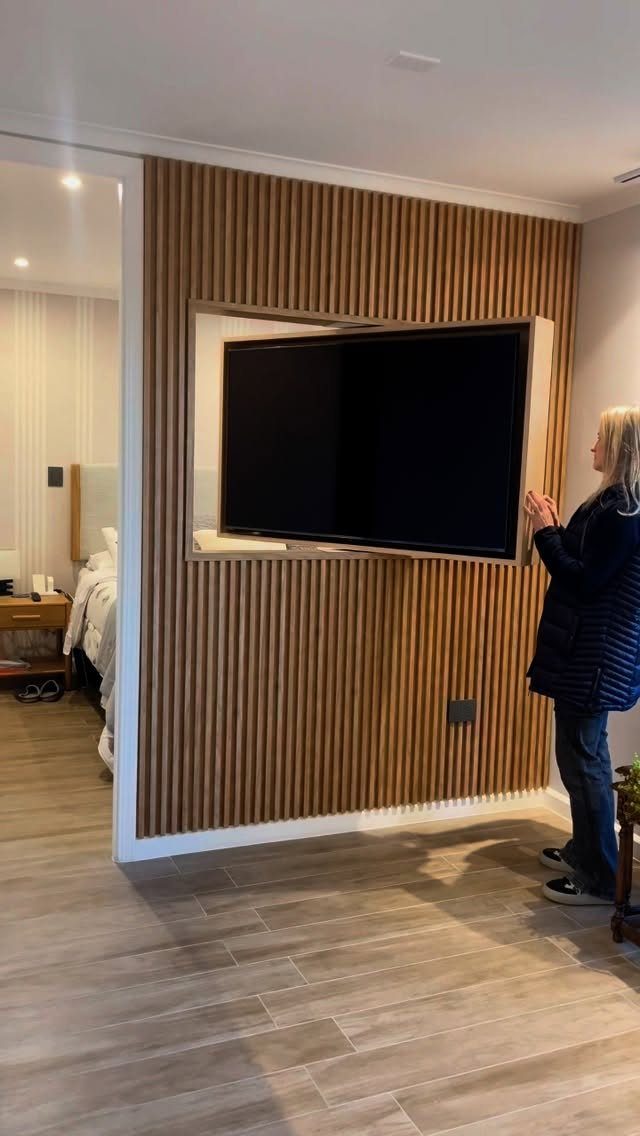
Sinking the screen into a recessed niche lets the TV sit flush with the wall, so it reads as part of the room’s architecture. Vertical wood slats around the opening add definition and frame the screen like a picture.
Set the niche depth before anything else, since it decides how the TV mounts. Wood-look flooring in a similar tone ties the slats to the rest of the room, and that match is what I’d aim for.
34. TV on a Marble Panel
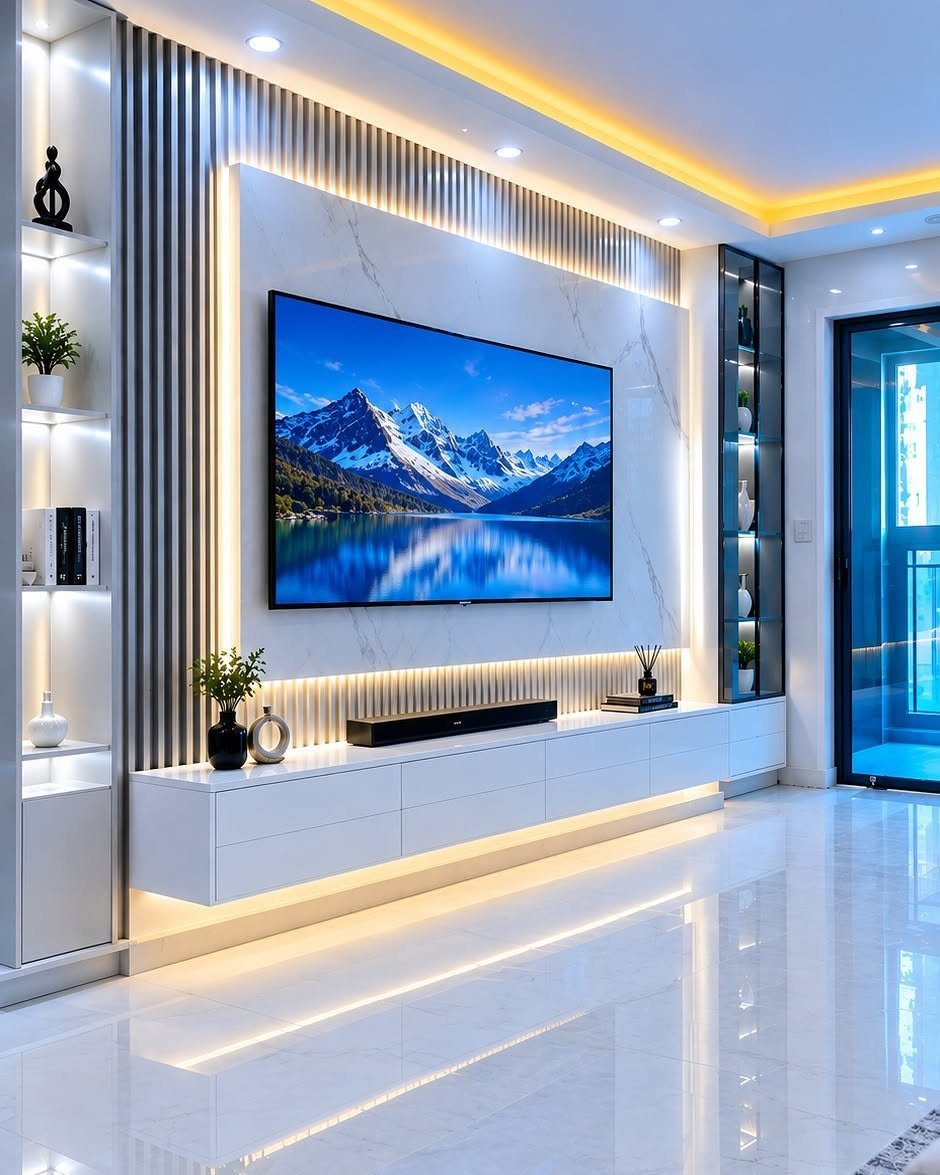
A marble-look panel gives the TV a crisp, pale backdrop, and slatted wood on either side keeps all that white from feeling cold.
The floating white console below stays light, while warm LED lighting built into the wall adds a soft edge.
If real marble is out of budget, a marble-look finish does the same job on a flat wall. I’d go with warm LEDs over cool ones, since they sit better beside wood.
35. TV with Side Shelving
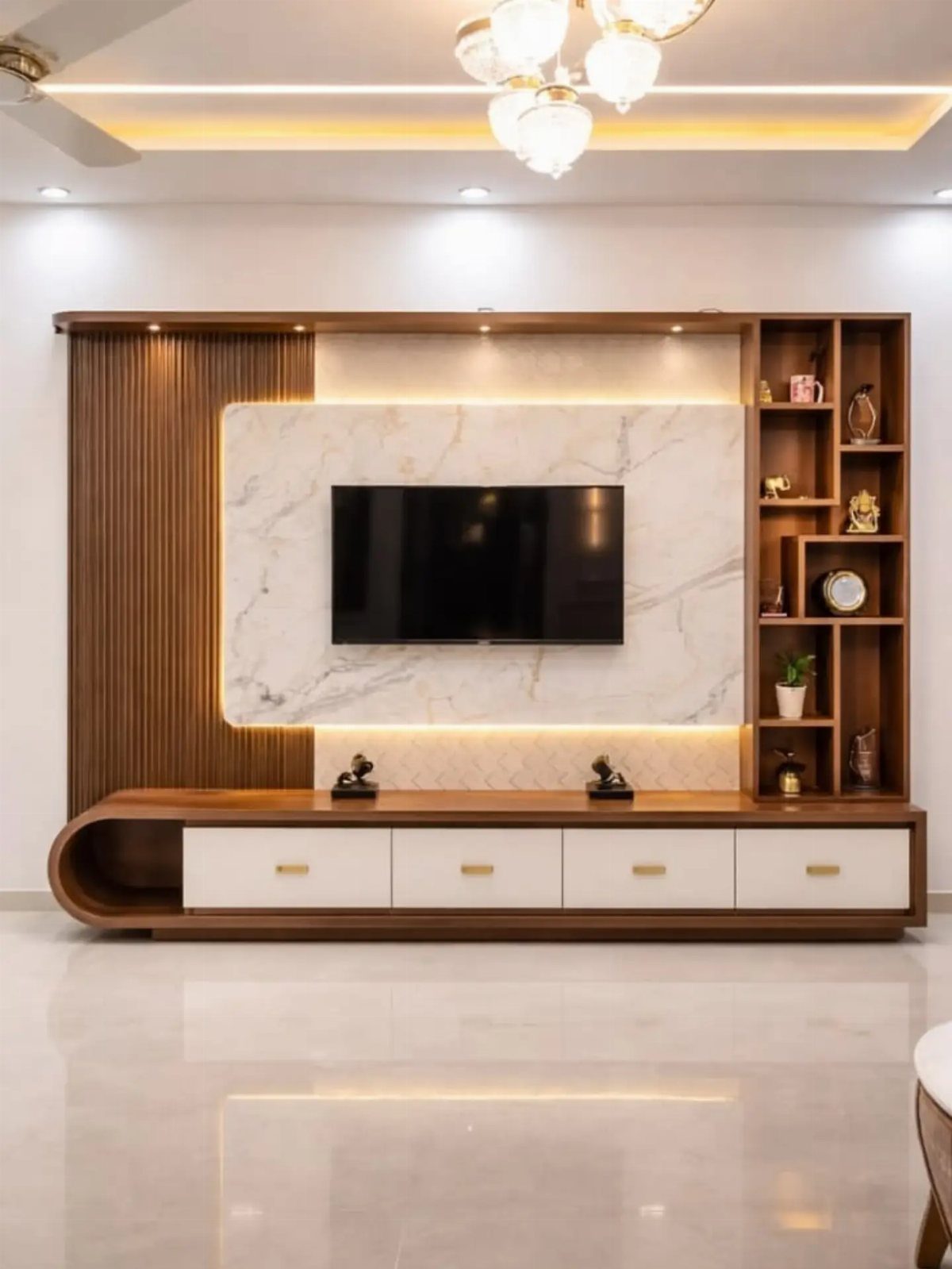
Shelves built in beside the TV give the wall a place for books and objects, so the screen shares space instead of dominating it.
Style the shelves with a few grouped objects rather than filling every gap.
A low console below the TV, in white or white with wood, gives the center of the wall a quiet base. Loose, slightly uneven shelf contents look more lived in than a perfectly matched set.
Just because you’ve positioned a media console under your TV doesn’t mean you need to place the TV directly on top of that console: Mounting it on the wall gives your furniture some space to breathe and results in a more minimalist look.
— Domino
36. TV with Floating Shelves
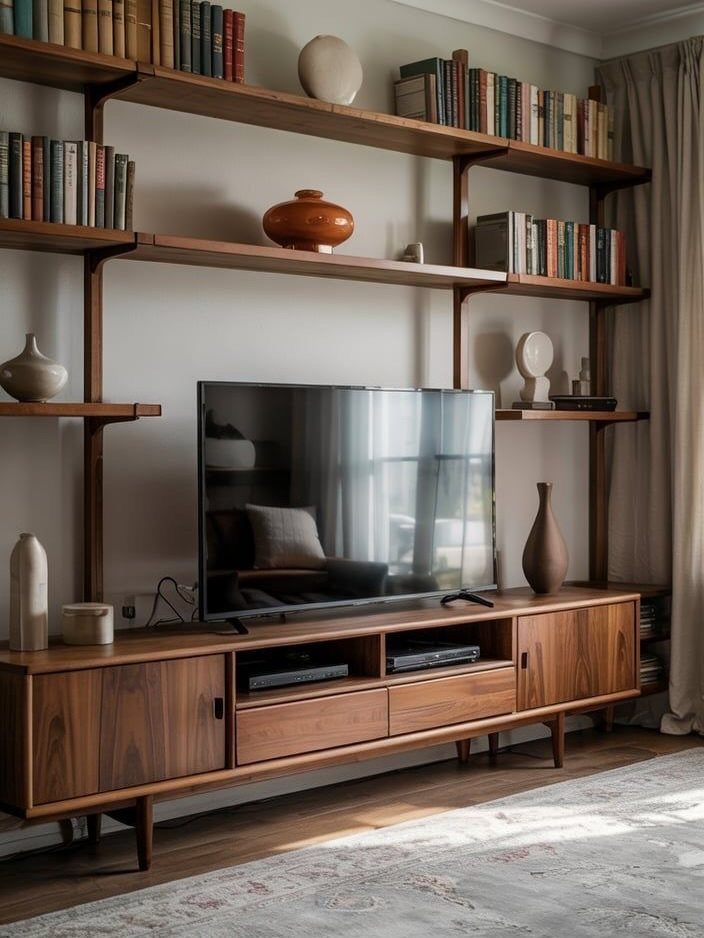
A mid-century wooden console with matching floating shelves above it reads as one furniture set, and the shelves give books and pottery a home without a bulky bookcase.
Matching the shelf wood to the console is what holds the look together.
Group the pottery in uneven numbers and lay a few books flat for variety. I’d keep the shelves to two or three objects each, so the TV stays the calm center of the wall.
37. TV on a Wooden Stand
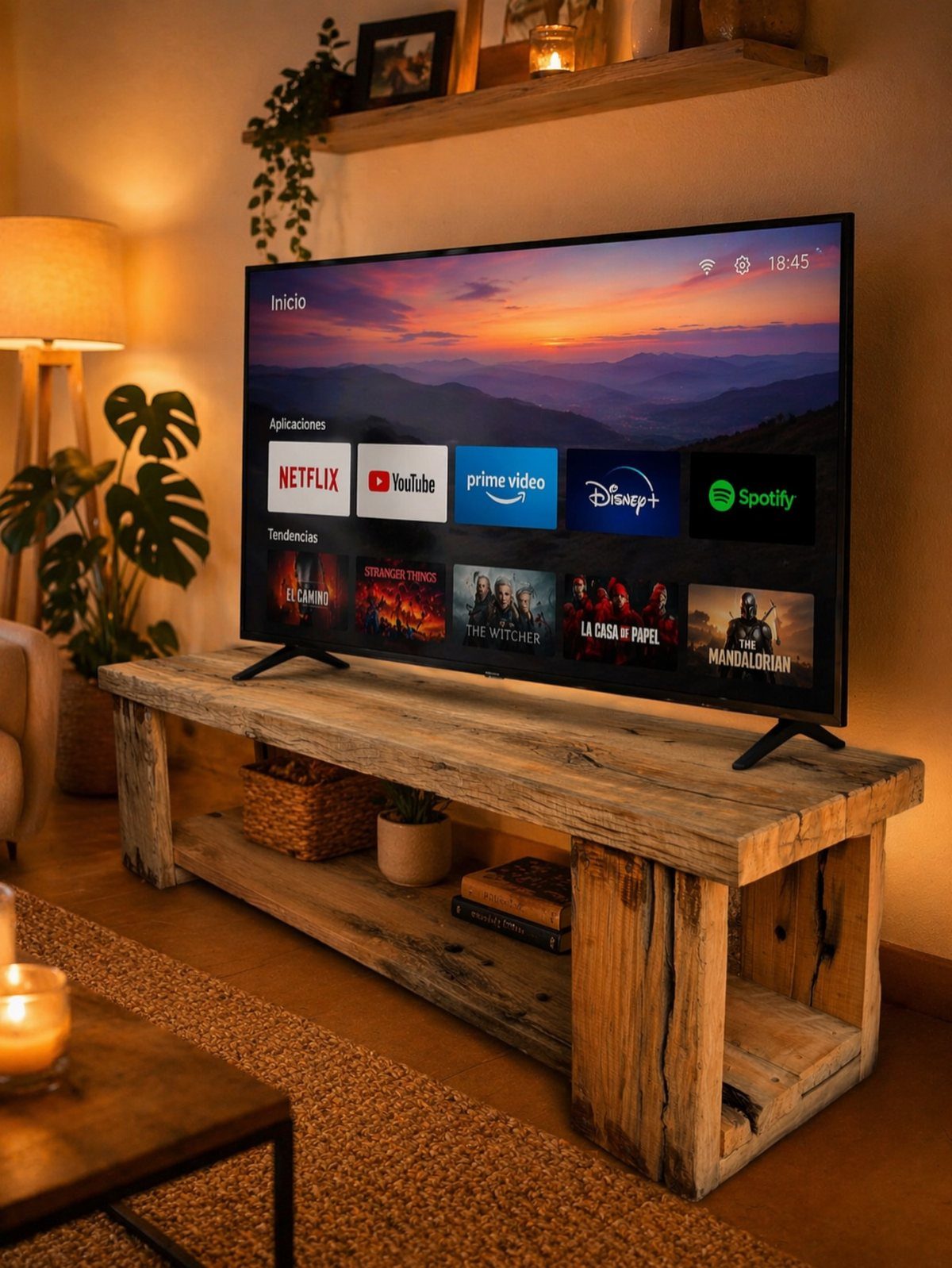
A freestanding wooden console is the easiest TV setup to start with, because it needs no drilling and no mounting.
A wooden stand softens the cold look of a black screen, and a lamp, a plant or a small shelf within arm’s reach makes the whole setup read as furniture instead of electronics.
Pick a console with a top at least as wide as the TV’s stand, so nothing hangs over the edge.
I’d keep the stand’s top uncluttered, with just a lamp or a plant beside the TV so the screen stays the focal point.
38. TV on a Rustic Console
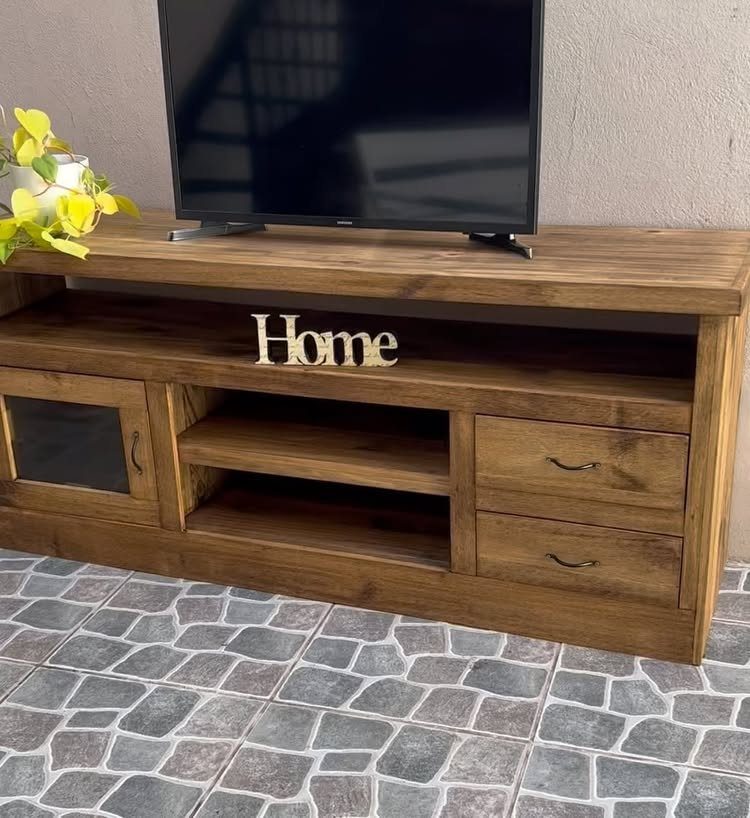
Drawers, open cubbies and a small cabinet in one rustic brown piece give a TV stand three kinds of storage, so every item gets a home that suits it.
Put remotes and cables in the drawers, and keep the cubbies for a few things you like to see. The cabinet takes whatever is left.
A single small sign and a bunch of flowers on top is enough decor; more would crowd the screen. I’d choose this stand for a room where the TV is the only storage you can add.
39. TV with Gaming Lights
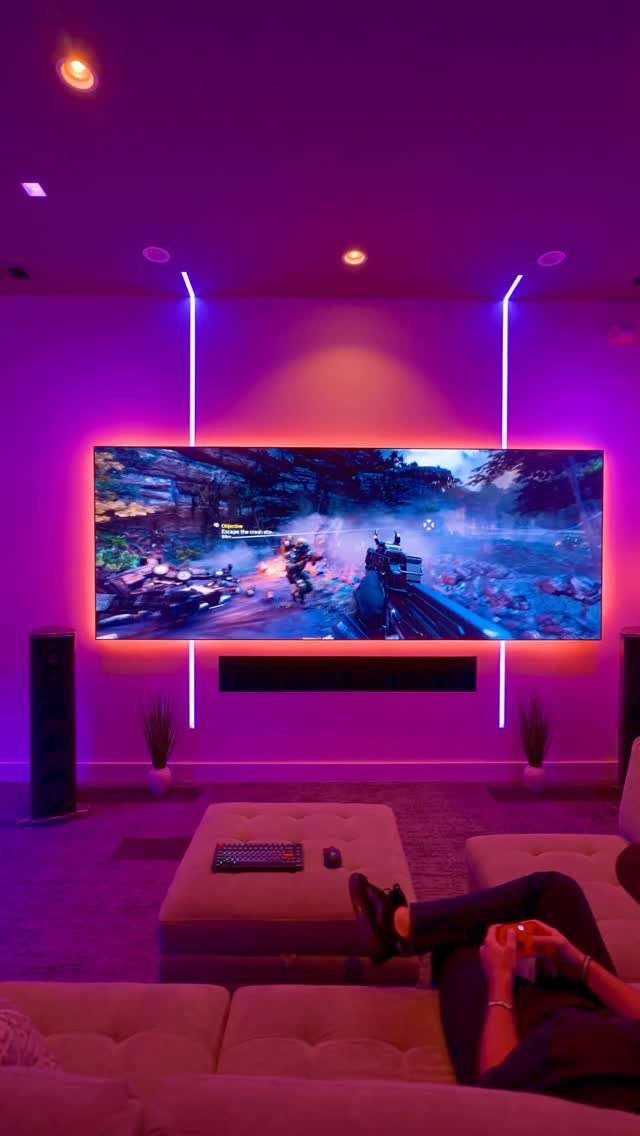
Purple neon behind and around the screen makes a TV area feel like a gaming den, and the light does most of the work.
A soundbar under the screen and a speaker on each side finish the look without adding bulk.
Keep to one light color so the glow stays clean.
I’d dim the room lights while playing, since neon reads best in low light and the screen has less glare to fight. Place the speakers level with the sofa’s seating height.
TV Size and Viewing Height
Match the screen to the room before you pick a stand. A set that is too big for a small room pushes you to sit too close, and a small one gets lost on a large wall.
For height, you have 2 reference points. Sit where you actually watch, and set the center of the screen at your seated eye level.
The lower number suits a TV you watch from a sofa, and the higher one suits a layout where the screen has to clear furniture or sit above a mantel.
Test it yourself. Sit where you usually watch, measure your eye level with a tape, and mark it on the wall with painter’s tape.
Keep the stand a few inches wider than the TV, and check that its height suits the screen size.
TV Placement and Bedroom Use
Higher is rarely better.
If the mantel is tall and above-the-fireplace is the only logical spot, mount it there.
Shifting the TV off to one side to avoid the issue just sets up a tug-of-war between two focal points, and the room never feels settled.
I’d keep the TV out of the bedroom if you can. If it has to go in, choose a sleek wall-mounted unit, add soft lighting around it, and give the remotes and media devices a home in a drawer.
For kids, an hour of TV a day is a sensible limit.
Frequently Asked Questions
How do I style my TV unit?
Keep the open shelves to a short list of things you like, such as a few books, a plant and one or two objects, and put cables, controllers and chargers behind drawer fronts.
Leave about a third of each open shelf empty; two-thirds full still looks styled, while a packed shelf reads as clutter.
How to style a TV in the bedroom?
In a bedroom, a slim wall-mounted unit frees up floor space, a dimmable light strip behind it softens the glow, and a small drawer or basket keeps remotes and streaming boxes out of sight.
Warm light, around 2700–3000K, flatters wood and stays easy on the eyes late in the evening. Hiding the cords behind or inside the unit keeps the room calm.
How to select a TV unit?
Start with the size of your TV, the space you have and what you need to store.
Width comes first: choose a console at least as wide as the screen, then measure the cable box, soundbar and game console so each one fits with about 2 inches to spare.
Then hold a finish sample against your floor to check the match.
What are the best ways to conceal cables from your wall-mounted TV?
Route the cables through the wall, use cable covers, or choose furniture that hides cords.
A sideboard or closed cabinet under the screen works well, because the cords can run down behind it and out of sight. The setup looks finished once nothing dangles.
Can you suggest some cost-effective decor ideas for your TV area?
Paint is the cheapest move: a matte deep green on the TV wall makes the black screen sink into the color, and a can costs little.
Art you make yourself, thrift-store frames grouped into a gallery wall, and a plant or two from a local nursery fill the space around a TV for very little cash.
A console from a thrift store or online resale listing is usually the cheapest route, and a few scuffs or a worn finish only add character.