Glam runs from a few emerald accent pillows to a crystal chandelier, so the first question is how much of the room you’re allowed to change.
Renters get the most from pieces that leave with them, like a large arched mirror leaned against the wall with no drilling, while owners can start overhead.
Gold accents look richest against black furniture, and I’d plan around that pairing either way.
1. Plush Fabrics
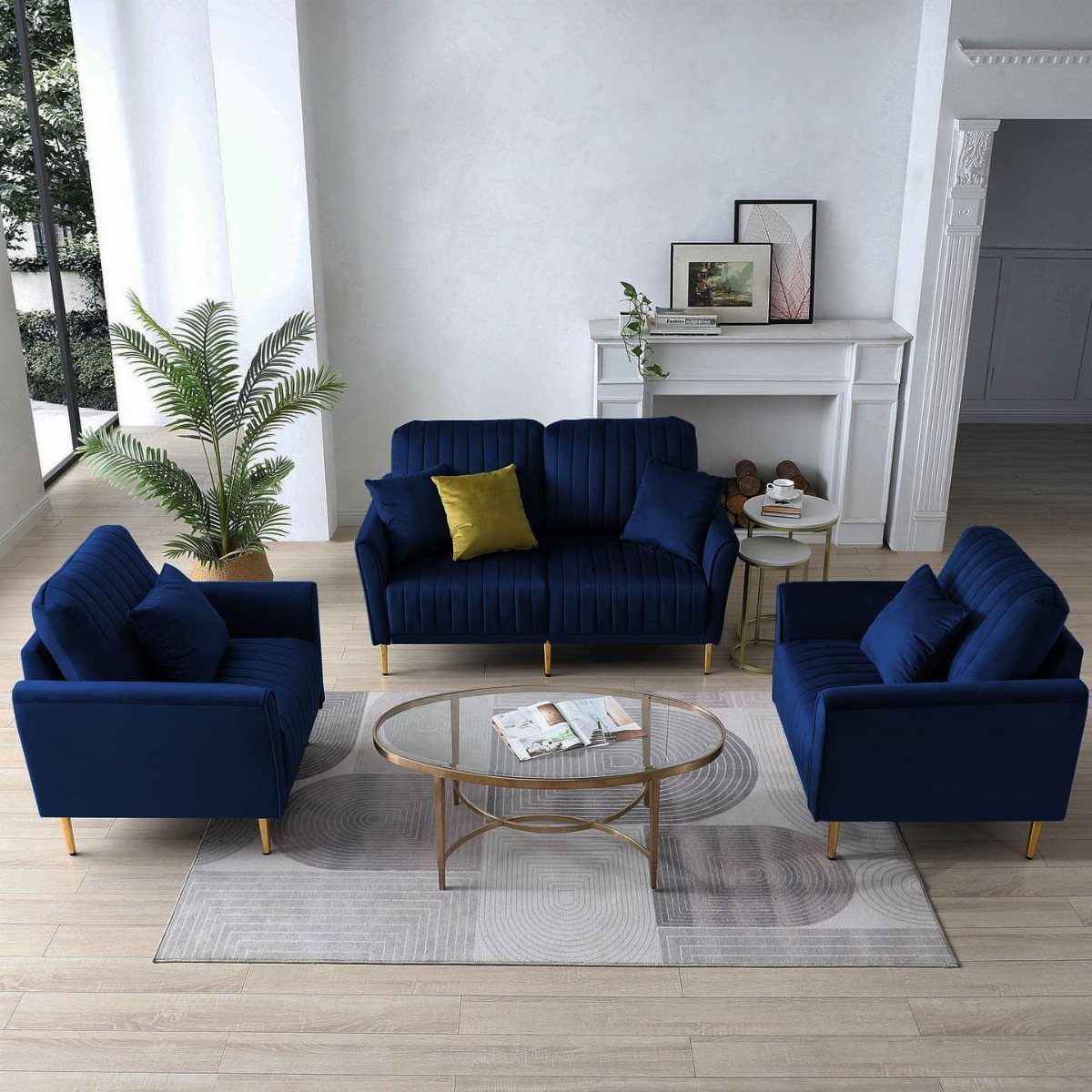
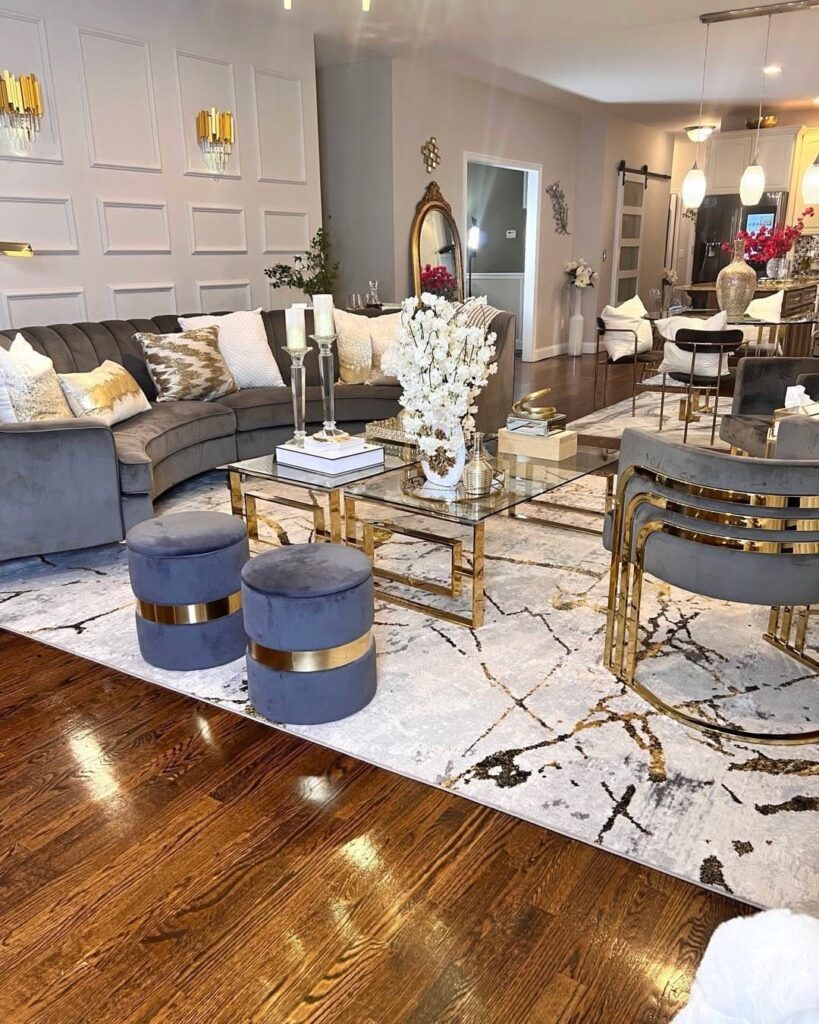
Velvet does the heavy lifting in this room, and the navy against gold legs is a pairing I’d copy exactly. A deep jewel tone hides the nap shifts that lighter velvet shows, so the sofa looks rich from every angle.
Repeat the fabric on two armchairs, as here, and the seating reads as one deliberate set. Keep the rug a plain, quiet grey and let the velvet carry all the texture.
If a full sofa is out of budget, start with a single velvet armchair and build from there.
2. Crystal Chandelier
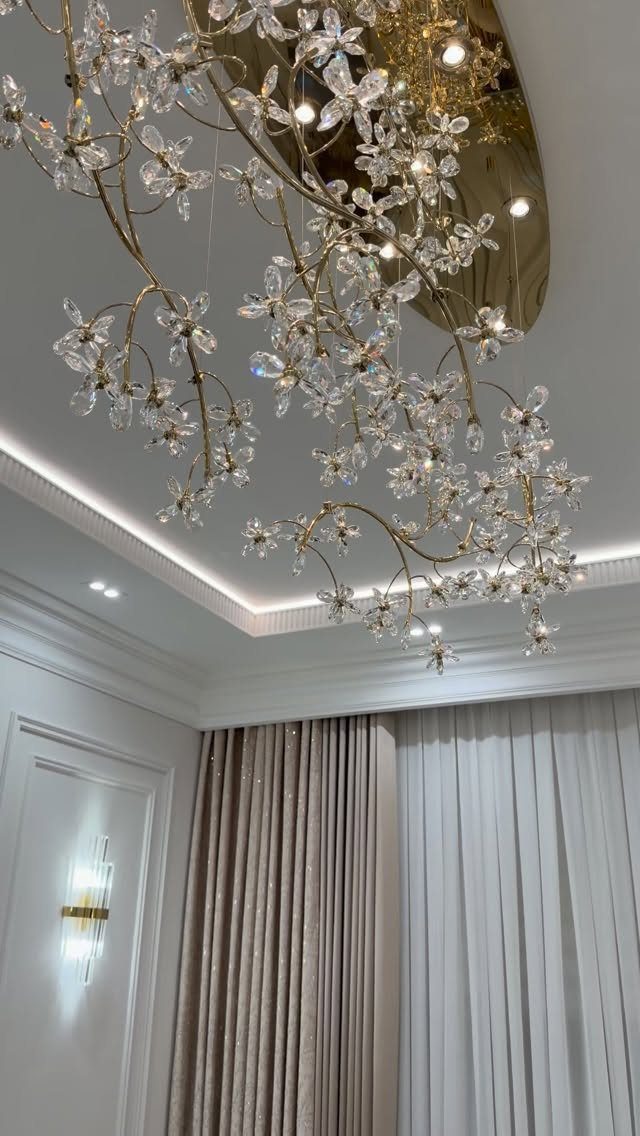
Hang it in the center of the room and it becomes the first thing anyone looks at.
Gold-toned metal suits glam better than chrome, because it warms the crystal and picks up light from the windows. Keep the curtains neutral, as they are here, so the fixture is the only ornate piece overhead.
Replacing a fixture often means wiring, so renters should check their lease before they start.
3. Gold Accents
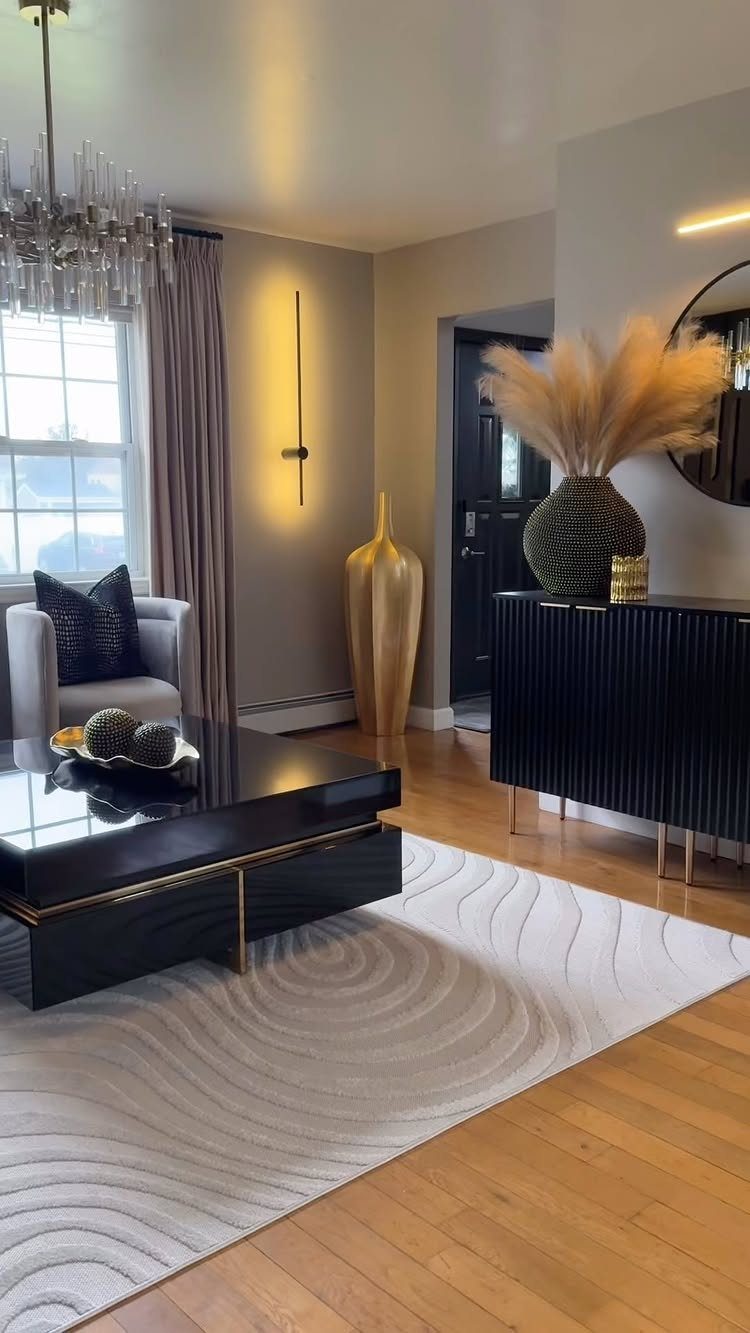
Black furniture makes gold look expensive. A black coffee table and sideboard give a gold vase and a gold wall lamp something dark to stand against, and the metal pops instead of blending in.
I’d stop at 2 or 3 gold pieces in different spots: one low, one at eye level, one on the wall. That spacing moves the eye around the room without turning it into a jewelry box.
A white textured rug keeps the dark and gold from feeling heavy.
4. Oversized Mirror
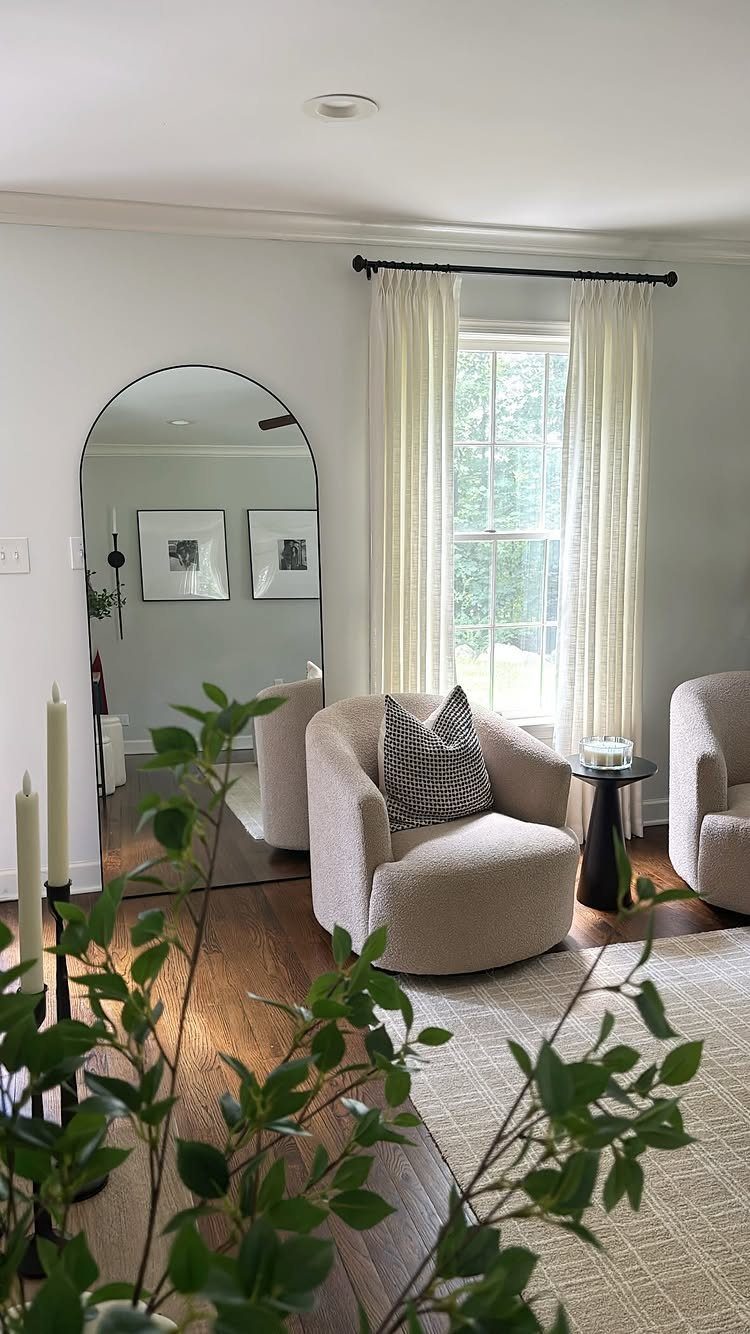
Leaning a large arched mirror against the wall costs far less than hanging one, and it needs no drilling, which suits renters.
The arch softens a room full of straight lines, and the floor-length shape doubles the daylight from nearby windows.
Place it opposite a window or beside one so it reflects something worth seeing, like the plant or curtains, rather than a blank wall.
Choose a thin frame if the room is small, since a heavy one eats floor space.
5. Colorful Sofa
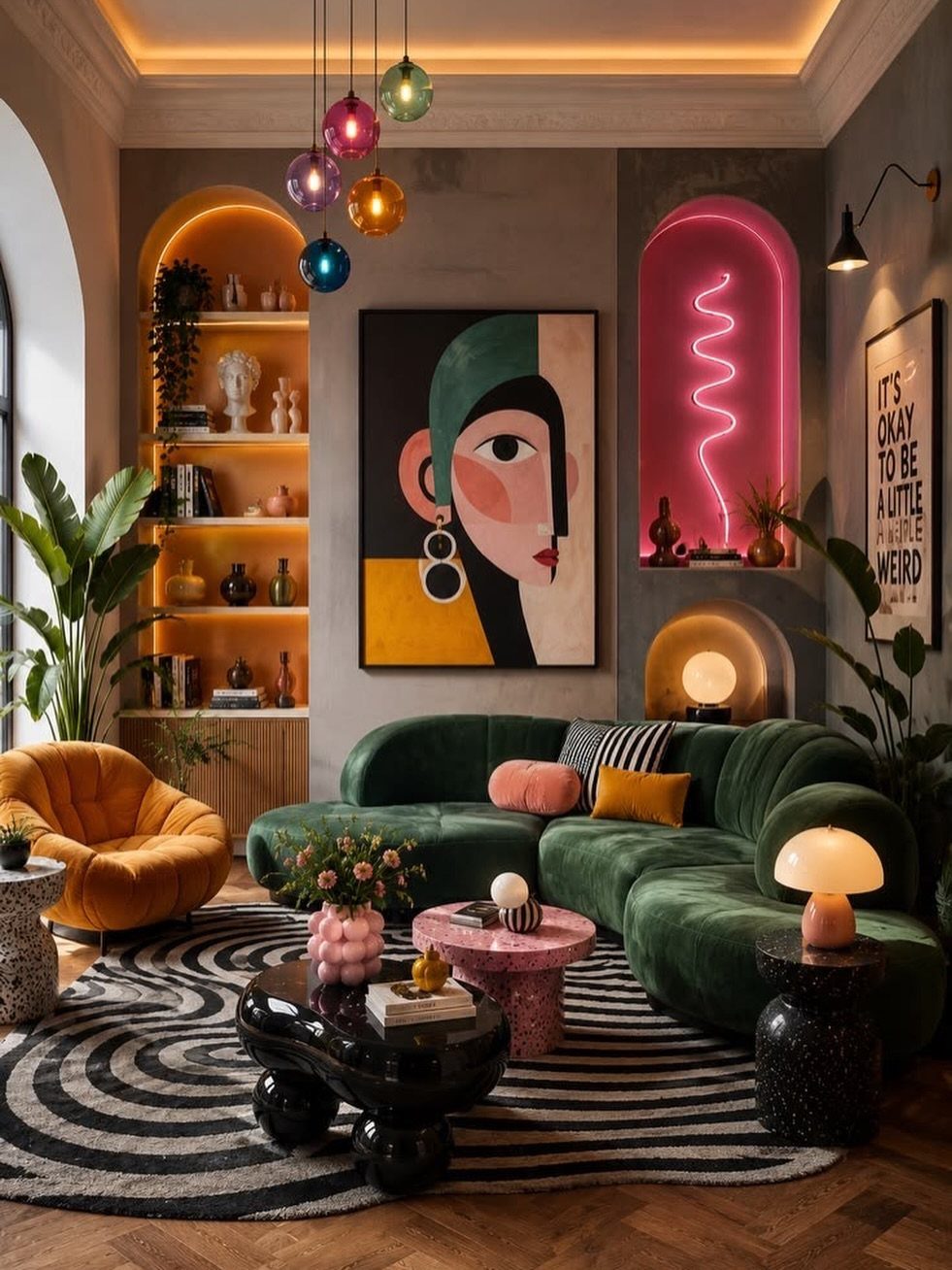
Nobody walks past a curved sofa in emerald velvet without noticing it. Put a colorful sofa in a room that is otherwise black and white, with a black-and-white rug underneath, and the color has room to be the star.
I’d pick one saturated color for the largest piece and keep everything else simple. A loud sofa plus a loud rug plus loud walls turns bold into busy.
Curved sofas need more floor space than straight ones, so tape the outline on the floor before you buy.
6. Emerald Accent Pillows
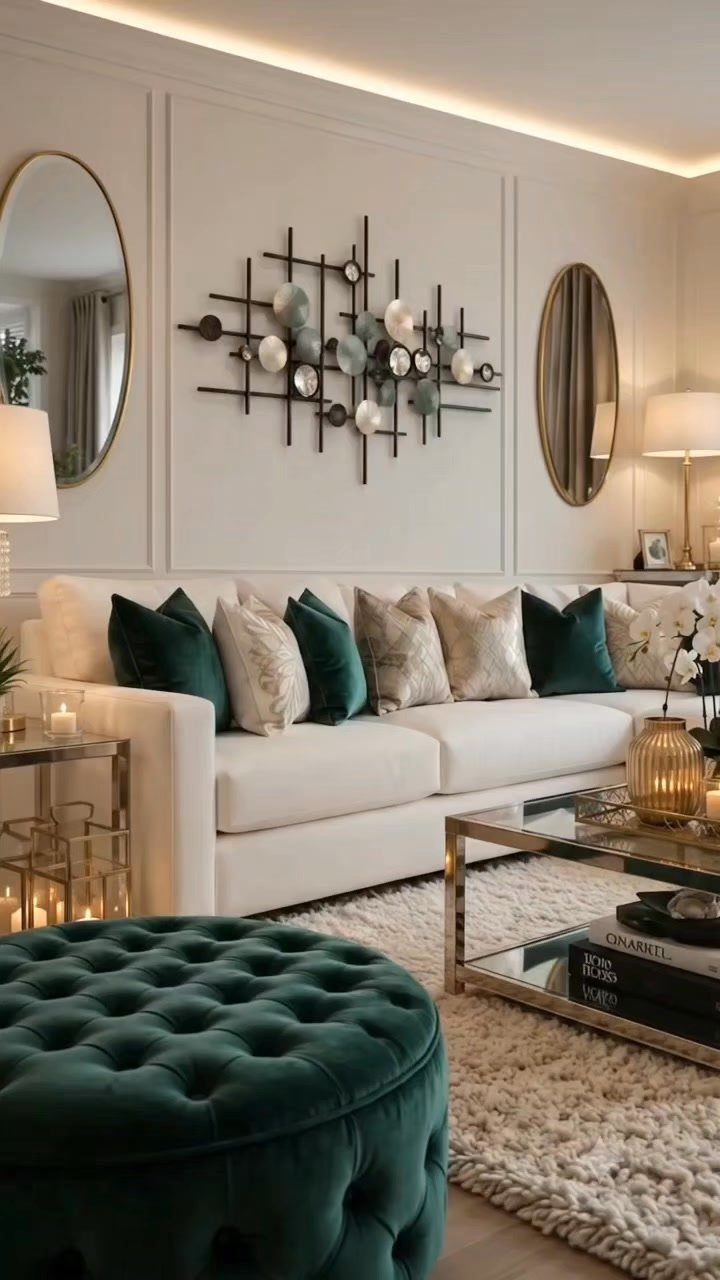
Pillows are the cheapest way to try emerald before committing to a sofa. On a white sofa, 2 or 3 velvet covers in deep green give the strongest contrast for the least money.
Matching the pillows to an ottoman, as here, ties the green together so it looks planned rather than dotted around. I like a tufted ottoman for this, since the texture gives the color more depth.
Buy covers rather than full pillows and you can swap colors when you tire of the green.
7. Natural Stone
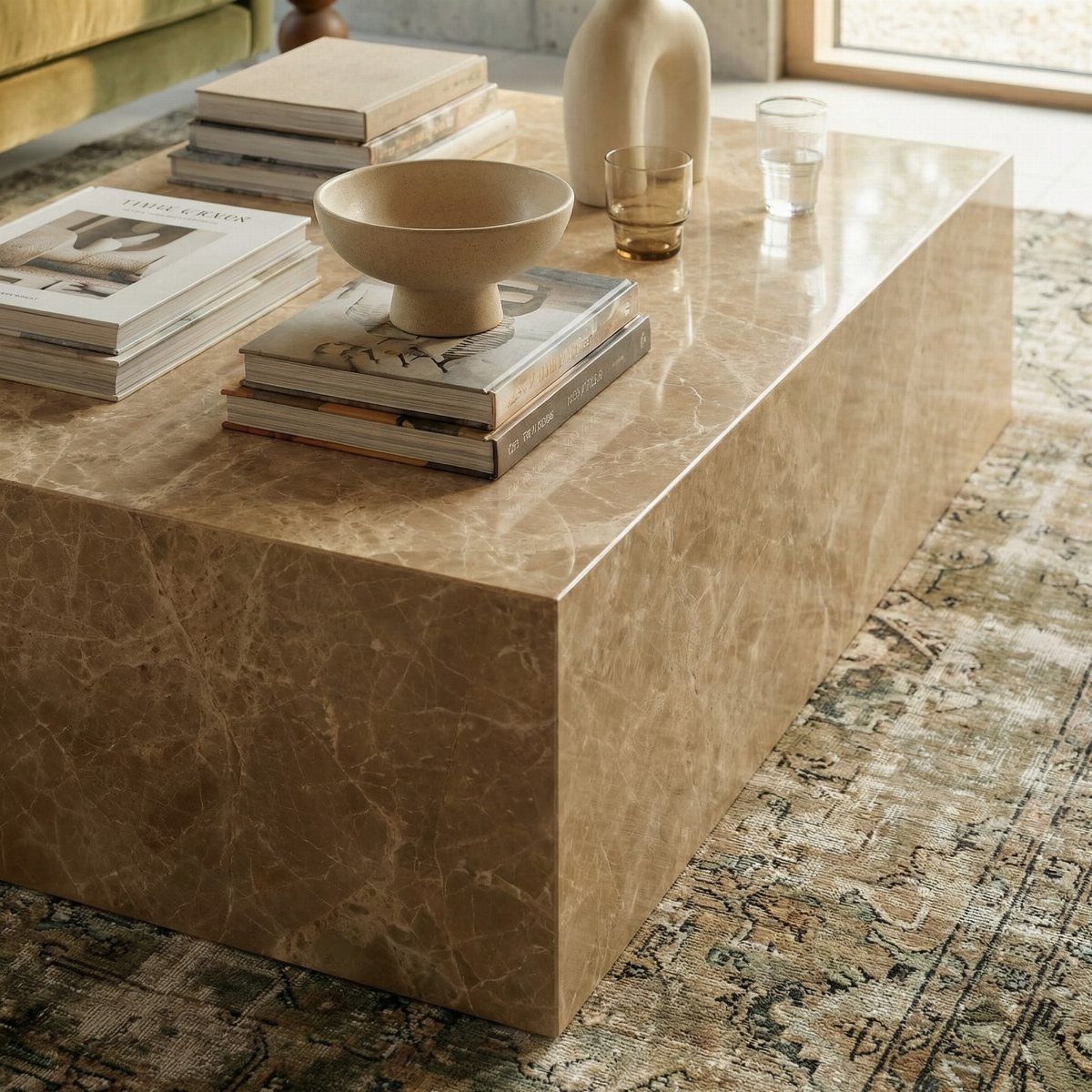
Marble on the coffee table brings weight to a room full of soft fabric. A large rectangular slab in warm brown sits comfortably beside a busy rug, because the stone’s veining stays calm next to the pattern.
I’d keep the styling on top low and grouped: a stack of books, one bowl, one vase. Stone already has plenty to say, so a crowded surface hides it.
If solid marble is out of reach, a stone-look top on a simple base gets you most of the effect.
8. Tufted Furniture
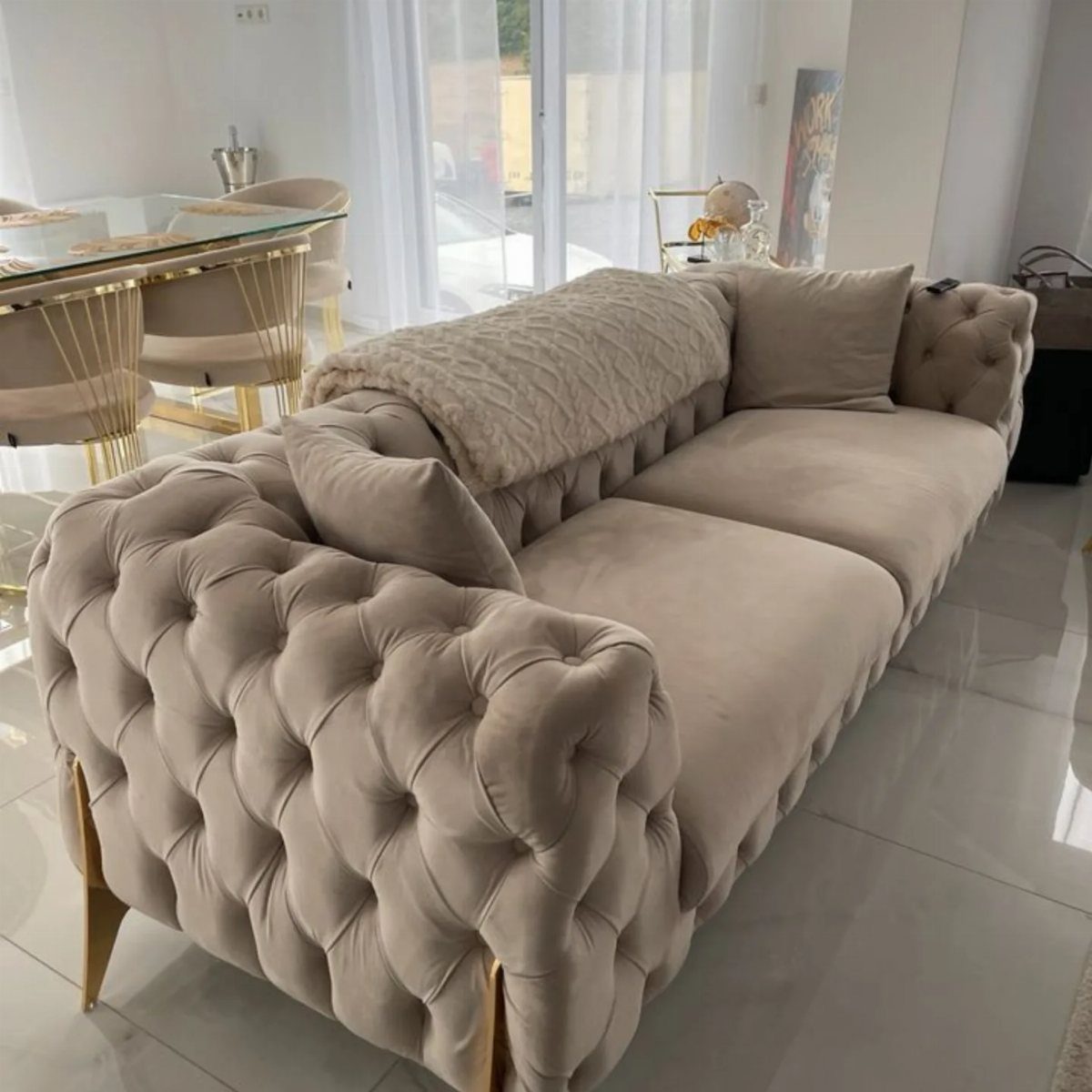
Tufting is the oldest trick in the glam playbook, and a beige velvet sofa shows why it lasts. The buttoned pattern catches light in small folds, so a neutral color still has depth.
Gold legs lift the sofa off the floor and keep it from looking heavy. I’d pick a neutral shade like this when the room has other loud pieces, since the tufting supplies the drama.
Check the seat cushions before you buy.
9. Large Patterns
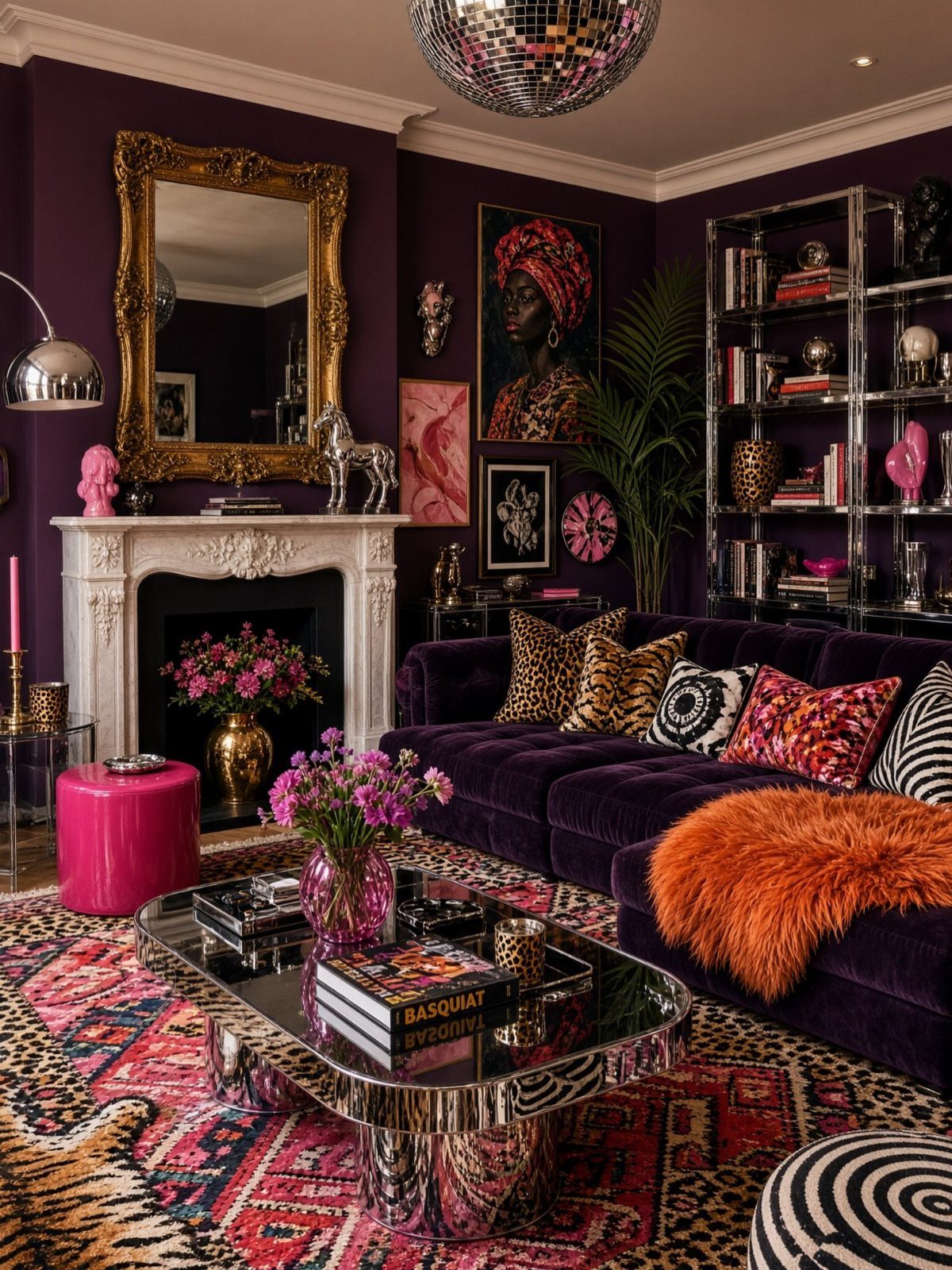
A large-scale pattern works as a graphic anchor, not as background. A big, bold rug under a solid purple velvet sofa gives the eye one clear place to land.
Let the rug be the loudest pattern and keep the other pieces plain or reflective. Mirrored and gold surfaces, as here, bounce light around so the pattern doesn’t swallow the room.
Pick a rug with 2 or 3 colors that already appear in your walls or sofa, and the maximal look stays organized.
10. Long Drapes
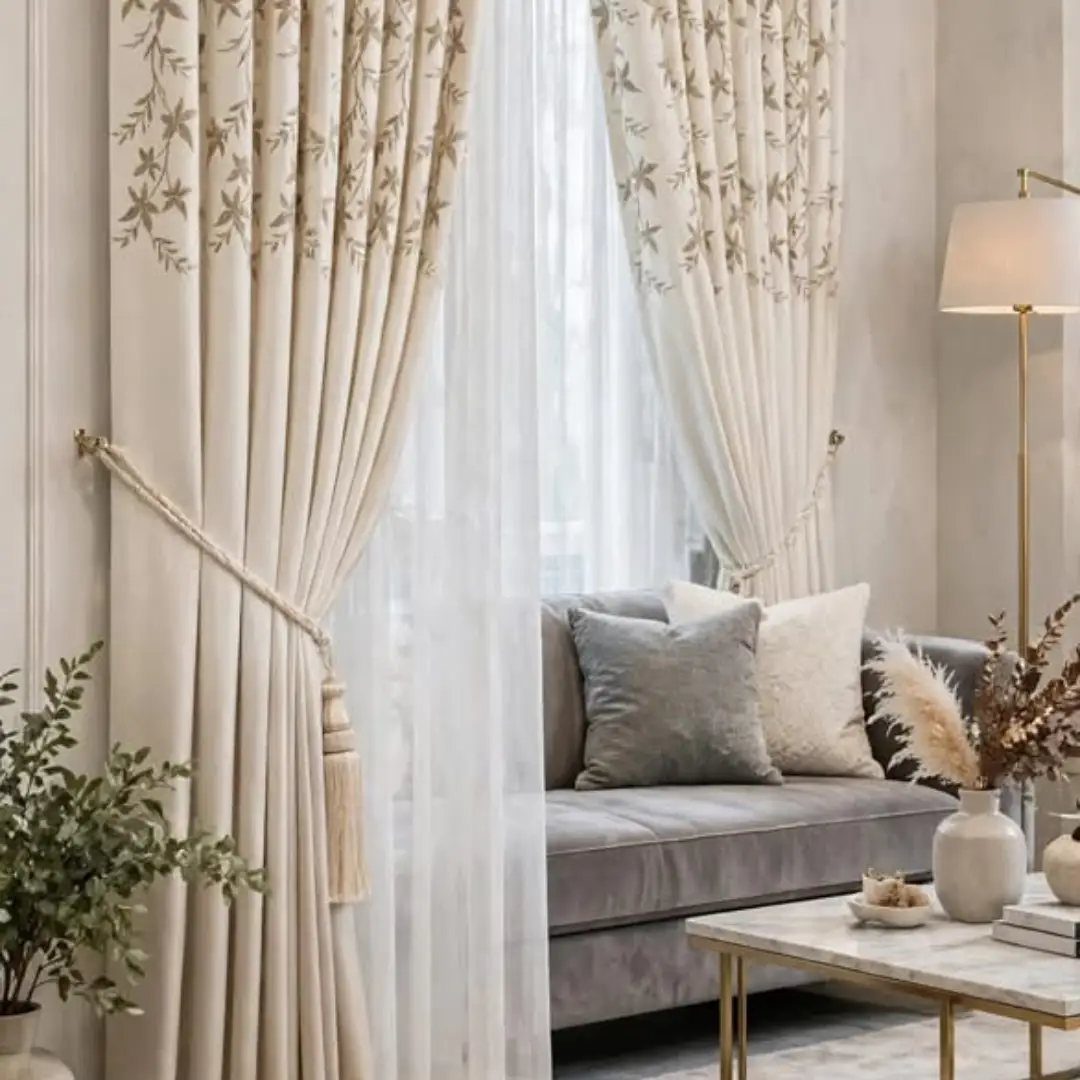
Hang the rod close to the ceiling and let the panels fall all the way to the floor. That single move makes a room look taller than any paint color will.
Cream curtains with a large floral print add pattern without darkening the room, and tiebacks keep the window open to daylight. Choose fabric with some body so the folds hold their shape.
Buy panels wider than the window, since full, gathered fabric looks richer than flat fabric pulled tight. Skimpy curtains undo the whole effect.
11. Black Furniture and White Walls
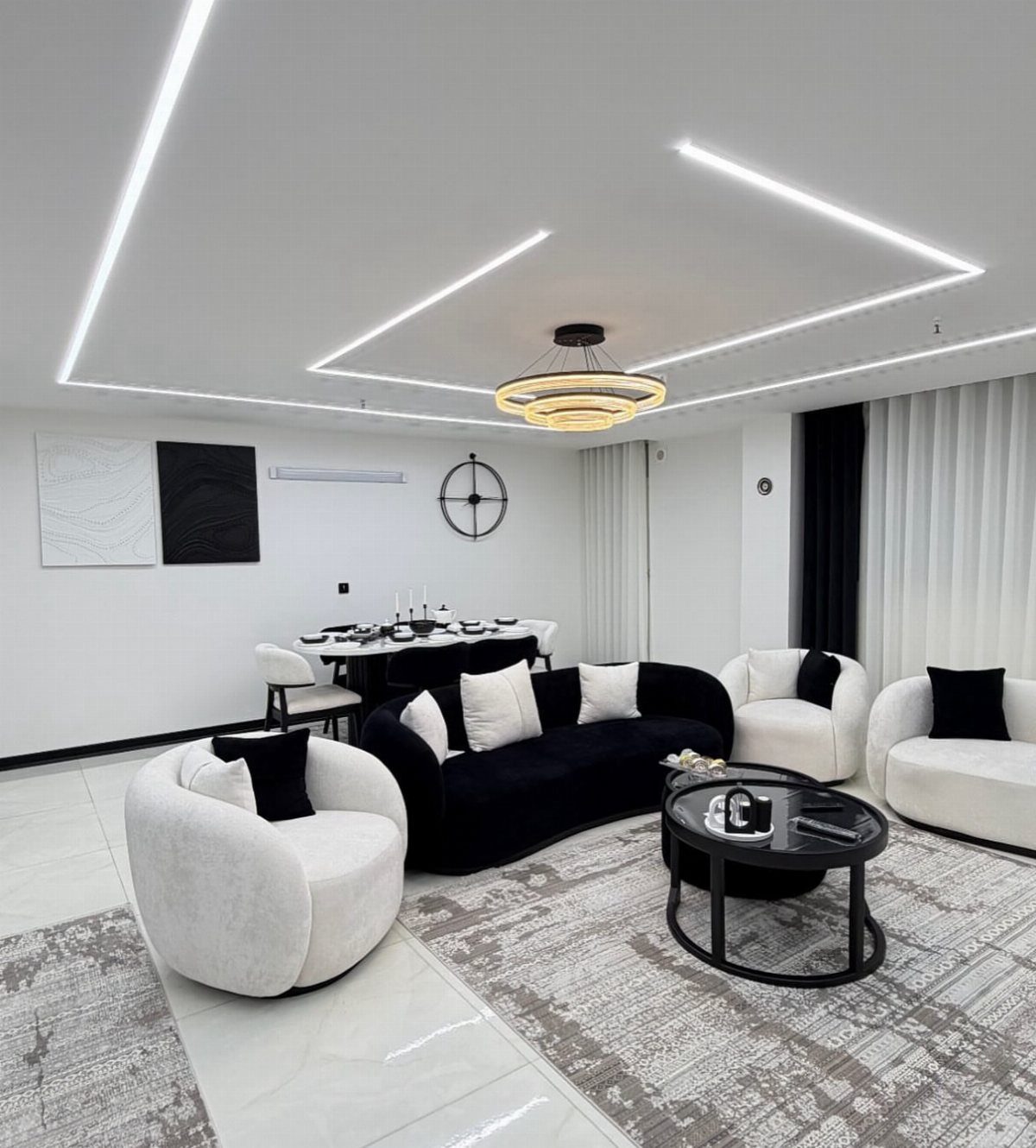
Black against white is the sharpest contrast you can build, and the black pieces need a shape worth looking at to carry it. A curved black sofa against plain white walls reads as sculpture.
White swivel chairs across from it keep the room balanced, so the dark doesn’t take over. A black coffee table repeats the color without adding another new one.
I’d add one warm metal, like the gold chandelier here, so the palette doesn’t feel cold.
12. Animal Print Rug
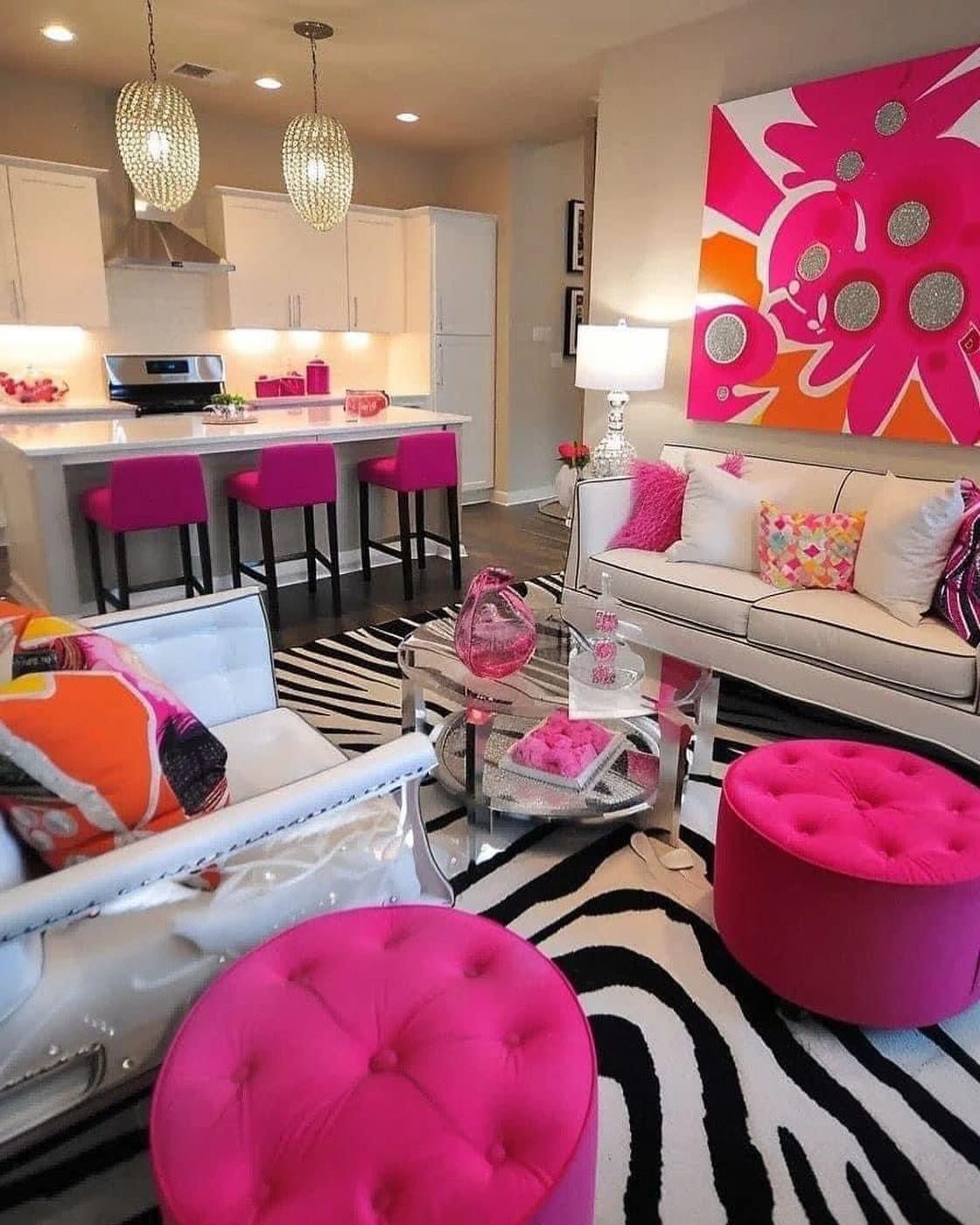
Zebra print is the loud choice, and I like it most under quiet furniture. A white sofa lets the stripes do the talking, and the black-and-white pattern gives hot pink a neutral partner so the color looks planned.
Repeat the pink on two or three pieces, such as ottomans and chairs, then stop. One strong print and one strong color is a complete scheme.
Pick a rug large enough that the front legs of the seating sit on it.
13. Brass Accent Furniture
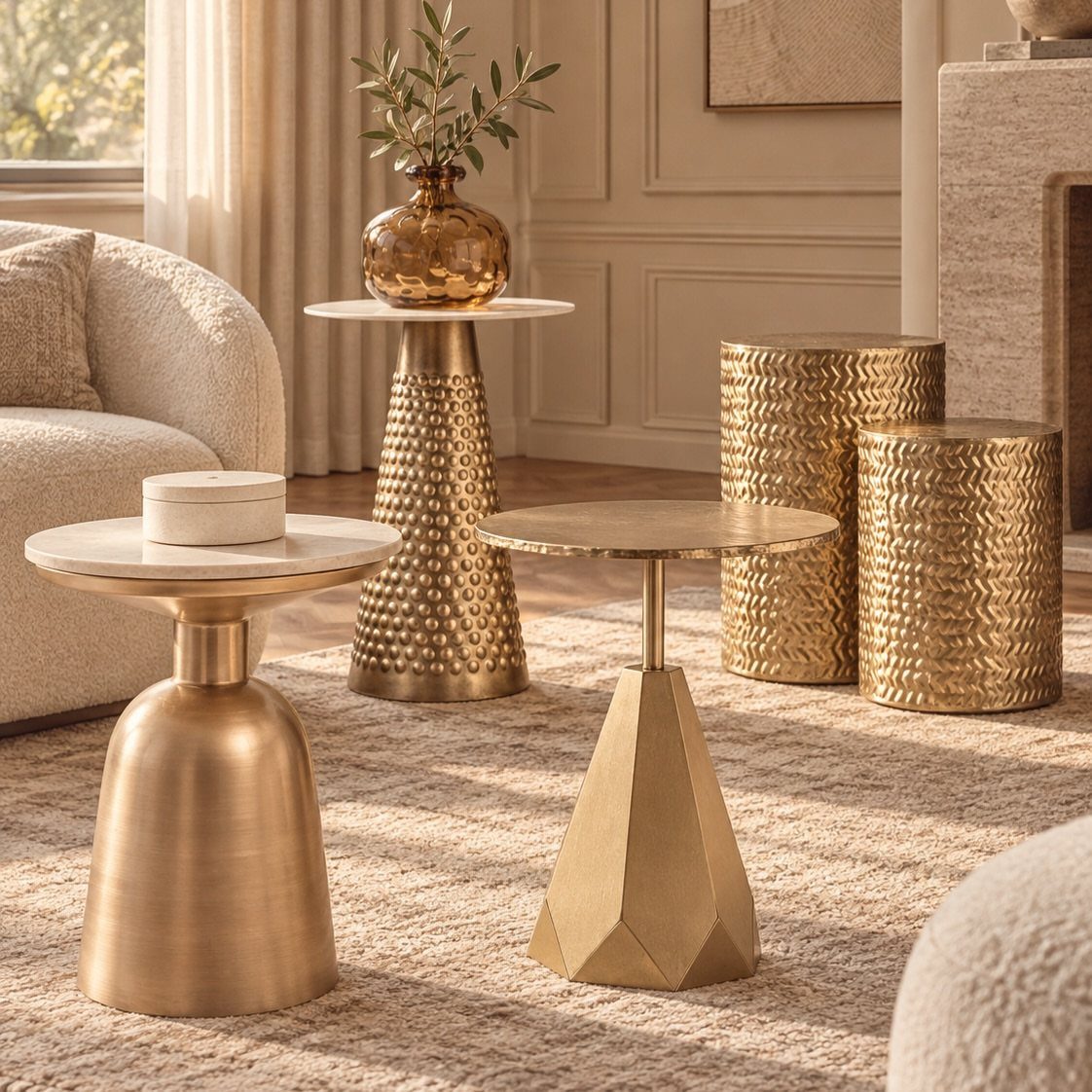
Side tables in brass let you bring the metal in at a smaller scale than a sofa or a coffee table.
A cluster of 4 in different shapes and textures reads as a collected group, and the shine bounces light across a neutral rug without crowding the seating.
I’d mix the silhouettes (round, square, a slim drum) and keep the finish the same, so the variety comes from form and not from clashing metals.
Set them at slightly different heights near the sofa and they double as spots for a lamp or a drink.
One brass table is enough to start if the budget is tight.
Balance Glamour with Function
Start with how the room actually gets used: relaxing, family time, entertaining, watching TV, reading, socializing. Whatever is on that list should set the seating and layout before any glamorous finish goes in.
Clean-lined furniture keeps glam from turning fussy, because the rich materials can do the talking on a simple shape. Cut back on accessories until you can still set down a drink and find the remote.
Plan for the unglamorous parts early. Electronics and remotes need media storage, and it helps to know whether the room relies on overhead or recessed lighting before you choose lamps.
If the room has an awkward layout or an odd architectural feature, a metallic accent in gold, silver, or rose gold gives the eye somewhere better to land.
Calm neutrals keep the drama in check, and marble beside matte black finishes shows how well that balance works.
Choose a Glam Direction
Settle on a mood before you buy anything, because glam runs 2 ways: soft and understated, or dark and dramatic.
A neutral foundation supports both. Add pastels on top for a gentle room, or rich, moody jewel tones for an opulent one, and commit to one direction so the room has a clear mood.
The walls carry a lot of that mood. One oversized piece of art, or a single bold object on the wall, gives the eye somewhere to land, and wall sculptures or textured panels add depth without using any floor space.
A cluster of smaller framed prints or photos, hung close together, brings more movement to the wall. Lay the pieces out on the floor first and adjust until they relate in color and spacing.
Frequently Asked Questions
What is glam home decor and what does a glam living room look like?
Glam decor is a luxurious, dramatic style built on plush fabrics like velvet, shiny metals such as gold or brass, and mirrors or crystal that bounce light around.
A typical glam living room has a jewel-tone or tufted velvet sofa, a few gold pieces against dark furniture, and either a bold rug or a sharp black-and-white contrast.
It’s glitzy on purpose, but it looks best when one element is loud and the rest stays quiet.
How do I start designing a modern glam living room?
Pick a mood before you buy anything, because glam goes one of two ways: soft and understated, or dark and dramatic.
Build on a neutral base, then add pastels for the gentle version or deep jewel tones for the opulent one, and stick with that single direction.
Think about how the room gets used (TV nights, reading, guests), because that decides the seating and layout well before any glossy finish comes in.
What furniture is essential for a modern glam living room?
A velvet sofa is the anchor, either in a deep jewel tone or in a tufted neutral with gold legs.
Add a coffee table in black or marble, a large mirror leaned against the wall to double the daylight, and brass side tables in mixed shapes set at slightly different heights.
Clean-lined shapes keep the look from turning fussy, and the room still needs media storage for electronics.
Can I create a modern glam living room on a budget?
Yes, and the cheapest route is to start small.
One velvet armchair costs far less than a full new sofa; add 2 or 3 emerald velvet covers to a white sofa and lean a big arched mirror on the wall, no drilling required.
A simple base with a stone-look top gets you most of the marble effect for less, and a single brass side table brings in the metal.
What makes a modern glam living room work?
Restraint. Edit the accessories down until there’s still room for a drink and the remote; rich materials in simple shapes carry the look.