

Calacatta Viola is a real marble, creamy white with burgundy, violet and wine-dark veining, quarried in the Apuan Alps of Tuscany.
It is porous calcite, so it needs a penetrating sealer before and after installation, then a fresh coat every 6 to 12 months, and acids like lemon juice and wine will still etch it.
Calacatta Viola Characteristics
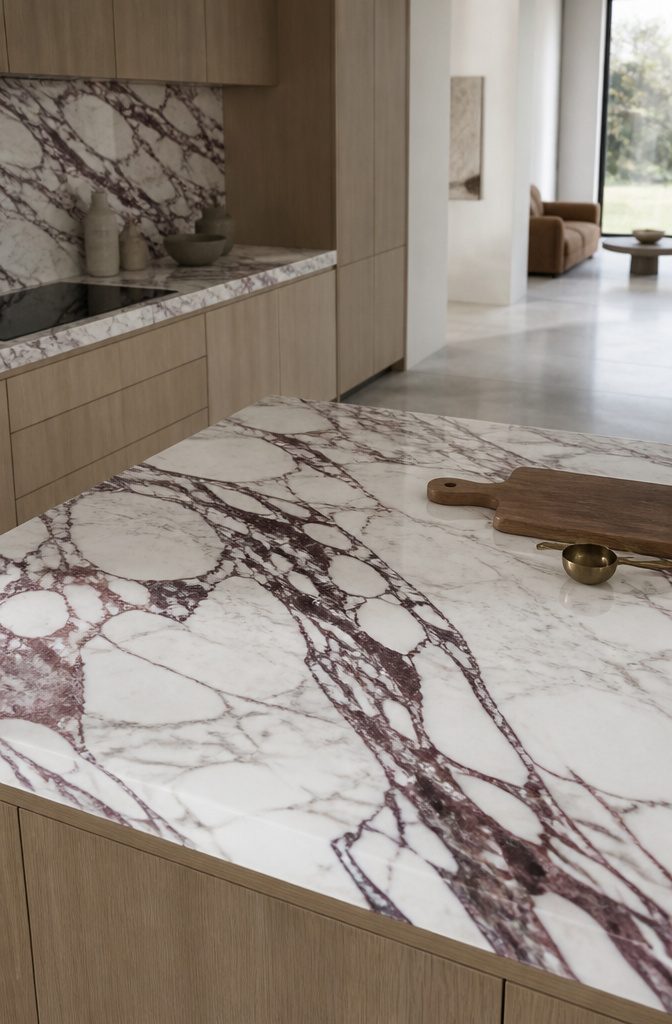
Calacatta Viola is a creamy white stone crossed by deep burgundy, violet and wine-dark veining, and no two slabs run the same direction or carry the same weight.
Set it beside Carrara, which is grayer with subtle veins, and the difference is plain: Carrara whispers, Viola announces itself.
It is real marble, 100% natural stone. It comes out of the Apuan Alps in Tuscany, and some suppliers list the Carrara region as its source.
Because the color is in the stone rather than printed on it, buy from the actual slab, not a sample chip, since the veining varies so much.
Maintained properly, it is durable enough for a working kitchen.

NATURAL MARBLE TRAY: HESHIBI tray is made of 100% high quality marble, safe and durable with smooth surface and easy to clean. Beautiful coloring of natural marble, each with a different texture

100% Natural Marble - Carved from solid Calacatta Viola Pink marble, never resin or ceramic. Blush pink with violet veining. No two pieces are exactly alike.

Solid Natural Calacatta Viola Marble Construction: Crafted from solid natural Calacatta Viola marble with a polished, glossy finish, this bathroom countertop organizer showcases distinctive purple and white veining. As a natural stone, each piece has its own one-of-a-kind veining pattern, making your countertop accent truly unique. Smooth curved edges add a streamlined, modern look that complements bathroom, vanity, and kitchen decor
Kitchen Applications
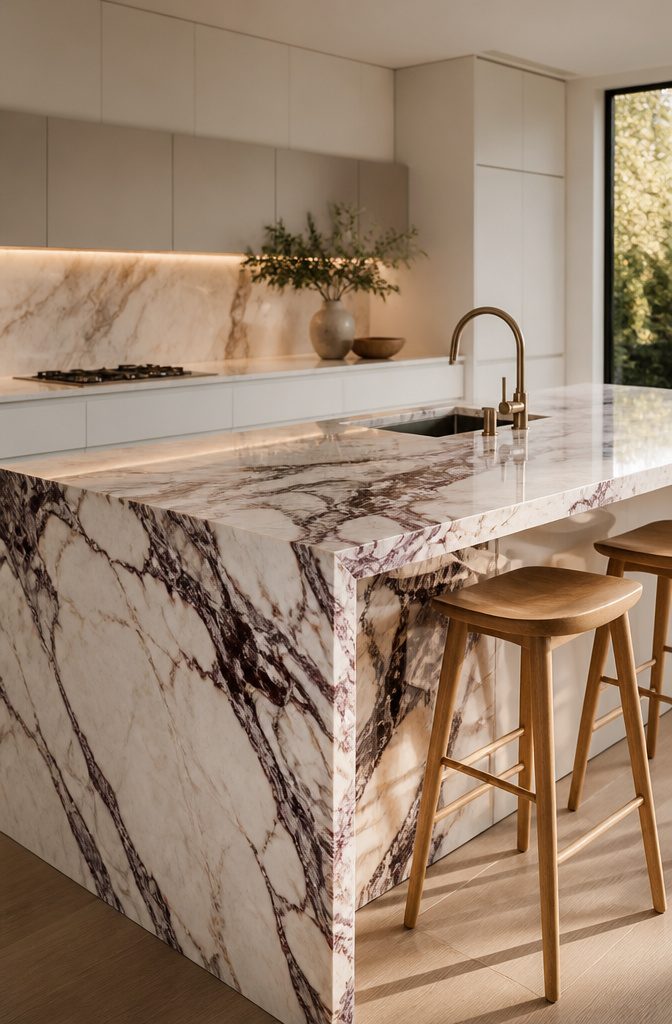
Calacatta Viola works best as the one loud surface in the room, and the three places it earns that role are the countertop, the backsplash and the island.
An island is my pick: a single slab-sized piece of white stone with violet veining gives the eye one place to land, and everything around it can stay quiet.
Slabs come in 2 cm (¾ inch) or 3 cm (about 1 ¼ inches). The thicker cut gives a heftier edge on an island, while 2 cm suits a backsplash or a run of counter where you want a slimmer line.
The look holds up from modern to traditional.
Flat-front cabinets let the veining read as art, and paneled cabinets give it a classic setting. Some suppliers also use it in wine cellars, on staircases and in powder rooms.

On very porous surfaces like Travertine, use 511 Porous Plus.

SEAL & PROTECT YOUR VALUED STONE SURFACES: Keep your countertops and natural stone surfaces looking like new by protecting and sealing them with Weiman Granite & Stone Sealer Spray.

MAXIMUM STAIN PROTECTION: Granite Gold Sealer creates a protective barrier that resists soil build-up and stains from oil, water, coffee, wine, and other everyday spills; ideal for natural stone countertops, sinks, floors, grout, and other stone surfaces
Pairing With Other Materials
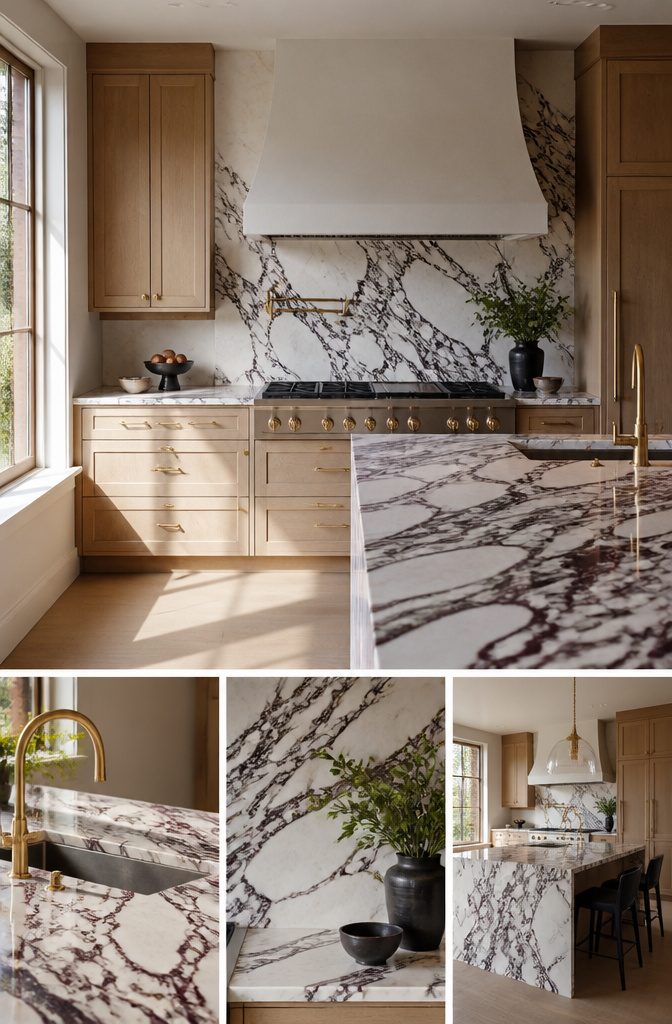
Natural oak is the pairing I’d pick first for a viola marble kitchen.
The grain gives the wine-colored veining something grounded to push against, and a light wood keeps the room from going heavy, so the stone can pop without taking over.
Brass or gold faucets and pulls come second.
They pick up the warmth hidden in the veins and add a brightness that balances the stone’s moody contrast. Polished or brushed both work.
Neutral cabinetry is the safest route, since it lets the veining take center stage. Deep reds or greens make a bolder statement, though they compete with the marble if you add them to every surface.
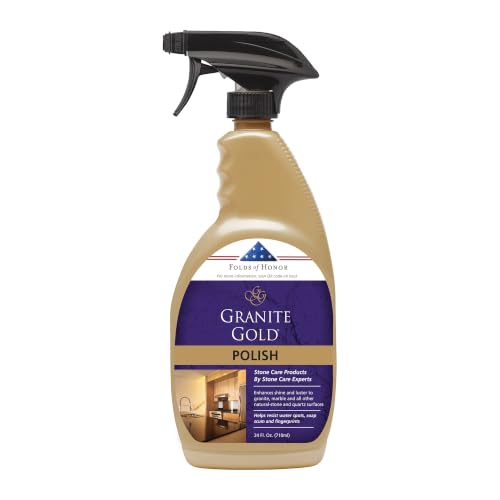
Granite Gold Polish quickly and easily enhances the shine and luster on granite, marble, travertine and all other natural-stone and quartz surfaces, and provides ongoing protection against water spots and fingerprints

Transform the look of outdated countertops with a faux marble kit

Contains (1) 28 ounce bottle of granite cleaning spray
Maintenance Requirements
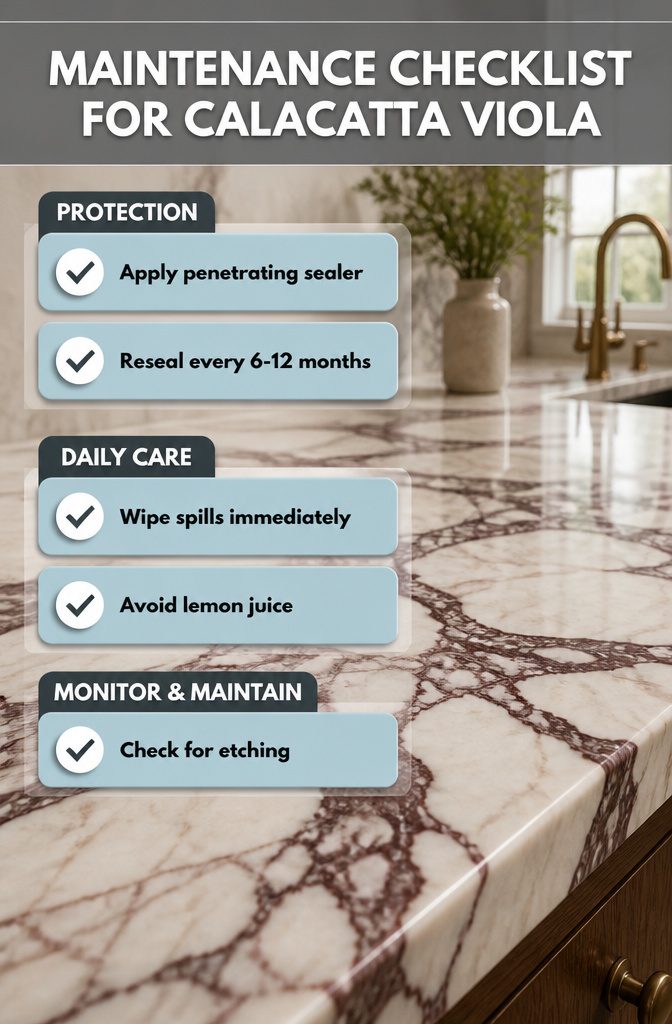
Calacatta Viola is porous calcite stone, so it needs a penetrating sealer before and after installation, then a fresh coat every 6 to 12 months in a busy kitchen.
Red wine, turmeric and oil are the usual culprits, and a sealed surface buys you the minutes it takes to wipe them up.
Etching is a separate problem, and no sealer fixes it.
Lemon juice, vinegar and wine eat the polish and leave dull spots, so wipe those spills right away with a damp cloth rather than letting them sit while you finish dinner.
I’d call this the honest price of the stone. Burgundy veining like this is rare and expensive, and it asks for habits a laminate counter never would.
If you cook with citrus daily and hate fuss, I’d pick something else. If you’ll reseal once a year and wipe as you go, it can last decades.

TIMELESS CALACATTA MARBLE — Elevate your walls with the sophisticated, bright beauty of Calacatta White Marble. Our tiles feature high-definition 3D textures that capture the classic grey veining and pristine white background of premium stone. A stunning choice for any Accent Wall.

Thicker Design: Backsplash tile peel and stick are designed with 2.5mm thicker, durability and solidity, provide higher quality peel and stick tiles

Finished in a smooth polish and set on two small feet, this marble tray with legs brings a subtle sense of elevation to everyday surfaces—quiet enough for a bedroom nightstand, present enough for a living room side table.
Design Trends for 2026
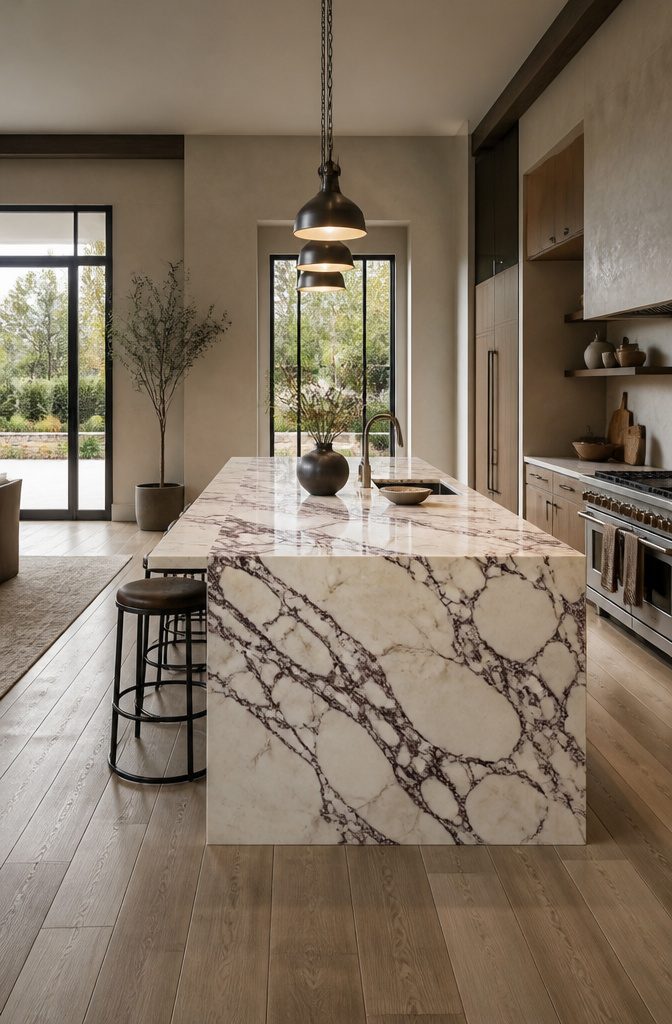
Calacatta Viola’s rise points to a larger shift: kitchens for 2026 are moving away from strictly minimalist looks toward stone with color, texture and a sense of history.
The stone’s creamy white ground and burgundy, violet and wine-dark veining give a kitchen something a plain quartz slab can’t, and every slab runs differently.
Kitchens, Bedrooms & Bathrooms magazine named it the worktop of 2025, and designers and homeowners are now choosing richer, more decorative natural materials over restraint.
I’d treat that as permission to make the stone the one loud element in the room. Let it set the tone, then quiet the fixtures and furniture around it, because a kitchen with two statements tends to argue with itself.
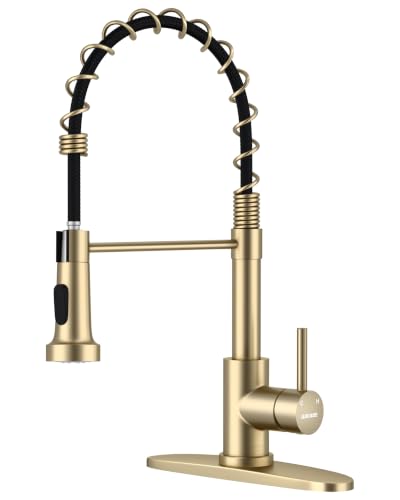
A perfect fit kitchen faucet -Your gold kitchen faucet features an industrial kitchen faucet open spout, compact 17” height fits under most cabinets. 10 inches deck plate included, one hole kitchen faucet or 3 hole kitchen faucet available.

💧𝐂𝐨𝐧𝐯𝐞𝐧𝐢𝐞𝐧𝐭 𝐏𝐮𝐥𝐥-𝐃𝐨𝐰𝐧 𝐒𝐩𝐫𝐚𝐲𝐞𝐫: The 14-inch pull-down sprayer makes rinsing dishes, washing food, and cleaning countertops effortless. The Avsiile stainless steel kitchen faucet perfect for filling deep pots or large containers. Enjoy precise water control and increased efficiency in your daily tasks.

Product Specifications: The Forious kitchen faucets has an overall height of 18.9 inches and a spout height of 6.89 inches. Its larger size is designed to meet the needs of kitchens with spacious sink
Polished vs. Honed Finish
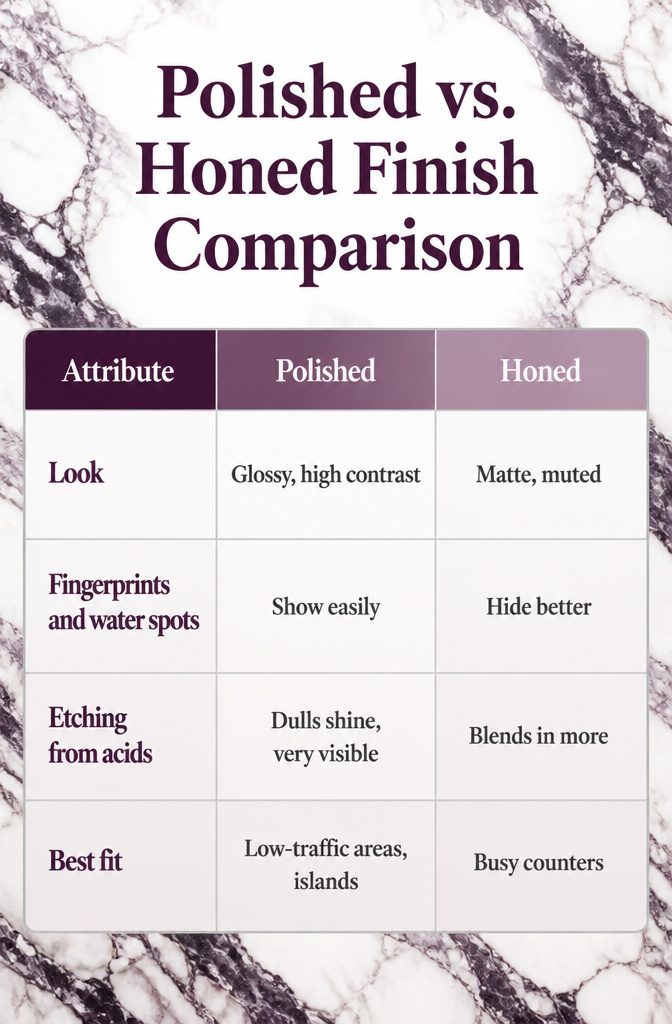
Polished stone reflects light, so the veining in a Calacatta Viola slab looks deeper and the purple and gray tones read stronger.
Honed stone scatters that light, which softens the color and gives the slab a calm, flat look. Both behave differently once you start cooking on them, so I’d compare them side by side before choosing.
| Attribute | Polished | Honed |
|---|---|---|
| Look | Glossy, high contrast | Matte, muted |
| Fingerprints and water spots | Show easily | Hide better |
| Etching from acids | Dulls the shine, very visible | Blends in more |
| Best fit | Low-traffic areas, islands | Busy counters |
For a working kitchen, honed wins. Etch marks from lemon juice or wine are hard to avoid on any marble, and a matte surface hides them far better than a mirror finish does.

NATURAL CALACATTA VIOLA MARBLE – This marble organizer is crafted from natural stone with distinctive purple and gray veining. Every piece is one-of-a-kind; veining and color balance vary naturally, making your shelf a functional sculpture, not a repeated faux-marble pattern.

Our vanity trays are made of high-quality genuine Calacatta Viola natural marble. We provide diversified classic styles to match all home decoration layouts. Each marble piece has unique natural purple-red flowing veins, so every tray is exclusive and cannot be duplicated. Solid natural marble features high hardness and premium texture, far superior to artificial imitation marble, easily enhancing the elegant texture of your room.

🪨 GENUINE CALACATTA VIOLA MARBLE: Crafted from solid natural stone with a creamy white base and distinctive burgundy, gray and charcoal veining. Color tone, pattern and mineral markings naturally vary from piece to piece, giving every tray its own appearance.
Dark Cabinets vs. Light Wood
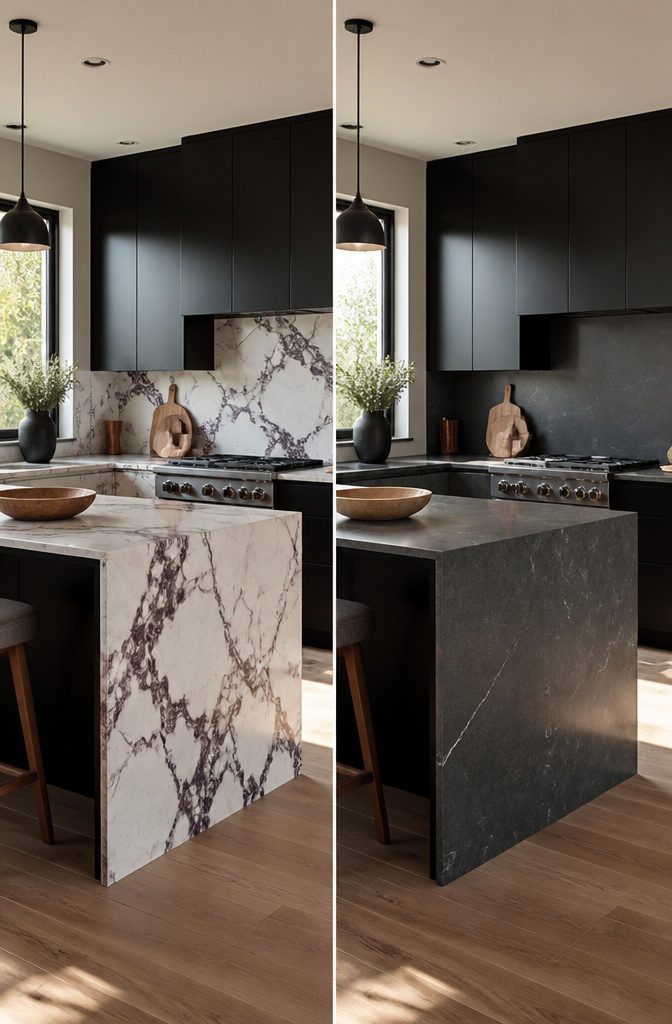
Matte black or deep aubergine cabinets absorb light, which makes the white in Calacatta Viola look brighter and the burgundy and grey veining look deeper.
The result is dramatic and a little nocturnal, and it suits a kitchen where you entertain in the evening.
It also puts a lot of weight on the room, so the stone has to carry real contrast to avoid disappearing into the dark.
Natural oak does the opposite.
Its warm, soft grain steadies the marble’s wine-colored movement, and the room stays light enough that the stone reads without overwhelming anything. That is the organic modern look people are after.
I’d pick light oak for most home kitchens, especially if the room is small or dim. Save the dark cabinets for when you want drama and are fine with a heavier room.

Long-Lasting Protection – Shields stone and grout from water, soap scum, and calcium for up to 10 years.

Bookmatching and Fluted Details
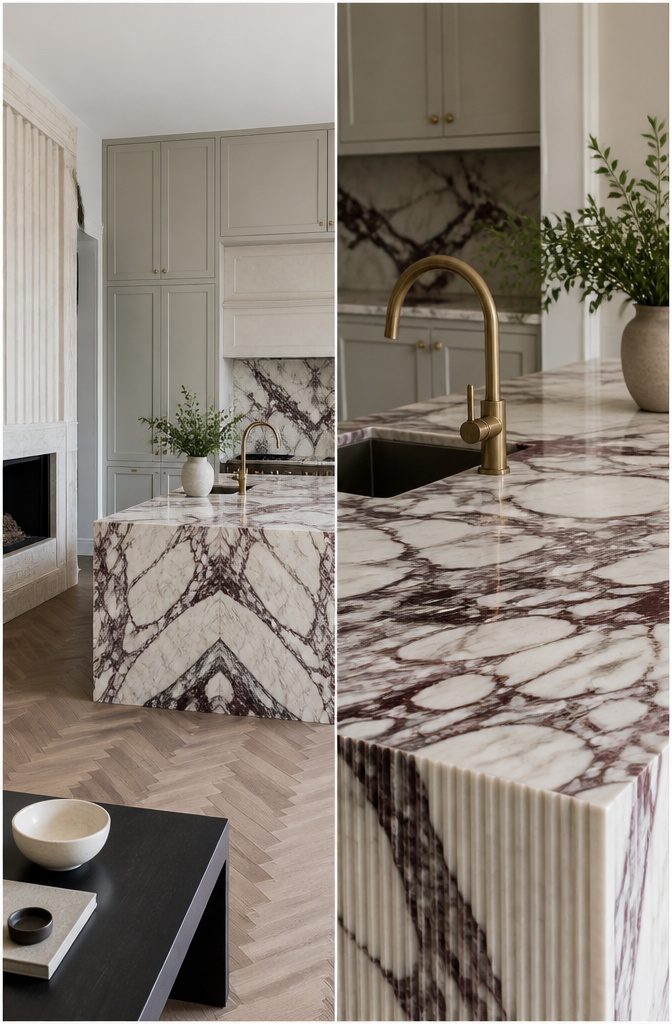
A standard install lays slabs side by side, so the veining simply runs where the stone dictates.
Bookmatching flips two consecutive slabs open like a book, and the burgundy veining mirrors itself across the seam. On a kitchen island or a fireplace wall, that symmetry is where Viola does its most dramatic work.
Pieces vary a lot in this stone, so pick bookmatched slabs in person rather than from a photo. Hire a skilled fabricator and installer, since the seam is the whole effect and a bad match shows.
Fluted marble, with vertical ridges that catch shadow, is the advanced move.
The veining seems to shift as you walk past. I’d limit it to a fireplace surround or a feature column, and let the island carry the plain slab.

PROFESSIONAL-GRADE SEALER: For use on natural and engineered countertop stone surfaces including granite, quartz, marble and more

CLEAN & PROTECT - MORE Stone & Quartz spray is a 2-in-1 daily cleaner and protector formulated specifically for natural stone and quartz surfaces.

Multi-Surface: Keep your countertops in peak condition with our counter top cleaner applicable for various solid and laminate surfaces, including granite, quartz, marble, Corian, and composite
Frequently Asked Questions
Is Calacatta Viola real marble?
Yes, it is 100% natural stone, not an engineered look.
It comes from the Apuan Alps in Tuscany, though some suppliers list the Carrara region as the source. The color sits in the stone itself, so every slab differs and you should choose from the actual slab.
How often should you seal Calacatta Viola?
Seal it before and after installation, then reapply every 6 to 12 months in a busy kitchen.
The stone is porous, so red wine, turmeric and oil can stain if they sit. Sealer does not stop etching from acids like lemon juice, vinegar and wine, so wipe those up right away.
What is the difference between Calacatta Viola and Carrara?
Carrara is grayer with subtle veining, while Viola has a creamy white ground crossed by bold burgundy, violet and wine-dark veins. Side by side, Carrara looks quiet and Viola is the statement stone.
What color is Calacatta Viola marble?
It is creamy white with deep burgundy, violet and wine-dark veining. The direction and weight of the veins change from slab to slab, so no two look alike.
Is Calacatta Viola marble trendy?
Yes.
Kitchens, Bedrooms & Bathrooms magazine named it the worktop of 2025, and designers and homeowners are moving from minimalism toward richer, more decorative natural stone. Sources also call it one of the top countertop looks for 2026.