The ideas run from a single Floating Shelf with Hooks to full Built-In Bookshelves, with Chunky Shelves on Reclaimed Wood, a Slat Wall with LED Shelves and Paneling with Base Cabinet in between, so effort and cost vary a lot.
What the wall has to do decides which one is yours: a Paneled Entryway with Shelves for shoes, Shelves with Plant Displays for greenery, or Built-In Bookshelves for a full library.
1. Staggered Floating Shelves
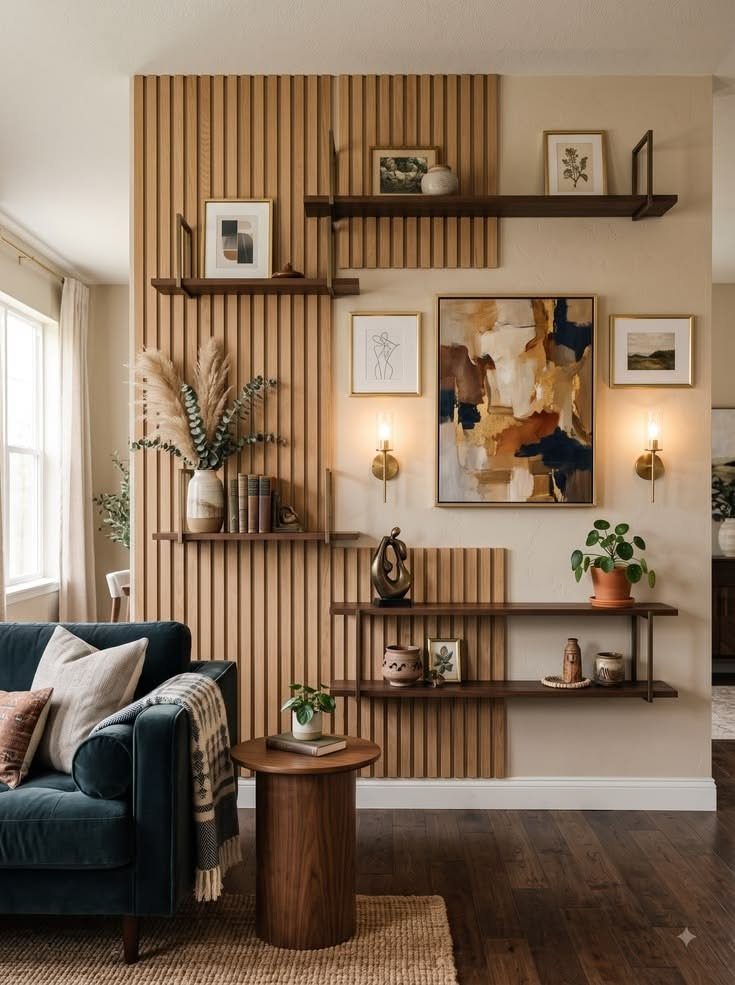
Varying the shelf lengths is what keeps a slat wall from looking like a grid. Short, medium and long boards in alternating rows give the eye somewhere to travel, and the vertical lines behind them keep the whole thing orderly.
Dark wood against light slats gives the shelves a strong outline, so even a few objects read clearly. I would keep the decor sparse, with a couple of larger pieces per shelf rather than many small ones.
2. Slat Wall with LED Shelves
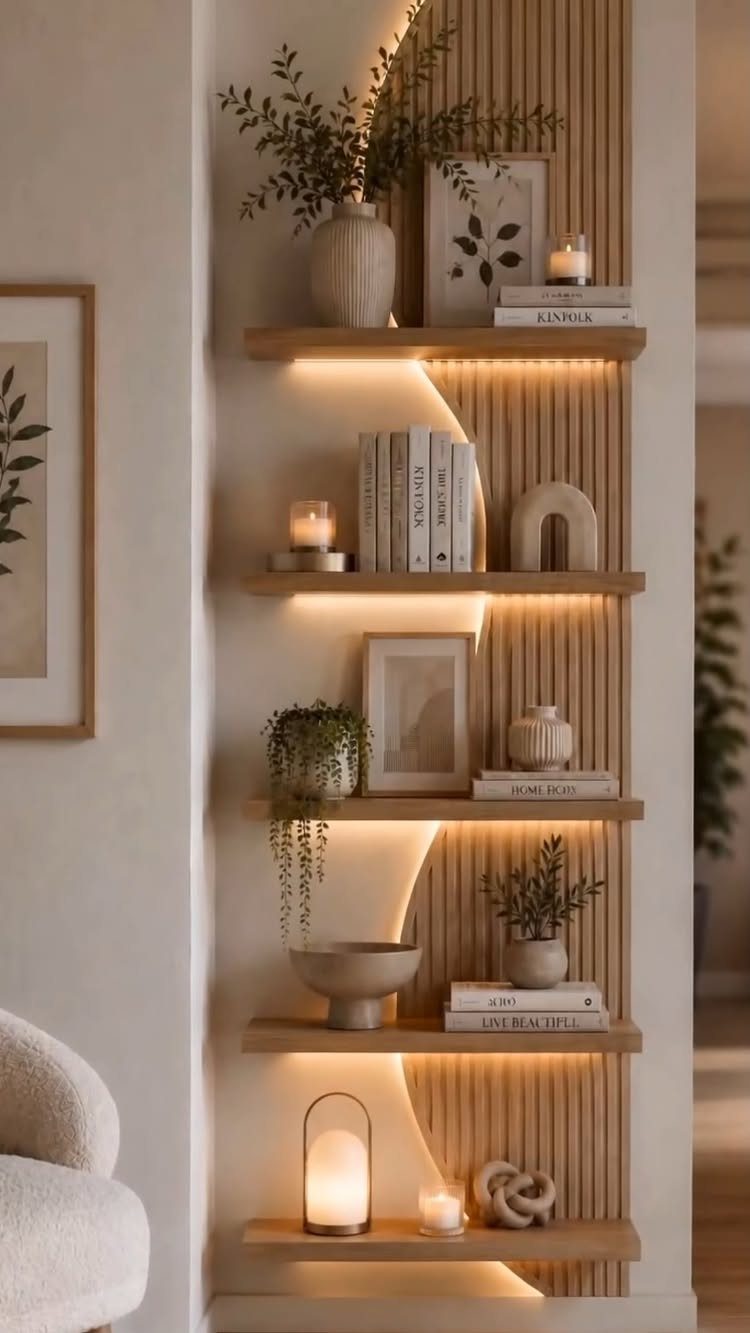
Warm LED strips built into the shelf edges turn a slat wall into an evening feature. The light grazes the vertical grooves and throws soft shadows across the wood, which flat overhead lighting never does.
Spacing the shelves evenly gives the wall a planned rhythm, and leaving open wood between them keeps the slats from disappearing behind objects. Books, a few plants and one or two small decor pieces per shelf are plenty.
Choose a warm white bulb color for the strips. Cool light turns wood slats gray and a little clinical.
3. Shelves with Plant Displays
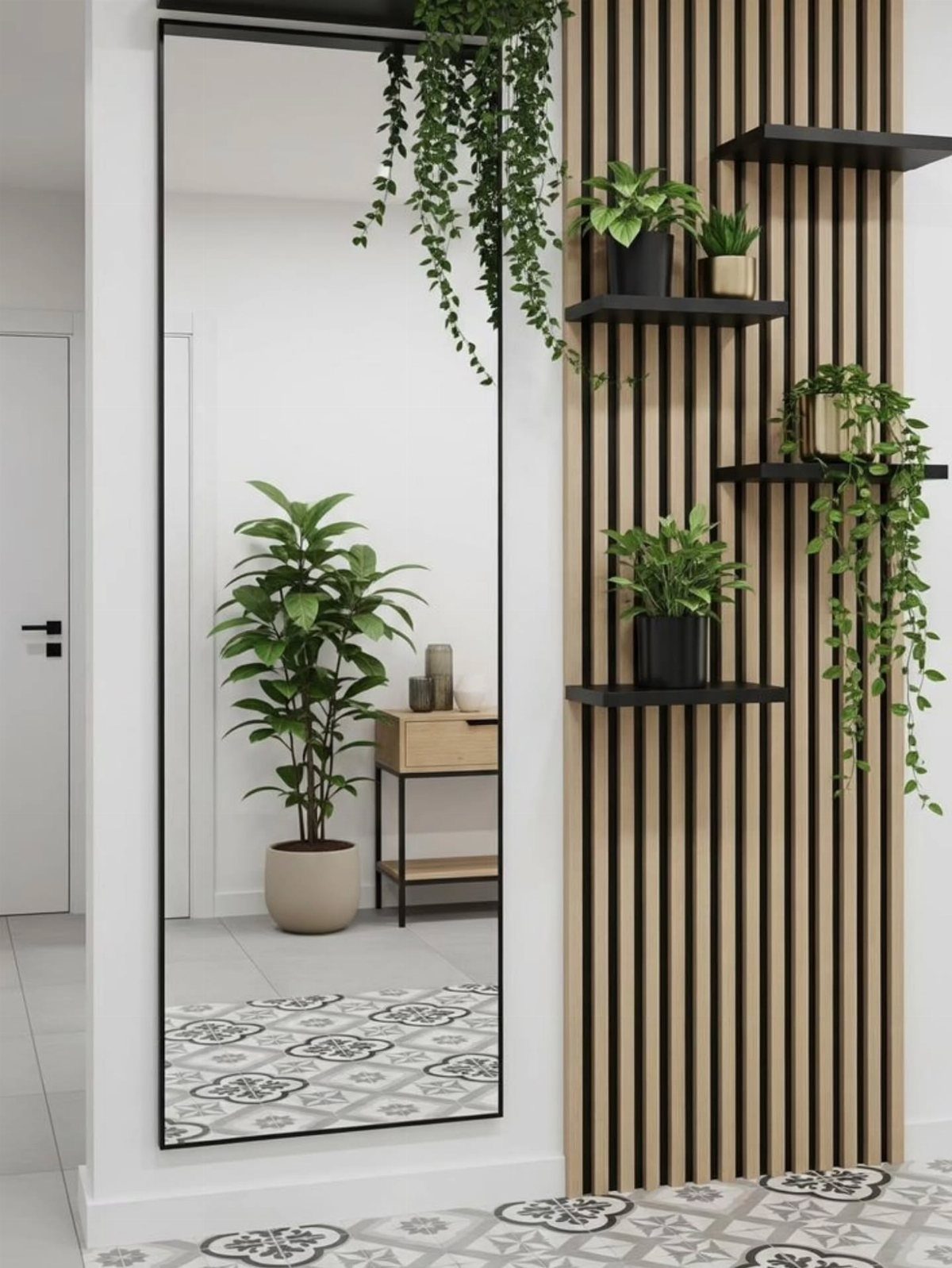
Plants and slats suit each other because the straight vertical lines make trailing and bushy greenery look softer by contrast.
Black floating shelves add a crisp edge, and the wood gives the pots a warm backdrop that makes their shapes easy to read.
I like pairing the shelves with a full-length mirror beside them, since it doubles the green and makes a narrow wall feel deeper.
Keep the pots in a limited color range, such as terracotta, white or black, so the plants do the talking.
4. Living Room Statement Wall
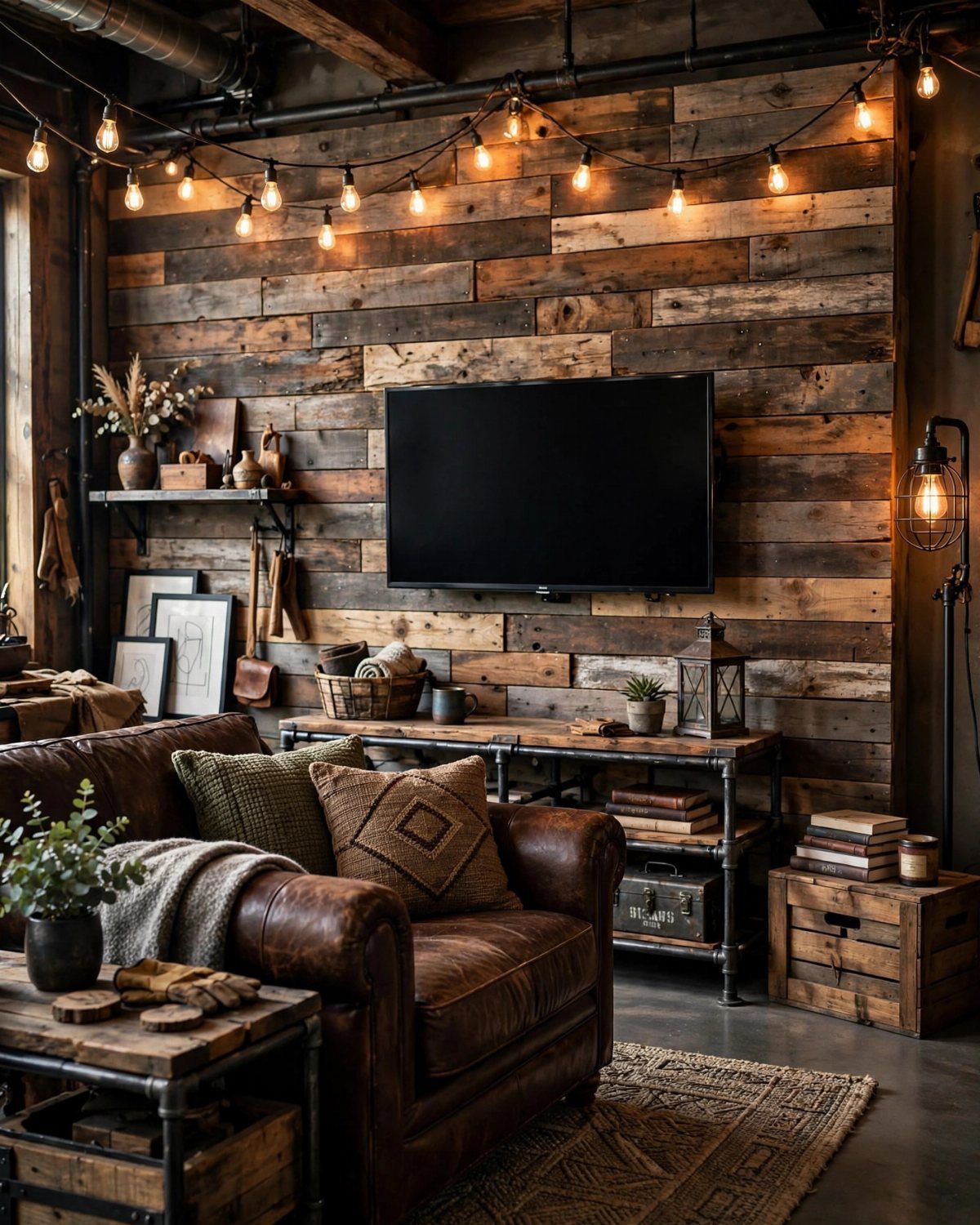
A full-height reclaimed wood wall behind the sofa does the work of a large piece of art, only bigger and warmer. The uneven plank tones and grain give a plain room texture without any paint or pattern.
Industrial shelving fits the rough planks well, and it leaves room for a gallery of frames, books and objects across the middle of the wall, where people look first.
A brown leather sofa reads best here when the wall stays the main event, so I would hold back on busy throw pillows.
5. TV Wall with Floating Ledges
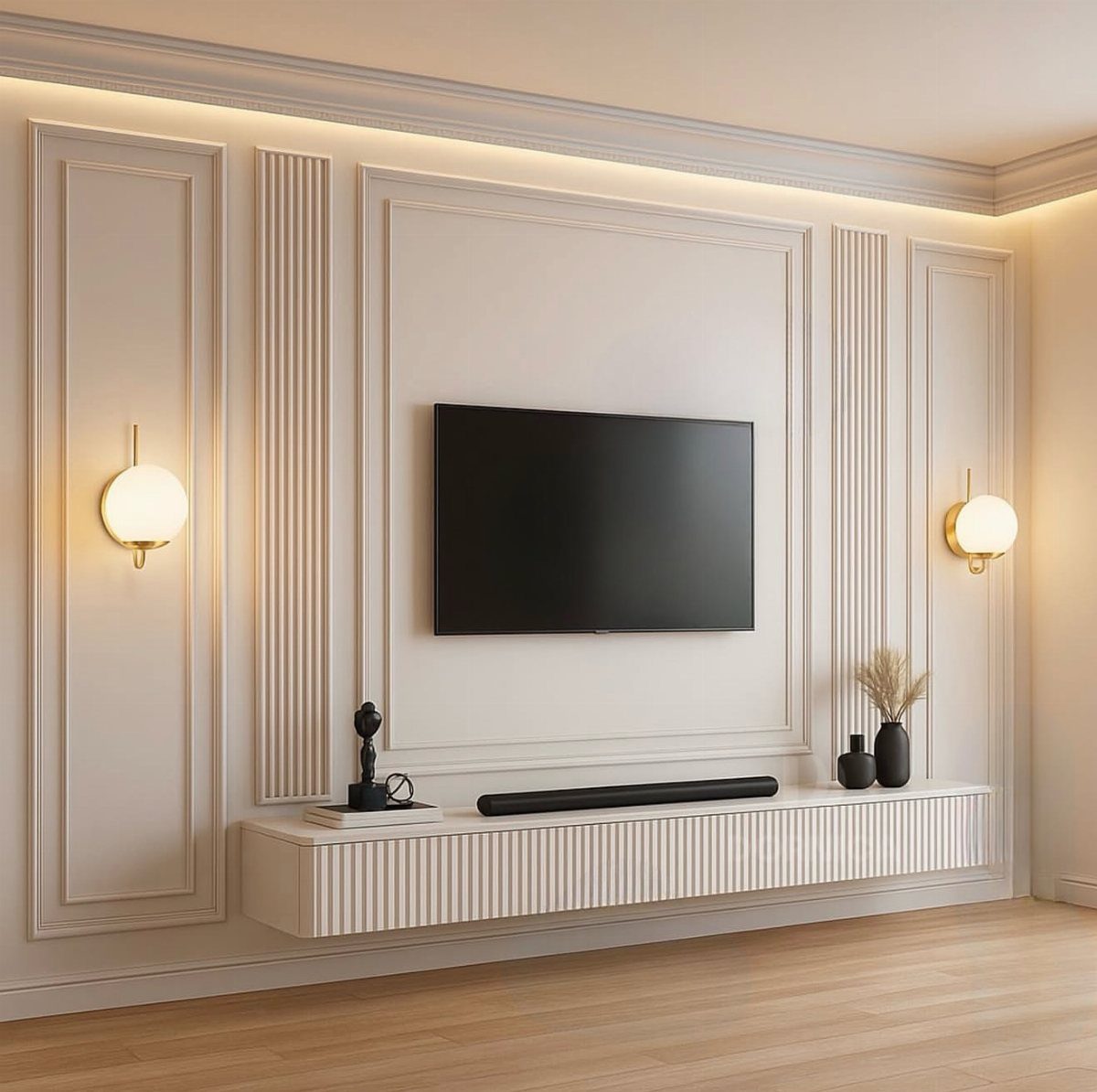
White paneling around a TV makes the screen look like part of the wall instead of a black rectangle stuck on it. A floating ribbed ledge below holds a soundbar, and the ribbing adds a second layer of texture.
Cables can run behind a floating ledge and out of sight, and that hidden routing is the real reason to choose it here. Sconces on each side add light without lamps or cords across the room.
Plan the cable route before you fix the panels, since it is much harder to add afterward.
6. Paneled Headboard with Nightstands
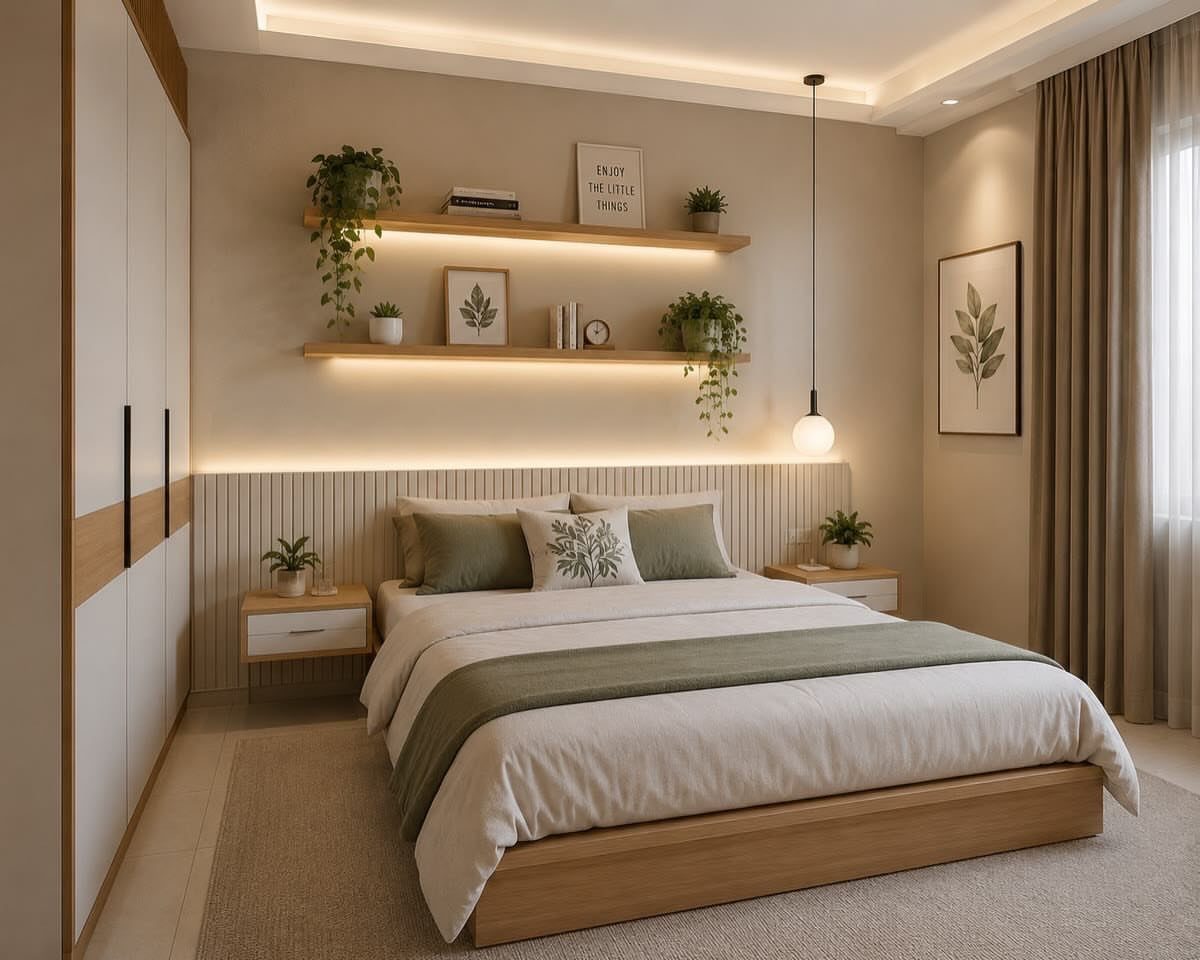
Running slatted panels up the bedroom wall in place of a headboard saves you from buying one, and the wood adds warmth behind the bed.
Floating nightstands on either side keep the floor clear, which helps a small bedroom feel bigger.
Matching the nightstands to the panel wood makes everything read as a single built piece. A couple of wall shelves above give you a place for a small sign or a plant without crowding the bedside.
7. Recessed Shelves on Light Panels
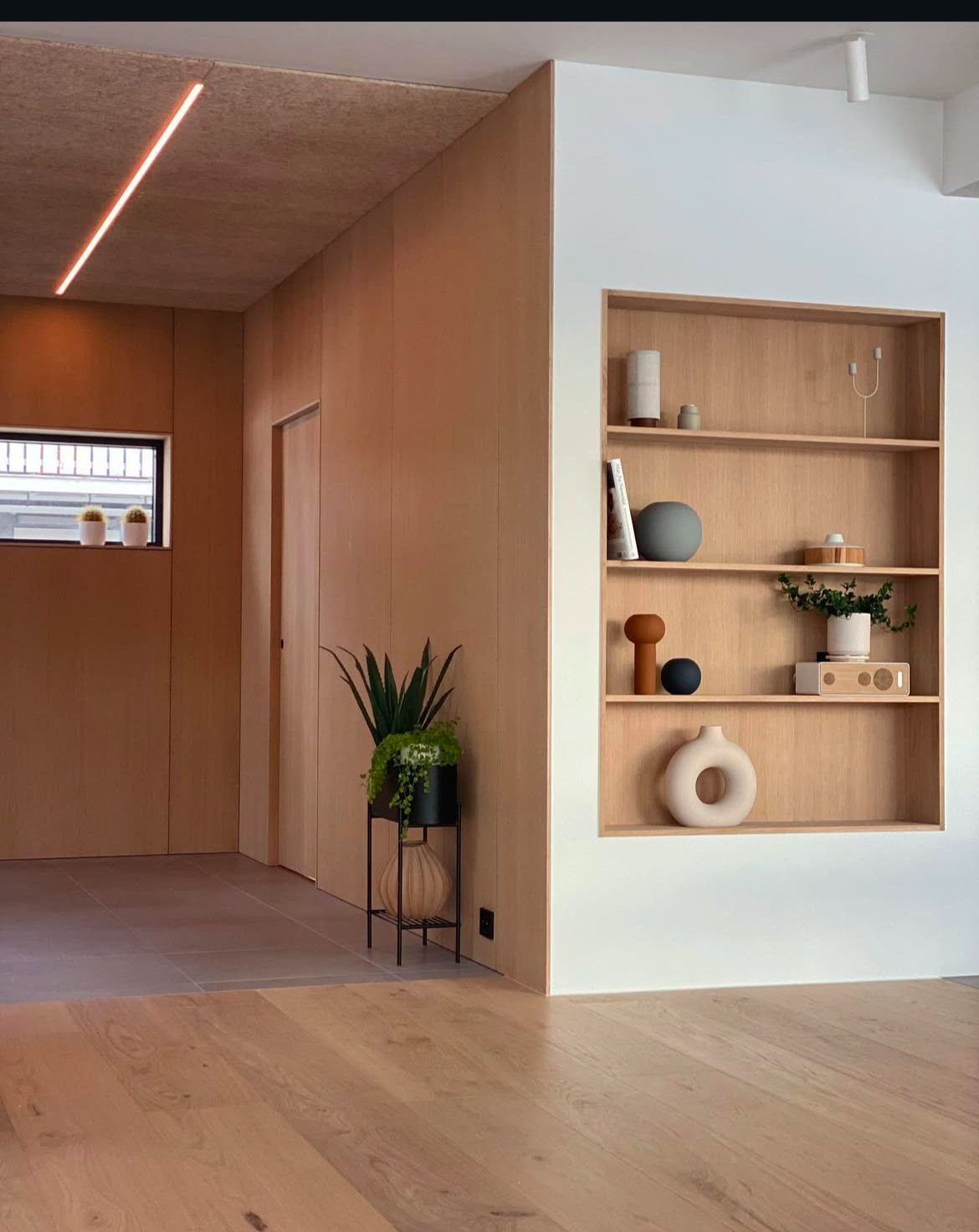
Slim shelves set into the wall itself take up no floor space and no depth, which is why they suit a small room better than a bookcase would.
Light wood panels beside the recess keep the surface calm, so a few objects and one plant read as a deliberate display.
I would keep the recess shelves in a wood that matches the paneling, or go a shade deeper, so the whole wall reads as one piece.
8. Dark Wood Office Shelves
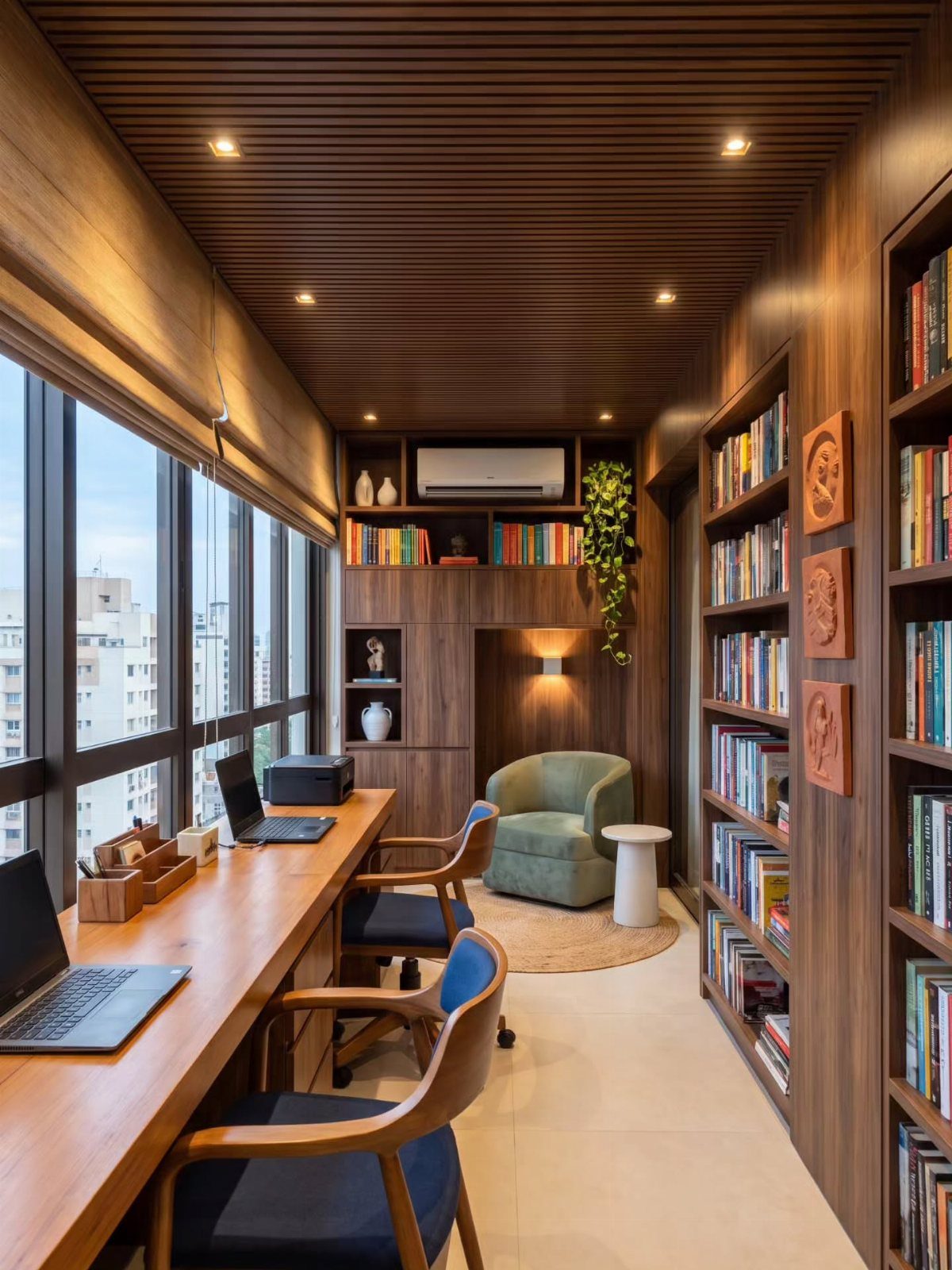
Dark slatted wood on both the walls and the ceiling wraps a home office in a single tone, and built-in shelves disappear into it instead of cluttering it.
That makes a tidy backdrop behind the desk, which is exactly what a video call wants.
Heavy-duty shelves are worth choosing here, since books and binders add up fast. A green armchair is a good contrast against all that brown, and I like it more than another wood piece.
9. Chunky Shelves on Reclaimed Wood
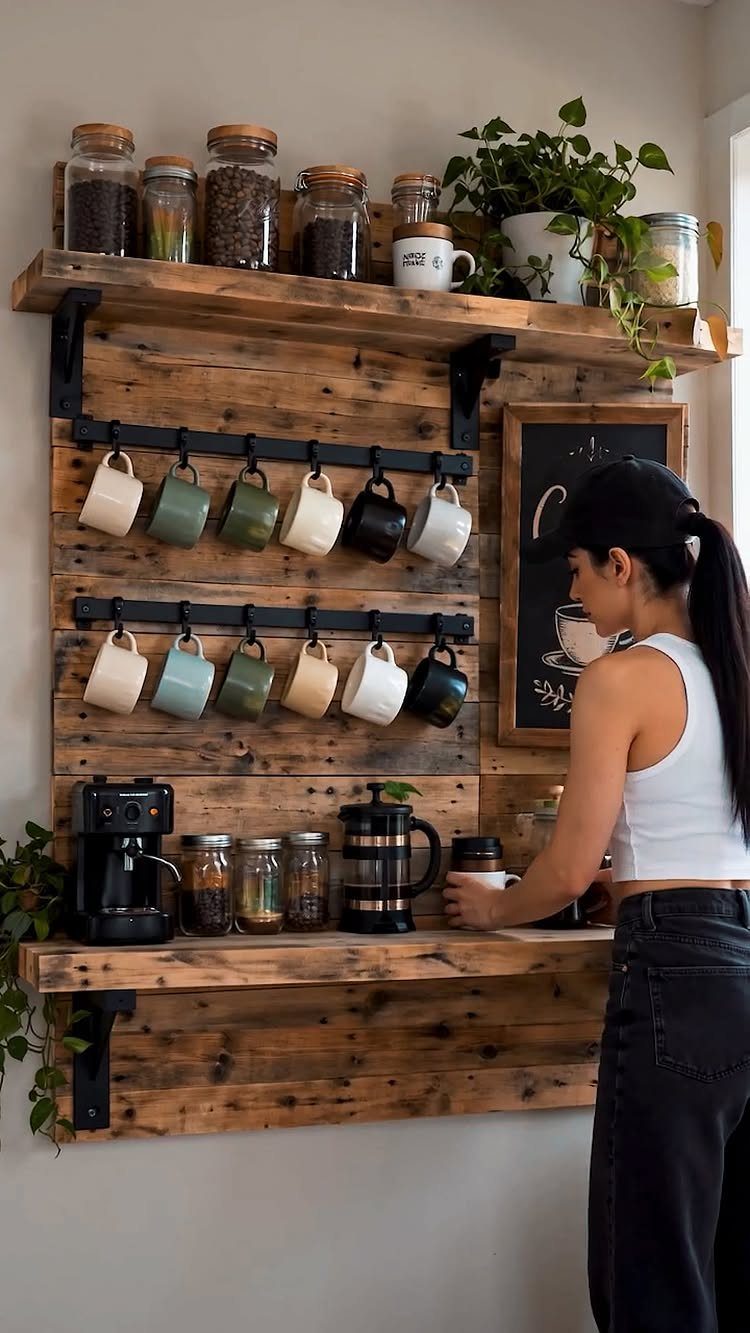
A coffee station is a smart use for chunky shelves, because mugs, jars and a kettle all sit comfortably on a thick board. Reclaimed-looking planks behind them give the corner a farmhouse or industrial feel without any extra decor.
I would pick shelves in a tone close to the planks so the grain and thickness do the styling.
10. Paneled Entryway with Shelves
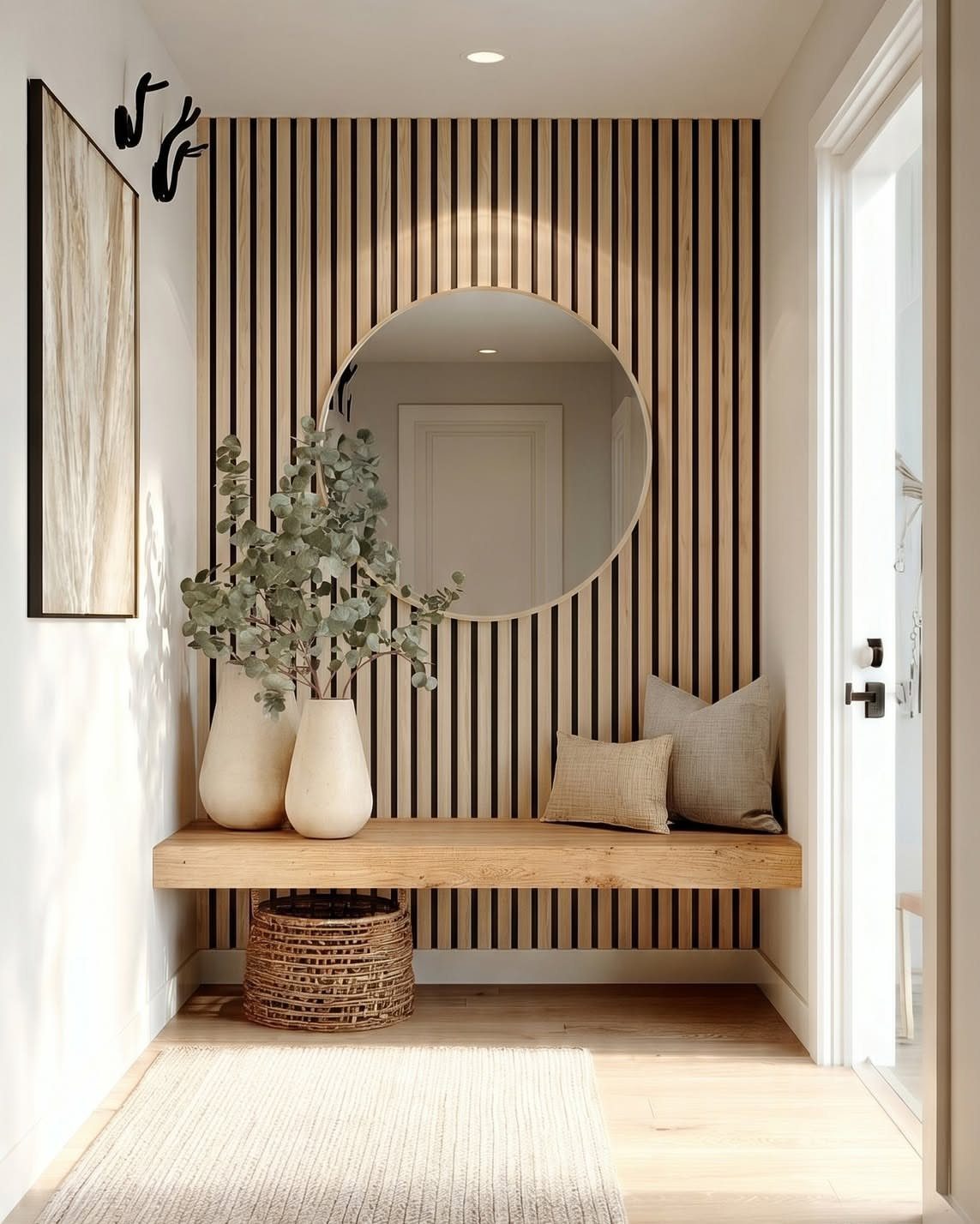
Vertical slats in an entryway make the wall look taller, and a thick floating shelf doubles as a perch for shoes or a spot to drop a bag.
A round mirror breaks up all those straight lines and gives you a last look before the door.
Keep a wicker basket on the floor for the odds and ends, and a light rug to handle muddy shoes. Vases and pillows on the shelf keep it feeling like part of the room, not just a drop zone.
11. Floating Shelf with Hooks
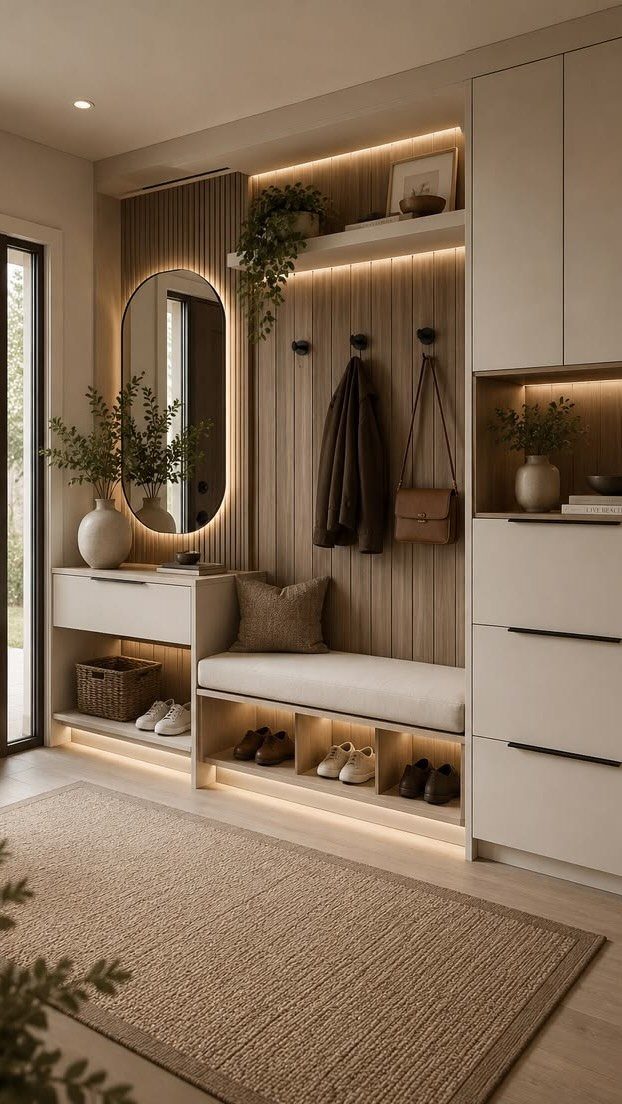
Set over a cushioned bench and a cabinet, the wall becomes a full drop zone in very little width.
I like this layout for how it stacks the jobs: sit, hang, store. Wood paneling behind the hooks also takes the scuffs better than a painted wall.
12. Paneling with Base Cabinet
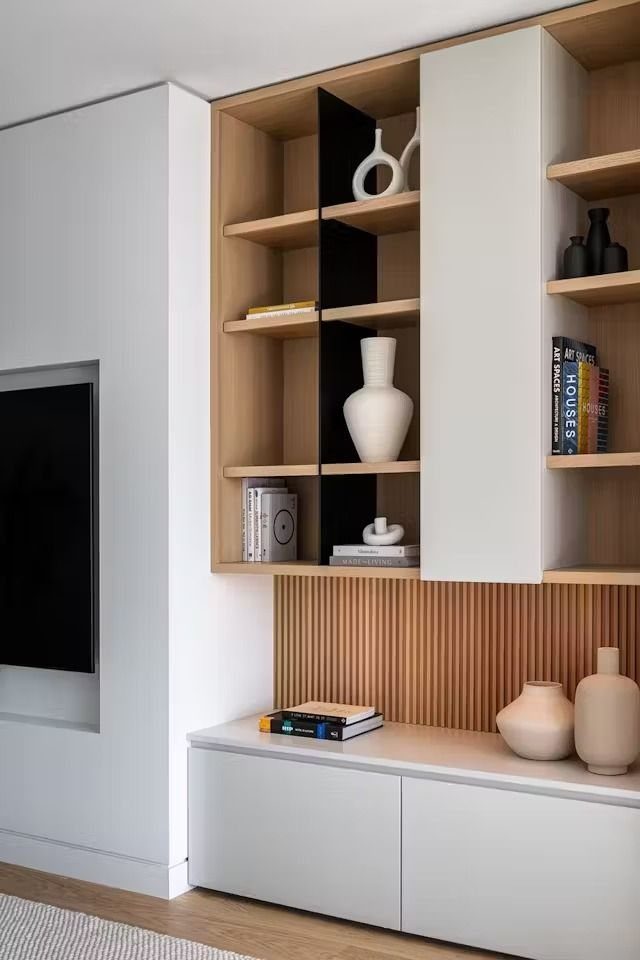
A long, low white cabinet under a wooden slat wall gives you closed storage for the things you would rather not display.
Open shelves above a base cabinet can hold books and vases, so the wall handles both everyday clutter and display.
White on the cabinet keeps the wood from feeling heavy. I would line up the cabinet top with the lowest shelf so the whole run looks built in.
13. Navy Paneling with Shelves
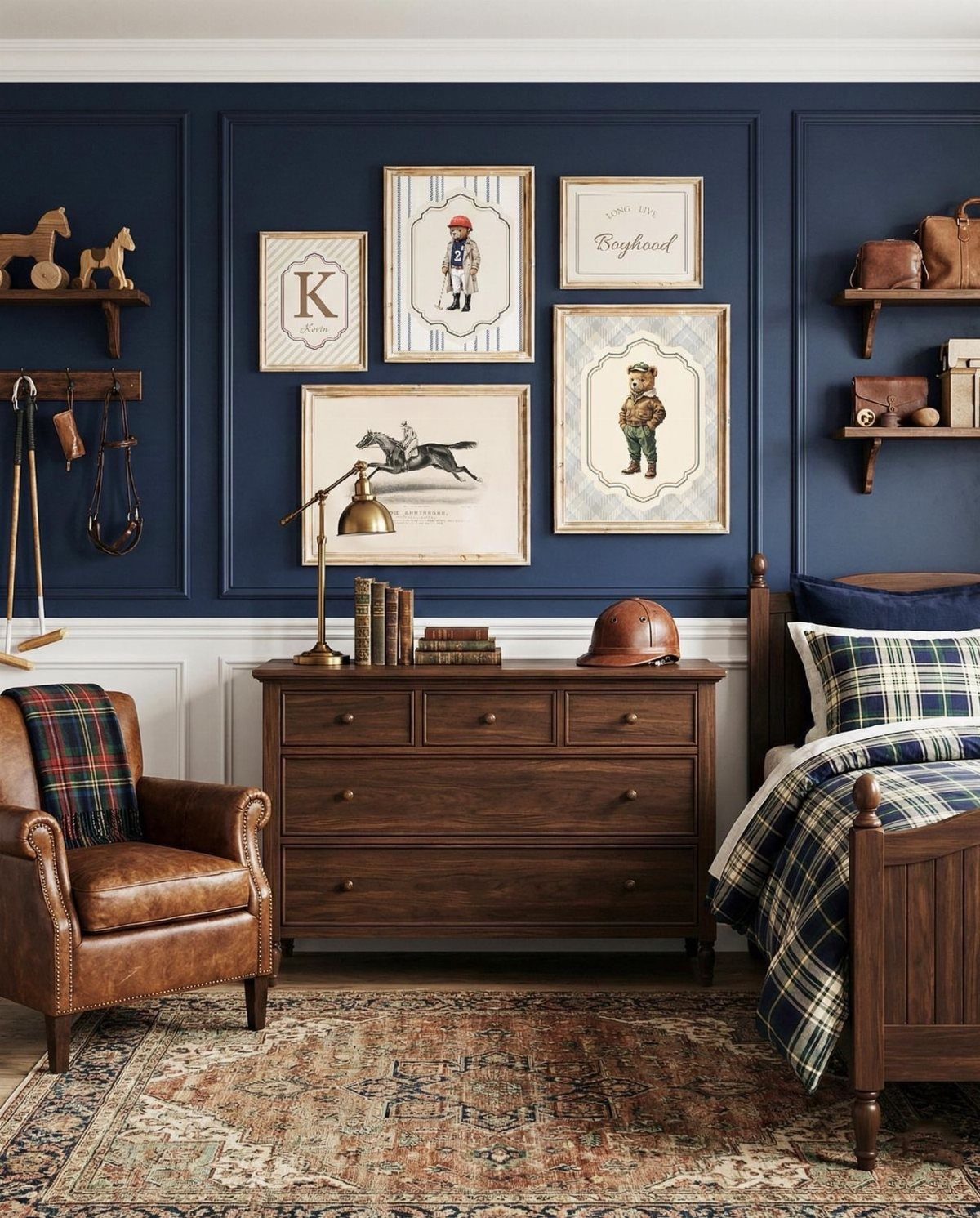
Navy slats behind natural wood floating shelves give a bedroom a strong two-tone look: the wood stands out sharply against the dark blue, so each shelf reads as a clean line.
I would keep the shelf wood warm and the objects few, since dark walls swallow clutter in one direction and exaggerate it in the other.
A brown leather chair and a wooden dresser fit the same palette without any extra effort.
14. Sage Green Paneling
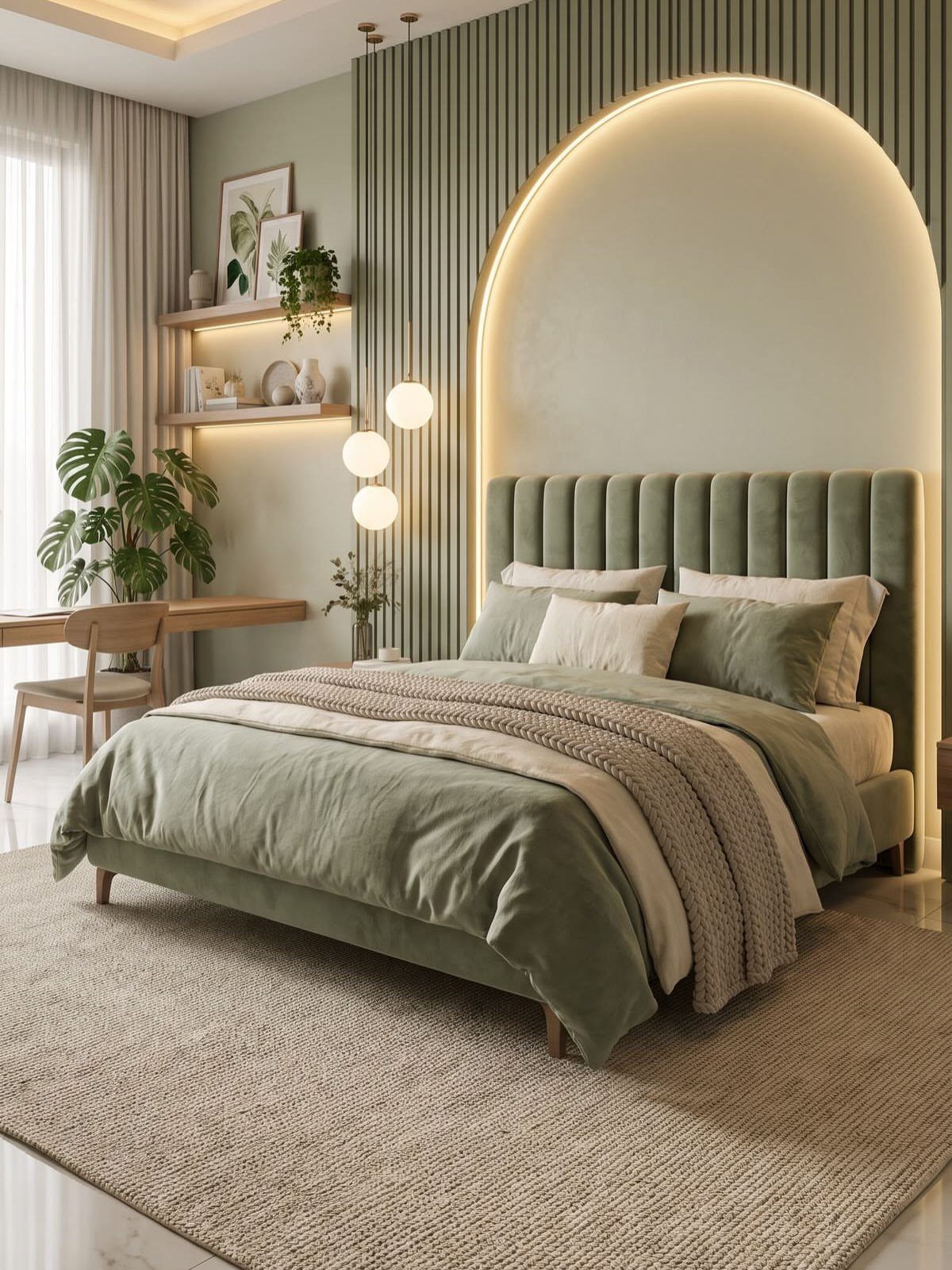
Sage green slats take the edge off a bedroom wall in a way white never does, because the grooves add shadow while the color stays quiet.
A light wood ledge or shelf on top keeps it soft, and plants sit naturally against the green.
Matching the bedding to the wall tone, as in this room, makes the bed feel like part of the paneling. I would use one shelf wood across the room so the green stays the main color.
15. Built-In Bookshelves
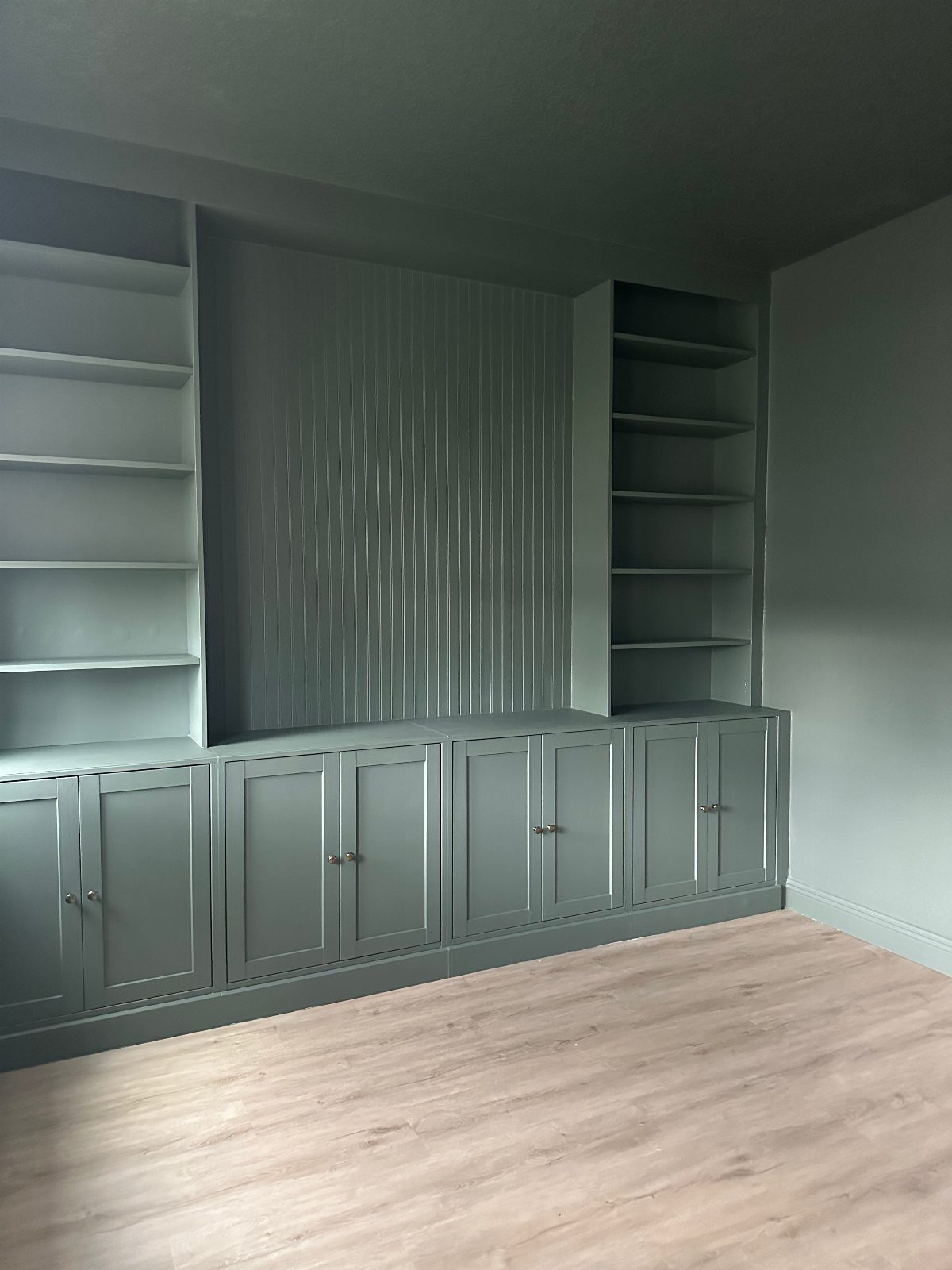
Open shelves on both sides of a slatted center panel give a built-in wall a clear focal point, and the closed cupboards below hide whatever you would rather not display.
Painting the cabinetry and slats the same sage green makes the unit look like one piece of furniture.
I like the wood shelves against the green, since they keep a single-color wall from going flat. Put the books and decor on the open sides and leave the slatted middle bare.
16. TV Wall with Fireplace
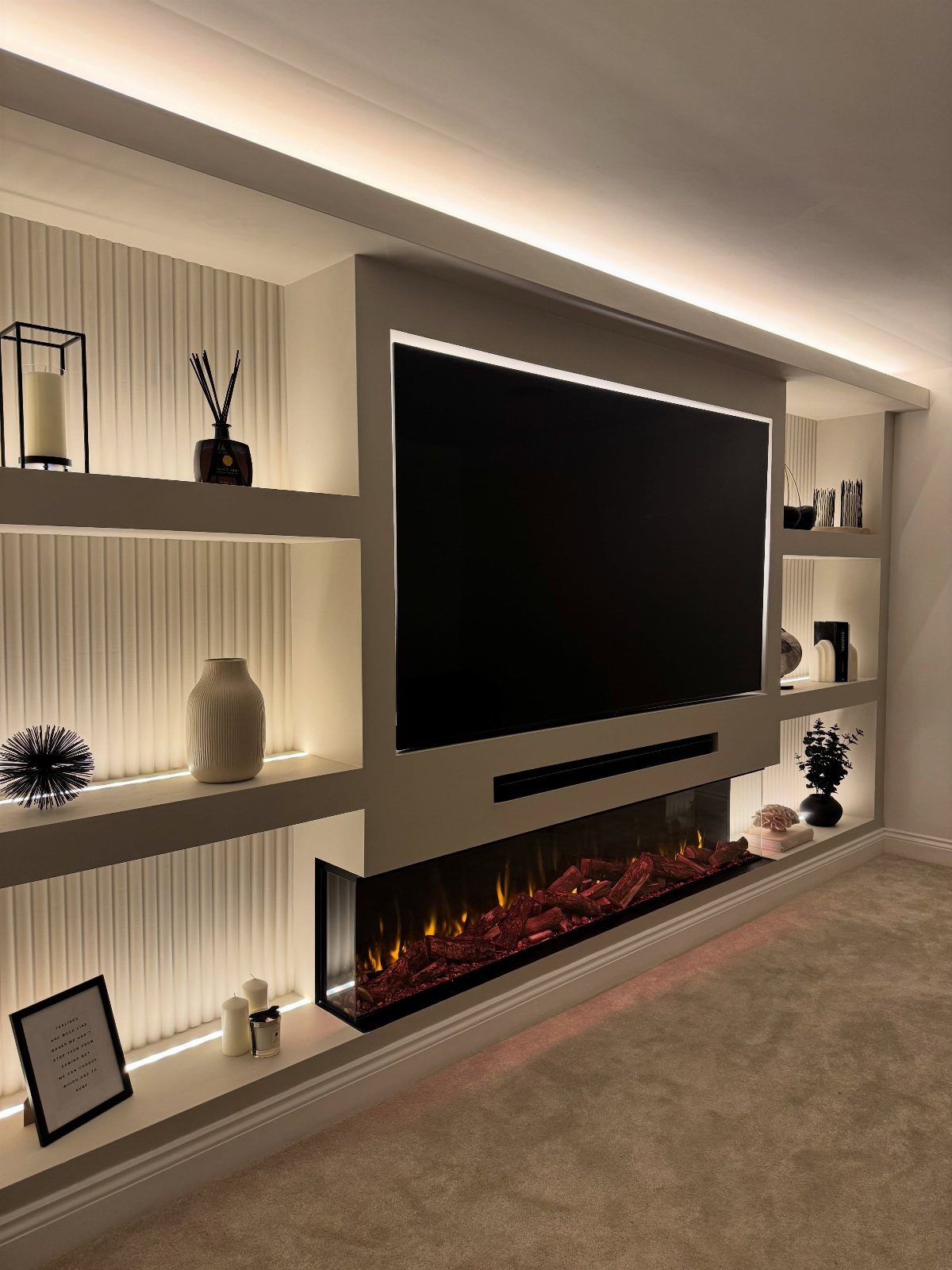
Setting a TV and a linear electric fireplace into one slatted wall gives a living room a single focal point instead of two competing ones.
White slats keep the black screen from dominating, and floating ledges and integrated shelves hold decor around it.
A linear fireplace has a long, low shape that suits this layout better than a tall one. Plan the electrical outlets and cable routes before any panels go up.
17. TV with Custom Shelving
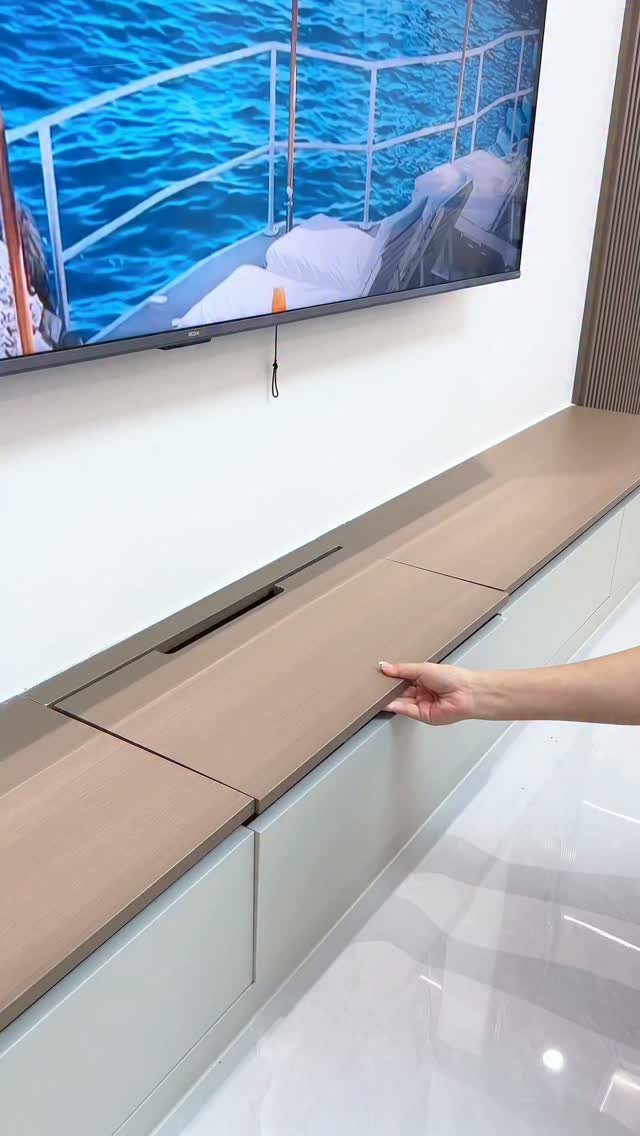
A long, light-wood shelf unit under a wall-mounted TV can hide a compartment that slides open, so remotes, cables and clutter stay out of sight.
Painted lower cabinets give you doors to hide clutter behind, and the lighter finish stops all that wood from feeling like a wall of brown.
I would choose this for a living room where the TV is the main feature and you want it to look clean.
Custom work costs more than a stock console, though it can be built to the exact width of your wall.
18. Low Half-Wall Shelf
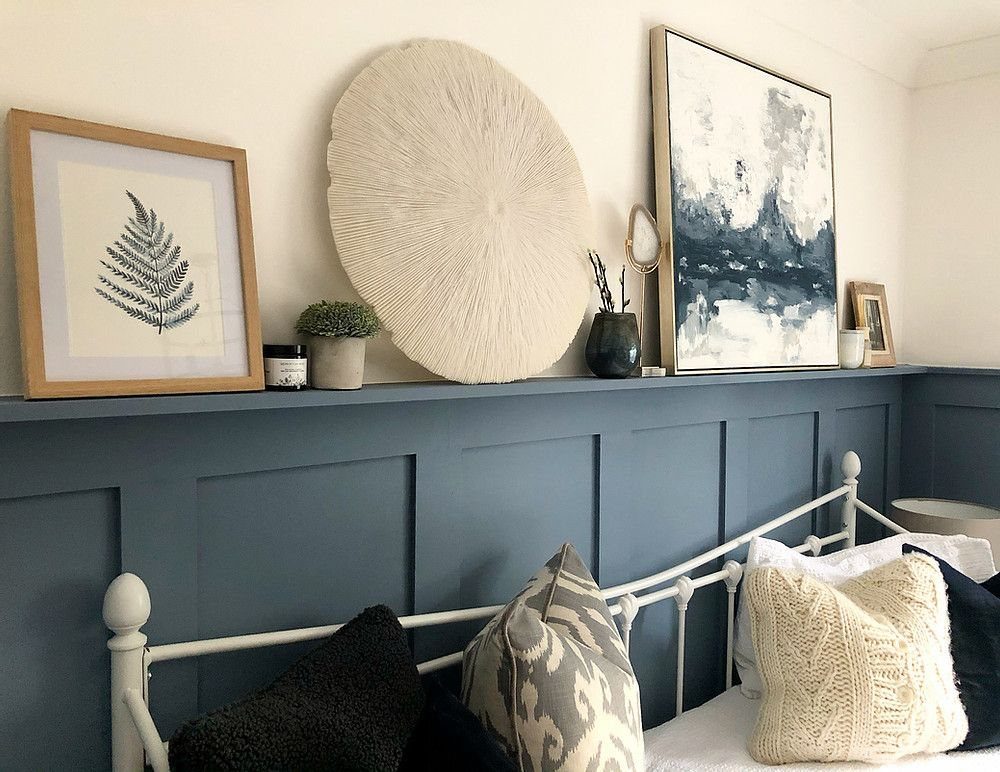
A paneled half-wall with a ledge on top works as a headboard backdrop that also holds a display. Art leans on the ledge and a plant sits beside it, so you can swap pieces without drilling new holes.
Navy paneling gives the white bed frame a strong contrast. I would keep the ledge items to a few and let the dark paneling do most of the work.
19. Half-Wall Open Cubbies
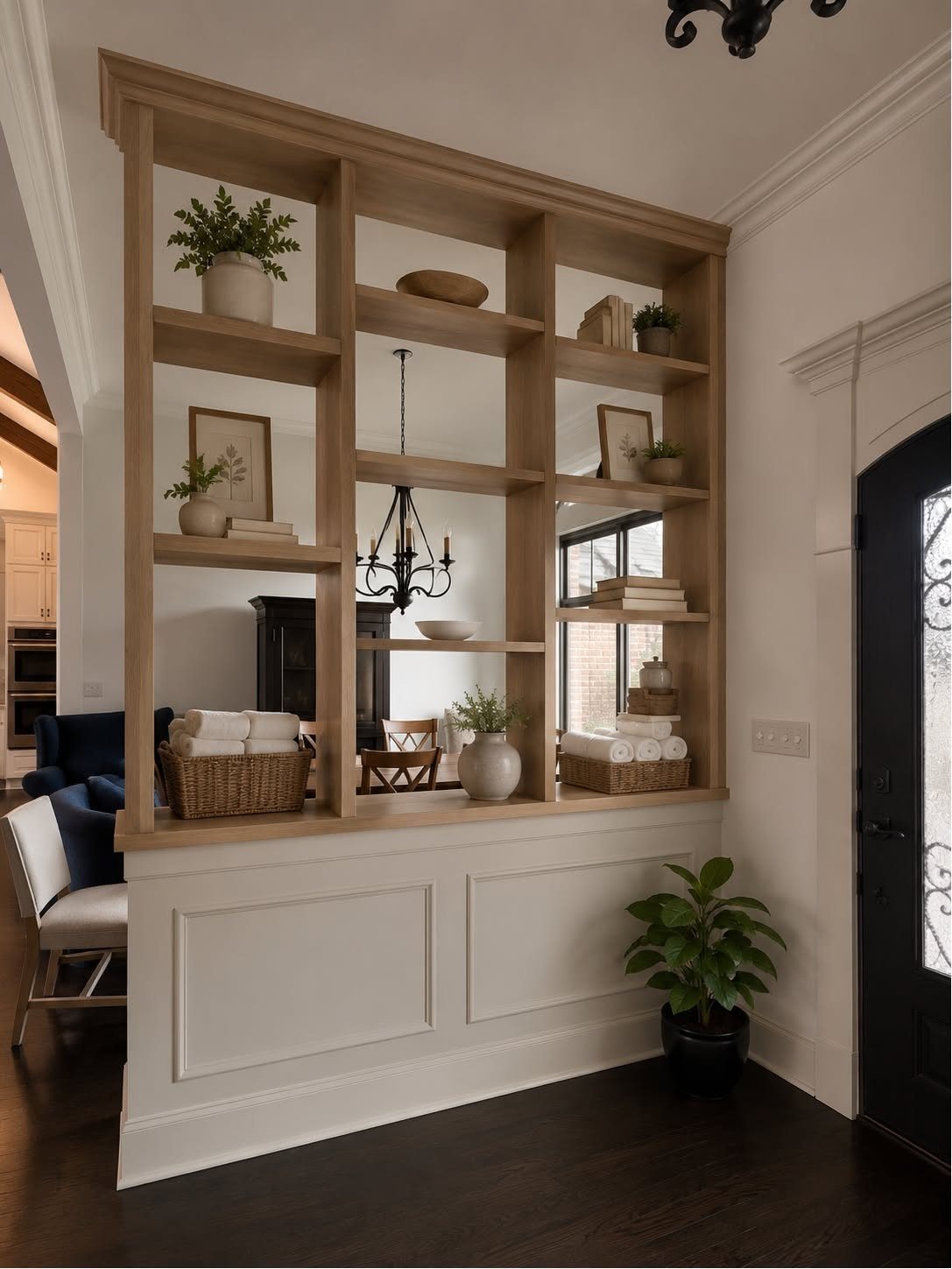
A white half-wall with open cubbies lets an entryway and a living room stay separate without closing either one off.
Light wood shelving against white paneling keeps the divider bright, and baskets in the lower cubbies hide the small stuff while a plant or 2 sits higher up.
I would leave a few cubbies empty. A divider packed solid starts to read as a wall, and the open gaps are the reason to build it.
20. Horizontal Slat Shelves
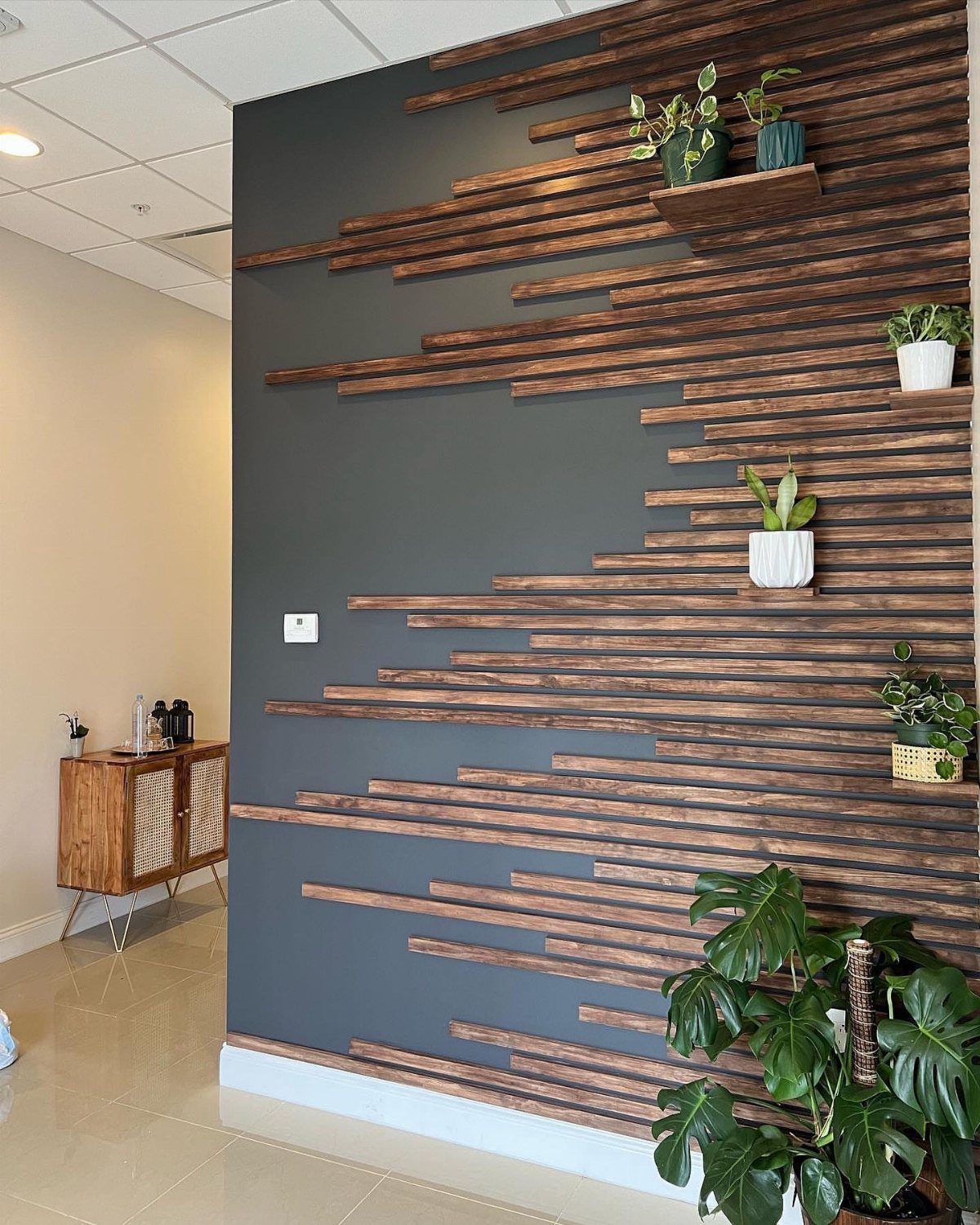
Walnut slats run horizontally across a dark gray wall, and the shelves sit right in the slat lines, so the whole surface reads as one built piece. Horizontal lines stretch a narrow wall wider, which helps in a compact room.
Potted plants suit this setup because the green stands out against the dark gray and brown. I would stick to plants on the shelves and skip extra decor, so the walnut grain stays the main feature.
21. Mixed-Material TV Wall with Shelves
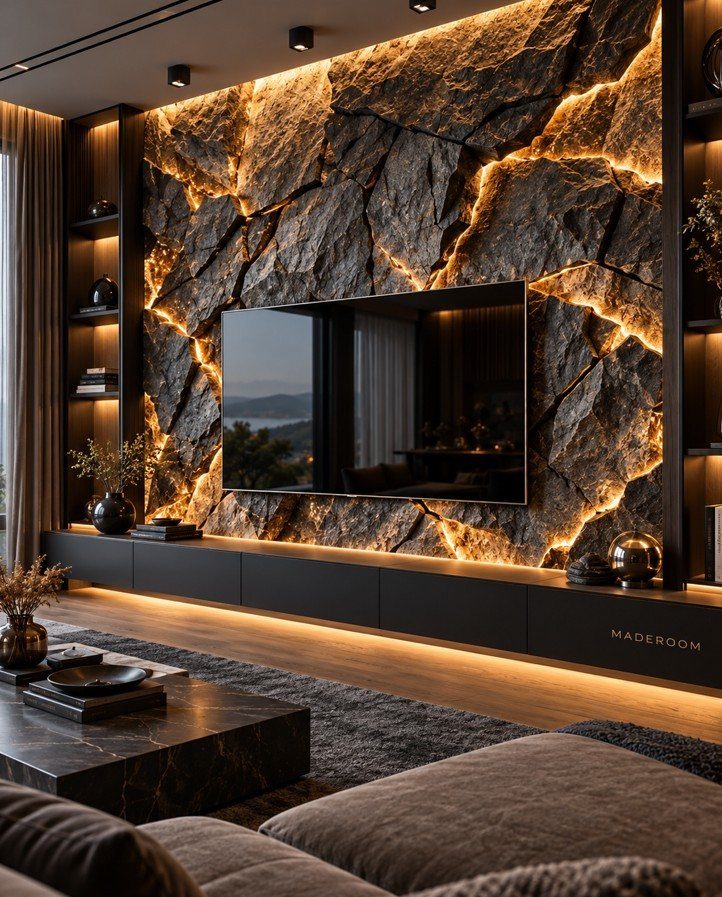
Stone, black shelving and a black floating console give a TV wall three materials, and each one carries a different job.
The stone adds texture around the screen, while the dark shelves and console keep the lower half of the wall tidy and low in profile.
Backlighting the stone makes it glow in the evening and keeps the TV from sitting in a dark patch. I would hold the shelf decor to a few objects, since stone and black already supply plenty to look at.
22. Wooden Panel Wall with Shelves
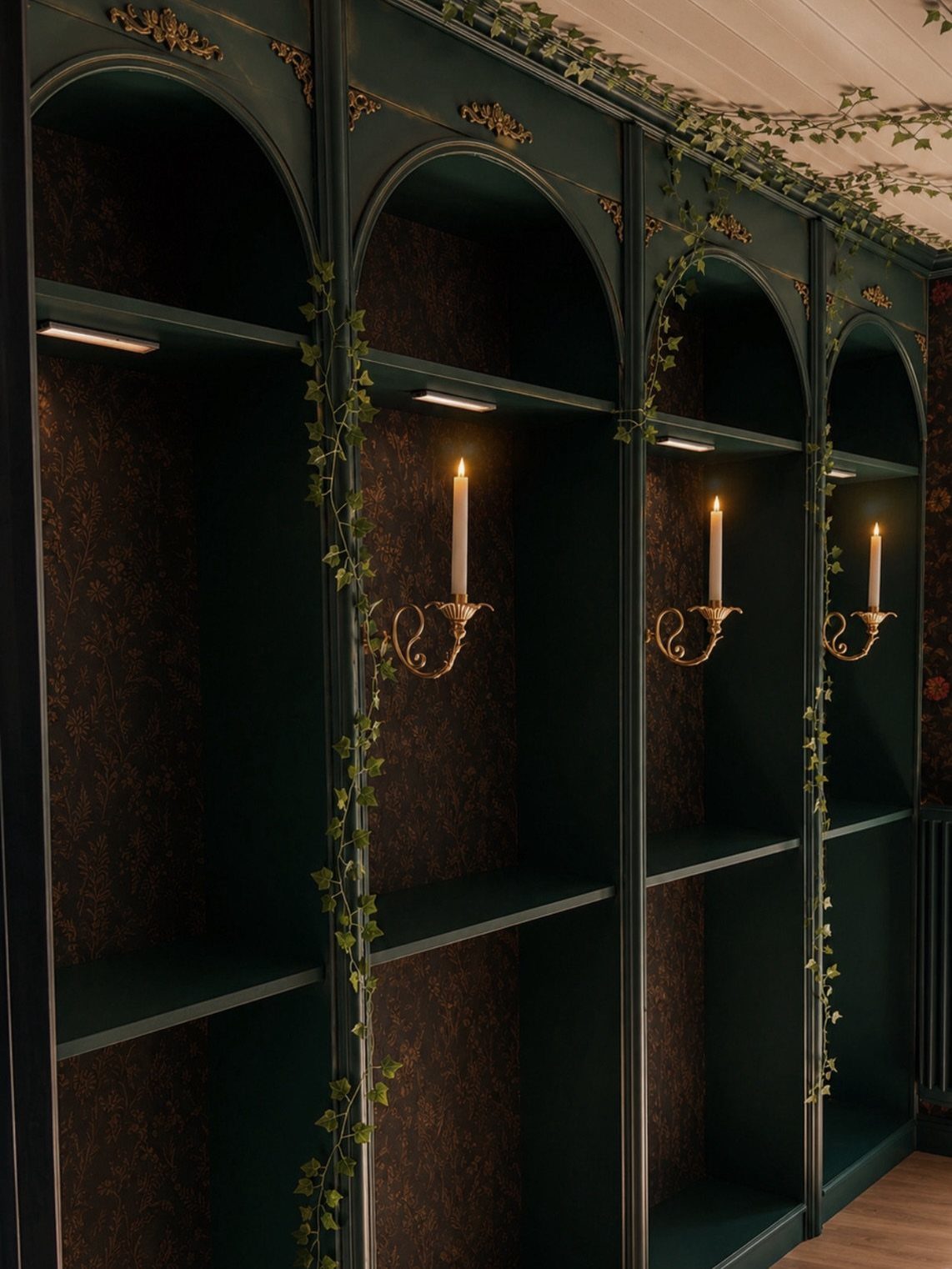
Dark green paneling with arched shelves turns a plain wall into something that looks custom, and it is a workable DIY project because the whole thing is built from wood.
The arches are the part that takes patience, so cut and test one shelf opening before you repeat it.
I like gold sconces on a color this deep, and a trailing ivy vine softens all the straight edges.
23. Wood Slats with Console Shelf
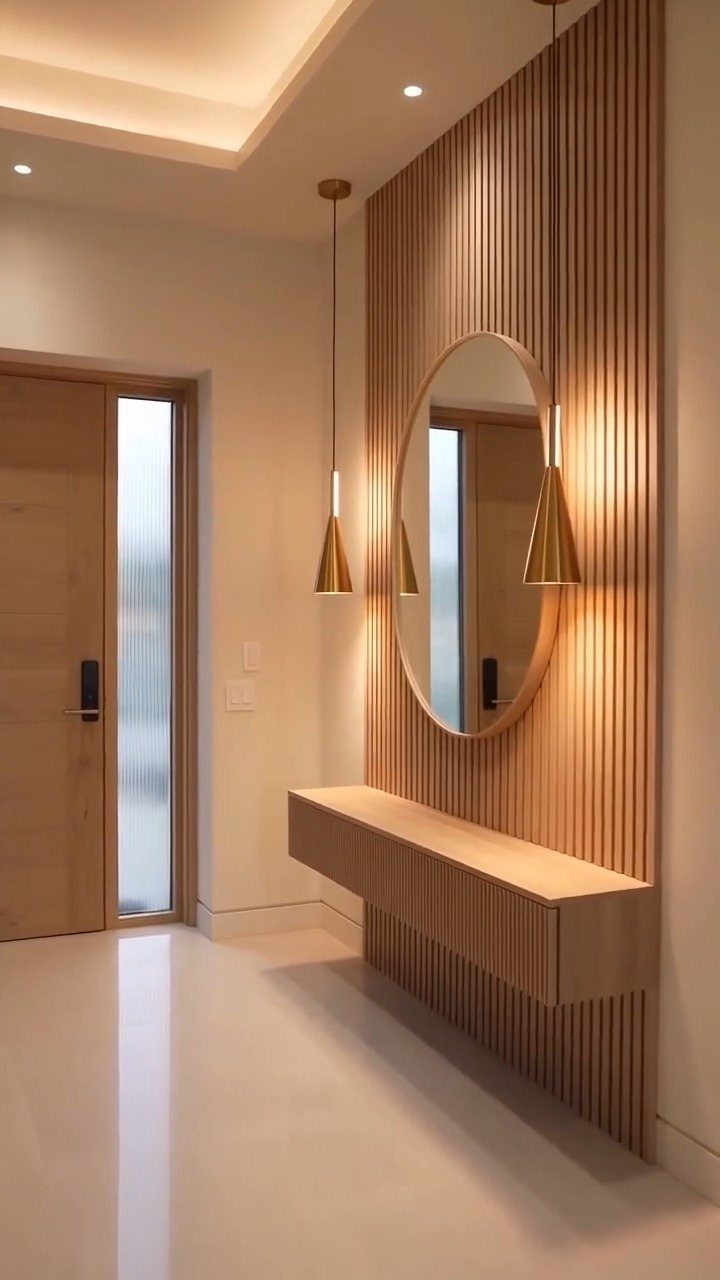
A long floating wooden shelf under a round mirror makes a compact console for an entry, with no legs to crowd the floor.
Vertical slats behind it lift the eye toward the ceiling, and the wood tones stay close, so the wall feels calm.
A pair of pendant lights flanking the mirror gives the wall its light, so the console shelf below can stay clear of lamps.
I would use the shelf for keys and one or two decor pieces, and leave the rest clear.
24. Backlit Shelves on Paneling
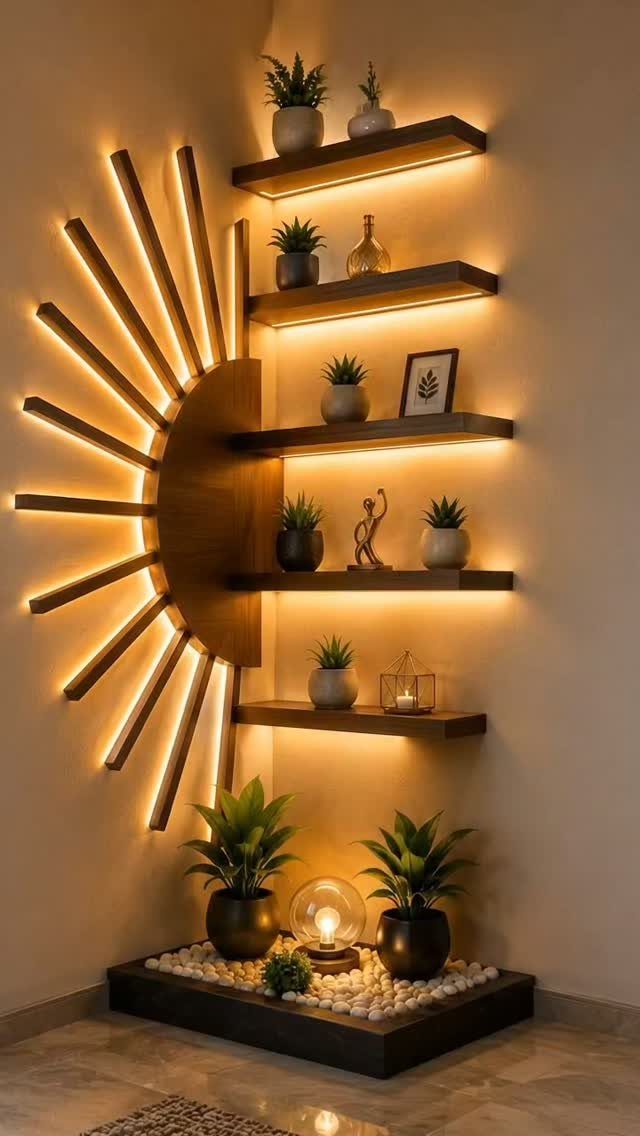
Dark wood floating shelves with warm LED lighting built in give a corner a glow that lamps rarely match.
The light picks out each small potted plant and throws a soft halo across the wall behind, which suits a decorative panel like a sunburst.
Warm light is the right call over cool white, since it keeps the dark wood rich instead of flat. I would keep the shelves sparse: a plant or two per shelf lets the lighting do the display work.