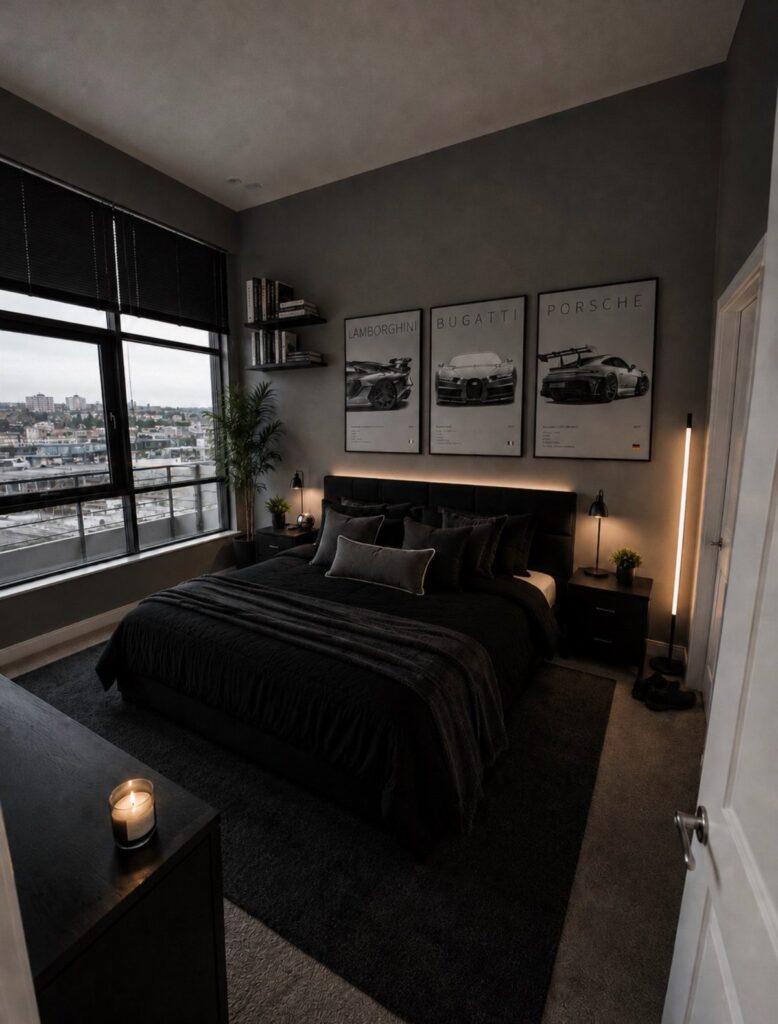
Some ideas, like Layered Bedding or Bedroom Candles, work in any rental, while Wood Paneling and a Feature Wall depend on how much you’re allowed to change.
In a rental, gray limewash, a matte paint finish or a boldly shaped flush-mount light gets close to the same look.
Dark walls in a room with a small window soak up what daylight there is, so a big neutral rug and pale accessories have to push some of it back.
1. Wood Paneling
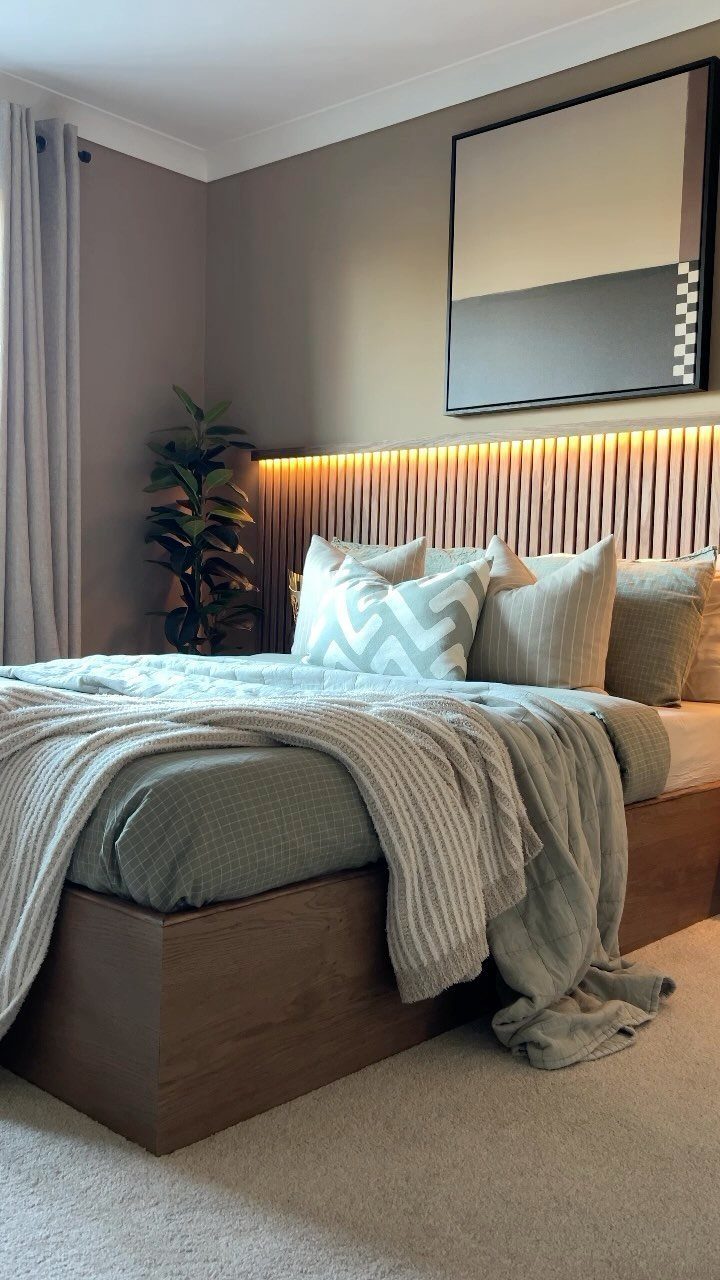
Vertical wood slats behind the bed do more for a bedroom than any amount of decor on the wall. The lines draw the eye up, and the wood brings warmth that painted drywall can’t match.
I’d pick one wall only, the one behind the headboard, and keep the bedding neutral so the grain stays the focus. Warm, low lighting set into or beside the slats makes the texture read at night, as it does here.
Wood gets heavy fast once it wraps the room, so stop at one wall.
2. Air-Purifying Plants
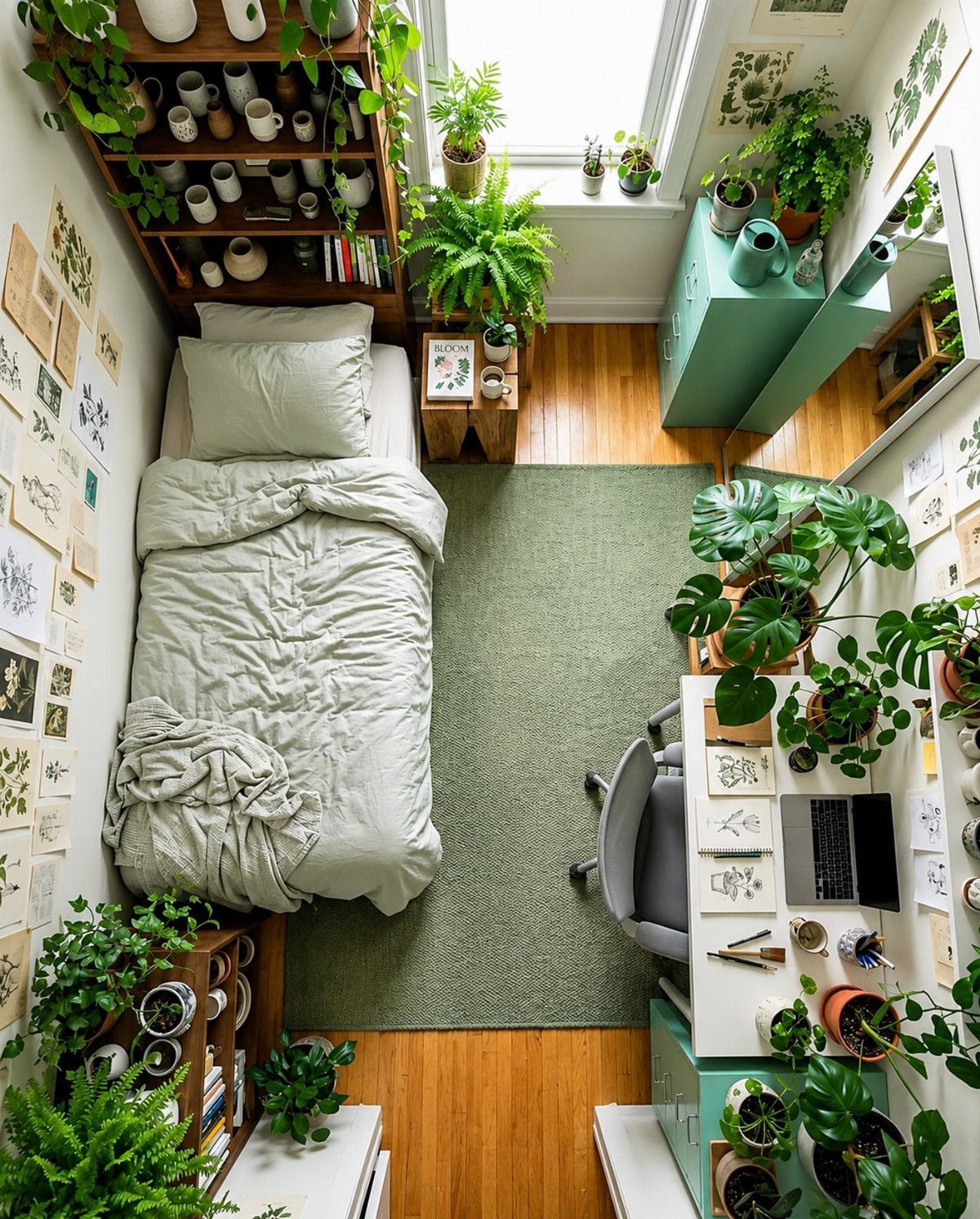
A bedroom can hold more plants than most people expect. Shelves and a desk top are the obvious spots, and a bedroom packed with greenery ends up feeling like a hideaway instead of a crowded one.
I’d mix sizes: a few trailing plants on a high shelf, short pots on the desk, and nothing on the floor where you’ll trip over it. Matching pots in one or two colors keep a big collection from looking messy.
Plants are cheap to start, so buy a few and see which ones survive your light.
3. Industrial Design
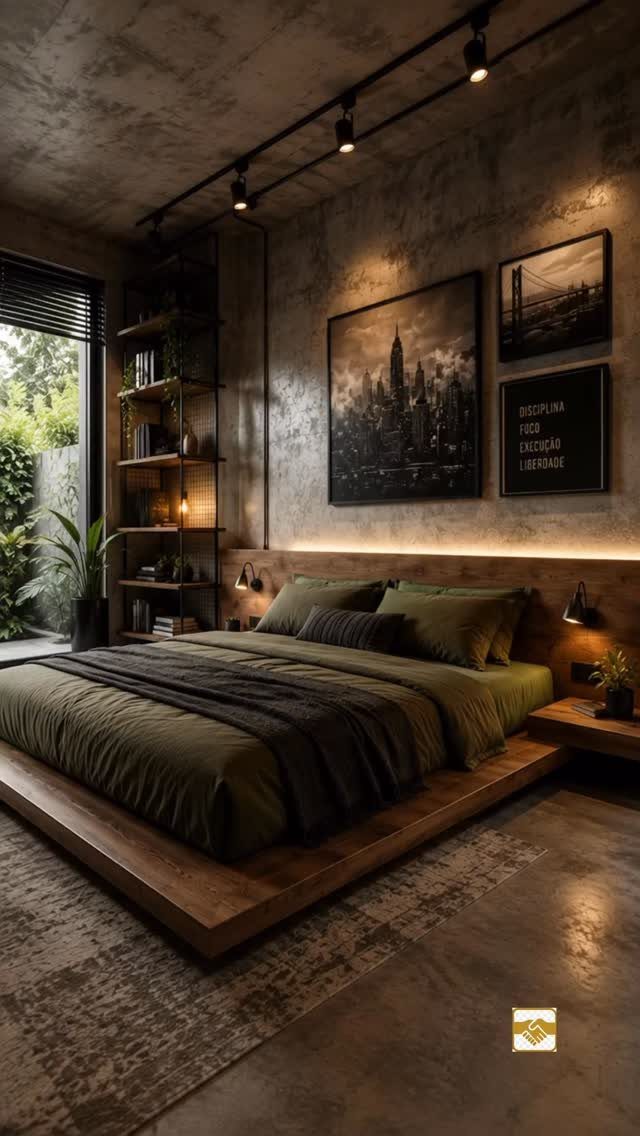
Concrete walls, black metal and raw wood are what make a bedroom read as industrial, and the look works because each material stays plain.
Black track lighting is the easiest piece to borrow, since it replaces a ceiling fixture without touching the walls.
If you rent and can’t live with bare concrete, a gray limewash or matte paint gets close enough.
Pair it with a low wooden bed and one deep color in the bedding, like olive green, so the room stays warm instead of cold.
Skip anything shiny; it fights the rugged feel.
4. Low-Profile Platform Bed
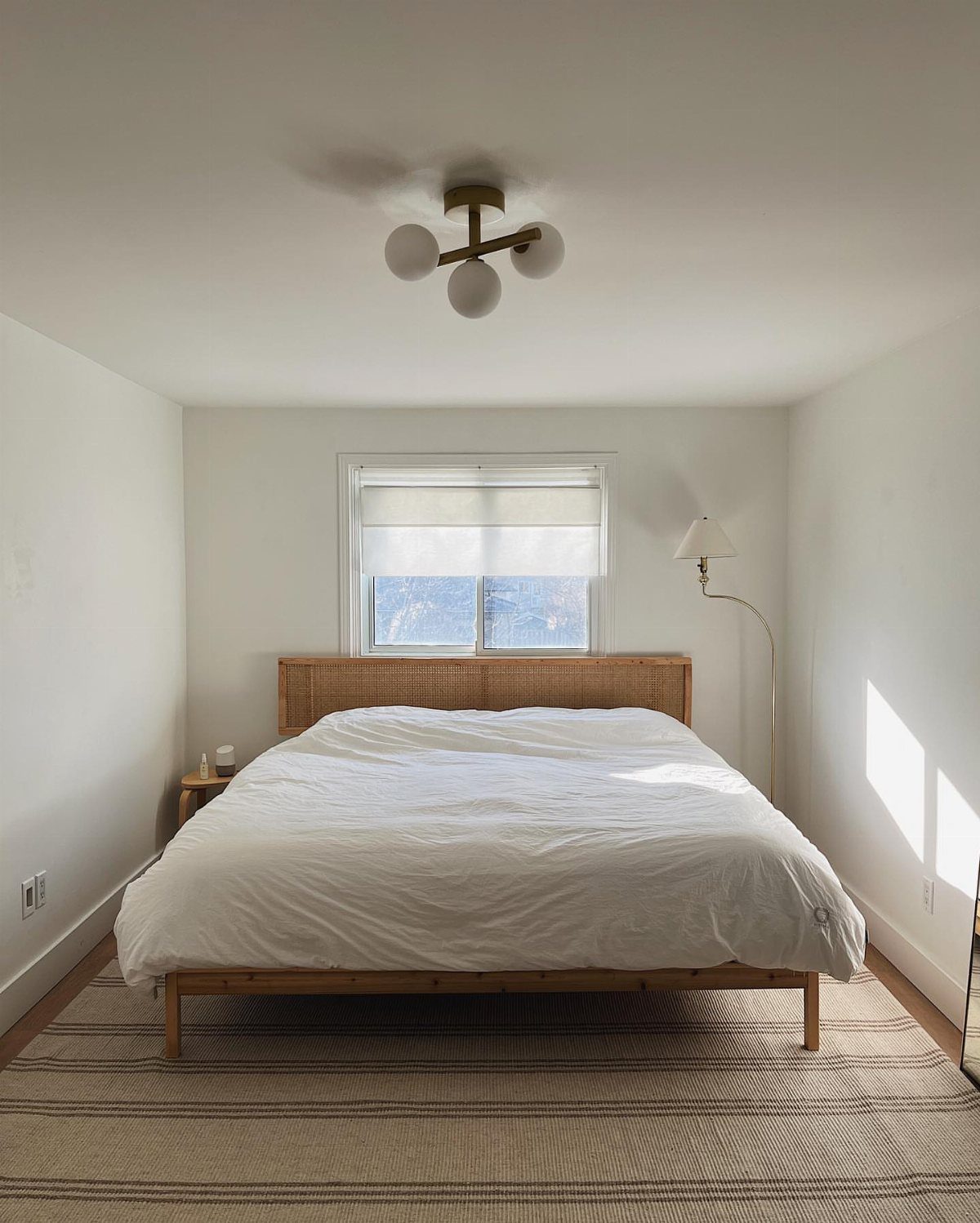
Sitting close to the floor makes a room look taller, and a low platform bed is the quickest way to get that effect. With no tall headboard, the wall above the bed stays open for art or a lamp.
I like a cane headboard on a wood frame, because it adds texture without adding bulk.
Check that you can sit up and reach the floor comfortably before you commit to a very low frame.
5. Wall Art
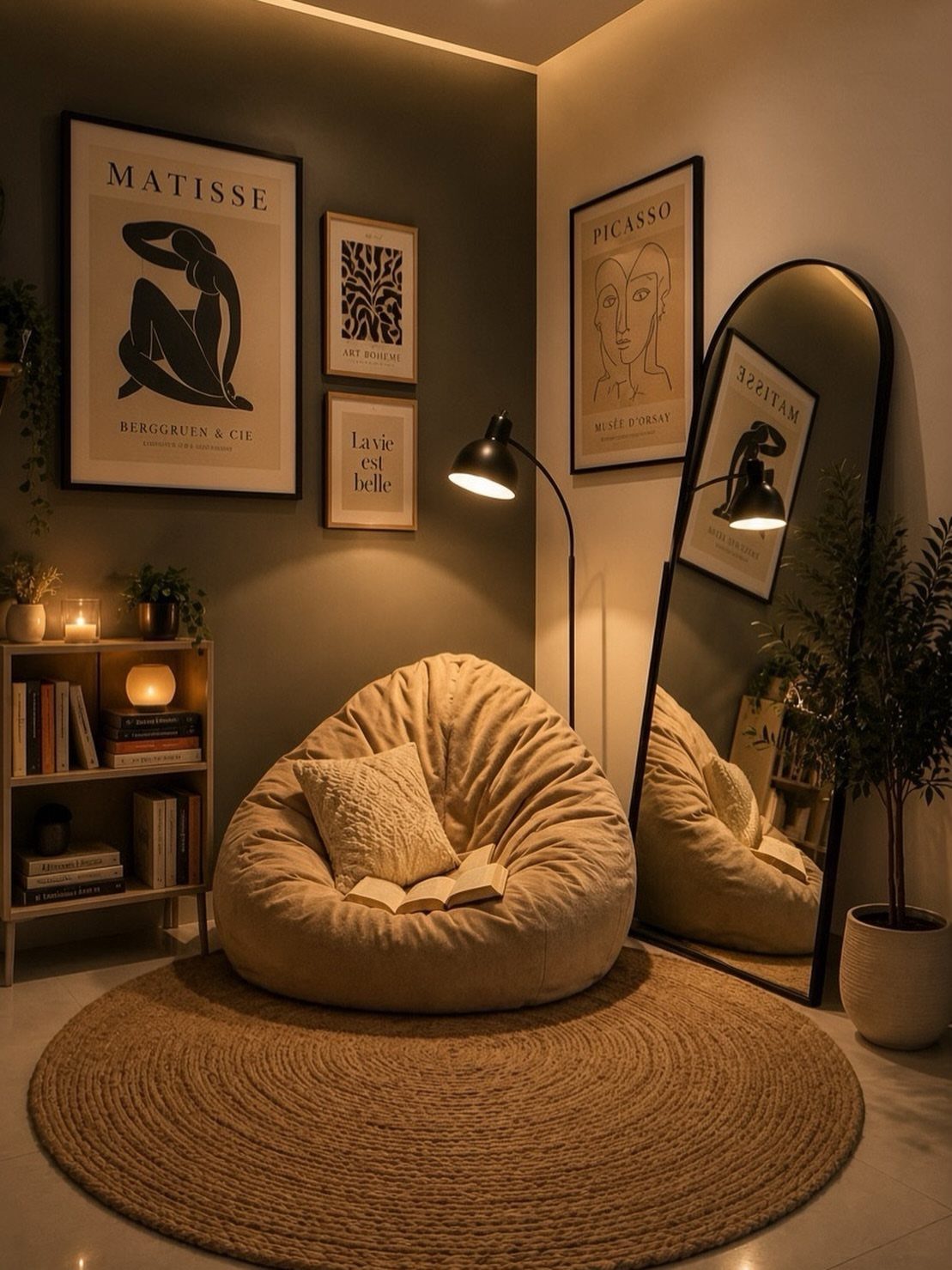
3 framed prints in a tight cluster over a corner chair give a bedroom a focal point without a big wall of art. On a dark wall, white-matted frames pop the most.
I’d choose prints of artists or places you actually care about, since they’re the first thing people read about the room.
Keep the frames the same color and hold the gaps identical from frame to frame so they read as one piece.
6. Feature Wall
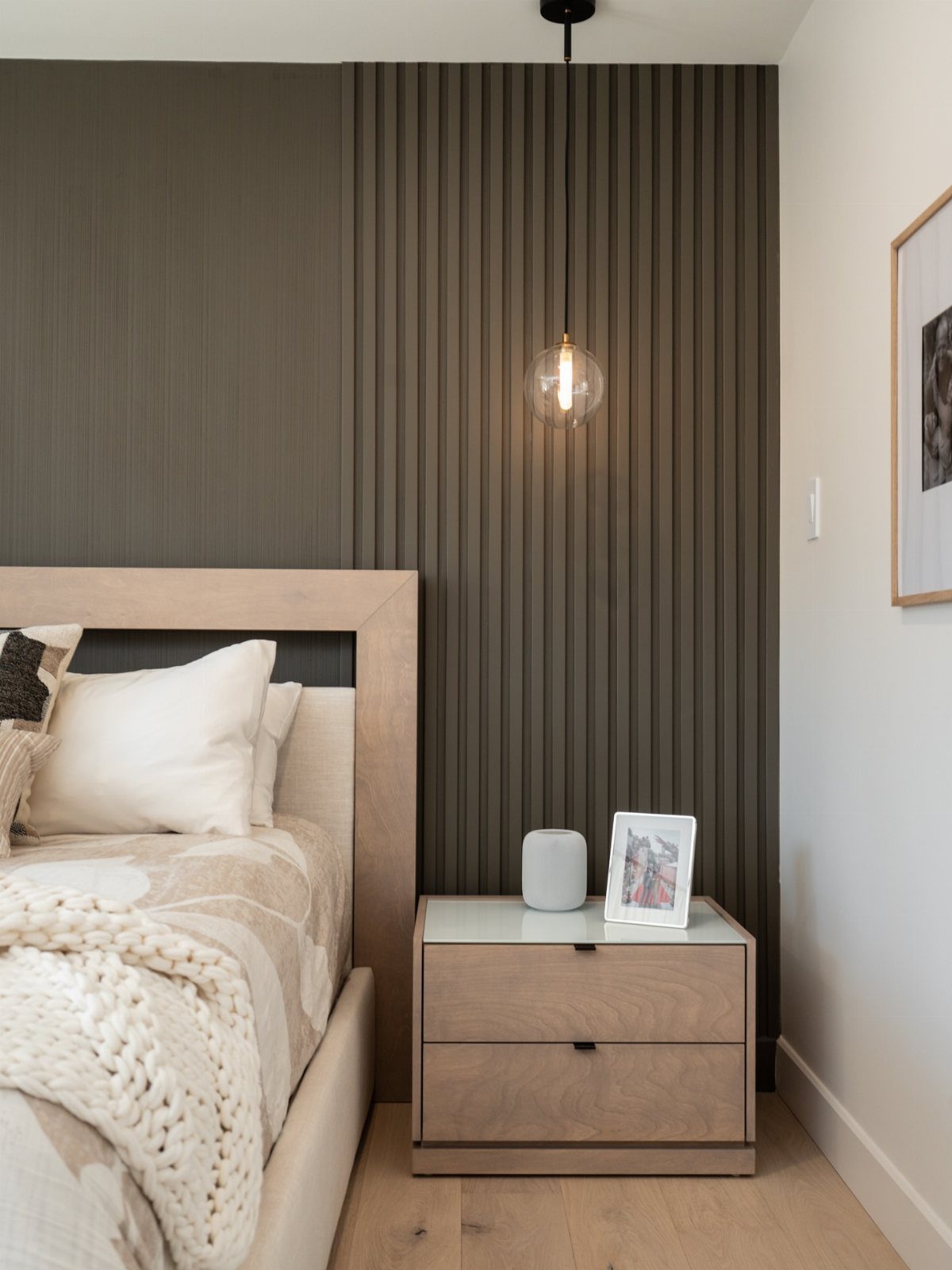
One dark gray wall with a slatted section does what a full room of paint can’t: it tells you where the bed belongs. Light wood furniture in front of it keeps the contrast sharp, so the wall looks deliberate.
Slats are the weekend-friendly route if you want texture, and a plain painted wall is cheaper if you don’t.
Pick the wall behind the headboard, and leave the other three light.
7. Decorative Ceiling Fixture

A recessed tray ceiling with a hidden LED strip turns the ceiling itself into the light fixture, and a fan in the center keeps the room practical.
The glow bounces off the ceiling, so the room feels softer than it would under a single bright bulb.
If you rent and can’t build a tray, a statement pendant or a flush-mount with a bold shape gets you the same focal point. Put it on a dimmer so the room can shift from bright to low at night.
Pick one big fixture and leave the rest of the ceiling plain.
8. Layered Bedding
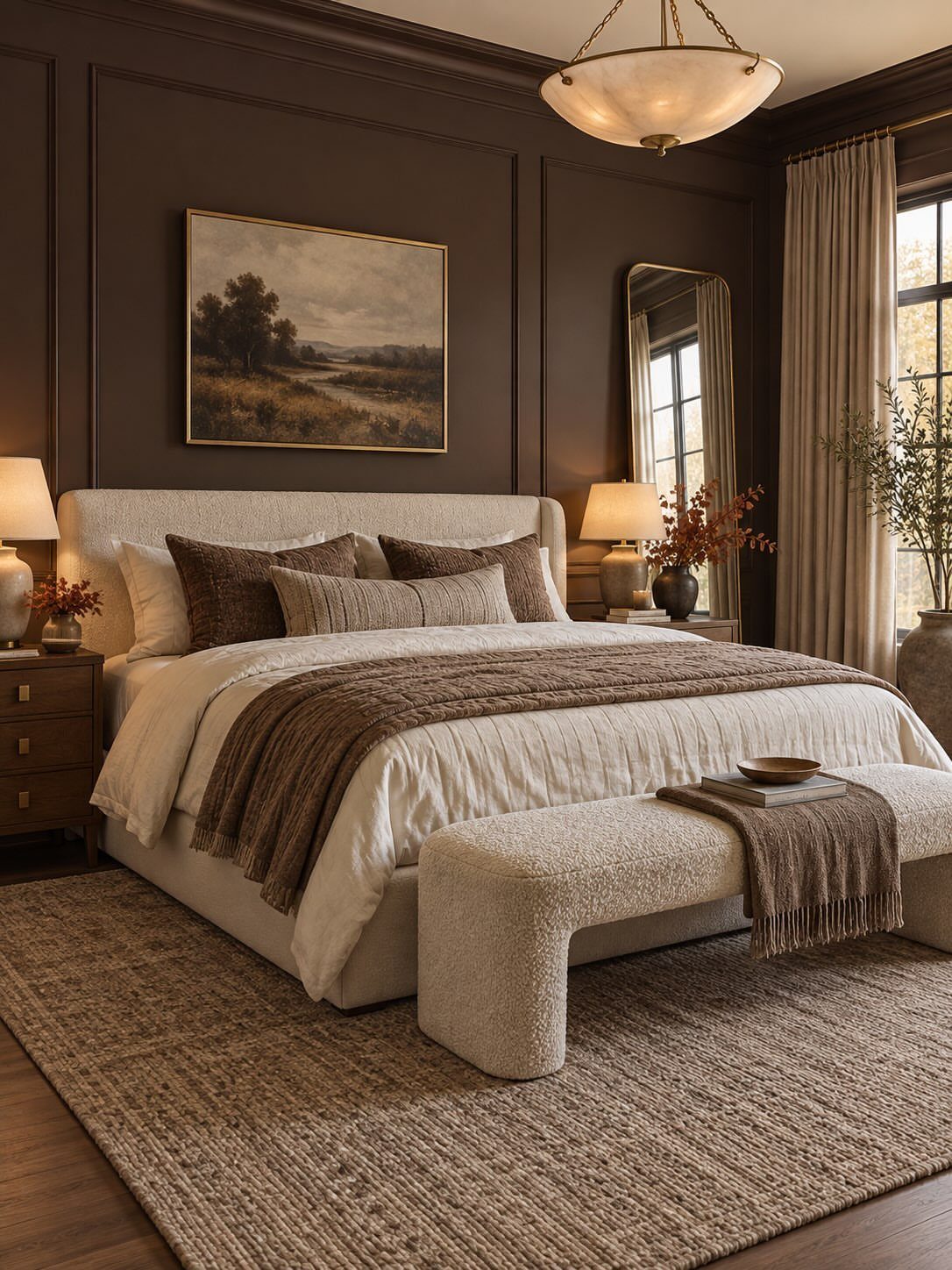
Layered bedding is a cheap way to make a bed look tailored: a fitted sheet, a flat sheet, a blanket folded across the lower third, then a duvet or throw in a second tone.
Staying with white and brown, as here, keeps it calm and masculine rather than fussy.
I’d mix textures instead of patterns. A waffle weave next to smooth cotton, or a chunky knit at the foot, adds depth without clutter.
A dark wall makes light layers stand out, so go lighter on the bed if the room is dark.
9. Nightstands
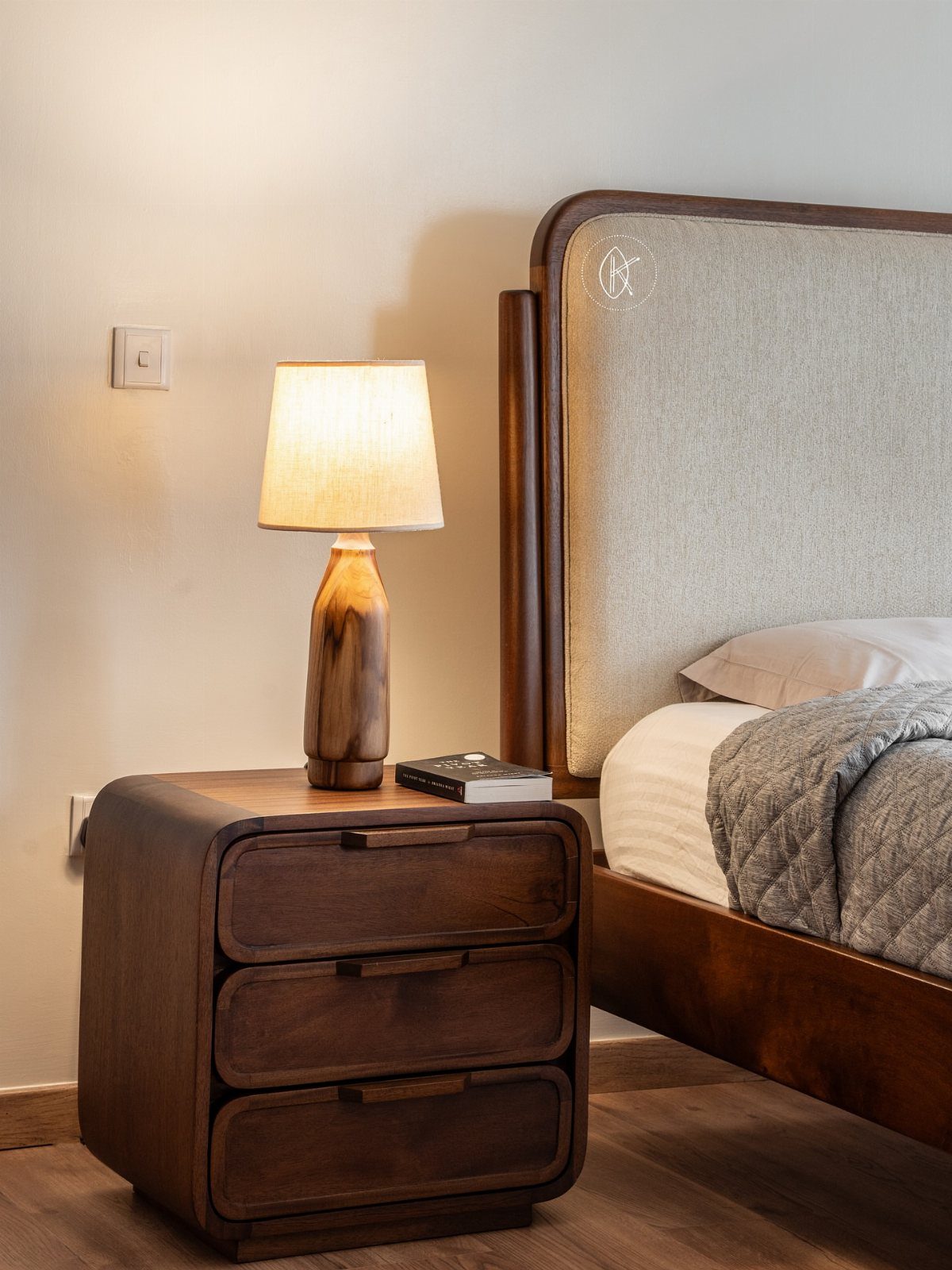
A three-drawer nightstand holds more than a bare table, and the drawers hide chargers, a watch and the things that otherwise pile up beside the bed.
Dark wood looks tidy when the top stays sparse, with just a simple lamp and one book, because nothing else competes with it.
Choose a top that sits near the height of your mattress, so you can reach a glass or phone without stretching. A pair looks balanced, though one is enough when floor space is tight.
Keep the top to two or three items, and let the drawers take the rest.
10. Guitars on Display
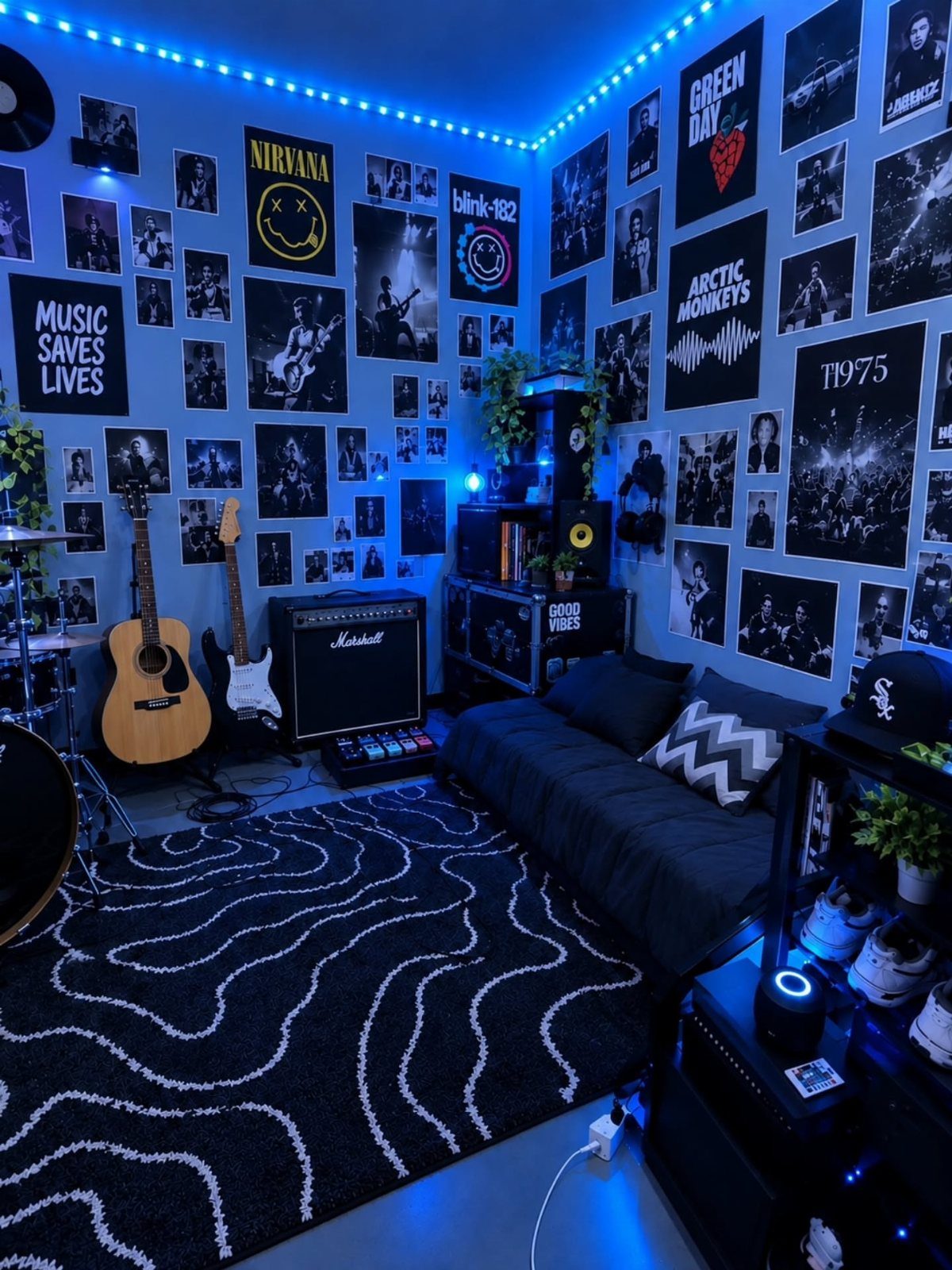
Guitars leaning on the wall next to an amp say more about who sleeps in a room than any art print. They count as decor and as gear you can grab in seconds, which is why they work.
Put them where nobody will knock them over: a corner away from the door, with the guitars resting on a padded stand or wall hanger instead of leaning loose.
Band posters or LED strip lighting push the wall toward a full music-room look.
Keep the amp off the bed side if you want sleep and practice kept apart.
11. Natural Wood Furniture
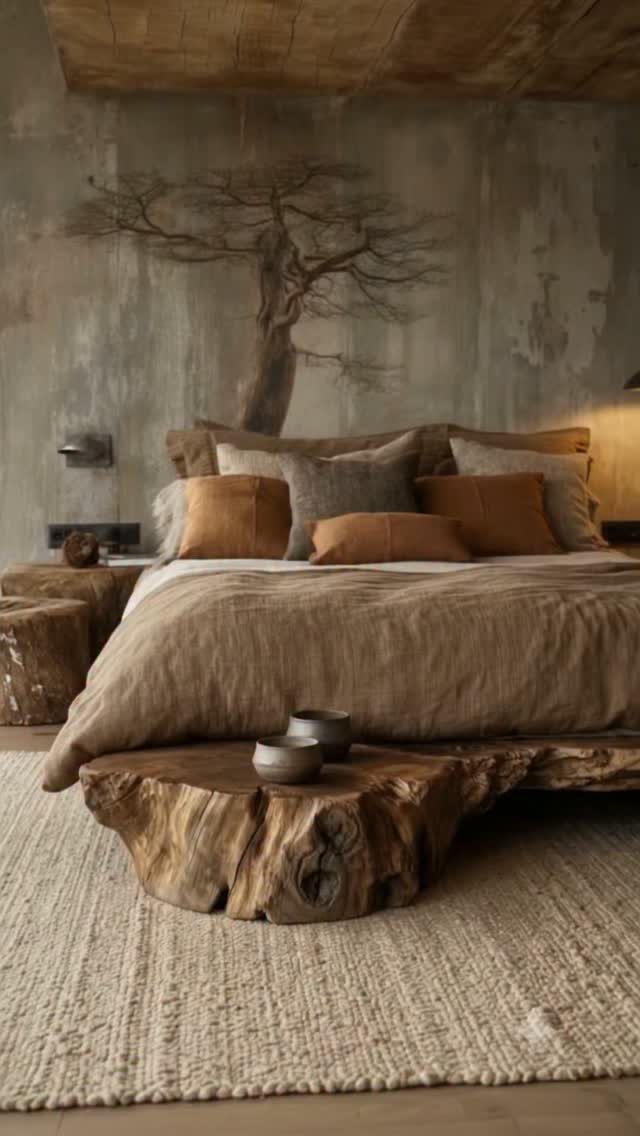
A raw-edge wood bench at the foot of the bed softens a room with cool gray walls, because the uneven natural edge and visible grain break up all those hard, flat surfaces.
Earthy linens and a beige rug in warm tones help it feel connected.
I’d use one substantial piece of real wood instead of lots of small ones. It works as seating for pulling on shoes and as a spot to drop a throw.
If the walls are cold in tone, bring in wood, wool and linen to balance them.
12. Gallery Wall
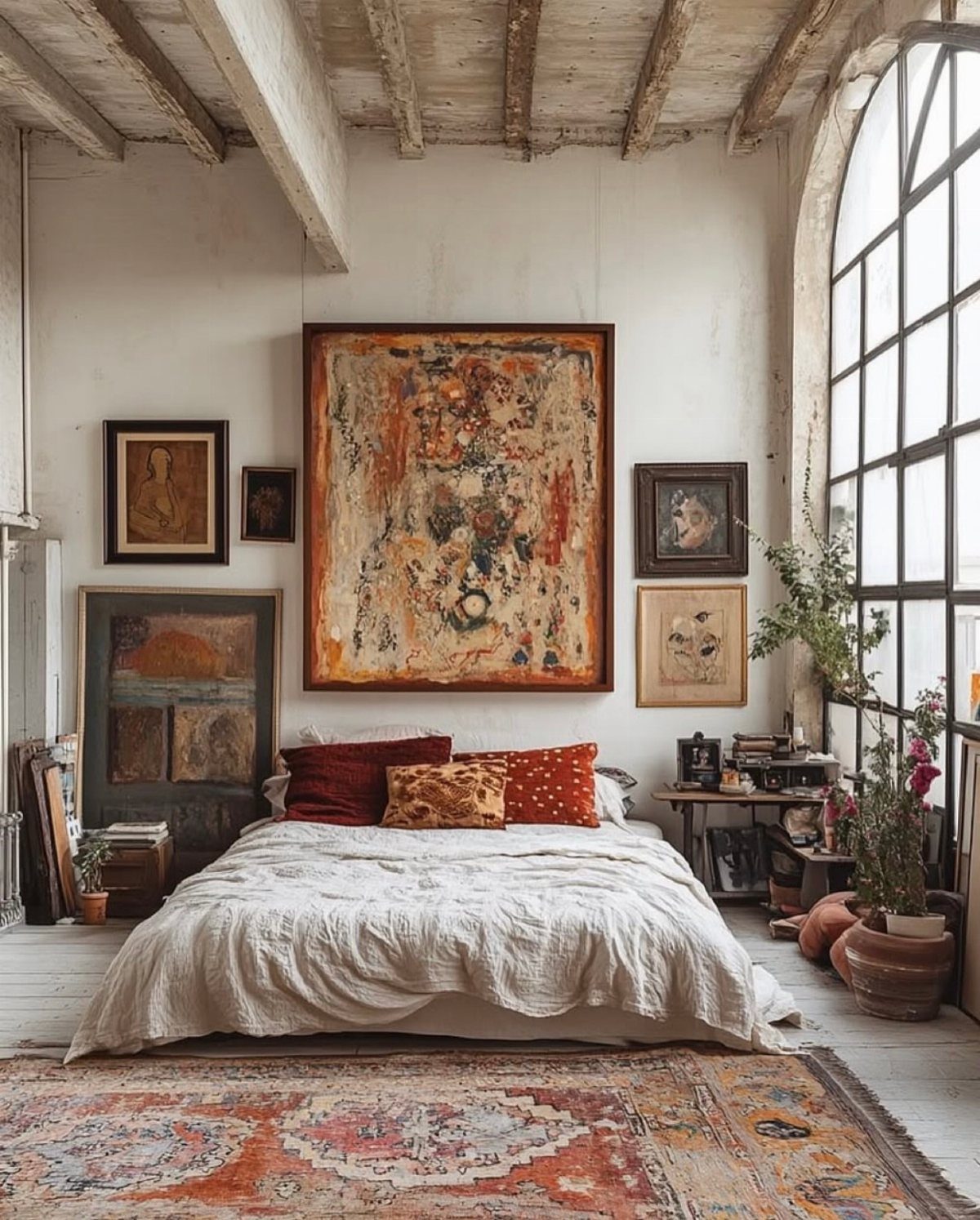
A gallery wall of mixed frames and paintings, abstract and portrait together, makes a bedroom feel collected over time instead of bought in one trip. Hanging it above the bed gives the wall a clear anchor.
Lay the pieces on the floor first and move them around until the arrangement feels balanced, then hang from the middle outward. Mix large and small sizes, and keep the spacing between frames consistent.
Thrift stores and local artists are good sources if you’re working on a budget.
13. Bedroom Chair
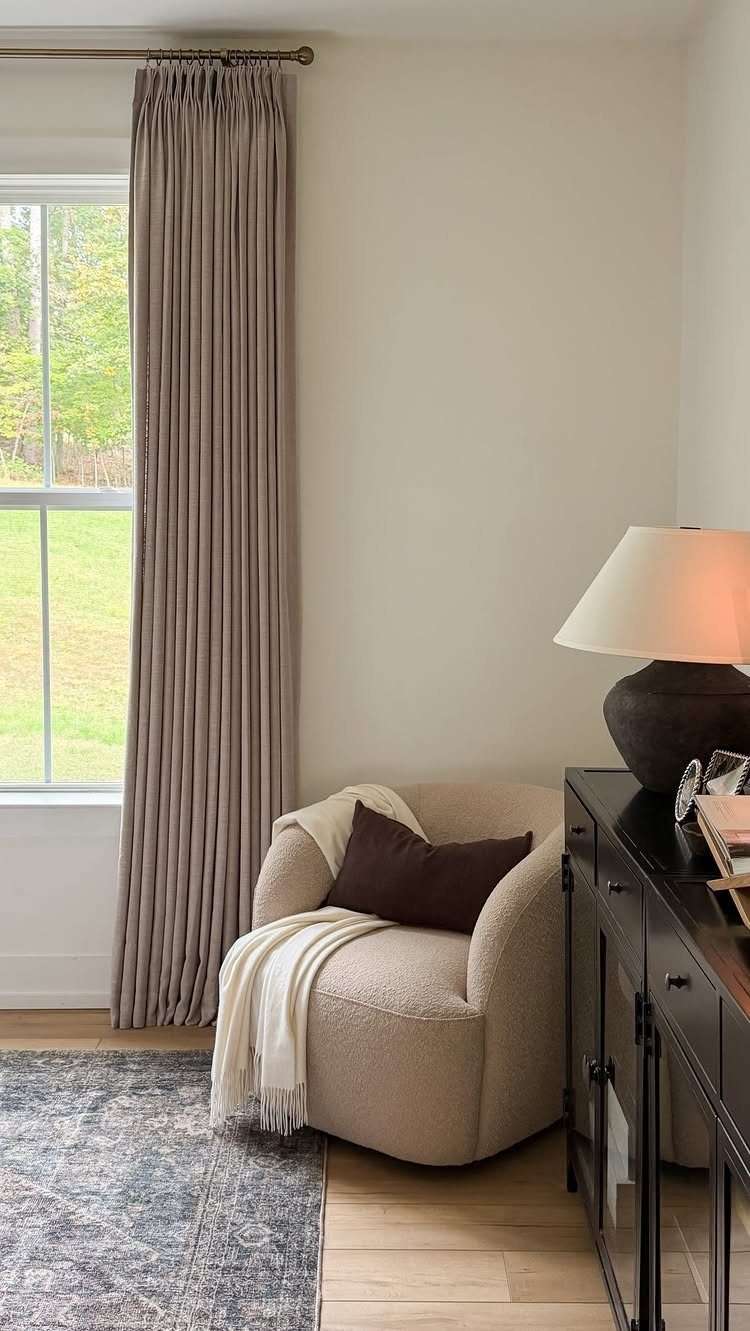
A swivel chair in cream bouclé gives a bedroom a soft place to sit that isn’t the bed. Pulling on shoes, reading for 20 minutes or setting down a throw all get easier once the room has one.
A spot near the window beside a dresser works best, since a lamp can sit within reach of the chair. A swivel base lets you turn toward the room or the view without dragging the chair around.
Pick a chair you’d actually sit in, not one that only photographs well.
14. Bedroom Candles
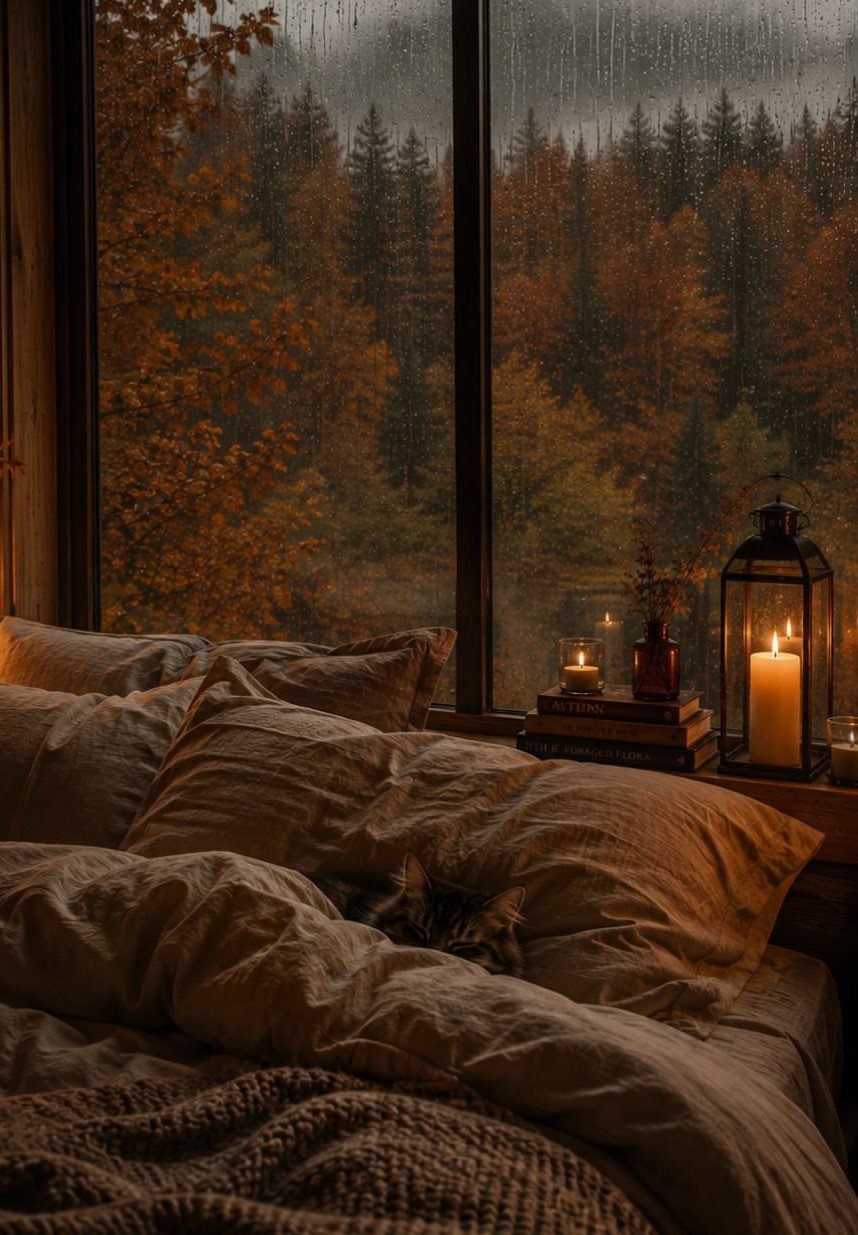
Candles on a windowsill give a bedroom scent and a finishing touch at the same time, and a lantern among them adds height so the row doesn’t look flat.
A couple of books stacked beside them make the sill feel styled without buying anything new.
I’d choose one fragrance for the whole room instead of mixing several; woodsy or spiced scents suit a fall mood. Keep the flames clear of curtains.
Blow them out before you sleep, every night.
15. Gold Accents
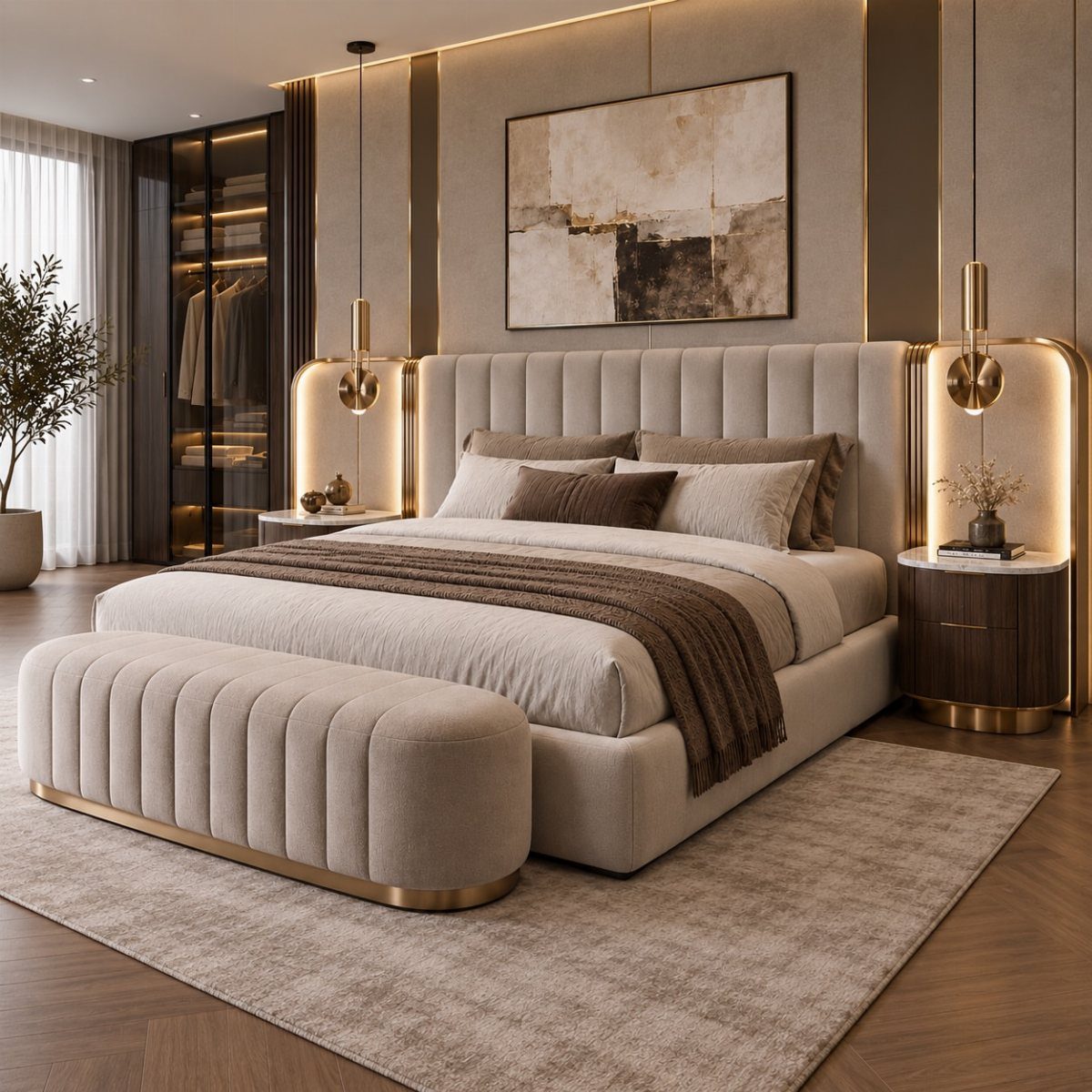
Gold works best in a beige room when it shows up in just two or three places. Pendant lights and thin trim on the furniture are enough to warm the neutrals without turning the space glossy.
Because the palette stays restrained, I’d repeat the metal at different heights: one overhead, one on the furniture, maybe a small piece on the dresser. Brushed or satin finishes read as calmer than mirror-bright ones.
If gold feels like too much, start with a single lamp base and see how it sits.
16. Dark Green Walls
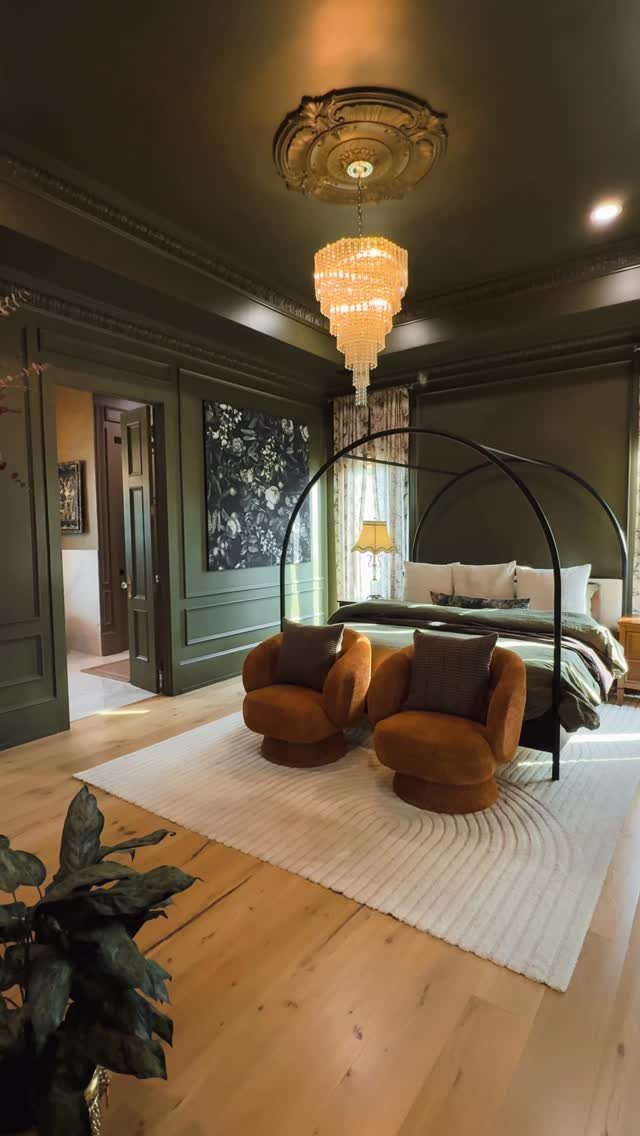
Deep green paint makes a bedroom feel enclosed in the best way, like a library or a private lounge.
Black metal on the bed and brown velvet seating pair well with it, because both hold their own against the dark color.
I’d keep the rug and bedding light so the room doesn’t turn into a cave; a white rug does that job well.
Paint is the cheapest way to get this look, and a single gallon covers a lot less wall than most people hope, so measure first.
Test a swatch in the evening light before you roll the whole room.
17. Walnut and Plaid
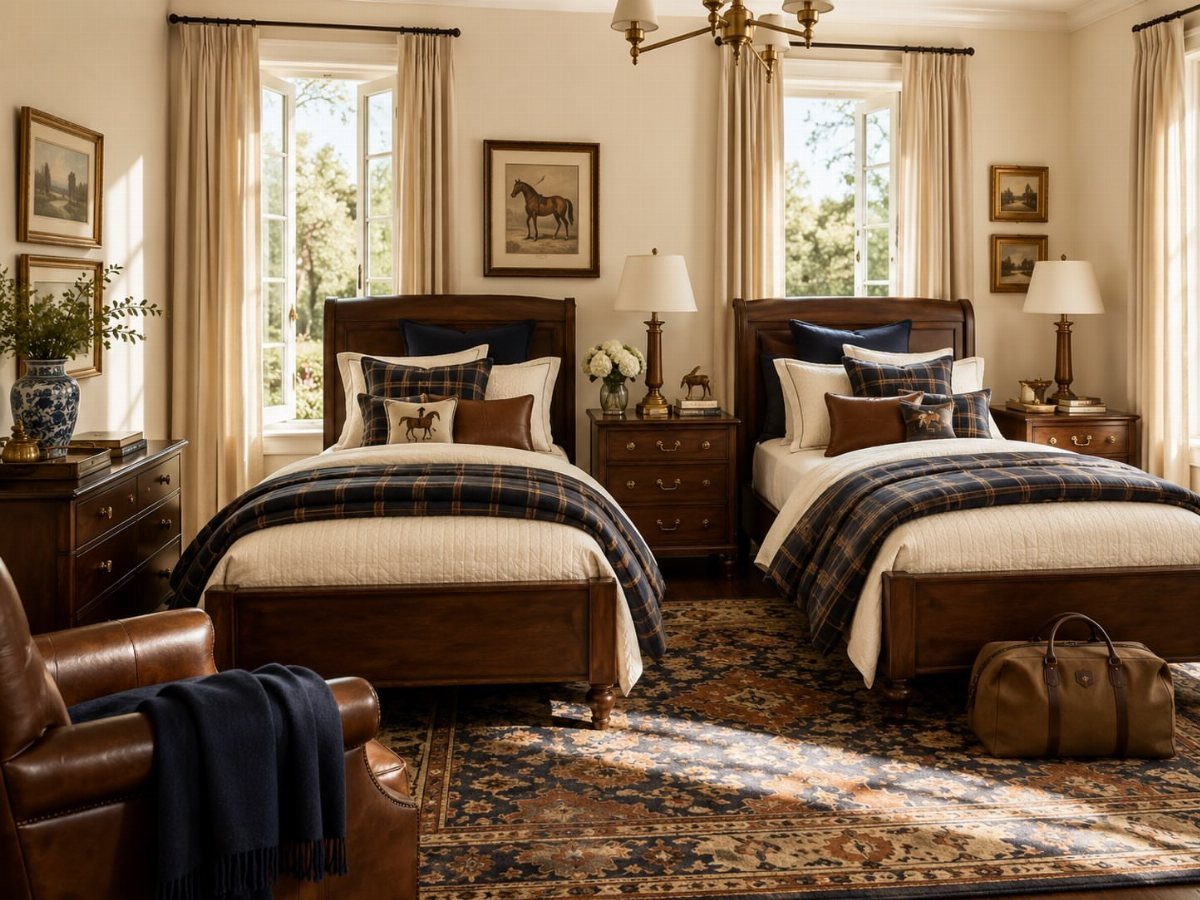
The pairing leans traditional, which suits a guest room or a shared room with 2 beds.
Pull the plaid colors from the rug so nothing fights.
One pattern is plenty; leave the walls and curtains plain.
18. Mid-Century-Modern Media Stand
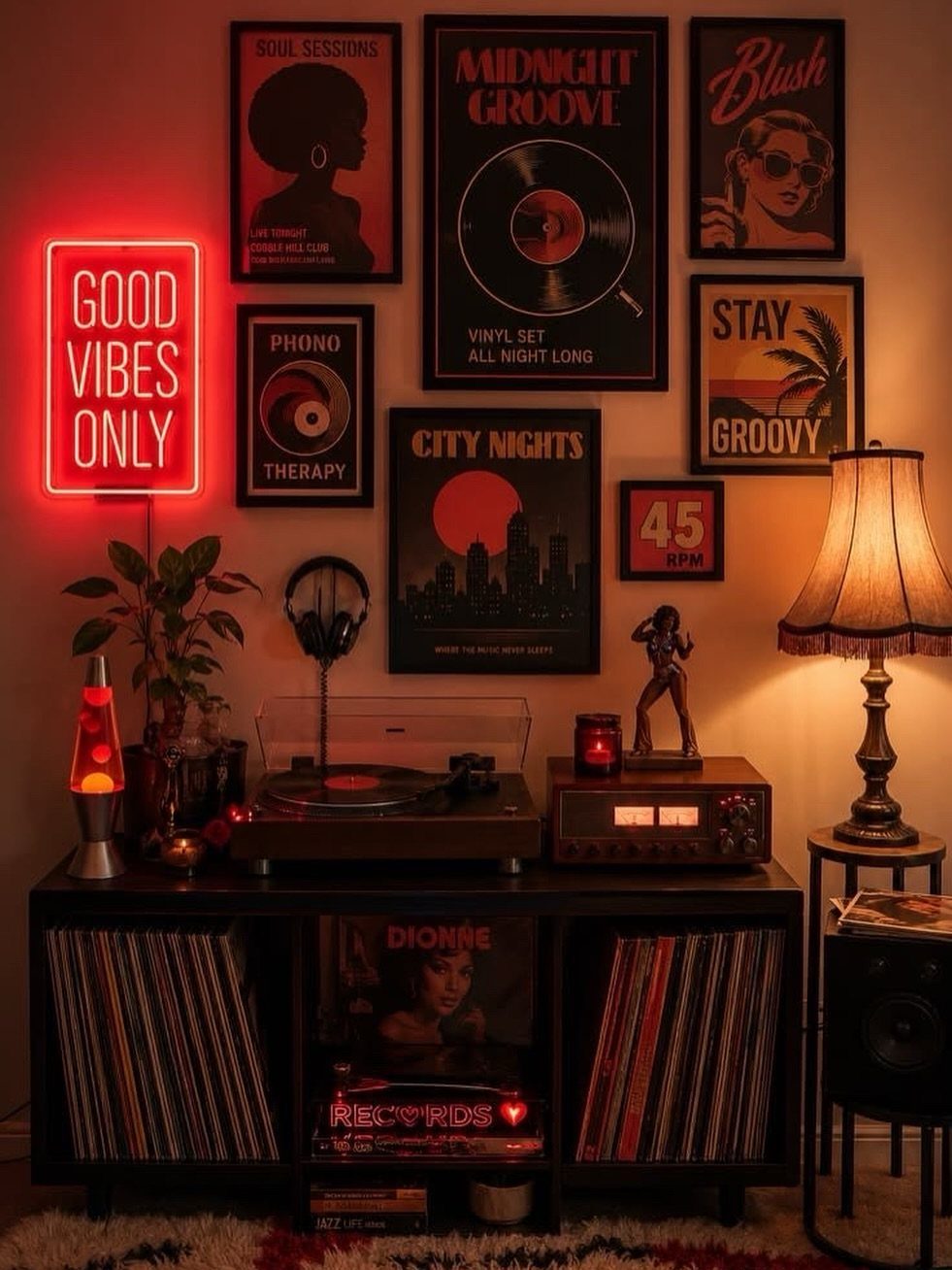
A low, dark wood media stand can hold a record player on top and the vinyl collection below, so the music is both decor and within reach.
The wood’s warm tone grounds loud wall decor above it, like posters or a neon sign.
I’d keep the records you play most at the front and rotate one album out for display, leaning against the wall. Group the posters tightly over the stand so the whole corner reads as one unit.
Give the turntable a level, steady surface before you load a record.
Balance Dark Tones with Warmth
Small windows are what make dark walls risky. Gray or black paint soaks up whatever daylight comes in, so a large neutral rug and light accessories do real work in bouncing brightness back into the room.
If real paneling is out of reach, wood-panel-effect wallpaper gives you the same look without the cost or the hassle of installing boards. It’s a fair shortcut, and the finished wall reads as rich rather than cheap.
Soft fabrics take the chill off hard surfaces, and metallic accents add a little grandeur against dark tones. Try a few combinations in the room before you settle, since the right mix depends on how much light you get.
Choose a Personal Style
Masculine rooms aren’t tied to one look. Industrial, rustic, mid-century modern and contemporary all carry the same strong lines and restrained color, so pick the one that matches what you already own and like.
A bedroom is private, which makes it the right place to display a collection you’d never put in the living room. Choose one collection, give it a single shelf or wall, and let it set the tone.
A mood board comes first, ahead of any shopping cart: pin or print 8–10 images, then look for the colors and materials that keep repeating.
Pin or print images of rooms you like, set them side by side, and note which colors and materials keep repeating.
That repeat is your style, and it’s cheaper to find out on paper than after the paint is on the wall.
Keep the Room Uncluttered
Simple forms and furniture that earns its spot keep a bedroom calm. Strong lines and a controlled color scheme, just a few shades repeated, do more than extra decor ever will.
Closed storage keeps belongings out of sight, so choose pieces with doors, lids or drawers instead of open shelves for everyday clutter.
On the walls, one or two large pieces take up less visual space than a crowd of small ones. A gallery wall can still work, but it only stays tidy if the rest of the room is quiet.
Reading in bed calls for sconces with a swing arm or a movable head, so the beam lands on the page and not on your partner. That puts the light where you need it and frees the nightstand.
“Sparse, simple forms with an edgy feel are key decor elements for a man’s bedroom,” she says.
Frequently Asked Questions
How should a man decorate his bedroom?
Start with a mood board of 8–10 images of rooms you like, then note which colors and materials keep repeating. That pattern is your style, whether it leans industrial, rustic, mid-century modern or contemporary.
Most of these looks share strong lines, a restrained palette and materials like wood, leather and iron. Sorting it out on paper costs far less than repainting.
What are some cool things for a guy’s bedroom?
Guitars on a padded stand or wall hanger next to an amp make decor and gear in one. Music fans get the same effect from a low dark-wood media stand, with a turntable on top and records stacked beneath.
A slatted wood wall behind the bed adds texture too. Because almost nobody but you sees the bedroom, it can hold a collection that would feel out of place in the living room.
What should men have in their bedrooms?
A nightstand with drawers, a comfortable chair and closed storage cover most needs. Drawers keep chargers and a watch out of sight, and a surface at mattress height puts a glass or phone within easy reach.
A chair gives you a place other than the bed to pull on shoes or read. A swing-arm sconce over the pillow aims light right at the page for reading in bed.
What colors are best for a masculine bedroom?
Charcoal, deep green, olive and rust all work, along with warm browns. Dark paint soaks up daylight, so in a room with small windows, balance it with a light rug and light accessories.
A rust duvet is an easy way to add warmth to a dark scheme. Brush a swatch on the wall and check it after dark under your lamps before committing to the full room.
What kind of bedding is best for a man’s bedroom?
Layered bedding in a calm palette like white and brown looks tailored and keeps its masculine edge. Skip ornate details, and keep the bedding lighter if the walls are dark.