
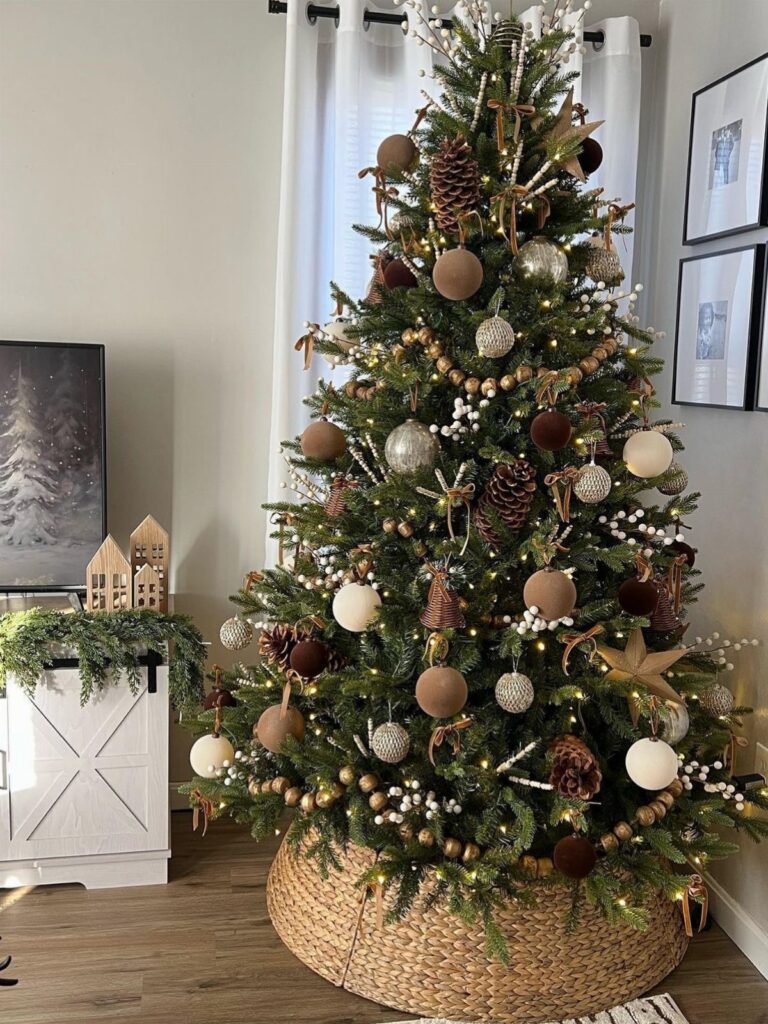
Before picking a style, look at the walls and the sofa.
Deep green walls make red ornaments look richer, a white room gives faded pastels room to stand out, and a neutral space with a white sofa pairs well with a sparse silvertip carrying only a handful of white and gold pieces.
The ideas run from a single oversized velvet bow to tinsel garland strung across the ceiling, and from quiet gold and pearl to a maximalist tree built from mismatched baubles.
1. Red and Green Colors
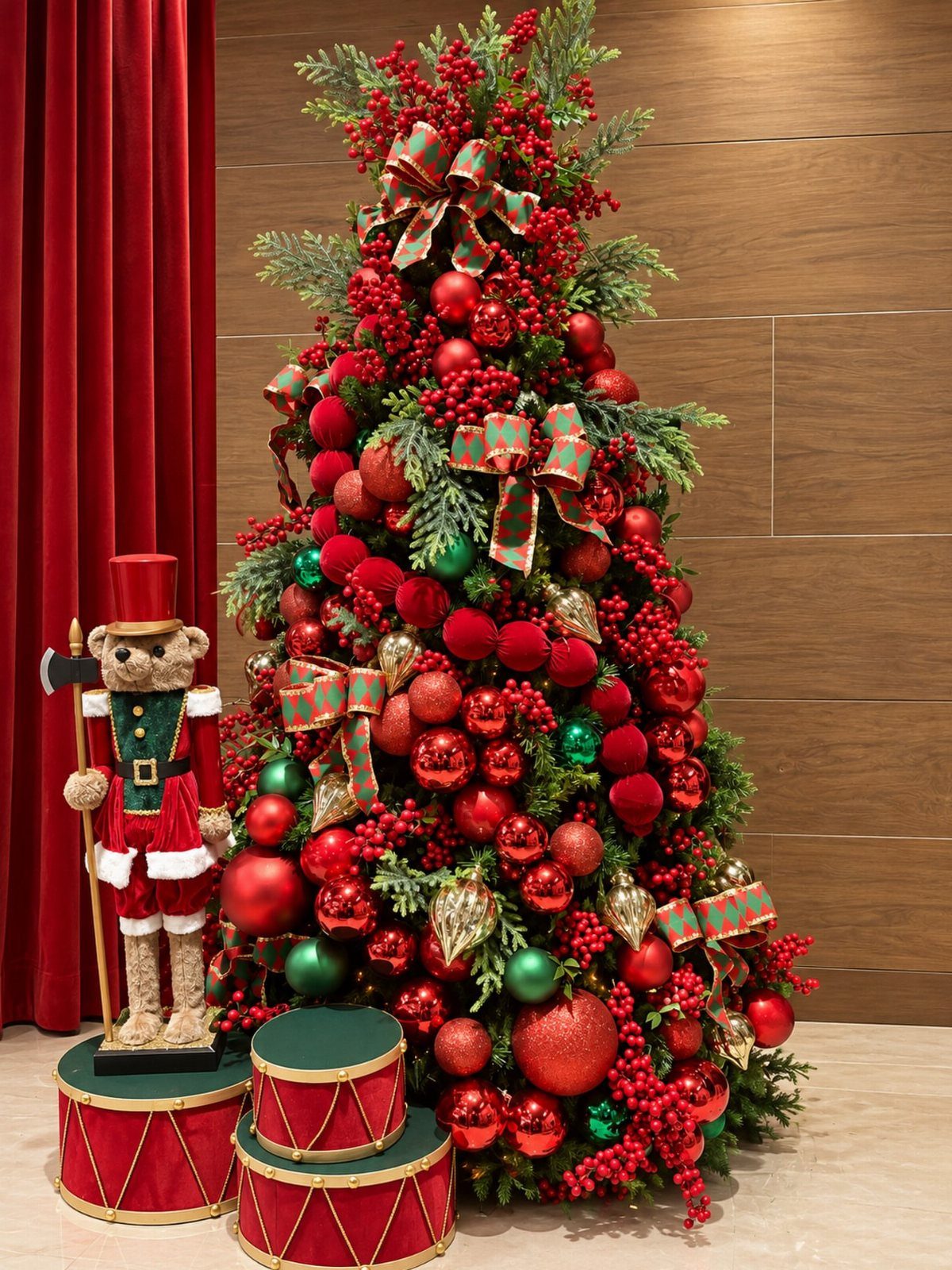
Plaid bows are the detail I’d copy here. They tie the red ornaments to the green tree and give a classic palette a little farmhouse character.
Red and green is the safest pairing in Christmas decorating, and it suits traditional, modern or farmhouse rooms alike.
I’d let red lead on the ornaments and use green baubles to echo the branches, so the tree doesn’t look like 2 color schemes competing.
2. Bows and Ribbon
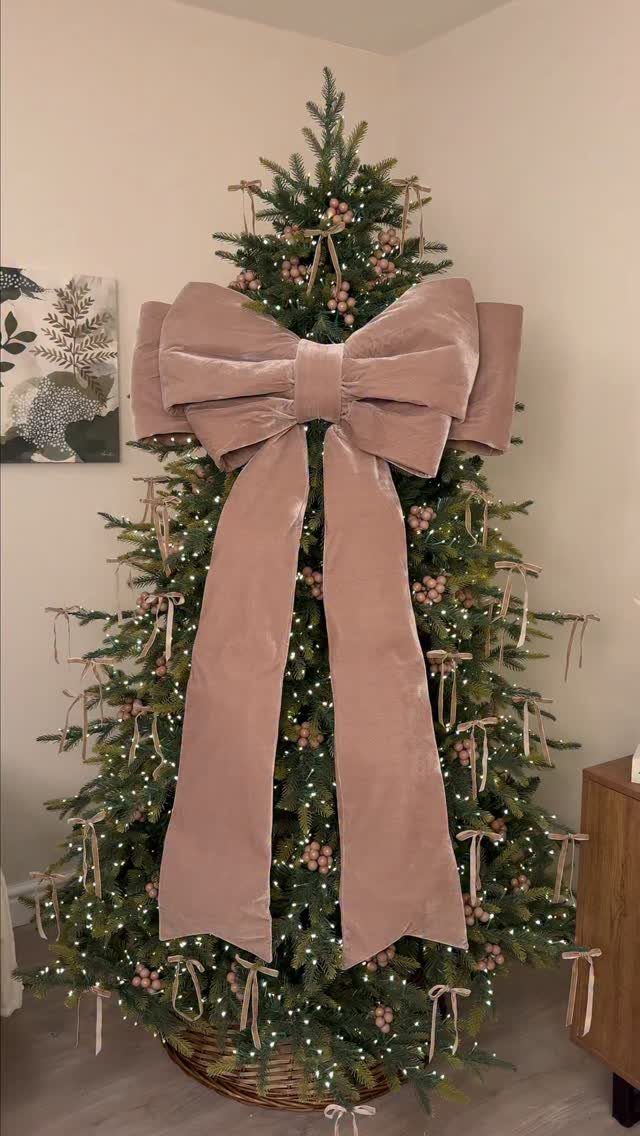
One oversized velvet bow does more than a dozen ornaments. Here it’s dusty rose, surrounded by small beige bows, and the size contrast is what makes the tree look planned.
Ribbon is a flexible, often lower-cost way to fill a tree compared with buying boxes of ornaments or yards of garland.
For a tree wrapped in bows, one color family works best, with a single texture like velvet or wired satin on the big bow and plain ribbon on the small ones.
3. Burgundy Christmas Tree
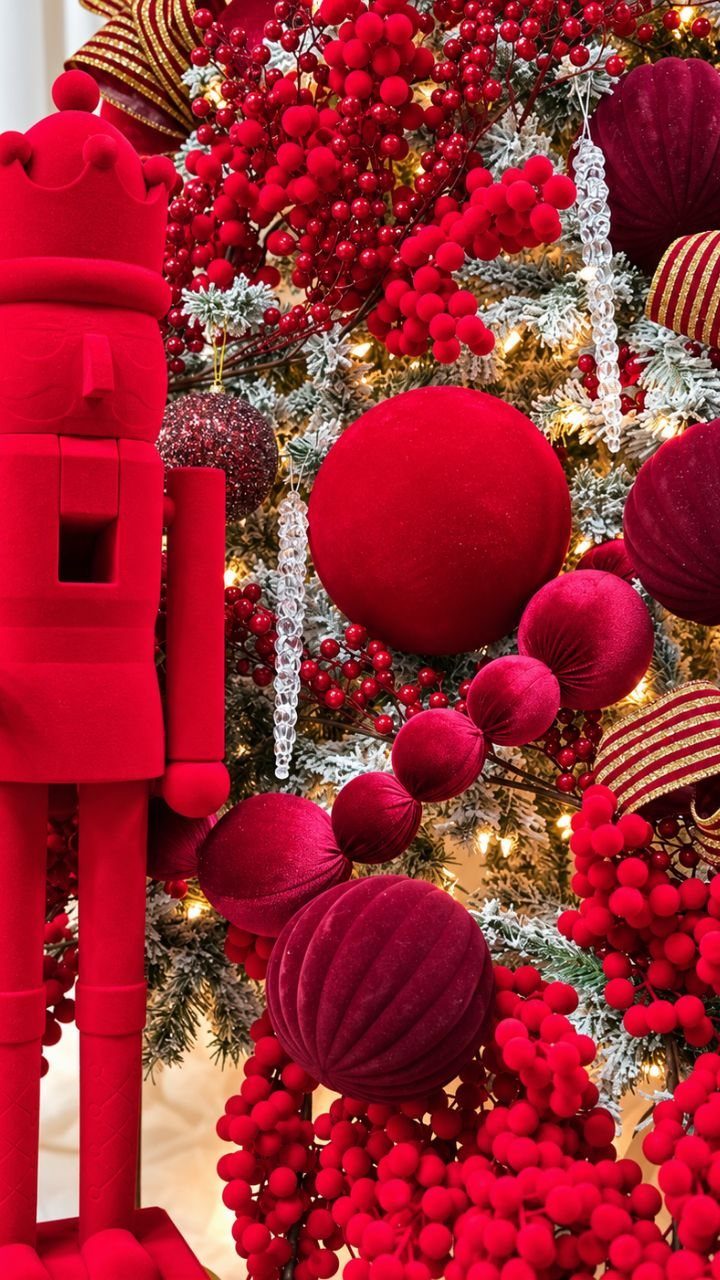
Burgundy gives red a moodier, deeper side, and velvet baubles suit it well. Red berry clusters between them add a brighter note so the tree doesn’t turn flat.
I’d mix at least 2 shades of red rather than going all burgundy.
A true red nearby makes the darker tone look intentional. This is a good palette for anyone who finds bright red a little loud but still wants something festive.
4. Crystal-Bauble Icicle Ornaments
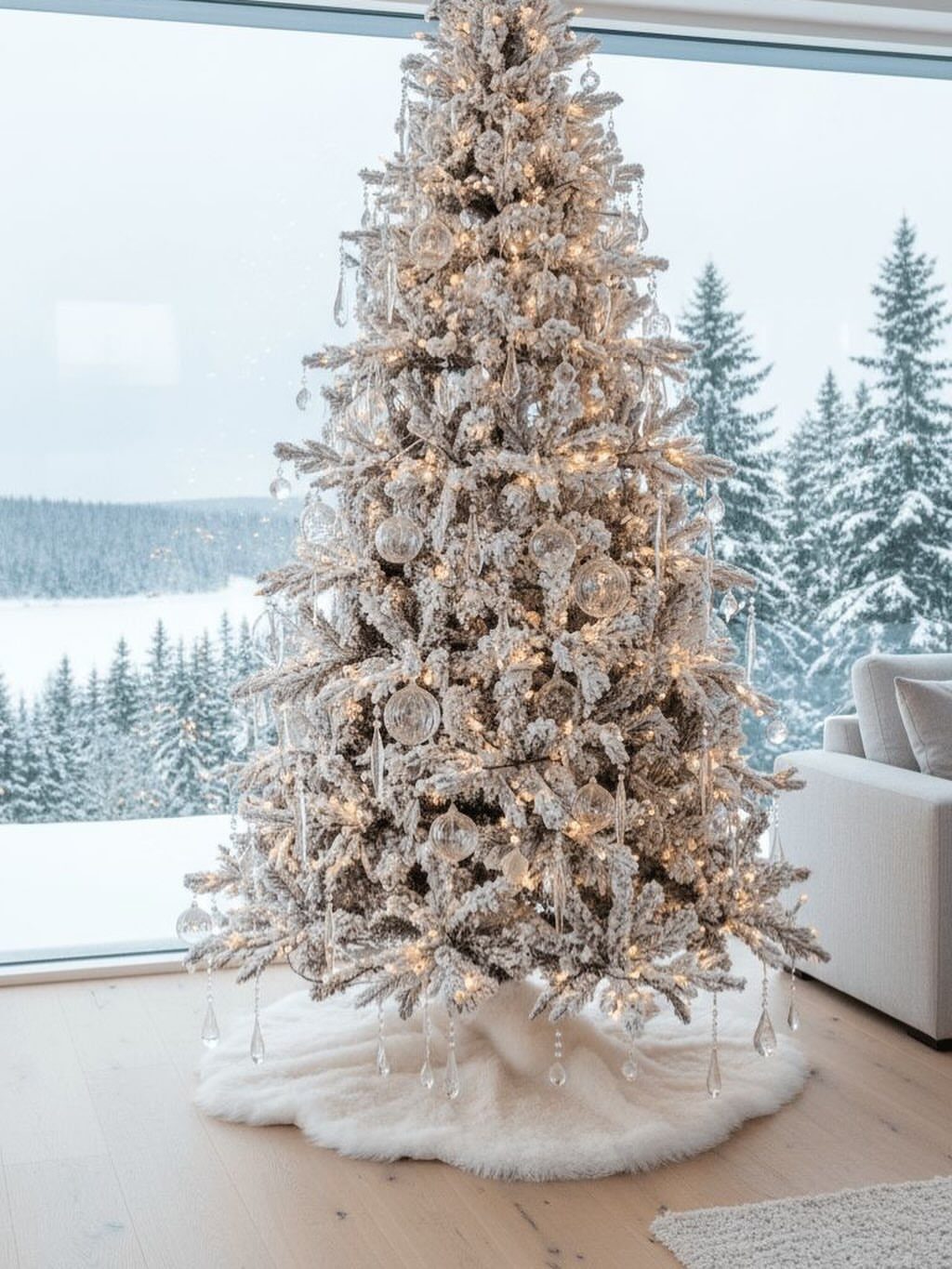
Clear crystal baubles on a flocked white tree keep the whole look icy, and the icicle ornaments are what push it toward real winter.
Hang the icicles from the outer branch tips so they dangle freely, and tuck the round baubles closer to the trunk for depth.
Keeping everything clear and white is my preference. Adding color would soften the frozen effect that makes this tree work.
5. Nostalgic Pastels
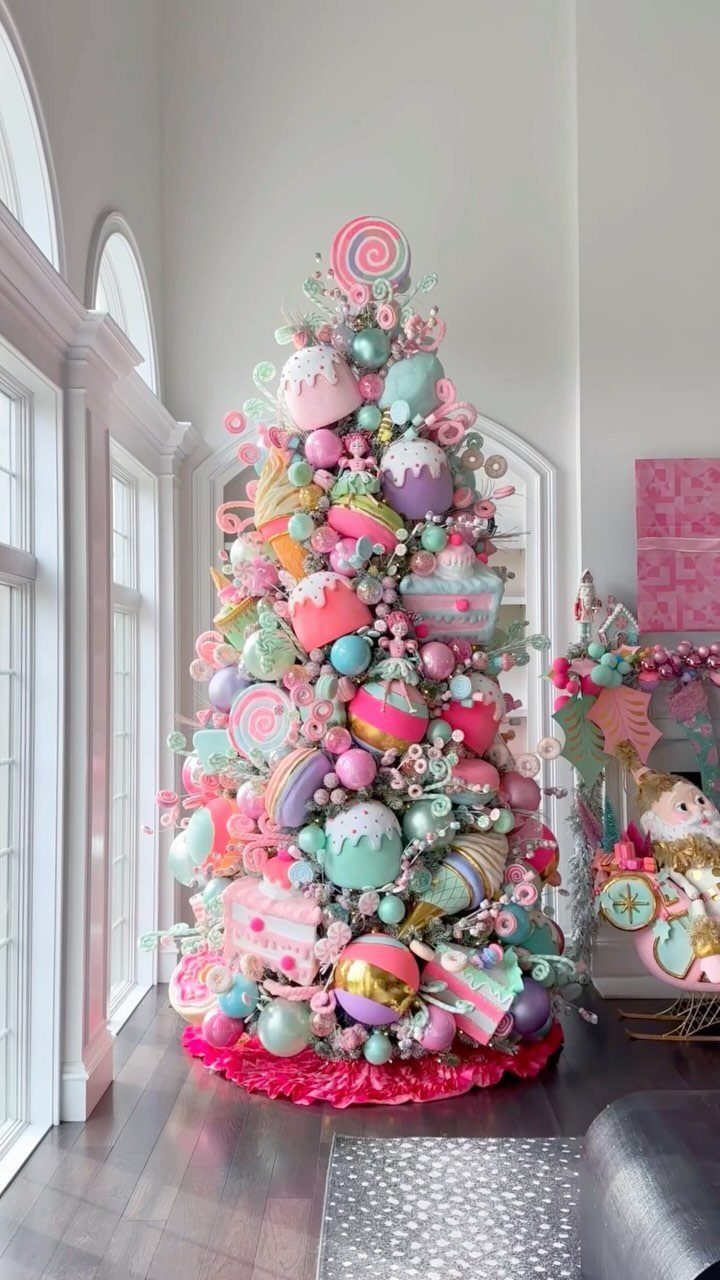
Faded pink, mint and lavender read as mid-century, not neon, and that’s the difference between nostalgic and childish. Oversized candy and dessert ornaments carry the humor, while the muted colors keep it soft.
The maker calls this look Candyland, which is a handy search term for finding more ornaments. A white room and a pink tree skirt let the pastels stand out, so I’d keep the surroundings quiet.
6. Sparse Alpine Silvertip Tree
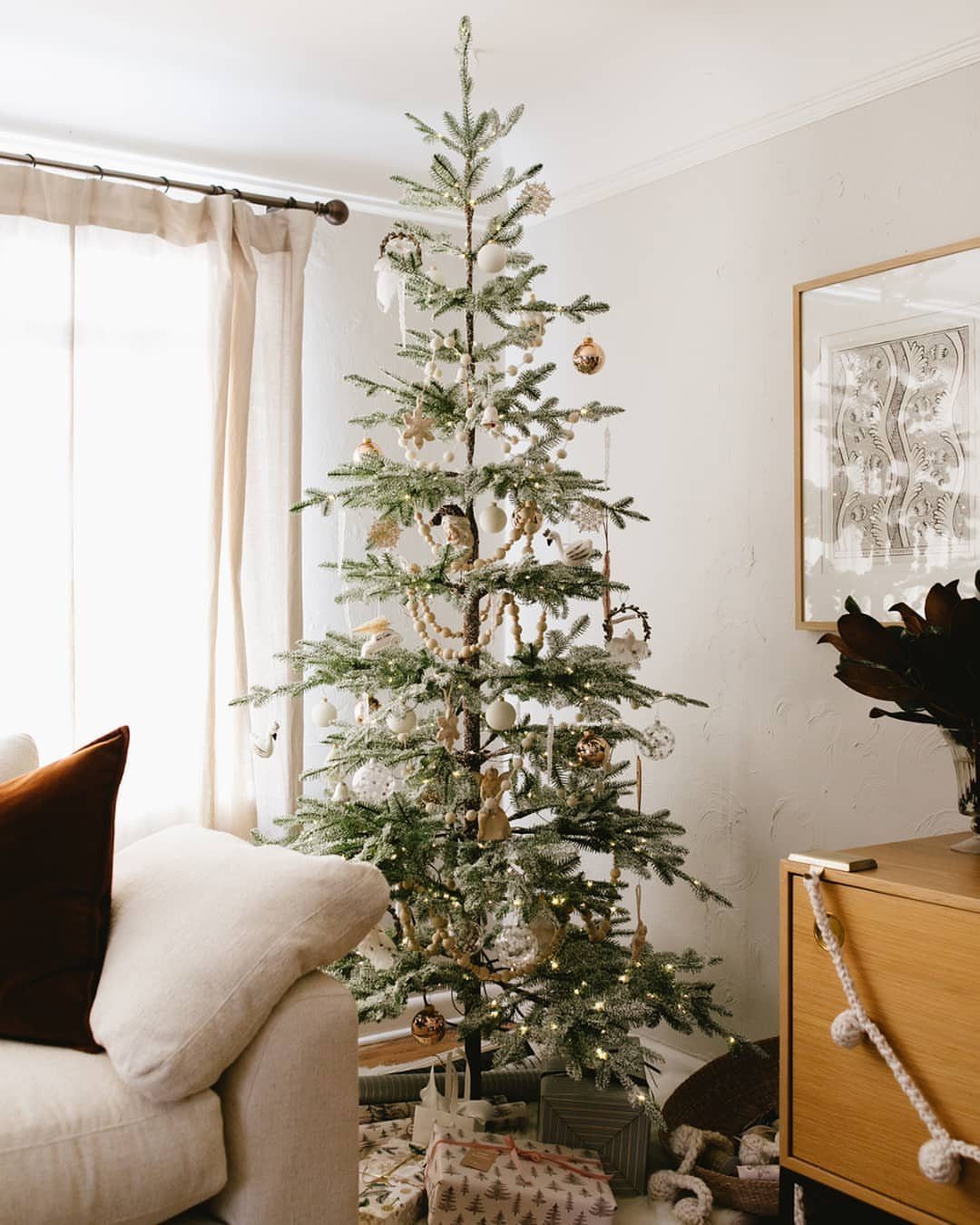
Gaps are the design on a sparse tree. Uneven branches leave negative space, and a few white and gold ornaments look better there than a crowd of them would.
Hang fewer pieces than feels natural and space them so the branch shapes stay visible.
It’s also gentler on a budget, since there’s less to buy. A neutral room with a white sofa and wood furniture suits this tree well.
7. Elongated Finials
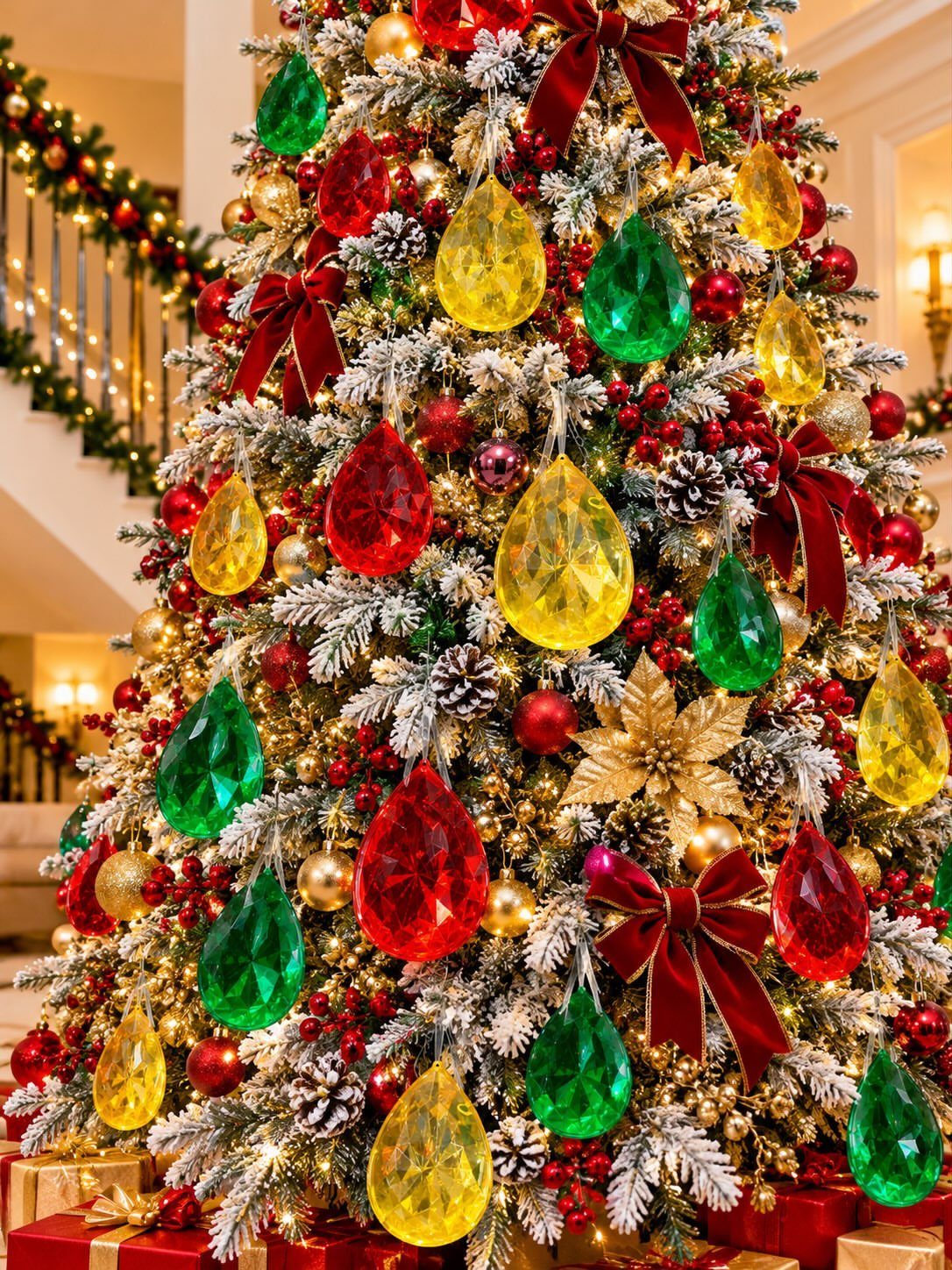
Length is what makes these ornaments work. Long teardrops and finials pull the eye down the branches, which round baubles can’t do, and they break up the dotted pattern a tree gets when every piece is a ball.
Toward the outer tips is where I’d hang them, since the branches there leave room for the finials to drop, while the rounder gold pieces sit nearer the trunk.
3 colors is plenty. Past that, the shapes start competing instead of repeating.
8. Emerald Green and Gold Tree
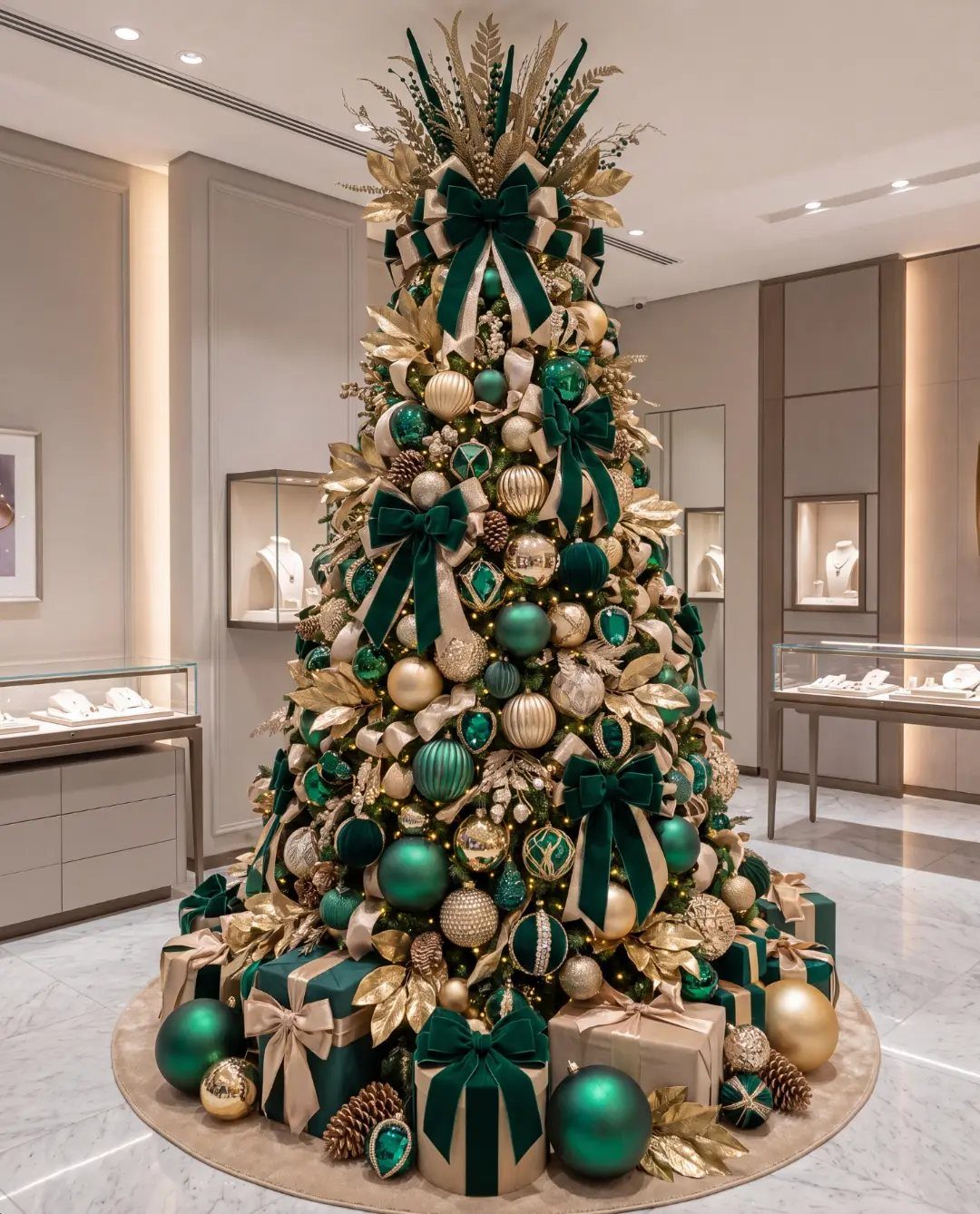
Emerald and gold is a rich pairing that doesn’t need many ingredients. Velvet bows add soft texture, and gold leaf ornaments catch the light so the deep green doesn’t swallow them.
Tall trees suit this best, because the bows can be spaced in a vertical line and still leave room between them.
I’d repeat one bow style throughout and let the gold ornaments do the glinting. A few wrapped gifts below in the same 2 colors finish it without adding cost.
9. Multicolored Lights
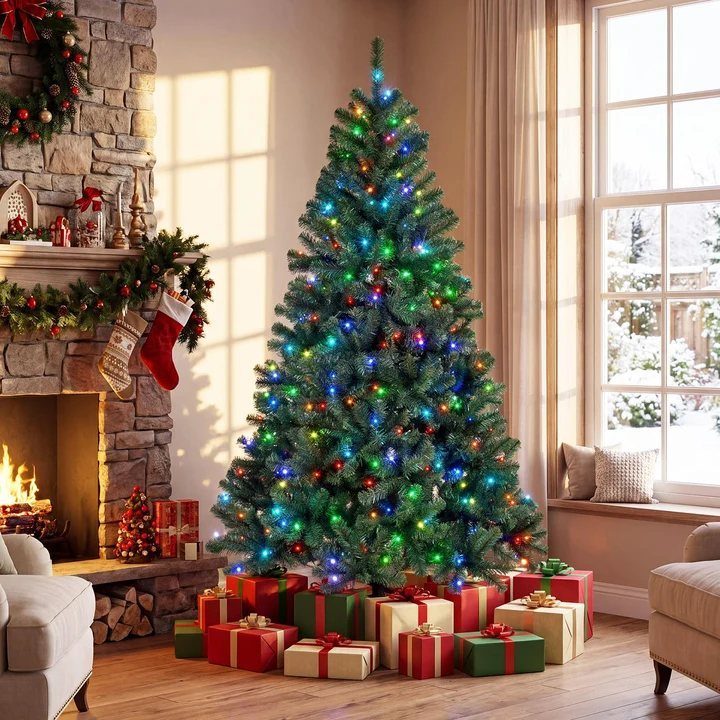
Multicolored lights are the old-fashioned choice, and I still prefer them on a traditional green tree.
They look warm and playful, and they suit a room that already feels lived in, like one with a stone fireplace and gifts stacked underneath.
If the ornaments are simple, the lights can carry the color. Keep the decorations modest so the glow stays the main event.
10. Wicker Tree Collar
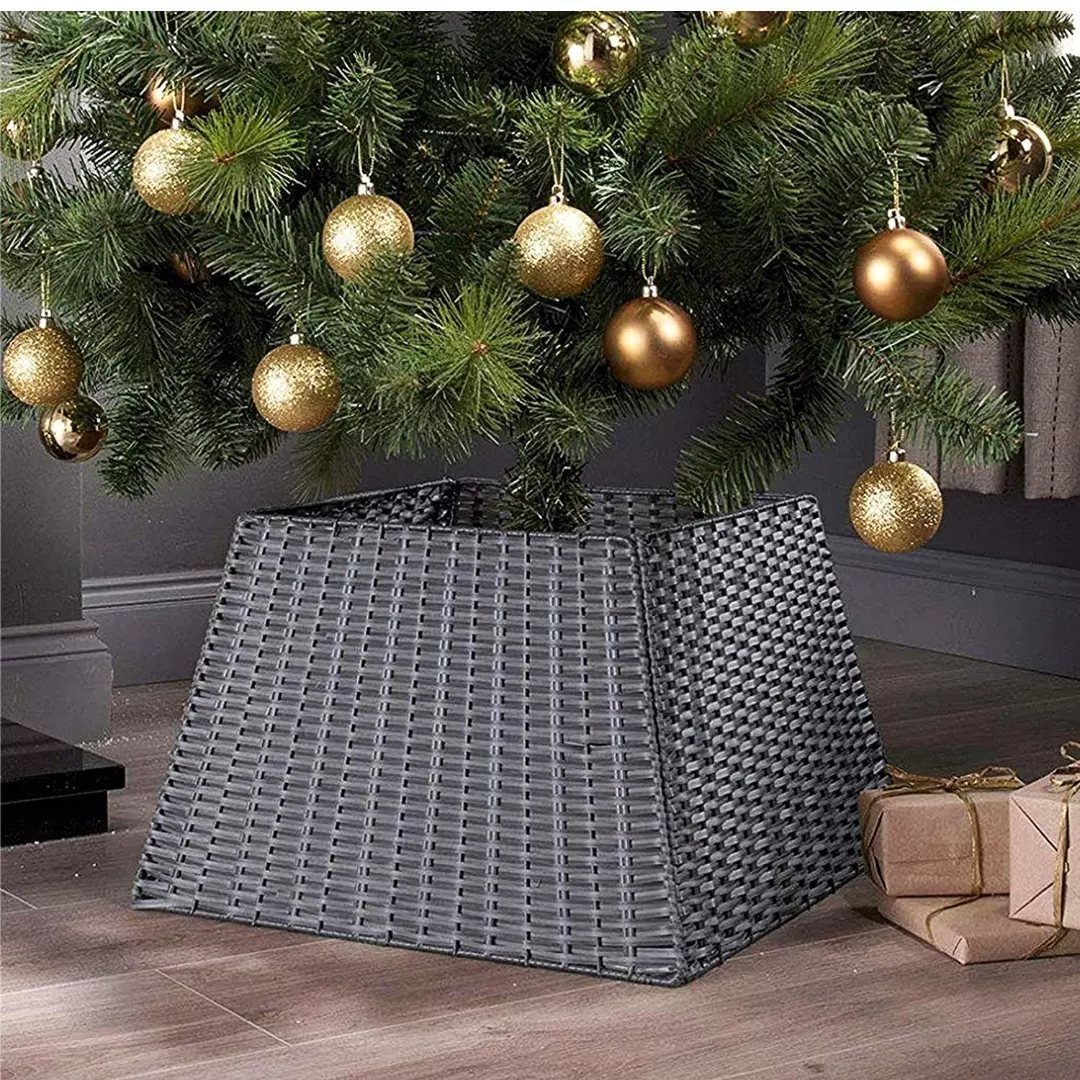
A woven collar hides the stand and tidies the base in one move. Grey wicker is a quieter pick than a traditional tree skirt, and it pairs well with gold ornaments because the cool tone lets the gold stand out.
Choose a collar a bit wider than the stand so the tree sits comfortably inside. Gifts can lean against the outside, and the base stays neat even after the wrapping starts to pile up.
11. Ceiling Tinsel Garland
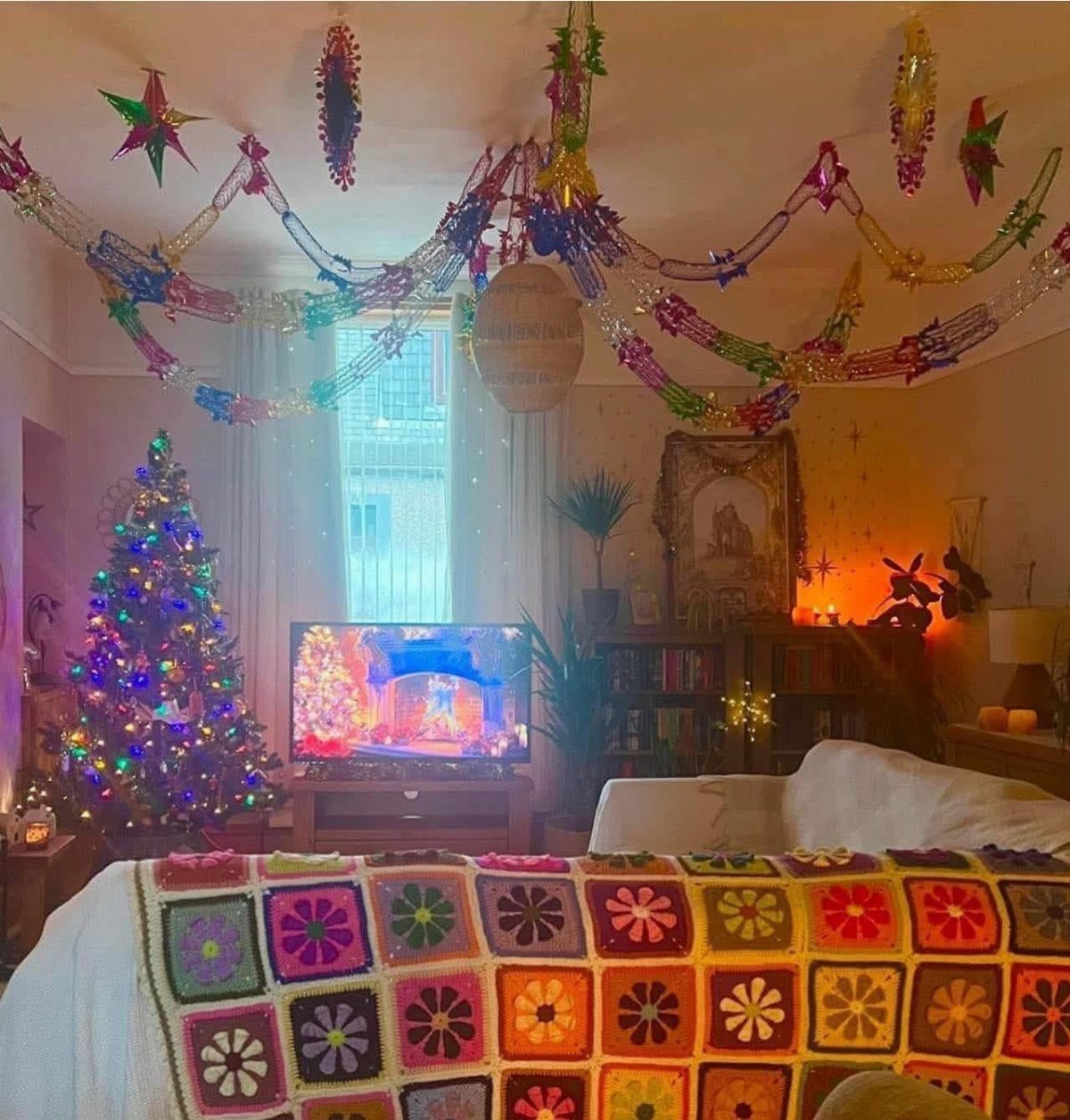
Tinsel garland across the ceiling is a bold move, and I like it because it fills the space above the tree, where most rooms leave a blank.
Colorful foil strands and a few stars catch the tree lights and make the whole room feel decorated, not just one corner.
Tape or tack the ends at the corners and let the middle sag a little, so it hangs loose. Foil is inexpensive, so you can cover a lot of ceiling without a big spend.
12. Red Rose Tree
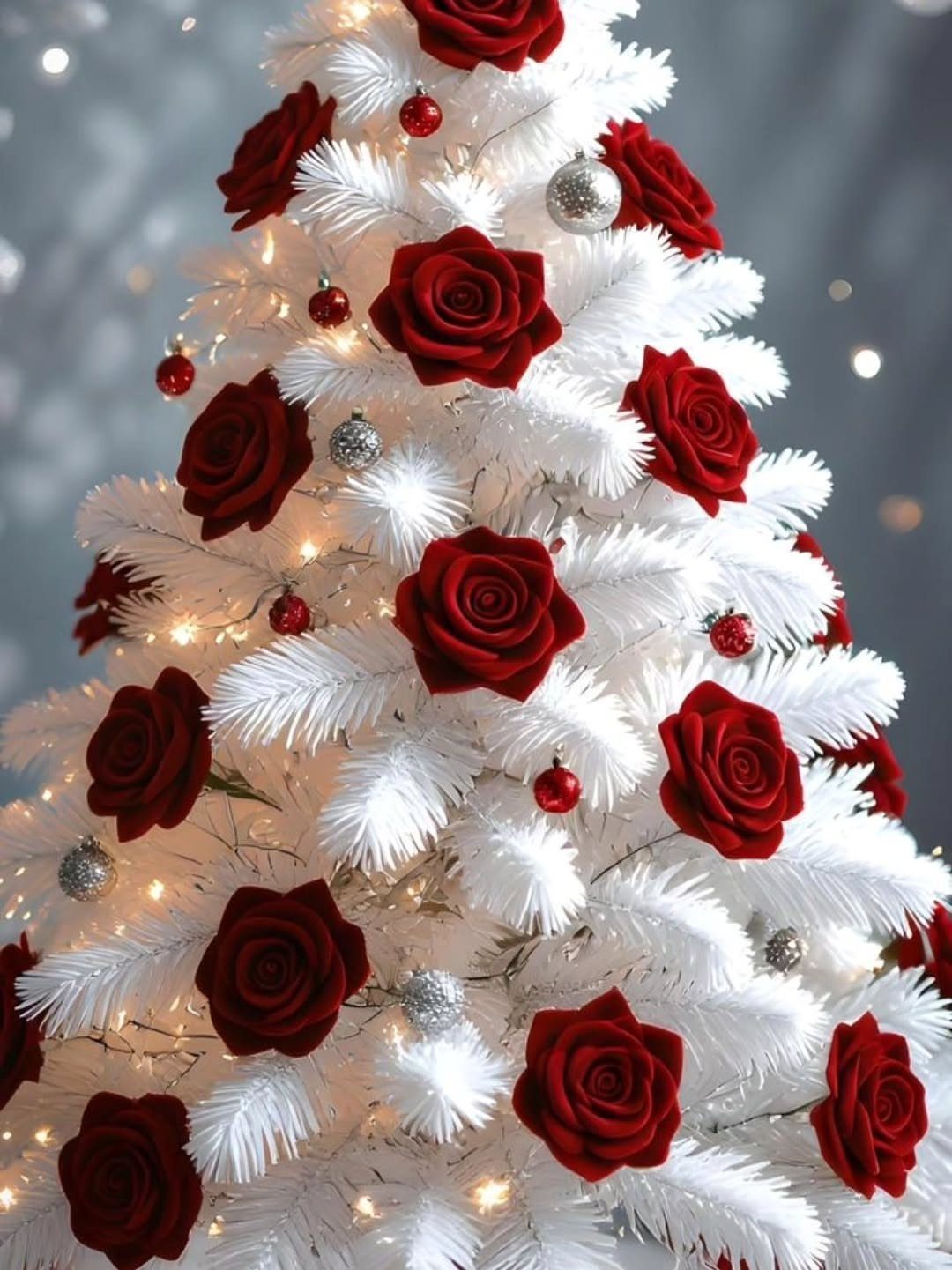
Oversized red roses turn a white tree into something closer to a bouquet. Against white branches, the red reads strongly, so I’d keep the other ornaments small and limit them to red and silver, as in this tree.
Place the roses first, spread evenly and at different depths, then fill in with baubles.
Warm white fairy lights suit the softness of the petals better than cool white. Fewer, larger roses beat many small ones.
13. Dramatic Red and Black
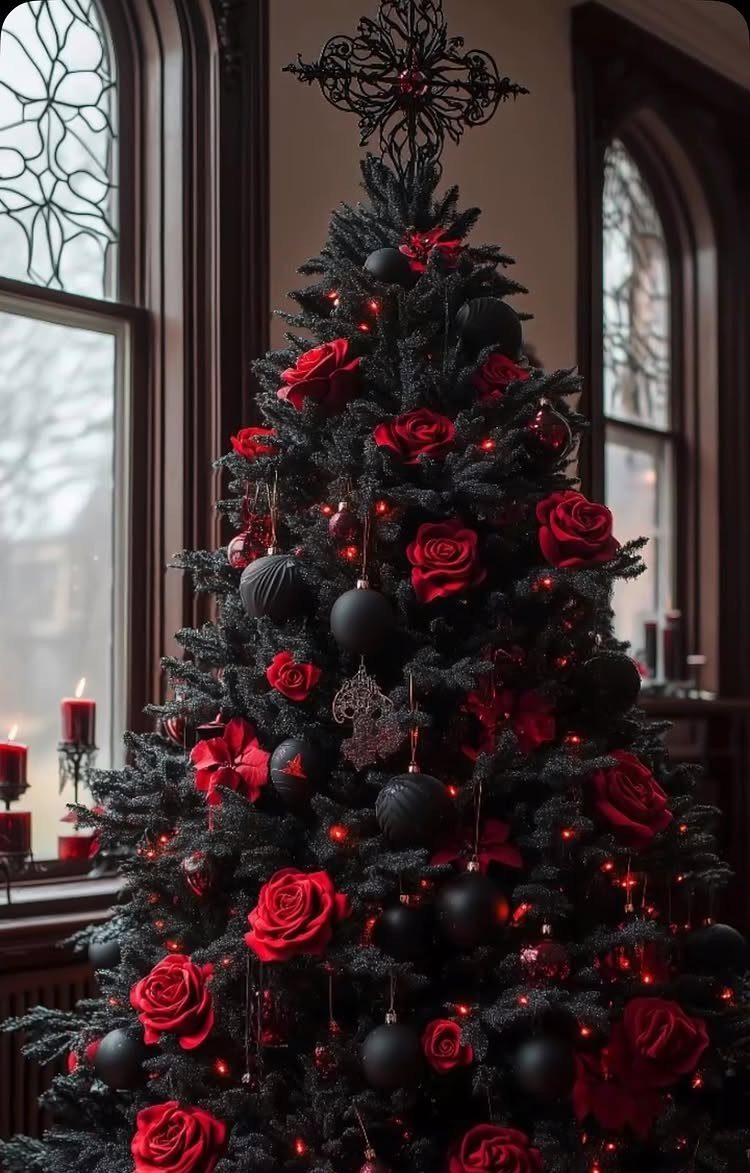
Black branches turn red into the loudest color on the tree. Roses and lights in that red, plus black baubles, keep the palette to 2 colors, and an ornate black finial on top finishes the silhouette.
I’d stay with that restraint. A third color would dilute the drama, and candles in the same red around the room carry the look past the tree.
14. Glowing Oversized Flowers
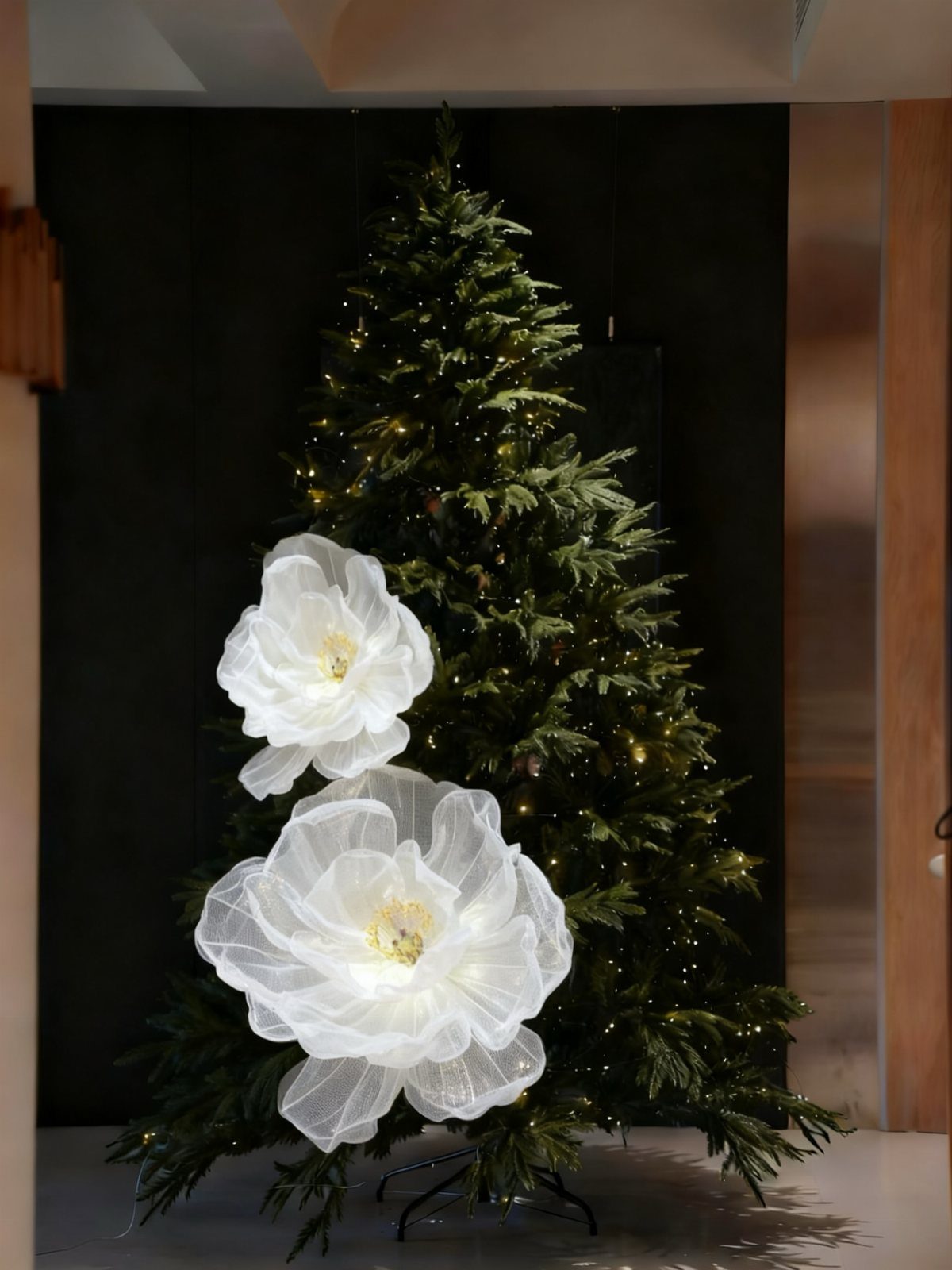
A pair of oversized flowers carries the whole tree, so it doesn’t need a crowd of ornaments around it. White fabric glows when fairy lights sit behind it, so on a plain green tree the flowers become the focal points.
Place them low and off-center on the front, a little apart, so the eye travels between them.
Keep the rest of the tree bare apart from the lights; extra ornaments would crowd the petals. A dark wall behind makes the glow stronger.
15. Red and White Candy Theme
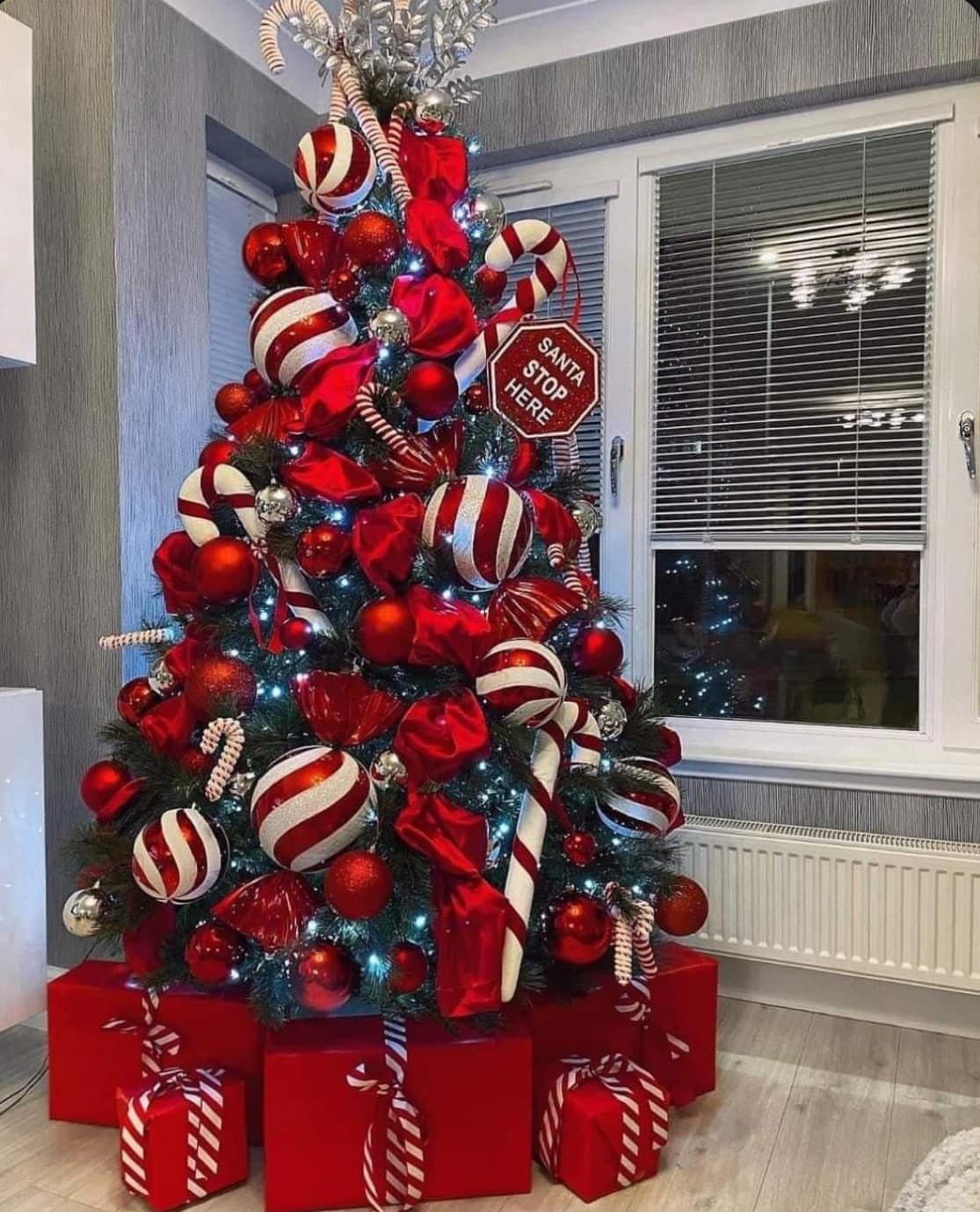
Striped ornaments, red baubles, bows and candy canes add up to a sweet-shop tree, and the red and white palette keeps it from looking random. Red wrapped gifts at the base continue the color story without extra decorations.
I’d mix striped pieces with solid red ones so the pattern has places to rest. A handmade sign like "Santa Stop Here" costs almost nothing and adds the humor.
16. Red Berries and Velvet
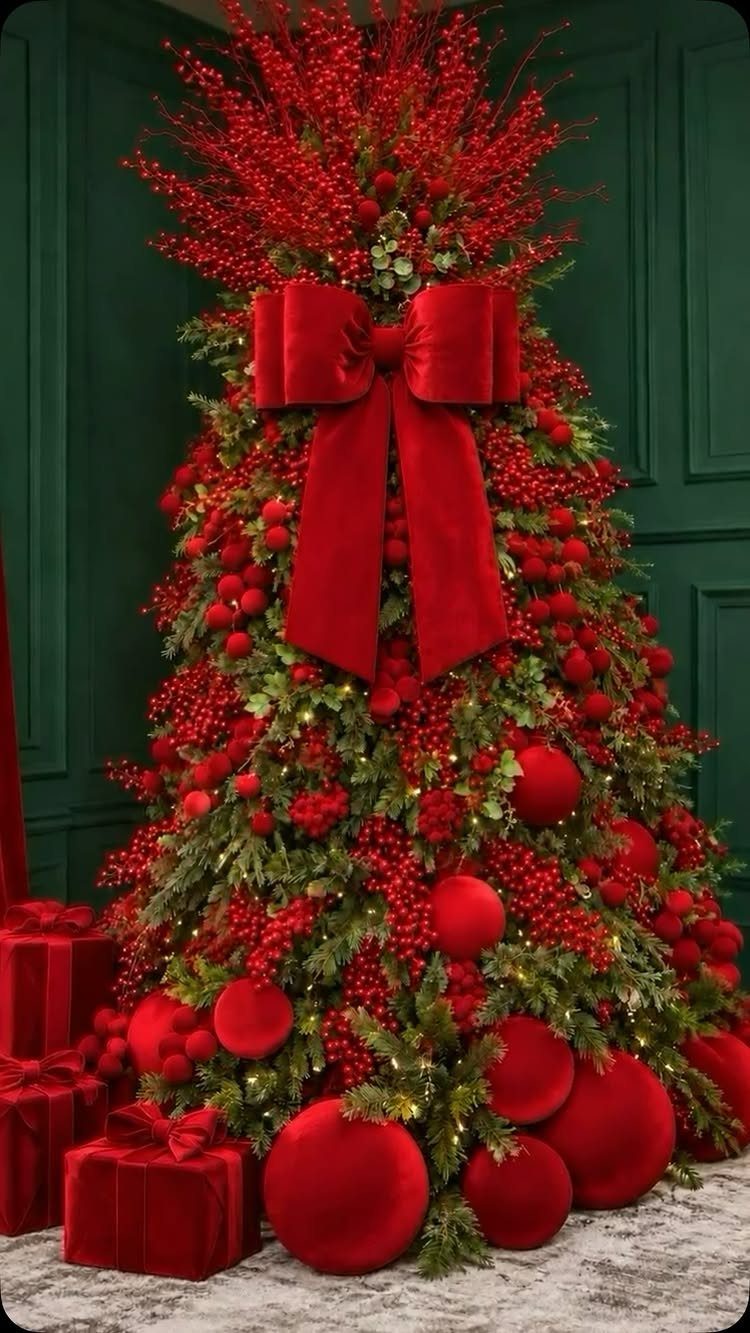
Dark green walls make red look richer, and this tree uses that. Berries fill the gaps between velvet ornaments, and a single large velvet bow at the top gives the eye somewhere to land.
A lush, full tree works best for this, since sparse branches would let the wall show through. Wrapped gifts in the same red at the base tie the tree to the room.
17. Red and Gold Florals
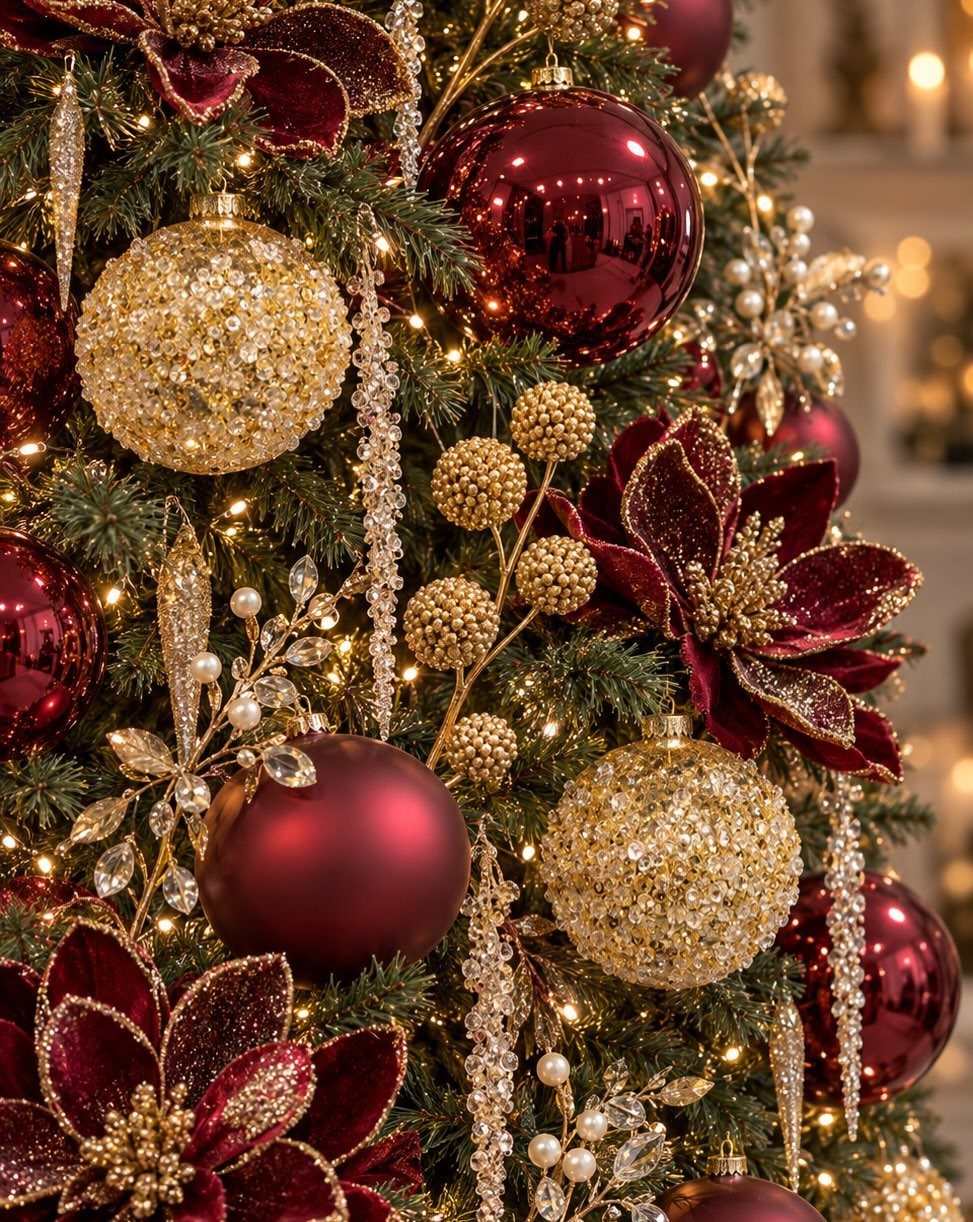
Velvet flowers in deep red bring the soft texture that shiny baubles lack. Gold garlands add shimmer, while red and gold ornaments keep the palette tight.
Set the flowers in first, at varied depths, then drape the garland loosely around them so it doesn’t flatten the petals.
I’d choose one red for every piece. Mixed reds make velvet look faded next to the gold.
18. Red Satin Ribbon
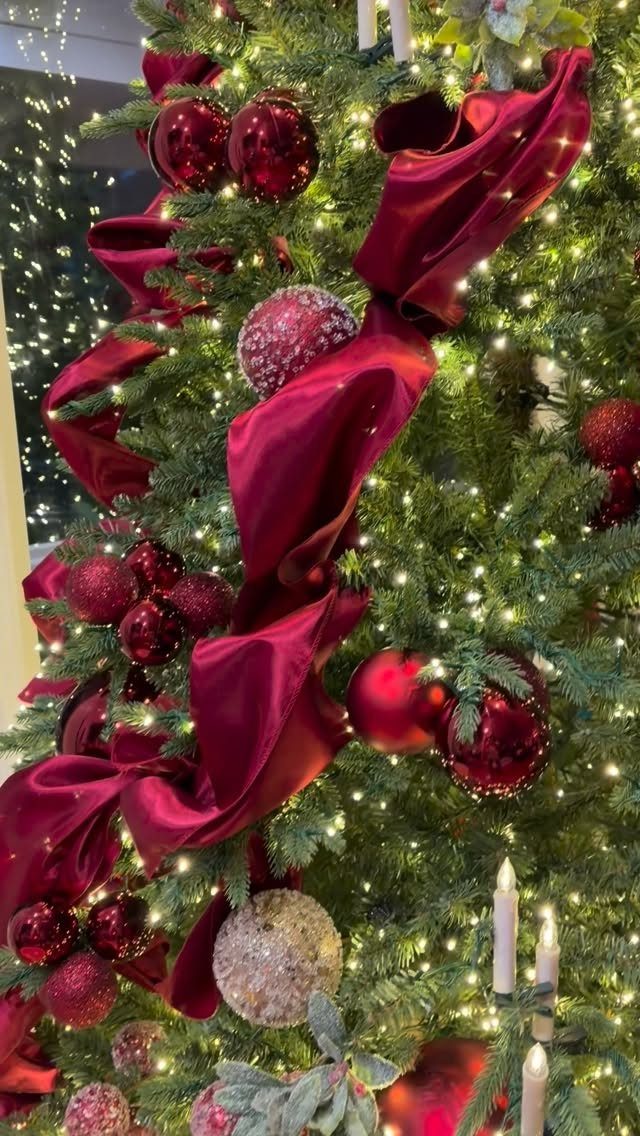
Wide satin ribbon catches warm white light in a way matte fabric can’t, and that sheen is why it looks so rich among red baubles.
Wind it loosely from top to bottom, tucking it behind branches in places so it appears and disappears.
Wide ribbon covers more tree per yard than thin, which helps the budget. Baubles in a matching red keep the eye on the ribbon’s shine instead of splitting it between 2 shades.
19. Colorful Maximalist Tree
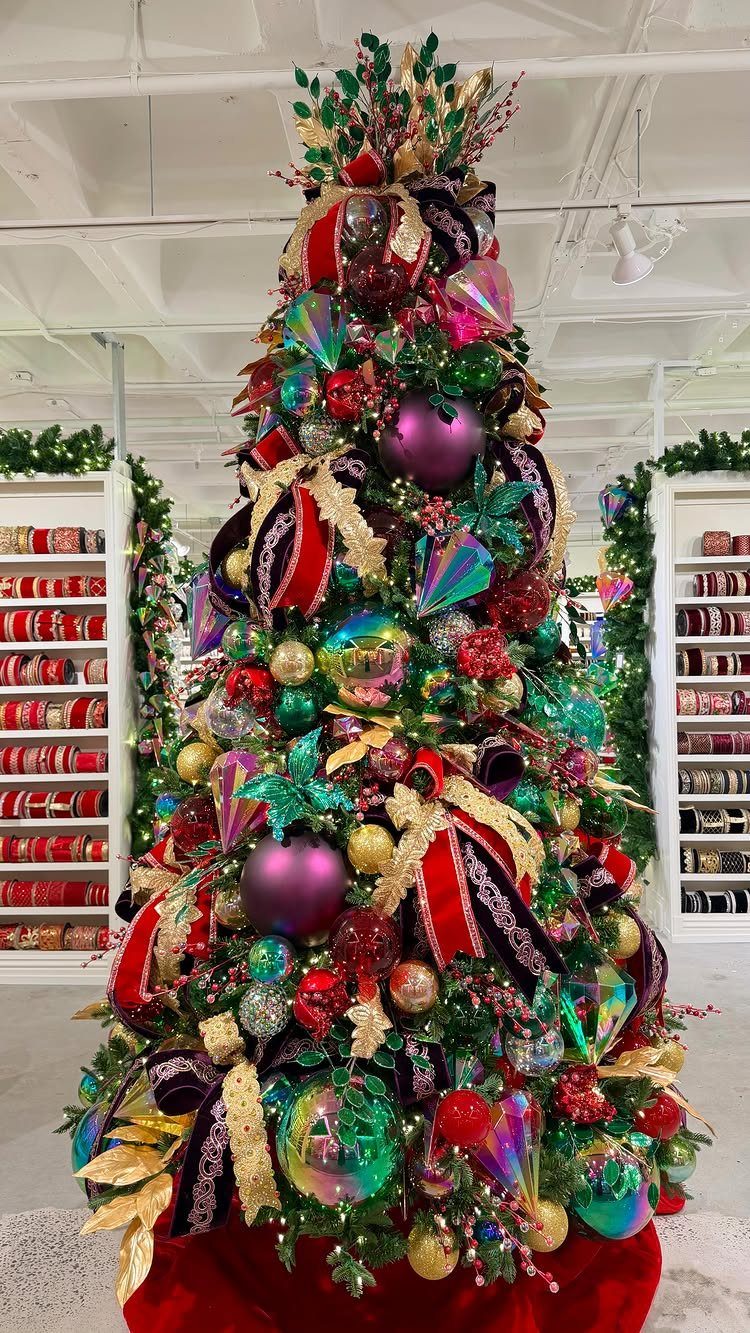
Purple baubles are the surprise here, and they work because the red and gold ribbons are wide enough to hold the whole tree together. Without those big bows, this much color would read as clutter.
I’d place the ribbons first, spread evenly, then fill the gaps with ornaments in whatever colors you already own. Maximalism is also the cheapest way to use up mismatched boxes of old baubles.
20. Pink and Blue Florals
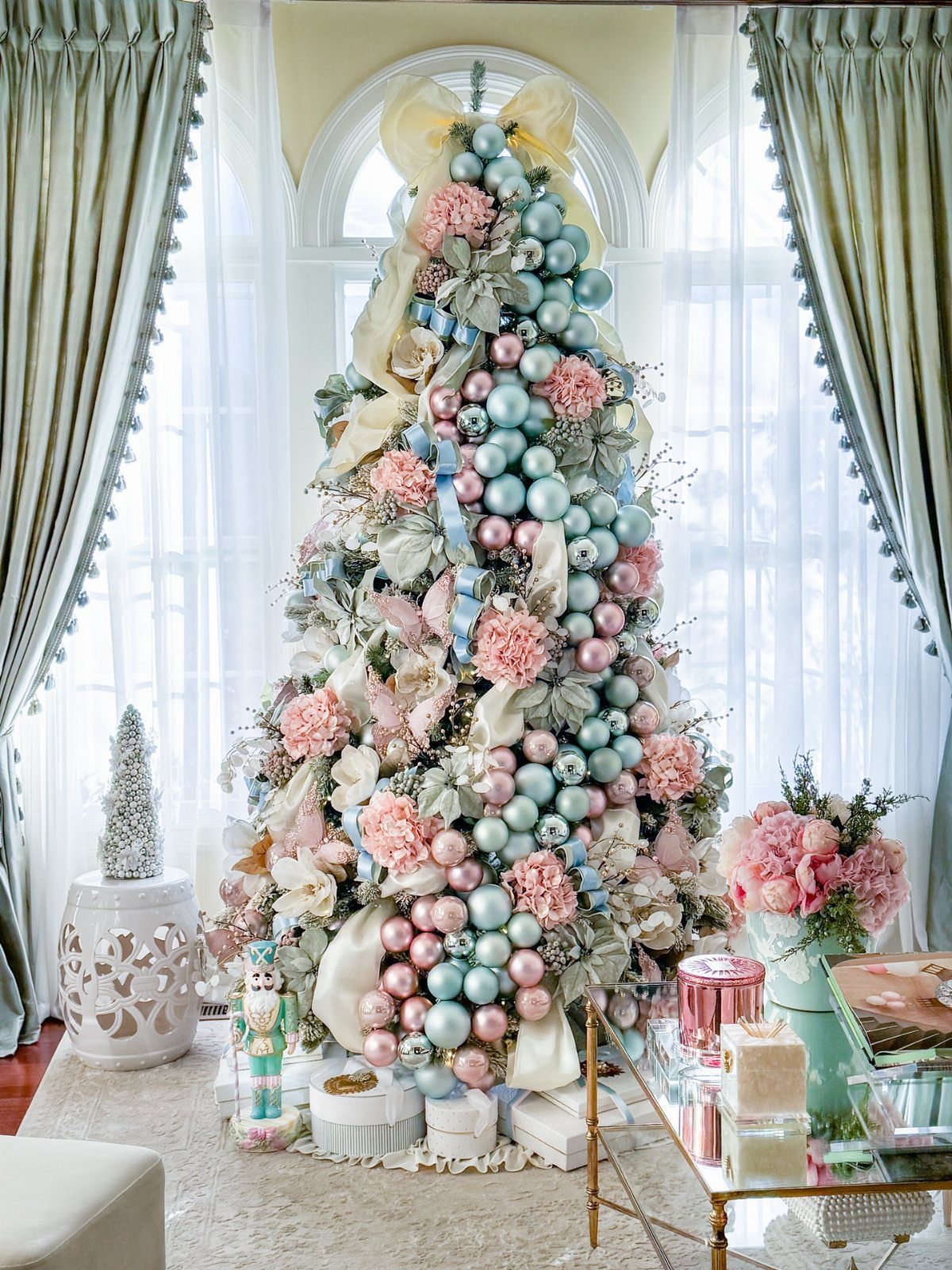
Pink blooms against pastel blue and silver ornaments make a tree that feels like spring brought indoors, and cream ribbon softens the gap between the 2 colors.
Set the flowers in first, at different depths, then add the blue and silver baubles around them.
Cream ribbon looks gentler than white next to the pink, so I’d choose it. This palette suits a bright room with light curtains, where nothing competes with the soft tones.
21. Green Glass and Twigs
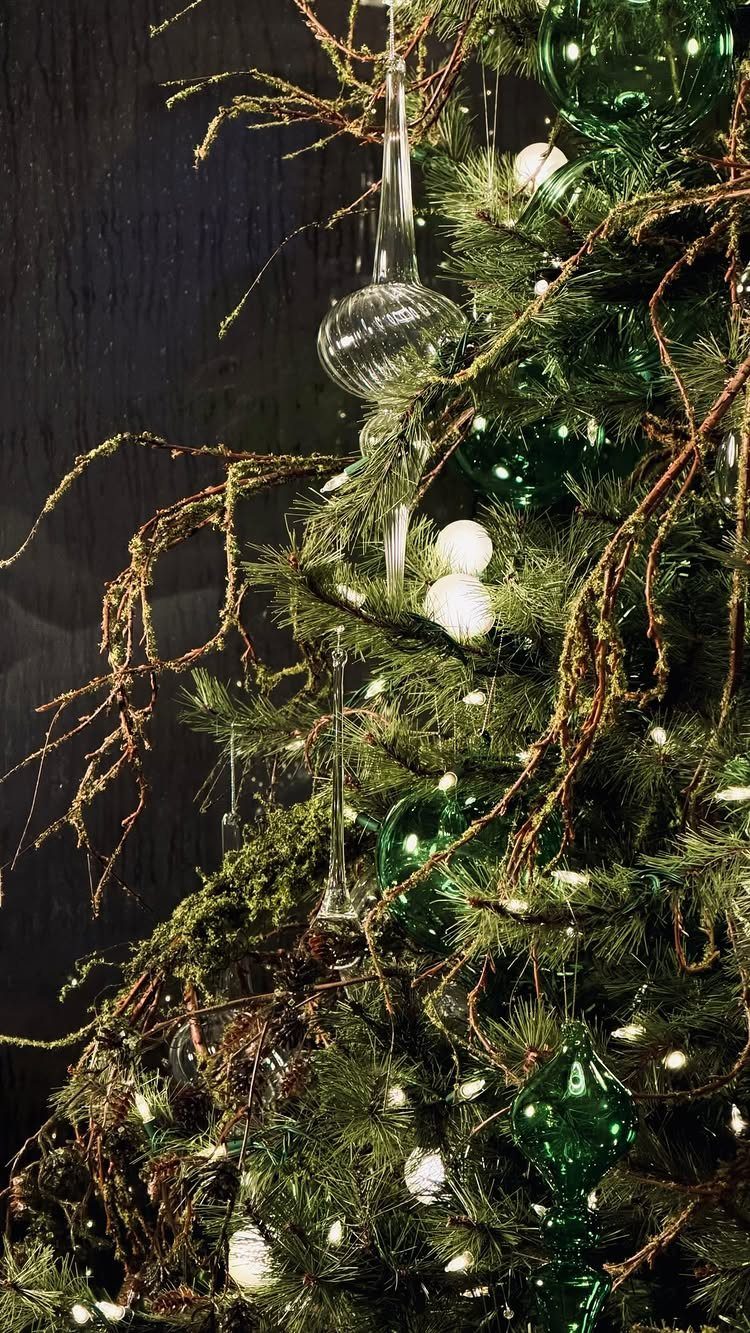
Natural twigs keep green glass from feeling too polished. Clear finials add height, and small white fairy lights glint through the glass and the bare branches alike.
Tuck the twigs in at angles, so they look as if they grew there, and hang the finials near the branch tips.
A dark wall behind makes the glass glow, which is why I’d put this tree in the dimmest corner of the room. Stay with white lights; colored ones would muddy the green.
22. Gold and Pearl Details
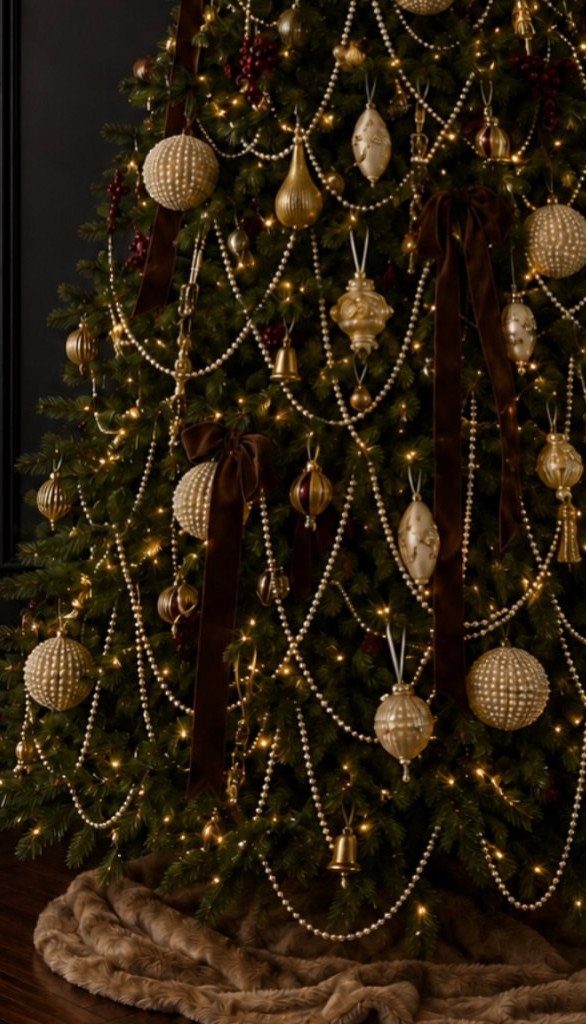
Brown velvet ribbon is the quiet choice that keeps gold from looking flashy. Paired with pearl strands, it gives a tree a warm, old-fashioned richness.
Drape the pearls loosely in swags, then tie the ribbons in a few spots and fill in with gold baubles.
A faux fur tree skirt brings in soft texture without adding another color, which keeps a gold and pearl scheme calm. I’d keep the lights warm white so the gold stays golden, not brassy.
23. Classic Red and White
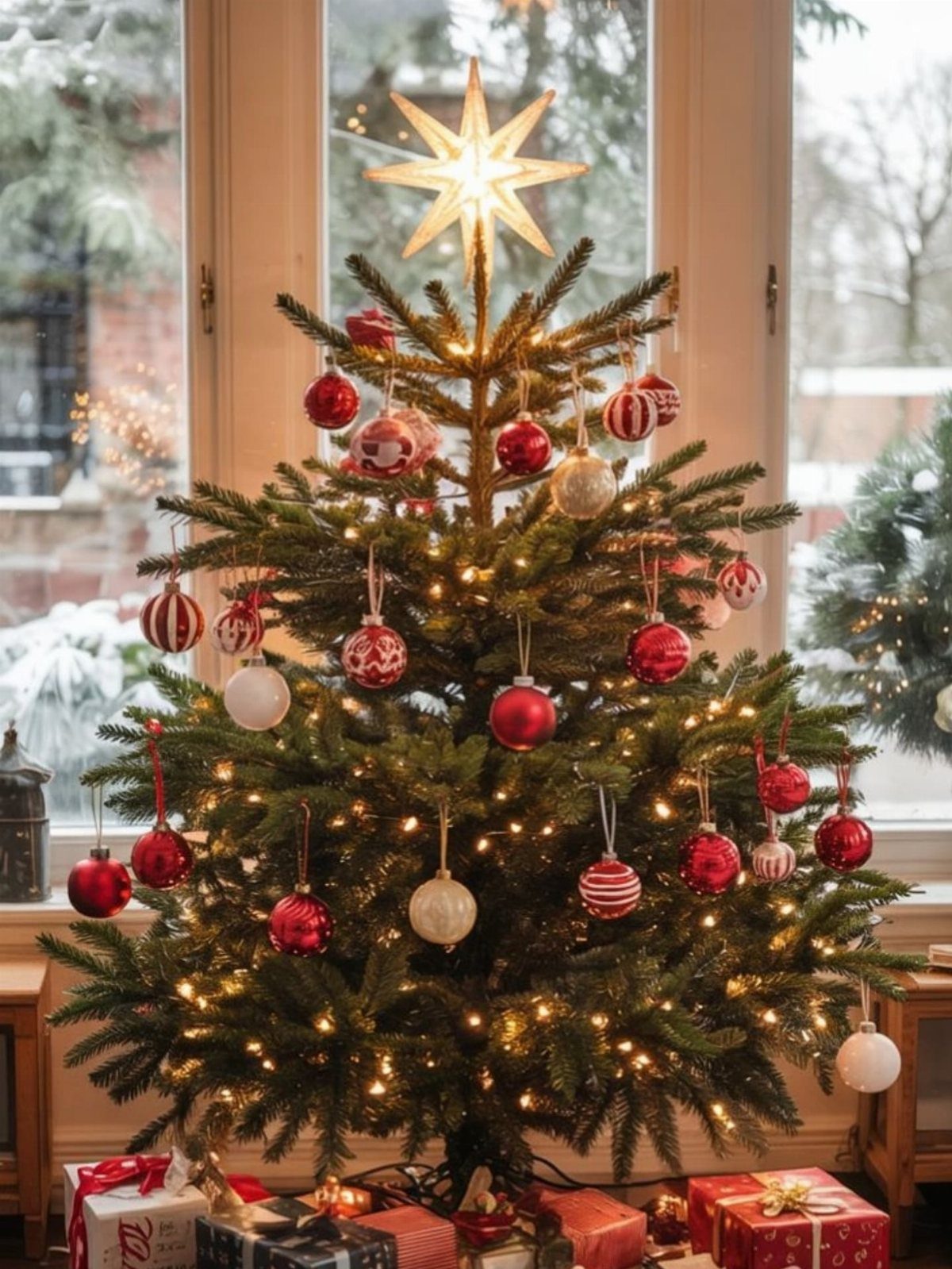
Red and white is a classic for a reason: it needs no explaining and almost never goes out of style.
A glowing star on top finishes it, and a tree by a window gets an extra pull from the winter light outside.
Alternate red and white baubles down the tree so neither color gathers in one patch.
Cool white LEDs push red toward harsh and white toward blue, so I stick with warm white bulbs around 2700K to keep both colors rich. Wrapped gifts underneath in the same 2 colors keep the scheme tidy.
24. Red and Gold Traditional
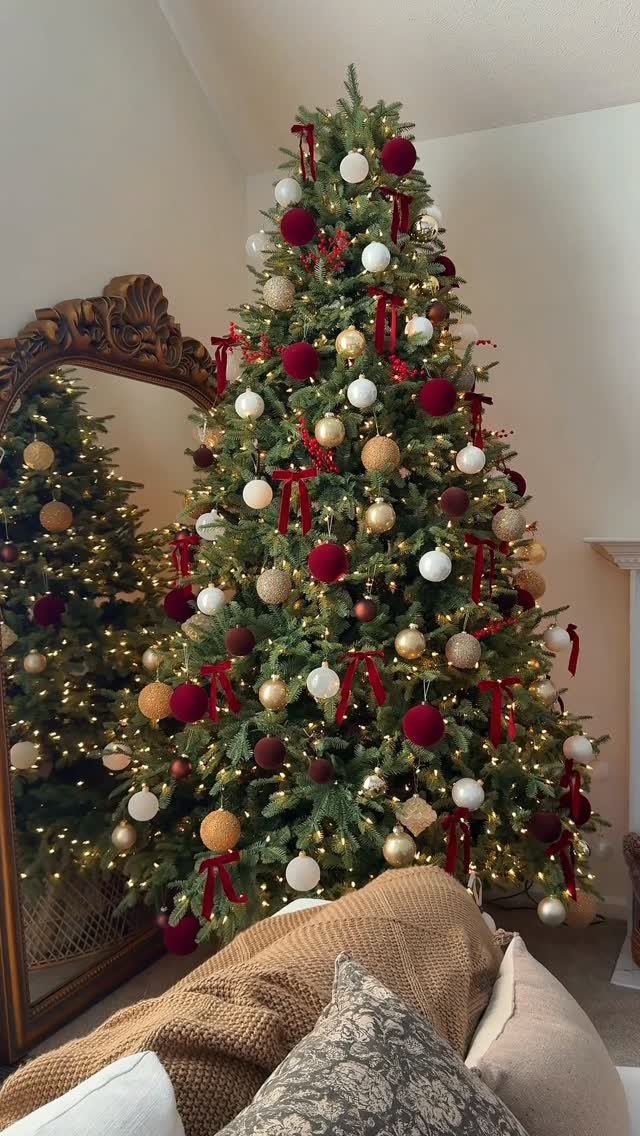
Placed beside a large gilded mirror, this tree gets doubled: the lights and ornaments reflect back into the room, so a modest tree looks fuller than it is.
Red ribbons give the tree its structure, while gold and white ornaments fill in around them. If you have a mirror, set the tree where the reflection catches the lights, ideally at an angle from the room’s main seating.
I’d keep to red, gold and white and stop there; a fourth color would fight the mirror’s frame.
25. Red Berries and White Sparkle
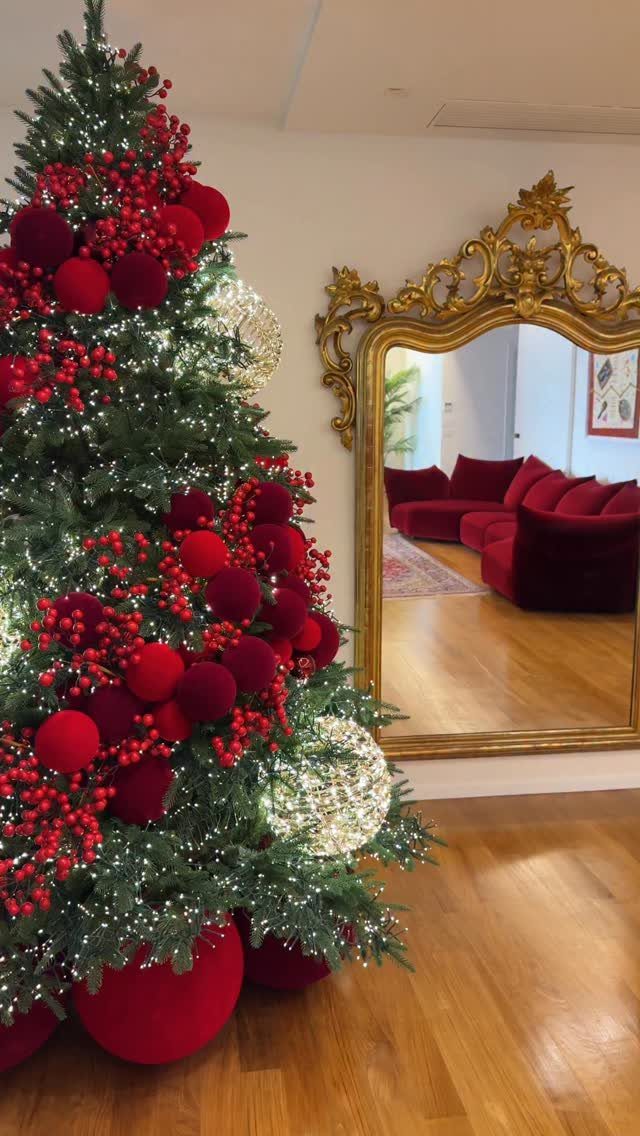
White glitter balls give a red tree some quiet. Red baubles and berries hold the color, and the sparkle breaks it up so the tree doesn’t read as one heavy block.
Alternate the 2 kinds of ornament down the branches and tuck the berries into the gaps between them.
A tree beside a gold mirror gets a bonus, since the glitter catches the reflection. I’d keep the white pieces the same size as the red ones so neither takes over.
26. Festive Tree with Greenery
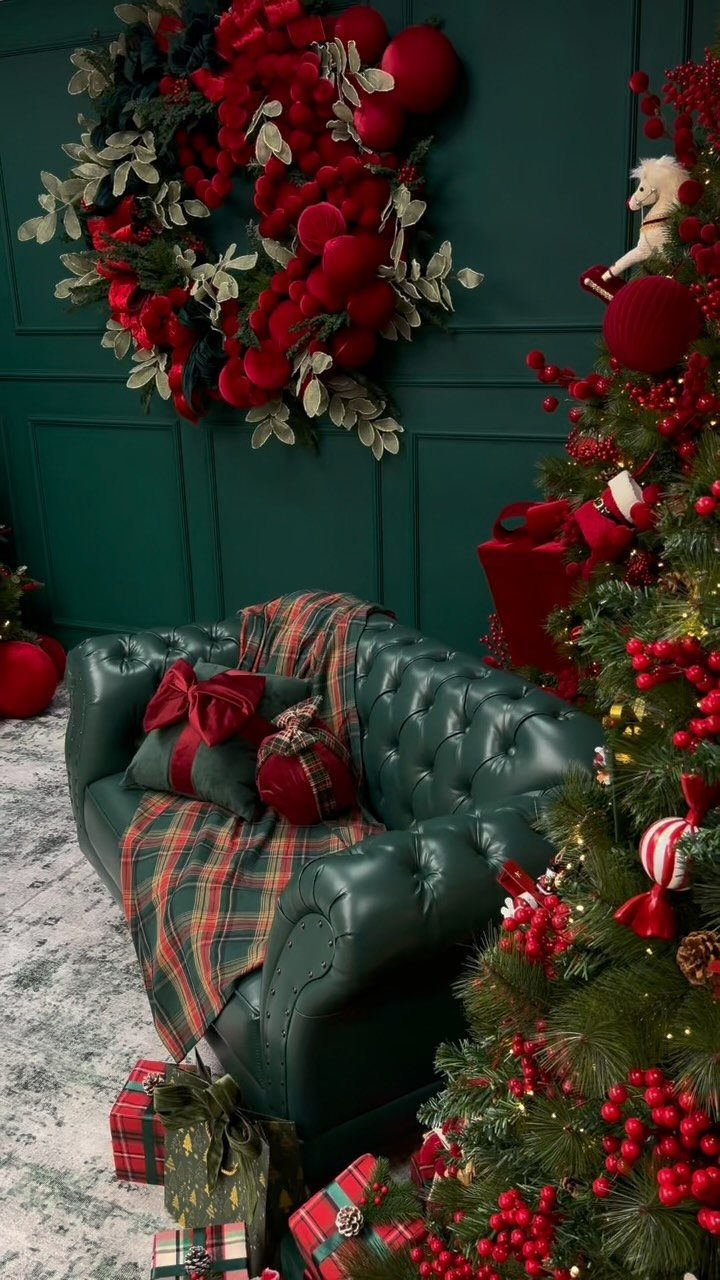
Greenery does the coordinating when a room is this green. A red wreath on the wall repeats the berries on the tree, so the two read as one scheme, and the dark wall makes the red look deeper.
Choose berries and a wreath in the same red, and add ornaments in that shade only.
Plaid on the sofa and a few gifts below bring in pattern without a new color. I’d put the tree and wreath within sight of each other, so the repeat is easy to spot.
Frequently Asked Questions
What are the trending Christmas tree colors and themes for 2026?
Traditional red, green and gold remain popular, and silver, gray and white are common picks for suggesting snow. Navy and deep emerald read as dressier than the usual red and gold, and both sit comfortably against a real green tree.
Stark white and silver are losing ground to warmer, deeper colors with some texture, and velvet ornaments, velvet bows and wide ribbon get a tree there cheaply.
What are the top Christmas decorations?
Ornaments in one chosen color scheme come first, followed by ribbon and bows, lights and a wreath.
Ribbon comes in velvet, silk, burlap and grosgrain, and wired ribbon is the easiest to work with. Pick up the same 2 or 3 tree colors in the wrapping paper and on the mantel, and the room reads as one scheme.
What is the best date to put up a Christmas tree?
Most American households set the tree up in the days right after Thanksgiving, which falls in late November. Across the UK and Ireland, the old custom is to wait until December 8.
How can I make my Christmas tree look better?
Limit the tree to 2 or 3 colors, then place the biggest pieces first, such as ribbons or large flowers, spread evenly and set at different depths.
Fill the gaps with baubles afterward, and fluff a faux tree so no bare spots show.
How do you make a Christmas tree look expensive?
Use large, medium and small ornaments together so the tree has depth. Tuck the big ornaments deep near the trunk and save the small ones for the outer branch tips; the depth makes the tree look fuller.
Wide ribbon woven through and tucked in adds to the effect, and satin catches warm white light with a sheen that matte fabric can’t match.
Do I have to decorate the Christmas tree?
No, many trees look good with no decorations at all.
If you put the tree up early, you can leave it bare and add ornaments closer to Christmas. When the tree outlasts December, I’d pull the ornaments and leave it plain, which looks new again and skips the packing.