
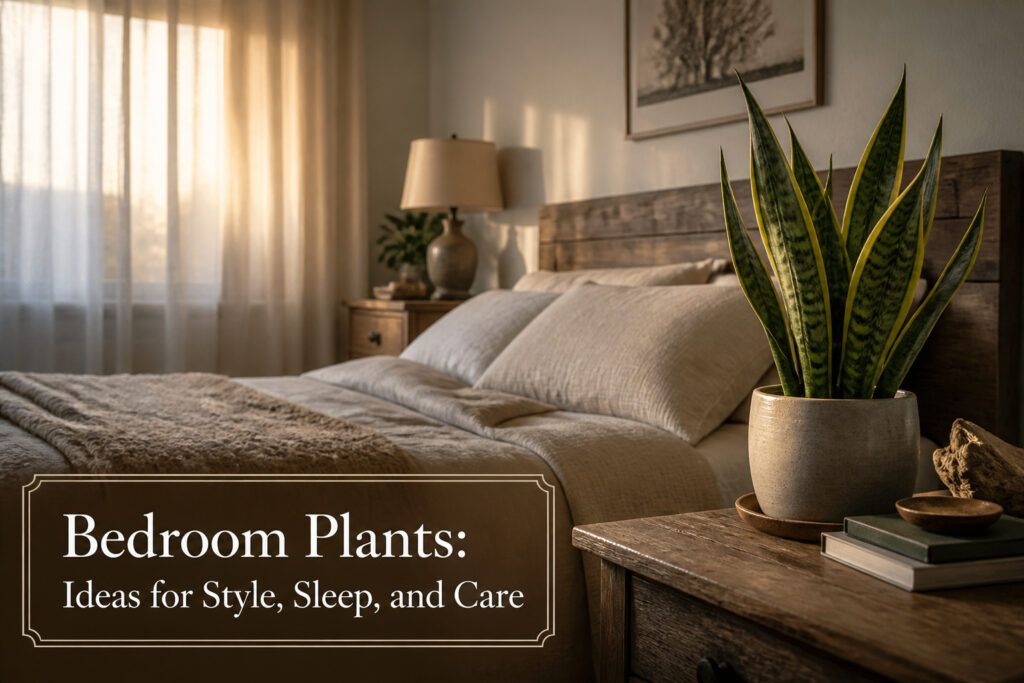
The snake plant wins for bedrooms because it keeps releasing oxygen after dark, when most plants switch the other way.
Skip it only if your pet sleeps on the floor and chews leaves; the ASPCA lists it as toxic to cats and dogs.
That nighttime oxygen trait is the one NASA-cited benefit that actually matters in a real bedroom, since matching the study’s air-purifying results would take roughly one plant per square foot.
1. Snake Plant for Night Air
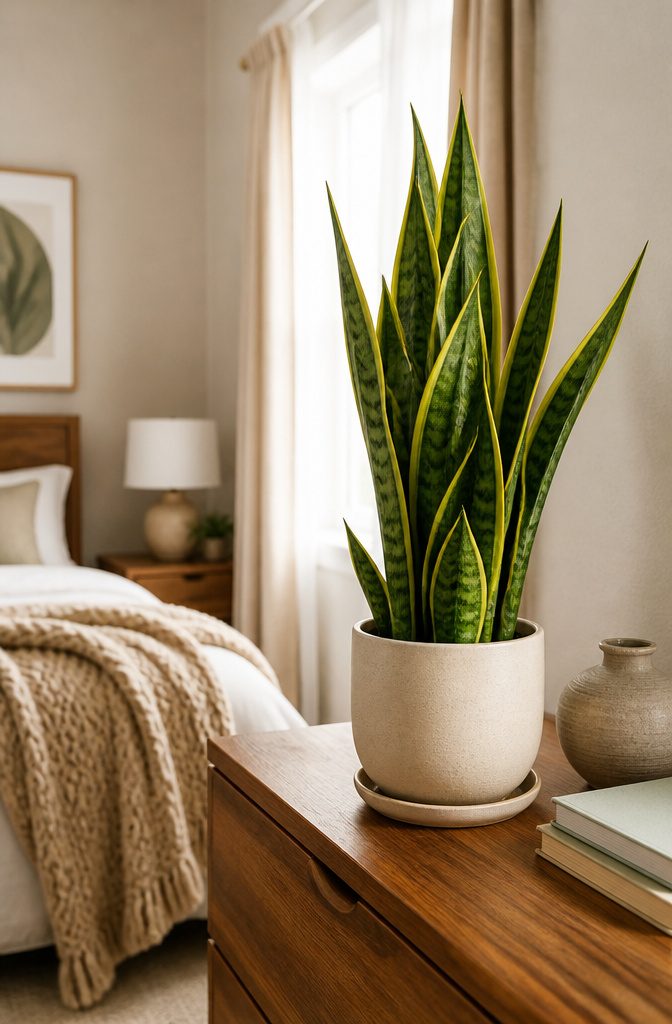
Sansevieria is one of the few common houseplants that releases oxygen at night, which makes it genuinely useful in a bedroom rather than just decorative.
Most plants switch to respiring after dark, but this one keeps converting carbon dioxide to oxygen while you sleep.
The NASA air-purifying plant list includes it for filtering formaldehyde, benzene, and xylene, though in a typical bedroom the oxygen trait matters more than the toxin removal.
The care is almost too easy. Water only when the soil is nearly dry, and it will tolerate dim corners that would starve a ficus.
I have seen one survive for months in a north-facing bedroom with a single window. Bright, indirect light keeps the leaf patterns sharper, but the plant does not demand it.
A dresser top or the floor beside the bed works for the upright, sword-shaped leaves.
The ASPCA lists it as toxic to cats and dogs, so skip this one if your pet sleeps on the floor near the pot or chews leaves.
For everyone else, it is the plant that forgives a weekend away without watering and still looks architectural by Monday.
2. Peace Lily for Filtered Light
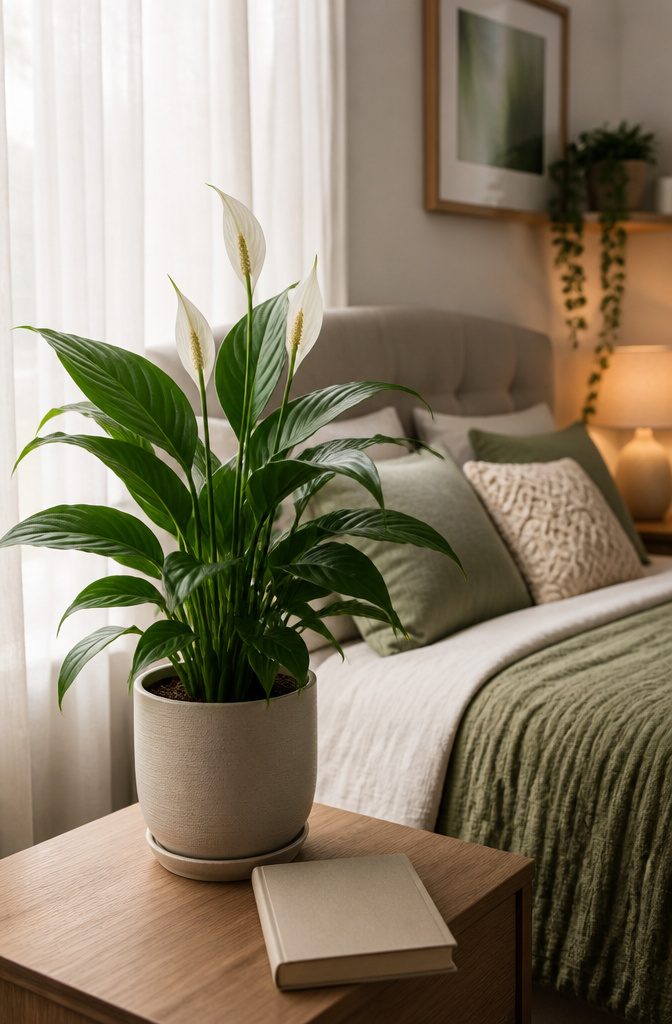
Spathiphyllum, the peace lily, filters formaldehyde and benzene from bedroom air, which is why it keeps showing up on these lists.
The white spathe is not technically a flower, but it reads like one against the dark leaves, and that visual quiet works well on a nightstand or dresser where you do not want clutter.
Moderate to bright indirect light keeps it happiest, though it will tolerate lower light and simply bloom less.
The plant droops dramatically when thirsty, perks back up within hours of watering, and that habit makes it easier to read than most houseplants. Let the soil go nearly dry between drinks, or watch for the telltale wilt.
The catch is toxicity. Peace lilies are poisonous to pets and small children, so a high shelf or a room the cat cannot enter matters more than with the snake plant or pothos.
The pollen can also bother allergy sufferers, something the glossy leaves do not advertise. If you are sensitive and already fighting morning congestion, this one may cost you more sleep than it saves.
3. Pothos for Neglected Corners
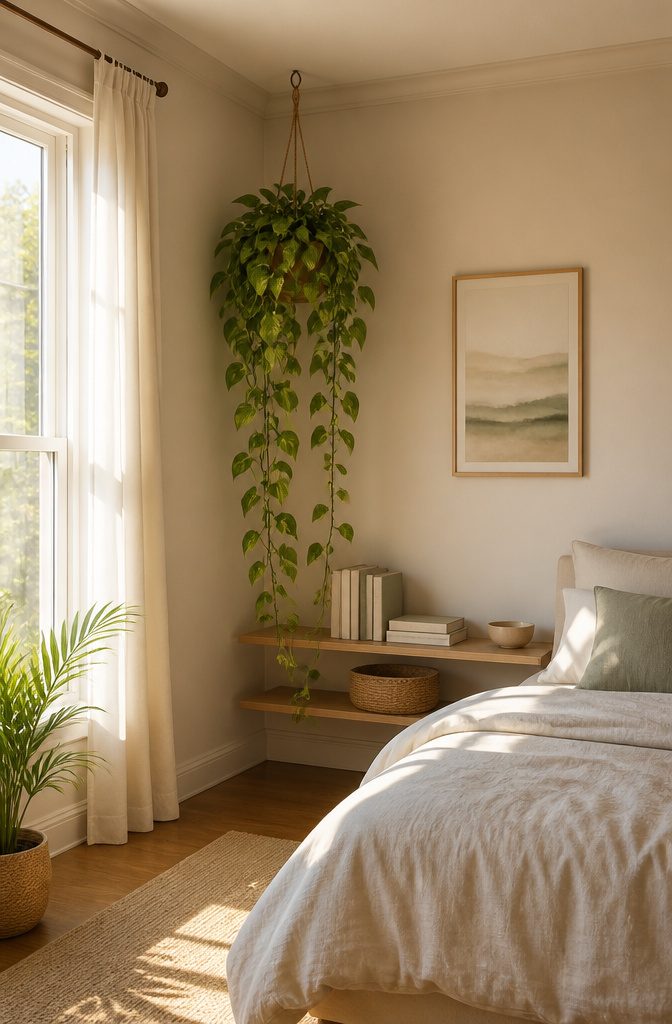
Epipremnum aureum, the pothos, survives low light and irregular watering better than almost any trailing plant I have come across in years of moving plants between rentals.
The heart-shaped leaves and vining stems can grow to several feet long, and the growth rate itself becomes a kind of feedback loop: the more you ignore it, the slower it gets, which suits a busy schedule, but move it to a spot with indirect light and it fills out fast enough to notice week to week.
On a bedroom shelf, the stems trail down and add depth without demanding a dedicated plant stand.
In a hanging planter, the same vines soften corners that otherwise stay dead space. The look is decorative either way, not just "a plant in a room" but something that reads as intentional styling with almost no effort behind it.
The catch is pet safety: pothos is toxic to cats and dogs.
If your dog sleeps on the floor beneath a hanging planter or your cat treats any trailing stem as a toy, this is the wrong plant for that spot.
I would skip it entirely in that situation rather than try to train an animal around a toxin.
4. Spider Plant for Propagation
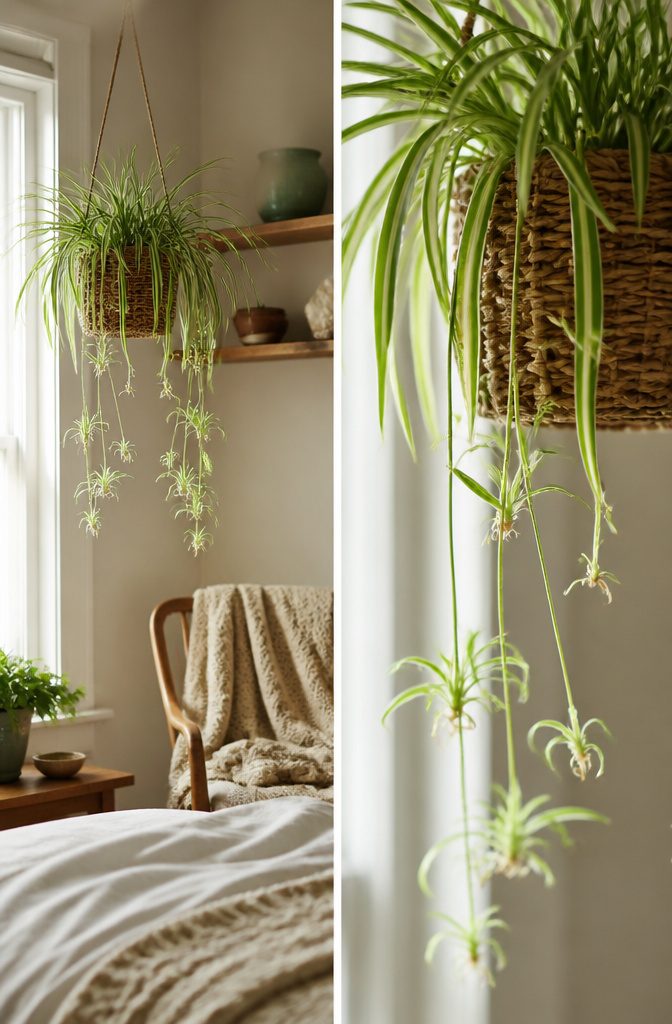
Chlorophytum comosum, the spider plant, sends out long stems lined with miniature copies of itself called plantlets.
Those plantlets root easily in plain water, which means one hanging basket can eventually fill a whole bedroom or supply cuttings to hand off to friends.
The striped, arching leaves do best in bright indirect light, though they will tolerate moderate light with slower growth.
Moisture should stay steady; water when the top two inches of soil dry out, and ease off slightly once the plant has been established for about a year.
The spider plant carries a reputation for cleaning indoor air of pollutants like formaldehyde, benzene, carbon monoxide, and xylene. That benefit is real but modest in practice; a single plant in a closed bedroom will not replace ventilation.
What genuinely matters for most households is that this plant is non-toxic to cats and dogs. For renters with pets who chew leaves, that safety makes the spider plant one of the safer bedroom choices.
5. Rubber Plant for Height
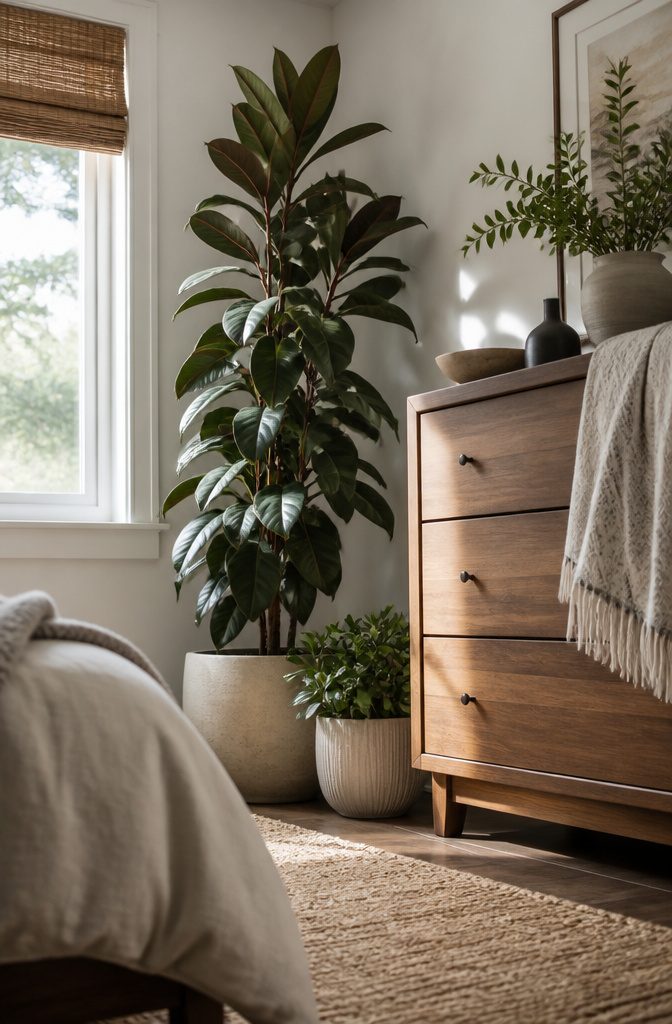
Broad, dark leaves on an upright stem make the rubber plant the quickest way to add height without buying a floor lamp.
Ficus elastica wants brighter light than most bedroom plants, so a spot near an east or south window matters more than with a snake plant or pothos.
I learned the hard way that a corner across from the window leaves it leggy and sparse.
The same thick leaves that look sculptural also mean it holds moisture longer than you’d expect.
Water when the top two inches of soil are dry, not on a weekly schedule. Overwatering rots the roots before you notice yellowing leaves, and by then the damage is done.
A single stake-trained specimen, three to four feet tall, fills the vertical space beside a dresser or in that awkward gap between bed and wall.
No extra lighting fixture needed, no cord to hide. If you prune to keep it narrow, wear gloves; the sap is sticky and irritating.
6. Lavender for Scent
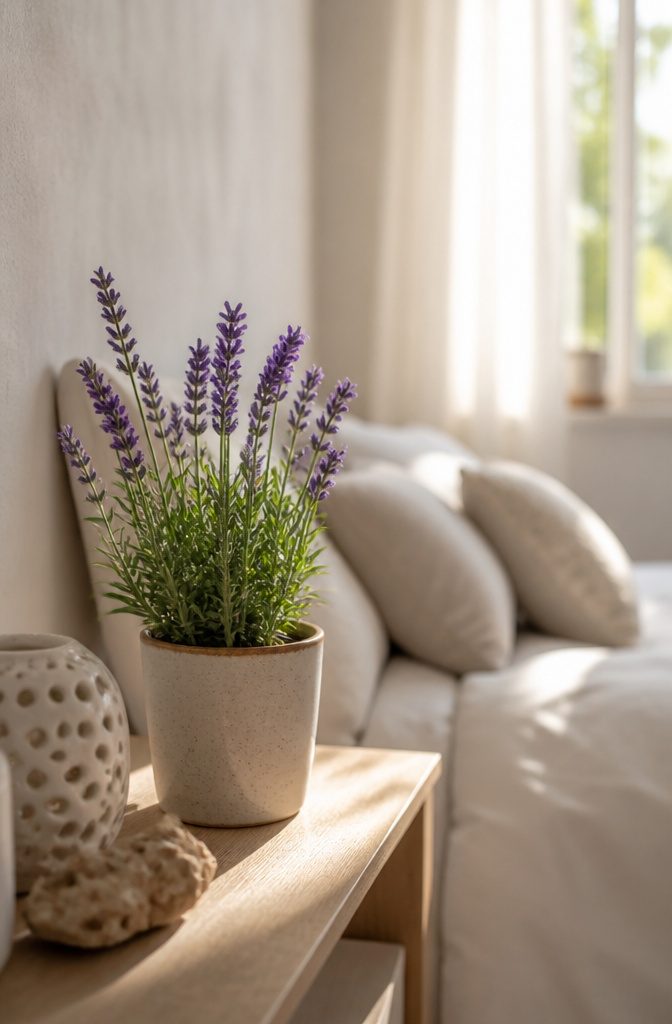
Lavandula angustifolia shows up on almost every list of bedroom plants ideas, usually paired with a photo of a sun-drenched farmhouse and a promise that the scent will lull you to sleep. The reality in most apartments is starker.
Lavender needs bright, direct light for several hours every day, ideally from a south-facing window, and soil that dries almost completely between waterings. Most bedrooms offer neither.
I have killed two myself, both from the same mistake: a corner with good ambient light that turned out to be nowhere near enough.
The first declined slowly, stems going woody from the base up. The second rotted outright because I watered it on the same schedule as my pothos.
Grow lights can bridge the gap, but that shifts the project from "add a plant" to "build a setup," and the cost and clutter belong in a different conversation.
The ASPCA lists lavender as toxic to dogs and cats, so renters with pets should cross it off entirely.
Even without animals, Hancock’s framing feels right: lavender works better as a short-term houseplant, something you bring in while it blooms and replace when it fails, rather than a permanent bedroom fixture.
If your window faces north or your building sits in shade, skip it. The sleep-aid claims are real enough in the literature, but only for the plant you can keep alive.
7. Areca Palm for Scale
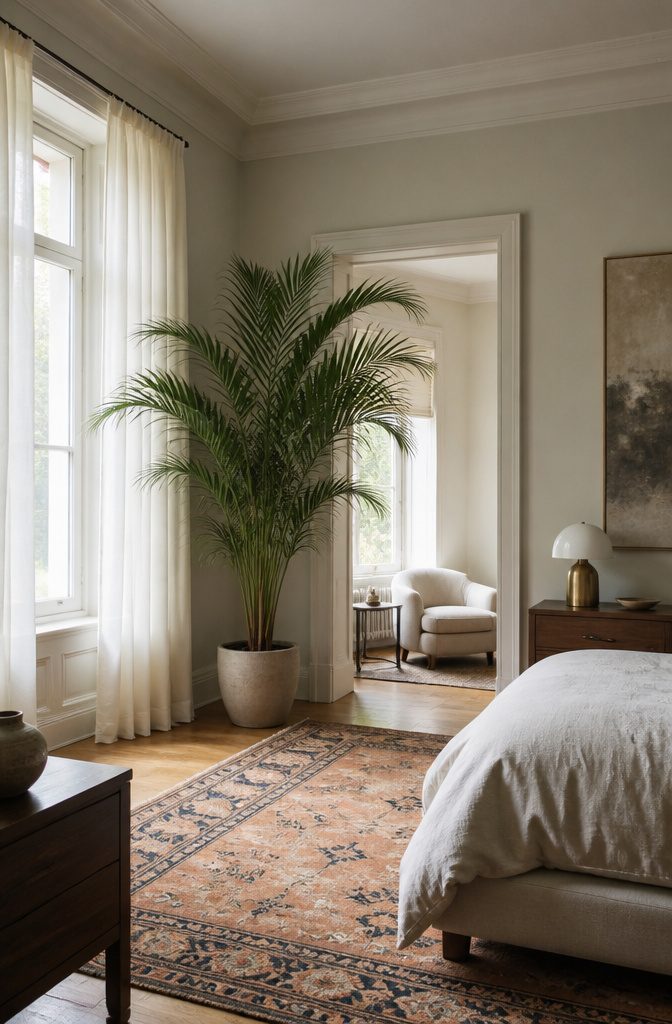
Dypsis lutescens, the areca palm, sends up plumes that top out around 6 to 7 feet, so it reads as furniture rather than clutter.
I have watched one swallow a bedroom corner whole and turn it into something that looks intentional, not like a plant left over from another room.
The catch is the light.
Bright filtered light keeps the fronds from going stringy, which in most bedrooms means a spot near a south or east window with a sheer curtain in between. Direct sun scorches the leaves, and the browned tips never recover.
It also wants humidity and steady moisture, not a drenching.
The soil should stay lightly damp through spring and summer, never soggy, so a bedroom with a dry forced-air vent overhead will mean more work than one with a bathroom nearby.
The plant is non-toxic to pets, which matters if the corner you have in mind sits where a cat already claims territory.
This palm earns its floor space only in a large bedroom.
In a tight room it becomes an obstacle you walk around; in a generous one it creates a green anchor that makes the bed feel centered and the walls farther apart.
8. Chinese Evergreen for Dim Rooms
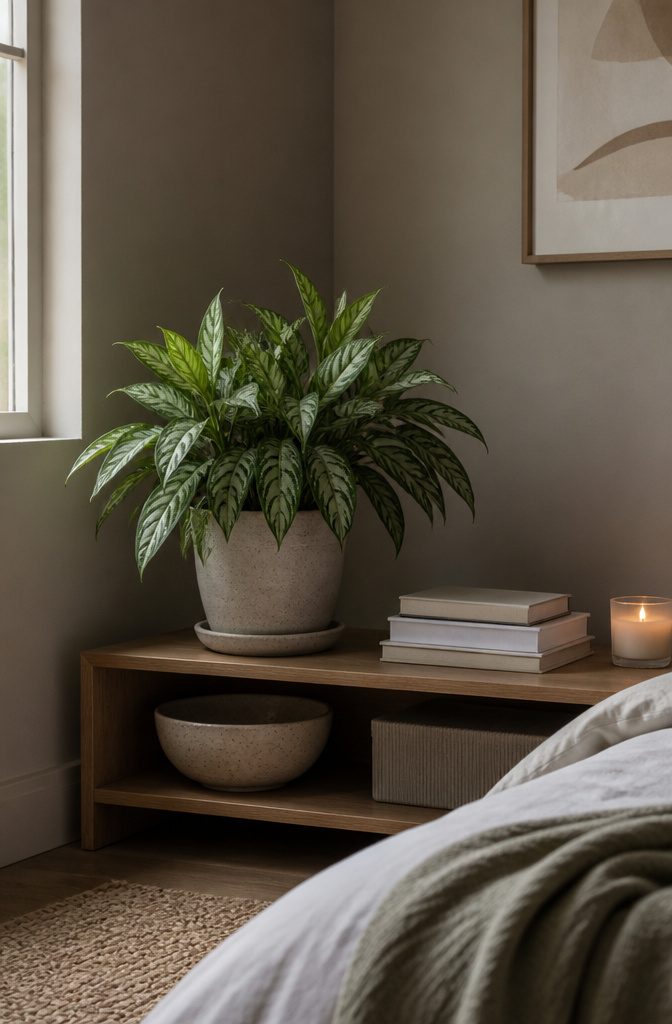
Aglaonema, the plant sold as Chinese evergreen, carries patterned leaves even in the dim corners where most things go plain green.
The low light that keeps it alive will also slow its growth to a crawl, so buy the size you want to see for a while rather than waiting for it to fill out.
The leaf colors run from pale green with white markings to bolder green-and-silver patterning on newer varieties like Igneous Timeless Tides, which means you can match it to a room without defaulting to the usual dark foliage.
Keep the soil lightly moist and keep it away from drafts; cold air hits this plant harder than darkness does.
One hard limit to weigh before you buy: the sap contains insoluble calcium oxalates, so it is not safe in a bedroom shared with cats or dogs that might chew leaves.
9. Boston Fern for Humidity
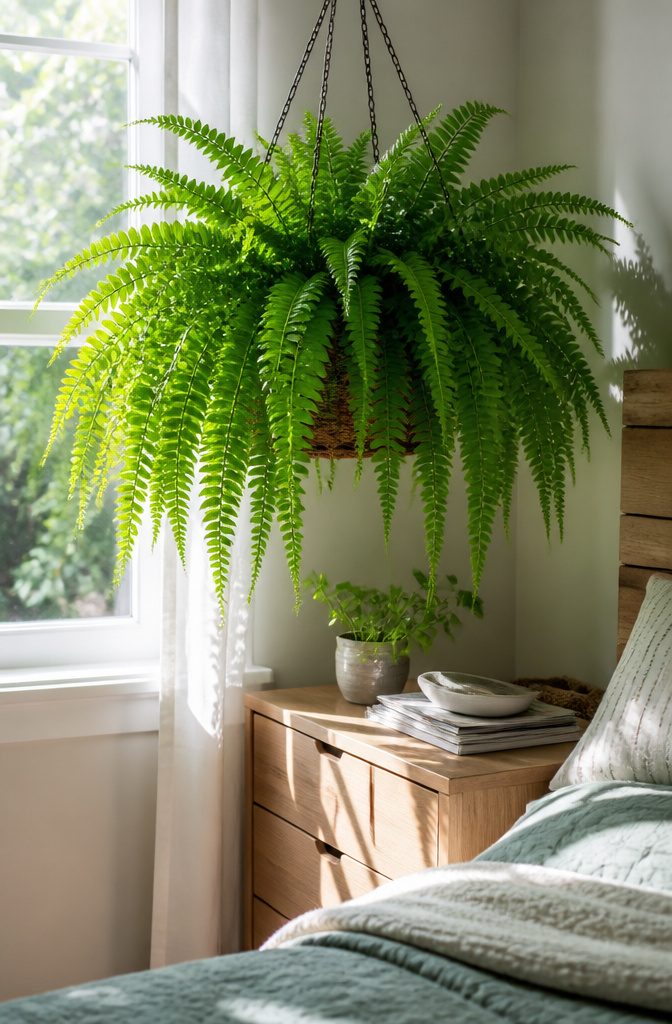
A Boston fern in the bedroom is a commitment to humidity, not just a plant purchase.
Nephrolepis exaltata wilts dramatically when the air drops below what it wants, and the fronds brown at the edges faster than almost any apology you can make.
Misting every day or running a humidifier nearby is the baseline, not a bonus step. The pebble tray method works too, but only if the water line stays below the stones so the roots never sit in it.
The bedroom placement matters because heating vents are the enemy here. A spot near a window with bright, indirect light and distance from any forced-air register is where the fronds stay full.
A hanging basket keeps the arching growth visible without sacrificing nightstand space, though a sturdy shelf works if the misting routine is easier to reach for.
This is the plant for someone who already owns a spray bottle and uses it.
If your bedroom air stays dry through winter and you are not willing to add humidity for the sake of greenery, the Boston fern will punish that choice with a steady shed of dried leaves.
The ASPCA lists it as non-toxic to pets, which is a genuine point in its favor, but only if you have the patience to match its demands.
10. ZZ Plant for Travelers
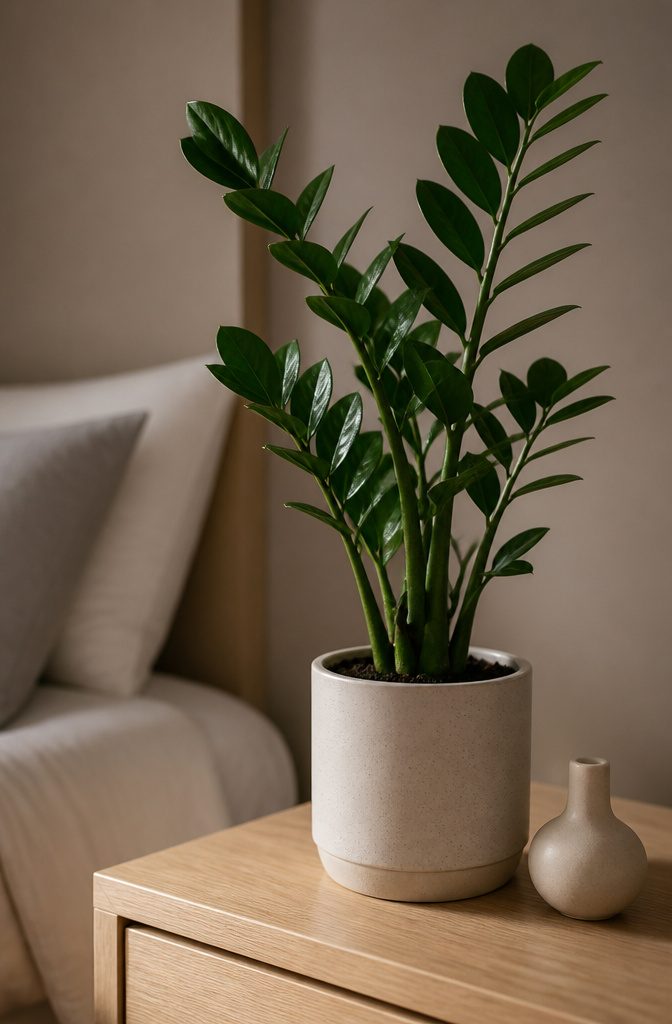
Waxy, dark green leaves stacked along upright stems give the ZZ plant an almost architectural presence that reads more like sculpture than foliage.
That structure comes with a trade: Zamioculcas zamiifolia grows so slowly that a new shoot might take months to fully unfurl, so buy the size you actually want to look at.
The real draw for anyone who travels or simply forgets is the rhizome system underneath the soil. It stores water like a canteen, letting the plant survive weeks without attention and bounce back from neglect that would kill most houseplants.
Water when the top layer of soil dries, or wait until roughly half the pot is dry; it forgives either approach.
Pet owners need to weigh this one carefully.
The same calcium oxalate crystals that make the ZZ so resilient also make it toxic to dogs and cats, so a high shelf or a different room is the safer call if animals share your space.
What Bedroom Plants Actually Clean
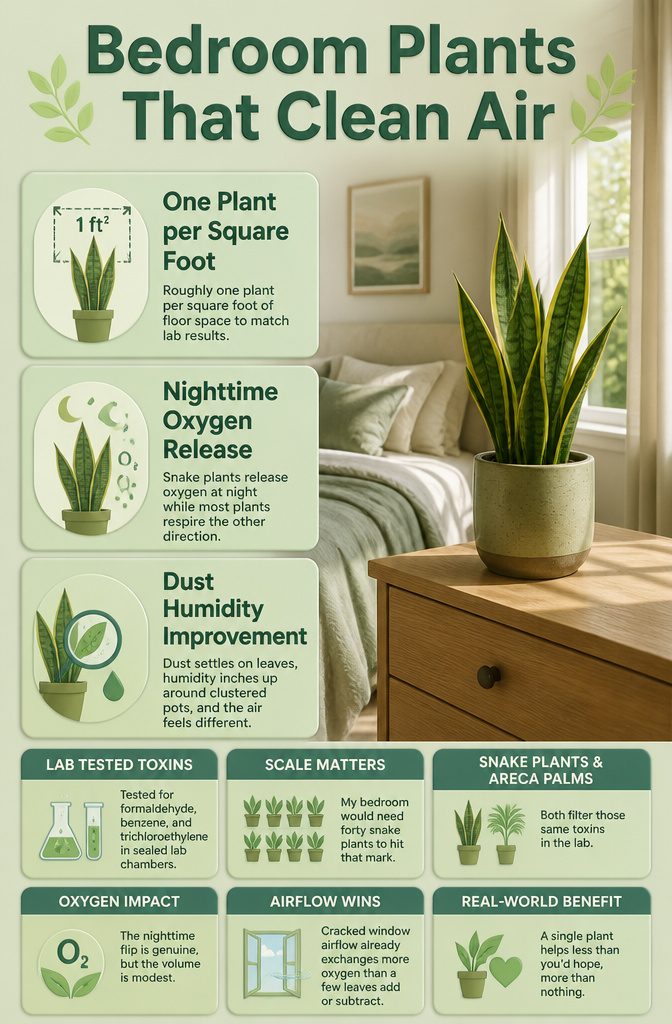
The NASA study that launched a thousand plant posts tested formaldehyde, benzene, and trichloroethylene removal in sealed lab chambers, and the numbers are real for that setup.
What rarely gets mentioned is the scale: roughly one plant per square foot of floor space to match those results in an actual room.
My bedroom would need forty snake plants to hit that mark, not the single one on my dresser.
Snake plants and areca palms do filter those same toxins in the lab, and snake plants release oxygen at night while most plants respire the other direction.
That nighttime flip is genuine, but the volume is modest; a bedroom with cracked window airflow already exchanges more oxygen than a few leaves add or subtract.
A single plant still helps air quality in the way a single open window does: less than you’d hope, more than nothing.
The real bedroom benefit is subtler. Dust settles on leaves, humidity inches up around clustered pots, and the air feels different even if the meter barely moves.
I keep a snake plant and a small palm because they survive my irregular watering, not because I expect them to replace my HVAC filter.
Low Maintenance Defined
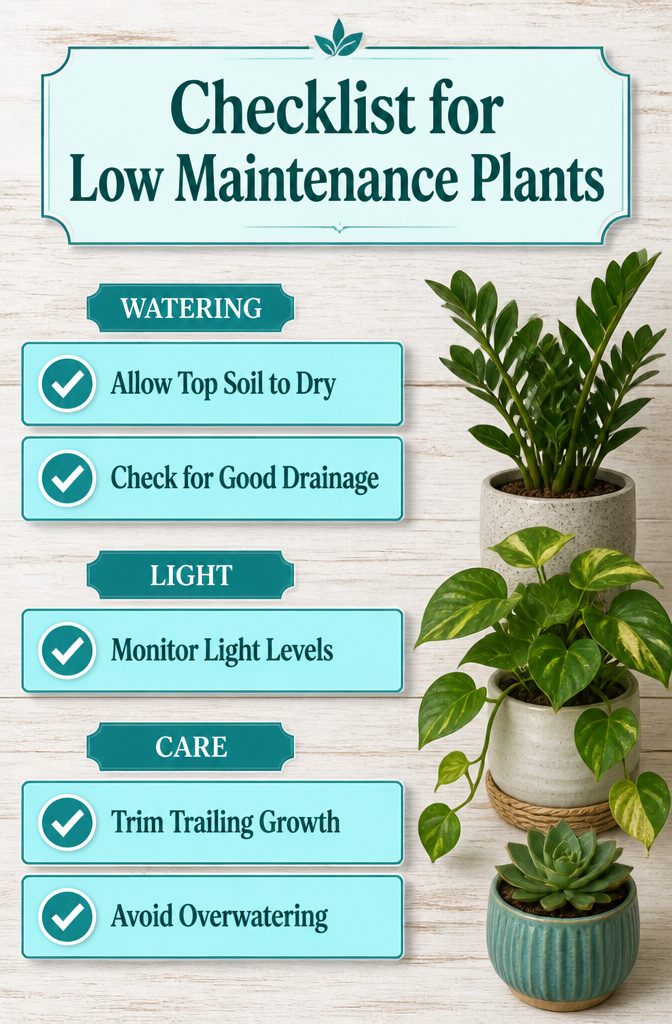
Low maintenance for a bedroom plant means something specific: you can forget it for a stretch and it forgives you.
Across the ten plants that keep coming up for this, the gap between waterings runs from letting the top two inches dry out to waiting until half the soil has lost its moisture.
The ZZ plant sits at the extreme end, built for dim corners and dry spells. Pothos lands in the middle, nicknamed "the cubicle plant" for a reason, but it still wants that top layer to dry before the next drink.
Light tolerance works the same sliding scale. Indirect light covers most of these plants, yet some handle dimmer bedrooms than others.
The ZZ plant manages genuine low light; pothos tolerates it but stretches and thins. Neither asks for fertilizer on a schedule, and both suffer more from your enthusiasm than your neglect.
The mistake that actually kills them is consistent: too much water, too often.
Saturated soil rots roots before you notice the leaves drooping. Check with a finger; if the soil still feels moist, wait.
The one adjustment that matters is light. A plant in a brighter spot works harder and drinks faster, so the same species in a dark bedroom corner needs water less often than one on a sunnier dresser.
Trim trailing growth before it gets long enough to snag or break.
Styling Plants Into Bedroom Decor
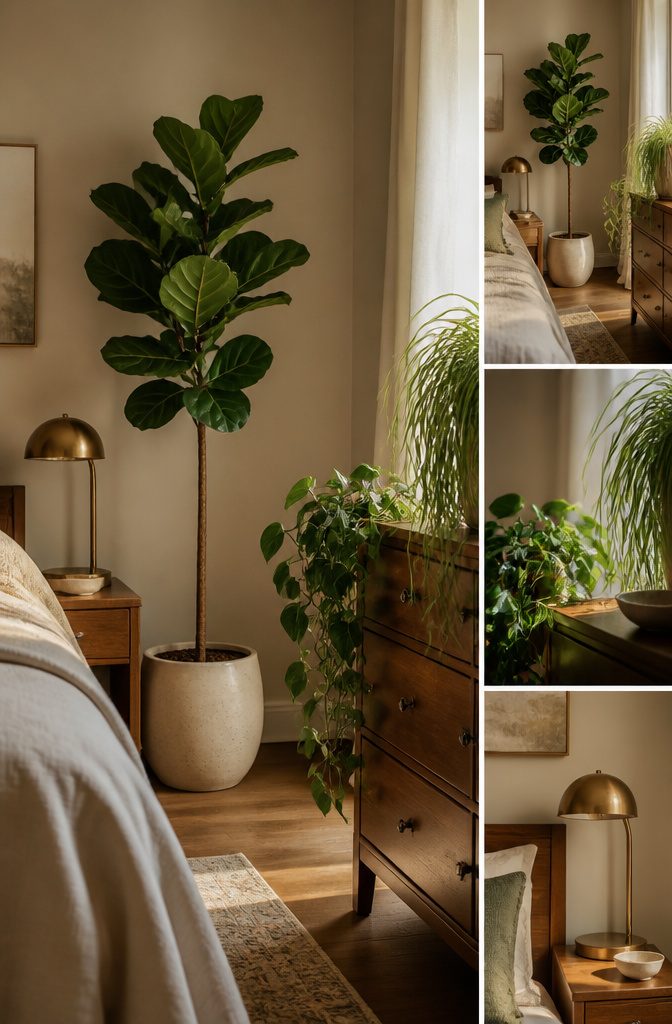
Floor plants settle best into the corners you are not using anyway, where they soften the edges without stealing space from the bed.
A tall fiddle tree or monstera on one side of the room and a second plant at the opposite corner builds a kind of symmetry that carries the eye across the space, especially when the green reads against warmer wall colors.
Height variation matters more than owning many plants. One tall specimen, a mid-level pothos on a dresser, and a trailing spider plant on a shelf give you three layers without crowding the floor.
Hanging plants work when floor space runs out, though in a bedroom they should sit where you will not brush them walking to the bathroom at 2 a.m.
Planter material should match what you already own. A ceramic pot in the same tone as your nightstand lamp base ties the room together; raw terracotta against painted furniture tends to look like an afterthought.
The nightstand itself is the place to be careful. Spiny or sharp-leaved plants do not belong where you reach in the dark for water or glasses.
Aloe vera is a common mistake here: the leaves carry serrations that will slice a half-awake hand, and the plant wants more sun than most bedrooms offer.
"Personally, I wouldn’t put anything sharp or spiny in a bedroom… it’s not a plant you want to accidentally brush up against in the dark."
That means smooth, broad leaves for bedside spots: a small Chinese evergreen or a soft fern if the light allows, set back far enough that your alarm clock and lamp still have priority.
Pet Safety Quick Reference
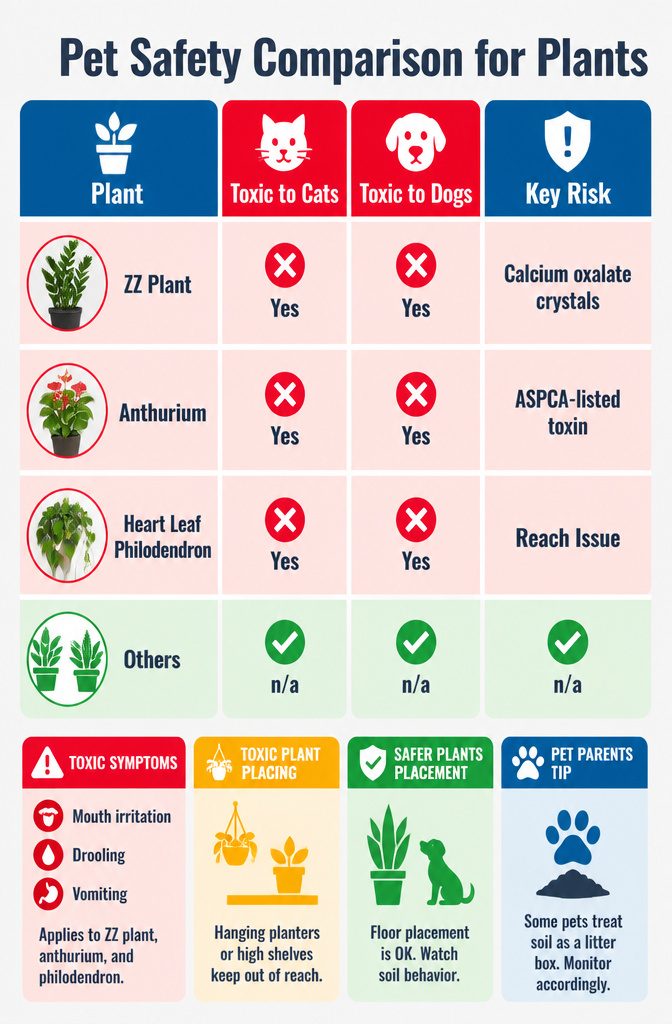
Pet owners need a fast way to sort the list before a plant ever hits the nightstand.
Three of the ten plants discussed in this article carry real risk for cats and dogs: ZZ plants and anthuriums are toxic to both, while heart leaf philodendron is toxic when eaten and needs to stay out of reach entirely.
The remaining seven options, including snake plant, peace lily, pothos, spider plant, rubber plant, lavender, areca palm, Chinese evergreen, and Boston fern, do not appear in the toxicity warnings from the sources reviewed.
| Plant | Toxic to Cats | Toxic to Dogs | Key Risk |
|---|---|---|---|
| ZZ Plant | Yes | Yes | Calcium oxalate crystals |
| Anthurium | Yes | Yes | ASPCA-listed toxin |
| Heart Leaf Philodendron | Yes | Yes | Vining habit puts leaves in reach |
| Snake Plant | n/a | n/a | n/a |
| Peace Lily | n/a | n/a | n/a |
| Pothos | n/a | n/a | n/a |
| Spider Plant | n/a | n/a | n/a |
| Rubber Plant | n/a | n/a | n/a |
| Lavender | n/a | n/a | n/a |
| Areca Palm | n/a | n/a | n/a |
| Chinese Evergreen | n/a | n/a | n/a |
| Boston Fern | n/a | n/a | n/a |
If a cat or dog chews a toxic leaf, the calcium oxalate crystals in ZZ plant and anthurium cause mouth irritation, drooling, and vomiting.
Philodendron triggers similar symptoms. Hanging planters or high shelves solve the reach problem for the toxic three; for the safer seven, floor placement still calls for watching whether a pet treats soil as a litter box.
Frequently Asked Questions
What are the best plants for the bedroom?
Snake plant, pothos, and spider plant top the list because they tolerate low light, need little care, and tolerate the irregular watering that comes with busy schedules.
Snake plants release oxygen at night, pothos trails attractively from shelves, and spider plants propagate easily for filling the room or gifting cuttings.
Do bedroom plants really purify the air?
A single plant helps less than most people expect. The NASA study that started this idea used sealed chambers, and matching those results in a real bedroom would take roughly one plant per square foot of floor space.
A cracked window ventilates better than a dresser-top snake plant, though leaves do trap some dust and clustered pots nudge humidity slightly higher.
How do I choose beautiful planters for bedroom plants?
Match the planter material to what you already own. A ceramic pot in the same tone as your nightstand lamp base ties the room together, while raw terracotta against painted furniture tends to look accidental.
Start with two or three well-placed plants rather than crowding the space, and put tall specimens in unused corners where they soften edges without stealing floor area from the bed.